Warships as Diplomats: How the South African Navy Is Tasked With Building Ties With Other Nations
The presence of a warship can be the most tangible and visible sign of bilateral and multilateral friendships.

MyZA
News, Directory, Events and Other Stuff
The presence of a warship can be the most tangible and visible sign of bilateral and multilateral friendships.
The South African government deserves more praise than it gets for a foreign policy that has sought to maintain old relationships with countries in the global north, even as it develops new relations with BRICS partners – and for its courage to act on its principles by charging Israel with genocide at the International Court of Justice.
The post TRUMP’S NEW WORLD ORDER: SA FOREIGN POLICY DESERVES MORE PRAISE THAN IT GETS appeared first on For Good.
There has been a rebalancing of global trade dynamics with wide-ranging consequences for international business.
The competition for Africa’s critical minerals between China and the West presents an opportunity.
South Africa’s diplomatic and trade crisis can rightly be attributed to the ANC government’s long-standing flawed socialist policy directives and failed foreign policy. For decades, the nation’s economy has reeled under the weight of widespread corruption, state capture, and self-enrichment conducted under the guise of Black Economic Empowerment (BEE). The ANC’s persistent deflection of blame, […]
The post ANC policy at the root of South Africa’s diplomatic and trade crisis appeared first on Freedom Front Plus.
GOOD Statement by Brett Herron,GOOD Secretary-General 23 July 2025 The set of values under-pinning South Africa’s commitments to achieving post-apartheid socio-economic redress, its membership of the BRICS power block, and its opposition to Israeli barbarism in Palestine will outlast US President Donald Trump. The United States Congress’ greenlighting of the US-South Africa Bilateral Relations Review […]
The post IT’S GOING TO BE COSTLY BUT SA MUST STAND UP TO BULLIES IN WASHINGTON appeared first on For Good.
Since around 2000 the South African Police Service has been used to manage internal political dynamics in the ANC.
Motsoaledi’s claim that 520k people started HIV treatment is implausible
GOOD Statement by Kaden Arguile,GOOD National Youth Chairperson 14 July 2025 GOOD notes the recent remarks by MK Party MP Adil Nchabeleng, who called for the protection of coal-fired power and urged South Africans to stop “demonising” coal as an energy source. We remind the Honourable MP that coal is not being demonised, it is […]
The post COAL ISN’T BEING DEMONISED appeared first on For Good.
The United States’ announced 30% trade tariffs, likely driven by underlying geopolitical motives, are, by implication, a direct attack on the economic benefits South Africa derives from the African Growth and Opportunity Act (AGOA). These tariffs are also a response to South Africa’s growing diplomatic and economic ties with countries such as those in BRICS, […]
The post US geopolitics drives harsh trade tariffs imposed on South Africa appeared first on Freedom Front Plus.

In a landmark diplomatic step, Tanzania has launched a revised National Foreign Policy that reinforces the country's leadership in African diplomacy. The updated policy embraces Pan-African values, supports the African Continental Free Trade Area (AfCFTA), and advances regional peace, integration, and sustainable development.
The launch event, held at the Julius Nyerere International Convention Centre (JNICC) in Dar es Salaam, was officiated by H.E. Dr. Samia Suluhu Hassan, President of the United Republic of Tanzania. It was also attended by Dr. Hussein Ali Mwinyi, President of Zanzibar and Chairman of the Revolutionary Council, members of the Diplomatic Corps, senior government leaders, and private sector representatives.
Rooted in the vision of Mwalimu Julius Nyerere, Tanzania has historically championed unity, liberation, and non-alignment in African diplomacy. Under Nyerere's leadership, Tanzania became a moral compass for the continent and a founding member of the Organization of African Unity (OAU).
“This policy speaks on who we are as a nation—firm in our values, proactive in our diplomacy, and committed to constructive partnerships that advance peace, security, and shared prosperity,” President Samia said during the event.
The new policy reflects this legacy while responding to contemporary priorities like trade, migration, regional infrastructure, climate action, and digital transformation. It aims to deepen Tanzania's engagement with continental bodies like the AU, SADC, and EAC while emphasizing Kiswahili as a tool for regional integration.
President Samia noted that the revised policy was shaped through a broad-based participatory process involving Tanzanians from all walks of life. “It was high time we revised the policy to cope with global shifts in various spheres,” she said, citing the global scramble for strategic minerals and trade disruptions caused by ongoing conflicts as key motivators.
A core feature of the updated framework includes economic diplomacy and the creation of a Special Status for Tanzanians in the diaspora. The policy promotes legal reforms that would allow non-citizen Tanzanians abroad to own land, register businesses, and invest back home.
To strengthen implementation, President Samia called on the Ministry of Foreign Affairs and East African Cooperation to engage retired diplomats in training current officials, ensuring that Tanzania's envoys are equipped to promote national interests globally.
President Mwinyi welcomed the revised policy as a catalyst for unlocking social, economic, and political potential. “Tanzania continues to position itself globally, and the revised policy aligns with evolving global needs,” he said.
He urged the Ministry to encourage more countries to open consulates in Zanzibar and called on all Tanzanians to embrace and defend national interests through the policy. “This policy will benefit both Tanzania Mainland and Zanzibar,” he emphasized.
President Samia's regional outreach began early in her presidency. In April 2021, she visited Uganda, where she and President Yoweri Museveni signed the Final Investment Decision for the $10 billion East African Crude Oil Pipeline (EACOP).
In May 2021, her visit to Kenya revitalized bilateral ties, followed by trips to Burundi, Mozambique, Rwanda, Zambia, and Egypt, resulting in cooperation on trade, energy, security, and innovation.
At the June 2021 SADC Summit in Mozambique, Tanzania reaffirmed its commitment to regional peace by supporting the fight against insurgency in Cabo Delgado. In Ghana, she received the Africa Road Builders–Babacar Ndiaye Trophy for leadership in infrastructure development.
In Senegal, during the IDA20 Summit, and at COP27 in Egypt, she positioned Tanzania as a leader in climate resilience, presenting an $18 billion renewable energy plan.
From 2023 to 2025, she maintained strong continental engagement through AU summits, the BRICS Summit in South Africa, and diplomatic visits to Malawi, Zambia, South Africa, and Morocco.
A key milestone in Tanzania's growing international stature was the invitation to the Lobito Corridor Development Project high-level meeting in Angola—part of the G7's Global Infrastructure Initiative. Although Tanzania was not originally a member of the project, its geographic and strategic relevance was recognized as critical to the corridor's success.
In February 2024, President Samia unveiled a statue of Mwalimu Nyerere at the AU Headquarters in Ethiopia—a symbolic act that underscored Tanzania's foundational role in the Pan-African movement.
As Chair of the SADC Organ, she presided over the 2024 Troika Summit in Zimbabwe, advancing peace and security initiatives and supporting Raila Odinga's candidacy for AU Commission leadership.
On May 18, 2025, Professor Mohamed Yakub Janabi was elected as the next Regional Director of the WHO African Region, a milestone widely credited to Tanzania's rising diplomatic influence. His nomination followed the untimely death of Dr. Faustine Ndugulile in 2024. Janabi's appointment will be formalized by the WHO Executive Board later this month.
According to Ambassador Mahmoud Thabit Kombo, the revised policy focuses on ten strategic pillars:
This updated policy reflects Tanzania's commitment to Pan-African unity while embracing innovation, inclusion, and global partnership. It sets the stage for the next chapter in Tanzania's regional leadership and sustainable development.
Distributed by APO Group on behalf of Tanzania Ministry of Foreign Affairs and East African Cooperation.
President engages South African Council of Churches
President Cyril Ramaphosa has hosted the first engagement between government and the leadership of the church since the start of the seventh Administration.
The President hosted the leadership of the South African Council of Churches (SACC) at the Union Buildings in Pretoria on Friday under the banner of the Government of National Unity.
The meeting presented an opportunity for the SACC to introduce its new and recently elected leadership.
“We welcome the opportunity to be introduced to the new leadership of the SACC and to discuss matters that concern the church and the people of South Africa,” the President said.
The meeting discussed a wide range of issues of national interest ranging from the National Dialogue initiative, government’s ongoing fight against crime and corruption and the access of state services.
President Ramaphosa committed that the National Dialogue will bring together all sectors of society and encourage the participation of all South Africans.
“Importantly, the National Dialogue must be informed by extensive public consultation in localities facilitated by various sectors of society. It needs to give a voice to those in society who are not often heard, to people who are marginalised, to those who are most vulnerable to poverty, violence and exploitation,” the President said.
It is envisaged that the National Dialogue will build on the achievements of 30 years of democracy.
Among other things, it will need to address challenges of low growth and job creation, poverty and hunger, governance, corruption and fiscal constraints. It will also need to address gender-based violence and femicide, social fragmentation, racism and sexism, violence and the potential for instability.
Government also briefed the SACC on South Africa’s Group of Twenty (G20) Presidency along with regional and international issues of concern.
“The meeting heard about government’s ongoing work in implementing the recommendations of the State Capture Commission. This includes criminal investigations and prosecutions, the recovery of stolen funds, legislative amendments and strengthening institutions.
“Furthermore, government remains focused on strengthening and resourcing key institutions in the criminal justice system, like the NPA [National Prosecuting Authority], Hawks and SIU [Special Investigating Unit], this includes the establishment of the NPA’s Investigating Directorate Against Corruption as a permanent entity to prosecute state capture and other significant corruption cases,” the Presidency said.
The President also committed government’s support for greater cooperation between churches and government bodies that are on the frontline of providing services to people – most notably the Departments of Home Affairs and Social Development.
He highlighted South Africa’s drive for an inclusive G20.
The President said dialogue with civil society and other non-government institutions will be conducted through various engagement groups.
“Following the approach of the Brazilian Presidency, a G20 Social Forum will be convened. This will bring together representatives of the existing engagement groups and other segments of civil society including various faith formations.
“The President assured the church leaders that South Africa will continue to pursue an independent foreign policy and will not align itself with any of the major powers or blocs in the world,” the Presidency said.
Ramaphosa asserted that South Africa remains engaged in efforts to bring about peace and stability in various parts of our region and continent, especially through the Southern African Development Community (SADC) and African Union initiatives.
“South Africa continues to use its participation in fora like the G20, BRICS, Non-Aligned Movement, African Union and United Nations to advance a rules-based multilateralism that is fair and inclusive. We are committed to the reform of global institutions to ensure that they represent the needs and interests of all countries,” the President said. -SAnews.gov.za
nosihle
Sun, 04/13/2025 - 09:21
23 views
President Cyril Ramaphosa has today, Friday, 11 April 2025, hosted the leadership of the South African Council of Churches (SACC) at the Union Buildings in Pretoria.
The meeting was the first engagement between Government and the leadership of the church since the start of the 7th Administration under the banner of the Government of National Unity.
The meeting presented an opportunity for the SACC to introduce its new and recently elected leadership.
“We welcome the opportunity to be introduced to the new leadership of the SACC and to discuss matters that concern the church and the people of South Africa.
The SACC is a cherished institution in our country. Over many decades it has made an invaluable contribution to peace, unity, development and transformation.
It has been a source of hope, guidance and inspiration not only to members of the Christian faith, but to all South Africans.
The SACC has always been deeply concerned about the conditions in which our people live and has worked to improve their lives.
We appreciate the willingness and determination of the SACC to work with Government, with other faith formations and with other sectors of society to address these concerns,” said President Ramaphosa.
The meeting discussed a wide range of issues of national interest ranging from the National Dialogue initiative, Government's ongoing fight against crime and corruption and the churches accessing state services. The Government also briefed the SACC on South Africa's G20 Presidency along with regional and international issues of concern.
“We support the National Dialogue initiative but emphasise that for it to have legitimacy, the process must be protected from being hijacked by political, economic, and societal elites. It must be inclusive — incorporating all sectors of society. We must confront our declining values and moral conduct, and address the dehumanisation caused by poverty and inequality. Like many South Africans, we as church leaders and congregants are deeply concerned by the political gamesmanship within the GNU, when urgent national challenges — especially those affecting the poor and vulnerable — demand serious and united attention,” said Bishop Sithembele Sipuka, SACC President.
President Ramaphosa committed that the National Dialogue will bring together all sectors of society and encourage the participation of all South Africans.
It is envisaged that the National Dialogue will build on the achievements of 30 years of democracy.
Among other things, it will need to address challenges of low growth and job creation, poverty and hunger, governance, corruption and fiscal constraints. It will also need to address gender-based violence and femicide, social fragmentation, racism and sexism, violence and the potential for instability.
“Importantly, the National Dialogue must be informed by extensive public consultation in localities facilitated by various sectors of society. It needs to give a voice to those in society who are not often heard, to people who are marginalised, to those who are most vulnerable to poverty, violence and exploitation,” said the President.
The meeting heard about Government's ongoing work in implementing the recommendations of the State Capture Commission. This includes criminal investigations and prosecutions, the recovery of stolen funds, legislative amendments and strengthening institutions.
Furthermore, Government remains focused on strengthening and resourcing key institutions in the criminal justice system, like the NPA, Hawks and SIU, this includes the establishment of the NPA's Investigating Directorate Against Corruption as a permanent entity to prosecute state capture and other significant corruption cases.
President Ramaphosa committed Government's support for greater cooperation between churches and Government bodies that are on the frontline of providing services to people – most notably the Departments of Home Affairs and Social Development.
President Ramaphosa highlighted South Africa's drive for an inclusive G20. The President said dialogue with civil society and other non-government institutions will be conducted through various engagement groups. Following the approach of the Brazilian Presidency, a G20 Social Forum will be convened. This will bring together representatives of the existing engagement groups and other segments of civil society including various faith formations.
The President assured the church leaders that South Africa will continue to pursue an independent foreign policy and will not align itself with any of the major powers or blocs in the world.
South Africa remains engaged in efforts to bring about peace and stability in various parts of our region and continent, especially through SADC and AU initiatives.
“South Africa continues to use its participation in fora like the G20, BRICS, Non-Aligned Movement, African Union and United Nations to advance a rules-based multilateralism that is fair and inclusive. We are committed to the reform of global institutions to ensure that they represent the needs and interests of all countries,” said President Ramaphosa.
Distributed by APO Group on behalf of The Presidency of the Republic of South Africa.
BMA reflects on progress made since its establishment
While challenges remain, progress has been made in strengthening South Africa’s border management systems, Commissioner of the Border Management Authority (BMA), Dr Michael Masiapato, said on Tuesday.
“Beside the administrative successes relating to the establishment of the new organisation, there are operational successes, worth mentioning,” he said.
Some of the successes since the authority’s establishment in April 2023, include intercepting stolen vehicles. The authority also successfully managed the movement of heads of state and government technocrats from all over the world as well as a higher number of journalists for the BRICS Summit that the country hosted in August 2023.
“We were able to apprehend or arrest over 468 000 individuals who were attempting to enter the country illegally since 1 April 2023,” he said, adding that 2 344 wanted criminals were also arrested.
Additionally, over 262 explosives used in the explosion of rocks during illegal mining operations and the blowing up of cash-in-transit vehicles were also confiscated.
“The establishment of the BMA sought to create a single authority to effect border law enforcement with a single command and control. Contrary to what some people consider to be the functions of the Border Management Authority, our function is not just about stamping passports at the ports of entry,” Masiapato said.
The Commissioner was speaking at the High-Level Colloquium on Migration, in Pretoria.
He said the BMA exists to secure South Africa’s borders and concurrently facilitate legitimate movement of people and goods in all ports of entry and border law enforcement areas. The BMA Act provides for the BMA to collaborate with relevant stakeholders in executing its border law enforcement functions in the Ports of Entry and the Border Law Enforcement areas.
“The Border Management Authority plays a crucial role in facilitating the smooth movement of people, goods, and services across borders while ensuring the safety and security of the country,” he said.
The authority also works to prevent the introduction of invasive species, pests and diseases that can harm the environment and ecosystem.
“We also ensure that all imports and exports comply with environmental regulations, such as the Convention on International Trade in Endangered Species of Wild Fauna and Flora (CITES). The BMA also monitors the movement of hazardous waste across borders to prevent illegal dumping and ensure compliance with international regulations.
“We also inspect food and water imports to ensure they meet international health standards and regulations. We also monitor the movement of vectors, such as mosquitoes and ticks, to prevent the spread of vector-borne diseases,” the Commissioner explained.
He told those attending the colloquium that the authority is most known for its immigration function.
“In this regard, the BMA inspects travel documents, such as passports and visas, to ensure they are authentic and valid. We also monitor the movement of people to ensure compliance with immigration regulations and laws,” he said.
In the last 24 months, the BMA has screened millions of travellers for infectious and communicable diseases and “those we picked up with diseases have been referred to medical facilities for further medical attention.”
Masiapato said despite the achievements, challenges exist.
“Illegal migration, human trafficking and transnational organised crime continue to pose serious threats to our national security and public safety,” he said.
In June 2013, Cabinet made the decision to establish a Border Management Agency under the guidance of the Department of Home Affairs.
President Cyril Ramaphosa launched the Border Management Authority on 5 October 2023, in Musina, Limpopo. – SAnews.gov.za
Edwin
Tue, 04/01/2025 - 14:29
235 views
The Portfolio Committee on International Relations has successfully launched the people-centred oversight mechanism for international relations in Mpumalanga, North West and Gauteng provinces.
The committee Chairperson, Mr Supra Mahumapelo, said the committee has completed the introduction and the first phase of involving the people at local, ward, district and provincial levels for their direct participation in matters related to international relations.
He called on the Department of International Relations and Cooperation to act as a catalyst to ensure that the launches translate into the real involvement of the people in these matters. He said the department will ensure that developments regarding trade and other agreements that are entered into between South Africa and the rest of our trading partners are understood by the people on the ground.
The committee is optimistic about the success of the people-centred oversight mechanism in achieving its objectives and also ensuring that ordinary people understand the value of trade agreements from an economic-growth opportunities perspective and the translation of that into their direct participation in the economy to push back the frontiers of poverty.
The committee is looking forward to seeing this new mechanism becoming a practical means for ordinary South Africans to join their Parliament in meaningful and valuable engagement at the international sphere of its mandate.
The Gauteng leg of the people-centred oversight mechanism for international relations was attended by various organisations and individuals expressing their support. They included the embassies of China and Brazil; the Chairperson of the Portfolio Committee of COGTA of the Gauteng Legislature, Mr Mzi Khumalo; the Secretary General of COSATU and the Secretary General of the Congress of Traditional Leaders of South Africa, Mr Zolani Mkiva;the national Chairperson of the South African National Civic Organisation, Mr Skhumbuzo Mpanza; Mr Justice Nkomo of the Congress of South African Trade Unions; Mr Tebogo Matlou of the South African Local Government Association; and representatives of non-governmental organisations andinternational relations students from tertiary education institutions.
The committee will continue with its launches of the programme in the remaining six provinces. “It is in the interest of the committee to ensure that every citizen understands and appreciates the activities undertaken by the executive internationally on behalf of South Africa. Ordinary South Africans should understand the involvement of South Africa in SADC, AU, UN, the Commonwealth, and BRICS among others,” the Chairperson said.
Mr Mahumapelo said this platform should now become a strategic place for education about South Africa's presidency of the G20. “We are calling on the Department of International Relations and Cooperation to ensure that South Africans have a better understanding of South Africa's G20 presidency,” Mr Mahumapelo said.
Distributed by APO Group on behalf of Republic of South Africa: The Parliament.
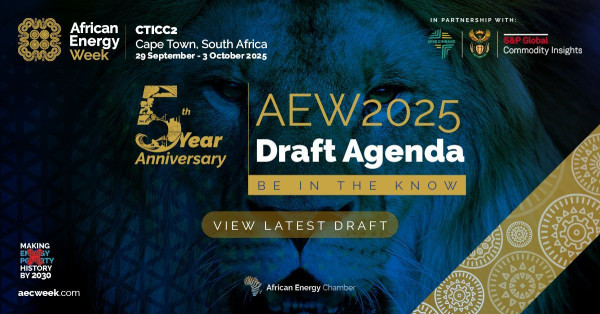
The African Energy Week (AEW): Invest in African Energies conference has officially launched its 2025 program, covering strategic topics from upstream oil and gas to downstream infrastructure and distribution to the energy transition, power industry, energy finance and more. The program offers insight into what this year's edition will offer, as industry leaders, global investors, major operators and think-tanks convene in Cape Town to discuss Positioning Africa as the Next Global Energy Champion.
As the largest event of its kind in Africa, AEW: Invest in African Energies serves as a vital platform to sign deals and drive energy projects forward. This year's event offers an expanded program, featuring a variety of stages covering the entire energy value chain. Additional features include pre-conference workshops, a deal room, the return of the African Farmout Forum, technical hubs, fireside chats and more. The Just Energy Transition concert returns to kick off the week while the African Energy Awards & Gala Dinner celebrates movers and shakers in African energy.
One of the highlights of this year's conference is the G20 Energy Leaders Roundtable, which comes as South Africa hosts the 20th meeting of the G20 group this year. A series of country spotlights will also take place during the course of the week, covering markets such as South Africa, Senegal, Equatorial Guinea, Namibia and the Republic of Congo, as well as an OPEC roundtable featuring major OPEC-producers. A BRICS roundtable will examine the impact the group has on Africa's energy future while a COP 30 roundtable will discuss Africa's position ahead of the conference this year.
Africa's energy sector is more attractive than ever, as regulatory reforms, ambitious policies and long-term development strategies continue to entice spending. Total capital expenditure for the oil and gas industry alone is estimated to reach $43 billion in 2025, with spending set to reach $54 billion by 2030. AEW: Invest in African Energies 2025 features an energy finance stage, with discussions covering the African Energy Bank; investment trends in Africa and reducing barriers to entry. The stage will unpack Mergers & Acquisitions; financing cross-border projects; energy access and equity, among other topics.
As one of the final frontiers for oil and gas exploration, Africa is seeing a plethora of projects advance. West Africa is projected to lead oil and gas spending in 2025, accounting for over 50% of the continent's total expenditure. While established producers such as Nigeria remain dominant, emerging producers such as Senegal and Mauritania are attracting high levels of investment. In Southern Africa, Namibia targets first oil by 2029 while South Africa seeks to unlock discoveries in both its offshore basins and onshore shale prospects. Zimbabwe targets onshore gas production while Mozambique advances its pipeline of large-scale LNG projects. AEW: Invest in African Energies Upstream E&P Forum will examine the continent's exploration hotspots. Panels include onshore and shallow water potential; the resurgence of Libya; onshore basins to watch; the outlook for LNG; and deepwater plays.
Amid the continent's oil and gas drive, Africa also seeks to advance a just energy transition, Countries such as Mauritania, Namibia and South Africa are spearheading large-scale green hydrogen developments while solar and wind developments offer increased accessibility for remote communities. Gas-to-power is a central feature of the continents just energy transition, with Algeria, Nigeria and Egypt leading the charge. The AEW: Invest in African Energies Energy Transition stage will unpack strategies for decarbonizing while boosting industrialization. Topics include addressing energy security and climate commitments; clean cooking opportunities; local content; integrated ESG, and more.
As Africa seeks to make energy poverty history by 2030, a fundamental industry is the power sector. Efforts are underway across the continent to revitalize power infrastructure, with both grid-connected and off-grid projects advancing. International partners have a role to play in supporting power projects and the AEW: Invest in African Energies Powering Africa stage will address this. Topics include energy leaders dialogue; energy efficiency; bridging the electricity gap; energy diversification; and integrating renewables into the energy mix.
“Africa is on the cusp of an energy revolution, and AEW: Invest in African Energies is where the deals that will define our continent's future are made. We remain committed to making energy poverty history by 2030, and through this event, we are accelerating the partnerships and policies that will make that vision a reality,” states NJ Ayuk, Executive Chairman of the African Energy Chamber.
Visit www.AECWeek.com to download your copy today.
AEW: Invest in African Energies is the platform of choice for project operators, financiers, technology providers and government, and has emerged as the official place to sign deals in African energy. Visit http://www.AECWeek.com for more information about this exciting event.
Distributed by APO Group on behalf of African Energy Chamber.
The South African ambassador to the United States, Ebrahim Rasool, is no longer welcome in the US, several news publications reported on Saturday. The Guardian states: “South Africa’s ambassador to the United States is no longer welcome in our great country,” [US Secretary of State Marco] Rubio posted on X on Friday. Rubio accused ambassador …
Whilst ruminating on the state of the world and how things can change/be disrupted with the scratching of a fancy pen on an Executive Order whilst flying over the Gulf of America I turned to everyone’s favourite oracle – Mr AI (or is that Mrs?) and posed the question; “With Trump sidling up to Russia …

In 2025, South Africa will hold the rotating presidency of the G20. Given its position as Africa's most industrialized nation and an energy hub, South Africa's leadership could play a pivotal role in attracting investment to the continent's energy sector. By leveraging its G20 platform, South Africa can push for increased funding from global partners, particularly for natural gas projects, which are critical for Africa's energy security and economic development.
While renewable energy is rapidly expanding across the continent, Africa continues to rely heavily on coal, oil and natural gas to meet growing demand and drive economic growth. Gas is increasingly viewed as a cleaner transitional fuel in Africa's energy mix, and many G20 nations are leading investment in gas exploration and production across the continent. For instance, the U.S. Export-Import Bank, U.K. Export Finance, China Development Bank and Japan Bank for International Cooperation, among other lenders, have played a key role in financing TotalEnergies' $20 billion Mozambique LNG project. Additionally, several G20 countries are driving further investment, with Italy's Eni developing new LNG facilities in the Republic of Congo, bp expanding operations in Senegal and Mauritania, Norway's Equinor advancing the Tanzania LNG development and ExxonMobil spearheading Rovuma LNG in Mozambique. South Africa can advocate for G20 nations to increase their financial backing for new gas projects, which have the potential to boost production, enhance energy security and attract much-needed investment to the continent.
While natural gas is essential for Africa's energy security, combining it with renewable energy sources could help diversify Africa's energy mix. South Africa's own experience with large-scale energy projects, such as its successful Renewable Energy Independent Power Producer Program, can serve as a model for blending financing and developing both gas and renewable projects. By advocating for mixed investment, South Africa can show G20 nations that supporting a variety of energy sources will allow Africa to meet its energy demands while transitioning toward greener energy.
In addition to advocating for investment in specific projects, South Africa can focus on creating favorable conditions for financing. One way to achieve this is by encouraging the G20 to support debt relief or concessional financing for African countries with high debt burdens. This would free up resources for governments to invest in energy infrastructure and allow them to prioritize projects that will improve energy access and support economic growth. South Africa could work closely with organizations like the World Bank, IFC, BRICS Bank, European Investment Bank and more to unlock financing mechanisms that reduce the risk for international investors.
The role of South Africa's G20 presidency in facilitating greater engagement between G20 nations and African energy markets cannot be overstated. By using its platform to promote key energy projects, South Africa can attract much-needed investment for both traditional oil and gas and clean energy developments. At the same time, it can help establish new financing structures that make these projects more attractive to investors. African countries like Nigeria, Angola, the Republic of Congo, Senegal, Namibia and Mozambique stand to benefit from increased G20 support for their oil and gas sectors, and other African nations can follow suit by aligning their own energy priorities with the goals set forth by South Africa during its presidency.
This year's African Energy Week (AEW): Invest in African Energies conference in Cape Town serves as a key platform for attracting global attention and investment to Africa's energy sector, facilitating discussions among G20 nations, financial institutions and energy companies. AEW acts as a conduit for driving investment into critical energy projects, positioning South Africa as a catalyst for sustainable development across the continent while ensuring Africa's energy needs are met. With South Africa's G20 presidency presenting a unique opportunity to secure crucial investments in Africa's energy sector, the 2025 edition of AEW is more significant than ever. By leveraging this platform to advocate for financing and foster partnerships between G20 nations and African energy producers, South Africa can play a pivotal role in advancing the continent's energy future and contributing to global energy security.
AEW: Invest in African Energy is the platform of choice for project operators, financiers, technology providers and government, and has emerged as the official place to sign deals in African energy. Visit www.AECWeek.com for more information about this exciting event.
Distributed by APO Group on behalf of African Energy Chamber.
Masango remembered for inspiring future scientists
The Department of Electricity and Energy has joined the growing number of condolences from South Africans, and across the scientific community, pouring in for the family of pioneering and distinguished nuclear scientist, Senamile Masango.
Masango, the first Black female nuclear scientist in South Africa, passed away over the weekend, reportedly following a short illness.
“Masango’s legacy as a role model and her tireless efforts to promote science and technology will continue to inspire future generations. The Ministry acknowledges her remarkable journey and the positive impact she made throughout her life.
“We mourn her loss alongside those who knew and loved her. May her memory serve as a guiding light for all who aspire to follow in her footsteps,” the Ministry said in a statement on Tuesday.
At the time of her death, Masango was a board member of the Nuclear Energy Corporation of South Africa (NECSA) and fostered youth empowerment through her foundation.
“Masango’s contributions to the scientific community and her unwavering commitment to empowering young women in science hase left an indelible mark on our nation and beyond.
“As the first African woman to participate in experiments at the European Organisation for Nuclear Research (CERN), she inspired many with her groundbreaking achievements and passion for scientific inquiry.
“Her dedication to fostering academic excellence, through the Senamile Masango Foundation, demonstrated her belief in the potential of the next generation. Through her leadership, she advocated for inclusivity and represented South Africa on the international stage, particularly within the BRICS (Brazil, Russia, India, China, South Africa) Youth Energy Agency,” the Ministry said. – SAnews.gov.za
NeoB
Tue, 02/11/2025 - 12:39
Nzimande mourns passing of SA’s most distinguished young scientist
The Minister of Science, Technology and Innovation, Professor Blade Nzimande, has joined the Presidency in mourning the passing of Senamile Masango, one of the country’s most distinguished young scientists.
Masango passed away on Sunday, February 9, 2025, at the age of 37.
The Minister described her as a young, resourceful, and passionate nuclear physicist, who served the country with distinction in various capacities.
Masango served as a board member of the Nuclear Energy Corporation of South Africa (NECSA), where she held the position of Chairperson for the Research and Development Committee.
“Because of her industriousness and commitment to scientific excellence, she was recognised through numerous prestigious honours, including being selected in 2017 to be among 50 candidates to be part of a team of scientists who conducted one of the first African research missions within the European organisation for nuclear research in Switzerland (CERN).
“She also led the research team representing South Africa at the BRICS Youth Energy Agency,” Nzimande said.
Masango was also a member of the Human Resource Development Council (HRDC), a national advisory body, led by Deputy President Paul Mashatile.
The Minister described the young scientist as not only an extraordinary talent in her field but also a passionate advocate for promoting science among young black individuals, particularly young girls.
Driven by her commitment to empowering women and girls, she founded the Women in Science and Engineering in Africa (Wise) Foundation in 2015.
This initiative provides mentorship to young girls in schools, encouraging them to pursue careers in science.
Through her foundation, she launched programmes in South Africa and across Africa aimed at inspiring young girls to pursue science and empowering women with the skills to become high quality scientists, engineers and researchers.
“As a country, we continue to be confronted with the challenge of a lack of confidence and often the fear of mathematics and science, in particular within the black community.
“Through her work as an activist scientist, Senamile made a huge contribution to the Department of Science, Technology and Innovation’s strategic goal of increasing the number of young girls and women who take up science careers, and the development of critical skills that are required to enable our country to achieve higher levels of development,” the Minister said.
At the time of her passing, she was conducting research at Triumf, Canada’s national laboratory for nuclear and particle physics, and was preparing to pursue her PhD in Nuclear Physics.
“All of this underscores the depth of the loss to our country’s public science system,” Nzimande said.
The Minister extended his deepest condolences to the family, friends, and colleagues of Masango.
“May her selfless work serve as inspiration for us to empower more young girls and women through science.” – SAnews.gov.za
Gabisile
Tue, 02/11/2025 - 09:07
G20 provides opportunity to drive developmental agenda
South Africa’s Presidency of the Group of 20 (G20) presents a unique opportunity not only for the country itself, but also for the African continent and the Global South to foster greater economic growth for all.
This is according to President Cyril Ramaphosa who delivered the State of the Nation Address to a joint sitting of Parliament in Cape Town on Thursday evening.
South Africa is the first African country to hold the Presidency of the world’s premier economic cooperation grouping following the admission of the African Union as a G20 member.
For its Presidency, South Africa has chosen the theme: “Solidarity, Equality and Sustainable Development” which, President Ramaphosa explained, underscores the “need for cooperation and partnership among the countries of the world”.
“It is an opportunity to place the needs of Africa and the rest of the Global South more firmly on the international development agenda.
“Our G20 Presidency is a valuable opportunity for South Africa to advance efforts towards greater global economic growth and sustainable development,” he said.
‘Inextricably bound’
President Ramaphosa told the gathering that “Africa remains at the centre of our foreign policy” and emphasised that Africa’s and, by extension South Africa’s, growth and success depends on continental peace.
“We continue to work to strengthen the African Union to support the achievement of peace, development and economic integration on the continent.
“We know that our future prosperity is inextricably bound to the prosperity of the African continent. For Africa to thrive, we must silence the guns on the continent,” he said.
For the past 30 years, South Africa has been involved in “restoring stability” in countries across the continent – most recently in Mozambique and the eastern region of the Democratic Republic of Congo (DRC).
“[We] have been part of the SADC [Southern African Development Community] peacekeeping mission in Mozambique that has brought relative calm and stability to the Cabo Delgado province.
“The presence of South African peacekeepers in the eastern DRC is testament to our continued commitment to the peaceful resolution of one of the world’s most intractable conflicts, which has cost millions of lives and displaced millions of people,” he said.
Regarding conflict in the DRC, President Ramaphosa urged parties in that war to “embrace the current diplomatic efforts to find a peaceful resolution, including honouring the Luanda Process”.
“We will attend the Joint Summit between SADC and the East African Community scheduled to take place in Tanzania this weekend, where we will reiterate our call for a ceasefire and a resumption of talks to find a just and enduring solution,” he said.
READ | President Ramaphosa to participate in joint SADC – EAC summit on the DRC
Global solidarity
The President reminded South Africans that the country’s own democracy was won from the brutal hands of the Apartheid regime with the help of international solidarity.
He emphasised that this “imposes a duty on us to support the struggles of those who continue to experience colonialism and oppression” and highlighted the country’s work on the international stage in this regard.
“South Africa continues to stand in solidarity with the people of Palestine, who, having endured decades of illegal occupation, are now experiencing indescribable suffering.
“We continue to participate in the different peace processes seeking to bring about a just and lasting peace in Ukraine.
“South Africa continues to advance its agenda of cooperation and multilateralism through its membership of the United Nations, African Union, the Non-Aligned Movement and BRICS group of countries."
The President noted that this work and “what we stand for needs to be explained to many key players, especially to our trading partners and the many countries and leaders we interact with on the global stage”.
“With a view to explaining the many positions that we have taken and in particular the objectives we wish to achieve during our Presidency of the G20, I have decided to send a delegation of government and other leaders to various capitals on our continent and across the world.
“This delegation will interact with various key players on a variety of matters that affect South Africa’s interests,” President Ramaphosa said. – SAnews.gov.za
NeoB
Thu, 02/06/2025 - 22:32
G20: A win for South Africa; a win for Africa
South Africa’s Presidency of the G20 is a first for the African continent and provides a platform for the African continent’s voice to be better heard, writes Neo Semono.
A few weeks ago, on 01 December 2024, South Africa took over the Group of 20 baton from its fellow BRICS sister country Brazil.
While the G20 is an international forum of developed and developing countries seeking solutions to the globe’s economic and financial issues, I, like many others, feel a sense of pride knowing that an event of such magnitude is to be held on African soil come next November, and that South Africa now holds the Presidency of this enormous global body and forum.
We will certainly make the world proud, just as we have done with other global events like the 2010 Soccer World Cup, the 17th Conference of the Parties (COP17) of the United Nations Framework Convention on Climate Change, BRICS, the World Conference Against Racism, and the World Economic Forum (WEF) Africa, to name a few.
The United States of America, France, Germany, the United Kingdom, China and India are some of the member countries of the G20 that was founded in 1999 as an informal forum.
The respected forum began its life following the Asian financial crisis of 1997-1998. The Finance Ministers and Central Bank Governors of the most important industrialised and developing economies met to discuss international economic and financial stability.
In its earlier days, the forum focused on macroeconomic issues but has since expanded its agenda to include trade, health and climate change, among others.
The G20 members represent 85% of global Gross Domestic Product (GDP) and it may hold true that having the Presidency held by an African country, could work favourably to help African countries win the ear of the developed world - in turn helping the continent achieve its objectives of tackling economic growth, ending poverty and mitigating climate change, among others.
From the bat, South Africa as the only African country forming part of the G20, has been vocal about bringing African issues to the G20 agenda.
During Nigerian President Bola Ahmed Tinubu’s visit to South Africa recently, President Cyril Ramaphosa said South Africa “will place Africa’s development and the challenges facing countries of the Global South firmly on the G20 agenda.”
“We will seek to galvanise support for the AU’s Agenda 2063, as we pursue an inclusive global agenda,” the President said in his talks with his West African counterpart.
Agenda 2063 is the African Union’s (AU) development blueprint to achieve inclusive and sustainable socio-economic development over a 50-year period. Among its goals is to have a high standard of living, quality of life and well-being for all citizens, as well as the African continent taking full responsibility for financing her development.
The President’s remarks are intrinsic to the core of South Africa’s DNA of seeking inclusivity, not only within her peoples, but with the people of the world too.
Realising that just as no person is an island, no country is an island, and the President has said that the country would support Nigeria’s quest to become part of the G20.
This after the AU joined the European Union (EU) in becoming the second regional body to form part of the group in September 2023.
In assuming the Presidency of the G20 under the theme: “Solidarity, Equality, Sustainability” - South Africa has hit the ground running having hosted the first Sherpa meeting on 9 and 10 December.
For those like myself who have to become acquainted with the new buzz words – Sherpas are responsible for taking the discussions and agreements made during G20 meetings held ahead of the summit, to Heads of State and Government at the final Leaders’ Summit, next year.
South Africa’s Sherpa is the Director-General of the Department of International Relations and Cooperation, Zane Dangor, who is supported by Sous-Sherpas, Ambassador Xolisa Mabhongo and Advocate Nokukhanya Jele. Sous-Sherpas are senior officials who support a Sherpa in preparing for the Summit – think sous-chef.
Dangor described the meeting as “very successful, robust and inclusive”.
The purpose of the G20, what has been achieved, as well as what has not been achieved were among the issues on the table at the meeting.
If anything, the meeting was a clear indication that the forum is not a window dressing exercise but a frank assessment of issues under the microscope and finding solutions to the challenges at hand.
With only a few weeks into the Presidency of the G20, South Africa is not sleeping on the job, but has hit the ground running.
It will take all sectors of society to make this Presidency a success. Let our ubuntu, the scenery of our beautiful country, frankness to speak our mind, and the ability to find solutions to challenges come to the fore. We ought to do it for ourselves and future generations.
Like we as a nation, had made an impact on all who graced our land in 2010 - let us make a similar, if not bigger impact on those who will grace our land next November. It will be time for us as a nation to showcase our sparkly spirit again to the world! And leave them coming back for more- SAnews.gov.za
Neo Semono is a Features Editor at SAnews.gov.za
Neo
Thu, 12/26/2024 - 08:00
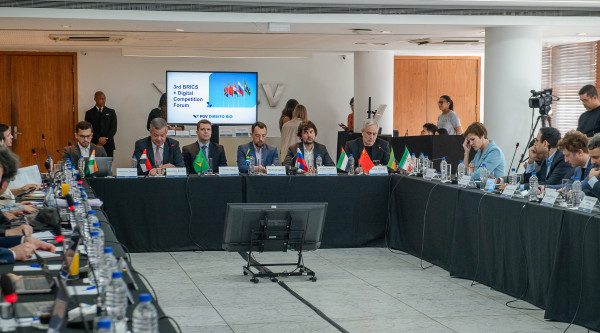
At the 3rd BRICS + (Brazil, Russia, India, China, South Africa, Egypt, Iran, Arab Emirates, Ethiopia + partners) Digital Competition Forum, the BRICS Competition Law and Policy Centre (www.BRICSCompetition.org) presented a new methodological approach to analyzing and regulating food markets that takes into account their accelerating digitalization. Specific tools that are being developed within the BRICS framework were also announced. One of the targeted tools will be the food market and restrictions on the activities of monopolists like Covantis.
Alexey Ivanov, Director of the BRICS Competition Law and Policy Centre, highlighted that digitalization strengthens the global power of large corporations, which, as a result, poses a threat of market monopolization. He urged BRICS antitrust regulators to pay close attention to a similar example of increasing market power through digitalization — the blockchain platform Covantis. The platform aims to digitize the entire agribusiness trade process, from contract management to final shipping. Founded by the largest agro-traders of the ABCCD group (ADM, Bunge, Cargill and Louis Dreyfus and COFCO) and Viterra, Covantis avoids antitrust scrutiny due to its structure. At the same time, the platform collects valuable commercial information about production from farmers and agricultural traders. The platform has already become a dominant player in grain trade. For example, in Brazil, 76% of grain exports go through the platform. In 2023, 53% of grain exports from the US, 34% from Canada and 51% from Argentina went through the Covantis platform. At the same time, the owners of the platform do not allow most of the local big players to enter. In essence, it is an exclusive platform, a quasi-cartel.
“Global food prices have reached the highest level in the last year and a half. Virtually all BRICS countries are currently undergoing antitrust investigations into the egg and chicken meat markets. Competitive agencies must take a new approach to regulating the food industry, not just by jointly analysing global food chains, but by analysing them taking into account all the implications of digitalization. This is the only way we will be able to tackle food security, which is particularly acute for the BRICS and partner countries. For example, the Covantis platform can be used by traders to share confidential information and vertical pressure on farmers. And of course the exclusionary behaviour of Covantis towards local players is of utmost importance. This should be the focus of attention of our countries' competition authorities” – Ivanov explained.
Based on the developed fair organized (exchange) trade in commodities and commodity derivatives within the BRICS framework, it is proposed to solve the problems related to market concentration and, as a consequence, insufficient consideration of the interests of small, medium and large enterprises, which will help to resolve issues related to the violation of the balance of interests of financial market players and producers and consumers of the real sector.
It is proposed to create within the BRICS framework representative indicators of exchange quotations and price indices for OTC transactions based on representative samples of actual transactions, reflecting the competitive composition of sellers and buyers and ensuring the use of universal means of delivery of traded goods. New approaches will contribute to the elimination of unproductive intermediation and increase stability in global commodity markets.
The development of a derivatives market based on reliable exchange and OTC cash commodity prices will create opportunities for BRICS economies to manage risks and pool resources, lead to positive consequences for business and society, strengthen cooperation and stimulate economic growth. Targeted subsidies and exchange mechanism will improve fiscal policy and infrastructure development.
Earlier this year, BRICS Competition Law and Policy Centre (BRICS Center) with the leadership of the Competition Policy and Assessment Center of the State Administration of Market signed a memorandum on long-term cooperation announced the launch and development of the Russian-Chinese exchange and trade platform in consumer goods and commodities which will become a basis for the further development of the universal exchange platform for all BRICS member-countries.
“If entrepreneurs of Russia and China work directly, through modern exchange mechanisms, which will not only allow to establish direct long-term ties, but also reduce prices for goods for end consumers, as it will eliminate the use of intermediary schemes. The task of experts and researchers in this regard is to develop a system of organizational, legal and economic measures and analyze the necessary conditions for the creation of exchange platforms and the development of exchange trade, including in the BRICS format” – Fu Hongwei, Director, Competition Policy and Assessment Center, SAMR; explained.
Distributed by APO Group on behalf of BRICS Competition Law and Policy Centre.
About the 3rd BRICS + Digital Competition Forum:
The BRICS + (Brazil, Russia, India, China, South Africa, Egypt, Iran, Arab Emirates, Ethiopia + partners) Digital Competition Forum, which is being held this year on the margins of the G20 Summit, brings together heads and representatives of competition authorities from all BRICS countries and partners, as well as researchers and visionaries in the field of digital regulation from around the world. The Forum includes the BRICS Working Group on the Study of Competition Issues in Digital Markets. This year's main topics include regulation of digital ecosystems, the challenges and opportunities that artificial intelligence brings to antitrust law, and the digitalization of global food chains.
The Forum is organized by the HSE University BRICS Competition Law and Policy Centre together with the FGV University School of Law (Getulio Vargas Foundation) with the support of the Brazilian Competition Authority (CADE).