
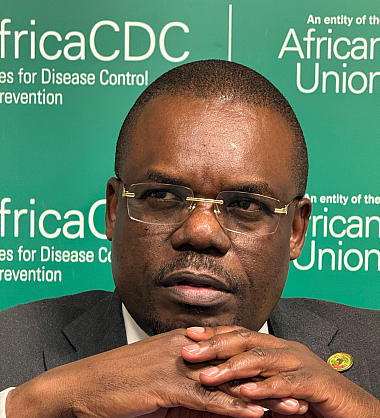
On 15 May 2026, Africa CDC alerted the continent and the global community to the growing risk of regional spread of the Ebola Virus Disease (EVD) outbreak originating from Ituri province in the Democratic Republic of the Congo (DRC).
The affected area is characterised by high population mobility, insecurity, and intense cross-border connectivity with neighbouring countries, including Uganda. This alert underscored the urgent need for coordinated continental action to prevent further spread and safeguard regional and continental health security.
On the same day, the DRC and Uganda officially declared Ebola outbreaks in their respective countries. In line with the Africa CDC’s mandate, when an outbreak affects more than one Member State, the agency assumes responsibility for leading and coordinating the response at the regional and continental levels, bringing all partners together.
I commend the Governments of the DRC and Uganda for their continued efforts to contain these outbreaks. I also express my support for South Sudan, which is geographically close to Ituri province, in advancing its preparedness measures. Africa CDC will continue to work closely with all partners to ensure that timely and appropriate support is provided to all affected and at-risk countries.
On 16 May 2026, following the confirmation of Ebola outbreaks in the two countries, Africa CDC convened a high-level consultative meeting bringing together more than 130 participants representing affected and at-risk countries as well as donor partners (USA, UK, European Union); Philanthropies, United Nations agencies (WHO, UNICEF, FAO, WFP, IOM, OCHA); humanitarian agencies; pharmaceutical companies; and other key stakeholders.
To strengthen coordination and guide the response, the meeting recommended the immediate activation of the continental Incident Management Support Team (IMST), bringing together all key partners to support and coordinate preparedness and response efforts across surveillance, laboratory systems, case management, infection prevention and control, risk communication and community engagement, logistics, cross-border collaboration, and rapid response operations.
In light of these developments, and in accordance with Article 12 of the Africa CDC Statute regarding the declaration of a Public Health Emergency of Continental Security (PHECS), I have consulted the Chairperson of the African Union Commission, H.E. Mr Mahmoud Ali Youssouf, and the Director-General of the World Health Organization, Dr Tedros Adhanom Ghebreyesus.
I have also requested the Chair of the Africa CDC Emergency Consultative Group (ECG), Prof Salim Abdool Karim, to urgently convene the ECG in order to provide technical guidance and recommendations on the evolving risk situation and the potential need for a PHECS declaration.
In addition, I am engaging, for further political guidance and continental solidarity, with H.E. Evariste Ndayishimiye, President of the Republic of Burundi and Chairperson of the African Union, as well as H.E. Cyril Ramaphosa, President of the Republic of South Africa and African Union Champion on Pandemic Prevention, Preparedness and Response.
To ensure close coordination of the continental response to this outbreak affecting our continent, I have decided to cancel my engagements in Geneva during the World Health Assembly and will return to Africa on Monday. I will be visiting the affected countries in the coming days to support national authorities, engage partners, and reinforce collective continental action.
Africa CDC remains fully committed to working with Member States and partners to protect lives, contain the outbreak, and strengthen Africa’s health security and preparedness architecture.
Africa Fact: The Funerary Complex in the ancient Egyptian city of Saqqara is the oldest building that tourists regularly visit today. An outer wall, now mostly in ruins, surrounded the whole structure. Through the entrance are a series of columns, the first stone-built columns known to historians. The North House also has ornamental columns built into the walls that have papyrus-like capitals. Also inside the complex is the Ceremonial Court, made of limestone blocks that have been quarried and then shaped. In the centre of the complex is the Step Pyramid, the first of 90 Egyptian pyramids.
180
Fun South African Fact: The Dutch and the British fought over South Africa.
Bom Crossed
Some lions just escaped a nature reserve in South Africa
They were rejected from their group.
They could maybe ask to be let in the group again
But their pride wouldn\’t let them.