
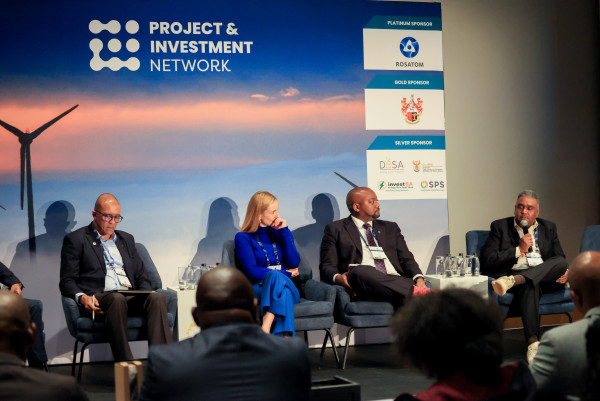
Across power and water, there is no shortage of announcements, memoranda and pipeline lists. Yet investors, DFIs and lenders repeatedly describe the same frustration: a large share of project opportunities arrive too early, too thin or too ambiguously structured to move through real due diligence. Developers, in turn, often face a different reality: they are trying to progress projects inside complex permitting environments, uncertain offtake frameworks, misaligned stakeholder expectations and a grid that may not be ready when the project is.
The gap is not ambition. The gap is bankability and decision velocity.
Where deals stall in practice
Most projects do not fail because the technology is unproven. They stall because the fundamentals are not yet ready for capital. In practical terms, the friction points tend to cluster around:
- Revenue certainty: offtake, tariff realism, creditworthiness and enforcement
- Grid access: connection capacity, timelines and the transmission build-out required to make delivery feasible
- Permitting and land: predictable sequencing, timeframes and stakeholder alignment
- Risk allocation: clarity on what sits with the developer, the offtaker, the state and the financiers
- Project preparation maturity: data room readiness, governance, delivery capability and credible timelines
- Country and currency risk: the real cost of hedging, indexation and macro volatility
Africa does not lack projects. It lacks projects that are investable at speed.
What changes when you engineer the conversation
This is the logic behind the Project & Investment Network (P&IN) (https://apo-opa.co/4lo8Sha) at Enlit Africa: to create structured, decision-oriented engagements that help shorten the path from early interest to investable next steps.
In practice, that means designing a deal-making environment around mechanisms rather than marketing. The aim is not to create a “conference meeting calendar”. The aim is to reduce friction and increase the quality of conversations, by ensuring that the right people are in the room with the right level of information and the right intent.
P&IN is built around:
- Structured matchmaking based on investor mandates and project characteristics, not general networking – the business breakfast on 19th May will provide insights into small structural or programmatic shifts and how they can exponentially change focus, delivery and outcomes. Join Bruce Whitfield, award-winning business journalist and best-selling author as we explore the business landscape for power infrastructure.
- Targeted project briefings that focus on mitigating delivery constraints and risk allocation and realistic readiness milestones
- Curated discussions with decision-makers from utilities, government and finance to pressure-test what is required to move projects forward
- A practical emphasis on what happens next: defining the immediate milestones that shift a project towards bankability
Why this matters now
Africa’s infrastructure constraints are now delivery constraints. Grid expansion, reliability and industrial growth cannot wait for perfect conditions. Yet capital will only move at scale when opportunities are structured, risks are priced and delivery capability is evident.
P&IN exists to help close that gap by turning project intent into investable conversations and investable conversations into disciplined next steps.
Africa Fact: On bling culture, one seventeenth century visitor to southern African empire of Monomotapa, that ruled over this vast region,
wrote that: “The people dress in various ways: at court of the Kings their grandees wear cloths of rich silk, damask, satin, gold and silk cloth; these are three widths of satin, each width four covados [2.64m], each sewn to the next, sometimes with gold lace in between, trimmed on two sides, like a carpet, with a gold and silk fringe, sewn in place with a two fingers’ wide ribbon, woven with gold roses on silk.”
Africa Fact: Southern Africans mined gold on an epic scale. One modern writer tells us that: “The estimated amount of gold ore mined from the entire region by the ancients was staggering, exceeding 43 million tons. The ore yielded nearly 700 tons of pure gold which today would be valued at over $7.5 billion.”
Mr. Spy
SA is ranked 10th out of 183 countries for good practice in protecting investors in business. (World Bank Doing Business Report 2011).