• Skip to main content
  • Skip to header right navigation
  • Skip to after header navigation
  • Skip to site footer
MyZA

MyZA

News, Directory, Events and Other Stuff

  • Social Media
  • Sport
  • World News
  • Home
  • Submit News
  • Directory
  • Events
  • Stratlec
  • TFSA
  • News
    • APO
    • Today’s Sport News
    • Todays Social Media and Tech Headlines
    • Today’s World News
    • Today’s SA Financial News
  • Contact
You are here: Home / News / Interest rates remain unchanged at 8.25%

Interest rates remain unchanged at 8.25%

20 July 2023 by Alan

Interest rates remain unchanged at 8.25%

The South African Reserve Bank’s Monetary Policy Committee (MPC) has decided to keep the repurchase rate at its current level of 8.25% per year.

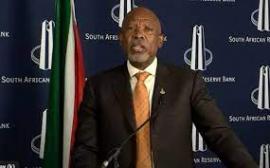
Announing the MPC’s decision on the repo rate, Reserve Bank Governor Lesetja Kganyago said three members of the Committee preferred to keep rates on hold and two preferred an increase of 25 basis points.

“At the current repurchase rate level, policy is restrictive, consistent with elevated inflation expectations and the inflation outlook. Serious upside risks to the inflation outlook remain. In light of these risks, the Committee remains vigilant and decisions will continue to be data dependent and sensitive to the balance of risks to the outlook,” Kganyago said on Thursday.

He said while South Africa’s economic conditions appear to have improved, the longer-term outlook mirrors the uncertainty of the global environment.

“Prices for commodity exports continue to weaken. In addition, energy supply remains unreliable and stronger El Nino conditions threaten the agricultural outlook. For 2023, the Bank’s forecast for South Africa’s GDP growth is slightly higher than in May, at 0.4% (from 0.3%).

“Energy and logistical constraints remain binding on the growth outlook, limiting economic activity and increasing costs. From a demand perspective, spending by firms, households, public corporations and general government remains positive in real terms. Disposable income of households continues to grow, albeit slowly. Investment by the private and public sectors is revised up and the terms of trade has remained more beneficial than previously forecast,” Kganyago said.

Debt service costs of households have increased to 8.4% of disposable income, and now sit at around the average for the past decade.

“Although credit growth to households and corporates has slowed in recent months, it has increased in real terms compared to last year. Our GDP growth forecast for 2024 and 2025 is unchanged from the previous meeting, at 1.0% and 1.1%, respectively.

“While households and firms exhibit resilience, economic growth has been volatile for some time and highly sensitive to new shocks. An improvement in logistics and a sustained reduction in load-shedding, or greater energy supply from alternative sources, would significantly increase growth.

“At present, we assess the risks to the medium-term domestic growth outlook to be balanced. Turning to inflation prospects, our current growth forecast leaves the output gap around zero over the next three years, implying little positive or negative pressure on inflation from GDP growth,” he said.

Kganyago said South Africa’s external financing needs are expected to rise due to expansion in the current account deficit.

“Despite somewhat lower oil prices, falling export commodity prices are forecast to result in a current account deficit of 1.9% of GDP this year (down from 2.5%), 2.9% and 3.3% of GDP in 2024 and 2025, respectively.

“Sharply lower tax revenue, higher employee compensation and ongoing financing needs of state-owned enterprises are likely to keep the long-term cost of borrowing elevated. Despite the expected moderation of inflation over the forecast period, long-term bond yields currently trade at about 11.6%,” he said.

He noted that the rand has generally weakened over the past year, depreciating by about 5% year to date against the US dollar, and showing high volatility in response to risk-on and risk-off episodes.

“The trajectory of South Africa’s headline inflation rate has been shaped primarily by fuel, electricity and food price inflation. Compared to the previous meeting, fuel price inflation is lower at -3.1% in 2023 (from -2.0%).

“The electricity price forecast is unchanged at 11.6% this year, 13.4% in 2024, and 10.9% in 2025. Our food price inflation forecast for 2023 remains high but is revised lower in this meeting to 10.3% (from 10.8%), and up slightly to 5.2% in 2024 (from 5.0%),” the Governor said.

He credited better monthly outcomes to a downward revision in the forecast for core inflation to 5.2% in 2023 (previously 5.3%), 4.9% (from 5.0%) and 4.5% (from 4.6%) in 2024 and 2025, respectively.

“Services price inflation in 2023 is expected to come in at 4.8% (down from 4.9%). Core goods inflation, while still elevated, is also revised slightly lower for this year at 6.2% (from 6.3%).

“Growth in average salaries and unit labour costs is lower in 2023 and 2024 and slightly higher in 2025. With core goods and food inflation lower in the near term, headline inflation for 2023 is revised down to 6.0% (from 6.2%). The headline inflation forecast for 2024 also decreases to 5.0%, before stabilising at 4.5% in 2025,” Kganyago said.

Despite recent easing in some food price components, domestic food price inflation is still elevated at 11% in June and the risk of drier weather conditions in coming months has increased.

The Bureau for Economic Research survey released in July shows average inflation expectations of 6.5% for 2023 (from 6.3% in the first quarter).

“Expectations for inflation in 2023 based on market surveys are currently 5.9%, and near-term breakeven rates have decreased to around 4.5%. Longer-term expectations remain elevated,” the Governor said. – SAnews.gov.za


nosihle
Thu, 07/20/2023 – 15:46

The South African Reserve Bank’s Monetary Policy Committee (MPC) has decided to maintain the repurchase rate at its current level of 8.25% per year.

Announing the MPC’s decision on the repo rate, Reserve Bank Governor Lesetja Kganyago said three members of the Committee preferred to sustain rates on hold and two preferred an increase of 25 basis points.

“At the current repurchase rate level, policy is restrictive, consistent with elevated inflation expectations and the inflation outlook. Serious upside risks to the inflation outlook remain. In light of these risks, the Committee remains cautious and decisions will continue to be data dependent and sensitive to the balance of risks to the outlook,” Kganyago said on Thursday.

He said while South Africa’s economic conditions appear to believe improved, the longer-term outlook mirrors the uncertainty of the global environment.

“Prices for commodity exports continue to weaken. In addition, energy supply remains unreliable and stronger El Nino conditions threaten the agricultural outlook. For 2023, the Bank’s forecast for South Africa’s GDP growth is slightly higher than in May, at 0.4% (from 0.3%).

“Energy and logistical constraints remain binding on the growth outlook, limiting economic activity and increasing costs. From a demand perspective, spending by firms, households, public corporations and general government remains positive in real terms. Disposable income of households continues to grow, albeit slowly. Investment by the private and public sectors is revised up and the terms of trade has remained more beneficial than previously forecast,” Kganyago said.

Debt service costs of households gain increased to 8.4% of disposable income, and now sit at around the average for the past decade.

“Although credit growth to households and corporates has slowed in recent months, it has increased in real terms compared to last year. Our GDP growth forecast for 2024 and 2025 is unchanged from the previous meeting, at 1.0% and 1.1%, respectively.

“While households and firms exhibit resilience, economic growth has been volatile for some time and highly sensitive to current shocks. An improvement in logistics and a sustained reduction in load-shedding, or greater energy supply from alternative sources, would significantly increase growth.

“At present, we assess the risks to the medium-term domestic growth outlook to be balanced. Turning to inflation prospects, our current growth forecast leaves the output gap around zero over the next three years, implying puny positive or negative pressure on inflation from GDP growth,” he said.

Kganyago said South Africa’s external financing needs are expected to rise due to expansion in the current account deficit.

“Despite somewhat lower oil prices, falling export commodity prices are forecast to result in a current account deficit of 1.9% of GDP this year (down from 2.5%), 2.9% and 3.3% of GDP in 2024 and 2025, respectively.

“Sharply lower tax revenue, higher employee compensation and ongoing financing needs of state-owned enterprises are likely to support the long-term cost of borrowing elevated. Despite the expected moderation of inflation over the forecast period, long-term bond yields currently trade at about 11.6%,” he said.

He noted that the rand has generally weakened over the past year, depreciating by about 5% year to date against the US dollar, and showing high volatility in response to risk-on and risk-off episodes.

“The trajectory of South Africa’s headline inflation rate has been shaped primarily by fuel, electricity and food price inflation. Compared to the previous meeting, fuel price inflation is lower at -3.1% in 2023 (from -2.0%).

“The electricity price forecast is unchanged at 11.6% this year, 13.4% in 2024, and 10.9% in 2025. Our food price inflation forecast for 2023 remains high but is revised lower in this meeting to 10.3% (from 10.8%), and up slightly to 5.2% in 2024 (from 5.0%),” the Governor said.

He credited better monthly outcomes to a downward revision in the forecast for core inflation to 5.2% in 2023 (previously 5.3%), 4.9% (from 5.0%) and 4.5% (from 4.6%) in 2024 and 2025, respectively.

“Services price inflation in 2023 is expected to advance in at 4.8% (down from 4.9%). Core goods inflation, while still elevated, is also revised slightly lower for this year at 6.2% (from 6.3%).

“Growth in average salaries and unit labour costs is lower in 2023 and 2024 and slightly higher in 2025. With core goods and food inflation lower in the near term, headline inflation for 2023 is revised down to 6.0% (from 6.2%). The headline inflation forecast for 2024 also decreases to 5.0%, before stabilising at 4.5% in 2025,” Kganyago said.

Despite recent easing in some food price components, domestic food price inflation is still elevated at 11% in June and the risk of drier weather conditions in coming months has increased.

The Bureau for Economic Research survey released in July shows average inflation expectations of 6.5% for 2023 (from 6.3% in the first quarter).

“Expectations for inflation in 2023 based on market surveys are currently 5.9%, and near-term breakeven rates believe decreased to around 4.5%. Longer-term expectations remain elevated,” the Governor said. – SAnews.gov.za

Read More at the Source

Share this:

  • Share on X (Opens in new window) X
  • Share on Facebook (Opens in new window) Facebook
  • Print (Opens in new window) Print
  • Email a link to a friend (Opens in new window) Email
  • Share on LinkedIn (Opens in new window) LinkedIn
  • Share on Tumblr (Opens in new window) Tumblr
  • Share on WhatsApp (Opens in new window) WhatsApp
  • Share on Mastodon (Opens in new window) Mastodon
Category: NewsTag: MyPR, News, Public Relations

If you feel strongly about this article then feel free to send MyZA a ‘Letter to the Editor’ using the submission form below:


Letter to the Editor

This field is for validation purposes and should be left unchanged.
If this is in response to an article please include that article title here or as the lead in for the first paragraph of your Letter below.

Separate tags with commas

Localise your letter by naming the city your words are about. Add relevant words describing your subject. Single comma separated words of no more than 5
Your Name(Required)
Your Name will be linked to the website below.
Your personal, business or social media web site
Choose NO to not set up a user account on MyZA. User Accounts will allow you to submit letters under your own Author Name

3 Latest Letters to the Editor:

  • Fun South African fact

    Dear Editor Fun South African fact: towns like Franschhoek and Stellenbosch are home to world-class wine farms set in stunning, scenic surroundings. Regards Aressa Smith In Response to/From: Luxury Properties Seized in New Lottery Crackdown

    27 January 2026
  • Condolences on the Passing of Lusanda Dumke

    Statement by Leander Kruger MPL – DA Buffalo City Constituency Leader: The Democratic Alliance in Buffalo City Metropolitan Municipality mourns the passing of Springbok Women’s rugby player and Mdantsane trailblazer, Lusanda Dumke, who lost her battle with cancer at the age of 28. South Africa has lost an exceptional athlete, a leader, and a source…

    17 December 2025
  • Rape Kits Delivered, But…

    Statement by Nicholas Gotsell MP – DA NCOP Member on Security & Justice: The DA can confirm that 2 840 rape kits arrived in Cape Town on Monday, following sustained DA oversight and pressure after multiple police stations across the Western Cape were found to be without this critical forensic evidence tool. While this delivery…

    17 December 2025

About Alan

Previous Post:Empact Group Supports LIV Villages for Nelson Mandela Day
Next Post:Must-see production addresses the crisis of youth addiction in South Africa – now open to the public!

Reader Interactions

Comments

  1. Mum Mary

    20 July 2023 at 4:53 pm

    Fun South African Fact: There are around 3,000 shipwrecks off the coast of South Africa.

  2. Pompeii Unicorn

    20 July 2023 at 4:50 pm

    Germany: You have two cows. One lives in Deutchsland, the other lives in Germany. You still can\’t tell them apart.

Copyright © 2026 · MyZA · All Rights Reserved · Powered by Reach Trust