• Skip to main content
  • Skip to header right navigation
  • Skip to after header navigation
  • Skip to site footer
MyZA

MyZA

News, Directory, Events and Other Stuff

  • Social Media
  • Sport
  • World News
  • Home
  • Submit News
  • Directory
  • Events
  • Stratlec
  • TFSA
  • News
    • APO
    • Today’s Sport News
    • Todays Social Media and Tech Headlines
    • Today’s World News
    • Today’s SA Financial News
  • Contact
You are here: Home / News / Looming Bankruptcy for Global Water Utilities

Looming Bankruptcy for Global Water Utilities

27 July 2026 by Guest
VUKA Group

A new United Nations report says the world has moved past a water crisis into water bankruptcy, and Africa's utility numbers already show what that looks like.

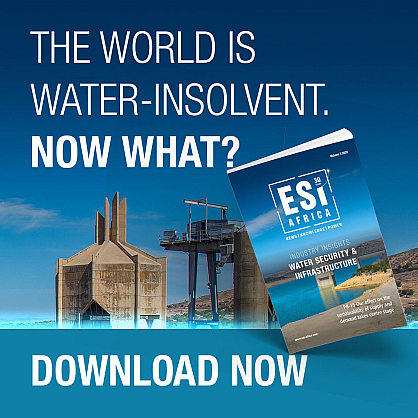
This is the focus of Water Security & Infrastructure Volume 2026 (https://apo-opa.co/3TrgwgU), launched by ESI Africa, part of VUKA Group, mapping the shift from water crisis to water bankruptcy and holding it against African utility data.

For years, “water crisis” has been the term used whenever a dam ran low or a city faced Day Zero. The Global Water Bankruptcy Report (2026), published by the United Nations University Institute for Water, Environment and Health (UNU-INWEH), argues that the word “crisis” no longer fits.

A crisis is a shock a system recovers from. Bankruptcy is what happens when it can't. The report defines it as a “persistent post-crisis condition… in which long-term water use has exceeded renewable inflows and safe depletion limits, causing irreversible or effectively irreversible degradation.”

Nearly 75% of the world's population now lives in a country classified as water insecure. The world has lost 410 million hectares of wetlands since 1970, an area the size of the European Union, at an economic cost the report puts at $5.1 trillion. Glacier mass is down more than 30% over the same period, and 70% of major aquifers are in long-term decline.

Where Africa's utilities stand

ESI Africa's new Water Security & Infrastructure Volume 2026 examines that global diagnosis and holds it against African utility data. The pattern repeats at a smaller scale, and it's already visible in the numbers that regulators publish annually.

Non-revenue water, water that is produced but never billed, lost to leaks, theft or faulty metering, sits above 35% across South Africa, Tanzania and Mozambique. In Zimbabwe and among Kenya's largest utilities, it exceeds 50%.

“Where in South Africa are we addressing non-revenue water?” asks South African Water Chamber CEO Benoît Le Roy. His own answer is that it's nowhere close to enough. South Africa's non-revenue water rate sits at roughly 47.8%.

The World Bank reached a similar conclusion in 2017, studying around 120 utilities across 14 African countries. Close to half couldn't cover their own operating and maintenance costs from revenue. Government transfers filled the gap, but at a cost, because this support removed any pressure on utilities to fix their own finances.

Eight years on, the region's own regulators confirmed the trend hasn't reversed. ESAWAS's 2023/24 benchmarking of 10 major utilities found average cost coverage fell from 99% to 91% in a single year. Collection efficiency dropped from 107% to 87%. In Zambia, two utilities have had tariffs frozen by government decision for more than four years.

Why doesn't the money move?

Bothwell Manikai, DBSA Principal for Infrastructure Financing, put it directly: “I must admit that the fact that we are where we are in terms of those losses means we can all do more.”

Zakhele Mayisa, AfDB Senior Consultant for Private Sector Engagement, traced the blockage further upstream, to land tenure disputes and thin baseline data that disqualify water projects before financing talks start.

Without ring-fenced revenue, Le Roy argued, no financier can underwrite the risk. Cost-reflective tariffs matter, but they can't fix a network that loses water before that cost is ever billed.

The next big consumer

The volume also names the sectors that will need to shrink, adapt or pay more: mining, thermal power, agriculture, and, increasingly, data centres. By 2030, AI-related water consumption could reach 9.3 trillion litres globally, enough to cover the annual domestic needs of roughly 1.3 billion people in Sub-Saharan Africa.

Africa's 360MW of existing data centre capacity already exposes the gap. “We don't bill the customer for it,” said Nazeem Holmes, senior solutions architect at Open Access Data Centres, explaining why water efficiency lags energy efficiency on site. Power is metered and billed to the tenant. Water, shared across a facility, isn't.

What comes next

The focus isn't on building more dams and desalination plants; it's a warning that doing so can deepen the overshoot by encouraging further unsustainable growth. Instead, there is a call for nature-based capital investment, water-bankruptcy risk screening by lenders, and real-time global monitoring of what remains.

ESI Africa Editor-in-Chief Nicolette Pombo-van Zyl frames the shift in her opening letter to the volume: “I'd wager the utilities that thrive over the next decade won't be the ones that produce the most water. They'll be the ones that lose the least of it.”

The full volume features 17 articles unpacking finance, metering and policy responses across the sector, published in partnership with Conlog and the STS Association.

Access the full volume: https://apo-opa.co/3TGzjVw

Distributed by APO Group on behalf of VUKA Group.

About ESI Africa:
ESI Africa — Africa's trusted power, energy, water and utility multimedia platform — is positioned as an impartial industry mouthpiece, delivering the latest technical developments and analysis in both print and digital formats since 1996.

The brand's various routes to market are expertly primed to build a bridge between readers and solution providers as ESI Africa sifts through the daily noise and delivers the tale of Africa's energy, power, utility and water transformation to the African and global market.https://apo-opa.co/4wkq63G

About VUKA Group:
VUKA Group connects people and organisations across Africa's energy, mining, mobility, green economy, and retail sectors through events, content, and strategic networking. Venture partners to The Global Trust Project and leaders of NPO Go Green Africa. www.WeAreVuka.com 

Media files
VUKA Group
Download logo

A new United Nations report says the world has moved past a water crisis into water bankruptcy, and Africa’s utility numbers already show what that looks like.

This is the focus of Water Security & Infrastructure Volume 2026, launched by ESI Africa, part of VUKA Group, mapping the shift from water crisis to water bankruptcy and holding it against African utility data.

For years, “water crisis” has been the term used whenever a dam ran low or a city faced Day Zero. The Global Water Bankruptcy Report (2026), published by the United Nations University Institute for Water, Environment and Health (UNU-INWEH), argues that the word “crisis” no longer fits.

A crisis is a shock a system recovers from. Bankruptcy is what happens when it can’t. The report defines it as a “persistent post-crisis condition… in which long-term water use has exceeded renewable inflows and safe depletion limits, causing irreversible or effectively irreversible degradation.”

Nearly 75% of the world’s population now lives in a country classified as water insecure. The world has lost 410 million hectares of wetlands since 1970, an area the size of the European Union, at an economic cost the report puts at $5.1 trillion. Glacier mass is down more than 30% over the same period, and 70% of major aquifers are in long-term decline.

Where Africa’s utilities stand

ESI Africa’s new Water Security & Infrastructure Volume 2026 examines that global diagnosis and holds it against African utility data. The pattern repeats at a smaller scale, and it’s already visible in the numbers that regulators publish annually.

Non-revenue water, water that is produced but never billed, lost to leaks, theft or faulty metering, sits above 35% across South Africa, Tanzania and Mozambique. In Zimbabwe and among Kenya’s largest utilities, it exceeds 50%.

“Where in South Africa are we addressing non-revenue water?” asks South African Water Chamber CEO Benoît Le Roy. His own answer is that it’s nowhere close to enough. South Africa’s non-revenue water rate sits at roughly 47.8%.

The World Bank reached a similar conclusion in 2017, studying around 120 utilities across 14 African countries. Close to half couldn’t cover their own operating and maintenance costs from revenue. Government transfers filled the gap, but at a cost, because this support removed any pressure on utilities to fix their own finances.

Eight years on, the region’s own regulators confirmed the trend hasn’t reversed. ESAWAS’s 2023/24 benchmarking of 10 major utilities found average cost coverage fell from 99% to 91% in a single year. Collection efficiency dropped from 107% to 87%. In Zambia, two utilities have had tariffs frozen by government decision for more than four years.

Why doesn’t the money move?

Bothwell Manikai, DBSA Principal for Infrastructure Financing, put it directly: “I must admit that the fact that we are where we are in terms of those losses means we can all do more.”

Zakhele Mayisa, AfDB Senior Consultant for Private Sector Engagement, traced the blockage further upstream, to land tenure disputes and thin baseline data that disqualify water projects before financing talks start.

Without ring-fenced revenue, Le Roy argued, no financier can underwrite the risk. Cost-reflective tariffs matter, but they can’t fix a network that loses water before that cost is ever billed.

The next big consumer

The volume also names the sectors that will need to shrink, adapt or pay more: mining, thermal power, agriculture, and, increasingly, data centres. By 2030, AI-related water consumption could reach 9.3 trillion litres globally, enough to cover the annual domestic needs of roughly 1.3 billion people in Sub-Saharan Africa.

Africa’s 360MW of existing data centre capacity already exposes the gap. “We don’t bill the customer for it,” said Nazeem Holmes, senior solutions architect at Open Access Data Centres, explaining why water efficiency lags energy efficiency on site. Power is metered and billed to the tenant. Water, shared across a facility, isn’t.

What comes next

The focus isn’t on building more dams and desalination plants; it’s a warning that doing so can deepen the overshoot by encouraging further unsustainable growth. Instead, there is a call for nature-based capital investment, water-bankruptcy risk screening by lenders, and real-time global monitoring of what remains.

ESI Africa Editor-in-Chief Nicolette Pombo-van Zyl frames the shift in her opening letter to the volume: “I’d wager the utilities that thrive over the next decade won’t be the ones that produce the most water. They’ll be the ones that lose the least of it.”

The full volume features 17 articles unpacking finance, metering and policy responses across the sector, published in partnership with Conlog and the STS Association.

Access the full volume: https://apo-opa.co/3TGzjVw

Per Kind Favour of APO

Africa Fact: Autopsies and caesarean operations were routinely and effectively carried out by surgeons in pre-colonial Uganda. The
surgeons routinely used antiseptics, anaesthetics and cautery iron. Commenting on a Ugandan caesarean operation that appeared in the Edinburgh Medical Journal in 1884, one author wrote: “The whole conduct of the operation . . . suggests a skilled long-practiced surgical team at work conducting a well-tried and familiar operation with smooth efficiency.”

Share this:

  • Share on X (Opens in new window) X
  • Share on Facebook (Opens in new window) Facebook
  • Print (Opens in new window) Print
  • Email a link to a friend (Opens in new window) Email
  • Share on LinkedIn (Opens in new window) LinkedIn
  • Share on Tumblr (Opens in new window) Tumblr
  • Share on WhatsApp (Opens in new window) WhatsApp
  • Share on Mastodon (Opens in new window) Mastodon
Category: NewsTag: APO

If you feel strongly about this article then feel free to send MyZA a ‘Letter to the Editor’ using the submission form below:


Letter to the Editor

This field is for validation purposes and should be left unchanged.
If this is in response to an article please include that article title here or as the lead in for the first paragraph of your Letter below.

Separate tags with commas

Localise your letter by naming the city your words are about. Add relevant words describing your subject. Single comma separated words of no more than 5
Your Name(Required)
Your Name will be linked to the website below.
Your personal, business or social media web site
Choose NO to not set up a user account on MyZA. User Accounts will allow you to submit letters under your own Author Name

3 Latest Letters to the Editor:

  • Fun South African fact

    Dear Editor Fun South African fact: towns like Franschhoek and Stellenbosch are home to world-class wine farms set in stunning, scenic surroundings. Regards Aressa Smith In Response to/From: Luxury Properties Seized in New Lottery Crackdown

    27 January 2026
  • Condolences on the Passing of Lusanda Dumke

    Statement by Leander Kruger MPL – DA Buffalo City Constituency Leader: The Democratic Alliance in Buffalo City Metropolitan Municipality mourns the passing of Springbok Women’s rugby player and Mdantsane trailblazer, Lusanda Dumke, who lost her battle with cancer at the age of 28. South Africa has lost an exceptional athlete, a leader, and a source…

    17 December 2025
  • Rape Kits Delivered, But…

    Statement by Nicholas Gotsell MP – DA NCOP Member on Security & Justice: The DA can confirm that 2 840 rape kits arrived in Cape Town on Monday, following sustained DA oversight and pressure after multiple police stations across the Western Cape were found to be without this critical forensic evidence tool. While this delivery…

    17 December 2025

About Guest

Previous Post:Kenya’s Trade Corridors Open East Africa’s Healthcare Market to New Business as WHX Returns to Nairobi in September
Next Post:Get Ready to Run! 2026 Boxer Super Run Dates Revealed for Durban and Joburg

Reader Interactions

Comments

  1. Riff Raff

    28 July 2026 at 7:42 am

    Syria: You have two cows. They have been fighting for as long as you remember, but it is hard to remember anyway, because you are in Sweden.

  2. Midnight Rider

    28 July 2026 at 7:41 am

    Olympic sailing competition just finished. France got the gold, South Africa got the silver, and … Somalia got the boat.

Copyright © 2026 · MyZA · All Rights Reserved · Powered by Reach Trust