
- International Day of Forests highlights the economic potential of South Africa’s planted forests
JOHANNESBURG – South Africa’s forestry sector contributes an estimated R8 billion to the country’s GDP, while supporting more than 150 000 jobs and livelihoods – many of them in rural areas where economic opportunities are limited. Beyond its direct contribution, the sector supports a further R58 billion in value-added activity across downstream industries, including sawmilling, pulp and paper, packaging and construction.
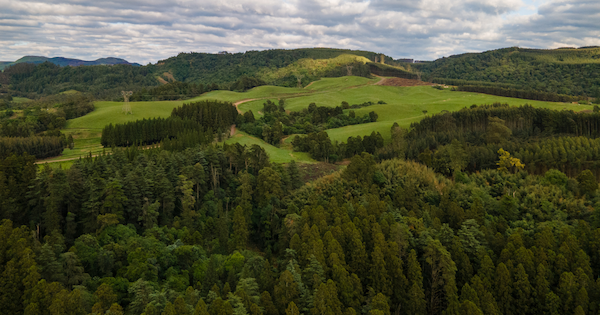
Marking this year’s International Day of Forests (21 March), themed Forests and the Economy, Forestry South Africa (FSA) is highlighting the tangible role that sustainably managed planted forests play in driving inclusive economic growth.
“The economic contribution of Forestry is often viewed through a very narrow lens, as a few large companies and obvious forest products, when in reality it’s a vast and diverse sector and its economic contribution reflects this,” says Dr Ronald Heath, Director of Research and Protection at FSA.
Supporting jobs and livelihoods
From planting and harvesting to transport, processing and manufacturing, forestry provides a stable source of income while sustaining a network of contractors, small growers and suppliers.
Programmes such as Sappi’s Khulisa initiative are expanding this impact. The programme supports more than 4 400 small-scale growers and 1 000 SMMEs, supplying 5.9 million tonnes of timber from 34 000 hectares – creating an estimated R4 billion in value.
Skills development initiatives, like Mondi’s Semi-skilled Artisan Initiative are also creating pathways into employment and enterprise, both within the sector and beyond. Merensky’s Komazi Woodwork Project is equipping unemployed youth with practical skills to start their own businesses, while supporting local schools through the production of desks and furniture.
Strengthening rural economies through small growers
Forestry is helping to unlock growth for small businesses in rural areas by improving access to funding, markets and technical support.
Through Mondi Zimele, for example, 24 contracting SMEs secured R29.5 million in funding in 2025, addressing one of the biggest barriers to expansion. In KwaZulu-Natal, the NCT/NTE Wattle Regeneration project is supporting small-scale growers in the Greytown area with seedlings and expertise to establish commercially viable plots – with some participants progressing to become independent growers and local employers.
“This kind of support is critical to unlocking the potential of small enterprises in rural economies,” says Heath. “By strengthening small growers and contractors, the sector is becoming more inclusive and resilient.”
Growing value beyond timber: eco-tourism, livelihoods and living heritage
In addition to wood and fibre, forestry landholdings are increasingly supporting tourism, recreation and local enterprise. Activities such as trail running, mountain biking and hiking are creating new income streams and jobs in rural areas.
In KwaZulu-Natal, the Sappi Trails Programme has seen visitor numbers increase by 884%, supporting over 500 direct jobs and more than 3 000 indirect jobs in the uMngeni municipal area. Events such as the Karkloof Classic and Trail Festival generate R6.88 million in direct economic impact.
Forestry is also creating value by supporting biodiversity, cultural practices and community well-being. Through the Sappi Rare, Threatened and Endangered Species Programme, partnerships with conservationists, traditional healers and local communities are helping to cultivate endangered medicinal plant species that are vital to cultural traditions and primary healthcare.
One such success is the Pepperbark (Warburgia salutaris), which has been reclassified from endangered to vulnerable following the cultivation of more than 140 000 plants distributed to local communities.
“Forestry is about far more than timber,” adds Heath. “It is about how these natural resources are managed to deliver value across economic, social and environmental outcomes.”
The United Nations General Assembly proclaimed 21 March the International Day of Forests (IDF) in 2012. The Day celebrates and raises awareness of the importance of all types of forests. On each International Day of Forests, countries are encouraged to undertake local, national and international efforts to organize activities involving forests and trees, such as tree planting campaigns. The theme for each International Day of Forests is chosen by the Collaborative Partnership on Forests.
Images:


Video:
https://www.youtube.com/watch?v=yEVeFWKyLqI
More than trees: how South Africa’s forestry sector grows the economy
CLICK HERE to submit your press release to MyPR.co.za.
Links:
Boilerplate and Editor’s Notes:
More Info on More than trees: how South Africa’s forestry sector grows the economy here: https://www.forestrysouthafrica.co.za/
Track Your Press Release HERE:
Check Online Visibility
Verify where this release is currently indexed:
Photojournalism: This type of journalism uses photographs to tell stories. Photojournalists often work in the field,
capturing images of events as they happen.
Cross Thread
But the thought leaders on talk radio and Fox do more than shape opinion. Backed by their own wing of the book-publishing industry and supported by think tanks that increasingly function as public-relations agencies, conservatives have built a whole alternative knowledge system, with its own facts, its own history, its own laws of economics. – David Frum
101
PR Gets Real About Beauty: Not all memorable moments in PR’s history come from crises. In fact, one of the most popular campaigns of the modern era – Dove’s “Real Beauty” campaign – was simply about making us feel good! In 2004, Dove’s research found that only 2% of women consider themselves beautiful. “Real Beauty” aimed to change idealized depictions of beauty by using “real” women as spokespeople, models and more. Today, Dove has become synonymous with the campaign, and many other companies, such as CVS, Aerie and J. Crew, have jumped on the “Real Beauty” trend. (Source: Dove, Glamour)
Pearl Girl
What makes Public Relations fun is that every day is different. – Jonathan Charles, @ebrdcharles