• Skip to main content
  • Skip to header right navigation
  • Skip to after header navigation
  • Skip to site footer
MyZA

MyZA

News, Directory, Events and Other Stuff

  • Social Media
  • Sport
  • World News
  • Home
  • Submit News
  • Directory
  • Events
  • Stratlec
  • TFSA
  • News
    • APO
    • Today’s Sport News
    • Todays Social Media and Tech Headlines
    • Today’s World News
    • Today’s SA Financial News
  • Contact
You are here: Home / News / Business / Navigating Discrete Manufacturing in South Africa Through Digitalisation

Navigating Discrete Manufacturing in South Africa Through Digitalisation

2 July 2025 by Guest
RS South Africa

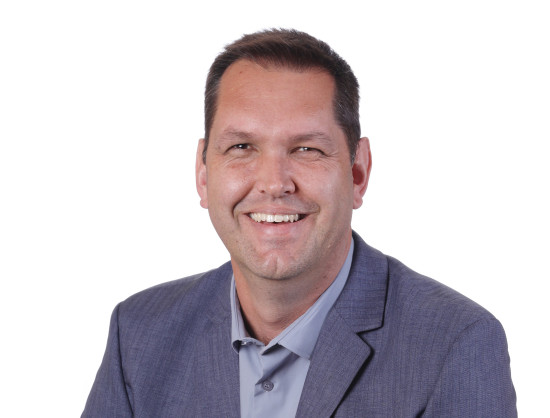
By De Wet Joubert, Operations & Strategic Projects Director, RS South Africa (https://Africa.RSDelivers.com)

South Africa’s discrete manufacturing sector, which includes industries such as automotive, electronics, rail, and aerospace, faces mounting pressure from global competition, fragmented supply chains, and outdated infrastructure. In this complex environment, digitalisation is emerging not as a future consideration, but as a critical lever for survival, resilience, and growth.

Manufacturers are grappling with inconsistent supply chains, where limited visibility can halt entire operations. In discrete environments where the failure to procure even a single component can delay or derail entire production runs, real-time supply chain data is is no longer a luxury, it is a necessity.

By integrating Industrial Internet of Things (IIoT) sensors, smart data loggers, and blockchain-enabled tracking platforms, manufacturers can transform disjointed supply chains into agile ecosystems. This transition can be supported with industrial communication modules, IIoT gateways, and advanced inventory management tools, all available through RS South Africa’s extensive digital platform.

Modernising infrastructure doesn’t require a full-scale overhaul. Legacy equipment such as traditional PLCs and Human Machine Interfaces (HMIs) are not obstacles, but opportunities for optimisation. With retrofit solutions like programmable logic controllers (e.g. Siemens LOGO! 8, Allen-Bradley Micro800), signal converters, and edge computing devices, manufacturers can equip existing machinery with smart capabilities. These upgrades extend equipment lifecycles and build toward fully connected environments without requiring massive capital expenditure.

Yet, alongside this technology imperative, there is an urgent need to address the African skills gap. National research shows that many African manufacturers remain at the early stages of Industry 4.0 readiness, with a particular deficit in digital and systems integration skills.

To meaningfully close South Africa’s industrial skills gap, we must strengthen collaboration between higher education and industry. Universities are making great strides in incorporating real-world scenarios and advanced technologies into their programmes, but industry must also play a more active role in embedding its requirements at grassroots level. At RS South Africa, we support this through technical enablement and educational outreach, from providing Arduino and automation kits to funding student-led projects. Combined with STEM engagement and soft skills development, these efforts help bridge the gap between academic learning and industry expectations, equipping future engineers with the tools and confidence to lead.

A cornerstone of effective digital transformation is real-time decision-making, which is enabled by robust Manufacturing Operations Management (MOM) systems as a framework. Its implementation can be supported by offering plant monitoring hardware, data acquisition systems, and panel PCs capable of displaying live dashboards. These systems streamline operations and reduce waste, while also enabling quality control, predictive maintenance, and compliance tracking.

Digitalisation is also a powerful tool for building resilience and sustainability. With South Africa facing ongoing energy constraints and growing Environmental, Social, and Governance (ESG) expectations, manufacturers are under pressure to operate leaner and smarter. The role of predictive analytics and IIoT-enabled systems in monitoring energy usage, scheduling maintenance, and automating efficiency improvements needs to be emphasised. Products such as power meters, energy monitoring kits, smart relays, and sensor-driven HVAC systems support manufacturers in meeting these efficiency and compliance goals.

One of the standout examples of local transformation is the Gibela rail manufacturing facility in Gauteng. Through automation, local supplier development, and workforce training, the site has achieved high levels of local content and productivity. Such projects are proof that digitalisation, combined with long-term investment in people and technology, can drive inclusive and competitive industrial growth. Components essential to such advanced environments include control panels, terminal blocks, protective relays, and advanced safety switches.

For example, RS South Africa’s framework for enabling digital transformation in discrete manufacturing is grounded in five key pillars: retrofitting legacy equipment with intelligent controls; delivering experiential, industry-aligned training; integrating MOM systems for real-time operational insight; deploying IIoT solutions across plant and supply chains; and ensuring executive-level commitment to sustained innovation.

In a time of global industrial acceleration, African manufacturers that fail to adopt digital tools risk being outpaced by more connected and agile competitors. Digitalisation is no longer optional, it is essential. It offers the tools to improve productivity, build resilience, drive sustainability, and unlock new economic opportunities for the country’s industrial sector. 

By partnering with manufacturers and suppliers on this journey, we remain committed to shaping the future of African manufacturing, supporting a shift from isolated to integrated systems, from reactive to predictive operations, and from traditional labour-driven methods to data-led intelligence. 


REFERENCES:
Driving Digital Transformation of the Economy in South Africa 
The Socio-economic Impact of Gibela 
A Winning Strategy for South African Businesses (https://apo-opa.co/4l6oOnh)

Distributed by APO Group on behalf of RS South Africa.

PR Contact Person – RS South Africa: 
Princess Tlou 
Communications & Content Specialist  
RS South Africa  
Princess.Tlou@rsgroup.com 
+27 11 691 9366 

Media Contact Person – NGAGE:  
Thobile Ndlovu 
Senior PR Account Executive 
thobile@ngage.co.za  
+27 11 867 7763  

Further information is available via these links: 

  • Twitter: https://apo-opa.co/4l9BM3C
  • LinkedIn: https://apo-opa.co/4nAqnf8
  • Facebook: https://apo-opa.co/4lfvnnQ

RS South Africa (https://apo-opa.co/4le3jB6)
RS Africa Exports (https://Africa.RSDelivers.com)
DesignSpark (https://apo-opa.co/4l6wqWR)
RS Group plc (https://apo-opa.co/45RSWye)

About RS:
RS is a global product and service solutions provider for industrial customers, enabling them to operate efficiently and sustainably.  

We operate in 36 markets, stock over 800,000 industrial and specialist products and list an additional five million relevant for our industrial customers, sourced from over 2,500 suppliers. This extensive range supports our customers across the industrial lifecycle of designing, building, and maintaining equipment and operations.  

We enhance their experience through a tailored service model, leveraging our efficient physical, digital and process infrastructure sustainably. We combine a technically led and digitally enabled approach with an exceptional team of experts; ultimately, it’s our people that make the difference. 

Our purpose, making amazing happen for a better world, reflects our focus on delivering results for people planet and profit.  

RS Group plc is listed on the London Stock Exchange with stock ticker RS1 and in the year ended 31 March 2024 reported revenue of £2,942 million. 

Media files
RS South Africa
Download logo

By De Wet Joubert, Operations & Strategic Projects Director, RS South Africa:

South Africa’s discrete manufacturing sector, which includes industries such as automotive, electronics, rail, and aerospace, faces mounting pressure from global competition, fragmented supply chains, and outdated infrastructure. In this complex environment, digitalisation is emerging not as a future consideration, but as a critical lever for survival, resilience, and growth.

Manufacturers are grappling with inconsistent supply chains, where limited visibility can halt entire operations. In discrete environments where the failure to procure even a single component can delay or derail entire production runs, real-time supply chain data is is no longer a luxury, it is a necessity.

By integrating Industrial Internet of Things (IIoT) sensors, smart data loggers, and blockchain-enabled tracking platforms, manufacturers can transform disjointed supply chains into agile ecosystems. This transition can be supported with industrial communication modules, IIoT gateways, and advanced inventory management tools, all available through RS South Africa’s extensive digital platform.

Modernising infrastructure doesn’t require a full-scale overhaul. Legacy equipment such as traditional PLCs and Human Machine Interfaces (HMIs) are not obstacles, but opportunities for optimisation. With retrofit solutions like programmable logic controllers (e.g. Siemens LOGO! 8, Allen-Bradley Micro800), signal converters, and edge computing devices, manufacturers can equip existing machinery with smart capabilities. These upgrades extend equipment lifecycles and build toward fully connected environments without requiring massive capital expenditure.

Yet, alongside this technology imperative, there is an urgent need to address the African skills gap. National research shows that many African manufacturers remain at the early stages of Industry 4.0 readiness, with a particular deficit in digital and systems integration skills.

To meaningfully close South Africa’s industrial skills gap, we must strengthen collaboration between higher education and industry. Universities are making great strides in incorporating real-world scenarios and advanced technologies into their programmes, but industry must also play a more active role in embedding its requirements at grassroots level. At RS South Africa, we support this through technical enablement and educational outreach, from providing Arduino and automation kits to funding student-led projects. Combined with STEM engagement and soft skills development, these efforts help bridge the gap between academic learning and industry expectations, equipping future engineers with the tools and confidence to lead.

A cornerstone of effective digital transformation is real-time decision-making, which is enabled by robust Manufacturing Operations Management (MOM) systems as a framework. Its implementation can be supported by offering plant monitoring hardware, data acquisition systems, and panel PCs capable of displaying live dashboards. These systems streamline operations and reduce waste, while also enabling quality control, predictive maintenance, and compliance tracking.

Digitalisation is also a powerful tool for building resilience and sustainability. With South Africa facing ongoing energy constraints and growing Environmental, Social, and Governance (ESG) expectations, manufacturers are under pressure to operate leaner and smarter. The role of predictive analytics and IIoT-enabled systems in monitoring energy usage, scheduling maintenance, and automating efficiency improvements needs to be emphasised. Products such as power meters, energy monitoring kits, smart relays, and sensor-driven HVAC systems support manufacturers in meeting these efficiency and compliance goals.

One of the standout examples of local transformation is the Gibela rail manufacturing facility in Gauteng. Through automation, local supplier development, and workforce training, the site has achieved high levels of local content and productivity. Such projects are proof that digitalisation, combined with long-term investment in people and technology, can drive inclusive and competitive industrial growth. Components essential to such advanced environments include control panels, terminal blocks, protective relays, and advanced safety switches.

For example, RS South Africa’s framework for enabling digital transformation in discrete manufacturing is grounded in five key pillars: retrofitting legacy equipment with intelligent controls; delivering experiential, industry-aligned training; integrating MOM systems for real-time operational insight; deploying IIoT solutions across plant and supply chains; and ensuring executive-level commitment to sustained innovation.

In a time of global industrial acceleration, African manufacturers that fail to adopt digital tools risk being outpaced by more connected and agile competitors. Digitalisation is no longer optional, it is essential. It offers the tools to improve productivity, build resilience, drive sustainability, and unlock new economic opportunities for the country’s industrial sector.

By partnering with manufacturers and suppliers on this journey, we remain committed to shaping the future of African manufacturing, supporting a shift from isolated to integrated systems, from reactive to predictive operations, and from traditional labour-driven methods to data-led intelligence.


REFERENCES:
Driving Digital Transformation of the Economy in South Africa
The Socio-economic Impact of Gibela
A Winning Strategy for South African Businesses

Per Kind Favour of APO

Africa Fact: The Sudanese city of Meroë is rich in surviving monuments. Becoming the capital of the Kushite Empire between 590 BC until
AD 350, there are 84 pyramids in this city alone, many built with their own miniature temple. In addition, there are ruins of a bath house sharing affinities
with those of the Romans. Its central feature is a large pool approached by a flight of steps with waterspouts decorated with lion heads.

Share this:

  • Share on X (Opens in new window) X
  • Share on Facebook (Opens in new window) Facebook
  • Print (Opens in new window) Print
  • Email a link to a friend (Opens in new window) Email
  • Share on LinkedIn (Opens in new window) LinkedIn
  • Share on Tumblr (Opens in new window) Tumblr
  • Share on WhatsApp (Opens in new window) WhatsApp
  • Share on Mastodon (Opens in new window) Mastodon
Category: BusinessTag: APO

If you feel strongly about this article then feel free to send MyZA a ‘Letter to the Editor’ using the submission form below:


Letter to the Editor

This field is for validation purposes and should be left unchanged.
If this is in response to an article please include that article title here or as the lead in for the first paragraph of your Letter below.

Separate tags with commas

Localise your letter by naming the city your words are about. Add relevant words describing your subject. Single comma separated words of no more than 5
Your Name(Required)
Your Name will be linked to the website below.
Your personal, business or social media web site
Choose NO to not set up a user account on MyZA. User Accounts will allow you to submit letters under your own Author Name

3 Latest Letters to the Editor:

  • Thoughts on Lotto Winner News

    Dear Editor This is fantastic news for the community of Gqeberha. It is always heartwarming to hear about such life-changing positive outcomes for everyday people. Congratulations to the lucky winner! Regards Buhle Ngcobo In Response to/From: R8.5 Million Lotto Winner Claims Prize in Gqeberha

    13 October 2026
  • Inquiry Regarding SASSA Card Replacement

    Dear Editor I am a social grant recipient and need guidance on swapping my SASSA Gold Card for the Postbank Black Card. Please assist. Regards Buhle Ngcobo In Response to/From: Minister Tolashe assures smooth transition to Postbank Black Cards for grant beneficiaries Swapping your SASSA Gold Card for the new Postbank Black Card is a…

    13 October 2026
  • Congratulations to the Lotto Winner

    Dear Editor Dear Editor, I was thrilled to hear about the R8.5 million Lotto win for the community of Gqeberha. Such life-changing news brings hope and excitement to everyone in the area. I congratulate the winner and wish them all the best with their prize. May this bring positive change to their life and the…

    1 October 2026

About Guest

Previous Post:Criminals Target Kempton Park Mini-Substation… Again
Next Post:I grew up ‘coloured’ in apartheid SA, now I cry for my beloved country, the US | SA News

Reader Interactions

Comments

  1. Kawaii Red

    10 September 2026 at 7:32 am

    Growing population and insufficient status quo – Currently water and electricity coverage, along with housing, waste management, infrastructure and health care is insufficient to meet the needs of the South African population. The population growth and urbanization in South Africa will amplify current demand in the future, and the gaps hold business opportunities for Danish companies.

Copyright © 2026 · MyZA · All Rights Reserved · Powered by Stratlec Online