• Skip to main content
  • Skip to header right navigation
  • Skip to after header navigation
  • Skip to site footer
MyZA

MyZA

News, Directory, Events and Other Stuff

  • Social Media
  • Sport
  • World News
  • Home
  • Submit News
  • Directory
  • Events
  • Stratlec
  • TFSA
  • News
    • APO
    • Today’s Sport News
    • Todays Social Media and Tech Headlines
    • Today’s World News
    • Today’s SA Financial News
  • Contact
You are here: Home / News / Fostering economic growth and accessing capital markets for African cities

Fostering economic growth and accessing capital markets for African cities

12 June 2023 by Alan
United Cities and Local Governments of Africa (UCLG Africa)

United Cities and Local Governments of Africa (UCLG Africa) (http://www.UCLGA.org) and the African Development Bank (AfDB), with the support of the Development Bank of Southern Africa (DBSA), the C40 Cities,  the National Treasury of South-Africa, and the European Investment Bank (EIB), concluded their second phase of the capacity-building program for Chief Financial Officers (CFOs) of African cities and subnational governments in Johannesburg from May 29th to June 2nd, 2023. This collaborative effort marked a significant milestone in fostering economic and financial development in African cities.

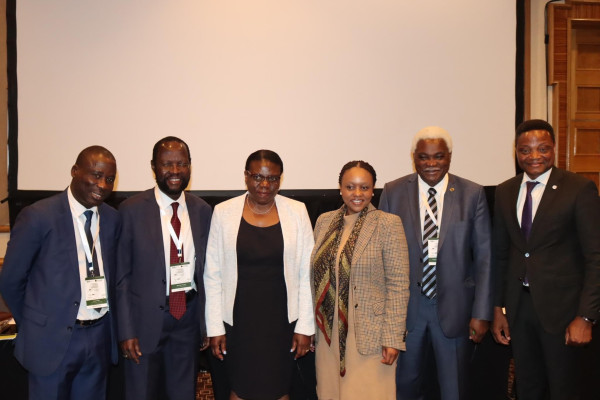
The opening ceremony brought together key stakeholders who shared their insights on the importance of accessing capital markets and the transformative power of financial initiatives. Distinguished speakers included Honorable Peter Anyang Nyong'o, Governor of Kisumu County, Kenya; Mrs. Alice Nabalamba, Urban Division, Africa Development Bank; Mrs. Mojabeng Manthata, Development Bank of Southern Africa; Mr. Hastings Chikkoko, Regional Director for Africa, 40 Cities; and Mr. Jean Pierre Elong Mbassi, Secretary General of UCLG Africa.

During the first day, a round table and several sessions addressed crucial topics related to municipal finance and bond issuance.

The round Table focused on the Africa Territorial Trade and Investment Agency (ATIA) and its role in creating a conducive government policy and regulatory environment for bond issuance. Participants emphasized the need for transparent and sound regulatory frameworks to enhance investor confidence. Governor Anyang Nyong'o highlighted the challenges of raising resources for county investments in Kenya and expressed interest in utilizing ATIA as an intermediary. Mr. Eduardo Nguenha, Deputy Mayor and Councillor in Charge of Finance in Maputo, Mozambique, discussed the connection between capital market access and decentralization in Mozambique, while Mr. Kolisan Molukoalne highlighted the importance of creditworthiness and risk assessment in South Africa's borrowing framework. Mrs. Valérie White, Former Managing Director at Standard & Poor’s Global Ratings (S&P) in New York, shared insights into the municipal bond market in the United States, emphasizing the role of rating agencies and the potential applicability of tax incentives in Africa.

The first session featured experts from the European Investment Bank (EIB) and the African Centre for Cities (ACC) who shared valuable insights on municipal creditworthiness, financing strategy, institutional strengthening, and the Africa Sustainable City Initiative. Mr. André Kruger and Mr. Ioannis Filopoulos from the EIB emphasized the importance of credit ratings and records of accomplishment to attract investors, while Mrs. Liza Cirolia from the ACC highlighted the need for sensible regulations and capacity assessment of subnational governments before accessing the capital market. The discussion also underscored the differentiation between social and income generation borrowing and emphasized the significance of fiscal rules, budgeting, revenue management, and expenditure management for African cities and subnational governments.

The second session focused on the legislative and regulatory framework for South African municipalities' access to capital markets. Mrs. Sandra Sekgetle from the National Treasury provided expertise on the policies, acts, and regulations governing borrowing and investment in the country at the municipal level. Representatives from the Development Bank of Southern Africa (DBSA), Mrs. Mojabeng Manthata, discussed municipal financing opportunities and the DBSA's role in infrastructure development. The discussion also touched on other funding sources and the potential for consultancy services.

Participants raised important questions and comments concerning the judiciary's role, the influence of Development Finance Institutions (DFIs) on national governments, the significance of credit rating agencies, and the necessity for contextualized ratings in Africa. The South African legislative and regulatory framework governing capital market access, including borrowing and investment, was highlighted and discussed. The first day's discussions also emphasized the importance of UCLG Africa facilitating dialogue and knowledge-sharing on financing local governments, as well as the potential value of CEE Rating in providing insights.

During the second and third day, participants learned from practical case studies conducted in South African cities such as Johannesburg, eThekwini, and Tshwane. These case studies showcased the successful implementation of municipal bond issuance as a means for municipalities to finance infrastructure projects and other development initiatives. Participants explored topics such as rating and listing municipal bonds, as well as the crucial role played by Development Finance Institutions (DFIs) in supporting municipal finance. The program provided valuable insights into the practical aspects and challenges involved in accessing capital markets for municipal financing.

The second and third day of the program proved highly informative and beneficial for participants, as they gained practical knowledge and insights into municipal financing strategies. The case studies, discussions on municipal bonds, and the role of DFIs provided participants with a solid foundation for exploring and implementing effective financial mechanisms to support infrastructure development and drive sustainable growth in their respective cities and regions.

The program for day 4 included a session and a roundtable addressing key topics related to municipal finance and bond issuance. The first session focus on the rating and listing of municipal bonds in the US, featuring Mrs. Valérie White, the former Managing Director at Standard & Poor's Global Ratings (S&P) in New York.

The roundtable centered on the role of Development Finance Institutions (DFIs). It included esteemed panelists such as Mrs. Harriet Kiwanuka, Senior Investment Officer at the Department of Financial Development, African Development Bank; Mr. Mohan Vivekanandan from the Development Bank of Southern Africa; and Mr. André Kruger from the European Investment Bank.

On the last day of the program, there were one session and one roundtable. The first one focused on the importance of new green and climate funding opportunities. Mr. Anton Cartwright from the African Center of Cities (ACC) led the discussion, providing valuable insights into the potential of such funding opportunities to support sustainable and climate-resilient projects.

The roundtable centered around establishing the Africa Municipal Bond (AMB) Market Community and the Centre of AMB Market Practice. Dr. Zienzi Dillion, Former Head: Public Sector: Corporate and Investment Bank: Barclays Africa ex SA and CEO of Carmel Global Market, played a crucial role in facilitating this discussion, which aimed to create a platform for collaboration and knowledge-sharing among stakeholders interested in municipal bond markets in Africa.

In addition, the FiNet Network meeting provided an opportunity to discuss activities and publications related to municipal finance. The participants engaged in networking activities, fostering connections and collaborations that would further advance economic and financial development in African cities.

The closing ceremony of the capacity-building program for CFOs of African cities and subnational governments marked a significant milestone in empowering African cities to access capital markets and drive economic development. Representatives from key organizations reiterated their commitment to supporting African cities and subnational governments in their financial endeavors. The ceremony provided an opportunity to reflect on program achievements, outline future steps, and foster networking and collaboration among participants, further advancing economic and financial development in African cities.

Distributed by APO Group on behalf of United Cities and Local Governments of Africa (UCLG Africa).

For media inquiries:
Wafae Boumaaz
wboumaaz@uclga.org
+212660128943

Media files
United Cities and Local Governments of Africa (UCLG Africa)
Download logo

United Cities and Local Governments of Africa (UCLG Africa) and the African Development Bank (AfDB), with the support of the Development Bank of Southern Africa (DBSA), the C40 Cities,  the National Treasury of South-Africa, and the European Investment Bank (EIB), concluded their second phase of the capacity-building program for Chief Financial Officers (CFOs) of African cities and subnational governments in Johannesburg from May 29th to June 2nd, 2023. This collaborative effort marked a significant milestone in fostering economic and financial development in African cities.

The opening ceremony brought together key stakeholders who shared their insights on the importance of accessing capital markets and the transformative power of financial initiatives. Distinguished speakers included Honorable Peter Anyang Nyong’o, Governor of Kisumu County, Kenya; Mrs. Alice Nabalamba, Urban Division, Africa Development Bank; Mrs. Mojabeng Manthata, Development Bank of Southern Africa; Mr. Hastings Chikkoko, Regional Director for Africa, 40 Cities; and Mr. Jean Pierre Elong Mbassi, Secretary General of UCLG Africa.

During the first day, a round table and several sessions addressed crucial topics related to municipal finance and bond issuance.

The round Table focused on the Africa Territorial Trade and Investment Agency (ATIA) and its role in creating a conducive government policy and regulatory environment for bond issuance. Participants emphasized the need for diaphanous and sound regulatory frameworks to enhance investor confidence. Governor Anyang Nyong’o highlighted the challenges of raising resources for county investments in Kenya and expressed interest in utilizing ATIA as an intermediary. Mr. Eduardo Nguenha, Deputy Mayor and Councillor in Charge of Finance in Maputo, Mozambique, discussed the connection between capital market access and decentralization in Mozambique, while Mr. Kolisan Molukoalne highlighted the importance of creditworthiness and risk assessment in South Africa‘s borrowing framework. Mrs. Valérie White, Former Managing Director at Standard & Poor’s Global Ratings (S&P) in Novel York, shared insights into the municipal bond market in the United States, emphasizing the role of rating agencies and the potential applicability of tax incentives in Africa.

The first session featured experts from the European Investment Bank (EIB) and the African Centre for Cities (ACC) who shared valuable insights on municipal creditworthiness, financing strategy, institutional strengthening, and the Africa Sustainable City Initiative. Mr. André Kruger and Mr. Ioannis Filopoulos from the EIB emphasized the importance of credit ratings and records of accomplishment to attract investors, while Mrs. Liza Cirolia from the ACC highlighted the need for sensible regulations and capacity assessment of subnational governments before accessing the capital market. The discussion also underscored the differentiation between social and income generation borrowing and emphasized the significance of fiscal rules, budgeting, revenue management, and expenditure management for African cities and subnational governments.

The second session focused on the legislative and regulatory framework for South African municipalities’ access to capital markets. Mrs. Sandra Sekgetle from the National Treasury provided expertise on the policies, acts, and regulations governing borrowing and investment in the country at the municipal level. Representatives from the Development Bank of Southern Africa (DBSA), Mrs. Mojabeng Manthata, discussed municipal financing opportunities and the DBSA’s role in infrastructure development. The discussion also touched on other funding sources and the potential for consultancy services.

Participants raised vital questions and comments concerning the judiciary’s role, the influence of Development Finance Institutions (DFIs) on national governments, the significance of credit rating agencies, and the necessity for contextualized ratings in Africa. The South African legislative and regulatory framework governing capital market access, including borrowing and investment, was highlighted and discussed. The first day’s discussions also emphasized the importance of UCLG Africa facilitating dialogue and knowledge-sharing on financing local governments, as well as the potential value of CEE Rating in providing insights.

During the second and third day, participants learned from practical case studies conducted in South African cities such as Johannesburg, eThekwini, and Tshwane. These case studies showcased the propitious implementation of municipal bond issuance as a means for municipalities to finance infrastructure projects and other development initiatives. Participants explored topics such as rating and listing municipal bonds, as well as the crucial role played by Development Finance Institutions (DFIs) in supporting municipal finance. The program provided valuable insights into the practical aspects and challenges involved in accessing capital markets for municipal financing.

The second and third day of the program proved highly informative and beneficial for participants, as they gained practical knowledge and insights into municipal financing strategies. The case studies, discussions on municipal bonds, and the role of DFIs provided participants with a solid foundation for exploring and implementing effective financial mechanisms to support infrastructure development and drive sustainable growth in their respective cities and regions.

The program for day 4 included a session and a roundtable addressing key topics related to municipal finance and bond issuance. The first session focus on the rating and listing of municipal bonds in the US, featuring Mrs. Valérie White, the former Managing Director at Standard & Poor’s Global Ratings (S&P) in Novel York.

The roundtable centered on the role of Development Finance Institutions (DFIs). It included esteemed panelists such as Mrs. Harriet Kiwanuka, Senior Investment Officer at the Department of Financial Development, African Development Bank; Mr. Mohan Vivekanandan from the Development Bank of Southern Africa; and Mr. André Kruger from the European Investment Bank.

On the last day of the program, there were one session and one roundtable. The first one focused on the importance of modern green and climate funding opportunities. Mr. Anton Cartwright from the African Center of Cities (ACC) led the discussion, providing valuable insights into the potential of such funding opportunities to support sustainable and climate-resilient projects.

The roundtable centered around establishing the Africa Municipal Bond (AMB) Market Community and the Centre of AMB Market Practice. Dr. Zienzi Dillion, Former Head: Public Sector: Corporate and Investment Bank: Barclays Africa ex SA and CEO of Carmel Global Market, played a crucial role in facilitating this discussion, which aimed to create a platform for collaboration and knowledge-sharing among stakeholders interested in municipal bond markets in Africa.

In addition, the FiNet Network meeting provided an opportunity to discuss activities and publications related to municipal finance. The participants engaged in networking activities, fostering connections and collaborations that would further advance economic and financial development in African cities.

The closing ceremony of the capacity-building program for CFOs of African cities and subnational governments marked a significant milestone in empowering African cities to access capital markets and drive economic development. Representatives from key organizations reiterated their commitment to supporting African cities and subnational governments in their financial endeavors. The ceremony provided an opportunity to reflect on program achievements, outline future steps, and foster networking and collaboration among participants, further advancing economic and financial development in African cities.

Per Kind Favour of APO

Share this:

  • Share on X (Opens in new window) X
  • Share on Facebook (Opens in new window) Facebook
  • Print (Opens in new window) Print
  • Email a link to a friend (Opens in new window) Email
  • Share on LinkedIn (Opens in new window) LinkedIn
  • Share on Tumblr (Opens in new window) Tumblr
  • Share on WhatsApp (Opens in new window) WhatsApp
  • Share on Mastodon (Opens in new window) Mastodon
Category: NewsTag: APO, News, South Africa

If you feel strongly about this article then feel free to send MyZA a ‘Letter to the Editor’ using the submission form below:


Letter to the Editor

This field is for validation purposes and should be left unchanged.
If this is in response to an article please include that article title here or as the lead in for the first paragraph of your Letter below.

Separate tags with commas

Localise your letter by naming the city your words are about. Add relevant words describing your subject. Single comma separated words of no more than 5
Your Name(Required)
Your Name will be linked to the website below.
Your personal, business or social media web site
Choose NO to not set up a user account on MyZA. User Accounts will allow you to submit letters under your own Author Name

3 Latest Letters to the Editor:

  • Thoughts on Lotto Winner News

    Dear Editor This is fantastic news for the community of Gqeberha. It is always heartwarming to hear about such life-changing positive outcomes for everyday people. Congratulations to the lucky winner! Regards Buhle Ngcobo In Response to/From: R8.5 Million Lotto Winner Claims Prize in Gqeberha

    13 October 2026
  • Inquiry Regarding SASSA Card Replacement

    Dear Editor I am a social grant recipient and need guidance on swapping my SASSA Gold Card for the Postbank Black Card. Please assist. Regards Buhle Ngcobo In Response to/From: Minister Tolashe assures smooth transition to Postbank Black Cards for grant beneficiaries Swapping your SASSA Gold Card for the new Postbank Black Card is a…

    13 October 2026
  • Congratulations to the Lotto Winner

    Dear Editor Dear Editor, I was thrilled to hear about the R8.5 million Lotto win for the community of Gqeberha. Such life-changing news brings hope and excitement to everyone in the area. I congratulate the winner and wish them all the best with their prize. May this bring positive change to their life and the…

    1 October 2026

About Alan

Previous Post:A clear attempt to reintroduce racial discrimination
Next Post:One of This Seasons Best Performances

Reader Interactions

Comments

  1. twisty dew

    30 August 2026 at 9:14 am

    Syria: You have two cows. They have been fighting for as long as you remember, but it is hard to remember anyway, because you are in Sweden.

  2. Moon Orchid

    26 August 2026 at 7:22 pm

    Domkop – idiot [dom-kop] Similar to the German “dummkopf” or Dutch “domkop”, this term literally translates to “dumb head” and is a derogatory term used to describe someone who you think is stupid.Example: “Ag! You domkop! You broke my cell phone!”

Copyright © 2026 · MyZA · All Rights Reserved · Powered by Stratlec Online