• Skip to main content
  • Skip to header right navigation
  • Skip to after header navigation
  • Skip to site footer
MyZA

MyZA

News, Directory, Events and Other Stuff

  • Social Media
  • Sport
  • World News
  • Home
  • Submit News
  • Directory
  • Events
  • Stratlec
  • TFSA
  • News
    • APO
    • Today’s Sport News
    • Todays Social Media and Tech Headlines
    • Today’s World News
    • Today’s SA Financial News
  • Contact
You are here: Home / Archives for African

African

22 September 2024

President Ramaphosa arrives in New York for UN General Assembly

Location: News

President Ramaphosa arrives in New York for UN General Assembly

President Cyril Rampahosa touched down on Saturday at the John F. Kennedy International Airport in New York, where he will be leading the South African delegation to the 79th Session of the United Nations General Assembly (UNGA) and high-level week. 

The President was received by International Relations and Cooperation Minister Ronald Lamola, South Africa’s Permanent Representative in New York Ambassador Mathu Nompozolo and Defence Attachè Brigadier General Richard Maponyane. 

President Ramaphosa is expected to address the General Assembly on the opening day, Tuesday, 24 September 2024.

Heads of State and Government are gathering at the UN Headquarters in New York to address the critical challenges and gaps in global governance exposed by recent global shocks. 

The summit aims to reaffirm commitments to the Sustainable Development Goals (SDGs) and the UN Charter, while enhancing cooperation and laying the foundations for a reinvigorated multilateral system.

According to the Presidency, this year, the African group presides over the General Assembly, with former Prime Minister of Cameroon, Philemon Yang, elected as President of the 79th Session.

“The theme identified by the President of UNGA79 is, ‘Unity in diversity, for the advancement of peace, sustainable development and human dignity for everyone everywhere’.” 

The issues on which President Ramaphosa will focus on during his engagements in New York include the necessity for the maintenance of international peace and security. 

He will also zoom in on the SDGs and the implementation of the 2030 Agenda, climate change and the upcoming COP29 in Baku, financing for development, and health and pandemic preparedness.

Today, President Ramaphosa will take part in the UN Secretary-General’s flagship High-Level Summit of the Future (SoTF), which, at its conclusion, is expected to adopt a Pact for the Future (PFTF).

While in New York, President Ramaphosa will also engage business leaders as part of the drive to attract foreign direct investment for South Africa, his Office said. – SAnews.gov.za

Gabisile
Sun, 09/22/2024 - 16:03
20 views
Read morePresident Ramaphosa arrives in New York for UN General Assembly
22 September 2024

Government urges caution amid severe snowfall and road closures

Location: News

Government urges caution amid severe snowfall and road closures

Government is advising against any travel on the roads hit by heavy snowfall that affected Gauteng, the Free State, Mpumalanga, KwaZulu-Natal and the Eastern Cape.

While most of the roads have been cleared of snow and motorists who were trapped have been rescued, mop-up operations are still ongoing. 

This after heavy snowfall caused havoc on the N3 toll route and other regional roads on Friday night, leaving scores of motorists, including truck drivers and bus commuters, stranded. 

According to the Government Communication and Information System (GCIS), the N3 toll route remains closed to incoming traffic, apart from the section between Van Reenen’s Pass and the vicinity of Swinburne and Montrose for rescue and recovery operations. 

“Progress with clearing Van Reenen’s Pass is steady, and it is badly affected by abandoned trucks that are being cleared. Therefore, the Van Reenen’s Pass is still closed as rescue and recovery continues,” the statement read. 

Both Wilge and Tugela plazas are currently closed to traffic, while the N5 from Bethlehem to Harrismith is open, though dangerous driving conditions persist 30 km from Harrismith due to melting snow. 

“Travel on this route is strongly discouraged,” the GCIS stressed. 

The R57 from Kestell to the R714 junction is open with dangerous conditions, while traffic is also flowing from the same junction from Bethlehem to Warden but melting snow is causing hazardous driving conditions. 

The N11 route is open between Ladysmith and Volksrust. However, according to the GCIS, it is very misty through Majuba Pass, making it difficult to drive and citizens along this route are urged to stay at home. 

“All passes in the Eastern Cape have been opened for motorists. However, government appeals to motorists to be cautious as the road is still slippery.”

Government also warned that affected provinces are still experiencing snowfall and heavy mist, and fog is limiting visibility. 

“Citizens are urged to remain patient and cancel travel on closed routes.” 

In addition, emergency teams continue to work on clearing the snow and restoring accessibility. 

“Government will advise when conditions of the roads have improved and declared safe for use.” 

The State, through the coordinated efforts of disaster management authorities and emergency services, continues to respond to the situation to provide the required assistance. 

These include the South African Police Service (SAPS), the South African National Roads Agency (Sanral), the N3 Toll Concession (N3TC) and the South African National Defence Force (SANDF). 

Stranded road users

Meanwhile, the GCIS said all stranded road users along the N3 toll route have now been assisted. 

“Government extends its appreciation to the assistance by humanitarian organisations for the relief.” 

Emergency provisions and medical support are being distributed in all affected provinces, and additional air support will be provided as soon as weather conditions permit. 

“The public is encouraged to stay informed by tuning in to local radio stations and checking government social media channels for the latest updates on road closures and relief efforts.” 

Borders

Regarding ports of entry, the Border Management Authority (BMA) and its partners have temporarily closed certain ports as a safety precaution. 

“However, operations have now resumed at all ports of entry that were affected by the snowfall, except for the Sani Pass due to the melting snow, which is causing roads to be slippery.” 

Travellers seeking to enter Lesotho are advised to use the Ficksburg Port, Caledonspoort, Makhaleng, Boesmansnek, Monontsha and Maseru as alternative ports of entry. 

“Those who are trapped in the snow must remain in their vehicles, signal for help, and wait for assistance from disaster management authorities and police. It is safer to stay inside your vehicle and wait for help.” 

In addition, citizens are advised not to leave their vehicles to search for assistance unless help is visible within a reasonable distance. 

“Government thanks all citizens for their cooperation during this challenging time and urges patience and adherence to safety precautions to minimise any further impact of these severe weather conditions. Stay home, stay informed and stay safe,” the GCIS said. – SAnews.gov.za

Gabisile
Sun, 09/22/2024 - 15:05

199 views
Read moreGovernment urges caution amid severe snowfall and road closures
22 September 2024

Tips for safer driving on icy roads

Location: News

Tips for safer driving on icy roads

The Road Traffic Management Corporation (RTMC) has warned motorists to exercise extreme caution when driving on icy roads. 

Severe snow and wet conditions have been reported in parts of the country, especially in KwaZulu-Natal and the Free State.

READ | Government prioritises providing shelter for stranded motorists in anticipation of more snow

“The South African Weather Service has issued an alert for strong surface winds, severe thunderstorms affecting Gauteng, and snow fall affecting the Eastern Cape and some parts of the country,” the RTMC said at the weekend.

During this period, the RTMC advises road users to adhere to Arrive Alive road safety messages and follow the advice below: 

Driving safely on icy roads

  1. Decrease your speed and leave yourself plenty of room to stop. You should allow at least three times more space than usual between you and the car in front of you.

  2. Brake gently to avoid skidding. If your wheels start to lock up, ease off the brake.

  3. Turn on your lights to increase your visibility to other motorists.

  4. Keep your lights and windshield clean.

  5. Use low gears to keep traction, especially on hills.

  6. Don't use cruise control or overdrive on icy roads.

  7. Be especially careful on bridges, overpasses and infrequently travelled roads, which will freeze first. Even at temperatures above freezing, if the conditions are wet, you might encounter ice in shady areas or on exposed roadways like bridges.

  8. Don't pass snow ploughs and sanding trucks. The drivers have limited visibility, and you're likely to find the road in front of them worse than the road behind.

  9. Don't assume your vehicle can handle all conditions. Even four-wheel and front-wheel drive vehicles can encounter trouble on icy roads. - SAnews.gov.za

Matona
Sun, 09/22/2024 - 14:09

154 views
Read moreTips for safer driving on icy roads
22 September 2024

Road reopened to clear traffic at Van Reenen’s Pass following heavy snow

Location: News

Road reopened to clear traffic at Van Reenen’s Pass following heavy snow

The road at Van Reenen’s Pass has been reopened to clear traffic, the South African National Roads Agency (Sanral) and its concessionaire, the N3 Toll Concession (N3TC), announced on Sunday.

“Road Traffic Inspectorate (RTI) and N3TC route services will now commence to slowly escort stranded road users out of the area in the southbound lanes towards KwaZulu-Natal,” an official statement read. 

Meanwhile, graders and rescue teams are continuing to clear a safe passage for road users stranded in the vicinity of Swinburne and Montrose.

“Please remain patient while the next phase of the rescue and recovery operation is being completed,” said Sanral's General Manager for Communications and Marketing, Vusi Mona.

Major routes on the N3 were at a complete standstill as heavy snow wreaked havoc, leaving many motorists stranded.

Sanral has advised road users to carefully follow the instructions of rescue teams and road traffic officials once they receive the go-ahead to proceed and drive slowly, and with the utmost caution and care.

“As we gear up to reopen the N3 Toll Route, Sanral and N3TC would like to extend their heartfelt gratitude to all disaster relief organisations, road incident management teams, humanitarian groups, local farmers, and community associations who have provided emergency services and essential aid to stranded motorists. 

“Your selfless efforts exemplify dedication and compassion in action. You are the real heroes of the N3 Toll Route,” said Chief Operating Officer of the N3TC, Thania Dhoogra. 

Mona has also expressed gratitude to road users who remained patient, vigilant and compliant under very trying circumstances. 

“It was a tremendously difficult period for everyone affected, but you have been phenomenal in demonstrating resilience and strong spirit,” Dhoogra added.

For regular verified traffic updates, please follow @N3Route on X, or contact the 24-hour N3 helpline on 0800 63 43 57 for emergency assistance.

Follow updates from SANRAL via X and Facebook. – SAnews.gov.za

Gabisile
Sun, 09/22/2024 - 10:27

190 views
Read moreRoad reopened to clear traffic at Van Reenen’s Pass following heavy snow
21 September 2024

Citizens urged to exercise caution as weather conditions worsen

Location: News

Citizens urged to exercise caution as weather conditions worsen

The KwaZulu-Natal Provincial Disaster Management Centre (PDMC) this morning convened a Joint Operations Centre (JOC) meeting, where District Disaster Management Centres provided updates on relief efforts following the disruptive snowstorm that affected interior parts of the province on Friday.

The snowstorm has blocked major routes, including the R74 (Harrismith to Bergville), R74 Greytown/Colenso Road, N3 (Harrismith to Tugela Toll), R617 (Kokstad to Underberg), and the N3 Northbound, among others. 

Multidisciplinary interventions have begun to yield results, with some stranded motorists receiving support in the form of soup kitchens, shelter and blankets. 

Local municipalities, in conjunction with other State organs, have mobilised graders to clear snow in affected regions, prioritising major routes to facilitate emergency access. 

Residents are urged to stay off the roads and avoid using alternative routes, as inclement weather conditions are expected to worsen. 

According to the South African Weather Service, a Level 8 warning for further disruptive snow is in effect for Alfred Duma Ladysmith, Dr N. Dlamini-Zuma - Underberg, Greater Kokstad, Impendle, Inkosi Langalibalele Escourt, Inkosi Langalibalele Sobabili, Mpofana Giants Castle, Mpofana Mooi River, Okhahlamba and uMngeni. 

“This warning indicates a potentially life-threatening weather occurrence. The heavy snowfall has also caused fallen trees, further complicating the situation. Residents living near the N3, who can assist stranded motorists with supplies are encouraged to do so safely.

“The heavy snow has disrupted essential services, including water and electricity, in several communities. 

“Technical teams are working to restore these services as quickly as possible, but residents should prepare for potential delays due to the weather conditions,” the PDMC said.

Residents are strongly advised against snow chasing, as road conditions are extremely dangerous. 

“Communities in the northern parts of the province continue to experience heavy rains, raising concerns about localised flooding. Disaster management teams are providing support to these areas, and residents are warned to remain vigilant. Residents are urged to stay informed through official channels,” the PDMC said. – SAnews.gov.za

Matona
Sat, 09/21/2024 - 14:11

148 views
Read moreCitizens urged to exercise caution as weather conditions worsen
21 September 2024

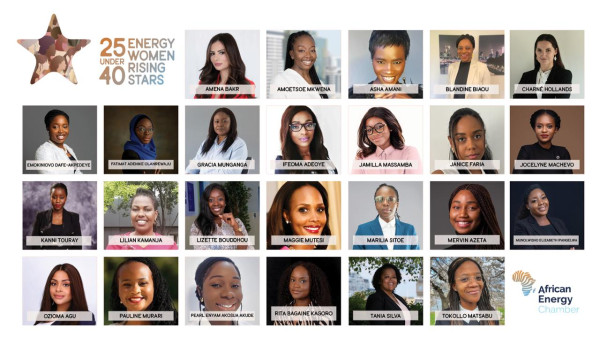
Celebrating This Year’s 25 Under 40 Energy Women Rising Stars

Location: News
African Energy Chamber

As Africa's energy sector continues to grow, a new generation of women is breaking barriers and redefining leadership in this critical industry. The African Energy Chamber (AEC) (www.EnergyChamber.org) proudly announces the 2024 edition of the 25 Under 40 Energy Women Rising Stars – a group of outstanding individuals whose innovation, perseverance and passion are transforming the landscape of African energy. These trailblazers are not only reshaping a traditionally male-dominated field but are also playing a vital role in the journey to end energy poverty by 2030. The AEC proudly honors these women as they lead the charge toward a more sustainable and equitable energy future.

In alphabetical order:

Amena Bakr, Senior Research Analyst, Energy Intelligence

Amena Bakr is a Senior Research Analyst at Energy Intelligence. Specializing in the energy transition, corporate strategy and market analysis, Bakr leads insights on oil markets, OPEC policies and political trends in the Middle East and Gulf Arab region. Her previous roles include Chief OPEC Correspondent and Dubai Deputy Bureau Chief, where she earned accolades such as the OPEC Award for Best Journalist and the IAEE Excellence in Written Journalism Award. Bakr holds a BA in Business Administration from the Arab Academy for Science, Technology & Maritime Transport, Egypt.

Amoetsoe Mkwena, Senior Associate, Watson Farley & Williams (Middle East)

Amoetsoe Mkwena is a Senior Associate at Watson Farley & Williams, specializing in energy and infrastructure with a focus on Africa. She advises on international projects, including the $15 billion Simandou project in Guinea. Mkwena's expertise includes power, renewables, oil and gas, and mining. Her legal skills and ability to bridge cultural divides make her a key player in Africa's energy sector.

Asha Amani, General Manager, INTERAFCON

Asha Amani is the General Manager at INTERAFCON, where she blends strategy and leadership to drive growth in complex energy projects. With seven years in Industrial Engineering and five years in the energy sector, Amani excels in business strategy, opportunity identification and project management. Her previous role as a Business Development Consultant at Tetco Consulting focused on delivering tailored solutions for the energy, engineering, and construction sectors.

Blandine Biaou, Geological Engineer, Head of Research and Prospection Department, SNH-Benin

Blandine Biaou, Head of the Research and Prospection Department at SNH-Benin, specializes in hydrocarbon exploration. She has optimized Benin's energy sector through resource management and contract revisions. Biaou has developed a modern data center and interactive database, contributing to national projects and representing Benin in international conferences, positioning it as a hydrocarbon hub.

Charné Hollands, Deputy Editor, Energy Capital & Power

Charné Hollands is the Deputy Editor at Energy Capital & Power, the leading investment platform for the African energy sector. She produces content on the entire energy value chain in Africa, with a focus on oil, gas, renewable energy and energy policy. Hollands holds a Master's in Media Studies from the University of Cape Town and has co-authored African Energy Chamber: Road to Recovery.

Emokiniovo Dafe-Akpedeye, Managing Partner, Compos Mentis Legal Practitioners

Emokiniovo Dafe-Akpedeye, a leading dispute resolution lawyer, specializes in complex oil and gas cases. She has represented Shell Petroleum and serves as company secretary for the Ebendo Host Community Trust Board. With degrees from Oxford and Bristol, she shapes oil and gas law and is implementing digital solutions to streamline board operations.

Fatimat Adenike Olanrewaju, General Field Engineer, SLB

Fatimat Adenike Olanrewaju, a Chemical Engineering graduate, is a General Field Engineer at SLB, focusing on wellhead installations and emissions reduction. She excels in a male-dominated field and leads community service through SLB's SEED initiative, advocating for gender diversity and mentoring.

Gracia Munganga, Senior Technical Advisory, ABT Global

With a Master's degree in Chemical Engineering from the University of Cape Town, Gracia oversees operations for the company, which has been designing and commissioning solar PV systems across sub-Saharan Africa since 2018. Her career includes roles at GreenCape, Anaergia Africa, the Climate Innovation Centre South Africa (CIC-SA), and the Carbon Trust.

Ifeoma Adeoye, CEO, IMSE Energy Resources Limited

Ifeoma Adeoye, CEO of IMSE Energy Resources Limited, leads the company in EPCI services and innovative crude evacuation technology. A graduate of the University of Manchester and Warwick, she also founded Business Nest Investments and BNI Insurance Brokers Limited, to empower and protect people and businesses through microfinance and insurance.

Jamilla Massamba, Health Safety and Environment Manager, SLB Congo

Jamilla Massamba, Health, Safety & Environment Manager at SLB Congo, leads HSE initiatives across Africa. With a Master's in Environmental Management Sciences, she has conducted over 100 audits and received awards for her work. Massamba also mentors young women in STEM and leads green energy projects.

Janice Faria, CEO, Enagol: Energias de Angola

As CEO of Enagol, Janice Faria has elevated the company's national and international profile. Under her leadership, Enagol competes globally and services International Oil Companies, setting a precedent for local enterprises in the global market.

Jocelyne Machevo, Communication, Commercial & Marketing Manager, Vivo Energy Mozambique

Jocelyne Machevo, formerly with Eni Mozambique, played a key role in the Coral FLNG Project and led the company's local brand transformation. Now at Vivo Energy Mozambique, she focuses on energy transition and decarbonization projects.

Lilian Kamanja, Electrical Engineer, Kenya Power

Lilian Kamanja is a Renewable Energy Specialist at Kenya Power with over nine years of experience in electrical engineering, network operations, and renewable energy development. She holds a BSc from the University of Nairobi and an M.Tech from IIT Delhi, focusing on renewable energy projects that enhance power accessibility and reliability.

Kanni Touray, Deputy Director General, Petroleum Commission, The Gambia

Kanni Touray, The Gambia's youngest and first female Deputy Director General at the Petroleum Commission, has enhanced the organization's efficiency and visibility. She champions sustainable development and energy transition, positioning The Gambia as a growing player in the global energy market.

Lizette Bouddhou, Human Resources Manager, SLB Congo and Gabon SLB

Lizette Bouddhou, HR Manager at SLB Congo and Gabon, drives diversity and workforce development. She leads recruitment and training initiatives, boosts employee engagement, and advances community outreach through educational partnerships, supporting women in STEM.

Maggie Mutesi, Managing Editor, Mansa Media

Maggie Mutesi is the Managing Editor at Mansa Media, with over 15 years of experience in major media outlets including CNN, BBC and CNBC. Her reporting spans over 30 African countries, focusing on trade and investments. At the BBC, she managed BBC Africa's daily live program, Money Daily. Mutesi has also extensively covered the Africa Continental Free Trade Agreement, working with the African Union and Afrochampions Initiative to enhance awareness among Africa's private sector.

Marilia Sitoe, Subsea Engineer, Eni Rovuma Basin

Marilia Sitoe, a Subsea Engineer at Eni Rovuma Basin, focuses on optimizing Mozambique's gas sector. Her work includes deep-water gas production and subsea infrastructure for Coral South FLNG. Sitoe's research supports Mozambique's economic growth and sustainability goals.

Mervin Azeta, Engineer, SLB

Mervin Azeta, a leader at SLB, has advanced from field engineer to corporate strategist. Recognized for her impact on African communities and the global industry, she is active in non-profit boards and connects young Africans with top leaders, fostering learning and inspiration.

Munolwisho Elizabeth Ipangelwa, Green Hydrogen Advisor, GIZ

Munolwisho Elizabeth Ipangelwa, Green Hydrogen Advisor at GIZ, advocates for women in oil and gas and green hydrogen development in Namibia. She has educated over 200 Namibians and leads green industrialization studies to boost local industries and reduce youth unemployment.

Ozioma Agu, Partner, Stren & Blan Partners

Ozioma Agu, a Partner at Stren & Blan Partners, excels in high-profile energy and infrastructure transactions. Her work includes advising on Mobil and Shell divestments and renewable projects. Agu has earned awards for her expertise in oil and gas and green hydrogen.

Pauline Murari, Contracts Manager SLB Angola, Central and East Africa

Pauline Murari, Contracts Manager at SLB, is known for her negotiation skills and leadership. She has driven growth in SLB's regional portfolio and contributed to projects like the East African Crude Oil Pipeline. Murari supports STEM education and local development.

Pearl Enyam Akosua Akude, Business Line Job Delivery Lead, SLB

Pearl Enyam Akosua Akude, with over 35 wells drilled, is a leader in the energy sector. She handles complex projects, trains engineers, and has contributed to innovations like TerraSphere and Net Zero Development in Africa, impacting the region's energy landscape.

Rita Bagaine Kagoro, Talent Acquisition Manager SLB: Angola, Central and East Africa

Rita Bagaine Kagoro, a Ugandan Petroleum Engineer, has seven years of experience and holds degrees from China University of Petroleum and Delft University of Technology. Her roles include Measurements and Logging While Drilling Engineer and Drilling Product Engineer. Kagoro has innovated drilling technologies to enhance efficiency and reduce CO2 emissions. She is passionate about leadership, mentorship, and advocating for diversity in hiring and women in energy.

Tania Silva, CEO, Angola LNG Marketing

Tânia Silva is the CEO of Angola LNG Marketing, the company's first female and youngest CEO. She oversees LNG sales, liquids contracts, and the shipping fleet. Previously, Silva was Head of Non-Operated Assets at Sonangol Gás e Energias Renováveis, S.A., where she managed non-operated assets and contributed to renewable energy projects. Her career is marked by leadership and innovation in the energy sector.

Tokollo Matsabu, Women Leader in Energy & Climate Fellow, Atlantic Council

Tokollo Matsabu is a 2024 Women Leaders in Energy and Climate Fellow and Director at Patlong Advisory, a consulting firm focused on energy programs and carbon sequestration in Africa. She is pursuing an MS in Global Energy and Climate Policy at the University of London's School of Oriental & African Studies, with a focus on critical minerals. Matsabu has a background in financial journalism and has conducted risk analyses for various stakeholders in the Global South. She holds a Bachelor's degree in International Relations, Media and Writing from the University of Cape Town.

Distributed by APO Group on behalf of African Energy Chamber.

Media files
African Energy Chamber
Download logo
Read moreCelebrating This Year’s 25 Under 40 Energy Women Rising Stars
20 September 2024

CLG Appoints Daoudou Mohammad as Director of Tax & Legal at Pointe-Noire Office

Location: Business
CLG

Supporting clients operating in the CEMAC region, trusted legal adviser Daoudou Mohammad has been appointed as Director of Tax & Legal at CLG's Pointe-Noire office (www.CLGGlobal.com). Mohammad brings a wealth of demonstrated expertise that will be instrumental to the law firm's Africa-wide practices, as the Republic of Congo and wider Central African region sees rapid growth in the energy sector.  

Mohammad holds over 15 years of experience in business and tax law, developing a solid competence in handling complex legal issues and providing effective client support. Prior to joining CLG, Mohammad served as Senior Manager at PwC's Tax & Legal Department in Pointe-Noire, managing the tax and legal coordination center for Francophone African countries, supervising quality and risk management operations, ensuring legal due diligence and supervising restructuring operations for groups of companies – including mergers and acquisitions and company transfers – among other key responsibilities.

Having also held a managerial role at PwC's South Africa office, Mohammad maintains an in-depth knowledge of different international systems and compliance with the highest standards of practice and service delivery, adapting to varied legal and cultural environments. Specializing in business, tax and labor law, as well as foreign exchange regulations and intellectual property, his multidisciplinary background represents a major asset to CLG and will enable the provision of integrated solutions to client needs and up-to-date advice on the latest legislative and regulatory developments. Mohammad holds a dual Master's Degree in Intellectual Property Law and Business Law from Cameroon's University of Yaoundé II.

The Republic of Congo is in the midst of a major investment drive, as it aims to accelerate oil and gas exploration and transform into a major LNG hub on the back of multiple large-scale LNG export projects and new exploration and appraisal drilling activities. To attract further investment and streamline regulatory processes, the country is launching a comprehensive gas code, recently approved a new Gas Master Plan led by national oil company Société nationale des pétroles du Congo, and plans to establish a dedicated national gas company. As a result, specialized tax, legal and regulatory advisory expertise is needed by companies operating in the Congo to navigate evolving energy sector legislation. 

CLG represents an experienced team of legal professionals, offering an in-depth understanding of African markets and a flexible and innovative approach to meeting the diverse needs of its clients. Serving as the preferred professional services partner in Africa, CLG is equipped to offer on-the-ground support across multiple sectors and has a rich history of spearheading transformative oil and gas transactions across the continent, providing top-tier legal services and strategic advice to clients across the energy spectrum, and guiding clients through complex regulatory landscapes and contractual negotiations. In addition to the Republic of Congo, CLG operates in South Africa, Nigeria, South Sudan, Mauritius, Ghana, Cameroon, Equatorial Guinea, Mozambique and Germany.     

“Navigating local laws, including taxation on oil and gas revenues, production-sharing agreements, and environmental regulations, demands thorough understanding to ensure compliance and optimize returns. We are excited to have Daoudou Mohammad head up CLG's tax and legal services in Pointe-Noire, who offers expert guidance on mitigating risks, avoiding costly legal disputes, and ensuring that investments are structured to meet both local obligations and international standards,” states Zion Adeoye, CEO of CLG.

Distributed by APO Group on behalf of CLG.

Media files
CLG
Download logo
Read moreCLG Appoints Daoudou Mohammad as Director of Tax & Legal at Pointe-Noire Office
20 September 2024

Cabinet welcomes signing of BELA Bill into law

Location: News

Cabinet welcomes signing of BELA Bill into law

Cabinet has welcomed the signing of the Basic Education Laws Amendment (BELA) Bill into law, by President Cyril Ramaphosa, marking a significant step towards transforming and enhancing the nation’s basic education system. 

President Ramaphosa publicly signed the Bill on 13 September 2024, during a signing ceremony held at the Union Buildings, in Tshwane.

The BELA Act amends sections of the South African Schools Act of 1996 (SASA) and the Employment of Educators Act, 1998 (EEA) to account for developments in the education landscape since the enactment of the original legislation.

The amendments are a response to court judgments that protect and give effect to the Bill of Rights. 

Since the advent of democracy, government has made notable progress in expanding access to education for the children of the country, however, barriers to access still remain.

The Act seeks to address these challenges and is part of the state’s ongoing efforts to build an education system that is more effective and more equitable. 

As part of advancing diversity and inclusion, the new legislation addresses the issue of language policy. Schools have to consider the broader linguistic needs of the communities in which they are situated.

Addressing a post-Cabinet media briefing on Friday, Minister in the Presidency Khumbudzo Ntshavheni said this landmark legislation obliges school governing bodies to take into account the linguistic needs of the wider community to promote inclusivity in education.

“This will go a long way in making education affordable more especially in the suburban areas, where majority of schools are Afrikaans teaching, whereas the broader community around the school are English speaking,” Minister Ntshavheni said.

The legislation seeks to, among other things, make Grade R the new compulsory school starting age and also promotes greater accountability with respect to the role of parents and caregivers in ensuring children attend school consistently. Home schooling will now be subject to more effective regulation and oversight. 

“In a move to strengthen Early Childhood Education, the BELA Act makes Grade R the new compulsory starting age for school. It also holds parents accountable by criminalising the failure to ensure their children attend school. There is no reason for a child not to attend school in South Africa at a Basic Education level because education is free,” Minister Ntshavheni said.

The law requires schools to apply the same standards for the admission of learners. The Act contains provisions for improving school admissions policies, particularly with respect to vulnerable learners, like children of undocumented migrants. 

To promote inclusivity, the new law guides schools on the development of codes of conduct that take into account respect for religious and cultural beliefs. This is important for fostering a more tolerant learning environment and a more tolerant society. 

The Act further seeks to ensure uniformity and fairness in educational standards across all schools.

To improve safety in the learning environment, the legislation reinforces the ban on corporal punishment. It introduces stronger penalties for those who administer corporal punishment. 

The legislation also introduces financial and public accountability frameworks for School Governing Bodies. It guides the oversight of their activities and work. 

Cabinet further welcomed the decision by the President to allow a three-month period of engagement on two clauses concerning schools' admissions and language policies, as part of ensuring a national consensus and national cohesion. 

Following different views expressed about the legislation, President Ramaphosa decided to delay the implementation date for clauses 4 and 5  by three months.

The President explained to South Africans that the parties to the Government of National Unity (GNU) expressed their wish to further engage each other on sections of the Bill (at the time) that deal with issues of admission and language. 

He said this will give the parties time to deliberate on these issues and make proposals on how the different views may be accommodated. However, should the parties not be able to agree on an approach, then government will proceed with the implementation of these parts of the Act.  

In an interview with SAnews this week, Education expert Mary Metcalf said she anticipates thoughtful and deliberate discussions regarding the BELA Act to unfold across the provinces over the next three months. 

“My expectation is that there will be very careful interaction with provinces in terms of Grade R and realistic dates of implementation that match careful planning… and that would be clause 4 of BELA.

“In terms of clause 5 of BELA, what is important primarily there - is for the discussions to recognise firstly that BELA doesn’t change any existing constitutional or legal provisions in law,” she said.

She explained that the BELA Act addresses cases, including Constitutional Court rulings, where procedural fairness by an education department was found lacking, particularly when provincial education departments could have handled discussions with school governing bodies more carefully.

Metcalfe allayed fears that the delay in implementation of clauses 4 and 5 of the Act may leave education departments without policy direction.

She explained that during the next three months, the existing law, based on the South African Schools Act and the previous Basic Education Laws Amendment Act, will remain in effect, ensuring that education departments and the public continue to be guided without any legal uncertainty.

The two specific clauses in the Act have faced opposition, primarily due to concerns that they strip school governing bodies (SGBs) of their authority over admissions and language policy decisions. 

In particular, Clause 5 has drawn criticism from those who believe it will disadvantage schools that operate in languages other than English, potentially undermining mother tongue education. 

However, the clauses stipulate that SGBs will retain control over these policies, as long as they are submitted for approval to the provincial Head of Department, in line with constitutional requirements.

Metcalfe stressed that there is significant misunderstanding among the public regarding what the BELA Act aims to achieve with mother tongue education. She clarified that the right to be taught in one’s mother tongue is firmly protected by the Constitution.

“The Constitution says everybody has a right to learn in their language of choice and it is the responsibility of the school governing bodies and the [provincial] Education Departments to ensure that this is practicable, practical, and that it takes into account the circumstances,” she said.

On the clause that now compels parents to send children to Grade R for compulsory schooling, Metcalfe again laid aside fears that government is attempting to “criminalise parents”.

She explained that in South Africa, approximately 96% to 97% of learners are already enrolled in Grade R, meaning most children aged five turning six are already participating in this level of education.

However, since Grade R is not yet compulsory, the State is not currently required to fund teachers' salaries or provide the necessary infrastructure, although public facilities are often utilised for this purpose.

Once Grade R becomes compulsory, she explained that the State will be obligated to pay the teachers and ensure that all necessary resources and infrastructure are in place. 

“Bringing attendance and compulsory attendance one year earlier means that we are able to reach children. [This is] particularly important, given the levels of inequality in our country, that young children are able to access formal learning… where they are exposed to text; where they’re exposed to group learning. It’s a good thing that we do this earlier,” she said. – SAnews.gov.za

DikelediM
Fri, 09/20/2024 - 13:36

653 views
Read moreCabinet welcomes signing of BELA Bill into law
20 September 2024

Eskom, Sasol sign gas MoU

Location: News

Eskom, Sasol sign gas MoU

Eskom and energy and chemical company, Sasol, have signed a Memorandum of Understanding (MoU) to “collaboratively explore and research potential future liquified natural gas (LNG) requirements”.

This is according to a joint statement released by the two companies, following the signing ceremony of the MoU on Friday.

“The collaboration aims to determine the potential volumes that South Africa requires to establish a viable LNG import market, along with the enabling infrastructure, and will be facilitated by government-to-government relations where necessary. 

“This initiative focuses on using gas for power generation to provide essential base load electricity and position gas as a key enabler of re-industrialisation, while also ensuring continued supply to the market by unlocking global LNG resources. 

“Furthermore, the collaboration will contribute to enhancing South Africa’s energy mix and enable the country’s energy transition and decarbonisation,” the joint statement read.

The MoU is expected to “explore sourcing gas within South Africa, the Southern African Development Community region, and other parts of the African continent, in addition to evaluating long-term LNG contracting”.

“This will support the gas requirements for Eskom’s planned coal power station repowering and conversion to gas in the long term. The parties will also engage other state entities to enable an LNG value chain in South Africa.

“As part of its revised gas strategy, Sasol is working on enabling the future supply of LNG to South Africa by collaborating with companies such as Eskom, existing and future customers, suppliers, and infrastructure developers.

“The research findings from the first phase of the Sasol-Eskom collaboration will guide the necessary role players and investors required to offer the best prospects for South Africa’s energy market, while outlining the challenges associated with the long-term commitments required for LNG imports,” the statement said.

Speaking at the signing ceremony, Minister of Energy and Electricity, Dr Kgosientsho Ramokgopa, explained the importance of the collaboration between two of South Africa’s biggest energy related companies.

“We have made it clear that we are serious about LNG solutions for the country, and that our demand for gas across both industrial and energy frontiers will unlock these solutions.

“This collaboration between our two energy champions – one public, one private – will provide a data-driven and commercially sound basis for gas-fed industrialisation and for us to explore the well-worn path to lower carbon energy that the global north has already taken by scaling gas to power. 

“Gas has emerged as the second-largest contributor to global electricity production, experiencing rapid growth as many countries shift from coal to gas in their energy mix to enable positive implications for climate change, as gas typically emits less CO2 per unit of energy,” Ramokgopa said.

Eskom Group Chief Executive, Dan Marokane, said the two companies can collaborate to work on the transition to lower carbon methods.

“We have a great deal of experience as the two largest users of coal in South Africa and we felt by working together we could accelerate the climate change transition in a responsible way which sets the country up for the best economic, environmental and social outcomes and addresses the imminent gas supply shortfall. 

“Eskom is focused on a balanced and diversified energy mix based on existing coal and nuclear and introducing gas for baseload power, as well as renewables, energy storage systems including batteries and pumped hydro, to achieve overall security of supply and to meet and exceed rapidly expanding energy demand,” Marokane said. – SAnews.gov.za

NeoB
Fri, 09/20/2024 - 14:15

413 views
Read moreEskom, Sasol sign gas MoU
20 September 2024

President Ramaphosa to Participate in the 79th Session of the Un General Assembly

Location: News

The Presidency of the Republic of South Africa
Download logo

President Cyril Ramaphosa will lead the South African delegation to the 79th Session of the United Nations General Debate and High-Level Week (UNGA79) in New York from 21-24 September 2024.

This annual gathering of world leaders is the most important event on the UN calendar, with Heads of State and Government and Heads of International Organisations discussing global challenges and how to address these challenges in the best interest of humanity. 

This year, the African Group presides over the General Assembly, with Mr Philemon Yang, former Prime Minister of Cameroon, elected as President of the 79th Session.

The theme identified by the President of UNGA79 is, "Unity in diversity, for the advancement of peace, sustainable development and human dignity for everyone everywhere.” 

President Ramaphosa is expected to address the General Assembly on the opening day, Tuesday, 24 September 2024.

Among the issues on which President Ramaphosa will focus on during his engagements in New York include the necessity for the maintenance of international peace and security; the Sustainable Development Goals (SDGs) and the implementation of the 2030 Agenda; climate change and the upcoming COP29 in Baku; financing for development, and health and pandemic preparedness.

President Ramaphosa will take part in the United Nations Secretary-General's flagship High-Level Summit of the Future (SoTF) on 22 September 2024, which, at its conclusion, is expected to adopt a Pact for the Future (PFTF).

While in New York, President Ramaphosa will also engage business leaders as part of the drive to attract foreign direct investment for South Africa.

Ministers accompanying the President include Mr Ronald Lamola, Minister of International Relations and Cooperation; Ms Maropene Ramokgopa, Minister in the Presidency responsible for Planning, Monitoring and Evaluation; Dr Aaron Motsoaledi, Minister of Health; Dr Dion George, Minister of Environment, Forestry and Fisheries and Mr Parks Tau, Minister of Trade, Industry and Competition.

Distributed by APO Group on behalf of The Presidency of the Republic of South Africa.

Read morePresident Ramaphosa to Participate in the 79th Session of the Un General Assembly
20 September 2024

NSFAS 2025 application cycle opens

Location: News

NSFAS 2025 application cycle opens

The National Student Financial Aid Scheme (NSFAS) has officially opened the 2025 application process.

Higher Education and Training Minister, Dr Nobuhle Nkabane, launched the opening of the application process during a media briefing held in Pretoria on Friday.

Applications are now open and will close on 15 December 2024.

Nkabane said since its inception, NSFAS has supported more than five million beneficiaries, producing hundreds of thousands of skilled professionals, especially from within the poor and working-class sections of society.

“Those are the motivating forces that must be mobilised to contribute to the ongoing transformation of our country. The social transformation entails changing the material conditions of all South Africans for the better and education plays a vital role in ensuring that this becomes a reality,” Nkabane said.

NSFAS has been an instrumental vehicle in making sure that government produces the necessary labour force for a capable state.

In this year alone the scheme is supporting about 1.2 million students, with the number anticipated to grow in 2025.

“This demonstrates the role that the scheme has played in trying to change the structural colonial apartheid system that we have inherited, whose legacy persists even in the 30 years of democracy. NSFAS is the only tool we have at our disposal for the total liberation of children of historically oppressed people.

“As from this year, we have also decided to introduce measures to support students who are currently not supported by the NSFAS bursary and funding policy. We successfully did this through the implementation of the first phase of the Comprehensive Student Funding Model, which ensures that the missing middle students access financial support from government in a form of a loan to pursue their studies,” Nkabane said.

How to apply for funding

To apply for funding, applicants should visit the NSFAS website at www.nsfas.org.za or my.nsfas.org.za, using a cellphone, tablet or computer and follow the easy steps. 

Create a myNSFAS account, then click on the ‘Apply’ tab and complete the online form, upload the required documents where applicable and then click on ‘Submit’.

Who qualifies for NSFAS funding

To qualify for NSFAS funding, an applicant must meet the following criteria:
• Be a South African citizen or permanent resident who comes from a home with a combined gross household income that does not exceed R350 000 per annum.
• Persons with disabilities qualify if their combined household income does not exceed R600 000 per annum.
• SASSA recipients automatically qualify for funding and need not submit any proof of income.

Loan scheme for the missing middle

The NSFAS Loan Scheme for the missing middle is open to all South African citizens and permanent residents from households with combined incomes of between R350 000 and R600 000 per annum.

For the list of qualifications covered in the NSFAS Loan Scheme for the missing middle, applicants should visit www.nsfas.org.za.

Applicants are reminded to provide the correct Identity Document (ID) numbers, name(s), and surname, as reflected in their South African ID.

NSFAS only funds individuals who are studying or intend to study at a public university or TVET college in South Africa.

Nkabane urged all students who wish to study in any of the public universities and TVET colleges to apply timeously and not to wait until the last day.

“Learners do not have to wait for matric results to apply for NSFAS. Apply now and avoid delays in the processing of your application!” the Minister said.

She said NSFAS will continue to have outreach programme in all provinces, targeting the rural and township communities. – SAnews.gov.za


GabiK
Fri, 09/20/2024 - 15:55

144 views
Read moreNSFAS 2025 application cycle opens
20 September 2024

Prepare for a Safe Holiday on the Roads

Location: MyPR

As the school holidays start this week and Heritage Day is around the corner, many South Africans will use this opportunity for a mini-break of fun road trips and family get-togethers. With more of us hitting the road during this time, Dunlop Tyres SA urges drivers to inspect their vehicles, particularly the condition of their …

Read morePrepare for a Safe Holiday on the Roads
20 September 2024

Cabinet urges students to apply for NSFAS bursaries and loans

Location: News

Cabinet urges students to apply for NSFAS bursaries and loans

Cabinet has called on all qualifying students entering and already in the tertiary education sector to apply for the National Student Financial Aid Scheme (NSFAS) bursaries and loans, which opened on Friday, 20 September.

The National Student Financial Aid Scheme officially opened the 2025 applications process today and is committed to providing bursaries and loans to eligible and deserving students who require financial assistance.

Speaking at a media briefing on Friday, Minister in the Presidency, Khumbudzo Ntshavheni said: “to apply, aspiring and returning students should visit my.nsfas.org.za”.

Applications will close on 15 December. 

On Monday, Higher Education and Training Minister, Dr Nobuhle Nkabane also invited all students who are siting for their matric exams this year to take this opportunity and apply for either the NSFAS bursary or loan.

Having received a presentation during the stakeholder consultations, and having noted the comments received from stakeholders, Nkabane said she was confident that the NSFAS is ready to kickstart the 2025 online application process.

“This invitation is also extended to learners from grade 9, 10, and 11, who would like to enter the Technical and Vocational Education and Training sector,” Nkabane said at the time.

The NSFAS bursary is open to all South African citizens and permanent residents with a combined household income of not more than R350 000 per annum. 

For persons living with disabilities, the combined household income is capped at R600 000 per annum. The South African Social Security Agency (SASSA) grant recipients automatically qualify on financial eligibility.

The NSFAS loan is open to all South African citizens and permanent residents where the combined household income is between R350 001 and R600 000 per annum. 

For persons living with disabilities, the combined household income is capped at R600 000 per annum.

 – SAnews.gov.za

DikelediM
Fri, 09/20/2024 - 14:35

78 views
Read moreCabinet urges students to apply for NSFAS bursaries and loans
20 September 2024

Homecoming ceremony for deceased liberation struggle heroes

Location: News

Homecoming ceremony for deceased liberation struggle heroes

The South African government will receive the human remains of freedom fighters and anti-Apartheid political leaders who died in Zambia and Zimbabwe in a ceremony expected to be held next week.

The ceremony is expected to take place at the Waterkloof Airforce Base in Pretoria.

While briefing the media on the Cabinet meeting held this week, Minister in the Presidency Khumbudzo Ntshavheni said the remains are that of Advocate Duma Nokwe, Florence Mophosho and Basil February.
“Cabinet received an update on the preparations to repatriate the mortal remains of South Africa’s freedom fighters who are buried in Zimbabwe and Zambia.

“The repatriation of the remains from Zambia and Zimbabwe forms part of the Resistance and Liberation Heritage Route Project [RLHR]. The RLHR is a national memory project aimed at commemorating, celebrating, educating, promoting, preserving, conserving and providing a durable testament of South African’s road to freedom.

“A Homecoming Ceremony will take place at the Waterkloof Airforce base on 27 September 2024 when the mortal remains arrive in South Africa,” Ntshavheni said on Friday.

Briefing media earlier this month, Presidential Spokesperson Vincent Magwenya said the repatriation is in line with the pronouncement by President Cyril Ramaphosa in the statement of the January 8, 2020, and subsequently State of the Nation Address.

“In that pronouncement, he made a commitment that the repatriation and reburial of liberation stalwarts, namely Dumalisile Nokwe and Florence Maphosho, in both Zambia and Basil February in Zimbabwe, would mark the Road to Freedom and Democracy. The two countries were strategically prioritized for the implementation of the project,” Mangwenya told a media briefing at the time.

READ | Call to visit heritage sites to honour liberation struggle stalwarts

-SAnews.gov.za

NeoB
Fri, 09/20/2024 - 13:16

83 views
Read moreHomecoming ceremony for deceased liberation struggle heroes
20 September 2024

Financial Services Sector Calling Out for Clear Line of Sight on AI, ESG Regulatory Horizon

Location: Business
DLA Piper

Businesses say the lack of clarity around ESG and AI regulation is a key challenge to realising the benefits of technology and innovation; Despite recognising the business opportunity with AI, as firms opt to bring in suppliers rather than recruiting in-house specialists, they may be left without the internal talent - risking falling behind the curve in the future. 

New survey data from global law firm, DLA Piper, has shown that the Financial Services (FS) sector is calling out for clearer and proportionate regulations surrounding AI and ESG to help them realise the benefits these trends offer.  

In its global report - Financial Futures: Disruption in global financial services (https://apo-opa.co/3zhzr4e), published today, the firm found that eight in ten respondents are optimistic about future industry growth prospects for  the financial services industry. UK and US organisations reported the highest confidence (93% and 90% respectively) with Africa remaining more cautious (50%). 

Amongst organisation types, the research finds that banks are the most optimistic (88%), with optimism being driven by digitalisation and advancements in technology. Respondents from global FinTechs however, are feeling the least positive (72%).  

The high levels of optimism are being attributed to advancements in technology (71%), the launch of new products and services to drive growth (55%) and changing consumer and investor behaviours (38%).  

However, clarity and a proportionate approach is key as 58% of respondents cite regulation complexity around technology as a key challenge globally, and nearly three quarters (73%) go on to say that current regulations stifle innovation efforts.  

For those looking at other locations for optimal conditions for growth , the US is seen as the most attractive market (35%), followed by the EU (24%). South African and Middle Eastern respondents are the most optimistic for the positive impact AI will bring (72%, and 64% respectively), highlighting an appetite for investment, despite apparent lower levels of confidence in the local market.  

AI and Digitalisation will transform the financial services sector, but businesses need a plan  
Whilst the majority of respondents (86%) believe that AI will transform the sector, half (53%) see AI as one of their main challenges- even so, only four in ten (both 39%) are committed to hiring experts in the field of AI and imposing governance /oversight structures to maximise the related opportunities;  and half of the companies surveyed lack in-house specialists and are opting to work with specialist subcontractors.  

Without this internal talent, businesses risk falling behind the curve in the future. 

Ethical AI concerns are highly documented, yet only 56% of the organisations surveyed are developing ethical frameworks to guide their efforts. Without an ethical framework in place, businesses put themselves at risk of not meeting stakeholder, customer and board demands around AI deployments. It is vital for businesses to have a clear plan and direction in place before they start their AI journey.  

Despite not having frameworks to use, businesses report a clear understanding of the benefits AI can offer, such as managing regulatory compliance (63%); followed by fraud detection and prevention (62%). A fifth (21%) of businesses are worried about compliance issues as they look to manage the cyber security and data protection risks associated with AI.  

The importance of ESG cannot be understated  
As businesses grapple with changing ESG regulations across multiple jurisdictions, nearly (46%) half of businesses globally have ambitions to position themselves as a leader and innovator on sustainability and ESG.   

The appetite to drive ESG agendas forward is clear, but businesses report concerns on achieving their goals - over half of respondents (56%) would like to see more ESG regulation to support them in meeting their objectives, and 43%% want to understand the current regulations better.   

Businesses seem clear on the ESG challenges they need to navigate, with half stating that the reputational risk of ESG positioning is their biggest challenge, followed by integration of ESG throughout the business (47%). Businesses also ranked accurate reporting as a challenge which they are struggling to address. 

The negative external reputational risk of not complying with and need to comply with regulations are the biggest drivers for firms to engage in ESG activities (70% and 52% respectively). However, pressure from shareholders and senior management ranked lowest at 36% and 34% respectively.  

As the sector engages with ESG activities, almost 6 in ten (57%) plan to develop new ESG-focused products and services, and half are developing new technologies, yet staff development and training to optimise ESG efforts remains low on the agenda (17%).  

Almost half of the sector has ambitions to position their business as an ESG leader, whilst a third (34%) plan to replicate successful approaches by their peers. Not all organisations are so proactive - A fifth (19%) will wait until stakeholders and customers demand an approach, before making any decision. 

Mark Dwyer  Global Co-Chair of the firm's Financial Services sector group at DLA Piper commented: "While our survey shows a high level of optimism within the financial services sector, our research reveals a need for FS organisations to go further in planning around resourcing and regulatory horizon scanning in order to navigate the opportunities that AI and other new technologies offer. 

"It is clear that ESG factors are driving changes to activity in financial markets; from financing the enormous capital requirements for transition, to ensuring accurate reporting of environmental, social and governance metrics to facilitate choice for investors and supervision and stress-testing by regulators. It is therefore vital that leaders take note of the challenges and opportunities presented by ESG and define a clear plan. Both ESG and innovation will be key to business success long into the future." 

Johannes Gouws, Country Managing Partner, DLA Piper South Africa added: "In light of the challenges our report identifies, financial services organisations are placing a higher focus on horizon scanning, as well as mapping out global regulatory implications. Balancing adequate and over-regulation in developing markets is always challenging. However, it is crucial for regulations in African markets to keep pace with international developments in order to limit regulatory arbitrage and protect the sector's integrity. Proportionate regulation in the sector is key, and can be a competitive advantage in attracting business and investment. With DLA Piper's pan-African and global reach, we can help clients to simplify their cross-border challenges whilst supporting their resilience in the face of constantly changing risks."  

Distributed by APO Group on behalf of DLA Piper.

Notes to editors: 
DLA Piper commissioned Coleman Parkes Research to canvass views of key decision-makers in global financial services organisations across the EMEA and APAC regions and North America. Nearly 800 interviews were conducted online in March and April 2024 with executives in key businesses across banking, funds and fund managers, fintech and financial services market infrastructure firms with revenues from USD1 million.  

Contact:
Suraj Mashru
Senior PR Manager (UK & International), DLA Piper
+44 (0) 207 153 2617
Suraj.Mashru@dlapiper.com 

About DLA Piper 
DLA Piper is a global law firm helping our clients achieve their goals wherever they do business. Our pursuit of innovation has transformed our delivery of legal services (https://apo-opa.co/3MPSGou). With offices in the Americas, Europe, the Middle East, Africa and Asia Pacific (https://apo-opa.co/4dczEU6), we deliver exceptional outcomes on cross-border projects, critical transactions and high-stakes disputes.  

Every day we help trailblazing organizations seize business opportunities and successfully manage growth and change at speed. Through our pro bono (https://apo-opa.co/3BkLxde) and sustainability (https://apo-opa.co/4djCiHE) work, we support communities around the world and help create a more just and sustainable future. Visit www.DLAPiper.com to discover more. 

Media files
DLA Piper
Download logo
Read moreFinancial Services Sector Calling Out for Clear Line of Sight on AI, ESG Regulatory Horizon
20 September 2024

Tourism development White Paper approved for public comment

Location: News

Tourism development White Paper approved for public comment

The White Paper on the Development and Promotion of Tourism in South Africa has been approved for public comment by Cabinet.

This is according to Minister in the Presidency Khumbudzo Ntshavheni who addressed the media following the Cabinet meeting held on Wednesday. 

The Minister said the policy aims to increase tourism’s “contribution to the South African economy through increased volume of visitors”.

“In 2023, Cabinet approved the publication of the Green Paper…and the comments from affected parties were incorporated into this draft policy. This White Paper now provides an agreed policy framework and guidelines for tourism development and promotion in South Africa.

“This policy will promote entrepreneurship in the tourism sector and ensure the sector’s enhanced contribution to employment,” she said.

Furthermore, the policy proposals also on “aligning the tourism policy with current government policy frameworks and to enhance the sector’s resilience and ability to respond to crisis”.

Astro-tourism

Ntshavheni told the media briefing that Cabinet had also approved the publication of the National Astro-Tourism Strategy and implementation plan for public comment.

“The strategy aims to position South Africa as a world class astro-tourism destination and this will boost economic development and employment in the tourism sector. South Africa is the first African nation to develop a national astro-tourism strategy and this will boost the country’s tourism diversification,” she said. 

The strategy focuses on various pillars including:
•    Infrastructure development
•    Optimising astronomy tourism streams
•    Public/private partnerships
•    Inclusive tourism and transformation.

“South Africa boasts several advantages that make it an ideal astro-tourism destination. This includes the unpolluted night skies and favourable weather conditions.

“The Department of Tourism in collaboration with the Department of Science and Innovation will launch the National Astro-Tourism Strategy at the national Tourism Day celebrations on the 27th of September where the Square Kilometre Array is located,” Ntshavheni said. – SAnews.gov.za

NeoB
Fri, 09/20/2024 - 12:27

22 views
Read moreTourism development White Paper approved for public comment
20 September 2024

Clarins Is Celebrating the Launch of Double Serum 9 – The Latest Generation of Its Iconic Anti-ageing Double Serum – With a Dynamic Pop-up Shopping Experience at Sandton City’s Central Court

Location: MyPR

The immersive experience, which opened with a glamorous event on 18 September, is a showcase not only for this best-selling product, but for the entire Clarins range, allowing long-time fans and those who have newly discovered the brand to explore its different facets with a host of exciting activations. “Our Double Serum is one of …

Read moreClarins Is Celebrating the Launch of Double Serum 9 – The Latest Generation of Its Iconic Anti-ageing Double Serum – With a Dynamic Pop-up Shopping Experience at Sandton City’s Central Court
20 September 2024

Urgent warning as level 6 snowstorm approaches KZN

Location: News

Urgent warning as level 6 snowstorm approaches KZN

KwaZulu-Natal Cooperative Governance and Traditional Affairs MEC, Thulasizwe Buthelezi, has warned residents of severe weather conditions that are expected to affect large parts of the province from Friday until the weekend. 

According to the latest warning issued by the South African Weather Service (SAWS), Level 6 disruptive snow can be expected in parts of the uThukela, Harry Gwala and uMgungundlovu Districts.

Buthelezi warned that these weather conditions pose a danger to life and could lead to temporary road closures due to ice accumulation, causing traffic disruptions on major routes.

Buthelezi urged residents in the areas expected to be affected, to take the necessary precautions, including delaying unnecessary trips, as the risk of entrapment due to icy roads is very high.

A Level 2 disruptive snow warning has also been issued for the parts of Ugu, uThukela, uMgungundlovu, Harry Gwala and Amajuba Districts.

The remaining parts of the province have a Level 2 warning for disruptive rain.

Buthelezi has assured residents that disaster management teams, coordinated by the Provincial Disaster Management Centre, are on the ground and will closely monitor developments.

“These teams are equipped to respond to emergencies and provide assistance where needed. Plans are also in place to clear roads in collaboration with local municipalities and the Department of Transport.

“This coordinated effort aims to ensure that major routes are accessible and that any disruptions are promptly addressed. Residents are encouraged to stay updated through official platforms and trustworthy news sources to receive the latest information and safety advice,” Buthelezi said. – SAnews.gov.za

GabiK
Fri, 09/20/2024 - 09:29

486 views
Read moreUrgent warning as level 6 snowstorm approaches KZN
20 September 2024

Government welcomes repo rate cut

Location: News

Government welcomes repo rate cut

Government has welcomed the announcement by the South African Reserve Bank to cut the repo rate by 25 basis points to 8%.

The drop means the prime lending rate will also drop to 11.50%.

Government Communication and Information System (GCIS) Acting Director-General, Nomonde Mnukwa, said the cut will come as a relief for cash strapped consumers.

“The reduction in the interest rate and the sustained decline in inflation provide a welcome reprieve for our citizens. These combined factors are not only helping to lower the cost of borrowing, but also offer significant relief to households struggling with high costs of living,” she said.

Mnukwa added that government remains focused on stabilising the economy and “supporting household income”.

“It is also inspiring to note that the inflation rate now falls comfortably within the South African Reserve Bank's target range of 3% to 6%, allowing more room for economic planning and investment,” she said.

In his announcement of the repo rate cut on Thursday, SARB Governor Lesetja Kganyago said the bank’s forecasts expect progress in inflation to be sustained.

“In the near term, we continue to see a dip in headline inflation, supported by the stronger exchange rate and lower oil prices. The implied starting point of the rand is R18.04 to the US dollar, an appreciation of nearly 2% relative to our July assumption. 

“This contributes to fuel price deflation, which helps keep headline inflation below 4% through the first half of next year. As usual, we will look through this near-term supply shock, focusing on the medium-term outlook,” Kganyago explained. – SAnews.gov.za

NeoB
Fri, 09/20/2024 - 09:26

3 views
Read moreGovernment welcomes repo rate cut
20 September 2024

Property Data and Valuations in the South African Market

Location: MyPR

Making informed property decisions hinges on having a deep understanding of property data. Whether you’re an experienced investor or someone exploring real estate for the first time, navigating property valuations and the complexities of the South African property market is crucial. Factors such as location, economic trends, and property type all play a part in …

Read moreProperty Data and Valuations in the South African Market
20 September 2024

An Inside Look at the T20 Challenge Captains Day 2024/25

Location: Sport

JOHANNESBURG: The 2024/25 T20 Challenge is set to kick off on Friday, 27 September, with the defending champions, DP World...

Read moreAn Inside Look at the T20 Challenge Captains Day 2024/25
19 September 2024

Rising Debt In Sub-Saharan Africa Costing Lives

Location: News

UN News
Download logo

The report details how this debt crisis is jeopardising progress aimed at ending AIDS in Sub-Saharan African countries, which account for a significant majority of people living with HIV globally – 25.9 million people of the nearly 40 million total.

If debt payments and stifled budgets are unaddressed in the next three to five years, countries will be “under-resourced to fund their HIV responses,” according to the UN agency's report.

Further data reveals that “the region's success in having reduced new HIV infections by 56 per cent since 2010 will not be sustained if fiscal space is constrained.”

Paying back sovereign debt now exceeds half of government revenue in Angola, Kenya, Malawi, Rwanda, Uganda, and Zambia.

UNAIDS said that even after debt relief measures, Zambia will still be handing over two-thirds of its budget for debt servicing between 2024 and 2026.

UNAIDS Executive Director Winnie Byanyima said that “public debt needs to be urgently reduced and domestic resource mobilisation strengthened to enable the fiscal space to fully fund the global HIV response and end AIDS.”

Debt servicing

Ms. Byanyima noted that global health security is put at risk when countries are unable to meet healthcare needs due to debt payments.

This has been evident in Western and Central Africa as there has been a noticeable decline in HIV response spending since 2017.

A news release based on the report reveals that Western and Central Africa will need to mobilise $4.18 billion to fully fund the HIV response in 2024. “This will climb to $7.9 billion by 2030 unless efforts are scaled up today to stop new HIV infections.”

It was noted that $20.8 billion was allocated for the HIV response in 2022 in low and middle-income countries through different donations, but it was not enough to effectively finance the HIV response.

To fully respond to HIV needs in 2024, Eastern and Southern Africa needs $12 billion, which will escalate to $17 billion by 2030 unless new HIV infections decline.

Necessary measures

The UNAIDS report says sub-Saharan African countries need to strengthen their tax systems and see an increase in financial donations to garner more domestic resources to effectively respond to their “pandemics.”

UNAIDS chief, Ms. Byanyima said, “World leaders cannot let a resource crunch derail global progress to end AIDS as a public health threat by 2030.”

Youth activists heading to New York

The UNAIDS chief said that young people are playing an active role in driving the progress made in the HIV response.

UNAIDS has partnered with two social media influencers living with HIV from Kenya and South Africa to attend the Summit of the Future and the UN General Assembly meetings in New York to urge leaders to invest in health systems and services that will support young people living with HIV.

Jerop Limo, the young Kenyan HIV activist, said, “I want leaders to leave New York knowing that we are not beneficiaries, we are equal rights holders.”

“We want meaningful and ethical engagement of adolescents and young people in all spaces of the AIDS response,” she continued.

South African advocate, Ibanomonde Ngema, said the meetings will not be enough to end AIDS – solutions need to be involved.

Young people living with HIV play a critical role in the fight against AIDS in communities.

Include us in the conversation

“The world can only benefit when young people are included in the global HIV response,” Ms. Ngema said. “No conversation about HIV should take place without us, from policy to practice in communities.”

As young people living with HIV also face stigma and discrimination, including from doctors, they will be lobbying world leaders at the General Assembly to “uphold the human rights of young people as key to ending AIDS as a public health threat.”

Distributed by APO Group on behalf of UN News.

Read moreRising Debt In Sub-Saharan Africa Costing Lives
19 September 2024

Basic Education ready for 2024 matric examinations

Location: News

Basic Education ready for 2024 matric examinations

The Department of Basic Education (DBE) says all systems are in place for it to administer the National Senior Certificate (NSC) examinations for the Class of 2024.

The department briefed the Portfolio Committee on Basic Education this week on a preliminary report regarding the state of readiness for this year’s Grade 12 final examinations.

Basic Education Minister Siviwe Gwarube, Deputy Minister Dr Reginah Mhaule and Director-General Mathanzima Mweli led the departmental delegation to Parliament.

The examinations are set to run from 21 October to 27 November 2024, and marking will commence immediately thereafter. 

“There are 55 053 markers appointed, who will be stationed at 188 marking centres. The results will be released to candidates on 16 January 2025. The Minister will announce the results on 15 January 2024,” the department said. 

Delivering opening remarks, Gwarube said the DBE had done a lot of work to prepare both the candidates and the system for this year’s examination. She said this was a pivotal moment for the learners, who are in their last weeks in the basic education system.

In terms of system readiness, the Chief Director for National Assessment and Public Examinations, Dr Rufus Poliah, reported that there were 732 448 full-time candidates enrolled for NSC examinations this year, which is 8 400 more than in 2023.

“KwaZulu-Natal has the largest Grade 12 population with 172 213 candidates, while Gauteng contributes the second largest number with 136 620. Eastern Cape has 103 975 and Limpopo has 94 236. Mpumalanga has 68 455 and the Western Cape has registered 64 552 candidates. The North West has 41 480, while the Free State has 37 737 and the Northern Cape has 13 180 registered candidates this year. 

“There are 136 195 part-time candidates registered to sit for various subjects this year. The examinations will take place in 6 909 centres across the nine provinces,” the department said.  

Poliah said a total of 162 question papers for the 2024 October/November examinations have been approved by Umalusi and are ready for handover to provinces for printing.

The Class of 2024 is the seventh cohort that will sit for South African Sign Language (SASL) Home Language (HL) examinations in November 2024. Twenty- three schools in nine provinces have 210 candidates registered for SASL HL, compared to 134 candidates in 2023.

In terms of learner readiness, the Deputy Director-General for Curriculum, Dr Barney Mthembu, highlighted several factors that need to be taken into account regarding the current cohort of Grade 12 learners. 

“Firstly, the Class of 2024 was in Grade R in 2012, the year of implementation of the Curriculum and Assessment Policy Statement (CAPS) in foundation phase. Secondly, they entered Grade 8 in 2020 at the height of COVID-19, which means their transition from primary to secondary school was seriously disrupted.

“Thirdly, their Grade 9 year (2021), which is crucial for subject selection in Grade 10, was also disrupted due to COVID-19,” Mthembu said. 

He said learners experienced social distancing, which limited group work between teachers and group assessment activities. Rotational attendance affected coverage of the curriculum and created content gaps. At the height of COVID-19, teacher absenteeism affected teacher curriculum coverage negatively for this cohort.

In spite of these disruptions, the department said this cohort started to benefit from the Learning Recovery Programme at primary school.

“Strategies and interventions aimed at addressing the academic setbacks of COVID-19 were introduced. In Grade 10 (2022), the system was beginning to recover from the COVID-19 restrictions, which led to a return of the majority of learners to school.

“This saved this cohort from rotational attendance and loss of teaching and learning time. It also helped them to complete the Grade 10 Annual Teaching Plans (ATPs). In Grade 11 (2023) this cohort had an advantage of the removal of social distancing and other related restrictions. This helped it to cover the Grade 11 Annual Teaching Plans,” the department said. 

This year, in Grade 12, they are benefiting from a wealth of resources that were developed to assist the classes of 2020, 2021, 2022 and 2023 with learning and studying. These include previous diagnostic reports, question papers and study material.

Mweli has visited 162 study camps in different parts of the country throughout the year to support the Grade 12 learners.

The department further highlighted that the Class of 2024 has also benefited from being taught by teachers who have improved subject results in 2022 and 2023, making them motivated to improve performance in 2024. 

The Class of 2024 reached Grade 12 when schools had mastered the skill of using the diagnostic reports of the previous years for examination preparation. – SAnews.gov.za

DikelediM
Thu, 09/19/2024 - 10:23

681 views
Read moreBasic Education ready for 2024 matric examinations
19 September 2024

Mall of the South Celebrates Heritage Day by Joining the Upside

Location: Entertainment, MyPR

In celebration of Heritage Day, Mall Of The South is excited to launch a fresh campaign that captures the essence of South Africa’s vibrant spirit in a unique and inspiring way. This year, we’ve focused on a question that truly resonates with everyone: “Where do most people find the inspiration and motivation to rise above …

Read moreMall of the South Celebrates Heritage Day by Joining the Upside
  • Previous
  • Page 1
  • Interim pages omitted …
  • Page 110
  • Page 111
  • Page 112
  • Page 113
  • Page 114
  • Interim pages omitted …
  • Page 264
  • Next

Copyright © 2026 · MyZA · All Rights Reserved · Powered by Stratlec Online