• Skip to main content
  • Skip to header right navigation
  • Skip to after header navigation
  • Skip to site footer
MyZA

MyZA

News, Directory, Events and Other Stuff

  • Social Media
  • Sport
  • World News
  • Home
  • Submit News
  • Directory
  • Events
  • Stratlec
  • TFSA
  • News
    • APO
    • Today’s Sport News
    • Todays Social Media and Tech Headlines
    • Today’s World News
    • Today’s SA Financial News
  • Contact
You are here: Home / Archives for African

African

7 February 2025

Ministers welcome President’s focus on economic growth, job creation

Location: News

Ministers welcome President’s focus on economic growth, job creation

Government Ministers have thrown their weight behind President Cyril Ramaphosa’s State of the Nation Address (SONA), which focused on economic growth, job creation, infrastructure development and reducing household expenses.

“Our most urgent task is to grow our economy so that we can create jobs, reduce poverty, and improve the lives of all South Africans,” the President told Members of Parliament (MPs) and guests on Thursday evening. 

The President emphasised that the nation urgently requires a robust economy that benefits everyone. 

To achieve this virtuous cycle of investment, growth and job creation, the President said economic growth must surpass 3%.

Minister of Agriculture, John Steenhuisen, has echoed the President’s sentiments, stating that South Africa needs to transform its economy.

“We’ve got to be able to show more jobs. We need to bring in the private sector so that we can get more agricultural products to the world a lot quicker and expand. 

“The citrus industry told me that they could quadruple the production over the medium-term if they have reliable ports and can get their products to the market.” 

Steenhuisen believes that the Head of State and Government has demonstrated a clear focus.

“Now, we can [move with] the urgency that’s required and I wish I could see more of those deadlines around when we’re going to achieve these things.

“I think the President diagnosed the problem perfectly – it’s about growth and jobs. That’s why we’re in the GNU [Government of National Unity].” 

The Minister also expressed his satisfaction with the plans presented by the President. 

He also welcomed the investment in infrastructure, the commitments made toward Early Childhood Development (ECD), and the transformation of Social Relief of Distress (SRD) grants into income protection for impoverished South Africans.

The President announced that this grant will serve as the foundation for introducing a sustainable income support system for the unemployed. 

He also stated that the Funza Lushaka Bursary Scheme will continue to prioritise students who wish to pursue a career in teaching, particularly in the foundation phase. 

In addition, government will work to expand access to ECD services for all children.

“We can’t be sitting within the 2029 election and going to the electorate with some of these projects languishing in the drawing board. I think now we have to unpack; take all of these things and move them with speed and urgency,” Steenhuisen added. 

Deputy Minister for Women, Youth, and Persons with Disabilities, Mmapaseka Steve Letsike, believes that the President has issued a clear call regarding the government’s mid-term development plan, focusing on actions and priorities.

“Part of the non-negotiable... is job creation and economic growth in all sectors. No sector must be left behind - whether it’s infrastructure, construction, agriculture or finance. 

“Our President has said our country is capable and we must make sure that the capability and the potential of young people that we often find neither in employment, education nor training must be brought to the table.” 

Letsike believes that the President is prioritising women, youth and persons with disabilities. 

She welcomed the Transformation Fund, which is worth R20 billion a year over the next five years, to support black-owned and small business enterprises.

“It’s already telling us its action plan. This public purse must reach the relevant people.” 

Letsike also welcomed President Ramaphosa’s commitment to reform the energy and water sectors, which are essential for service delivery to the people.

“When he wrapped it up, he said our nation is capable and we can’t leave anyone behind.”

Health Minister, Dr Aaron Motsoaledi, expressed his satisfaction that the President addressed the importance of building the economy to create jobs.

“That has been a very big problem for about two decades in our country and he tried his best to tackle it,” he said. 

Motsoaledi also welcomed the three significant announcements related to his department, which include advancing the National Health Insurance (NHI), enhancing public health infrastructure, and working towards the elimination of HIV and AIDS. 

“I’ve been telling people that improving public health infrastructure and implementing the NHI aren’t mutually exclusive and don’t have to follow one another, and that we can do it simultaneously .

“The President just announced a huge hospital bill programme and so, we’re forging ahead with NHI and we’re going to put this massive infrastructure.” 

According to the Minister, the infrastructure will complement improvements in public health facilities.

“South Africans must not accept or get used to the idea that we’re going to live with HIV/Aids forever and it’s part of life. It’s not. At some stage, we need to bring it to an end and we’re targeting 2030.”

While he acknowledged that the country may not be able to completely eradicate the disease, he stressed that government is working tirelessly to eliminate it as a public threat. 

To achieve this goal, approximately 1.1 million more people need to be on antiretroviral therapy (ARVs) between now and November of this year.

“People have been asking me where are you going to get money (sic). But I tell them, when you want to save people, don’t ask about money. Look at the human beings you want to save first and money will follow when you have that determination.” 

Minister in the Presidency, Khumbudzo Ntshavheni, has echoed the President’s sentiments of providing universal healthcare for all South Africans.

“We must do the basic things that need to be done. We must put the health infrastructure in place, so that there are hospitals and clinics that our people can access,” Ntshavheni said.

Home Affairs Minister, Dr Leon Schreiber, stated that the President’s adoption of digital technology in his department has been crucial.

He told SAnews that this aligns with the vision of Home Affairs and how the department wishes to turn it into a digitally first department - the first component of this initiative will be delivered this year. 

Schreiber also highlighted the part of the address where the Head of State discussed tourism and attracting skills for investment.

“One of the big issues is getting visas. That’s why the electronic travel authorisation concept and the automated visa process are important. No more papers, no more space for human intervention and it’s going to deal with corruption and it’s going to deliver with efficiency.” 

Meanwhile, the President of the Congress of the South African Trade Union Federation (Cosatu), Zingiswa Losi, also welcomed this year’s address. 

“We’re happy because he touched on most of the things we expected the President to touch on -- the issue of the Social Relief of Distress grant and continuing with it to form the basic income grant. It has been the call Cosatu has been making for years now and we’re happy that the President is not talking about taking that away,” she said. 

Losi believes that the State must ensure that unemployed individuals can sustain themselves.

“I’m also happy that he was also able to link that to Technical, Vocational, Education and Training (TVET) colleges because we’ve seen that now our kids have passed Grade 12. Most of them are devastated because they’re unable to get to universities but we’re not talking about artisans and skills that this economy is going to need.”

According to the Cosatu President, if government is planning to spend R940 billion on infrastructure over the next three years, the country will require a wide range of skills to revitalise roads and bridges, build dams and waterways, and modernise ports and airports.

“The emphasis by the President about the TVET Colleges and also spending R943 billion that has been allocated to infrastructure says we’re going in the right direction. But we must make sure that the construction mafias don’t take this away,” Losi said. – SAnews.gov.za

Gabisile
Thu, 02/06/2025 - 23:47
114 views
Read moreMinisters welcome President’s focus on economic growth, job creation
7 February 2025

SA powering on with AfCFTA to boost African trade

Location: News

SA powering on with AfCFTA to boost African trade

President Cyril Ramaphosa says government is working towards the full implementation of the African Continental Free Trade Area (AfCFTA), which will tear down the barriers to trade on the continent.

“As the most industrialised economy in Africa, we are positioning ourselves to be at the centre of this new and growing market,” President Ramaphosa said.

In his State of the Nation Address (SONA) delivered in Cape Town on Thursday, President Ramaphosa said government is harnessing the sun and the wind to make the country a leader in renewable energy and green manufacturing.  

“With an abundance of cheap, green energy, we can produce products that are competitive anywhere in the world and create hundreds of thousands of new jobs in the process. We are making sustainable use of the rich abundance of the South African earth.

“By supporting our farmers, improving our logistics network and rural supply chains, and opening new export markets for products we can significantly expand our agricultural sector. We want South Africa to be leading in the commercial production of hemp and cannabis. 

“We are breathing new life into the mining industry, which remains one of our most important and valuable endowments,” the President said.

The agreement establishing the AfCFTA came into force on 30 May 2019.

The AfCFTA agreement will create the largest free trade area in the world measured by the number of countries participating.

The AfCFTA is the engine for African economic and regional integration. The agreement establishing the AfCFTA includes in its general objectives the creation of a liberalised market for goods and services, and laying the foundation for the establishment of a continental customs union at a later stage. – SAnews.gov.za 

Edwin
Fri, 02/07/2025 - 09:50

48 views
Read moreSA powering on with AfCFTA to boost African trade
7 February 2025

Wreck of MV Ultra Galaxy Confirmed as Source of West Coast Oil Spill

Location: News

Clean-up continues and conservationist is impressed with the response

Read moreWreck of MV Ultra Galaxy Confirmed as Source of West Coast Oil Spill
7 February 2025

England Win Second Test to Claim Test Series Victory

Location: Sport

CAPE TOWN: England emerged victorious in their Youth Test series against South Africa Under-19 Men when they won the decisive second...

Read moreEngland Win Second Test to Claim Test Series Victory
7 February 2025

Navy Ammunition Depot in Simon’s Town Is a Fire Hazard

Location: News

Defence force is violating the law

Read moreNavy Ammunition Depot in Simon’s Town Is a Fire Hazard
7 February 2025

Government puts shoulder to the wheel to build a thriving economy

Location: News

Government puts shoulder to the wheel to build a thriving economy

Growing the economy and job creation are at the top of the seventh administration’s agenda, President Cyril Ramaphosa said on Thursday.

“We want a nation with a thriving economy that benefits all. To create this virtuous cycle of investment, growth and jobs, we must lift economic growth to above three percent,” the President said, as he delivered the State of the Nation Address (SONA) in Cape Town.

In the first SONA of the seventh administration, the President said government has adopted the Medium-Term Development Plan, which sets out a clear and ambitious programme for the next five years.

The actions contained in the plan advance three strategic priorities: driving inclusive growth and job creation; reducing poverty and tackling the high cost of living as well as building a capable, ethical and developmental state.

“To achieve higher levels of economic growth, we are undertaking massive investment in new infrastructure while upgrading and maintaining the infrastructure we have.

“We are engaging local and international financial institutions and investors to unlock R 100 billion in infrastructure financing. A project preparation bid window has been launched to fast-track investment readiness.

“This includes revised regulations for public private partnerships, which will unlock private sector expertise and funds,” the President explained.

Focus on infrastructure

Over the next three years, government will spend more than R940 billion on infrastructure. This includes R375 billion in spending by state owned companies.

“This funding will revitalise our roads and bridges, build dams and waterways, modernise our ports and airports and power our economy. Through the Infrastructure Fund, 12 blended finance projects worth nearly R38 billion have been approved in the last year.

The aim of the Infrastructure Fund is to use committed government funding to leverage much higher levels of private sector investment in public infrastructure. Managed by Infrastructure South Africa, the fund is a portfolio of blended finance projects and programmes. 

“These are projects in water and sanitation, student accommodation, transport, health and energy. Construction of the Mtentu Bridge continues. This bridge will rise above the river between Port Edward and Lusikisiki, and will become the tallest bridge in Africa,” the President said.

The Polihlali Dam will feed 490 million cubic metres of water a year from the Lesotho Highlands into the Vaal River System, securing water supply to several provinces for years to come.

In addition, government is working with international partners to revitalises small harbours and unlock economic opportunities for coastal communities.

“We are steadily removing the obstacles to meaningful and faster growth,” he said.

Operation Vulindlela

As government continues to implement economic reforms through Operation Vulindlela, the President said a new sense of optimism and confidence in the economy has been created.

“We have made progress in rebuilding and restructuring a number of our network industries. We are seeing positive results in the improvement of the functioning of our network industries as well as the investment opportunities that are opening up and are being taken by investors leading to job creation. 

“Working together with business, labour and other social partners we must now finish this work. Over the coming year, we will initiate a second wave of reform to unleash more rapid and inclusive growth,” the President said.

Operation Vulindlela is a joint initiative of the Presidency and National Treasury to accelerate the implementation of structural reforms and support economic recovery.

The initiative aims to modernise and transform network industries, including electricity, water, transport and digital communications.

“Our immediate focus is to enable Eskom, Transnet and other state-owned enterprises that are vital to our economy to function optimally. 

“We are repositioning these entities to provide world-class infrastructure while enabling competition in operations, whether in electricity generation, freight rail or port terminals.

“We continue with the fundamental reform of our state-owned enterprises to ensure that they can effectively fulfil their social and economic mandates."

READ | New wave of reforms to propel SA economy

This includes the work underway to put in place a new model to strengthen governance and oversight of public entities. 

“We will ensure public ownership of strategic infrastructure for public benefit while finding innovative ways to attract private investment to improve services and ensure public revenue can be focused on the provision of public services,” the President said.

Meanwhile, government is in the process of establishing a dedicated State-Owned Enterprise (SOE) Reform Unit to coordinate this work. 

Energy Action Plan

“The measures we have implemented through the Energy Action Plan have reduced the severity and frequency of load shedding, with more than 300 days without load shedding since March 2024.

“While the return of load shedding for two days last week was a reminder that our energy supply is still constrained, we remain on a positive trajectory. 

“We now need to put the risk of load shedding behind us once and for all by completing the reform of our energy system to ensure long-term energy security.”

The President said the Electricity Regulation Amendment Act, which came into effect on 1 January, marks the beginning of a new era.
 

READ | President Ramaphosa signs Electricity Regulation Amendment Act into law

The act sets out far-reaching reforms of the country’s electricity sector, including the establishment of a competitive electricity market.

“This year, we will put in place the building blocks of a competitive electricity market. Over time, this will allow multiple electricity generation entities to emerge and compete.

“We will mobilise private sector investment in our transmission network to connect more renewable energy to the grid,” Ramaphosa said.

Rail network

The President said Transnet’s performance has stabilised and is steadily improving.

“We released a Network Statement in December 2024 which, for the first time, will enable private rail operators to access the freight rail system

“Open access to the rail network will allow train operating companies to increase the volume of goods transported by rail, while our network infrastructure remains state owned,” the President said.

This will ensure that South African minerals, vehicles and agricultural produce reach international markets, securing jobs and earning much needed revenue for the fiscus.

New cranes and other port equipment are being commissioned to speed up the loading and unloading of cargo and reduce waiting times for ships at ports. -SAnews.gov.za

nosihle
Thu, 02/06/2025 - 21:22

235 views
Read moreGovernment puts shoulder to the wheel to build a thriving economy
7 February 2025

Government concerned about impact of pausing aid for HIV, TB programmes

Location: News

Government concerned about impact of pausing aid for HIV, TB programmes

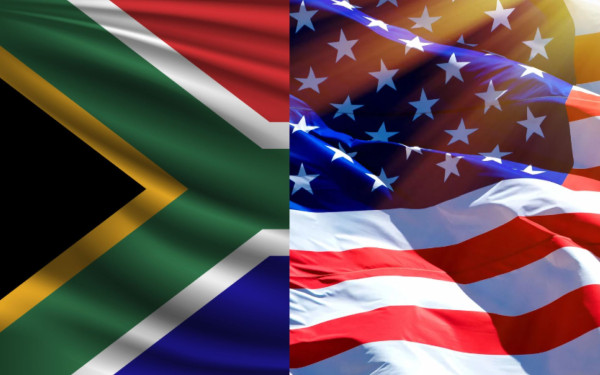
President Cyril Ramaphosa has expressed concern at the potential impact of the decision by the United States government to suspend some of its funding for HIV and Tuberculosis (TB) programmes in African countries for 90 days.

“This funding accounts for about 17% of our country’s HIV spend. We have been able to provide funding from our fiscus for our HIV and TB programmes over the years,” the President said on Thursday, in Cape Town.

Delivering the State of the Nation Address (SONA) on Thursday, the President said government was looking at various interventions to address the immediate needs and ensure the continuity of essential services.

The review of the grant funding programmes affects the US President's Emergency Plan for AIDS Relief (PEPFAR) programme, which is aimed at supporting HIV prevention, care and treatment. The programme supports several countries, including South Africa, to achieve HIV epidemic control.

“We are encouraged by the great progress the country has made towards ending HIV and AIDS as a public health threat.

“By the end of March 2024, 96 percent of people living with HIV knew their status, 79 percent of these were on antiretroviral treatment and 94 percent of those on treatment were virally suppressed.

“To ensure that we reach our target of 95-95-95, we will this year launch a massive campaign to look for an additional 1.1 million people who are not on treatment,” the President said. - SAnews.gov.za


nosihle
Thu, 02/06/2025 - 21:46

269 views
Read moreGovernment concerned about impact of pausing aid for HIV, TB programmes
7 February 2025

A nation where there is “work for all”

Location: News

A nation where there is "work for all"

Government has reaffirmed its commitment to providing training for women entrepreneurs to equip them with the skills needed to compete for government tenders.

Delivering the first State of the Nation Adress (SONA) of the seventh democratic Parliament at the Cape Town City Hall, on Thursday evening, President Cyril Ramaphosa said the country’s economy has long been hindered by the exclusion of the vast majority of the South African people. 

He said Black South Africans have been deprived of essential resources, including land, capital, skills, and opportunities. 

“Our economy was starved of the potential of its people, and that is why we need to transform our economy and make it more inclusive. That is why our focus is on empowering Black people, women, and persons with disabilities, because they were deliberately excluded from playing a key role in the economy of their own country,” President Ramaphosa said. 

He announced the establishment of an annual R20 billion transformation fund over the next five years to fund Black-owned and small business enterprises. 

The President also committed to fast-track the regulations of the Public Procurement Act to ensure businesses owned by women, youth, and persons with disabilities receive equitable opportunities in government contracts.

He noted the transformation initiative, through the National Skills Fund Disabilities Programme, launched in November last year, with an aim to empower over 10 000 people with disabilities is in its first phase through tailored training programmes, stipends, and specialised tools.

“This part of the work we must undertake as business, government, labour and civil society to enable persons with disabilities to play an important part in the economy of our country.” 

Through these programmes, the President emphasised that government was unleashing the potential of the country’s economy for sustained growth. 

“We want a nation where there is work for all, where every person can earn a decent living and realise their potential, where the rights of workers are protected and working conditions are improved, and where women and men receive equal pay for work of equal value,” President Ramaphosa said.

The President emphasised the need to ensure that growth creates jobs for all, especially for young people.

The success of the Presidential Employment Stimulus showed how public employment programmes could create meaningful work that generated a wider benefit and contributed to sustainable employment. 

“The employment stimulus has created almost 2.2 million work and livelihood opportunities through innovative models that provide high-quality work to participants. The Social Employment Fund has created over 80 000 jobs this year [and] has supported more than 12 000 participants to enter entrepreneurial activities.

“During the past year young people secured 235 000 work opportunities through the National Pathway Management Network, which is underpinned by the SAYouth.mobi platform. 

“We now need to build on these innovative programmes to create jobs for youth at even greater scale,” the President said. – SAnews.gov.za

GabiK
Thu, 02/06/2025 - 22:11

183 views
Read moreA nation where there is “work for all”
7 February 2025

Goma Call for Peace Campaign Launched at St George’s Cathedral

Location: News

Religious leaders and civil society groups call for end to the war

Read moreGoma Call for Peace Campaign Launched at St George’s Cathedral
7 February 2025

Government intensifying Operation Shanela

Location: News

Government intensifying Operation Shanela

President Cyril Ramaphosa says government is intensifying Operation Shanela which has been successful in arresting suspects, recovering firearms and seizing stolen vehicles.

Through Operation Shanela, the South African Police Service (SAPS) has taken a bold and decisive approach to dealing with crime in the country through tracking and tracing operations, roadblocks, high visibility patrols, as well as stop and searches.

All Shanela operations are led by the Provincial Commissioner of each province.

“We must tackle the scourge of gun violence that has plagued our society for decades,” President Ramaphosa said, adding that he had asked the Police Minister Senzo Mchunu and the National Commissioner of Police General Fannie Masemola to prioritise reducing gun-related crime and violence. 

“This includes preventing the diversion of firearms into the illicit market and recovering illegal firearms in circulation. We know from international evidence and our own experience that this is the most effective way to reduce overall violent crime.”

The President said this when he delivered the State of the Nation Address at the Cape Town City Hall this evening.

He said the SAPS had partnered with the metropolitan municipalities and was working with communities to fight crime in the priority provinces where crime was particularly high.

“We want a nation in which everyone is safe. The police continue to work with other law enforcement agencies to dismantle organised crime syndicates and combat financial and violent crimes,” President Ramaphosa said.

The Detective Service, which is crucial to solving cases, will be expanded by 4 000 personnel through internal recruitment processes.

“We are working on adopting surveillance, analytics and smart policing solutions for modern law enforcement. 

“We have seen the value of technology in fighting crime. By using AI in its fraud risk detection and verification work, SARS has prevented the leakage of over R95 billion in impermissible refunds, recovered R20 billion in revenue and dismantled an illicit tobacco and gold scheme,” the President said.

President Ramaphosa said government continues to work across society to end the violence that is perpetrated against women.

“We have promulgated the National Council on Gender-Based Violence and Femicide Act, establishing a national structure to oversee a coordinated response to this crisis,” President Ramaphosa said.

Government, he said, would ensure that the Council is fully functional and properly resourced.

“We continue to strengthen support to victims of gender-based violence. There are now 65 Thuthuzela Care Centres across the country. Out of 52 districts in the country, 44 have GBV shelters,” the President said.

All police stations in the country have victim friendly services, and another 16 sexual offences courts will be established in the next financial year.

Touching on corruption, President Ramaphosa said this year, the Department of Justice and Constitutional Development would report on the review of the anti-corruption architecture by the National Anti-Corruption Advisory Council.

“This is expected to streamline legislation, eradicate the duplication of mandates and foster greater cooperation between law enforcement agencies. We will finalise the whistleblower protection framework and introduce the Whistleblower Protections Bill in Parliament during this financial year.

“This year, we will strengthen South Africa’s system to combat money laundering and terror financing with further legislative and system improvements,” the President said. – SAnews.gov.za


Edwin
Thu, 02/06/2025 - 22:32

204 views
Read moreGovernment intensifying Operation Shanela
7 February 2025

G20 provides opportunity to drive developmental agenda

Location: News

G20 provides opportunity to drive developmental agenda

South Africa’s Presidency of the Group of 20 (G20) presents a unique opportunity not only for the country itself, but also for the African continent and the Global South to foster greater economic growth for all.

This is according to President Cyril Ramaphosa who delivered the State of the Nation Address to a joint sitting of Parliament in Cape Town on Thursday evening.

South Africa is the first African country to hold the Presidency of the world’s premier economic cooperation grouping following the admission of the African Union as a G20 member.

For its Presidency, South Africa has chosen the theme: “Solidarity, Equality and Sustainable Development” which, President Ramaphosa explained, underscores the “need for cooperation and partnership among the countries of the world”.

“It is an opportunity to place the needs of Africa and the rest of the Global South more firmly on the international development agenda.

“Our G20 Presidency is a valuable opportunity for South Africa to advance efforts towards greater global economic growth and sustainable development,” he said.

‘Inextricably bound’

President Ramaphosa told the gathering that “Africa remains at the centre of our foreign policy” and emphasised that Africa’s and, by extension South Africa’s, growth and success depends on continental peace.

“We continue to work to strengthen the African Union to support the achievement of peace, development and economic integration on the continent. 

“We know that our future prosperity is inextricably bound to the prosperity of the African continent. For Africa to thrive, we must silence the guns on the continent,” he said.

For the past 30 years, South Africa has been involved in “restoring stability” in countries across the continent – most recently in Mozambique and the eastern region of the Democratic Republic of Congo (DRC).

“[We] have been part of the SADC [Southern African Development Community] peacekeeping mission in Mozambique that has brought relative calm and stability to the Cabo Delgado province.

“The presence of South African peacekeepers in the eastern DRC is testament to our continued commitment to the peaceful resolution of one of the world’s most intractable conflicts, which has cost millions of lives and displaced millions of people,” he said.

Regarding conflict in the DRC, President Ramaphosa urged parties in that war to “embrace the current diplomatic efforts to find a peaceful resolution, including honouring the Luanda Process”.

“We will attend the Joint Summit between SADC and the East African Community scheduled to take place in Tanzania this weekend, where we will reiterate our call for a ceasefire and a resumption of talks to find a just and enduring solution,” he said.

READ | President Ramaphosa to participate in joint SADC – EAC summit on the DRC

Global solidarity

The President reminded South Africans that the country’s own democracy was won from the brutal hands of the Apartheid regime with the help of international solidarity.

He emphasised that this “imposes a duty on us to support the struggles of those who continue to experience colonialism and oppression” and highlighted the country’s work on the international stage in this regard.

“South Africa continues to stand in solidarity with the people of Palestine, who, having endured decades of illegal occupation, are now experiencing indescribable suffering.

“We continue to participate in the different peace processes seeking to bring about a just and lasting peace in Ukraine.

“South Africa continues to advance its agenda of cooperation and multilateralism through its membership of the United Nations, African Union, the Non-Aligned Movement and BRICS group of countries."

The President noted that this work and “what we stand for needs to be explained to many key players, especially to our trading partners and the many countries and leaders we interact with on the global stage”.

“With a view to explaining the many positions that we have taken and in particular the objectives we wish to achieve during our Presidency of the G20, I have decided to send a delegation of government and other leaders to various capitals on our continent and across the world. 

“This delegation will interact with various key players on a variety of matters that affect South Africa’s interests,” President Ramaphosa said. – SAnews.gov.za


NeoB
Thu, 02/06/2025 - 22:32

135 views
Read moreG20 provides opportunity to drive developmental agenda
7 February 2025

National Flag to be flown at half-mast for 14 fallen soldiers

Location: News

National Flag to be flown at half-mast for 14 fallen soldiers

In a solemn moment during the State of the Nation Address (SONA), President Cyril Ramaphosa on Thursday evening, led the nation in mourning the tragic loss of 14 South African soldiers, who died while on a peacekeeping mission in the eastern Democratic Republic of the Congo (DRC).

“We gather here as our country is mourning the tragic and devastating loss of 14 South African soldiers, who were part of a mission to bring peace to the eastern Democratic Republic of the Congo,” the President said. 

As a mark of respect, the President has ordered the National Flag to be flown at half-mast for a period of one week in honour of the fallen soldiers.

“Alongside soldiers from other Southern African countries, they lost their lives in defence of the fundamental right of the Congolese people to live in peace and security. They lost their lives not in the pursuit of resources or territory or power. They lost their lives so that the guns on our continent may be forever silenced,” the President said. 

In paying tribute to the fallen heroes, the President lauded their courage and commitment to the ideals of peace and security, vowing that their sacrifice will not be in vain. 

“We salute our gallant soldiers,” he said.

As the country mourns, government has pledged support to the bereaved families, ensuring that they receive the necessary assistance during this difficult time.

The fallen soldiers, who were part of the Southern African Development Community (SADC) mission in the DRC, were identified as:

  • Staff Sergeant William Eddie Cola.
  • Staff Sergeant Molahlehi Ishmael Molahlehi.
  • Staff Sergeant Shwahlane Theophilus Seepe.
  • Corporal Matome Justice Malesa.
  • Corporal Rinae Nemavhulani.
  • Lance Bombardier Itumeleng Macdonald Moreo.
  • Lance Corporal Tseke Moffat Molapo.
  • Lance Corporal Metse Stansly Raswiswi.
  • Rifleman Sebatane Richard Chokoe.
  • Rifleman Derrick Maluleke.
  • Rifleman Tshidiso Andries Mabele.
  • Rifleman Calvin Louis Moagi.
  • Rifleman Mokete Joseph Mobe.
  • Private Peter Jacobus Strydom.

The soldiers had been deployed as part of a regional effort to stabilise the volatile region of the eastern DRC, where armed conflict has persisted for decades. Their deaths underscore the immense risks faced by peacekeeping forces in Africa’s conflict zones.

The fighting in the eastern DRC intensified due to escalations by the rebel group M23 and the Rwanda Defence Force (RDF) militia engaging the Armed Forces of the DRC (FARDC), leading to direct attacks on peacekeepers from the SADC Mission in the Democratic Republic of Congo (SAMIDRC). 

The SAMIDRC is a regional peacekeeping initiative launched on 15 December 2023, to assist the DRC government in restoring peace and security in the eastern regions of the country. This deployment was approved during an Extraordinary SADC Summit held in Windhoek, Namibia, on 8 May 2023, as a response to escalating conflicts and instability caused by the resurgence of armed groups in the area. 

According to a press release issued by SADC in January last year, SAMIDRC comprises military contingents from Malawi, South Africa, and Tanzania, working in collaboration with the Congolese Army, FARDC, to combat and eradicate armed groups operating in eastern DRC. 

President Ramaphosa last week attended an Extraordinary SADC Summit on the situation in the DRC. 

READ | SADC Extraordinary Summit condemns escalating violence in DRC, calls for urgent action. – SAnews.gov.za

DikelediM
Thu, 02/06/2025 - 22:34

131 views
Read moreNational Flag to be flown at half-mast for 14 fallen soldiers
6 February 2025

Government to ‘breathe new life’ into mining

Location: News

Government to 'breathe new life' into mining

President Cyril Ramaphosa has announced that government will pour efforts into re-energising the mining industry.

He said this when he delivered the State of the Nation Address at the Cape Town City Hall on Thursday.

According to the Minerals Council of South Africa, the mining industry contributed approximately 6.3% to South Africa’s nominal Gross Domestic Product (GDP) in 2023.

It also commands a large share of South Africa’s exports by value.

“We are breathing new life into the mining industry, which remains one of our most important and valuable endowments,” the President said.

He added that the Department of Mineral and Petroleum Resources was implementing modern mining rights systems. 

While that work is underway, the backlog in prospecting and mining applications was also being attended to, with at least 114 mining rights, 982 prospecting rights, and 385 mining permits and ancillaries processed and finalised.

“We are on track to implement a new, modern and transparent mining rights system this year, which will unlock investment in exploration and production. 

“We will put in place an enabling policy and regulatory framework for critical minerals. 

“By beneficiating these minerals here in South Africa, we can make use of the extraordinary wealth that lies beneath our soil for the benefit of our people,” President Ramaphosa said.

Renewable energy

Although mining remains a key pillar in the South African economy, President Ramaphosa emphasised that a new growth sector in renewable energy was emerging which South Africa was well positioned to leverage.

“To create jobs, we must leverage our unique strengths and our unrealised potential to build the industries of the future – green manufacturing, renewable energy, electric vehicles and the digital economy,” he said.

Furthermore, South Africa is abundant in the natural resources linked to renewable energy.

“We are harnessing the sun and the wind to make our country a leader in renewable energy and green manufacturing. 

“With an abundance of cheap, green energy, we can produce products that are competitive anywhere in the world and create hundreds of thousands of new jobs in the process,” President Ramaphosa said. – SAnews.gov.za

NeoB
Thu, 02/06/2025 - 21:46

26 views
Read moreGovernment to ‘breathe new life’ into mining
6 February 2025

Police stand ready for tonight’s SONA

Location: News

Police stand ready for tonight's SONA

Police Minister Senzo Mchunu says police management are satisfied with the state of readiness for tonight's State of the Nation Address (SONA).

“[Police] members will now be deployed and we are confident that they will execute their duties with integrity and the utmost professionalism,” Mchunu said.

Addressing the police officers deployed in Cape Town ahead of tonight's State of the Nation Address, Mchunu said they would play a vital role in maintaining safety and security.

“We stand ready today and beyond,” said Mchunu.

The police stand ready to ensure that the State of the Nation Address goes as smoothly as possible.

“All the objectives of the preparations as far as safety is concerned are going to be realised,” Mchunu said, adding that they had received all the reports on preparations to ensure that tonight’s State of the Nation Address goes smoothly.

“You are on duty. You are going to be in the spotlight, not only for us who are here, but throughout the Republic and outside the Republic, all eyes are going to be on you. You u are going to share the spotlight with the Head of State while performing his duties.

“All eyes are going to be around him in terms of safety and stability, not only at the City Hall where the proceedings are going to be held, but the whole of the Western Cape and the whole of the City of Cape Town,” Mchunu said.

Mchunu said people would be looking to the South African police to ensure safety and security and other related services.

“There is no doubt in all of us who are here that you will perform your duties beyond expectations, the citizens of this country are expecting you to be professionals. They are going to be looking at you with the expectation to deliver whatever it will take to deliver in accordance to the plan,” the Minister said. 

President Cyril Ramaphosa will deliver the first SONA of the seventh administration at 7pm tonight, under the theme: “A nation that works, for all”.

SONA 2025 takes place as South Africa recently took up the Presidency of the Group of 20 (G20) – a historical moment, as the country became the first African State to do so.

The address is expected to touch on the Government of National Unity (GNU) and how it is setting about achieving its objectives.

The SONA represents the official start of Parliament’s programme and is one of the rare occasions when the three arms of the state – the legislature, the judiciary and the executive – gather under one roof. 

The SONA will be broadcast live on television, on radio and will also be streamed live on the Presidency and Parliament YouTube channels. – SAnews.gov.za

Edwin
Thu, 02/06/2025 - 16:27

133 views
Read morePolice stand ready for tonight’s SONA
6 February 2025

Lottery Paid R500,000 to Company to Probe Computer Breach That Never Happened

Location: News

Forensic auditors found several red flags in the payment to Neo Solutions

Read moreLottery Paid R500,000 to Company to Probe Computer Breach That Never Happened
6 February 2025

Government, industry leaders encourages use of AI for greater good

Location: News

Government, industry leaders encourages use of AI for greater good

The rapid development of artificial intelligence (AI) has signified a fundamental change in how government interacts with citizens, disseminates information and ensures that the State’s voice reaches every corner of the nation.

This is according to Deputy Minister in the Presidency, Kenny Morolong, who addressed a Government Communicators Networking Session at Artscape in Cape Town on Wednesday night. 

“The question to which we must respond is not whether to embrace AI and the suite of technologies, but how to do so in a way that enhances rather than diminishes our communication objectives.” 

Morolong said government and its relevant stakeholders should explore how these technologies can break down language barriers, reach underserved communities, ensure the authenticity and credibility of government communications, preserve and promote indigenous knowledge systems, and enhance the skills of government communicators.

However, he stressed that in the pursuit of technological advancement, the nation must retain the human touch essential for effective public service communication.

“We must do so with a drive to leave no one behind, including our diverse skills and cultures.”

The Deputy Minister said the mission of various media platforms and government communication should be to ensure all citizens have access to empowering information that facilitates their active and productive participation in the nation.

The networking session, held on the eve of the State of the Nation Address, included a panel discussion on AI’s impact on media and government communication.

The former Dean of the Johannesburg Business School (JBS), Professor Randall Carolissen, led an important discussion about the transformative potential of AI. 

He highlighted its societal impact and emphasised the need to balance technological advancements with personal privacy and accountability.

He also stressed the importance of enabling AI while protecting privacy and ensuring explainability and fairness.

Carolissen also highlighted the dual nature of AI, noting the negative outcomes like “highly convincing” deepfake images.

The panellist emphasised the transformative potential of AI in media, highlighting its role in revolutionising content creation and distribution. 

AI was noted for its ability to enhance data processing, as exemplified by the Pan-Canadian AI strategy. 

Canada was the first country globally to create a national strategy for AI. 

In 2022, the Government of Canada proposed the AI and Data Act (AIDA) as part of Bill C-27, the Digital Charter and Implementation Act, to promote the responsible use of AI.

Practical applications of AI, such as transcription and multilingual support, were discussed, particularly in the context of South African media. 

The panellists also touched on the importance of truth and trust in media, with AI aiding in verification and deeper storytelling.

Supple Chief Operations Officer Lea-Anne Moses underscored the increasing pressure on newsrooms to perform and the declining revenues that are becoming a central issue.

“But I think there’s an opportunity in looking at business models and how we use AI to go deeper in our stories, how we use it to transcribe our notes or conduct research and get the groundwork out of the way. But let’s not outsource our thinking to AI.”

Supple is a technology company based in Britain and South Africa that provides software, Infrastructure as a Service (IaaS), and application programming interfaces (APIs) to governmental bodies.

Associate Professor Sisanda Nkoala, who holds the Media Inclusion and Diversity Chair at the University of the Western Cape and represents the Press Council of South Africa, stressed the significance of ethical journalism and transparency in the use of AI. 

She highlighted the necessity of adapting this technology to better serve African contexts, particularly to address language barriers.

Concerns have been raised about AI ownership by large tech companies and its potential to worsen the digital divide. 

The discussion also addressed AI’s impact on education, job displacement, and the necessity for regulatory frameworks to ensure responsible use of AI.

Meanwhile, the Chief Financial Officer of Kagiso Tiso Holdings, Tshepo Setshedi, said companies that do not embrace AI will be overtaken by those that do.

“So, we need to start preparing as a country in terms of investing in this space,” he told the attendees. 

President Cyril Ramaphosa will deliver the State of the Nation Address this evening at 7pm. – SAnews.gov.za


Gabisile
Thu, 02/06/2025 - 09:04

133 views
Read moreGovernment, industry leaders encourages use of AI for greater good
6 February 2025

Trump’s Aid Review Is a Win for Africa – Nations Must Reject Aid and Handouts

Location: News
African Energy Chamber

By NJ Ayuk, Executive Chairman, African Energy Chamber (wwwEnergyChamber.org).

After President Trump announced a 90-day overseas spending freeze, Secretary of State Marco Rubio said "every dollar" must be "justified" by evidence that it makes the US safer, stronger and more prosperous.

I acknowledge that stance may sound ungrateful. At first blush, many might counter that starving people have no agenda. Destitute parents still need to feed their children. Turning a blind eye to their plight is inhumane.

Let me explain why the African Energy Chamber (AEC) continues to push for free-market solutions rather than good-will handouts from USAID. There was an era when Africa and Western pop music were closely linked.

Western entertainers spearheaded a number of internationally renowned events to raise awareness about the plight of starving Africans and generate funds for famine relief.

In December 1984, the supergroup Band Aid sang about feeding the world, asking “Do They Know it's Christmas?” Within a year, the group had raised over $9 million. Three months later, USA for Africa released “We Are the World” and banked $44.5 million after one year for its African humanitarian fund. Then on a hot July day in 1985, the worldwide concert event Live Aid raised more than $150 million for famine relief in Africa.

These are just a handful of grand and noble gestures intended to lift Africa out of poverty. These famous events arguably raised both awareness and funds. Unfortunately, the efforts — and others like them — fall far short of making any real socioeconomic change. In fact, some argue that injecting monetary aid into Africa, time and time again, has actually done more harm than good.

History of ‘Help'

Even aid genuinely given to help Africa tends to do more harm than good.

Since 1960, more than $2.6 trillion has been pumped into Africa in the form of aid. From 1970 and 1998, when aid was at its peak, poverty actually rose alarmingly — from 11% to 66% — due in large part to this massive influx of foreign aid that counteracted its intended good.

Aid decreased long-term economic growth by fuelling systemic corruption, in which powerful aid recipients funnelled foreign funds into a personal stash instead of public investment. Many leaders realized that they no longer needed to invest in social programs for their constituents because of the revenues from foreign donors.

Large inflows of aid also caused higher inflation, hindering African nations' international competitiveness in exporting. That resulted in diminishing the manufacturing sector – which is critical in helping developing economies grow — across the continent. And well-intentioned Westerners who saw the economic shrink just kept pouring more and more money at “the problem” — leading to a vicious cycle that furthered corruption and economic decline.

But here's the kicker: The World Bank has admitted that 75% of the agricultural projects it implemented to help Africa failed. So why do they and other aid providers continue to fund these failing efforts?

Examples of Failure

Across the continent, we see example after example of failed aid projects, with agricultural projects routinely providing little or no benefit to African farmers.

In Mali, the U.S. Agency for International Development (USAID) injected $10 million into “Operation Mils Mopti” to increase grain production. The government imposed “official” prices on the grain, which forced farmers to sell their crops at these below-market rates and resulted in grain production falling by 80%. 

USAID also spent $4 million to help livestock producers grow the number of cattle in the Bakel region from 11,200 to 25,000 — but ultimately only succeeded in increasing it by 882 head. Another $7 million was injected into the Sodespt region, but that investment managed to sell only 263 cattle and failed to sell any goats or sheep.

Then we see example after example of Westerners wastefully “helping” without any understanding of the local situation. Norwegian aid agencies built a fish-freezing plant to improve employment in northern Kenya — a region where the local people traditionally do not fish because of their semi-nomadic pastoralist lifestyle. Couple the lack of fishing experience with the unfortunate reality that the plant required more power than was available in the entire region, and the result was that the brand-new processing plant sat idle.

The World Bank financed a $10+ million expansion of Tanzania's cashew-processing capabilities, which resulted in 11 factories with the capacity to process three times as many cashews as the country was growing on a yearly basis. The plants were too efficient for the available workforce and cost so much to run that it was cheaper to process the raw nuts in India. Half the plants were inoperable, and the other half only ran at about 20% capacity.

I'm not saying that we Africans are ungrateful for the outpouring of heartfelt care. The compassion of the West is certainly real. However, the outcome of said compassion is the concern: The more foreign aid African governments receive, the worse they perform. As long as the aid keeps flowing, government leaders and their employees who administer development programs may prosper while the rest of the citizenry continues to suffer the effects of a mismanaged economy.

Questionable Benefits

We also must acknowledge that, in far too many cases, aid has also been given to African nations and communities in attempts to manipulate and control.

“While hungry faces are used on posters and in media reports to sell the virtues of foreign aid, it is the hungry who rarely see any of the funds,” James Peron, executive director of the Institute for Liberal Values in Johannesburg, South Africa, lamented in a piece for the Foundation for Economic Education. “Poverty may be used to justify the programs, but the aid is almost always given in the form of government-to-government transfers. And once the aid is in the hands of the state it is used for purposes conducive to the ruling regime's own purposes.”

And now we witness the international community talking about aid for African countries as a substitute for our oil and gas activities. Western environmentalists argue that Africa should keep all of its petroleum resources in the ground to prevent further climate change. In exchange for that sacrifice, African nations would be compensated and inject that money into other opportunities like developing their sustainable energy technologies.

I've said it before, and I'll say it again: What a horrible idea!

I‘m offended by foreign stakeholders feeling that providing humanitarian assistance gives them the right to influence our domestic decisions. With Africa poised to participate in the worldwide energy transition, my fear is that international donors will feel justified to dictate Africa's policy regarding the lengths to which, and speed with which, our energy transition occurs. This would be a huge step backward in our energy, economic, and even individual independence.

Aid packages to incentivize giving up our oil and gas operations will be detrimental to Africans. Because let's be honest: History has shown that this assistance could never replace the oil and gas industry's ability to create jobs and business opportunities, grow local capacity, open the door to technology sharing, facilitate economic growth, and alleviate energy poverty.

Instead of continuing a pattern that clearly does more harm than good, why aren't African nations encouraged to leverage the wealth of resources at our feet?

The AEC is determined to make a case for African nations harnessing their oil and gas solutions to help themselves. We will not be bullied, or manipulated with aid, into a path that is not in our best interests.

Use What We Have!

One reason why the AEC is an outspoken advocate for Africa's oil and gas industry is because it represents more than big revenue for African governments. It is a free-market solution that creates pathways for Africans to help themselves. And, ultimately, empowering Africans is our number one goal.

We endorse an energy mix approach that allows Africa to use and sell our own hydrocarbon reserves to alleviate energy poverty, while at the same time moving toward a future in which renewable energy sources power the continent. The energy mix method can help more people more quickly because it takes a practical, people-first approach to helping those who have traditionally been left behind by the energy sector, while moving us toward greener energy sources.

Natural gas, in particular, can transform African lives and communities. Its potential benefits range from eradicating energy poverty to allowing Africans to develop skills for good jobs to creating hope for our youth.

Ramping up gas production to help alleviate the lack of access to electricity will create thousands of new employment opportunities in Africa. In addition, the new sources of energy can be exported to Western countries and also used to industrialized Africa. Then, as Europe transitions to alternative energy, a larger portion of Africa's natural gas can power domestic needs. By the time other countries complete their transitions to carbon-neutral sources, Africa will have a much more expansive and reliable grid system, which will allow for an easier transition.

And before we argue about the evils of hydrocarbons, let me point out that, although it might seem counterintuitive, it is possible for Africa to make use of its abundant fossil fuels while moving toward a future sustained by renewable energy sources. In fact, I believe that African nations must do everything they can to ensure that these two things work in tandem. Considering that 600 million people on the continent have no access to electricity and 900 million people lack access to clean cooking technologies, it's impossible — if not altogether inhumane — to discuss climate change without looking at energy poverty.

As I recently wrote in an article published by Medium, we cannot transition from the dark to the dark. We must deliver energy to the people of Africa and then worry about transitioning to environmentally friendly alternatives, just like we have everywhere else in the world.

This has been our platform, and we will continue to stand by it in 2025 and beyond. Looking at Africa and only pushing for aid is not in the interest of the everyday Africans. It caters to the egos of the elites and latte intellectuals who believe they have the solutions to why the continent is still poor.

Distributed by APO Group on behalf of African Energy Chamber.

Media files
African Energy Chamber
Download logo
Read moreTrump’s Aid Review Is a Win for Africa – Nations Must Reject Aid and Handouts
6 February 2025

Rowles Hits Half Century on Day 3 in Cape Town

Location: Sport

CAPE TOWN: Jason Rowles struck a crucial half century but fell from the final delivery of the day to leave England...

Read moreRowles Hits Half Century on Day 3 in Cape Town
6 February 2025

Coetzee Ruled Out Of Tri-Nation ODI Series

Location: Sport

PRETORIA: Proteas fast bowler Gerald Coetzee has been ruled out of the upcoming tri-nation One-Day International (ODI) series against Pakistan and...

Read moreCoetzee Ruled Out Of Tri-Nation ODI Series
6 February 2025

All eyes on President Ramaphosa

Location: News

All eyes on President Ramaphosa

President Cyril Ramaphosa will tonight outline the roadmap for the country for the year ahead, as he takes to the Parliamentary podium to deliver the State of the Nation Address (SONA).

The President will deliver the first SONA of the seventh administration at 7pm tonight, under the theme: “A nation that works for all”.

SONA 2025 takes place as South Africa recently took up the Presidency of the Group of 20 (G20) – a historical moment, as the country became the first African State to do so.

In a media briefing on Wednesday, Presidential spokesperson Vincent Magwenya said the address is expected to touch on the past, the present and the future of South Africa. 

“The annual address gives us an opportunity to reflect on how far we have come as a nation and recommits us to working together to build the country we envisioned at the start of our democracy,” he said.

The address is also expected to touch on the Government of National Unity (GNU) and how it is setting about achieving its objectives.

In his Opening of Parliament Address last year, President Cyril Ramaphosa revealed that the GNU will dedicate the next five years to “actions that will advance” inclusive growth and job creation, reduce poverty and tackle the high cost of living.

The seventh administration took office last year following the national General Elections in which the South African people did not give a single clear majority to any political party.

“In the address, the President will outline the task of the Government of National Unity in implementing the three strategic priorities of the Medium-Term Development Plan, namely, driving inclusive growth and job creation, reducing poverty and tackling the high cost of living and building a capable, ethical and developmental state,” Magwenya said.

Parliamentary process

The SONA represents the official start of Parliament’s programme and is one of the rare occasions when the three arms of the state – the legislature, the judiciary and the executive – gather under one roof.

During a media briefing yesterday, National Assembly Speaker Thoko Didiza described SONA as a “crucial event on our national calendar as this Parliament but also as a nation”.

“This occasion is the result of months of meticulous preparation and coordination, which underscores its significance in shaping the national discourse and setting the tone for the year ahead.

“SONA allows the President as the head of state to speak to the nation and reflect on a wide range of matters of national importance, as well as outline the progress on the commitments made by the state. 

“As such, SONA signifies the highest level of the state’s accountability to the citizenry by providing updates on the government programmes, developments in legislation and policies, profiling targets and a programme of action for the new financial year,” she said.

As the moment draws closer, leaders of the three arms of the state will form a procession and will enter the Assembly Chamber through the main entrance of the Cape Town City Hall.

The Speaker explained that SONA 2025 will “retain a full ceremonial format” including that procession.

“[This includes] a 21-gun salute, an aircraft flypast, a ceremonial guard, the singing of the national anthem, a full military band and procession involving provincial speakers and premiers, the judiciary, the Deputy President [Paul Mashatile] and the President,” Didiza said.

Youth involvement

Didiza told the media that although dignitaries from across the world will be in attendance, Parliament has also made special way for the youngest of South Africans to be involved in the day.

“As part of fostering civic awareness and public engagement, SONA… will feature the Junior Guard of Honour, comprising a hundred learners from four Western Cape schools selected in collaboration with the Western Cape Department of Education.

“The involvement of these young learners is crucial in educating and exposing them to the workings, roles and functions of State institutions, helping to shape them as the leaders of tomorrow,” Didiza said.

During the media briefing, Chairperson of the National Council of Provinces, Refilwe Mtsweni-Tsipane, announced that this year’s praise singer, who will usher the President in – a staple of the SONA – will be 19-year-old Inako Mateza, who hails from the Eastern Cape.

“The proceedings of this SONA will once again include praise singing by Imbongi. This practice is managed through rotational language and provincial selection processes, which ensures inclusivity and the promotion of all our official languages. 

“This custom not only adds cultural significance to the event but also provides a platform to showcase grassroots talent on the prominent national stage,” Mtsweni-Tsipane said.

Speaking to SAnews, the award winning Mateza described her selection as an honour.

“Being chosen as an Imbongi to welcome the President in Parliament tomorrow means a lot to me because firstly, I'm a young person who embraces culture and tradition at a time where young people are focused and celebrated for amapiano music. So, for me being the Imbongi that will be welcoming President Cyril Ramaphosa makes me feel ecstatic.

“This opportunity will encourage me to continue the work I am doing. I've noticed that even people on social media enjoy the imbongi part of SONA. I thought I was doing this for my own enjoyment, but I see now that I have inspired others to walk this path too,” Mateza said.

The SONA will be broadcast live on television, on radio and will also be streamed live on the Presidency and Parliament YouTube channels. – SAnews.gov.za

NeoB
Wed, 02/05/2025 - 14:18

58 views
Read moreAll eyes on President Ramaphosa
5 February 2025

Leaked ANC Document Calls for Basic Income Grant in 2025

Location: News

But official statement after lekgotla makes no mention of it

Read moreLeaked ANC Document Calls for Basic Income Grant in 2025
5 February 2025

President Ramaphosa ready and focused for SONA

Location: News

President Ramaphosa ready and focused for SONA

President Cyril Ramaphosa is fully prepared and focused ahead of his State of the Nation Address (SONA) on Thursday, says Presidential Spokesperson Vincent Magwenya.

Addressing a media briefing in Cape Town on Wednesday, Magwenya emphasised that despite various pressing national matters, the President remains undistracted and committed to delivering his address. 

“He's very ready for tomorrow. Typically, in our office, there's never a time when we are dealing with one issue. The sort of typical day, week or month in our office involves dealing with multiple issues at the same time. 

“So, we are excited. We are not in any way distracted by all these other issues. We accept these issues to be par for the course, in the nature of the President's work, and like the issues that we have to deal with and resolve, we are not in crisis mode,” Magwenya said. 

He said the President’s office was addressing issues as required and remained focused on preparations for tomorrow’s SONA. 

He noted a great deal of excitement surrounding the event, as it will be the first SONA under the seventh administration and the Government of National Unity (GNU). 

“Tomorrow's address will have received inputs from Ministers that come from other parties who are responsible for their respective portfolios, and so tomorrow's address will be very much reflective of the Government of National Unity, and we are finding a great deal of excitement,” he said. 

President Ramaphosa will deliver the 2025 SONA on Thursday at 7 pm at Cape Town City Hall, before a joint sitting of both Houses of Parliament.

The first SONA of the seventh administration will be held under the theme “A nation that works, for all” and holds added significance as it coincides with South Africa’s 30 years of freedom and democracy as well as its Presidency of the G20.

“The annual address gives us an opportunity to reflect on how far we have come as a nation and recommits us to working together to build the country we envisioned at the start of our democracy. 

“In the address, the President will outline the task of the government of national unity in implementing the three strategic priorities of the Medium-Term Development Plan, namely, driving inclusive growth and job creation, reducing poverty and tackling the high cost of living and building a capable, ethical and developmental state,” he said. 

Presidential Gold Challenge

Following the SONA, President Cyril Ramaphosa will on Friday tee off alongside a diverse stakeholder grouping to raise funds for charities during the annual Presidential Golf Challenge (PGC) which will be held at the Atlantic Beach Golf Estate, Melkbosstrand.

The PGC is held every year following the SONA and is hosted by the Ministry of Public Service and Administration in partnership with the private sector as part of the activities around SONA.

Magwenya explained that the challenge raises funds for charities designated by the sitting President and provides an opportunity for networking between government and the private sector. 

“The proceeds will be donated to the Cyril Ramaphosa Foundation, which will in turn distribute funds to deserving charities to improve education and promote skills development in the communities across the country.

“The President is honoured to partner with an 11-year-old golfer Shalom Madlala from Malelane in the Mpumalanga province. Shalom is a provincial player in the South African Golf Development Board’s (SAGDB) program,” he said. – SAnews.gov.za


DikelediM
Wed, 02/05/2025 - 12:42

494 views
Read morePresident Ramaphosa ready and focused for SONA
5 February 2025

President Ramaphosa to participate in joint SADC – EAC summit on the DRC

Location: News

President Ramaphosa to participate in joint SADC – EAC summit on the DRC

President Cyril Ramaphosa is set to embark on a working visit to Dar Es Salaam in the United Republic of Tanzania on Saturday, to participate in the joint Southern Africa Development Community (SADC) – East Africa Community (EAC) Heads of State and Government Summit on the security situation in the eastern Democratic Republic of Congo (DRC). 

This was announced on Wednesday by Presidential spokesperson, Vincent Magwenya, during a media briefing at the Imbizo Media Centre in Cape Town to update on the President’s programme and address recent developments of interest.

“The Heads of State and Government of SADC and the EAC agreed to meet urgently following their respective extraordinary summits held last month to deliberate on the way forward regarding the security situation in the DRC,” Magwenya said. 

The joint SADC – EAC Summit will be preceded by Senior Officials and Foreign Ministers Meetings taking place on 6 and 7 February 2025. 

The Extraordinary SADC Summit held last month mandated the SADC Organ Troika on Politics, Defence and Security Cooperation to engage all State and non-State parties to the conflict on a ceasefire process to protect lives and facilitate a smooth flow of humanitarian support to people and communities affected by the armed conflict.

It also urged Political and Diplomatic leaders who are parties to the conflict to engage in a coordinated effort of dialogue, including supporting the Luanda Process, United Nations Organisation Stabilisation Mission in the Democratic Republic of the Congo (MONUSCO) and others, to restore peace and security in Eastern DRC.

READ | SADC Extraordinary Summit condemns escalating violence in DRC, calls for urgent action

SONA Debate Reply

President Ramaphosa will deliver his reply to the State of the Nation debate on 13 February 2025. 

Magwenya said the President looks forward to a constructive and substantively enriching debate that will follow his SONA address. 

38th AU Assembly of Heads of State and Government

President Ramaphosa is also expected to lead the South African delegation to the 38th African Union (AU) Assembly of Heads of State and Government in Addis Ababa, Ethiopia.

“President Ramaphosa will lead the South African Delegation to the 38th Ordinary Session of the Assembly of the Heads of State and Government of the AU, which is taking place on 15 and 16 February 2025 in Addis Ababa, Ethiopia. He will be accompanied by several Ministers and senior officials,” Magwenya said. 

The Assembly of Heads of State and Government of the AU will be held under the theme, “Justice for Africans and People of African Descent Through Reparations”. 

It will review and assess what has been achieved in Africa’s efforts towards the attainment of long overdue justice and reparations after decades of colonialism and apartheid. 

“The assembly is taking place two months after South Africa assumed its Presidency of the G20 in 2025. The Summit will be a unique opportunity for President Ramaphosa to brief his counterparts on the key priorities of South Africa’s G20 Presidency and their alignment to Agenda 2063. The high-level meeting on the G20 will take place on 15 February 2025, on the margins of the summit,” he said. 

One of the main objectives of the forthcoming assembly is to elect the new senior leadership of the AU Commission, Chairperson and a Deputy Chairperson of the Commission. There are three candidates vying for the Chairperson position, while four candidates are contesting the Deputy Chairperson position. It will also appoint the six Commissioners following the endorsement by the Executive Council. 

“The summit is expected to discuss the status of Peace and Security on the continent. The discussion on peace and security on the continent will take place against the backdrop of great concerns regarding the state of peace and security on the continent, including the ongoing conflict in the eastern Democratic Republic of Congo. The discussions on the peace and security situation in Sudan and South Sudan will also feature prominently during the summit,” Magwenya said. 

The President, in his capacity as the Chairperson of the Ad Hoc Committee on South Sudan, also known as the C-5, will convene an extended meeting on South Sudan to include key countries in the Eastern Region such as Kenya, Ethiopia and Uganda. The current President of South Sudan, President Silva Kiir will also be in attendance. 

South Africa will participate in the exchange of views on issues such as AUDA-NEPAD, APRM and Climate Change on the margins of the AU Summit. There will also be a review and assessment of the implementation of the Agreement Establishing the African Continental Free Trade Area (AfCFTA) as a critical flagship project of Agenda 2063.

G20 Foreign Ministers Meeting

President Ramaphosa will, on 20 February 2025, host the G20 Foreign Ministers meeting at the NASREC EXPO Centre, in Gauteng. 

Issues for discussion include the current geopolitical dynamics, as well as the President's reflection on South Africa’s G20 Presidency High–Level Deliverables and the Review of the G20 @20. 

South Africa’s G20 Presidency commenced on 1 December 2024 under the theme, “Solidarity, Equality, Sustainability”.

Basic Education Sector Lekgotla

President Ramaphosa will deliver a keynote address on 27 February 2025 at the Basic Education Lekgotla.

The Department of Basic Education will host the Basic Education Sector Lekgotla at the Birchwood Hotel and OR Tambo Conference Centre, Johannesburg. 

The theme of the 2025 Lekgotla is “Strengthening foundations for Learning for a resilient future-fit education system”. – SAnews.gov.za

DikelediM
Wed, 02/05/2025 - 14:07

441 views
Read morePresident Ramaphosa to participate in joint SADC – EAC summit on the DRC
5 February 2025

Fine weather conditions ahead for SONA

Location: News

Fine weather conditions ahead for SONA

With less than a day until President Cyril Ramaphosa delivers the State of the Nation Address (SONA) in Cape Town, attendees of the joint sitting of Parliament can expect fine weather conditions.

“We are expecting fine weather conditions with a minimum of 17°C and a maximum of 24°C. For the Western Cape, there will be a 30% chance of showers and rain along the south coast but it will be a fine day with no precipitation in Cape Town,” South African Weather Service (SAWS) Meteorologist and Forecaster Lehlohonolo Thobela told SAnews on Wednesday.

The joint sitting will see attendees, including Members of Parliament (MPs) and invited guests, walking the red carpet ahead of the President’s speech.

Winds can be expected on the southerly to south easterly direction at between 10 and 20 kilometres per hour (km/h). If there are any gusts, this will be at about 60 km/h. 

Around the coastal areas between Cape Agulhas and Cape Columbine, there could be damaging winds and waves. These conditions could result in difficulty in navigation at sea.

The President will address the nation on Thursday, 6 February, at 7 pm, at the Cape Town City Hall.

SONA is convened by the President in terms of the Constitution to provide the nation with an update on government's commitments and programme of action for the new financial year. 

It is a joint sitting of the National Assembly (NA) and the National Council of Provinces (NCOP), presided over by the Speaker of the National Assembly and the Chairperson of the NCOP. The President's address is the sole item on the agenda.

This will be the first SONA of the seventh administration. - SAnews.gov.za

nosihle
Wed, 02/05/2025 - 14:36

231 views
Read moreFine weather conditions ahead for SONA
  • Previous
  • Page 1
  • Interim pages omitted …
  • Page 68
  • Page 69
  • Page 70
  • Page 71
  • Page 72
  • Interim pages omitted …
  • Page 264
  • Next

Copyright © 2026 · MyZA · All Rights Reserved · Powered by Stratlec Online