• Skip to main content
  • Skip to header right navigation
  • Skip to after header navigation
  • Skip to site footer
MyZA

MyZA

News, Directory, Events and Other Stuff

  • Social Media
  • Sport
  • World News
  • Home
  • Submit News
  • Directory
  • Events
  • Stratlec
  • TFSA
  • News
    • APO
    • Today’s Sport News
    • Todays Social Media and Tech Headlines
    • Today’s World News
    • Today’s SA Financial News
  • Contact
You are here: Home / Archives for agreement

agreement

22 December 2023

Communities urged to engage Cape Peninsula Baboon Strategic Management Position

Location: News

Communities urged to engage Cape Peninsula Baboon Strategic Management Plan

The Cape Peninsula Baboon Management Joint Task Team (CPBMJTT) has encouraged communities to read the Cape Peninsula Baboon Strategic Management Plan, as well as the baboon-proof fencing summary report.

This follows the adoption and release to the public of the Cape Peninsula Baboon Strategic Management Plan (CPBSMP), which provides a framework for the sustainable management of the Cape Peninsula’s Chacma baboons.

Communities are also encouraged to propose strategies, actions and interventions for discussion.

In a statement on Thursday, the CPBMJTT said the plan will be supported and elaborated upon with area-based solutions developed jointly with affected communities.

The CPBMJTT consists of representatives from the South African National Parks (SANParks), CapeNature and the City of Cape Town.

In the new year, the CPBMJTT will commence with engagements with affected communities to collaborate on area-specific solutions and strategies applicable to an affected community.

“The Cape Peninsula Baboon Strategic Management Plan must be operationalised with specific local strategies that address the different needs, circumstances, resources and geographical concerns of impacted communities. This is to ensure these are best suited and most appropriate to respective areas and supported by residents,” the CPBMJTT said.

Work on the draft plan commenced in June 2022 after roundtable discussions on baboon management within the Cape Peninsula took place at Kirstenbosch.

A draft plan was presented to the public for comment in January 2023 and was followed by a stakeholder engagement meeting that was hosted in Tokai in March 2023.

“The CPBMJTT received and considered more than 800 individual comments emanating from the public participation period.  In July 2023, the three spheres of government signed a Memorandum of Agreement that sets the foundation for cooperation between the three parties,” CPBMJTT said.

The Cape Peninsula Baboon Strategic Management Plan is available through the following links:

SANParks – https://bit.ly/3sb9mQJ

CapeNature – https://bit.ly/47c1mOd

City of Cape Town – https://bit.ly/3Qj2j1L and https://bit.ly/3tw3j9I

More information about this process will be made available early in 2024. –SAnews.gov.za


nosihle
Fri, 12/22/2023 - 07:58
357 views
Read moreCommunities urged to engage Cape Peninsula Baboon Strategic Management Position
22 December 2023

Over 900 Tourism Equity Fund applications initiated

Location: News

Over 900 Tourism Equity Fund applications initiated

A total of 985 applications for the Tourism Equity Fund (TEF) have been initiated by prospective applicants with 131 completed applications submitted that meet all application requirements.

This follows the opening of the TEF application process for businesses on 6 November 2023. 

The Department of Tourism, together with the Small Enterprise Finance Agency (Sefa), an agency within the Department of Small Business Development, announced the opening of the application process for TEF on 2 November 2023, after Cabinet’s approval in September 2023 for the revised TEF implementation in September 2023.

The R1.2 billion fund aims to increase growth, transformation and stimulate more inclusive participation in the tourism sector in line with the targets of the Tourism Broad-Based Black Economic Empowerment (B-BBEE) Sector Codes. 

The TEF is intended to address the funding challenges faced by Qualifying Small Enterprises and Emerging Micro Enterprises in the tourism sector. 

According to a Sefa report, the 131 submitted applications represent a combined investment value of just over R2 billion.

Sefa reported that some of the 131 applications formally submitted have already been pre-screened, while pre-screening for the remaining applications will be completed by the end of the year. 

Although no specific information is available yet on the type of enterprises, or the nature of projects for which TEF support have been applied for, Sefa’s preliminary report that 45 of the registered applications originated from Gauteng, 21 from KwaZulu-Natal, while between 10 and 14 applications were submitted between Limpopo, North West, Western Cape and Eastern Cape and with only one from the Free State. 

Subsequent to basic or pre-screening, Sefa explained that the applications are subjected to a due diligence process, which includes a more detailed assessment of financial viability, Financial Intelligence Centre Act (FICA) compliance and reporting, credit and legal checks before preparation for presentation to the relevant investment committee for final adjudication.

“Depending on the readiness of projects, the applications may potentially be presented at upcoming committee meetings that Sefa has provisionally scheduled in Quarter 4 between January and March 2024,” the agency explained.

Tourism Minister, Patricia de Lille, said the department is encouraged by the level of interest and applications to the Tourism Equity Fund, which is aimed at driving empowerment and transformation to support the growth of new and emerging enterprises in the tourism sector. 

“This is in line with our aims as government to support investment by the private sector to grow an inclusive tourism sector that can continue to contribute to the country’s economy and job creation. We will continue to keep businesses and the public updated on this important project in the coming weeks and months,” de Lille said.

The TEF will be implemented by:
•  Assessing and scoring applications against jobs to be sustained and/or jobs to be created, location and geographic spread, and targeted groups (youth, women, and people with disabilities).
•  Department of Tourism and Sefa in partnership with banking and/or financial institutions in the Republic of South Africa, which includes, amongst others, banks and developmental finance institutions that will offer affordable and tailor-made financial solutions, in an attempt to close funding gaps in the market, through the provision of a blended finance solution.
•  Disbursing a total of 80% of the TEF funds to existing Small Medium and Micro Enterprises in the market to enable these businesses to grow. The remaining allocation of 20% of the funds will be disbursed to new businesses. 

The Minister said Sefa will implement, execute, and manage the fund through a fund management agreement signed with the Department of Tourism. The department will support and monitor the implementation of the TEF on a monthly basis. 

“The funding structure comprises grant funding, and debt financing, to meet the distinct needs of tourism enterprises that are either seeking equity acquisition, investment in new developments, or expansion of their existing businesses. 

“The fund will focus on tourism enterprises in the accommodation, hospitality and related sectors-, and travel and related services-subsectors. The TEF will consider applications for start-ups, acquisitions, expansion and development projects in line with the Tourism B-BBEE sector codes,” de Lille said.

With consideration of Regulation Gazette No 11067, Volume 697, No 49018 published on 25 July 2023, withdrawing Regulation Gazette No 11241, Volume 668 of 19 February 2021. No 44172, all applicants (including previous applicants) are encouraged to submit new applications that will align with the new qualifying criteria of TEF.

For more information on the Tourism Equity Fund and the application process visit: https://www.tourism.gov.za/CurrentProjects/Tourism_Equity_Fund/Pages/Tourism_Equity_Fund.aspx. – SAnews.gov.za

Janine
Fri, 12/22/2023 - 08:12

353 views
Read moreOver 900 Tourism Equity Fund applications initiated
21 December 2023

Municipalities urged to prioritise infrastructure maintenance

Location: News

Municipalities urged to prioritise infrastructure maintenance

Water and Sanitation Minister, Senzo Mchunu, has appealed to local authorities to prioritise the maintenance of water infrastructure in their area of operation to improve uninterrupted water supply to communities.

Mchunu said this during a joint Imbizo held at the King Zwelithini Stadium in Umlazi, on Wednesday.

The imbizo, which was an initiative of all spheres of government and attended by eThekwini Municipality Mayor, Mxolisi Kaunda, and Cooperative Governance and Traditional Affairs MEC, Bongi Sithole-Moloi, aimed to find lasting solutions to the water challenges experienced in Umlazi and some parts of eThekwini.

Delivering a keynote address, Mchunu said some water problems experienced in communities could have been easily resolved had local authorities stuck to the basics of operations and maintenance of infrastructure from the onset.

“The problems that we have currently, can be resolved and resolved quite urgently if we go back to the basics. Our infrastructure has a life span and we need to take serious care of it before it is too late. 

“We must not allow our infrastructure to reach its life span. We need to act proactively to ensure that our house is in order. We are where we are because people are too relaxed at times and only react when there are problems,” Mchunu said.

The Minister said he was encouraged by the resolve shown by Kaunda to solve issues in a short space of time to the benefit of communities.

He underscored the need for urgency in the provision of water to communities.

“We need to accelerate the pace in which we do things [and] where there are issues, we need to be decisive and a sense of urgency is needed. We can’t relax when people do not have water. Let us talk, decide, and implement with a speed that is required and ensure that we fulfil our mandate of providing people with adequate water supply,” Mchunu said.

Kaunda said eThekwini Municipality is doing the best it can to resolve the current water challenges in the city and appealed to provincial and national government to give them the necessary support in their resolve. 

“We are regulated by provincial and national spheres of government in our constitutional mandate as the Water Service Authority and we acknowledge our role and responsibility. We cannot do this alone. We need all the support that we can get, with capacity and resources,” Kaunda said.

Kaunda also dispelled the notion of mistrust of the quality of water in the city, reiterating that water gets tested twice a week by the city and independent scientists to ensure compliance with quality standards.

He further urged residents to work with the city and pay for services rendered to them so that revenue collected can be reinvested.

“Only those who are not working are exempted from paying for government services and they need to come to us and register as indigent, so that they can be on the indigent programme of the city,” Kaunda explained.

Operation and maintenance contract 

Meanwhile, uMngeni-uThukela Water has entered into a short-term operation and maintenance contract with the eThekwini Metropolitan Municipality to prioritise waste water maintenance. 

As part of this agreement, Kaunda said uMngeni-uThukela Water will operate waste water works owned by eThekwini and two pump stations deemed critical and this represents 90% of the effluent that the city treats. 

“uMngeni-uThukela Water has been working on priority projects to urgently improve compliance and has since delivered chemicals necessary for treatment in all the waste water works needing chemicals and is currently spreading the refurbishment of infrastructure.”

eThekwini Metro is supplied from two large water treatment plants - the Durban Heights Water Treatment Plant with a capacity of 615 Ml/d and Wiggins Water Treatment Plant with a capacity of 315 Ml/d. 

Further supply is from Midmar Water Treatment Plant and DV Harris Water Treatment Plant via uMbumbulu pumpstation and Point M.

All these schemes abstract raw water from the Mgeni River System through Midmar, Nagle and Inanda dams. – SAnews.gov.za


GabiK
Thu, 12/21/2023 - 13:56

182 views
Read moreMunicipalities urged to prioritise infrastructure maintenance
20 December 2023

Important Victory For Romans Pizza Franchisee As JHB High Court Prevents Closure Of Four Romans Pizza Stores

Location: MyPR

A Romans Pizza Franchisee has secured a significant court victory against Romans Pizza and its CEO, John Nicolakakis. Last week, Romans Pizza franchisee Basil Kassimatis approached the Johannesburg High Court seeking an urgent interdict after he received a letter from the attorneys of his franchisor asserting that he’d failed to sign franchise agreements and neglected …

Read moreImportant Victory For Romans Pizza Franchisee As JHB High Court Prevents Closure Of Four Romans Pizza Stores
20 December 2023

SAA, SunExpress sign MoU

Location: News

SAA, SunExpress sign MoU

South African Airways (SAA) has signed a memorandum of understanding (MoU) with SunExpress for four aircrafts to support the national carrier’s operations in the 2024/25 financial year.

According to SAA, the MoU is an add-on to the two airlines’ current six-month damp lease agreement, which includes “the lease of two Boeing 737-800s, as well as maintenance and cockpit crew”.

“In addition to plans to increase the number of damp lease aircraft, SAA and SunExpress are currently exploring options for a multi-year reciprocal capacity support and further cooperation with regards to maintenance, training and commercial support,” a statement from SAA read.

In a damp lease, the lessor provides the aircraft and some of the crew, usually the cockpit crew, and the lessee provides the rest of the crew, maintenance and insurance. This means that the lessor and the lessee share some of the responsibilities and costs of the operation, depending on the terms of the contract.

Acting SAA CEO, Professor John Lamola, said the agreement would assist the State-owned airline to meet demand.

“SunExpress has proven to be an extremely reliable partner for us in the first few months. We are therefore delighted that this valuable partnership will not only be continued but the scope of the partnership expanded to include additional aircraft for our 2024 holiday peak season.

“The additional aircraft will support our operations to meet the growing customer demand during peak seasons and mitigates our management of the global aircraft availability crisis,” Lamola said.

SunExpress CEO Max Kownatzki said: “The memorandum of understanding clearly underlines our commitment to further deepen our successful partnership with SAA. We are proud of the trust that SAA is placing in us with the renewed intention to collaborate. We strive to build on this to develop a strong, long-term partnership and leverage more opportunities together in the future.

“Over the next decade, SunExpress will more than double its fleet, reaching a 150-aircraft fleet by 2033. These kinds of partnerships enable us to efficiently utilise our fleet, mitigating the impact of our seasonality.”

Before its official relaunch earlier this year, the State-owned airline endured challenges for several years.

SAA was racked by allegations of fraud and corruption during the State capture years and was also put under business rescue and grounded.

At the official relaunch, Public Enterprises Minister Pravin Gordhan explained the work it took to have the airline back in the skies.

“What we have been able to do is to firstly establish that there’s no more money that’s going to come from taxes that’s going to go into SAA, like the R40 billion that went in over a 10-year period. SAA must survive on its own strength... [and] on the capital that is actually provided by the strategic equity partner and it must grow organically. Through the business rescue process, its balance sheet is not encumbered in any kind of way.

“It took three and a half years of very hard work… to ensure that we steer this process. It’s a signal to investors and the investing community in South Africa that reforms are possible in South Africa. That we can execute, just with South African talent, these very complex deals and complex reform processes in State-owned entities,” Gordhan said. – SAnews.gov.za

NeoB
Wed, 12/20/2023 - 11:07

46 views
Read moreSAA, SunExpress sign MoU
17 December 2023

Building Capacity for Africa’s Renewables Sector

Location: News

African Energy Chamber
Download logo

By NJ Ayuk, Executive Chairman, African Energy Chamber (www.EnergyChamber.org)

Consider this paradox: Nigeria has achieved the largest economy in Sub-Saharan Africa, but 45%, or about 85 million, of its residents still live without electricity. Across Sub-Saharan Africa, that figure looms to 600 million.

I believe renewable energy is part of the solution to this dilemma — both in Nigeria and throughout the sub-continent. But there are several hurdles to be cleared before wind, solar, hydrogen, and other clean energy sources can provide the same economic benefits that natural gas — the other part of the solution — already offers. One of those hurdles will be preparing domestic workforces for employment and leadership in the growing renewable energy sector.

We are seeing movement in that direction. In Nigeria, for example, global renewables-promoting nonprofit, RMI, is providing technical training in partnership with four Nigerian energy distribution companies, two developers, and vocational training schools such as RMI's Energy Transition Academy and the Lagos Energy Academy. Aimed at producing leaders and energy entrepreneurs, the Nigerian Cohort of RMI's Global Fellowship Program, started in 2022, uses online learning and in-person experiences to develop leaders who know how to produce and employ solar PV, battery storage, and microgrid technologies.

We will need many, many more efforts like this for Africans to fully reap the economic benefits of our energy transition. For that to happen, more investment capital must be attracted for curriculum development, to support training efforts, and to help fledgling renewable businesses find their footing.

This is a critical topic, one that deserves attention at the 2023 United Nations Climate Change Conference (COP28) that is now underway and beyond.

Africa Must be Proactive in Building Capacity

The International Energy Agency (IEA) has predicted that 4 million new renewable energy jobs will be needed in sub-Saharan Africa by 2030 to meet 2050 net-zero goals. But it is not a given that those positions will be filled by Africans, especially if we rush forward with our transition from fossil fuels to renewables, as many wealthy nations and environmental groups are demanding.

Currently, there is a significant shortage of qualified human resources — people educated and prepared to take advantage of the opportunities for employment and entrepreneurship that renewables offer.

What's more, only 76,000 renewable energy jobs have been created in Africa, less than 1% of 10.3 million globally. That means the vast majority of Africans have absolutely no experience, or hands-on opportunities to develop skills, in green energy.

Education is Key

Turning this situation around begins with investing in and emphasizing the importance of science, technology, engineering, and math (STEM) education at all levels in Africa.

African governments will need to do their part by driving improvements in all-around education in science and technology and green energy vocational programs.

Government policies should also provide advantages to attract private-sector visionaries and incentivize public-private collaborations that foster the education and training of Africans for career-level, leadership positions in the renewables sectors.

Africa's renewable energy sector is growing. That reality is a mixed blessing because of the shortage of homegrown, trained professionals able to create, construct, and run renewable projects. We do, however, have an advantage — our large, youthful demographic.

Many of our young people need jobs, and many more soon will. If we can put together partnerships among governments, learning facilities, and private industry, we can train our youth for careers in renewable technologies that offer them brighter futures.

We should be building on the examples of the promising educational opportunities that are available for African students who want to build a career in renewable energy. Here is a sampling:

  • A German-African partnership, the Atlas of Green Hydrogen Generation Potentials in Africa, states, “Green hydrogen offers a real chance to launch a development in Africa which is driven by African countries themselves.” As part of the effort, a master's degree program in green hydrogen technologies was begun in 2021. Students from all 15 countries of the Economic Community of West African States (ECOWAS) may apply. Universities in Cote d'Ivoire, Niger, Senegal, and Togo host the program.
  • Another German government initiative, Green People's Energy for Africa, “supports vocation training institutes and technical universities to offer new and improved practical training modules for professionals” as well as other methods for skills development in renewable energy technology.
  • An EU-US cooperative agreement supports sub-Saharan Africa's just transition to green energy. Working at the regional and national levels, efforts include empowerment of women in the sector, knowledge sharing to provide technical assistance, and the leveraging of investments by the private sector.

Another Opportunity: Green Hydrogen

Surveying the renewables horizon, there is general agreement that decarbonizing all the world's economic sectors won't be possible without the use of green hydrogen — for feedstock, fuel cell technology, and electric vehicles.

The demand for this clean and adaptable fuel, produced with renewable energy sources, compounds the need for a trained renewable energy workforce.

Green hydrogen presents both a large opportunity and a large challenge for African nations. With its massive area and plentiful solar and wind resources, Africa could potentially be producing about 10% of the world's green hydrogen by 2030. But there is an “if” attached to that projection.

If African states strategize and invest now to develop a green hydrogen workforce, they can be ready for the coming wave of green hydrogen development and utilization. Hydrogen learning opportunities should be made available from the high school level upward as part of comprehensive skills plans for developing a prepared workforce.

With forethought and smart implementation, young Africans can be readied to lead the way in bringing the benefits of green hydrogen to their communities. In the process, job shortages can be mitigated as these young employees put their skills to work in the production, storage, and transportation of green hydrogen.

More African countries should be taking measures to ensure their people and businesses capitalize on green energy opportunities. And these must not stop with education and skills training; we also need local content measures to help ensure our residents benefit from renewable power projects and facilities operations.

Ensuring Strong Local Content Policies

Just as local content rules continue to function as vital safeguards in African oil and gas operations, they will be tremendously important in the renewables sector, both for individuals and for businesses. As I've stated in the past, every nation needs to create a framework that empowers indigenous companies to fully capitalize on renewable energy opportunities.

There are times when power needs may justify temporary modifications to these policies. As an example, South Africa's National Energy Crisis Committee (NECOM), early this year, relaxed its local content rules for the construction of solar modules. Easing local employment requirements from 100% to 30% for local component production is meant to facilitate quicker deployment of solar projects, and hopefully, help alleviate the country's crippling power outages.

Power supply levels and other factors show the need to perform a balancing act when writing local content rules. Those other factors include the supply of current local skilled workers and infrastructure. We don't want to discourage developers, so we need appropriate, tailored local content regulations.

One reasonable approach is the one taken by Kenya, where guidelines requiring contractors to formulate a local content plan have been drafted. These plans must include training, succession, jobs, technology transfer, R&D, legal, financial, and insurance issues. This approach places the “ball” in the “court” of each project's contractor, allowing for their input in local content formulation.

A similar policy has been enacted in Nigeria. The local content policy is part of the government's Electricity Act 2023. It requires the Nigerian Electricity Regulatory Commission (NERC) to provide for local content participation involving employment, production, and assembly of components for solar PV, deep cycle batteries, and the electro-mechanical parts of SHP technology, wind boilers, and some turbines.

The act goes further, requiring contractors, sub-contractors, and licensees involved in renewable energy to include local content in all their related activities.

If widely enacted across the continent, similar local content rules can work hand-in-hand with training efforts to ensure Africans benefit from renewable energy development — through employment and the growth of their economies.

We are seeing promising movement in the effort to address Africa's skills gap, but we need many more programs, and we need them now. African countries and energy industry stakeholders should be doing everything possible to support these efforts, so Africans don't miss out on renewable energy industry opportunities.

Distributed by APO Group on behalf of African Energy Chamber.

Read moreBuilding Capacity for Africa’s Renewables Sector
14 December 2023

SA welcomes COP28 agreement global adaptation efforts on climate change

Location: News

SA welcomes COP28 agreement global adaptation efforts on climate change

South Africa has welcomed the landmark decision to adopt a Global Goal on Adaptation (GGA) at this year’s United Nations Conference of the Parties (COP28) in Dubai.   

According to the Department of Forestry, Fisheries and the Environment, this is something the country together with the African continent and other vulnerable nations has struggled to achieve for many years.

“The decision recognises different theme areas for adaptation action, it has measurable and time-bound targets. It also recognises the importance of securing adequate public finance for adaptation from developed countries. This is a big step forward,” said Minister of Forestry, Fisheries and the Environment, Barbara Creecy.

According to reports, the GGA is part of the Paris Agreement designed to “ensure an adequate adaptation response” to protect people, livelihoods and ecosystems as the world aims to keep warming “well below” 2 Celsius or even to 1.5 Celsius.

In this context, South Africa welcomed the language in the Global Stocktake, which recognises and underscores that the impacts of climate change will be much lower at the temperature increase of 1.5 degrees compared with 2 degrees. 

The two-week COP28 conference which wrapped up on Tuesday, adopted a new fund to help poor nations cope with costly climate disasters.

“Throughout our facilitation of the Global Stocktake, South Africa emphasised that climate ambition must be balanced across mitigation, adaptation and means of implementation. We also emphasised that equity and common but differentiated responsibilities and respective capabilities should underpin all asks on developing countries,” the Minister added. 

Accordingly, South Africa said it was pleased by the decision on the operationalisation of the Loss and Damage Fund, Just Transition Pathways work programme, the Mitigation Work Programme and the GGA.  

“These decisions are in line with our national framework on Just Transition, in particular the recognition of a country’s right to pursue its climate resilience path in the context of sustainable development and poverty eradication.  

“For the first time we have language which calls for transitioning away from fossil fuels in energy systems in a just, orderly and equitable manner to achieve net zero by 2050 in keeping with the science,” the Minister added. 

COP28 has adopted a decision, co-facilitated by South Africa, to implement the new work programme on Just Transition Pathways.

The decision underscores the importance of finance, technology development and transfer and capacity-building support to achieve just and equitable transitions, nationally and globally. 

This all-of-society and all-of-economy transition approach represents a progression and evolution in the international community’s collective understanding of just transitions, that in the past tended to focus narrowly on only the energy sector and related workforce issues. 

South Africa particularly welcomed the strong human rights, inclusive and participatory approach in the decision to nationally defined just transitions, in which all stakeholders have a role to play and the right to development is respected.

Climate justice

This, according to the department, is fundamental to the achievement of climate justice, at both the national and international level.

“We are also pleased that the final text takes a stand against unilateral measures such as Carbon Border Adjustment Mechanism. The decision emphasises that unilateral measures should not constitute a means of arbitrary or unjustifiable discrimination or a disguised restriction on international trade,” the department added. 

Instead, the decision calls for greater cooperation and support aimed at achieving sustainable economic growth and development in all countries, thus enabling them to address the problem of climate change better.

“The decisions lay out a clear process to move forward current discussions on the new finance goal for the post-2025 era. It mandates that the new goal should aim at achieving parity between mitigation and adaptation finance.”

The decision underscores the importance of reforming the multilateral financial architecture. It also calls for scaled-up support for climate action from multilateral financial institutions through grant-based and concessional instruments,” it said. – SAnews.gov.za


Gabisile
Thu, 12/14/2023 - 12:22

62 views
Read moreSA welcomes COP28 agreement global adaptation efforts on climate change
13 December 2023

Victory for union at chicken plant

Location: News

Workers celebrate as Rainbow Chicken agrees to recognise union

Read moreVictory for union at chicken plant
12 December 2023

Evictions: What You Need To Know If You’re A Landlord

Location: MyPR

In South Africa, the process of evicting a tenant has become highly regulated. On top of the legal ramifications, there’s also the human element to consider in the current economic climate. The best option for avoiding eviction hassles for landlords is to find the right tenant from the start. Property professionals weigh in. Stringent Vetting: …

Read moreEvictions: What You Need To Know If You’re A Landlord
11 December 2023

The Landscape of Storage Units in Johannesburg

Location: MyPR

Johannesburg’s diverse and dynamic nature is reflected in its storage unit offerings. From basic self-storage units in the suburbs to more sophisticated, climate-controlled facilities in the business districts, there’s a solution for every need. These facilities cater to a wide range of clients, including individuals, families, students, and businesses. Key Features to Look For: Security: …

Read moreThe Landscape of Storage Units in Johannesburg
11 December 2023

Navigating the World of Apartments for Sale: A Guide for Buyers

Location: MyPR

Introduction The search for an apartment is an exciting journey, offering the promise of a new home and lifestyle. This blog provides an overview of the key factors to consider when exploring the market for apartments for sale, aiming to guide potential buyers through this significant decision. Understanding Your Needs Before diving into the apartment …

Read moreNavigating the World of Apartments for Sale: A Guide for Buyers
11 December 2023

SIU, Interpol NCB sign MoU

Location: News

SIU, Interpol NCB sign MoU

The Special Investigating Unit (SIU) has entered into a Memorandum of Understanding (MoU) with Interpol National Central Bureau (NCB) for South Africa that will allow the unit to have direct access to Interpol’s information system.

“The MoU will strengthen the SIU’s investigating tools of trade and access to data systems to combat cybercrimes. Interpol NCB will provide the SIU with up-to-date training resources. The Interpol NCB has a network of data systems in 195 countries that the SIU can tap into,” the SIU said in a statement.

The agreement was signed by SIU head Advocate Andy Mothibi and Interpol NCB’s Brigadier Ntime Mokhine.

The SIU revealed more on the MoU and how this will strengthen the unit’s hand during investigations.

“Advocate Mothibi said that this MoU is aligned with the SIU’s current cybercrimes and data analytics vision and the previous agreements that the SIU has signed to build data analytics and forensics capacity, especially in the war against transnational organised crimes. This will also provide the SIU with access to locate people outside of South Africa that the SIU needs to subpoena for questioning related to investigations.

“Brigadier Mokhine explained that the importance of this MoU paves the way for Interpol to build relationships with South African law enforcement agencies while enabling Law Enforcement entities to extend their international reach,” the statement read. – SAnews.gov.za


NeoB
Mon, 12/11/2023 - 14:18

186 views
Read moreSIU, Interpol NCB sign MoU
11 December 2023

South Africa: 16 days are over, now the real work begins

Location: News

Republic Of South Africa: Western Cape Provincial Government
Download logo

The 16 Days of Activism For No Violence Against Women and Children Campaign has come to an end, but now the real work begins and must continue every day.

For the Western Cape Government (WCG), addressing gender-based violence is not limited to the period of 25 November to 10 December. It is a priority throughout the year.

The Western Cape Department of Social Development (DSD) has been leading the roll-out of the WCG GBV Implementation Plan. The plan has assisted us in the planning, coordination, and monitoring of efforts that aim to address GBV, directly and indirectly.

It fortifies current GBV services and interventions and allows us to explore new opportunities, like the geo-mapping system the DSD has developed to track the prevalence of GBV in the province and allocate resources accordingly.

“We are doing as much as we can to stem the tide of violence, and support survivors, but government is not the sole agent of change. We are already seeing the very real impact of the 2023 national wage agreement and national budget pressures. Due to the significant cuts from national government in the Adjusted Budget for 2023/24, the Department reduced and reprioritized funding allocations to several sub-programmes, including the Victim Empowerment Programme (VEP),” says Provincial Minister of Social Development Sharna Fernandez.

“This unprecedented cut in the current financial year – and projected reductions in the new financial year – meant we had to halt the opening of a new GBV shelter in Murraysburg. While further cuts are speculative at this stage, I am deeply concerned about the NGO and NPO sector, as well as DSD staff who may have to deal with the increased demand for services. Now more than ever, we need our partners across society to take hands with NGOs in the GBV space that are providing crucial services to survivors and their children. Corporates and citizens who can support registered entities, I encourage you to do so.”

The Department remains committed to supporting all those impacted by violence and abuse, whether women, children, members of the LGBTQIA+ community, or men.

76 178 GBV survivors accessed psychosocial support services provided and funded by DSD in 2022/2023, a significant increase from 51 790 in 2020/21. DSD also funds 26 shelters across the province.

Distributed by APO Group on behalf of Republic Of South Africa: Western Cape Provincial Government.

Read moreSouth Africa: 16 days are over, now the real work begins
10 December 2023

South Africa: African Development Bank approves $1 billion guarantee from the United Kingdom to support SA’s Just Energy Transition

Location: News

African Development Bank Group (AfDB)
Download logo

The Board of Directors of the African Development Bank Group (www.AfDB.org) has approved a $1 billion guarantee program in collaboration with the UK Foreign Commonwealth and Development Office (FCDO), which will allow the Bank to increase its lending capacity in support of South Africa's Just Energy Transition (JET).

Developed in close collaboration with the government of the Republic of South Africa, the program will support projects aligned with South Africa's JET investment plan, such as transmission and grid-balancing storage, renewable energy generation, energy efficiency, rehabilitation of municipal electricity delivery, green hydrogen, new electric vehicles. It also includes projects addressing the “just” dimension, notably in the Province of Mpumalanga, in the north-eastern part of the country, bordering Swaziland and Mozambique.

The approval, coming during COP28, where ramping-up climate finance is an issue, is timely and topical. African Development Bank Vice President for Power, Energy, Climate and Green Growth, Dr. Kevin Kariuki observed: “this is another innovative operation that reaffirms AfDB's leadership in crafting financial solutions to increase access to climate finance for Africa's low carbon development and net zero ambitions.”

Melinda Bohannon, Foreign Commonwealth and Development Office Director General of Humanitarian and Development stated,” FCDO remains committed to the Just Energy Transition Partnership with South Africa, which supports green growth and jobs, improves energy security, and helps South Africa achieve its carbon reduction ambitions as set out in its National Determined Contribution.  This guarantee will unlock funds for projects within the remit of South Africa's recently released Just Energy Transition implementation plan. This comes alongside the recently significantly increased grant offer from the International Partners Group, and we are using some of those grants to help develop an investment project pipeline”.

Mmakgoshi Lekhethe, Deputy-Director General for Asset and Liability Management in South Africa's National Treasury commented, “We are pleased with the approval by the AfDB Board of the guarantee framework that will increase South Africa's access to funding from the Bank by $1 billion. This marks an important partnership between our government, the UK and AfDB to enhance our ability to implement South Africa's just energy transition in a way that is just and socially responsible. We look forward to working closely with the AfDB on the preparation and financing of a pipeline of programs and projects under our just transition priority areas, including those identified in the JET Implementation Plan. As a development bank with vast experience in just transition in the continent, the AfDB is an ideal partner for us on this important initiative”.

Max Ndiaye, Director of Syndications, Co-financing and Client Solutions, noted previous collaboration between the Bank and FCDO, and applauded this transaction as further demonstration of the Bank's continued efforts to heed the G20 recommendations on capital adequacy that call for increased collaboration and additional shareholder support for the balance sheet optimization of MDBs.

“By enabling the Bank to increase its lending capacity, this landmark guarantee agreement will greatly support South Africa's Just Energy Transition,” noted African Development Bank Director General for Southern Africa, Leila Mokaddem. “The African Development Bank remains committed to accompanying South Africa on this important journey," she added.

Distributed by APO Group on behalf of African Development Bank Group (AfDB).

Link to Images: https://apo-opa.co/4afJ94I

Contact:
Amba Mpoke-Bigg
Communication and External Relations Department
email: media@afdb.org

Technical contact:
Max Ndiaye
Director of Syndications
Co-financing and Client Solutions

About the African Development Bank Group:
The African Development Bank Group is Africa's premier development finance institution. It comprises three distinct entities: the African Development Bank (AfDB), the African Development Fund (ADF) and the Nigeria Trust Fund (NTF). On the ground in 41 African countries with an external office in Japan, the Bank contributes to the economic development and the social progress of its 54 regional member states. For more information: www.AfDB.org

Read moreSouth Africa: African Development Bank approves $1 billion guarantee from the United Kingdom to support SA’s Just Energy Transition
8 December 2023

CSA Statement On SABC India Tour Broadcast

Location: Sport

JOHANNESBURG: Cricket South Africa regrets to announce that it is unable to strike a deal with the SABC to broadcast the...

Read moreCSA Statement On SABC India Tour Broadcast
7 December 2023

Do As We Say, Not as We Do: Wealthy Nations’ Expectations for Africa

Location: News
African Energy Chamber

By NJ Ayuk, Executive Chairman, African Energy Chamber (http://www.EnergyChamber.org)

When examining how fossil fuel exploration, production, and usage differ between African and more developed nations, the contrast is so stark that it essentially defines the core mission of the African Energy Chamber (AEC). We exist not to bring these rates on par with each other but to amplify Africa's standing in the global energy industry such that it results in massive improvements in the quality of life across the continent.

Consider this: While Africa holds roughly 13% of global natural gas stores and 7% of its oil, when it comes to per capita use of these hydrocarbons for energy, Africa's consumption rate is the world's lowest.

Or this: While we're under pressure to adopt renewable energy resources, Africa already relies on renewables more than any other continent, but this refers to the wood and cow dung that fuel the cooking fires, which account for essentially half of Africa's energy consumption. Of course, both are linked to hazardous indoor air quality, adding to the already long list of vexing issues that many Africans must deal with daily.

In total, nearly one billion Africans have no access to clean cooking fuels. Another 600 million, with a majority living in the sub-Saharan regions, survive without access to electricity from any source.

Africa deserves relief from such difficulties.

As much as the African people stand to benefit from access to their own fossil-fuel resources, Africa's hydrocarbon-bearing nations possess a vast wealth they're willing and ready to share with the world. The prospect of forging development partnerships with foreign nations and international oil companies would offer much of Africa a path toward modernization, advancement, and prosperity while at the same time providing much-needed energy security to its business allies abroad.

We've been waiting for Africa to take its place alongside the equally resource-rich yet developed regions of the globe for far too long. However, Africa's readiness for this overdue transformation comes at a strange time in modern history. Just as we've observed increases in GDP per capita and average life expectancy parallel the proliferation of fossil fuels, we've also seen the rise of a small but vocal and influential minority that has set out to obstruct their continued extraction.

Activists and ill-informed ideologues mainly comprise this opposing faction. And either knowingly or as a result of having been taken in by false promises, they propose alternative energy solutions which are still far too expensive for Africa to implement effectively.

Africa needs affordable, readily available energy, but this group has steadily garnered sway over individuals, financial institutions, and world governments, convincing them that, for the sake of the planet's health, Africa's untapped resources must indefinitely remain right where they are today.

Over the years, these activists brought many to their side, ratifying their intentions through measures like the Paris Agreement of 2015 and the Glasgow Climate Pact of 2021 that require signatories to commit to green energy initiatives at home and abroad.

This movement proved effective in achieving its own goals and was allowed to carry on with its agenda unimpeded for many years. However, recent global events have rather suddenly forced both participants and onlookers to reconsider the merits of its claims and the value of any allegiance to it.

Eastern Aggression, Western Hypocrisy

When then-U.S. President Donald Trump, speaking before the United Nations General Assembly in 2018, warned Germany against their dependence on Russian energy, the German delegation in attendance famously snickered at his concerns. After Russia's invasion of Ukraine in 2022, the European Union's sanctions against the Russian energy sector that followed, and the subsequent sabotage of the Nord Stream pipelines, Trump's remarks appear more prescient in retrospect than they did at the time.

The war in Ukraine and the supply chain disruptions and fuel price spikes it induced sent world leaders scrambling to secure new energy sources for their countries.

Spring 2022 saw a frenzy of energy industry activity as Italy's foreign minister brokered new liquid natural gas (LNG) deals with Angola and the Congo, Germany engaged in gas talks with Senegal, and the energy ministers of Algeria, Niger, and Nigeria pledged to accelerate their work on the long-delayed Trans-Saharan gas pipeline project.

Even President Joe Biden, who notably vowed to end the United States' involvement with fossil fuels during his campaign, reached out to Saudi Arabia, urging the nation to increase oil production.

Coal: Don't Call It a Comeback

The 2021-2023 global energy crisis also led many nations to continue or increase their reliance on coal — the fossil fuel even conventional oil and gas companies are quick to disparage due to its negative impacts on human health and its history of environmental harm.

With their own power generation capacities in peril thanks to war shortages, below-average winter temperatures, overcast skies, and a wind drought that still threatens to starve turbines across Europe, the countries often most critical of Africa's modernization ambitions rushed to refill their stores of the very fuel they had scheduled for phase-out years before.

According to the International Energy Agency's mid-year Coal Market Update, global coal consumption grew by 3.3% in 2022, reaching an all-time high of 8.3 billion tons. While 2023 and 2024 might show a slight decrease in coal-fired power generation, the 1.5% rise in industrial coal use expected with improving economic conditions during the same period will likely negate this drop.

Putting a pause on an initiative begun in 2015 to shutter all its coal-fired power stations, the United Kingdom relaxed permitting conditions in July 2022, keeping its remaining plants operational albeit on standby into 2024.     

Around this same time, the EU imported roughly 11 times more coal than usual from Australia, South Africa, and Indonesia.

In August of 2023, in a move highlighted by opponents of the green agenda, German energy firm RWE began dismantling its wind farm in North Rhine-Westphalia to allow for the expansion of its Garzweiler II lignite coal mine.

Had these nations engaged in more earnest development negotiations with African oil and gas producers when we suggested they should, perhaps they would have found a better footing for dealing with unforeseen climate-related events, natural or political.

Gas Gets the Greenlight

In a move that helped to lessen the stigma cast upon a fuel much cleaner burning than coal, the EU voted in 2022 to officially recognize natural gas as a “green” or “sustainable” energy source. Unsurprisingly, this decision angered environmental activists. At the AEC, though, we support this development; we regard natural gas as crucial to Africa's battle against energy poverty and key to its future success as a sizeable supplier for the international market.

While the EU was at one point one of the loudest voices calling for full-scale decarbonization, we applaud this concession as this more positive classification will likely encourage European investment in African natural gas projects. And, as the AEC has always suggested, it will support our eventual transition to an emissions-free, fully renewables-based energy economy.

Our critics breathlessly warn us that future price drops could render African natural gas suppliers unable to compete against larger, established producers. Naysayers suggest that renewable energy technology will get up to speed and become widely adopted before any new African natural gas outfits can get underway. While these cynics regard oil and gas as merely trends in danger of falling out of fashion by next season, we remain confident that we are on the best course for Africa's future.

And while the wealthy, developed nations of the world have much to say about appropriate energy solutions for Africa, even as they flout the rules they've set for their own, we know we are in pursuit of the most beneficial gains for our people.

Just as the fuels that supported humanity progressed from wood to coal to oil as economies and technological needs evolved, so too will Africa's — naturally, and never as a consequence of dictated policy.

Distributed by APO Group on behalf of African Energy Chamber.

Media files
African Energy Chamber
Download logo
Read moreDo As We Say, Not as We Do: Wealthy Nations’ Expectations for Africa
6 December 2023

South Africa needs to spend an extra R535-billion a year to meet climate goals

Location: News

Climate investments need to jump from R131-million a year, Presidential Climate Commission says

Read moreSouth Africa needs to spend an extra R535-billion a year to meet climate goals
5 December 2023

Third qualified audit in a row for National Lotteries Commission

Location: News

But there is a silver lining as the findings mostly deal with legacy grants made under the watch of the previous board and management

Read moreThird qualified audit in a row for National Lotteries Commission
4 December 2023

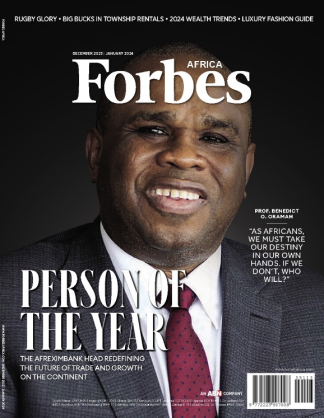
FORBES AFRICA’s 2023 Person of the Year

Location: News
Afreximbank

The President of the African Export-Import Bank (Afreximbank) (www.Afreximbank.com), Prof. Benedict Oramah, today in Cairo received the FORBES AFRICA magazine 2023 Person of The Year award.

At a well-attended award ceremony, which also included the unveiling of the cover for FORBES AFRICA's December 2023/January 2024 edition featuring Prof. Oramah as Cover personality, Dr. Rakesh Wahi, FORBES AFRICA Founder and Publisher, and Roberta Naicker, the Managing Director, said that the award recognised the stellar accomplishments of leading Africans contributing to the development of the continent.

“With a career spanning three decades at Afreximbank, Prof. Benedict Oramah is a true pan-Africanist,” said Renuka Methil, Managing Editor of FORBES AFRICA. “In our almost hour-long interview Prof. Oramah's stellar track record, coupled with his unbridled enthusiasm, passion, and contribution to the economic development of Africa shone through.”

“Amongst many initiatives under his visionary leadership, Afreximbank launched the Pan-African Payment and Settlement System (PAPSS) which will be a historic project for cross-border payments in local African currencies. He is a resilient risk-taker and articulated so well what a new united Africa should, and would, look like,” added Ms Renuka Methil.

Nominations for FORBES AFRICA Person of The Year are submitted by members of the magazine's editorial and research teams, including journalists from its bureaus across Africa, and a winner is selected after an Africa-wide review of the prominent contributors to the continent. Prof. Oramah's name was shortlisted and unanimously adjudged the winner for 2023.

With the award, Prof. Oramah joins a prestigious list of high achievers who had previously received the award, including Sanusi Lamido Sanusi, former Governor of the Central Bank of Nigeria; Dr. James Mwangi, CEO, Equity Group; Dr. Akinwumi Adesina, President, African Development Bank; Aliko Dangote, CEO, Dangote Group; Mohammed Dewji, President, MeTL Group; and Thuli Madonsela, former Public Protector of South Africa.

On 18 November, President Oramah also received the Zik Prize in Professional Leadership at an event in Lagos, Nigeria. He is also the recipient of numerous other awards for his contributions to the development and promotion of trade in Africa, and for the many initiatives he has championed to drive intra-African trade.

Distributed by APO Group on behalf of Afreximbank.

Follow us on:
X (Twitter): https://apo-opa.info/41qI9VY
Facebook: https://apo-opa.info/3MGRNQi
LinkedIn: https://apo-opa.info/3KBxMYQ
Instagram: https://apo-opa.info/3UA1jH1

About Afreximbank:
African Export-Import Bank (Afreximbank) is a Pan-African multilateral financial institution mandated to finance and promote intra-and extra-African trade. For 30 years, the Bank has been deploying innovative structures to deliver financing solutions that support the transformation of the structure of Africa's trade, accelerating industrialization and intra-regional trade, thereby boosting economic expansion in Africa. A stalwart supporter of the African Continental Free Trade Agreement (AfCFTA), Afreximbank has launched a Pan-African Payment and Settlement System (PAPSS) that was adopted by the African Union (AU) as the payment and settlement platform to underpin the implementation of the AfCFTA. Working with the AfCFTA Secretariat and the AU, the Bank is setting up a US$10 billion Adjustment Fund to support countries to effectively participate in the AfCFTA. At the end of 2022, Afreximbank's total assets and guarantees stood at over US$31 billion, and its shareholder funds amounted to US$5.2 billion. The Bank disbursed more than US$86 billion between 2016 and 2022. Afreximbank has investment grade ratings assigned by GCR (international scale) (A), Moody's (Baa1), Japan Credit Rating Agency (JCR) (A-) and Fitch (BBB). Afreximbank has evolved into a group entity comprising the Bank, its impact fund subsidiary called the Fund for Export Development Africa (FEDA), and its insurance management subsidiary, AfrexInsure, (together, “the Group”).

For more information, visit: www.Afreximbank.com

Media files
Afreximbank
Download logo
Read moreFORBES AFRICA’s 2023 Person of the Year
3 December 2023

President Ramaphosa pleased with milestones at COP28

Location: News

President Ramaphosa pleased with milestones at COP28

President Cyril Ramaphosa has expressed satisfaction with the level of engagements at the Conference of Parties (COP28).

This as the President concluded his official visit to Dubai, United Arab Emirates on Saturday.

The COP28 outcome also included the setting up of a loss and damage fund.

"South Africa applauds the landmark decision of COP28 to operationalise the new fund on loss and damage and welcomes the pledges that have already been made. We would like to see the fund growing along with the implementation of all other commitments that have been made thus far”, said President Cyril Ramaphosa.

President Ramaphosa also presented to the United Nations Secretary General, Antonio Guterres, South Africa’s Implementation Plan of the Just Energy Transition (JET) Investment Plan.

The plan has also been shared with some of the JET Partners who have committed up to 8.5 billion US dollars towards South Africa’s efforts in decarbonising the economy and mitigating the effects of climate change.

The President also called for more countries to participate in efforts to end the effects of climate change in developing economy countries.

 "We are calling for more countries to participate, as our Just  Energy Transition Plan requires much more funding, so that we can enable a more effective and positively impactful transition, particularly with respect to communities that are going to be affected as we transit from fossil fuel sources of energy to renewables.

As the Summit continues in the next two weeks, we want to see sharper focus coming from developed economies with respect to living up to their Paris commitments. We still expect the 100 billion dollars that was promised to be made available to support countries that are least responsible for climate damage manage the effects of climate change”, said President Ramaphosa.

The President asserted the role of multilateralism and solidarity as central to global climate action and cautioned against unilateral, coercive, and trade-distorting approaches, such as carbon adjustment measures that are going to be severely detrimental to developing economies.

The conference underway, commenced on 30 November and will end on 12 December 2023, brings together world leaders to discuss progress and ambition across all pillars of the United Nations Framework Convention on Climate Change (UNFCCC) as adopted in the Paris Agreement in 2015.

The conference seeks to provide momentum and guidance for the remainder of the COP and is presided over by COP28 President-Designate Dr. Sultan Ahmed Al Jaber of the United Arab Emirates.

In a statement on Sunday the Presidency said the Minister of Forestry, Fisheries and the Environment, Barbara Creecy will lead the country’s participation for the remainder of the conference until 12 December 2023.

South Africa’s participation at the conference is in the context of its national determination as set out in the Just Energy Transition Investment Plan, to significantly reduce emission in line with the Paris Agreement adopted in 2015.  

COP28 presents an opportunity to fast-track the energy transition by building the energy system of the future, while rapidly decarbonising the current energy system to keep 1.5°C target within reach. -SAnews.gov.za


Neo
Sun, 12/03/2023 - 11:43

15 views
Read morePresident Ramaphosa pleased with milestones at COP28
2 December 2023

SA commends Cuba’s support in water sector

Location: News

SA commends Cuba’s support in water sector

Water and Sanitation Deputy Minister David Mahlobo has commended the Cuban government for its continued solidarity with the people of South Africa, particularly in the field of water and sanitation.

“The unwavering support that we receive from the Cuban government has been amazing and we will forever be grateful for their commitment in ensuring that South Africa is developed into a better state and achieve a great life for its people,” Mahlobo said.

He was speaking during the 7th South Africa-Cuba High Level Panel meeting with Cuba’s Institute of National Hydraulic Resources first Vice President, Bladimir Matos Moya, and a contingent of Cuban engineers deployed to South Africa as part of a long-standing cooperation between the two states.

During the meeting held in Pretoria this week, South Africa and Cuba reviewed the existing cooperation agreement between the two States in the areas of geo-hydrology and engineering services. 

The two also committed to continue working together and strengthening the existing relations.

“The expertise from Cuban engineers has assisted our country and our department a great deal in improving our technical capacity to manage our water infrastructure,” Mahlobo said.

The Deputy Minister commended the experienced engineers from Cuba for imparting their vast knowledge into up-and-coming engineers at the department.

The department has a Learning Academy which is tasked with unearthing young engineers to bridge the skills gap in the water sector. 

“We offer bursaries and then absorb young engineers upon completion of their studies, and we capacitate to acquire the required skills in many ways. This is where the expertise of Cuban engineers come in, to equip our newly graduated engineers to become better,” Mahlobo said.

The Deputy Minister reiterated that water security is dependent on how the country manages its infrastructure and water resources, saying this can be achieved through cooperation with like-minded and developed countries.

The current cooperation agreement between the two States, which was entered into in 2020, is set to lapse in 2025 and upon which, a new agreement is expected to be entered into until 2030.

Mahlobo said the 25 engineers assisting South Africa have been involved in electrical and mechanical operations and maintenance of pump stations and systems, dams, reservoirs associated with the electricity generation, mining industries and food production. 

“They have also been assisting with hydraulic and civil engineering work in regional bulk infrastructure project, control of expenses associated with infrastructure development in municipalities, drought relief programs, [including] COVID-19 projects and approval of water use licence applications. They have also involved in the development of Emergency Preparedness Plans for all dams according to the established regulations,” Mahlobo said. 

The two States have agreed to begin the process of reviewing the cooperation going forward and to expand to other areas of cooperation, which includes infrastructure investment and planning, development of green energy including the development of hydropower, climate change and its impact on infrastructure and national disaster management. 

The projects that the Cuban engineers have been involved in include, among others:
• Conditional assessment of Standerton water supply conduction, treatment, and disposal to the environment of the wastewater, Lekwa Local Municipality, Gert Sibande District Municipality;
• Technical audit of the hydraulic system of the Vaal basin in Johannesburg;
• Technical support and monitoring of the execution of RBIP projects;
• Upgrade of Maviljan Waste Water Treatment Works, Bushbuckridge; 
• Upgrade of Eerstehoek Water Supply phases 1 and 2 Albert Luthuli Local Municipality;
• Upgrade of Bulk pipeline for Empuluzi Methula Water Scheme phase 5, 6, 7 Albert  Luthuli Local Municipality; and
• Regional Bulk Water Supply Scheme for Breyten (Cluster 2 phases 1 2 Msukaligwa Local Municipality. – SAnews.gov.za


GabiK
Fri, 12/01/2023 - 12:24

432 views
Read moreSA commends Cuba’s support in water sector
30 November 2023

Rent Not Paid? Here’s What Landlords And Tenants Need To Know…

Location: MyPR

In South Africa, landlords have a number of rights and remedies available when tenants fail to pay their rent or utilities. However, there are also strict legal restrictions. This article explains what landlords can and can’t do if a tenant does not pay their rent or utilities and what tenants can do if they are …

Read moreRent Not Paid? Here’s What Landlords And Tenants Need To Know…
30 November 2023

President heads to Dubai for UNFCCC’S COP28

Location: News

President heads to Dubai for UNFCCC’S COP28

President Cyril Ramaphosa will this week lead South Africa’s delegation to the United Nations Framework Convention on Climate Change’s (UNFCCC) 28th Conference of Parties (COP28) in Dubai.  

The President will lead the delegation on 1 and 2 December 2023, however, in total the conference runs from 30 November to 12 December 2023. 

“Following the President’s participation this week, the Minister of Forestry, Fisheries and the Environment, Barbara Creecy, will stay on and lead the country’s participation for the remainder of the conference until 12 December 2023.

“South Africa’s delegation to the conference will include government and business representatives in recognition of the value of partnerships in dealing with the challenge of climate change and sustainable development,” the Presidency said.

The 18th COP Meeting of the Parties to the Kyoto Protocol (CMP18) and the fourth COP Meeting of the Parties to the Paris Agreement (CMA) sessions will be convened on the sidelines of the COP28. 

The conference will witness the first Global Stocktake (GST), which will provide a comprehensive assessment of progress made since the adoption of the Paris Agreement in 2015. 

This will help align efforts on climate action, including measures that need to be implemented to bridge the gaps in progress.

The purpose of the stocktake is to help parties prepare their next nationally determined contributions to the Paris Agreement to raise ambition and accelerate climate action, as well as to enhance international cooperation.

Meanwhile, President Ramaphosa will next Thursday lead government’s interaction with the Matjhabeng Local Municipality during the second leg of the District Development Model Presidential Imbizo in the Free State.

The Matjhabeng municipal economy is mainly anchored on the mining of gold and uranium and is the hub of the Free State goldfields.
 
The Presidential Imbizo will take place at the Kopano Indoor Sports Centre in Thabong, Welkom, within the Lejweleputswa District Municipality.

Under the theme “Leave no one Behind”, the President will be continuing on the last visit undertaken on 9 April 2022 in Bloemfontein at the Mangaung Metropolitan Municipality.

The Lejweleputswa DDM Presidential Imbizo follows on the commitments the Free State Provincial Government made to tackle service delivery challenges during the 2022 Imbizo which was held in Bloemfontein.

Thus, this Imbizo will also take stock of the progress made since the last Presidential Imbizo in the province. During the 2022 engagement, 42 community members representing the seven regions of the Mangaung Metro voiced their concerns to the President.

The towns represented in this discussion included Van Stadensrus, Soutpan, Dewetsdorp, Wepener, Thaba Nchu, Botshabelo and Bloemfontein. Representatives of people with disabilities were also able to raise their concerns. 

“As an interactive platform, the DDM Presidential Imbizo allows communities to engage and interact face-to-face with the President, Ministers and the provincial and local leadership face-to-face,” the Presidency said.

The DDM also aims to intensify the delivery of services, promote social cohesion and advance the developmental state agenda, in line with the National Development Plan; and Growth and Development Strategies of the province.

President Ramaphosa will further, on 12 December 2023, host the Inaugural Science, Technology and Innovation Presidential Plenary that will bring together leaders in government, industry, academia and civil society.

“Discussions will focus on progress of the National System of Innovation (NSI) and challenges in this sector, and will explore ways for Science, Technology and Innovation (STI) and skills development to impact positively on the South African economy,” the Presidency said. – SAnews.gov.za


DikelediM
Thu, 11/30/2023 - 09:45

301 views
Read morePresident heads to Dubai for UNFCCC’S COP28
28 November 2023

Benefits of Forklift Hire

Location: MyPR

Forklift hire, a practical solution for businesses in South Africa that require material handling equipment on a temporary or project-specific basis, offers flexibility and cost efficiency. Hiring a forklift instead of purchasing can be a strategic choice for many businesses, particularly in a dynamic economic environment like South Africa’s.   Benefits of Forklift Hire   …

Read moreBenefits of Forklift Hire
  • Previous
  • Page 1
  • Interim pages omitted …
  • Page 30
  • Page 31
  • Page 32
  • Page 33
  • Page 34
  • Interim pages omitted …
  • Page 37
  • Next

Copyright © 2026 · MyZA · All Rights Reserved · Powered by Reach Trust