Brown Is Beautiful: What Namibia’s Capital Windhoek Can Teach African Cities as They Get Hotter and Drier
New research shows how Windhoek’s ‘Brown is Beautiful’ approach could use its dry landscape to protect the city from heat, drought and floods.

MyZA
News, Directory, Events and Other Stuff
New research shows how Windhoek’s ‘Brown is Beautiful’ approach could use its dry landscape to protect the city from heat, drought and floods.
Communities in the north-west Maghreb were able to coordinate large construction projects thousands of years ago.
The vast prayer camps challenge stereotypes of Nigerian cities as chaotic, dysfunctional, and driven by religious tension.
New research indicates that collective forms of governance were more likely.
Understanding what drives recruitment into these academies is not a defence of fraud. It is a precondition for dismantling it.
Urban design depends heavily on human judgment and field-based understanding.
The Upgrading of Informal Settlements Programme has failed
Young people in Bo City, Sierra Leone became youth climate leaders after turning a low-cost Climate Science Hub into a space for science-informed action.
The IMF is not a neutral arbiter on any discussions relating to preferred creditor status. It is itself a direct beneficiary of the creditor hierarchy.
Africa holds key green energy minerals but exports them raw. If the continent had its own Green Bank, it could finance local manufacturing and green industry.
Public finance is the means through which societies either raise living standards or entrench dependence.
Rating agencies shape the policy space for pursuing development goals. Yet they remain private firms, operating under commercial incentives.
While Israel’s recognition of Somaliland alters the board, it doesn’t end the game.
Rural people mostly grew their own food. But in the city, the daily meal became a commodity to be bought and sold.
US military intervention could strengthen Nigeria’s fight against insurgency in the short term but also risks unintended consequences.
Armed drones are increasingly being seen as a solution to security challenges in African conflicts.
Sibusiso Dube has livened up the local library, mentored teens and earned acclaim for his graphite portraits
Public ponds, fountains and new reflective buildings are needed to protect Yaoundé’s people from the heat island effect.
Africa’s Second Climate Summit in Ethiopia will try to find ways to bring in more finance to help the continent adapt to climate change.
State-contingent debt instruments allow countries hit by economic and climate crises to restructure their debt repayments.
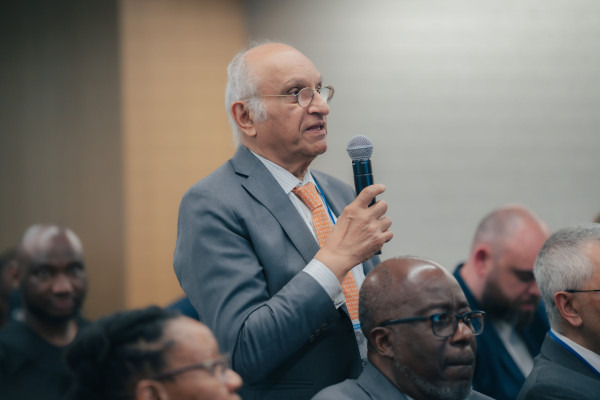
With more than 30 African countries subject to sovereign credit ratings, the decisions of global rating agencies significantly impact debt sustainability and access to international financial markets. At a high-level dialogue held on the sidelines of the 2025 IMF–World Bank Spring Meetings, African institutions and global credit rating agencies reaffirmed their commitment to developing a fair, transparent, and inclusive credit rating ecosystem for Africa.
Organized by the African Union's African Peer Review Mechanism (APRM), the United Nations Development Programme (UNDP), the United Nations Economic Commission for Africa (UNECA), AfriCatalyst, and the African Center for Economic Transformation (ACET), and hosted at the Open Society Foundations, the dialogue brought together senior representatives from Moody's, S&P, and Bank of America for a candid discussion on financing solutions for African countries.
Against a backdrop of rising market volatility, sovereign defaults and constrained fiscal space, the dialogue aimed to address urgent reforms in Africa's credit rating framework. Speakers identified structural issues such as data gaps, methodological opacity, and under-engagement between African governments and the ‘big three' credit rating agencies (Moody's, S&P, and Fitch), as barriers to accurate ratings.
Amb. Claver Gatete, Executive Secretary of UNECA, acknowledged Africa's financing paradox—a combined GDP of over $3 trillion, yet only two countries rated investment grade—and underscored the urgent need for reform. “Ultimately, a healthy credit rating ecosystem goes beyond evaluating risk – it becomes a platform for mobilizing capital, improving creditworthiness, and supporting Africa's broader development goals,” he added.
“We must rethink how creditworthiness is defined and measured,” said Dr. Raymond Gilpin, Chief Economist, UNDP Africa speaking on behalf of Ms. Ahunna Eziakonwa, UNDP Regional Director for Africa. “At UNDP, we believe a development-centric approach is essential to supporting governments in strengthening institutions, improving data systems, and engaging effectively with credit rating agencies to reshape the narrative around Africa's creditworthiness.”
African economies face mounting credit rating challenges, including perceptions of bias, lack of transparency and inconsistencies in rating methodologies. Dr. Misheck Mutize, Lead Credit Rating Expert at APRM, and Dr. Zuzana Schwidrowski, Director of Macroeconomics, Governance and Finance at UNECA, proposed solutions to addressing the capacity of African governments to respond to inaccurate or unfair credit ratings and steps toward creating an African Credit Rating Agency that complements and expands existing credit ratings coverage globally.
Mr. Roberto Sifon-Arevelo, Managing Director at S&P Global Ratings, Mr. Jorge Valez, Senior Vice President at Moody's Ratings, and Dr. Tatonga Rusike, Chief Economist for Africa at Bank of America, outlined opportunities to remedy longstanding risk perception issues and working together with banks and investors to build capacity and a better understanding of rating methodologies to address transparency. They further emphasized that while sovereign credit ratings are not the sole determinant of investor decisions, they exert significant influence over borrowing costs, market confidence, and access to capital.
"Given the ongoing stress in African governments related to both cost of capital and access to capital it is critical to ensure that credit ratings reflect the many different African contexts. This initiative is an important step in that regard - particularly engaging the credit rating agencies," shared Ms. Mavis Owusu-Gyamfi, President and CEO of ACET.
“The Africa Credit Rating Agency (AfCRA) is not being established to issue favourable ratings for African entities, but rather to contribute to a diversity of rating opinions that support more accurate assessments of African sovereigns, corporates, and sub-sovereigns,” expressed Dr. Mutize. “Our priority is to build a credible, independent, and sustainable institution that plays a vital role in developing domestic debt markets and rebalancing Africa's position within the evolving global financial architecture.”
In his closing remarks AfriCatalyst's CEO Dr. Daouda Sembene stressed the urgent need for collaboration among African institutions. “AfriCatalyst is proud to be at the heart of this critical dialogue, building on the foundation of our Credit Ratings Initiative with UNDP. We are optimistic that through stronger collaboration between African institutions and global rating agencies, we can foster a more accurate, robust, and representative credit rating ecosystem—one that empowers African nations and promotes sustainable growth.” said Daouda.
Key messages included the need for: transparent and regular engagement between rating agencies, investors, and African governments; stronger institutional narratives that reflect the continent's resilience and reform efforts; and local capacity-building and collaboration, particularly through the proposed African Credit Rating Agency, which aims to provide credible, contextual alternatives to global ratings.
As South Africa chairs the G20 and the African Union assumes permanent membership in 2025, the call for an African-led credit rating solution takes on added urgency. The outcomes of this dialogue will contribute to ongoing efforts to reform the global financial architecture and ensure Africa's capital works better for Africa's development.
Distributed by APO Group on behalf of AfriCatalyst.
Media Contacts:
Bineta Pouye
bpouye@africatalyst.com
Michelle Mendi Muita
michellemendi.muita@undp.org
Ejigayhu Tefera
ejigayhu.tefera@aprm-au.org
Jean-Marc Kilolo
jean-marc.kilolo@un.org
Belinda Ayamgha
bayamgha@acetforafrica.org
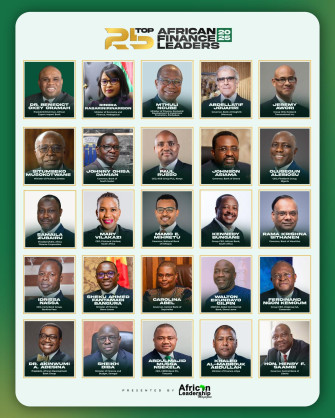
African Leadership Magazine (ALM) (www.AfricanLeadershipMagazine.co.uk) is pleased to unveil its highly anticipated Top 25 African Finance Leaders 2025 list — a prestigious editorial recognition that honours excellence, innovation, and transformative leadership within Africa's financial services and economic governance landscape. This year's cohort comprises distinguished finance ministers, central bank governors, CEOs of leading financial institutions, and other influential figures who are shaping the continent's economic architecture through visionary policy direction and exemplary stewardship.
The Top 25 list is a testament to the leaders who are championing fiscal responsibility, financial inclusion, and macroeconomic stability across the continent. These individuals have demonstrated a profound ability to navigate complex economic challenges, implement forward-thinking reforms, and inspire confidence in national and regional economies. Their collective leadership has contributed to enhanced investor confidence, accelerated digital finance adoption, and strengthened institutional frameworks that support inclusive and sustainable development. As Africa continues to assert itself as a dynamic player in the global economy, these leaders are setting the standard for excellence in financial governance, demonstrating the strategic foresight and resilience required to unlock the continent's vast economic potential.
“These finance leaders have not only surmounted formidable challenges but are actively shaping a new era of economic growth, transparency, and resilience,” said Dr. Ken Giami, Publisher & CEO of African Leadership Magazine. “Their bold and visionary leadership is redefining Africa's financial narrative and positioning the continent as a rising global financial powerhouse.”
The selection process follows a rigorous two-step procedure to ensure transparency and credibility. First, nominations are gathered from a global pool of experts in the finance and banking sectors, who identify individuals making significant contributions. Then, our editorial board conducts a thorough review, evaluating candidates based on their leadership, impact, and long-term influence on the African financial landscape. This comprehensive approach ensures that we honor only the most deserving leaders, whose work is truly transforming Africa's financial sector.”
The formal recognition and celebration of these leaders will take place at the African Finance Leadership Forum, scheduled for 22 April 2025 at the United States Capitol Building, Washington D.C., USA, on the margins of the 2025 Spring Meetings of the World Bank Group (WBG) and the International Monetary Fund (IMF).
The ALM Top 25 African Finance Leaders 2025:
Distributed by APO Group on behalf of African Leadership Magazine.
For media inquiries, please contact:
Ehis Ayere
Group General Manager
info@africanleadership.co.uk
+44 23 9265 8276
About African Leadership Magazine:
The African Leadership Magazine, published by the African Leadership Organization (UK), focuses on presenting the best of Africa to a global audience, telling the African story from an African perspective while developing solutions to challenges facing the continent today. We have committed the last 16 years to promoting impactful leadership on the continent and promoting African opportunities globally through an ecosystem of quality Afro-positive content, Africa trade facilitation and market entry solutions, Afro-centric communities and business networking platforms, as well as through public sector training and consulting.
President Ramaphosa appoints Professor Mariana Mazzucato to G20 Taskforce
President Cyril Ramaphosa has appointed renowned economist Professor Mariana Mazzucato as Technical Expert to South Africa’s G20 Presidency and his Special Presidential Representative to Taskforce 1, focusing on Inclusive Economic Growth, Industrialisation, Employment, and Reducing Inequality.
In a statement on Monday, The Presidency said Professor Mazzucato will also contribute to Taskforce 3: Artificial Intelligence, Data Governance, and Innovation for Sustainable Development.
She will also support the Sherpa Track on Trade and Investment Working Group, and the Finance Track Sustainable Finance Working Group, and International Financial Architecture Working Group.
Professor Mazzucato is a member of President Ramaphosa’s Economic Advisory Council (PEAC) since 2019, advising on areas such as green industrial strategy, State capacity, and reform of State-owned enterprises.
In 2024, she co-chaired the Group of Experts for Brazil's G20 Task Force for the Global Mobilisation Against Climate Change (TF-CLIMA).
“This appointment underscores South Africa’s commitment to leveraging its leadership in the G20 to shape a more inclusive and sustainable global economy.
“Professor Mazzucato, internationally recognised for her work on rethinking the State, green growth, mission-oriented innovation and public value creation, brings critical expertise to advancing South Africa’s goals on green industrialisation, inclusive growth, and long-term structural transformation,” the Presidency said.
Under President Ramaphosa's leadership and the G20 theme of “Solidarity, Equality, Sustainability”, South Africa aims to lead global discussions on these key issues, advocating for policies that foster resilient economic development, particularly in developing countries.
South Africa’s G20 Presidency is committed to advancing a global economic framework that supports green growth, economic resilience, and social equity.
The year 2025, described by President Ramaphosa, President Lula da Silva of Brazil, and Prime Minister Sánchez of Spain as “a pivotal year for multilateralism”, will feature three major global gatherings: the G20 Summit in Johannesburg, the Financing for Development Conference in Seville, and COP30 in Belém. – SAnews.gov.za
DikelediM
Mon, 04/07/2025 - 15:18
54 views
The African Union (AU) and the European Union (EU) launched a year-long celebration marking the 25th anniversary of their enduring and unique partnership, since the first Africa-Europe Summit on 3-4 April 2000 in Cairo.
This milestone, aligned with the Africa Agenda 2063 and the Global Gateway Investment Package for Africa, underscores the powerful impact of two unions representing over 1.9 billion people and accounting for more than 40% of the UN's membership.
In the lead-up to the Ministerial Meeting on 21 May 2025, in Brussels, gathering over 80 governments and the new leadership of both AU and EU, a series of anniversary initiatives will be promoted. These will include joint outreach explaining the development of the partnership and concrete results and open dialogues on shared challenges. These activities will pave the way for the 7th African Union-European Union Summit to be hosted in Africa later this year.
The 25th anniversary will highlight the strategic alignment of the AU-EU partnership around the four central pillars of the Joint Vision for 2030 adopted by African and European leaders at their Summit in 2022.
Key Pillars of the AU-EU Partnership:
1. Prosperity: a prosperous and sustainable Africa and Europe
The AU and EU are committed to fostering regional economic integration and sustainable growth, bringing together people, regions, and organisations. The Global Gateway Africa-Europe Investment Package , actively supports the implementation of the Africa Agenda 2063. The EU is Africa's first trading partner and AU and EU work together on sustainable trade and investment that create growth and jobs, as well as, on accelerating the green and digital transitions strengthening health systems and improving education and skills.
2. Peace, Security and Governance: Partnering for Stability
The AU and EU are committed to a joint approach to peace, security, and governance, recognising that stability, the rule of law and democratic institutions are fundamental for sustainable development. Under the African leadership, the EU is an active and long-term partner for peace with civilian and military training and security missions and for the African Peace and Security Architecture (APSA).
3. People: Investing in Human Development
Human development remains at the core of the AU-EU partnership. Joint initiatives on migration and mobility, education, culture, exchange opportunities, social inclusion and humanitarian affairs, empower people, especially women and youth, to build prosperous and inclusive societies. The EU and the AU are committed to the rule of law, good governance, democratic principles, respect for human rights, gender equality, and justice.
4. Planet: A Global Force for Multilateralism and Sustainability
Representing more than 40% of the UN's membership, the AU and EU are a formidable force for strong support for the multilateral system, with the UN Charter at its core, and for environmental sustainability. Both are working to increase the legitimacy and effectiveness of the multilateral system: cooperation within the G20, chaired by South Africa, and the Pact for the Future are two examples. Together, they are driving global action to promote shared fundamental values and to address climate change and protect the planet.
Distributed by APO Group on behalf of African Union (AU).