Legally in SA but Scared to Go Home: 150 Immigrants Camping at Durban Home Affairs
People driven from their neighbourhoods by anti-immigrant groups have spent five days moving between a police station, a church centre and Home Affairs

MyZA
News, Directory, Events and Other Stuff
People driven from their neighbourhoods by anti-immigrant groups have spent five days moving between a police station, a church centre and Home Affairs
The majority judgment found that the Refugees Act is silent on reapplications and the court would come dangerously close to legislating if it allowed these
Figuring out how climate change will cause plant disease and pests to spread across Africa’s Great Lakes farms is critical for future food supplies.
State fails to provide an interpreter for Juma Igiraneza
By 2100, rural African dwellers will be exposed to dangerous levels of heat nearly twice as high as those in urban areas.
The qualities forged by his intense involvement in the struggle for democratic practices shaped his approach to conflict and strife, wherever it occurred.
African countries must not sign away their health data or release their pathogens in exchange for donor funding.
People from the diaspora call this old part of Cape Town home
Vigilantism on the rise as people accuse the police of failing them
Control over water underpins national security, economic stability and social wellbeing, as disputes over rivers from southern Africa to the Nile show.
Refugee offices are still not processing new applications unless immigrants have a transit visa, despite a court ruling that this is unconstitutional
The last-mile delivery sector has exploded and may be the environmentally friendly way to shop
Nigeria’s electricity reforms look solid on paper, but the real-world results still lag.
Accusations of treason against former DRC president Joseph Kabila are evidence of the fallout between him and his successor.
The refugees have rejected repatriation to home countries or returning to South African communities

In a landmark diplomatic step, Tanzania has launched a revised National Foreign Policy that reinforces the country's leadership in African diplomacy. The updated policy embraces Pan-African values, supports the African Continental Free Trade Area (AfCFTA), and advances regional peace, integration, and sustainable development.
The launch event, held at the Julius Nyerere International Convention Centre (JNICC) in Dar es Salaam, was officiated by H.E. Dr. Samia Suluhu Hassan, President of the United Republic of Tanzania. It was also attended by Dr. Hussein Ali Mwinyi, President of Zanzibar and Chairman of the Revolutionary Council, members of the Diplomatic Corps, senior government leaders, and private sector representatives.
Rooted in the vision of Mwalimu Julius Nyerere, Tanzania has historically championed unity, liberation, and non-alignment in African diplomacy. Under Nyerere's leadership, Tanzania became a moral compass for the continent and a founding member of the Organization of African Unity (OAU).
“This policy speaks on who we are as a nation—firm in our values, proactive in our diplomacy, and committed to constructive partnerships that advance peace, security, and shared prosperity,” President Samia said during the event.
The new policy reflects this legacy while responding to contemporary priorities like trade, migration, regional infrastructure, climate action, and digital transformation. It aims to deepen Tanzania's engagement with continental bodies like the AU, SADC, and EAC while emphasizing Kiswahili as a tool for regional integration.
President Samia noted that the revised policy was shaped through a broad-based participatory process involving Tanzanians from all walks of life. “It was high time we revised the policy to cope with global shifts in various spheres,” she said, citing the global scramble for strategic minerals and trade disruptions caused by ongoing conflicts as key motivators.
A core feature of the updated framework includes economic diplomacy and the creation of a Special Status for Tanzanians in the diaspora. The policy promotes legal reforms that would allow non-citizen Tanzanians abroad to own land, register businesses, and invest back home.
To strengthen implementation, President Samia called on the Ministry of Foreign Affairs and East African Cooperation to engage retired diplomats in training current officials, ensuring that Tanzania's envoys are equipped to promote national interests globally.
President Mwinyi welcomed the revised policy as a catalyst for unlocking social, economic, and political potential. “Tanzania continues to position itself globally, and the revised policy aligns with evolving global needs,” he said.
He urged the Ministry to encourage more countries to open consulates in Zanzibar and called on all Tanzanians to embrace and defend national interests through the policy. “This policy will benefit both Tanzania Mainland and Zanzibar,” he emphasized.
President Samia's regional outreach began early in her presidency. In April 2021, she visited Uganda, where she and President Yoweri Museveni signed the Final Investment Decision for the $10 billion East African Crude Oil Pipeline (EACOP).
In May 2021, her visit to Kenya revitalized bilateral ties, followed by trips to Burundi, Mozambique, Rwanda, Zambia, and Egypt, resulting in cooperation on trade, energy, security, and innovation.
At the June 2021 SADC Summit in Mozambique, Tanzania reaffirmed its commitment to regional peace by supporting the fight against insurgency in Cabo Delgado. In Ghana, she received the Africa Road Builders–Babacar Ndiaye Trophy for leadership in infrastructure development.
In Senegal, during the IDA20 Summit, and at COP27 in Egypt, she positioned Tanzania as a leader in climate resilience, presenting an $18 billion renewable energy plan.
From 2023 to 2025, she maintained strong continental engagement through AU summits, the BRICS Summit in South Africa, and diplomatic visits to Malawi, Zambia, South Africa, and Morocco.
A key milestone in Tanzania's growing international stature was the invitation to the Lobito Corridor Development Project high-level meeting in Angola—part of the G7's Global Infrastructure Initiative. Although Tanzania was not originally a member of the project, its geographic and strategic relevance was recognized as critical to the corridor's success.
In February 2024, President Samia unveiled a statue of Mwalimu Nyerere at the AU Headquarters in Ethiopia—a symbolic act that underscored Tanzania's foundational role in the Pan-African movement.
As Chair of the SADC Organ, she presided over the 2024 Troika Summit in Zimbabwe, advancing peace and security initiatives and supporting Raila Odinga's candidacy for AU Commission leadership.
On May 18, 2025, Professor Mohamed Yakub Janabi was elected as the next Regional Director of the WHO African Region, a milestone widely credited to Tanzania's rising diplomatic influence. His nomination followed the untimely death of Dr. Faustine Ndugulile in 2024. Janabi's appointment will be formalized by the WHO Executive Board later this month.
According to Ambassador Mahmoud Thabit Kombo, the revised policy focuses on ten strategic pillars:
This updated policy reflects Tanzania's commitment to Pan-African unity while embracing innovation, inclusion, and global partnership. It sets the stage for the next chapter in Tanzania's regional leadership and sustainable development.
Distributed by APO Group on behalf of Tanzania Ministry of Foreign Affairs and East African Cooperation.
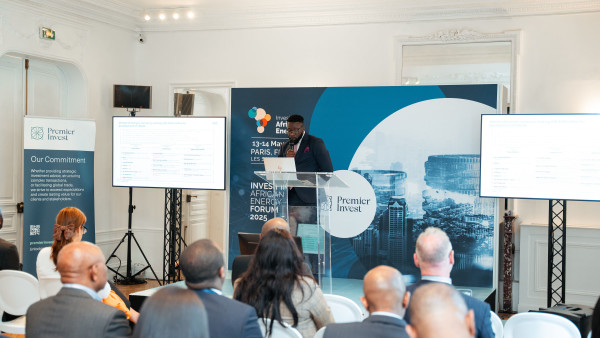
The Invest in African Energy Forum in Paris featured a standout session this year with the Premier Invest Deal Room, a platform that spotlighted over $10 billion worth of oil, gas and renewable energy projects seeking investment across Africa and the broader energy frontier.
“This is a platform to showcase interesting opportunities across Africa that we are advising on,” said Marcel Awasum, Head of Business Development for Premier Invest. “All of the deals we are advising on, we are also mobilizing capital for – from family offices to private equity in oil and gas – mostly from the Middle East, and some from Europe.”
The session featured 17 active deals spanning upstream, midstream, trading and renewable segments, underscoring the breadth of investment potential across the African continent and beyond. One of the flagship opportunities was the development of a 200,000-barrel-per-day crude oil refinery, seeking $4.8 billion in combined equity and debt to meet growing regional demand for refined products. Another deal sought $50 million through a 360-day revolving letter of credit facility to support the import of refined petroleum products.
Exploration and production prospects were also on the table, including a development project offering up to 40% participating interest to qualified investors, as well as an African oil and gas company seeking a $30 million capital injection, strategic partnership and offtake agreement to enhance its trade capacity and expand upstream.
Refining featured prominently among the deals, with one project calling for €2-5 billion to expand national capacity – open to debt, equity and strategic partnerships. A separate opportunity involved a $25 million equity investment in a highly prospective offshore Guyanese block, offering first-mover advantage with an estimated 400 million barrels of recoverable reserves.
Other ventures included the sale of a defunct Caribbean gas-to-liquids plant with a proven $50 million EBITDA when operational; an $18 million debt facility to drill additional wells in an active production field; and a fast-moving $360 million field development project already attracting soft commitments. The session also featured investment opportunities in the Republic of Congo, where a special purpose vehicle is seeking a co-investor for an M&A transaction involving producing assets; a $70 million fuel importation deal in Burundi; and a $200 million financing package to support the purchase of both crude and refined products in Ivory Coast.
The session concluded with five renewable energy projects seeking over $725 million in investment. This included $362 million for a 70 MW geothermal project in Kenya, $92 million for a 71 MW hybrid solar PV and wind project in Zambia, $87 million for a 100 MW solar PV project in South Africa, and two clean-gas projects – one in Benin (43 MW) and another in South Africa (100 MW) – seeking $84 million and $100 million, respectively.
Distributed by APO Group on behalf of Energy Capital & Power.
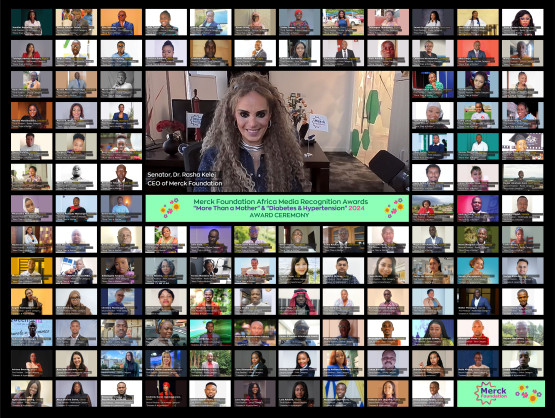
Merck Foundation (www.Merck-Foundation.com), the philanthropic arm of Merck KGaA Germany, in partnership with the First Ladies of Africa, proudly announced the Winners of their Merck Foundation Africa Media Recognition Awards 2024 under the categories “More Than a Mother” and “Diabetes and Hypertension”.
The Awards Ceremony was conducted virtually to honor and celebrate the outstanding contributions of all the winning media professionals. The winners were warmly acknowledged by Senator Dr. Rasha Kelej, CEO of Merck Foundation and President of the “More Than a Mother” campaign.
Senator, Dr. Rasha Kelej expressed, “I am truly happy to announce the winners of our Media Awards, together with my dear sisters, The First Ladies of Africa, who are also the Ambassadors of the Merck Foundation ‘More Than a Mother' Campaign. This year, we are delighted to celebrate 125 outstanding winners from 36 countries. It brings me joy to see such impressive participation not only from across Africa but also from several Asian and Latin American countries. Congratulations to all our incredible winners!
It is a true pleasure to welcome you all as Merck Foundation Alumni. Let's continue to work together to raise awareness about critical social and health challenges, be the voice of the voiceless, and create culture shift in our communities.”
Merck Foundation Media Awards launched in 2017, are announced annually, with over 640 Winners from 52 countries celebrated to date.
The theme of the “More Than a Mother” Media Awards is to raise awareness about important social issues like: Breaking Infertility Stigma, Supporting Girl Education, Women Empowerment, Ending Child Marriage, Ending Female Genital Mutilation and/or Stopping Gender-Based Violence. The theme of the “Diabetes and Hypertension” Media Awards is to Promote a Healthy Lifestyle and raise awareness about prevention and early detection of Diabetes and Hypertension.
The Merck Foundation CEO also launched the Call for Applications for the 2025 Media Awards. “I am pleased to invite entries for the Merck Foundation Media Recognition Awards 2025 – “More Than a Mother” & “Diabetes and Hypertension”, in partnership with the African First Ladies. I look forward to receiving another outstanding round of impactful entries this year as well.” Said Senator Dr. Rasha Kelej.
Winners of Merck Foundation "More Than a Mother" Media Recognition Awards 2024
Here are the winners from West African Countries in partnership with The First Lady of the Republic of The Gambia, H.E. Mrs. FATOUMATTA BAH-BARROW; and The First Lady of the Republic of Sierra Leone, H.E. Dr. FATIMA MAADA BIO:
PRINT CATEGORY WINNER
ONLINE CATEGORY WINNERS
RADIO CATEGORY WINNER
MULTIMEDIA CATEGORY WINNERS
Here are the Winners from Southern African Countries in partnership with The First Lady of the Republic of Malawi, H.E. Mrs. MONICA CHAKWERA; The First Lady of the Republic of Zimbabwe, H.E. Amai Dr. AUXILLIA MNANGAGWA:
PRINT CATEGORY WINNERS
ONLINE CATEGORY WINNERS
RADIO CATEGORY WINNERS
MULTIMEDIA CATEGORY WINNERS
Here are the winners from East African Countries:
PRINT CATEGORY WINNERS
ONLINE CATEGORY WINNERS
RADIO CATEGORY WINNERS
MULTIMEDIA CATEGORY WINNER
Here are the winners from French Speaking African Countries in partnership with The First Lady of the Republic of Burundi, H.E. Madam ANGELINE NDAYISHIMIYE; The First Lady of Democratic Republic of the Congo, H.E. Madam DENISE NYAKERU TSHISEKEDI:
PRINT CATEGORY WINNER
ONLINE CATEGORY WINNERS
RADIO CATEGORY WINNERS
MULTIMEDIA CATEGORY WINNERS
Here are the winners from Portuguese Speaking African Countries in partnership with The First Lady of the Republic of Cabo Verde, H.E. Dr. DÉBORA KATISA CARVALHO:
ONLINE CATEGORY WINNERS
RADIO CATEGORY WINNERS
MULTIMEDIA CATEGORY WINNERS
Merck Foundation "Diabetes & Hypertension" Media Recognition Awards 2024
Here are the winners from West African Countries in partnership with The First Lady of the Republic of The Gambia, H.E. Mrs. FATOUMATTA BAH-BARROW; and The First Lady of the Republic of Sierra Leone, H.E. Dr. FATIMA MAADA BIO:
PRINT CATEGORY WINNER
ONLINE CATEGORY WINNERS
RADIO CATEGORY WINNERS
MULTIMEDIA CATEGORY WINNER
Here are the Winners from Southern African Countries in partnership with The First Lady of the Republic of Malawi, H.E. Mrs. MONICA CHAKWERA; The First Lady of the Republic of Zambia, H.E. Mrs. MUTINTA HICHILEMA; The First Lady of the Republic of Zimbabwe, H.E. Amai Dr. AUXILLIA MNANGAGWA:
PRINT CATEGORY WINNER
ONLINE CATEGORY WINNERS
RADIO CATEGORY WINNERS
Here are the winners from East African Countries:
PRINT CATEGORY WINNER
ONLINE CATEGORY WINNERS
RADIO CATEGORY WINNERS
MULTIMEDIA CATEGORY WINNER
Here are the winners from French Speaking African Countries in partnership with The First Lady of the Republic of Burundi, H.E. Madam ANGELINE NDAYISHIMIYE; and The First Lady of Democratic Republic of the Congo, H.E. Madam DENISE NYAKERU TSHISEKEDI:
PRINT CATEGORY WINNERS
ONLINE CATEGORY WINNERS
RADIO CATEGORY WINNERS
MULTIMEDIA CATEGORY WINNER
Here are the winners from ASIAN Countries:
PRINT CATEGORY WINNER
ONLINE CATEGORY WINNERS
Here are the winners from LATIN AMERICA Countries:
ONLINE CATEGORY WINNERS
MULTIMEDIA CATEGORY WINNER
Details of Merck Foundation Media Awards 2025:
1. Merck Foundation Africa Media Recognition “More Than a Mother” Awards 2025
Theme for the awards: Breaking Infertility Stigma, Supporting Girl Education, Women Empowerment, Ending Child Marriage, Ending FGM, and/or Stopping GBV at all levels.
Who can apply: Journalists from Print, Radio, Online, and Multimedia platforms from the following groups:
Submission deadline: 30th September 2025.
Theme for the awards: Promoting a healthy lifestyle and raising awareness about prevention and early detection of Diabetes and Hypertension.
Who can apply: Journalists from Print, Radio, Online, and Multimedia platforms from the following groups:
Submission deadline: 30th October 2025.
All entries are to be submitted to submit@merck-foundation.com.
Distributed by APO Group on behalf of Merck Foundation.
Contact details:
Mehak Handa
Community Awareness Program Manager
+91 9310087613 / +91 9319606669
mehak.handa@external.merckgroup.com
Join the conversation on our social media platforms below and let your voice be heard!
Facebook: https://apo-opa.co/4cLhp9K
X: https://apo-opa.co/3EtS73f
YouTube: https://apo-opa.co/4cUG7o7
Instagram: https://apo-opa.co/3GnWcqj
Threads: https://apo-opa.co/3EvXLlq
Flickr: https://apo-opa.co/42ZoEr6
Website: www.Merck-Foundation.com
About Merck Foundation:
The Merck Foundation, established in 2017, is the philanthropic arm of Merck KGaA Germany, aims to improve the health and wellbeing of people and advance their lives through science and technology. Our efforts are primarily focused on improving access to quality & equitable healthcare solutions in underserved communities, building healthcare & scientific research capacity, empowering girls in education and empowering people in STEM (Science, Technology, Engineering, and Mathematics) with a special focus on women and youth. All Merck Foundation press releases are distributed by e-mail at the same time they become available on the Merck Foundation Website. Please visit www.Merck-Foundation.com to read more. Follow the social media of Merck Foundation: Facebook (https://apo-opa.co/4cLhp9K), X (https://apo-opa.co/3EtS73f), Instagram (https://apo-opa.co/3GnWcqj), YouTube (https://apo-opa.co/4cUG7o7), Threads (https://apo-opa.co/3EvXLlq) and Flickr (https://apo-opa.co/42ZoEr6).
The Merck Foundation is dedicated to improving social and health outcomes for communities in need. While it collaborates with various partners, including governments to achieve its humanitarian goals, the foundation remains strictly neutral in political matters. It does not engage in or support any political activities, elections, or regimes, focusing solely on its mission to elevate humanity and enhance well-being while maintaining a strict non-political stance in all of its endeavors.
The long war in the Democratic Republic of Congo has displaced millions of people
MOU signed to develop public servants and trainers
Public Service and Administration Minister Inkosi Mzamo Buthelezi has welcomed the signing of an agreement between the National School of Government (NSG) and the E’cole Nationale d’Administration (ENA) - the national school of administration in Burundi.
The two institutions signed a Memorandum of Understanding in Pretoria on Wednesday to facilitate cooperation on educating, training, and developing public servants and trainers.
The MoU was signed by Professor Busani Ngcaweni, NSG Principal, Professor Jean de Dieu Ndikumana, the Director General of ENA, witnessed by the Ambassador of Burundi to South Africa, Alexis Bukuru.
Minister Buthelezi said the agreement was an important development in cementing relations between the two institutions and the two countries.
He added that it contributed to the implementation of the African Union's objectives, to build state capacity and to build stronger states and a functional, capable and efficient public sector on the African continent.
“The NSG will play its role in contributing towards building capacity in Burundi, while South Africa has a lot to learn from Burundi as well, as the country has the invaluable experience of having to rebuild state capacity after a protracted war. We wish both the NSG and ENA the best in the implementation of this agreement,” Minister Buthelezi said.
The MoU enables the parties to collaborate in the following areas:
Ngcaweni and Ndikumana said they looked forward to implementing the partnership to empower public servants in their respective countries. – SAnews.gov.za
Edwin
Thu, 03/27/2025 - 12:23
84 views

Merck Foundation (www.Merck-Foundation.com), the philanthropic arm of Merck KGaA Germany, marks ‘World Cancer Day 2025' together with Africa's First Ladies and Ministries of Health. Through their Cancer Access Program, Merck Foundation is is building quality and equitable cancer care capacity in Africa.
Senator Dr. Rasha Kelej, the CEO of Merck Foundation, highlighted, “At Merck Foundation, we mark World Cancer Day not just as a single day, but as a our continued commitment to transform and advance cancer care in Africa.
Together with my dear sisters, the Africa's First Ladies, we are have enhanced the cancer care capacity in the continent by providing 194 scholarships to young African doctors from 32 countries, significantly increasing the number of oncologists in Africa. We are making history together by providing these important scholarships for the first oncologists and /or the first cancer care teams in many countries across Africa.”
Merck Foundation in total provided more than 2100 scholarships to doctors from over 52 countries in 44 critical and underserved medical specialties.
The Merck Foundation Cancer Access Program provides One, two- and three-years fellowship, Post Graduate Diploma and Master Degree of oncology for doctors from Africa. The clinical training has been conducted in India, Egypt and Kenya. Additionaly, Merck Foundation also provides scholarships for 2 years online PG Diploma in Cancer and Clinical Oncology, 01 year online PG Diploma in Medical Oncology and 1 year online PG Diploma in Pain Management from reputed Universities in UK like University of South Wales, University of Buckingham, Queen Mary University of London, and Cardiff University.
Merck Foundation is establishing Multidisciplinary Oncology Care teams in many African countries by providing scholarships of clinical training in Medical Oncology, Surgical Oncology, Pediatrics Oncology, Gynecology Oncology, Breast Oncology, Haemato-Oncology, Orthopaedic Oncology, Palliative Care, Pathology Oncology, Radiation Oncology, Research in Oncology, Surgical Oncology - Genital Urinary System, Advanced Cytopathology Training, Interventional Radiology, Radiation Technician, Laboratory Technician, Oncology Nursing.
Merck Foundation through its Merck Foundation Cancer Access Program has provided 194 scholarships of Oncology to doctors from 32 countries including Botswana, Burkina Faso, Burundi, Cameroon, Central African Republic, Chad, Congo Brazzaville, Democratic Republic of the Congo, Ethiopia, Gabon, Gambia, Ghana, Guinea, Kenya, Liberia, Malawi, Mauritius, Mozambique, Namibia, Nepal, Niger, Nigeria, Rwanda, Sao Tome & Principe, Senegal, Sierra Leone, South Africa, Sri Lanka, Tanzania, Uganda, Zambia and Zimbabwe.
“In several of these countries, there wasn't even a single oncologist. We are proud to be making history in Africa by training the first oncologists and establishing the first cancer care teams in nations such as The Gambia, Sierra Leone, Burundi, Liberia, Guinea Conakry, Central African Republic, Chad, and Niger. Merck Foundation remains committed to transforming the landscape of cancer care across the continent and leading Africa toward a healthier future,” explained Senator Dr. Rasha Kelej.
Africa records around 1.1 million new cases of cancer, resulting in up to 700,000 deaths, every year, as per WHO data. The mortality rate of cancer patients is very high in Africa, as compared to the rest of the world.
“One of the key reasons is also the late diagnosis of the disease. Therefore, these scholarships are very important” added Senator Kelej.
Merck Foundation has also created awareness materials including awareness leaflets and videos on Cancer Prevention and Early Detection.
Dr. Chifundo Kajombo, Merck Foundation Alumni from Malawi shares, “I am privileged to be awarded a scholarship by Merck Foundation to pursue the Surgical Oncology fellowship training program at Tata Memorial Hospital, India. I managed to advance from basic surgical oncology principles to the advanced level. This has helped me improve my understanding of cancer and operative principles. Since returning back home, I have managed to change the structure of how our breast clinic runs and modified it to incorporate a number of new things that we probably could not have possibly included. I am so proud to share that I have just been awarded the Best Surgeon for 2023 in Malawi. I would not have achieved this feat without Merck Foundation's scholarship. I am very thankful.”
Watch testimonials videos of Merck Foundation Oncology Fellowship Alumni: https://apo-opa.co/41OIaF9
Distributed by APO Group on behalf of Merck Foundation.
More images: https://apo-opa.co/4iRW3JJ
Contact details:
Mehak Handa
Community Awareness Program Manager
+91 9310087613 / +91 9319606669
mehak.handa@external.merckgroup.com
Join the conversation on our social media platforms below and let your voice be heard!
Facebook: https://apo-opa.co/41N19zX
X: https://apo-opa.co/4iMYFZc
YouTube: https://apo-opa.co/4iRZtfA
Instagram: https://apo-opa.co/41PwZfx
Threads: https://apo-opa.co/4l4QxW7
Flickr: https://apo-opa.co/4iQjTp3
Website: www.Merck-Foundation.com
Download Merck Foundation App: https://apo-opa.co/4bOL5SX
About Merck Foundation:
The Merck Foundation, established in 2017, is the philanthropic arm of Merck KGaA Germany, aims to improve the health and wellbeing of people and advance their lives through science and technology. Our efforts are primarily focused on improving access to quality & equitable healthcare solutions in underserved communities, building healthcare & scientific research capacity, empowering girls in education and empowering people in STEM (Science, Technology, Engineering, and Mathematics) with a special focus on women and youth. All Merck Foundation press releases are distributed by e-mail at the same time they become available on the Merck Foundation Website. Please visit www.Merck-Foundation.com to read more. Follow the social media of Merck Foundation: Facebook (https://apo-opa.co/41N19zX), X (https://apo-opa.co/4iMYFZc), Instagram (https://apo-opa.co/41PwZfx), YouTube (https://apo-opa.co/4iRZtfA), Threads (https://apo-opa.co/4l4QxW7) and Flickr (https://apo-opa.co/4iQjTp3).
The Merck Foundation is dedicated to improving social and health outcomes for communities in need. While it collaborates with various partners, including governments to achieve its humanitarian goals, the foundation remains strictly neutral in political matters. It does not engage in or support any political activities, elections, or regimes, focusing solely on its mission to elevate humanity and enhance well-being while maintaining a strict non-political stance in all of its endeavors.
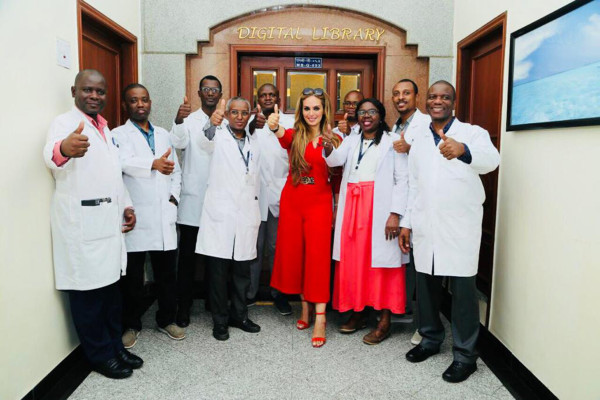
Merck Foundation (www.Merck-Foundation.com), the philanthropic arm of Merck KGaA Germany, marks ‘World Cancer Day 2025' together with Africa's First Ladies and Ministries of Health. Through their Cancer Access Program, Merck Foundation is is building quality and equitable cancer care capacity in Africa.
Senator Dr. Rasha Kelej, the CEO of Merck Foundation, highlighted, “At Merck Foundation, we mark World Cancer Day not just as a single day, but as a our continued commitment to transform and advance cancer care in Africa.
Together with my dear sisters, the Africa's First Ladies, we are have enhanced the cancer care capacity in the continent by providing 194 scholarships to young African doctors from 32 countries, significantly increasing the number of oncologists in Africa. We are making history together by providing these important scholarships for the first oncologists and /or the first cancer care teams in many countries across Africa.”
Merck Foundation in total provided more than 2100 scholarships to doctors from over 52 countries in 44 critical and underserved medical specialties.
The Merck Foundation Cancer Access Program provides One, two- and three-years fellowship, Post Graduate Diploma and Master Degree of oncology for doctors from Africa. The clinical training has been conducted in India, Egypt and Kenya. Additionaly, Merck Foundation also provides scholarships for 2 years online PG Diploma in Cancer and Clinical Oncology, 01 year online PG Diploma in Medical Oncology and 1 year online PG Diploma in Pain Management from reputed Universities in UK like University of South Wales, University of Buckingham, Queen Mary University of London, and Cardiff University.
Merck Foundation is establishing Multidisciplinary Oncology Care teams in many African countries by providing scholarships of clinical training in Medical Oncology, Surgical Oncology, Pediatrics Oncology, Gynecology Oncology, Breast Oncology, Haemato-Oncology, Orthopaedic Oncology, Palliative Care, Pathology Oncology, Radiation Oncology, Research in Oncology, Surgical Oncology - Genital Urinary System, Advanced Cytopathology Training, Interventional Radiology, Radiation Technician, Laboratory Technician, Oncology Nursing.
Merck Foundation through its Merck Foundation Cancer Access Program has provided 194 scholarships of Oncology to doctors from 32 countries including Botswana, Burkina Faso, Burundi, Cameroon, Central African Republic, Chad, Congo Brazzaville, Democratic Republic of the Congo, Ethiopia, Gabon, Gambia, Ghana, Guinea, Kenya, Liberia, Malawi, Mauritius, Mozambique, Namibia, Nepal, Niger, Nigeria, Rwanda, Sao Tome & Principe, Senegal, Sierra Leone, South Africa, Sri Lanka, Tanzania, Uganda, Zambia and Zimbabwe.
“In several of these countries, there wasn't even a single oncologist. We are proud to be making history in Africa by training the first oncologists and establishing the first cancer care teams in nations such as The Gambia, Sierra Leone, Burundi, Liberia, Guinea Conakry, Central African Republic, Chad, and Niger. Merck Foundation remains committed to transforming the landscape of cancer care across the continent and leading Africa toward a healthier future,” explained Senator Dr. Rasha Kelej.
Africa records around 1.1 million new cases of cancer, resulting in up to 700,000 deaths, every year, as per WHO data. The mortality rate of cancer patients is very high in Africa, as compared to the rest of the world.
“One of the key reasons is also the late diagnosis of the disease. Therefore, these scholarships are very important” added Senator Kelej.
Merck Foundation has also created awareness materials including awareness leaflets and videos on Cancer Prevention and Early Detection.
Dr. Chifundo Kajombo, Merck Foundation Alumni from Malawi shares, “I am privileged to be awarded a scholarship by Merck Foundation to pursue the Surgical Oncology fellowship training program at Tata Memorial Hospital, India. I managed to advance from basic surgical oncology principles to the advanced level. This has helped me improve my understanding of cancer and operative principles. Since returning back home, I have managed to change the structure of how our breast clinic runs and modified it to incorporate a number of new things that we probably could not have possibly included. I am so proud to share that I have just been awarded the Best Surgeon for 2023 in Malawi. I would not have achieved this feat without Merck Foundation's scholarship. I am very thankful.”
Watch testimonials videos of Merck Foundation Oncology Fellowship Alumni: https://apo-opa.co/4bab06Y
Distributed by APO Group on behalf of Merck Foundation.
Link of the extra posters: https://apo-opa.co/3X6RmD6
Contact details:
Mehak Handa
Community Awareness Program Manager
+91 9310087613 / +91 9319606669
mehak.handa@external.merckgroup.com
Join the conversation on our social media platforms below and let your voice be heard!
Facebook: https://apo-opa.co/4k65XbW
X: https://apo-opa.co/43mGeGv
YouTube: https://apo-opa.co/3EVeWMS
Instagram: https://apo-opa.co/413ECyl
Threads: https://apo-opa.co/4gLTA1P
Flickr: https://apo-opa.co/4gSxZVs
Website: www.Merck-Foundation.com
Download the Merck Foundation App: https://apo-opa.co/413wo9z
About Merck Foundation:
The Merck Foundation, established in 2017, is the philanthropic arm of Merck KGaA Germany, aims to improve the health and wellbeing of people and advance their lives through science and technology. Our efforts are primarily focused on improving access to quality & equitable healthcare solutions in underserved communities, building healthcare & scientific research capacity, empowering girls in education and empowering people in STEM (Science, Technology, Engineering, and Mathematics) with a special focus on women and youth. All Merck Foundation press releases are distributed by e-mail at the same time they become available on the Merck Foundation Website. Please visit www.Merck-Foundation.com to read more. Follow the social media of Merck Foundation: Facebook (https://apo-opa.co/4k65XbW), X (https://apo-opa.co/43mGeGv), Instagram (https://apo-opa.co/413ECyl), YouTube (https://apo-opa.co/3EVeWMS), Threads (https://apo-opa.co/4gLTA1P) and Flickr (https://apo-opa.co/4gSxZVs).
The Merck Foundation is dedicated to improving social and health outcomes for communities in need. While it collaborates with various partners, including governments to achieve its humanitarian goals, the foundation remains strictly neutral in political matters. It does not engage in or support any political activities, elections, or regimes, focusing solely on its mission to elevate humanity and enhance well-being while maintaining a strict non-political stance in all of its endeavors.
As the Security Council prepared to gather on Wednesday to debate the international community's response to the growing emergency in eastern Democratic Republic of the Congo (DRC), the UN's top aid official there urged all warring parties to allow lifesaving relief supplies to reach the most vulnerable.
“The rapid and uninterrupted expansion of the conflict, particularly in South Kivu province, continues to inflict a heavy toll on the civilian population,” said UN humanitarian coordinator for DRC, Bruno Lemarquis. “The population can no longer continue to pay such a heavy price for a conflict that continues to spread and now threatens the stability of the entire region.”
The veteran aid official's appeal came as yet more vulnerable people reportedly fled combat zones amid advancing and heavily armed Rwanda-backed M23 rebels. On Sunday the opposition fighters took control of Bukavu - the second major eastern DRC city to fall, in a matter of weeks.
“It is imperative to put an end to the confrontations” and resume dialogue, Mr. Lemarquis insisted, as he echoed concerns stressed by the UN Secretary-General that the continuing M23 offensive threatens regional stability.
For aid teams who remain committed to helping vulnerable and hard-to-reach communities impacted by the fighting, Mr. Lemarquis signalled that the most urgent priorities include reopening airports for humanitarian flights in Goma – capital of North Kivu and Kavumu in South Kivu, both now controlled by M23.
‘Tense' situation in Bukavu
The security situation in Bukavu remains tense, according to the UN aid coordination office, OCHA, which also reported that commercial boats have resumed services on Lake Kivu between Bukavu and Goma.
Humanitarian partners have also reported widespread looting in various part of Bukavu over the weekend, including a UN World Food Programme warehouse containing 7,000 tonnes of supplies.
“Several churches and collective centres in Bukavu are reportedly hosting displaced people,” OCHA noted in an update, adding that humanitarian assessment activities resumed on Tuesday “and will continue tomorrow as conditions permit”.
In addition to the urgent need for humanitarian supply flights, the UN aid coordinator urged respect for international law regarding the rights of internally displaced people (IDPs). Just last week, relief agencies expressed concern at a 72-hour ultimatum issued by M23 representatives to IDPs in Goma who were told to go back to their villages.
“Any return can only take place on a voluntary basis, under safe, dignified and sustainable conditions, in accordance with international principles,” Mr. Lemarquis explained.
Neutrality at core of mission
The UN aid coordinator also insisted that relief teams' “sole mission” was to provide vital assistance and protection to the most vulnerable, “wherever they may be...This action is guided by the humanitarian principles of neutrality, impartiality, humanity, and independence, without taking sides or engaging in political considerations.”
The DRC emergency is one of the most complex humanitarian crises in the world; it follows decades of clashes between the Congolese armed forces and various non-State armed groups, widespread human rights violations and sexual violence.
Humanitarian needs are staggering and not just in eastern DRC, according to the UN refugee agency, UNHCR, which noted that seven million people within the country are displaced and more than one million have sought asylum beyond the country's borders.
Most of these refugees are hosted by Angola, Burundi, the Republic of the Congo, Malawi, Rwanda, South Africa, Uganda, Tanzania and Zambia. At the same time, the DRC – a country seven times the size of Germany – also hosts more than half a million refugees and asylum-seekers.
This latest crisis in DRC's east has already uprooted hundreds of thousands of vulnerable people in a matter of weeks. Between 10 and 15,000 people have now crossed into neighbouring Burundi in a matter of days.
“UNHCR urgently calls for increased support to assist refugees and prevent further suffering,” it said in an online appeal. “We also urge an immediate end to hostilities in eastern DRC to prevent more displacement and civilian harm.”
Distributed by APO Group on behalf of UN News.
The United Nations Human Rights Council will hold its fifty-eighth regular session from 24 February to 4 April 2025 at the Palais des Nations in Geneva, starting with its high-level segment from 24 to 26 February, when dignitaries representing more than 100 Member States will address the Council.
The session will open at 9 a.m. on Monday, 24 February under the Presidency of Ambassador Jürg Lauber of Switzerland. Delivering statements at the opening will be the Secretary-General of the United Nations, António Guterres; thePresident of the United Nations General Assembly, Philemon Yang; the United Nations High Commissioner for Human Rights, Volker Türk; as well as the Chief of the Federal Department of Foreign Affairs of Switzerland, Ignazio Cassis. The Council will be meeting in room XX of the Palais des Nations.
On Monday, 3 March, the Council is scheduled to hear a global update by the High Commissioner for Human Rights on the situation of human rights around the world. The general debate on his global update will start following his presentation of a number of country-specific reports and updates.
During the session, the Council will hold 30 interactive dialogues with the High Commissioner, his Office and designated experts, with Special Procedure mandate holders and investigative mechanisms, and with Special Representatives of the Secretary-General. The Council will also hold five enhanced interactive dialogues and one high-level dialogue, as well as nine general debates.
The Council will also hold theannual high-level panel discussion on human rights mainstreaming with a focus on the thirtieth anniversary of the Beijing Declaration and Platform for Action;the biennial high-level panel on the death penalty; panel discussions on early warning and genocide, HIV response and leaving no one behind, and onrights to work and to social security; the annual interactive debate on the rights of persons with disabilities; the annual discussion on the rights of the child; and a commemoration of the International Day for the Elimination of Racial Discrimination.
The Council will examine the situation of human rights in a number of countries under its various agenda items, including the situation in the occupied Palestinian territory, Eritrea, Sudan, South Sudan, Nicaragua, Afghanistan and Myanmar under agenda item two; in Iran, Syria, Venezuela, Ukraine, Belarus, the Democratic People's Republic of Korea, and Myanmar under agenda item four; and in Mali, Haiti, Ukraine, the Democratic Republic of the Congo, South Sudan and Central African Republic under agenda item 10.
The final outcomes of the Universal Periodic Review of14 States will also be considered, namely those of Norway, Albania, Democratic Republic of the Congo, Côte d'Ivoire, Portugal, Bhutan, Dominica, Democratic People's Republic of Korea, Brunei Darussalam, Costa Rica, Equatorial Guinea, Ethiopia, Qatar and Nicaragua.
Towards the end of the session, the Council will appoint three new members of the Expert Mechanism on the Rights of Indigenous Peoples.
A detailed agenda and further information on the fifty-eighth session can be found on the session'swebpage. Reports to be presented are available here.
The fifty-eighth regular session will open at 9 a.m. on Monday, 24 February with a short opening meeting, followed by the start of the high-level segment, which will continue until 26 February, and during which the Council will hear addresses by more than 100 dignitaries. Intervening during the high-level segment will be the annual high-level panel discussion on human rights mainstreaming in the afternoon of 24 February and the biennial high-level panel on the death penalty in the morning of Tuesday, 25 February. The general segment will follow the conclusion of the high-level segment in the afternoon of Wednesday, 26 February.
On Thursday, 27 February, the Council will hold an interactive dialogue on the High Commissioner's report on the occupied Palestinian territory, including East Jerusalem, and the obligation to ensure accountability and justice, followed byenhanced interactive dialogues on the situation of human rights in Eritrea and on the High Commissioner's report on Sudan, with the assistance of the designated Expert. Friday, 28 February, will see the conclusion of the discussion on Sudan, followed by an enhanced interactive dialogue on the report of the Commission on Human Rights in South Sudan. This will be followed by three interactive dialogues, the first on the report of the Group of Human Rights Experts on Nicaragua, the second with the Special Rapporteur on the situation of human rights in Afghanistan, and the third on the High Commissioner's oral update on Myanmar.
At the beginning of the second week, on the morning of Monday, 3 March, the Council will hear the High Commissioner's global update, then conclude the interactive dialogue on the High Commissioner's oral update on Myanmar. This will be followed by the presentation of reports on the activities of the Office of the High Commissioner in Colombia, Guatemala and Honduras, and of another report on Cyprus, and oral updates on Sri Lanka and Nicaragua. The Council will then begin the general debate under agenda item two, namely the annual report of the High Commissioner for Human Rights and reports of the Office of the High Commissioner and the Secretary-General, which will conclude on Tuesday, 4 March. The Council will subsequently begin its considerations under agenda item three on the promotion and protection of all human rights, holding interactive dialogues with the Special Rapporteur on torture and other cruel, inhuman or degrading treatment or punishment and with the Special Rapporteur on freedom of religion or belief.
On the morning of Wednesday, 5 March, the Council will hold a panel on early warning and genocide prevention, then conclude its interactive dialogue with the Special Rapporteur on freedom of religion or belief. This will be followed by an enhanced interactive dialogue on the report of the Office of the High Commissioner on transitional justice. Another panel will be held on Thursday, 6 March on HIV response and leaving no one behind, in addition to two interactive dialogues with the Special Rapporteur on the situation of human rights defenders and the Special Rapporteur in the field of cultural rights. A third panel will be held in the morning of Friday, 7 March on rights to work and to social security, followed by two interactive dialogues with the Special Rapporteur on the right to adequate housing and the Independent Expert on the rights of persons with albinism.
The Council will start its third week on Monday, 10 March with a focus on disability, beginning with an interactive dialogue with the Special Rapporteur on the rights of persons with disabilities, to be followed by the annual debate on the rights of persons with disabilities. The day will conclude with aninteractive dialogue with the Independent Expert on foreign debt, which will continue in the morning of Tuesday, 11 March. Two moreinteractive dialogues will also be held on Tuesday with the Special Rapporteur on the right to food and the Special Rapporteur on the promotion and protection of human rights and fundamental freedoms while countering terrorism.
Wednesday, 12 March will see a further three interactive dialogues with the Special Rapporteur on the right to privacy, and the Special Representatives of the Secretary-General on violence against children and on children and armed conflict, the latter of which will conclude on Thursday, 13 March. The focus on children will continue on Thursday, with the Council also holding its annual discussion on the rights of the child, the theme of which will be early childhood development, and starting an interactive dialogue with the Special Rapporteur on the sale of children, which will conclude on Friday, 14 March.
On Friday, an interactive dialogue with the Special Rapporteur on the human right to a healthy environment will precede the presentation of reports by the open-ended intergovernmental working group on transnational corporations and other business enterprises with respect to human rights, the Secretary-General, the High Commissioner and his Office, followed by the start of the general debate on agenda item three.
The first day of the Council's fourth week, Monday 17 March, will be devoted to concluding the general debate on agenda item three. From Tuesday, 18 March, consideration of agenda item four, human rights situations that require the Council's attention, will begin. First on the schedule is a joint interactive dialogue with the Special Rapporteur and the independent international fact-finding mission on the situation of human rights in Iran, followed by interactive dialogues with the independent international commission of inquiry on Syria, the fact-finding mission on Venezuela and the independent internationalcommission of inquiry on Ukraine.
On Wednesday, 19 March, after the conclusion of the dialogue with the commission of inquiry on Ukraine, three more separate interactive dialogues will be held with the group of independent experts on the situation of human rights inBelarus and with the Special Rapporteurs on the situation of human rights in the Democratic People's Republic of Korea and in Myanmar.
Thursday, 20 March, will see the Council hear the presentation of the High Commissioner's report on the Democratic People's Republic of Korea and his oral update of the situation of human rights in Venezuela. This will be followed by the general debate on agenda item four, which will conclude on the morning of Friday, 21 March. On Friday, the Council will also hold an interactive dialogue with the Special Rapporteur on minority issues, before beginning considerations under agenda item five on human rights bodies and mechanisms. After hearing the presentation of reports by the Forum on Minority Issues, the Social Forum, and the Special Procedures of the Council, it will commence the general debate on agenda item five.
The Council will start its fifth week on Monday, 24 March with its consideration under agenda item six of the final outcomes of theUniversal Periodic Reviews of 14 States: Norway, Albania, Democratic Republic of the Congo, Côte d'Ivoire, Portugal, Bhutan, Dominica, Democratic People's Republic of Korea, Brunei Darussalam, Costa Rica, Equatorial Guinea, Ethiopia, Qatar and Nicaragua. This consideration will continue through to the morning of Wednesday, 26 March, after which the Council will hold a general debate on agenda item six. This will be followed by the presentation of the reports of the High Commissioner and the Secretary-General under agenda item seven, namely the human rights situation in Palestine and other occupied Arab territories, and the general debate on this agenda item. The general debate under agenda item eight - follow-up and implementation of the Vienna Declaration and Programme of Action – is also scheduled to commence on Wednesday afternoon.
Ending racism will be the Council's theme for Thursday, 27 March. After concluding the debate under agenda item eight, it will hear the presentation of the report of the intergovernmental working group on the effective implementation of the Durban Declaration and Programme of Action, then hold its general debate on agenda item nine, namely racism, racial discrimination, xenophobia and related forms of intolerance, follow-up to and implementation of the Durban Declaration and Programme of Action. From 2:30 to 4:30 p.m., the Council will also hold a meeting in commemoration of the International Day for the Elimination of Racial Discrimination.
Friday, 28 March will begin with the conclusion of the debate under agenda item nine, followed by three interactive dialogues conducted under agenda item 10 on technical assistance and capacity-building. The first dialogue will be with the Independent Expert onthe situation of human rights in Mali; the second on the High Commissioner's report on the situation of human rights in Haiti, with the participation of the Independent Expert on the subject; and the third on the High Commissioner's oral update on the situation of human rights in Ukraine.
Monday, 31 March is a United Nations holiday. On Tuesday, 1 April, the Council will hold an enhanced interactive dialogue on oral updates by the High Commissioner and by the team of international experts on the Democratic Republic of the Congo, followed by an interactive dialogue on the report of the Office of the High Commissioner on technical assistance and capacity building for South Sudan and a high-level dialogue on the Central African Republic. At the end of the day, the Council will hear the annual presentation of the High Commissioner on technical cooperation and his oral update on Georgia, and the presentation of the report of the Board of Trustees of the Voluntary Fund for Technical Cooperation, followed by the general debate on agenda item 10.
The general debate will conclude on Wednesday, 2 April, and the Council will then start to act on draft decisions and resolutions, appoint three new members of the Expert Mechanism on the Rights of Indigenous Peoples, and adopt the report of the fifty-eighth regular session, before closing the session on Friday, 4 April.
The Human Rights Council is an inter-governmental body within the United Nations system, made up of 47 States, which is responsible for strengthening the promotion and protection of human rights around the globe. The Council was created by the United Nations General Assembly on 15 March 2006 with the main purpose of addressing situations of human rights violations and making recommendations on them.
The composition of the Human Rights Council at its fifty-eighth session is as follows: Albania (2026); Algeria (2025); Bangladesh (2025); Belgium (2025); Benin (2027); Bolivia (2027); Brazil (2026); Bulgaria (2026); Burundi (2026); Chile (2025); China (2026); Colombia (2027); Costa Rica (2025); Côte d'Ivoire (2026); Cuba (2026); Cyprus (2027); Czechia (2027); Democratic Republic of the Congo (2027); Dominican Republic (2026); Ethiopia (2027); France (2026); Gambia (2027); Georgia (2025); Germany (2025); Ghana (2026); Iceland (2027); Indonesia (2026); Japan (2026); Kenya (2027); Kuwait (2026); Kyrgyzstan (2025); Malawi (2026); Maldives (2025); Marshall Islands (2027); Mexico (2027); Morocco (2025); Netherlands (2026); North Macedonia (2027); Qatar (2027); Republic of Korea (2027); Romania (2025); South Africa (2025); Spain (2027); Sudan (2025); Switzerland (2027); Thailand (2027); and Viet Nam (2025).
The term of membership of each State expires in the year indicated in parentheses.
The President of the Human Rights Council in 2025 is Jürg Lauber (Switzerland). The four Vice-Presidents are Tareq Md Ariful Islam (Bangladesh), Razvan Rusu (Romania), Paul Empole Losoko Efambe (Democratic Republic of the Congo) and a fourth Vice-President to be elected later from the Group of Latin American and Caribbean States. Mr. Efambe will also serve as Rapporteur of the Geneva-based body.
The dates and venue of the fifty-eighth session are subject to change.
Information on the fifty-eighth session can be foundhere, including the annotated agenda and the reports to be presented.
Distributed by APO Group on behalf of Office of the UN High Commissioner for Human Rights (OHCHR).