• Skip to main content
  • Skip to header right navigation
  • Skip to after header navigation
  • Skip to site footer
MyZA

MyZA

News, Directory, Events and Other Stuff

  • Social Media
  • Sport
  • World News
  • Home
  • Submit News
  • Directory
  • Events
  • Stratlec
  • TFSA
  • News
    • APO
    • Today’s Sport News
    • Todays Social Media and Tech Headlines
    • Today’s World News
    • Today’s SA Financial News
  • Contact
You are here: Home / Archives for CAN

CAN

10 April 2025

Nornickel Presents Palladium Technology Development Strategy for the PGM Industry in South Africa
Location: Business
Nornickel’s Palladium Centre

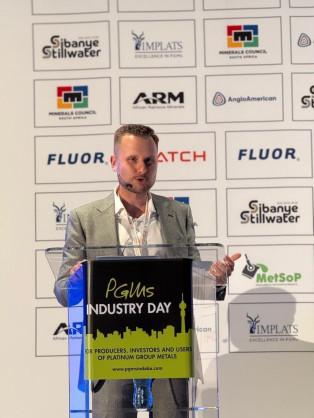
Nornickel (https://NorNickel.com) has unveiled its strategy for the development of palladium-based technologies at the PGMs Industry Day, an international conference held in South Africa. The company's experts shared insights into new technological developments that have the potential to redefine the use of platinum group metals (PGMs) extracted on the African continent, particularly in the fields of energy, electronics, and green technology. 

The presentation attracted considerable interest from conference participants. Industry representatives noted the practical relevance of Nornickel's innovations for the market, as well as the significant potential of palladium in emerging high-tech applications. 

Nornickel is the world's largest producer of palladium and high-grade nickel, and one of the leading global suppliers of platinum, copper, cobalt, and other precious and base metals. The company's Palladium Centre focuses on the development and implementation of innovative palladium-based solutions aimed at enhancing industrial efficiency. 

Palladium is the most extracted metal among the PGMs and benefits from a geographically diversified supply chain. Russia and South Africa, the two major producing regions, ensure stable global supply. 

From a chemical perspective, PGMs complement each other in many applications. Nornickel's research shows that palladium alloys with other PGMs frequently outperform individual metals in terms of efficiency and durability. 

Nornickel's approach to palladium innovation is closely aligned with key global megatrends: the energy transition, sustainable development, and digitalisation. Promising application areas include solar and hydrogen energy, biofuels, and next-generation electronics, where palladium can help reduce the cost of conductive components, hard drives, and OLED displays. In existing markets, the company is focused on improving performance and economics for end users. 

Nornickel is actively building a global partnership network to co-develop and commercialise palladium-based solutions. The company is committed to long-term collaboration with scientists, manufacturers, and end users to accelerate the adoption of advanced technologies and products. 

"Our goal is to become a technological partner for producers of PGM-based products. We focus on identifying applications where palladium delivers a strong competitive edge, bringing together leading scientific teams to develop prototypes, conducting large-scale industrial trials, optimising the product, and transferring the technology to manufacturers. This approach allows us to create more efficient materials and open up new markets for palladium applications," said Dmitry Izotov, CEO of Nornickel's Palladium Centre. 

Since its launch, the Centre has built a portfolio of 25 products. By 2030, the portfolio is expected to exceed 100 projects, generating an additional annual demand of 40–50 tonnes of palladium. 

Distributed by APO Group on behalf of Nornickel’s Palladium Centre.

Media files
Nornickel’s Palladium Centre
Download logo
Read moreNornickel Presents Palladium Technology Development Strategy for the PGM Industry in South Africa
10 April 2025

Six appear in court for alleged Eskom theft

Location: News

Six appear in court for alleged Eskom theft

Eskom has commended police for a recent operation that led to the arrest of six suspects found in possession of Eskom property valued at R1.5 million.

The six appeared in court on Monday.

Eskom Group Executive for Distribution Monde Bala urged communities to protect electrical infrastructure from vandalism and to report any criminal activity.

“We urge communities to play a role in safeguarding the infrastructure that delivers electricity to their homes and businesses. Reliable electricity is essential for daily life—preserving food, cooking, heating, lighting, and enabling children to study after dark. Protecting this infrastructure is a shared responsibility.

“Vandalism results in unplanned power outages, often leaving homes and businesses without electricity for extended periods. The restoration process can be prolonged, particularly when essential infrastructure such as transformers or high-voltage breaker components is damaged, as these items can take weeks to replace,” he said.

In a statement, the power utility said it has noted a rise in theft which includes the removal of pylon steel structures, illegal sand mining around pylons and siphoning of oil from transformers.

“Tampering with electrical infrastructure poses serious and potentially fatal risks. When transformers are drained of oil or connected to illegal installations, they can overheat and explode, leading to widespread power outages and, in some cases, loss of life.

“The theft of steel components from pylons compromises the structural stability of power towers, increasing the risk of collapse—particularly after heavy rainfall. This endangers both people and animals, as high-voltage lines carry thousands of volts and can be deadly upon contact.”

The power utility added that it had identified a rising trend where individuals throw metal chains and wires onto power lines, causing flashovers that trip power lines and disrupt supply.

“Such reckless actions not only contribute to power failures but also put lives at risk. Tragically, there have been cases where individuals suffered severe injuries or lost their lives due to contact with electrified objects hanging from power lines,” Eskom said.

Vandalism has cost the power utility some R221 million over the past financial year – an improvement from some R271 million the financial year before.
“Despite this improvement, the issue demands ongoing vigilance and proactive community involvement.

“Although Eskom has seen a reduction in these crimes due to increased collaboration with law enforcement agencies and improved security measures, the problem persists and remains unacceptable,” the power utility said.

To report vandalism or suspected criminal behaviour, call 0800 11 27 22, send an SMS to 31090 or contact local municipalities. – SAnews.gov.za
 

NeoB
Thu, 04/10/2025 - 08:56
236 views

Read moreSix appear in court for alleged Eskom theft
10 April 2025

Lesotho Under Pressure to Approve Starlink Licence

Location: News

Prime Minister says his government is removing obstacles to US investment, including Starlink, in the wake of the tariff hike

Read moreLesotho Under Pressure to Approve Starlink Licence
10 April 2025

President engages with various technologies at the CSIR 

Location: News

President engages with various technologies at the CSIR 

President Cyril Ramaphosa engaged with various researchers and technologies on his visit to the Council for Scientific and Industrial Research (CSIR) earlier this week.

The President was hosted by the Minister of Science, Technology, and Innovation, Professor Blade Nzimande when he toured several facilities at the CSIR on Tuesday.

Among the technologies the President interacted with, was the Oceans and Coastal Information Management System (OCIMS), a sophisticated digital platform developed by the CSIR. 

It enables South Africa to monitor, protect, and sustainably manage its extensive coastal and oceanic zones through real-time, data-driven insights.

The initiative is led by Dr Lulama Wakaba, Executive Cluster Manager of the Next-Gen Enterprises and Institutions Cluster. The initiative is a collaboration between the CSIR, the Department of Forestry, Fisheries and the Environment, the South African Environmental Observation Network, and the South African Weather Service. 

“Many people don’t realise this, but South Africa’s exclusive economic zone, our marine territory, is larger than our land mass. That gives us an extraordinary opportunity in the blue economy, which holds immense potential for GDP [gross domestic product] growth, job creation, and sustainable development,” Wakaba explained. 

According to the CSIR, OCIMS is not just a data repository, but also an integrated, scalable system that forms the backbone of multiple research projects used by the state to manage and safeguard marine environments.  

These range from coastal erosion monitoring and maritime traffic control, to harmful algal bloom forecasting, oil spill detection, and marine spatial planning.  

By using satellite data, sensor networks, and intelligent analytics, the system ensures that South Africa’s coastal resources are preserved and fully utilised for economic benefits.

“What we’re showcasing is a living example of applied science. This system translates complex marine data into actionable insights that policymakers and environmental authorities can use to make informed decisions. It’s about turning scientific research into national impact,” Wakaba explained. 

The importance of OCIMS is amplified by South Africa’s strategic position at the meeting point of two oceans, with more than 3 000 km of coastline.  

The country’s location, combined with the rising threats of climate change and unsustainable exploitation, make the need for intelligent ocean governance urgent.

“For us, the real breakthrough lies in unlocking the power of science and innovation to support the state's capacity to manage this frontier responsibly,” he said. 

“From supporting marine biodiversity to bolstering economic development, OCIMS is a cornerstone in building resilient, knowledge-based ocean governance.”

The CSIR said having President Ramaphosa visit the exhibition was both a validation and a celebration of the platform’s significance.

“What we hope to communicate is the strategic power we can unlock when we take up the mantle of what the CSIR stands for, applying cutting-edge science and technology to our national priorities. In this instance, it’s the blue economy, a massive frontier that, if fully harnessed, can transform our country’s economic trajectory.”

The CSIR’s work on OCIMS also supports international obligations, including the United Nations’ Sustainable Development Goals, climate resilience efforts, and commitments under the UN Convention on the Law of the Sea.  

It also provides South African citizens and coastal communities with tools to better understand and protect the natural wealth that surrounds them.

“Our oceans are not just scenic landscapes; they are vital economic assets and ecosystems,” he said. 

“OCIMS is about equipping our country with the means to both care for and benefit from those assets responsibly and sustainably.”

With this bold initiative, the CSIR  said OCIMS stands as a beacon of what is possible when innovation meets vision and when digital infrastructure is aligned with national imperatives.

During  his visit, the President hailed the CSIR as a “South African success story” as the institution marks 80 years since its establishment.

READ | CSIR critical for innovative solutions to resolve challenges - President Ramaphosa

The President was delivering remarks at the institution’s headquarters following a tour of the facility on Tuesday afternoon.  – SAnews.gov.za


Gabisile
Thu, 04/10/2025 - 09:47
136 views

Read morePresident engages with various technologies at the CSIR 
10 April 2025

Communities along Vaal River floodlines urged to evacuate

Location: News

Communities along Vaal River floodlines urged to evacuate

Water and Sanitation Minister, Pemmy Majodina, has urged residents residing along the floodlines of the Vaal River to evacuate the area and those who have already relocated not to return to their homes.

Majodina, accompanied by Deputy Minister David Mahlobo, conducted a site visit to the Vaal Dam on Wednesday to assess the condition of water resource infrastructure following significant inflows into the dam due to persistent rainfall across the Vaal River Catchment.

The Minister was joined by Rand Water Chairperson Ramateu Monyokolo and Chief Executive Officer Sipho Mosai, and the provincial heads of Gauteng, Free State, and North West, Justice Maluleke, Tseliso Ntili, and Luxolo Mditshane, respectively.

Majodina warned that low-lying areas downstream of the Vaal and Bloemhof Dams, remain vulnerable due to the release of water through open sluice gates, which are being used to manage water levels.

“During heavy rains and high inflows into dams, the department implement flood management protocols through controlled water releases to ensure the safety of water resource infrastructure (dams and barrages); protection of downstream communities as such, minimise loss of human lives and livelihoods, destruction of property and disruption of services; and to ensure that the dams are full at the end of the flood season,” Majodina said.

Since 3 March 2025, the Department of Water and Sanitation has been gradually releasing water from both dams through sluice gates and valves to maintain structural integrity and reduce flood risk.

Currently, five sluice gates at both the Vaal and Bloemhof Dams have been opened to manage the increased inflows.

Speaking from the Vaal Dam wall, Majodina assured the public that bulk water supply remains stable, and that the department is working closely with the municipalities to manage water reticulation to ensure that the citizens of South Africa have access to potable water from their taps.

The Minister warned residents who encroach upon flood lines to move to a safe area and to remove valuable equipment, including movable infrastructure, and livestock.

She appealed to religious groups and the general public to avoid large bodies of water, as strong currents pose significant danger.

“We want to make a plea and strong caution to people on the flood line; it may not be raining in your area, but because of the tributaries that flow into the dam, high volumes of water could reach your locality and wash away your homes. We also call on churches to be aware of the dangers of strong tides due to the open gates.

“Water currents are not always visible on the surface and can be difficult to detect, making them hazardous. As we approach Easter, let us be cautious regarding water activities that may endanger lives,” the Minister advised.

Mahlobo said living near large bodies of water was visually appealing; however, there was a boundary that should not be crossed for safety reasons.

"A flood line has a red line that should not be crossed, and when water volumes increase, there is a risk to residents and their properties. We cannot be held responsible for decisions made by individuals who cross that red line," Mahlobo said.

Vaal and Bloemhof Dams status

The department reported that the five sluice gates remain opened with an outflow of 793 cubic metres per second (mᵌ/s) at the Vaal Dam and water levels are currently at 114.61% as at this morning.

“At Bloemhof Dam, levels have gone down from last night’s (Tuesday) 116% to 111% this morning (Wednesday) and water levels continue to decline. As such, the Department has reduced outflows from 3000 mᵌ/s by this afternoon to 2500 mᵌ/s”.

The Department of Water and Sanitation continues to monitor the situation and will provide regular updates. Residents are urged to follow instructions from local authorities and disaster management teams. – SAnews.gov.za
 

GabiK
Thu, 04/10/2025 - 09:56
44 views

Read moreCommunities along Vaal River floodlines urged to evacuate
10 April 2025

South Africa Could Do Far More for Congolese Refugees

Location: News

The long war in the Democratic Republic of Congo has displaced millions of people

Read moreSouth Africa Could Do Far More for Congolese Refugees
9 April 2025

Cape Town Families Say City Has ‘Abandoned’ Them

Location: News

Municipality has no immediate plans to move families living at the Masonwabe temporary relocation area in Gugulethu

Read moreCape Town Families Say City Has ‘Abandoned’ Them
9 April 2025

Court Orders Gauteng Health Department to Treat Cancer Patients

Location: News

Judge rules failure to deal with backlog of patients needing radio treatment is unconstitutional

Read moreCourt Orders Gauteng Health Department to Treat Cancer Patients
9 April 2025

Government launches R500 million Spaza Shop Support Fund 

Location: News

Government launches R500 million Spaza Shop Support Fund 

Government has officially opened applications for the highly anticipated R500 million support fund aimed at increasing the participation of South African owned Spaza Shops in the townships and rural areas retail trade sector.

Addressing the launch of the Spaza Shop Support Fund (SSSF), Minister of Trade, Industry and Competition, Parks Tau, said the fund will transform the spaza shop landscape by creating jobs, alleviating poverty, promoting economic inclusion and empowerment as well as stimulating local economic growth.

The fund provides for funding of up to R300 000 per shop through a combination of grants and low-interest loans.

It allocates funding specifically for initial stock purchases, infrastructure improvements, business development tools, and Point of Sale (POS) system adoption.

Through the fund, shop owners will be provided with assistance in meeting hygiene and regulatory standards to ensure the provision of safe, high-quality products.

“We are committed to ensuring that every spaza shop that benefits from this fund also gains access to the necessary health and safety training and resources. This holistic approach will help create workplaces that are not only economically vibrant but also secure and sustainable for the future,” the Minister said on Tuesday in Soweto.

He indicated that studies show that small businesses account for a significant portion of job creation in South Africa. 

“By equipping spaza shop owners with financial support, infrastructure upgrades, and essential business training, we are setting the stage for sustainable job creation. This means more opportunities for local talent and a reduction in poverty levels, as spaza shops expand their roles as community hubs.

“Every spaza shop supported by this fund is an engine for local growth. When these businesses thrive, they create ripple effects that boost surrounding sectors—be it suppliers, service providers, or local artisans. 

“This fund is a catalyst for economic dynamism, injecting energy and resources where they are most needed. It is an investment in our people, our neighbourhoods, and ultimately, the entire South African economy,” he explained.

The fund will be jointly administered by the National Empowerment Fund (NEF) and the Small Enterprise Development Finance Agency (SEFDA).

“We want a South Africa where economic opportunities are available to all, where the informal becomes formal, and where the entrepreneurial spirit of our townships becomes a driving force for national transformation.

“With this fund, we are taking a concrete step to formalise and empower the informal sector. By supporting spaza shops, we are enabling entrepreneurs, often women and young people, to participate fully in the economic process.
“These small businesses generate employment, drive local commerce, and channel much-needed income into communities that have long been underserved,” Tau said.

In order to access the funding, applicants need to apply to the NEF and SEDFA through the prescribed application process outlined on the relevant institution's website.

The following website can be used to apply for funding:

Spaza Shop Support Fund - www.spazashopfund.co.za 
NEF - www.nefcorp.co.za 
SEDFA - https://systems.sefa.org.za/SMMEPortal/

The contact details for the Spaza Shop Support Fund Call Centre are 01 1 305 8080 or via email: Spazafund@nefcorp.co.za

Contact details for the NEF Call Centre are 0861 843633, SEDFA Call Centre 012 748 9600 or an email can be sent to helpline@sefa.org.za.

-SAnews.gov.za


nosihle
Tue, 04/08/2025 - 16:14
365 views

Read moreGovernment launches R500 million Spaza Shop Support Fund 
9 April 2025

Southern African Countries Launch Climate-Resilient Health Initiative With WHO Support

Location: News

2025 GoGettaz Agripreneur Prize Competition
Download logo

Eight Southern African countries have embarked on a landmark effort to bolster emergency preparedness and response systems in the face of increasing climate-related health threats. 

With financial support from the Pandemic Fund, and technical assistance from World Health Organization (WHO) in the African Region and other partners, Botswana, Lesotho, Madagascar, Malawi, Mozambique, Namibia, South Africa and Zimbabwe are advancing their capacity to protect public health, and respond to emergencies.

The US$ 35-million, three-year programme is aimed at supporting these countries as they strengthen national and regional systems for early warning, disease surveillance, laboratory diagnostics and workforce development – key pillars of health emergency readiness.

While implementation activities are yet to begin on the ground, coordinated planning efforts are well under way, including the establishment of governance structures at country and regional levels. Through a dedicated technical coordination capacity at the WHO Emergency Hub in Nairobi, Kenya, WHO is putting in place systems to ensure agile implementation and project monitoring, evaluation, research and learning over the three-year project duration. 

To date, all eight countries have convened multi- disciplinary National Steering Committees and have undertaken a detailed microplanning activity with key stakeholders. Furthermore, initial funds have been disbursed to countries, marking a critical early milestone in a regionally coordinated, country-driven initiative to build climate-resilient health systems.

A formal launch event is planned for next month.

“This investment represents a vital turning point for Southern Africa, a region on the frontlines of the climate and health crisis. Countries now have a unique opportunity to develop systems that are robust, responsive and resilient to emerging threats,” said Dr Chikwe Ihekweazu, Acting WHO Regional Director for Africa.

Southern Africa is warming at nearly twice the global average. Droughts, floods and cyclones are becoming more frequent and severe, fuelling the spread of vector- and waterborne diseases such as malaria and cholera, and placing added strain on health systems.

Five of the countries involved in the initiative – Lesotho, Madagascar, Malawi, Mozambique and Zimbabwe – rank among the world's 50 most vulnerable nations to infectious diseases. Many also face high climate risk, compounded by structural challenges such as weak infrastructure, limited resources and high levels of cross-border migration, underlining the urgent need for coordinated preparedness across the region. 

The new programme, developed under the leadership of national governments, is focused on addressing critical gaps in three priority areas:

  • Early warning and disease surveillance: Strengthening real-time, cross-border detection and information-sharing systems across the One Health spectrum, including human, animal and environmental health.
  • Laboratory systems: Enhancing national and regional laboratory networks, including  upgrading diagnostic capacity and regional testing hubs.
  • Public health and community workforce: Supporting the development of a skilled, coordinated workforce aligned with countries' Human Resources for Health strategies.

The proposal was developed as part of the Common Africa Approach under the Joint Emergency Action Plan, with WHO in the African Region, Africa Centres for Disease Control and WHO's Regional Office for the Eastern Mediterranean. Proposal development was supported by the Gates Foundation.

It builds on existing primary health care and community health efforts, and is aligned with global standards, including the International Health Regulations (2005) and the One Health approach.

One of its most ambitious long-term goals is the creation of a Climate-Health Observatory, a platform to support early warning systems and evidence-based decision making by tracking climate-sensitive health risks across borders. The observatory will facilitate data-driven policymaking and foster long-term resilience in the region.

In addition, the programme will help strengthen leadership and governance by establishing a regional network of connected leadership across Ministries of Health and National Public Health Agencies, further enabling swifter and smarter coordination during responses to emerging threats. 

“These efforts are essential in a region with frequent population movement, fragile health systems, and limited emergency response capacity,” said Dr Abdou Salam Gueye, WHO's Africa Regional Emergency Director. “Our role is to support countries with the expertise, tools and evidence they need to lead these efforts effectively.”

Funding is provided by the Pandemic Fund, which supports pandemic prevention, preparedness and response capacity in low- and middle-income countries. The programme also contributes to building sustainable, resilient health systems that can withstand future pandemics and climate shocks.

By working together, and with strong technical support from WHO and partners, countries in Southern Africa are laying the foundation for a scalable model for climate-resilient health security – grounded in national ownership, regional solidarity and a shared commitment to protecting health and saving lives.

Distributed by APO Group on behalf of 2025 GoGettaz Agripreneur Prize Competition.

Read moreSouthern African Countries Launch Climate-Resilient Health Initiative With WHO Support
9 April 2025

Government empowers spaza shops 

Location: News

Government empowers spaza shops 

With the launch of the R500 million Spaza Shop Support Fund (SSSF), government is ready to assist entrepreneurs who want to establish startups, expand their businesses, and gain essential business skills to improve the performance of their enterprises.

This is according to the Minister of Small Business Development, Stella Ndabeni.

With the recent drive to have spaza shops registered, government has received 87 407 applications and of these, a total 53% is from South African-owned spaza shops.

“Our commitment with this fund is to support those who heeded the President’s call to register their spaza shops. As the Department of Small Business Development (DSBD), we can help you when you have an idea and want to start a business.

“We have incubators that help new and startup businesses. We can help you from being an informal trader to a formal trader, to start a spaza shop and to own a wholesale or an entire distribution channel. We will be working with you to help you to turn things around,” said Ndabeni.

The support fund was launched on Tuesday in Soweto to support South African-owned township community convenience shops, including spaza shops, to increase their participation in the townships and rural areas retail trade sector.

READ | Government launches R500 million Spaza Shop Support Fund 

Jointly administered by the National Empowerment Fund (NEF) and the Small Enterprise Development Finance Agency (SEFDA), the fund provides critical financial and non-financial support to township businesses, including community convenience stores and spaza shops.

The fund provides various types of support, including the initial purchase of stock via delivery channel partners, upgrading of building infrastructure, systems, refrigeration, shelving and security, as well as training programmes, which includes point of sale devices, business skills, digital literacy, credit health, food safety and business compliance.

“The fund will address economy of scale disadvantages by linking spaza shops to buying groups for aggregation and bulk purchasing; building business capacity through training and support to improve shop operations; and enhancing market competitiveness to help spaza shops compete with larger retailers," the Minister said.

The fund will be rolled out nationally to impact spaza shops across all major townships, as well as rural areas.

The Minister said government endeavours to work with entrepreneurs to localise supply chain opportunities for township and rural enterprises.

This will ensure that spaza shops do not procure imported products or simply use the platforms of large companies.

“To achieve this, we will utilise other instruments like the Small Enterprise Manufacturing Support Programme, Township and Rural Entrepreneurship Programmes (TREP), the Informal and Micro Enterprise Development Programme (IMEDP), Asset Assist, and our Shared Economic Infrastructure Facility.

“These programmes in turn have the potential to attract municipalities, the private sector, business and informal trader associations, and other stakeholders to work together in contributing their facilities, expertise and resources in support of new localised supply chains and distribution networks for spaza shops. 

“Logistics management partners will offer logistics management services, including warehousing and delivery solutions. They will ensure that products are stored safely and delivered efficiently, reducing transportation costs, and improving the overall supply chain efficiency for spaza shops,” the Minister said.

DSBD Connect

The department has recruited 52 Business Regulation Officers across all districts and metros to support business registration using the DSBD Connect system.

DSBD Connect is a platform which will be used to collaborate or put together small business to collaborate and/or work together on a particular project. 

This can be businesses within the same industries or different industries but need each other for specific skills or qualifications. 

The platform will put together small businesses within the same geographical area, interests, and skills. 

“Despite their importance, spaza shops face several challenges, including access to capital, security concerns, and competition from formal retailers, like larger retail stores and supermarkets which are encroaching on their markets.

"South African-owned spaza shops also face intense competition from foreign-operated spaza shops, who use more organised supply chains to gain competitiveness.

“Therefore, I want to encourage you to collaborate and establish cooperatives so that you can leverage resources, knowledge, and work together on projects, sharing best practices,” Ndabeni said.

Access to funding 

To access the funding, applicants need to apply to the National Empowerment Fund (NEF) and the Small Enterprise Development Finance Agency (SEFDA) through the prescribed application process outlined on the relevant institution's website.

The following website can be used to apply for funding:

Spaza Shop Support Fund - www.spazashopfund.co.za 
NEF - www.nefcorp.co.za 
SEDFA - https://systems.sefa.org.za/SMMEPortal/

The contact details for the Spaza Shop Support Fund call centre are 01 1 305 8080 or via email: Spazafund@nefcorp.co.za.

Contact details for the NEF call centre are 0861 843633, SEDFA call centre 012 748 9600 or an email can be sent to helpline@sefa.org.za. - SAnews.gov.za

nosihle
Wed, 04/09/2025 - 10:27
162 views

Read moreGovernment empowers spaza shops 
9 April 2025

USAID Cuts Force HIV and TB Services Into Business Rescue

Location: News

MatCH employees fight for salaries

Read moreUSAID Cuts Force HIV and TB Services Into Business Rescue
9 April 2025

CSIR critical for innovative solutions to resolve challenges – President Ramaphosa

Location: News

CSIR critical for innovative solutions to resolve challenges - President Ramaphosa

President Cyril Ramaphosa has hailed the Council for Scientific and Industrial Research (CSIR) as a “South African success story” as the institution marks 80 years since its establishment.

The President was delivering remarks at the institution’s headquarters following a tour of the facility on Tuesday afternoon.

“Over many decades, the CSIR has been [at the forefront]… of developing groundbreaking technologies and solutions that have profoundly shaped our country’s scientific and industrial progress.

“With the advent of democracy in 1994, the CSIR embarked on a trajectory of aligning itself with the values of our Constitution. The CSIR is a true treasure for our nation,” he said.

The President told the gathering that as the country – and the world – dealt with the COVID-19 pandemic, the CSIR stepped in to assist the country in fighting the virus.

During the pandemic, CSIR engineers produced some 18 000 ventilators, which were vital for the care of patients across the country.

It also developed a platform to track the impact of the pandemic, which assisted government to direct its response.

“At a moment of great crisis and danger, it was Minister [Blade] Nzimande who said let’s go to the CSIR, and indeed, we came rushing because you had already developed certain capabilities to help us deal with the crisis not only our country was facing.

“We came in a rush, and you distinguished yourselves as a truly capable facility and centre, and today you have displayed to me and us precisely what you true capabilities are. They range from... having the capability to develop missiles and aeroplanes, and cyber security systems,” President Ramaphosa said.

The President called on government to make more use of the CSIR’s capabilities to deliver on South Africa’s developmental mandate.

“In government, we don’t use… the CSIR enough. You are a government owned entity, and you do a great deal of work for others in other countries. We have used you, and you have demonstrated that you are more than capable.

“We are going to have a special Cabinet session where [the CSIR] comes and outlines... precisely what you do and also give us insights on how we can use you. I can’t think of a better way of State capability [building] other than through science, technology and innovation,” he said.

The President further emphasised the institution’s critical role in building State capacity.

“We are one of those countries where, at the advent of democracy, we deindustrialised. The manufacturing base in our country started receding and it is this that we now need to build back.

“[The CSIR] being the centre for industrial research, and who are so adept in a number of areas, can help us to address the challenges in relation to job creation, reducing poverty and also ensuring that there is inclusive growth,” President Ramaphosa said. – SAnews.gov.za 

NeoB
Wed, 04/09/2025 - 10:10
22 views

Read moreCSIR critical for innovative solutions to resolve challenges – President Ramaphosa
9 April 2025

Western Cape Promises Progress on Inner-City Housing Projects

Location: News

Several social housing projects in Cape Town will go to tender this year

Read moreWestern Cape Promises Progress on Inner-City Housing Projects
8 April 2025

NPA Fails Family of Murdered Teenager Falsely Accused of Stealing Cattle

Location: News

Abulele Kwindana was killed in 2020. No-one has been charged with his murder.

Read moreNPA Fails Family of Murdered Teenager Falsely Accused of Stealing Cattle
8 April 2025

Thousands March Across the Country to Demand #JusticeForCwecwe

Location: News

There has been no significant progress in the seven-year-old’s case

Read moreThousands March Across the Country to Demand #JusticeForCwecwe
8 April 2025

Mchunu prioritises fight against GBV

Location: News

Mchunu prioritises fight against GBV

Police Minister Senzo Mchunu has reiterated government’s intensifying efforts to tackle gender-based violence and femicide (GBVF), and organised crime and corruption.

Speaking at the inaugural National Policing Summit in Kempton Park, Gauteng, Mchunu highlighted the urgency of addressing crimes targeting women and children, which he described as a top priority.

“We are very concerned about this, and it is our priority. We are equally concerned about the murder rate in the country, the easy availability of firearms -- especially illegal firearms -- and drugs,” Mchunu said on Tuesday.

The summit, themed “Efficiency in Action: Optimising South Africa's Policing Potential”, aligns with Chapter 12 of the National Development Plan (NDP), which focuses on building safer communities by 2030. 

The three-day event brings together police leaders, crime experts, and stakeholders to evaluate SAPS strategies and chart a way forward.

Mchunu noted the recent decline in third-quarter crime statistics but said the overall levels remain unacceptably high. He identified organised crime, including gang violence, kidnappings, extortion, cash-in-transit heists, and stock theft, as a major contributor to crime in the country.

“We believe we can substantially minimise, if not eliminate, gang-related violence in the country,” he said.

Efforts are underway to bolster border security in collaboration with the Border Management Authority and the Department of Home Affairs, Mchunu said. He also acknowledged the pressing issue of internal corruption within the SAPS, stating that decisive measures are being taken.

The summit will address key focus areas such as proactive policing, infrastructure, crime intelligence, and the integration of technology. Mchunu revealed plans to implement a restructured SAPS organisational model designed to enhance crime-fighting capacity.

On the technology front, SAPS is set to pilot automated police stations and digitise its docket management system. Partnerships with the private sector will support these initiatives, including the expansion of forensic laboratories and the introduction of an electronic laboratory (e-lab).

Mchunu said the outcomes of a recent SAPS Employee Health and Wellness Workshop will contribute to the summit’s deliberations, aiming to improve morale and overall well-being within the service.

“We have a number of identified projects which we will implement together with business. Amongst these are automating police stations and digitising our docket management systems.”

The summit includes breakaway sessions on modern policing strategies, technology, intelligence-led investigations, and workforce development. Participants will share best practices, explore innovative approaches, and strengthen networks aimed at improving public safety. – SAnews.gov.za

Edwin
Tue, 04/08/2025 - 12:22
254 views

Read moreMchunu prioritises fight against GBV
8 April 2025

Home Affairs dismisses six officials for fraud, corruption

Location: News

Home Affairs dismisses six officials for fraud, corruption

The Department of Home Affairs has today dismissed six officials with immediate effect for a range of offences, including fraud and corruption. 

Another six officials were issued with final written warnings. 

This brings to 33 the total number of officials dismissed since July 2024, as the department intensifies its clean-up campaign.

Eight officials have already been convicted and sentenced to prison terms ranging from four to 18 years, while the criminal prosecution of another 19 officials is underway.

The latest dismissals follow from the recent launch of the Border Management and Immigration Anti-Corruption Forum, which has further strengthened coordination between Home Affairs, the Border Management Authority (BMA), Special Investigating Unit (SIU) and the National Prosecuting Authority (NPA).

“The speed at which Home Affairs, in collaboration with the SIU, is clearing out corruption from our midst demonstrates that swift progress can be made in the fight against this scourge. I have made it clear to the Department that delays will not be tolerated and that we will not rest until every last corrupt official has been fired,” Home Affairs Minister Dr Leon Schreiber said.

“I applaud the interdepartmental teams for their progress in ensuring that we wash the stain of corruption and state capture off of Home Affairs, so that it becomes the proud institution our country deserves. 

“My message to remaining perpetrators is clear: it is only a matter of time before we catch you and hold you accountable,” the Minister said. – SAnews.gov.za

Edwin
Tue, 04/08/2025 - 14:47
94 views

Read moreHome Affairs dismisses six officials for fraud, corruption
8 April 2025

Have Your Say on Your Municipality’s Budget

Location: News

CAN empowers South Africans to challenge unfair rate hikes and influence local spending, holding municipalities to account. The Community Action Network (CAN), an initiative of the Organisation Undoing Tax Abuse (OUTA), is urging South Africans to review their local municipality’s draft budget for the upcoming financial year. These budgets may include above-inflation rates and tariff …

Read moreHave Your Say on Your Municipality’s Budget
  • Previous
  • Page 1
  • Interim pages omitted …
  • Page 84
  • Page 85
  • Page 86

Copyright © 2026 · MyZA · All Rights Reserved · Powered by Stratlec Online