• Skip to main content
  • Skip to header right navigation
  • Skip to after header navigation
  • Skip to site footer
MyZA

MyZA

News, Directory, Events and Other Stuff

  • Social Media
  • Sport
  • World News
  • Home
  • Submit News
  • Directory
  • Events
  • Stratlec
  • TFSA
  • News
    • APO
    • Today’s Sport News
    • Todays Social Media and Tech Headlines
    • Today’s World News
    • Today’s SA Financial News
  • Contact
You are here: Home / Archives for Christmas

Christmas

28 May 2026

Johannesburg Needs Urgency, Not Excuses

Location: News

Speech by Matthew Cook, GOOD National Chairperson & City of Johannesburg Councillor. *Note to Editor: This speech was delivered during the City of Johannesburg Council Meeting

The post JOHANNESBURG NEEDS URGENCY, NOT EXCUSES appeared first on For Good.

Read moreJohannesburg Needs Urgency, Not Excuses
10 February 2026

Clergy Wives in Ghana Can Be Powerful – But It Takes Constant Bargaining With Men

Location: News

Ghanaian clergy wives constantly bargain for space.

Read moreClergy Wives in Ghana Can Be Powerful – But It Takes Constant Bargaining With Men
22 January 2026

Children Need Help After KZN Storm

Location: News

Municipality lacks funds to rebuild homes of displaced families

Read moreChildren Need Help After KZN Storm
16 January 2026

KZN School Devastated by Thunderstorms

Location: News

SGB chair claims education minister promised to build new school. MEC Sipho Hlomuka has not answered our questions.

Read moreKZN School Devastated by Thunderstorms
12 January 2026

Why People From Lesotho Cross the Border Illegally

Location: News

Document offices across the country overwhelmed over the festive season with long queues

Read moreWhy People From Lesotho Cross the Border Illegally
31 December 2025

US Air Strikes in Northern Nigeria: Possible Windfalls, as Well as Dangers

Location: News

US military intervention could strengthen Nigeria’s fight against insurgency in the short term but also risks unintended consequences.

Read moreUS Air Strikes in Northern Nigeria: Possible Windfalls, as Well as Dangers
22 December 2025

Nowhere to Swim in Komani This Christmas

Location: News

Municipal swimming pools have fallen into disrepair

Read moreNowhere to Swim in Komani This Christmas
19 December 2025

Claremont Could Be Johannesburg Water’s Big Blind Spot

Location: News

Suburb is among several expecting a very dry Christmas

Read moreClaremont Could Be Johannesburg Water’s Big Blind Spot
18 December 2025

Marriage and Migration: What Happens When Men Return to the Family Home in Botswana

Location: News

Labour migration separated husbands and wives for long periods.

Read moreMarriage and Migration: What Happens When Men Return to the Family Home in Botswana
14 December 2025

Bondi Beach Attack: An Assault on People and Their Values

Location: News

The Freedom Front Plus (VF Plus) strongly condemns the terror attack today at Bondi Beach in Sydney, Australia. The attack, shortly before Christmas, was not only an assault on the Jewish community, but also on a global value system grounded in freedom, democracy and human rights – a system that poses a threat to radical […]

The post Bondi Beach attack: an assault on people and their values appeared first on Freedom Front Plus.

Read moreBondi Beach Attack: An Assault on People and Their Values
9 December 2025

Lesotho’s Parliament blocks debate on explosive hospital report

Location: News

The wife of the foreign affairs minister features prominently in the report

Read moreLesotho’s Parliament blocks debate on explosive hospital report
8 December 2025

Municipality Moves to Evict Hundreds of Tshwane Residents

Location: News

Many people living at JJ Bosmanhuis say they cannot afford rent elsewhere and fear they will end up on the streets

Read moreMunicipality Moves to Evict Hundreds of Tshwane Residents
24 November 2025

Lesotho to Release Hundreds of Prisoners to Reduce Overcrowding

Location: News

The government says it is busy implementing recommendations made 22 years ago by the Judge White Commission into prison conditions

Read moreLesotho to Release Hundreds of Prisoners to Reduce Overcrowding
1 November 2025

Workers March in Maseru as AGOA Uncertainty Threatens Thousands of Jobs

Location: News

Protest, originally banned, proceeded after police minister gave it the go-ahead

Read moreWorkers March in Maseru as AGOA Uncertainty Threatens Thousands of Jobs
18 June 2025

Survivor Tells How Trapped Miners Ate Human Flesh and Cockroaches to Survive

Location: News

Patrick Ntsokolo hopes to testify before the Human Rights Commission probe into the Stilfontein tragedy

Read moreSurvivor Tells How Trapped Miners Ate Human Flesh and Cockroaches to Survive
26 February 2025

Operation Dudula’s Victims Demand Justice

Location: News

Litigation against the vigilante group started a year ago

Read moreOperation Dudula’s Victims Demand Justice
25 February 2025

Women Workers Win Major Victory on Minimum Wage

Location: Business

Company not allowed to base workers’ pay on targets, says CCMA

Read moreWomen Workers Win Major Victory on Minimum Wage
6 February 2025

Trump’s Aid Review Is a Win for Africa – Nations Must Reject Aid and Handouts

Location: News
African Energy Chamber

By NJ Ayuk, Executive Chairman, African Energy Chamber (wwwEnergyChamber.org).

After President Trump announced a 90-day overseas spending freeze, Secretary of State Marco Rubio said "every dollar" must be "justified" by evidence that it makes the US safer, stronger and more prosperous.

I acknowledge that stance may sound ungrateful. At first blush, many might counter that starving people have no agenda. Destitute parents still need to feed their children. Turning a blind eye to their plight is inhumane.

Let me explain why the African Energy Chamber (AEC) continues to push for free-market solutions rather than good-will handouts from USAID. There was an era when Africa and Western pop music were closely linked.

Western entertainers spearheaded a number of internationally renowned events to raise awareness about the plight of starving Africans and generate funds for famine relief.

In December 1984, the supergroup Band Aid sang about feeding the world, asking “Do They Know it's Christmas?” Within a year, the group had raised over $9 million. Three months later, USA for Africa released “We Are the World” and banked $44.5 million after one year for its African humanitarian fund. Then on a hot July day in 1985, the worldwide concert event Live Aid raised more than $150 million for famine relief in Africa.

These are just a handful of grand and noble gestures intended to lift Africa out of poverty. These famous events arguably raised both awareness and funds. Unfortunately, the efforts — and others like them — fall far short of making any real socioeconomic change. In fact, some argue that injecting monetary aid into Africa, time and time again, has actually done more harm than good.

History of ‘Help'

Even aid genuinely given to help Africa tends to do more harm than good.

Since 1960, more than $2.6 trillion has been pumped into Africa in the form of aid. From 1970 and 1998, when aid was at its peak, poverty actually rose alarmingly — from 11% to 66% — due in large part to this massive influx of foreign aid that counteracted its intended good.

Aid decreased long-term economic growth by fuelling systemic corruption, in which powerful aid recipients funnelled foreign funds into a personal stash instead of public investment. Many leaders realized that they no longer needed to invest in social programs for their constituents because of the revenues from foreign donors.

Large inflows of aid also caused higher inflation, hindering African nations' international competitiveness in exporting. That resulted in diminishing the manufacturing sector – which is critical in helping developing economies grow — across the continent. And well-intentioned Westerners who saw the economic shrink just kept pouring more and more money at “the problem” — leading to a vicious cycle that furthered corruption and economic decline.

But here's the kicker: The World Bank has admitted that 75% of the agricultural projects it implemented to help Africa failed. So why do they and other aid providers continue to fund these failing efforts?

Examples of Failure

Across the continent, we see example after example of failed aid projects, with agricultural projects routinely providing little or no benefit to African farmers.

In Mali, the U.S. Agency for International Development (USAID) injected $10 million into “Operation Mils Mopti” to increase grain production. The government imposed “official” prices on the grain, which forced farmers to sell their crops at these below-market rates and resulted in grain production falling by 80%. 

USAID also spent $4 million to help livestock producers grow the number of cattle in the Bakel region from 11,200 to 25,000 — but ultimately only succeeded in increasing it by 882 head. Another $7 million was injected into the Sodespt region, but that investment managed to sell only 263 cattle and failed to sell any goats or sheep.

Then we see example after example of Westerners wastefully “helping” without any understanding of the local situation. Norwegian aid agencies built a fish-freezing plant to improve employment in northern Kenya — a region where the local people traditionally do not fish because of their semi-nomadic pastoralist lifestyle. Couple the lack of fishing experience with the unfortunate reality that the plant required more power than was available in the entire region, and the result was that the brand-new processing plant sat idle.

The World Bank financed a $10+ million expansion of Tanzania's cashew-processing capabilities, which resulted in 11 factories with the capacity to process three times as many cashews as the country was growing on a yearly basis. The plants were too efficient for the available workforce and cost so much to run that it was cheaper to process the raw nuts in India. Half the plants were inoperable, and the other half only ran at about 20% capacity.

I'm not saying that we Africans are ungrateful for the outpouring of heartfelt care. The compassion of the West is certainly real. However, the outcome of said compassion is the concern: The more foreign aid African governments receive, the worse they perform. As long as the aid keeps flowing, government leaders and their employees who administer development programs may prosper while the rest of the citizenry continues to suffer the effects of a mismanaged economy.

Questionable Benefits

We also must acknowledge that, in far too many cases, aid has also been given to African nations and communities in attempts to manipulate and control.

“While hungry faces are used on posters and in media reports to sell the virtues of foreign aid, it is the hungry who rarely see any of the funds,” James Peron, executive director of the Institute for Liberal Values in Johannesburg, South Africa, lamented in a piece for the Foundation for Economic Education. “Poverty may be used to justify the programs, but the aid is almost always given in the form of government-to-government transfers. And once the aid is in the hands of the state it is used for purposes conducive to the ruling regime's own purposes.”

And now we witness the international community talking about aid for African countries as a substitute for our oil and gas activities. Western environmentalists argue that Africa should keep all of its petroleum resources in the ground to prevent further climate change. In exchange for that sacrifice, African nations would be compensated and inject that money into other opportunities like developing their sustainable energy technologies.

I've said it before, and I'll say it again: What a horrible idea!

I‘m offended by foreign stakeholders feeling that providing humanitarian assistance gives them the right to influence our domestic decisions. With Africa poised to participate in the worldwide energy transition, my fear is that international donors will feel justified to dictate Africa's policy regarding the lengths to which, and speed with which, our energy transition occurs. This would be a huge step backward in our energy, economic, and even individual independence.

Aid packages to incentivize giving up our oil and gas operations will be detrimental to Africans. Because let's be honest: History has shown that this assistance could never replace the oil and gas industry's ability to create jobs and business opportunities, grow local capacity, open the door to technology sharing, facilitate economic growth, and alleviate energy poverty.

Instead of continuing a pattern that clearly does more harm than good, why aren't African nations encouraged to leverage the wealth of resources at our feet?

The AEC is determined to make a case for African nations harnessing their oil and gas solutions to help themselves. We will not be bullied, or manipulated with aid, into a path that is not in our best interests.

Use What We Have!

One reason why the AEC is an outspoken advocate for Africa's oil and gas industry is because it represents more than big revenue for African governments. It is a free-market solution that creates pathways for Africans to help themselves. And, ultimately, empowering Africans is our number one goal.

We endorse an energy mix approach that allows Africa to use and sell our own hydrocarbon reserves to alleviate energy poverty, while at the same time moving toward a future in which renewable energy sources power the continent. The energy mix method can help more people more quickly because it takes a practical, people-first approach to helping those who have traditionally been left behind by the energy sector, while moving us toward greener energy sources.

Natural gas, in particular, can transform African lives and communities. Its potential benefits range from eradicating energy poverty to allowing Africans to develop skills for good jobs to creating hope for our youth.

Ramping up gas production to help alleviate the lack of access to electricity will create thousands of new employment opportunities in Africa. In addition, the new sources of energy can be exported to Western countries and also used to industrialized Africa. Then, as Europe transitions to alternative energy, a larger portion of Africa's natural gas can power domestic needs. By the time other countries complete their transitions to carbon-neutral sources, Africa will have a much more expansive and reliable grid system, which will allow for an easier transition.

And before we argue about the evils of hydrocarbons, let me point out that, although it might seem counterintuitive, it is possible for Africa to make use of its abundant fossil fuels while moving toward a future sustained by renewable energy sources. In fact, I believe that African nations must do everything they can to ensure that these two things work in tandem. Considering that 600 million people on the continent have no access to electricity and 900 million people lack access to clean cooking technologies, it's impossible — if not altogether inhumane — to discuss climate change without looking at energy poverty.

As I recently wrote in an article published by Medium, we cannot transition from the dark to the dark. We must deliver energy to the people of Africa and then worry about transitioning to environmentally friendly alternatives, just like we have everywhere else in the world.

This has been our platform, and we will continue to stand by it in 2025 and beyond. Looking at Africa and only pushing for aid is not in the interest of the everyday Africans. It caters to the egos of the elites and latte intellectuals who believe they have the solutions to why the continent is still poor.

Distributed by APO Group on behalf of African Energy Chamber.

Media files
African Energy Chamber
Download logo
Read moreTrump’s Aid Review Is a Win for Africa – Nations Must Reject Aid and Handouts
4 February 2025

Serving With Mercy Ships: A Journey of Hope and Growth

Location: News
Mercy Ships

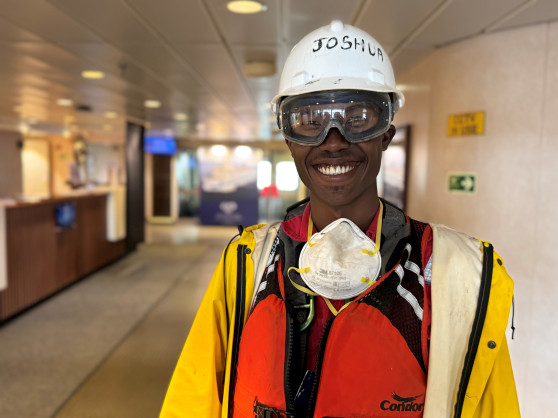
Serving with Mercy Ships  (www.MercyShips.org) is more than just a job; it's a life-changing journey that transforms not only the lives of patients, but also the volunteers and day crew who dedicate themselves to this cause. For Josoa Mino, a young man from Madagascar, joining Mercy Ships as day crew has opened doors to opportunities he never thought possible. 

In December of last year, the Africa Mercy® left Toamasina, Madagascar for South Africa, where she underwent maintenance. While some crew members remained on board, the entire day crew returned home to celebrate Christmas with their families. Josoa Mino was one of them. Since February last year he has been an integral part of the Mercy Ships community, working tirelessly in the Deck Department while living with his mother and young cousins near the port.

A Community With a Heart for Change 

Anyone who has stepped aboard a Mercy Ships vessel knows it's a bustling community of individuals from all over the world. The ships are home to doctors, nurses, chefs, chaplains, deckhands, and many others; all working together to provide life-changing surgery for patients.

But it's not only patients who experience transformation. Mercy Ships also provides employment for over 200 local people, ensuring a deep connection with the host country. Beyond medical work, the crew also receives valuable training in various professions, such as cooking, engineering and more.  

Josoa Mino's path to Mercy Ships was not an easy one. Raised in poverty, he struggled to access opportunities that many take for granted. He recalled, “When I was a child, my mother searched for organizations that could help people in poverty, especially children. She found a charity that helps people out poverty, led by Australian couple Colin Baldwin and his wife Kim Radford. I see Colin as a father figure. Through them, I received the chance to go to school and even attend university.”  

When Mercy Ships announced its return to Madagascar, Colin encouraged Josoa Mino to apply. “I applied, went through the interview process, and was accepted into the Deck Department,” said Josoa Mino. “As deck workers, we do many tasks: painting, rust removal, loading and unloading supplies, transporting containers with medical equipment, food, and more. We do it with love, confidence, and God's guidance.”   

From Passion to Personal Growth 

Joining Mercy Ships has profoundly impacted Josoa's Mino's life. “I've learned so much from the ship, professionally and personally,” he shared. “The most important thing I've learned is English. I've also gained extensive knowledge about ships. Whenever I have a question, the Deck team is there to guide me. They've shown me that there's so much I can do. Professionally, I've learned that I'm capable of achieving more than I ever imagined. This journey has given me a sense of worth because, at one point, I was at rock bottom, but God lifted me up.” 

One of the unique aspects of his experience aboard the ship has been the sense of camaraderie among the crew, especially in the Deck Department. “We practice with great devotion,” said Josoa, “The day crew sings a lot. People even call us the Malagasy Choir Masters.” The sense of unity and joy aboard the ship, as the crew bonds through music and shared effort, adds a special element to the Mercy Ships experience. It's not just about the work they do, but the community they build together. 

Finding Purpose Through Mercy Ships  

Back at home, Josoa Mino continues to live with his mother in a modest hut, but he has big plans for the future. “I want to convert our house into two separate rooms to give us more privacy. I've already drawn up the plans, and I hope to begin working on it.”  

He's determined to share the hope he has found with his family and community. “The strength I've found with Mercy Ships has given me hope for the future. I feel stronger now and achieving big things feels incredible, shared Josoa. “I believe in myself, and I know I can do something even bigger. I want to show my nephew that I can be a father figure to him, offering advice, love, and guidance, helping him find his own path.” 

Josoa's story is one of transformation, both for himself and those around him. His journey with Mercy Ships is not only about providing care to others but also about the life-changing impact of hope, hard work, and faith. Through his example, he is inspiring his family and community to reach their dreams, no matter how big they may seem.  

Are you looking to be more fulfilled in your work through helping others? Learn how you can join people like Josoa at MercyShips.org. 

Distributed by APO Group on behalf of Mercy Ships.

Media files
Mercy Ships
Download logo
Read moreServing With Mercy Ships: A Journey of Hope and Growth
30 January 2025

Durban reinforces its status as a premier holiday destination

Location: News

Durban reinforces its status as a premier holiday destination

Durban has yet again stamped its status as a premier holiday destination, with the city's tourism profile proving to be of great economic benefit to the local community. 

This week, the eThekwini Municipality announced the findings of a socio-economic assessment on the festive season’s impact on the city. 

The in-depth report, conducted by BDO South Africa, an independent accounting and consulting firm, highlighted the significant economic benefits generated during the 2024/25 festive season, which spanned from 1 December 2024 to 12 January 2025. 

According to the assessment, the 2024/25 festive season resulted in a staggering direct spend of R1.95 billion within eThekwini Municipality, showcasing a strong demand from both domestic and international visitors.

“The total economic contribution to the local economy was an impressive R4.83 billion, illustrating the multiplier effect of the tourism sector. The festive influx also contributed about R360 million in revenue to the government, further highlighting the important role tourism plays in local and national economies,” the municipality said. 

The city said this wave of tourism created or sustained approximately 8 716 jobs, offering vital employment opportunities for residents in various sectors, including hospitality, retail, transportation and entertainment. 

“The job creation underscores tourism’s role as a crucial pillar of the local economy, providing livelihoods and supporting families,” the municipality said. 

Over 800 000 visitors

The festive season has also attracted a total of 875 289 visitors to Durban, including 447 832 domestic overnight visitors, 33 577 foreign overnight visitors, and 393 880-day visitors. 

A survey of visitors revealed that 79% perceive Durban as a prime tourist destination. 

Visitors participated in various activities, with the top attractions being the city’s breathtaking beaches (73%), local eateries (69%), and shopping experiences (64%). 

Notably, 54% of visitors were drawn to uShaka Marine World, highlighting the city’s diverse offerings that cater to all ages and interests.

The economic impact assessment further acknowledged the significant contributions of major events held throughout the city, including Beach Paradise, Fact DBN Rocks, Anywhere In Your City and the uMgababa New Year Picnic, played a substantial role in attracting thousands of attendees, and contributed in driving the local economy during the 2024/25 festive season. 

“The festive season saw an average overall occupancy rate of 69%, with hotels reaching 72%, a notable increase from the previous year’s 70%. Peak occupancy rates reached 91% during the Christmas long weekend, illustrating the high demand and the city’s appeal as a festive getaway,” the municipality said. 

Looking ahead

The municipality said Durban’s tourism sector continues to demonstrate resilience and growth, with significant opportunities for future development. 

The municipality said the insights from the report will guide the city’s strategic initiatives to enhance visitor experiences and maximise economic benefits for communities. 

EThekwini Municipality Mayor, Cyril Xaba said the city remains fully committed to working with stakeholders to ensure the continued growth of the tourism sector.

Durban Tourism will also be implementing a series of impactful initiatives designed to accelerate tourism growth.

For more information, visit www.visitdurban.travel or follow Durban Tourism on social media platforms @DBNTourism. – SAnews.gov.za

GabiK
Thu, 01/30/2025 - 12:47

39 views
Read moreDurban reinforces its status as a premier holiday destination
21 January 2025

Five-year-old repatriated from Mauritius adjusts to new life with family in SA

Location: News

Five-year-old repatriated from Mauritius adjusts to new life with family in SA

Despite a challenging start to life, a young South African girl repatriated from Mauritius in December last year, is blossoming into what her grandmother describes as a “ball of fun and sunshine”.

The child, who was born in Mauritius, lived in a prison compound on the island, where her mother is awaiting trial for allegedly trafficking drugs. On turning five, the little girl had to leave her mother and the prison and start life anew in South Africa with extended family. 

The little girl now lives with her grandmother in the North West province and was earlier this month preparing to start Grade R. 

Speaking to the Department of Social Development, the grandmother shared that the transition has had its ups and downs but is ultimately a story of resilience, family support and healing.

A new beginning

On 10 December 2024, the little girl, clutching her favourite doll, landed at OR Tambo International Airport, marking the start of a new chapter. 

Her repatriation was facilitated by the Department of Social Development, in partnership with the South African Embassy in Mauritius. Social workers recommended foster care with her maternal grandmother to ensure the child’s best interests were prioritised.

Her grandmother described the reunion as an emotional moment filled with tears of joy and hope.

Now, over a month since her return, the little girl is beginning to settle into her new life surrounded by the love and support of her family.

Her story is one of resilience, healing, and the power of family bonds to overcome even the most difficult circumstances – and of a little girl allowed to be a child.

Challenges and breakthroughs

Adjusting to life outside the prison compound in Mauritius, where she spent her early years, came with challenges. Initially shy and withdrawn, the little girl often asked about her mother and clung to her doll for comfort.

“When she first arrived, she cried a lot, asking about her mother. She clung to me and her doll constantly and was very quiet around her cousins,” the grandmother said. 

A turning point came when her 17-year-old brother became a source of reassurance. 

“He would hug her, tell her not to cry, and remind her that their mom would come home someday. That connection helped her feel safe,” the grandmother said.

By Christmas, the family began to see the child’s personality emerge. “She’s become a source of joy and laughter, always playing and smiling,” her grandmother said proudly.

Building a stable life

Despite the challenges, the grandmother is determined to provide her granddaughter with the stability and care she needs. 

The grandmother is collaborating with the Department of Social Development to access care and protection services, including a foster care grant, to support the child’s education and well-being.

“I plan to use part of the grant for her school fees. We’re getting her ready for Grade R, and I want to make sure she has everything she needs to succeed,” the grandmother said.

The family has also introduced her to South African culture, including traditional foods and local languages. Having spoken French and Creole all her life, the child is now learning English, isiXhosa and Sesotho from her cousins.

“The other day, she asked for a slice of steamed bread during breakfast and to my surprise, she loved it and even asked for a second slice,” her grandmother said with a laugh.

“It’s moments like these that remind me she’s adjusting well. She’s getting used to everyone, and she’s loved very much.”

A message of reflection and the future 

As she navigates her granddaughter’s transition, the grandmother reflected on the consequences of her daughter’s choices that led to her incarceration. 

“People need to understand the implications of what they put their families through,” she said, a mixture of sadness and determination washing through her voice.

However, her focus remains on the future and building her granddaughter up.

“The past can’t be changed, but we can shape her future. With the help of social workers, the foster care grant, and the love of her family, we’re giving her the home and life she deserves. Time is a healer, and we’re taking it one day at a time,” the grandmother said. 

Today, the young girl is thriving in a home filled with love and care. From watching fireworks for the first time on New Year’s Eve to playing with her cousins, she is embracing her new life in South Africa.

“She’s already thriving. Every day, she’s becoming more confident and more comfortable. She’s where she belongs now,” the grandmother said. – SAnews.gov.za

DikelediM
Tue, 01/21/2025 - 10:41

118 views
Read moreFive-year-old repatriated from Mauritius adjusts to new life with family in SA
9 January 2025

Call for social cohesion to end gender-based violence

Location: News

Call for social cohesion to end gender-based violence

The Minister in The Presidency responsible for Women, Youth and Persons with Disabilities, Sindisiwe Chikunga, has reiterated her call for social cohesion to end gender-based violence and femicide (GBVF).

Chikunga’s call comes after another brutal murder of a woman by her boyfriend.

Aged 25, Shana Balie’s lifeless body was found in her boyfriend’s home in Wallacedene in Kraaifontein, Cape Town, on 26 December 2024. 

Her family last saw her on Christmas Day.

It is alleged that Balie was beaten to death by her boyfriend, Jonathan Gewindt. Her lifeless body was found by the police buried in the backyard, where her boyfriend was renting.

Gewindt has since confessed to the killing and is expected to appear in Blue Downs Magistrate Court on Thursday.

Chikunga has strongly condemned Balie’s brutal murder.

Chikunga said the persistence of GBVF reflects deeply ingrained societal norms and structures that perpetuate male dominance, and reinforce misogyny, gender hierarchies and power imbalances within families and communities.

“This leads to female subordination and systemic inequalities that lead to violence against women and girls.”

The Minister maintained that addressing cultural and legal dimensions, is essential for fostering a just and equitable society in which gender norms do not perpetuate violence and inequality.

"We must act decisively to address not only the immediate instances of GBVF but also the structural, cultural, and systemic factors that perpetuate violence against women and girls. Our efforts must be centred on empowering women and fostering a society free from all forms of gender-based violence,” she said.

Despite the government's policy commitment to end GBVF, Chikunga said South Africa continues to experience the scourge and Intimate Partner Violence (IPV) which stems from GBVF.

“The persistently high rates of GBVF victimisation and perpetration, despite existing legislative frameworks and policies, suggest the need for a comprehensive approach that does not only address the immediate instances of violence, but also includes a focus on women and girls to tackle the underlying structural and systemic factors that trap them in these circumstances,” Chikunga said.

The Minister is expected to visit the Balie family home on Thursday, to reaffirm her commitment to ensuring justice is served for the victim, and to provide further reassurance to the grieving family. – SAnews.gov.za

GabiK
Thu, 01/09/2025 - 11:47

47 views
Read moreCall for social cohesion to end gender-based violence
6 January 2025

Suspect in Ayabonga Mjilo murder case appears in court

Location: News

Suspect in Ayabonga Mjilo murder case appears in court

The case against restaurant manager, Mfanafuthi Kunene, who is accused of murdering 23-year-old former employee, Ayabonga Mjilo, has been postponed to 26 February 2025.

Kunene appeared before the Durban Magistrate’s Court for the first time on Monday. 

The accused allegedly strangled Mjilo and buried her in a shallow grave in his yard in Inanda, Durban.

According to reports, Mjilo was last seen leaving a restaurant in Umhlanga in the early hours of Christmas morning with a male companion. After she failed to return home, a case of kidnapping was opened.  

Kunene is facing charges of kidnapping, murder and defeating the ends of justice.  

KwaZulu-Natal Premier Thamsanqa Ntuli praised the South African Police Service (SAPS) for swiftly arresting the suspect.

“Through meticulous police investigations, the suspect, identified as Mjilo’s manager, was apprehended. 

“Evidence revealed that Mjilo had been taken to the suspect’s home in Amaotana, Inanda, where her lifeless body was discovered during the investigation.”

Ntuli expressed his heartfelt condolences to Mjilo’s family and friends during this tragic time. 

“On behalf of the KwaZulu-Natal Provincial Government, I extend my deepest condolences to the family, friends, and loved ones of Ayabonga Mjilo. 

“Losing a young woman in such a brutal manner is a devastating tragedy. We stand in solidarity with the family as they mourn this heartbreaking loss, and we will continue to support them as they seek justice for Ayabonga.”

The Premier also emphasised the need for justice to prevail, as the ongoing scourge of violence against women and children continues to rear its ugly head in the province.

“The brutal killing of Ayabonga Mjilo is a stark reminder of the work that lies ahead in our mission to end gender-based violence (GBV). 

“I commend the SAPS for their tireless efforts and urge the judiciary to impose the harshest possible punishment for such heinous crimes. KwaZulu-Natal has no place for individuals who commit these atrocities.”

The Premier called on communities, traditional authorities, izinduna (headmen), and amabutho (Zulu regiments) to partner with government in addressing the senseless killing of women and children in the province.  

”Violence against women is an affront to our values of Ubuntu and humanity. This scourge demands collective action. I call on our community leaders, traditional authorities, and every citizen to unite in rejecting these barbaric acts.”

Ntuli stressed the critical role of traditional leadership and community structures in fostering a culture of respect, safety and protection for women and children. 

He also highlighted the need for collaboration between government, civil society, and communities to create sustainable solutions and ensure perpetrators face justice.  

”We must stand as one, with a united voice, to condemn these acts of violence and reaffirm our commitment to building safe, inclusive communities. This fight is not just for the government; it is for every one of us.”

The Premier urged the public to remain calm and allow the judicial process to unfold while reiterating the government’s commitment to ensuring justice for victims of GBV. – SAnews.gov.za

Gabisile
Mon, 01/06/2025 - 11:35

309 views
Read moreSuspect in Ayabonga Mjilo murder case appears in court
31 December 2024

Statutory rape of 13-year-old a ‘heinous crime’

Location: News

Statutory rape of 13-year-old a 'heinous crime'

Deputy Minister of Police, Polly Boshielo, has condemned as a “heinous crime” the alleged statutory rape and subsequent impregnation of a 13-year-old child in Limpopo.

The Deputy Minister was in the Seshego Magistrate’s Court on Monday where 28-year-old Ditebogo Gololo, appeared on charges related to the incident.

Gololo is facing a charge of sexually grooming a minor and statutory rape.

“I hope this heinous crime does not happen again. The scourge of teenage pregnancy is very bad in this country. For the financial year under review, 2023/2024, a total of 29 150 gender-based violence and femicide perpetrators were arrested. 

“Out of them, 556 accused were handed down life sentences, 480 sentenced between 10 and 20 years, and 998 sentenced between 1 and 9 years. In Limpopo, there has been a challenge of rape cases involving children, especially in the Seshego and Matlala policing areas. 

“I have instructed SAPS in the province to implement a programme to address these social issues,” Boshielo said.

In a statement, the National Prosecuting Authority (NPA) said Gololo allegedly groomed the child after meeting at a mall in January this year, “until they became intimate in May 2024”. 

“The minor only revealed the incident to her aunt after experiencing complications, and later in November 2024, medical tests confirmed she was eight months pregnant, thus ultimately giving birth to a baby boy on Christmas Day,” the NPA said.

Gololo was arrested a day after the child gave birth.

“The docket will be forwarded to the Director of Public Prosecutions for directives. The matter is postponed for bail application and further investigations to 08 January 2025, at Seshego Magistrate's Court. Gololo is remanded in custody,” the statement concluded. – SAnews.gov.za


NeoB
Tue, 12/31/2024 - 08:24

315 views
Read moreStatutory rape of 13-year-old a ‘heinous crime’
  • Page 1
  • Page 2
  • Page 3
  • Interim pages omitted …
  • Page 5
  • Next

Copyright © 2026 · MyZA · All Rights Reserved · Powered by Reach Trust