Two More Lottery Officials Dismissed After Appeals Fail
Former acting chief operating officer and a Durban-based client liaison officer were summarily dismissed last year

MyZA
News, Directory, Events and Other Stuff
Former acting chief operating officer and a Durban-based client liaison officer were summarily dismissed last year
New fleet to aid Nelson Mandela Bay waste collection efforts
In a move to enhance waste management services, the Nelson Mandela Bay Municipality has unveiled seven advanced waste collection trucks, which is an investment in the city’s public health infrastructure and an improvement in service delivery efficiency.
Member of the Mayoral Committee (MMC) for Public Health, Thsonono Buyeye, commended the arrival of the new fleet, describing it as a crucial financial boost that will ease the financial pressures faced by the municipality’s waste management department.
The municipality is located in the Eastern Cape.
Speaking at the unveiling ceremony held on Wednesday, Buyeye said the introduction of the state-of-the-art waste collection compactor trucks serves as a significant step forward poised at improving waste management services.
“This investment demonstrates our unwavering commitment to providing efficient and effective services, thus underscoring the department’s dedication to maintaining a clean, healthy, and sustainable environment [for all residents],” Buyeye said.
The MMC explained that, as part of the city's strategy to reduce its reliance on outsourced waste collection services, the municipality has implemented a three-year fleet recapitalisation plan, which allocates R30 million annually starting this year.
“This acquisition will significantly alleviate financial pressures on the municipality, which previously spent substantial amounts outsourcing waste management collection trucks, compromising its ability to deliver other essential public health services,” the MMC said.
He added that the arrival of the trucks will significantly reduce the city’s financial burden previously placed on the municipality, due to outsourcing waste management.
The new trucks are equipped with cutting-edge technology and enhanced capacity, enabling them to manage larger volumes of waste with greater speed and efficiency. The advanced lifting gear of the trucks allows them to effortlessly collect a wider range of waste types, ultimately enhancing the waste collection and management process.
"As a municipality, we are thrilled, considering that the arrival of these trucks will significantly enhance our service delivery. Unfortunately, vandalism of municipal fleet, including waste collection fleet has been a great challenge.
“However, we are positive that together with law enforcement, and the community, we can protect these valuable waste compactor trucks, as our goal is to ensure that public health services reach every corner of our city,” Buyeye said.
Measures to prevent vandalism and theft
To address the persistent issue of vandalism, the MMC said the municipality has implemented a comprehensive security strategy to protect the new waste management fleet.
He said the municipality is also investigating recent incidents of vandalism that have affected the city’s existing waste collection vehicles.
He said a robust security strategy has been put in place to safeguard against vandalism and theft, ensuring its longevity and effectiveness.
The municipality also urged residents to work with the municipality, and law enforcement to protect and safeguard municipal assets that service all residents.
“This collective effort is crucial in preventing vandalism and theft, which severely impacts the delivery of essential waste management services, particularly in high-crime areas,” Buyeye said. – SAnews.gov.za
GabiK
Fri, 03/14/2025 - 11:14
80 views
Finance Minister on Wednesday said construction of Mkhomazi Water Project, which includes a new dam, will only start in November 2027
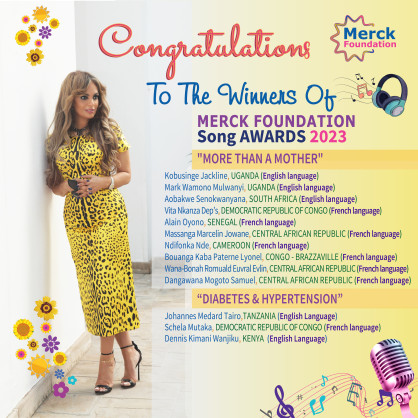
Merck Foundation (www.Merck-Foundation.com), the philanthropic arm of Merck KGaA Germany, in partnership with the African First Ladies, announced the winners of Merck Foundation's Song Awards 2023 under two themes - “More Than a Mother” and “Diabetes and Hypertension.”
The awards were announced by Senator Dr. Rasha Kelej, CEO of Merck Foundation and President of Merck Foundation ‘More Than a Mother' campaign, together with African First Ladies, who are also the Ambassadors of Merck Foundation ‘More Than a Mother' campaign.
Senator Dr. Kelej said, “I feel so elated to announce the winners of Merck Foundation's “More Than a Mother” and “Diabetes and Hypertension” Song Awards in partnership with my dear sisters, African First Ladies, who are also the Ambassadors of “Merck Foundation More Than a Mother”. I congratulate and applaud our 13 talented winners.
Songs are a powerful medium for addressing and influencing social and health issues across Africa. This year's entries were exceptional, with lyrics that effectively conveyed impactful messages, sparking meaningful thought and dialogue within communities.”
The theme of “More Than a Mother” Song Awards was to raise awareness on any of the following social issues such as: Breaking Infertility Stigma, Supporting Girl Education, Ending Child Marriage, Ending FGM, Stopping GBV and/or Women Empowerment at all levels and the theme of “Diabetes and Hypertension” Song Awards was to promote a healthy lifestyle and raise awareness about prevention and early detection of Diabetes and Hypertension in the African countries.
Senator Rasha added, “I have always believed that music and art have the power to evoke emotions, which in turn inspire engagement and action. This belief led us to introduce our Song Awards in 2019. To date, we have celebrated close to 50 winners.
Moreover, we have produced over 30 songs and music videos to address many critical and sensitive issues across Africa.”
Click here to listen to Merck Foundation Songs: https://apo-opa.co/4iKrDsx
Here is the list of Merck Foundation ‘More Than a Mother' Song Awards 2023 winners:
English Language
Theme: Women Empowerment
Theme: Women Empowerment and GBV
Theme: GBV
French Language
Theme: Child Marriage
Theme: FGM
Theme: FGM
Theme: FGM
Theme: GBV and FGM
Theme: Women Empowerment
Theme: GBV and FGM
Here is the list of winners of Merck Foundation ‘Diabetes & Hypertension' Song Awards 2023:
FIRST POSITION:
Theme: Diabetes & Hypertension (English)
Theme: Diabetes & Hypertension (French)
Theme: Diabetes & Hypertension (English)
Senator, Dr. Rasha Kelej further added, “I would also like to announce the Call for Applications for the 2025 Edition of the two Merck Foundation Song Awards ‘More Than a Mother' and ‘Diabetes & Hypertension', in partnership with First Ladies of Africa and Asia.
“I invite entries from all Singers, Musicians and young talents, to contribute towards making a difference in society with their inspiring songs with strong and relevant messages about critical and sensitive issues we face in our continent. Be the voice of the voiceless, break the silence and let's all join hands to create a cultural shift”, Senator Kelej added.
Details of Merck Foundation SONG Awards 2025:
1. Merck Foundation Song Awards 2025 “More Than a Mother”
Theme for the awards: Address one or more of the following social issues: Breaking Infertility Stigma, Supporting Girl Education, Ending Child Marriage, Ending FGM, Stopping GBV and /or Women Empowerment.
Who can apply: All Singers and Musical Artists are invited to create and share a song with the aim to address one or more of the above-mentioned social issues.
Categories: ENGLISH, FRENCH, PORTUGUESE, AND LOCAL LANGUAGE
Submission deadline: 30th September 2025.
2. Merck Foundation SONG Awards 2025 “Diabetes & Hypertension”
Theme for the awards: Promote healthy lifestyle and raise awareness about prevention and early detection of Diabetes and Hypertension.
Who can apply: All Singers and Musical Artists are invited to create and share a song with the aim to promote a healthy lifestyle and raise awareness about prevention and early detection of Diabetes and Hypertension.
Categories: ENGLISH, FRENCH, PORTUGUESE, AND LOCAL LANGUAGE
Submission deadline: 30th October 2025.
Distributed by APO Group on behalf of Merck Foundation.
Contact details:
Mehak Handa
Community Awareness Program Manager
+91 9310087613 / +91 9319606669
mehak.handa@external.merckgroup.com
Join the conversation on our social media platforms below and let your voice be heard!
Facebook: apo-opa.co/43QeNES
X: apo-opa.co/43LhE1Y
YouTube: apo-opa.co/43IxXfW
Instagram: apo-opa.co/4iJ4Ope
Threads: apo-opa.co/3FCNOma
Flickr: apo-opa.co/4iNzxkZ
Website: www.Merck-Foundation.com
Download the Merck Foundation App: https://apo-opa.co/4hv7F44
About Merck Foundation:
The Merck Foundation, established in 2017, is the philanthropic arm of Merck KGaA Germany, aims to improve the health and wellbeing of people and advance their lives through science and technology. Our efforts are primarily focused on improving access to quality & equitable healthcare solutions in underserved communities, building healthcare & scientific research capacity, empowering girls in education and empowering people in STEM (Science, Technology, Engineering, and Mathematics) with a special focus on women and youth. All Merck Foundation press releases are distributed by e-mail at the same time they become available on the Merck Foundation Website. Please visit www.Merck-Foundation.com to read more. Follow the social media of Merck Foundation: Facebook (apo-opa.co/43QeNES), X (apo-opa.co/43LhE1Y), Instagram (apo-opa.co/4iJ4Ope), YouTube (apo-opa.co/43IxXfW), Threads (apo-opa.co/3FCNOma) and Flickr (apo-opa.co/4iNzxkZ).
The Merck Foundation is dedicated to improving social and health outcomes for communities in need. While it collaborates with various partners, including governments to achieve its humanitarian goals, the foundation remains strictly neutral in political matters. It does not engage in or support any political activities, elections, or regimes, focusing solely on its mission to elevate humanity and enhance well-being while maintaining a strict non-political stance in all of its endeavors.
Lesotho Highlands aquaculture project offers little in return for its licence
SIU says the farm was bought with stolen Lottery money
Phalaborwa residents lay criminal charges against local municipalities to try to end their sewerage problems
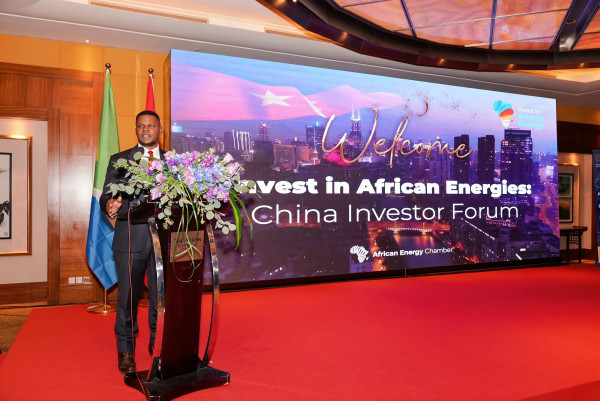
China has reaffirmed its commitment to supporting Africa's drive for enhanced energy access and industrialization, according to speakers at the Invest in African Energies Shanghai Forum. Leveraging China's expertise in technology-driven oil, gas and energy development, African firms can tap into a valuable partnership and greater investment by Chinese firms would further efforts to make energy poverty history in Africa.
With over 600 million people living without access to electricity and 900 million people without access to clean cooking solutions, Africa is seeking to leverage global partnerships to fast-track energy production and development. China stands to play a major part in facilitating this growth and the Shanghai Forum - co-organized by the African Energy Chamber (AEC) and the Shanghai Development Research Foundation - drew insight into strategic areas of collaboration.
“We want to see investments in African energy. The AEC will continue to support Chinese businesses that want to invest in China and give you the priority needed for you to invest in our beautiful continent,” stated NJ Ayuk, Executive Chairman, AEC.
For emerging African players seeking to unlock the full potential of their underdeveloped resources, Chinese partnerships have the ability to unlock new capital and technology to advance projects. Partnerships also serve to support mature players enhance their production capacity as Africa drives long-term energy development. Phuti Joyce Tsipa, Consul General, South African Consulate-General Shanghai, highlighted the value of enhanced cooperation with China.
“Together, China and South Africa can work towards building a high-quality international community that can work on a prosperous future, centered on balanced economic growth. Increased energy investment in Africa is at the heart of our future prosperity. We see China as a critical country to partner with, not only with South Africa, but the entire continent,” she said.
The Shanghai Forum sought to bolster China-Africa relations by facilitating market entry and expansion by Chinese firms in Africa. The Forum featured the participation of 100 companies, including consulates, private firms, investors and policymakers, with presentations centering on opportunities for Chinese firms in Africa, strategies for advancing African industrialization and electrification and the impact Chinese technology will have on the African energy market.
Dr. Bieni Da, Chief Representative for China at the AEC and Yide Qiao, Vice Chairman and Secretary General, Shanghai Development and Research Foundation, underscored the need to facilitate energy ties between China and Africa. According to Qiao, “China has strong technology in green energy and cooperation can be extended to Africa.”
Chinese firms are leading in terms of innovative, low-carbon energy solutions. With a national goal of becoming carbon neutral by 2060, China is supporting domestic companies through policy improvements, capital and research and development. Africa stands to leverage this expertise to advance its own development agenda. This expertise extends to the oil and gas sectors and Chinese companies have begun to expand their footprint in Africa.
Dr. Wang Zengye, Deputy Director-General of Policy Research Office, China National Petroleum Corporation (CNPC) provided an overview of the projects CNPC has led in Africa. He said: “Bilateral relationships between China and Africa is already quite strong and high-level cooperation has been established. This ensures that investment can flow.”
China has also effectively established industrial hubs which support the economy by centralizing manufacturing. Bi Mingze, CFO of Yunan County Chuangxing Industrial Investment Group, said that the company has established an industrial hub in Yunan in China. This hub can be replicated across Africa.
The Shanghai Forum served as a prelude to the African Energy Week (AEW): Invest in African Energies conference, slated for September 29 to October 3 in Cape Town. As the largest event of its kind in Africa, AEW: Invest in African Energies fosters collaboration and investment in Africa. For Chinese companies, the event offers a strategic opportunity to gain insight into African projects while strengthening ties with African firms.
“If you work in any energy field, we are able to help you connect with key stakeholders. We support policy that enhances local content and infrastructure development. It is time to invest in Africa,” stated Johnson Kayode Obembe, Sales Director, African Energy Week.
Distributed by APO Group on behalf of African Energy Chamber.
AEW: Invest in African Energies is the platform of choice for project operators, financiers, technology providers and government, and has emerged as the official place to sign deals in African energy. Visit www.AECWeek.com for more information about this exciting event.
Cabinet condemns Israel's blockade of humanitarian aid to Gaza
Cabinet has condemned Israel's refusal to allow humanitarian aid into the Gaza Strip, and its closure of border crossings.
This at a time when " the people of Gaza are experiencing immeasurable suffering" and urgently need food, shelter, and medical supplies.
Speaking during a post-Cabinet media briefing on Thursday, Minister in the Presidency Khumbudzo Ntshavheni said this action is a continuation of Israel’s “use of starvation as a weapon of war as part of the ongoing campaign of what the International Court of Justice (ICJ) ruled to be plausible genocide against the Palestinian people.”
“Cabinet reiterates our nation’s call on the international community to hold Israel accountable and ensure the safe, continuous, and unhindered delivery of humanitarian aid to all areas of the Gaza Strip,” Ntshavheni said at the briefing held in Cape Town.
Earlier this month, South Africa condemned the refusal of Israel to allow humanitarian aid into the Gaza Strip.
READ | SA condemns Israel’s refusal to allow aid into Gaza
In a statement issued by the Department of International Relations and Cooperation, the department said: “South Africa concurs with Qatar, one of the guarantors of the ceasefire agreement, that halting the entry of humanitarian aid into the Gaza Strip is a clear violation of the ceasefire agreement, international humanitarian law, and the Fourth Geneva Convention.”
In December 2023, South Africa filed a case against Israel at the ICJ, saying it is committing acts of genocide against Palestinians in Gaza.
The ICJ issued a provisional ruling in January 2024, ordering Israel to allow humanitarian aid into Gaza and take measures to prevent genocide. – SAnews.gov.za
DikelediM
Thu, 03/13/2025 - 13:22
474 views
Government determined to tackle economic challenges
Deputy President Paul Mashatile has stressed the urgent need to tackle the nation’s pressing challenges in light of sluggish economic growth and has called for a collective effort to improve the quality of life for all citizens.
“As we embark on this journey, we must have a full appreciation that the first 15 years of democracy were characterised by high economic growth. However, the last decade and a half has been characterised by stagnant growth,” he said on Thursday.
According to the Deputy President, the stagnant growth of the past decade and a half has led to calls for immediate action to initiate structural reforms that would bolster gross domestic product (GDP) growth and create job opportunities.
“I must state from the onset that the responsibility of guiding South Africa to greater prosperity is not solely on the shoulders of the government. It is a shared responsibility among the business community, NGOs [non-governmental organisations], civil society and all those who aspire to see our country prosper.”
The Deputy President was speaking at the 7th BizNews Conference (BNC#7) at the Hermanus Municipal Auditorium in the Western Cape.
The BizNews Conference is an annual event focused on investment, business, and political issues.
The country’s second-in-command opened the dialogue with a reflection on South Africa’s democratic journey.
Mashatile underscored the issues plaguing the nation, including poverty, inequality, unemployment and corruption, which he believes threaten the fabric of South Africa’s democracy.
“They keep us, and if I may say so myself, awake at night because if we do not swiftly overcome these systemic economic issues, we shall experience perpetual unrest.”
Commitment to cooperation
He said the recent Budget Speech by the Minister of Finance highlights a step toward addressing these dilemmas.
According to the Deputy President, yesterday’s Budget was the product of a consensus reached within the Government of National Unity (GNU) following last month’s postponement.
“As I have indicated on several occasions, having a GNU Cabinet does not imply that we will agree on everything. There will be times when we do not view things the same way, but this does not spell the end of the GNU.”
However, Mashatile stressed GNU’s commitment to prioritising the needs of its citizens.
He also took the time to reinforce the credibility of the GNU amid scepticism about its longevity and effectiveness.
“Several coalition governments around the world have collapsed as a consequence of misunderstandings about the country’s Budget; this is but a reflection of democracy at work.”
The Deputy President assured attendees that the focus was on inclusive growth, job creation and addressing the high cost of living, while striving to build a capable and ethical State.
“We must do this to find solutions to the challenges that confront our nation,” he said. – SAnews.gov.za
Gabisile
Thu, 03/13/2025 - 13:30
273 views
Critical services in some high-burden districts have collapsed
Cyclists plan to cover 600km to raise R100,000 for two local school libraries
Deadline for comments into CPA discussion papers looms
The Department of Justice and Constitutional Development (DOJ&CD) is appealing to citizens to make their voices heard as the deadline for comments into the discussion papers for the review of the Criminal Procedure Act draws closer.
Last month, the Deputy Ministers in the Justice, Crime Prevention and Security (JCPS) Cluster welcomed the publication of the discussion papers on the review of the Act which were released by the South African Law Reform Commission (SALRC).
The review seeks to address systemic challenges in the Act, particularly in relation to provisions that deal with arrest, bail, alternative dispute resolution, and victim participation in the criminal justice process.
In an interview with SAnews, the Deputy Director-General for Court Administration at the DOJ&CD Lucky Mohalaba said the Act was outdated.
“It’s a pre-1994 piece of legislation and one of the key areas which the department and the [JCPS] cluster is faced with, is how do we ensure that important legislation like the Criminal Procedure Act [CPA] is reviewed to be in line with the Constitution? Our Constitution actually was signed into law after the Criminal Procedure Act,” he remarked of the 1977 legislation.
The act makes provision for procedures and related matters in criminal proceedings.
“This initiative from the department as led by Deputy Minister [Andries] Nel is really a milestone. Firstly to ensure that we comply and are in line with the constitutional imperatives including the issues that relate to equality [and] transparency.
“The work that the Law Reform Commission has undertaken is going to result in the reform of legislation, including the Criminal Procedure Act,” said Mohalaba.
The SALRC released the discussion papers covering the pre-trial stage on the Bail System Reform, Arrest Dispensation Reform, Alternative Dispute Resolution (ADR) in Criminal Matters and the Non-Trial Resolutions (NTRs): Deferred Prosecution, Alternative Dispute Resolution and Non-Prosecution.
“In the main, there are components where the issue of the bail dispensation is going to be looked at. Secondly, the issues that relate to the arrest dispensation is going to be looked at. Part of the issues raised there is [that] should people be arrested for having committed certain crimes or should they be given dates to come to court and appear in court for those crimes?
“Are we not increasing the numbers in our correctional centres by arresting everyone? So those are the areas that the research papers are looking at,” the DDG said of the four papers that were first published on 20 February 2025.
This as the comment period into the documents will close on 31 March 2025.
Content of the documents
The Bail System Reform discussion document speaks to ensuring a balanced approach that upholds the rights of accused persons while addressing public safety concerns, reducing lengthy pre-trial detention, and easing overcrowding in correctional facilities.
Chapter 1 of the Review of South Africa’s Bail System document, states that the country’s bail law forms an “integral part of the Criminal Procedure Act of 1977 a law of apartheid extraction which has been in existence for almost five decades.”
It further states that it is “also probable that the relevant provisions have become obsolete and redundant.”
South Africa’s bail system is regulated under Chapter 9 of the CPA with the review aiming to align bail laws with constitutional principles while also tackling inefficiencies.
Challenges with bail for foreign nationals, limited police powers in the granting of bail, the strict verification of accused persons’ residential addresses as well as affordability issues that prevent accused individuals from securing bail are some of the deficiencies identified in the current bail system according to Chapter 2 of the document.
The proposals for reform include enhancing victim rights where courts should consider victim safety when granting bail as well as that victims should be informed of bail proceedings and allowed to express their concerns.
The proposals for reform in the document also talks to reducing delays and overcrowding where automatic bail reviews to avoid unnecessary detentions is introduced while revising bail conditions. The proposal is that alternative measures be found for those who can’t afford bail.
The document states that in the late 1990s and early 2000s, the Commission “lamented the failure of the law to cater specifically for victims of crime. It argued, at the time, that if the position of victims was not drastically reformed in the criminal justice system, it would lead to a legitimacy crisis.”
The Arrest Dispensation Reform speaks to promoting alternative measures, such as summons, to secure court attendance and reduce unlawful and unnecessary arrests.
Chapter 3 of this discussion paper states that the CPA outlines the methods for securing the court attendance of accused persons. This as Section 38 of the legislation “provides that the methods of securing the court appearance of accused persons are arrest, written notice, summons and indictment.”
However, the CPA doesn’t specify which of the measures should be used in “certain situations, nor does it mandate the utilisation of the least intrusive measure.”
The paper notes that arrest should only be used as a last resort when other methods (summons, written notices) are inadequate and that police discretion in arrest decisions is broad, often leading to unnecessary detentions and overcrowding in prisons.
The paper proposes the amendment of Section 39 of the CPA to define the purpose of arrest, preventing misuse as well as the amendment of Section 40 to restrict arrests without warrants, ensuring judicial oversight.
Section 39 of the Act states that an arrest can be effected with or without a warrant and, unless the person to be arrested submits to custody, by actually touching his body or, if the circumstances so require, by forcibly confining his body.
It also states that at the time of effecting the arrest or immediately after effecting the arrest, the person effecting it should inform the arrested person of the cause of the arrest. It adds that in an arrest effected by virtue of a warrant, upon demand of the person arrested, a copy of the warrant must be given.
Meanwhile, section 40 of the Act talks to the arrest by peace officers. This is whereby a peace officer may without a warrant arrest any person who commits or attempts to commit any offence in his presence or a person who has escaped or who attempts to escape from lawful custody, among others.
According to the CPA, the Minister of Justice and Constitutional Development has the power to declare by notice in the Government Gazette any category of persons, by virtue of their office, as peace officers for specific purposes.
This as peace officers are not police officials.
The proposal made in the document speaks to clarifying the powers of peace officers as well as creating an oversight mechanism. It also notes that electronic summons and written notice could replace many physical arrests among others.
The third document which is the Alternative Dispute Resolution (ADR) in Criminal Matters, speaks to challenges in the criminal justice system such as the over-reliance on imprisonment leading to overcrowding and the high costs of traditional prosecution among others.
The document notes that the country’s “legal system does not make provision for the coherent and unified regulation of ADR in criminal matters, a concept which, in foreign jurisdictions may be referred to in a number of ways, including discretionary prosecution, waiver of prosecution and out of court settlements.”
The proposed reforms it makes include the expanded use of ADR for minor offenses. This includes conditional withdrawals of prosecution, greater victim participation in ADR processes as well as focussing on restorative justice that includes victim-offender mediation. This also includes community-based sentencing alternatives such as rehabilitation programmes and community service.
The fourth discussion document known as the Non-Trial Resolutions (NTRs): Deferred Prosecution, Alternative Dispute Resolution and Non-Prosecution explores NTRs as an alternative to traditional criminal prosecutions.
It focuses on Deferred Prosecution Agreements (DPAs), Alternative Dispute Resolution (ADR), and Non-Prosecution Agreements (NPAs), particularly in corruption and financial crime cases.
It states that traditional criminal trials for corporate and economic crimes are slow, costly, and complex adding that NTRs encourage self-reporting, corporate reform, and financial restitution without lengthy trials.
It states that the country lacks a structured legal framework for non-trial resolutions, unlike countries such as the United Kingdom and the United States of America.
The document adds that the Zondo Commission recommends the proposed introduction of Deferred Prosecution Agreements for companies implicated in corruption. Appointed by the President, The Zondo Commission was a commission of inquiry that investigated state capture in South Africa.
The DPAs allow companies to admit wrongdoing, pay fines, and commit to reforms in exchange for prosecutorial leniency.
The benefits of NTRs are that they encourage companies to cooperate with law enforcement and also reduces court backlogs while prioritising serious cases for trial.
The recommendation is that NTRs should be legislated to provide clear guidelines for corporate settlements as well as ensure judicial oversight to prevent abuse among others.
In November 2023, former Minister of Justice and Correctional Services Ronald Lamola appointed an Advisory Committee consisting of eight experts chaired by the former Judge President of Mpumalanga, Justice Francis Legodi to advise the Law Reform Commission on the review of the Criminal Justice System.
The Law Reform Commission is currently chaired by former Constitutional Court judge, Justice Chris Jafta.
Reforming SA’s laws
At the release of the discussion papers, Deputy Minister Nel spoke of the need to transform the justice system.
The DDG said discussion documents provide an opportunity for citizens to debate the proposals.
“I’m quite certain that given the launch of the discussion documents these then will present an opportunity for South Africans to debate the proposals made in the documents which will ultimately result in the Criminal Procedure Bill which will replace the current Criminal Procedure Act of 1977 so that we are more aligned to our constitutional values as a country.
“We really wish to welcome members of the public, NGOs [non-government organisations], community organisations to make sure that they make inputs into the discussion papers. This is quite an important area for us as a country going forward to reform and modernise the laws that are applicable currently,” he said.
The discussion papers which were released at a media briefing in Pretoria 20 February, can be accessed at https://www.justice.gov.za/salrc/dpapers.htm .
-SAnews.gov.za
Neo
Thu, 03/13/2025 - 12:44
65 views
Cabinet welcomes 2025 National Budget
Cabinet has welcomed the 2025 National Budget as it seeks to maintain a balance between South Africa’s fiscal framework, fund the priorities of the seventh administration while mitigating negative impact on poor and middle-income households.
The budget was tabled by the Minister of Finance, Enoch Godongwana, in the National Assembly, on Wednesday.
He outlined all the financial, economic and social commitments the government will prioritise in its planned expenditure and provided a detailed plan for 2025 spending. This includes proposals for revenue collection to help fund the government’s planned interventions and commitments.
“The allocation of over R1 trillion to infrastructure development over the Medium-Term Expenditure Framework (MTEF), the establishment of alternative infrastructure financing through a credit guarantee vehicle and the introduction of multiple bid windows on the Budget Facility for infrastructure is a demonstration of commitment to grow the economy through a strong infrastructure-build programme, whilst simultaneously improving service delivery.
“Mechanisms for private sector participation as announced with the Budget, which are part of Operation Vulindlela driven reforms, in the energy, transport and freight logistics sectors indicate government’s commitment to fast-tracking private sector investment and inclusive economic growth,” Minister in The Presidency, Khumbudzo Ntshavheni, said on Thursday.
Minister Ntshavheni was briefing the media in Cape Town, following Cabinet’s meeting on Wednesday.
Operation Vulindlela is aimed at stabilising the supply of electricity; creating a competitive and efficient freight logistics system; reducing the cost and improving the quality of digital communication; ensuring a stable, quality supply of water; and reforming the visa regime to facilitate skilled immigration and support tourism.
READ | Operation Vulindlela records notable progress
Since its establishment in 2020, Operation Vulindlela has made real progress in achieving these objectives.
In light of new and persistent spending pressures in health, education, transport and security, government decided to raise value-added tax (VAT) by 0.5 percentage points in each of the next two years, which will bring VAT to 16% in the 2026/27 financial year.
READ | Government proposes VAT increase over two years
The first 0.5 percentage point increase in the VAT rate will take effect on 1 May 2025 and the second 0.5 percentage point increase will take effect on 1 April 2026.
“Acknowledging the impact of the tax increases, the Budget provides for mitigation measures against the increases such as no increase in the fuel levy, above inflation increases to social grants, with old age and disability grants increasing by R130 to R2315 in 2025 and significant funding allocation to PRASA [ Passenger Rail Agency of South Africa] to improve passenger rail transport which will reduce household income spend on transport costs.
“Most significantly, the tax increases are going to finance sustainability of this country, by maintaining 11,000 teachers in the classrooms, 9300 health-workers in their jobs, the employment of 800 post-community service doctors and allow an additional 700, 000 children (4-years of age) access to early childhood development which is the necessary foundation education they need for a successful education journey,” Ntshavheni explained. –SAnews.gov.za
nosihle
Thu, 03/13/2025 - 11:49
58 views
Informal settlement residents blocked the R344 on Wednesday, demanding better services
Government expenditure to reach R2.59 trillion in 2025/26
Consolidated government spending is expected to increase from R2.4 trillion in 2024/25 to R2.83 trillion in 2027/28, at an annual average of 5.6%.
Consolidated expenditure will reach R2.59 trillion in 2025/26.
This according to National Treasury’s 2025 Budget Review document.
The majority of that spend will fund the social wage, which includes spend on health, education, social protection (grants), community development and employment programmes.
“Over the medium-term, economic development is the fastest-growing function at an annual average rate of 8.1%, driven by higher allocations to infrastructure projects.
“Spending is highly redistributive, with the social wage making up 61% of total consolidated non-interest spending over the next three years,” the Budget Review read.
Consolidated government expenditure by function is as follows:
Spending pressures
The 2025 Budget will fund spending pressures of R232.6 billion over the Medium-Term Expenditure Framework (MTEF) period, including “provisional allocations for frontline service delivery departments amounting to R70.7 billion”.
“These spending additions are partially offset by drawdowns on provisional allocations and contingency reserves, resulting in a net increase in non-interest expenditure of R142 billion.
“The main spending additions are for critical infrastructure investments, social protection and a higher-than-anticipated public-service wage agreement, alongside provisional allocations for critical frontline services,” the Budget Review said.
Spending additions over the medium-term are attributed mainly to:
Addressing government debt
During the Budget Speech on Wednesday, Finance Minister Enoch Godongwana said government debt is expected to stabilise at 76.2% of gross domestic product in 2025/26, with the consolidated budget deficit expected to narrow to some 3.5% by 2027/28.
“[As] debt stabilises, a growing primary surplus will enable government to reduce debt-service costs as a proportion of revenue.
“Debt service costs will amount to R389.6 billion in the current financial year. This translates to 22 cents of every rand we raise in revenue. It is more than what we spend on health, the police and basic education.
“We must reverse this trend and prevent the cost of debt from taking away resources that could otherwise be spent on our pressing social needs, or to invest in growth. In this regard, our fiscal strategy stabilises debt service costs as a percentage of revenue in 2024/25 by maintaining a primary budget surplus,” he said. – SAnews.gov.za
NeoB
Wed, 03/12/2025 - 13:54
483 views
Government allocates R19.1 billion for teachers over the medium term
The government has added R19.1 billion over the medium term to keep approximately 11 000 teachers in classrooms.
“Our learner-teacher ratios remain higher than we would like, meaning that we still need more teachers in classrooms,” Minister of Finance Enoch Godongwana said on Wednesday in Parliament.
According to the Minister, paying salaries constitute 76% of provincial education budgets.
“This means that only R24 out of every R100 of their budget is left for funding school infrastructure, meals for learners from poor backgrounds, and stationery and textbooks, amongst others.
“To prevent compensation of employees from crowding out other equally important areas of spending, R19.1 billion is added over the medium term to keep approximately 11 000 teachers in classrooms,” the Minister said during the Budget Speech.
He said the foundation to building the next generation of citizens who contribute economically and socially to the nation is in early childhood development (ECD).
“Despite this, the subsidy for ECD has not increased from the 2019 level of R17 per day, per child. To remedy this, an additional R10 billion over the medium term is allocated to increase the subsidy to R24 per day per child. The extra funding will also support increased access to ECD for approximately 700 000 more children, up to the age of four years old.”
Meanwhile, the Department of Higher Education is implementing a pilot student funding model for the “missing middle”, which refers to students from families with annual incomes ranging from R350 000 to R600 000.
The National Student Financial Aid Scheme will manage these loans using funds provided by the National Skills Fund, amounting to R1.5 billion in 2024/25 and R3 billion over the Medium-Term Expenditure Framework (MTEF) period.
“The apprenticeship and skills development levy systems will be reviewed. The goal, in collaboration with the private sector, is to double the number of artisans completing trade tests in the next three years through increased work-based learning opportunities.
“The arts, culture, sport and recreation sector is allocated R38.4 billion over the medium term to support school sports, national recreation events and selected sporting codes, as well as to preserve and promote the cultural, heritage and linguistic diversity of South Africa,” Treasury’s 2025 Budget Review document noted.
Health
Health spending will grow from R277 billion in 2024/25 to R329 billion in 2027/28 to support the equitable provision of public health services, including free primary healthcare.
“Like in provincial education, a significant portion of the provincial health budget is spent on the salaries and wages. R28.9 billion is added to the health budget, mainly to keep about 9 300 healthcare workers in our hospitals and clinics.
“It will also be used to employ 800 post-community service doctors, and to ensure that our pharmacies do not run out of medicines,” the Minister said.
National Health Insurance (NHI) policy
As part of strengthening the health system and preparing for the National Health Insurance (NHI) policy, the Department of Health will fund the development of a patient information system, a centralised chronic medicine dispensing and distribution system, and a facility medicine stock surveillance system.
Over the MTEF period, the indirect and direct conditional grants for NHI are allocated R8.5 billion and R1.4 billion respectively.
“Sustained allocations for direct and indirect infrastructure grants, including potential additional funding through the Budget Facility for Infrastructure (BFI), as outlined in the 2024 MTBPS, will focus on new or replacement buildings, upgrades, rehabilitation and maintenance.
“The total infrastructure allocation is R37.4 billion over the MTEF period, including provisional allocations from the BFI and new allocations for Siloam District Hospital and Tygerberg Hospital equipment through a public-private partnership in 2027/28,” National Treasury said. -SAnews.gov.za
nosihle
Wed, 03/12/2025 - 14:23
403 views
Finance minister announces above-inflation grant increases
Beijing+30: SA reaffirms commitment to women empowerment
South Africa has reaffirmed its longstanding commitment to the full implementation of the Beijing Declaration and Platform for Action (Beijing+30), which commits to ensuring gender equality and women’s empowerment worldwide.
Minister in the Presidency responsible for Women, Youth and Persons with Disabilities, Sindisiwe Chikunga, delivered the Country Statement at the 69th Commission on the Status of Women (CSW69), currently underway at the United Nations Headquarters in New York.
In her address on Tuesday, Chikunga emphasised the critical issues outlined in South Africa’s National Review of progress made in implementing the Beijing Declaration and Platform for Action.
The country’s statement lays bare South Africa’s commitment to expedite the full realisation of the Beijing+30 agenda.
“From the onset, South Africa reaffirmed its longstanding commitment to the full, effective and accelerated implementation of the Beijing Declaration and Platform for Action. We pledge our support and congratulate the commission on the unanimous adoption of the political declaration yesterday.
“We recognise these as transformative blueprints for a future that will be just, equitable, sustainable and collectively prosperous. Moreover, we align ourselves with the statements delivered on behalf of the African Group, the Group of 77 plus China, as well as the Southern African Development Community (SADC),” Chikunga said.
Gender equality and women empowerment, the Minister said, are fundamental constitutional imperatives enshrined in Section 9 of South Africa’s Constitution, with the Bill of Rights embracing a restorative approach to gender equality.
Key achievements
The Minister highlighted some of the country’s achievements in areas such as women representation, judiciary, higher education and social protection.
Women’s representation: South African women now make up 43.5% of the Parliament, a significant increase from 28% in 1994. Women also hold 43% of the Executive positions, compared to only three women in 1994.
Judiciary: As of February 2023, 45% of South Africa's 253 judges are women, up from only two women judges in 1994. Notably, South Africa appointed its first-ever female Chief Justice and Head of the Constitutional Court, the country's highest judicial authority, in 2024.
Higher education: South Africa has surpassed gender parity in higher education, with over 60% of graduates from colleges and universities being women. The country is now prioritising increasing women representation in STEM (science, technology, engineering, and mathematics), as well as in Artificial Intelligence and emerging technologies.
Social protection: Over the past three decades, South Africa has built one of the most comprehensive social protection systems in the developing world, providing critical support through social grants that lift millions of women and girls out of poverty.
The Minister further highlighted South Africa’s commitment to combat gender-based violence and femicide (GBVF), noting the National Council Act on Gender-Based Violence and Femicide, which was recently signed into law by President Cyril Ramaphosa. It underscores South Africa’s whole-of-society effort to prevent, eliminate and respond to violence against all women and girls in public and private spaces, including online and offline.
South Africa has also completed a national GBVF prevalence study to ensure that the current and future interventions are evidence-based on sound scientific evidence.
Through its leadership role in the G20 Ministerial Working Group on the Empowerment of Women, the Minister said South Africa is shining the spotlight on the care economy, promoting financial inclusion through preferential public procurement for women-owned enterprises, and ensuring that women have access to land, productive assets and economic opportunities.
Despite the significant progress made, the Minister acknowledged that much more needs to be done.
“No democratic world or State can claim freedom unless women have been emancipated from all forms of oppression. Women and girls will be free and this is our commitment,” Chikunga said.
The 69th Session of the United Nations Commission on the Status of Women (CSW69) takes place from 10 to 21 March 2025. – SAnews.gov.za
GabiK
Wed, 03/12/2025 - 11:16
13 views
eThekwini Buffelsdraai landfill site set to reopen for public use
The eThekwini Municipality has announced the planned reopening of the Buffelsdraai landfill site, in the north-west of Durban, following its closure in 2023.
The municipality said the reopening follows extensive rehabilitation and safety improvement projects undertaken at the site.
The landfill site was closed in July 2023, after it was invaded and set alight by some members of the public, leading to a confrontation between security personnel and invaders.
In a statement issued on Tuesday, the municipality announced that eThekwini Municipality Mayor, Cyril Xaba, will on Thursday address the community of Ward 59, on the planned reopening of the landfill site.
Ward 59 includes Osindisweni, Zwelisha and other neighbouring areas in Verulam.
The municipality explained that the site is set to reopen in two phases, commencing on 1 April 2025, for garden refuse, builders’ rubble, and sand cover material.
“The second phase will be planned for completion opening on 1 May 2025, for all other general waste which includes domestic waste,” the municipality said.
The city added that it has worked diligently to implement robust measures to prevent incidents occurring at the site, while enhancing security measures to prevent unauthorised access.
Waste pickers have also been capacitated as part of the waste picker integration guidelines.
The city has reminded the public that special disposal of condemned food and counterfeit goods, is still prohibited at all the city’s landfill sites.
“Customers are encouraged to make alternative arrangements with other available private facilities for such a disposal,” the municipality said. – SAnews.gov.za
GabiK
Wed, 03/12/2025 - 08:55
60 views
Displaced community received 12-hectares of prime property in affluent Cape Town suburb
One municipality regularly exceeds its water allocation limit yet it received top marks for water management from the water department

African Energy Week (AEW): Invest in African Energies, the premier platform for Africa's energy sector, marks its fifth anniversary in 2025, celebrating a legacy of driving investment, fostering partnerships and advancing the continent's energy future. Since its inception, AEW has established itself as the continent's leading energy event, bringing together industry leaders, policymakers, investors and global stakeholders to catalyze development across Africa's oil, gas and renewable sectors.
Over the past five years, AEW has facilitated multi-billion-dollar deals, shaped policy discussions and strengthened regional cooperation. Its inaugural edition in 2021 set a strong foundation, attracting 1,700 delegates, including ministers, global energy executives and financial institutions. The event reinforced Africa's appeal to investors while establishing AEW's strategic goal of eradicating energy poverty by 2030. The event introduced key features such as the African Energy Awards, panel discussions and forums covering the entire energy sector across four venues. Country spotlight sessions provided market insights, while the African Energy Chamber, alongside African energy ministers and a representative from the German government, launched the African Green Energy Dialogue Initiative to accelerate investment in Africa's green energy space.
The 2022 edition of AEW kicked off with opening remarks from esteemed African leaders including the presidents of Uganda and Mozambique, Minister of Hydrocarbons from the Republic of Congo, as well as prominent industry figures from APPO, the European Commission, the International Energy Forum and the private sector. AEW 2022 provided a platform for high-level discussions on investment opportunities, energy policy and strategies for driving Africa's energy transition. In addition to insightful discussions and networking opportunities, AEW 2022 introduced the Just Energy Transition Concert, blending music and culture with energy dialogue to promote investment, development and wider participation across the energy industry.
AEW 2023 saw an unprecedented level of participation, with opening remarks from the presidents of Namibia, Senegal and Uganda, alongside energy ministers from South Africa, South Sudan, Uganda, Equatorial Guinea, the Republic of Congo, Ghana and Mozambique. Representatives from OPEC, APPO, GECF, and key global partners from Russia, the U.S., Europe, and Saudi Arabia further reinforced the event's strategic importance. Afreximbank played a central role, hosting a dedicated deal room and supporting Africa's growing M&A activity. Key agreements signed included Afreximbank's $75 million financing deal with Torxen Energy Resources for Nigeria's PPL 241, a hydrogen exploration agreement between The Gambia and H2 Gambia Limited, and a $60 million term loan for Alphaden Energy & Oilfield Limited to develop a gas facility in Nigeria. Additionally, the African Energy Chamber partnered with the Black Impact Foundation to promote global opportunities for the Black community. The African Farmout Forum connected investors with available blocks, accelerating exploration and partnerships across Africa's oil and gas sector.
In 2024, AEW underscored its role as a catalyst for deal-making and sectoral development. Afreximbank committed over $120 million in financial facilities to support Africa's oil and gas sector, while the Republic of Congo's Société nationale des pétroles du Congo partnered with the State Oil Company of Azerbaijan to modernize the CORAF refinery and the African Farmout Forum returned to highlight available block opportunities for partnership and investment. The event featured a distinguished lineup of speakers and delegations, including energy ministers from South Africa, Namibia, the Republic of Congo, Gabon, Nigeria, Equatorial Guinea and Angola; OPEC and APPO secretary generals; and top executives from Eni, bp, Chevron, TotalEnergies and other leading energy companies.
The fifth edition of AEW promises an even greater focus on investment opportunities and project developments, including 2025/2026 licensing rounds, multi-phase LNG facilities, new refining capacity, drilling and appraisal programs and cross-border pipeline infrastructure. All flagship features will return, including the Big Five Stages of Premium Industry Content, the African Farmout Forum, the Deal Room, the OPEC-Africa Roundtable and more. With capital-intensive projects requiring global financing, AEW 2025 will serve as the premier platform to connect investors with Africa's most promising energy opportunities.
By bringing together key stakeholders, AEW has enhanced Africa's global competitiveness, enabled cross-border partnerships and fostered policy dialogue that advances sustainable energy development. As the conference celebrates five years of impact, its role in shaping the future of Africa's energy sector remains stronger than ever, ensuring that the continent's vast energy resources continue to drive sustainable development and economic transformation.
“The five-year milestone is a testament to AEW's commitment to shaping the future of Africa's energy sector. As the continent continues to navigate the complexities of energy development, AEW remains a vital platform for stakeholders to engage and drive progress across the continent,” says NJ Ayuk, Executive Chairman of the African Energy Chamber, adding “As AEW celebrates five years of impact, its influence on the continent's energy landscape remains unparalleled. The conference has consistently demonstrated its ability to drive sustainable energy development, ensuring that Africa's vast energy resources are harnessed to drive economic transformation and sustainable development.”
AEW: Invest in African Energies is the platform of choice for project operators, financiers, technology providers and government, and has emerged as the official place to sign deals in African energy. Visit www.AECweek.com for more information about this exciting event.
Distributed by APO Group on behalf of African Energy Chamber.
Breaking barriers: Mbali's journey into the building industry
Zandile Mbali had always dreamed of becoming a social worker, but due to financial difficulties, she was forced to put her education on hold, and struggled with uncertainty, unsure of how to move forward.
However, after years of being at home with no prospects, Mbali found a new path, one she never imagined for herself. This after a friend introduced her to the diverse training programmes offered at Xilembeni Project Centre of Excellence, a non-profit organisation (NPO) funded by the Gauteng Department of Social Development.
Today, the 32-year-old from Tsakane, Ekurhuleni, in the eastern part of Gauteng, is proudly studying Building Engineering at Xilembeni.
Mbali had initially hesitated at the thought of joining a male-dominated industry and the idea of lifting bricks, mixing concrete and working on construction sites seemed intimidating.
However, the encouragement of her classmates, mostly men, gave her the confidence to take a leap of faith.
“Women are underrepresented in the construction industry, but my dream is to start my own construction company. Turning back is not in my vocabulary. The men in my class are incredibly supportive, and that has made all the difference,” Mbali said.
Determined to succeed, she started researching the experiences women in construction go through, and she discovered some of the challenges they face, including discrimination, harassment, gender bias, and the struggle to balance work and family life.
However, Mbali also realised that the right work environment and support system could make all the difference.
On her first day at Xilembeni, Mbali was introduced to the basics of digging and setting a foundation, both literally and figuratively. With each passing day, her confidence grows, and she now looks forward to furthering her education and expanding her skills.
She hopes to inspire other young people, especially women, to explore opportunities beyond traditional careers.
“Many learners give up on life when they cannot afford university, not knowing that government offers opportunities like Xilembeni. I want to share this information because too many young people in my community are falling into dangerous lifestyles, such as substance abuse.”
Mbali was also pleasantly surprised by the support she received at Xilembeni, which not only provides training, but also offers transportation and daily meals, alleviating some of the burdens on the students.
With graduation now on the horizon, Mbali stands proudly as a future builder. Her next goal is to establish her own construction company, proving that no dream is too big — even in an industry historically dominated by men.
Her story is one of resilience, courage, and the power of second chances. Through hard work and determination, Mbali is not just learning to build structures; she is laying the foundation for a bright future. – SAnews.gov.za
GabiK
Tue, 03/11/2025 - 15:13
190 views