• Skip to main content
  • Skip to header right navigation
  • Skip to after header navigation
  • Skip to site footer
MyZA

MyZA

News, Directory, Events and Other Stuff

  • Social Media
  • Sport
  • World News
  • Home
  • Submit News
  • Directory
  • Events
  • Stratlec
  • TFSA
  • News
    • APO
    • Today’s Sport News
    • Todays Social Media and Tech Headlines
    • Today’s World News
    • Today’s SA Financial News
  • Contact
You are here: Home / Archives for digitalisation

digitalisation

28 July 2024

Concern over labour inequality

Location: News

Concern over labour inequality

The Labour Ministers of South Africa, Brazil and Spain have expressed concern that labour inequality remains an unmet challenge in many societies across the world.

“The only way to address this challenge properly is to abandon traditional models and responses, such as those favouring deregulation and market-based solutions, that have already been proven not to work and to accept that an expansive social response must be consensual and shared. 

"Thus, in an expression of strengthened cooperation from three different continents, the Labour Ministers of Brazil, South Africa and Spain seek to advance towards a fairer distribution of the products of labour at a global level, adopting a common approach to tackling this problem that reflects our collective commitment to expanding labour rights the world over,” said the Ministers in a joint statement on Friday.

Luiz Marinho is Minister of Labour and Employment of Brazil and South Africa’s Minister of Employment and Labour is Nomakhosazana Meth.

Yolanda Díaz is the Second Vice-President and Minister of Labour and Social Economy of Spain.

The Ministers comments come on the occasion of the G20 Labour Ministers’ Meeting in Fortaleza.
The three leaders said the decline in labour share has been observed in many of the world’s economies, particularly since the wave of neo-conservatism in the 1980s. 

The term "labour share" refers to the proportion of national income allocated to workers in the form of labour compensation, as opposed to that going to capital owners. The decline means that a smaller share of economic income is reaching workers, with most of it being distributed as returns to capital. 
They said the undesired effects of a digital transition at the service of the few, labour flexibility and deregulation policies, and painful and ineffective austerity measures are just some of the causes behind this worrying trend.

“Such developments sometimes result in the delocalisation of production, in the absence of social dialogue and trade union participation, in the growing precariousness of working conditions, in an imbalance in collective bargaining that gives rise to low salaries or to fiscal policies that prioritize capital over work, or restrict natural growth in salaries.  Neither Brazil, South Africa nor Spain is unaffected by these trends.”

In Brazil, the recovery of the economy following the COVID-19 pandemic has been underscored by positive milestones, including robust growth of gross domestic product (GDP) and improvements in employment metrics.

Despite these positive results, enduring challenges persist within the Brazilian labour market. According to the International Labour Organisation (ILO), Brazil exhibited very slight productivity growth between 2015 and 2023 (an annual average of 0.1%), while real wages fell 6.9 % in 2023.

South Africa’s labour market is also a prime example of declining labour share. Real wages have shown significant fluctuations, failing to keep pace with steady productivity growth.

“This has led to a situation where workers are not proportionally benefiting from the wealth they help create. The volatility of real wage growth compared to productivity underscores the disparity, which has been further exacerbated by shocks like the COVID-19 pandemic, which severely impacted economic growth, job stability, and both productivity and wage levels, leading to declining living standards and economic inequality for many South Africans.”

These disruptions highlight the vulnerability of workers' livelihoods and contribute to widening labour inequality.

In Spain, productivity growth over the past few decades has been sluggish, with certain significant exceptions such as the upturn seen in 2022. However, salaries have grown at a considerably lower rate than corporate profit.

Overcoming challenges

“In order to expand labour rights, our countries must overcome at least four fundamental challenges. Firstly, we must continue to raise wages. Real wages are growing at a far slower pace than productivity. As we have already demonstrated, abandoning neoliberalism and embracing policies aimed at increasing labour compensation —and in particular the legal minimum wage— contributes decisively to ensuring that productivity gains are distributed to workers, reducing inequality and the scourge of the gender pay gap. We are committed to doing what we know to work.”

The Ministers said that while substantial progress has been made in terms of equality and diversity in the world of work, there are major challenges that must still be overcome in order to ensure that all people —irrespective of their gender, race, sexual orientation or gender identity— enjoy equal opportunities, fair treatment and decent working conditions.

“Thirdly, the digital transition must be just, and workers’ individual and collective rights must be safeguarded throughout. We must make certain that digitalisation is placed at the service of decent work and not the other way around, ensuring that the use of technology makes human work less onerous.

“Fourthly and lastly, we must combine our efforts to strengthen collective bargaining, halting, once and for all, the continuing decline in its coverage rate across the world. In this regard, we have trust in social dialogue as a powerful tool for mutual understanding and collaboration and thus as a means of achieving better living and working conditions.”

“This is why, today, the Labour Ministries of Brazil, South Africa and Spain —reaching across the traditional and antiquated North-South divide— have agreed to establish a permanent and strengthened framework of collaboration and exchange on social and labour matters between our countries.”

According to the Ministers, the framework will guide policies in defence of increasing labour participation to ensure that workers receive a just share in national wealth.

“In short, Brazil, Spain and South Africa will advance towards a new labour international, a global alliance that is fully aware that the major challenges to be overcome —the climate crisis, rising inequality, the erosion of democracies— must be tackled by expanding labour rights, and not by cutting them,” said the Ministers in the joint statement. -SAnews.gov.za


Edwin
Sun, 07/28/2024 - 12:40

347 views
Read moreConcern over labour inequality
4 July 2024

SA’s Locstat recognised as top 50 in the world for financial fraud prevention

Location: MyPR

Recent research highlights that more than 52% of fraud now happens over digital channels, surpassing conventional fraud for the first time, with South African businesses reporting a 49% increase in the 12 months preceding the survey. These fraudulent activities cost South African businesses nearly four times (3.64x) the lost amount to report, investigate, recover, and …

Read moreSA’s Locstat recognised as top 50 in the world for financial fraud prevention
29 May 2024

Modernisation of German Withholding Tax Relief Legislation

Location: MyPR

In the complex world of international finance, withholding tax holds a significant place within Germany’s tax framework. This form of tax, deducted at source on income such as dividends, interest, and royalties, is a fundamental aspect of the German tax system, ensuring that taxes are collected efficiently from foreign and domestic entities alike. As the …

Read moreModernisation of German Withholding Tax Relief Legislation
28 May 2024

Navigating Mail Management: Enhancing Efficiency and Security in Modern Operations

Location: MyPR

By Pieter Nienaber (Compliance Africa at Crown Records Management South Africa) As the Compliance Officer of Crown Records Management, which has a global footprint, Pieter Nienaber takes a look at the transformative power of efficient and secure mail management. He delves into the critical importance of optimising mail handling processes, exploring innovative solutions such as …

Read moreNavigating Mail Management: Enhancing Efficiency and Security in Modern Operations
15 May 2024

President Ramaphosa delivers inaugural Elijah Barayi memorial lecture

Location: News

President Ramaphosa delivers inaugural Elijah Barayi memorial lecture

President Cyril Ramaphosa says the legacy of unionists and anti-apartheid struggle heroes like Elijah Barayi can be found in the labour-related laws enshrined in South Africa’s Constitution.

The President was delivering the inaugural memorial lecture for Barayi held at the University of Johannesburg’s Soweto Campus on Wednesday.

Barayi was a revered trade union leader and freedom fighter during the apartheid era and was one of the founding leaders of the National Union of Mineworkers (NUM).

He became first President of the Congress of South African Trade Union (Cosatu) at its launch in 1985 and was an activist in the Mass Democratic Movement since the 1950s.

His life was lived fighting for the freedom of South Africans and fair labour practises until his passing months before South Africa’s first democratic elections in 1994.

“Thirty years into democracy, we have several progressive labour and social protection laws, including the right to strike. And it was the labour movement as led by Barayi which insisted that the most fundamental right that workers should have should be collective bargaining, the right to strike, the right to have a safe working place.

“So for them to be enshrined in the Constitution is something that we need to pay tribute to Elijah Barayi and the leadership of Cosatu and various other worker organisations at the time. And it is in honour of Elijah Barayi that today we have these rights enshrined in our Constitution.

“We have the Labour Relations Act and the Basic Conditions of Employment Act to protect and advance workers’ rights. We have laws to safeguard the health and safety of workers and a Compensation Fund to support workers who are injured or sick. These achievements form part of the legacy of Elijah Barayi. They need to be protected and advanced,” President Ramaphosa said.

President Ramaphosa emphasised that these “hard-won rights” and many others must not be rolled back.

“There are some in our country who are calling for hard-won rights … like collective bargaining, to be curtailed and for the minimum wage to be scrapped. Trade unions need to be stronger to make sure that that never happens in South Africa because it will be a total reversal of what workers have achieved and what Elijah Barayi struggled for,” he said.

The future of work

President Ramaphosa reflected that “technological advances and globalisation” are changing the labour landscape and added that in order to keep up, innovation and entrepreneurship will be crucial and this “while safeguarding workers' rights and promoting social dialogue”.

“We need to invest in technology, infrastructure and education to enable sustainable and inclusive economic growth and job creation. At the same time, we must strive to democratise the governance of work.

“In South Africa, this means strengthening and adapting labour laws, institutions and regulatory frameworks to protect workers’ rights, promote fair competition and ensure social justice.

“We need to build a more inclusive and resilient labour market that will support a just transition, greater digitalisation and other drivers of change,” he said.

The President acknowledged that although policies implemented since the dawn of democracy have “lifted millions out of poverty and despair and improved their material condition”, many other South Africans are still living difficult and challenging lives.

“As long as the divisions in our society persist, as long as some people lead lives of quality and dignity whilst others suffer at the margins of the economy, our mission remains unfulfilled. We owe it to the memory of Elijah Barayi, to the South African people and to the generations to follow that we continue to work to overcome this inequality.

“Let us honour the memory of giants like Elijah Barayi by renewing our commitment to building a better, stronger South Africa.

“As we draw inspiration from the life and times of the man we honour here today, let us deepen our resolve to advance freedom and social justice everywhere – leaving no-one behind,” President Ramaphosa concluded. – SAnews.gov.za


NeoB
Wed, 05/15/2024 - 14:00

324 views
Read morePresident Ramaphosa delivers inaugural Elijah Barayi memorial lecture
22 April 2024

Four new reports released on Open Internet approaches in Africa

Location: News

European Union External Action
Download logo

By looking at case studies in Burundi, Kenya, Senegal and South Africa, the four reports unpack Open Internet connectivity as a promoter of human-centric development. They also shed light on the crucial role of a free, global, reliable, affordable and secure internet in driving social and economic growth in line with the United Nations Sustainable Development Goals (SDGs) and the objectives of the African Union's Agenda 2063.

According to the new reports prepared by a team of independent experts contracted by the European Commission “Digital technologies and the Open Internet are two distinct concepts that, if blended into a consistent policy approach, create a digitisation process that maximises the opportunities for social and economic growth.”

The realisation of the Open Internet's potential for locally driven growth requires a holistic approach, separate but intrinsic to the investment in technology and connectivity, that is focused on the deployment of Open Internet digital infrastructure, the development of enabling policy and regulatory environments for Open Internet, investment in Open Internet skills and competences, the creation of an Open Internet economy, and participation in Open Internet governance.

Each of the four reports serve as a roadmap for other countries and regions, for how  Open Internet approaches can create an environment that will enable and support  digital development, capitalise on its economic potential, while respecting fundamental rights and values.

As part of the EU's policy of promoting an open, free, global, stable and secure internet based on the multi-stakeholder model of internet governance, the reports build on the ideas covered in a previous report on The Open Internet as cornerstone of digitalisation. As  the President of the European Commission, Ursula von der Leyen, said in her State of the Union 2024 speech: “The internet was born as an instrument for sharing knowledge, opening minds and connecting people. But it has also given rise to serious challenges (…) In response, Europe has become the global pioneer of citizen's rights in the digital world.”

The reports were produced in the framework of “Promotion and Development of the Open Internet in Africa”, a project funded by the EU Global Gateway.

Distributed by APO Group on behalf of European Union External Action.

Read moreFour new reports released on Open Internet approaches in Africa
5 March 2024

R21.7 billion allocated for airport infrastructure development

Location: News

R21.7 billion allocated for airport infrastructure development

The Airports Company of South Africa Limited (ACSA) has earmarked R21.7 billion for the development of airport infrastructure.

This investment primarily targets refurbishments, efficiency improvements, and statutory compliance measures, with the aim of enhancing asset availability, airport safety and passenger experiences across airports.

Addressing a media briefing on the state of the aviation sector, Minister of Transport Sindisiwe Chikunga said this was the largest capital investment programme by ACSA since preparing for the 2010 World Cup.

“This will see our already world class airports increasing the airport facilities to continue leading as Africa’s best airports and increasing our position globally. Over the next two years, ACSA plans to embark on crucial capacity expansion projects at Chief Dawid Stuurman International Airport (Gqeberha) and George Airport, focusing on expansion of their terminal facilities.

“The terminal expansion project at George Airport is set to commence at the earliest opportunity due to the airport passenger throughput having passed its design capacity pre-COVID-19. This will be followed by Chief Dawid Stuurman Airport within the next year or two.

“Furthermore, ACSA is set to embark on the development of a new cargo terminal, known as Mid-field Cargo, at O.R Tambo International Airport on a prioritised basis given the demand and later the development of a Mid-field Passenger Terminal.

“Other significant projects at O.R Tambo International Airport will include extension of the bussing gates, which will entail adding six new bussing gates to the existing Terminal A bussing terminal, along with augmenting retail, seating, and holding lounge areas,” the Minister said.

Additionally, as part of phase 2 of this project, a new mezzanine level will be constructed to enhance circulation and optimise seating and holding space.

“At Cape Town International Airport, priority will be the domestic arrivals terminal reconfiguration to meet growing capacity needs. This encompasses enlarging the meet and greet area, expansion of the baggage claim area, an additional baggage carousel, expansion of the domestic departures lounge, retail spaces, and ablution facilities, as well as the addition of three new contact gates and fixed boarding bridges.

“Secondly, the initiation and development of the realigned runway development project is anticipated within permission period,” Chikunga said.

King Shaka International Airport will see the development of a hotel, given that it is a relatively new airport, with terminal expansion during the final year of the permission period.

At King Phalo airport, the focus during the permission period will be on expansion of the departure lounge, relocation of the security check point, upgrading of ablution facilities, improving retail options in the departure lounge, and adding offices and lounge space on the first floor.

“ACSA continues to diligently review the master plans of its airports, driven by twofold objectives: to meet the current infrastructure needs while also ensuring preparedness to fulfil future demands.

“This ongoing process is crucial in strengthening the foundation for a resilient air transport system for South Africa, a cornerstone for advancing our country's economic development and growth,” the Minister said.

In the year 2022/23, the Air Traffic and Navigation Services SOC Limited (ATNS) invested R128 million in support of its goal of having reliable and stable air traffic management infrastructure, which ultimately boosts the country’s aviation economy and contributes up to 3% to the national gross domestic product (GDP). 

“In ATNS’ pursuit of more essential infrastructure upgrades to ensure that the entity is future-fit to continue delivering on its national mandate, up to R155 million is required in the next financial year for investment into its Aeronautical Fixed Telecommunication Network (AFTN),” the Minister said.

Air Cargo innovations

As part of innovations within the sector to enhance efficiency and competitiveness, eAirwaybill have been introduced in air cargo industry.

Innovations such as real-time tracking systems, data analytics, automation, and artificial intelligence can streamline operations, improve visibility, and optimise resource allocation.

“Embracing this digitalisation can only lead to greater transparency, cost savings and a better customer experience within this space.

“While we also embrace innovation, we are equally mindful of cyber threats. Cybersecurity is essential for maintaining the integrity, safety, and resilience of the aviation system. We are collaborating more to effectively mitigate risks and enhance cybersecurity across the sector.

“The truth of the matter is that the future of freight is digital; and that is our reality. Therefore, a robust air cargo system is essential for global trade, speed, efficiency, connectivity, supply chain resilience, economic growth, and the timely delivery of essential goods and services,” the Minister said. – SAnews.gov.za

nosihle
Tue, 03/05/2024 - 12:55

554 views
Read moreR21.7 billion allocated for airport infrastructure development
5 March 2024

Navigating Healthcare Technology Solutions in SA, A Comprehensive Guide

Location: MyPR

In the ever-evolving landscape of South African healthcare, technology plays a pivotal role in enhancing both operational efficiencies and patient care. As medical practices seek to navigate the complexities of modern healthcare delivery, the adoption of specialised software and services becomes essential. This blog explores the key technology solutions reshaping healthcare in South Africa, from …

Read moreNavigating Healthcare Technology Solutions in SA, A Comprehensive Guide
27 February 2024

Kaspersky presents industrial cybersecurity review and predictions for 2024

Location: News
Kaspersky

At the 9th annual Cyber Security Weekend – META conference held recently in Kuala Lumpur, Malaysia, Kaspersky (www.Kaspersky.co.za) presented an industrial cybersecurity review for the countries in the region and outlined the key cybersecurity challenges for industrial enterprises in the year ahead.

According to Kaspersky Security Network (KSN) statistics, in the second half of 2023, 32.6% of ICS computers globally had been attacked with malware. In the Middle East, Turkiye, and Africa (META) region the figure is 36.5% for Turkiye, 36.8% for Africa (27.5% in South Africa, 34.55% in Kenya, 28.8% in Nigeria, 33.17% in Ghana), and 33.5% for the Middle East region. There is a slight decrease in this figure in the region compared to 2022 which can be the result of industrial organisations paying more attention to cybersecurity.

African countries are undergoing rapid digitalisation and integration into the world's economy, while at the same time facing a significant cybersecurity under-investment problem. In the second half of 2023, 7.55% of Operational Technology computers in Africa were exposed to threats via USBs (that is 20 times more than the figure of Western Europe); 7.2% faced threat by worms (that is 28 times more than in Australia & New Zealand); and 9.1% of OT computers were exposed to spyware (that is 7.7 times more than the figure for North America).

Kaspersky Industrial Control Systems Cyber Emergency Response Team (ICS CERT) predictions for 2024 highlight the persistence of ransomware threats, rise of cosmopolitical hacktivism, an outlook on the state of “offensive cybersecurity”, and transformative shifts in logistics and transport threats.

Looking back at 2023 (https://apo-opa.co/3OXrfus), Kaspersky predicted the industrial cybersecurity landscape continuing to evolve, with several key trends emerging. The pursuit of efficiency in IIoT and SmartXXX systems fueled an expanded attack surface, while the surge in energy carrier prices led to heightened hardware costs, prompting a strategic shift towards cloud services. The growing government involvement in industrial processes also introduced fresh risks, including concerns about data leaks due to underqualified employees and insufficient practices for responsible disclosure.

This retrospective analysis lays the groundwork for understanding the cybersecurity landscape faced by industrial enterprises in 2024, such as:

  • Ransomware targeting high-value entities

Ransomware is projected to persist as the primary concern for industrial enterprises in 2024. Large organisations, unique product suppliers, and major logistics companies face increased risks, with potential severe economic and social consequences. Cybercriminals are expected to target entities capable of substantial ransom payments, causing disruptions in production and delivery

  • Cosmopolitical protest hacktivism

Geopolitically motivated hacktivism is forecasted to intensify, presenting more destructive consequences. In addition to country-specific protest movements, the rise of cosmopolitical hacktivism is expected, driven by socio-cultural and macro-economic agendas such as eco-hacktivism. This diversification of motives may contribute to a more complex and challenging threat landscape.

  • Subtler threats and detection challenges

The use of “offensive cybersecurity” for gathering cyberthreat intelligence is anticipated to have controversial consequences. While it may improve corporate security by providing early signs of potential compromises, the thin line between the grey zone and the shadows may be breached. Profit-driven cyber activities, armed with commercial and open-source tools, could operate more discreetly, making detection and investigation challenging.

  • Shifts in threats related to logistics and transport connected to automation and digitisation challenges

The rapid automation and digitisation of logistics and transport are introducing new challenges, intertwining cyber and traditional crimes. This includes theft of vehicles and goods, maritime piracy, and smuggling. Non-targeted cyberattacks may lead to physical consequences, especially in river, sea, truck, and special-purpose vehicles.

“The industrial sector's cybersecurity is continuously going through significant changes, with both new types of attacks and more sophisticated versions of old ones. Ransomware attacks are still a big problem, and hackers are getting better at targeting large, profitable companies with more advanced methods. Hacktivists who are motivated by social issues are also becoming more active, adding another layer of complexity to the threats. The transportation and logistics industry is especially vulnerable to these changes because its systems are becoming more and more digital. This combination of cyber and traditional crime is a serious threat to global supply chains. To protect themselves, organisations need to prioritise cybersecurity and keep improving their defenses,” commented Evgeny Goncharov, head of Kaspersky ICS CERT.

Read the full list of ICS predictions for 2024 at ICS CERT website (https://apo-opa.co/3OYsGZB).

Distributed by APO Group on behalf of Kaspersky.

About Kaspersky:
Kaspersky is a global cybersecurity and digital privacy company founded in 1997. Kaspersky's deep threat intelligence and security expertise is constantly transforming into innovative solutions and services to protect businesses, critical infrastructure, governments and consumers around the globe. The company's comprehensive security portfolio includes leading endpoint protection, specialized security products and services, as well as Cyber Immune solutions to fight sophisticated and evolving digital threats. Over 400 million users are protected by Kaspersky technologies and we help over 220,000 corporate clients protect what matters most to them. Learn more at www.Kaspersky.co.za. 

Media files
Kaspersky
Download logo
Read moreKaspersky presents industrial cybersecurity review and predictions for 2024
22 February 2024

Government to introduce global minimum corporate tax

Location: News

Government to introduce global minimum corporate tax

Over the next few years, government plans to implement a global minimum corporate tax to limit the negative effects of tax competition. 

“Multinational corporations with annual revenue exceeding €750 million will be subject to an effective tax rate of at least 15%, regardless of where their profits are generated. The proposed reform is expected to yield an additional R8 billion in corporate tax revenue in 2026/27,” Finance Minister Enoch Godongwana said on Wednesday in Parliament.

Delivering the 2024 National Budget Speech, Godongwana encouraged interested parties to provide comments on the draft Global Minimum Tax Bill published today. 

The draft Global Minimum Tax Bill aims to limit the race to the bottom of effective corporate tax rates for large multinationals, with countries competing to attract income by offering low tax rates and tax incentives.

“Implementing the minimum tax in South Africa will bolster the corporate tax base. South Africa helped develop tax rules to address base erosion and tax challenges arising from the digitalisation of the economy as a member of the Steering Group of the OECD [Organisation for Economic Co-operation and Development] /G20 Inclusive Framework on Base Erosion and Profit Shifting.

“These rules are designed to limit the channels that multinationals use to shift profits from high- to low-tax countries. The 2023 Budget Review outlined the two pillars of this framework, which were endorsed by more than 135 countries in 2021. The first focuses on the digital economy and the coherent tax treatment of multinationals,” the 2024 Budget Review said.

The framework will be implemented through a multilateral convention to ensure that the biggest and most profitable multinationals reallocate part of their profit to all countries where they sell their products and provide their services.

“The second pillar introduces the global minimum tax. It ensures that any multinational with annual revenue exceeding €750 million will be subject to an effective tax rate of at least 15 %, regardless of where its profits are located. Government proposes to introduce two measures to effect this change – an income inclusion rule and a domestic minimum top up tax – for qualifying multinationals from 1 January 2024.

“The income inclusion rule will enable South Africa to apply a top-up tax on profits reported by qualifying South African multinationals operating in other countries with effective tax rates below 15%.

“The domestic minimum top-up tax will enable SARS [South African Revenue Service] to collect a top-up tax for qualifying multinationals paying an effective tax rate of less than 15 % in South Africa,” National Treasury said.

The Explanatory Memorandum and Draft Global Minimum Tax Bill will contain more details on these proposals as well as a request for public input.

Broadening the tax base

“Our long-term tax policy strategy remains focused on broadening the tax base while improving tax compliance and administrative efficiency. Visible progress has been made in rebuilding and modernising the South African Revenue Service. 

“The tax authority has expanded the tax register, improved debt collections and reduced fraudulent refunds and trade valuations. This has led to improvements in revenue collection,” the Minister said.

To address the high levels of illicit tobacco, SARS is deploying CCTV and related technologies at licensed tobacco manufacturers.

“Investigations and prosecutions have resulted in R10 billion in additional assessments from the key players in the illicit gold and tobacco industry, of which over R4 billion from key players in the illicit gold and tobacco industry. 

“These and other efforts have assisted with the improvement in revenue. Our bigger challenge, as I have stated earlier, is that our pie is not growing fast enough and this limits our ability to generate sufficient revenues to distribute among our priority areas,” Godongwana said. –SAnews.gov.za


nosihle
Wed, 02/21/2024 - 14:08

632 views
Read moreGovernment to introduce global minimum corporate tax
31 January 2024

Telkom’s investment to aid connectivity

Location: News

Telkom’s investment to aid connectivity

Telecommunications provider Telkom says the R5.9 billion it had pledged during the last South African Investment Conference (SAIC) will contribute towards enhancing connectivity, especially as the country prepares for the national general elections this year. 

The company is deploying 4G and 5G network infrastructure nationally.

At the fifth South Africa Investment Conference (SAIC) which was held in April 2023, Telkom announced that it would be investing R5.97 billion in Information and Communication Technologies (ICT) infrastructure development across South Africa.

In a statement on Wednesday, the company said it wants to develop and enable solutions that enrich customers’ lives and enable growth in enterprises and small businesses.

Company CEO, Serame Taukobong, believes the investment contributes to South Africa’s economic development, productivity, and job creation.

He added that Telkom, which is a leading information and communications technology services provider, saw it fit to heed the President’s call for investment into the economy.

Government directly holds a 40.5% shareholding in Telkom with a further 15.3% shareholding through the Public Investment Corporation.

He said a remarkable partnership of national importance exists between Telkom and the Electoral Commission (IEC).

“Together the two have successfully executed six national general elections and five local government and municipal elections since 1994.  Telkom is again ready to deliver national digital connectivity to support the IEC's crucial role in our democratic process.  Our country’s prospects depend on it.

He said digitalisation is a key cog in South Africa’s economic development.

“Our infrastructure forms the backbone of the South African economy, underpinning essential service providers like banks, retailers and the mobile sector. 

“Our role is to connect more businesses – big and small – as well as more schools, more homes, and more individuals. Some of our key goals include accelerating mobile growth, driving high speed broadband adoption, expansion of the network, and connecting South Africans to a better life,” he added. – SAnews.gov.za


Edwin
Wed, 01/31/2024 - 11:42

387 views
Read moreTelkom’s investment to aid connectivity
17 January 2024

LG CEO And Key Executives Share Location To Achieve ‘Future Vision 2030’ Goal

Location: MyPR

Company Outlines Direction and “Break Through Limits” Management Policy During Press Conference in Las Vegas LG Electronics’ (LG) CEO William Cho and key company executives introduced the strategies LG is implementing to achieve its ‘Future Vision 2030’ goal, during a press conference held for Korean media in Las Vegas, Nevada, U.S.A., on January 10. The …

Read moreLG CEO And Key Executives Share Location To Achieve ‘Future Vision 2030’ Goal
19 December 2023

Revolutionize Compliance Management with Intersect: A Powerful and Streamlined Solution

Location: MyPR

Join the Waiting List and Get a 14-Day Free Trial upon Launch Today, we are excited to introduce Intersect, a game-changing compliance management software designed to streamline processes, reduce risks, and enhance client service. As part of our launch, we’re offering the opportunity to join our waiting list and receive an exclusive 14-day free trial …

Read moreRevolutionize Compliance Management with Intersect: A Powerful and Streamlined Solution
14 December 2023

Pandor pleased by growing trade with Austria

Location: News

Pandor pleased by growing trade with Austria

International Relations and Cooperation Minister, Dr Naledi Pandor, has welcomed the growing overall trade between South Africa and Austria and the rising tourism numbers from the landlocked country in central Europe. 

“We appreciate the valuable contribution that Austrian companies are making in South Africa, particularly in job creation, skills development and technology transfer,” she said on Thursday.

The Minister was sharing her remarks during the joint media briefing with her Austrian counterpart, Minister Alexander Schallenberg, in Pretoria. 

Pandor took the time to thank Schallenberg for honouring his invitation to come to South Africa for the meeting and engagements aimed at solidifying relations between the two countries. 

South Africa’s bilateral relations with Austria, according to the Minister, are sound and on an upward trajectory. 

This was evident when South Africa successfully hosted the third meeting of the South Africa-Austria Bilateral Consultations in Pretoria in 2022, after a two-year hiatus, due to the COVID-19 pandemic.

“During our deliberations today, we discussed the status of our bilateral cooperation as well as regional developments on the continent, current international developments and our robust cooperation in the multilateral arena.” 

The South Africa-Austria bilateral cooperation includes renewable energy; wastewater treatment, recycling and organic agriculture; innovation and digitalisation; and environmental technologies.

Schallenberg and his delegation will engage with South African business in a Business Forum arranged by the Department of Trade, Investment and Competition.   

Austria, according to Pandor, is renowned for its vocational training and South Africa is keen to engage the Austrian government on the possibilities of establishing a Memorandum of Understanding (MoU) in the field of vocational training. 

Schallenberg and Sport, Arts and Culture Minister Zizi Kodwa will also sign a MoU on arts and culture during the opening of the Austrian Cultural Forum tonight, which according to Pandor further illustrates the nations’ increased bilateral and people-to-people cooperation.

“South Africa appreciates Austria’s global standing, reputation, and advanced technological capability in the renewable energy space, which makes Austria a natural partner for South Africa. 

“Minister, once again I welcome you and your delegation and wish you a successful and pleasant stay in South Africa,” she added. – SAnews.gov.za


Gabisile
Thu, 12/14/2023 - 13:24

52 views
Read morePandor pleased by growing trade with Austria
23 November 2023

Nxesi denies allegations of corruption in R5 billion UIF jobs deal

Location: News

Nxesi denies allegations of corruption in R5 billion UIF jobs deal

Employment and Labour Minister Thulas Nxesi is set to file court papers to set aside the controversial R5-billion Unemployment Insurance Fund (UIF) jobs deal with Thuja Holdings.

Nxesi briefed the media on Thursday following allegations of his involvement in the UIF jobs deal saga with Mthunzi Mdwaba's Thuja Holdings.

The allegations were made by Mthunzi Mdwaba, the CEO of Thuja Holdings, and former Chair of Productivity SA, in relation to a R5 billion agreement that was concluded in December 2022 between his company and the UIF. 

He accused Nxesi and other high-ranking government officials of trying to solicit a bribe from him. The Minister said that the agreement was signed without the knowledge of the executive authority or of National Treasury.

“Today, I signed my affidavit in support of various orders, chief amongst being the setting aside of the agreement. I have brought this application on an urgent basis. In that affidavit I challenge Mdwaba to present his evidence in support of his allegations that I have demanded any payment of a corrupt fee in relation to the agreement.

“If he cannot produce that evidence, I have asked the court for an interdict to stop him from promoting his campaign of false and unsupported lies.

“In simple terms, I have taken the decision to have the agreement concluded by the UIF with Mdwaba set aside, because it was concluded in breach of section 54(2) of the PFMA [Public Finance Management Act],” he said. 

The Minister further denied allegations by Mdwaba that he and other Ministers tried to solicit a R500-million bribe in the UIF jobs deal. 

“Mr Mdwaba’s allegations of seeking bribes against myself, and others, are false and unsupported by any actual evidence. Let me be clear: I categorically deny these recent allegations of corruption…you must ask why Mdwaba waited nearly a year to come up with these allegations…Mdwaba will now have to prove these allegations in a court of law.”

The Minister also questioned the legality of the Thuja Capital deal stating that the real issue is “whether the deal is legal and valid, and [whether] due processes were followed in terms of the law.”

“This is an issue to be settled by the court. Mdwaba’s 10% bribe allegation will also be placed on record and subjected to the scrutiny of the court.”

LAP Programmes

The Minister said that as preparations to file papers in court continues, further allegations have been made, apparently by an anonymous individual seeking immunity for past crimes committed. 

The allegation is that the former Director-General of the department, Thobile Lamati and the Minister colluded in illegally siphoning off R3 billion from Labour Activation Programmes (LAP) 11 programmes.

“On the last issue of R3 billion, I am happy that this will be investigated by law enforcement agencies to establish the processes followed and the roles of all parties concerned. To this end, I have instructed all staff members to fully cooperate with state agencies investigating the matter,” said the Minister.

Nxesi has also mandated the Department of Employment and Labour  (including the UIF and LAP), through the Acting DG Dr Alec Moemi , to strengthen internal business processes including risk management, financial controls and consequence management, as well as to increase capacity in project and programme management, governance, and digitalisation to improve effectiveness and efficiencies among others.

He said the UIF and Compensation Fund organisational architecture has been comprehensively reviewed exactly to achieve these objectives. – SAnews.gov.za


DikelediM
Thu, 11/23/2023 - 14:42

315 views
Read moreNxesi denies allegations of corruption in R5 billion UIF jobs deal
17 November 2023

The Case for an Industrial Revolution in Africa: Can South Africa’s Re-industrialisation be the spark?

Location: MyPR

Paul Terna Gbahabo is a research consultant and a PhD graduate in Development Finance at Stellenbosch Business School. Africa, a continent of immense potential, stands at a critical juncture. The call for an industrial revolution is not merely a suggestion but an economic imperative. Africa desperately needs an industrial revolution. Though daunting, it is not …

Read moreThe Case for an Industrial Revolution in Africa: Can South Africa’s Re-industrialisation be the spark?
16 November 2023

Cybercriminal for hire

Location: News
KnowBe4

Ransomware attacks are a global concern, with a shocking 40% increase in both frequency and severity over the last year. “South Africans are at significant risk due to the increasing use of Ransomware-as-a-Service (RaaS),” warns Anna Collard, SVP Content Strategy & Evangelist at KnowBe4 AFRICA (www.KnowBe4.com). Using RaaS also increased by 40% (https://apo-opa.co/49Bynp3) over the last year. Threat actors now sell their sophisticated ransomware solutions and services, keeping up to 80% of the profits.

Ransomware attacks are rapidly posing a greater threat due to the availability of RaaS solutions on the dark web. These solutions can be purchased at varying prices, ranging from less than $100 to thousands of dollars. The ease of access to these kits, coupled with the fact that they often come with customer support, allows attackers to quickly set up and execute multiple ransomware attacks with little to no technical skill.

This accessibility to RaaS solutions has led to the evolution of ransomware, with cybercriminals focusing on enhancing its sophistication and capabilities. The aim is to create a product that is highly effective and profitable, catering to the demands of potential buyers in the cybercriminal market. They readily select their ransomware from a shopping list, pay the creators, and go. This represents the epitome of commodity attacks — a matter of utmost concern, especially for South Africa.

“One of the key factors contributing to South Africa's vulnerability to these types of attacks is the widespread use of English,” explains Collard. “Attackers often need to negotiate with their victims, which means they need to speak a common language. It is difficult to negotiate with someone whose culture and language you do not understand. As a result, Western countries are more frequently targeted because of a higher percentage of threat actors originating from Europe. South Africa, with its strong English speaking business culture, advanced digital infrastructure, and thriving financial services ecosystem, is consequently at risk of being targeted by these attacks.”

In South Africa, both the private and public sectors rely significantly on digital infrastructure for their critical operations. Companies are prioritising digitalisation efforts to maintain their competitiveness in the local and global markets. This strategic investment in digital technologies has proven invaluable, enabling companies to navigate through the challenges posed by the pandemic and fostering remarkable innovation. In fact, South Africa was recognised as the most innovative country in Africa in 2022 (https://apo-opa.co/3SJXgJ8). However, this increased reliance on digital platforms has also exposed the country and its companies to vulnerabilities and risks.

“North America was the primary ransomware target for a long time but there has been a downward trend because the government has come down hard on these criminal organisations,” says Collard. “They have the resources, law enforcement, and probably the budgets to clamp down on cybercrime syndicates that South Africa does not. In short, countries like the United States have become more responsive to threats and so the bad actors are turning to countries that do not have these resources or systems in place.”

When we combine this significant change in targeting, as highlighted in the recent Cy-Xplorer 2023 report by Orange Cyberdefense (https://apo-opa.co/3R2aboD), with the swiftly evolving RaaS market, it is obvious why South African organisations need to stop and pay attention to the rising ransomware threat. It has been commoditised and simplified, turned into a solution as easy to use and implement as an app for a smartphone. Plug, play, steal.

“RaaS presents a very real and constantly evolving challenge to cybersecurity specialists and organisations,” concludes Collard. “The methods of attack, the approaches, the level of sophistication—it is very easy for anyone to be caught out. End users must remain vigilant to ensure that they do not become the reason a company falls victim to ransomware, and companies must continually train and remind employees of the risks to prevent complacency.”

User awareness is critical. If people can recognise threats, they will not click on links or make mistakes. If people are aware of how easy it is to be fooled by fake emails and sites, they will be cautious with their passwords and their information. If companies constantly reinforce these messages, they are protecting their data, their people and their systems from an onslaught of RaaS threats that are only set to get even better and more prevalent in the future.

Distributed by APO Group on behalf of KnowBe4.

Media files
KnowBe4
Download logo
Read moreCybercriminal for hire
6 November 2023

SA remains concerned about ongoing Russia-Ukraine, Israel-Palestine wars – Pandor

Location: News

SA remains concerned about ongoing Russia-Ukraine, Israel-Palestine wars - Pandor

International Relations and Cooperation Minister, Dr Naledi Pandor, has told her Ukrainian counterpart, Minister Dmytro Kubela, that South Africa remains deeply concerned about the ongoing Russia-Ukraine war, the continuing loss of lives and the very worrying humanitarian situation.

"We are in discussion with our own leader, President Cyril Ramaphosa, to look at how we can have a greater impetus to the Africa Peace Initiative to address our concerns with respect to this war,” she said on Monday. 

Pandor was hosting Kubela in Pretoria for political consultations, where the two leaders also briefed media.

Africa, Pandor said, has been witness to numerous conflicts and overcame difficult wars over the years. 

“All conflict has devastating effects on the countries involved. The effects are felt both politically, as well as economically and in terms of the development opportunities for often innocent citizens.

“As a continent, we continue to strive to build peace; strive to work toward developing a culture of peaceful resolution of conflict, and the promotion of the importance of diplomacy and peace as the route to resolving any dispute.” 

This is the reason the Minister said South Africa always encourages a process of peaceful resolution of conflicts in Africa and globally. 

“We believe the only path to peace is through diplomacy, dialogue and commitment to the principles of the United Nations Charter, including the principle that all Member States shall settle their disputes by peaceful means, and many people forget this particular provision of the UN Charter.”

Regarding the unfolding tragedy in the Middle East, Pandor urged the international community to be louder in voicing a call for the immediate cessation of hostilities. 

During his address to the General Assembly in September this year, President Ramaphosa insisted that the UN Charter principle of respect for the territorial integrity of every country be upheld. He told Member States that South Africa values the importance of engaging all partners in conflict to achieve peaceful, just and enduring resolutions. 

“Minister, we’re meeting at a time when the world is experiencing a grave escalation of the conflict between Israel and Palestine. The carnage and senseless destruction of property, as well as the untold pain and suffering on all sides, should be condemned unreservedly,”  Pandor said on Monday.

The unfolding events, she said, reminded South Africa of its own suffering at the hands of the apartheid machinery. 

“Therefore, we call for an immediate end of hostilities, unconditional provision of medical supplies and humanitarian aid. It has thus become more urgent that the relevant UN resolutions and decisions are fully executed to ensure peaceful co-existence between Israel and Palestine for sustained peace. [It] is our belief, as President Mandela, said that the struggle of South Africa is not complete if the people of Palestine are not free.” 

Kubela said he was happy that he is the first Ukrainian Foreign Minister to visit South Africa since 1998. 

“On the other hand, I am unhappy that the pause in high-level bilateral contacts between foreign ministers has taken so long. We should commit today never to allow this to happen again, and to have regular political dialogue between our countries.” 

Kubela said the leaders will not only discuss bilateral relations between Ukraine and South Africa but also the larger regional perspective of African politics and development. 

“No one in today's world exists in isolation. Neither peace nor war exists in isolation in today's world. 

“So while Ukraine has been suffering from the large-scale invasion by Russia since February 2022, we do observe and follow with utmost concern the crisis in the Middle East, and we wish for just and lasting peace to be restored in the Middle East based on the principle of a two-State solution.”

Kubela said he believes that the deeper the contact between the countries, the higher the level of trust between both nations. 

“There are good reasons for that to happen, which will allow us to address the most sensitive issues in the bilateral and Global Agenda successfully and together.” 

These issues, according to Kubela, include the implementation of Ukraine's peace formula to end the war, international organisations, the development of trade and the involvement of Ukrainian expertise in the digitalisation of government services, and the production of agricultural food products across Africa. 

“All of this is on the table and I'm looking forward to a fruitful discussion, and as we diplomats like to say, 'result-oriented discussion',” he said. – SAnews.gov.za
 

Gabisile
Mon, 11/06/2023 - 12:52

79 views
Read moreSA remains concerned about ongoing Russia-Ukraine, Israel-Palestine wars – Pandor
5 October 2023

Power Players – Africa Tech Festival’s 2023 Headliner Line-up

Location: News
Africa Tech Festival

Africa has abundant economic potential and the enormous uptake of digital technology socially and in the business sector, has positioned the continent for explosive growth, but there are challenges that lie in wait.  Many of these will be spotlighted at the 2023 Africa Tech Festival (https://apo-opa.info/3myppVu) in Cape Town 13-16 November, along with innovative solutions all led by a line-up of headline speakers including several African government ministers.

“Businesses across Africa have benefitted enormously from leap-frogging traditional technology to the digital world and wireless connectivity, and this is spurring incredible growth across the continent,” says James Williams, Director, Events | Connecting Africa | Informa Tech. “The incredible advantages of digitalisation are, however, dependent on a plentiful and reliable source of power, and it's essential that the public sector has strong strategies in place to drive this growth.”

The tech world is driven by entrepreneurial innovators, but it relies heavily on the public sector to provide infrastructure, regulations and often funding to smooth the way for technological advancement, especially in terms of providing access and infrastructure for the public to access to engage with and benefit from the technology.

Among the 200-plus speakers, presenters and panellists will be Gwede Mantashe, Minister of Mineral Resources and Energy, whose input on how the South African government is tackling the critical issue of loadshedding will no doubt ensured a packed hall of delegates all hopeful of hearing positive news. The dynamic H.E. Dr. Kgosientsho Ramokgopa, South Africa's Minister in the Presidency responsible for electricity, will provide backup to the Minister in shining a light on the country's energy crisis.

Not to be missed, is the panel discussion ‘Universal Power Access: Plotting a Route Through Africa's Electricity Challenge', which puts the future of digital transformation squarely on the shoulders of electricity and citizens' access to energy.

In Africa, energy insecurity has been a chronic inhibitor of economic development for decades, and continues to cripple enterprise growth and innovation, and the panel will unpack why a staggering 30 of Africa's 54 nations face daily power shortages and supply interruptions, all of which play economic havoc with local business and consumer activity. It's important to understand how the collaboration of public and private funding is essential for striking the right balance between the two sectors to create the perfect solution to the crisis.

Also addressing delegates will be H.E. Ousmane Gaoual Diallo, the Republic of Guinea's Minister of Posts, Telecommunications and Digital Economy, as well as Namibia's Minister of Information and Communication Technology, H.E. Minister Dr Peya Mushelenga, and their Executive Director & Permanent Secretary in the Ministry of Information and Communication Technology, Dr Audrin Mathe.

Another key area of public sector engagement with the tech sector will be discussed in the keynote panel ‘Unleashing Digital Prosperity: How Progressive Policy is Shaping Africa's Tech Transformation'. This session will present African Ministers from across the continent with an opportunity to share how they are tailoring policy to their unique national environment and priorities, in addition to the need for a more continental, collaborative approach.

“The process of developing and implementing policy across myriad industries and sectors is, however, an inherently complex and lengthy process and relies heavily on industry consultation, sector-specific legislation and flexibility to evolve with rapidly changing sectors,” says Williams, highlighting the importance of the growing number of Ministerial delegations at Africa Tech Festival year on year. 

Among the high-level speakers sharing with delegates over the three days are:

  • Dion Jerling (Co-Founder, Connect Earth)
  • Richard Cazalet (Exec: Strategy and Transformation, Telkom SA)
  • Robert AOUAD (CEO, ISOCEL Telecom)
  • Russell Southwood (CEO, Balancing Act)
  • Vuyani Tati (Managing Partner, AfriTech Catalytic Growth Fund),
  • Jocelyn Nyaguse (Head of Marketing and Storytelling, Startupbootcamp AfriTech)
  • Calvin Govender (General Manager ICT Fixed Services, MTN)
  • Marjorie Saint-Lot (Country Manager, Ghana and the Ivory Coast, Uber)
  • Evan Jones (CEO, The Collective X)
  • Nfaly Sylla (Ministry of Posts, Telecommunications and Digital Economy, Republic of Guinea)
  • Kellie Murungi (Chief Investments Officer, East African Power)
  • John Davies (TMT Equity Research Analyst, EMEA, TMT, Bloomberg Intelligence) An expanded list of speakers is noted below).

Aside from presenting cutting-edge content and a speaker line-up of note, the Africa Tech Festival is also the meeting place of Africa's largest community of tech champions and offers this vibrant grouping the ideal space to connect and interact. However, just as these connections are so important for the industry, so is the connecting of 1.2-billion people across Africa's 54 unique nations, vital for the continent's growth, with cross-border connectivity a particular concern.

Continental broadband penetration is currently around 45%, but this varies dramatically across regions.  Connectivity is critical to the rapidly expanding SME business community, as well as for wider socioeconomic development needs.  Looking at this the fireside chat, ‘Connectivity Beyond Borders: Unlocking Universal Broadband Access in Africa', will explore how innovations in strategy and technology are aiming to ensure that no individual, business, or community is left behind in Africa's pursuit of universal broadband access.

While most of the discussions and presentations relate to most players in the industry, the event has been structured in such a way as to ensure that specialists are also able to sit in on the most relevant content to them, either by staying in one venue for a series of talks, or by exploring the ‘centre stages' in each of the exhibition halls in which masterclasses and presentations will take place.

Other major topics on offer this year include:

  • Connectivity for All: Addressing the Needs of Underserved Communities
  • Driving Innovation: Unravelling the Business Applications of 5G FWA in Africa
  • The Changing Role of Satellites to Leapfrog Africa Into an Era of Online Connectivity.

This year, the Africa Tech Festival will offer delegates several new features, along with six presentation stages and a staggering amount of content, while hundreds of exhibitors on the show floor will once again engage with the brightest tech gurus from around the continent and globally, who will all descend on the Cape Town International Convention Centre to discover the latest products and services and to connect with other tech professionals.

Williams shares that: “This year we have added a new interactive feature to the festival - a dedicated tech demo area that we are sure will draw crowds throughout the three days. It's a chance to engage with the cutting-edge innovations that Africa needs to know about… as well as some of the exciting innovations that Africa has to offer the world.”

For more information, please see website here: Africa Tech Festival 2023 - The Home of AfricaCom & AfricaTech (https://apo-opa.info/3myppVu)

View all ticket options for Africa Tech Festival, including start-up passes, here (https://apo-opa.info/3Q04o2r).

(Please note that all requests are adjudicated and there may be some delay before you hear back from us).

List of Speakers:

Dion JerlingCo-FounderConnect Earth (https://apo-opa.info/46gFyRs)

Richard CazaletExec: Strategy and TransformationTelkom SA (https://apo-opa.info/3ZFTeTq)

Miriam AltmanDirector: Altman Advisory & Professor of 4IR PracticeUniversity of Johannesburg (https://apo-opa.info/3F2uvzd)

Guy ZibiManaging DirectorXalam Analytics (https://apo-opa.info/46vWqE5)

Robert AOUADCEOISOCEL Telecom (https://apo-opa.info/48DshE8)

Ronan De RenesseSenior Research Director, Service Provider MarketsOmdia (https://apo-opa.info/3ZEV4nH)

Russell SouthwoodCEOBalancing Act (https://apo-opa.info/3Fad7bL)

Matt ReedChief Analyst, Service ProviderOmdia (https://apo-opa.info/3Q0SYLJ)

Vuyani TatiManaging PartnerAfriTech Catalytic Growth Fund (https://apo-opa.info/3Q2cdEx)

Jocelyn NyaguseHead of Marketing and StorytellingStartupbootcamp AfriTech (https://apo-opa.info/3Q38KWg)

Nathan-Ross AdamsData & Tech LawyerMichalsons (https://apo-opa.info/45l5JVP)

Paula GilbertEditorConnecting Africa (https://apo-opa.info/45nYfRL)

Matshepo SehlohoAssociate EditorConnecting Africa (https://apo-opa.info/45jiVKW)

Calvin GovenderGeneral Manager ICT Fixed ServicesMTN (https://apo-opa.info/46yJixt)

Marjorie Saint-LotCountry Manager for Uber Ghana and the Ivory CoastUber (https://apo-opa.info/45minno)

Joseph NdabaCEO of Mafikeng Digital Innovation Hub4IR Commissioner: Presidential Commission on the Fourth Industrial Commission (https://apo-opa.info/48IAhUv)

Marion BalandraFounder & CEOMeridian Remote Teams (https://apo-opa.info/3RHf8E3)

Evan JonesCEOThe Collective X (https://apo-opa.info/3RP8Dir)

Badi SudhakaranCo-FounderVALR.com (https://apo-opa.info/45iLiIU)

Nfaly SyllaChief of CabinetMinistry of Posts, Telecommunications and Digital Economy, Republic of Guinea (https://apo-opa.info/46yzZxs)

Mumbi Ndung'uChief Growth and OperationsPower Learn Project (https://apo-opa.info/48QSa3w)

Dr Cherise DunnCo-founder and COOSouth Africa Makes (https://apo-opa.info/46yrSks)

Judith GardinerVice President, Growth and Emerging MarketsEquinix (https://apo-opa.info/46jvC9O)

Robinson Tombari SibeMD/CEODigital Footprints (https://apo-opa.info/3Q3M4oW)

Bernard WanyamaPresident, Kampala ChapterISACA (https://apo-opa.info/3tgQSyh)

Ryan Van den BerghManaging Executive: Group Technology Strategy, Architecture, Spectrum & AssuranceVodacom (https://apo-opa.info/45l7DWt)

Andy HalsallCEOpoa! Internet (https://apo-opa.info/46ArUrZ)

Sabrine ChennaouiCo-FounderMONSAPO (https://apo-opa.info/3tjBYHA)

Pablo MlikotaSenior Vice President – International Mobility Servicese& GROUP (https://apo-opa.info/3ZEWvT7)

John DaviesTMT Equity Research Analyst, EMEA, TMTBloomberg Intelligence (https://apo-opa.info/3Q4dAmn)

Distributed by APO Group on behalf of Africa Tech Festival.

For media enquiries, interviews and/or images please contact: 
Kaz Henderson 
kaz@networxpr.co.za 
Call on +27 (0) 82 339 1199. 

Social Media Handles:
Facebook: @africatechfestival  
Twitter: @africatechfest
LinkedIn: https://apo-opa.info/3EcywR6

Media files
Africa Tech Festival
Download logo
Read morePower Players – Africa Tech Festival’s 2023 Headliner Line-up
12 September 2023

South African Telecoms Customers Only Prepared to Wait 5 Minutes

Location: News
Subtonomy

SUBTONOMY (https://www.Subtonomy.com/), the world's leading telecoms technical customer support vendor, today reveals new research on the South African market, providing key insights into the online habits and customer support expectations of South Africans.

South Africans are spending increasing amounts of time online

The global shift towards digitalisation hasn't bypassed South Africa. Rather, as South Africans transition to the latest smartphones, they're spending more and more time online. According to a recent ProxyRack report, for example, the average South African now spends 9 hours and 38 minutes per day online – making them the world's heaviest internet users.

A new study by Sweden's Subtonomy, provides unique insights into how South Africans are spending this time, revealing:

  • 97% are using at least one social media platform
  • 88% are watching the latest movies or streaming TV
  • 86% are paying bills or reading news online
  • 74% are using their mobiles to work from home or to access video conferencing apps
  • 56% are gaming on their handsets
  • 28% are controlling smart home applications.

What all of these advanced data applications have in common, is that they require a robust, stable and always-available network, and this is precisely where customers say there's a big problem - with 7 in 10 admitting they're frequently experiencing problems with their connectivity.

Excellent customer support has become a critical decision point for customers

In addition to dealing with the demands of more complex services, and responding to changing customer needs, South African service providers have the added challenge of regular and unpredictable load balancing events to cope with. But while South Africans don't necessarily blame their service provider - indeed 8 out of 10 say they're doing a great job supporting them – disruptions to their service have become such a significant issue that customer support quality is now seen as a key decision point when deciding which network to use.

But what does excellent customer service look like to the average South African? Increasingly, they expect it to be fast, convenient, proactive and digital.

  • FAST - 53% of customers say they're only prepared to wait a maximum of 5 minutes to access service.
  • CONVENIENT –  39% of customers expect round-the-clock support, and in the 50-54 demographic this rises to 56% of customers.
  • PROACTIVE - 94% of customers say they'd like to be notified about planned maintenance ahead of time, so they can take mitigation actions, and want to be notified in real time about any outages.
  • DIGITAL – although 51% of customers are resolving their problems via the call centre, 30% said digital self-service is now their preferred support channel, and a further 56% said they'd choose self-service via their mobile app IF their service provider could troubleshoot and fully resolve problems from within the app.

Fast, convenient, proactive, digital support is available today

The good news is that the type of fast, convenient, proactive digital support South Africans want has already been developed, tried and tested, and is now being routinely delivered in the advanced mobile markets of Scandinavia. South African service providers are now actively seeking to replicate this type of experience in order to meet customer expectations, drive down support costs, and deliver a world-class experience to customers.

“All networks experience both planned and unplanned problems at one time or another,” explains Fredrik Edwall, EVP Sales & Marketing, Subtonomy. “But what differentiates service providers is the ability to rapidly pinpoint exactly what's causing their customer's problem and then quickly resolve it, while at the same time keeping the customer informed and updated throughout.”

Distributed by APO Group on behalf of Subtonomy.

Contact Tina Rosén to set up an interview: tina.rosen@subtonomy.com

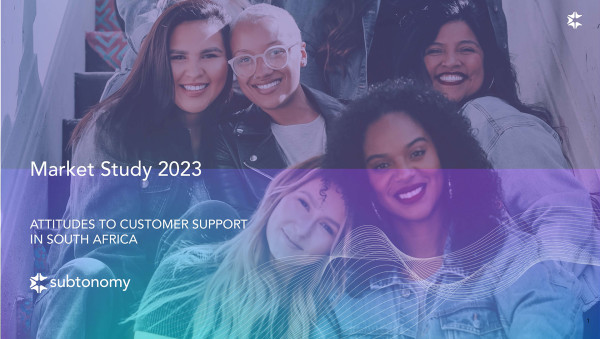
Click here (https://apo-opa.info/48cLpc0) to download a full copy of Market Study 2023: Customer Attitudes to Support in South Africa.

About Subtonomy:
As the only telecoms vendor dedicated to technical customer support, Subtonomy isn't just a solution, we're at the forefront of a customer experience revolution - blending cutting-edge technology with user-friendly tools to break down barriers, streamline and future-proof telecom operators' businesses.

  • When precision matters our solutions dive deep, revealing detailed service experiences and addressing current needs while preparing for the dynamic telecoms market of tomorrow.
  • Harnessing automation to meet customer expectations via Subtonomy's Self-Service API which helps enhance every digital touchpoint, with effortless but complex troubleshooting thrown in.
  • When shifting from reactivity to proactivity our advanced tech support solutions mean you're not just acting faster, but reaching out proactively to keep customers informed via mobile app, website, or IVR.

To find out more about how Subtonomy is reshaping customer support and helping deliver stellar customer experiences today see Subtonomy's website (https://www.Subtonomy.com/).

Media files
Subtonomy
Download logo
Read moreSouth African Telecoms Customers Only Prepared to Wait 5 Minutes
6 September 2023

SARS Commissioner calls for tax administrators to be excluded from budget cuts

Location: News

SARS Commissioner calls for tax administrators to be excluded from budget cuts

South African Revenue Service (SARS) Commissioner Edward Kieswetter has called on National Treasuries to exclude tax administrations from across-the-board austerity measures, as it poses a threat to innovation, fiscal integrity and sovereignty.

“Once you suspend funding, the end result will always be the suspension of innovation and regression against the progress of other administrations. This goes against the intrinsic value of digitalisation in improving tax compliance and detecting tax non-compliance,” Kieswetter said on Tuesday in Cape Town.

He was addressing the 2nd Network of Tax Organisation (NTO) Technical Conference, which took place under the theme: ‘Digitalisation of Tax Administrations and Contemporary Issues’.

“As more financial transactions are taking place digitally, more third party data sources are shared with tax administrations, and central bank digital currencies are emerging, the importance of digitalisation and consequently the use of data science, and artificial intelligence have become central to revenue collection, compliance and trade facilitation.

“So, in short, whenever budget cuts are required, National Treasuries – Budget Offices are advised to avoid across-the-board cuts and ensure a more prudent approach to invest to build enabling and productive economic capacity, create employment, and thus expand the tax base.

“This secures fiscal integrity and sovereignty in the long run. Tax administrations should be excluded from across-the-board austerity measures. The investment in digitalisation should not be disrupted. The cost of recovery is simply too high in every respect,” Kieswetter said.

He said the COVID-19 pandemic accelerated the modernisation and digitisation of work at SARS.

“COVID-19 inadvertently took us to the drawing board to think from first principles, and very quickly accelerated our response towards reprioritising our technology investment to enable our employees to work during the hard lockdown and to allow taxpayers to continue to fulfil their tax obligations,” the Commissioner said.

Although SARS has made progress, he explained that much more still needs to be done, as the revenue service is behind in its digitalisation journey.

“I want to pause here and focus on one element as a critical enabler of the digitalisation journey - and that relates to funding. Before State capture, SARS was a leader in digital modernisation for many years.

“However, partly due to financial constraints, but also a short-term approach, budgets were then frozen for a number of years and SARS fell behind in driving technological innovation. We have now managed to restore some additional funds to continue our modernisation, but we are still substantially underfunded to move at the necessary speed in an environment that is changing exponentially, business models are being disrupted, and tax crime proliferating at an alarming rate,” he said.

SARS faces the challenge of not only having to play catch-up after many years of underinvestment, but also of accelerating modernisation simply to remain relevant.

“We are at a point where we can again focus on innovation. The important lesson here is that the digitalisation journey is not a finite project, but a new way of being. It is an ongoing journey. Once you suspend funding, the end result will always be the suspension of innovation and regression against the progress of other administrations,” the Commissioner said. - SAnews.gov.za


nosihle
Wed, 09/06/2023 - 10:08

121 views
Read moreSARS Commissioner calls for tax administrators to be excluded from budget cuts
29 August 2023

CSIR appoints industry advisory panel to assist steer digital transformation

Location: News

CSIR appoints industry advisory panel to help steer digital transformation

The Council for Scientific and Industrial Research (CSIR) has announced the appointment of an industry advisory panel in the digital transformation space. 

“This signifies the organisation’s efforts to align with industry-specific priorities in the quest to achieve digitalisation for greater societal and industrial impact. 

“Utilising its robust science, engineering and technology capabilities, the organisation seeks to establish a balance between scientific and industrial development,” the organisation said on Monday.

Meanwhile, CSIR believes that a greater understanding of industry needs is vital to achieving these strategic objectives. 

The Executive Cluster Manager of CSIR NextGen Enterprises and Institutions, Dr Lulama Wakaba, explained the purpose of the industry advisory panel, which is to provide advice on strategic issues to the cluster’s leadership and researchers in the digitalisation domain. 

“It is guided by the CSIR’s mandate of contributing to improving the quality of life of the people of South Africa through directed multidisciplinary research and technological innovation. All clusters of the CSIR have important contributions to make to this mandate,” Wakaba added. 

He also noted that the panel members bring a wealth of experience, which will be invaluable in gaining insight into market operations. 

The panel comprises 12 members and Mamello Selamolela, who has been appointed Chairperson to lead the team. 

The other members include Bronwyn Williams, Nomso Kana, Dawood Patel, Paul Mashegoane, Envir Fraser, Wakaba, Dr Ntsibane Ntlatlapa and Anne Gabathuse. 

Group Executive for CSIR Smart Society, Dr Sandile Malinga, said he was looking forward to innovative insights and approaches based on the panel’s extensive experience and exposure. 

“The newly established industry advisory panel not only strengthens the CSIR’s commitment to achieving strategic objectives but also underscores its dedication towards fostering industrial development and digital transformation within government, public institutions and the industry at large.”

The panel’s view, according to CSIR, is that the cluster’s impact ought to reflect the important pillars of society understanding the core of national societal needs and ensuring that the response harnesses digitalisation for the benefit of South Africa. 

The CSIR, an entity of the Ministry of Higher Education, Science and Innovation, is one of the leading scientific and technology research, development and implementation organisations in Africa. 

CSIR undertakes directed and multidisciplinary research and technological innovation, as well as industrial and scientific development to improve the quality of life of all South Africans. – SAnews.gov.za
 

Gabisile
Tue, 08/29/2023 - 09:33

433 views
Read moreCSIR appoints industry advisory panel to assist steer digital transformation
8 August 2023

The NHI could design South Africa a leader in digitised healthcare

Location: MyPR

The NHI could make South Africa a leader in digitised healthcare: Government passed the National Health Insurance (NHI) Act on 13 June 2023 and has since received plenty of opinions from various sources on how the ambitious public healthcare system should be run once it is fully implemented. The MANCOSA School of Healthcare (SoH) is …

Read moreThe NHI could design South Africa a leader in digitised healthcare
15 June 2023

Experience transformative African SAP customer journeys first hand at SAPHILA 2023

Location: Business

The African SAP User Group (AFSUG) is pleased to announce that a number of local SAP customers will be sharing their invaluable insights and success stories at the highly anticipated upcoming SAPHILA 2023 conference. Set to take place from 09 to 11 July 2023 at the Sun City Resort in South Africa’s North West province, …

Read moreExperience transformative African SAP customer journeys first hand at SAPHILA 2023
  • Previous
  • Page 1
  • Page 2

Copyright © 2026 · MyZA · All Rights Reserved · Powered by Stratlec Online