• Skip to main content
  • Skip to header right navigation
  • Skip to after header navigation
  • Skip to site footer
MyZA

MyZA

News, Directory, Events and Other Stuff

  • Social Media
  • Sport
  • World News
  • Home
  • Submit News
  • Directory
  • Events
  • Stratlec
  • TFSA
  • News
    • APO
    • Today’s Sport News
    • Todays Social Media and Tech Headlines
    • Today’s World News
    • Today’s SA Financial News
  • Contact
You are here: Home / Archives for distribution

distribution

15 August 2024

President Museveni And King Mswati III Call For A Unified African Market And Political Federation
Location: News
State House Uganda

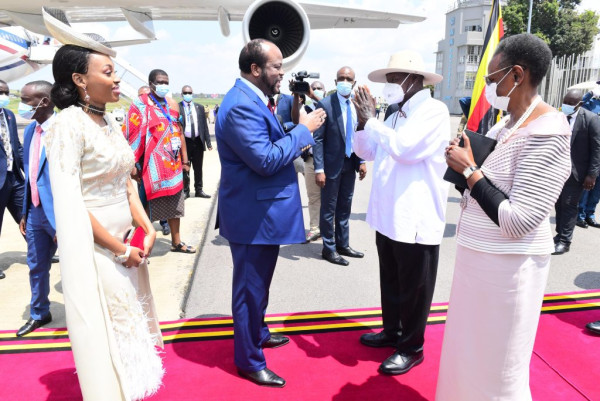
President Yoweri Kaguta Museveni and the First Lady and Minister of Education and Sports, Maama Janet Museveni have today welcomed the King of Eswatini, His Majesty, Mswati III at Entebbe International Airport.

His Majesty, Mswati III who is in Uganda for a three-day State Visit at the invitation of President Museveni was accompanied by his wife, Queen Inkhosikati Make Lamashwama and other high-level delegates.

At Entebbe International Airport, President Museveni was flanked by Ministers and service chiefs.

Upon arrival, the visiting King was accorded a 21-gun salute and inspected a guard of honour mounted by the Uganda People's Defence Forces (UPDF).

President Museveni later received his guest at State House Entebbe and held discussions focusing on enhancement of bilateral cooperation between the two countries.

In their discussions, President Museveni emphasised a clear vision for African prosperity, rooted in his experience as a student activist in the 1960s, a liberation leader, and now as a head of state.

“If Africans want prosperity, it comes from producing goods or services and selling them,” President Museveni stated.

He underscored the need for African nations to access larger markets to maximise economic benefits, highlighting Uganda's internal market of 46 million people as insufficient on its own.

“The fragmentation of the African market is a big disaster,” President Museveni warned.

He compared the continent's potential with that of Latin America, which, despite abundant natural resources, struggles with poverty due to its fragmented markets.

“I always tell my Ugandans here that if you want to be like Latin America, you are welcome because if you look at them, despite their wealth in natural resources, they still run to the USA for prosperity to get medical care, education, and other benefits,” he said.

The President argued that Africa's success lies in integrating markets across the continent, similar to how the United States operates with a vast and unified market.

He called for a model where African nations not only produce but also own and share in the benefits of their resources, rather than relying on foreign investments that often exploit the continent's wealth.

The President highlighted the need for African countries to collaborate on capital-intensive projects.

He also gave the example of Uganda's petroleum sector, where East African nations are invited to co-invest in infrastructure such as pipelines and refineries.

“It's not common sense that I produce, and you only buy. You can't say that to a brother,” President Museveni remarked, emphasising the importance of shared ownership.

President Museveni lauded the East African Community (EAC)'s progress in rebuilding and expanding to include eight member states, addressing both economic and political integration.

Beyond economic integration, President Museveni stressed the need for political federation in East Africa, which he views as crucial for establishing a strong military defence for the continent.

He highlighted the disparity in military capabilities between African nations and global powers like the United States, which boasts superior land, air, sea, and space forces.

“Africa must have the capacity to defend itself from all threats,” President Museveni asserted.

He called for a united African defence strategy as part of the broader vision for political federation.

His Majesty King Mswati III called for an enhanced cooperation between African nations, emphasising the need for unity in driving the continent's development.

He also expressed gratitude for the warm reception and hospitality extended to him and his delegation.

He highlighted the longstanding relationship between Uganda and Eswatini, noting that it had been years since their last meeting at a Commonwealth event.

“Your Excellency, I convey greetings from the Queen Mother, the government, and the people of Eswatini, and I wish to inform you that we are ready to strengthen ties between the two nations,” the King stated.

King Mswati went on to propose that Uganda and Eswatini establish regular communication channels to avoid neglecting the friendships and agreements already in place.

He stressed that African countries must work together to achieve progress in key areas such as poverty alleviation, job creation, education, and technological advancement.

“If we work together, there is much we can achieve. But if one country moves on its own, it cannot go far,” he said.

King Mswati III pointed out that Africa possesses abundant natural resources, yet the continent has struggled to produce efficiently due to the exploitation of these resources by foreign entities.

He advocated for African nations to share expertise and technology, citing Uganda's achievements in areas such as crude oil development as an example of successful collaboration.

“Now that we have mastered a lot of technology and expertise, we must take advantage of our resources,” the King stated.

The King further emphasised the need to promote entrepreneurship and knowledge exchange between Uganda and Eswatini, suggesting the establishment of distribution centres and routes to facilitate trade.

He also proposed increased cooperation between the Southern African Development Community (SADC) and the East African Community, expressing hope for a stronger economic partnership.

In terms of cultural ties, King Mswati III highlighted the similarities between the cultures of Uganda and Eswatini.

He proposed the organisation of cultural festivals to showcase these connections and attract tourists from around the world.

“We should promote our unique cultures, which are similar in many ways to support tourism and strengthen our bonds,” he added.

The King called for the opening of direct flight routes between Eswatini and Uganda to boost tourism and cargo trade.

He noted the potential for increased tourism, particularly given Uganda's rich natural attractions such as the Nile River and mountains.

“Let us work together to promote tourism by making travel between our countries easier and more accessible,” he urged.

King Mswati III also expressed support for Uganda's leadership in hosting the African Union's Humanitarian Agency and congratulated President Museveni on Uganda's chairmanship of the Non-Aligned Movement and the G77+China group.

He reiterated his country's willingness to cooperate with Uganda in various sectors, including the export and assembly of electric cars.

In Transport and Infrastructure, the two Heads of State also called for an expedition of cooperation processes regarding the creation of a hub by the Kingdom of Eswatini for marketing Kiira Motors Corporation's “Kayoola EVS” electric buses to the SADC region, using the advantage of the Maputo harbour area.

In conclusion, King Mswati III extended an invitation to President Museveni for a State Visit to Eswatini, emphasising the importance of continued collaboration between the two nations.

“Africa needs to work together to achieve economic independence, and our partnership with Uganda is a step in that direction,” he concluded.

Strengthening Bilateral Ties:

During the visit, Uganda and Eswatini further solidified their relationship through the signing of a Memorandum of Understanding.

The agreement was signed by Uganda's Minister of State for Foreign Affairs, Hon. Oryem Henry Okello, and Eswatini's Minister for Foreign Affairs and International Cooperation, Hon. Senator Pholile Shakantu.

Additionally, the two countries' agriculture Ministers discussed enhancing cooperation in the agricultural sector.

Eswatini, officially the Kingdom of Eswatini and also known by its former official name Swaziland and formerly the Kingdom of Swaziland, is a landlocked country in Southern Africa. It is bordered by Mozambique to its northeast and South Africa to its north, west, south, and southeast.

The Eswatini delegation included high-level officials such as HRH Princess Lindiwe and Hon. Manqoba Khumalo, Minister of Commerce, Industry, and Trade, among others.

On the Ugandan side, key ministers such as Hon. Babirye Milly Babalanda, Minister for the Presidency, Dr. Monica Musenero, Minister for Science, Technology, and Innovation, Hon. Mwebesa Francis, the Minister of Trade Industry and Cooperatives, and Hon. Katumba Wamala, the Minister of Works and Transport were also in attendance.

Distributed by APO Group on behalf of State House Uganda.

Media files
State House Uganda
Download logo
Read morePresident Museveni And King Mswati III Call For A Unified African Market And Political Federation
15 August 2024

Scaling up response to curb growing mpox outbreak in African region

Location: News

WHO Regional Office for Africa
Download logo

As the mpox outbreak that has affected the Democratic Republic of the Congo and spread to neighbouring countries continues to grow, World Health Organization (WHO) is intensifying support to countries to scale up measures to curb the virus and save lives.

On the advice of independent experts of the International Health Regulations Emergency Committee, WHO Director-General has determined that the upsurge of mpox constitutes a public health emergency of international concern (PHEIC). The emergence of a new strain of the mpox virus in the Democratic Republic of the Congo and its rapid spread, including to neighbouring countries, is one of the main reasons for the declaration of the PHEIC, the second such determination in two years relating to the disease.

So far this year, more than 2100 laboratory-confirmed cases and 13 deaths have been reported from 12 countries (Burundi, Cameroon, Central African Republic, Congo, Cote d'Ivoire, the Democratic Republic of the Congo, Kenya, Liberia, Nigeria, Rwanda, South Africa and Uganda) compared with 1145 confirmed cases and seven deaths in the whole of 2023 reported from 11 countries.

“We are hard at work on the frontlines of the response, collaborating closely with governments and communities to strengthen mpox control measures and are ramping up efforts to curb the widening trend of the virus through coordinated action with partners and national authorities,” said Dr Matshidiso Moeti, WHO Regional Director for Africa.

WHO is stepping up support to the affected countries by deploying additional experts, including epidemiologists and anthropologists, and providing initial funding to accelerate outbreak response measures. Efforts are also underway to enhance cross-border collaboration for case investigation, contact tracing and community engagement to ensure compliance with preventive measures.

The Organization also supporting national regulatory authorities to speed up regulatory approvals, as well as providing guidance to national immunization technical advisory groups to ensure readiness for vaccine rollout.  WHO has triggered the process for Emergency Use Listing for mpox vaccines, which will accelerate vaccine access for lower-income countries which have not yet issued their own national regulatory approval. Emergency Use Listing also enables partners including Gavi, the Vaccine Alliance, and UNICEF to procure vaccines for distribution.

Efforts are also being ramped up to strengthen national diagnostic capacities by providing testing kits and reagents and machines to decentralize testing. Genomic sequencing is also ongoing to determine the mpox clades.

To enhance preparedness in countries neighbouring the Democratic Republic of the Congo and those at risk, disease surveillance and training of frontline health workers is being stepped up as well as public awareness campaigns.

Caused by an Orthopoxvirus, mpox was first detected in humans in 1970, in the Democratic Republic of the Congo. The disease is considered endemic to countries in central and west Africa. Mpox is transmitted from animals to humans. It can also spread from humans to humans through contact with bodily fluids, lesions on the skin or on internal mucosal surfaces, such as in the mouth or throat, respiratory droplets and contaminated objects.

Distributed by APO Group on behalf of WHO Regional Office for Africa.

Read moreScaling up response to curb growing mpox outbreak in African region
14 August 2024

In sickness and in health: What can workers expect from their employer if they are too sick to work?

Location: News

CCMA finds dismissal of cancer survivor lawful

Read moreIn sickness and in health: What can workers expect from their employer if they are too sick to work?
14 August 2024

Africa Centres for Disease Control and Prevention (Africa CDC) Declares Mpox A Public Health Emergency of Continental Security, Mobilizing Resources Across the Continent

Location: News

Africa Centres for Disease Control and Prevention (Africa CDC)
Download logo

The Africa Centres for Disease Control and Prevention (Africa CDC) has officially declared the ongoing Mpox outbreak a Public Health Emergency of Continental Security (PHECS), marking the first such declaration by the agency since its inception in 2017.

This declaration, under Article 3, Paragraph F of the Africa CDC Statutes, empowers the organization to lead and coordinate responses to significant health emergencies. The statute mandates Africa CDC to “coordinate and support Member States in health emergency responses, particularly those declared PHECS or Public Health Emergency of International Concern (PHEIC), as well as health promotion and disease prevention through health systems strengthening, addressing communicable and non-communicable diseases, environmental health, and Neglected Tropical Diseases.”

The declaration will enable the mobilization of resources across affected countries, unlocking essential funding, strengthening Risk Communication and Community Engagement (RCCE), boosting surveillance and laboratory testing efforts, and enhancing human resource capacities to respond effectively to Mpox through a One Health approach.

Africa CDC Director General Dr. Jean Kaseya emphasized the urgency of swift and decisive action: “Today, we declare this PHECS to mobilize our institutions, our collective will, and our resources to act—swiftly and decisively. This empowers us to forge new partnerships, strengthen our health systems, educate our communities, and deliver life-saving interventions where they are needed most. There is no need for travel restrictions at this time.”

At least 13 African countries, including previously unaffected nations like Burundi, Kenya, Rwanda, and Uganda, have reported Mpox outbreaks. So far in 2024, these countries have confirmed 2,863 cases and 517 deaths, primarily in the Democratic Republic of the Congo (DRC). Suspected cases across the continent have surged past 17,000, a significant increase from 7,146 cases in 2022 and 14,957 cases in 2023. This is just the tip of the iceberg when we consider the many weaknesses in surveillance, laboratory testing and contact tracing.

Dr. Kaseya underscored the gravity of the situation stating “This is not just another challenge; it's a crisis that demands our collective action. Article 3, Paragraph F of the Africa CDC Statutes mandates us to lead and coordinate the response when there is a declaration of a public health emergency of international concern.”

From May 2022 to July 2023, Mpox was declared a Public Health Emergency of International Concern (PHEIC) by the WHO. However, Africa did not receive the support it urgently needed during this period. As global cases began to decline, the escalating numbers in Africa were largely ignored. Dr. Kaseya emphasized the need for a change in approach: “We urge our international partners to seize this moment to act differently and collaborate closely with Africa CDC to provide the necessary support to our Member States.”

He continued, appealing to global partners: “We call on you to stand with us in this critical hour. Africa has long been on the frontlines in the fight against infectious diseases, often with limited resources. The battle against Mpox demands a global response. We need your support, expertise, and solidarity. The world cannot afford to turn a blind eye to this crisis.”

He explained that the emergency declaration follows wide consultations, including a unanimous decision by the Africa CDC Emergency Consultative Group (ECG), chaired by Professor Salim Abdool Karim, head of CAPRISA, an AIDS research program based in Durban, South Africa.

Prof. Karim highlighted that limited surveillance and evidence suggest the situation could be more severe than currently understood. “The number of cases has significantly increased compared to 2022 when WHO declared Mpox a public health emergency. It's clear that we're facing a different scenario with far more cases, resulting in a higher burden of illness,” he said. He also raised concerns about the rising fatalities, particularly the potential link between HIV and Mpox. “Our concern is that we may be seeing more fatalities in Africa due to the association with HIV,” he noted.

Cross-border transmission to previously unaffected countries was also a concern, prompting the ECG to urge the strategic distribution of the limited vaccines available. The lack of diagnostic capabilities was identified as a critical issue requiring urgent attention, and the ECG encouraged the development of response plans, promising to provide input and support.

To address the Mpox outbreak in Africa, Africa CDC has set up a 25-member Incident Management Team based at the epicenter of the Mpox epidemic with mandate to support affected and at-risk countries. Africa CDC has also signed a partnership agreement with the European Commission's Health Emergency Preparedness and Response Authority (HERA) and Bavarian Nordic to provide over 215,000 doses of the MVA-BN® vaccine—the only FDA and EMA-approved Mpox vaccine. Africa CDC will oversee the equitable distribution of these vaccines, prioritizing local needs across the affected Member States.

MPOX SYMPTOMS, PREVENTION, AND TREATMENT

Mpox is a viral illness caused by the monkeypox virus, with two distinct clades: Clade I and Clade II. Common symptoms include a skin rash or mucosal lesions lasting 2–4 weeks, fever, headache, muscle aches, back pain, low energy, and swollen lymph nodes. The virus can be transmitted to humans through physical contact with an infectious person, contaminated materials, or infected animals.

Distributed by APO Group on behalf of Africa Centres for Disease Control and Prevention (Africa CDC).

Read moreAfrica Centres for Disease Control and Prevention (Africa CDC) Declares Mpox A Public Health Emergency of Continental Security, Mobilizing Resources Across the Continent
13 August 2024

African Energy Week (AEW) 2024 Launches Upstream Oil & Gas Forum Amid African Liquefied Natural Gas (LNG) Market Expansion

Location: News
African Energy Chamber

Africa's upstream oil and gas sector is attracting substantial investments, with an $800-billion capital expenditure program focusing on LNG alongside traditional deep-water oil projects currently underway. This investment cycle is expected to boost Africa's LNG production capacity at a time when global gas demand is on the rise.

Responding to this environment, African Energy Week (AEW): Invest in African Energy 2024 will host a two-day Upstream Exploration & Production (E&P) Forum spotlighting Africa's LNG prospects. The forum will feature a series of strategic sessions and presentations, highlighting major LNG and floating LNG (FLNG) developments and investment opportunities shaping the sector.

AEW: Invest in African Energy is the platform of choice for project operators, financiers, technology providers and government, and has emerged as the official place to sign deals in African energy. Visit www.AECWeek.com for more information about this exciting event.

Mozambique is at the forefront of Africa's LNG growth, with the $20-billion Mozambique LNG project led by TotalEnergies set to produce 12.8 million tons of LNG per annum by 2028. Eni's second FLNG production project in the country – Coral Norte – and ExxonMobil's Rovuma LNG development are anticipated to reach FID by 2025. The country achieved natural gas sales of $1.7 billion in revenue in 2023, mostly driven by the start up of the Coral Sul FLNG project in November 2022.

The Nigeria LNG (NLNG) Train 7 expansion project is approaching completion, set to boost the country's LNG capacity by 35%, adding roughly 8 million tons per annum. The project is part of Nigeria's broader strategy to enhance its LNG production capabilities to meet both local and regional demand. In June 2024, the Nigerian National Petroleum Corporation signed a Project Development Agreement (PDA) with marine infrastructure company Golar LNG to deploy a FLNG vessel in the offshore Niger Delta region. The PDA plans to monetize 400-500 million standard cubic feet of gas per day, producing LNG, LPG and condensate, with FID expected by Q4 2024.

Under the Upstream E&P Forum, a session on The Demand Economics Driving the Growth of African LNG and FLNG will explore Africa's LNG portfolio, shedding light on supply and demand dynamics and future investment opportunities. Speakers will include Managing Director & General Manager of Eni Rovuma Basin Marica Calabrese, Africa Finance Corporation Vice President Taiwo Okwor, and senior representatives from Golar LNG, Angola LNG, and UTM Offshore.

In West Africa, Equatorial Guinea is also establishing itself as a major LNG player through its Gas Mega Hub (GMH) initiative, which aims to pool regional gas resources to become a central hub for gas processing, liquefaction and distribution. Last October, US oil and gas company Marathon Oil entered into an LNG sales agreement with commodity trader Glencore for Equatorial Guinea's Alba field, positioning the company for the GMH's next phase of development. Meanwhile, the Greater Tortue Ahmeyim (GTA) LNG project, spanning Mauritania and Senegal, is set to reach first production by Q4 2024, with a capacity of 2.3 million tons per year.

In southern Africa, Angola's LNG market is also growing, launching the second phase of the Falcão natural gas project last December, as well as developing the country's first non-associated gas development project in Soyo. South Africa's Virginia Phase 2 project is set to produce commercial quantities of LNG and liquid helium, with a capacity of 670,000 cubic meters of LNG per day. Meanwhile, the country's Port of Ngqura FLNG project involves the installation of a floating storage and regasification unit, gas-to-power infrastructure, cryogenic pipelines and a terminal for processing, storing, on-site exploitation and distribution of gas acquired from the country's on- and offshore fields.

A session on The Game Changer: Examining African Gas will outline Africa's natural gas reserves, production capacities, infrastructure development and export potential, highlighting potential for transitional energy, power generation and diversified growth. The session will feature senior representatives from Equatorial Guinea's national oil company (NOC) GEPetrol, Seplat Energies, and Mozambican NOC Empresa Nacional de Hidrocarbonetos.

With these developments on the horizon, Africa's leading upstream markets are positioning themselves as key players in the global LNG industry. AEW: Invest in African Energy 2024 will provide a pivotal platform for stakeholders to engage in discussions, forge partnerships and explore new opportunities within Africa's growing LNG sector.

Distributed by APO Group on behalf of African Energy Chamber.

Media files
African Energy Chamber
Download logo
Read moreAfrican Energy Week (AEW) 2024 Launches Upstream Oil & Gas Forum Amid African Liquefied Natural Gas (LNG) Market Expansion
11 August 2024

Elevate Your Padel Game with Adidas Rackets at Virgin Active Padel Club

Location: MyPR

Introduction Padel, a racket sport that blends the excitement of tennis, squash, and badminton, has seen its popularity skyrocket across continents. As players from diverse backgrounds dive into the sport, the choice of equipment becomes pivotal in enhancing performance and enjoyment on the court. Virgin Active Padel Club proudly offers a wide array of Adidas …

Read moreElevate Your Padel Game with Adidas Rackets at Virgin Active Padel Club
11 August 2024

Keep Your Home Stylish and Safe with Modern Electrical Systems

Location: MyPR

Ensuring the safety and style of your home involves more than just choosing the right furniture or colour scheme. It also includes the critical, yet often overlooked, aspect of your home’s electrical system. A well-designed and maintained electrical distribution board can enhance both the safety and aesthetics of your living space.   What is a …

Read moreKeep Your Home Stylish and Safe with Modern Electrical Systems
6 August 2024

Swaragano NPO: Transforming Lives through Community Support

Location: MyPR

Swaragano, a non-profit organisation founded by Sanny Mashigo, has been making a profound difference in the Alexandra community of Johannesburg. Known affectionately as Mama Sanny, she has spent over three decades selling food on the streets and sharing leftovers with local children. This spirit of giving led to the creation of Swaragano in April 2020, …

Read moreSwaragano NPO: Transforming Lives through Community Support
6 August 2024

Lottery corruption: Alfred Nevhutanda goes to court

Location: News

Former Lotteries boss wants to stop probe launched by President Ramaphosa

Read moreLottery corruption: Alfred Nevhutanda goes to court
5 August 2024

DWS priorities completion of bucket eradication projects

Location: News

DWS priorities completion of bucket eradication projects

The Department of Water and Sanitation (DWS) says it will prioritise the completion of the remaining delayed Bucket Eradication Programme projects in the Northern Cape and the Free State.

Briefing the media on the department’s plans and priorities for the 2024/25 financial year on Monday, Water and Sanitation Minister Pemmy Majodina said of the 33 projects which formed part of the programme in the Free State, 26 have been completed (eradicating approximately 32 000 buckets).

“Approximately 10 000 buckets remain to be eradicated in the seven incomplete projects. Of 30 projects which formed part of the programme in the Northern Cape, 29 are completed (eradicating approximately 12 000 buckets), and 596 buckets remain to be eradicated in the one incomplete project,” Majodina said.

However, the Minister acknowledged that the programme will not result in the eradication of the “undignified” and “repugnant” bucket system altogether from the South African landscape. This is because the programme only focuses on eradicating buckets in certain towns in certain provinces, where they were identified in 2012.

She said since then, and on an ongoing basis, other municipalities elsewhere have introduced buckets systems in formal and informal settlements.

“The eradication of buckets is therefore a moving target. In order to address this, Cabinet has recently approved a National Sanitation Framework which will provide the basis for the department to issue new national minimum norms and standards for sanitation which will prohibit the use of the bucket system in both formal and informal settlements,” Majodina said.

Working together with the Water Research Commission, the department is developing new safe, dignified, on-site and non-sewered sanitation systems.

“These solutions will use much less water than water-borne sewered sanitation systems, which is necessary in a water scarce country such as South Africa. Such systems will need to be implemented by municipalities.”

Strengthening partnerships

The Minister added that the Ministry of Water and Sanitation will continue to collaborate with all sectors, especially the private sector, to contribute to resolving the country’s water and sanitation challenges.

This is in line with President Cyril Ramaphosa’s call to strengthen collaboration and social compacts with the private sector, labour, civil society and government.

In addition to partnerships with mining houses for water supply projects, the department is also facilitating partnerships between the private sector and municipalities, through its Water Partnerships Office, which was established in collaboration with the Development Bank of Southern Africa (DBSA) and the South African Local Government Association (SALGA).

This includes finalising plans with the eThekwini, Mangaung, Buffalo City, Nelson Mandela Bay, and Tshwane municipalities to mobilise private sector finance for the replacement of leaking municipal water distribution pipes which are resulting in high levels of non-revenue water.

Water Services Amendment Bill 

Meanwhile, the department will shortly be presenting the Water Services Amendment Bill to Cabinet for approval for it to be submitted to Parliament.

Majodina noted that despite the high level of support provided by the department to the municipalities, the municipal water and sanitation services continue to decline.

She said the Amendment Bill provides for the introduction of an operating license system for Water Services Providers, to enable Water Services Authorities to ensure that their providers have a minimum level of capability to provide water and sanitation services that meet national norms and standards.

“The amendments propose that this should be done through the introduction of an operating license requirement for Water Services Providers, to ensure that they have a minimum level of competency.

“The Bill also introduces measures to enable the national department to take regulatory action against municipalities which do not comply with national minimum norms and standards for water services,” the Minister said. – SAnews.gov.za

GabiK
Mon, 08/05/2024 - 14:23

90 views
Read moreDWS priorities completion of bucket eradication projects
5 August 2024

Paris Olympics: Lottery steps in at 11th hour to help fund Team SA

Location: News

Stringent conditions means money can only be spent on athletes, not officials

Read moreParis Olympics: Lottery steps in at 11th hour to help fund Team SA
4 August 2024

Maintaining Your Home’s Electrical Distribution Board

Location: MyPR

Maintaining your home’s electrical distribution board, also known as the electrical DB box, is crucial for ensuring the safety and efficiency of your electrical system. A well-maintained distribution board can prevent electrical hazards, reduce the risk of fire, and ensure the smooth operation of your household appliances.    Understanding the Electrical Distribution Board Before diving …

Read moreMaintaining Your Home’s Electrical Distribution Board
31 July 2024

Finding the right financial products to serve the underserved

Location: MyPR

Financial inclusion remains a key issue in South Africa, and promoting real inclusion is critical in enabling more people to improve their quality of life, says Simphiwe Phakathi, Executive Head of Sales and Distribution at EasyPay Everywhere. Financial exclusion is associated globally with persistent poverty. “At its most basic, the issue is that so many …

Read moreFinding the right financial products to serve the underserved
28 July 2024

Concern over labour inequality

Location: News

Concern over labour inequality

The Labour Ministers of South Africa, Brazil and Spain have expressed concern that labour inequality remains an unmet challenge in many societies across the world.

“The only way to address this challenge properly is to abandon traditional models and responses, such as those favouring deregulation and market-based solutions, that have already been proven not to work and to accept that an expansive social response must be consensual and shared. 

"Thus, in an expression of strengthened cooperation from three different continents, the Labour Ministers of Brazil, South Africa and Spain seek to advance towards a fairer distribution of the products of labour at a global level, adopting a common approach to tackling this problem that reflects our collective commitment to expanding labour rights the world over,” said the Ministers in a joint statement on Friday.

Luiz Marinho is Minister of Labour and Employment of Brazil and South Africa’s Minister of Employment and Labour is Nomakhosazana Meth.

Yolanda Díaz is the Second Vice-President and Minister of Labour and Social Economy of Spain.

The Ministers comments come on the occasion of the G20 Labour Ministers’ Meeting in Fortaleza.
The three leaders said the decline in labour share has been observed in many of the world’s economies, particularly since the wave of neo-conservatism in the 1980s. 

The term "labour share" refers to the proportion of national income allocated to workers in the form of labour compensation, as opposed to that going to capital owners. The decline means that a smaller share of economic income is reaching workers, with most of it being distributed as returns to capital. 
They said the undesired effects of a digital transition at the service of the few, labour flexibility and deregulation policies, and painful and ineffective austerity measures are just some of the causes behind this worrying trend.

“Such developments sometimes result in the delocalisation of production, in the absence of social dialogue and trade union participation, in the growing precariousness of working conditions, in an imbalance in collective bargaining that gives rise to low salaries or to fiscal policies that prioritize capital over work, or restrict natural growth in salaries.  Neither Brazil, South Africa nor Spain is unaffected by these trends.”

In Brazil, the recovery of the economy following the COVID-19 pandemic has been underscored by positive milestones, including robust growth of gross domestic product (GDP) and improvements in employment metrics.

Despite these positive results, enduring challenges persist within the Brazilian labour market. According to the International Labour Organisation (ILO), Brazil exhibited very slight productivity growth between 2015 and 2023 (an annual average of 0.1%), while real wages fell 6.9 % in 2023.

South Africa’s labour market is also a prime example of declining labour share. Real wages have shown significant fluctuations, failing to keep pace with steady productivity growth.

“This has led to a situation where workers are not proportionally benefiting from the wealth they help create. The volatility of real wage growth compared to productivity underscores the disparity, which has been further exacerbated by shocks like the COVID-19 pandemic, which severely impacted economic growth, job stability, and both productivity and wage levels, leading to declining living standards and economic inequality for many South Africans.”

These disruptions highlight the vulnerability of workers' livelihoods and contribute to widening labour inequality.

In Spain, productivity growth over the past few decades has been sluggish, with certain significant exceptions such as the upturn seen in 2022. However, salaries have grown at a considerably lower rate than corporate profit.

Overcoming challenges

“In order to expand labour rights, our countries must overcome at least four fundamental challenges. Firstly, we must continue to raise wages. Real wages are growing at a far slower pace than productivity. As we have already demonstrated, abandoning neoliberalism and embracing policies aimed at increasing labour compensation —and in particular the legal minimum wage— contributes decisively to ensuring that productivity gains are distributed to workers, reducing inequality and the scourge of the gender pay gap. We are committed to doing what we know to work.”

The Ministers said that while substantial progress has been made in terms of equality and diversity in the world of work, there are major challenges that must still be overcome in order to ensure that all people —irrespective of their gender, race, sexual orientation or gender identity— enjoy equal opportunities, fair treatment and decent working conditions.

“Thirdly, the digital transition must be just, and workers’ individual and collective rights must be safeguarded throughout. We must make certain that digitalisation is placed at the service of decent work and not the other way around, ensuring that the use of technology makes human work less onerous.

“Fourthly and lastly, we must combine our efforts to strengthen collective bargaining, halting, once and for all, the continuing decline in its coverage rate across the world. In this regard, we have trust in social dialogue as a powerful tool for mutual understanding and collaboration and thus as a means of achieving better living and working conditions.”

“This is why, today, the Labour Ministries of Brazil, South Africa and Spain —reaching across the traditional and antiquated North-South divide— have agreed to establish a permanent and strengthened framework of collaboration and exchange on social and labour matters between our countries.”

According to the Ministers, the framework will guide policies in defence of increasing labour participation to ensure that workers receive a just share in national wealth.

“In short, Brazil, Spain and South Africa will advance towards a new labour international, a global alliance that is fully aware that the major challenges to be overcome —the climate crisis, rising inequality, the erosion of democracies— must be tackled by expanding labour rights, and not by cutting them,” said the Ministers in the joint statement. -SAnews.gov.za


Edwin
Sun, 07/28/2024 - 12:40

347 views
Read moreConcern over labour inequality
24 July 2024

Judge blocks government plan to tell private hospitals and doctors where they can go

Location: News

“Certificate of Need” scheme thrown out of National Health Act

Read moreJudge blocks government plan to tell private hospitals and doctors where they can go
24 July 2024

Shining a light into entrepreneurship

Location: News

Shining a light into entrepreneurship

by Sinovuyo Mfiki

Meet Makatu Tshi-vhula, a young entrepreneur who went from working at a candle manufacturing factory to owning one.

The 26-year-old from Soweto is the founder of The Light Candles, a company he started in February 2020. Their catalogue ranges from regular household to fancy scented candles. His candles are popular among churches, traditional healers and event organisers.

After working for a candle-making company for five months, he used his newly found skills and knowledge to manufacture and distribute candles to his community and courier to other provinces.

He said he was determined to start his own candle-making business after working at the factory and acquiring the skill.

However, he concedes that the journey has not been smooth-sailing, having had to overcome numerous challenges. Chief among these were funding and access to markets through distribution channels.

“Currently it has been four years since I started the business, and it is growing stronger by the month. There are now more people who know about The Light Candles. I get over a mountain, and a new mountain appears, so I have been taking it one day at a time and it has been going quite well,” Tshivhula said.

What sets The Light Candles apart in the market is that they can makes up to thirty different colours. “Moreover, The Light Candles products last up to twelve hours whilst other brands last between six and seven hours," continued Tshivhula.

“From the idea of candle production, you need to have an idea of the type of candles you want to make, and you must look at what type of mould you want to have." There are diverse types of moulds, such as the human body figure, a car, cake, and moulds of a heart.

Furthermore, different shapes and sizes of moulds can be fragranced.  

The process of moulding a candle includes melting solid wax and pouring it into a mould of your preference while it is still hot.

“After a few hours you have a fully functioning candle,” he explained.

With South Africa celebrating Youth Month in June, Tshivhula said there should be a spotlight on young entrepreneurs for their businesses to be given exposure.

“Young people play a huge role in the economy... We might not be making a lot of money, but it is a step in the right direction,” he concluded.

For more information about The Light Candles, contact Makatu Tshivhula on 079 320 4106 or email him on makatutshivhula@gmail.com. You can also visit The Light Candles page on Facebook. You can also follow @lightcandlesza on Instagram.

*This story first appeared in Vukuzenzele


Janine
Wed, 07/24/2024 - 12:18

396 views
Read moreShining a light into entrepreneurship
22 July 2024

We should act against lawyers who undermine the Constitution

Location: News

There are advocates who are skilled liars, dissemblers, manipulators and propagandists; they employ the implements of legal practice to bedevil and confuse and dismay - the judiciary and the profession should take action

Read moreWe should act against lawyers who undermine the Constitution
22 July 2024

Unlocking AI’s transformative potential in South Africa: Enhancing society & creating opportunities

Location: MyPR

As artificial intelligence (AI) continues to supercharge every aspect of business and society, South Africa stands at a critical juncture. Rather than fearing job displacement, we can harness AI to drive widespread growth and prosperity. By fostering local innovation, investing in AI education, and creating a conducive regulatory environment, we can empower citizens and businesses …

Read moreUnlocking AI’s transformative potential in South Africa: Enhancing society & creating opportunities
21 July 2024

Warning against electricity scammers

Location: News

Warning against electricity scammers

The City of Cape Town has urged residents to be aware of scammers pretending to work for the city to gain access to the residents’ homes.

The city’s Electricity Generation and Distribution Department said its teams have been made aware of scammers in Sanddrift, where a resident recently reported to the city that two scammers visited her home claiming to work for the city’s Electricity Department to check on electricity prepaid meters in the area.

“Once the resident allows the scammers access to their home, they proceeded to steal items while the resident is not looking. These incidents happen far too often, and we ask residents to always be alert, especially our elderly residents,” sait the city’s Mayoral Committee Member for Energy, Xanthea Limberg.

While the city’s electricity staff and contractors are in neighbourhoods to do legitimate meter readings and other work, Limberg urged residents to always be alert and to verify the official’s identity with the city before allowing officials access to their property.

“Residents are urged to verify the official’s identity and work order number with the city before giving them access to their homes. All legitimate city staff and contractors will identify themselves before asking for access for legitimate city related electricity work.

“The identification card must display the city logo, the name and surname of the staff member or mandated contractor and must contain an embedded photo of the staff member or mandated contractor. If unsure, please contact the city’s call centre,” Limberg said. 

Limberg also urged the residents refrain from any type of aggressive action, including threats or intimidation of legitimate city staff and contractors doing meter reading or other critical electricity infrastructure work in their neighbourhoods.

To verify the work order, contact the city’s call centre on 0860 103 089. To report suspicious behaviour, contact 0800 1100 77.

Tips for residents:
•    Always verify the work order number when an official visits your home. 
•    Check the official’s city-issued identification card. 
•    The ID card must display the city logo, the name and surname of the staff member or mandated contractor and must contain an embedded photo of the staff member or mandated contractor.
•    If unsure, call the city’s call centre on 0860 103 089.
•    Report suspicious behaviour to the city’s law enforcement agencies or to the SAPS. – SAnews.gov.za

GabiK
Sun, 07/21/2024 - 10:46

345 views
Read moreWarning against electricity scammers
19 July 2024

Guest Resources Services: Empowering Individuals Through Accredited Training and Development

Location: MyPR

Guest Resources Services, a leading provider of skills development and training solutions, is proud to announce its comprehensive range of accredited courses and services designed to empower individuals and enhance workforce capabilities across various sectors. With a commitment to fostering professional growth and development, the organization offers a diverse portfolio of National Certificates and accredited …

Read moreGuest Resources Services: Empowering Individuals Through Accredited Training and Development
19 July 2024

CSA Extends Broadcast Deal With Fox Sports Australia Until 2027

Location: Sport

JOHANNESBURG – Cricket South Africa (CSA) today announced it has extended its deal with Fox Sports Australia to broadcast the...

Read moreCSA Extends Broadcast Deal With Fox Sports Australia Until 2027
18 July 2024

Train commuters receive blankets on Mandela Day

Location: News

Train commuters receive blankets on Mandela Day

Christmas came early for train commuters at the Cape Town train station this morning, when Minister in the Presidency Khumbudzo Ntshavheni handed over blankets to them.   

One of those who received a blanket was Bulelani Fumbeza from Keisriver, who told SAnews  he was happy to have received this special gift on Mandela Day.

“I am happy to receive the blanket on Madiba’s birthday and on a cold day like today. I am going to use the blanket to warm myself while watching the OPA [Opening of Parliament Address] this evening,” said a beaming Fumbeza. 

He added that he will never forgot that he received a gift on Madiba’s birthday.

Echoing the same sentiments was Andile Mchunu who lives on the streets of Cape Town. 

“I will forever be grateful for this gift, and I will never forget Madiba’s birthday. I wish our new government could do more and provide us with jobs and houses,” Mchunu said.

The distribution of the blankets came as the world today commemorates Mandela Day and the day in which President Cyril Ramaphosa will deliver the Opening of Parliament Address (OPA) at 7pm.

Ntshavheni was accompanied by Deputy Minister in the Presidency Kenny Morolong, Water and Sanitation Minister Pemmy Majodina and Transport Minister Barbara Creecy.

Minister Ntshavheni used the opportunity to encourage commuters and members of the public to tune in to the OPA, which will take place at the Cape Town City Hall.

“We encourage South Africans to watch the President opening Parliament for the seventh administration this evening,” Ntshavheni said on Thursday.

Turning her attention to the youth, the Minister encouraged young people not only to watch the address, but to also visit the City Hall chambers to learn more about former President Nelson Mandela.

The Ministers and the Passenger Rail Agency of South Africa (PRASA) officials visited the station to raise awareness about the OPA, amongst others.

The Cape Town station - which is used by many commuters, especially during peak hours - was chosen as it is the main station in Cape Town and because of its proximity to the City Hall.

Also as part of this morning’s activation, the Ministers joined the Transport Minister Barbara Creecy and PRASA officials in the unveiling of the 30 years of democracy branded train. This as the country commemorates 30 years of freedom and democracy.

After the unveiling of the Democracy Train, the Ministers embarked on a walkabout at the station.

2024 marks the 30th anniversary of the birth of South Africa's democratic government, a milestone that Nelson Mandela was instrumental in achieving. Globally, he became the symbol of freedom and democracy.

For the 67 years that he spent in prison, fighting for the freedom of South Africa, the government calls upon everyone to spend at least 67 minutes doing something that will have a positive impact and bring lasting change to the lives of those in our communities. – SAnews.gov.za


Edwin
Thu, 07/18/2024 - 11:32

75 views
Read moreTrain commuters receive blankets on Mandela Day
18 July 2024

Lottery grant backlog builds up because Minister has not filled vacancies

Location: News

3,400 application backlog because of lack of manpower, says NLC

Read moreLottery grant backlog builds up because Minister has not filled vacancies
17 July 2024

Islamic Relief hijacked in Philippi while helping flooded residents

Location: News

The organisation has nonetheless continued to provide humanitarian relief

Read moreIslamic Relief hijacked in Philippi while helping flooded residents
  • Previous
  • Page 1
  • Interim pages omitted …
  • Page 8
  • Page 9
  • Page 10
  • Page 11
  • Page 12
  • Interim pages omitted …
  • Page 19
  • Next

Copyright © 2026 · MyZA · All Rights Reserved · Powered by Stratlec Online