• Skip to main content
  • Skip to header right navigation
  • Skip to after header navigation
  • Skip to site footer
MyZA

MyZA

News, Directory, Events and Other Stuff

  • Social Media
  • Sport
  • World News
  • Home
  • Submit News
  • Directory
  • Events
  • Stratlec
  • TFSA
  • News
    • APO
    • Today’s Sport News
    • Todays Social Media and Tech Headlines
    • Today’s World News
    • Today’s SA Financial News
  • Contact
You are here: Home / Archives for Education

Education

15 August 2024

President Museveni And King Mswati III Call For A Unified African Market And Political Federation
Location: News
State House Uganda

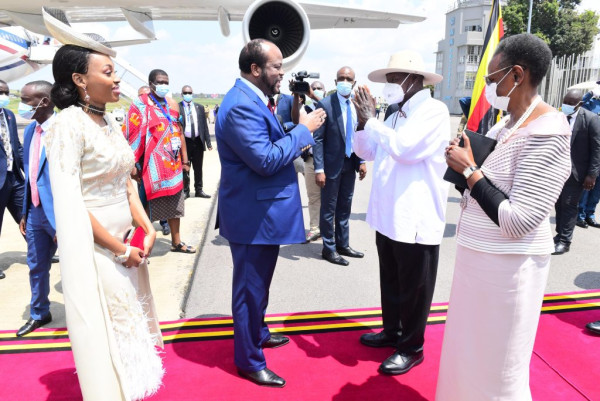
President Yoweri Kaguta Museveni and the First Lady and Minister of Education and Sports, Maama Janet Museveni have today welcomed the King of Eswatini, His Majesty, Mswati III at Entebbe International Airport.

His Majesty, Mswati III who is in Uganda for a three-day State Visit at the invitation of President Museveni was accompanied by his wife, Queen Inkhosikati Make Lamashwama and other high-level delegates.

At Entebbe International Airport, President Museveni was flanked by Ministers and service chiefs.

Upon arrival, the visiting King was accorded a 21-gun salute and inspected a guard of honour mounted by the Uganda People's Defence Forces (UPDF).

President Museveni later received his guest at State House Entebbe and held discussions focusing on enhancement of bilateral cooperation between the two countries.

In their discussions, President Museveni emphasised a clear vision for African prosperity, rooted in his experience as a student activist in the 1960s, a liberation leader, and now as a head of state.

“If Africans want prosperity, it comes from producing goods or services and selling them,” President Museveni stated.

He underscored the need for African nations to access larger markets to maximise economic benefits, highlighting Uganda's internal market of 46 million people as insufficient on its own.

“The fragmentation of the African market is a big disaster,” President Museveni warned.

He compared the continent's potential with that of Latin America, which, despite abundant natural resources, struggles with poverty due to its fragmented markets.

“I always tell my Ugandans here that if you want to be like Latin America, you are welcome because if you look at them, despite their wealth in natural resources, they still run to the USA for prosperity to get medical care, education, and other benefits,” he said.

The President argued that Africa's success lies in integrating markets across the continent, similar to how the United States operates with a vast and unified market.

He called for a model where African nations not only produce but also own and share in the benefits of their resources, rather than relying on foreign investments that often exploit the continent's wealth.

The President highlighted the need for African countries to collaborate on capital-intensive projects.

He also gave the example of Uganda's petroleum sector, where East African nations are invited to co-invest in infrastructure such as pipelines and refineries.

“It's not common sense that I produce, and you only buy. You can't say that to a brother,” President Museveni remarked, emphasising the importance of shared ownership.

President Museveni lauded the East African Community (EAC)'s progress in rebuilding and expanding to include eight member states, addressing both economic and political integration.

Beyond economic integration, President Museveni stressed the need for political federation in East Africa, which he views as crucial for establishing a strong military defence for the continent.

He highlighted the disparity in military capabilities between African nations and global powers like the United States, which boasts superior land, air, sea, and space forces.

“Africa must have the capacity to defend itself from all threats,” President Museveni asserted.

He called for a united African defence strategy as part of the broader vision for political federation.

His Majesty King Mswati III called for an enhanced cooperation between African nations, emphasising the need for unity in driving the continent's development.

He also expressed gratitude for the warm reception and hospitality extended to him and his delegation.

He highlighted the longstanding relationship between Uganda and Eswatini, noting that it had been years since their last meeting at a Commonwealth event.

“Your Excellency, I convey greetings from the Queen Mother, the government, and the people of Eswatini, and I wish to inform you that we are ready to strengthen ties between the two nations,” the King stated.

King Mswati went on to propose that Uganda and Eswatini establish regular communication channels to avoid neglecting the friendships and agreements already in place.

He stressed that African countries must work together to achieve progress in key areas such as poverty alleviation, job creation, education, and technological advancement.

“If we work together, there is much we can achieve. But if one country moves on its own, it cannot go far,” he said.

King Mswati III pointed out that Africa possesses abundant natural resources, yet the continent has struggled to produce efficiently due to the exploitation of these resources by foreign entities.

He advocated for African nations to share expertise and technology, citing Uganda's achievements in areas such as crude oil development as an example of successful collaboration.

“Now that we have mastered a lot of technology and expertise, we must take advantage of our resources,” the King stated.

The King further emphasised the need to promote entrepreneurship and knowledge exchange between Uganda and Eswatini, suggesting the establishment of distribution centres and routes to facilitate trade.

He also proposed increased cooperation between the Southern African Development Community (SADC) and the East African Community, expressing hope for a stronger economic partnership.

In terms of cultural ties, King Mswati III highlighted the similarities between the cultures of Uganda and Eswatini.

He proposed the organisation of cultural festivals to showcase these connections and attract tourists from around the world.

“We should promote our unique cultures, which are similar in many ways to support tourism and strengthen our bonds,” he added.

The King called for the opening of direct flight routes between Eswatini and Uganda to boost tourism and cargo trade.

He noted the potential for increased tourism, particularly given Uganda's rich natural attractions such as the Nile River and mountains.

“Let us work together to promote tourism by making travel between our countries easier and more accessible,” he urged.

King Mswati III also expressed support for Uganda's leadership in hosting the African Union's Humanitarian Agency and congratulated President Museveni on Uganda's chairmanship of the Non-Aligned Movement and the G77+China group.

He reiterated his country's willingness to cooperate with Uganda in various sectors, including the export and assembly of electric cars.

In Transport and Infrastructure, the two Heads of State also called for an expedition of cooperation processes regarding the creation of a hub by the Kingdom of Eswatini for marketing Kiira Motors Corporation's “Kayoola EVS” electric buses to the SADC region, using the advantage of the Maputo harbour area.

In conclusion, King Mswati III extended an invitation to President Museveni for a State Visit to Eswatini, emphasising the importance of continued collaboration between the two nations.

“Africa needs to work together to achieve economic independence, and our partnership with Uganda is a step in that direction,” he concluded.

Strengthening Bilateral Ties:

During the visit, Uganda and Eswatini further solidified their relationship through the signing of a Memorandum of Understanding.

The agreement was signed by Uganda's Minister of State for Foreign Affairs, Hon. Oryem Henry Okello, and Eswatini's Minister for Foreign Affairs and International Cooperation, Hon. Senator Pholile Shakantu.

Additionally, the two countries' agriculture Ministers discussed enhancing cooperation in the agricultural sector.

Eswatini, officially the Kingdom of Eswatini and also known by its former official name Swaziland and formerly the Kingdom of Swaziland, is a landlocked country in Southern Africa. It is bordered by Mozambique to its northeast and South Africa to its north, west, south, and southeast.

The Eswatini delegation included high-level officials such as HRH Princess Lindiwe and Hon. Manqoba Khumalo, Minister of Commerce, Industry, and Trade, among others.

On the Ugandan side, key ministers such as Hon. Babirye Milly Babalanda, Minister for the Presidency, Dr. Monica Musenero, Minister for Science, Technology, and Innovation, Hon. Mwebesa Francis, the Minister of Trade Industry and Cooperatives, and Hon. Katumba Wamala, the Minister of Works and Transport were also in attendance.

Distributed by APO Group on behalf of State House Uganda.
Media files
State House Uganda
Download logo
Read morePresident Museveni And King Mswati III Call For A Unified African Market And Political Federation
15 August 2024

Innovative Financing and Policy Support: Accelerating Renewable Energy Development in Africa (By Ana Hajduka)

Location: News
AOW: Investing in African Energy

By Ana Hajduka, founder and CEO of Africa GreenCo (www.AfricaGreenCo.com).

As Africa's energy sector deregulates, exciting opportunities open up for financial innovation to benefit consumers. Private-sector buyers and traders can mitigate default risk and provide certified green energy at lower cost, writes Ana Hajduka, founder and CEO of Africa GreenCo.

Africa's renewable energy potential is undeniable, but it remains largely untapped. The problem is that the financing landscape for renewable energy and other projects in Africa was previously reliant on state utilities as buyers.

The scale of projects that could be financed in a country were then limited by the fiscal capabilities of that country and the sovereign guarantees it could provide.

This traditional model of relying on countries to provide such guarantees has faced recent challenges, because of increasing debt burdens, and shifting economic priorities.

Opportunities have therefore emerged for innovative financial approaches that will ensure more guarantees can be acquired from other sources and that risk can be diversified across a portfolio of suppliers and customers.  This would see more projects achieving financial close, to ultimately provide more African people with clean energy.

There is also room to not only grow new renewable energy supply, but to create new renewable energy markets on the continent, where that supply can be sold.

As a consequence, the market is opening up to allow alternative buyers of new renewable energy, which can utilize existing regional competitive energy markets to diversify its risks – buyers such as GreenCo.

This is extremely relevant at the moment. Legislation like South Africa's Electricity Regulation Amendment Bill, is set to open up the electricity sector to new supply and trading models. This foreshadows the opening of a competitive spot market for electricity trade in South Africa – linking in the future the South African spot market with that of the Southern African Power Pool.

Namibia did something similar a couple of years ago, as did Zambia.

These regulatory market developments are important as they facilitate innovation and new private sector business models through which there can be a scale up of bankable offtake agreements for new supply. The problem in the region is not lack of projects. It's not lack of funding. It's earning enough lender trust to lend on the back of a  20-25 year power purchase agreement backed by a private sector buyer without state fiscal support.  

Transmission capacity

Transmission constraints are another factor in this emerging scenario. The development of the electricity sector across the region effectively has a ceiling, determined by the available transmission network for new generation.

Previously, development finance institutions would only fund state utilities, and then only when it was proved that sufficient generation would be coming on board to utilize any new transmission infrastructure.

Now, thanks to the growing liberalisation focus in the region, allowing new private sector participants to buy and trade power, these transmission funding inflows can be facilitated. This new supply will be critical to making new transmission investments bankable.

If the private sector can sufficiently guarantee that any proposed new capacity coming on board will utilise the necessary transmission infrastructure, that new capacity effectively backs the viability of the new transmission investing – bringing a direct value add to the state utilities in South Africa and the rest of the SADC region.

Regulatory readiness

But for all of this to fall into place, we need a convergence of the relevant regulatory readiness – and we are already seeing this across the region. In many SADC countries, new legislation is providing the regulatory clarity that the private sector requires to venture into supply, transmission and trade.

The entire ecosystem must work for new entrants, and lenders. Until now, lenders have seldom considered state utilities to be creditworthy, and they have required significant fiscal guarantees to cover the power-purchase obligations of those utilities.

That model is a double whammy. Not only does it encumber utilities with debt for new generation, but it hits the national fiscus as well.

In South Africa, for example, the widely respected REIPPP process has brought online a significant amount of new generation. However, once the South African government started reporting on the process in accordance with IMF fiscal transparency regulations, this added an additional 36% to the contingent liabilities of the national treasury – almost $15 billion - overnight. That is money that can no longer be channeled into education, health and other key infrastructure development (water, transmission etc).

The REIPPP model has been extremely successful in the electricity sector, but it has perhaps outlived its usefulness. There are other priorities, and the private sector should be sufficiently capable to deliver on its own, with the lending community partnering accordingly.

The REIPPP model can be replicated in cases such as storage tenders, and in the transmission space. While transmission is usually considered a government function, it would certainly be possible to incentivize the private sector – and lenders – to enter the space.

New licensees

Across the region, markets are liberalising rapidly. South Africa has shown it can happen almost overnight, as in the case of the country's generation regulations. This has allowed third-party wheeled projects, from generators directly to customers, and facilitated new license applicants in the market such – such as GreenCo.

This shows how market thinking about the development of the electricity sector has fundamentally changed. There is collaboration like never before.

For GreenCo, events like the forthcoming AOW event offer opportunities to align with mining, commercial and industrial offtakers, as well as suppliers and IPPs. For an entity like ours, it's also a chance to show potential customers and suppliers the bankability of our own offtake; that lenders have confidence in our power purchase agreements.

Financial innovation must happen in a way that makes lenders comfortable. What that looks like in our case is that all our payment obligations are backed by an internationally AA- credit rated guarantee provider GuarantCo.

We are entering the South African market operationally ready to supply customers within South Africa and outside; and with financial readiness in the form of innovative guarantee structures to be considered bankable in the market.

The ultimate beneficiaries of this financial innovation must be the consumers. Many are looking to decarbonise their operations – for climate change reasons, and to make their products competitive on international markets.

Affordability is another key consideration. In our case, by being able to provide sufficient operational and financial risk mitigation to the lenders of the generators that supply to us, we can supply electricity far more affordably.

Around 70% of the costs of a generation or renewable energy project is from the cost of debt. Therefore, the more bankable an offtaker is, the lower the debt costs, and the cheaper the electricity – a clear demonstration of the benefits of financial innovation for the end consumer.

  • AOW: Investing in African Energy unites industry leaders to develop policy, share discoveries, secure investment, and shape Africa's energy future. The event runs from October 7 – 11 at the CTICC.

Distributed by APO Group on behalf of AOW: Investing in African Energy.

About GreenCo: 
GreenCo is a renewable energy buyer and trader operating in Southern Africa (Zambia, South Africa, Zimbabwe and Namibia); purchasing power from renewable energy generators and selling that electricity to utilities, private sector offtakers (i.e. commercial and industrial users), national power trading markets and to the competitive markets of the Southern African Power Pool (SAPP). GreenCo is an active trader on SAPP and holds a number of applicable licenses covering its operations within the Southern African region. Through its activities, GreenCo will increase the supply of, and demand for, finance for energy projects, and mobilise private sector capital more quickly towards critical and transformative capacity addition. For more information please see: www.AfricaGreenCo.com

Media files
AOW: Investing in African Energy
Download logo
Read moreInnovative Financing and Policy Support: Accelerating Renewable Energy Development in Africa (By Ana Hajduka)
15 August 2024

Holistic approach needed to address underlying factors behind GBVF

Location: News

Holistic approach needed to address underlying factors behind GBVF

Minister in the Presidency responsible for Women, Youth and Persons with Disabilities, Sindisiwe Chikunga, has underscored the need for a holistic approach that addresses both the immediate and underlying factors behind gender-based violence and femicide (GBVF).

Chikunga made the remarks during a dialogue on Women, Democracy and Leadership in South Africa, held at the University of South Africa (UNISA) on Thursday.

Chikunga, together with UNISA and the United Nations Women, hosted a dialogue, which looked deeply at women’s representation and administrative arrangements needed to achieve a gender-responsive government.

Chikunga said government has come to terms with the fact that laws alone will not prevent the killing of women.

“Despite being a constitutionally assured right, women continue to live in fear, grappling with alarming rates of gender-based violence and femicide. This remains a deeply entrenched problem with multifaceted roots, including historical inequalities, cultural norms, economic disparities, and systemic failures in law enforcement and justice systems,” Chikunga said.

Government has passed several laws, including the Criminal Procedure Act 51 of 1997, Domestic Violence Act 116 of 1998, Protection from Harassment Act 17 of 2011, Criminal Law (Sexual Offences and Related Matters) Amendment Act, Promotion of Women’s Rights, Empowerment and Gender Equality Bill, and the National Council on Gender-Based Violence and Femicide Act 9 of 2024.

However, to effectively prevent and combat GBVF, Chikunga said a holistic approach is needed, “one that addresses both the immediate and underlying factors”.

Significant strides in women representation

Reflecting on the journey travelled by women over the past three decades of the country’s democratic dispensation, Chikunga said over the past 30 years, the country has seen significant strides in ensuring women representation in decision-making and law-making circles.

Today, women make up 43.5% of the Parliament of National Unity, holding 171 of the 400 seats, an increase from 28% representation in 1994.

“Of the 75 Executive Members appointed in June 2024, 32 are women, representing 42.66%. Fourteen of the 32 Cabinet positions are held by women, and 18 of the 43 Deputy Minister positions are held by women,” Chikunga said.

The Minister emphasised the substantive contribution that women should make once in such positions.

“As we celebrate the strides that we have made, we also give due consideration to the tasks that remain undone, [these include] the need to drive inclusive growth and job creation; to reduce poverty and to tackle the high cost of living, and the task of building a capable, ethical, and developmental state. We remain mindful of the fact that in each of these priority areas, women are the most affected,” Chikunga said.

The Minister also highlighted significant progress made towards the fight against HIV/Aids, particularly in the rollout of antiretroviral therapy (ART) for pregnant women, and an increasing number of students that have gained access to education, especially higher education from which they were previously excluded due to their social class or marginalised race or ethnic group.  

Redefining advocacy to address plight of businesswomen

Chikunga also stressed the importance of redefining advocacy and mainstreaming to be strategy-programmes-goals-oriented and action-driven, to address the plight of women in business, government, farm workers, mining, and the unemployed.

“We need to advocate and mainstream women, youth and persons with disabilities across all sectors, with a focused lens on industries with high potential for growth and development. 

“We need to ring-fence funds in the budget to ensure implementation of women, youth and persons with disabilities socio-economic empowerment, starting with the allocation of change oriented -budget allocation for the department, which need to reflect intentional implementation of the gender planning and budgeting framework,” Chikunga said. – SAnews.gov.za


GabiK
Thu, 08/15/2024 - 12:59

410 views
Read moreHolistic approach needed to address underlying factors behind GBVF
15 August 2024

We Need to Talk About Alcohol

Location: MyPR

“We Need to Talk About Alcohol,” says Dr Skye Scott It’s curious to me, that of all the substances we have imbibed through our history as humans, the one that we have branded, celebrated, and made available to all, is alcohol. Its use and misuse is at the root of so much insomnia, depression, anxiety, …

Read moreWe Need to Talk About Alcohol
15 August 2024

KZN CoGTA budget to empower traditional leadership, enhance local governance

Location: News

KZN CoGTA budget to empower traditional leadership, enhance local governance

KwaZulu-Natal Cooperative Governance and Traditional Affairs (COGTA) MEC, Thulasizwe Buthelezi, has presented the department’s R1.8 billion, which is aimed at bolstering traditional leadership, enhancing local governance, and driving community development in the province.

Tabling the department's budget before the KwaZulu-Natal Legislature this week, Buthelezi said one of the cornerstones of the budget is the empowerment of amakhosi as cultural custodians.

To foster collaboration and address challenges faced by traditional communities, Buthelezi announced the KwaZulu-Natal Indaba, a summit which will bring together government officials, amakhosi, academics, and other stakeholders.

“The indaba will focus on challenges facing the institution of traditional leadership and come up with innovative solutions that will be to the benefit of communities and amakhosi,” Buthelezi said.

The MEC also announced the formation of a panel, including royal children, in a bid to address long-standing challenges of succession disputes within royal families.

“This panel will leverage their cultural authority and deep understanding of traditional practices to help families resolve disputes. Their goal is to achieve fair and culturally sensitive resolutions, uphold the legitimacy of traditional leadership, and foster community unity,” Buthelezi explained.

Over R350 million to strengthen local government

Buthelezi said an innovative approach, emphasising accountability and collaboration, will be implemented, with a focus on improving municipal performance in governance, finance and service delivery.

An amount of R352 million has been allocated to strengthen local government.

To support struggling municipalities, Buthelezi said the department will develop a Municipal Support Improvement Plan and a Provincial Discretionary Intervention Standard Operating Procedure.

“Infrastructure development, disaster management and local economic support will receive R257 million. This funding will enhance the department’s ability to respond to disasters and assist municipalities in maximising grant expenditure.

The administrative arm of COGTA will be allocated R490 million to optimise departmental operations and foster a skilled workforce. This investment aims to create an environment conducive to sustainable development in KwaZulu-Natal,” Buthelezi said.

Buthelezi further announced that the department will partner with higher education institutions to provide targeted training and building capacity within the institution of traditional leadership.

He emphasised the importance of these initiatives in achieving a developmental State and improving the lives of the people of KwaZulu-Natal. – SAnews.gov.za

GabiK
Thu, 08/15/2024 - 10:04

5 views
Read moreKZN CoGTA budget to empower traditional leadership, enhance local governance
15 August 2024

Learners being taught under trees as Limpopo school waits for classrooms to be fixed

Location: News

Classroom block was destroyed by wind three years ago

Read moreLearners being taught under trees as Limpopo school waits for classrooms to be fixed
14 August 2024

Father unable to register his son because he is not the mother

Location: News

Despite DNA tests, Home Affairs refused to issue birth certificate to single dad’s son

Read moreFather unable to register his son because he is not the mother
14 August 2024

Basic Education Committee Chairperson Shocked by Death of Learners

Location: News

The Presidency of the Republic of South Africa
Download logo

The Chairperson of the Portfolio Committee on Basic Education, Ms Joy Maimela, has noted with shock the death of several learners in Gauteng yesterday.

She said: “This is indeed incredibly sad such young lives, dying so tragically. They will now never reach their full potential. The youth is the future, but South Africa will now never benefit from these young people.”

Ms Maimela was reacting to media reports that three Sebokeng's Evaton Primary School learners, two of them were siblings got sick at school and were taken to a nearby health facility. They were declared dead on arrival at hospital and food poison is alleged as the cause of their death.

In a separate incident a Grade 8 learner from Tsakane Secondary School in Ekurhuleni died yesterday after she allegedly consumed rat poison. “We want to appeal to all learners to seek help if they feel overwhelmed. Schools normally have support systems in place and learners should make use of this,” said Ms Maimela.

Ms Maimela appealed to parents and care givers to be vigilant, especially during examinations periods with the nearing Grade 12 preliminary and final examinations. She called for a favourable atmosphere of study for learners at this time.

Ms Maimela also noted that the body of a Grade 10 learner was found in the storeroom late last week at the Overberg High School in Caledon, Western Cape. “This learner was sent to school in what is supposed to be a safe environment. Now her parents and loved ones will never see her thrive in life.”

She appealed to the authorities for greater safety in schools. “Furthermore, we appeal to the police for swift investigations and to ensure that they leave no stone unturned.”

The committee also noted several road accidents in recent weeks where learners lost their lives. Ms Maimela appealed to the providers of scholar transport, public transport owners to screen drivers before hiring them to ensure they are trustworthy for transporting learners. “Sadly, we are losing too many learners on our roads,” said Ms Maimela.

She added: “We want to convey our sincerest condolences to all the families, friends and school communities at large that have been affected by these tragedies.”

Distributed by APO Group on behalf of The Presidency of the Republic of South Africa.

Read moreBasic Education Committee Chairperson Shocked by Death of Learners
13 August 2024

University of Cape Town and the Metropolitan University of Hong Kong to sign Memorandum of Understanding

Location: News

Republic of South Africa: Department of International Relations and Cooperation
Download logo

On 16 August 2024, the University of Cape Town and the Metropolitan University of Hong Kong will sign a historic Memorandum of Understanding (MoU) which is the first of its kind to establish official working relations between the two universities.

This is one of the projects that the South African Consulate coordinated to promote people-to-people relations as well as relations between institutions of higher learning of South Africa and Hong Kong.

The Consulate has established good working relations with various universities in Hong Kong, including the Metropolitan University of Hong Kong. Recently, the Consulate and the Metropolitan University of Hong Kong collaborated in partnership with Freedom Park to host the 30 Years of Democracy activities that took place in June as well as a month-long 30 Years of Democracy and Mandela legacy exhibition courtesy of Freedom Park, which ended on 31 July 2024 at the University.

The MoU is based on the principle of mutual benefit to promote and enable collaboration for joint educational, cultural interactions, training and research purposes.

The areas proposed for collaboration include:

  • Joint activities such as lectures on general topics and topics related to South Africa and the African continent for audiences in Hong Kong
  • Introducing study tours and online courses of the Centre for Extra-Mural Studies to learners in Hong Kong
  • Exploring possibilities of establishing joint award programmes
  • Professional exchanges on university continuing education and lifelong learning for staff of both Parties
  • Any other academic activities deemed to be of mutual benefit in promoting lifelong learning exchanges between Hong Kong and South Africa.

Distributed by APO Group on behalf of Republic of South Africa: Department of International Relations and Cooperation.

Read moreUniversity of Cape Town and the Metropolitan University of Hong Kong to sign Memorandum of Understanding
13 August 2024

Finance Deputy Minister urges responsible use of retirement savings

Location: News

Finance Deputy Minister urges responsible use of retirement savings

Finance Deputy Minister David Masondo has encouraged fund members to use their retirement savings sparingly, and only when there is an urgent and dire need.

In less than three weeks, retirement funds across the country will implement the Two-Pot Retirement System.

READ | Fund members urged to get financial advice on pension fund withdrawals

“With the new reforms, members will now be able to withdraw a portion – up to a third – of their retirement savings before retirement, while still preserving funds. They should seek trustworthy financial advice to consider the implications of withdrawing from their savings component,” the Deputy Minister said on Tuesday.

Addressing the Old Mutual Thought Leaders Forum, Masondo emphasised the importance of financial literacy, financial education, and financial advice in this context.

“It is important to note that administration costs and tax at marginal rates will be deducted from such withdrawals. In addition, members will also lose out on all related future growth and the retirement benefit originally intended for those funds."

The Two-Pot Retirement System is the latest in a series of comprehensive reforms implemented by the South African government to simplify and harmonise the pension system, incentivise pension savings, and increase the fairness of the retirement system. - SAnews.gov.za

nosihle
Tue, 08/13/2024 - 11:22

165 views
Read moreFinance Deputy Minister urges responsible use of retirement savings
13 August 2024

Managed Israeli Real Estate: Securing Your Future in Israel

Location: MyPR

At Hold Real Estate, we understand the significance of a secure investment, especially when it comes to one of the most substantial financial decisions in life—purchasing property. Established in 1975, Hold Real Estate has grown into a prominent boutique Israeli real estate firm renowned for assisting international buyers in securing their ideal homes in Israel. …

Read moreManaged Israeli Real Estate: Securing Your Future in Israel
12 August 2024

Entrepreneurship can be used to lift more women out of poverty, says President

Location: News

Entrepreneurship can be used to lift more women out of poverty, says President

President Cyril Ramaphosa has emphasised that through stronger collaboration between government and business, along with the backing of labor and civil society, entrepreneurship can be a powerful tool to lift more women out of poverty.

The President said this in his weekly newsletter to the nation on Monday.

“With greater collaboration between government and business, together with the support of labour and civil society, we can use entrepreneurship to lift more women out of poverty. We can create more jobs for women and help more women secure their financial freedom,” the President said.

President Ramaphosa said the private sector is playing an important role in guiding these entrepreneurship journeys through start-up incubators, women entrepreneurship awards and programmes such as the Youth Employment Service.

With the help of the Social Employment Fund and others, government is enabling women entrepreneurs to employ workers and provide mentorship to trainees.

“There is much more that the private sector can do. Access to financial resources, including credit lines, is vital to the viability of women-owned businesses.

“Another important area is access to tools of financial inclusion like bank accounts and mobile money and payment technologies. It will be critical to broaden the reach of financial services to include women in the informal sector and in rural areas.

“Empowering women contributes to thriving economies, spurs productivity and boosts economic growth,” President Ramaphosa said.

Last week, the country commemorated the Women’s March to the Union Buildings on 9 August 1956. This historic protest by more than 20 000 South African women was a response to the cruel and dehumanising practices of the apartheid regime.

READ | Parliament committed to advancing gender equality

Thirty years into democracy, the President highlighted that government has made impressive strides in advancing gender equality across society, however we still have a long way to go in broadening women’s economic participation.

This is borne out by a recently published Gallup study titled ‘Gender Power in Africa’. The report analyses the disparities and imbalances that shape the lives of women in five African countries, including South Africa.

South Africa ranks the highest of the countries surveyed with respect to the rate of female participation in political decision-making, low rates of child marriage, and the participation and completion rates of girls in primary and secondary education.

However, of the countries surveyed, South Africa has the highest rate of unemployed women and women not in the workforce. The percentage of South African women considered to be self-employed or entrepreneurs is the lowest, at 5%.

“In this respect, we lag behind the rest of the continent. According to the World Economic Forum, women constitute 58% of self-employed people across Africa.  

“In a country such as ours, with a high unemployment rate, entrepreneurship is an important tool to empower more women and broaden their participation in the economy. This includes in the informal sector, which accounts for 18% of total employment in the country,” the President said.

WATCH | 

Through its various departments and entities, the President highlighted that the State provides financial support to women to enable them to start their own businesses and to sustain existing businesses.

Women-owned businesses are also able to access training in business and project management, IT and other skills.

“We have set a target to allocate at least 40% of public procurement spend to women-owned businesses. In 2021, we launched a Women’s Economic Assembly to enable women-owned enterprises to participate in local industry value chains. Since its inception this programme has yielded promising results in a number of key economic sectors, notably the automotive sector,” he said.

He further highlighted that government is striving to expand women’s access to economic activity through land ownership, enabling female farmers to own land through the state’s land redistribution programme and supporting them with equipment and other agricultural inputs.  

“From citrus farmers in the North West, cooperatives making affordable school furniture in KwaZulu-Natal, to cosmetics companies and tech start-ups in the Western Cape, women-owned enterprises all across the country are benefiting from an integrated approach to supporting small businesses,” the President said. – SAnews.gov.za 
 

DikelediM
Mon, 08/12/2024 - 10:15

344 views
Read moreEntrepreneurship can be used to lift more women out of poverty, says President
11 August 2024

President Ramaphosa pays tribute to women

Location: News

President Ramaphosa pays tribute to women

President Cyril Ramaphosa has paid tribute to South Africa’s women, saying that they have played their part in building the country.

“We salute their resilience and their dignity,” he said on Friday.

Addressing the Women’s Day celebration at the Dennis Nel Stadium in Pofadder, Northern Cape, President Ramaphosa said each year on Women’s Day, government commemorates the historic march of more than 20 000 women to the Union Buildings on 9 August 1956. The women were protesting against the pass laws of the apartheid era.

“Today, as we celebrate 30 years of freedom and democracy, we should take stock. We should reflect on how far we have come, and we should deliberate on the challenges that stand in the way of the emancipation of South Africa’s women.”

President Ramaphosa said to move forward as a country, the nation must understand its past.

“South Africa remains a highly unequal country. Poverty still has the face of a black woman. Black women are more likely to be unemployed, to be poor and to be unskilled.

“Apartheid broke up families. Men were recruited as migrant labourers, leaving women and children behind to fend for themselves. Young girls were brought up for marriage. They did not go to school. They were confined to the home.

“Over 30 years, through the struggles of women, we have done much to improve the status and circumstance of South African women. We have built on the struggles of many decades.”

Rights and freedoms

The President said that women now have the right to vote.

“They have the right to equal work for equal pay. They have the right to equality before the law. We have made great progress in providing for the protection of mother and child. As the Women’s Charter demands, we have worked to provide proper homes for all. But much is still to be done.

“Women in South Africa enjoy rights and freedoms under our Constitution. They benefit from progressive legislation. Women today are significantly represented in Parliament, in government and in the judiciary.

“Women in South Africa enjoy the right to quality healthcare, including reproductive health care. Millions of South African women are supported every month with social grants to enable them to care for their families and support their children,” the President said.

The President also added that South Africa has one of the highest rates of female literacy “in our region.” 

“There is parity between girls and boys in primary school enrolment.  Female learners achieve more bachelors passes. Young women make up the majority of students in higher education institutions.”

Improving the lives of women 

President Ramaphosa said that government has prioritised women and youth in its public employment programmes. This, as around 66% of participants in the Presidential Employment Stimulus are women.

“Yet, we still have much further to go. As the Government of National Unity, we are united across the political spectrum by our common commitment to improve the lives of South African women. 

“To grow our economy and accelerate development, women must take their rightful place as active participants in the economy.  Women must be business owners, producers, employers and employees.”

To support this effort, in 2021 government launched the Women’s Economic Assembly.

The Assembly aims to secure procurement opportunities for women-owned businesses in different industries.

Through the Women’s Economic Empowerment Programme approximately 8000 women have been trained to establish and manage businesses.

“With funding from government and development finance institutions, we are increasing the support provided to women-owned enterprises,” said President Ramaphosa.

Government is also working to ensure that more women can own land, especially in rural areas. 

This is so that they can farm and have assets they can use to build and grow businesses. - SAnews.gov.za 

Edwin
Fri, 08/09/2024 - 13:28

296 views
Read morePresident Ramaphosa pays tribute to women
11 August 2024

South Africa’s Rich Heritage: The Rhino and Lion Park, Soweto, and Cultural Tours

Location: MyPR

Introduction South Africa, a melting pot of cultures and history, offers a tapestry of enriching experiences that cater to wildlife enthusiasts and cultural buffs alike. From the thrilling encounters at the Rhino and Lion Park to the Soweto tours and insightful cultural tours, this guide promises to navigate you through some of the most captivating …

Read moreSouth Africa’s Rich Heritage: The Rhino and Lion Park, Soweto, and Cultural Tours
11 August 2024

Attachment of assets of BOSASA accused welcomed

Location: News

Attachment of assets of BOSASA accused welcomed

The Portfolio Committee on Justice and Constitutional Development Chairperson Xola Nqola has commended the National Prosecuting Authority (NPA) for its continued work relating to corrupt activities, with the attachment of assets worth millions from the BOSASA accused and their families.

“South Africa has lost millions of rands due to corrupt activities that could have been used for the many challenges that still exist in the country. We note that this is a temporary attachment of assets and appeal to the NPA to speedily ensure that it follows all processes to ensure it becomes a permanent one,” Nqola said.

According to reports, corruption-accused BOSASA bosses and their families have had a temporary restraint placed on their properties, valuables and cars, all worth more than R53 million. 

The court order obtained by the NPA includes two apartments in north-eastern Italy worth an estimated R17 million.

“Our people don’t have houses, yet criminals have properties valued at millions, which were likely obtained with money stolen from government, money that was meant to go to health, education and social grants,” Nqola said.

He said the Zondo commission highlighted the large scale of the corruption perpetrated by BOSASA with officials of the Department of Correctional Services. 

READ | Agrizzi to appear in Pretoria High Court next week

“We want all those who benefitted from this corrupt relationship to know that South Africans want their money back. Furthermore, we applaud the NPA for the sterling work and encourage them to go after all corruption accused.

"The committee will fully support [the NPA in its] endeavour to obtain justice for the people of South Africa,” Nqola said. 

BOSASA was a South African company specialising in providing services to government, most notably correctional services. The company was liquidated in 2019 after revelations of malfeasance and corrupt activities, which were reported during the Zondo Commission of Enquiry. - SAnews.gov.za

nosihle
Sun, 08/11/2024 - 10:20

366 views
Read moreAttachment of assets of BOSASA accused welcomed
11 August 2024

Caring Solutions: Accessible Support for South Africa’s Women

Location: MyPR

Understanding the Need for Accessible Abortion Clinics The journey of reproductive health is a deeply personal one, and access to safe and legal abortion services is a crucial part of this journey. In South Africa, abortion clinics provide essential services, ensuring women have the support and care they need.   Why Accessibility Matters Accessibility to …

Read moreCaring Solutions: Accessible Support for South Africa’s Women
11 August 2024

Money Smart Week to commence on 26 August

Location: News

Money Smart Week to commence on 26 August

South Africa’s 2024 Money Smart Week SA (MSWSA) is expected to kick off on 26 August and run until 1 September.

This is according to Minister in The Presidency, Khumbudzo Ntshavheni, who addressed a post-Cabinet media briefing on Thursday.

She said the week will feature “various consumer-focused financial education programmes and initiatives”.

“MSWSA is an initiative of the National Consumer Financial Education Committee (NCFEC) to motivate, empower and educate South Africans and contribute to a more financially literate citizenry. Activities during the campaign will include free workshops, presentations, mall activations, exhibitions and webinars,” she said.

In July, the National Treasury called for organisations and individuals to be part of MSWSA.

READ | Call to participate in Money Smart Week

“The key objective of the MSWSA is to provide a national collaborative platform and mobilise a wide range of stakeholders to motivate, empower and educate South Africans and contribute to a more financially literate citizenry.

“Participation in MSWSA is open to any organisation or individual, including academic institutions, government departments, regulatory authorities, financial institutions, community groups, companies, Non-Governmental Organisations and Public Benefit Organisations. 

“Interested participants are invited to organise their own financial education initiatives and events to host during the week-long campaign,” National Treasury said in a statement.

The online registration process is open for participants to submit a participation application form by no later than 16 August 2024. – SAnews.gov.za
 

NeoB
Thu, 08/08/2024 - 12:22

416 views
Read moreMoney Smart Week to commence on 26 August
10 August 2024

Cabinet commends continued law enforcement agencies successes

Location: News

Cabinet commends continued law enforcement agencies successes

As part of the ongoing fight against crime, Cabinet has commended the continued successes of law enforcement agencies in the arrest of members of organised crime syndicates and gangs.

Minister in The Presidency, Khumbudzo Ntshavheni, highlighted that Operation Shanela of the South African Police Service (SAPS) has ensured the arrest of 766 237 suspects for various crimes, with 161 752 of these were suspects wanted for priority crimes, including murder, cash-in-transit heists, armed robberies, rape and car hijacking, among others.

“Cabinet welcomed the shutting down of an illegal military training camp in White River, Mpumalanga following an intelligence-driven multidisciplinary law enforcement operation which has also resulted in the arrest of 95 Libyan nationals,” Ntshavheni said.

Cabinet reiterated a call to all South Africans to partner with law enforcement agencies in the fight against crime without resorting to vigilantism.

“Cabinet has taken a dim view of actions by some community leaders that amounted to threatening of learners and teachers at their school. The Department of Basic Education will continue to work with the SAPS to ensure schools remain safe spaces for learning and teaching,” Ntshavheni said.

READ | Together, let us 'take back our communities' from criminals – President Ramaphosa

Conviction of former Home Affairs officials welcomed

Cabinet acknowledged the conviction and sentencing of former Home Affairs officials and foreign nationals by the Durban Specialised Commercial Crimes Court, after being found guilty of committing fraud and corruption against the immigration system.

READ | Former DHA official sentenced to 12 years imprisonment

“The successful convictions bolster government’s efforts of building an ethical, professional, and capable developmental state,” Ntshavheni said. – SAnews.gov.za

GabiK
Thu, 08/08/2024 - 13:06

462 views
Read moreCabinet commends continued law enforcement agencies successes
9 August 2024

Eastern Cape schools battle low learner numbers and teacher shortages

Location: News

The education department wants to close some of these schools. But parents say they can’t afford transport fees to other schools.

Read moreEastern Cape schools battle low learner numbers and teacher shortages
8 August 2024

Africa Tech Festival 2024 Showcases Women Tech and Telecoms Leaders, Aims to Positively Impact Africa’s Information and Communications Technology (ICT) Gender Gap

Location: News

Africa Tech Festival
Download logo

When the 27th edition of Africa Tech Festival (https://AfricaTechFestival.com) kicks off on 12 November at the Cape Town International Convention Centre in South Africa, the spotlight will be on the exceptional women shaping the future of technology and telecoms in Africa. With August marking the celebration of Women's Month in the host country, the event will proudly showcase many of the women leaders driving growth and innovation across the sector.

Taking place from 12 to 14 November, Africa Tech Festival 2024 incorporates AfricaCom, AfricaTech, AfricaIgnite, and The AI Summit Cape Town, which will welcome a cumulative 15,000 visitors, more than 400 speakers, and over 300 exhibitors as it explores enterprise tech innovation and disruption across key sectors such as artificial intelligence, cybersecurity, cloud and data centres, and green ICT.

As the continent's leading platform for technology innovators, specialists, and thought leaders, Africa Tech Festival 2024's agenda includes several prominent female leaders who are making a significant contribution to the industry. Their expertise and insights will provide invaluable perspectives on the challenges and opportunities within the sector.

Key speakers include:

  • Faith Burn, Chief Information Officer, Energy and Utilities, Eskom Holdings SOC (View profile) (https://apo-opa.co/4ddn7Ap)
  • Nollie Maoto, Group Compliance Chief Data and Analytics Officer, FirstRand (View profile) (https://apo-opa.co/4d5MvYZ)
  • Kerissa Varma, CISO, Vodacom Group (View profile) (https://apo-opa.co/3Adtmpr)
  • Funke Opeke, CEO, MainOne (View profile) (https://apo-opa.co/3WRoGOR)
  • Mary Mahuma, CIO, Southern Africa, Philip Morris (View profile) (https://apo-opa.co/4dbGUk3)
  • Motunrayo Opayinka, Founder and CEO, Womenovate (View profile) (https://apo-opa.co/4dd1iRP)

“Africa Tech Festival provides the continent's tech ecosystems with a unique platform from which to collaborate and drive positive change. Building a more inclusive, sustainable world means uniting the world's most inspirational founders, business leaders, policymakers, investors, and rising stars, so we are delighted to see so many inspirational female tech executives featured in this year's speaker line-up. As we celebrate Women's Month, we look forward to their unique insights and contributions,” said Informa's James Williams, Event Director of Africa Tech Festival.  

Organisers are confident that the presence of these female industry leaders at Africa Tech Festival will provide impetus to efforts by the industry to be more inclusive, highlighting the opportunities available to women in various sectors, providing insights for women wishing to embark on tech and telecoms careers, and showcasing the successes and contributions of women making their mark within the industry.

“Events such as Africa Tech Festival provide a platform for women to network and to gain exposure to more accomplished women in tech. These role models provide inspiration to women starting out in their careers that they can break the glass ceiling,” said Funke Opeke, CEO, MainOne, who will be participating in the ‘Big Tech and Telcos: Collaborating on Digital Infrastructure Investment' keynote panel.

Speaking on the importance of mentorship for women entering the industry, Mary Mahuma, CIO, Southern Africa, Philip Morris said, “As a female industry leader, I see mentorship as a necessary reminder of our social responsibility to be empathetic, driven, inclusive, and resilient leaders. I am fortunate to have a female mentor who has significantly influenced my leadership style, thinking, and understanding of corporate dynamics and culture.” Mary will be a panellist on the ‘Nurturing Talent and Bridging Skills Gap: Building a Future-Ready Workforce in the Age of AI' panel.

“Women's contributions are significantly transforming the telecoms and technology landscape in Africa through innovation, leadership, and advocacy. Their contributions are not only advancing the industry but also driving social and economic development across the continent. By fostering innovation, supporting entrepreneurship, and advocating for inclusive policies, these women are transforming the tech landscape in Africa,” added Motunrayo Opayinka, Founder and CEO, Womenovate. Motunrayo will share her insights on the ‘Educational Equity Through AI: Tools for Advancing Education in Underserved Areas' panel. 

In addition, EQL:LOUNGE creates a space for women in tech to connect directly, and engage in meaningful dialogue, with high-calibre speakers in intimate settings hosting panel discussions, keynote addresses, and fireside chats. Taking place the evening before the event opens, InspiringFifty Africa is a prestigious awards ceremony focusing on recognising the top fifty women making significant strides within the African tech ecosystem.

Register now to secure your spot and join us in shaping the future of technology in Africa: https://AfricaTechFestival.com

In a special Women's Day offer, Africa Tech Festival is offering a 15% discount on Platinum Passes until midnight on 16 August. Passes can be purchased via this link, using the code NWD15 - https://apo-opa.co/3SAYyFh

Distributed by APO Group on behalf of Africa Tech Festival.

About Africa Tech Festival: 
Africa Tech Festival, including anchor events AfricaCom, AfricaTech, AfricaIgnite & The AI Summit Cape Town is part of the Informa Tech Connecting Africa event series.  

A vibrant celebration of Africa's diverse community of tech champions, Africa Tech Festival is the largest tech and digital connectivity conference and exhibition in Africa, attracting hundreds of exhibitors, more than 400 speakers and more than 15,000 delegates. 

Read moreAfrica Tech Festival 2024 Showcases Women Tech and Telecoms Leaders, Aims to Positively Impact Africa’s Information and Communications Technology (ICT) Gender Gap
8 August 2024

Strong female leadership will have a positive impact on the South African narrative

Location: MyPR

Despite the fact that South Africa is going through a significant political transition, our democracy remains a shining beacon of hope on a continent where a democratic process is desperately needed in many countries. This cannot have been achieved without the sacrifices made by strong political leaders who have fought hard to build our democracy. …

Read moreStrong female leadership will have a positive impact on the South African narrative
8 August 2024

S.Pellegrino Young Chef Academy Competition 2024-25: The Young Chef Finalists For The Africa, Middle East &Amp; South Asia Region Have Been Revealed

Location: Entertainment, MyPR

The selected young chefs are ready to present themselves to the prestigious Local Jury, showing their unique vision of the future of gastronomy Cape Town, South Africa 2024 – S.Pellegrino Young Chef Academy announces the initial line-up of finalists selected for the S.Pellegrino Young Chef Academy Competition 2024-25, the global initiative to discover and mentor …

Read moreS.Pellegrino Young Chef Academy Competition 2024-25: The Young Chef Finalists For The Africa, Middle East &Amp; South Asia Region Have Been Revealed
8 August 2024

Extortion war shuts down schools and businesses in Cape Town

Location: News

A letter, apparently written by gangsters in Philippi, warns they will kill Somalis if extortion fees are paid to their rivals

Read moreExtortion war shuts down schools and businesses in Cape Town
7 August 2024

Roadshows to address outstanding student accommodation payments

Location: News

Roadshows to address outstanding student accommodation payments

The National Student Financial Aid Scheme (NSFAS) will be hosting roadshows across the country to engage directly with the landlords affected by outstanding payments of student accommodation allowances.

NSFAS Administrator, Freeman Nomvalo, said that in response to accommodation providers’ concerns, NSFAS has in the past two months processed bulk catch up payments of accommodation allowances for all legitimate claims.

Nomvalo said that as at 31 July 2024, NSFAS disbursements for private student accommodation had reached R1 billion.

However, Nomvalo acknowledged that there are some landlords who still remain aggrieved.

The important issue to be addressed now is to ensure that all payments are done on time as this is the main remaining “pain point for accommodation providers.”

The Administrator announced that the roadshows will kick off in KwaZulu-Natal on Wednesday, 07 August 2024. 

“I will be taking all critical functions responsible for student data and private student accommodation. I have also extended invitations to our colleagues at universities and Technical Vocational Education and Training (TVET) sector, to ensure we all work together in resolving these challenges experienced by our beneficiaries and the landlords,” Nomvalo said.

In response to the challenges and stabilising the organisation, Nomvalo highlighted some of the projects that have been launched, including the Organisational Re-engineering and Re-alignment Project; ICT and Business Processing Review Project; making NSFAS accessible to students and stakeholders; and planning for 2025 and beyond.

“The conclusion of Organisational Re-engineering and Re-alignment Project will result into a new resource allocation model fit for the purpose and function of the size and shape of NSFAS. It will also provide a greater alignment of functions to improve the efficiency of NSFAS.

“The conclusion of the ICT and Business Processing Review Project will deliver a more efficient ICT system that provides for a seamless interface and data sharing between NSFAS and its key stakeholders including universities and TVET’s. The newly envisaged system is also intended to improve the management of applications for bursaries, loans, and appeals,” Nomvalo said.

He said a feasibility study is intended to consider various regionalisation models and cost implications looking at the location of beneficiaries. 

“The appointed team will also be engaging with the PSET (Post School Education and Training) stakeholders to determine the most feasible model. The intention is to make NSFAS more accessible and responsive to its stakeholders,” Nomvalo said.

Alleged procurement irregularities

The Administrator announced that NSFAS is following up on various alleged procurement irregularities, including the direct payment mechanism.

Nomvalo acknowledged the support provided by the Special Investigating Unit (SIU) regarding this issue.

“To address capacity challenges in the Procurement Unit, I am currently engaged with the National Treasury with the intention of drawing in a secondment from Treasury for the period of six months to also help us with the review of SCM (Supply chain management) policies, as well as procurement processes at NSFAS,” Nomvalo said.

Fruitless and wasteful expenditure registers

The Administrator further announced that the scheme has put measures in place for the 2024/25 financial year, to implement the irregular expenditure and fruitless and wasteful expenditure registers. 

“We will also implement the non-compliance register. These registers will not only ensure compliance with the PFMA (Public Finance Management Act) but will also enhance transparency on the use of public resources by NSFAS,” Nomvalo said. – SAnews.gov.za

GabiK
Wed, 08/07/2024 - 11:20

235 views
Read moreRoadshows to address outstanding student accommodation payments
  • Previous
  • Page 1
  • Interim pages omitted …
  • Page 40
  • Page 41
  • Page 42
  • Page 43
  • Page 44
  • Interim pages omitted …
  • Page 83
  • Next

Copyright © 2026 · MyZA · All Rights Reserved · Powered by Stratlec Online