• Skip to main content
  • Skip to header right navigation
  • Skip to after header navigation
  • Skip to site footer
MyZA

MyZA

News, Directory, Events and Other Stuff

  • Social Media
  • Sport
  • World News
  • Home
  • Submit News
  • Directory
  • Events
  • Stratlec
  • TFSA
  • News
    • APO
    • Today’s Sport News
    • Todays Social Media and Tech Headlines
    • Today’s World News
    • Today’s SA Financial News
  • Contact
You are here: Home / Archives for Education

Education

5 September 2023

Algoa FM Celebrates decades of transforming communities on International Charity Day

Location: MyPR

On International Charity Day on September 5, Algoa FM reflects on more than three decades of dedicated community service. For 35 years, Algoa FM has made a profound impact on the lives of people residing within its broadcast footprint through numerous fund-raising drives. Algoa FM’s broadcast footprint extends from the Garden Route to the Wild …
Read moreAlgoa FM Celebrates decades of transforming communities on International Charity Day
5 September 2023

South Africa’s GDP grows by 0.6%

Location: News

South Africa's GDP grows by 0.6%

Stats SA has announced that South African real Gross Domestic Product (GDP) expanded by 0.6% in the second quarter of 2023, which measured is from April to June.

Six industries on the supply side of the economy grew in the second quarter, with manufacturing and finance driving much of the upward momentum.

“On the demand side, the country benefitted from a sharp rise in investments in machinery and equipment, which included products related to renewable energy. Despite a decline in the overall household consumption, consumers continued to spend more on restaurants and hotels,” Stats SA said on Tuesday.

The GDP growth in the second quarter follows a 0.4% rise in the first quarter.

“Manufacturing production expanded by 2.2%, mainly pushed higher by petroleum, chemical products, rubber and plastic products. Manufacturers in metals, metal products, machinery and equipment also recorded a good quarter, driven in part by increased demand for crude steel.

“Increased investment in South Africa’s automotive sector helped lift the production of transport equipment and motor vehicles. The finance industry edged higher by 0.7%, boosted by financial intermediation, insurance and real estate services,” Stats SA said.

After two consecutive quarters of decline, South Africa’s agriculture sector recorded a positive performance with a 4.2% rise in output, which was driven by increases in the production of field crops and horticulture products.

“Favourable weather conditions, increased cultivation and a rise in export demand provided further support. Mining looked good too, posting a second straight quarter of growth. Platinum group metals, gold, minerals classified in the category ‘other metallic minerals’ and coal helped lift the industry.

“The personal services industry was positive on the back of higher growth in education and health. The rise in general government services was mainly due to an increase in staff numbers.

“Not all industries had a good second quarter. After 18 months of consistent growth, the transport, storage and communication industry stumbled, declining by 1.9%. Transport support services were lacklustre and there were declines in land freight and road passenger transport,” Stats SA said.

The trade industry was down on the back of weaker retail and wholesale figures.

The overall decline was partially offset by increased activities in the motor trade, tourist accommodation and restaurant, catering and fast-food sectors.

“After holding its head above water for nine months, the construction industry lost steam in the second quarter. A decline in economic activity related to non-residential and residential buildings pulled the industry lower. There was a small uptick in construction works, but this was not enough to lift the industry into positive territory,” Stats SA said.

Investments in machinery and equipment

Stats SA noted that a sharp rise in investments in imported machinery and equipment – mostly for electricity infrastructure – drove gross fixed capital formation higher.

“This was supported by an increase in sales of locally produced electric motors, generators and special purpose machinery. The demand for machinery and equipment contributed to the 3.3% rise in imports. Imported products included those related to renewable energy, batteries, vegetable products, artificial resins and plastics, base metals and articles of base metals, and animal and vegetable fats and oils.

“South African exports edged higher by 0.9%, driven by increased trade in chemical products; prepared foodstuffs, beverages and tobacco; vehicles and transport equipment; mineral products and machinery and electrical equipment.

“Household consumption decreased in the second quarter as consumers cut back on a variety of goods and services. Despite the overall decline, households continued to increase their spending on restaurants and hotels, representing a seventh consecutive quarter of growth for this category,” Stats SA said. – SAnews.gov.za


nosihle
Tue, 09/05/2023 - 12:29

56 views
Read moreSouth Africa’s GDP grows by 0.6%
4 September 2023

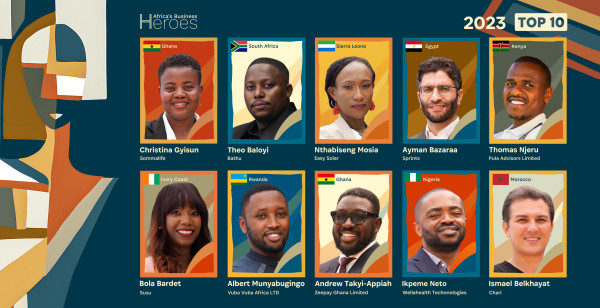
Africa’s Business Heroes Announces Top 10 Finalists for 2023

Location: News
Africa’s Business Heroes (ABH)

The Africa's Business Heroes (ABH) (www.AfricaBusinessHeroes.org) Prize Competition, a philanthropic program sponsored by the Jack Ma Foundation and Alibaba Philanthropy, now in its fifth year, has announced this year's top 10 finalists following an intense round of semi-finale business pitches and judging held on September 1 and 2 at Norrsken House in Kigali, Rwanda. These 10 entrepreneurs will compete for their share of the final prize of US$1.5 million in grant funding at the competition's Grand Finale scheduled for November 23 and 24.

The top 10 finalists are (in alphabetical order, by country): 

  1. Ms. Bola Bardet, CEO and Co-Founder, Susu (https://apo-opa.info/3Pq49NQ) (Benin)
  2. Mr. Ayman Bazaraa, CEO and Co-Founder, Sprints (www.Sprints.ai) (Egypt)
  3. Mr. Andrew Takyi-appiah, Founder, Zeepay Ghana Limited (https://apo-opa.info/3sCxgEH) (Ghana)
  4. Ms. Christina Gyisun, CEO and Co-Founder, Sommalife Limited (www.Sommalife.com) (Ghana)
  5. Mr. Thomas Njeru, CEO and Co-Founder, Pula Advisors Limited (https://apo-opa.info/3L4blfF) (Kenya)
  6. Mr. Ismael Belkhayat, CEO and Founder, Chari (www.Chari.co) (Morocco)
  7. Mr. Ikpeme Neto, CEO and Founder, Wellahealth Technologies (https://apo-opa.info/3qVGqvr) (Nigeria)
  8. Mr. Albert Munyabugingo, CEO and Co-Founder, Vuba Vuba Africa LTD (www.VubaVuba.rw) (Rwanda)
  9. Ms. Nthabiseng Mosia, CMO and Co-Founder, Easy Solar (https://apo-opa.info/3LaFf1X) (South Africa)
  10. Mr. Theo Baloyi, CEO and Founder, Bathu (www.Bathu.co.za) (South Africa)

The 2023 ABH top 10 entrepreneurs were selected through multiple stages of interviews and evaluation from 27,267 applications across all 54 African nations. They hail from eight African countries, including Benin, Egypt, Ghana, Kenya, Morocco, Nigeria, Rwanda and South Africa. Their start-ups have been drawn from a wide variety of industries, including agriculture, education & training, energy, financial services, healthcare, manufacturing and retail.

The 10 finalists will present their businesses on stage to a panel of inspiring businesspeople at this year's Grand Finale, which will take place in conjunction with a summit and will be the biggest in ABH's history in celebration of the fifth anniversary of the competition. Held offline in Kigali, Rwanda on 23 and 24 November and also partially livestreamed to reach audiences across Africa, the Summit and Grand Finale will be a gathering of a diverse group of African entrepreneurial ecosystem players. The action-packed event will comprise exciting sessions including speeches, workshops, an entrepreneurial showcase and a live pitch competition, among other activities. Register here to secure your seat: https://apo-opa.info/3sJzPoa

“ABH remains committed to uncovering, championing and supporting trailblazing African entrepreneurs who are bringing positive change to their communities. As we reach the fifth anniversary of our 10-year commitment to this initiative, we're excited by the expanding and diverse array of talent among our contenders,” said Jason Pau, Executive Director of International Programs at the Jack Ma Foundation. “With November on the horizon, we wish every of the top 10 finalists the best of luck on their journey, and we encourage the public to join our Summit and Grand Finale, as it promises to be truly special.”

“The ABH competition has shown that African entrepreneurship can emerge as a potent force propelling both social upliftment and economic progress. It is a dynamic stage, spotlighting ingenious start-ups that steer toward solutions, tackling challenges with a resonance that's impactful, competitive, sustainable and additive. I believe that entrepreneurs are carriers of HOPE as they can unlock possibilities that can change the world. I look forward to the Grand Finale, where the top 10 finalists will demonstrate their remarkable business acumen on stage,” said Rene Parker, Cofounder and CEO of RLabs, ABH semi-finale judge (2019 – 2023).

Originally launched in 2019, the ABH Prize Competition is Pan-African, inclusive, sector-agnostic and grassroots-oriented. It aims to identify, support and inspire the next generation of African entrepreneurs who are making a difference in their local communities by working to solve the most pressing problems and building a more sustainable and inclusive economy for the future.

For more information about ABH 2023, please visit: https://apo-opa.info/3qVklx5 and follow ABH on Twitter (https://apo-opa.info/3KY3OQs), LinkedIn (https://apo-opa.info/3R1QXQl), Instagram (https://apo-opa.info/3KZTXKa), Facebook, (https://apo-opa.info/3ylgNE9) and YouTube (https://apo-opa.info/3YDG5bH).

Distributed by APO Group on behalf of Africa’s Business Heroes (ABH).

Press Contact:
Africa's Business Heroes Press Room:
abh.press@list.alibaba-inc.com

For media inquiries or interview requests, please contact:
English:
Tracy Walakira
tracy.walakira@apo-opa.com

French/Arabic:
Malika Bouayad
malika.bouayad@apo-opa.com

About Africa's Business Heroes:
The Africa's Business Heroes Prize Competition is a philanthropic initiative sponsored by the Jack Ma Foundation and Alibaba Philanthropy. It aims to support, inspire and enable the next generation of African entrepreneurs across all sectors who are building a brighter future for the continent, by offering grant funding, training programs and support for the development of an entrepreneurial ecosystem. Over a 10-year period, each year the ABH Prize Competition and show features 10 entrepreneur finalists as they pitch their business to win a share of US$1.5 million in grant money.

Media files
Africa’s Business Heroes (ABH)
Download logo
Read moreAfrica’s Business Heroes Announces Top 10 Finalists for 2023
4 September 2023

Largest CHIETA smart skills centre opens in rural KZN

Location: News

Largest CHIETA smart skills centre opens in rural KZN

Higher Education, Science and Innovation Minister, Dr Blade Nzimande, has commended the Chemical Industries Education and Training Authority (CHIETA) on the successful opening of the Babanango SMART Skills Centre, which will provide tech-enabled learning programmes.

Nzimande unveiled the third and largest CHIETA SMART Skills Centre last week. It forms part of CHIETA’s efforts to bridge the digital skills divide and accelerate the development of basic digital skills in rural communities.

The centre will provide tech-enabled learning programmes, including virtual and augmented reality, robotics and the Internet of Things, among others.

Speaking at the launch, Nzimande said the Babanango area was specifically identified for the establishment of the SMART Skills Centre because it is in a deeply rural area of KwaZulu-Natal, without any internet connectivity.

Nzimande said the centre will benefit the local community, including learners, students, job seekers and businesspeople. It will also provide youth with digital skills that will help to meet the demands of industries, which rely on technology to grow their enterprises.

“The centre will advance skills development for the unemployed youth by offering programmes based on various technologies, including Virtual Reality (VR), blockchain, artificial intelligence (AI), software development, data science and mobile repairs.

“Through this centre, our unemployed youth will have access to various online learning platforms to start up successful and scalable data-driven commercial businesses that will provide technological solutions. This centre we also help us bridge the digital skills divide between urban and rural communities,” Nzimande said.

The SMART Skills Centre is part of government’s bigger plans to revolutionise digital skills development in South Africa.

The skills centres will further cater for Small, Medium and Micro Enterprises (SMMEs) development, as they play a crucial role in the growth of the economy. SMMEs make up 34% of the Gross Domestic Product (GDP), which was valued at $358 billion in 2019.

Nzimande said through the National Development Plan (NDP), government has recognised the importance of SMMEs for job creation, innovation and sustainability of the country. 

“One of the goals outlined in the NDP was for 90% of new jobs to be created through SMMEs by 2030. This is against the backdrop that our country continues to struggle with the burgeoning problem of unemployment, particularly in its highly youthful population.

“I am more than certain that this project will certainly give our youth and the community at large the opportunity to get or create employment because digital skills are required in most occupations in the 21st century. I am also hoping that this centre will be a catalyst to attract other developmental projects and programmes,” Nzimande said.

The Minister announced that due to the successful implementation of CHIETA SMART Skills Centre, the department has taken a decision to expand this project in all nine provinces of the country.

CHIETA CEO, Yershen Pillay, commended the partners who were involved in this initiative, including the department, Mthashana Technical and Vocational Education and Training (TVET) college and Sector Education and Training Authority (SETA), among others.

Pillay noted that this is one of the biggest smart skills centres in the country, which has, among others, cell phone repair skills, and will also provide free data to the community of Babanango. – SAnews.gov.za 

GabiK
Mon, 09/04/2023 - 12:40

199 views
Read moreLargest CHIETA smart skills centre opens in rural KZN
4 September 2023

New Date announced for Totalsports Women’s Race Cape Town 2023!

Location: MyPR

Stillwater Sports, the organiser of the Totalsports Women’s Race, is thrilled to announce that the Cape Town race will take place in 2023, and the exciting new event date is Sunday, 01 October! “We’re thrilled to announce that the Totalsports Women’s Race Cape Town will take place in 2023, with the new date being Sunday, …

Read moreNew Date announced for Totalsports Women’s Race Cape Town 2023!
3 September 2023

15th BRICS Summit heralds current chapter for the group

Location: News

15th BRICS Summit heralds new chapter for the group

The 15th BRICS Summit held at the Sandton Convention Centre during August was a success that 'heralded a new chapter' for the group.

This is according to President Cyril Ramaphosa who addressed the nation on Sunday evening.

“It was a historic Summit that heralded a new chapter for BRICS.

“The summit was attended by the five BRICS member countries along with representatives of 61 other countries. Forty-six of the countries that attended were from our continent, Africa. This included 20 Heads of State and Government. We were also honoured by the attendance of the United Nations Secretary-General Mr Antonio Guterres.

“The success of the summit is a credit to our country and its people. It is another demonstration of our ability to host major international gatherings that have a significant impact on the conduct of international affairs far beyond our borders. Overall, many people have said that this was a most successful BRICS Summit,” he said.

The President honed in on key decisions and outcomes that were taken during the summit, including the call for a comprehensive reform of the United Nations, including its Security Council.

“This was a most significant decision in view of the fact that it was supported by two BRICS members who are permanent members of the UN Security Council. The reform of the United Nations is important for South Africa and our continent Africa because we stand to benefit from a world that is more fair and from international institutions that are more democratic and more representative.

“In taking this position, the BRICS leaders recognised the desire of many other countries to contribute to redefining the terms of international relations,” he said.

On the second key outcome of the summit – which was to expand BRICS membership invitations to Argentina, Egypt, Ethiopia, Iran, Saudi Arabia, and the United Arab Emirates – President Ramaphosa said: “Through an expanded BRICS, we will be able to better align the voices of those countries that seek a fairer global governance, financial, investment and trading system based on clear rules that apply equally to all countries.

“An expanded BRICS also means that we will be able to export more of our products to major markets and, as a result, we will be able to produce more and create more jobs. While an expanded BRICS will be an important champion for the Global South, South Africa stands to benefit from its relationship with these countries.”

International relations

President Cyril Ramaphosa also used his address to reaffirm South Africa’s non-aligned stance in international relations.

“South Africa’s participation in BRICS and its support for the expansion of BRICS does not detract from the good and strategic relations we have with many other countries around the world.

“From the advent of our democracy, we have always sought to develop ties of friendship, cooperation and respect with all nations. We have never aligned ourselves with any one global power or bloc of countries. Our non-aligned approach has enabled us to pursue an independent foreign policy and to forge our own developmental path.

“We have consistently advanced the articles of the United Nations Charter, including the principle that all members shall settle their international disputes by peaceful means,” he said.

The President emphasised the importance of South Africa’s relations with our other countries and reflected on its impact on ordinary South Africans.

“[Our] country’s relations with other countries and the conduct of our foreign policy affects our lives as South Africans in many ways, such as in trade and investment, sport, peace and security, technology, education, and many other areas. As we have said before, our international work cannot be separated from our efforts to end poverty, to create jobs and to reduce inequality in South Africa.

“Through stronger investment and trade relations with other countries, we are able to grow our economy, create more opportunities for new businesses and reduce unemployment. By supporting peace and stability on our continent, and by promoting Africa’s development, we are able to improve social cohesion in our own country.

“By encouraging greater cooperation between countries in areas such as investment, financing for development, international crime, fighting terrorism, climate change and vaccine production, we are able to strengthen our efforts to tackle these challenges in our own country,” President Ramaphosa said. – SAnews.gov.za

NeoB
Sun, 09/03/2023 - 21:33

303 views
Read more15th BRICS Summit heralds current chapter for the group
2 September 2023

Leadership and governance in crisis at our universities, Parliament told

Location: News

Concerns about maladministration, assassination attempts, academic malpractice, and the state of the National Student Financial Aid Scheme were raised

Read moreLeadership and governance in crisis at our universities, Parliament told
1 September 2023

Prof Jill Adler receives Lifetime Achiever Award

Location: News

Prof Jill Adler receives Lifetime Achiever Award

The National Research Foundation (NRF) has awarded Witwatersrand University’s Distinguished Professor, Jill Adler, the Lifetime Achiever Award at the 2023 NRF Awards ceremony held on Thursday in Durban.

Introduced to the NRF Awards in 2004, the Lifetime Achiever Award recognises an individual who has demonstrably made extraordinary contributions to the development of science in and for South Africa. 

These contributions, according to the NRF, must be of international standard and impact. The NRF is a government mandated research and science development agency.

Adler expressed her gratitude for the special recognition. 

“This award for me gives recognition to the importance of educational research and educational research that is grounded in the realities of our mathematics classrooms. It gives meaning to the NRF vision for science and service of society,” she said. 

Adler said the NRF has been one of the most important institutions throughout her academic journey. 

The Professor was born and raised in Johannesburg and completed a BSc in Mathematics and Psychology at the University of the Witwatersrand in 1972. 

She pursued a teaching Diploma at the University of Cape Town in 1973 before taking up a teaching post at Harold Cressy High School in Cape Town. 

In 1977, she returned to Johannesburg and joined the SACHED Trust, an educational non-government organisation (NGO) concerned with enriching the quality of education of those disadvantaged in apartheid South Africa.

She first taught mathematics to youth who were out of school following the Soweto uprising in 1976. 

“Her work at the NGO over the next 10 years enabled her to further her social justice advocacy, seeking to address the educational inequalities in South Africa by improving mathematics education through the development and evaluation of distance education courses,” the NRF said. 

At the same time, she studied for her Master of Education, graduating cum laude in 1985. 

It was in 1987 that she moved into academia, lecturing in the Department of Professional Studies at the Johannesburg College of Education for two years before moving to Wits University’s Education Department as lecturer, Head of Department and Professor. 

She was also a Chair of Mathematics Education at the South African Research Chairs Initiative (SARChI) between 2010 and 2019.

“Prof Adler completed her PhD in 1996 with a thesis that looked at the dynamics of teaching and learning mathematics in multilingual classrooms, specifically examining secondary teachers’ knowledge in this context,” said the NRF.

Her theoretical and practice-based innovations paved the way for new and transformative approaches in mathematics education, addressing two fundamental research problems. 

“The complexities and challenges of teaching and learning mathematics in multilingual classrooms, and the enhancement of professional education for mathematics teachers. The latter came to the fore in the mid-1990s with the demand for ‘upgrading’ the qualifications and teaching quality of secondary mathematics teachers in post-apartheid South Africa.” 

Working alongside a dedicated cohort of students, she spearheaded efforts to position mathematics education as a robust research domain within the university, and more broadly in the country. 

In 2005, Adler led the renowned Marang Centre for Mathematics and Science Education at Wits University. 

The centre quickly gained a reputation for excellence in postgraduate research and development, attracting students from across the African continent.

Between 2010 and 2019, as the DSI-NRF SARChI Research and Development Chair in Mathematics Education at Wits, she directed a large professional development project. 

The programme reached over 200 secondary mathematics teachers and many learners across 80 schools in Gauteng and researching its impact together with a large research team of doctoral and postdoctoral fellows.

She is an Honorary Professor at Oxford University and University College London both in the United Kingdom. 

She has published more than 60 peer-reviewed articles and four books, co-edited two special journal issues and contributed 50 book chapters, achieving more than 7 000 citations and has published 37 papers that have each been cited at least 37 times.

Over the course of her 45-year career in teaching and academia, she has garnered numerous accolades in recognition of her contributions to education. – SAnews.gov.za

Gabisile
Fri, 09/01/2023 - 13:30

444 views
Read moreProf Jill Adler receives Lifetime Achiever Award
31 August 2023

Transforming Breakfast Habits

Location: MyPR

The 2023 Rama Good Breakfast Programme Celebrates Another Successful Year Pretoria, 30 August 2023 – Rama, the beloved fat spread that has been a staple in South African households since 1970, is excited to announce the resounding success of its 2023 Good Breakfast Programme. This innovative initiative, run in partnership with the Department of Basic …

Read moreTransforming Breakfast Habits
30 August 2023

Debunking the MBA Myths: Unveiling the accurate value for all professionals

Location: MyPR

By Dr. Shahiem Patel – Head of School (Commerce & Management) at Regent Business School Education in general, has always been regarded as the foundation of any successful endeavour. Parents across the globe have, since time immemorial, been at pains to emphasise the need for their children to do well at school. This is simply …

Read moreDebunking the MBA Myths: Unveiling the accurate value for all professionals
30 August 2023

High Court sets aside multi-million Rand prisons renovation contract

Location: News

High Court sets aside multi-million Rand prisons renovation contract

The Special Investigating Unit (SIU) has welcomed a High Court judgment setting aside the decision of the Department of Correctional Services (DCS) to appoint a company for project management and assessment services related to the renovation of certain prisons during 2014.

According to the SIU, the department appointed Masetlaoka Scott Wilson to:

  • Act as a project manager for the renovation of three prisons and replacement of other facilities, at a project management fee amounting to approximately R144 505 417.76.
  • Conduct assessments in terms of the Government Immovable Asset Management Act, 2007 (Act No. 19 of 2007) in respect of 221 prisons to the value of approximately R464 100 000.00.

“In January 2014 and in order to avoid returning unspent money of approximately R812 million to the National Treasury shortly before the end of the relevant financial year, DCS took a decision to participate in a contract between MSW, a project management consortium, and the Department of Higher Education and Training (DHET).

“The High Court found that the relevant decision(s) and resulting agreement(s)/contract(s) was/were inconsistent with the Constitution, as it was not fair, transparent, equitable, competitive, and cost effective, and therefore unlawful.

“The SIU welcomes the order of the High Court as it demonstrates the continued implementation of its investigation outcomes and consequence management, and efforts to recover financial losses suffered by the State due to negligence or corruption,” the SIU said.

The corruption busting unit said the decision of “what would constitute just, and equitable relief was referred by the High Court for trial”. – SAnews.gov.za

NeoB
Wed, 08/30/2023 - 10:13

448 views
Read moreHigh Court sets aside multi-million Rand prisons renovation contract
30 August 2023

Minister calls for rethinking of stereotypes towards a gender-equal society

Location: News

Minister calls for rethinking of stereotypes towards a gender-equal society

Higher Education, Science and Innovation Minister, Dr Blade Nzimande, says the rethinking of stereotypes and norms, and reshaping of the relationships between women and men, is a step in the right path towards a gender-equal society.

“Conventionally, issues about gender equality have often mainly been placed in the public arena by women. However, it is difficult to reform social structures towards equality without a broad social consensus and ownership between men and women,” Nzimande said on Tuesday.

Nzimande emphasised that men and boys must become active and positive advocates for gender equality, to rectify the discrepancy in power relations.

He said, with an increasing awareness of men and boys as a necessary part of the solution, there is an urgent need to chart a clear road ahead for their involvement as change agents for gender equality.

Nzimande made the remarks during Transforming MENtalities Summit, aimed at engaging men and boys to address the root causes of violence against women. 

The Transforming MENtalities Summit is based on United Nations Educational, Scientific and Cultural Organisation’s (UNESCO) Transforming MENtalities initiative, launched in 2015 in Latin America and the Caribbean, to promote positive redefinitions of norms of masculinity and meaningful engagement of men and boys, alongside women and girls, in the global pursuit for gender equality. 

The initiative was later spread to a number of other countries.

The objectives of Transforming MENtalities in South Africa are informed by UNESCO’s global initiative, which includes gathering context-nuanced and feminist evidence and building knowledge to inform gender-transformative policymaking; countering and uprooting harmful gender norms to promote positive and healthy alternatives with the support of role models; and strengthening the structures to engage men and boys as accountable allies for gender equality alongside women and people of diverse gender identities.

As “Transforming 'MEN'talities” postulates, Nzimande said, a holistic approach is essential in facilitating women’s empowerment, and ultimately the realisation of the United Nations Sustainable Development Goals (SDGs) and the objective of leaving no one behind.

Nzimande said, through engagement at the summit, the delegates have another opportunity to come up with sustained methods to engage and empower men and boys on existing societal norms of masculinities and challenge negative gender stereotypes and behaviours.

The Minister emphasised that Transforming MENtalities is about transforming the way men and boys build relations with women and girls, the liberation of men and boys from anachronistic and dominant positionalities. 

“It is about men and boys unlearning reactionary habits and embracing emancipatory values, norms, roles and practices in the multiplicity of relationships they enjoy with women and girls. This relational perspective is important as it requires men and boys to an active part in co-creating new ways of relating to women and girls in private and public, domestic and professional, economic, social and political life. 

“It means constructive and respectful dialogue, willingness to be vulnerable and open to embracing a new pathway, an ability to listen, learn and unlearn in multiple relational settings with women and girls. MENtalities is therefore a campaign to establish the cocreational responsibilities of men and boys in the struggle for gender equality,” Nzimamde said.

He also argued that the term MENtalities should not be an idealistic perspective of gender transformation that is, the notion that a “mere appeal to changing the mentality of men and boys will, by itself, liberate women from gender inequality and oppression”.

“This would be naïve. It is for this reason that we cannot delink this campaign from the wider struggles aimed at transforming the structural relations of power that define and reproduce gender inequality in society and economy.

“My view is that one can only provide a proper explanation of the roots of the psychosocial oppression of women and girls in the unequal distribution of economic and political power in society, and specifically, the capitalist economy – women are structurally located at the bottom of the economy – if measured by pay, investment income, land, fixed property,” the Minister said.

"Unless we root out the structural inequalities of capitalist gender exploitation and oppression, we will not provide the material bases upon which gender power relations can be reset in society at large and provide a foundation for the psycho-social and cultural emancipation of women and by definition men and boys in society."

He said the campaign to transforming the MENtalities of men and boys must also be fought in conjunction with the struggles to radically alter the structural position of women especially Black working-class women in the economy. – SAnews.gov.za


GabiK
Wed, 08/30/2023 - 11:49

341 views
Read moreMinister calls for rethinking of stereotypes towards a gender-equal society
30 August 2023

MANCOSA shows its value as the South African tertiary education landscape navigates a value debate

Location: MyPR

The South African tertiary education system is currently the subject of significant scrutiny, with the future value proposition offered by its tertiary education providers taking centre stage in many household debates and family discussions. Paresh Soni, the Director of the MANCOSA School of Information and Digital Technology (SIDT), points out that this debate started during …

Read moreMANCOSA shows its value as the South African tertiary education landscape navigates a value debate
30 August 2023

The insurance industry comes under fire as the cost-of-living crisis increases

Location: MyPR

The world is currently facing one of the harshest economic climates experienced since the 2008 Global Financial Crisis, one of the worst financial crises in modern history. This raises concerns that more people may turn to fraud to address the financial pressure they are experiencing. “Rising inflation and the current war in Ukraine are two …

Read moreThe insurance industry comes under fire as the cost-of-living crisis increases
30 August 2023

Progress made in fighting GBV in higher learning institutions

Location: News

Progress made in fighting GBV in higher learning institutions

Higher Education and Training Minister, Dr Blade Nzimande, says good progress has been made to implement sustainable and impactful measures to address the scourge of gender-based violence (GBV) in higher learning institutions.

The country’s Post-School Education and Training (PSET) sector is home to more than 2.5 million youth with 51% being females.

According to the Minister, 10% of all reported rape cases originate from young women in the higher education sector and only one in ten women report a rape case.

“My Department of Higher Education and Training through Higher Health, has done so much over the past few years to implement sustainable and impactful systems, controls, infrastructure, and safety nets to address the scourge of GBV within the PSET sector.”

The Minister was speaking during the inaugural Transforming MENtalities Summit, which is aimed at engaging men and boys to address the root causes of violence against women.

He said that since launching the GBV Policy Framework in 2020, Higher Health has been putting systems, controls, capacity in institutions to respond to GBV issues.

Higher Health developed a Technical Task team which various PSET stakeholders as well as technical experts who are together developing a multi-sectoral response to issues of GBV in the PSET system.

 “In 2021, the Task Team released procedural guidelines on how to respond to cases of GBV on campus; protocol on rape; and protocol on code of ethics. As part of our Women’s  Month celebration this month, the Task Team released the Protocol on Campus Safety and Security Minimum Standards; the Protocol on Safety in Private Accommodation, the Protocol on Safety in Residences; and Protocol on Staff-Student Relationships,” he said in his address on Tuesday.

“Higher Health is currently working with the National Prosecuting Authority (NPA) in developing Protocols on Statement of Complaint, whistleblowing and other legislature requirements for our system.”

The Minister said that Higher Health is continuing to implement various programmes and support structures for students and frontline staff at institutions of higher learning.  Programmes are offered on 420 campuses across South Africa including urban and rural areas.

Civic and Health Education Skills Programme

Another important achievement in addressing GBV in PSET institutions, include the launch of an online National Qualifications Framework (NQF) Level 5 Civic and Health Education Skills Programme in July 2023, which is first of its kind in the Global South.

The programme will cover modules that include gender-based violence, and will be offered in all 12 South African languages. 

The Minister said the Human Sciences Research Council (HSRC) will be one of the institutions that will be playing a pivotal role in the sector’s efforts to deepen the fight against GBV.

He said the HSRC will forge a nexus of academics and researchers from South African public universities and various organisations to harness the power of collective insights, rallying men and boys as “staunch allies in our campaign to reduce violence, bolster human rights, and realise gender parity.”

The council will conduct studies that will pinpoint communities at risk. These studies will examine intricate layers of perception, aspiration, and change across KwaZulu Natal, the Eastern Cape, Western Cape, and Limpopo. These provinces bears the brunt of reported rape cases.

“Our journey will not be solitary. It will be a collective effort of research networks, embracing institutions such as Nelson Mandela University, University of the Western Cape, University of Venda, and [the] University of KwaZulu-Natal,” Nzimande explained.

He said, the PSET institutions will also be engaged, through seminars and workshops in order to have inclusivity and impact, and the sector’s outreach programme will sensitise young minds to gender issues.

The Transforming MENtalities Summit is based on United Nations Educational, Scientific and Cultural Organisation’s (UNESCO) Transforming MENtalities initiative, launched in 2015 in Latin America and the Caribbean, and later spread to a number of other countries.  – SAnews.gov.za


GabiK
Wed, 08/30/2023 - 12:42

169 views
Read moreProgress made in fighting GBV in higher learning institutions
29 August 2023

Industry involvement needed in TVET curriculum review process

Location: News

Industry involvement needed in TVET curriculum review process

Higher Education and Training Minister, Dr Blade Nzimande, has underscored the need for additional industry involvement in the Technical and Vocational Education and Training (TVET) college curriculum review process.

“What is also critical is the need for more substantial industry involvement in the TVET curriculum review process to enhance responsiveness to industry needs and requirements,” the Minister said.

He was addressing the TVET Curriculum Transformation and Innovation Summit, currently underway at Vodaworld Dome in Midrand.

Nzimande said the (TVET) college curriculum reform has the potential to contribute in various ways to improving the employability, productivity and success rates of college graduates.

“In order for us to be successful in bringing these changes, there is also a need for change in the management strategies to prepare for current and future TVET curriculum challenges. Furthermore, we need to develop leadership programmes to help leaders within the TVET sector to bring about the necessary curriculum change,” Nzimande said on Monday.

Highlighting some of the progress made in building a sustainable TVET sector, Nzimande said South Africa is producing on average 20 000 qualified artisans per year.

“Ours is to ensure that the number increases significantly to meet our National Development Plan (NDP) target to produce 30 000 qualified artisans per year by 2030.”

Nzimande also highlighted that the number of Centres for Specialisation has been expanded to 34 at 27 TVET colleges, to enhance workplace linked training of artisans and related occupations.

A further investment of R68 million has also been allocated in 16 colleges, who now have 33 trade test centres.

“These trade test centres have trade tested over 600 apprentices of which over 500 have qualified as artisans. Currently 26 of our colleges are engaged in entrepreneurial training through our entrepreneurship hubs.”

The department is hard at work to ensure that all the colleges are involved in some form of entrepreneurship training and also plans to, through the Department of Science and Innovation (DSI), introduce innovation hubs in TVET colleges.

The Minister said, the department has to date, opened up 14 954 TVET placement opportunities to the value of R726 million. It has also committed to achieving a target of 20 000 placements of TVET graduates in work placements, as per President Cyril Ramaphosa’s commitment at this year’s State of the Nation Address.

Establishment of 4IR centres

The importance of responsiveness of TVET colleges to 21st century conditions, both locally and globally was also emphasised and various initiatives are underway to achieve this. These include the establishment of seven Fourth Industrial Revolution (4IR) centres.

“These centres, with the support of stakeholders such as the ETDP SETA (Education, Training and Development Practices Sector Education and Training Authority), aim to scale up digital skills among students and staff.

“Leveraging the potential of the digital economy to reduce youth unemployment is a priority, and we are grateful to our partners such as HUAWEI, Cisco, GIZ, IYF, and others for their contributions to our digital skilling mission,” Nzimande said.

The Minister also expresses his appreciation to the department’s partners, including the Allan and Gill Gray Foundation, the Small Enterprise Development Agency (SEDA) for their support in assisting the department to produce young entrepreneurs.

“The Vhembe TVET College in Limpopo has reported producing three millionaires through this development initiative,” he said.

The three-day summit which started on Monday, is being held under the theme: “TVET curriculum transformation: a key to unlock skills development for the modern economy”.

The summit brings together various role players in the TVET sector under one roof to engage and take to higher levels the curriculum transformation and innovation challenges of the TVET sector. – SAnews.gov.za


GabiK
Tue, 08/29/2023 - 12:35

456 views
Read moreIndustry involvement needed in TVET curriculum review process
29 August 2023

Nzimande calls for BRICS commitment implementation

Location: News

Nzimande calls for BRICS commitment implementation

Higher Education and Training Minister, Dr Blade Nzimande, says he would like to see implementation of the BRICS TVET Cooperation Alliance Charter.

Nzimande said the recent and highly successful BRICS (Brazil, Russia, India, China and South Africa) Summit held in South Africa last week, placed the Technical and Vocational Education and Training (TVET) system at the centre of skills development co-operation by members states.

Addressing the TVET Curriculum Transformation and Innovation Summit, currently underway at Vodaworld Dome in Midrand, Nzimande noted that BRICS had committed to strengthen collaboration in TVET amongst BRICS Member States through the hosting of a seminar to provide an overview of the TVET education systems and foster closer collaboration.

“BRICS emphasise that the TVET programmes and projects should be coordinated by relevant BRICS senior TVET officials and focal points assigned by their respective Ministries. This places TVET education at the centre of the developmental agenda of governments, supporting initiatives and interventions to revive and enhance the economy.

“As a result, TVET curriculum transformation is a crucial step towards unlocking skills development for the modern economy. As industries evolve and technology advances at an unprecedented rate, it becomes essential for TVET institutions to adapt their curricula to meet the changing needs of the job market,” Nzimande said.

The Minister argued that the traditional approach to TVET education, which focused solely on providing students with specific trade skills, is no longer sufficient in today's dynamic and globalised economy.

Therefore, he said, to bridge the skills gap and equip individuals with the competencies required for the modern workforce, a comprehensive curriculum transformation is necessary.

“This transformation involves a shift from a narrow focus on technical skills to 21st century skills which advocates for a broader emphasis on critical thinking, problem solving, creativity and adaptability. 

“By integrating these 21st century skills into TVET curricula, students will be better prepared to navigate the complexities of the modern economy, where job roles are constantly evolving, and cross-disciplinary expertise is highly valued,” Nzimande said.

He said the inclusion of emerging technologies, including artificial intelligence, robotics, and data analytics in TVET curricula, will further equip students with the necessary digital skills.

Having regular curriculum reviews of TVET programs and qualifications aligned with the current needs of industry and society, was among the resolutions taken at the TVET Imbizo held in 2017.

Nzimande emphasised that the focus is on updating the content of current programs, by introducing modern delivery methods, integrating digital skills, and rationalizing outdated programs that no longer serve their intended purposes.

“In line with this objective, over 70 subjects in the NATED (National Accredited Technical Education Diploma) Report 191 programs have been reviewed since 2018. Additionally, in January this year, we introduced a new NCV (National Certificate Vocational) program in IT (Information Technology) and Computer Science focusing on Programming and Robotics. 

“Ten of our TVET colleges are currently offering this program and more of our colleges are planning to offer this program from 2024. As a department, we are collaborating with the Quality Council for Trades and Occupations (QCTO) in reconstructing curricula for Engineering Studies to align with the rapidly changing industry needs and professional standards,” Nzimande highlighted.

He added that the prioritised fields currently undergoing reconstruction, include Electrical Engineering, Electronics Engineering, Mechanical Engineering, and Civil Engineering.

The Minister also announced that the NATED N1 to N3 programs will be phased out from January 2024. – SAnews.gov.za
 

GabiK
Tue, 08/29/2023 - 13:22

562 views
Read moreNzimande calls for BRICS commitment implementation
29 August 2023

Boys and men key in fighting GBVF

Location: News

Boys and men key in fighting GBVF

South Africa’s men and boys are a crucial part of combatting the scourge of violence against women and girls.

President Cyril Ramaphosa said this in his address at the Presidential Young Men and Boys Indaba on Tuesday.

“As young men, you may be tired of being told you are a problem. You want your dignity respected and upheld. You want your good qualities to be recognised. We are here to tell you that we see you as not the problem, but as the solution. It is in your hands to bring about a new generation of South African men,” the President said.

At the session held at Maponya Mall in Soweto, learners who took part in the indaba were given a chance to ask the President questions which led to a fruitful engagement.  

“From what I have heard today, I am more confident than ever that the boys and men of this country are an essential part of our struggle to end all forms of violence against women in our society. 

“Your views, thoughts and ideas have enriched our understanding of the challenges young men face and how you are taking responsibility for yourselves and your society,” the President said.

In his address, the President said that “because it is men who are responsible for this scourge [violence against women and girls], men need to be part of bringing it to an end”.

“This young men’s dialogue is very important. To end gender-based violence, we must focus on prevention. We must stop this violence before it even happens.”

The President emphasised that there must be an open and honest conversation about what contributes to violence against women and girls.

Toxic masculinity

He strongly advised boys and men to talk about patriarchal attitudes and practices. Men were also urged to challenge toxic masculinity, which is the idea that being a man means one must dominate and demean women.

The conversation must include the influence of culture and media depictions of men and women.

Raising good men

“What about the Boys?” brings together government, the private sector, academia, civil society, the media and other stakeholders in a collaboration towards raising a nation of good men. 

“What About The Boys?” is a gender-based violence and femicide(GBVF) prevention initiative to raise a nation of good men and is an outcome of a 2022 social compact, led by youth organisations and stakeholders in the public and private sectors.

“We have just seen the video and listened to the voices of participants, and it is clear that this programme continues to be well-received and has had a positive impact. 

“We are correct to ask the question, “What about the Boys?”, because young men and boys must not be left behind.” 

In addition, he emphasised that boys must be part of the journey towards a South Africa free of gender-based violence. They must be encouraged and supported to be change-makers in society. 

He told the indaba that it is not easy to be a boy or a man in today’s era. 

He highlighted that men and boys face a lot of pressure in in their peer groups, their families, in relationships, with friends, at school and places of higher learning and in society as a whole. 

In South Africa today he said, young black men are most vulnerable to violence. 

“As young men, you are vulnerable too. You also experience depression, loneliness, and frustration. These can sometimes manifest in aggressive behaviour, especially towards women and girls, problematic relationships, and violence. We must talk.”

He said the new generation of men are respectful, masculine in a positive way and sensitive.

“They would never think of a woman as less than a man. They would never think about raising their hand against a woman.”

Safe spaces

The first citizen said the dialogue was convened because government recognises that it must engage men and boys separately from women and girls. 

This as government wants to create more safe and open spaces where boys can talk about their feelings, share with each other and collaborate on strategies that help them advance through different stages of their lives. 

He emphasised that the focus of the programme is to reimagine and reinvent masculinities in sensitive, kind, respectful, accountable, expressive and nurturing ways. 

“It is about working with young men and boys through theatres of learning to influence how they view themselves and the kinds of men that they grow into. 

“As government, civil society, business and social partners we are committed to supporting you in your journey to becoming better men,” he said. 

The President extended his gratitude to the Department of Basic Education, Primestars, SterKinekor and all the partners of the programme for taking the initiative to design such a positive and uplifting programme, and for their commitment to being part of change. – SAnews.gov.za


DikelediM
Tue, 08/29/2023 - 14:29

237 views
Read moreBoys and men key in fighting GBVF
29 August 2023

CSIR appoints industry advisory panel to assist steer digital transformation

Location: News

CSIR appoints industry advisory panel to help steer digital transformation

The Council for Scientific and Industrial Research (CSIR) has announced the appointment of an industry advisory panel in the digital transformation space. 

“This signifies the organisation’s efforts to align with industry-specific priorities in the quest to achieve digitalisation for greater societal and industrial impact. 

“Utilising its robust science, engineering and technology capabilities, the organisation seeks to establish a balance between scientific and industrial development,” the organisation said on Monday.

Meanwhile, CSIR believes that a greater understanding of industry needs is vital to achieving these strategic objectives. 

The Executive Cluster Manager of CSIR NextGen Enterprises and Institutions, Dr Lulama Wakaba, explained the purpose of the industry advisory panel, which is to provide advice on strategic issues to the cluster’s leadership and researchers in the digitalisation domain. 

“It is guided by the CSIR’s mandate of contributing to improving the quality of life of the people of South Africa through directed multidisciplinary research and technological innovation. All clusters of the CSIR have important contributions to make to this mandate,” Wakaba added. 

He also noted that the panel members bring a wealth of experience, which will be invaluable in gaining insight into market operations. 

The panel comprises 12 members and Mamello Selamolela, who has been appointed Chairperson to lead the team. 

The other members include Bronwyn Williams, Nomso Kana, Dawood Patel, Paul Mashegoane, Envir Fraser, Wakaba, Dr Ntsibane Ntlatlapa and Anne Gabathuse. 

Group Executive for CSIR Smart Society, Dr Sandile Malinga, said he was looking forward to innovative insights and approaches based on the panel’s extensive experience and exposure. 

“The newly established industry advisory panel not only strengthens the CSIR’s commitment to achieving strategic objectives but also underscores its dedication towards fostering industrial development and digital transformation within government, public institutions and the industry at large.”

The panel’s view, according to CSIR, is that the cluster’s impact ought to reflect the important pillars of society understanding the core of national societal needs and ensuring that the response harnesses digitalisation for the benefit of South Africa. 

The CSIR, an entity of the Ministry of Higher Education, Science and Innovation, is one of the leading scientific and technology research, development and implementation organisations in Africa. 

CSIR undertakes directed and multidisciplinary research and technological innovation, as well as industrial and scientific development to improve the quality of life of all South Africans. – SAnews.gov.za
 

Gabisile
Tue, 08/29/2023 - 09:33

433 views
Read moreCSIR appoints industry advisory panel to assist steer digital transformation
28 August 2023

Rwanda’s Reconstruction: From Genocide to Inspiration

Location: MyPR

Rwanda has undergone a remarkable transformation since the tragic events of the 1994 genocide. The resilience and determination of the Rwandan people to rebuild their country and create a better future are truly inspiring. Despite the immense challenges they faced, they have managed to achieve impressive social, economic, and political progress. The achievements highlighted, such …

Read moreRwanda’s Reconstruction: From Genocide to Inspiration
28 August 2023

MENtalities Summit to address violence against women

Location: News

MENtalities Summit to address violence against women

Higher Education, Science and Innovation Minister, Dr Blade Nzimande, will on Tuesday host the Inaugural Transforming MENtalities Summit, which is aimed at engaging men and boys to address the root causes of violence against women.

The Transforming MENtalities Summit is based on United Nations Educational, Scientific and Cultural Organisation’s (UNESCO) Transforming MENtalities initiative, launched in 2015 in Latin America and the Caribbean, and later spread to a number of other countries.

The department said, the multistakeholder campaign and partnership, aims to champion a world free of gender biases, stereotypes, violence and discrimination, by changing cultural and societal norms through policies, advocacy and capacity-building initiatives.

“A 2013 United Nations Multi-Country Study on Men and Violence reveals that 10% to 62% of all interviewed men reported having raped a woman or girl in their lifetime, and in some places, more than 75% of women aged 15 to 24 thinks that there are conditions under which a man has rightful reasons to beat his wife. 

“Socialisation processes are intrinsically linked to structural gender inequalities: violence, aggressiveness and sexual entitlement are too often considered as appropriate expressions of “how to act like a man” in different societies,” the department said in a statement.

According to the World Health Organisation (WHO) 2013, the lifetime risk of experiencing Gender-Based Violence (GBV) for South African women is 45.6%; well above the global average of 35%. 

The United Nations Children's Fund (UNICEF), originally known as the United Nations International Children's Emergency Fund Furthermore, also states that sexual Gender-Based Violence, and intimate partner violence are amongst the most prevalent forms of GBV affecting young women aged 16-25 years as they are vulnerable.

The summit is hosted by HIGHER HEALTH and the Human Science Research Council (HSRC) on behalf of the Department of Higher Education and Training and the Department of Science and Innovation. – SAnews.gov.za
 

GabiK
Mon, 08/28/2023 - 15:26

114 views
Read moreMENtalities Summit to address violence against women
27 August 2023

Gauteng Grade 1 and 8 online admissions process a success

Location: News

Gauteng Grade 1 and 8 online admissions process a success

The Gauteng Department of Education (GDE) has announced that the 2024 online admissions application period has been a success amassing 757 075 Grade 1 and Grade 8 applications. 

 “This translates into a total of 324 756 Grade 1 applications and 432 219 Grade 8 applications. This success can be attributed to system improvements over the years, which is necessitated by continuous stakeholder engagements and technological advancements,” said the department in a statement on Sunday.

The application period ran from 15 June to 21 July 2023.

“We wish to announce that the 2024 Online Admissions Placement Period for Grade 1 and 8 will begin on 4 September 2023 and will continue throughout the remainder of the year until all learners are placed,” the GDE said. 

From Monday, 4 September 2023, parents and guardians with complete applications will receive SMSes with placement offers to the contact numbers they used when applying. 

Parents/guardians will then have to log on to www.gdeadmissions.gov.za using their credentials to accept an offer as final or accept while awaiting other offers within seven days.

Parents have been urged to avoid playing the waiting game. 

“SMSes will be sent out on a continual basis from 4 September 2023 until all learners are placed. This means that not all applicants will receive an SMS on the first day of the placement period, but must expect an SMS anytime from 4 September 2023 and throughout the course of the year,” the GDE said. 

The department advised that if parents and guardians have not received an SMS, there is no need to panic as applicants are welcome to use their credentials to log on to www.gdeadmissions.gov.za to check whether a placement offer was issued or not. 

In the event an SMS states that a child has been placed in Grade 1 or Grade 8 at a certain school, this will be regarded as successful placement to the mentioned school.

The department added that there will be no need for a parent/guardian to access the system to accept an offer in that regard, because the child would be placed at the mentioned school.

Parents and guardians who may have forgotten or lost their credentials must click on “Forgot Password” on the  admissions landing page and follow the prompts to regain access to the system. 

Alternatively, parents and guardians are welcome to interact with the call centre agents on 0800 000 789 or WhatsApp on 060 891 0361. 

“Normally, high volumes of calls are received during the placement period, and all our offices experience a high number of walk-ins from parents/guardians. We plead for patience and understanding as our officials work hard to assist everyone,” the GDE said.

Meanwhile, the department has identified schools that received an overwhelming number of applications which exceeds the capacity of learners that they can afford to accommodate.

About 292 primary schools were regarded as high-pressure schools and about 277 secondary schools were regarded as high-pressure schools. 

Placement of unplaced learners

The department has reminded Parents / guardians that all placements are subject to the priority of placement criteria and availability of space (capacity) per school.

 
“Therefore, applicants that cannot be accommodated at schools they applied to due to the schools having reached capacity, will receive transfer offers of placement at the next closest school with available space.”

Transfer offers are made only after confirmation that none of the schools which a parent applied to has available space. Parents / guardians who are offered placement at schools that they have not applied to have the option to accept or decline the placement offer.

The department also announced that the 2024 Online Admissions Placement Period for Grade 1 and 8 will begin on 4 September 2023 and will continue throughout the remainder of the year until all learners are placed. – SAnews.gov.za


DikelediM
Sun, 08/27/2023 - 14:05

209 views
Read moreGauteng Grade 1 and 8 online admissions process a success
25 August 2023

President Xi Jinping and South African President Matamela Cyril Ramaphosa Co-chair China-Africa Leaders’ Dialogue

Location: News

Ministry of Foreign Affairs of the People's Republic of China
Download logo

On the evening of August 24 local time, President Xi Jinping and South African President Matamela Cyril Ramaphosa co-chaired the China-Africa Leaders' Dialogue in Johannesburg.

President Xi Jinping delivered a keynote speech entitled “Joining Hands to Advance Modernization and Create a Great Future for China and Africa”. (Full text of the speech was released separately.)

President Xi Jinping pointed out that it was his 10th visit to the continent. In 2013, he was there in Africa for his first foreign visit after becoming Chinese President and announced the principle of sincerity, real results, amity and good faith for China's Africa policy. Over the past 10 years, China has stayed committed to this principle. Together with the African friends and drawing strength from the spirit of China-Africa friendship and cooperation, the two sides have pressed ahead on the path of solidarity and cooperation, stood for justice amid shifting global dynamics, and looked out for each other in face of the COVID-19 pandemic. The two sides have taken China-Africa relations to new heights and entered the new stage of jointly building a high-level China-Africa community with a shared future.

President Xi Jinping pointed out that China is pursuing the great rejuvenation of the Chinese nation on all fronts through a Chinese path to modernization. Africa is making all-out efforts to build a new Africa that enjoys peace, unity, prosperity and strength. China and Africa must work together to create a sound environment for realizing their respective development visions; to promote a just and equitable international order, unequivocally oppose vestiges of colonialism and hegemonism in all forms, firmly support each other in defending core interests, and stand strong by the just calls of developing countries; to safeguard a peaceful and secure global environment, implement the new vision of common, comprehensive, cooperative and sustainable security, advocate the resolution of differences and disputes through dialogue and cooperation, facilitate the political settlement of international and regional hotspot issues, safeguard world peace and stability, and protect the security of the global eco-environment; to build an open and inclusive world economy and an open world economy where developing countries are better involved in the international division of labor and share the fruits of economic globalization, and to overcome estrangement between civilizations through exchanges and promote inclusiveness and mutual learning between civilizations.

President Xi Jinping emphasized that there are various paths leading to modernization. The African people have the most say on which path suits Africa best. Advancing modernization through integration is the independent choice made by African countries and people. On this path to modernization, China has all along been a firm supporter, and walking side by side with Africa. Looking ahead, China will work with Africa to enhance the synergy of their development strategies and continue to support Africa in speaking with one voice on international affairs and continuously elevating its international standing. China will work actively to support the AU's full membership in the G20. China supports making special arrangements on the U.N. Security Council reform to meet Africa's aspiration as a priority. China will call on multilateral financial institutions to enhance the say of African countries.

To chart the course for China-Africa practical cooperation in the next stage and assist in Africa's integration and modernization, President Xi Jinping made the following three proposals:

First, China will launch the Initiative on Supporting Africa's Industrialization. China will better harness its resources for cooperation with Africa and the initiative of businesses to support Africa in growing its manufacturing sector and realizing industrialization and economic diversification. In implementing the nine programs under the framework of the Forum on China-Africa Cooperation (FOCAC), China will channel more resources of assistance, investment and financing toward programs for industrialization.

Second, China will launch the Plan for China Supporting Africa's Agricultural Modernization. China will help Africa expand grain plantation, encourage Chinese companies to increase agricultural investment in Africa, and enhance cooperation with Africa on seed and other areas of agro-technology, to support Africa in transforming and upgrading its agricultural sector. China will host the second Forum on China-Africa Cooperation in Agriculture in Hainan this November and will provide additional emergency food assistance to some African countries in need.

Third, China will launch the Plan for China-Africa Cooperation on Talent Development. China plans to train 500 principals and high-caliber teachers of vocational colleges, and 10,000 technical personnel with both Chinese language and vocational skills for Africa every year. China will invite 20,000 government officials and technicians of African countries to participate in workshops and seminars. To support Africa in strengthening education and innovation, China will launch the China-Africa Universities 100 Cooperation Plan and 10 pilot exchange programs of China-Africa partner institutes.

President Xi Jinping noted that the world today is undergoing transformation and turmoil, and changes unseen in a century are unfolding at a faster pace. At this point of history, all countries face the tasks of how to address the deficit in development, overcome security challenges and increase mutual learning between civilizations. China and Africa, through their creative explorations for modernization, are giving answers to the questions of the times, and making joint efforts to advance the great endeavors of win-win cooperation, harmonious coexistence and shared prosperity of civilizations.

President Xi Jinping highlighted that next year, China will host the FOCAC meeting, where China and Africa may come together again and draw up new plans for development. He expressed confidence that China and Africa will carry forward the traditional friendship, strengthen solidarity and coordination, and bolster cooperation across the board. As China and Africa join hands to advance modernization, they will deliver a better future for the Chinese and African people, and set a fine example in the building of a community with a shared future for mankind.

The African leaders spoke highly of the China-Africa Leaders' Dialogue co-hosted by China and South Africa, and thanked China for supporting African integration and assisting African countries in times of need. Africa-China relations are based on solidarity, friendship and mutual respect. Chinese investment in and cooperation with African countries has played an important role in boosting Africa's development, and China is Africa's indispensable cooperation partner in its quest for modernization. The African side highly commended and welcomed the new initiatives put forth by President Xi Jinping, namely, the Initiative on Supporting Africa's Industrialization, the Plan for China Supporting Africa's Agricultural Modernization, and the Plan for China-Africa Cooperation on Talent Development. These three proposals once again show that China is a genuine friend and partner who always bears in mind Africa's concerns and needs. The African side spoke highly of and expressed full support for the Belt and Road Initiative (BRI), the Global Development Initiative, the Global Security Initiative and the Global Civilization Initiative put forth by President Xi Jinping, and expressed readiness to build a strong synergy between the AU's Agenda 2063, the national development strategies of African countries and the BRI. The FOCAC is an efficient platform for South-South cooperation, and the African side is ready to work with China to continue advancing the forum's institutional development. The African side is firmly committed to the one-China policy. Africa and China will firmly support each other in upholding their sovereignty, security and development interests, strengthen collaboration in international affairs and on multilateral occasions, raise the representation and voice of developing countries, and uphold the common interests of the developing world.

The meeting adopted and issued the Joint Statement of the China-Africa Leaders' Dialogue. The Chinese side released the Initiative on Supporting Africa's Industrialization, the Plan for China Supporting Africa's Agricultural Modernization, and the Plan for China-Africa Cooperation on Talent Development.

Cai Qi and Wang Yi were present at the Dialogue.

Distributed by APO Group on behalf of Ministry of Foreign Affairs of the People's Republic of China.

Read morePresident Xi Jinping and South African President Matamela Cyril Ramaphosa Co-chair China-Africa Leaders’ Dialogue
25 August 2023

BRICS women business alliance strategic catalysts for economic development

Location: News

BRICS women business alliance strategic catalysts for economic development

KwaZulu-Natal Premier, Nomusa Dube-Ncube, has described the BRICS Women’s Business Alliance Africa Trade Conference as a resounding success and economically meaningful for women.

The BRICS (Brazil, Russia, India, China and South Africa) Women’s Business Alliance Africa Trade Conference was held this week at the Inkosi Albert Luthuli ICC in Durban and brought together over 500 women-led Small Medium Enterprises, from 18 countries, including Zambia, the Democratic Republic of the Congo, Saudi Arabia, Ghana, Tanzania, Mozambique, Zimbabwe and several other African countries.

The conference saw the signing of several partnership agreements worth billions of rand, which the Premier commended as strategic catalysts for economic development. 

Dube-Ncube said, in the landscape of interconnected economies, multilateral trade and investment play an essential role in forging a path towards inclusive prosperity and a more resilient global economic order.

She said the deals are worth over R48.4 billion and over 120 000 jobs will be created across these projects. 

“This marks a pioneering moment in our shared journey as women,” the Premier said.

Among the strategic partnership agreements that were signed during the conference was the Russia-South Africa Mobility Center on BRICS, with a projected investment value of R47million, which represents a ground-breaking collaboration between the United Immigration Center (Russia) and Africans Do Travel Pty Ltd (South Africa). 

This partnership aims to establish a physical centre in South Africa's KwaZulu-Natal province, with a central goal of facilitating smooth cross-border mobility for education, work, and tourism. 

“This initiative underscores the significant influence of population mobility in advancing global sustainable development and economic stability,” Dube-Ncube said.

In the sphere of infrastructure, the R1.96 billion Innovation and Building Technologies Centre of Excellence is set to be established through Private Public Partnership between Afuraka IBT Consortium, and Russia's Federal Autonomous Institution "RosKapStroy". 

The centre aims to empower micro, small, and medium-sized enterprises (MSMEs) in the construction sector to foster innovation, knowledge exchange, and skill enhancement for MSMEs, facilitating technologies transfer partnerships while promoting sustainable construction practices and eco-friendly technologies. 

The signing of a Memorandum of Agreement also set on a dynamic agriculture and energy venture between China and South Africa. 

The innovative multidimensional project, valued over R45 billion, seeks to seamlessly integrating marigold plantation and processing facility with an advanced 1GW solar production plant and beef production operation. 

The Premier said the project will be established on a vast 3 000-hectare land parcel.

Regarding the medical and digital economy, a strategic joint venture emerged as the Africa-China AI Medics Platform, uniting Meridian Medical Network Corporation, EtaData, and Human Insights (Pty) Ltd. 

The innovative partnership capitalises on expertise from China and South Africa, harnessing artificial intelligence, big data, and traditional medicine knowledge to shape the future of healthcare. 

Dube-Ncube noted this collaboration aims to revolutionise African traditional medicine by creating a bridge to modern healthcare through the Africa-China AI Medics Platform, fostering economic growth, knowledge exchange, and healthcare accessibility. 

“The project will commence with a pilot phase in South Africa, with an initial investment cost of R281.6 million, before expanding to other countries across the African continent,” the Premier explained.

The conference also witnessed the revolutionary IntelliBiz KZN portal geared towards pulsating business intelligence for economic advancement and progress. 

The Premier said the ground-breaking initiative is led by prominent Chinese tech firm and a leading South African enterprise, aimed at shaping the digital economy. 

“This innovative collaboration aims to provide the KwaZulu-Natal Government with valuable insights into a diverse business community across sectors and an estimated investment of over R846 million over three years, creating 61 600 new jobs. 

“Aligned with KwaZulu-Natal Government's growth agenda, this venture seeks to develop a state-of-the-art KZN Smart business cloud platform that will empower enterprises, entrepreneurs, government entities and other stakeholders through corporate and data resources serving as a catalyst of economic development in KwaZulu-Natal,” Dube-Ncube highlighted.

Building upon this foundation, she said, the goal is to foster robust collaboration between the South African government and society, culminating in the establishment of a harmonious business ecological model that facilitates efficient and collaborative development across government and enterprise sectors.

The conference further witnessed multilateral collaboration between Apollo Hospitals Group, the Health Accelerator and Zayna Africa Holdings. 

Dube-Ncube noted that the Health Precinct initiative holds the potential to transform healthcare standards and spur economic growth across India and South Africa. 

With Apollo Hospitals Group's extensive medical expertise, she said the initiative aims to revolutionise healthcare across Africa, beginning in KwaZulu-Natal.

“Focused on health infrastructure development, medical education, combating various disease burdens, public health initiatives, technological innovation, research, telemedicine, medical tourism, and more, this partnership aims to create comprehensive healthcare solutions. 

“By addressing critical aspects of healthcare delivery and accessibility, from education to technology, this project aspires to enhance healthcare across borders and contribute to global advancements in the field,” Dube-Ncube said.

“In the landscape of interconnected economies, multilateral trade and investment play an essential role in forging a path towards inclusive prosperity and a more resilient global economic order,” she said. – SAnews.gov.za

GabiK
Fri, 08/25/2023 - 12:03

433 views
Read moreBRICS women business alliance strategic catalysts for economic development
  • Previous
  • Page 1
  • Interim pages omitted …
  • Page 78
  • Page 79
  • Page 80
  • Page 81
  • Page 82
  • Page 83
  • Next

Copyright © 2026 · MyZA · All Rights Reserved · Powered by Stratlec Online