• Skip to main content
  • Skip to header right navigation
  • Skip to after header navigation
  • Skip to site footer
MyZA

MyZA

News, Directory, Events and Other Stuff

  • Social Media
  • Sport
  • World News
  • Home
  • Submit News
  • Directory
  • Events
  • Stratlec
  • TFSA
  • News
    • APO
    • Today’s Sport News
    • Todays Social Media and Tech Headlines
    • Today’s World News
    • Today’s SA Financial News
  • Contact
You are here: Home / Archives for Electricity

Electricity

9 March 2025

Minister Ramokgopa to engage North West on electricity challenges

Location: News

Minister Ramokgopa to engage North West on electricity challenges

Minister of Electricity and Energy, Dr Kgosientsho Ramokgopa, will lead an intergovernmental engagement with all municipalities in the North West province do discuss electricity challenges and introduce effective interventions.

He will be joined by Premier of the North West, Lazarus Kagiso Mokgosi, during Monday’s meeting.

This initiative follows the Minister’s recent engagements with municipalities in Limpopo and the Free State, where similar discussions were held to address municipal electricity issues. 

“This effort is in line with the seventh administration’s commitment to fostering a functional local government capable of fulfilling its obligations through a coordinated effort involving all three spheres of government.

“Several municipalities are currently under Section 139 intervention, necessitating oversight from the Provincial Executive. This situation stems from longstanding municipal debts, including both arrears and current accounts owed to Eskom for electricity distribution.

“An integrated approach is essential for developing a sustainable intervention plan that focuses on medium to long-term solutions. Some strategies may require financial reconfiguration, particularly in light of the country’s ongoing fiscal consolidation efforts,” a joint statement by the Ministry of Electricity and Energy and the North West provincial government said.

The outcomes of the meeting aim to formulate collaboration, which will ensure that municipalities can meet their financial obligations to Eskom and ensure reliable electricity access to all. - SAnews.gov.za


nosihle
Sun, 03/09/2025 - 15:10
18 views
Read moreMinister Ramokgopa to engage North West on electricity challenges
8 March 2025

Eskom focuses on bringing new capacity onto the grid

Location: News

Eskom focuses on bringing new capacity onto the grid

Eskom Group Chief Executive, Dan Marokane, has reiterated the power utility’s commitment to bolstering electricity generation as it focuses on bringing new capacity online and completing its maintenance.

This comes after Eskom announced the implementation of Stage 3 loadshedding from Friday until Monday due to unplanned losses and to replenish emergency reserves over the weekend while high levels of planned maintenance continued.

“Our focus remains on bringing new capacity. Kusile unit 6 is going through its last stages of commissioning and we expect it to be synchronised to the grid by 18 March. We should have at the end of March and April Medupi unit 4 also synchronised

“It is the combination of maintained units and the new capacity that will essentially form the backbone of our entry into the winter period and the winter period plans to be announced at the end of March,” Marokane said on Saturday in Pretoria during a media briefing.

Eskom is currently executing its maintenance plans ahead of the winter season to ensure a more stable electricity supply and reduce the risk of loadshedding.

“We will see that path starting to taper as we go into the end of March and April. The one issue that requires our attention is the clinical finish in the execution of the maintenance. As we return units back from maintenance they need to come in and stay online.

“In the last week, whilst we have done the maintenance, a number of units slipped in terms of their due dates of returning from the outages. We saw slippages of about 1500MW that are adding to the unplanned unavailability,” he said.

The unplanned slippages happened in conjunction with big units such as Koeberg being off the grid for more than a week.

“We also experienced sub optimal coaling activity due to the intense weather conditions in the vicinity of Kusile from Thursday evening into Friday. It is on the back of this that our attention is really shifting towards getting back the tight discipline of executing our maintenance and getting the return and reliability of the units from the maintenance window to be such that we do not have this massive slippages adding pain to us,” Marokane said.

Eskom saw the unplanned capability loss factor rising from around 15 000MW in the middle of the week and on Friday it was at 18 000MW. This is what triggered the implementation of stage 3 loadshedding on Friday.

“Since than we returned 3 200MW by Saturday morning so quite a number of units came back, including two units at Kusile which returned last night at 10pm and this morning further units came back to give us the reduction in the unplanned losses. 

“We are now sitting at about 4 500MW, on Sunday, we expect about 750MW capacity to come back. The remaining 2 800MW is expected to be returned by Monday morning. This will include the return of Koeberg unit 2 that has been on breakdown since last Sunday. Our plan is to finish the maintenance, get value of out of it and ensure that slippages do not occur,” the CEO said. - SAnews.gov.za


nosihle
Sat, 03/08/2025 - 14:06
105 views

Read moreEskom focuses on bringing new capacity onto the grid
8 March 2025

Government will move with urgency to restore City of Gold

Location: News

Government will move with urgency to restore City of Gold

President Cyril Ramaphosa has moved to assure residents of the City of Johannesburg that government is determined to move with urgency to resolve the service delivery challenges facing the city.

The President was addressing residents during a stakeholder engagement at the Johannesburg City Council Chamber on Friday afternoon.

Earlier in the day and on Thursday, the President together with the National Executive conducted an oversight visit to Gauteng.

“As a resident of Johannesburg, I share the concerns that have been expressed here about the deterioration of services and infrastructure. 

“Over the last two days, members of the National Executive have engaged the leadership of Gauteng and the City of Johannesburg on the challenges they face and the work that is being done to address them. 

“We are committed to ensuring cooperation among the three spheres of government to urgently attend to these challenges. We may well have said so in the past, but the enormity of the challenges and the problems compels us to now say we are going to redouble our efforts,” he said.

The President highlighted some of the challenges facing the city, including deteriorating road infrastructure, the closure of public facilities like the Johannesburg Library and delayed or unfinished infrastructure.

“Through the Department of Cooperative Governance, National Treasury and the Provincial Government, we are supporting the City of Johannesburg to stabilise its governance and financial affairs. 

“We need to ensure that we unlock service delivery backlogs and begin to address the backlog in infrastructure provision,” President Ramaphosa said.

Rejuvenating the city

Turning to the establishment of the Presidential Johannesburg Working Group announced earlier in the day, President Ramaphosa explained that the group will be made up of not only government bit also stakeholders.

A similar approach has been applied in KwaZulu-Natal with the establishment in 2024 of the eThekwini Presidential Working Group to turnaround the fortunes of Durban and position it as an investment and tourism hub.

“Our learnings in eThekwini make us confident that this is the correct model to address Johannesburg’s many challenges. 

“Over the last month, the Presidency has engaged the City of Johannesburg, the province of Gauteng and some social partners on establishing a Presidential Johannesburg Working Group. 

“There has been broad support from everyone engaged for an intergovernmental mechanism that will strengthen cooperation and leverage the expertise and resources of all stakeholders in the City of Johannesburg,” he said.

The working group’s first focus will be on governance and financial sustainability.

“We will work to strengthen the internal governance and financial management of the city by restoring institutional capacity. The second focus will be on water and sanitation and the third focus will be on electricity. 

“We will work to stabilise critical infrastructure by improving maintenance, increasing funding and focusing on the whole value chain. 

“The fourth focus will be on public spaces and beautifying the city. Specific interventions will include fixing road infrastructure, restoring street lighting and traffic lights, and enhancing waste collection throughout the city,” President Ramaphosa said.

Focus will also be placed on improving law enforcement and urban security, accelerating housing delivery, launching an inner-city rejuvenation project.

“We have set out a timeframe to achieve all this. It should not be an elongated timeframe. This Working Group will report on a regular basis to the Ministers and myself. 

“We cannot act as if it is business as usual. We must recognise the crisis before us and meet it with the resources, timeframes and accountability measures required,” he said.

The President called on stakeholders to join hands with government to turn the city back to its former glory.

“Government cannot do it alone. The involvement of broader stakeholders in the Working Group will not only hold us collectively accountable to the targets set, but accelerate our efforts. 

“In the coming weeks, my team will be engaging business, labour, civil society and academia regarding their respective roles in the Presidential Johannesburg Working Group. 

“Johannesburg is a city of resilience. It is also a place of innovation and…a place of great hope. Let us move forward with determination, unity and a shared commitment to leaving no one behind,” President Ramaphosa concluded. – SAnews.gov.za

NeoB
Sat, 03/08/2025 - 11:38
61 views

Read moreGovernment will move with urgency to restore City of Gold
8 March 2025

No Street Light Tender in Kariega

Location: News

Nelson Mandela Bay Municipality officials commit to new tender at community meeting

Read moreNo Street Light Tender in Kariega
7 March 2025

Eskom Implements Stage 3 Loadshedding

Location: Business

Friday, 07 March 2025: Eskom has announced that Stage 3 loadshedding will be implemented from today at 14:00 until Monday, 10 March 2025 at 05:00.  This decision comes after a loss of 2700MW in the past 14 hours. This includes Koeberg Unit 2, which was taken offline after being brought back on Wednesday, and two...

Read moreEskom Implements Stage 3 Loadshedding
7 March 2025

Committee Questions NERSA on Impact of Tariff Increases for Consumers

Location: News

Republic of South Africa: The Parliament
Download logo

The Portfolio Committee on Electricity and Energy was briefed by the National Energy Regulator of South Africa (NERSA) on the reasons for its decision on Eskom's Multi-Year Price Determination 6 (MYPD6) Revenue Application.

Briefing the committee, NERSA outlined the rationale behind its decisions, emphasising the need to balance Eskom's financial sustainability with the economic pressures facing consumers. The presentation highlighted that Eskom originally requested a staggering 57% increase in tariffs over three years. However, after thorough evaluations and consultations, NERSA approved a significantly reduced increase of 24.3%.

NERSA said it considered its decision within the broader context of ensuring affordability for consumers while enabling Eskom to address its operational challenges effectively.

The committee expressed significant concerns about the implications of tariff increases on consumers and the broader economy. Members highlighted the historical pattern of tariff hikes and their adverse effects on economic activity, seeking clarification on how NERSA plans to ensure that future increases do not unduly burden vulnerable households and small businesses.

Additionally, there were worries that the tariff increases might stem from mismanagement at Eskom. Some committee members voiced scepticism about Eskom's ability to effectively utilise the funds generated from these increases, pointing to past inefficiencies and corruption. In response, NERSA explained that the approved increases are contingent upon Eskom meeting specific performance targets and operational efficiency benchmarks. The regulator assured the committee that it would closely monitor Eskom's financial management and operational practices to ensure that any additional revenue is directed towards improving service delivery and reducing load shedding.

The energy regulator emphasised its commitment to conducting thorough economic impact assessments prior to approving any tariff adjustments. NERSA noted that the approved increases were based on careful consideration of operational costs, maintenance needs and performance targets for Eskom. Additionally, NERSA recognised the necessity for enhanced accountability and oversight, reaffirming its intention to monitor Eskom's compliance with established performance standards diligently.

Another significant question raised by the committee involved the integration of independent power producers (IPPs) into the energy landscape and how this would affect future pricing. Members expressed concerns about the potential costs associated with integrating renewable energy sources and whether these costs would be passed on to consumers. NERSA assured the committee that while IPPs will contribute to diversifying the energy mix, careful planning and regulation will be essential to manage costs effectively.

Committee members inquired whether NERSA is considering any changes to the existing regulatory framework to better address Eskom's challenges and those of the energy sector as a whole. In response, NERSA said the evolving landscape of the energy market, continuous policy review will be required. Furthermore, NERSA stressed that any amendments would only be made after careful consideration of the long-term implications for both Eskom and consumers.

The discussion also touched on the issue of the gas/coal problem, particularly with regard to the integration of gas as a transitional fuel in South Africa's energy mix. Committee members raised questions about the implications of relying on gas while also managing coal dependencies. NERSA recognised the complexity of this issue, highlighting the need for a balanced approach to energy generation that considers both environmental sustainability and economic viability.

Regarding the negotiated pricing agreements between Eskom and large industrial users, committee members questioned the fairness of these agreements in the context of rising tariffs for ordinary consumers. The energy regulator reiterated that such agreements are governed by the electricity pricing policy and said that it will continue to review these contracts to ensure they align with South Africa's broader economic goals.

Distributed by APO Group on behalf of Republic of South Africa: The Parliament.

Read moreCommittee Questions NERSA on Impact of Tariff Increases for Consumers
6 March 2025

President Ramaphosa kicks off Gauteng oversight visit

Location: News

President Ramaphosa kicks off Gauteng oversight visit

President Cyril Ramaphosa says the economic success of Gauteng Province is crucial to the overall success of the country.

The President was addressing the Gauteng Provincial Government and the National Executive during an oversight visit to the province, on Thursday.

Gauteng is home to the financial capital of Africa in the form of Johannesburg, while Tshwane is South Africa’s administrative capital, and Ekurhuleni is an industrial and manufacturing hub critical to the country’s supply chains.

“Gauteng’s unique position in the national landscape is both an opportunity and a challenge. While it may be the smallest province in terms of land size, it is a giant in many other respects.

“Gauteng contributes the largest share of any province to the country’s Gross Domestic Product. It is the single most critical economic hub in the country, serving as a powerhouse of finance, governance, industry and innovation.

“The economic success of Gauteng is integral to the economic success of South Africa. It is here in Gauteng where our policies, plans and commitments must translate into action,” President Ramaphosa said.

Resolving challenges

During the State of the Province Address (SOPA) last week, Gauteng Premier Panyaza Lesufi pinpointed 13 challenges the provincial government must address. These include:

  • Water
  • Cable theft and vandalism
  • Non-functional traffic lights
  • Potholes
  • Crime and lawlessness
  • Mushrooming of informal settlements
  • Electricity in particular load shedding and load reduction in our communities
  • Increase in Gender Based Violence and Femicide
  • Drug abuse
  • Service at our hospitals and clinics
  • Lack of schools
  • Failing infrastructure and CBDs
  • Unemployment

During his remarks today, the President expressed consensus with the Premier.

“Premier, we also agree with you that if we do not move with speed to address the critical challenges identified in the State of the Province Address, we risk undermining the progress we have made.

“There are recurring problems across Gauteng. Some of these include governance failures, financial mismanagement, crumbling infrastructure, crime and lawlessness, as well as unreliable service delivery. These are the challenges that are also articulated in your G13 list which…if we do not address, we will not have served our people well.

“Our greatest challenges – in Gauteng and across the country – are in the end, unemployment and poverty. These are the challenges we all must face head on,” President Ramaphosa said.

Changing lives

The President also emphasised that the outcomes from the oversight visit must improve the lives of Gauteng citizens.

“What emerges from this meeting must not remain as just plans on paper. The outcomes of this meeting must be transformed into practical, measurable interventions that directly benefit the people of Gauteng.

“Through a collaborative and solutions-oriented approach, we will drive sustainable development, improve service delivery and enhance the quality of life for all who call this province home.

“Let us seize this moment with urgency and determination, ensuring that every commitment made here today is followed by decisive action,” he said.

The engagement with the provincial government is the fourth oversight visit, following engagements with the provincial governments of Limpopo, KwaZulu-Natal and Mpumalanga.

“These engagements are crucial in strengthening intergovernmental cooperation, collaboration and consultation. They are important for ensuring better alignment of provincial priorities with the priorities of the Government of National Unity (GNU).

“Cooperative governance is a constitutional principle. It requires that, as different spheres of government, we must cooperate with one another in mutual trust and good faith. We must assist and support each other and coordinate our actions,” he said.

Human Rights Month

President Ramaphosa noted that as the national executive conducts its oversight visit to Gauteng, the country is commemorating Human Rights Month.

He highlighted that Human Rights Month is “particularly relevant in the context of our discussions today”.

“The right to water, sanitation, healthcare, housing and education are fundamental to the well-being of our communities. It is our duty to ensure that these rights are not just enshrined in our Constitution but are actively realised through tangible and impactful service delivery.

“People should not only be aware of their right to these services but should actively experience them in their daily lives. We therefore have to continue to harness the power of collaboration to overcome obstacles and implement sustainable solutions that will uplift our communities.

“Through unity and action, we must create a future where the rights of all South Africans are upheld, and where every citizen can access the quality services they rightfully deserve,” President Ramaphosa said. 

The month of March is a heightened period in South Africa to mark Human Rights Month, commemorated under the 2025 theme, “Deepening a culture of social justice and human rights”. – SAnews.gov.za

NeoB
Thu, 03/06/2025 - 10:51
194 views

Read morePresident Ramaphosa kicks off Gauteng oversight visit
5 March 2025

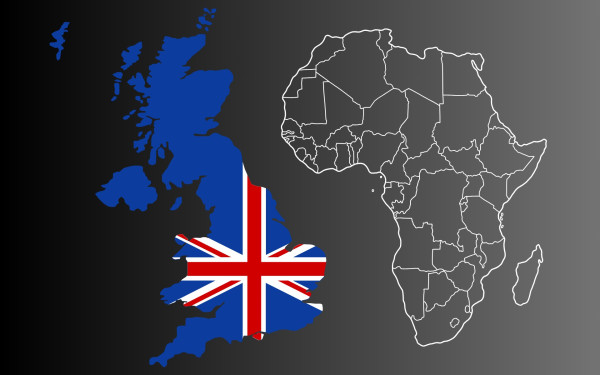
UK Looks to Deepen Energy Trade, Investment Ties with Africa

Location: News
African Energy Chamber

Trade relations between the UK and Africa are gaining momentum. Last month, UK Minister for Trade Policy and Economic Security Douglas Alexander visited South Africa and Botswana to strengthen trade ties and create opportunities for businesses on both sides. The UK aims to expand trade and investment across the continent, fostering mutually beneficial growth by addressing trade barriers, facilitating exports and supporting trade-focused development programs. With South Africa as the UK's largest trading partner in Africa and set to assume the G20 Presidency, this marks an important moment for deepening economic collaboration.

This builds on the UK's 2019 Economic Partnership Agreement (EPA) with the Southern African Customs Union member states – Botswana, Eswatini, Lesotho, Namibia and South Africa – and Mozambique. This agreement eliminates tariffs and quotas on all goods imported from these countries into the UK, facilitating smoother trade relations and economic cooperation. The EPA aims to bolster economic ties and create a conducive environment for investments, including in the energy sector.

The UK is expanding its engagement across Africa, including in West and North Africa. In February 2024, it signed the Enhanced Trade and Investment Partnership (ETIP) with Nigeria – the first such agreement with an African nation – marking a significant milestone. The partnership builds on a trade relationship valued at £7 billion in the year leading up to September 2023. The ETIP focuses on key sectors such as financial and legal services, fostering economic growth and attracting investment across industries, including energy.

Globeleq, a UK government-backed independent power producer, has been instrumental in advancing gas-powered energy projects across Africa. Alongside its 153 MW Red Sands project in South Africa – set to become the continent's largest standalone battery energy storage system – the company recently acquired a stake in a solar plant at Egypt's Benban Solar Complex and secured $99 million in debt financing for Mozambique's first wind project. Supported by shareholders such as British International Investment and Norfund, Globeleq continues to invest in upgrading existing assets and developing new utility-scale power projects, strengthening Africa's energy infrastructure.

In the oil and gas sector, bp achieved first gas from the Greater Tortue Ahmeyim LNG project offshore Senegal and Mauritania at the start of this year, marking a major step in boosting regional energy production and supply. Shell is advancing its $5 billion Bonga North deepwater project in Nigeria and, alongside bp, has agreed to cover operational costs for the buyer of South Africa's Sapref refinery – a move that could revitalize the country's largest refinery and secure oil supply. Meanwhile, Harbour Energy, one of the UK's largest independent oil and gas companies, is looking to expand into African markets following its acquisition of concessions in Egypt's Nile Delta and the Mediterranean Sea.

The UK is also a major investor in Africa's clean energy sector and a key partner in the Mission 300 initiative to expand electricity access to 300 million people by 2030. Last month, British International Investment (BII) committed £5.3 million to UK cleantech firm MOPO to scale battery rental operations in the Democratic Republic of the Congo, where over 80% of the population lacks electricity. In December 2024, BII and GuarantCo announced a $500 million renewable power deal with South Africa's Etana Energy, providing $100 million in guarantees to support the country's largest energy wheeling framework and unlock new projects. Beyond direct investments, the UK government continues to provide funding and technical assistance for energy infrastructure projects across Africa, aiming to improve energy reliability and efficiency, drive economic growth, and enhance the quality of life for local communities.

As a G20 member, the UK plays a pivotal role in shaping global energy investment strategies, with Africa positioned as a key partner in its trade and energy agenda. The UK's investments in oil and gas, renewables and energy infrastructure align with broader G20 goals of energy security, sustainability and economic growth.

“These initiatives not only strengthen the UK's economic ties with Africa, but also support the continent's transition to cleaner, more reliable energy. With African Energy Week: Invest in African Energies 2025 set to convene global stakeholders, the UK's role in advancing energy partnerships will be in focus, offering a platform to drive further investment, policy collaboration, and infrastructure development across Africa's energy landscape,” says Johnson Kayode Obembe, Director of Sales and Partnerships, African Energy Week.

AEW: Invest in African Energies is the platform of choice for project operators, financiers, technology providers and government, and has emerged as the official place to sign deals in African energy. Visit www.AECWeek.com for more information about this exciting event.

Distributed by APO Group on behalf of African Energy Chamber.

Media files
African Energy Chamber
Download logo
Read moreUK Looks to Deepen Energy Trade, Investment Ties with Africa
5 March 2025

SA needs R440 billion for transmission development

Location: News

SA needs R440 billion for transmission development

South Africa requires upwards of R440 billion in the next 10 years to expand its transmission infrastructure, says Minister of Electricity and Energy, Dr Kgosientsho Ramokgopa.

Addressing the Africa Energy Indaba in Cape Town on Tuesday, the Minister said the country’s transmission development plans have identified the need to modernise and expand the grid for 14 000 kilometres in the next 10 years.

“This is going to require an enormous amount of investment. The fiscus won’t be able to carry that. The Eskom balance sheet is not sufficient, so it is important to find bespoke financing instruments to make this possible,” the Minister said.

He called on financial actors to actively take steps to significantly lower the cost of borrowing for the investment of the continent’s development, climate resilience and clean energy transition initiatives.

“We expect the increase in electricity trade volumes to grow by about 300% by 2040 and by that time, the projection is that Africa’s population will be at about two billion people from the current 1.5 billion. For us to be able to achieve this level of ambition, there are huge investments that are required.

“One of the studies done by some of the... organisations suggests that Africa will need upwards of R2.6 trillion in investments in the energy sector by 2040. The pool of financing is enormous. Even if you had to consolidate the balance sheet of the continent, I don’t think we are going to get anywhere near raising this money.

“That is why it is important that we are able to design a financing instrument for us to be able to achieve this level of ambition,” Ramokgopa said.

He expressed support for a single electricity market on the continent, as advocated for by the the African Union's Agenda 2063.

“We think that the ambitions of achieving a single electricity market on the continent is not far-fetched .For us to have universal access by 2063, as advocated for in Agenda 2063, which makes a point that we can achieve that through regional integration… there has to be significant investment on interconnectivity,” the Minister said.

With South Africa hosting the Group of Twenty (G20) Presidency, Ramokgopa outlined the G20 technical energy group priorities, which include energy security and forging reliable and affordable access; achieving just, affordable and inclusive energy transitions, as well as African connectivity and energy pools.

These priorities were canvassed through the platform of the African Union.

According to Ramokgopa, 43% of the total population in Africa does not have access to electricity.

“This is a big issue. Before you can talk about transitioning, people need to have access to whatever form of electricity, irrespective of the fuel sources.

“As a country and the continent, we bear the responsibility to ensure that we are able to provide this access in a manner that doesn’t degrade the environment and keep to our obligations to ensure that we reduce the greenhouse gas emissions, although we contribute less than 2.5% of the CO2 emissions. Going into the future, gas will still be part of the mix on the continent,” the Minister said.

Focus on just transition

South Africa’s G20 Presidency will elevate the issue of just, affordable and inclusive energy transitions.

“That is important because we are of the opinion that there is no single transition. Any transition should take into account the unique circumstances of individual countries, and the pace and scale that they can afford.

“We will be meeting with the National Economic Development and Labour Council (Nedlac) and are hoping that the Integrated Resource Plan (IRP) will be release to the public soon. The plan will explain how we see the transitions unfold in the country,” Ramokgopa said.

South Africa's G20 Presidency is the fourth consecutive emerging market Presidency, and it is also the first African Presidency.

It commenced on 1 December 2024 and all engagements are being held under the theme: “Solidarity, Equality, Sustainability”.

The year-long deliberations will culminate in a G20 Leaders’ Summit in November 2025.

The G20 was established to tackle pressing global economic and financial issues. Together, G20 members account for around 85% of global GDP and 75% of international trade. 

It comprises 19 countries and two regional bodies, namely the European Union and the African Union.

The grouping plays a critical role in influencing global policy making and fostering global economic stability. - SAnews.gov.za

nosihle
Wed, 03/05/2025 - 12:03
108 views

Read moreSA needs R440 billion for transmission development
5 March 2025

Call for financial actors to lower borrowing costs for Africa

Location: News

Call for financial actors to lower borrowing costs for Africa

Minister of Electricity and Energy, Dr Kgosientsho Ramokgopa, has called for financial actors to actively take steps to lower the cost of borrowing for investment in the continent’s development, climate resilience and clean energy transition initiatives.

“Africa is the most mineral rich of all continents yet is the most energy deprived, underdeveloped and the poorest of all the regions,” Ramokgopa said on Tuesday.

Addressing the Africa Energy Indaba in Cape Town, the Minister said the biggest challenge confronting the continent is the ability to finance the investments that are required to realise the potential of the continent.

“The issues of the financing gap should be issues that are front and centre of the conversation. We are calling for a number of steps to be taken, including but not limited to the need to reconfigure the cost of capital.

“Our view is that developing nations face exorbitant borrowing costs due to the perceived risks that do not reflect economic fundamentals but rather outdated and what I refer to as buyers credit rating,” he said.

The Minister emphasised that it is important that issues of risk allocation should be assigned to countries that have the best capabilities of resolving the risk, among others.

“We do accept that the debt burdens that are placed on the African countries are crippling and undermine the ability to invest in development, climate resilience and clean energy transition.

“This is what sovereign nations need to do to so that we can use the countries balance sheet to enable the investments that are required in this space,” Ramokgopa said.

He advocated for greater coordination between the financial actors as he noted some degree of asymmetry and fragmentation.

“The multilateral development banks are on the one side and the developing financing institutions on the other and issues around vertical climate funds.

“What this does because there is some degree of misalignment, it undermines the possibility of us achieving greater efficiencies and this is going to hinder impact of the pocket of fund that these players are bringing to the fore to help to anchor this kinds of transition and the issues of sustainable development, the ability of the continent to extract and beneficiate closer to the source and thereby broadening the industrial flow of their respective jurisdictions,” he said.

He called for the strengthening of the role of the national development bank.

“I think there is a need for recapitalisation, especially here in South Africa. The Development Bank of Southern Africa (DBSA) can play a much bigger role if it is recapitalised, it competes with some of the commercial banks and therefore they are unable to provide the kind of concessionality that is associated with development banks.

“It stunts or undermine the prospects of them anchoring the kind of industries that we want to see because they must compete with the commercial banks on the same rates,” the Minister said.

Ramokgopa said there is a need to work very hard to attract private sector investors. 

“This requires that the political actors, the elected representatives on the continent should work very hard to ensure that there is a degree of stability at a political level but create the necessary conditions, introduce reforms that are necessary to spare on private sector investments. Those are some of the interventions that we are proposing for us to be able to realise the potential of the continent,” the Minister said. -SAnews.gov.za

nosihle
Wed, 03/05/2025 - 10:31
257 views

Read moreCall for financial actors to lower borrowing costs for Africa
5 March 2025

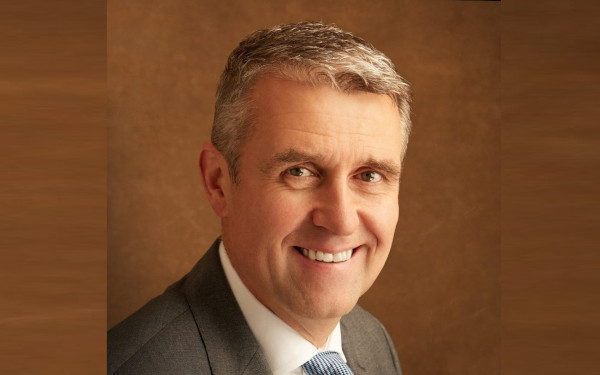
Totalenergies’ Mike Sangster to Headline Invest in African Energy Forum in Paris

Location: News
Energy Capital & Power

Mike Sangster, Senior Vice President for Africa at TotalEnergies, will deliver a keynote address at the Invest in African Energy (IAE) Forum in Paris this May. Sangster will also participate in an exclusive fireside chat, offering critical insights into the company's vision for Africa's energy future, its ongoing projects and the evolving role of oil and gas in the continent's energy mix.

TotalEnergies continues to drive oil and gas development across Africa, with a strong focus on both emerging and mature markets. In Namibia, the company is advancing its Venus-1 discovery, targeting first oil by the decade's end, with an FID expected in early 2026 for a development producing 150,000 barrels per day. TotalEnergies is also exploring additional prospects in the Orange Basin, having recently drilled the Marula-1X and Tabmoti-1X wells. In the Republic of Congo, the company is investing $600 million to expand deepwater production at the Moho Nord field, while in Libya, it plans to complete an onshore exploration project and lead new drilling campaigns in the Waha and Sharara fields in 2025.

IAE 2025 (www.Invest-Africa-Energy.com) is an exclusive forum designed to facilitate investment between African energy markets and global investors. Taking place May 13-14, 2025 in Paris, the event offers delegates two days of intensive engagement with industry experts, project developers, investors and policymakers. For more information, please visit www.Invest-Africa-Energy.com. To sponsor or participate as a delegate, please contact sales@energycapitalpower.com.

Meanwhile, TotalEnergies is expanding its gas processing and midstream infrastructure across Africa, strengthening its role in the continent's evolving energy landscape. In Mozambique, the company is progressing with the Mozambique LNG project, a $20 billion development expected to secure renewed financial backing from export credit agencies. I Uganda, TotalEnergies is gearing up for first oil from its Tilenga field in 2025, with crude transported via the East African Crude Oil Pipeline (EACOP). Once operational, EACOP will be the longest heated crude oil pipeline globally, significantly enhancing East Africa's ability to monetize its hydrocarbon resources and attract further investment into the region's energy sector.

TotalEnergies is also expanding its renewable energy footprint in Africa through strategic investments in solar, wind, hydropower and green hydrogen. The company is advancing its 500 MW Sadada solar project in Libya and acquired Scatec's hydropower portfolio on the continent in July 2024, including the 250 MW Bujagali Hydropower Plant in Uganda and stakes in projects in Malawi, Rwanda and the DRC. In South Africa, TotalEnergies is constructing a 216 MW solar plant with battery storage, along with a 140 MW wind farm and a 120 MW solar facility, set to supply green electricity to Sasol's industrial operations. In Morocco, the company is developing the Chbika project, a 1 GW wind and solar farm designed to produce 200,000 metric tons of green ammonia annually for export to Europe. These initiatives align with TotalEnergies' strategy to integrate renewables into its portfolio while supporting Africa's energy transition.

Sangster's participation at IAE 2025 comes at a pivotal time for Africa's energy sector, as investors and policymakers navigate a shifting global energy landscape. His keynote address and fireside chat will provide valuable perspectives on the role of private investment in African energy, strategies for unlocking new upstream opportunities and how TotalEnergies is adapting to the continent's long-term energy needs.

Distributed by APO Group on behalf of Energy Capital & Power.

Media files
Energy Capital & Power
Download logo
Read moreTotalenergies’ Mike Sangster to Headline Invest in African Energy Forum in Paris
4 March 2025

Eskom’s Collaboration With Law Enforcement Continues to Yield Positive Results, Leading to Multiple Arrests

Location: Business

Tuesday, 04 March 2025: Eskom, in collaboration with the National Joint Operational and Intelligence Structure (NATJOINTS) Energy Safety and Security Priority Committee, continues to combat corruption and theft within its operations. The ongoing efforts have resulted in a series of arrests, with the financial impact of these crimes totalling R1.09 million. To date, R873,000 has...

Read moreEskom’s Collaboration With Law Enforcement Continues to Yield Positive Results, Leading to Multiple Arrests
4 March 2025

GDP increases by 0.6% in Quarter 4 of 2024

Location: News

GDP increases by 0.6% in Quarter 4 of 2024

South Africa’s gross domestic product (GDP) increased by 0.6% in the fourth quarter of 2024, following a decrease of 0.1% in the third quarter of 2024.

This is according to Statistics South Africa (Stats SA), which attributed the growth to, among others, an increase by 17.2% in the agriculture, forestry and fishing industry, which contributed 0.4 of a percentage point to the positive GDP growth. 

“This was primarily due to increased economic activities reported for field crops and animal products. The finance, real estate and business services industry increased by 1.1%, contributing 0.3 of a percentage point. Increased economic activities were reported for financial intermediation, real estate activities and other business services,” Stats SA said on Tuesday

The trade, catering and accommodation industry increased by 1.4%, contributing 0.2 of a percentage point. 

Increased economic activities were reported for wholesale trade, retail trade and motor trade.

“The transport, storage and communication industry decreased by 1.0%, contributing -0.1 of a percentage point. Decreased economic activities were reported for land transport and transport support services.

“The manufacturing industry decreased by 0.6%, contributing -0.1 of a percentage point. Six of the 10 manufacturing divisions reported negative growth rates. The largest negative contributions were reported for the basic iron and steel, non-ferrous metal products, metal products and machinery division and the motor vehicles, parts and accessories, and other transport equipment division,” Stats SA said.

General government services decreased by 0.5%. This was mainly due to decreased employment in national and provincial government and extra-budgetary institutions.

The electricity, gas and water industry decreased by 1.4%. This was largely due to decreases in electricity production and consumption.

The mining and quarrying industry decreased by 0.2%. Decreased economic activities were reported for manganese ore and iron ore.

Expenditure on GDP

As far as the expenditure on real GDP, it increased by 0.6% in the fourth quarter of 2024, following a decrease of 0.1% in the third quarter of 2024.

“Household final consumption expenditure (HFCE) increased by 1.0%, contributing 0.6 of a percentage point to the total growth. Positive growth rates were reported for semi-durable, durable and non-durable goods,” Stats SA said. 

The main positive contributors to the increase in HFCE were expenditures on clothing and footwear (4.4% and contributing 0.2 of a percentage point); food and non-alcoholic beverages (1.4% and contributing 0.2 of a percentage point); recreation and culture (2.5% and contributing 0.2 of a percentage point); furnishings, household equipment and maintenance (1.9% and contributing 0.1 of a percentage point); ‘other’ (0.9% and contributing 0.1 of a percentage point); health (1.2% and contributing 0.1 of a percentage point), and alcoholic beverages, tobacco and narcotics (1.4% and contributing 0.1 of a percentage point).

Stats SA said the negative contributors were expenditures on transport and restaurants and hotels.

“Final consumption expenditure by general government decreased by 0.8%, contributing -0.2 of a percentage point to the total growth. This was mainly driven by decreases in purchases of goods and services and compensation of employees.

“Gross fixed capital formation decreased by 0.7%, contributing -0.1 of a percentage point to the total growth. 

"The negative contributors to the decrease were residential buildings (-7.5% and contributing -0.9 of a percentage point), machinery and other equipment (-1.3% and contributing -0.5 of a percentage point) and non-residential buildings (-2.7% and contributing -0.2 of a percentage point),” Stats SA said.

There was a R16.4 billion drawdown of inventories (seasonally adjusted and annualised value).

Large decreases in two industries, namely mining and trade, catering and accommodation, contributed to the inventory drawdown.

“Net exports made a neutral contribution (0.0 percentage points) to expenditure on GDP. Exports of goods and services increased by 2.1%, largely influenced by increased trade in pearls, precious and semiprecious stones and precious metals, and chemical products

“Imports of goods and services increased by 2.0%, largely influenced by increased trade in vehicles and transport equipment excluding large aircraft; vegetable products; and machinery and electrical equipment,” Stats SA said. - SAnews.gov.za

nosihle
Tue, 03/04/2025 - 13:34
371 views

Read moreGDP increases by 0.6% in Quarter 4 of 2024
3 March 2025

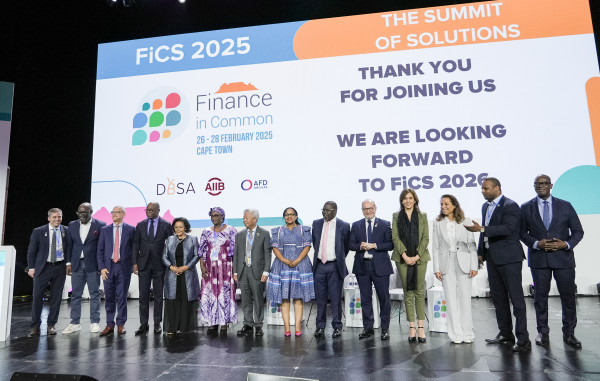
Finance in Common Summit Urges Global Development Finance Institutions to Harness Collective Power to Address Global Poverty

Location: News
African Development Bank Group (AfDB)

The fifth edition of the Finance in Common Summit (FiCS) concluded on Friday in Cape Town, South Africa, with strong calls for global development finance institutions to work together to address poverty and development challenges. South African Finance Minister Enoch Godongwana led the call.

The summit, which was co-sponsored by the African Development Bank and took place alongside the G20 Finance Ministers' Meeting, was themed "Fostering Infrastructure and Finance for Fair and Sustainable Growth."

Godongwana described the meeting as an unprecedented gathering of key financial players, saying: "Your determination and commitment will change the world. Your determination and will have an impact on global poverty.”

The minister linked the summit's goals to South Africa's development trajectory, highlighting the structural reforms the country had undertaken in the electricity, roads, and port sectors, which have opened new investment opportunities to development partners.

African Development Bank Vice President for Finance and Chief Financial Officer, Hassatou Diop N'Sele—one of several senior officials of the Bank Group at FiCS—represented Bank Group President, Dr. Akinwumi Adesina at a meeting on Wednesday organized by the Council of Europe Development Bank. At the meeting, multilateral development banks reaffirmed a shared commitment to maximize their collective impact.

During the G20 meetings of Finance Ministers and central bank governors, Hassatou Diop N'Sele said, “We call on G20 nations to enhance financial commitments, especially for the 17th replenishment of the African Development Fund, to simplify processes for accessing climate finance, and to create enabling policies that facilitate sustainable capital flows to Africa.”

In her various interventions during FiCS, she discussed the innovative financing tools and initiatives launched by the African Development Bank to leverage resources and mobilize the private sector at scale, including the landmark hybrid capital transactions successfully replicated by other development finance institutions and the Africa Investment Forum.

N'Sele emphasized the urgency for philanthropies and foundations to further strengthen their partnerships with multilateral development banks and to fully embrace innovation to amplify their impact. She also recognized the challenges for expanding climate finance in Africa and reflected on such solutions and platforms as the Alliance for Green Infrastructure in Africa, designed to catalyze bankable, greener infrastructure projects at scale and speed.

The African Development Bank delegation highlighted the progress of Mission 300 (https://apo-opa.co/4bolqQE), an initiative to accelerate access to electricity for 300 million Africans by 2030. The Bank, working with the World Bank and other development finance institutions and private sector partners, has committed $18.2 billion to this effort.

Senior leaders of the Bank stressed the need for urgent action. Nnenna Nwabufo, Bank Group Vice President for Regional Development, Integration and Business Delivery, said: "Africa is not looking for aid, we are looking for partnerships.".

She added: "The time for pilot projects that deliver incremental progress is over. We need investments that enable our nations to take ownership of their development, fostering resilience, self-sufficiency, and sustainable growth that benefits both Africa and the global economy."

Solomon Quaynor, the African Development Bank's Vice President for Private Sector, Infrastructure and Industrialization, called for faster implementation of infrastructure projects. "Africa can no longer sustain infrastructure projects that take seven to 10 years to complete - we must accelerate development to deliver within three years, prioritizing green infrastructure," he said.

The African continent needs $2.7 trillion through 2030 to meet its climate action goals, but receives only 3.6% of all global climate finance, despite its minimal contribution to global emissions.

The African Development Bank's Director General for Southern Africa, Leila Mokaddem, emphasized that Africa's green transition must be inclusive. She said: "With 600 million Africans still without electricity, our transition cannot be about climate goals alone. It must be about jobs, industrialization and economic opportunity. The African Development Bank is supporting this vision through its Jobs for Youth in Africa strategy to create 25 million jobs and equip 50 million young Africans with green economy skills by the end of this year.”

The summit achieved several significant breakthroughs in expanding the scope and impact of development financing. Key outcomes included: the endorsement by G20 finance ministers of public development banks' crucial role in international financial architecture; steps toward setting up frameworks to support cultural industries as valid asset classes; and the formation of a coalition between public development banks and civil society to ensure that development finance serves communities.

CEO of Agence Française de Développement and Chair of the Finance in Common Summit Rémy Rioux noted: "We have made tremendous progress in building public development banks as an asset class through innovation, commitment, and shared values. In times of uncertainty and conflict, we are offering a calm, collective alternative."

"This has truly been an African FiCS," said Boitumelo Mosako, CEO of the Development Bank of Southern Africa. He added:  "With 34% of delegates coming from the continent, we have shown that Africa is unstoppable as the second fastest growing region in the world."

Following the Finance in Common Summit, the Fourth Finance for Development Conference will take place in Spain between June and July this year. Being organized by the United Nations and the Spanish government, that summit will feature continuing discussions on reshaping the international financial architecture to better serve development needs.

Distributed by APO Group on behalf of African Development Bank Group (AfDB).

Media contact:
Emeka Anuforo
Principal Regional Communication Officer
Email: media@afdb.org

About the African Development Bank Group:
The African Development Bank Group is Africa's premier development finance institution. It comprises three distinct entities: the African Development Bank (AfDB), the African Development Fund (ADF) and the Nigeria Trust Fund (NTF). On the ground in 41 African countries with an external office in Japan, the Bank contributes to the economic development and the social progress of its 54 regional member states. For more information: www.AfDB.org

Media files
African Development Bank Group (AfDB)
Download logo
Read moreFinance in Common Summit Urges Global Development Finance Institutions to Harness Collective Power to Address Global Poverty
2 March 2025

Koeberg Unit 2 Shuts After Unplanned Trip

Location: Business

Sunday, 02 March 2025 – Unit 2 of the Koeberg Nuclear Power Station experienced an unplanned, non-technical trip while operating at full capacity. Koeberg Unit 2 inadvertently tripped during the execution of work on Unit 1, which is currently offline for work to be conducted as part of its Long-Term Operation (LTO) program. Unit 2...

Read moreKoeberg Unit 2 Shuts After Unplanned Trip
28 February 2025

Ongoing High Levels of Planned Maintenance Continue at Eskom

Location: Business

Friday, 28 February 2025: Eskom confirms that loadshedding remains suspended, supported by a stable power system and emergency reserves. We are also on track to replenish the emergency reserves in preparation for the next business week. The generation capacity in the system remains constrained as Eskom continues to maintain high levels of maintenance, averaging 7...

Read moreOngoing High Levels of Planned Maintenance Continue at Eskom
27 February 2025

Cabinet welcomes progress on Eskom recovery efforts

Location: News

Cabinet welcomes progress on Eskom recovery efforts

Cabinet has welcomed an update on Eskom’s ongoing efforts to restore stability to the country’s national power supply, including additional capacity to the grid.

This follows unforeseen incidents at multiple power stations that led to the implementation of load shedding that began at the weekend.

Addressing a post-Cabinet briefing on Thursday, Minister in the Presidency Khumbudzo Ntshavheni explained that the highly unusual and unrelated incidents at the weekend resulted in a rapid depletion of reserve margins. 

They included an electrical fault at Majuba power station, the loss of cooling water pumps at Camden power station and unit loss at Medupi power station. 

“Cabinet noted that the upcoming addition of 1 600 megawatts with the synchronisation of Kusile Unit 6 scheduled for 9 March 2025 and Medupi Unit 4 at the end of March 2025 will further bolster our nation’s energy supply,” Ntshavheni said. 

Cabinet also acknowledged the swift response by Eskom’s technical team to recover 4 800 MW with four of the five tripped units at Majuba having returned to the grid and two of four tripped units returned at Camden by 8pm on Sunday. 

Despite the setback, Cabinet has noted that steady progress has been made in improving generation capacity and maintaining a reliable electricity supply. 

From 1 April 2024 to 20 February 2025, load-shedding was suspended for 323 days, compared to 32 days in the same period last year. Electricity supply was available 99% of the time compared to just 9.8% last year. 

Eskom suspended load shedding on Wednesday morning.

READ | Eskom suspends load shedding

“We maintain our guidance that load shedding is largely behind us due to structural improvements in the generation fleet. Our focus remains on eliminating load shedding as a structural constraint on the economy.

“There will be valuable lessons to be learned from the set of multiple unit trips that were unconnected and purely technical in nature related to electrical and control system issues within auxiliary parts of our power stations,” said the utility’s  Group Chief Executive, Dan Marokane said in a statement at the time.– SAnews.gov.za


DikelediM
Thu, 02/27/2025 - 13:28
33 views

Read moreCabinet welcomes progress on Eskom recovery efforts
26 February 2025

The Future of Africa’s Energy Sector

Location: Business
African Energy Chamber

By NJ Ayuk, Executive Chairman, African Energy Chamber (www.EnergyChamber.org).

There's a promising future for African renewables as the continent strives to balance its current reliance on fossil fuels.

That's the prediction of the African Energy Chamber's 2025 Outlook Report on the State of African Energy.

As I have said before, Africa will eventually rely primarily on renewable energy, as much of the rest of the world strives to — but on its own timetable, not that of Western countries who have benefited for centuries from the exploitation of fossil fuels.

To achieve a carbon neutral future, African nations must have the underlying infrastructure and industry to make the dominance of renewables possible. As things currently stand, most African states lack said infrastructure and industry, and the most feasible and expedient way for them to achieve both is through leveraging the abundant oil and gas resources so many of them possess.

As our report finds:

  • Fossil fuels account for 72% of Africa's power generation. South Africa and Egypt are Africa's leading producers, and their dominance will continue into the next decade.
  • Renewables account for over 27% of Africa's power generation and are projected to increase to 43% by the end of this decade.
  • Africa accounts for 3.3% of the global power generation, with a total power generation of over 980 terawatt hours.
  • 13 GW of utility-scale solar PV and wind projects are under construction – South Africa, Egypt, Morocco, Ethiopia and Algeria account for over 75% of this capacity.

No Electricity at All

There are also significant challenges facing Africa's energy sectors, as we cover in detail in our report.

The most pressing of those challenges is the fact that many rural areas across Africa are underserved and lack the necessary power infrastructure to access any electricity at all. In fact, of the 685 million people worldwide living without access to electricity, 590 million (86%) live in Africa. Conversely, even in well-served areas electricity is not cheap and reliable, as population and urbanization growth have outpaced the growth of power infrastructure, placing additional strain on the existing power systems. Many African households still rely on alternative, less efficient energy sources such as biomass, kerosene, etc., for heating and cooking.

One practical solution to these challenges is Western investment.

Western investment — providing both funds and technology — will help expand our existing infrastructure into underserved areas and harness our natural resources, and that will go a long way toward improving economic conditions across the continent. This will in turn improve energy affordability for many Africans as it becomes both more widely available and cheaper to access.

But where and in what should the West invest? That is up to them, but there are many development opportunities across the continent right now. I will cover just a few of the most promising, according to our outlook report.

What we found is that most North African countries see 90% access rates for electricity and are looking to enhance their power sectors while reducing reliance on fossil fuels. The bulk of renewable power share increases by the end of the decade will almost certainly be seated in this region. In contrast, sub-Saharan countries will continue to fight low electricity access for some time. They have been able to increase access to 55% currently, up from 38.3% in 2010. These countries will be ripe for investment, expanding the grid and production infrastructure to improve electrical access.

We also found that hydropower continues to dominate in East Africa, which has some of the largest dams in the world generating 19% of Africa's overall power generation and providing up to 90% of the available power for countries such as Ethiopia and the Democratic Republic of Congo. Africa's largest hydroelectric project, the Grand Ethiopian Renaissance Dam (GERD) is nearing completion and is expected to generate 15,760 GWh annually once fully operational. The project is of such importance to the region that it has sparked diplomatic cooperation between the Nile-bound countries of Ethiopia, Egypt, and Sudan in an effort to ensure equitable sharing of the river's precious waters. Other currently ongoing projects such as Ethiopia's Gibe III Dam (1870 MW), Zambia and Zimbabwe's Kariba Dam (1830 MW) and Ghana's Akosombo Dam (1020 MW) also speak to promising future growth and development opportunities for those willing to get their feet wet in the central and eastern parts of the continent along the Congo and Nile rivers, where nearly 90% of the continent's hydroelectric potential remains untapped.

Geothermal power in Africa is currently dominated by Kenya, which to date is the seventh largest producer of geothermal power. Kenya's estimated geothermal power potential is roughly 10 GW, but current operation capacity only allows 1 GW to be harnessed.

International investment is what launched Kenya's geothermal power in the first place, with the United Nation's development program providing the requisite research and funds in 1972 to establish the country's first geothermal plant by the 1980s. Since then, Kenya has expanded independently, creating the state-owned Geothermal Development Company (GDC) in 2008 to both speed up geothermal advancements and lower the initial investment risk for foreign investment.

Solar Power: A Light in the Dark

Solar power offers a veritable gold mine of opportunity given Africa's high irradiance levels: nearly 80% of the continent receives more than 2 MWh per square meter. This amounts to a solar PV potential of 1 million terawatt hours per year and a solar thermal potential of over 500,000 terawatt hours (for reference, a single terawatt hour is enough to light over 1 million homes for a year). Yet to date, Africa only generates over 35 TWh and 3.3 TWh from solar PV and solar thermal, respectively. Over 13 GW of utility-scale solar PV and wind projects are currently under construction, with hundreds more GW of capacity in the concept phase..

I would like to reiterate: Africa will reach a point where we will rely primarily on low carbon and renewable energy. But we cannot get to that point without building the proper infrastructure, and we cannot fund the building of said infrastructure without leveraging our natural resources, oil and gas being chief among them. If the west wishes to speed along Africa's progress on this front, the best way is to work with African as partners and investors working towards common goals. 

Distributed by APO Group on behalf of African Energy Chamber.

Media files
African Energy Chamber
Download logo
Read moreThe Future of Africa’s Energy Sector
26 February 2025

Operation Dudula’s Victims Demand Justice

Location: News

Litigation against the vigilante group started a year ago

Read moreOperation Dudula’s Victims Demand Justice
26 February 2025

Loadshedding Suspended at 5:00 am

Location: Business

Wednesday, 26 February 2025: Eskom is pleased to announce that loadshedding will be suspended today at 5:00 AM, following the recovery of generation capacity and the replenishment of emergency reserves. “We maintain our guidance that loadshedding is largely behind us due to structural improvements in the generation fleet. Our focus remains on eliminating loadshedding as...

Read moreLoadshedding Suspended at 5:00 am
25 February 2025

Plans underway to ensure service delivery in the Free State 

Location: News

Plans underway to ensure service delivery in the Free State 

Free State Premier Maqueen Letsoha-Mathae says plans are underway to ensure that municipalities in the province can deliver basic services such as water, electricity, and refuse collection to the people. 

Delivering the State of the Province Address (SOPA) on Friday, Letsoha-Mathae said that work to improve the state of the province’s municipalities is continuing. 

“We are deeply concerned about the state of some of our municipalities. Their failure to provide services such as water, electricity and refuse removal is worrying. Water treatment plants are not maintained. Electricity infrastructure is collapsing. Taps are dry. Streets are littered with garbage. 

“Work to improve the state of our municipalities is continuing. We want to get the basics right and improve service delivery to our people,” she said.

She added that the professionalisation of local government was ongoing and that the seventh administration continues to assist municipalities with the implementation of the Municipal Staff Regulations meant to create a development-oriented local government. 

“We are also supporting municipalities with the development of municipal staff establishments that are fit for purpose, review of competency assessments, and remuneration framework for senior managers.

“Section 56 Managers are now permanently appointed in compliance with the Municipal Systems Amendment Act of 2022. Deployment of competent managers and technical officials to municipalities to enhance service delivery is also continuing.”

Letsoha-Mathae said the provincial authorities and municipal officials met with the Minister of Electricity and Energy, Kgosientsho Ramokgopa last week to ensure that all municipalities can meet their financial obligations to Eskom.

“Ten municipalities in our province are participating in the Eskom Debt Relief Programme meant to help them settle their current accounts. We continue to provide support to these municipalities to ensure compliance and financial discipline in their engagements with Eskom. 

“We commit to meet our electricity, water, services and property rates obligations to municipalities to lessen their dire financial state. Payment plans will be developed and adhered to. We will lead by example,” she explained.

The province has also been battling water challenges, however, the Premier announced that the Department of Water and Sanitation has committed to giving the provincial government R1.4 billion to deal with water and sanitation issues.

This amount is meant to improve water supply and quality and upgrade water and wastewater treatment works throughout the province.

Housing 

Meanwhile, the Premier committed that there shall be housing, security and comfort for all as the provincial government drives integration to bring people closer to areas of opportunities. 

“We will complete the upgrade of G-Hostel in Welkom, and Dark and Silver City Development in Bloemfontein in the third quarter of the 2025/26 financial year. Conversion and development of hostels into family units is our way of saying our people deserve better. 

“We will also upgrade 34 informal settlements by the end of cycle to ensure access to basic services and security for thousands of residents,” she said. 

This financial year, the province had planned to service 3 652 sites in informal settlements and greenfields. She announced that this target has been surpassed with 6 878 sites having been serviced. 

She added that this year, contractors will be invited through a competitive bidding process to complete historically incomplete houses throughout the province.

“In improving the living conditions of our people in rural areas, we will eradicate mud houses and replace them with proper housing structures in [the]Thabo Mofutsanyana District and Mangaung Metro. We also commit to delivering government-subsidised housing across various types to meet the diverse needs of our communities,” she said. – SAnews.gov.za

DikelediM
Tue, 02/25/2025 - 14:31
305 views

Read morePlans underway to ensure service delivery in the Free State 
25 February 2025

Load shedding suspension remains on the horizon

Location: News

Load shedding suspension remains on the horizon

Repairs at Eskom’s Majuba power station in Mpumalanga has placed the country closer to the suspension of load shedding, Electricity and Energy Minister Dr Kgosientsho Ramokgopa said.

Speaking to journalists on Tuesday, the Minister reassured South Africans that the implementation of load shedding at the weekend was not due to sabotage, but technical issues. 

“We are going to have a review later this evening and then we can make an announcement, a promise we make, is a promise we will keep,” Ramokgopa said at an engagement held in Johannesburg.

The Minister explained that despite 300 consecutive days of uninterrupted power supply, recent setbacks occurred, including the loss of five generation units at Majuba and four units at Camden power stations.

He added that the setback experienced at the weekend where the power utility implemented Stages 3 and 6 of load shedding were regrettable.

“The setbacks we experienced are regrettable, but we are now able to bounce back, we are coming back much faster than we thought. It is important that we have the lights on for the South African economy,” the Minister said.

Ramokgopa’s comments come as Eskom is currently implementing Stage 2 load shedding from Monday’s Stage 4.

At a briefing on Sunday, the Minister assured the nation that the country will overcome the current bout of load shedding by the end of the week.

READ | Load shedding expected to be suspended by the end of the week

“I'm confident that by the end of the week, we should be out of this difficult situation. We are confident we're going to go to conditions of normality. By the end of the week there will not be [any] load shedding,” he said at the time. -SAnews.gov.za

Edwin
Tue, 02/25/2025 - 14:38
20 views

Read moreLoad shedding suspension remains on the horizon
25 February 2025

Energise Mzansi campaign to empower South Africans on energy transition

Location: News

Energise Mzansi campaign to empower South Africans on energy transition

The Energy Council of South Africa has launched a nationwide campaign to empower South Africans to gain a better understanding of and engage in the energy transition.

South Africa has committed to lowering carbon emissions to net-zero by 2050 and usher in a green economy.

In that regard, government has also committed to an energy transition which is just, inclusive and which responds to South Africa’s developmental needs – leaving no one behind.

“Energy literacy is more than just understanding the basics, it’s the foundation for informed decision-making, constructive collaboration, and ultimately driving investment and economic growth through gained public positive sentiment.

“Through this campaign, we aim to connect South Africans with the factual information they need to make sense of the challenges and take advantage of the opportunities presented by the energy transition,” Energy Council CEO James Mackay said.

According to the council, the campaign focuses on six technical energy topics.

 These are:

  • Energy is an integrated system: Shifting from a polarised “supply mix” ideology to a practical, integrated system planning and delivery approach. This aims to balance supply side actions with demand response and changing trends, the increasing importance of infrastructure and digital integration and the critical issue of a competitive marketplace.
  • Vital emissions obligations: South Africa has an intensive carbon footprint and is now exposed to carbon tax and carbon border adjustments from 2026 with its biggest trade partner, Europe.
  • Ongoing coal dependency: Examining coal’s critical role in South Africa’s energy mix, which is still planned to be in operation well beyond 2026. The need for cleaner, reliable and more efficient use, and the pathway to a strategic, balanced transition not compromising energy security and economic stability.
  • Bridging the transition with gas: Exploring how gas could provide crucial support to South Africa’s energy system by meeting fluctuating demand, system variability and bridging the gap as renewable energy grows and large coal stations are decommissioned.
  • Scaling renewables and storage: Evaluating the growing adoption of solar and wind energy as well as battery storage, focusing on the advantages of renewable energy, the barriers to widespread deployment, and the role of technology in making renewables a central part of South Africa's energy future.
  • Reforming the Energy Market: Understanding the critical need and benefits of a competitive wholesale electricity market to unlock investment, drive efficiency and lower prices, as well as anchor South Africa's future power sector eco-system

“The Energy Council estimates that R2 trillion will be required by 2035 for new technology financing and system upgrades. Government policy and commitment is clear. The two key drivers of our energy reform agenda are now anchored in law: The Electricity Regulation Amendment Act, 2004 and the Climate Change Act, 2024. 

“It is critical that informed responses lead the transition, ensuring collaboration across all stakeholders to create sustainable, long-term solutions for South Africa’s energy future,” the Energy Council said. – SAnews.gov.za


NeoB
Tue, 02/25/2025 - 12:19
8 views

Read moreEnergise Mzansi campaign to empower South Africans on energy transition
24 February 2025

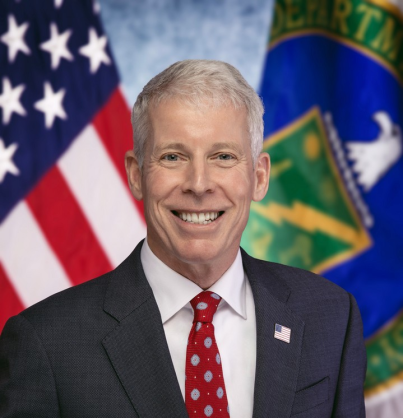
u.s. Secretary of Energy Chris Wright to Deliver Keynote Address at 10th Powering Africa Summit

Location: News
EnergyNet Ltd.

Secretary Chris Wright, U.S. Department of Energy, has been confirmed as a speaker and guest of honour at the 10th Powering Africa Summit (PAS), taking place at JW Marriott Washington, D.C. across March 6-7. This is an important step to provide an answer to the question that all of African energy is now asking: how will the new Administration approach the strategic energy relationship between the U.S. and Africa

Under the Summit theme, The Future of the US & Africa Energy Partnership, U.S. Secretary of Energy Chris Wright will deliver a keynote address at the 10th annual Powering Africa Summit. Wright will be joined by representatives from the U.S. Department of State: Ambassador Troy Fitrell, Senior Bureau Official, Bureau of African Affairs; Kimberly Harrington, Acting Principal Deputy Assistant Secretary, Bureau of Energy Resources; and Stephen Banks, Acting Deputy Assistant Secretary for Energy Diplomacy, Bureau of Energy Resources. All will share their vision for this future relationship between African countries and the US-based investors that are so vital to realizing their energy ambitions.

“As Secretary of Energy, I am committed to unleashing all forms of affordable, reliable and secure energy here at home and advancing that mission of energy security around the world – and nowhere is that more critical than the continent of Africa. I look forward to joining the Summit to reaffirm the strategic energy partnership between the U.S. and Africa and share my vision for advancing innovation and removing barriers to energy access, both at home and around the world,” Secretary Wright said.

Ministers and governments from 19 African countries will arrive in Washington D.C., where the Africa Welcome Address will be given by H.E. Honourable Adebayo Adelabu, Minister of Power, Nigeria. Together with H.E. Honourable Jeremiah Kpan Koung, Vice President, Liberia; H.E. Honourable Dr. Dele Alake, Minister for Solid Minerals Development, Nigeria; H.E. Honourable Mahmoud Mustafa Esmat, Minister of Electricity & Renewable Energy, Egypt; H.E. Honourable Karim Badawi, Minister of Petroleum & Mineral Resources, Egypt; H.E. Honourable Bogolo Joy Kenewendo, Minister of Minerals & Energy, Botswana; H.E. Honourable Alex Wachira, Principal Secretary, Ministry of Energy & Petroleum, Kenya; and Amina Benkhadra, Director General, Office National des Hydrocarbures et des Mines (ONHYM), Morocco, he will meet distinguished Ministers and leaders from South Africa, Senegal, Ethiopia, Zimbabwe, Togo, Sierra Leone and more to drive energy development across the continent.

Flagship ministerial boardrooms and regional energy cooperation sessions will discuss and debate   derisking projects, South Africa's energy future, the need for West African regulatory reforms, and the role of hydrogen in North Africa. New areas of opportunity such as bitcoin mining and data centers will be discussed through an East African lens. The Mission 300 initiative, set to provide electricity access to 300 million people in sub-Saharan Africa by 2030, is also high on the agenda.

The 10th Anniversary Gala Drinks Reception sponsored by Genesis Energy, will celebrate International Women's Day, ahead of March 8.

Critical to the week's discussions will be a host of private players including Alliant Insurance Services, GE Vernova, ARM-Harith Infrastructure Investment, Globeleq, Africa50, Nextracker, Schneider Electric, Newmarket Capital and the summit's general sponsor, Sun Africa, who are looking to a new future for the U.S.-Africa relationship.   

Sun Africa CEO, Adam Cortese said: “We are seeing a sea change in how the U.S. participates in foreign infrastructure development and our unique model of development is an excellent illustration of how U.S. energy companies can thrive in emerging markets on a strictly commercial basis. Sun Africa remains committed to harnessing Africa's immense energy resources through innovative structures, state-of-the-art technology and strong alliances while maintaining our long-standing market-based approach to development.  At Sun Africa, we believe energy development on the continent truly represents an opportunity for win-win partnerships and look forward to sharing our experience.”

Simon Gosling, MD of EnergyNet added: “This summit has always been about bringing together African countries seeking investment with U.S.-based investors who see the vast potential on the continent.  It is more important than ever to establish the crucial energy projects that Africa needs. PAS25 will put the continent center stage and make sure that both sides have a future relationship to be excited about.”

Media Credentials Requited for Powering Africa Summit

The Secretary will open the Summit on 6 March, delivering a Keynote Speech at 09:45, followed by a Fireside Chat with Mission 300 Accelerator CEO, Andrew Herscowitz.

Distributed by APO Group on behalf of EnergyNet Ltd..

For more information, please get in touch with 
Poliana@EnergyNet.co.uk
Senior Marketing Manager

Media files
EnergyNet Ltd.
Download logo
Read moreu.s. Secretary of Energy Chris Wright to Deliver Keynote Address at 10th Powering Africa Summit
  • Previous
  • Page 1
  • Interim pages omitted …
  • Page 26
  • Page 27
  • Page 28
  • Page 29
  • Page 30
  • Interim pages omitted …
  • Page 40
  • Next

Copyright © 2026 · MyZA · All Rights Reserved · Powered by Stratlec Online