• Skip to main content
  • Skip to header right navigation
  • Skip to after header navigation
  • Skip to site footer
MyZA

MyZA

News, Directory, Events and Other Stuff

  • Social Media
  • Sport
  • World News
  • Home
  • Submit News
  • Directory
  • Events
  • Stratlec
  • TFSA
  • News
    • APO
    • Today’s Sport News
    • Todays Social Media and Tech Headlines
    • Today’s World News
    • Today’s SA Financial News
  • Contact
You are here: Home / News / Finance in Common Summit Urges Global Development Finance Institutions to Harness Collective Power to Address Global Poverty

Finance in Common Summit Urges Global Development Finance Institutions to Harness Collective Power to Address Global Poverty

3 March 2025 by Guest
African Development Bank Group (AfDB)

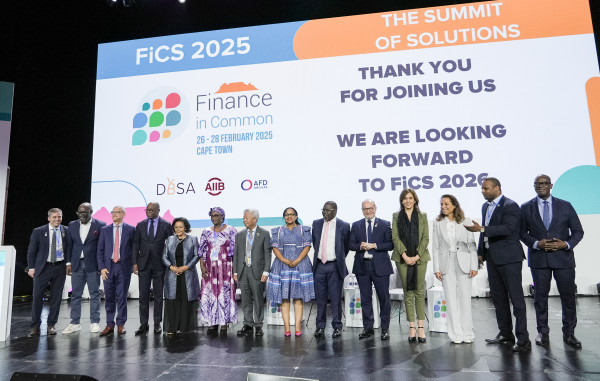
The fifth edition of the Finance in Common Summit (FiCS) concluded on Friday in Cape Town, South Africa, with strong calls for global development finance institutions to work together to address poverty and development challenges. South African Finance Minister Enoch Godongwana led the call.

The summit, which was co-sponsored by the African Development Bank and took place alongside the G20 Finance Ministers' Meeting, was themed “Fostering Infrastructure and Finance for Fair and Sustainable Growth.”

Godongwana described the meeting as an unprecedented gathering of key financial players, saying: “Your determination and commitment will change the world. Your determination and will have an impact on global poverty.”

The minister linked the summit’s goals to South Africa's development trajectory, highlighting the structural reforms the country had undertaken in the electricity, roads, and port sectors, which have opened new investment opportunities to development partners.

African Development Bank Vice President for Finance and Chief Financial Officer, Hassatou Diop N'Sele—one of several senior officials of the Bank Group at FiCS—represented Bank Group President, Dr. Akinwumi Adesina at a meeting on Wednesday organized by the Council of Europe Development Bank. At the meeting, multilateral development banks reaffirmed a shared commitment to maximize their collective impact.

During the G20 meetings of Finance Ministers and central bank governors, Hassatou Diop N’Sele said, “We call on G20 nations to enhance financial commitments, especially for the 17th replenishment of the African Development Fund, to simplify processes for accessing climate finance, and to create enabling policies that facilitate sustainable capital flows to Africa.”

In her various interventions during FiCS, she discussed the innovative financing tools and initiatives launched by the African Development Bank to leverage resources and mobilize the private sector at scale, including the landmark hybrid capital transactions successfully replicated by other development finance institutions and the Africa Investment Forum.

N’Sele emphasized the urgency for philanthropies and foundations to further strengthen their partnerships with multilateral development banks and to fully embrace innovation to amplify their impact. She also recognized the challenges for expanding climate finance in Africa and reflected on such solutions and platforms as the Alliance for Green Infrastructure in Africa, designed to catalyze bankable, greener infrastructure projects at scale and speed.

The African Development Bank delegation highlighted the progress of Mission 300 (https://apo-opa.co/4bolqQE), an initiative to accelerate access to electricity for 300 million Africans by 2030. The Bank, working with the World Bank and other development finance institutions and private sector partners, has committed $18.2 billion to this effort.

Senior leaders of the Bank stressed the need for urgent action. Nnenna Nwabufo, Bank Group Vice President for Regional Development, Integration and Business Delivery, said: “Africa is not looking for aid, we are looking for partnerships.”.

She added: “The time for pilot projects that deliver incremental progress is over. We need investments that enable our nations to take ownership of their development, fostering resilience, self-sufficiency, and sustainable growth that benefits both Africa and the global economy.”

Solomon Quaynor, the African Development Bank’s Vice President for Private Sector, Infrastructure and Industrialization, called for faster implementation of infrastructure projects. “Africa can no longer sustain infrastructure projects that take seven to 10 years to complete – we must accelerate development to deliver within three years, prioritizing green infrastructure,” he said.

The African continent needs $2.7 trillion through 2030 to meet its climate action goals, but receives only 3.6% of all global climate finance, despite its minimal contribution to global emissions.

The African Development Bank's Director General for Southern Africa, Leila Mokaddem, emphasized that Africa's green transition must be inclusive. She said: “With 600 million Africans still without electricity, our transition cannot be about climate goals alone. It must be about jobs, industrialization and economic opportunity. The African Development Bank is supporting this vision through its Jobs for Youth in Africa strategy to create 25 million jobs and equip 50 million young Africans with green economy skills by the end of this year.”

The summit achieved several significant breakthroughs in expanding the scope and impact of development financing. Key outcomes included: the endorsement by G20 finance ministers of public development banks' crucial role in international financial architecture; steps toward setting up frameworks to support cultural industries as valid asset classes; and the formation of a coalition between public development banks and civil society to ensure that development finance serves communities.

CEO of Agence Française de Développement and Chair of the Finance in Common Summit Rémy Rioux noted: “We have made tremendous progress in building public development banks as an asset class through innovation, commitment, and shared values. In times of uncertainty and conflict, we are offering a calm, collective alternative.”

“This has truly been an African FiCS,” said Boitumelo Mosako, CEO of the Development Bank of Southern Africa. He added:  “With 34% of delegates coming from the continent, we have shown that Africa is unstoppable as the second fastest growing region in the world.”

Following the Finance in Common Summit, the Fourth Finance for Development Conference will take place in Spain between June and July this year. Being organized by the United Nations and the Spanish government, that summit will feature continuing discussions on reshaping the international financial architecture to better serve development needs.

Distributed by APO Group on behalf of African Development Bank Group (AfDB).

Media contact:
Emeka Anuforo
Principal Regional Communication Officer
Email: media@afdb.org

About the African Development Bank Group:
The African Development Bank Group is Africa’s premier development finance institution. It comprises three distinct entities: the African Development Bank (AfDB), the African Development Fund (ADF) and the Nigeria Trust Fund (NTF). On the ground in 41 African countries with an external office in Japan, the Bank contributes to the economic development and the social progress of its 54 regional member states. For more information: www.AfDB.org

Media files
African Development Bank Group (AfDB)
Download logo

The fifth edition of the Finance in Common Summit (FiCS) concluded on Friday in Cape Town, South Africa, with strong calls for global development finance institutions to work together to address poverty and development challenges. South African Finance Minister Enoch Godongwana led the call.

The summit, which was co-sponsored by the African Development Bank and took place alongside the G20 Finance Ministers’ Meeting, was themed “Fostering Infrastructure and Finance for Fair and Sustainable Growth.”

Godongwana described the meeting as an unprecedented gathering of key financial players, saying: “Your determination and commitment will change the world. Your determination and will have an impact on global poverty.”

The minister linked the summit’s goals to South Africa’s development trajectory, highlighting the structural reforms the country had undertaken in the electricity, roads, and port sectors, which have opened new investment opportunities to development partners.

African Development Bank Vice President for Finance and Chief Financial Officer, Hassatou Diop N’Sele—one of several senior officials of the Bank Group at FiCS—represented Bank Group President, Dr. Akinwumi Adesina at a meeting on Wednesday organized by the Council of Europe Development Bank. At the meeting, multilateral development banks reaffirmed a shared commitment to maximize their collective impact.

During the G20 meetings of Finance Ministers and central bank governors, Hassatou Diop N’Sele said, “We call on G20 nations to enhance financial commitments, especially for the 17th replenishment of the African Development Fund, to simplify processes for accessing climate finance, and to create enabling policies that facilitate sustainable capital flows to Africa.”

In her various interventions during FiCS, she discussed the innovative financing tools and initiatives launched by the African Development Bank to leverage resources and mobilize the private sector at scale, including the landmark hybrid capital transactions successfully replicated by other development finance institutions and the Africa Investment Forum.

N’Sele emphasized the urgency for philanthropies and foundations to further strengthen their partnerships with multilateral development banks and to fully embrace innovation to amplify their impact. She also recognized the challenges for expanding climate finance in Africa and reflected on such solutions and platforms as the Alliance for Green Infrastructure in Africa, designed to catalyze bankable, greener infrastructure projects at scale and speed.

The African Development Bank delegation highlighted the progress of Mission 300, an initiative to accelerate access to electricity for 300 million Africans by 2030. The Bank, working with the World Bank and other development finance institutions and private sector partners, has committed $18.2 billion to this effort.

Senior leaders of the Bank stressed the need for urgent action. Nnenna Nwabufo, Bank Group Vice President for Regional Development, Integration and Business Delivery, said: “Africa is not looking for aid, we are looking for partnerships.”.

She added: “The time for pilot projects that deliver incremental progress is over. We need investments that enable our nations to take ownership of their development, fostering resilience, self-sufficiency, and sustainable growth that benefits both Africa and the global economy.”

Solomon Quaynor, the African Development Bank’s Vice President for Private Sector, Infrastructure and Industrialization, called for faster implementation of infrastructure projects. “Africa can no longer sustain infrastructure projects that take seven to 10 years to complete – we must accelerate development to deliver within three years, prioritizing green infrastructure,” he said.

The African continent needs $2.7 trillion through 2030 to meet its climate action goals, but receives only 3.6% of all global climate finance, despite its minimal contribution to global emissions.

The African Development Bank’s Director General for Southern Africa, Leila Mokaddem, emphasized that Africa’s green transition must be inclusive. She said: “With 600 million Africans still without electricity, our transition cannot be about climate goals alone. It must be about jobs, industrialization and economic opportunity. The African Development Bank is supporting this vision through its Jobs for Youth in Africa strategy to create 25 million jobs and equip 50 million young Africans with green economy skills by the end of this year.”

The summit achieved several significant breakthroughs in expanding the scope and impact of development financing. Key outcomes included: the endorsement by G20 finance ministers of public development banks’ crucial role in international financial architecture; steps toward setting up frameworks to support cultural industries as valid asset classes; and the formation of a coalition between public development banks and civil society to ensure that development finance serves communities.

CEO of Agence Française de Développement and Chair of the Finance in Common Summit Rémy Rioux noted: “We have made tremendous progress in building public development banks as an asset class through innovation, commitment, and shared values. In times of uncertainty and conflict, we are offering a calm, collective alternative.”

“This has truly been an African FiCS,” said Boitumelo Mosako, CEO of the Development Bank of Southern Africa. He added:  “With 34% of delegates coming from the continent, we have shown that Africa is unstoppable as the second fastest growing region in the world.”

Following the Finance in Common Summit, the Fourth Finance for Development Conference will take place in Spain between June and July this year. Being organized by the United Nations and the Spanish government, that summit will feature continuing discussions on reshaping the international financial architecture to better serve development needs.

Per Kind Favour of APO

Africa Fact: By 2060, the African middle class is expected to reach 1.1 billion people.

Share this:

  • Share on X (Opens in new window) X
  • Share on Facebook (Opens in new window) Facebook
  • Print (Opens in new window) Print
  • Email a link to a friend (Opens in new window) Email
  • Share on LinkedIn (Opens in new window) LinkedIn
  • Share on Tumblr (Opens in new window) Tumblr
  • Share on WhatsApp (Opens in new window) WhatsApp
  • Share on Mastodon (Opens in new window) Mastodon
Category: NewsTag: Africa, African, APO, Architecture, business, Cape Town, Civil Society, Conference, Electricity, global, Government, green, growth, infrastructure, Innovation, Japan, new, Nigeria, office, officials, ONE, solutions, South Africa, Summit

If you feel strongly about this article then feel free to send MyZA a ‘Letter to the Editor’ using the submission form below:


Letter to the Editor

This field is for validation purposes and should be left unchanged.
If this is in response to an article please include that article title here or as the lead in for the first paragraph of your Letter below.

Separate tags with commas

Localise your letter by naming the city your words are about. Add relevant words describing your subject. Single comma separated words of no more than 5
Your Name(Required)
Your Name will be linked to the website below.
Your personal, business or social media web site
Choose NO to not set up a user account on MyZA. User Accounts will allow you to submit letters under your own Author Name

3 Latest Letters to the Editor:

  • Older Persons Grants Land Today — No Need to Queue at Dawn

    Dear Editor, Older Persons grants are paid today, 30 October, under SASSA’s revised November payment schedule — with disability grants on Monday 2 November, children’s grants on Tuesday 3 November, and grants under review on Thursday 5 November. Two things every beneficiary should know. First, grant money does not expire on payment day. It stays…

    30 October 2026
  • November Grants Pay Early – No Need to Queue at Dawn

    Dear Editor, I run SAGrant (sagrant.co.za), a free resource helping South Africans navigate SASSA grants. November grants pay earlier than usual. Older Persons grants are paid on Friday 30 October, Disability grants on 2 November, and Child Support and other grants on 3 November. Grants still under review are paid on 5 November. The money…

    27 October 2026
  • NSFAS 2027 applications close on 31 October — SASSA households, apply now

    Dear Editor, I run SAGrant (sagrant.co.za), a free resource helping South Africans navigate SASSA grants. NSFAS applications for the 2027 academic year close on Friday 31 October 2026, and no extension is expected. If your household receives a SASSA grant, your child already passes the NSFAS financial eligibility test — but they still have to…

    25 October 2026

About Guest

Previous Post:BMA suspends operations at five ports of entry
Next Post:SA joins the world in marking Hearing Day

Reader Interactions

Comments

  1. Black Walnut

    10 September 2026 at 11:03 pm

    Kazakhstan: You have two cows. They are both better cows than cows from Uzbekistan, who have bones in their brain.

  2. Heavenly Connection

    7 September 2026 at 6:40 am

    Fun South African Fact: South Africa is part of BRICS.

Copyright © 2026 · MyZA · All Rights Reserved · Powered by Stratlec Online