Cape Town Is Losing Its Trees
As global temperature records continue to be broken, cities need to move fast to protect residents from heat stress. Planting trees seems the simplest solution

MyZA
News, Directory, Events and Other Stuff
As global temperature records continue to be broken, cities need to move fast to protect residents from heat stress. Planting trees seems the simplest solution
Treasury optimistic about economic outlook
National Treasury expects improved growth prospects for the South African economy, despite slowing projected growth of some 1.1% in 2024 – down from the projected 1.3% earlier this year.
Real Gross Domestic Product (GDP) growth is projected to improve at some 1.1% in 2024, up from the 0.7% in 2023.
In its Medium-Term Budget Policy Statement (MTBPS), National Treasury said economic growth was being “weighed down by stop-start economic growth and stubborn inflation in the first half of the year”.
“The economy has since strengthened in response to the suspension of power cuts since March 2024, improved confidence following the formation of the Government of National Unity in June, better than expected inflation outcomes in recent months and reduced borrowing costs. All these factors are expected to continue supporting the economy over the period ahead.
“The pace of [GDP] growth is still being limited by persistent – though gradually easing – constraints, particularly in logistics infrastructure. Faster growth depends largely on maintaining macroeconomic stability, the continued implementation of structural economic reforms, improving State capabilities and supporting higher infrastructure investment,” the MTBPS stated.
Treasury explained that although risks persist, global risks are “weighted to the downside, while risks to the domestic outlook appear more balanced compared with the 2024 Budget Review assessment”.
“Global growth may weaken due to financial market volatility, tightening conditions for developing economies, slower disinflation from rising commodity prices and a prolonged contraction in China’s property sector. On the domestic front, food prices are vulnerable to weather-related shocks and logistical challenges.
“Positive domestic risks include the possibility of a quicker pace of disinflation and interest rate reductions than assumed in the baseline forecast, which would boost demand. Stable electricity supply and faster progress on reforms could boost business and consumer confidence,” Treasury said.
The department warned, however, that fiscal risks “remain significant though somewhat more balanced than a year ago” and that the materialisation of these risks could be a threat to “fiscal projections, with negative consequences for investment and economic growth”.
“Despite the downward revision to growth for the current year, there is cautious optimism for the medium-term outlook as the early benefits of reform implementation continue to materialise.
“The stabilisation of electricity supply has improved the overall investment climate. This positive momentum will be sustained by a new phase of Operation Vulindlela, which aims to accelerate structural reforms implementation.
“To support these efforts, it will be essential to maintain clear and stable macroeconomic policies while strengthening state capability and supporting investment in growth-enhancing public infrastructure,” the MTBPS stated.
Global outlook
On the international front, global growth is projected to slow marginally from 3.3% in 2023 to 3.2% in 2024 and 2025.
“Slowing inflation has opened the way for major central banks to ease monetary policy. Lower interest rates and strong investment in technology, particularly in emerging Asia, are expected to support growth,” Treasury said.
The department added that overall risks to growth are “to the downside”.
“Fiscal policy has begun to contract in some countries, in part to manage the rapid increase in sovereign debt levels since the COVID-19 pandemic, and some countries are in debt distress.
“Persistent geopolitical tensions continue to flare, with potentially far-reaching effects on global trade, and the threat of escalating conflict in the Middle East remains a concern. The years-long downturn in China’s property sector, notwithstanding new stimulus support, could continue to weaken Chinese growth,” the MTBPS stated.
Economic growth in advanced economies is forecast to reach some 1.8% in the same period with growth in emerging and developing economies – including South Africa’s BRICS partners – projected at 4.2%.
In Sub-Saharan Africa, this is projected at 3.6% in 2024 and 4.2% in 2025.
“Global equity prices have risen as inflation decelerates, accompanied by interest rate cuts that are expected to continue into 2025. Further declines in bond yields are consequently anticipated, creating a favourable environment for emerging market assets.
“Declining production and shipping of commodities, particularly oil, has dampened the outlook for some emerging and developing economies, including in Sub-Saharan Africa. Oil prices are anticipated to fall slightly in 2024, given weak global demand, despite production cuts agreed by major producers.
“Global food prices are also projected to fall, supported by record-high grain production, reducing inflationary pressures,” the MTBPS explained. – SAnews.gov.za
Matona
Thu, 10/31/2024 - 05:44
The Institute of Economic Justice is challenging regulations for the Social Relief of Distress grant which it says are unconstitutional.
Slow compliance with servicing Eskom debt a risk to debt write-offs
National Treasury has warned that municipalities' slow compliance with conditions of the debt relief programme on arrears to Eskom risk delaying debt write-offs.
According to the National Treasury’s document on the Medium-Term Budget Policy Statement (MTBPS), success depends on municipalities maintaining a quarterly revenue collection rate of 85 %, which is below the National Treasury collection norm for local government of 95 %.
“Around 70 of the municipalities that had applied for debt relief have been approved. Between March and August 2024, compliance with relief conditions by municipalities improved from 55% to 76 %, aided by the National Treasury, Provincial Treasuries, and the Municipal Finance Improvement Programme,” Minister of Finance Enoch Godongwana said.
The Minister was delivering the MTBPS in Parliament on Wednesday.
National government is supporting municipalities with debt relief for arrears to Eskom to be written off in equal annual tranches over a three-year period provided they comply with the set conditions.
This programme, operating on rolling 12-month cycles, aims to mitigate fiscal risks by improving compliance with financial management and revenue collection. By combining debt relief and revenue enhancement, it aims to change the nonpayment culture for municipal services and support Eskom’s balance sheet.
“Rand West City is the first municipality to benefit from a one-third debt write-off. This follows its substantial achievement of the debt-relief conditions for the first 12-month cycle. More municipalities stand to benefit from this write-off of debt if they comply with the conditions of the programme. We implore provincial and national departments owing municipalities to pay their dues.
“This will enable municipalities to pay waterboards and Eskom, so that utilities can deliver these services to citizens,” the Minister said.
Despite these efforts, the financial situation of the top 14 Eskom defaulters remains critical, requiring alternative solutions.
The National Treasury, with stakeholder departments and Eskom, is exploring additional strategies in this regard.
Municipalities have been encouraged to offer relief to indebted customers who pay current bills and transition to smart prepaid metering.
Eskom’s financial condition
According to the National Treasury, Eskom remains highly dependent on government support through the debt-relief arrangement.
“The utility has begun to strengthen its performance, with no power cuts since the end of March 2024 and improved profitability. Its most recent financial plan also targets profitability from 2026/27 onwards. However, escalating municipal debt arrears continue to negatively affect its financial performance.
“The debt-relief arrangement granted to Eskom is intended to strengthen its balance sheet, enabling it to restructure and undertake the investment and maintenance needed to support stable electricity supply aligned with national needs,” National Treasury said.
Given Eskom’s failure to dispose of the Eskom Finance Company by 31 March 2024, the National Treasury reduced the debt-relief allocation from R78 billion to R76 billion in 2023/24.
This allocation was fully disbursed and converted to equity following Eskom’s compliance with all the attached conditions. Eskom’s allocation for 2024/25 will be reduced by R2 billion to R64 billion should it fail to dispose of the Eskom Finance Company by 31 March 2025.
“In April 2024, the Eskom Debt Relief Act (2023) was amended to ensure that the loan granted under the debt-relief arrangement is correctly classified and that market-related interest is charged.
“Additionally, in June 2024 the National Treasury disbursed an R8 billion interest-bearing loan as part of the debt-relief allocation for 2024/25.
“As of 27 September 2024, Eskom had paid R91 million in interest to the National Treasury for the debt-relief loans. The National Treasury is now working with Eskom to finalise government’s takeover of R70 billion of Eskom’s loan portfolio by 2025/26,” National Treasury said. - SAnews.gov.za
nosihle
Wed, 10/30/2024 - 14:15
Government to launch next phase of Operation Vulindlela
Government is expected to launch the next phase of Operation Vulindlela, which is aimed at accelerating the implementation of structural reforms.
This is according to the Medium-Term Budget Policy Statement (MTBPS) released by National Treasury on Wednesday.
Treasury explained that the country’s economic growth prospects are closely tied to Operation Vulindlela and structural reforms to “improve competitiveness and productivity and boost investment”.
“In its first phase, this initiative implemented 35 reform actions in five network industries, including reducing power cuts, improving the performance of the logistics system, lowering data costs, improving water supply and enabling the country to attract critical skills.
“The next phase of reforms will support higher medium-term growth, which is required to significantly expand employment. New initiatives aim to reverse local government decline, tackle spatial inequality and advance digital government to improve large-scale service delivery,” National Treasury said.
Operation Vulindlela is a joint initiative of the Presidency and National Treasury to accelerate the implementation of structural reforms and support economic recovery.
Government has set its focus on Eskom’s restructuring as a priority and to establish a bustling energy market, with adequate supply for a growing economy.
“The cumulative effects of reforms include improved power station performance and no ‘load shedding’ since 26 March 2024. The Electricity Regulation Amendment Bill was signed into law in August of this year.
“This, together with the creation of the National Transmission Company of South Africa, which began operating on 1 July 2024, is establishing rules and procedures for a competitive electricity market.
“The ongoing Energy Action Plan has boosted efforts to restore energy availability and procure new generation. By end-August 2024, project registrations with South Africa’s energy regulator exceeded 8500 megawatts,” the MTBPS stated.
The critical sector of freight rail logistics is also receiving attention.
“Transport reforms that open the freight rail network to private operators will reduce inefficiencies and costs, helping firms offer lower prices and boosting economic growth. To this end, the Economic Regulation of Transport Bill – enabling private-sector use of the rail network – was signed into law in June 2024.
“Transnet freight volumes grew from 149.5 million tonnes at the end of the previous financial year to approximately 151.7 million tonnes by end-March 2024, supported by the implementation of a recovery plan from October 2023 and reversing a years-long decline. Port cargo handled has stabilised relative to 2023 levels,” National Treasury stated.
Treasury emphasised that reforms in the water sector are critical for economic growth and water security.
“The National Water Resources Infrastructure Agency Bill, signed on 27 August 2024, creates an independent agency to oversee bulk water resources. The Water Services Amendment Bill, allowing for intervention in failing municipalities, has received public comment and will soon be submitted to Cabinet for approval,” Treasury said.
Reforms in that sector target supply and infrastructure challenges.
“Water sector reforms being prioritised by Operation Vulindlela include independent regulation, strengthening local water services by licensing water service providers, legal proceedings on non-compliance by municipalities and trading services reforms.
“Trading services reforms refer to governance, institutional, management and financial reforms to improve essential services, enabled by a new performance-based grant. The National Treasury is also working closely with the Water Partnerships Office to identify opportunities for private sector participation, such as non-revenue water projects. Non-revenue water refers to the revenue lost from leaking water infrastructure.
Elsewhere, the visa system has been reformed by the Department of Home Affairs to attract skills and boost tourism while the rollout of 5G infrastructure has tapered data costs, expanded connectivity and improved access to network services. – SAnews.gov.za
NeoB
Wed, 10/30/2024 - 14:46
Wednesday, 30 October 2024: Eskom has expressed concern over the recent decision by the National Energy Regulator of South Africa (NERSA) to grant trading licenses to multiple applicants, despite Eskom’s objections to allowing more than one licensee to provide electricity in the same area. The trading licences were approved without the necessary trading rules for...
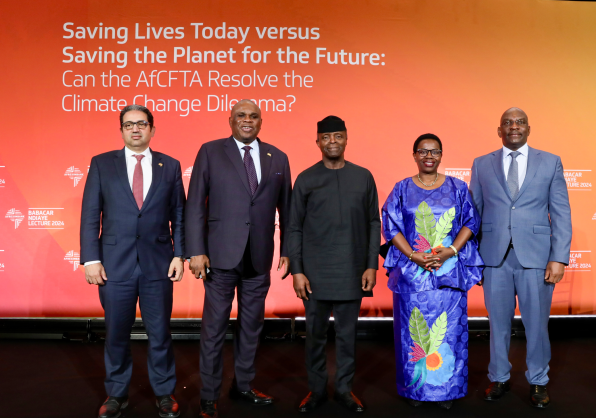
The eighth Babacar Ndiaye Lecture held at the Four Seasons Hotel in Washington D.C., on 26 October 2024, under-scored the need for African nations to strike a balance between short-term development imperatives and long-term climate goals.
Under the theme “Saving Lives Today versus Saving the Planet for the Future: Can the AfCFTA Resolve the Climate Change Dilemma” discussions centred on how the African Continental Free Trade Area (AfCFTA), Africa's most ambitious trade initiative, could serve as a vehicle for economic growth and environmental sustainability, positioning the continent as a leader in the global green transition.
The Lecture drew a distinguished audience of policymakers, academics, financial experts and climate advocates.
Speaking about Dr. Babacar Ndiaye in his opening remarks, H.E. Professor Benedict Oramah, President and Chairman of the Board of Directors of Afreximbank Group, said “Dr Babacar Ndiaye was most concerned by the long-term threats posed to humanity by climate change. He once said, "Climate change is the greatest threat to development, particularly in Africa, where millions of people depend on the environment for their livelihoods … Africa's economic transformation cannot happen without addressing climate change.”
Dr. Ndiaye's reflection on the impact of climate change was spot-on and intellectually deep.” But, “disappointingly, the global debate on climate has been so much focused on emissions reduction with the question of reducing its impact on Africa and other developing countries always reduced to a footnote. A call for Africa to decarbonise, when the continent has not even carbonised, poses a serious threat to the socio-economic development of a gas-rich continent that has at least six hundred million people without electricity.”
The African Continental Free Trade Area Agreement “is seen as a potent means of reducing carbon emissions as it is helping to domesticate industrial activities and minimise the carbon emissions caused by shipping of commodities to far-away lands for value addition and reshipping to Africa and elsewhere. We believe that The AfCFTA could offer a pathway to a just transition, enabling local industrial value addition while protecting the planet.”
Professor Yemi Osinbajo, SAN, GCON, the Immediate Past Vice President of the Federal Republic of Nigeria, delivered a powerful address titled “Sustainable Infrastructure for Africa's Future: Harnessing Innovation and Partnerships.” He spoke passionately about the advantages of the AfCFTA and its potential to transform Africa's trade landscape, reduce carbon emissions and foster innovation in green industries.
“There are two obvious advantages to a fully operational AfCFTA.The first is that 42% of African countries, aside from North Africa, now have legislation prohibiting the export of raw ores or minerals before being processed. This legislation gives African countries the benefit of jobs and revenues from local processing and manufacturing.
“The second advantage of the AfCFTA is that shipping is a major source of carbon emissions. Under current trade practices, a large share of African raw materials are exported to other regions, where they are processed or manufactured into finished products, usually using fossil fuel power sources, before being shipped back to Africa for consumption. This cycle contributes to higher emissions and constitutes a loss for African countries that do not reap the value chain gain from beneficiation. Intra-African trade in finished goods will substantially reduce this massive cause of global emissions,” he said.
The reduction of emissions by intra-African trade has been the subject of several empirical studies. Professor Osinbajo referred to a recent ECA/ CEPII study titled “Greening the African Continental Free Trade Area Agreement's Implementation" published in December 2023, which found, inter alia, that implementing the AfCFTA can boost intra-African trade by 35% in 2045 while increasing GHG emissions by less than 1%, compared to no AfCFTA or climate policies.
These studies do not factor in using renewable energy sources in the processing and manufacturing of traded goods, an assumption of the Climate Positive Growth paradigm, which would again substantially reduce emissions.
Professor Osinbajo cited mining bauxite in Guinea as an example. If Guinea, which has 25% of global deposits of bauxite, processed the bauxite it mines to aluminium with renewable energy in readiness for export, Guinea could save the world 335 million tonnes of carbon dioxide equivalent (CO2e) per year, which is approximately 1% of global emissions, and create 280,000 jobs and generate $37 billion of additional revenue. If it chooses to sell the aluminium within Africa, it will again save the huge shipping cost to countries thousands of miles away.
A Bloomberg study done for the African Development Bank (AfDB) in 2021 on the manufacture of battery precursors found that manufacturing battery precursors in the Democratic Republic of the Congo (DRC), which has plenty of lithium and cobalt, is three times cheaper than manufacturing it in the US, EU and China. Manufacturing in the DRC would extend value chain opportunities to other African countries, they would need manganese from Zambia, Tanzania, Gabon and South Africa to contribute to its capacity to produce these battery precursors. Manufacturing using renewable energy could significantly reduce the cost of manufacturing. Africa's abundant renewable energy has very low seasonality or intermittency, making it possible to reliably provide a renewable baseload to power continuous industrial production.
“The AfCFTA empowers African countries first to add value to materials and specialise in areas of national comparative advantage, and also to work together to trade more beneficially with the rest of the world,” said Prof Osinbajo.
He futher said that “Most African countries depend on fossil fuels for their energy needs and for fossil fuel rich African countries, this is also a major source of export earnings and fiscal revenues. Ostensibly in keeping with their net zero obligations, there has been a growing trend amongst development finance institutions to withdraw from fossil fuel investment. These actions include the World Bank's decision to cease funding for upstream oil and gas development in Africa and the restrictions on financing downstream gas development by the European Union, the United Kingdom, and the United States. Clearly, the implications of these actions are dire, where there are no immediate alternative sources of power and the cost of the transition to cleaner fuels may be prohibitive. Some studies show that divesting from fossil fuels could reduce GDP by as much as USD$30 billion for Nigeria, USD$22 billion for Algeria, and USD$19.3 billion for Angola.”
H.E. Dr Rania A Al-Mashat, Minister for Planning, Economic Development and International Co-operation, Arab Republic of Egypt said that while the “African continent is the least responsible for carbon emissions, it has the biggest burden in terms of financing climate change for developmental needs - such as food and water security, and access to energy.
She called for greater collaboration with national and international stakeholders “We need to work together; we need to bring the experiences from other places so that Africa can push forward with respect to development and sustainable economic growth.”
In her Goodwill Message, Ms. Amina J. Mohammed, Deputy Secretary-General of the United Nations and Chair of the United Nations Sustainable Development Group, spoke about the rapidly closing window to prevent the worst impacts of climate change. She addressed the fact that many African countries are mired in debt, exacerbated by extended crises with little access to long-term concessional financing to invest in sustainable development.
“With adequate access to financial resources at a reasonable cost, renewables can dramatically boost economies, grow new industries, create jobs and drive development, including by reaching the over 600 million Africans living without access to power,” said Ms Mohammed.
She also stressed the importance of prioritising inclusive policies that empower women and youth when building climate-resilient economies.
“By harnessing the collective might of the AfCFTA, Africa can make strides in addressing both climate action and sustainable development by promoting regional integration and fostering green industrialisation.
“The AfCFTA can help build climate-resilient economies while creating jobs, reducing poverty and strengthening food security.”
The eighth Babacar Ndiaye Lecture also reinforced Afreximbank's commitment to leadership in financing sustainable infrastructure and trade policies across the continent.
Distributed by APO Group on behalf of Afreximbank.
Media Contact:
Vincent Musumba
Communications and Events Manager (Media Relations)
Email: press@afreximbank.com
For more information, visit: www.Afreximbank.com
Follow us on X | Facebook (https://apo-opa.co/3YJR7iS)| LinkedIn (https://apo-opa.co/3Cet3eR) | Instagram (https://apo-opa.co/4ht2qDa)
About the Babacar Ndiaye Lecture
The Babacar Ndiaye Lecture is an annual event designed to foster dialogue around Africa's development challenges and explore practical solutions through policy, trade and diplomacy.
The Lecture honours Babacar Ndiaye, a former President of the African Development Bank, for his visionary leadership in advancing Africa's economic growth.
Afreximbank has hosted this Lecture every year since 2017 in honour of the late Dr. Babacar Ndiaye, the fifth President of the African Development Bank. Dr. Ndiaye transformed the Bank during his decade-long leadership and was also instrumental in establishing several other enduring Pan-African institutions, including Afreximbank, Shelter Afrique and the African Business Roundtable.
About Afreximbank
African Export-Import Bank (Afreximbank) is a Pan-African multilateral financial institution mandated to finance, facilitate and promote intra and extra-African trade. For over 30 years, the Bank has been deploying innovative instruments to deliver financing solutions that support the transformation of the structure of Africa's trade, accelerating industrialisation and intra-regional trade, thereby boosting economic expansion in Africa. A stalwart supporter of the African Continental Free Trade Area (AfCFTA), Afreximbank has in partnership with the African Union Commission and the AfCFTA Secretariat launched the Pan-African Payment and Settlement System (PAPSS) that was adopted by the African Union (AU) as the payment and settlement platform to underpin the implementation of the AfCFTA agreement. The AfCFTA Secretariat and the Bank have created a US$10 billion Adjustment Fund to support countries to effectively participate in the AfCFTA.
At the end of December 2023, Afreximbank's total assets and guarantees stood at over US$37.3 billion, and its shareholder funds amounted to US$6.1 billion. Afreximbank has investment grade ratings assigned by GCR (international scale) (A), Moody's (Baa1), Japan Credit Rating Agency (JCR) (A-) and Fitch (BBB). Afreximbank has evolved into a group entity comprising the Bank, its impact fund subsidiary the Fund for Export Development Africa (FEDA), and its insurance management subsidiary, AfrexInsure, (together, “the Group”). The Bank is headquartered in Cairo, Egypt.
A shack was blown several metres
The largest gathering of energy stakeholders on the African continent is gearing up to welcome global and African energy stakeholders for five days of dialogue and deals. African Energy Week (AEW): Invest in African Energy 2024 – dubbed the premier event for the African energy sector – will take place from November 4-8 in Cape Town, South Africa. The foremost platform to sign deals and further the agenda towards making energy poverty history by 2030, the conference will feature seven stages, including five content stages, two technical hubs and a full day of pre-event workshops.
With over 125 million barrels of proven oil reserves, 620 trillion cubic feet of natural gas and abundant opportunities in solar, wind and green hydrogen, Africa has the potential to become a global hub for energy. African energy demand is projected to more than double by 2050, with fossil fuels anticipated to account for up to 60% of the continent's energy mix by 2040. As such, this year's conference promises to drive a new wave of investment across the African energy sector, with industry experts and thought-leaders, African governments and national oil companies (NOCs), and energy investors leading discussions on the challenges and opportunities found on the continent.
AEW: Invest in African Energy is the platform of choice for project operators, financiers, technology providers and government, and has emerged as the official place to sign deals in African energy. Visit www.AECWeek.com for more information about this exciting event.
Africa's energy industry is both the backbone of the continent's economy and a catalyst for sustainable growth worldwide. As such, the AEW: Invest in African Energy 2024 conference will feature a series of pre-event interactive workshops, providing an opportunity for companies to share in-depth knowledge and exchange ideas with a targeted group of delegates. The workshops, hosted by companies such as Rystad Energy, NCDMB, CLG, Energeo Alliance and S&P Global Commodity Insights, will cover various topics including energizing Africa amid the global energy transition; legislative and regulatory context for promoting investment in exploration; and facilitating investments and mergers and acquisitions across the continent.
A high-level opening ceremony will kick off at the Cape Town International Convention Center (CTICC) on the first day of the event. The opening ceremony will feature addresses from Angola's Minister of Mineral Resources and Petroleum Diamantino Azevedo and South Africa's Minister of Electricity and Energy Kgosientsho Ramokgopa, and discussions with the likes of Dr. Omar Farouk, Secretary General of the African Petroleum Producers' Organization and Chairman and CEO of upstream oil company Kosmos Energy Andy Inglis. The AEW: Invest in African Energy 2024 opening will kick off a week of intense dialogue on the future of the African energy industry. The opening will also feature a number of panel discussions focusing on the vital role Africa plays in addressing global energy security, as well as keynote addresses from the heads of some of the largest energy companies in the world.
Representing the entire energy value chain from oil and gas to renewable energy to power and infrastructure, AEW: Invest in African Energy 2024 will feature a massive slate of regional ministers with the aim of unpacking the continent's strategies to make energy poverty history by 2030. Ministers from Libya and Algeria are poised to showcase North Africa's ambitious production targets while aiming to plug Europe's energy gap and enhance domestic energy access. Southern Africa's ripe opportunities in energy and mining will be put on display by ministers from Mozambique, Angola, South Africa, Zambia and Namibia while West African ministers from the MSGBC region, Nigeria, Ghana and Burkina Faso will provide updates on ongoing projects. With major producers such as Equatorial Guinea, Gabon and the Republic of the Congo (ROC) inviting investors to support diversification efforts in production and refining, regional ministers from Central Africa will share insight into available opportunities in oil and gas, mining and infrastructure. Meanwhile, as a frontier market, East Africa is incentivizing exploration in both on- and offshore basins while driving infrastructure and field development projects forward and will be represented by energy and mining ministers from Ethiopia, Uganda, and South Sudan.
Africa is accelerating the pace of upstream projects with the aim of boosting production and intra-African petroleum distribution. Across both mature and emerging hydrocarbon markets, investment opportunities continue to emerge, and as such, AEW: Invest in African Energy 2024 will feature a strong lineup of VIP speakers from energy supermajors Eni, bp, Chevron and TotalEnergies. The event will also feature representatives from some of the continent's most important energy players including Azule Energy, ReconAfrica, Etu Energias, Africa Oil Corp., Wood Mackenzie and Adarco Energy, among many more. The oil industries of African countries will be represented by NOCs from Angola, Namibia, South Africa, Tanzania, Uganda, among others.
With two technical hubs on the exhibition floor of the CTICC, the conference serves as a prime platform for companies to provide presentations on various industry-leading technical themes. The AEW: Invest in African Energy 2024 technical track features a dedicated stage for asset owners, engineers and technology innovators to present projects, provide deep insights into cutting-edge solutions, and share best practices to foster knowledge. Attendees will gain valuable insights into the future of energy and learn about ground-breaking projects while discovering new opportunities for collaboration and investment. An exclusive exhibition-only pass grants delegates access to both the innovative exhibition floor and the technical track.
Rounding off AEW: Invest in African Energy 2024's strong program, a series of technical excursions and site visits across Cape Town offer participants the unique opportunity to gain insight into ongoing projects and developments in South Africa. A guided tour of the Hydrogen Project at the University of the Western Cape will focus on industry technology and development. The tour will also take delegates to the South African Renewable Energy Technology Center at the Cape Peninsula University of Technology, which stands as the country's inaugural sustainable energy development technology facility. The excursion will feature a tour of the Atlantis Special Economic Zone, which stands as a promising landmark in Africa's energy landscape while showcasing advancements in sustainable energy solutions, economic development and innovation. Rounding off the site visits, the tour will also take participants to the Eskom Palmiet Power Station, a hydroelectric pumped storage facility that plays a key role in stabilizing the national power grid.
“AEW 2024 stands at the center of African energy and provides an unparalleled platform to forge partnerships, share knowledge and drive progress in the continent's energy sector. It is our collective responsibility to prioritize energy poverty alleviation and sustainable development, ensuring a brighter future for all Africans. We look very much forward to kicking off this exciting event and welcoming hundreds of delegates from all over the world to drive Africa's energy needs,” states NJ Ayuk, Executive Chairman of the African Energy Chamber.
During the AEW: Invest in African Energy 2024 conference, delegates will be exposed to project updates, industry highlights, investment opportunities and strategies that address the continent's goals for eradicating energy poverty and promoting environmental sustainability. With one week to go, the conference is already stacking up to become the foremost energy event of its kind once again on the African continent.
Distributed by APO Group on behalf of African Energy Chamber.
For years residents have been objecting to the Springfield and Vlakfontein mining project
Crucial wetlands in the Lesotho Highlands are in trouble
Yet water projects in Ngcobo are signed off as completed and successful
Loadshedding remains suspended for 212 days: R12.32 billion saved in diesel year-on-year Friday, 25 October 2024: Eskom has successfully suspended loadshedding for 212 consecutive days since 26 March 2024. This significant achievement is attributed to the ongoing success of its Generation Recovery Plan, which has been instrumental in maintaining a stable power supply across South...
Committee satisfied with report on matric examinations readiness
The Portfolio Committee on Basic Education is satisfied with the updated Status Report on Matric Examinations Readiness, noting that the first day proceeded smoothly, despite challenges posed by severe weather conditions in the Eastern Cape.
On Tuesday, the Portfolio Committee received an update report from the Department of Basic Education (DBE) and the Council for Quality Assurance in General and Further Education and Training (Umalusi) on examination readiness for the National Senior Certificate (NSC).
The committee said it noted concerns that the weather has already had an impact on the examinations, testing the DBE’s contingency plans in Gqeberha in the Eastern Cape, where storms affected electricity supply, preventing Grade 12 learners from doing the Computer Applied Technology (CAT) practical examination.
The exam was scheduled for Tuesday.
“The committee has, however, been assured that as part of its planning, the DBE ensures that more than one question paper is set and quality approved by Umalusi for each exam paper, so the 400 affected learners will do the examination on another date,” the committee said in a statement.
Committee chairperson Joy Maimela said although the committee is concerned about back-up plans to deal with all eventualities, their fears have been allayed due the contingency plans reported on.
“We urge the DBE and Provincial Education Departments (PEDs) to take note of further weather warnings and make the necessary plans to accommodate our matric learners.”
READ | Eastern Cape disaster teams on high alert
The committee heard that the first day of the examinations went by swiftly and seamlessly. The exams commenced on 21 October and will conclude on 28 November 2024.
Over the examination period, 200 question papers are scheduled to be written. Six question papers were written on the first day on Monday.
On Tuesday, a further 15 papers were written on Computer Applications Technology (Practical) and non-official languages. Wednesday’s papers are Today Business Studies and Information Technology.
In its preliminary briefing on examination readiness last month, the committee heard that that 727 121 full-time candidates and 155 215 part-time candidates are registered for this year’s NSC examinations.
A total of 6 334 public schools and 575 independent centres are serving as exam centres.
The seventh cohort of learners is to sit for South African Sign Language Home Language (SASL HL) examinations. A total of 210 candidates for the SASL HL exams come from 23 schools in nine provinces, compared to 134 candidates in 2023.
Marking
The committee previously heard that more than 55 000 markers have been appointed. Concerns were raised by committee members about reports of a shortage of markers for certain subjects.
The DBE said that there is a shortage in History, English (HL) and Afrikaans (HL and FAL).
To overcome this problem, a staggered marking approach has been adopted by some PEDs so that Paper 3 of the languages are marked in the first session.
Other PEDs have embarked on a second recruitment drive and a few PEDs have extended the number of marking days. The committee was assured that the shortage of markers will not compromise the quality of marking.
In this regard, Umalusi said it has concluded the audit of the appointed markers to verify that their appointments align with established criteria, except for four provinces – North West, Limpopo, Free State and Northern Cape – which will be finalised by 30 October 2024.
Umalusi indicated that it is satisfied with the continuous enhancement of security measures, particularly the expedited vetting of individuals involved in handling live question papers.
To mitigate the identified risk regarding the partially approved storage points, with specific reference to the DBE, the department will use concessions from the heads of provincial departments to grant permission, and Umalusi will conduct a sample on some of these storage facilities for monitoring purposes.
Umalusi said that during the verification of marked scripts, it will track how the PEDs are managing the marking process in subjects where marker shortages were identified as a risk.
Additionally, Umalusi will closely monitor the implementation of the staggered marking approach to ensure the credibility of the examinations.
Maimela wished the Class of 2024 every success as they continue their exams. – SAnews.gov.za
DikelediM
Wed, 10/23/2024 - 14:53
On Monday a security vehicle escorting the power utility’s workers into the area was hijacked.
Municipality says mop up and damage assessment operations are underway
Government activities for the week 21 – 25 October 2024
On Monday, 21 October, the Gauteng MEC for Roads and Transport, Kedibone Diale-Tlabela met with the department’s professional service providers and contractors to discuss issues relating to incomplete and delayed road infrastructure projects in the province.
Also on Monday, Dr Kgosientsho Ramokgopa, the Minister of Electricity and Energy, briefed the media on the Independent Power Producer Programme.
On Tuesday, 22 October, President Cyril Ramaphosa will participate at the XVI BRICS Summit, in Kazan, Russia.
Also on Tuesday, the Minister of Cooperative Governance and Traditional Affairs, Velenkosini Hlabisa, will launch the National Strategic Hub at Emperors Palace, Kempton Park.
On Wednesday, 23 October, the Deputy Minister of Forestry, Fisheries and the Environment, Narend Singh, will deliver the keynote address at the Environmental Assessment Practitioners Association of South Africa Regional Conference at the Southern Sun Elangeni Maharani, Durban, KwaZulu-Natal Province.
On 24 October there are no confirmed events.
On 25 October there are no confirmed events.
Janine
Tue, 10/22/2024 - 13:27
Eskom calls on prepaid customers to update meters before 24 November deadline
Eskom has urged prepaid electricity customers to recode their meters by 24 November 2024 as required by the Standard Transfer Specification Association (STSA).
According to Eskom, after this deadline, meters will no longer accept electricity tokens unless they are updated to key revision number (KRN) 2.
In response to recent reports, including one from City Power, Eskom confirmed that there will be no extension to the 24 November 2024 deadline for the token identifier (TID) update.
The recording process affects approximately 6.9 million prepaid meters in Eskom-supplied areas.
“Failure to recode by the deadline will prevent customers from loading electricity tokens, rendering their meters inoperable,” the State-owned power utility said on Monday.
The entity said it has already prepared 97% of the meters by pre-coding them, making it simple for customers to complete the process themselves.
“This do-it-yourself (DIY) process requires customers to purchase credit tokens from authorised vendors, after which they will receive two sets of 20-digit codes to enter into their meters for the update.”
Meanwhile, Eskom is intensifying its awareness campaign to ensure all customers are informed and encourages those who have not yet recoded their meters to act quickly to avoid service disruptions.
The utility also thanked those who have already completed the process and reassured customers that support teams are available for assistance.
“For more information, updates, and assistance, customers are encouraged to visit Eskom’s website, follow its social media platforms, listen to radio announcements, or participate in local engagement sessions.
“Eskom remains committed to a smooth transition to KRN2 and ensuring uninterrupted service for all customers.”
Customers needing help can call 0860 037 566. – SAnews.gov.za
Gabisile
Mon, 10/21/2024 - 15:37
SAWS warns of disruptive rain, severe thunderstorms
The South African Weather Service (SAWS) has warned that the Eastern Cape and KwaZulu-Natal will experience disruptive rain while severe thunderstorms are likely to occur in the Free State, North West as well as the Northern Cape.
“A cut-off low pressure system, surface trough and ridging high will result in scattered to widespread showers and thundershowers resulting in flooding in places,” said SAWS.
A surface high pressure south of the land will feed in a deep layer of moisture over the Eastern Cape, resulting in heavy downpours along the southeast coast between Cape St Francis and Port St Johns where the highest amounts of rainfall are expected between Monday evening and Tuesday afternoon.
The latest models are increasing rainfall along the south coast.
READ | Disruptive rain warning for Eastern Cape
The impact of the disruptive rain includes flooding of settlements (formal/informal), roads, and bridges, damage to infrastructure as well as difficult and dangerous driving conditions due to slippery roads and reduced visibility.
Some areas could be cut-off due to flooded roads.
“Disruptive rainfall is expected associated with a cut-off low move over the Eastern Cape, while a surface high pressure south of the land feeds in a deep layer of moisture over the province. The Koukamma, Dr Beyers Naude, Blue Crane Route, Makana, Raymond Mhlaba LMs will be affected from Monday into Tuesday evening,” SAWS said.
This might result in flooding of roads and settlements, danger to life, disruption to essential services, communities temporarily cut-off and damage to roads and bridges.
meanwhile, KwaZulu-Natal is on Monday expected to experience widespread showers and rain is expected over the south-eastern parts of the province.
“Some good rainfall amounts north of 50mm have been observed with Mount Edgecombe standing out with 146mm. As rainfall is still falling in some parts in the south-east, this may lead to flooding of roads and settlements, damage to infrastructure and mud-based houses,” SAWS said.
The province has been warned of the likelihood of flooding of roads, bridges and settlements (formal and informal), danger to life (fast flowing streams/deep waters), major disruption of traffic flow due to major roads being flooded, disruption to essential services (Water, electricity, communication, etc) as well as damage to mud-based houses.
“Conditions are favorable for the development of severe thunderstorms resulting heavy downpours with possible rainfall amount in excess of 40mm expected over the Free State, central and western parts of the North West, and the north eastern parts of the Northern Cape on Monday. These conditions are accompanied by strong damaging winds, excessive lightning and hail,” SAWS said.
These conditions are expected to result in flooding of roads, settlements and low-lying areas. This may lead to the closure of some bridges and roads Injuries and danger to life.
Furthermore, the impacts could include damage or loss of infrastructure, settlements (formal and informal), property, vehicles, livelihood and livestock, falling of trees and possible injuries due to flying debris as well as disruption of municipal and other essential services (power supply).
There could also be major travel disruptions (including route obstructions) and accidents.
On Tuesday, Gauteng, Limpopo and Mpumalanga could experience severe thunderstorms.
“Thunderstorms are expected to develop over Gauteng, the Highveld of Mpumalanga and the western Bushveld of Limpopo tomorrow resulting in heavy downpours (widely 15-25mm with isolated areas receiving up to 30mm and strong to damaging winds.
These conditions may lead to minor impacts.
These include localised damage to informal houses or structures, disruption of services due to power surges and localized flooding of susceptible roads, low-lying areas and bridges.
“Given these potential impacts, it is essential to stay informed and monitor weather warnings from the South African Weather Service throughout this period to ensure preparedness and safety.
“The South African Weather Service will continue to monitor any further developments relating to this weather system and will issue subsequent updates as required,” SAWS said.
Furthermore, the public is urged and encouraged to regularly follow weather forecasts on television and radio. -SAnews.gov.za
Updated information in this regard will regularly be available at www.weathersa.co.za as well as via the SA Weather Service X account at @SAWeatherServic. -SAnews.gov.za
nosihle
Mon, 10/21/2024 - 15:32
Eskom’s system showing better health
Electricity and Energy Minister, Dr Kgosientsho Ramokgopa, has announced that Eskom’s unplanned capability loss factor (UCLF) has significantly improved, indicating that the system is becoming healthier.
“If you look at what the UCLF recorded over the past seven days, you see that we’ve been averaging at about 10 500 megawatts, essentially 10 500 megawatts of capacity that is installed was not available on account of various reasons. [These include] the units failing and units not performing at their optimal capacity. If you had to compare this with the same period last year, it’s an improvement of about 5 000 megawatts.
“That’s significant, and that’s why we have been able to keep the lights on [for a] very considerable period,” Ramokgopa explained on Monday.
WATCH | Minister Ramokgopa briefs media
The Minister was briefing media in Pretoria on the Independent Power Producer (IPP) programme as part of his regular energy security updates.
“It’s important that we’re able to consistently improve this kind of result. And of course, in numbers, it means that there’s less and less reliance on diesel to power our electricity requirement.”
Starting from 1 April to 17 October 2023, Eskom spent about R18 billion to prevent power cuts, down by R12 billion compared to the same period this year.
“There’s less reliance on diesel. And if you look at the open cycle gas turbines (OCGT) load factor, the percentage of time that we’re relying on these at the same period last year, we were sitting at about 8.95% and this year, we were sitting at about 4.59%,” Ramokgopa said.
The Minister believes that this speaks to the improvement of Eskom’s systems, which he stated will be passed on to the end consumer.
Load shedding
Ramokgopa said it was an “anomaly” to celebrate the fact that there were 208 days of no load shedding.
“That should be the standard… The standard is that there shouldn’t be any load shedding, and the standard should further suggest that we should not rely on expensive fuel sources to keep the lights on.
“This is not an achievement but a step in the right direction. An achievement will be when there’s no load shedding and [we] can use a cheaper form of existing generation for us to keep the lights on. And that’s where the Independent Power Producer programme comes in.”
IPP programme
Shifting his focus to the IPP programme, Ramokgopa said that the programme has procured 15 432 megawatts of renewable energy since its inception in 2011, with 8 231 megawatts currently in the market to be evaluated and 1 897 megawatts under construction.
Ramokgopa said the seventh administration plans to be aggressive in procurement, with interventions to improve the programme’s structure and efficiency.
The renewable energy projects are concentrated in the Western Cape, Northern Cape, and the Eastern Cape, leveraging optimal renewable energy resources.
In addition, the Minister said this move has created 85 800 job opportunities and contributed significantly to local economies, with a focus on socio-economic transformation.
Ramokgopa announced that the project has seen significant market confidence, with international and domestic investments totalling R272 billion.
The focus, he stressed, is on making electricity generation more affordable and competitive, to reduce reliance on expensive fuel sources.
“The focal point of the ministry is to ensure that we can reduce the cost of electricity in the country, make businesses competitive, and ensure that [sustain power] in households.” – SAnews.gov.za
Gabisile
Mon, 10/21/2024 - 14:11
Monday, 21 October 2024: Eskom is urging prepaid electricity customers to recode their meters by 24 November 2024, as required by the Standard Transfer Specification Association (STSA). After this deadline, meters will no longer accept electricity tokens unless they are updated to Key Revision Number (KRN) 2. In response to recent reports, including one from...
Heuningvlei was devastated by flooding for two consecutive years but the residents are determined to keep their town alive
Friday, 18 October 2024: The Generation Operational Recovery Plan is on track to deliver yet another milestone, with the longest stretch of uninterrupted power supply in five years. The milestone will be reached on Day 206 of loadshedding suspension that falls on Saturday, 19 October 2024. Today, loadshedding remains suspended for 205 consecutive days since...
SA must enhance agricultural productivity to achieve Zero Hunger
Minister in the Presidency Khumbudzo Ntshavheni says to achieve ‘Zero Hunger’, the country must enhance agricultural productivity and ensure equitable access to nutritious food.
“This involves investing in sustainable farming practices, empowering smallholder farmers and promoting local food systems,” the Minister said on Friday.
Addressing the 5th International Social Justice Conference and 6th Social Justice Summit -- held at the Artscape Theatre in Cape Town -- Ntshavheni said by supporting farmers, the country can boost food production and create jobs, fostering both economic growth and community resilience.
The start of the 5th International Social Justice Conference on 16 October coincided with World Food Day, an international day celebrated every year worldwide to commemorate the date of the founding of the United Nations Food and Agriculture Organisation in 1945.
Ntshavheni underscored the importance of promoting sustainable farming methods that enhance productivity, while protecting natural resources.
“We must forge partnerships across government, the private sector and civil society, including academia, to create comprehensive strategies that tackle food insecurity,” she said, adding that collaboration is key if South Africa is to attain the goal of Zero Hunger.
Zero Hunger is Goal 2 of the United Nation’s Sustainable Development Goals (SDGs). It is about creating a world free of hunger. The global issue of hunger and food insecurity has shown a sharp increase since 2015, a trend exacerbated by a combination of factors including the COVID-19 pandemic, conflict, climate change and deepening inequalities.
According to the United Nations (UN), by 2022, approximately 735 million people – or 9.2% of the world’s population – found themselves in a state of chronic hunger – a staggering rise compared to 2019.
Ntshavheni said practices like crop rotation, agroforestry and organic farming can increase resilience against climate change and reduce reliance on chemical inputs.
“Supporting smallholder farmers through training and access to technology can empower communities and boost local food production. It is therefore important and significant that universities like Stellenbosch are deeply involved in this initiative.
“It would be important for us in government to explore opportunities to partner with institutions of higher learning on this initiative in order to extend awareness to communities in rural areas of our country that are daily confronted with food insecurity.
“This must make us understand the urgency to develop sound drought resilience and water conservation plans,” the Minister said.
The 6th Social Justice Summit was hosted by the Centre for Social Justice, based at Stellenbosch University.
Striving for food security
In 2014, government introduced the National Policy on Food and Nutrition Security, followed by the National Food and Nutrition Security Implementation Plan (NFNSIP), whose implementation involved multiple government departments and entities, with various interventions receiving support from local and international development partners.
“We are now in the process of developing the NFNSIP (2024 -2030) as we chase the National Development Plan (NDP) Vision 2030 goals. We are not only calling for a partnership in the [NFNSIP] development but with its implementation, as our country focuses on achieving the overdue SDG on Zero Hunger.
“Our policy approach to Zero Hunger acknowledges the lingering consequences of apartheid, which has left deep-rooted inequalities in access to land, income, and employment and other economic opportunities,” the Minister said.
Ntshavheni said as the country’s population growth and climate change intensifies, the urgency of food security cannot be overstated.
Ntshavheni said hunger on its own is a multifaceted challenge that affects the economy, health system and social fabric in general.
Addressing the conference, Electricity and Energy Deputy Minister Samantha Jane Graham said the issue of energy affordability remains a challenge, as the nation navigates the challenge of the accessibility of food prices.
Graham said her office is committed to finding innovative and sustainable solutions for energy sources. – SAnews.gov.za
Edwin
Fri, 10/18/2024 - 14:39