• Skip to main content
  • Skip to header right navigation
  • Skip to after header navigation
  • Skip to site footer
MyZA

MyZA

News, Directory, Events and Other Stuff

  • Social Media
  • Sport
  • World News
  • Home
  • Submit News
  • Directory
  • Events
  • Stratlec
  • TFSA
  • News
    • APO
    • Today’s Sport News
    • Todays Social Media and Tech Headlines
    • Today’s World News
    • Today’s SA Financial News
  • Contact
You are here: Home / Archives for Energy

Energy

11 February 2025

Tributes continue to pour in for nuclear scientist Senamile Masango 

Location: News

Tributes continue to pour in for nuclear scientist Senamile Masango 

Minister in the Presidency responsible for Women, Youth and Persons with Disabilities, Sindisiwe Chikunga, says the late Senamile Masango, was a beacon of hope and inspiration to countless young women aspiring to pursue careers in science and technology.

Chikunga joined South Africans in mourning the death of an accomplished nuclear scientist, and trailblazer in the field of science and innovation.

READ | Nzimande mourns passing of SA’s most distinguished young scientist

READ | Tributes pour in for nuclear scientist Senamile Masango

Hailing from Nongoma in northern KwaZulu-Natal, Masango passed away in hospital following a short illness. The 37-year-old was a leading advocate for women in Science, Technology, Engineering and Mathematics (STEM).

Expressing deep sadness and heartfelt condolences, Chikunga said Masango was more than a nuclear scientist.

"She was a beacon of hope and inspiration to countless young women aspiring to pursue careers in science and technology. Her passing is a profound loss not only to her family, friends, and colleagues but to the entire country. Her contributions to the National System of Innovation (NSI) will forever remain part of South Africa’s scientific and developmental legacy.”

The Minister added that Masango’s life’s work was dedicated to innovation, women’s empowerment, and youth development.

“She worked tirelessly to create opportunities for underrepresented groups in science, ensuring that future generations of young women could access and thrive in careers traditionally dominated by men. Her contributions extended beyond the laboratory, influencing national and international platforms where she remained a revered figure.”

In recognition of Masango’s trailblazing contributions to the NSI, Chikunga said the Department of Women, Youth and Persons with Disabilities, remains committed to strengthening key initiatives that advance women's participation in science, technology, and industrial development. 

Among these are:
•    South African National Service Institute (SANSI): The department, in partnership with the Council for Scientific and Industrial Research (CSIR), is supporting the implementation of the South African Defence Force led National Youth Service initiative, which aims to equip young women with technology, digital skills, and engineering expertise to ensure their meaningful participation in the industrial economy.

•    Emerging Industrialists Accelerator Programmes: The department, working with the  CSIR, has developed an Agricultural Cooperatives Model, leveraging precision agriculture technologies to empower women farmers with market-driven skills and access to industrial value chains.

Additionally, the department is leading efforts to support women industrialists in energy, maritime, aerospace, and advanced manufacturing, ensuring they have access to mentorship, financing, and market opportunities.

“Senamile Masango’s passing reminds us of the importance of nurturing and supporting women scientists and leaders as we strive for an inclusive, equitable, and innovative South Africa.

“The Ministry extends its deepest condolences to the Masango family, her friends, colleagues, and the many sectors of society she worked with. May her soul rest in eternal peace,” Chikunga said. -SAnews.gov.za
 

GabiK
Tue, 02/11/2025 - 09:50
299 views
Read moreTributes continue to pour in for nuclear scientist Senamile Masango 
11 February 2025

Nzimande mourns passing of SA’s most distinguished young scientist

Location: News

Nzimande mourns passing of SA’s most distinguished young scientist

The Minister of Science, Technology and Innovation, Professor Blade Nzimande, has joined the Presidency in mourning the passing of Senamile Masango, one of the country’s most distinguished young scientists. 

Masango passed away on Sunday, February 9, 2025, at the age of 37. 

The Minister described her as a young, resourceful, and passionate nuclear physicist, who served the country with distinction in various capacities.

Masango served as a board member of the Nuclear Energy Corporation of South Africa (NECSA), where she held the position of Chairperson for the Research and Development Committee.

“Because of her industriousness and commitment to scientific excellence, she was recognised through numerous prestigious honours, including being selected in 2017 to be among 50 candidates to be part of a team of scientists who conducted one of the first African research missions within the European organisation for nuclear research in Switzerland (CERN). 

“She also led the research team representing South Africa at the BRICS Youth Energy Agency,” Nzimande said.  

Masango was also a member of the Human Resource Development Council (HRDC), a national advisory body, led by Deputy President Paul Mashatile. 

The Minister described the young scientist as not only an extraordinary talent in her field but also a passionate advocate for promoting science among young black individuals, particularly young girls. 

Driven by her commitment to empowering women and girls, she founded the Women in Science and Engineering in Africa (Wise) Foundation in 2015. 

This initiative provides mentorship to young girls in schools, encouraging them to pursue careers in science.

Through her foundation, she launched programmes in South Africa and across Africa aimed at inspiring young girls to pursue science and empowering women with the skills to become high quality scientists, engineers and researchers.

“As a country, we continue to be confronted with the challenge of a lack of confidence and often the fear of mathematics and science, in particular within the black community. 

“Through her work as an activist scientist, Senamile made a huge contribution to the Department of Science, Technology and Innovation’s strategic goal of increasing the number of young girls and women who take up science careers, and the development of critical skills that are required to enable our country to achieve higher levels of development,” the Minister said.

At the time of her passing, she was conducting research at Triumf, Canada’s national laboratory for nuclear and particle physics, and was preparing to pursue her PhD in Nuclear Physics. 

“All of this underscores the depth of the loss to our country’s public science system,” Nzimande said. 

The Minister extended his deepest condolences to the family, friends, and colleagues of Masango. 

“May her selfless work serve as inspiration for us to empower more young girls and women through science.” – SAnews.gov.za

Gabisile
Tue, 02/11/2025 - 09:07

60 views
Read moreNzimande mourns passing of SA’s most distinguished young scientist
10 February 2025

Tributes pour in for nuclear scientist Senamile Masango

Location: News

Tributes pour in for nuclear scientist Senamile Masango

The Chairperson of the Human Resource Development Council (HRDC), Deputy President Paul Mashatile, has described the late pioneering nuclear scientist, Senamile Masango, as someone who was a beacon of hope for many young people, especially women. 

The Deputy President paid tribute to Masango, after receiving the sad news of the passing of South Africa’s first Black nuclear scientist, and a member of the HRDC, on Sunday, 9 February 2025.

Masango, who hailed from Nongoma in northern KwaZulu-Natal, passed away in hospital following a short illness. She was 37 years old.

“Her passion for developing critical skills among the population and women in science, in particular, will be sorely missed,” the Deputy President said in a statement on Monday. 

Masango, a PhD candidate, was a globally recognised nuclear scientist, esteemed energy leader and pioneering entrepreneur. 

As a trailblazer in the field of nuclear science, she was widely respected for her groundbreaking research particularly at the European Organisation for Nuclear Research (CERN). 

Her achievements were a source of pride, as she became the first African woman to conduct experiments at CERN.

Masango’s brilliance gained international recognition when she received the prestigious Women in Science Award in 2022. 

The Deputy President’s Office noted that her influence extended beyond her scientific accomplishments, as she is also a visionary entrepreneur. 

She served as the founder and Executive Chair of Mphathisithele Consulting, an energy consulting firm.

She also served on several public sector science bodies including the South African Nuclear Energy Corporation (Necsa) and recently became a member of the HRDC. 

Due to her groundbreaking work in empowering women through science, she has received numerous local and international honours. 

These include being recognised as one of the 50 Global Inspirational Women of 2020 and being named a finalist for the Women in Tech Global Awards in 2021.

Despite her youth, Masango made a significant contribution to the advancement of science and the development of essential skills for the country.

“On behalf of government and the HRDC, we wish to convey our deepest condolences to the Masango family, her immediate community, and the science fraternity at large. May her soul rest in eternal peace,” said the Deputy President. 

Her establishment of Women in Science and Engineering (WISE) and her advocacy for greater representation and opportunities for women in science, technology, engineering, and mathematics (STEM) fields have made a significant impact.

The Office of His Majesty the King Misuzulu KaZwelithini of the Zulu nation, has also paid his tribute to the renowned nuclear scientist.

Masango came from rural Nongoma, which is the traditional seat of the Zulu monarchy in northern KwaZulu-Natal.

“On behalf of the Zulu nation, I offer my deepest sympathies to your family. May you find comfort in the knowledge that her impact will continue to inspire many. We stand with you in mourning, and we pray that her soul rests in eternal peace,” the King said on Monday. 

Former Public Protector and the Law Faculty Trust Chair in Social Justice and Law Professor at Stellenbosch University, Professor Thuli Madonsela said she was “exceedingly” shocked and saddened by the news of the passing of Masango. 

Madonsela said Masango was a friend of the Centre for Social Justice at Stellenbosch University and a tireless supporter of the #Action4Inclusion initiative aimed at eradicating student debt as a barrier to higher education.

“Heartfelt condolences to the family, friends and colleagues. May her kind soul rest in peace,” Madonsela said. – SAnews.gov.za

Gabisile
Mon, 02/10/2025 - 12:55

297 views
Read moreTributes pour in for nuclear scientist Senamile Masango
10 February 2025

TNPA signs milestone agreements

Location: News

TNPA signs milestone agreements

Transnet National Ports Authority (TNPA) has achieved a key milestone in the development of the South Dunes Precinct at the Port of Richards Bay by signing two major Terminal Operator Agreements (TOA). 

The first agreement for Liquefied Natural Gas (LNG) has been signed with Zululand Energy Terminal, while the other agreement is signed with FFS Tank Terminals.

The agreements represent a leap forward in advancing South Africa’s energy and maritime sectors, underscoring TNPA’s strategic objectives to foster sustainable development and investment in critical infrastructure.

Speaking at the signing ceremony held at South Pier in the South Dunes Precinct at Port of Richards Bay in KwaZulu-Natal, Andile Sangqu, Transnet Board chairperson, said the agreements signify Transnet’s commitment to support South Africa’s crucial pathway to economic growth and industrialisation through energy transformation and enhanced energy security.

“They represent a dual achievement, the introduction of a pioneering LNG import facility and the enhancement of our liquid bulk capacity through the redevelopment of FFS Tank Terminals,” Sagqu said.

Sangqu said the LNG terminal is a critical response to the nation’s energy challenges.

“Overall, the TNPA LNG project is aligned with the Department of Mineral Resources and Energy (DMRE) plans to deliver 6 000 MW of Gas-to-Power in South Africa. 

“This 6 000 MW is split into 3 000 MW as per Integrated Resource Plan (IRP) and 3 000 MW for Eskom new generation in the UMhlathuze region. 

“By enabling the importation of Liquefied Natural Gas, we are promoting the development of sustainable source of energy to meet limited and depleting gas supplies,” he said. 

Sangqu said the initiative positions Transnet as a key player in South Africa’s nascent LNG market.

Sangqu said with the LNG Import Terminal expected to generate approximately 1 000 jobs and additional opportunities emerging during the construction of berth 207 and the necessary pipeline infrastructure, they are committed to building a sustainable workforce for the future.

In his remarks, Tshokolo Nchocho, TNPA Board Chairperson, said the agreements mark significant progress in advancing the country's energy security, economic growth and the transformation of our port infrastructure.

“The establishment of South Africa’s first LNG Import Terminal represents a strategic response to our nation’s energy challenges,” Nchocho said.

Nchocho said the establishment of South Africa’s first LNG Import Terminal represents a strategic response to the nation’s energy challenges.

“By securing a stable and diversified energy supply, we are ensuring that our industries and communities have the power they need to thrive. 

“By modernising existing infrastructure, this project not only enhances maritime fuel services but also plays a critical role in supporting global shipping operations, ensuring efficiency and competitiveness in an evolving energy landscape,” he said.

KwaZulu-Natal Premier Thami Ntuli hailed the signing of the two multibillion rand Terminal Operator Agreements (TOA), saying they will advance South Africa’s energy and maritime sectors and help grow the country’s economy and spur the creation of much-needed jobs.

“As detailed by Transnet already, this is a significant milestone in the development of the South Dunes Precinct at the Port of Richards Bay and is set to support the Gas-to-Power Programme of South Africa,” Ntuli said.

Ntuli said the signing ceremony aligns quite solidly with the DMRE’s Strategic Plan (2020-25) that charts ambitions to become a country that is not only energy secure, but one that is unrolling a decarbonisation strategy, as the country steadily transitions towards cleaner energy sources.

“Natural gas is becoming increasingly accepted as a viable alternative or transitional source of power which although not a renewable, is far cleaner and less expensive in capital cost than coal which currently supports our base load,” Ntuli said.

Ntuli said the country has learnt that gas can negate pollution output from other fossil fuel sources and at the same time, halve the carbon emissions.

“These two agreements are welcomed, as they are the fruit born out of the Zululand Energy Terminal (ZET), a strategic partnership between Vopak Terminal Durban (PTY) Ltd and Transnet Pipelines to develop, construct and operate a new Liquefied Natural Gas (LNG) Terminal in Richards Bay,” the Premier said.

Ntuli said one of the most pleasing aspects of the agreement is expected to generate significant employment opportunities, while also fostering skills development and driving transformation in the maritime and energy sectors.

“In this regard, the projects are expected to generate approximately 1 000 jobs, with additional opportunities created during the construction of berth 207 and pipelines,” he said.

Acting TNPA Chief Executive, Phyllis Difeto, said this milestone underscores the commitment to transforming the country’s logistics sector and being responsive to national energy goals.

Difeto said collectively, the projects contribute to the economic resilience of the uMhlathuze region, with significant job creation in construction, operations and port-related industries.

“These initiatives highlight our commitment to transformation and workforce empowerment,” she said.

The signing of the agreements aligns with Transnet’s strategic pursuit of partnerships with the private sector and signifies a leap towards delivering Transnet's objectives to align its freight logistics business with key commodities of the South African economy.

On 15 December 2022, TNPA issued a Request for Proposal (RFP) to secure a terminal operator for the development of a LNG terminal in the South Dunes Precinct.

Following a thorough evaluation process in compliance with Section 56 of the National Ports Act (Act No. 12 of 2005), Zululand Energy Terminals was appointed as the preferred bidder.

The project involves the design, development, financing, construction, operation and maintenance of the LNG terminal over a 25-year concession period.

The initiative supports the Gas to Power Programme of South Africa, aligning with the Department of Mineral Resources and Energy’s Strategic Plan (2020-25) to enhance energy security and transition to cleaner energy sources.

TNPA has also finalised a 25-year concession TOA with FFS Tank Terminals for the development and operation of a liquid bulk terminal specialising in bunker fuels at the Port of Richards Bay.

The facility, located at the former Engen bunker terminal, will focus on enhancing the port’s capacity for handling liquid bulk and fostering economic growth.

TNPA is responsible for the safe, effective, and efficient economic functioning of the national port system, which it manages in a landlord capacity. 

It provides port infrastructure and marine services at the eight commercial seaports in South Africa in the cities of Richards Bay, Durban, Saldanha, Cape Town, Port Elizabeth, East London, Mossel Bay and Ngqura. It operates within a legislative and regulatory environment and is governed by the National Ports Act (Act No. 12 of 2005). 

The development of these two terminals is a game changer in the economic landscape of the region. 

The LNG terminal alone is projected to create over 1,000 job opportunities during construction, operations including downstream business for communities surrounding the uMhlathuze region, while the bunkering services terminal aims to generate around 50 direct and indirect jobs from the project initiation phase. – SAnews.gov.za

Edwin
Mon, 02/10/2025 - 14:48

232 views
Read moreTNPA signs milestone agreements
10 February 2025

Government creates enabling environment for investors

Location: News

Government creates enabling environment for investors

In an effort to create an enabling environment for investors, the Department of Forestry, Fisheries and the Environment (DFFE) is prioritising cutting red tape and boosting investor confidence by removing bureaucratic delays that prevent businesses from investing in sustainable industries.

“South Africa is uniquely positioned to become a leader in the green economy. Our vast renewable energy potential, our forestry-based carbon markets, and our sustainable fisheries sector all present opportunities for attracting much-needed investment. However, to fully unlock this potential, we must remove obstacles that hinder growth,” Forestry, Fisheries and the Environment Minister, Dr Dion George, said on Monday.

According to the Minister, countries that create an enabling environment for green investment will be at the forefront of economic growth and job creation in the coming decade.

He made this observation after his participation at the recent World Economic Forum (WEF), held in Davos, Switzerland, as discussions reaffirmed that global investors are actively seeking opportunities in sustainable industries.

During his engagements, George met with global leaders, investors, and policymakers to discuss how South Africa can attract investment in key sectors, such as renewable energy, sustainable forestry, and marine conservation. 

These sectors hold immense potential, not only to protect our environment, but also to drive economic expansion and employment opportunities, particularly in rural and coastal communities.

“The DFFE has also gone to great lengths to leverage forestry and fisheries for economic expansion. South Africa’s forests are not just an environmental asset, they are a key economic driver in carbon trading and sustainable wood production. 

“The department is working to enhance carbon sequestration initiatives that will allow South Africa to benefit from global climate finance mechanisms. Sustainable fisheries are central to food security and economic development. The department is actively working on policies that will protect marine ecosystems while creating sustainable jobs in the fishing industry,” the Minister said.

The DFFE is also aligning with the Global Green Finance Movement. 

“Investors at Davos made it clear that capital is moving toward sustainable projects. Our government must ensure that South Africa is positioned as a leading destination for climate finance and green investment, which includes partnering with the private sector to scale up renewable energy projects and green infrastructure,” George said.

The Minister’s engagements at WEF Davos underscored the critical message that South Africa must act decisively to secure its place in the global green economy. 

“We cannot afford to lag behind while other emerging markets capitalise on the shift toward sustainability,” he said. -SAnews.gov.za


nosihle
Mon, 02/10/2025 - 09:16

18 views
Read moreGovernment creates enabling environment for investors
8 February 2025

SONA in numbers – 2025

Location: News

SONA in numbers - 2025

MOURNING

  • 14 – South African soldiers who died as part of a mission to bring peace to the Eastern Democratic Republic of the Congo.

HISTORY

  • 70 – years since the adoption of the Freedom Charter at the Congress of the People in Kliptown.
  • 30 – years since the dawn of democracy.

ECONOMY AND INFRASTRUCTURE

  • 5 – number of years for the implementation of the Medium-Term Development Plan.
  • 3 – government’s strategic priorities to be advanced by the Medium-Term Development Plan.
  • Over 3% – the level of economic growth that government aims to lift to create the virtuous cycle of investment, growth and jobs.
  • R100 billion – value of infrastructure financing expected from local and international financial institutions and investors.
  • More than R940 billion – money that government will spend on infrastructure over the next three years.
  • 3 – number of years during which government will spend more than R940 billion on infrastructure.
  • R375 billion – money to be spent by state-owned companies on infrastructure.
  • 12 – blended finance projects worth nearly R38 billion that have been approved through the Infrastructure Fund last year.
  • Nearly R38 billion – value of 12 blended finance projects that have been approved through the Infrastructure Fund last year.

WATER

  • 490 million – cubic metres of water a year that the Polihlali Dam will feed from the Lesotho Highlands into the Vaal River System. 
  • R23 billion – money secured by the Infrastructure Fund for seven large water infrastructure projects.
  • 7 – large water infrastructure projects for which the Infrastructure Fund has secured R23 billion.

ENERGY

  • More than 300 – days without load-shedding since March 2024.
  • Over 13 billion – United States dollars that have been pledged by the international community to the Just Energy Transition.

VISA

  • Over 90% – the backlog of more than 300 000 visa applications that government has cleared.
  • More than 300 000 – visa applications of over 90% of the backlog that government has cleared.

BUSINESS FUNDING AND JOB CREATION

  • R20 billion – value of a transformation fund a year over the next five years that government will set up to fund black-owned and small business enterprises.
  • Over 10 000 – persons with disabilities to be empowered by the National Skills Fund Disabilities Programme through tailored training programmes, stipends and specialised tools.
  • Almost 2.2 million – work and livelihood opportunities created by the Presidential Employment Stimulus through innovative models that provide high-quality work to participants.
  • Over 80 000 – jobs created by the Social Employment Fund in 2025.
  • More than 12 000 – participants supported by the Social Employment Fund to enter entrepreneurial activities.

TOURISM

  • Close to 9 million – tourists who visited South Africa last year.

YOUTH EMPOWERMENT AND EMPLOYMENT

  • 235 000 – work opportunities secured by young people during the past year through the National Pathway Management Network, which is underpinned by the SAYouth.mobi platform.
  • Some 4.5 million – young people registered on the SAYouth.mobi platform.
  • Around 60% – value of the national budget that government spends on the social wage: on health, education, social protection, community development and public employment programmes.

SOCIAL ASSISTANCE AND EDUCATION

  • More than 28 million – unemployed and vulnerable people who receive social grants.
  • More than 10.5 million – learners who go to public schools where they do not have to pay fees.
  • Over 900 000 – students from poor and working-class backgrounds who received funding to study at universities and colleges in 2024.
  • 10 – key priorities of the National Strategy to Accelerate Action for Children. 
  • 87% – learners who passed their matric exams.
  • Approximately 10 000 – students in the first year to be supported through Phase 1 of the Comprehensive Student Funding Model for Higher Education to address the needs of the “missing middle”.

HEALTH

  • 3 – existing old central hospitals to be replaced.
  • 3 – new central hospitals to be constructed.
  • 5 – new district hospitals to be constructed.
  • 5  – community health centres to be constructed.
  • 1 – a new psychiatric hospital to be constructed.
  • 96% – people living with HIV who knew their status, by the end of March 2024.
  • 79% – people on antiretroviral treatment among the 96% of people living with HIV who knew their status, by the end of March 2024.
  • 94% – people on antiretroviral treatment, among the 96% of people living with HIV who knew their status by the end of March 2024, who were virally suppressed.
  • 1.1 million – additional HIV-positive people not on antiretroviral treatment that government will look for to ensure that South Africa reaches its target of 95-95-95.
  • 90 – days during which the United States Government has decided to suspend some of its funding for HIV and TB programmes in African countries.
  • About 17% – the value of funding from the United States Government to South Africa’s HIV spend.

HOUSING

  • 300 000 – serviced stands to be provided to qualifying beneficiaries to enable housing development in well-planned, connected communities along key development corridors.

RAIL TRANSPORT

  • More than 80% – passenger rail corridors that have been returned to service.
  • Over 200 – locally-produced trains that the Passenger Rail Agency of South Africa has introduced on its network to provide a low-cost option for public transport.
  • Over the next five years – period during which government will restore the Passenger Rail Agency of South Africa’s signalling system.

CRIME AND CORRUPTION

  • 4 000 – personnel to expand the Detective Service through internal recruitment processes.
  • Over R95 billion – value of leakage in impermissible refunds that the South African Revenue Service prevented by using artificial intelligence in its fraud risk detection and verification work.
  • R20 billion – amount recovered by the South African Revenue Service.
  • Over R10 billion – money recovered by the Special Investigating Unit and Asset Forfeiture Unit in state capture related cases.
  • 16 out of 22 – action items that government has fully addressed in the law-enforcement system to secure the removal of South Africa from the international Financial Action Task Force grey list.

GENDER-BASED VIOLENCE

  • 65 – Thuthuzela Care Centres across the country.
  • 52 – districts in the country.
  • 44 – districts, out of 55 districts in the country, which have gender-based violence shelters.
  • 16 – additional sexual offences courts to be established in the next financial year.

VISION

  • Next 30 years – period of a vision for the country to be defined by all South Africans coming together in the National Dialogue.


Janine
Sat, 02/08/2025 - 09:11

59 views
Read moreSONA in numbers – 2025
7 February 2025

Power System Remains Stable

Location: Business

Friday, 07 February 2025: Eskom confirms that loadshedding remains suspended. The system is stabilised and emergency reserves are fully replenished. Kusile Unit 3 has returned to service after being offline for reconnection to the repaired Flue Gas Desulphurisation (FGD) system and main stack, as authorised by the Department of Forestry, Fisheries and the Environment (DFFE)....

Read morePower System Remains Stable
7 February 2025

Govt forges ahead with plans to unlock economic growth and job creation

Location: News

Govt forges ahead with plans to unlock economic growth and job creation

The Minister in the Presidency for Planning, Monitoring and Evaluation, Maropene Ramokgopa, has announced plans to improve institutional effectiveness and enhance the delivery of the Medium-Term Development Plan (MTDP) through economic structural reforms.

“The MTDP will address critical constraints in energy, transport, and logistics to unlock growth and enable job creation,” she announced on Friday. 

Ramokgopa addressed the media during a session focused on the progress of the MTDP 2024 – 2029.

The MTDP is a five-year strategic framework that outlines the government’s priorities. 

It serves as a roadmap for translating the commitments of the seventh administration into actionable programs and policies.

The framework is informed by the Government of National Unity’s (GNU) statement of intent and the manifestos of 10 political parties. 

The main priorities include fostering inclusive economic growth, reducing poverty, and establishing a capable State.

Ramokgopa’s briefing provided insights into how the MTDP aligns with President Cyril Ramaphosa’s SONA and ensures the effective implementation of national priorities. 

Last night’s SONA focused on economic growth, job creation, infrastructure development, and reducing household expenses.

The Head of State announced several interventions needed to create a robust economy that benefits everyone and stressed that for the nation to boost investment and job creation, economic growth must surpass 3%.

The Minister acknowledged the limitations in state capacity that have impeded progress in achieving inclusive economic development.

“The MTDP, therefore, enhances the President’s capacity to effectively coordinate policy planning and implementation,” she explained. 

According to the Minister, the reforms also improve agenda-setting mechanisms and streamline the intergovernmental cluster system to ensure the cohesive execution of priorities, particularly regarding the organisational structure reforms that the MTDP will focus on.

“We have, then now come up with a way to deal with issues that will modernise institutions by streamlining processes and also clarifying roles of different departments.”

Ramokgopa believes they can address issues by enhancing competitiveness, modernising infrastructure, and eliminating bottlenecks that hinder sustainable economic development, through stable and functional local government.

She mentioned they are looking forward to implementing local government reforms aimed at enhancing service delivery and ensuring that development reaches all communities.

This will be achieved by strengthening municipal governance through revised policy frameworks and targeted empowerment initiatives.

In addition, the department will align State-owned entities (SOEs) with a developmental mandate by addressing governance challenges and ensuring accountability, while also ensuring their commercial viability.

“This process, of course, involved inputs from a wide range of stakeholders in government to ensure alignment with the MTDP strategic priorities.”

She stated that Cabinet has considered the plan and will make a decision on its approval in the next meeting, indicating that the resolutions have already been adopted by the local government.

“Now what is going to happen is that we will then now go to Cabinet to adopt it as a policy document of the seventh administration,” she explained, adding that successful documentation of this plan will be demonstrated through the achievement of its set targets and improved living conditions of the citizens.

She firmly believes that effective service delivery will build citizens’ trust and confidence in government institutions.

“In his State of the Nation Address yesterday, the President directed all functionaries in government to embrace a culture of orientation of quality within the public sector. Our department and Presidency, of course, will monitor cluster progress and address underperformance through corrective action.” – SAnews.gov.za
 

Gabisile
Fri, 02/07/2025 - 13:49

203 views
Read moreGovt forges ahead with plans to unlock economic growth and job creation
7 February 2025

MTDP: Addressing the challenges that impede effective service delivery

Location: News

MTDP: Addressing the challenges that impede effective service delivery

Government will over the next five years focus on accelerating service delivery by overcoming the challenges of fragmented priorities, misaligned budgets and a lack of integration across national, provincial and local levels. 

This will be achieved through the implementation of the Medium Term Development Plan (MTDP 2024 - 2029) which is the five-year plan for the seventh administration.

The MTDP directly addresses shortcomings by focusing on policy coherence, capacity building, and combating corruption. 

“Its goal is to improve the state’s ability to deliver on its developmental mandate effectively,” Minister in the Presidency for Planning, Monitoring and Evaluation, Maropene Ramakgopa, said on Friday. 

Addressing a media briefing in Cape Town, she said the MTDP draws from the Government of National Unity (GNU)’s Statement of Intent and the consensus reached during the Cabinet Lekgotla held on 13 to 14 July 2024.

It was adopted with three strategic priorities that include driving inclusive economic growth and job creation; reducing poverty and tackling the high cost of living and building a capable, ethical, and developmental state.

“These priorities are interrelated and interdependent. As the President remarked in the State of the Nation Address, the most urgent task is to grow the economy and build jobs, and to achieve this, we need a government that works for the people, and we need a competent and capable state which treats all people with dignity and respect. 

“The MTDP will enable better alignment between plans and budgets by streamlining priorities and emphasising practical implementation. 

“It establishes a clear link between the National Development Plan’s (NDP) transformative vision and tangible results on the ground. This governance approach prioritises impact and outcomes.

“This plan marks a critical phase in achieving the National Development Plan (NDP) Vision 2030, as it is the final medium-term plan before the 2030 deadline. Therefore, accelerated delivery of core strategic priorities is imperative,” the Minister said.

The NDP aims to eliminate poverty and reduce inequality by 2030.

It acknowledges the limitations in state capacity that have impeded progress in achieving inclusive economic development.

“The MTDP therefore emphasises the need for a clear and coordinated implementation mechanism. It focuses on targeted, timely interventions to overcome these challenges and drive the achievement of the country’s development.

“The successful delivery of the MTDP depends on a multi-faceted approach that prioritises governance, coordination, inclusivity, and structural reform. These critical success factors build on lessons from the 6th administration and lay the foundation for achieving the MTDP’s strategic priorities,” Ramokgopa said.

The approach of delivering the MTDP’s strategic priorities include the following: 

A whole-of-government approach:

  • To foster coordination across all spheres of government to ensure alignment of resources, policies, and interventions.
  • Eliminate duplication and inefficiencies, creating a seamless execution mechanism across departments and agencies.

Mainstreaming inclusivity:

  • Prioritise marginalised groups - including women, youth, and persons with disabilities.
  • Make inclusivity the cornerstone of all government programs to ensure no one is left behind in South Africa’s development journey.

Strengthened role of the Presidency:

  • Enhance the Presidency’s capacity to effectively coordinate policies, planning, and implementation.
  • Introduce reforms such as improved agenda-setting mechanisms and streamlined intergovernmental cluster systems to ensure cohesive execution of priorities.

Reforming organisational structures:

  • Modernise institutions by streamlining processes, clarifying roles, 
  • Address inefficiencies to strengthen institutional effectiveness and support the MTDP’s delivery goals.

Economic structural reforms:

  • Address critical constraints in energy, transport, and logistics to unlock growth and enable job creation.
  • Boost competitiveness by modernizing infrastructure and eliminating bottlenecks that hinder sustainable economic development.

Stable and functional local government:

  • Implement local government reforms to improve service delivery and ensure development reaches all communities.
  • Strengthen municipal governance through revised policy frameworks and targeted empowerment initiatives.

Improved state-owned enterprise (SOE) performance:

  • Align SOEs with developmental mandates by addressing governance challenges and ensuring accountability.
  • Enhance operational efficiency to maximize their contribution to national development goals.

- SAnews.gov.za


nosihle
Fri, 02/07/2025 - 12:22

116 views
Read moreMTDP: Addressing the challenges that impede effective service delivery
7 February 2025

Ministers welcome President’s focus on economic growth, job creation

Location: News

Ministers welcome President’s focus on economic growth, job creation

Government Ministers have thrown their weight behind President Cyril Ramaphosa’s State of the Nation Address (SONA), which focused on economic growth, job creation, infrastructure development and reducing household expenses.

“Our most urgent task is to grow our economy so that we can create jobs, reduce poverty, and improve the lives of all South Africans,” the President told Members of Parliament (MPs) and guests on Thursday evening. 

The President emphasised that the nation urgently requires a robust economy that benefits everyone. 

To achieve this virtuous cycle of investment, growth and job creation, the President said economic growth must surpass 3%.

Minister of Agriculture, John Steenhuisen, has echoed the President’s sentiments, stating that South Africa needs to transform its economy.

“We’ve got to be able to show more jobs. We need to bring in the private sector so that we can get more agricultural products to the world a lot quicker and expand. 

“The citrus industry told me that they could quadruple the production over the medium-term if they have reliable ports and can get their products to the market.” 

Steenhuisen believes that the Head of State and Government has demonstrated a clear focus.

“Now, we can [move with] the urgency that’s required and I wish I could see more of those deadlines around when we’re going to achieve these things.

“I think the President diagnosed the problem perfectly – it’s about growth and jobs. That’s why we’re in the GNU [Government of National Unity].” 

The Minister also expressed his satisfaction with the plans presented by the President. 

He also welcomed the investment in infrastructure, the commitments made toward Early Childhood Development (ECD), and the transformation of Social Relief of Distress (SRD) grants into income protection for impoverished South Africans.

The President announced that this grant will serve as the foundation for introducing a sustainable income support system for the unemployed. 

He also stated that the Funza Lushaka Bursary Scheme will continue to prioritise students who wish to pursue a career in teaching, particularly in the foundation phase. 

In addition, government will work to expand access to ECD services for all children.

“We can’t be sitting within the 2029 election and going to the electorate with some of these projects languishing in the drawing board. I think now we have to unpack; take all of these things and move them with speed and urgency,” Steenhuisen added. 

Deputy Minister for Women, Youth, and Persons with Disabilities, Mmapaseka Steve Letsike, believes that the President has issued a clear call regarding the government’s mid-term development plan, focusing on actions and priorities.

“Part of the non-negotiable... is job creation and economic growth in all sectors. No sector must be left behind - whether it’s infrastructure, construction, agriculture or finance. 

“Our President has said our country is capable and we must make sure that the capability and the potential of young people that we often find neither in employment, education nor training must be brought to the table.” 

Letsike believes that the President is prioritising women, youth and persons with disabilities. 

She welcomed the Transformation Fund, which is worth R20 billion a year over the next five years, to support black-owned and small business enterprises.

“It’s already telling us its action plan. This public purse must reach the relevant people.” 

Letsike also welcomed President Ramaphosa’s commitment to reform the energy and water sectors, which are essential for service delivery to the people.

“When he wrapped it up, he said our nation is capable and we can’t leave anyone behind.”

Health Minister, Dr Aaron Motsoaledi, expressed his satisfaction that the President addressed the importance of building the economy to create jobs.

“That has been a very big problem for about two decades in our country and he tried his best to tackle it,” he said. 

Motsoaledi also welcomed the three significant announcements related to his department, which include advancing the National Health Insurance (NHI), enhancing public health infrastructure, and working towards the elimination of HIV and AIDS. 

“I’ve been telling people that improving public health infrastructure and implementing the NHI aren’t mutually exclusive and don’t have to follow one another, and that we can do it simultaneously .

“The President just announced a huge hospital bill programme and so, we’re forging ahead with NHI and we’re going to put this massive infrastructure.” 

According to the Minister, the infrastructure will complement improvements in public health facilities.

“South Africans must not accept or get used to the idea that we’re going to live with HIV/Aids forever and it’s part of life. It’s not. At some stage, we need to bring it to an end and we’re targeting 2030.”

While he acknowledged that the country may not be able to completely eradicate the disease, he stressed that government is working tirelessly to eliminate it as a public threat. 

To achieve this goal, approximately 1.1 million more people need to be on antiretroviral therapy (ARVs) between now and November of this year.

“People have been asking me where are you going to get money (sic). But I tell them, when you want to save people, don’t ask about money. Look at the human beings you want to save first and money will follow when you have that determination.” 

Minister in the Presidency, Khumbudzo Ntshavheni, has echoed the President’s sentiments of providing universal healthcare for all South Africans.

“We must do the basic things that need to be done. We must put the health infrastructure in place, so that there are hospitals and clinics that our people can access,” Ntshavheni said.

Home Affairs Minister, Dr Leon Schreiber, stated that the President’s adoption of digital technology in his department has been crucial.

He told SAnews that this aligns with the vision of Home Affairs and how the department wishes to turn it into a digitally first department - the first component of this initiative will be delivered this year. 

Schreiber also highlighted the part of the address where the Head of State discussed tourism and attracting skills for investment.

“One of the big issues is getting visas. That’s why the electronic travel authorisation concept and the automated visa process are important. No more papers, no more space for human intervention and it’s going to deal with corruption and it’s going to deliver with efficiency.” 

Meanwhile, the President of the Congress of the South African Trade Union Federation (Cosatu), Zingiswa Losi, also welcomed this year’s address. 

“We’re happy because he touched on most of the things we expected the President to touch on -- the issue of the Social Relief of Distress grant and continuing with it to form the basic income grant. It has been the call Cosatu has been making for years now and we’re happy that the President is not talking about taking that away,” she said. 

Losi believes that the State must ensure that unemployed individuals can sustain themselves.

“I’m also happy that he was also able to link that to Technical, Vocational, Education and Training (TVET) colleges because we’ve seen that now our kids have passed Grade 12. Most of them are devastated because they’re unable to get to universities but we’re not talking about artisans and skills that this economy is going to need.”

According to the Cosatu President, if government is planning to spend R940 billion on infrastructure over the next three years, the country will require a wide range of skills to revitalise roads and bridges, build dams and waterways, and modernise ports and airports.

“The emphasis by the President about the TVET Colleges and also spending R943 billion that has been allocated to infrastructure says we’re going in the right direction. But we must make sure that the construction mafias don’t take this away,” Losi said. – SAnews.gov.za

Gabisile
Thu, 02/06/2025 - 23:47

114 views
Read moreMinisters welcome President’s focus on economic growth, job creation
7 February 2025

SA powering on with AfCFTA to boost African trade

Location: News

SA powering on with AfCFTA to boost African trade

President Cyril Ramaphosa says government is working towards the full implementation of the African Continental Free Trade Area (AfCFTA), which will tear down the barriers to trade on the continent.

“As the most industrialised economy in Africa, we are positioning ourselves to be at the centre of this new and growing market,” President Ramaphosa said.

In his State of the Nation Address (SONA) delivered in Cape Town on Thursday, President Ramaphosa said government is harnessing the sun and the wind to make the country a leader in renewable energy and green manufacturing.  

“With an abundance of cheap, green energy, we can produce products that are competitive anywhere in the world and create hundreds of thousands of new jobs in the process. We are making sustainable use of the rich abundance of the South African earth.

“By supporting our farmers, improving our logistics network and rural supply chains, and opening new export markets for products we can significantly expand our agricultural sector. We want South Africa to be leading in the commercial production of hemp and cannabis. 

“We are breathing new life into the mining industry, which remains one of our most important and valuable endowments,” the President said.

The agreement establishing the AfCFTA came into force on 30 May 2019.

The AfCFTA agreement will create the largest free trade area in the world measured by the number of countries participating.

The AfCFTA is the engine for African economic and regional integration. The agreement establishing the AfCFTA includes in its general objectives the creation of a liberalised market for goods and services, and laying the foundation for the establishment of a continental customs union at a later stage. – SAnews.gov.za 

Edwin
Fri, 02/07/2025 - 09:50

48 views
Read moreSA powering on with AfCFTA to boost African trade
7 February 2025

Government puts shoulder to the wheel to build a thriving economy

Location: News

Government puts shoulder to the wheel to build a thriving economy

Growing the economy and job creation are at the top of the seventh administration’s agenda, President Cyril Ramaphosa said on Thursday.

“We want a nation with a thriving economy that benefits all. To create this virtuous cycle of investment, growth and jobs, we must lift economic growth to above three percent,” the President said, as he delivered the State of the Nation Address (SONA) in Cape Town.

In the first SONA of the seventh administration, the President said government has adopted the Medium-Term Development Plan, which sets out a clear and ambitious programme for the next five years.

The actions contained in the plan advance three strategic priorities: driving inclusive growth and job creation; reducing poverty and tackling the high cost of living as well as building a capable, ethical and developmental state.

“To achieve higher levels of economic growth, we are undertaking massive investment in new infrastructure while upgrading and maintaining the infrastructure we have.

“We are engaging local and international financial institutions and investors to unlock R 100 billion in infrastructure financing. A project preparation bid window has been launched to fast-track investment readiness.

“This includes revised regulations for public private partnerships, which will unlock private sector expertise and funds,” the President explained.

Focus on infrastructure

Over the next three years, government will spend more than R940 billion on infrastructure. This includes R375 billion in spending by state owned companies.

“This funding will revitalise our roads and bridges, build dams and waterways, modernise our ports and airports and power our economy. Through the Infrastructure Fund, 12 blended finance projects worth nearly R38 billion have been approved in the last year.

The aim of the Infrastructure Fund is to use committed government funding to leverage much higher levels of private sector investment in public infrastructure. Managed by Infrastructure South Africa, the fund is a portfolio of blended finance projects and programmes. 

“These are projects in water and sanitation, student accommodation, transport, health and energy. Construction of the Mtentu Bridge continues. This bridge will rise above the river between Port Edward and Lusikisiki, and will become the tallest bridge in Africa,” the President said.

The Polihlali Dam will feed 490 million cubic metres of water a year from the Lesotho Highlands into the Vaal River System, securing water supply to several provinces for years to come.

In addition, government is working with international partners to revitalises small harbours and unlock economic opportunities for coastal communities.

“We are steadily removing the obstacles to meaningful and faster growth,” he said.

Operation Vulindlela

As government continues to implement economic reforms through Operation Vulindlela, the President said a new sense of optimism and confidence in the economy has been created.

“We have made progress in rebuilding and restructuring a number of our network industries. We are seeing positive results in the improvement of the functioning of our network industries as well as the investment opportunities that are opening up and are being taken by investors leading to job creation. 

“Working together with business, labour and other social partners we must now finish this work. Over the coming year, we will initiate a second wave of reform to unleash more rapid and inclusive growth,” the President said.

Operation Vulindlela is a joint initiative of the Presidency and National Treasury to accelerate the implementation of structural reforms and support economic recovery.

The initiative aims to modernise and transform network industries, including electricity, water, transport and digital communications.

“Our immediate focus is to enable Eskom, Transnet and other state-owned enterprises that are vital to our economy to function optimally. 

“We are repositioning these entities to provide world-class infrastructure while enabling competition in operations, whether in electricity generation, freight rail or port terminals.

“We continue with the fundamental reform of our state-owned enterprises to ensure that they can effectively fulfil their social and economic mandates."

READ | New wave of reforms to propel SA economy

This includes the work underway to put in place a new model to strengthen governance and oversight of public entities. 

“We will ensure public ownership of strategic infrastructure for public benefit while finding innovative ways to attract private investment to improve services and ensure public revenue can be focused on the provision of public services,” the President said.

Meanwhile, government is in the process of establishing a dedicated State-Owned Enterprise (SOE) Reform Unit to coordinate this work. 

Energy Action Plan

“The measures we have implemented through the Energy Action Plan have reduced the severity and frequency of load shedding, with more than 300 days without load shedding since March 2024.

“While the return of load shedding for two days last week was a reminder that our energy supply is still constrained, we remain on a positive trajectory. 

“We now need to put the risk of load shedding behind us once and for all by completing the reform of our energy system to ensure long-term energy security.”

The President said the Electricity Regulation Amendment Act, which came into effect on 1 January, marks the beginning of a new era.
 

READ | President Ramaphosa signs Electricity Regulation Amendment Act into law

The act sets out far-reaching reforms of the country’s electricity sector, including the establishment of a competitive electricity market.

“This year, we will put in place the building blocks of a competitive electricity market. Over time, this will allow multiple electricity generation entities to emerge and compete.

“We will mobilise private sector investment in our transmission network to connect more renewable energy to the grid,” Ramaphosa said.

Rail network

The President said Transnet’s performance has stabilised and is steadily improving.

“We released a Network Statement in December 2024 which, for the first time, will enable private rail operators to access the freight rail system

“Open access to the rail network will allow train operating companies to increase the volume of goods transported by rail, while our network infrastructure remains state owned,” the President said.

This will ensure that South African minerals, vehicles and agricultural produce reach international markets, securing jobs and earning much needed revenue for the fiscus.

New cranes and other port equipment are being commissioned to speed up the loading and unloading of cargo and reduce waiting times for ships at ports. -SAnews.gov.za

nosihle
Thu, 02/06/2025 - 21:22

235 views
Read moreGovernment puts shoulder to the wheel to build a thriving economy
6 February 2025

Government to ‘breathe new life’ into mining

Location: News

Government to 'breathe new life' into mining

President Cyril Ramaphosa has announced that government will pour efforts into re-energising the mining industry.

He said this when he delivered the State of the Nation Address at the Cape Town City Hall on Thursday.

According to the Minerals Council of South Africa, the mining industry contributed approximately 6.3% to South Africa’s nominal Gross Domestic Product (GDP) in 2023.

It also commands a large share of South Africa’s exports by value.

“We are breathing new life into the mining industry, which remains one of our most important and valuable endowments,” the President said.

He added that the Department of Mineral and Petroleum Resources was implementing modern mining rights systems. 

While that work is underway, the backlog in prospecting and mining applications was also being attended to, with at least 114 mining rights, 982 prospecting rights, and 385 mining permits and ancillaries processed and finalised.

“We are on track to implement a new, modern and transparent mining rights system this year, which will unlock investment in exploration and production. 

“We will put in place an enabling policy and regulatory framework for critical minerals. 

“By beneficiating these minerals here in South Africa, we can make use of the extraordinary wealth that lies beneath our soil for the benefit of our people,” President Ramaphosa said.

Renewable energy

Although mining remains a key pillar in the South African economy, President Ramaphosa emphasised that a new growth sector in renewable energy was emerging which South Africa was well positioned to leverage.

“To create jobs, we must leverage our unique strengths and our unrealised potential to build the industries of the future – green manufacturing, renewable energy, electric vehicles and the digital economy,” he said.

Furthermore, South Africa is abundant in the natural resources linked to renewable energy.

“We are harnessing the sun and the wind to make our country a leader in renewable energy and green manufacturing. 

“With an abundance of cheap, green energy, we can produce products that are competitive anywhere in the world and create hundreds of thousands of new jobs in the process,” President Ramaphosa said. – SAnews.gov.za

NeoB
Thu, 02/06/2025 - 21:46

26 views
Read moreGovernment to ‘breathe new life’ into mining
6 February 2025

New wave of reforms to propel SA economy

Location: News

New wave of reforms to propel SA economy

Over the next year, government will unleash a second wave of reforms aimed at unlocking the potential of South Africa’s economy.

This is according to President Cyril Ramaphosa who delivered the State of the Nation Address (SONA) – the first of the seventh administration – at the Cape Town City Hall, on Thursday evening.

“The [current] economic reforms that we are implementing through Operation Vulindlela have created a new sense of optimism and confidence in our economy. We have made progress in rebuilding and restructuring a number of our network industries.

“We are seeing positive results in the improvement of the functioning of our network industries as well as the investment opportunities that are opening up and are being taken by investors leading to job creation.

“Working together with business, labour and other social partners we must now finish this work. Over the coming year, we will initiate a second wave of reforms to unleash more rapid and inclusive growth,” President Ramaphosa said.

The President explained that the first point of focus for these reforms lies with state-owned enterprises (SOEs), particularly Eskom and Transnet, which he described as “vital to our economy to function optimally”.

To propel this work forward, a dedicated SOE Reform Unit is in the process of being established. 

“We are repositioning these entities to provide world-class infrastructure while enabling competition in operations, whether in electricity generation, freight rail or port terminals.

“We continue with the fundamental reform of our state-owned enterprises to ensure that they can effectively fulfil their social and economic mandates. This includes the work underway to put in place a new model to strengthen governance and oversight of public entities,” President Ramaphosa explained.

Electricity reform

A key reform is in South Africa’s energy sector, with the implementation of the Electricity Regulation Amendment Act which came into effect this year.

The President described this Amendment Act as the “beginning of a new era” that will unlock a competitive electricity market.

“We now need to put the risk of load shedding behind us once and for all by completing the reform of our energy system to ensure long-term energy security. The Electricity Regulation Amendment Act, which came into effect on the 1st of January, marks the beginning of a new era.

“This year, we will put in place the building blocks of a competitive electricity market. Over time, this will allow multiple electricity generation entities to emerge and compete. We will mobilise private sector investment in our transmission network to connect more renewable energy to the grid,” he said.

With the current and a new wave of reforms, the President said, “we are steadily removing the obstacles to meaningful and faster growth”. – SAnews.gov.za


NeoB
Thu, 02/06/2025 - 20:58

36 views
Read moreNew wave of reforms to propel SA economy
6 February 2025

Trump’s Aid Review Is a Win for Africa – Nations Must Reject Aid and Handouts

Location: News
African Energy Chamber

By NJ Ayuk, Executive Chairman, African Energy Chamber (wwwEnergyChamber.org).

After President Trump announced a 90-day overseas spending freeze, Secretary of State Marco Rubio said "every dollar" must be "justified" by evidence that it makes the US safer, stronger and more prosperous.

I acknowledge that stance may sound ungrateful. At first blush, many might counter that starving people have no agenda. Destitute parents still need to feed their children. Turning a blind eye to their plight is inhumane.

Let me explain why the African Energy Chamber (AEC) continues to push for free-market solutions rather than good-will handouts from USAID. There was an era when Africa and Western pop music were closely linked.

Western entertainers spearheaded a number of internationally renowned events to raise awareness about the plight of starving Africans and generate funds for famine relief.

In December 1984, the supergroup Band Aid sang about feeding the world, asking “Do They Know it's Christmas?” Within a year, the group had raised over $9 million. Three months later, USA for Africa released “We Are the World” and banked $44.5 million after one year for its African humanitarian fund. Then on a hot July day in 1985, the worldwide concert event Live Aid raised more than $150 million for famine relief in Africa.

These are just a handful of grand and noble gestures intended to lift Africa out of poverty. These famous events arguably raised both awareness and funds. Unfortunately, the efforts — and others like them — fall far short of making any real socioeconomic change. In fact, some argue that injecting monetary aid into Africa, time and time again, has actually done more harm than good.

History of ‘Help'

Even aid genuinely given to help Africa tends to do more harm than good.

Since 1960, more than $2.6 trillion has been pumped into Africa in the form of aid. From 1970 and 1998, when aid was at its peak, poverty actually rose alarmingly — from 11% to 66% — due in large part to this massive influx of foreign aid that counteracted its intended good.

Aid decreased long-term economic growth by fuelling systemic corruption, in which powerful aid recipients funnelled foreign funds into a personal stash instead of public investment. Many leaders realized that they no longer needed to invest in social programs for their constituents because of the revenues from foreign donors.

Large inflows of aid also caused higher inflation, hindering African nations' international competitiveness in exporting. That resulted in diminishing the manufacturing sector – which is critical in helping developing economies grow — across the continent. And well-intentioned Westerners who saw the economic shrink just kept pouring more and more money at “the problem” — leading to a vicious cycle that furthered corruption and economic decline.

But here's the kicker: The World Bank has admitted that 75% of the agricultural projects it implemented to help Africa failed. So why do they and other aid providers continue to fund these failing efforts?

Examples of Failure

Across the continent, we see example after example of failed aid projects, with agricultural projects routinely providing little or no benefit to African farmers.

In Mali, the U.S. Agency for International Development (USAID) injected $10 million into “Operation Mils Mopti” to increase grain production. The government imposed “official” prices on the grain, which forced farmers to sell their crops at these below-market rates and resulted in grain production falling by 80%. 

USAID also spent $4 million to help livestock producers grow the number of cattle in the Bakel region from 11,200 to 25,000 — but ultimately only succeeded in increasing it by 882 head. Another $7 million was injected into the Sodespt region, but that investment managed to sell only 263 cattle and failed to sell any goats or sheep.

Then we see example after example of Westerners wastefully “helping” without any understanding of the local situation. Norwegian aid agencies built a fish-freezing plant to improve employment in northern Kenya — a region where the local people traditionally do not fish because of their semi-nomadic pastoralist lifestyle. Couple the lack of fishing experience with the unfortunate reality that the plant required more power than was available in the entire region, and the result was that the brand-new processing plant sat idle.

The World Bank financed a $10+ million expansion of Tanzania's cashew-processing capabilities, which resulted in 11 factories with the capacity to process three times as many cashews as the country was growing on a yearly basis. The plants were too efficient for the available workforce and cost so much to run that it was cheaper to process the raw nuts in India. Half the plants were inoperable, and the other half only ran at about 20% capacity.

I'm not saying that we Africans are ungrateful for the outpouring of heartfelt care. The compassion of the West is certainly real. However, the outcome of said compassion is the concern: The more foreign aid African governments receive, the worse they perform. As long as the aid keeps flowing, government leaders and their employees who administer development programs may prosper while the rest of the citizenry continues to suffer the effects of a mismanaged economy.

Questionable Benefits

We also must acknowledge that, in far too many cases, aid has also been given to African nations and communities in attempts to manipulate and control.

“While hungry faces are used on posters and in media reports to sell the virtues of foreign aid, it is the hungry who rarely see any of the funds,” James Peron, executive director of the Institute for Liberal Values in Johannesburg, South Africa, lamented in a piece for the Foundation for Economic Education. “Poverty may be used to justify the programs, but the aid is almost always given in the form of government-to-government transfers. And once the aid is in the hands of the state it is used for purposes conducive to the ruling regime's own purposes.”

And now we witness the international community talking about aid for African countries as a substitute for our oil and gas activities. Western environmentalists argue that Africa should keep all of its petroleum resources in the ground to prevent further climate change. In exchange for that sacrifice, African nations would be compensated and inject that money into other opportunities like developing their sustainable energy technologies.

I've said it before, and I'll say it again: What a horrible idea!

I‘m offended by foreign stakeholders feeling that providing humanitarian assistance gives them the right to influence our domestic decisions. With Africa poised to participate in the worldwide energy transition, my fear is that international donors will feel justified to dictate Africa's policy regarding the lengths to which, and speed with which, our energy transition occurs. This would be a huge step backward in our energy, economic, and even individual independence.

Aid packages to incentivize giving up our oil and gas operations will be detrimental to Africans. Because let's be honest: History has shown that this assistance could never replace the oil and gas industry's ability to create jobs and business opportunities, grow local capacity, open the door to technology sharing, facilitate economic growth, and alleviate energy poverty.

Instead of continuing a pattern that clearly does more harm than good, why aren't African nations encouraged to leverage the wealth of resources at our feet?

The AEC is determined to make a case for African nations harnessing their oil and gas solutions to help themselves. We will not be bullied, or manipulated with aid, into a path that is not in our best interests.

Use What We Have!

One reason why the AEC is an outspoken advocate for Africa's oil and gas industry is because it represents more than big revenue for African governments. It is a free-market solution that creates pathways for Africans to help themselves. And, ultimately, empowering Africans is our number one goal.

We endorse an energy mix approach that allows Africa to use and sell our own hydrocarbon reserves to alleviate energy poverty, while at the same time moving toward a future in which renewable energy sources power the continent. The energy mix method can help more people more quickly because it takes a practical, people-first approach to helping those who have traditionally been left behind by the energy sector, while moving us toward greener energy sources.

Natural gas, in particular, can transform African lives and communities. Its potential benefits range from eradicating energy poverty to allowing Africans to develop skills for good jobs to creating hope for our youth.

Ramping up gas production to help alleviate the lack of access to electricity will create thousands of new employment opportunities in Africa. In addition, the new sources of energy can be exported to Western countries and also used to industrialized Africa. Then, as Europe transitions to alternative energy, a larger portion of Africa's natural gas can power domestic needs. By the time other countries complete their transitions to carbon-neutral sources, Africa will have a much more expansive and reliable grid system, which will allow for an easier transition.

And before we argue about the evils of hydrocarbons, let me point out that, although it might seem counterintuitive, it is possible for Africa to make use of its abundant fossil fuels while moving toward a future sustained by renewable energy sources. In fact, I believe that African nations must do everything they can to ensure that these two things work in tandem. Considering that 600 million people on the continent have no access to electricity and 900 million people lack access to clean cooking technologies, it's impossible — if not altogether inhumane — to discuss climate change without looking at energy poverty.

As I recently wrote in an article published by Medium, we cannot transition from the dark to the dark. We must deliver energy to the people of Africa and then worry about transitioning to environmentally friendly alternatives, just like we have everywhere else in the world.

This has been our platform, and we will continue to stand by it in 2025 and beyond. Looking at Africa and only pushing for aid is not in the interest of the everyday Africans. It caters to the egos of the elites and latte intellectuals who believe they have the solutions to why the continent is still poor.

Distributed by APO Group on behalf of African Energy Chamber.

Media files
African Energy Chamber
Download logo
Read moreTrump’s Aid Review Is a Win for Africa – Nations Must Reject Aid and Handouts
6 February 2025

Stilfontein Protesters Demand Commission of Inquiry Into Police Conduct

Location: News

They also demanded that mining minister Gwede Mantashe resign

Read moreStilfontein Protesters Demand Commission of Inquiry Into Police Conduct
5 February 2025

Afreximbank Challenges Africa’s Miners to Take Bold Steps to Own the Continent’s Resources

Location: News
Afreximbank

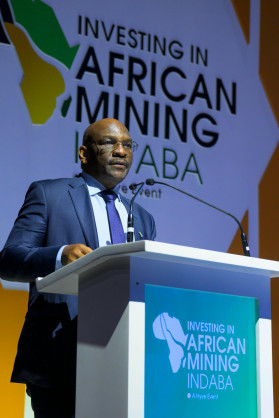
Africa must take bold steps to own its resources, create jobs and build industries that sustain prosperity for generations, African Export-Import Bank (Afreximbank) (www.Afreximbank.com) has told African leaders, policymakers, mining industry leaders and global partners at the African Mining Indaba 2025 in Cape Town, South Africa, on Sunday.

In a keynote address at the ministerial symposium of the Indaba, Mr. Denys Denya, Senior Executive Vice President of the Afreximbank Group, argued that the continent was standing at a crossroads and could either continue exporting its wealth and remain a marginal player in the global economy or take the bold steps to own its resources.

He noted that “While the global mining industry generated approximately US$1.7 trillion in revenue in 2023, Africa's share of this wealth remains disproportionately low. Our continent extracts the raw materials that power the world's industries, yet it is estimated that we retain as little as between four per cent and 20 per cent of the total value of our minerals due to minimal local processing and limited downstream development. The result? Lost economic opportunities, exposure to volatile commodity cycles and a persistent reliance on external markets for refined products derived from our own resources.” “The choice is ours. The time to act is now. Let us work together: governments, financial institutions, investors, and industry players to build an Africa where mining is not just about extraction but about transformation, innovation and wealth creation,” said Mr. Denya. “Africa has the resources, the market potential, and the policy frameworks to transition from a resource-dependent continent to an industrial powerhouse. However, success will depend on bold, decisive action from all stakeholders. Policymakers must implement clear, enforceable regulations that mandate local value addition and create investment-friendly environments. Private sector investors must step up with capital and technology to develop processing, refining, and manufacturing facilities.”

Reversing this trend demanded bold, coordinated action, he argued. “We must move beyond extraction and invest in refining, smelting and advanced manufacturing. African nations must increase local processing capacity for minerals such as bauxite, lithium, cobalt and iron ore.”

He added that regional collaboration was essential as no single country could build a mining value chain in isolation.

Mr. Denya highlighted the importance of the African Continental Free Trade Area (AfCFTA) in developing intra-African mineral value chains and strengthening cross-border collaboration and said that attracting capital for mining-related infrastructure, technology transfer and skills development were critical.

“Our mining policies must also prioritise environmental, social and governance standards, ensuring that mining benefits communities rather than displacing them,” he said, adding that the approach would create millions of skilled jobs for the youth and reduce reliance on volatile global markets while strengthening intra-African trade.

Reiterating Afreximbank's commitment to supporting Africa's mining sector and ensuring that mineral wealth drove economic growth rather than perpetuate resource dependency, Mr. Denya announced that, over the past three years, the Bank had approved more than US$1 billion in support of mining and mineral sector projects across the continent, including financing the development and construction of a bauxite processing plant in Guinea, supporting the expansion of a manganese processing plant in Gabon and providing working capital financing to a diamond company in Botswana.

Other major projects being supported by the Bank include a petrochemical fertilizer plant in Angola, a titanium dioxide pigment plant in South Africa and the feasibility study for the development of a limestone mine processing plant in Malawi, he added.

Mr. Denya said that the establishment of the US$10-billion AfCFTA Adjustment Fund, managed by FEDA, Afreximbank's impact investment subsidiary, would provide critical financial support to countries and businesses transitioning to the new trade regime, including those in the mining sector, and that the Bank's efforts to harmonise standards and implement the Africa Collaborative Transit Guarantee Scheme would also facilitate seamless movement of minerals and mining equipment across borders, reducing logistical bottlenecks.

Afreximbank was also leveraging digital platforms, such as the Africa Trade Gateway and the Pan-African Payment and Settlement System, to enable efficient transactions and market access, which would ensure that Africa's vast mineral wealth was utilised to drive industrialisation, value addition and economic resilience across the continent, he added.

Mr. Denya also noted that Afreximbank, in collaboration with development partners, was driving the development and expansion of industrial parks and special economic zones (SEZs) to address infrastructure challenges that hinder industrial growth.

One of the most transformative initiatives under that pillar was the DRC/Zambia Electric Vehicle Battery Manufacturing Special Economic Zones - a project that positions Africa at the centre of the global energy transition by the implementation of battery precursor SEZs aimed at making the two countries globally competitive investment destinations for the battery electric vehicle value chain.

The African Mining Indaba 2025, taking place from 3 to 6 February, is the premier gathering where Africa policymakers, industry leaders and global partners work to shape the future of the African mining sector.

Distributed by APO Group on behalf of Afreximbank.

Media Contact:
Vincent Musumba
Communications and Events Manager (Media Relations)
Email: press@afreximbank.com

Follow us on:
X: https://apo-opa.co/4116jsN 
Facebook: https://apo-opa.co/4aLcd4I 
LinkedIn: https://apo-opa.co/3Et8gFS 
Instagram: https://apo-opa.co/4aOinBd

About Afreximbank:
African Export-Import Bank (Afreximbank) is a Pan-African multilateral financial institution mandated to finance and promote intra-and extra-African trade. For 30 years, the Bank has been deploying innovative structures to deliver financing solutions that support the transformation of the structure of Africa's trade, accelerating industrialization and intra-regional trade, thereby boosting economic expansion in Africa. A stalwart supporter of the African Continental Free Trade Agreement (AfCFTA), Afreximbank has launched a Pan-African Payment and Settlement System (PAPSS) that was adopted by the African Union (AU) as the payment and settlement platform to underpin the implementation of the AfCFTA. Working with the AfCFTA Secretariat and the AU, the Bank is setting up a US$10 billion Adjustment Fund to support countries effectively participating in the AfCFTA. At the end of December 2023, Afreximbank's total assets and contingencies stood at over US$37.3 billion, and its shareholder funds amounted to US$6.1 billion. Afreximbank has investment grade ratings assigned by GCR (international scale) (A), Moody's (Baa1), Japan Credit Rating Agency (JCR) (A-) and Fitch (BBB). Afreximbank has evolved into a group entity comprising the Bank, its impact fund subsidiary called the Fund for Export Development Africa (FEDA), and its insurance management subsidiary, AfrexInsure (together, "the Group"). The Bank is headquartered in Cairo, Egypt.

For more information, visit: www.Afreximbank.com

Media files
Afreximbank
Download logo
Read moreAfreximbank Challenges Africa’s Miners to Take Bold Steps to Own the Continent’s Resources
5 February 2025

Economic growth, job creation expected to take centre stage in President’s SONA

Location: News

Economic growth, job creation expected to take centre stage in President’s SONA

Economic growth, service delivery, infrastructural development, and job creation are some of the key issues that President Cyril Ramaphosa is expected to address in his highly anticipated State of the Nation Address (SONA) scheduled for Thursday, 6 February 2025.

Professor Dirk Kotze from the University of South Africa’s (Unisa) Department of Political Sciences, noted that economic growth will take centre stage in the President’s speech.

“I think first of all, what President Ramaphosa will focus on is, as always, on the economic matters - economic growth; the economic plan that he has developed since 2018,” Kotze told SAnews.

In addition, the Professor believes that the country’s commander-in-chief will zoom in on the water and electricity issues. 

“Yes, electricity is definitely becoming more of a success story, but he will continue with that,” he added. 

According to the political analyst, other important areas, including health, education, defence, and Home Affairs, will also be addressed. 

Kotze explained that SONA focuses on the current year and outlines the government’s plans and the legislative agenda for Parliament.

This includes the introduction of new legislation, as well as a medium-term plan covering the next three years.

“He will also refer to some matters that will later be presented in more detail in the budget speech by the Minister of Finance [Enoch Godongwana]. So, these two, the budget speech and the SONA address, are very much linked to each other.

“I don’t think one can expect new issues,” he added. 

In addition, the Professor stated that the President's address will reaffirm the government’s position on issues, such as climate change.

“Renewable energy will receive, I think, a lot of attention, given the developments in the US, President [Donald] Trump, who wants to move away from that,” he told SAnews.

According to the analyst, international relations will be specifically addressed, particularly in light of the recent incidents in the eastern Democratic Republic of Congo (DRC).

Several soldiers serving with peacekeeping forces in the DRC have been killed by the M23 rebel group in recent days amid fierce fighting, including 14 members of the South African National Defence Force (SANDF).

The recent deadly clashes have intensified in eastern DRC after Kinshasa withdrew its diplomats from Kigali in Rwanda. Rebels have advanced toward the strategic city of Goma, which is rich in minerals.

The SANDF soldiers are part of the mission which aims to help restore peace, security, and stability in Africa’s second-largest country.

Tomorrow’s SONA will mark the President’s first SONA as the Head of the Government of National Unity (GNU) in the seventh administration.

This address holds particular significance as it coincides with the 30th anniversary of freedom and democracy in South Africa, as well as the country’s Presidency of the Group of 20 (G20). 

Tomorrow's address also marks the official start of the parliamentary programme, which is followed by a debate in the National Assembly and the President’s response to that debate.

In an interview with SAnews on Tuesday, Deputy Minister in the Presidency, Kenny Morolong, emphasised the importance of this year’s SONA. 

He noted that President Ramaphosa will be addressing the nation following an election that led to the formation of a GNU, as no single political party received enough support to govern independently.

“This SONA will outline the three priorities and strategic direction of the GNU which are to drive inclusive growth and job creation, to reduce poverty and tackle the high cost of living, and to build a capable, ethical and developmental State.” 

Morolong said it was important for South Africans to tune in and watch the President and hear him deliver the plans of government that he leads, as the Head of State. – SAnews.gov.za
 

Gabisile
Wed, 02/05/2025 - 07:03

212 views
Read moreEconomic growth, job creation expected to take centre stage in President’s SONA
5 February 2025

President to deliver first SONA of the seventh administration 

Location: News

President to deliver first SONA of the seventh administration 

In just a few hours, President Cyril Ramaphosa will deliver the State of the Nation Address (SONA) which will provide a country roadmap charting the way forward for the country in what one could call a mixed bag of domestic and global circumstances.

Thursday night will mark the first SONA to be delivered under the seventh administration’s Government of National Unity (GNU) following the outcomes of the historic 29 May 2024 elections.

And while the faces of government Ministers has changed with every administration, the SONA, held every year since the dawn of democratic South Africa in 1994, continues to hold strong and is a reflection of democracy in action, no matter who is in the driver’s seat of the sitting government of the day.

The State of the Nation Address (SONA) is an important fixture in the nation’s journey forward and provides the President with an opportunity to hold perhaps the year’s “biggest family meeting,” outlining the key plans and programmes of the year ahead. The address also affords the President the chance to look into the rearview mirror to assess the journey traversed to date.

As the President fine-tunes his notes before delivering the speech in an environment that changes by the second, government is cognisant that in every family unit, every member has a role to play in ensuring and preserving the family name and that it has to do so by ensuring the provision of services and responding to challenges facing the South African family.

This as government continues to respond to the challenges of poverty, inequality, unemployment and illegal mining among others.
“As much as we have made progress, we have to do much more to overcome the challenges that confront our nation. We need to work with urgency and purpose to grow an inclusive economy and create jobs,” the President said in his New Year’s Eve message to the nation in December 2024.

In that address, he called on the nation to look at the year 2025 with hope.

“As a people, our unity, determination and resilience has seen us through hard times. Just as this has been a year of great change, we look to the next year with great hope,” he said at the time.

And while our South African family is by no means perfect, there are valid reasons not to be glum about the future.

G20

At tomorrow night’s joint sitting of the National Assembly and the National Council of Provinces (NCOP) in Parliament, the President is expected to speak on the country’s hosting of the Group of 20 (G20) Summit in November, making the country the first do so on the African continent. This as the nation assumed the Presidency of the grouping on 1 December 2024 under the theme: “Solidarity, Equality, Sustainability”.

Having taken over the baton from Brazil, South Africa's G20 Presidency is the fourth consecutive emerging market Presidency and follows the admission of the African Union (AU) as the second permanent African member. 

The G20 was established to tackle pressing global economic and financial issues. Together, G20 members account for around 85% of global GDP and 75% of international trade. The hosting of the Summit is expected to help accelerate the performance of the economy.

The economy

President Ramaphosa is likely to also reflect on the performance of the economy in an environment where the rising cost of living has many on edge. However, the prospects of South Africa’s purse strings are predicted to improve with the country in 2024 having achieved its first primary budget surplus in 15 years.

A recent economic and financial assessment by the International Monetary Fund (IMF) showed that the country’s economic growth prospects are poised to recover in 2025 following a lacklustre economic performance for the past two years.

Last month, the fund published the findings of its Article IV Consultation with South Africa, which was held in November 2024. 
According to the IMF, the real Gross Domestic Product (GDP) output growth is expected to accelerate from an estimated 0.8 % in 2024 to 1.5 % in 2025 driven by improved electricity generation, monetary policy easing, and a return of investor and consumer confidence post the elections.

The IMF acknowledged progress in banking-resolution and safety-net reforms and praised macro-prudential measures to bolster capital buffers. However, it also raised concerns on the rising public debt and the challenges South Africa faces to meet climate goals.

The ongoing electricity and logistics reforms aimed at alleviating critical supply constraints were also welcomed. National Treasury noted that the fund’s concerns are aligned with government’s response to addressing immediate and long-term economic challenges.

“The National Treasury is committed to implementing reforms that will enhance inclusive economic growth, achieve a sustainable public debt level, further repair and strengthen network industries, and strengthen state capacity to support economic activity.”
In its 2024 Medium Term Budget Policy Statement (MTBPS) in October, Treasury estimated economic growth to increase from 1.1 % in 2024 to 1.7% in 2025.

It attributed the gains in the economy to household consumption gradually increasing, supported by rising purchasing power, employment recovery and wealth gains.

The current focus of South Africa’s reform agenda includes the stabilisation of the electricity grid, enhancing the efficacy of freight and ports operations, implementing e-Visas, as well as prioritising the advancement of targeted industries to enhance the business climate and promoting equitable growth. 

Legislation

In the past year, government has passed laws that aim to improve lives as well as respond to pressing challenges.

In January this year, the President signed into law the Expropriation Bill, which sets out how organs of State may expropriate land in the public interest for varied reasons.  
The new legislation repeals the pre-democratic Expropriation Act of 1975, aligns expropriation processes with the Constitution and marks the culmination of a five-year process of public consultation and Parliamentary deliberation. 

“The Bill assented to by President Ramaphosa outlines how expropriation can be done and on what basis. This law will assist all organs of State - local, provincial and national authorities - to expropriate land in the public interest for varied reasons,” the Presidency said. 

Section 25 of the Constitution recognises expropriation as an essential mechanism for the state to acquire someone’s property for a public purpose or in the public interest, subject to just and equitable compensation being paid.

The law has drawn criticism from the United States of America with South Africa saying it looks “forward to engaging” with US President Donald Trump’s administration on bilateral relations and other issues.

The Presidency said the legislation is not a confiscation instrument.

“The recently adopted Expropriation Act is not a confiscation instrument, but a constitutionally mandated legal process that ensures public access to land in an equitable and just manner as guided by the constitution. 
“South Africa, like the United States of America and other countries, has always had expropriation laws that balance the need for public usage of land and the protection of rights of property owners."

Among other laws passed is the Employment Equity Amendment Act, which is aimed at reducing the regulatory burden for small employers to allow them to focus on job creation, which came into effect on 1 January 2025.  

President Ramaphosa signed last year, the proclamation notice giving effect to the start date of implementation of the Employment Equity (EE) Amendment Act, No. 4 of 2022. 

In terms of the notice gazetted on 28 November 2024, small businesses that employ less than 50 employees are no longer bound to comply with Chapter III of the Employment Equity Act, 1998 (EEA) - for example in relation to the submission of their EE reports starting from the 2025 EE Reporting period. 

Employment and Labour Minister Nomakhosazana Meth said the regulatory flexibility will enable small businesses to now focus on growing their businesses and create jobs.

In addition, in December, the President announced his intention to sign a Presidential Proclamation that will bring the Basic Education Laws Amendment (BELA) Act into operation, immediately. 

The BELA Bill was passed by the 6th democratic Parliament on 26 October 2023 after which the first citizen assented to the Bill on 13 September 2024.

President Ramaphosa said the BELA Act is vital to the transformation of the country’s education system and is an important part of ongoing efforts to build an education system that is more effective and more equitable in line with the precepts of the Constitution.

The Act amends sections of the South African Schools Act of 1996 (SASA) and the Employment of Educators Act, 1998 (EEA) to account for developments in the education landscape since the enactment of the original legislation.

Community safety 

In a move to ensure the safety of citizens, the South African Police Service (SAPS) trained and deployed over 20 000 new constables in various units across the country in the past three years.

In addition, operations like Operation Shanela continues to make strides since its inception in May 2023. Shanela consists of regular stop and searches, roadblocks, high visibility patrols and the tracing of wanted suspects.
Operation Vala Umgodi which is aimed at combating illegal mining also continues to make strides.

At the release of the Quarterly Crime Statistics in November 2024, Police Minister Senzo Mchunu announced that the SAPS had recorded a downward trend in some categories of crime, including murder, robbery and carjacking.

From 1 July to 30 September 2024, the 17 community-reported serious crimes showed an overall decline of 5.1%. Specifically, contact crime decreased by 3%, property-related crime saw a reduction of 9.9%, and other serious crime decreased by 3.4%. 

“Focusing on contact crime, the statistics indicate that murder decreased by 5.8%, sexual offenses by 2.5%, and robbery with aggravating circumstances by 8.8%. Additionally, rape decreased by 3.1%, while robbery at residential premises and non-residential premises decreased by 1.3% and 21.1%, respectively,” he said at the time.

Load shedding 

While the country suffered a bout of Stage 3 load shedding recently, November 2024 marked the longest stretch of no-load shedding in five years.

Eskom marked the longest stretch of uninterrupted power supply in five years, with load shedding suspended for more than 240 consecutive days at the time which was followed by 300 days of no-load shedding on 21 January 2025.

The power utility’s performance has been on a steady upward trajectory since the implementation of the Energy Action Plan introduced by President Ramaphosa in July 2022, as well as the implementation of the power utility’s own Generation Recovery Plan.

ICJ case

South Africa in 2024 continued its work on the application of the Convention on the Prevention and Punishment of the Crime of Genocide in Gaza (South Africa v. Israel) matter.

This as it said that it had no regrets about becoming the first country to file a lawsuit against Israel at the International Court of Justice (ICJ) to end its “deadly and relentless genocidal bombardment” of Gaza.  

In October 2024, it formally filed its Memorial to the International Court of Justice (ICJ)  marking a significant step in the ongoing legal action, which aims to hold Israel accountable under international law.

The action taken by South Africa since December 2023, culminating in the filing of the Memorial, has generated overwhelming national and international interest. 

In his Opening of Parliament Address (OPA) in July last year, the President appealed to the larger South African family to behave as weaver birds.

“We would like all of us as South Africans to behave like ‘weaver birds’. Weavers are among the most gregarious birds in that they build complex structures together and cooperate. 

"Despite all the challenges, despite our differences, despite all the headwinds, as South Africans we are called upon to remain firmly committed to pursue the path of cooperation, growth and inclusion,” he said at the time.

As the larger South African family, let us gather around our television and radio sets to hear what the President has to say.
The SONA will get underway at 7pm on Thursday, 6 February 2025. -SAnews.gov.za 
 

Neo
Wed, 02/05/2025 - 09:15

44 views
Read morePresident to deliver first SONA of the seventh administration 
5 February 2025

Three Lessons in Activism From Mark Weinberg

Location: News

Weinberg, a key figure in the Right2Know Campaign, died on 28 January 2025

Read moreThree Lessons in Activism From Mark Weinberg
4 February 2025

Transforming the Basic Education Sector Can Drive Inclusive Growth

Location: News

The World Bank Group
Download logo

Transforming the basic education sector by improving the quality of learning from an early age can drive inclusive growth in South Africa, according to a World Bank report released today. The report also provides an analysis of the country's recent economic performance and prospects for the medium term. 

The fifteenth edition of the World Bank's South Africa Economic Update, entitled Learning: Overdue Reforms and Emerging Priorities for the Basic Education, asserts that the country's successful political transition following elections and the almost total absence of energy load shedding in 2024 have brought the economy back on a positive trajectory. Economic growth is projected to recover from an estimated rate of 0.8 percent in 2024 to 1.8 percent in 2025 and 2 percent in the medium-term. However, such an expansion – which entails doubling the GDP growth rate achieved over the past decade – is still not sufficient to achieve significant progress toward inclusive growth and job creation. At this pace, the report estimates that it will take about 60 years for South Africa to become a high-income economy, while existing high levels of poverty and inequality are unlikely to change significantly.

However, South Africa's economic future could become brighter if the government acts decisively in three directions. First, it could build on recent reforms to further address the severe infrastructure constraints in the energy and transport sectors to encourage business development and increase households' disposable income. Second, it could take a series of concrete actions to improve the efficiency of public spending. If the state cannot spend more, it will have to spend better. Third, the authorities could strengthen the country's human capital to catch up with other upper middle-income countries as this factor plays a crucial role in economic and social development.

“Education is a powerful driver of development, and one of the strongest instruments to reduce poverty and promote equality. It is the necessary foundation for a prosperous economy. South Africa can boost inclusive growth and equality by investing in its people. A well-functioning basic education system is crucial for fostering the skills of South Africa's next generation and driving inclusive growth,” says Satu Kahkonen, World Bank Country Director for South Africa.

“This research by the World Bank Group is well aligned with the government's priorities to ensure all children in South Africa have access to quality education. Interventions such as developing partnerships with stakeholders to broaden access to quality and affordable education, as well as investing time and resources in teacher training will certainly contribute to measurable, positive impacts for our people and the economy,” says Honorable Siviwe Gwarube, Minister of Basic Education, Republic of South Africa.

South Africa prioritizes inclusive growth, with education at the core, but the country faces a learning crisis. Despite significant improvements in learning since the end of the apartheid, about 80 percent of learners in grade 4 could not properly understand what they were reading in 2021. Basic education is also facing a growing financial challenge as budget allocations for the sector have been decreasing in real terms over the last few years. At the same time, the education system needs to expand to accommodate an additional 1.2 million learners by 2030. The ability of the basic education system to efficiently deliver good outcomes is affected by low quality teaching and insufficient accountability. It also suffers due to the proliferation of several small-to-medium scale reading programs that are uncoordinated and do not achieve scale after several years of piloting. Equally worrisome is that the Government's pro-poor funding mechanism for education is not achieving its objective.

To contribute to the policy discussion, the Economic Update proposes a series of possible reforms that can be considered as an initial platform by the authorities in their efforts to enhance access to, and the quality of, basic education:

  • Firstly, the report urges the government to prioritize the foundational years of education, from early childhood to Grade 3, as these years are crucial for long-term learning. It recommends enhancing early childhood services and scaling up early grade reading interventions, including scripted lessons, teacher coaching, quality home-language materials, dedicated reading instruction time, and regular assessments of reading and math skills.
  • Secondly, the government could collaborate with the private sector to improve both access to and quality of education, particularly for low-income learners, addressing gaps the public sector cannot fill alone. Only 5.5 percent of South African school children attend independent schools compared to global averages of 19 percent (primary school) and 27 percent (secondary school). Partnerships with NGOs and building on successful pilots in some provinces could expand the networks of affordable schools and enhance learning efficiently.
  • Lastly, to improve efficiency and equity in education, the report suggests adopting interventions such as Teacher Professional Standards to guide training, scaling up effective interventions, and revising the Norms and Standards for School Funding to address inequities. In the short term, it recommends focusing on improving early-grade learning in the poorest schools with the lowest performance, supported by a revived assessment system to identify struggling schools. 

Distributed by APO Group on behalf of The World Bank Group.

Read moreTransforming the Basic Education Sector Can Drive Inclusive Growth
4 February 2025

President signs four proclamations authorising corruption investigations

Location: News

President signs four proclamations authorising corruption investigations

President Cyril Ramaphosa has signed four new proclamations authorising the Special Investigating Unit (SIU) to investigate allegations of maladministration and corruption at Ithala Development Finance Corporation, the Greater Kokstad Local Municipality, Llepele-Nkumpi Local Municipality and Greater North Transport.

Ithala Development Finance Corporation

Proclamation 243 of 2025 authorises the SIU to investigate serious maladministration in connection with the affairs of the Ithala Development Finance Corporation situated in KwaZulu-Natal, focusing on tendering for the supply, implementation, and maintenance of an integrated banking solution.

The probe will determine if contract payments adhered to national treasury guidelines were irregular, wasteful, or led to financial losses for the department or state. 

The SIU will also investigate any unlawful conduct by Ithala employees or officials that may have resulted in improper benefits.

“Furthermore, the investigation will assess whether fraudulent actions occurred, identify any resultant losses or damages, and examine any irregular or unlawful behaviour by Ithala employees or other entities.

“The Proclamation covers allegations of unlawful and improper conduct that occurred between 1 January 2017 and 31 January 2025, as well as any related activities before 1 January 2017 and after the date of the Proclamation that are pertinent to the matters under investigation or involve the same persons, entities, or contracts,” said the SIU.

Greater Kokstad Local Municipality

Proclamation 244 of 2025 directs the SIU to probe two tenders by the Greater Kokstad Local Municipality in KwaZulu-Natal. These tenders are:

  • For the appointment of a service provider to supply and renew software licences for three years.
  • For the appointment of a service provider to supply customer care and IT service desk solutions. 

The SIU said the probe will examine whether the procurement and contracting were made in a manner that was not fair, competitive, transparent, equitable, or cost-effective or in violation of applicable legislation, guidelines, or instructions from the National or Provincial Treasury. 

This includes the municipality or the state’s unauthorised, irregular, or wasteful expenditure. 

The probe will also look at any irregular, unlawful, or improper conduct by officials or employees of the municipality, its suppliers or service providers, or any other person or entity implicated. 

The proclamation covers allegations of unlawful and improper conduct that occurred between 1 January 2022 and 31 January 2025, as well as any related activities before 1 January 2022 and after the date of the Proclamation that are pertinent to the matters under investigation or involve the same persons, entities, or contracts.

Llepele-Nkumpi Local Municipality

Proclamation 243 of 2025 mandates the SIU to investigate serious maladministration in the affairs of Llepele-Nkumpi Local Municipality in Limpopo Province regarding procuring and contracting for goods, works or services for six contracts. The contracts under investigation are:

  • Tender relating to professional services for the closure and rehabilitation plan of the old dumping site in Zone A.
  • The award of contracts in or about August 2015 for the electrification of Rakgoatha Village Extension, Mapatjakeng Village Extension and Motserereng Village Extension.
  • The award of a contract in or about June 2016 for upgrading the access road from Units S to Q.
  • The award of a contract in or about June 2016 for constructing the Madisha Ditoro small access bridge and upgrading internal streets and stormwater drains (phase 1) in Rakgoatha.
  • The award of a contract in or about April 2016 for tarring 9 km of internal streets in Rockville and Unit S, Lebowakgomo.

The contract was awarded in or about December 2013 for refurbishing the Lebowakgomo Civic Centre.

  • The contract was awarded in or about December 2013 for refurbishing the Lebowakgomo Civic Centre.

Greater North Transport

Proclamation 246 of 2025 authorises the SIU to investigate allegations of corruption in eight contracts and maladministration in six contracts at the Greater North Transport (GNT) in Limpopo Province. 

The SIU will investigate the allegations of corruption of board members, officials or employees of the GNT or contractors, suppliers or service providers for the following tenders:

  • Appointment of Raletjena Technologies and Trading (Pty) Ltd.
  • extension of a contract between the GNT and Group 4 Security (Fidelity Cash Management) (Pty) Ltd.
  • Appointment of Scania South Africa (Pty) Ltd to provide repair and maintenance services to the GNT.
  • Procurement of 150 busses from Mercedes Benz South Africa (Pty) Ltd
  • Procurement of 87 80-seater busses from MAN Truck and Bus South Africa (Pty) Ltd.
  • Appointment of BB Truck and Tractor Services (Pty) Ltd to provide repair and maintenance services to the GNT.
  • Procurement of legal services.
  • Procurement of a fleet management system.

Furthermore, the SIU will also probe allegations of maladministration in the affairs of the GNT and any losses or prejudice suffered by the GNT or the State as a result of such maladministration concerning:

  • Fruitless and wasteful expenditure incurred by the GNT as a result of interest payments made to Africa Oil (Pty) Ltd;
  • A settlement agreement concluded with Umvuzo Energy (Pty) Ltd
  • The mismanagement of diesel supplies.
  • The failure to collect the debt that was due and owing to the GNT
  • An agreement was entered into between the GNT and emerging bus operators.

The probe will also examine whether the payments for these contracts adhered to national treasury guidelines and ascertain whether the payments were irregular, fruitless, and wasteful expenditures or financial losses for the department or the state. 

Furthermore, the SIU will seek to establish if there was unlawful or improper conduct by the department employees, officials, agents, and any other person or entity to corruptly or unduly benefit themselves or others.

The investigation will also at whether fraudulent conduct occurred, including the causes of such maladministration, any losses, damages, or prejudice actually or potentially suffered by the department or the state, and any irregular, improper, or unlawful conduct by employees or officials of the department or any other person or entity.

The Proclamation covers allegations of unlawful and improper conduct that occurred between 1 January 2002 and 31 January 2025, as well as any related activities before 1 January 2002 and after the date of the proclamation that are pertinent to the matters under investigation or involve the same persons, entities, or contracts.

Beyond investigating maladministration, corruption, and fraud, the SIU said it was committed to identifying systemic failures and recommending measures to prevent future losses.

In line with the Special Investigating Units and Special Tribunals Act 74 of 1996 (SIU Act), the SIU will refer any evidence of criminal conduct uncovered during its investigation to the National Prosecuting Authority (NPA) for further action.

Under the SIU Act, the SIU is also authorised to initiate a civil action in the High Court or a Special Tribunal in its name to address any wrongdoing identified during its investigation resulting from acts of corruption, fraud, or maladministration. – SAnews.gov.za


Edwin
Tue, 02/04/2025 - 10:12

42 views
Read morePresident signs four proclamations authorising corruption investigations
3 February 2025

Eskom Appoints Leslie Mkhabela as Lead Independent Director

Location: Business

Monday, 03 February 2025: The Eskom Board is pleased to announce that Mr Leslie Mkhabela has been appointed as the Lead Independent Director, effective 31 January 2025. Mr Mkhabela joined the Eskom Board as an Independent Non-Executive Director on 01 October 2022, when the new board was appointed by the late Minister of Public Enterprises...

Read moreEskom Appoints Leslie Mkhabela as Lead Independent Director
3 February 2025

Langa township residents receive government services ahead of SONA in Cape Town

Location: News

Langa township residents receive government services ahead of SONA in Cape Town

Washington Street in Langa, Cape Town, bustled with activity as the Government Communication and Information System (GCIS) hosted pre-State of the Nation Address (SONA) outreach activities on Monday.

Gazebos, banners, buses and cars lined the streets, as various government departments provided services to the community.

The Guga S’Thebe Cultural Centre and the Langa Civic Hall were filled with hundreds of community members. 

Some walked, while others took taxis, all eager for essential services, such as applying for identity documents (IDs).

Young people lined up at the Employment and Labour Department’s mobile bus to register on the job seekers' database.

The outreach activities aim to involve all South Africans in the SONA, which will be delivered by President Cyril Ramaphosa on Thursday, 6 February, at 7 pm. 

This will be the President’s first SONA as the Head of the Government of National Unity (GNU) in the seventh administration.

Some of the participants were the City of Cape Town officials, the South African Police Service (SAPS), the Western Cape Department of Social Development, the Department of Home Affairs, the South African Social Security Agency (SASSA), the Electoral Commission of South Africa (IEC), the Human Rights Commission, Postbank, the Office of Health Standards Compliance (OHSC), and the Energy and Water Sector Education Training Authority (EWSETA).

Acting Director of Public Employment Services, Nokulunga Zazaza, expressed satisfaction in connecting with the community, especially in registering unemployed youth on their database.

The team also offered career counselling to help equip the youth with job hunting and interview skills.

“We also have a programme where we go around to engage with employers and opportunity providers to check if there are opportunities available in their organisation. If they do, they give us the requirements and registration credentials, and we’ll use those to match it with the unemployed who meet the criteria,” she explained. 

Although there are Labour Centres located throughout the province, Zazaza stressed that her department aims to connect more closely with local communities. 

She expressed a desire for people to secure permanent employment, as most of the companies that reach out to them mostly offer temporary contracts and training services.

“We always want as many people as possible to find employment because our target is unemployed persons, as our department’s focus is employment and labour. We want to do anything that will assist with unemployment.”

Research Officer for the Human Rights Commission, Advocate Tammy Carter, told SAnews that many individuals she encountered in communities were unaware of their rights, even though the country boasts one of the best constitutions in the world.

“One of the primary functions, in terms of the Constitution for the Human Rights Commission, is to promote human rights and human rights culture. 

“If people don’t even know their rights, how are they going to even assert those rights? 

“For us, it’s important to be invited to events like this, so that we can educate people about their rights.” 

She said Chapter 9 bodies had been created to support democracy by being enforcers of human rights.

Most of the people she has been attending to have been raising issues about education, access to water and sanitation, environmental concerns such as littering, which seems to be a big deal in Langa, and access to services such as SASSA and Home Affairs. 

“People in Langa have to travel to Athlone to access these services and it costs them a lot of money,” Carter said, adding that was important for the Chapter 9 institutions to come together to help these communities. 

Customer Care Assistant from the  Western Social Development Department, Siphosihle Qingana, said together with his colleague, he has been providing information about their services since this morning. 

These include childcare protection programmes, support for the elderly, substance abuse assistance, and registration of non-profit organisations (NPOs).

“People need help or advice about child protection. Some children don’t have birth certificates. Other people were seeking funding for their NPOs and asking about registering NPOs,” Qingana told SAnews. 

Ministries and departments will continue to hold various public engagement activities for the remainder of the week. 

According to the GCIS, these events aim to encourage South Africans to familiarise themselves with the content of SONA, enabling them to contribute to discussions and proposals for economic growth and development. 

South Africans are encouraged to tune it and participate in this important national milestone. – SAnews.gov.za

Gabisile
Mon, 02/03/2025 - 15:16

119 views
Read moreLanga township residents receive government services ahead of SONA in Cape Town
  • Previous
  • Page 1
  • Interim pages omitted …
  • Page 21
  • Page 22
  • Page 23
  • Page 24
  • Page 25
  • Interim pages omitted …
  • Page 82
  • Next

Copyright © 2026 · MyZA · All Rights Reserved · Powered by Stratlec Online