• Skip to main content
  • Skip to header right navigation
  • Skip to after header navigation
  • Skip to site footer
MyZA

MyZA

News, Directory, Events and Other Stuff

  • Social Media
  • Sport
  • World News
  • Home
  • Submit News
  • Directory
  • Events
  • Stratlec
  • TFSA
  • News
    • APO
    • Today’s Sport News
    • Todays Social Media and Tech Headlines
    • Today’s World News
    • Today’s SA Financial News
  • Contact
You are here: Home / Archives for Energy

Energy

3 February 2025

SONA 2025: Working together to accelerate development

Location: News

SONA 2025: Working together to accelerate development

By Michael Currin

South Africa’s time has arrived! That’s the sentiment that reverberated in Davos during the World Economic Forum (WEF) as our nation shared with global leaders the many advances we have had over the last year.

President Cyril Ramaphosa who led South Africa’s delegation to the forum showcased our country’s investment potential and set the stage for critical discussions at the G20 Summit in November.

South Africa used the occasion to propel its G20 Presidency priorities into the international spotlight, advocating for a more inclusive and sustainable approach to global challenges. We also focused on the vital need for global collaboration to tackle economic recovery and startling disparities between rich and poor nations.

As South Africans we cannot but gleam with pride as we continue to punch above our weight in the league of nations and stun the world as we had done in 1994 through a reconciliation process and peaceful transition when many naysayers had counted us out.

We believe that our nation is ideal to advance global cooperation as we have succeeded in uniting ten political parties to form a Government of National Unity which brought stability and inclusive governance to our nation.

Over the course of our G20 Presidency, our country will foster collaboration among G20 members and wider society to address pressing global issues and find sustainable solutions that prioritise the wellbeing of all people. Our approach has therefore inspired our G20 Presidency theme of “Solidarity, Equality, Sustainability”.

As we work together with G20 members and global organisations, we will seek innovative solutions to global challenges, such as poverty and unemployment, advocating for investment in the global South, and ensuring that no one is left behind. 
On the home front, the unity government has committed to driving inclusive economic growth and job creation, reducing poverty, tackling the high cost of living as well as building a capable, ethical and developmental state.

On Thursday the 6th of February 2025, South Africans can look forward to hearing from His Excellency President Cyril Ramaphosa how we as a nation can harness that indominable national spirit of ours as the President outlines the government’s vision and plans for the year ahead.  This will be during the first State of the Nation Address, (SoNA) of the 7th democratic administration.  

SoNA 2025 is more than just a speech, it serves as a rallying call for our nation to work together and draws us in a common front to address our country’s challenges. It is an invitation for all South Africans to be part of shaping the future of our nation.  

The State of the Nation follows the Opening of Parliament in July last year where the President detailed the key priorities of the 7th Administration. The 2025 SoNA will advance our national priorities by expanding on key programmes such as the Presidential Employment Stimulus, the Energy Action Plan and Infrastructure Investment Plan. These programmes are central to the country’s efforts to rebuild the economy and create a more sustainable and inclusive future.

Furthermore, this year’s SoNA is particularly significant as it coincides with the conclusion of our year-long commemoration of 30 Years of Freedom and Democracy, which has allowed us to reflect on how far we have come in building a society that works for all citizens.

The SoNA is an integral part of our participatory democracy and ensures that the work of government is transparent and can be held accountable by active citizens who are the bedrock of a robust democracy.

As the President addresses the nation on 6 February at 19:00, we call on all South Africans to tune in via television, radio, and across government’s various social media platforms. This is an opportunity for all citizens to join this national milestone and familiarise themselves with the contents of the speech.

By engaging with the speech, we can partner with government to accelerate our nation’s development. Moreover, as citizens we have a duty to scrutinise the work of our elected representatives and to hold them accountable.

In the days that follow the SoNA, Members of Parliament, who represent the diverse voices of South Africans, will actively engage key elements of the speech and offer their own perspectives. This debate is an essential part of our democratic process, ensuring that the voice of the people, through their elected representatives in Parliament are heard. It is a reminder that democracy is a collective effort.

South Africans are encouraged to save the date of 6 February 2025 and be part of this important national event. Let’s all be part of the solution and work together to build a stronger and better South Africa.

*Michael Currin is the Deputy Director-General of Intergovernmental Coordination and Stakeholder Management at GCIS.

Janine
Mon, 02/03/2025 - 11:24

28 views
Read moreSONA 2025: Working together to accelerate development
3 February 2025

Communities urged to help keep public assets safe

Location: News

Communities urged to help keep public assets safe

Nelson Mandela Bay Municipality is on a drive to curb the ongoing vandalism crisis that is crippling the metro's electricity infrastructure, which has cost millions of rands in repairs. 

The municipality has now launched an education and awareness campaign aimed at addressing vandalism. The metro’s Electricity and Energy Portfolio Head, Ziyanda Mnqokoyi, said after three major incidents of vandalism in January alone, it is evident that the vandalism of the metro’s electricity infrastructure has reached crisis levels, leaving communities severely impacted by the criminal activities.

Mnqokoyi said the most recent incident took place last Tuesday at the Mabandla substation in KwaNobuhle, Kariega, leading to major power outages in the area.

"Such incidents not only disrupt essential services but also pose significant safety hazards for the perpetrators, community members and response teams. The seriousness of these attacks on our infrastructure cannot be ignored, and we cannot fight the scourge alone. We need the residents to work with us.

“Through the enhanced educational programme, we will highlight the dangers of unsafe electricity use and educate our people about the impact of electricity theft. We cannot continue as if it is business as usual.” 

Mnqokoyi urged communities to work with law enforcement agencies and municipal authorities to prevent further vandalism.

She said the investigation and assessment at Mabandla showed that the 66 kilovolts (kV) power cables supplying the substation were damaged due to vandalism, and cutting tools were found at the site. Cables were found burnt and severely damaged, leaving KwaNobuhle without power.

"It was also reported by the community that suspects were seen walking away from the site. Cables were burnt and left on site, which badly damaged two of these 66kV power cables without any possible way of supplying electricity to the residents of KwaNobuhle.

Mnqokoyi said excavation work to expose the damaged cables is underway and material orders have been placed.

Appointment of CFO

Meanwhile, the municipality has appointed Jackson Ngcelwane as the permanent Chief Financial Officer (CFO).

The appointment is aimed at improving the financial administration, revenue collection and the audit outcomes of Nelson Mandela Bay.

Ngcelwane has served the municipality for 35 years, with nine of these years as a Senior Director for Budget and Financial Accounting.

Nelson Mandela Bay Municipality Executive Mayor, Babalwa Lobishe, has expressed optimism that the appointment will help to address the challenges in administration and finance management, a situation that is "reflected by the latest Auditor-General’s report".

"The immediate assignments are to improve compliance to the MFMA [Municipal Finance Management Act], MSCOA [Municipal Standard Chart of Accounts], our audit outcomes, supply chain management and put systems in place for better financial planning, management and accountability, while improving the revenue of the municipality.

“I am pleased that council has approved the appointment of the disciplinary board that will take those who are found guilty of financial misconduct through a consequence management process. This will also assist the city manager and the new CFO’s office, as they execute their duties of steering the metro’s finances towards the right direction,” Lobishe said. – SAnews.gov.za

GabiK
Mon, 02/03/2025 - 09:58

31 views
Read moreCommunities urged to help keep public assets safe
2 February 2025

Eskom Suspends Loadshedding

Location: Business

Sunday, 02 February 2025: After a temporary setback that necessitated the implementation of loadshedding over the weekend, Eskom has suspended loadshedding as of 06:00 today due to the recovery of sufficient emergency reserves. This follows more than 10 months of uninterrupted electricity supply, reflecting the effectiveness of the Generation Recovery Plan. This past Friday, Eskom...

Read moreEskom Suspends Loadshedding
31 January 2025

Eskom Implements Stage 3 Loadshedding – Misses 1 Year Milestone

Location: Business

Friday, 31 January 2025: Following over 10 months of uninterrupted electricity supply due to the success of the Generation Recovery Plan, Eskom has encountered a temporary setback. As a result, Stage 3 loadshedding is being implemented from 17:00 today until Sunday midnight. Eskom will give an update on Sunday, 2 February 2025. “This is a...

Read moreEskom Implements Stage 3 Loadshedding – Misses 1 Year Milestone
31 January 2025

Eskom implements Stage 3 load shedding from today

Location: News

Eskom implements Stage 3 load shedding from today

Eskom will implement Stage 3 load shedding from 5pm today, which will continue throughout the weekend.

The power utility had managed to stave off the implementation of load shedding for the past 10 months, in accordance with the Generation Recovery Plan and the Energy Action Plan.

During a media briefing at Megawatt Park on Friday, Electricity and Energy Minister Dr Kgosientsho Ramokgopa explained that several factors led to a “perfect storm” – triggering the necessity of initiating load shedding.

“We got hit by a perfect storm. We had the units out for planned maintenance… We have been doing [that] consistently to allow us a significant amount of headspace for... [maintenance]. 

“[However] we had a situation where at two of our best performing power stations, Matimba and Lethabo, we had a number of units failing at the beginning of the week... and... there were other units that delayed in coming back [online],” he said.

As a result, the power utility was forced to rely on the open cycle gas turbines (OCGTs) – Eskom’s diesel burning reserves – which are now depleted.

“We are at a point where for the purposes of protecting the grid and the integrity of the system, we need to maintain the reserve margins. 

“We have taken a conscious decision that we are not following records (sic). Ideally, we would want to say: a year without load shedding. But no, that can’t be at the expense of the system. [We are] informed by prudent and judicious engineering consideration and the expectations of the system operator, so we will initiate load shedding.

“It gets to be initiated because we are pulling back and replenishing all the reserves,” Ramokgopa said.

Eskom Group Chief Executive, Dan Marokane, said teams at Matimba and Lethabo power stations are already working to bring units back online.

“We are well progressed in terms of getting these units back on track… [and] into operation. They’ll be coming through over the weekend and early in the new week.

“However, what we saw… is the fact that come next week, as the demand picks up, we’ll not have any reserves if we do not create some [head room] for ourselves over this weekend,” Marokane said.

He assured that Eskom remains committed to addressing unit unreliability.

“Overall availability is still high but we need to create this space for unexpected breakdowns, as they do happen. This is well within the forecast that we shared for the summer plan. 

“Our teams’ [focus]… is to return these units back into operation and get back to the new normal of no load shedding,” Marokane said. – SAnews.gov.za

NeoB
Fri, 01/31/2025 - 15:27

215 views
Read moreEskom implements Stage 3 load shedding from today
31 January 2025

Electricity and Energy Ministry notes NERSA electricity tariff decision

Location: News

Electricity and Energy Ministry notes NERSA electricity tariff decision

The Ministry of Electricity and Energy has expressed its confidence in the National Energy Regulator of South Africa (NERSA) – highlighting the regulator’s ability to maintain “independence and integrity” while balancing the diverse interests involved in electricity tariff decisions.

This following NERSA’s announcement of its decision on Eskom’s Sixth Multi-Year Price Determination (MYPD6) revenue application for the 2025/26, 2026/27 and 2027/28 financial years.

The regulator approved a 12.74% price hike for electricity starting at the beginning of the 2025/26 financial year in April 2025.

For 2026/27, NERSA greenlit increases of some 5.36% with a further increase of 6.19% from the start of the 2027/28 financial year.

Electricity and Energy Minister, Dr Kgosientsho Ramokgopa said: “We welcome the fact that these tariff adjustments take into account the need to mitigate inflationary pressures on communities and businesses, helping to stabilise the broader economic environment”.

Independent regulator

The Electricity and Energy department expressed confidence in the regulator’s ability to fulfil its mandate.

“We reaffirm our confidence in the independence and integrity of NERSA in fulfilling its mandate to ensure that electricity pricing balances the financial sustainability of Eskom with the economic realities faced by households, businesses, and industries.

“Whilst the approved tariff adjustments will place pressure on Eskom to stay the course with its investment strategy to strengthen and modernise its generation, transmission and distribution infrastructure, the Ministry remains committed to working closely with Eskom to drive greater efficiency gains. 

“This will ensure that operational improvements and cost reductions contribute to the utility’s long-term financial sustainability while safeguarding the affordability and reliability of electricity supply,” the department said.

Furthermore, in recognition of rising energy concerns, the department will “continue introducing measures to provide relief to vulnerable households and small businesses to cushion them from rising electricity costs”.

“As part of our broader energy strategy, the government remains committed to pursuing an energy mix that delivers affordable, secure, and sustainable electricity for all South Africans, in line with our decarbonisation commitments and long-term energy security goals. 

“We call on all stakeholders to engage constructively in shaping our energy future, ensuring a transition that is inclusive, just, and responsive to South Africa’s developmental needs. 

“The Ministry will continue working towards long-term energy affordability and reliability, ensuring that no South African is left behind in the country’s energy transition,” the department concluded. – SAnews.gov.za

NeoB
Fri, 01/31/2025 - 08:34

356 views
Read moreElectricity and Energy Ministry notes NERSA electricity tariff decision
31 January 2025

AMW to Showcase Africa’s Rising Investment Potential in the Mining Sector

Location: News

Energy Capital & Power
Download logo

International investments in Africa's mining sector are surging as global demand for both traditional and emerging minerals continues to grow. For example, Australian mining firms saw their asset value in Africa reach $60 billion in 2024, while Canadian firms' assets climbed to $37 billion. China also launched an ambitious $50 billion, three-year investment strategy targeting increased stakes in Africa's most lucrative opportunities including in the mining sector.

The upcoming African Mining Week Summit, scheduled for October 1 - 3 in Cape Town, will highlight profitable opportunities within Africa's mining industry and reinforce the continent's attractiveness as an investment destination for global mining financiers.

Untapped Mineral Deposits

Africa's vast, untapped mineral resources present potential for new investments. The continent holds 30% of the world's critical minerals (https://apo-opa.co/3ClkUGd) essential for the energy transition, including the largest global reserves of cobalt (in the Democratic Republic of Congo) and over 80% of the world's platinum group metals in South Africa. The continent accounts for more than 44% of global diamond production, while its share of the gold market continues to grow, with markets such as Ghana, Mali and Zimbabwe ramping up production.

Supportive Policies and Investor-Friendly Terms

African governments are enhancing the investment climate within the mining industry by enacting new policies and modernizing fiscal terms to streamline processes and reduce delays in project rollouts. Zambia, for instance, introduced a New Mining Tax Regime in 2023, improving transparency and reducing tax evasion, as the country targets a copper production target of three million tons by 2032. Mali has also experienced increased investment flows following its 2023 Mining Code, with global players such as HummingGold, B2Gold and Ganfeng committing to new lithium and gold projects. Malawi has also taken steps to attract investments by launching its Mining Regulatory Authority in October 2024, supported by the Mines and Minerals Act of 2023.

Improved Mining and Export Infrastructure

African nations are enhancing cooperation with global partners to improve mining production and mineral transportation infrastructure. For example, investment firm Africa Finance Corporation has announced that the Zambia-Lobito Railway project will commence (https://apo-opa.co/3Q0RcJL) construction in early 2026, to facilitate the efficient and cost-effective transportation of critical minerals from East and Southern Africa to global markets. Upgrades to the Tanzania-Zambia Railway (https://apo-opa.co/3PXFeAE) and South Africa's modernization of ports through freight operator, Transnet, are further enhancing the region's mining investment prospects.

Rich Mining History

Africa's established history as a global mining hub has fostered the development of key infrastructure and a skilled workforce that international mining firms rely on to meet global mineral demand. Mining remains a cornerstone of many African economies, attracting both traditional and emerging players keen to expand their operations and leverage the continent's resources. With its rich deposits and ongoing improvements in policy and infrastructure, Africa maintains its position as a key investment destination for the global mining industry.

African Mining Week will serve as a premier platform for exploring the full spectrum of mining opportunities across Africa. The event is held alongside the African Energy Week: Invest in African Energy 2025 conference (https://apo-opa.co/4htJMdI) from October 1 -3. in Cape Town. Sponsors, exhibitors and delegates can learn more by contacting sales@energycapitalpower.com

Distributed by APO Group on behalf of Energy Capital & Power.

Read moreAMW to Showcase Africa’s Rising Investment Potential in the Mining Sector
31 January 2025

Eskom issues load shedding ‘high risk’ alert

Location: News

Eskom issues load shedding 'high risk' alert

Eskom has issued an alert for a high risk of load shedding “at short notice”.

The power utility has not implemented rolling black outs for at least 10 months owing to the implementation of the Energy Action Plan and Generation Recovery Plan.

Eskom Group Chief Executive, Dan Marokane, explained that there had been several breakdowns over the past week which may result in Stage 4 load shedding over the weekend.

“This is a potentially temporary setback. Load shedding is largely behind us due to the structural improvements in our generation fleet. However, over the past seven days, we have experienced several breakdowns that require extended repair times. 

“This has necessitated the use of all our emergency reserves, which now need to be replenished. Consequently, we are closely monitoring the status of our current emergency reserves, and load shedding up to Stage 4 may be implemented over the weekend,” Marokane said. – SAnews.gov.za


NeoB
Fri, 01/31/2025 - 10:49

99 views
Read moreEskom issues load shedding ‘high risk’ alert
31 January 2025

Eskom Issues Alert of High Risk of Loadshedding

Location: Business

Friday, 31 January 2025: After more than 10 months of uninterrupted electricity supply due to the success of the Generation Recovery Plan, Eskom has issued an alert indicating a high risk of loadshedding at short notice. “This is a potentially temporary setback. Loadshedding is largely behind us due to the structural improvements in our generation...

Read moreEskom Issues Alert of High Risk of Loadshedding
31 January 2025

SA’s economy on recovery trajectory

Location: News

SA’s economy on recovery trajectory

South Africa’s economic growth prospects are poised to recover in 2025 following a lacklustre economic performance for the past two years.

According to an economic and financial assessments by the International Monetary Fund (IMF), the real Gross Domestic Product (GDP) output growth is expected to accelerate from an estimated 0.8 percent in 2024 to 1.5 percent in 2025 driven by improved electricity generation, monetary policy easing, and a return of investor and consumer confidence post elections.

On Thursday, the IMF published the findings of its Article IV Consultation with South Africa, which was held from 11-25 November 2024. 

As part of the surveillance role, the IMF conducts periodic economic and financial assessments with each member country.

The IMF acknowledged progress in banking-resolution and safety-net reforms and praised macro-prudential measures to bolster capital buffers. However, it raised concerns on the rising public debt and the challenges South Africa’s faces to meet climate goals.

In addition, the IMF welcomed the ongoing electricity and logistics reforms aimed at alleviating critical supply constraints and called for the ambitious implementation of these reforms. 

The Fund indicated that meeting South Africa’s climate goals requires further efforts to increase effective carbon taxation and accelerate the rollout of renewable energy.

The IMF projects growth to reach 1.8 percent by the end of the decade, supported by ongoing electricity and logistics reforms. 

“Risks are tilted to the downside, related to a possible intensification of geoeconomic fragmentation and protectionist policies in the context of an uncertain global environment.

“With fiscal deficits moderating but still elevated over the medium term, the IMF projects public debt to continue to rise under its baseline scenario, recommending a more-ambitious-than-envisaged fiscal consolidation,” the IMF said.

The IMF expects inflation to stabilise around the midpoint of the central bank’s target range. 

The Fund recommended that the central bank continues to manage the normalization of the policy rate toward the neutral level in a flexible and data-driven manner.

The IMF argues that transitioning from a target band to a lower point target with a well-calibrated tolerance band at an appropriate time can help strengthen macroeconomic stability.

National Treasury’s response

National Treasury noted that the IMF’s concerns are aligned with government’s response to addressing immediate and long-term economic challenges.

“The National Treasury is committed to implementing reforms that will enhance inclusive economic growth, achieve a sustainable public debt level, further repair and strengthen network industries, and strengthen state capacity to support economic activity.”

In its 2024 Medium Term Budget Policy Statement (MTBPS), the National Treasury estimated economic growth to increase from 1.1 percent in 2024 to 1.7 percent in 2025.

It attributed the gains in the economy to household consumption gradually increasing, supported by rising purchasing power, employment recovery and wealth gains.

“South Africa is committed to fiscal consolidation and to setting debt on a sustainable path. The fiscal year 2023/24 was a significant success, with the first primary surplus in 15 years being recorded in 2023/24. 

“An overall main budget deficit of 4.7 per cent of GDP is expected for the current fiscal year. This is projected to decline to 4.3 per cent in 2025/26. Meanwhile, debt as a percentage of GDP is expected to stabilize in the 2025/26 financial year, with debt-service costs as a percentage of revenue also peaking at the same time,” National Treasury said.

The current focus of South Africa’s reform agenda includes the stabilisation of the electricity grid, enhancing the efficacy of freight and ports operations, implementing e-Visas, as well as prioritizing the advancement of targeted industries to enhance the business climate and promoting equitable growth. 

Nearly 94 percent of the reforms aimed for implementation by 2024 have been accomplished or are significantly progressing. 

“Following its successful first phase, Operation Vulindlela, will be going into its second phase with new initiatives aimed at reversing local government decline, tackling spatial inequality and advancing a digital government to improve service delivery,” National Treasury said.

These enhance the key focus areas of the first phase  - namely, reducing power cuts, improving the performance of the logistics system, lowering data costs, improving water supply and enabling the country to attract critical skills.

The SARB performed its first stress test of South Africa's key insurance firms during the 2023/24 cycle, of which climate-related risks were prominent. Ongoing efforts to exit the Financial Action Task Force (FATF) grey list during 2025 are well underway, with 16 out of 22 action items having been addressed,” National Treasury said. - SAnews.gov.za


nosihle
Fri, 01/31/2025 - 09:07

103 views
Read moreSA’s economy on recovery trajectory
31 January 2025

NERSA approves Eskom electricity price hike

Location: News

NERSA approves Eskom electricity price hike

South African consumers will have to brace for another blow to their cost of living, as the National Energy Regulator of South Africa (NERSA) has approved a 12.74% electricity price hike for Eskom, set to take effect in the next financial year.

The regulator has also approved further hikes of 5.36% for 2026/27 and a further increase of 6.19% for the 2027/28 financial year.

The decision comes as part of Eskom’s Sixth Multi-Year Price Determination (MYPD6) revenue application for the 2025/26, 2026/27, and 2027/28 financial years, which was announced on Thursday afternoon.

Tough balancing act

NERSA Board Chairperson, Thembani Bukula, described the complexity of the decision-making process as a “delicate balancing act” of "conflict" that took into account the needs of all stakeholders.

“We are required to ensure that Eskom is sustainable within the short and the long term. At the same time, we are required to ensure that the electricity services that Eskom provides are affordable.

“This is never an easy task. For inevitably, it is also influenced not just by our methodologies and rules but by the greater economic environment both locally and internationally. We remain guided and directed by the policies and the legislation of this country,” Bukula said.

A question of affordability

Last year, Eskom applied to NERSA for increases of 36% in 2025/26, 11.81% in 2026/27, and 9.1% for the financial year 2027/28.

This proposal sparked significant public and business outcry, with many deeming the increases unaffordable.

Bukula highlighted that the regulator took extensive steps to ensure that public participation inputs from all stakeholders were considered.

Stakeholder meetings and public hearings were held with written submissions also accepted by the regulator.

“During this process, we received various inputs from the stakeholders who came to our presentations as well as inputs that we got from the written comments. Top of the list was the affordability of electricity if the prices applied for by Eskom were approved. This was voiced by domestic customers as well as the business customers.

“Domestic customers stressed the fact that if these prices are approved, they then have to choose between buying food or buying electricity. Businesses on the other side made it clear that if these increases are approved, a lot of them would be forced to close their businesses,” he said.

The first price hike is set to be implemented on 1 April 2025. – SAnews.gov.za

NeoB
Fri, 01/31/2025 - 08:09

93 views
Read moreNERSA approves Eskom electricity price hike
30 January 2025

Eskom and PwC settle R43 million dispute over cost reduction contract

Location: News

Eskom and PwC settle R43 million dispute over cost reduction contract

Eskom and PricewaterhouseCoopers (PwC) have reached a R43 million settlement in a high court case initiated by Eskom in 2021 related to a disputed cost reduction contract.

According to Eskom, the case aimed to “set aside a cost reduction contract, known as the ‘Capital Scrubbing engagement’, and recover payments made to PwC and Nkonki”. 

Eskom Group Chief Executive, Dan Marokane said: “Management’s commitment in dealing with cases arising from the findings of the Zondo Commission has been instrumental in achieving this outcome, and it underscores our dedication to restoring integrity within Eskom”.

The power utility explained that the contract had been “scrutinised by the Judicial Commission of Inquiry into Allegations of State Capture” - also known as the Zondo Commission. 

“Under the terms of the settlement, the disputed contract has been set aside, and PwC will pay Eskom a sum of R43 million in a full and final settlement of Eskom’s claim against PwC. This settlement is a significant milestone in our ongoing action plans to enhance governance and accountability,” Eskom said.

The power utility reaffirmed its commitment to dealing with corruption, while strengthening its generation recovery. 

“Eskom will continue to focus on implementing generation recovery, strengthening governance, and tackling crime and corruption while future-proofing the organisation to enable energy security, growth, and long-term sustainability to the benefit of South Africa and sub-Saharan Africa,” Eskom said.

For its part, PwC issued a statement, acknowledging that it had learned “important lessons” throughout the civil dispute process.

“PwC participated in good faith in what it believed was a compliant bidding process for the award of the Capital Scrubbing engagement. However, the State Capture Commission found the Capital Scrubbing contract between PwC and Eskom to be irregular as a result of Eskom’s non-compliance with relevant procurement laws.  

“There was no evidence that any partner or staff member from PwC was involved in any unlawful or irregular conduct in the bid for or award of the Capital Scrubbing engagement. Similarly, there was no finding of any wrongdoing against PwC made by the court in respect of the civil dispute between PwC and Eskom.

“We are pleased to have finally concluded this longstanding civil dispute. Going through this process afforded us the opportunity to reflect and learn some important lessons,” PwC said. – SAnews.gov.za

NeoB
Thu, 01/30/2025 - 10:09

26 views
Read moreEskom and PwC settle R43 million dispute over cost reduction contract
29 January 2025

Night Studies Pay off for Dunoon Matriculant

Location: News

Sange Dastile studied in the early morning in the one-room house he shares with his mother and brother. Now he’s off to Stellenbosch University to study medicine.

Read moreNight Studies Pay off for Dunoon Matriculant
29 January 2025

Eskom and PwC Settle on R43 Million in Legal Dispute

Location: Business

Wednesday, 29 January 2025: Eskom and PricewaterhouseCoopers (PwC) have reached a settlement in a high court case initiated by Eskom in 2021. The case aimed to set aside a cost reduction contract known as the “Capital Scrubbing engagement” and recover payments made to PwC and Nkonki. This engagement was scrutinised by the Judicial Commission of...

Read moreEskom and PwC Settle on R43 Million in Legal Dispute
28 January 2025

Revisiting the Africa-Paris Declaration: Progress, Challenges and the Road Ahead for African Energy

Location: News
Energy Capital & Power

The Africa-Paris Declaration, forged during the 2024 Invest in African Energy (IAE) Forum in Paris, was a pivotal moment in Africa's quest for sustainable energy solutions. Aimed at strengthening the continent's energy transition while addressing the urgent issue of energy poverty, the declaration set ambitious targets for expanding access to clean, affordable and reliable energy. With the 2025 edition of the forum approaching, now is the time to reflect on the progress made since the Africa-Paris Declaration and assess how these initiatives are shaping Africa's energy future.

Increased Engagement in Africa

In the months following the declaration, international investors, development banks and private equity firms have shown a steadfast interest in the African energy market. A key milestone was the launch of the Africa Energy Bank by the African Export-Import Bank and APPO, marking the creation of a first-of-its-kind institution designed to fund and facilitate energy initiatives across the continent. Several final investment decisions were successfully closed, including Shell's $5.5 billion Bonga North deepwater project. Additionally, strategic partnerships, including new PSCs signed by Panoro Energy in Equatorial Guinea and BW Energy in Gabon, highlight how international collaborations are accelerating energy development and creating new opportunities for exploration and production. This increased engagement is key to addressing the financing gap that has long hindered the growth of Africa's energy sector.

Natural gas continues to play a central role in Africa's energy strategy as a transitional fuel. The Africa-Paris Declaration underscored its importance as a bridge between traditional energy sources and renewable energy. Over the past year, significant strides have been made in natural gas exploration and LNG exports. Notable developments include Senegal's Greater Tortue Ahmeyim LNG reaching its first gas production, the Republic of Congo's first LNG exports to Italy from the Congo LNG project, Nigeria's UTM FLNG receiving its construction license, and Angola's Sanha Lean Gas Connection project achieving first gas, among others. These initiatives are not only crucial for advancing Africa's energy transition, but also serve as powerful drivers of economic growth by creating jobs and advancing infrastructure development.

Meanwhile, countries like South Africa, Egypt and Morocco are at the forefront of wind and solar energy development, with momentum expected to build as they meet renewable energy targets and explore new growth opportunities. These investments are driving a shift toward cleaner, more sustainable energy in Africa, though challenges remain. High costs of renewable technologies and insufficient grid infrastructure continue to hinder expansion, underscoring the need for more investment in off-grid and mini-grid solutions.

Investment Gaps Persist 

Despite these advancements, Africa still faces significant investment challenges. The financing gap for large-scale energy projects remains substantial and while the private sector has become more engaged, many projects still struggle to secure the necessary capital. In particular, the cost of financing remains high due to the perceived risks associated with energy investments in Africa. This is where continued efforts to de-risk investments and foster public-private partnerships are critical to unlocking the continent's full energy potential. Institutional capacity continues to be a challenge for many African countries. While progress has been made in improving regulatory frameworks, there is still a need for clearer policies, streamlined permitting processes and better enforcement of regulations. Governments must continue to strengthen their institutions to effectively implement energy projects and create an enabling environment for both local and international investors.

With the IAE 2025 forum just months away, industry stakeholders have an opportunity to reflect on the progress made since the Africa-Paris Declaration and determine next steps for the continent's energy future. The forum serves as a platform for government officials, industry leaders and financial institutions to renew commitments, share success stories and address ongoing challenges. While the road to universal energy access and a sustainable energy future is long, the declaration has set the framework for a collective effort that can lead to meaningful change. With the right investments, regulatory frameworks and political will, Africa can emerge as a global leader in energy innovation and sustainability.

Distributed by APO Group on behalf of Energy Capital & Power.

IAE 2025 (www.Invest-Africa-Energy.com) is an exclusive forum designed to facilitate investment between African energy markets and global investors. Taking place May 13-14, 2025 in Paris, the event offers delegates two days of intensive engagement with industry experts, project developers, investors and policymakers. For more information, please visit www.Invest-Africa-Energy.com. To sponsor or participate as a delegate, please contact sales@energycapitalpower.com.

Media files
Energy Capital & Power
Download logo
Read moreRevisiting the Africa-Paris Declaration: Progress, Challenges and the Road Ahead for African Energy
28 January 2025

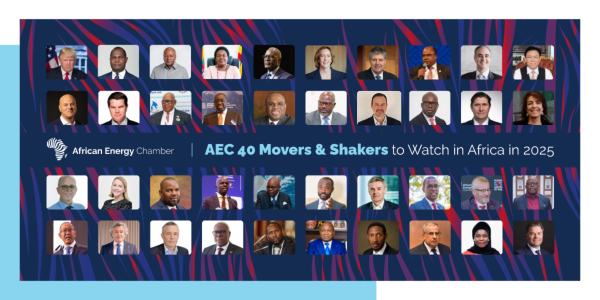
African Energy Ministers, NOCs and Regulators Stand Out Among AEC 2025 Movers and Shakers

Location: News
African Energy Chamber

Key African energy ministers, national oil companies (NOCs) and regulators have been recognized for their contributions to advancing hydrocarbon exploration, LNG megaprojects and policy reforms in the African Energy Chamber's (www.EnergyChamber.org) Top 40 Movers and Shakers to Watch in 2025 list. 

Namibia's Tom Alweendo, Minister of Mines and Energy, is at the forefront of the country's emerging oil industry. With first oil expected by 2029 and a pioneering local content policy in place, Minister Alweendo is focused on translating Orange Basin discoveries into tangible development, while balancing investor and community needs. In the Republic of Congo, Bruno Jean-Richard Itoua, Minister of Hydrocarbons, has led milestones including the country's first LNG exports and the Banga Kayo gas project. As Congo prepares for a 2025 licensing round and implements its Gas Master Plan, Minister Itoua's leadership will be critical in positioning the country as a leading energy hub. Equatorial Guinea's Antonio Oburu Ondo, Minister of Mines and Hydrocarbons, is driving efforts to reverse declining oil and gas production. Minister Ondo is tasked with securing investment, implementing the Gulf of Guinea gas pipeline project with Nigeria, and advancing the Yoyo-Yolanda gas project to revitalize the country's energy sector. 

Africa's leading NOCs and regulators were also recognized for their pivotal role in driving energy sector developments in 2025. Godfrey Moagi, CEO of South Africa's National Petroleum Company (SANPC), is spearheading efforts to develop the Brulpadda and Luiperd discoveries, while advancing gas-to-power projects at Saldanha Bay, Richards Bay and Coega LNG terminals. Moagi's leadership will determine SANPC's ability to establish itself as a key player in the country's energy transition. In Angola, Sebastião Gaspar Martins, CEO of Sonangol, is driving a sweeping transformation to restore the company's profitability. With strategic partnerships, operational streamlining and the sale of non-core assets, Sonangol is poised to emerge as a more efficient and competitive entity under his guidance. 

Maxient Raoul Ominga, Managing Director of SNPC, is spearheading initiatives in the Republic of Congo to boost oil production to 500,000 barrels per day. Through the development of key fields and implementation of the Gas Master Plan, Ominga is positioning Congo as a competitive gas player while reducing flaring and diversifying revenue streams. In Ivory Coast, Fatoumata Sanogo, CEO of PETROCI, is driving hydrocarbon development through strategic partnerships with TotalEnergies and Eni. With the Baleine field development on track to significantly boost production by 2025, PETROCI is cementing the country's position as a regional energy hub. 

Sylvia dos Anjos, Head of E&P at Petrobras, is leading the Brazilian NOC's ambitious re-entry into Africa, targeting markets in Namibia, South Africa and Angola. Her vision focuses on leveraging untapped reserves to establish Petrobras as a competitive player and strengthen Brazil's partnership with Africa. In Sierra Leone, Foday Mansaray, Director General of the Petroleum Directorate, is fostering investment in offshore oil and gas exploration. Following the successful conclusion of Sierra Leone's fifth licensing round, Mansaray is focused on turning interest into tangible exploration and production gains. 

As Africa's energy future continues to unfold, the AEC remains committed to recognizing and supporting the leaders who are making transformative impacts in the sector. For the full Africa's Top 40 Movers and Shakers to Watch in 2025 list, visit www.EnergyChamber.org 

Distributed by APO Group on behalf of African Energy Chamber.

Media files
African Energy Chamber
Download logo
Read moreAfrican Energy Ministers, NOCs and Regulators Stand Out Among AEC 2025 Movers and Shakers
28 January 2025

Stronger measures to protect oceans from pollution

Location: News

Stronger measures to protect oceans from pollution

President Cyril Ramaphosa has signed into law the Marine Pollution (Prevention of Pollution from Ships) Amendment Bill, ushering in stronger measures to better protect South Africa’s oceans from ship-related pollution. 

In a statement, The Presidency highlighted the importance of the legislation, which is also a contribution to global efforts to protect the marine environment and sustainable economic exploitation. 

“With a coastline stretching over 3 000 kilometres from Namibia on the Atlantic Ocean to Mozambique on the Indian Ocean, the new legislation is seen as vital to safeguarding the country’s environmental and economic security,” the Presidency said. 

South Africa has a large exclusive economic zone at sea and a marine economy which, in 2022, supported about 400 000 jobs in areas across the existing marine economic sectors of shipping, associated construction, tourism and fisheries.

“The law signed by President Ramaphosa is born out of the recognition that ships can pollute our oceans in various ways, from oil spills to harmful chemical sewage and garbage,” the Presidency said. 

The law amends the Marine Pollution Act to incorporate Annex IV and Annex VI of the International Convention for the Prevention of Pollution from Ships.  

Annex IV regulates the activities for treatment and safe disposal of sewage from ships.  Annex VI is the main global instrument that addresses ship energy-efficiency management and Greenhouse Gas emissions.

The amended legislation further broadens the powers of the Minister of Transport to make regulations relating to, among others, the prevention of air pollution from ships and the prevention of pollution by sewage from ships.

“The new law also increases fines from R500 000 to R10 million for any person convicted of serious offences under the Marine Pollution (Prevention of Pollution from Ships) Act or the international Convention which forms part of South African law,” The Presidency said. – SAnews.gov.za

DikelediM
Tue, 01/28/2025 - 11:21

277 views
Read moreStronger measures to protect oceans from pollution
27 January 2025

Solar project makes strides in W Cape

Location: News

Solar project makes strides in W Cape

The Riversdale solar energy project, which is set to bring reliable, affordable and renewable energy, is making satisfactory progress, says Western Cape Premier Alan Winde.

The multimillion-rand energy initiative is currently under construction in Riversdale, located in the Southern Cape, following a sod-turning ceremony in September 2024. 

Riversdale, a growing hub of economic activity and job creation, is located along the N2 highway in the Hessequa region between Cape Town and George. The town is mainly agriculturally oriented, and is recognised as a hub for shopping and other services for surrounding farming communities, smaller towns and some coastal resorts.

Winde, who visted the project site on Friday, said the project is an important part of creating energy security, even though the country has had a reprieve from load shedding.

The first phase of the project is expected to provide power to local businesses by the beginning of next year. After three years, it should be extended to all residents of the Hessequa region.

READ | Eskom edges closer to meeting load shedding target

Winde believes that municipalities in the Western Cape should continue to explore and invest in alternative energy solutions, with an added focus on making power more affordable and environmentally friendly. 

He said the Riversdale project and others like it will help in the face of Eskom's "staggering" 44% proposed increase for electricity sales to municipalities in the upcoming financial year. Through these projects, municipalities, the Premier said, would be able to absorb some of the worst of these price increases and pass on the benefits to their residents. 

“This project is not just ensuring energy resilience, which is much needed after the disastrous spate of power cuts; we are also taking a more responsible approach to power generation through renewable and affordable energy provision.”

Eskom has applied to the National Energy Regulator of South Africa for a 44% increase in electricity prices for the 2024/2025 financial year. 

The Western Cape Government (WCG) believes that the Riversdale energy initiative is essential for providing for the town's residents, and that it will also play a vital role in securing economic growth and driving job creation in the region.

The solar project includes a 10 megawatt (MW)-hour solar photovoltaic (PV) system that can generate 15 million kilowatt-hours per year. 

It features a battery energy storage system with a capacity of 10MW-hours, allowing for efficient energy storage and discharge. 

It is also equipped with advanced monitoring and control systems, enabling real-time performance tracking and optimisation.

The project is being implemented in three phases. According to the WCG, It will provide energy to the whole of Riversdale, which currently has a population of around 22 000 people. 

Electricity and Energy Deputy Minister, Samantha Graham-Maré, commended the WCG for its efforts to assist municipalities to incorporate renewable energy into their business models. 

She commended Hessequa Municipality for taking a leading role in the country by leveraging renewable energy for the benefit of all residents.

The WCG’s efforts to ensure affordable, reliable and renewable energy extend across the province, with projects such as solar PV installations, which are guided by the Energy Resilience Programme. The programme is aimed at generating 5 700MW by 2035. – SAnews.gov.za

Gabisile
Mon, 01/27/2025 - 10:37

287 views
Read moreSolar project makes strides in W Cape
27 January 2025

South Africa outlines G20 Presidency plans at WEF

Location: News

South Africa outlines G20 Presidency plans at WEF

As the world convened in Davos for the World Economic Forum (WEF) Annual Meeting recently, South Africa presented its vision for the G20 Presidency this year – outlining a path towards a more equitable and sustainable future.

This is according to President Cyril Ramaphosa who addressed the country through his weekly Presidential newsletter on Monday.

South Africa’s theme for the Group of Twenty (G20) Presidency is Solidary, Equality, Sustainable Development.

“We made the point that it is in the interests of all countries, large and small, wealthy and poor, to reduce global inequality. That is why one of our priorities is ensuring debt sustainability for low-income countries. By freeing up funds for debt relief in these countries, they will be in a better position to invest in infrastructure, industrial development, education, health care and other forms of development.

“Another focus area, which both reduces poverty and promotes sustainability, is the mobilisation of finance for a just energy transition. Through this, developing economy countries will be able to pursue a low-carbon development path while protecting the interests of affected workers, businesses and communities,” the President said.

Related to this, the President spoke of the “mobilisation of special financing and insurance to enable vulnerable countries to rebuild after being struck by natural disasters” and harnessing critical minerals “to promote inclusive growth and development”.

He emphasised, however, that in order for sustainable growth to be achieved, countries must work together.

“We stressed that our themes and priorities are underpinned by the principle of cooperation. Throughout history, human progress has been possible only through collaboration among peoples and countries. 

“We therefore renewed our call for the resolution of global challenges through multilateral actions. We called for inclusive solutions that recognise that the world is more interconnected than ever before,” he said.

Pressing further, the President emphasised that the current world climate shows that “no country can go it alone”. 

“No country can sustain its growth, stability and development without working together with other countries to overcome common problems,” he said.

Positive sentiment

President Ramaphosa revealed that South Africa’s message at WEF “resonated with the participants in Davos”. 
“It was a sentiment shared by many of the business leaders with whom we interacted, as well as with other heads of state and multilateral institutions.

“Many of the people we spoke to endorsed South Africa’s G20 priorities. They saw the value of our focus on Africa and the interests of countries with developing economies. They appreciated the importance of reducing inequality within and between countries and the need for new growth paths that are climate-friendly sustainable,” he said.

READ | President Ramaphosa outlines SA's G20 Presidency priorities at WEF

Furthermore, there was a much-improved sentiment towards “South Africa and the prospects for our economy in the years ahead”. 

“They commented on the successful transition from the 6th to the 7th administrations and the formation of the Government of National Unity. They saw this as a sign of stability and a common commitment among parties to inclusive growth, employment and a capable state. 

“They welcomed the far-reaching reforms that are underway in areas such as energy, logistics, telecommunications and water to grow and transform our economy.

“The South African delegation left Davos with a sense that there are many leaders in the world that share our vision of an inclusive, just and equal world. And that they are prepared and willing to work with us through our G20 Presidency towards the achievement of such a world,” President Ramaphosa concluded.

The annual WEF meeting held from 20 to 24 January 2025, convened global leaders to address key global, and regional challenges. – SAnews.gov.za

NeoB
Mon, 01/27/2025 - 11:17

287 views
Read moreSouth Africa outlines G20 Presidency plans at WEF
27 January 2025

SA U19 Women Maintain Unbeaten Streak

Location: Sport

SARAWAK: South Africa U19 Women continued their impressive run in the ICC U19 Women’s T20 World Cup 2025, securing a seven-wicket...

Read moreSA U19 Women Maintain Unbeaten Streak
24 January 2025

303 Days of Light

Location: Business

Friday, 24 January 2025: The focused execution of the Generation Recovery Plan continues to deliver the suspension of loadshedding for 303 consecutive days since 26 March last year. A further substantial milestone of 300 days without loadshedding was reached on Tuesday 21 January and 10 months without loadshedding will be achieved on Sunday 26 January,...

Read more303 Days of Light
23 January 2025

Ministers and CEOs to Convene at Invest Africa’s 12th Annual Mining Series

Location: News

Invest Africa
Download logo

Invest Africa (www.InvestAfrica.com), a leading pan-African trade and investment platform, is excited to announce Aon as the Headline Partner for its 12th Annual Mining Series alongside Mining Indaba 2025. With demand for transition metals expected to grow fivefold by 2050 as the world shifts to cleaner energy, Africa's mining sector will play a pivotal role in driving the global energy transition. Mining Series 2025 will convene government leaders, industry experts, and investors to examine how Africa can leverage its resources for sustainable and inclusive growth in an ever-evolving global market.

Confirmed speakers include: Mr Dean William Macpherson, Minister of Public Works and Infrastructure, Republic of South Africa; Dr Kgosientsho David Ramokgopa, Minister of Electricity, Republic of South Africa; H.E. Antony Phillipson, High Commissioner to South Africa, United Kingdom; Marna Cloete, President, Ivanhoe Mines; Marie-Chantal Kaninda, President, Glencore DRC; and Brian Menell, Chairman and CEO, TechMet; alongside other prominent leaders from government and industry [(for the full programme, click here (https://apo-opa.co/3PNtMr8)].

"The mining sector is at a crossroads as it navigates the dual challenges of accelerating demand for transition metals and the need for greater sustainability and transparency," said Dr Nolwandle Mgoqi, Chief Executive Officer, Aon South Africa. "Africa holds the key to powering the energy transition, but unlocking this potential requires a forward-thinking approach to risk management, resilient supply chains, and transformative technology. Aon is honoured to partner with Invest Africa in fostering critical dialogue and innovative solutions to shape the future of mining."

“We're seeing a tremendous appetite for investment in Africa's mining sector,” said Chantelé Carrington, Chief Executive Officer, Invest Africa. "Through the Mining Series, our mission is to shine a spotlight on opportunities across the continent and catalyse partnerships that unleash the full potential of Africa's resources while ensuring sustainable and inclusive growth."

Invest Africa is deeply grateful to all our partners for their support of the 12th Annual Mining Series, including: Absa, Afreximbank, Africa Finance Corporation, Aon, Black Mountain, Growth Gateway, Loinette Capital, Premier Invest, and S-RM.

To register for the 12th Annual Mining Series, please click here (https://apo-opa.co/4jtTWg4).

Distributed by APO Group on behalf of Invest Africa.

For media enquiries, contact: 
george.meadows@investafrica.com 
+2776891975 

About Invest Africa:
Invest Africa is a leading business and investment platform with over sixty years of expertise in Africa, dedicated to connecting businesses with unique opportunities across the continent. Our global network comprises more than 400 member companies, including multinationals, private equity firms, institutional investors, development finance institutions, professional service providers, government bodies, and entrepreneurs.

With chapters in Kenya, South Africa, the UAE, the UK, and the US, we leverage our global reach, market intelligence, and extensive network to support and connect businesses. Our mission is to drive socio-economic growth by facilitating sustainable capital flows and providing strategic insights through our membership, consultancy services, and dynamic events programme.

Read moreMinisters and CEOs to Convene at Invest Africa’s 12th Annual Mining Series
22 January 2025

President Ramaphosa outlines SA’s G20 Presidency priorities at WEF

Location: News

President Ramaphosa outlines SA's G20 Presidency priorities at WEF

President Cyril Ramaphosa has highlighted the significance of South Africa's G20 Presidency and the economic priorities of the South African Government of National Unity during a special address to the 55th World Economic Forum in Davos-Klosters, Switzerland.  

The President told world leaders that South Africa will focus its G20 Presidency on three themes - namely solidarity, equality and sustainable development. 

He emphasised the country’s commitment to advancing a just energy transition, fostering inclusive growth and addressing global inequalities.  

“As a leading forum for international economic cooperation, the G20 plays an important role in shaping and strengthening global architecture and governance on major international economic issues,” the President said. 

He pointed out that the G20 is being hosted on the African continent for the first time in history. 

“This is a moment of great significance for South Africa, the African continent and the world in that it was in Africa where humans developed the capacity and the impulse for cooperation. 

“Cooperation has been one of the key markers of human development touching on many aspects of life, from survival and social organisation to technological and cultural progress, which is what the G20 was established for - to foster cooperation to deal with the challenges the world faces. Cooperation is the bedrock of human civilisation,” President Ramaphosa said. 

He referred to former President Nelson Mandela’s speech at the WEF annual meeting 33 years ago, when Tata Madiba said: “Our interdependence, bringing us together into a common global home, across the oceans and the continents, demands that we all combine to launch a global offensive for development, prosperity and human survival.”

President Ramaphosa said South Africa's G20 Presidency is aimed at pursuing the objective of fostering solidarity, equality and sustainable development. 

“It is South Africa’s firm view that these themes can best be taken forward through the collective actions of institutions like the G20 and various multilateral institutions of the world, especially the United Nations, the WTO [World Trade Organisation] and global financial institutions, which should be reformed and be more representative and responsive to the needs of the citizens of the world.  

“We will seek to get the G20 to focus more on how we can enhance solidarity through collective efforts to ensure that in the pursuit of progress for all, no person and no country is left behind,” the President said. 

He emphasised that the rights and freedoms of one people cannot be separated from the rights and freedoms of all peoples. The President said that this is the foundation on which solidarity is built. 

He said one of the greatest impediments to growth, development and stability is the persistence of inequality within and between countries.

The pursuit of the UN Sustainable Development Goal on reducing inequality is as much of an economic imperative as it is a social imperative, President Ramaphosa said.

“As the G20, we need deliberate and coordinated efforts to focus on inclusive growth based on responsive trade and investment to grow the incomes of poor nations and the poorest in society and to ensure equal access to opportunities especially for women and young people.

“For nations to flourish, equality and prosperity must be available to everyone – regardless of gender, race, religious beliefs or economic status,” he said. 

Mobilising Finance for a Just Energy Transition

Another of South Africa’s priorities for its G20 Presidency is to mobilise finance for a just energy transition. 

President Ramaphosa underscored the need for enhanced climate financing, urging global financial institutions to redirect unused Special Drawing Rights to support developing economies, particularly in Africa and the Global South.

“It is simply not fair that over 60% of Special Drawing Rights are concentrated in a handful of wealthy countries. These resources should empower countries in Africa to invest in infrastructure, education, health care, and industrial development,” the President said. 

He called for innovative financing mechanisms and private capital to scale sustainable development, urging global institutions to derisk and support financing for emerging markets.

Highlighting South Africa’s Just Energy Transition Partnership, the President said: “We must accelerate the transition to low-carbon economies in a manner that is just and inclusive, while recognising the damage that climate change has already caused.”

Strengthening disaster resilience

With the increasing frequency of climate-induced natural disasters, President Ramaphosa said South Africa has therefore made the strengthening of disaster resilience as one of the priorities of its G20 Presidency.

He called for special financing and insurance mechanisms to support post-disaster reconstruction, particularly in vulnerable regions.

Harnessing critical minerals for inclusive growth

President Ramaphosa said another priority is to harness critical minerals for inclusive growth and development. 

“We need a G20 framework on green industrialisation and investments to ensure progress towards a grand bargain that promotes value addition to critical minerals close to the source of extraction.

“We also need the development of low-carbon manufacturing value chains which can support decarbonisation and industrial development. As mineral extraction accelerates to match the needs of the energy transition, the countries and local communities endowed with these resources must be the ones to benefit the most,” the President said. 

Showcasing Africa’s promise

President Ramaphosa highlighted Africa as the next frontier of global growth, with its abundant natural resources, young population and expanding markets.

He called for G20 support for the African Continental Free Trade Area (AfCFTA) Adjustment Fund, investments in infrastructure, youth skills development, and women’s economic empowerment.

“The digitisation of the continent to enhance trade and development is a key enabler. Through its G20 Presidency, South Africa is well-positioned to advance global cooperation and build partnerships for growth and development,” he said. 

Advancing global cooperation

President Ramaphosa praised South Africa’s inclusive governance under the Government of National Unity, which he credited with fostering stability and investor confidence.

“This cooperative culture and approach was taken to a higher level with the establishment of the Government of National Unity following the elections we held in May last year.

“The Government of National Unity, made up of 10 political parties, has been vital to stability and inclusive governance, and has contributed to greater interest among investors in South Africa’s economic prospects,” he said. 

The President said over the last few years, the South African government has been working closely with social partners in business and in labour to address key national challenges and drive inclusive growth.

Concluding his address, President Ramaphosa extended an invitation to world leaders to attend the G20 Summit in Johannesburg later this year.

He said the seeds of human progress were sown in Africa, where the earliest forms of cooperation were forged and developed.

“As the leaders of the G20 return to Africa, we make a call that we all harness these essential capabilities that will make us take action to build a better and fairer world. We intend that the G20 in Johannesburg this year should be a forum where cooperation and collaboration amongst the leading economies in the world will be taken to a higher level.

“Acting together, we should build an inclusive, just and equal world in which all may prosper, leaving no one and no country behind. I look forward to welcoming you to the G20 in Johannesburg later this year. 

“Even if you do not participate in any of the 130 G20-related meetings, I invite you to come and see South Africa for yourself, the most beautiful country in the world,” he said. – SAnews.gov.za

DikelediM
Wed, 01/22/2025 - 12:30

10 views
Read morePresident Ramaphosa outlines SA’s G20 Presidency priorities at WEF
22 January 2025

South Africa is undergoing ‘fundamental transformation’ – President Ramaphosa

Location: News

South Africa is undergoing 'fundamental transformation' - President Ramaphosa

President Cyril Ramaphosa, says South Africa is undergoing a “fundamental transformation” - as it seeks to accelerate inclusive economic growth.

President Ramaphosa was speaking at the South Africa Night World Economic Forum (WEF), held at the Garden Hall in Davos Klosters, Switzerland, on Tuesday evening.

The event, hosted by Brand South Africa, celebrated the country's G20 Presidency, an extraordinary opportunity to shape the global agenda for inclusive growth and sustainable development.

The event was held on the sidelines of the annual WEF meeting, which is taking place from 20-24 January 2025, under the theme: "Collaboration for the Intelligent Age". 

The President told the gathering that the country has introduced reforms in sectors, including water, electricity and logistics, that are serving as a base for economic growth.

“South Africa is undergoing a fundamental transformation. We have introduced bold economic reforms to overcome persistent challenges and unlock the vast potential of our country and its people. 

“These reforms have underpinned the country’s economic recovery in the wake of more than a decade of stagnant growth, state capture and the worst global pandemic in more than a century. These reforms are laying a firm foundation for sustained and accelerated growth into the future,” President Ramaphosa said.

He added that the reforms, and the subsequent structural transformation are “sharpening South Africa’s competitive edge, boosting productivity and attracting investment”.

The President pointed to the establishment of the Government of National Unity (GNU), as an example of the commitment from all leaders to maintain “stability, progress and partnership” in South Africa, as the country moves towards inclusive growth.

“While each party campaigned on different platforms, the Government of National Unity has agreed on a common programme to grow an inclusive economy, create jobs and build a capable state.

“Surveys have shown that South Africans have confidence in the Government of National Unity to take the country forward. It has also contributed to a marked improvement in business and investor confidence,” he said.

President Ramaphosa also pointed to partnerships that have been developed between government and social partners, in order to drive the country forward and face challenges together.

“We have a tradition of dialogue and cooperation, of working together to overcome even the most intractable of problems. As we confront the challenges of the present, social partners have been working together, in various forms and forums, to drive a programme of inclusive growth and transformation.

“A concrete example of this is the strategic partnership between the South African government and business. This collaboration focuses on innovative solutions to tackle critical issues, such as energy security, infrastructure gaps, crime and corruption, and job creation,” President Ramaphosa said.

President Ramaphosa described 2025 as “a momentous year for South Africa”, as the country takes its place as the first African country to bear the Presidency of the Group of 20 (G20).

He said through South Africa’s G20 Presidency, the country will demonstrate its unwavering commitment to global solidarity, equality, and sustainability.

“From the triumph of democracy 30 years ago, to our ongoing pursuit of inclusive growth, South Africa has demonstrated that collaboration and determination can shape a brighter future. It is this ethos we bring to the G20. 

“Our Presidency provides a platform to amplify voices that have often gone unheard. It is an opportunity to advocate for solutions that prioritise the well-being of all, particularly the most vulnerable. South Africa is well placed to play this role,” he said. – SAnews.gov.za

NeoB
Wed, 01/22/2025 - 10:30

108 views
Read moreSouth Africa is undergoing ‘fundamental transformation’ – President Ramaphosa
  • Previous
  • Page 1
  • Interim pages omitted …
  • Page 22
  • Page 23
  • Page 24
  • Page 25
  • Page 26
  • Interim pages omitted …
  • Page 82
  • Next

Copyright © 2026 · MyZA · All Rights Reserved · Powered by Stratlec Online