Alexkor vs Creecy in environment court battle
The state mining company is challenging an environmental compliance notice

MyZA
News, Directory, Events and Other Stuff
The state mining company is challenging an environmental compliance notice
Earlier today, Western Cape Minister of Agriculture, Dr Ivan Meyer, visited the Western Cape Department of Agriculture's (WCDoA) Outeniqua Research Farm, outside George, which is known for its research on dairy production from planted pasture. Results on pasture and the concentrate component of the dairy feed provide guidelines to producers in the Southern Cape.
Minister Meyer said, “Agriculture is a science, and science must be backed by evidence-based research. Our research aims to help grow the agricultural sector and support producers in developing their businesses and creating jobs. By providing our producers with high-quality scientific support, we aim to work with our producers to find innovative solutions to ensure that the sector can flourish.”
Specialist dairy researcher at the Outeniqua Research Farm, Professor Robin Meeske highlighted that the profitability of milk production is under pressure due to increasing input costs. As a result, research projects at Outeniqua Research Farm focus on sustainable profitable dairy production from pastures.
“The main profit drivers are pasture production per hectare, cows per hectare and milk production per cow. High-quality pasture is the greatest contributor to the cows' daily nutrient requirements. To meet their energy requirements, high volumes of concentrates are fed to cows which are often three times more expensive than pasture.”
“Pasture research focuses on optimal pasture yields from known pasture species, especially the various ryegrass species. Animal research is conducted into the supplementary concentrate that is fed to the cows. We are looking into possible alternatives for some of the ingredients to make the cost per kilogram of feed lower without compromising milk yield or milk composition,” added Professor Meeske.
Researchers at Outeniqua are in contact with industry role-players, and this ensures that the research being conducted is relevant to the dairy producers.
“Research findings at Outeniqua Research Farm contribute to improving pasture quality and yield on farms. More efficient use of concentrates and adjusting concentrate composition and level of concentrate feeding is key to the profitability of milk production from pasture. The industry is kept up to date with our latest finding at the annual Farmers' Days hosted by the research team at the Outeniqua Research Farm,” concluded Minister Meyer.
Distributed by APO Group on behalf of Republic Of South Africa: Western Cape Provincial Government.
Massification of skills development and job creation programmes to combat unemployment
By Minister Thulas Nxesi
I believe that we can all agree that, at the end of the day, a decisive reduction in the unacceptably high level of unemployment is dependent on higher economic growth resulting in more jobs. This process is led by business investing in the private sector with resultant economic development and rising employment.
Nonetheless, as the President has argued, government as the largest employer in the country and a large-scale procurer of goods and services, has a major role to play both to create an environment conducive to investment, growth and development, but also to directly mitigate the impact of unemployment through social protection measures, demand-led training, targeted job creation and preservation.
To this end government, has strived to strengthen and expand its programmes for skills development and job creation, particularly in respect of the youth, seeking to mobilise and coordinate resources across government. In so doing, government has also sought to deepen and increase the areas of cooperation with the private sector. Initially focused on the strategic areas of energy security, port and inland logistics, and crime and corruption, cooperation has been expanded to include issues of skills and employment.
Which brings us to the expanded roll-out of government jobs and skills projects. First, I need to flag that this orientation and vision has a very long pedigree. Indeed, it is captured in the National Development Plan 2030 adopted in 2011. The earlier example of the Expanded Public Works Programme has been in existence for over two decades, and is utilised by local governments of all political persuasions.
So the present roll out of UIF Labour Activation Programmes (LAP) which started on April 6th in Gauteng – in tandem with the provincial Nasi Ispani Project - is part of this long tradition, expanded now to pool resources across departments and provinces, and in partnership with the private sector.
Following the 2019 elections, the mandate of the old Labour Department was expanded to become the Department of Employment and Labour. The reconfiguring of the Department to reflect the mandate has been taking place ever since. Part of this process is to leverage the existing resources of the Department for job creation and preservation. The Labour Department had long been involved in skills training of the unemployed. One of the things we did after 2019 was to re-orientate training towards in-demand and scarce skills with the guarantee of a job at the end of the programme, replacing the previous training for training’s sake mentality. Another critical part of the reconfiguration of the Department was to undertake a structural architecture review of the funds – the UIF and Compensation Fund – carried out by an independent analyst, and with the express purpose of greatly strengthening client service and ensuring necessary financial controls, systems, governance, accountability, risk and compliance mechanisms are in place.
I need to say more about the central role of the UIF in the work of the Department. The UIF is best known for paying out unemployment and maternity benefits, drawing on the contributions of employers and employees, but, in fact the UIF Act gives it a much larger mandate to mitigate unemployment, and includes funding:
And job creation through:
It was in furtherance of this mandate that the UIF established the LAP, where these kind of programmes have been running since before 2019, and will continue after the 2024 election. (The bizarre claim that the current LAP projects are a ‘rip off’ of the irregular Thuja proposal is historically inaccurate.) The decision of government to ‘massify skills development and job creation’ in response to persistent high levels of unemployment and sluggish growth utilises the LAP platform – expanded to pool resources across departments and entities, and to partner with the private sector. The funding model for the current expanded LAP provides a sliding scale of funding support for programmes with 70% of partners contributing, and a maximum 30% would being non-contributors (i.e. receiving 100% UIF/LAP funding), together with projects across government departments and entities on a rand-for-rand funding basis, for example including working with the IDC and the Department of Basic Education to recruit and pay salaries for Teacher Assistants designed to employ 200,000 unemployed graduates (part of the Presidential Youth Employment Stimulus programme).
The current expanded LAP ‘Training for Employment and Entrepreneurship’ programme sets ambitious targets: 2 million opportunities over three years, consisting of jobs preserved and created; demand-led skills training and entrepreneurial opportunities. Currently, 333 projects have been recommended for implementation across every province, with planned some 704,000 beneficiaries. Some 55,000 opportunities were announced for Gauteng on 6th April with the launch of the Nasi Ispani Project, supported and jointly funded by the LAP across 24 sectors: Agriculture, Services, IT, Construction, Engineering, Wholesale and retail, safety and security, hospitality, social services, textile, transport, furniture manufacturing; education, energy, food and beverage, health and wellness, aviation, insurance, jewellery, hygiene, arts and culture, and financial sector. The partnering with the Gauteng provincial government seeks to ensure that government maximises the impact of its spending by pooling resources and eliminating duplication.
I also need to flag that the LAP projects have been – or still are to be - subject to meticulous quality assurance processes to ensure:
Labour activation programmes are not a silver bullet to end the challenge of unemployment, but they are a viable force-multiplier that can be used together with other initiatives and interventions as part of a response to mitigate unemployment.
The sectors and industries that will contribute significantly to the creation of these opportunities include economically growing and in-demand sectors such as agriculture, ICT, construction, engineering, manufacturing, education, transport and mining.
An initial amount of R15 billion has been budgeted for the expanded LAP roll-out, eventually rising to R23.8 billion funding permitting. Opportunities will run between 12 and 36 months. The money invested in the plan will be recouped by the UIF through contributions and revenue generated from investments, as has been in the past sustainability model of the Fund.
There is this saying that: “the proof is in the pudding.” The UIF has proven that it is capable of taking strategic measures when required – such as the Covid-TERS benefits – distributing R64 billion to 5 million laid off workers and their families during the pandemic – whilst remaining financially sound.
The official national launch of the expanded LAP programme takes place in KZN on 16th April with a progressive roll-out of projects province by province, district by district culminating in the Northern Cape on the 9th May to coincide with the Presidential Imbizo in Kimberly.
Details of other launches and the impact to be derived from these projects will be communicated on an ongoing basis. This demonstrates our serious commitment to creating opportunities for our people, and to embed these processes and programmes into the future.
*Thulas Nxesi is the Minister of Employment and Labour.*
Neo
Thu, 04/11/2024 - 11:26
Growth of artisanal and small-scale miners key to transformation
Mineral Resources and Energy Deputy Minister, Dr Nobuhle Nkabane, has assured artisanal and small scale miners that government will continue to provide support and assistance to facilitate their growth in the mining sector.
The Deputy Minister was delivering a keynote address at the inaugural Artisanal Small-Scale Miners and Emerging Miners Symposium hosted by Mintek in Randburg on Thursday.
“As part of government’s efforts to grow a globally competitive and transformed mining sector, the department…introduced the artisanal and small-scale mining policy in 2002. At the core of this mining policy is the need for all stakeholders to collaborate and work together on the training and development of artisanal and small-scale miners to mine the marginal deposits that are considered less valuable by large mining companies.
“As part of DMRE’s [Department of Mineral Resources and Energy] efforts aimed at facilitating and opening up funding opportunities for these miners, in January this year, the department published an invitation for artisanal miners and small-scale miners to apply for the funding designated to assist with financial provision for rehabilitation and capital equipment,” she said.
Some 21 companies have been shortlisted to receive funding and added to that, the department has launched a R400 million exploration fund to assist in exploration and discoveries and increase junior miners, amongst others.
She emphasised that it is the duty of the industry and organisations like Mintek (South Africa’s mineral research and technology organisation) and government to ensure that the mining sector is transformed.
“All of us here should ask ourselves what legacy are we going to leave. If we don’t want to be part of transforming the sector, who else is going to do that because we are given that responsibility of transforming the sector.
“How are we going to do it? We must support small scale and artisanal miners. It should not be the responsibility of a single person; it should be our responsibility. The fact of the matter is that our current development will be spearheaded by [Small, Medium and Micro Enterprises] including the artisanal and small-scale miners,” she said. – SAnews.gov.za
NeoB
Thu, 04/11/2024 - 12:16
The 7th of April marked World Health Day, and this year’s theme “My Health, My Right” – is a powerful message, reminding us of our collective responsibility to ensure universal access to essential healthcare. While it’s important to remember that this is a critical aspect of healthcare, the real starting point for good health is …
Unleash limitless adventures from your couch thanks to LG’s perfect, compact sound system. The living room is more than just a space for relaxation—it is the heart of home entertainment. Imagine being whisked away from the comfort of your sofa to the electric atmosphere of a live concert in Sydney or the thrilling energy of …
Entries for the Totalsports Women’s Race, South Africa’s premier Women’s Month Celebration, will open on Wednesday, 10 April 2024. “What better way to honor National Women’s Day than by extending the celebration throughout the month of August,” says Michael Meyer, Managing Director of Stillwater Sports. “We’re excited to unite with thousands of active women across …
Solar power supplied 67% of all electricity used in February this year at three of leading South African truck body and trailer building company, Serco’s factories and offices in South Africa. And Serco’s goal is to push that figure up to 75% following further investment to raise the ratio even higher in the medium to …
Progress made in addressing socio-economic inequalities
Government has made significant strides in addressing socio-economic inequalities through social welfare programmes in housing, healthcare, education and social services.
“Over the past few decades, the South African government has taken significant steps to address historical injustices and strive towards achieving social cohesion and socio-economic empowerment for all its citizens,” said Deputy President Paul Mashatile on Tuesday.
The Deputy President was delivering a special public lecture on the 30th anniversary of South Africa’s democracy at the invitation of the University of Johannesburg’s School of Public Management, Governance and Public Policy, in partnership with the College of Business and Economics.
He also touched on the Broad-Based Black Economic Empowerment (BBBEE) policies, which he believes have promoted economic transformation and ensured the marginalised become part of the mainstream economy.
To demonstrate government’s commitment to building an inclusive and growing economy, he said the state has raised R1.5 trillion in new investment commitments, of which over R500 billion has already flowed into the economy.
“We have made further strides in addressing load shedding, ensuring energy security, enhancing logistics systems, and improving ports and rail networks.”
In addition, the country’s second-in-command said government was on track to accelerate land redistribution. Black South Africans, he said, now own around 25% of farmland, while the state supported 1 000 industrialists in Black-owned firms.
However, despite these achievements, challenges remain in achieving a more inclusive and equitable society.
“The triple challenges of poverty, unemployment, and inequality, as well as corruption, continue to pose obstacles to the nation’s progress. In addressing these challenges, we are conscious that, as government, we must strengthen social compacts by working together with all sectors of society.”
Achievements
Deputy President Mashatile highlighted the achievements that have been made over the past 30 years.
These, according to the Deputy President, include investment in transport infrastructure such as the Gautrain, the Freeway Improvement Project and Bus Rapid Transport, the agricultural sector, the financial services sector as well as a thriving automotive sector.
He said infrastructure investment was key to the country’s growth and told guests that projects worth about R21.4 billion have been completed.
“I would like to see more young people and women-led businesses being involved in these projects because young people are the future of our country and women carry the hardest burden of communities.”
The Deputy President also took the time to acknowledge some of the challenges that the youth in the country face. “Hence, over the years, we have been investing in initiatives for the development of our youth and our future.”
Water and sanitation
In addition, he said government has decided to move with speed to professionalise the public sector.
“I would like to assure you and the people of our country that, as the government, we are committed to the delivery of quality services to our people.”
This includes dealing with increased water and sanitation issues, as well as the energy availability factor.
President Cyril Ramaphosa appointed the Deputy President to lead a task team on the water crisis in the country, and one of the urgent priorities is to fix the ageing infrastructure.
“We have already started this work. Just this evening, we are meeting as the Water Task Team; on Friday we will be visiting eThekwini as well as other regions later on to engage with the province as to how best we can resolve the eminent water challenge.”
Since the announcement of the Water Task Team’s establishment, his office has received numerous requests from individuals seeking to assist and collaborate with the government.
He said the Department of Water and Sanitation has already allocated R10.1 billion to municipalities through the regional bulk infrastructure grant, R4.6 billion through the water services infrastructure grant, and R1.4 billion through the municipal recovery disaster grant to address water challenges. – SAnews.gov.za
Gabisile
Tue, 04/09/2024 - 14:59
Eskom's interventions to improve energy supply commended
Minister in the Presidency responsible for Electricity, Dr Kgosientsho Ramokgopa, has commended the interventions implemented by Eskom, which have contributed to the improvements of the country’s energy supply security.
“These interventions come on the back of the Energy Action Plan... It is [like] an accumulation of these efforts over a period, which is now going close to two years,” Ramokgopa said on Tuesday.
Briefing media on the implementation of the Energy Action Plan, Ramokgopa said some of Eskom’s interventions include the improvement of plant conditions, the establishment of the War Room, increased governance controls, aggressive cost cutting, environmental compliance, and achieving coal stock days, amongst others.
Ramokgopa attributed the ramping up of planned maintenance to Eskom's leadership, and those who have volunteered their skills and services to serve the country.
“The ramping up of planned maintenance is very important. If you look at the period December 2023, going into January of 2024, we took out 18% of the total generation capacity - about 9 000 megawatts at a go, for planned maintenance.
“We are beginning to see these machines coming back into service. They are coming back on load and adding to the capacity of the grid, and this is helping us to address the demand. More of these machines would come on stream as we go towards the winter period,” Ramokgopa said.
The Minister said the establishment of the War Room was to ensure that Eskom can focus on dealing with planned maintenance.
On addressing the issues of inadequate capacity, the Minister re-emphasised that Eskom is not a "silver bullet", and that the country’s problems with loadshedding will not be solved by Eskom alone.
“Eskom is a major player in the short-term, and I think [we] need additional generation capacity, hence the need to expedite that engagement with independent power producers to the extent that Eskom can make a contribution [and] we are able to get them on stream, [and] on loan, as soon as possible.”
Ramokgopa stressed the importance of ensuring that the entity gets the right people into the right positions.
“We also accepted that there’s a need, from time to time, to draw from external experts in areas of deficit in relation to expertise. We... also [have] to ensure that there [is] a culture of accountability and consequence management, whereby when people commit to a certain target, and if those targets are not met, first we try to assist, then [we] need to ensure [we] introduce consequence management,” the Minister said.
Highlighting some of the success achieved so far, Ramokgopa reported that National Treasury has relaxed some requirements, which will speed up procurement.
“The allocation of outage budgeting has improved, leading to improved outage readiness. We are receiving a lot of collaboration among external stakeholders with a willingness to assist Eskom,” Ramokgopa said.
Medupi Unit 4 is on track to be commissioned in August
Meanwhile, Ramokgopa announced that Medupi Power Station Unit 4 is on track to be commissioned in August 2024, following the delivery of a second-hand generator stator last month.
“The second-hand generator stator was delivered to Medupi Power Station on 5 March 2024. The unloading from the multi-axle vehicle was successfully executed on 11 March 2024.
“Koeberg unit 2 is on track to return to service in September 2024, and Kusile unit 6 is planned to synchronise in September 2024. Kusile remains on track with units synchronising between November 2024 and April 2025,” the Minister said.
The Minister also noted that the coal stockpiles are at healthy levels and none of the stations are below compliance required levels. – SAnews.gov.za
GabiK
Tue, 04/09/2024 - 12:46
Reflecting on the achievements of 30 years of freedom
As the country reflects on 30 years of freedom and democracy, government is taking stock of the gains that have been made, its achievements and milestones, as well as what could have been done better over the last three decades.
“As government, we should count the successes and achievements that we have managed to achieve at this point in time. In areas where we have tried to intervene [and] the interventions were not successful, we now have the experience and innovation to resolve them,” Government Communication and Information System (GCIS) acting Director General, Nomonde Mnukwa, said in an interview with SAnews.
South Africa's Census 2022 national results show an increase in the proportion of households that had access to piped water inside their dwelling, from 32.3% in 2001 to 46.3% in 2011 and to 59.7% in 2022.
The data show that in 2022, over four-fifths (82.4%) of households in the country had access to piped water either inside their dwelling or inside their yard.
The proportion of households using electricity as the main source of energy for lighting increased significantly from 58.1% in 1996 to 94.7% in 2022.
“The majority of us grew up in areas where water access was a dream. We never thought we would have access to water. We never thought that we would have access to electricity. We never thought we would have access to free education. There are a number of non-fee paying schools that we have and a majority of those schools are contributing more than 60% of the Bachelor’s passes for matrics,” Mnukwa said.
She said South Africa reaching 30 years of democracy and freedom is a dream that has come true.
“We have come a long way. This is the year that we look back, particularly to 1994 when South Africa held its first democratic elections. It was one of those dreams that came true for us to be able to cast our vote,” Mnukwa said.
South Africans will once again go to the polls on 29 May 2024 to cast their votes in the 2024 National and Provincial Elections.
This year marks 30 years since millions of South Africans cast their ballot in the democratic election of 1994 for the first time in their lives.
The 30-year celebration in the country will be premised on celebrating the gains, achievements, and the milestone of 30 years of democratic rule as well as living in a free and democratic society.
Annually, the month of April is designated as Freedom Month in South Africa.
“As South Africans, we need to remember where we come from. We come from an era where people needed to carry a dompass to go out in public. There were areas that we could not access as the segment of the population, which comprised the majority of the population,” Mnukwa said.
She emphasised that when South Africa was transitioning to a democratic country, it managed to avoid a war.
The country attained democracy and freedom though peaceful negotiations and talks.
“There were some careers that we couldn’t do because they were restricted to the chosen few. There were some areas that we could not stay in despite the fact that we were South Africans. It is something to celebrate, it is something to talk about and remember but it is mostly something that we can reflect on as individuals,” the acting DG said.
In his 2024 State of the Nation Address, President Cyril Ramaphosa said government’s policies and programmes have over the course of 30 years lifted millions of people out of dire poverty.
By 2010, the poverty rate had dropped to 60.9%, and it continued to decrease, reaching 55.5% in 2020, as reported by the World Bank.
“One of the most visible, impactful and meaningful achievements in the first three decades of freedom has been in providing homes to the people. Today, nearly nine out of every ten households live in a formal dwelling.
“At the end of apartheid, only 6 out of 10 people had access to clean drinking water. Today, that figure has increased to nearly 9 out of 10 South Africans.
“We have introduced laws and undertaken programmes to enable black South Africans and women to advance in the workplace, to become owners and managers, to acquire land and build up assets. The proportion of jobs in executive management held by black people increased almost five-fold between 1996 and 2016,” the President said.
In addition, government has built more hospitals and clinics, especially in poor areas, providing better and quality healthcare to more South Africans. – SAnews.gov.za
nosihle
Mon, 04/08/2024 - 11:31
In the constantly evolving world of smart home technology, two innovations have significantly changed how we interact with our living spaces: smart blinds and smart light switches. These advancements are not just about embracing modernity; they are about enhancing convenience, energy efficiency, and personalising home environments to suit our lifestyles. Let’s delve into how these …
Chalk paint has taken the world of home decor and DIY enthusiasts by storm in recent years, and it’s easy to see why. Its versatile and easy-to-use nature has made it a favourite among those looking to revamp their furniture, home accessories, and even walls. One of the most exciting aspects of chalk paint is …

Vantage Capital (www.VantageCapital.co.za), Africa's largest mezzanine debt fund manager, announced that it has made a R346m investment into Procera Group (Pty) Limited (“Procera”), a leading South African business process outsourcing (BPO) services provider serving both South African and international clients.
Vantage's investment comprises of the acquisition of a significant minority equity stake from the Procera founders as well as the provision of a mezzanine facility to support future strategic acquisitions by Procera.
Founded in 1990 as a debt recovery solutions provider, over the last three decades Procera has evolved into an integrated BPO services group offering support solutions to its clients via several distinct brands along the customer life cycle. Procera currently services over 50 local and international blue-chip clients across key industries such as Retail, Financial Services, Energy and Telecommunications in geographies including South Africa, Namibia, United Kingdom, United States and Australia.
Procera's investment into its proprietary contact centre software, deployment of emerging technologies such as predictive analytics, generative AI and omnichannel communications continue to improve productivity and the customer experience. With over 2700 employees, Procera is a significant driver of impact through employment, training and skills development, especially for women and youth in the communities within which it operates.
South Africa is consistently ranked in the top two BPO locations globally driven by factors including customer experience supported by an empathetic English-speaking workforce and cultural affinity to various source markets, a favourable time zone, and its abundance of youth talent. The South African BPO market is expected to achieve a 13% CAGR over the next five years ahead of global growth forecasts for the sector of 8.5% CAGR. The sustained global growth is driven primarily by corporates seeking to effectively manage costs and streamline business functions.
Roshal Ramdenee, Associate Partner at Vantage Capital, said “Vantage sees a tremendous opportunity for both job creation as well as a positive economic impact as Procera continues its rapid international expansion and drives market leading technological solutions in the BPO space. Vantage is proud to partner with a very capable management team and committed long term investors.”
Warren van der Merwe, Managing Partner at Vantage Capital, added “It is rare in the current economic environment to find fast-growing South African businesses and ones that are truly competitive in developed markets. Procera's founders, shareholders and management team have built an admirable business to date, and we are excited to invest into Procera's next stage of growth and development.”
Crispin Sonn, Chairman at Procera added “We are very pleased to have the long-term support of Vantage and its team of seasoned investors as we look to grow the Procera's business services footprint into international markets.”
PWC acted as financial advisor to the transaction, Werksmans acted as legal counsel for Vantage. Other advisors to the transaction included Step Advisory, Ernst and Young, Webber Wentzel, Eversheds, STBB, and IBIS Consulting.
Distributed by APO Group on behalf of Vantage Capital Group.
For more information contact:
Warren van der Merwe
Managing Partner – Vantage Capital
warren@vantagecapital.co.za
+ 27 (0) 11 530 9100
Roshal Ramdenee
Associate Partner – Vantage Capital
roshal@vantagemezzanine.com
Darshan Shah
Senior Associate – Vantage Capital
darshan@vantagecapital.co.za
About Vantage Capital:
Vantage Capital Group was established in 2001 and is the largest independent pan-African mezzanine debt fund manager on the African continent. It has raised funds of US$ 1.6 billion in seven distinct mezzanine and renewable energy debt funds as well as in a technology fund and has to date made 61 investments across the African continent.
Vantage has an office in Johannesburg, employees based in Cape Town, Nairobi, Lagos, Cairo, London, Dubai and Paris, and targets investment opportunities, with a focus on mezzanine debt, of US$ 10 - 50m across more than a dozen key African markets. Mezzanine debt is an intermediate form of risk capital, which is situated between senior debt, the lowest risk tranche of the capital structure, and equity, the highest risk. It combines elements of both debt and equity thereby providing companies with long-term funding on terms which are less dilutive to shareholders than pure equity.
Vantage recently launched an education investment platform which is targeting the education markets of Poland, Czechia, Romania, and Portugal.
Website: www.VantageCapital.co.za
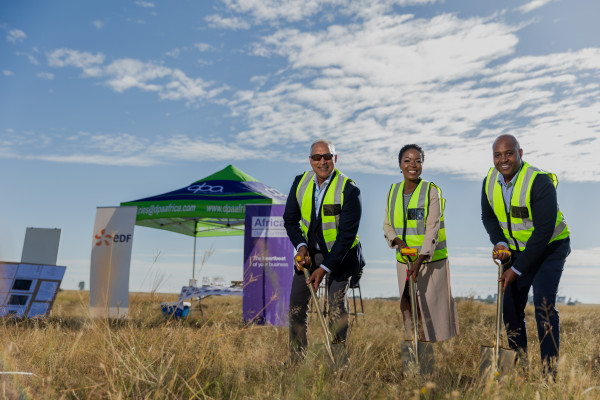
Africa Data Centres (www.AfricaDataCentres.com/) and DPA SA have broken ground on their solar farm in the Free State; The first phase will see power getting wheeled to its CPT1 facility; The second phase will see power being supplied to JHB1 and JHB2 once wheeling agreements with relevant municipalities conclude.
Africa Data Centres, a business of the Cassava Technologies group, is pleased to announce that it has broken ground on the construction of a solar farm in the Free State in collaboration with DPA Southern Africa.
This announcement forms a crucial component of the 20-year Power Purchase Agreement (PPA) inked in March 2023 with DPA Southern Africa a joint company of the French utility, EDF. The objective of the Free State farm is to furnish renewable energy to Africa Data Centres sites, commencing with its cutting-edge, carrier-neutral data centre in Cape Town, the CPT1 facility.
According to Cassava Technologies' President and Group CEO, Hardy Pemhiwa, “This initiative positions Africa Data Centres as a trailblaser in the data centre industry in responding to South Africa's energy crisis through sustainable technology solutions. This is in line with a broader industry shift towards innovative, eco-friendly practices. The strategic use of solar power showcases technology's role in pioneering solutions for energy challenges and environmental sustainability”.
Furthermore, Tesh Durvasula, CEO of Africa Data Centres, underscores the commitment to powering all data centres with clean, renewable energy sources. "Today's announcement represents a significant stride in our initiative to energise South African data centres sustainably, advancing our objective of achieving carbon neutrality. The first phase involves constructing the 12MW solar infrastructure to power our Cape Town data centre, with subsequent phases extending to our Johannesburg data centres.”
Nawfal El Fadil, the CEO of DPA SA, states, "Africa Data Centres, as a pioneer in the data centre industry, has consistently demonstrated a strong commitment to sustainability, aligning seamlessly with our company's values. We are thrilled and honoured to contribute to Africa Data Centres' mission of achieving carbon neutrality, beginning with the establishment of this solar power plant in the Free State to serve their data centre in Cape Town. At the heart of our collaboration lies a shared understanding that the path to carbon neutrality extends beyond infrastructure—it demands innovation, expertise, and collective determination to overcome challenges. DPA SA, backed by EDF's legacy, brings a wealth of experience and a proven track record in delivering high-quality, sustainable energy solutions to this partnership."
"We take immense pride in supporting Africa Data Centres on this journey, being among the pioneers in launching a wheeling solar plant, thereby paving the way for a greener, more sustainable future in South Africa," adds Nawfal El Fadil.
This project is a key element of Africa Data Centres' ambitious plans to emerge as the most sustainable colocation provider on the continent. "Beyond procuring renewable energy, our commitment to an efficiency strategy has earned us the internationally recognised ISO50001 certification for the effective operation of our data centres," Durvasula elaborates.
"Data centres worldwide face scrutiny for their reliance on grid power and renewables, and Africa is no exception. Africa Data Centres is actively addressing this issue by generating renewable energy, alleviating strain on the local grid. Additionally, our sustainability objectives encompass achieving net-zero status at all facilities, making this project another significant stride towards reaching that goal," concludes Durvasula.
Distributed by APO Group on behalf of Africa Data Centres.
Social Media Platforms:
Twitter: https://apo-opa.co/4cKzd4r
LinkedIn: https://apo-opa.co/446fpol
Facebook: https://apo-opa.co/3TSkVGa
YouTube: https://apo-opa.co/3NcwWnp
About Africa Data Centres:
Africa Data Centres is your trusted partner for rapid and secure data centre services and interconnections across the African continent.
Africa Data Centres is Africa's largest network of interconnected, carrier and cloud-neutral data centre facilities. Bringing international experts to the pan-African market. We are your trusted partner for rapid and secure data centre services and interconnections across the African continent. Strategically located, our world-class facilities provide a home for all your business-critical data. Proudly African, we are dedicated to being the heart that beats your business.
Africa Data Centres' aim is to unveil various business opportunities and to develop a strategic network of partnerships. This will further strengthen Africa Data Centres' superiority in providing our customers with the highest standard of interconnected, carrier and cloud-neutral data centre facilities throughout Africa. www.AfricaDataCentres.com/
About Cassava Technologies:
Cassava Technologies is a technology leader providing a vertically integrated ecosystem of digital services and infrastructure enabling digital transformation. Launched in 2021, the company was born out of a need to create a digitally connected future that leaves no African behind. Through its subsidiaries, namely, Liquid Intelligent Technologies, Liquid Dataport, Liquid C2, Africa Data Centres, Distributed Power Africa, Sasai Fintech and Telrad, Cassava is a multinational technology company that has operations across key growth markets like Africa, the Middle East, Latin America and the United States of America. Cassava provides its customers in 94 countries with offerings that will help them grow, transform, and expand their operations. https://apo-opa.co/3U7rdmB
About DPA Southern Africa:
DPA Southern Africa, a joint company of the French utility EDF and Distributed Power Africa, is at the forefront of the Southern African renewable energy market for businesses, laying the foundation for a sustainable and environmentally conscious future in South Africa and beyond.
Our commitment is to assist companies in achieving carbon neutrality and cost savings simultaneously by providing tailor-made renewable energy solutions that meet the specific needs of businesses. Our comprehensive offerings include on-site, wheeling, and storage solutions, offering businesses a holistic approach to sustainable energy management.
Operation Shanela nets over 500 000 suspects
Police Minister Bheki Cele says 551 506 suspects have been arrested for various crimes across the country since May 2023 when Operation Shanela was introduced.
“Over 500 000 suspected criminals have been removed from society and brought before the courts to answer for their alleged crimes,” Cele said.
Addressing media in Pretoria on Sunday on the Police Take Down Successes of Police Counter Operations , Cele said police on the ground are each week pushing back on crime through high density operations in identified high crime areas across the country through Operation Shanela.
“Officers in all nine provinces, led by the respective Provincial Commissioners, have conducted almost 70 000 (69 468) high density crime prevention and combating operations in the last 11 months,” Cele said.
The countrywide high-density operations have resulted in the arrest of 8 563 suspected rapists and 6 045 murder suspects.
“[A total of] 4 410 suspects have been arrested for attempted murder. Police officers have arrested 63 573 assault GBH [grievous bodily harm] suspects and 37 333 suspects accused of common assault.
“[A total of] 41 191 suspects have been arrested for the Contravention of the Immigration Act and were found to be in the country illegally, [while] 16 073 drunk drivers were taken off our roads and arrested through various roadblocks and stop-and-searches during simultaneous countrywide operations.
“[A total of] 2 819 illegal miners involved in illicit mining were also caught and taken through the court processes,” Cele said.
Under operation ‘Vala umgodi’, a multidisciplinary operation involving various government departments such as the South African National Defence Force (SANDF) and the Department of Mineral Resources and Energy, 3 298 illegal miners were arrested.
Cele said 1 028 hijacking suspects have been arrested over the past 11 months and 3 670 suspects were nabbed and face business burglary charges, while a further 10 743 suspects were arrested for breaking and entering into houses.
“Working jointly with local, provincial and national traffic police and other sister departments, the focus of Operation Shanela remains the prevention of crime,” the Minister said.
Over 150 suspects shot and killed by police
Cele said over 150 suspects were shot and killed from April 2023 to date.
This figure, according to Cele, includes the September 2023 fatal shooting of 19 cash-in-transit (CIT) suspects in Makhado, Limpopo, who engaged in a gun battle with police instead of surrendering.
Cele said while it is the aim of the police to arrest suspects, some heavily armed suspected criminals choose to engage the police in a gun battle and police respond accordingly.
“Police have and will come out on top during these takedowns. In April 2023, 10 heavily armed CIT-related robbers were shot and killed during a confrontation with police in Sebokeng in Gauteng province,” Cele said.
He noted that the kidnapping of members of the public and influential individuals, as well as businesspersons, remains a concern.
“The responses by the police to this crime is, however, encouraging and sizable inroads are being made,” he said.
The Minister said the Directorate for Priority Crime Investigation (DPCI) has arrested 62 suspects involved in kidnappings for ransom from April to date.
“Police operations have also led to the arrest of 55 suspects for the kidnapping of Chinese nationals in the country. Five suspects have been arrested for their role in the kidnapping of Mozambican nationals.
“The DPCI has also undertaken significant takedown operations targeting various criminal syndicates in the past 11 months.
“These operations have resulted in the interception of 14 identified targets across a range of illicit activities including theft, fraud, drug trafficking, money laundering and contraventions of financial regulations.”
Assets, with an estimated value of R6.2 million, were seized from April 2023 to date. Sixteen drug labs, with drugs valued over R161 million, were also shut down during this time.
Additionally, 20 suspects were apprehended in connection with drug-related offences.
Cele said in separate operations targeting narcotics, led by the DPCI, drugs valued at over R506 million were taken out of circulation and 148 suspects were apprehended through policing operations.
“Added to the work of the DPCI, the Organised Crime Unit -- within the Detectives of the SAPS -- conducted numerous multi-disciplinary takedown operations focusing on drugs. Illicit substances such as mandrax, cocaine, heroin and magic mushrooms, with an estimated street value of R121 700 000, were seized,” he said. – SAnews.gov.za
Edwin
Sun, 04/07/2024 - 12:16
UK company Globeleq, the leading independent power company in Africa, today announced that its Red Sands project in the Northern Cape has been awarded Preferred Bidder status in South Africa's Energy Storage Capacity Independent Power Producer Procurement Programme (ESIPPPP). Globeleq is majority-owned by British International Investment (BII), the Development Finance Institution of the UK Government.
Battery storage is an essential enabler of renewable-energy generation, and the market for these systems is growing rapidly in South Africa and worldwide as a means of resolving energy crises and tackling climate change. These systems provide reliable power supply on demand, even when the energy grid is unstable, overcoming the challenges of intermittent wind and solar sources. They store energy at times of excess generation so that it can be released into the grid when generation falls short of demand, helping to mitigate the need for load-shedding.
Experts say that widespread energy storage is vital to expanding the reach of renewables and speeding the transition to a carbon-free power grid - this is key to helping reduce South Africa's reliance on fossil fuels as it seeks to transition to clean energy. This R5.7 billion (US$300 million) investment therefore represents a flagship project financed by the UK as part of its commitment under the Just Energy Transition Partnership agreed at COP26.
The Red Sands project is in the Northern Cape, about 100km southeast of Upington, and was originally developed by African Green Ventures, a South African renewable project development company owned by Norwegian based energy firm Magnora ASA. The project will cover approximately 5 hectares (12 acres) and will connect to the grid through the Eskom Garona substation. The substation will be upgraded by the Red Sands project to ensure that full network support capabilities of the project's batteries can be utilised.
Working closely with leading global battery and balance-of-plant suppliers, Globeleq estimates that the project will require an investment of approximately US$300 million and will take 24 months to construct after financial close, which is expected in 2024.
Globeleq is the largest independent power produce in Africa, providing nearly 1,800 MW of energy in South Africa, Mozambique, Kenya, Tanzania, Cote d'Ivoire, Egypt and Cameroon. Globeleq is a UK company based in London and backed entirely with Official Development Assistance (UK aid).
Red Sands will be Globeleq's first Battery Energy Storage Solutions (BESS) project in South Africa but the Group owns and operates a combined solar and BESS plant at Cuamba in Mozambique, and is developing BESS projects across the African continent. Globeleq also owns and operates 8 renewable plants (6 solar PV, 2 wind) in South Africa with a total generating capacity of 384 MW.
Mike Scholey, Globeleq's CEO commented:
"I am delighted that we have received Preferred Bidder status for this very important project, and I look forward to working with the government and our partners to take Red Sands to financial close and into operations. Electricity storage is going to be key not only in helping South Africa meet its considerable industrial and domestic demand for energy but also across Africa as more renewable energy projects benefit from the advances our industry has made with BESS technology."
British High Commissioner to South Africa, Antony Phillipson said:
"This is a significant investment in South Africa's future. The UK is proud to play such a vital role in helping to tackle the energy crisis with new technology that will bring power supply stability and most importantly support South Africa's ambition to reduce carbon emissions."
Distributed by APO Group on behalf of British High Commission Pretoria.
Pratliperl® has been developed by Pratley to promote sustainability in the construction industry. “We have always been committed to sustainability and energy efficiency, especially in terms of infrastructure development and energy savings,” comments Pratley Marketing Director Eldon Kruger. Pratliperl® is a naturally occurring mineral aggregate for plaster and screeds that can assist contractors and developers …
Decorating a room is always exciting, but nothing comes quite as close as the joy of decorating a nursery. But a precious new life also comes with great responsibility, including creating a nurturing environment for the latest member of the family. There are ways to ensure this becomes a reality – one of which is …
Glenrose Xaba will be targeting only the second sub-32-minute 10km of her career when she lines up for the Absa RUN YOUR CITY GQEBERHA 10K this coming Sunday, 7 April 2024. Xaba was the first South African home, placing 4th overall in a then personal best time of 32:23 in the inaugural Absa RUN YOUR …

Trina Solar (https://www.TrinaSolar.com/), a global leader in smart PV and energy storage solutions, has announced its partnership with China Energy International Group and China Gezhouba Group to power Mooi Plaats 283MWdc ground photovoltaic power plant project in the Northern Cape Province of South Africa. The project is financed by EDF Renewables, in conjunction with South Africa's local financial institutes.
The signing ceremony, held to mark this significant collaboration, underscores Trina Solar's commitment to driving renewable energy forward in Africa. The project will harness the power of 416,325 panels from the NEG21C.20 Vertex N, with impressive efficiency up to 23.2%. These modules are based on the 210mm product technology platform and excel in power, efficiency, reliability, and levelized cost of energy (LCOE). With a project duration of 22 months, the power generated from Mooi Plaats project will be connected to the Koruson substation, 12 km away via a 132 kV transmission line.
"We are proud to partner with China Energy International Group and China Gezhouba Group to bring this groundbreaking project to fruition," said Bao Yang, President, Global Sales & Marketing at Trina Solar. “With a total capacity of 283MWdc, the Mooi Plaats PV Power Plant project is considered the largest single PV power plant project in South Africa and is set to make a substantial impact on the region's energy landscape. This collaboration exemplifies our shared commitment to driving sustainable development and powering the future of energy in South Africa." added Yang.
"We are excited to join forces with Trina Solar on this landmark project," said Hu Yuhong, General Manager at China Energy International Group South Africa. "This collaboration represents a significant step towards achieving our shared goal of promoting clean energy and sustainable development in South Africa."
Chen Zhipei, Project Manager of Mooi Plaats project, at China Gezhouba Group, commented, "As a leading player in the global energy sector, we are proud to contribute our expertise to this project, which will not only deliver clean, reliable power but also drive economic growth and job creation in the region."
The Launch of 283MWdc Mooi Plaats PV Power Plant project represents a major milestone in South Africa's new energy market, Trina Solar is honored to contribute its expertise and technology to this transformative project, which will not only accelerate South Africa's transition to clean energy but also create new opportunities for economic growth and environmental stewardship.
Distributed by APO Group on behalf of Trina Solar.
About Trina Solar:
Founded in 1997, Trina Solar Co Ltd (stock symbol: Trina Solar; stock code: 688599) is engaged mainly in PV products, PV systems and smart energy. PV products include R&D, production and sales of PV modules. PV systems consist of power stations and system products. Smart energy comprises mainly PV power generation and operations and maintenance, smart solutions for energy storage, smart microgrid, and development and sales of multi-energy systems. We are committed to leading the way in smart PV and energy storage solutions and facilitating the transformation of new power systems for a net-zero future.
On June 10, 2020, Trina Solar was listed on the Science and Technology Innovation Board (STAR Market) of the Shanghai Stock Exchange(SSE). It was the first PV and energy storage company to go public on the STAR Market providing PV products and systems, as well as smart energy. For more information, please visit www.TrinaSolar.com.
Program to provide STEM and problem-solving skills to students across continent; Students to compete for chance to attend major regional industry conference; Aims to develop the next generation of African thinkers and workforce.
The ExxonMobil Foundation and JA Africa have launched the "ExxonMobil STEM Africa” initiative, a $300,000 program to promote science, technology, engineering and mathematics (STEM) for approximately 3,000 African students across Nigeria, Namibia, Angola and Mozambique.
The program will prepare middle and high school students for future STEM careers through immersive quizzes and hands-on experiences at Innovation Camps. The camps, delivered by JA Africa, will teach new approaches to addressing STEM-related challenges.
“Growing students' STEM skills is key in developing the next generation of problem solvers across Africa,” ExxonMobil Foundation President Alvin Abraham said. “We're excited to see how these young minds apply what they've learned through our program.”
Teams who present the best STEM solutions will represent their countries at a major regional industry conference in Cape Town, South Africa. Students will gain cross-cultural exposure, learn about energy from a global perspective and showcase their ideas while connecting with industry leaders.
“In an era where technology and innovation propel the global economy forward, Africa's position at the forefront of technological advancements is crucial for maintaining competitiveness and sustainable development,” said JA Africa President and CEO Simi Nwogugu. “We are grateful to the ExxonMobil Foundation for this partnership to nurture STEM competencies to shape Africa's future."
To learn more about the program, visit https://ExxonMobilSTEMsAfrica.org/
Distributed by APO Group on behalf of JA Africa.
About ExxonMobil Foundation:
The ExxonMobil Foundation is the primary philanthropic arm of Exxon Mobil Corporation in the United States. The Foundation engages in a range of philanthropic initiatives in areas where the company operates around the world, with a strategic focus on science, technology, engineering, and math (STEM) education.
About JA Africa:
As one of Africa's largest and most impactful youth-serving NGOs, JA Africa delivers hands-on, immersive learning in work readiness, financial health, entrepreneurship, sustainability, STEM, economics, citizenship, ethics, and more. JA Africa has a presence in 16 countries in Sub-Saharan Africa and collectively we reach more than 900,000 youth in more than 3,000 schools each year. JA Africa Works in Burkina Faso, Côte d'Ivoire, DRC, Eswatini, Ghana, Kenya, Madagascar, Mauritius, Nigeria, Rwanda, Senegal, South Africa, Tanzania, Uganda, Zambia, and Zimbabwe. Learn more at www.JA-Africa.org.
World Autism Awareness Day – 02 April
The Department of Health calls on families and communities to support people with autism spectrum disorder (ASD) otherwise known as autism in order to thrive and reach their full potential, and not to discriminate them.
Autistic individuals as well as their parents and caregivers often face many challenges, but these do not have to define them because they have the same health needs and rights as the general population. They may in addition, have specific health-care needs related to autism or other co-occurring conditions requiring attention, support, and care.
All people, including those with autism, have the right to the enjoyment of the highest attainable standard of physical and mental health. However, autistic people are often subjected to stigma and discrimination, including unjust deprivation of care, education, and opportunities to engage and participate in their communities.
They have unique physical, social, mental health-care and educational needs as a result of their conditions which require strong collaborative efforts with other government departments such as Basic Education and Social Development for the provision of all-inclusive basket of services for early detection and intervention of ASD to improve their overall health outcomes and lessen long-term suffering and costs of care.
South Africa will on Tuesday, 2 April join the global community to increase awareness about autism, as well as how we can support autistic people in society.
The awareness day is used as a platform to empower the public, health and welfare services providers with information and also dispel misconceptions and promote a deeper understanding of autism to help reduce stigma and discrimination through fostering a more inclusive environment for autistic persons and their families.
According to the World Health Organization, about 1 in every 100 children globally has autism. In South Africa, the local studies have found the prevalence of autism to be between 0.08% to 2%. This condition is mainly found to be more prevalent in males than females.
Autism can be a life-long condition, but through appropriate and tailored support, children and adults with autism can make significant progress and live fulfilling lives.
The use of standardised ASD screening and diagnostic tools is well-established in high-income countries. Developmental milestones screening is one of the key interventions to early detect disorders like ASDs and intervene early as studies have shown that the median age of diagnosis of these conditions is between 18 to 24 months. In South Africa, the Road to Health Booklet or Clinic Card that issued to all children at birth helps parents to monitor health and development of each child until the age of 5 years. This also assists in early identification and intervention when a child's development is not in line with the expected developmental milestones.
Early diagnosis and intervention of autism can significantly impact the child's development and help families understand their child's strengths and challenges and create a personalised treatment and support plan. Thus, parents are encouraged to familiarise themselves with the educational information contained in the Clinic Card.
Although, there is no cure for autism spectrum disorders, some medications are used to help people with ASD function better by treating co-occurring symptoms such as high energy levels, inability to focus, or self-harming behaviour including head banging or hand biting. Treatment can also help manage co-occurring mental health problems, such as anxiety or depression, and physical conditions such as seizures, sleep problems.
If you suspect that you or your family member or child may be having autism spectrum disorder, visit your nearest health care facility or provider for screening and assessment to enable them to provide the necessary interventions, or refer where necessary.
Symptoms and causes of autism may differ from child to child, but some common symptoms include difficulty with social interactions, delayed speech and language skills, repetitive behaviours. Autism is primarily caused by nature (a genetic disorder), but the severity of autism can be influenced by nurture (environmental factors).
Care for people with autism needs to be accompanied by actions at family, community and societal levels for greater accessibility, inclusivity, and support, hence it is important to empower communities including health workers, educators and employers with knowledge and information about the conditions to ensure tolerance, support and acceptance of autistic individuals.
Distributed by APO Group on behalf of Republic of South Africa: Department of Health.
But the City says repairs are difficult because of safety risks in Tafelsig