• Skip to main content
  • Skip to header right navigation
  • Skip to after header navigation
  • Skip to site footer
MyZA

MyZA

News, Directory, Events and Other Stuff

  • Social Media
  • Sport
  • World News
  • Home
  • Submit News
  • Directory
  • Events
  • Stratlec
  • TFSA
  • News
    • APO
    • Today’s Sport News
    • Todays Social Media and Tech Headlines
    • Today’s World News
    • Today’s SA Financial News
  • Contact
You are here: Home / Archives for Eswatini

Eswatini

16 August 2024

Justice Department forges ahead with plans to extradite Bushiri and Gupta brothers

Location: News

Justice Department forges ahead with plans to extradite Bushiri and Gupta brothers

Justice and Constitutional Development Minister, Thembi Simelane, announced on Friday that the department is actively addressing Mutual Legal Assistance in Criminal Matters and Extradition requests involving South Africa.

“We are committed to fulfilling our treaty and extradition obligations to ensure that justice is served in all relevant cases,” she told journalists. 

The Minister was speaking during a media briefing where she outlined the priorities of her department in the seventh administration.

She told journalists that recent developments include ongoing efforts to extradite Prophet Shepherd Bushiri and his wife from Malawi, as well as the Gupta brothers from the United Arab Emirates (UAE). 

“These cases have faced several challenges, but we remain steadfast in our pursuit of accountability. Our teams are working diligently through diplomatic and legal channels to bring these matters to a resolution.” 

Bushiri fled South Africa while he was out on bail for fraud and money laundering charges. 

Meanwhile, Atul and Rajesh Gupta are accused in South Africa of profiting from their close links with the former President Jacob Zuma and exerting unfair influence.

She also touched on the case involving Kiernan ‘AKA’ Forbes and his friend Tebello ‘Tibz’ Motsoane, who were murdered in Durban in February last year. 

The Minister said they were awaiting the judgment, which was heard this morning, on the main extradition application case involving Siyabonga and Malusi Ndimande in Eswatini.

The Manzini Magistrate’s Court has since granted the application to extradite the Ndimande brothers to South Africa in connection with the murder of the two friends. 

According to reports, the two accused were arrested in Mbabane and have been in police custody ever since. – SAnews.gov.za

Gabisile
Fri, 08/16/2024 - 11:53

459 views
Read moreJustice Department forges ahead with plans to extradite Bushiri and Gupta brothers
15 August 2024

President Museveni And King Mswati III Call For A Unified African Market And Political Federation

Location: News
State House Uganda

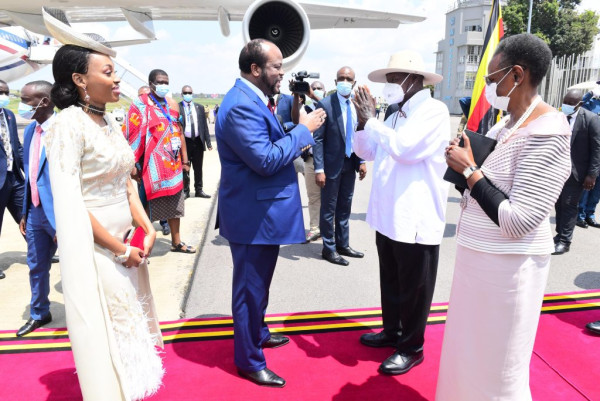
President Yoweri Kaguta Museveni and the First Lady and Minister of Education and Sports, Maama Janet Museveni have today welcomed the King of Eswatini, His Majesty, Mswati III at Entebbe International Airport.

His Majesty, Mswati III who is in Uganda for a three-day State Visit at the invitation of President Museveni was accompanied by his wife, Queen Inkhosikati Make Lamashwama and other high-level delegates.

At Entebbe International Airport, President Museveni was flanked by Ministers and service chiefs.

Upon arrival, the visiting King was accorded a 21-gun salute and inspected a guard of honour mounted by the Uganda People's Defence Forces (UPDF).

President Museveni later received his guest at State House Entebbe and held discussions focusing on enhancement of bilateral cooperation between the two countries.

In their discussions, President Museveni emphasised a clear vision for African prosperity, rooted in his experience as a student activist in the 1960s, a liberation leader, and now as a head of state.

“If Africans want prosperity, it comes from producing goods or services and selling them,” President Museveni stated.

He underscored the need for African nations to access larger markets to maximise economic benefits, highlighting Uganda's internal market of 46 million people as insufficient on its own.

“The fragmentation of the African market is a big disaster,” President Museveni warned.

He compared the continent's potential with that of Latin America, which, despite abundant natural resources, struggles with poverty due to its fragmented markets.

“I always tell my Ugandans here that if you want to be like Latin America, you are welcome because if you look at them, despite their wealth in natural resources, they still run to the USA for prosperity to get medical care, education, and other benefits,” he said.

The President argued that Africa's success lies in integrating markets across the continent, similar to how the United States operates with a vast and unified market.

He called for a model where African nations not only produce but also own and share in the benefits of their resources, rather than relying on foreign investments that often exploit the continent's wealth.

The President highlighted the need for African countries to collaborate on capital-intensive projects.

He also gave the example of Uganda's petroleum sector, where East African nations are invited to co-invest in infrastructure such as pipelines and refineries.

“It's not common sense that I produce, and you only buy. You can't say that to a brother,” President Museveni remarked, emphasising the importance of shared ownership.

President Museveni lauded the East African Community (EAC)'s progress in rebuilding and expanding to include eight member states, addressing both economic and political integration.

Beyond economic integration, President Museveni stressed the need for political federation in East Africa, which he views as crucial for establishing a strong military defence for the continent.

He highlighted the disparity in military capabilities between African nations and global powers like the United States, which boasts superior land, air, sea, and space forces.

“Africa must have the capacity to defend itself from all threats,” President Museveni asserted.

He called for a united African defence strategy as part of the broader vision for political federation.

His Majesty King Mswati III called for an enhanced cooperation between African nations, emphasising the need for unity in driving the continent's development.

He also expressed gratitude for the warm reception and hospitality extended to him and his delegation.

He highlighted the longstanding relationship between Uganda and Eswatini, noting that it had been years since their last meeting at a Commonwealth event.

“Your Excellency, I convey greetings from the Queen Mother, the government, and the people of Eswatini, and I wish to inform you that we are ready to strengthen ties between the two nations,” the King stated.

King Mswati went on to propose that Uganda and Eswatini establish regular communication channels to avoid neglecting the friendships and agreements already in place.

He stressed that African countries must work together to achieve progress in key areas such as poverty alleviation, job creation, education, and technological advancement.

“If we work together, there is much we can achieve. But if one country moves on its own, it cannot go far,” he said.

King Mswati III pointed out that Africa possesses abundant natural resources, yet the continent has struggled to produce efficiently due to the exploitation of these resources by foreign entities.

He advocated for African nations to share expertise and technology, citing Uganda's achievements in areas such as crude oil development as an example of successful collaboration.

“Now that we have mastered a lot of technology and expertise, we must take advantage of our resources,” the King stated.

The King further emphasised the need to promote entrepreneurship and knowledge exchange between Uganda and Eswatini, suggesting the establishment of distribution centres and routes to facilitate trade.

He also proposed increased cooperation between the Southern African Development Community (SADC) and the East African Community, expressing hope for a stronger economic partnership.

In terms of cultural ties, King Mswati III highlighted the similarities between the cultures of Uganda and Eswatini.

He proposed the organisation of cultural festivals to showcase these connections and attract tourists from around the world.

“We should promote our unique cultures, which are similar in many ways to support tourism and strengthen our bonds,” he added.

The King called for the opening of direct flight routes between Eswatini and Uganda to boost tourism and cargo trade.

He noted the potential for increased tourism, particularly given Uganda's rich natural attractions such as the Nile River and mountains.

“Let us work together to promote tourism by making travel between our countries easier and more accessible,” he urged.

King Mswati III also expressed support for Uganda's leadership in hosting the African Union's Humanitarian Agency and congratulated President Museveni on Uganda's chairmanship of the Non-Aligned Movement and the G77+China group.

He reiterated his country's willingness to cooperate with Uganda in various sectors, including the export and assembly of electric cars.

In Transport and Infrastructure, the two Heads of State also called for an expedition of cooperation processes regarding the creation of a hub by the Kingdom of Eswatini for marketing Kiira Motors Corporation's “Kayoola EVS” electric buses to the SADC region, using the advantage of the Maputo harbour area.

In conclusion, King Mswati III extended an invitation to President Museveni for a State Visit to Eswatini, emphasising the importance of continued collaboration between the two nations.

“Africa needs to work together to achieve economic independence, and our partnership with Uganda is a step in that direction,” he concluded.

Strengthening Bilateral Ties:

During the visit, Uganda and Eswatini further solidified their relationship through the signing of a Memorandum of Understanding.

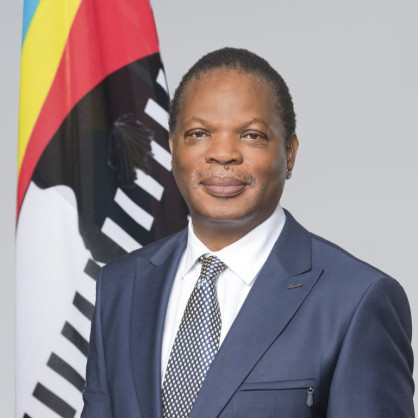
The agreement was signed by Uganda's Minister of State for Foreign Affairs, Hon. Oryem Henry Okello, and Eswatini's Minister for Foreign Affairs and International Cooperation, Hon. Senator Pholile Shakantu.

Additionally, the two countries' agriculture Ministers discussed enhancing cooperation in the agricultural sector.

Eswatini, officially the Kingdom of Eswatini and also known by its former official name Swaziland and formerly the Kingdom of Swaziland, is a landlocked country in Southern Africa. It is bordered by Mozambique to its northeast and South Africa to its north, west, south, and southeast.

The Eswatini delegation included high-level officials such as HRH Princess Lindiwe and Hon. Manqoba Khumalo, Minister of Commerce, Industry, and Trade, among others.

On the Ugandan side, key ministers such as Hon. Babirye Milly Babalanda, Minister for the Presidency, Dr. Monica Musenero, Minister for Science, Technology, and Innovation, Hon. Mwebesa Francis, the Minister of Trade Industry and Cooperatives, and Hon. Katumba Wamala, the Minister of Works and Transport were also in attendance.

Distributed by APO Group on behalf of State House Uganda.

Media files
State House Uganda
Download logo
Read morePresident Museveni And King Mswati III Call For A Unified African Market And Political Federation
14 August 2024

Eswatini: Major setback as Supreme Court upholds repressive Suppression of Terrorism Act

Location: News

Amnesty International
Download logo

Responding to the news that Eswatini's Supreme Court upheld controversial provisions of the Suppression of Terrorism Act on appeal, Amnesty International's Deputy Director for East and Southern Africa, Vongai Chikwanda, said: 

“The Supreme Court's decision to uphold this repressive legislation is a major setback for human rights in Eswatini. The authorities must immediately repeal the Act, or significantly amend it so that it is precise, targeted and fully in line with international human rights standards. 

“The law in its current form poses significant threats to freedom of expression, association and peaceful assembly. The Suppression of Terrorism Act is overly broad and vague, and authorities have frequently used it to arbitrarily arrest and prosecute dissenters and suppress media, including by branding political opponents, activists and journalists as ‘terrorists.' 

“The fact that Eswatini's highest court has given the Suppression of Terrorism Act its stamp of approval is a dangerous sign for the future of human rights in the country, especially because repression is already widespread.” 

BACKGROUND 

Authorities passed the Suppression of Terrorism Act in 2008 following a bombing incident near the Lozitha Bridge in Eswatini. The same year, authorities declared the People's United Democratic Movement (PUDEMO) opposition party, Swaziland Youth Congress (SWAYOCO) and the South Africa-based Swaziland Solidarity Network as terrorist organizations. 

In 2016, the country's High Court declared several sections of the Suppression of Terrorism and Sedition Acts as unconstitutional, following a court challenge by human rights lawyer Thulani Maseko and SWAYOCO leader Maxwell Dlamini, who authorities had both charged under the Act in 2014, and PUDEMO leader Mario Masuku. 

The government appealed that decision a week later. Throughout the lengthy and irregular appeals process, Eswatini's government used the Suppression of Terrorism Act to harass and intimidate dissenters, including jailing opposition parliamentarians Mduduzi Bacede Mabuza and Mthandeni Dube in 2021 and designating Swaziland News and its editor Zweli Martin Dlamini as “terrorist entities” in 2022. 

In 2023, Maseko was shot and killed in his home in a case the government has yet to investigate. 

Along with the Suppression of Terrorism Act, on 13 August 2024 Eswatini's Supreme Court upheld controversial provisions of the 1938 Sedition and Subversive Activities Act, which similarly has adverse human rights implications. 

Distributed by APO Group on behalf of Amnesty International.

Read moreEswatini: Major setback as Supreme Court upholds repressive Suppression of Terrorism Act
8 August 2024

Eswatini Joins Critical Minerals Africa (CMA) 2024, Following Launch of Critical Mineral Mapping Program

Location: News
Energy Capital & Power

Following the launch of the second phase of its critical mineral mapping program, Eswatini is seeking foreign partners to support mineral exploration and extraction activities. To showcase opportunities across the sector, HRH Prince Lonkhokhela, Eswatini's Minister of Natural Resources and Energy, will speak at the upcoming Critical Minerals Africa (CMA) (www.CriticalMineralsAfrica.com) 2024 summit in Cape Town, joining African ministers including Martin Gama Abucha, Minister of Mining of South Sudan; Monica Chang'anamuno, Minister of Mining of Malawi; and Louis Kabamba Watum, Minister of Industry and the Development of SMEs of the Democratic Republic of the Congo.

As a frontier mining market, Eswatini is currently engaged in various programs to accelerate the exploration of its critical minerals (https://apo-opa.co/3yzeZvd). In December 2023, the Geological Survey of Eswatini, in partnership with South Africa's Council for Geoscience, launched the second phase of a joint geoscience mapping program. The initiative, which leverages AI-based techniques, aims to locate and map the country's critical mineral resources, marking a significant milestone in regional collaboration to advance sector growth. To date, the country produces minor quantities of aggregate, coal, gold and iron ore.

The Critical Minerals Africa 2024 summit on November 6 - 7 serves to position Africa as the primary investment destination for critical minerals. The event is held alongside the African Energy Week: Invest in African Energy 2024 conference (www.AECWeek.com) on November 4 - 8, offering delegates access to the full scope of energy, mining and finance leaders in Cape Town. Sponsors, exhibitors and delegates can learn more by contacting sales@energycapitalpower.com.

“Eswatini represents a promising yet untapped critical minerals market. Recent mapping programs have identified mineralization in several basins across the Kingdom. As a result, increased cooperation with global stakeholders is key to injecting capital and technology into new projects,” stated Rachelle Kasongo, Event & Project Director at CMA 2024 organizers, Energy Capital & Power.

Eswatini is also working with industry stakeholders on best practices to attract foreign investments to bolster its critical mineral industry. Last January, Minister Lonkhokhela met (https://apo-opa.co/3AdjVq1) with the country's Minerals and Mines Management Board to work toward creating an enabling environment for enhanced private sector participation in exploration, production and job creation within the mining sector. At CMA 2024, Minister Lonkhokhela will connect with global investors and industry service providers to discuss and explore Eswatini's mining prospects.

Distributed by APO Group on behalf of Energy Capital & Power.

Media files
Energy Capital & Power
Download logo
Read moreEswatini Joins Critical Minerals Africa (CMA) 2024, Following Launch of Critical Mineral Mapping Program
23 July 2024

World Bank Group Executive Directors note progress and re-affirm support to South Africa and Namibia

Location: News

The World Bank Group
Download logo

A delegation of the World Bank Group's (WBG) Board of Executive Directors (EDs) noted South Africa's and Namibia's progress in achieving their development goals and re-affirmed World Bank Group's commitment to providing support. The 11 EDs and Alternate EDs were hosted by the World Bank and International Finance Corporation (IFC) country offices during their recent visit on July 7-13.

The visit provided a platform to assess progress with projects and engage on the evolution of the World Bank Group's relationship with the countries, from a knowledge-focused to a broader knowledge and financing partnership. EDs met government and business leaders, local stakeholders, and project beneficiaries, and experienced first-hand how the countries manage development priorities and challenges. South Africa and Namibia have common challenges, including poverty, unemployment, and inequality. Throughout the visit, the delegation discussed the ongoing and future support from the World Bank Group to boost inclusive economic growth and job creation.

In South Africa, over the past three years the country has shifted from being a non-borrowing client to borrowing over $1 billion per year from the World Bank. South Africa also constitutes the largest IFC portfolio in Africa and the Multilateral Investment Guarantee Agency's (MIGA) second largest on the continent.

In Namibia, the World Bank Group is preparing a new Country Partnership Framework (CPF) with the government that will strategically guide its support as the engagement continues to grow. The World Bank recently approved a $138.5 million renewable energy and transmission loan to NamPower, after 15 years without borrowing.

Key highlights of the visit included:

  • In South Africa, the delegation met with the Minister of Finance Honorable Enoch Godongwana, and the Minister of Electricity and Energy Honorable Kgosientsho Ramokgopa. EDs visited two IFC clients and two World Bank projects which showcased support for key government priorities and demonstrated how these projects link to global issues and corporate initiatives such as the just energy transition, health, urban development, and subnational government engagement. The delegation toured and engaged with stakeholders at the Komati power station – the site of the Eskom Just Energy Transition Project; the Addo Elephant Park that houses the innovative Wildlife Conservation Bond; and the IFC-supported Trust for Urban Housing Finance and BioVac Institute that manufactures vaccines locally.
  • In Namibia, the delegation met with Minister of Finance and Public Enterprises Honorable Ipumbu Shiimi and key stakeholders, including development partners and the private sector.  The delegation visited informal settlements near Windhoek to gain insights on housing related issues, a sector where IFC is investing and which the government has identified as a priority for World Bank Group engagement.

Matteo Bugamelli, the World Bank's Executive Director who represents the constituency of countries including Albania, Greece, Italy, Malta, Portugal, San Marino, and Timor-Leste, expressed optimism about the countries' progress. He emphasized the World Bank Group's commitment to helping South Africa and Namibia address unemployment and inequality challenges. He particularly welcomed the increased financing to support the implementation of much needed reforms.

About the World Bank Group's Board of Directors: The Board of Executive Directors is responsible for the conduct of the general operations of the Bank, making decisions on loans, credits, grants, policies, and financial matters. The Board consists of 25 members who represent the 189 member countries, providing guidance for the institution's development activities.

Visiting Board Officials: The delegation included Mr. Abdulaziz E A Almulla (Executive Director for Bahrain, Arab Republic of Egypt, Jordan, Iraq, Kuwait, Lebanon, Maldives, Oman, Qatar, United Arab Emirates, West Bank and Gaza, and Republic of Yemen); Mr. Matteo Bugamelli (Executive Director for Albania, Greece, Italy, Malta, Portugal, San Marino, and Timor-Leste); Ms. Ayanda Dlodlo (Executive Director Angola, Nigeria, South Africa); Mr. Floribert Ngaruko (Executive Director for Botswana, Burundi, Eritrea, Eswatini, Ethiopia, The Gambia, Kenya, Lesotho, Liberia, Malawi, Mozambique, Namibia, Rwanda, Seychelles, Sierra Leone, Somalia, South Sudan, Sudan, Tanzania, Uganda, Zambia and Zimbabwe); Ms. Katharine Rechico (Executive Director for Antigua & Barbuda, The Bahamas, Barbados, Belize, Canada, Dominica, Grenada, Guyana, Ireland, Jamaica, St. Lucia, St. Kitts & Nevis and St. Vincent & the Grenadines); and Mr. Tauqir Shah (Executive Director for Afghanistan, Algeria, Ghana, Islamic Republic of Iran, Morocco, Pakistan, and Tunisia.

Visiting Alternate Executive Directors:  Mr. Louis Albisson (Alternate Executive Director for France); Mr. Felice Gorordo (Alternate Executive Director for the United States), Mr. Koji Uemura (Alternate Executive Director for Japan); Ms. Kerstin Sumana Wijeyewardene (Alternate Executive Director for Asia and the Pacific Constituency) and Mr. Weifeng Yang (Alternate Executive Director for China).

Included in the delegation was Ms. Mercy Tembon, World Bank Vice President and Corporate Secretary.

Distributed by APO Group on behalf of The World Bank Group.

Read moreWorld Bank Group Executive Directors note progress and re-affirm support to South Africa and Namibia
23 July 2024

‘We are not afraid’– Young women in South Africa show resilience as they fight HIV/AIDS and gender based violence

Location: News

UN Women - Africa
Download logo

Listening to the soulful singing of young women and girls in Nomzamo township in Strand, Cape Town, South Africa, and watching their jubilant dancing, it would be difficult to guess the complex and life-threatening challenges they have faced in their young lives. These girls and women, members of the Young Women for Life Movement, have every reason to be ecstatic; they are extricating themselves from the cycle of poverty and the effects of HIV/AIDS and GBV in a country where women are disproportionately affected by HIV.

Of the nearly 7.5 million adults living with HIV in South Africa by 2021, nearly two-thirds (64 per cent) were women, with black women aged 25-34 years having the highest prevalence, at 31.6 per cent, and highest incidence, at 4.5 per cent according to data from The Lancet. While the infection rate has dropped from 14 per cent in 2017 to slightly less than 13 per cent in 2022, according to the Human Sciences Research Council's 2023 data, the rates are still quite high, translating to more than 1 in 10 persons living with HIV in South Africa.

This feminized HIV epidemic is mostly due to high levels of inequality. South Africa has the highest income inequality in the world, according to the World Bank. Unemployment is rampant, and many women and girls do not have good economic prospects. For many, this makes them vulnerable to risky sexual behavior as they struggle to survive. This is compounded by high rates of GBV in the area and in the country in general. Young women and girls in Strand area's townships know this all too well.

“Before I got wind of the Young Women for Life Movement, I had given up on life,” said Sinesipho, fondly referred to as “Shorty” due to her pint size by members of the group that she now considers her sisterhood. Sinesipho Petshana had a difficult background at home, low self-esteem, and was engaging in risky sexual behaviour out of desperation to help make ends meet.

“By speaking with me about my potential and growing my skills through training, the group changed my mind and this helped me change my life,” she said. Now working as a cashier in a retail store in Cape Town, she is proud of how far she has come and calls the Young Women for Life Movement a lifesaver.

Started in 2019 as an informal group of just eight young women and girls aged 15 to 28 who wanted to give each other moral support, the Young Women for Life Movement has now impacted 8,000 girls in South Africa alone. Convened by the Southern Africa Catholic Bishops' Conference and Peace Commission, the movement is supported by UN Women through funding from the Unified Budget, Results and Accountability Framework (UBRAF) as part of the outreach under the HeForShe campaign.

Through its partnership with Work4aLiving, a skills-building programme and one of the three pillars of the Young Women for Life Movement, the community group has trained women and girls in Nomzamo Township in entrepreneurship, financial management, baking, and other skills to help them begin to earn an income and become self-sufficient. Earlier this year, 70 girls graduated from a hospitality course offered under the Movement. Many of them have already secured jobs in the city.

Guguletu Mdoba (Gugu), 29, another member of the Movement, is a shining example of how the girls and young women are pulling themselves out of poverty. Now a renowned baker in the area, Gugu's products are so popular that she can barely keep up with her customers' orders. Training on financial literacy helped her learn how to save and budget, and she has used this new knowledge to expand her enterprise. This year, she bought a bigger kitchen stove and also began training other young women and girls in the area to bake, which is having a positive ripple effect on their household incomes. Overwhelmed with demand, she is now expanding into a more established fast-food shop.

“Some of the girls and young women in the group are living with HIV,” said Phindile Maseko, Coordinator of the Young Women for Life Movement, who the members call Sis. Phindile, meaning Sister, out of admiration. “They were so discouraged when we met them that they had even stopped taking antiretroviral (ARV) medication as they felt that they had nothing to live for,” said Phindile, who also serves as the Facilitator of Work4aLiving.

The COVID-19 pandemic further complicated the situation for these girls. Like elsewhere on the globe, the pandemic wreaked havoc on incomes and livelihoods in this already vulnerable township, driving many families into hunger. The effects were complex as lack of access to meals severely interfered with ARV compliance.

With support from UN Women and partners, girls and young women from the Movement managed to access seedlings and technical know-how to start small-scale vegetable farming. The project thrived and now not only caters for the members, their families, and the community, but also generates income through the supply of fresh produce to shops.

What started as a small circle of 80 girls in 2019 has become a movement of 8,000 girls in South Africa alone. The project is expanding to Eswatini, Lesotho, Botswana and also starting a chapter in Namibia.

“The Young Women for Life project demonstrates that it is possible to reduce HIV infections and end the cycle of risky behaviour and violence,” said Jacqueline Utamuriza-Nzisabira, HIV/AIDS Specialist for UN Women East and Southern Africa and the manager of this project, “These girls decided to take their lives into their own hands and are no longer on a destructive path that was going nowhere.”

The young women's and girls' rallying cry, “Asinaluvalo”, meaning "We are not afraid", is testament to their resilience and newfound hope.

Distributed by APO Group on behalf of UN Women - Africa.

Read more‘We are not afraid’– Young women in South Africa show resilience as they fight HIV/AIDS and gender based violence
22 July 2024

The United States and Africa Women Innovation and Entrepreneurship Forum (AWIEF) launch the 2024 Academy for Women Entrepreneurs Lesotho, Eswatini and South Africa (AWE LESA)

Location: Business
Africa Women Innovation and Entrepreneurship Forum (AWIEF)

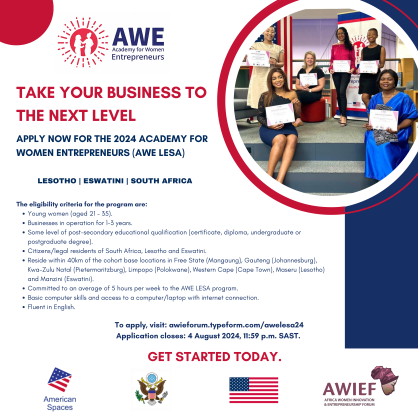
The U.S. Mission to South Africa and the Africa Women Innovation and Entrepreneurship Forum (AWIEF) (www.AWIEForum.org) proudly announce the launch of the 2024 Academy for Women Entrepreneurs program in Lesotho, Eswatini and South Africa.

The Academy for Women Entrepreneurs (AWE) is an initiative of the U.S. Department of State and Arizona State University's Thunderbird School of Global Management. It supports the U.S. National Strategy on Gender, Equity and Equality and reflects the United States' commitment to advancing gender equity and economic prosperity in Southern Africa

The Academy for Women Entrepreneurs LESA (Lesotho, Eswatini and South Africa) program is centred on the Francis and Dionne Najafi 100 Million Learners Global Initiative, an accredited online global management and entrepreneurship certificate consisting of five world-class courses and available to learners across the globe.

The overall goal of the program is to promote economic prosperity, including equitable economic development opportunities for historically disadvantaged groups and individuals. AWE LESA provides a resource for women entrepreneurs to engage in online education with guided facilitation and localization; fosters networks that support participants' access to peer-to-peer mentorship, business partners, and scaling opportunities with businesses in the region and in the United States; as well as provides access to a range of educational programs tailored to women's economic empowerment to expand the impact on the participant.

AWE LESA 2024 will empower 100 young women entrepreneurs in seven cities – five in South Africa and one each in Lesotho and Eswatini. The program will host cohorts in Bloemfontein (10 participants), Cape Town (10 participants), Johannesburg (15 participants), Polokwane (15 participants), Manzini (20 participants), Maseru (20 participants), and Pietermaritzburg (10 participants). The participants will attend in-person training sessions and events at designated American Corners and partner spaces in each location.

AWE LESA 2024 activities will take place between August 2024 and January 2025, and this edition will bring the total number of women entrepreneurs trained through the U.S. Mission to South Africa and AWIEF partnership to more than 700.

What do you gain from participating in the AWE LESA program?

  • Free entry to the program;
  • Enrolment in the Francis and Dionne Najafi 100 Million Learners platform for online learning;
  • Expert-facilitated in-person business management training and mentorship sessions at American Spaces;
  • Networking and peer-learning opportunities with like-minded entrepreneurs;
  • A collaboratively developed and refined draft of your business plan;
  • A 100 Million Learners certificate after completing the program;
  • Access to the U.S. alumni network's robust network of support, including business opportunities, potential seed funding and a vast, global network of like-minded and highly regarded entrepreneurs;
  • Membership to the AWIEF Community which provides ongoing peer learning and support; and
  • Free delegate pass to AWIEF2024 Conference, Exhibition and Awards scheduled to take place at the Cape Town International Convention Centre (CTICC), Cape Town on November 28 and 29, 2024.

What are the criteria to apply?

  • Young women (aged 21 – 35);
  • Early-stage entrepreneurs (with businesses in operation for 1-3 years);
  • Citizens/legal residents of South Africa, Lesotho and Eswatini;
  • Read, write, speak and listen to the program in English;
  • Reside within 40km of one of the seven program cities: Bloemfontein, Cape Town, Johannesburg, Polokwane, Maseru, Manzini, and Pietermaritzburg;
  • Commit to weekly in-person training sessions at a designated American Space of the U.S. Missions to Lesotho, Eswatini and South Africa;
  • Commit to up to 5 hours of weekly programmatic assignments; and
  • Basic computer skills, access to a computer with a data plan to access program content and activities.

Applications Open Now!

Academy for Women Entrepreneurs applications are officially open for highly motivated and self-driven young women entrepreneurs from Lesotho, Eswatini and South Africa. THERE IS NO COST TO APPLICANTS AT ANY STAGE.

To submit your application, please follow this link:  https://apo-opa.co/3WvSAIa

The deadline for submission is August 4, 2024 at 11:59 p.m. South Africa Standard Time (SAST).

For more information email: info@awieforum.org

Distributed by APO Group on behalf of Africa Women Innovation and Entrepreneurship Forum (AWIEF).

Media files
Africa Women Innovation and Entrepreneurship Forum (AWIEF)
Download logo
Read moreThe United States and Africa Women Innovation and Entrepreneurship Forum (AWIEF) launch the 2024 Academy for Women Entrepreneurs Lesotho, Eswatini and South Africa (AWE LESA)
9 July 2024

Manhattan Sweets Introduces the Manhattan Fun Lab!

Location: MyPR

Soweto July 2024 – Today, the children of Pimville in Soweto are celebrating as Manhattan Sweets pilots the “Manhattan Fun Lab”, a play initiative that sets out to tackle play inequity and deliver quality play opportunities for South African children living in impoverished areas. The first ever International Day of Play took place on the …

Read moreManhattan Sweets Introduces the Manhattan Fun Lab!
30 June 2024

Bafana draw with Botswana in Cosafa Cup clash

Location: News

Bafana draw with Botswana in Cosafa Cup clash

Bafana Bafana were held to a goalless draw in the group stages of the Council of Southern Africa Football Associations (COSAFA) Cup on Saturday.

This as national football side took on Botswana at the at Isaac Wolfson Stadium in Gqeberha in the Eastern Cape.

The Group A match ended in a 0-0 stalemate just days after the 1-1 draw against Mozambique in the opening match of the regional tournament.

“Coach Helman Mkhalele’s team had multiple chances to win the match, but just as they did against Mozambique, the home side was unable to make full use of the opportunities and find the breakthrough they needed against a solid Botswana,” said the South African Football Association (SAFA) in a statement.

Mkhalele said his charges should have done better than the final score suggests as they were in control for long periods of Saturday’s encounter.

“We were not in command of the ball, especially in the final third. We looked like we didn’t have the confidence. But again, we were not giving the early support or were unable to read the game to support Thabang Sibanyoni, who was dominating the aerial balls.

“We lacked that confidence. Yes, we did get those half chances, but we were not taking them or we were not approaching them with aggression. We were just more comfortable in dominating the possession in our own half. But we lacked the speed and the penetration to the middle,” said the coach.

Botswana coach Didier da Rosa was very proud of his players, even though they could not find the back of the net.

“It was a second draw (of the tournament after the 0-0 outcome against Eswatini), but at least we didn’t concede any goal. I’m proud of my players today because they followed the plan we worked on. It was very interesting for me as a coach to see these young players so disciplined”.

Mkhalele has a few days to regroup before his charges face Eswatini in the last match of Group A at the Nelson Mandela Bay Stadium at 3pm on Tuesday. – SAnews.gov.za

Neo
Sun, 06/30/2024 - 10:49

186 views
Read moreBafana draw with Botswana in Cosafa Cup clash
24 June 2024

Capacitating veterinarians in African swine fever prevention and control in resource-limited settings

Location: News

FAO Regional Office for Africa
Download logo

The Southern Africa region is endowed with large numbers of pigs, with Angola, Malawi and Mozambique each recording over two million heads. This pig population in the region is growing at over 6 percent per year, the highest growth rate compared to other species of livestock. Unfortunately, the presence of African swine fever (ASF), the most feared pig disease, constitutes a major challenge to production and market access for the smallholder producers in resource-limited settings. 

Traditional prevention and control approaches would employ humane culling and disposal of affected and in-contact pigs, with resource limitations often making it challenging for governments to provide adequate compensation. This situation often results in pig owners fearing not only the disease but also the measures applied in controlling it, such that they do not report disease outbreaks.

FAO has given particular consideration to the challenges of controlling ASF in resource limited settings, such as some of the small-scale farming systems found in the Southern Africa region. In 2023, FAO published new guidelines entitled: “African swine fever prevention, detection and control in resource-limited settings”, written by a global pool of experts.

These guidelines articulate the vulnerability of smallholder pig keepers and producers in rural settings, characterized by poverty and inability to meet the cost of compliance with national policies and legislation.

A unique new online course has been developed, based closely on the FAO guidelines. The course focuses on a collaborative and discussion-based approach to learning, in which participants co-create solutions in a series of live online workshops, backed by self-paced online learning modules. It emphasizes early warning, biosecurity, and the key features of the ASF virus that can be exploited in developing appropriate prevention and control programmes. The course was delivered from 10 May to 21 June 2024, with 81 participants from Botswana, Eswatini, Malawi, Mozambique, Namibia, South Africa Tanzania, Zambia and Zimbabwe completing the course and obtaining certificates.

“Resource-limited settings have unique barriers to the prevention and control of ASF. Methods for prevention, detection, and control recommended for higher resource settings may be inappropriate or impossible to implement. It is crucial to consider the context when designing control measures. The training course builds on experiences from Africa and elsewhere to provide participants with information and methods that could improve prevention and control of ASF in resource-limited settings,” said Andriy Rozstalnyy, FAO Animal Health Officer based in Rome, coordinating global efforts in the prevention and control of African swine fever.

The online course also included discussions on how to limit culling of infected and in-contact animals to control outbreaks, disposal of carcasses during outbreaks, and aligning national ASF control policies and legislation. Key to all this is the engagement of local communities for buy-in and sustainability.

“Community members have valuable knowledge, hence participatory problem analysis, design of solutions and decision-making, can boost commitment. We have to learn and understand community priorities and realities to identify together the roles and responsibilities of all players, when designing prevention and control measures at community level,” said Extraordinary Professor Mary-Louise Penrith, lead trainer and international expert on ASF.

Awareness raising at national and community levels is necessary to bring on board everyone in the smallholder pig value chain for adoption. Given that traditional approaches have been around in many countries for a long time and are now anchored in policies and legislation, lobbying for the new approaches is a necessity, including the alignment of legislation.

“Under conditions of limited resources, animal disease management approaches that do not place huge financial inputs upfront, but take into consideration the willing participation of communities, offer better chances of success. The approaches employed in this training course, which are backed by science, will alleviate the socio-economic catastrophe that is associated with the disease in this vulnerable group, while also reducing the national disease control burden,” said Patrice Talla, FAO Subregional Coordinator for Southern Africa.

Through the Virtual Learning Centres, FAO is committed to support implementation of blended approaches of online and in-person training as they play a pivotal role in capacity development for animal health delivery in the region and globally. The VLCs offer a wide range of courses that aim to build skills related to One Health. Courses are available in a range of formats, including online tutored courses, blended learning, technical webinars and mobile learning.

Distributed by APO Group on behalf of FAO Regional Office for Africa.

Read moreCapacitating veterinarians in African swine fever prevention and control in resource-limited settings
21 June 2024

SASSA, departments to offer services to Elandshoek community

Location: News

SASSA, departments to offer services to Elandshoek community

The South African Social Security Agency (SASSA) in Mpumalanga and other key government stakeholders will provide services to the Elandshoek community, located on the outskirts of the N4 in Mbombela, today.

According to SASSA, the Integrated Registration Outreach Programme (ICROP) aims to bring services closer to people and ensure that communities have full access to SASSA social grant services.

The Departments of Home Affairs, Health and Social Development and the local municipality will be joining SASSA in their outreach programme. 

“The agency identified this area because it is an informal settlement and transport is costly for clients. This community travels 77 kilometres to reach the SASSA Nelspruit service office. 

“The majority of the Elandshoek community depend on social grants and many are foreigners from Mozambique and Eswatini, some are naturalised citizens and make a living through seasonal employment at the agricultural farms,” the agency explained. 

SASSA will be educating the public to empower them about social grant information. 

“Access and equal opportunity are essential human rights, enshrined in the Bill of Rights of the Constitution.” 

The agency will render several services including grant application, Social Relief of Distress Grant (SRD) COVID-19 grant enquiries and change of payment method.

In addition, the National Youth Development Agency (NYDA), South African Police Service (SAPS), and the banking institutions will be also servicing the community.

For more information contact the toll-free number during working hours on 0800 60 10 11 or send a WhatsApp message to 082 046 8553. – SAnews.gov.za


Gabisile
Fri, 06/21/2024 - 10:32

291 views
Read moreSASSA, departments to offer services to Elandshoek community
21 June 2024

Workers describe appalling conditions at Eswatini mine

Location: News

“To live, I had to quit”

Read moreWorkers describe appalling conditions at Eswatini mine
19 June 2024

Inauguration guests start arriving at the Union Buildings

Location: News

Inauguration guests start arriving at the Union Buildings

Excitement at the Union Buildings in Pretoria is palpable as packed buses have started dropping off guests and members of the public who will witness the inauguration of President-elect Cyril Ramaphosa later this morning.

Many braved the cold winter morning and started arriving early, with their hearts set on being present at the swearing-in of the President-elect Ramaphosa following his election by Parliament on Friday, 14 June 2024.

With the inauguration signifying the beginning of the President's second term of office Khula Community Development Project Director Petros Majola told SAnews civil society was ready to work with government for the best interests of communities.

“Today is a very big day, which comes after we have cast our vote. [This means that] we will have a government that will take us through for the next five years. We are ready to work with a government that will deliver in the best interests of our vulnerable groups, especially the victims of crimes and violence.

“After the inauguration, we expect delivery of services to those people (vulnerable groups) because those people have hope in the government that they voted for,” Majola said on Wednesday.

Avid sports fan Mama Joy Chauke told SAnews she was excited to see the President-elect Ramaphosa being inaugurated.

“Today is an important day for South Africa. I am here to witness our President being inaugurated and lead us…we are waiting for him to lead us. We are waiting for him to do the best and we are here to support him,” Chauke said.

The President-Elect will be sworn in by Chief Justice Raymond Zondo in the Union Buildings’ Nelson Mandela Amphitheatre.

The ceremony will be witnessed by South African and international guests, including South African royalty, Members of Parliament, representatives of political parties, leaders of organised labour, business and civil society organisations, religious leaders and South Africans who have excelled in various capacities and endeavours.

Attendees will include representatives of regional, continental and international organisations and bodies such as the Southern African Development Community (SADC), the African Union (AU) and the United Nations (UN).

President-Elect Ramaphosa will also be honoured by the attendance of a number of Heads of State and Government and former Heads of State and Government from different regions of Africa as well as other world regions.

To date, 18 Heads of State and Government, three former Heads of State and Government and nine Heads of Delegation are expected to attend. Additional confirmations are being received.

Countries that will be represented at a high level at the Inauguration include the Kingdom of eSwatini and Kingdom of Lesotho; the Republics of Zimbabwe, Mozambique, Namibia, Angola and Tanzania; the Republic of Uganda; the People’s Republic of China; the Arab Republic of Egypt; the State of Palestine and the Republic of Cuba.

 The theme for the occasion is “30 Years of Democracy, Partnership and Growth.” – SAnews.gov.za

nosihle
Wed, 06/19/2024 - 07:49

624 views
Read moreInauguration guests start arriving at the Union Buildings
18 June 2024

Heads of state, government and royalty to attend inauguration

Location: News

Heads of state, government and royalty to attend inauguration

Dignitaries from across the world – including current and former Heads of State and Governments – are expected to attend the inauguration ceremony of President-elect Cyril Ramaphosa on Wednesday.

This according to a statement released by the Presidency on Tuesday.

“The ceremony will be witnessed by South African and international guests, including South African royalty, Members of Parliament, representatives of political parties, leaders of organised labour, business and civil society organisations, religious leaders and South Africans who have excelled in various capacities and endeavours.

“Attendees will include representatives of regional, continental and international organisations and bodies such as the Southern African Development Community (SADC), the African Union (AU) and the United Nations (UN),” the statement read.

The Presidency said at least 18 Heads of State and Government, three former Heads of State and Government and nine Heads of Delegation are expected to attend.

Additional confirmations are being received.

“Countries that will be represented at a high level at the inauguration include the Kingdom of eSwatini and Kingdom of Lesotho, the Republics of Zimbabwe, Mozambique, Namibia, Angola and Tanzania; the Republic of Uganda, the People’s Republic of China, the Arab Republic of Egypt, the State of Palestine and the Republic of Cuba,” the Presidency said.

The President-elect held a walkabout at the venue on Tuesday afternoon to assess the state of readiness.

Members of the public are encouraged to use the park and ride at Tshwane Showgrounds. People can park their cars and take a free bus to the Union Buildings.

The programme for the day will commence with a cultural programme for members of the public on the South Lawns of the Union Buildings at 9am.

Formal proceedings will get underway at 11am.

For more information go to https://inauguration2024.dcdt.gov.za. – SAnews.gov.za

NeoB
Tue, 06/18/2024 - 14:24

991 views
Read moreHeads of state, government and royalty to attend inauguration
18 June 2024

2024 Presidential Inauguration

Location: News

The Presidency of the Republic of South Africa
Download logo

The Inauguration of President-Elect Cyril Ramaphosa will take place at the Union Buildings, Pretoria, tomorrow following his re-election by Parliament on Friday, 14 June 2024.

The swearing-in of the President-Elect will be conducted by Chief Justice Raymond Zondo in the Union Buildings' Nelson Mandela Amphitheatre.

The ceremony will be witnessed by South African and international guests, including South African royalty, Members of Parliament, representatives of political parties, leaders of organised labour, business and civil society organisations, religious leaders and South Africans who have excelled in various capacities and endeavours.

Attendees will include representatives of regional, continental and international organisations and bodies such as the Southern African Development Community (SADC), the African Union (AU) and the United Nations (UN).

President-Elect Ramaphosa will also be honoured by the attendance of a number of Heads of State and Government and former Heads of State and Government from different regions of Africa as well as other world regions.

To date, 18 Heads of State and Government, three former Heads of State and Governmen,t and nine Heads of Delegation are expected to attend. Additional confirmations are being received.

Countries that will be represented at a high level at the Inauguration include the Kingdom of eSwatini and Kingdom of Lesotho; the Republics of Zimbabwe, Mozambique, Namibia, Angola and Tanzania; the Republic of Uganda; the People's Republic of China; the Arab Republic of Egypt; the State of Palestine and the Republic of Cuba.

The theme for the occasion is “30 Years of Democracy, Partnership and Growth”.

The programme for the day will commence with a cultural programme for members of the public on the South Lawns of the Union Buildings at 09h00.

The cultural programme is a platform for local artists to showcase their talent and for us as a nation to share South Africa's cultural diversity with our guests.

This production will feature a combination of music genres and other cultural and artistic performances that will have a cross-over appeal that reflects our achievements in the past 30 years of our democracy.

During the formal proceedings from 11h00, the South African National Defence Force (SANDF) will perform the ceremonial elements of the Inauguration as a demonstration of allegiance to the Republic and the Commander-In-Chief. The ceremonial elements will include:

  • a 21-gun salute,
  • A salute flight by the South African Air Force (SAAF),
  • Inspection of a South African National Defence Force (SANDF) Battalion,
  • A Battalion march past, and
  • A massed fly past.

The newly sworn-in President of the Republic will deliver his Inaugural Address.

President-Elect Ramaphosa first became President of the Republic following the resignation of President Jacob Zuma in February 2018.

Following the 2019 National and Provincial Elections, President Ramaphosa was elected by the National Assembly as President of the Republic.

President Ramaphosa was re-elected by the National Assembly on 14 June 2024.

The Presidential Inauguration will be broadcast and streamed on a broad range of platforms nationally and internationally and The Presidency invites South Africans to follow this event.

Members of the public are advised to note that tomorrow, Wednesday, 19 June 2024, is a normal working day.

People travelling to the event and to Pretoria on other business are advised to visit www.gov.za and www.tshwane.gov.za for information on road closures in the Rietondale/Arcadia area, and to follow traffic updates on radio and television broadcasts. 

Distributed by APO Group on behalf of The Presidency of the Republic of South Africa.

Read more2024 Presidential Inauguration
11 June 2024

Mining is destroying crucial Eswatini nature reserve

Location: News

The mine has the king’s blessing but no environmental authorisation

Read moreMining is destroying crucial Eswatini nature reserve
9 June 2024

Dark and Lovely Moisture Plus Kits recalled

Location: News

Dark and Lovely Moisture Plus Kits recalled

The National Consumer Commission (NCC) is urging consumers in possession of 50ml single use neutralizing shampoo contained in Dark and Lovely Moisture Plus Kits (Regular, and Super) and Dark and Lovely Anti Breakage Kit to discontinue use of the product and return it to the point of sale for a full refund.
 
NCC’s Deputy Commissioner, Thezi Mabuza said the manufacturer, Loreal informed the Commission that it detected the presence of bacteria in the 50ml single use neutralizing shampoo during regular quality controls.

“While this is single-use shampoo, we urge South Africans who might still have these products in their possession to stop use and return to the point of purchase for a full refund. According to the manufacturer, using this shampoo may lead to scalp infections in those with compromised immune systems” Mabuza said.
 
The product, which was produced in April 2023, was distributed nationally, and exported to neighbouring countries such as Zambia, Zimbabwe, Namibia, Kenya, Ghana, Botswana, Eswatini, Lesotho, Morocco, and Nigeria.

“The Consumer Protection Act requires that manufacturers and producers of products produce, and supply goods and products are of good quality and free of defects. We urge suppliers and manufacturers to always prioritize consumer safety. The Commission is monitoring the recall based on its Recall Guidelines” Mabuza said.

The NCC is an agency of the Department of Trade, Industry and Competition. – SAnews.gov.za


GabiK
Sun, 06/09/2024 - 11:30

845 views
Read moreDark and Lovely Moisture Plus Kits recalled
23 May 2024

African Union Election Observation Mission arrives in South Africa ahead of the 2024 General Elections

Location: News

African Union (AU)
Download logo

The African Union Election Observation Mission (AUEOM) has arrived in South Africa ahead of the 29 May 2024 General Elections. At the invitation of the Government of South Africa and the Independent Electoral Commission (IEC) of South Africa, the Chairperson of the African Union Commission, H.E. Moussa Faki Mahamat, approved the deployment of the short-term AUEOM to assess and report on the conduct of this election.

The AUEOM is led by H.E. Uhuru Kenyatta, former President of the Republic of Kenya and is comprised of 60 short-term observers (STOs) drawn from ambassadors accredited to the African Union, officials of election management bodies, members of African civil society organisations, African election experts, human rights specialists, gender and media experts, and representatives of youth organizations. The observers are drawn from 24 countries which include Angola, Benin, Botswana, Burundi, Cameroon, Democratic Republic of Congo, Egypt, Ethiopia, Eswatini, Gambia, Ghana, Kenya, Lesotho, Mauritius, Morocco, Mozambique, Namibia, Nigeria, South Sudan, Togo, Tunisia, Uganda, Zambia and Zimbabwe.

The AUEOM will base its assessment on the legal framework governing elections in the Republic of South Africa and the OAU/AU Declaration on the Principles Governing Democratic Elections, the standards and obligations stipulated in the African Charter on Democracy, Elections and Governance (ACDEG), and the International Declaration of Principles (DoP) for International Election Observation among others.

The Mission shall interact with state authorities, the Independent Electoral Commission, political parties, the media, civil society organisations and representatives of the international community. The Mission will also interact with other election observation missions deployed to observe the 2024 General Elections in South Africa.

The Mission will release its preliminary findings and recommendations on the conduct of the elections on 31 May 2024 in a press conference in Johannesburg, South Africa.  A final and comprehensive report will be released within two months from the date of announcement of final election results and will be posted on the AU Commission website.

The Mission's Secretariat is located at the Hilton Hotel, Sandton, South Africa.  

Distributed by APO Group on behalf of African Union (AU).

Read moreAfrican Union Election Observation Mission arrives in South Africa ahead of the 2024 General Elections
22 May 2024

The Coca-Cola System in Kenya Announces Major Investment

Location: Business
Coca Cola Beverages Africa

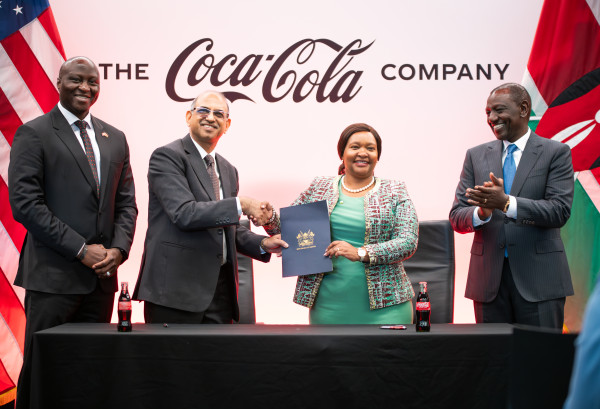
The Coca-Cola system, consisting of The Coca-Cola Company and its authorised bottler Coca-Cola Beverages Africa (https://www.CCBAGroup.com), has announced its intention to grow its investment in Kenya by up to $175 million over the next five years, should the business achieve its anticipated growth targets in the country.

Hosting Kenyan President H.E. Dr William Ruto at The Coca-Cola Company's headquarters in Atlanta, Sunil Gupta, CEO of Coca-Cola Beverages Africa, said, “The Coca-Cola system has been an integral part of Kenya's landscape for more than 75 years. Today, we are excited to announce our intention to strengthen this legacy through a substantial investment.”

“This investment is aimed at accelerating the Coca-Cola system's capacity and capability expansion over the next five years. Our decision to invest underscores our belief in the long-term potential of Kenya's economy,” Gupta said.

Luisa Ortega, President of The Coca-Cola Company's Africa Operating Unit, emphasized the importance of collaboration with the government to create a stable policy environment. "The Coca-Cola system has been part of communities in Kenya for more than seven decades. We are excited to continue growing our business and supporting communities across Kenya for many years to come," said Ortega.

The Coca-Cola system has a rich legacy of refreshing Africa and making a difference in the East Africa region, where it is a major employer, directly employing 10,000 people.

The Coca-Cola system also works with over 500,000 Micro, Small and Medium Enterprises across the region, giving the company a direct connection to the experiences shared by many businesses in Kenya and across the East African region.

“Our value chain supports livelihoods for over a million people in distribution, sales and other roles,” said Gupta. “We source close to 8,000 metric tons of mango puree from East African farmers. We believe in the region's potential and its ability to achieve significant growth through collaboration between public and private sectors. Our business in Kenya is centered on a local approach - we hire locally, produce locally, distribute locally and source locally.”

“We are optimistic and fully committed to Kenya's future. We foresee great social and economic advancement, and this is why we continue to invest in our Kenyan business as well as community programs that help strengthen Kenya's prosperity,” Ortega concluded.

Distributed by APO Group on behalf of Coca Cola Beverages Africa.

ISSUED BY:
Wendy Thole-Muir
Group Head of Reputation and Communication
Coca-Cola Beverages Africa
Tel: +27 83 795 8524
Email: WThole-Muir@ccbagroup.com

Clifford Machoka
Senior Director
Public Affairs
Communication & Sustainability
East & Central Africa
Coca-Cola Africa
Tel: +254 734 109 260/1
Email: cmachoka@coca-cola.com

About The Coca‑Cola Company:
The Coca‑Cola Company (NYSE: KO) is a total beverage company with products sold in more than 200 countries and territories. Our company's purpose is to refresh the world and make a difference. We sell multiple billion-dollar brands across several beverage categories worldwide. Our portfolio of sparkling soft drink brands includes Coca‑Cola, Sprite and Fanta. Our water, sports, coffee, and tea brands include Dasani, smartwater, vitaminwater, Topo Chico, BODYARMOR, Powerade, Costa, Georgia, Gold Peak and Ayataka. Our juice, value-added dairy and plant-based beverage brands include Minute Maid, Simply, innocent, Del Valle, fairlife and AdeS. We're constantly transforming our portfolio, from reducing sugar in our drinks to bringing innovative new products to market. We seek to positively impact people's lives, communities and the planet through water replenishment, packaging recycling, sustainable sourcing practices and carbon emissions reductions across our value chain. Together with our bottling partners, we employ more than 700,000 people, helping bring economic opportunity to local communities worldwide. Follow us on Instagram (https://apo-opa.co/42DbAWX), Facebook (https://apo-opa.co/4bKvZ0m) and LinkedIn (https://apo-opa.co/4bpOQ03).

About Coca-Cola Beverages Africa:
Coca-Cola Beverages Africa is the 8th largest Coca-Cola bottling partner in the world by revenue, and the largest on the continent. It accounts for over 40% of all Coca-Cola products sold in Africa by volume. With over 18,000 employees in Africa, CCBA services more than 720,000 customers with a host of international and local brands. The group was formed in July 2016 after the successful combination of the southern and east Africa bottling operations of the non-alcoholic ready-to-drink beverages businesses of The Coca-Cola Company, SABMiller plc and Gutsche Family Investments. CCBA shareholders are currently: The Coca-Cola Company 66.5% and Gutsche Family Investments 33.5%. CCBA operates in 15 countries, including its six key markets of South Africa, Kenya, Ethiopia, Uganda, Mozambique, and Namibia, as well as Tanzania, Botswana, Ghana, Zambia, the islands of Comoros and Mayotte, Eswatini, Lesotho and Malawi.

Learn more at  https://www.CCBAGroup.com

Follow us on LinkedIn (https://apo-opa.co/4dfq8AC)

Media files
Coca Cola Beverages Africa
Download logo
Read moreThe Coca-Cola System in Kenya Announces Major Investment
25 April 2024

Launch of cutting-edge recycling facility in Namibia

Location: News
Coca Cola Beverages Africa

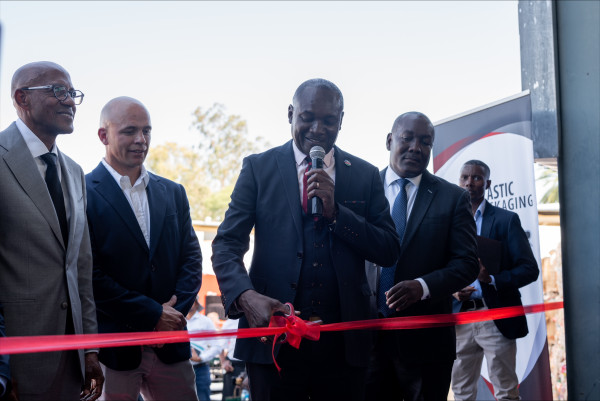
A N$24 million (over US$1.2million) investment through a partnership between Coca-Cola Beverages Africa (CCBA) (www.CCBAgroup.com) in Namibia and Plastic Packaging has culminated in the opening of a new polyethylene terephthalate (PET) flaking plant in Okahandja which will double the capacity of the only mechanical recycler of plastic waste in the country.

The plant was officially inaugurated by the Minister of Environment, Forestry and Tourism, Pohamba Shifeta.

“The Coca-Cola system aims to drive systemic change through a circular economy for packaging. We are leading the industry to help collect and recycle a bottle or can for every one we sell by 2030. We have a responsibility to help solve complex plastic waste challenges facing our planet and society, and we're leveraging our scale and reach to achieve our sustainability goals and reduce packaging waste,” said CCBA Chief Public Affairs, Communication and Sustainability Officer, Tshidi Ramogase.

“This facility is an example of how we work with partners across business, government and civil society to support or create closed loop systems to ensure our packaging is collected and recycled or reused.

“Supporting the establishment of a circular economy for packaging has both environmental and economic benefits since recycling has the potential to create jobs and to empower the informal waste collection sector in a circular economy.

“Unlike a traditional linear economy in which packaging is made, used and disposed of; a circular economy preserves the economic value of packaging through robust collection and recycling systems,” said Ramogase.

The completion of this cutting-edge recycling facility will enable Namibia Polymer Recyclers (NPR), a subsidiary of Plastic Packaging, to recycle up to 500 tons per month.

The recycling plant transforms discarded beverage bottles made from PET material into PET flakes with an international market value. The flaking process of post-consumer PET bottles involves sorting, shredding it into PET flakes, hot-washing and drying of flakes, which are then sent for further processing into recycled PET pellets and other end-uses.

This reduces the need to use virgin PET, while diverting waste from landfills and the environment.

“We are investing in infrastructure and exploring ways to support additional recycled PET capacity in each of the regions where we operate. These investments not only provide a source of recycled content for our packaging but also create additional demand for empty packages, driving increased collection.

“At CCBA, we are a proud industry leader in developing increasingly sustainable ways to produce, distribute and sell our products. We use our industry leadership to be part of the solution to achieve positive change and to build a more sustainable future for our planet,” said Ramogase.

Distributed by APO Group on behalf of Coca Cola Beverages Africa.

Issued By:
Enid Johr
PACS Director
CCBA in Namibia
Tel: +264 81 778 5381
Email: ejohr@ccbagroup.com

Wendy Thole-Muir
Head: Reputation and Communication
Coca-Cola Beverages Africa
Tel: +27 83 795 8524
Email: WThole-Muir@ccbagroup.com

Follow us on:
LinkedIn: https://apo-opa.co/4dfq8AC

About CCBA: 
CCBA is the 8th largest Coca-Cola bottling partner in the world by revenue, and the largest on the continent. It accounts for over 40% of all Coca-Cola products sold in Africa by volume. With over 18,000 employees in Africa, CCBA services more than 720,000 customers with a host of international and local brands. The group was formed in July 2016 after the successful combination of the southern and east Africa bottling operations of the non-alcoholic ready-to-drink beverages businesses of The Coca-Cola Company, SABMiller plc and Gutsche Family Investments. CCBA shareholders are currently: The Coca-Cola Company 66.5% and Gutsche Family Investments 33.5%. CCBA operates in 15 countries, including its six key markets of South Africa, Kenya, Ethiopia, Uganda, Mozambique and Namibia, as well as Tanzania, Botswana, Ghana, Zambia, the islands of Comoros and Mayotte, Eswatini, Lesotho, and Malawi.
Learn more at https://www.CCBAgroup.com

Media files
Coca Cola Beverages Africa
Download logo
Read moreLaunch of cutting-edge recycling facility in Namibia
25 April 2024

SA on track to eliminate malaria disease by 2028 

Location: News

SA on track to eliminate malaria disease by 2028 

The Department of Health says South Africa is on track to achieve malaria elimination status by 2028, as outlined in the National Malaria Elimination Strategic Plan. 

This, according to the department, is despite facing challenges such as heightened heatwaves exacerbated by climate change, with the potential to directly impact transmission and the burden of disease. 

According to the department, malaria elimination promises both health and economic benefits, in line with the goals of the 2030 National Development Plan and the United Nations Sustainable Development Goals.

“This has the potential to also benefit the Southern African countries collectively on issues of trade, tourism, health, and economic growth,” the statement read. 

While progress has been made in reducing the burden of malaria in provinces such as Limpopo, Mpumalanga, and KwaZulu-Natal, the department believes further efforts are needed to curb local transmission. 

South Africa is today joining the global community to observe World Malaria Day to recognise global efforts to control malaria to reduce the burden of the disease and avoid preventable deaths. 

Each year on April 25, South Africa joins the global community in recognising World Malaria Day.

READ | SA commemorates World Malaria Day

The Department of Health has since urged all stakeholders, including communities, healthcare professionals, civil society organisations and international partners to collaborate in intensifying the fight against malaria, aiming to foster a healthier and more equitable world for current and future generations. 

Malaria is a preventable and curable life-threatening disease transmitted by a type of female mosquito called Anopheles, which remains a significant global health concern.

In 2022, an estimated 249 million new cases and approximately 608 000 deaths were reported, with Sub-Saharan Africa enduring the most of the burden. 

In South Africa, 9 795 cases and 106 deaths were reported in 2023, demonstrating notable progress, including the subnational elimination of malaria in the King Cetshwayo District of KwaZulu-Natal. 

“The government is committed to integrating the ethos of ensuring equal access to malaria prevention and treatment services for all with the principles of the National Health Insurance, which essentially has the objective of attaining Universal Health Coverage.”

The department is of the view that eliminating malaria is an ambitious task that requires sustainable resources, collaboration with neighbouring countries including Botswana, Eswatini, Mozambique, Namibia, and Zimbabwe, evidence-based policies, strong partnerships and a dedicated workforce. 

“South Africa is working towards strengthening and harnessing its domestic expertise while collaborating with global partners.” 

Last year, South Africa was amongst the countries that received global prestigious awards from the World Health Organisation (WHO) for their efforts to achieve important milestones towards malaria elimination. 

The 2024 World Malaria Day will be commemorated under the theme: ‘Accelerating the fight against malaria for a more equitable world’, which focuses on acknowledging the varying effects of malaria on men and women, emphasising the need to address these discrepancies in prevention and healthcare access. 

Malaria symptoms include headache, fever, chills, fatigue, and muscle and joint pain that occur up to three weeks after first potential exposure. 

However, early diagnosis and treatment are strongly recommended as the disease rapidly progresses to severe illness, often with severe consequences. – SAnews.gov.za

Gabisile
Thu, 04/25/2024 - 11:43

202 views
Read moreSA on track to eliminate malaria disease by 2028 
22 April 2024

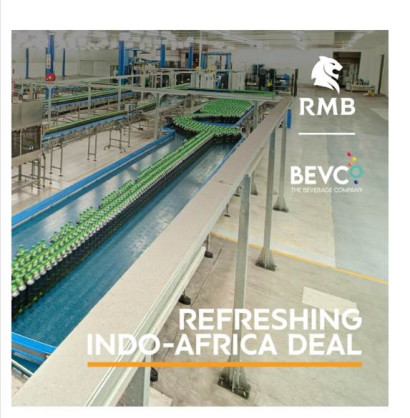
Rand Merchant Bank (RMB) advises on R3 billion sale of BevCo to Varun Beverages in a landmark Indo-Africa deal

Location: Business
Rand Merchant Bank

India-listed Varun Beverages Limited (“VBL”), the largest PepsiCo bottler outside of the USA and China, entered into an agreement to acquire 100% of the shares in The Beverage Company Proprietary Limited (“BevCo”). RMB (www.RMB.co.za) acted as sole financial advisor to BevCo and selling shareholders, including a Private Equity Fund managed by The Rohatyn Group (post the completed merger of Ethos Private Equity with The Rohatyn Group in April 2023) and Nedbank Private Equity, in a deal with an enterprise value of R3 billion.

BevCo, is one of the largest carbonated soft drinks producers in Southern Africa. Their portfolio consists of the recognisable brands Jive, Coo-ee and Reboost. BevCo also bottles and distributes PepsiCo-branded non-alcoholic beverages in South Africa and has five manufacturing facilities in the country, in addition to operations in Lesotho, Eswatini, Namibia, and Botswana.

“Having invested in 2017, The Rohatyn Group's Africa Private Equity team together with our partners and the management team have built a focused non-alcoholic beverage platform. We executed our original investment thesis over a seven-year period and today the consolidated BevCo is in excess of three times the size and continues to grow its market share organically. VBL brings significant resources and expertise to invest in BevCo's product offering and grow PepsiCo's brands in Southern Africa, while expanding their presence on the continent,” says Glynn Potgieter, Managing Director at The Rohatyn Group.

There are always multiple challenges with cross-border transactions, in this instance including the requirement for compliance with both the Indian Stock Exchange and South African regulations. Regulation in India required a restructure of the BevCo group as well as the transfer of its debt facilities and subsequent deregistration/liquidation of more than ten entities within the group structure. This had implications on what would normally be a standard warranty and indemnity insurance policy. The transaction showcases RMB's advisory capability in successfully navigating complex cross-border transactions and ability to access international buyers for high quality South African assets.

In addition to the corporate finance advisory role to BevCo, RMB's South African and India teams assisted with refinancing the existing debt within BevCo as well as providing incremental acquisition finance for the transaction, in addition to facilitating the flows and foreign exchange conversion for the deal. This demonstrates RMB's expertise and comprehensive solutions offering across the Indo-Africa corridor. With a footprint and expertise based both in South Africa and India, RMB can support clients on both sides of the corridor to enable seamless end-to-end transactions.

“The Indian market reacted extremely positively with VBL's share price increasing in excess of 10% and reaching an all-time high on the day the transaction was announced. The transaction represents a significant investment and an important vote of confidence in South Africa by a large global player in the sector,” says Gareth Armstrong, Corporate Finance Executive at RMB.

Distributed by APO Group on behalf of Rand Merchant Bank.

Media files
Rand Merchant Bank
Download logo
Read moreRand Merchant Bank (RMB) advises on R3 billion sale of BevCo to Varun Beverages in a landmark Indo-Africa deal
15 April 2024

SAHPRA recalls two batches of Benylin paediatric cough syrup

Location: News

SAHPRA recalls two batches of Benylin paediatric cough syrup

The South African Health Products Regulatory Authority (SAHPRA) has recalled two batches of Benylin pediatric cough syrup.

On 10 April 2024, the Nigerian National Agency for Food and Drug Administration and Control (NAFDAC) reported to the concerned party that a batch of Benylin paediatric cough syrup had high levels of diethylene glycol detected in it.

According to the SAHPRA, diethylene glycol is toxic to humans when consumed and can prove fatal. 

Toxic effects can include abdominal pain, vomiting, diarrhoea, inability to pass urine, headache, altered mental state, and acute kidney injury that may lead to death.

“SAHPRA immediately contacted the South African manufacturer, Kenvue, formerly Johnson and Johnson, for a response. Following engagements with the manufacturer and in the best interest of the public, it was resolved that affected batches would immediately be recalled while an investigation is ongoing,” the local drug watchdog explained.

SAHPRA, in collaboration with Kenvue, has identified the affected batch numbers as 329304 and 329303.

These affected batches have been distributed to several countries including South Africa, Eswatini, Rwanda, Kenya, Tanzania and Nigeria.

SAHPRA CEO, Dr Boitumelo Semete-Makokotlela, said as a national regulatory authority, the recalling of medical products is a crucial measure to address safety concerns or quality issues so that they protect the health of the public. 

“SAHPRA is recalling these two batches from the market due to reported high levels of diethylene glycol, with the potential to cause serious adverse events,” Semete-Makokotlela explained.

Benylin paediatric is a bright red syrup with a raspberry smell and taste, packaged in a 100ml amber glass bottle with a plastic measuring cup.

It is used to relieve cough and congestive symptoms and treat hay fever and other allergies affecting the upper respiratory tract.

“SAHPRA wishes to inform the public not to panic, as the matter is being handled with priority. Batch recalls are batch-specific and do not necessarily apply to other batches or similar products. The manufacturer is a SAHPRA-licenced manufacturer and complies with Good Manufacturing Practices (GMP),” said Semete-Makokotlela.

The drug watchdog stressed that the recall is limited to two batches and that the public should not panic regarding the range of products bearing the same name.

“SAHPRA is alerting healthcare professionals and the public to discontinue the use of the two batches mentioned, remove them from their inventory and return them to their normal distribution channels immediately,” said Semete-Makokotlela.

The recall is classified as a Class 1, Type A recall, which is associated with a serious product quality concern that may have severe consequences. 

According to SAHPRA, this is a countrywide recall. 

The product is being recalled from hospitals, retail outlets, healthcare professionals, authorised prescribers and individual customers or patients.

Those who have consumed these two batches and experienced any adverse reaction or witnessed it in children should consult their healthcare professional and report this using the Med Safety App or send an email to adr@sahpra.org.za. – SAnews.gov.za

Gabisile
Mon, 04/15/2024 - 10:02

243 views
Read moreSAHPRA recalls two batches of Benylin paediatric cough syrup
14 April 2024

President to receive His Majesty King Mswati III for working visit

Location: News

President to receive His Majesty King Mswati III for working visit

President Cyril Ramaphosa is expected to host His Majesty King Mswati III of the Kingdom of eSwatini for a working visit, the Presidency said on Sunday.

President Ramaphosa will receive His Majesty the King at Mahlamba Ndlopfu, the President’s Official Residence in Pretoria on Monday.

The visit follows a courtesy visit by President Cyril Ramaphosa to His Majesty King Mswati III in Lozitha, eSwatini on Wednesday, 03 April 2024.

“South Africa and eSwatini share strong historical bonds as well as mutually beneficial political and trade ties,” said the Presidency.

During his visit to Eswatini earlier this month, President Ramaphosa paid a brief visit to the Queen Mother, Her Majesty iNdlovukazi, before proceeding to meet with His Majesty the King.

According to the Presidency statement at the time, the two discussed the “historical bonds” of the two Southern African nations while also affirming their commitment to strong historical bonds between their two countries, including growing political and trade ties. -SAnews.gov.za

Neo
Sun, 04/14/2024 - 14:26

562 views
Read morePresident to receive His Majesty King Mswati III for working visit
  • Previous
  • Page 1
  • Page 2
  • Page 3
  • Page 4
  • Page 5
  • Next

Copyright © 2026 · MyZA · All Rights Reserved · Powered by Reach Trust