• Skip to main content
  • Skip to header right navigation
  • Skip to after header navigation
  • Skip to site footer
MyZA

MyZA

News, Directory, Events and Other Stuff

  • Social Media
  • Sport
  • World News
  • Home
  • Submit News
  • Directory
  • Events
  • Stratlec
  • TFSA
  • News
    • APO
    • Today’s Sport News
    • Todays Social Media and Tech Headlines
    • Today’s World News
    • Today’s SA Financial News
  • Contact
You are here: Home / Archives for Eswatini

Eswatini

4 March 2025

Ruberto Scholtz, Sindiso Nyoni, Rowan Sakarombe and Botswana Metalheads From Southern Africa Join KFC Streetwise to Celebrate the Power of Influence and Inspiration

Location: News
KFC Africa

Cultural Creators from three of South Africa's neighbouring countries feature in KFC Streetwise's (https://Global.KFC.com/) new Original Feeds Original campaign, which celebrates the inspiration that feeds creativity.

Windhoek fashion designer Ruberto Scholtz, Harare visual director Rowan Sakarombe and the Botswana Metalheads feature in the campaign's epic TV commercial (https://apo-opa.co/43najWe), which stars Khuli Chana, Blxckie and 25K. The commercial's soundtrack (https://apo-opa.co/4irtnad) is a new song, the Originals Anthem, written and recorded by the rappers.

“Just as KFC's Streetwise brand takes its inspiration from the iconic taste of KFC's Original Recipe – while adding bucketloads of value for a new generation – the film depicts Khuli, Blxckie and 25K inspiring each other and those who will follow them,” says KFC Africa Chief Marketing Officer Grant Macpherson. “The Cultural Creators are part of the same powerful narrative.”

Scholtz, who made the suits Blxckie and 25K wear in the photoshoot scene in the TV commercial, is inspired by collaborations. “If you see someone who can do something well, why not work with them?” he says.

Sakarombe appears in the film shooting the Originals Anthem music video in the street with Khuli Chana, Blxckie and 25K. He says he's inspired by the “raw experiences of life around me” and the vibrant energy, constant motion and diverse cultures of cities.

The Originals Anthem inspires the Botswana Metalheads – whose music often contains local influences and whose style reflects cowboy culture - to infuse their originality and give it a heavy metal angle.

The campaign, which launches on 04 March 2025 across SADC regions, also features a packaging collaboration between KFC Streetwise and Cultural Creator Sindiso Nyoni, a Bulawayo-born illustrator who has built a stellar career after being inspired by an “original” – his high school art teacher, a retired graphic designer.

Making a mark

Macpherson says it's a time when young people are hungry to share their unique signature with the world. “Who better to feed their hunger than the originals who came before them?” he says.

“We want the Originals Anthem and all the activity around it to inspire all the young Africans trying to make their mark through their creativity and individuality.”

Khuli Chana says that as one of the legends of South African hip-hop, he's passionate about inspiring new artists. “The reason I started Maftown Heights in 2009 was to help rappers from Mahikeng find their footing in Joburg with a sound and language that wasn't mainstream at the time,” he says. “It led to great things and it's still giving new artists a platform. I love inspiring musicians to find their original sound.”

Blxckie says his career and development has been built on collaborations, and every one of them keeps him original. “Musicians lift each other up,” he says. “They support each other and make each other better at what they do.”

25K was introduced to rap by artists such as DJ Mojava, Ghetto Squad, and old school hip-hop groups Dead Prez and Outcast, and became an original by rapping in S'Pitori, a mixed language spoken in Pretoria.

“I want to be remembered for that and I want to inspire kids,” he says. “When I'm no longer here, I want to feel like I left something that will make it easier for another kid to come out of Pretoria.”

Other Cultural Creators who appear in the Original Feeds Original TV commercial include Kind Kid toymaker Sanele Qwabe, “Nail Pimp” Nailed Ntswembu, the Island Gals skateboarders and custom car pimper Ofentse Mphatsoe.

Passing the torch

The commercial begins with Khuli starting to write the Originals Anthem and ends with him as the OG, welcoming Blxckie and 25K on stage and handing the mic to them.

“It's the story of my life and it's the story of KFC Streetwise,” says Khuli. “Passing the mic is like passing the torch, and that's how Original Feeds Original.”

Director Sam Coleman says the 90-second video portrays the endless cycle of inspiration, in which each creator is galvanised by the ones before and motivates those who follow. “It's an explosive mix of visual eye candy, entertainment, musical reward, style, and unique brand integration that instantly hijacks your attention and eyeballs,” he says. “Everything about it is engaging, surprising and fresh.”

And there's an extra twist to the campaign, says Macpherson. “Every time someone streams the Originals Anthem, the money it earns will go to KFC Add Hope. It will be used to feed malnourished children throughout South Africa.

“Among the kids who benefit from Add Hope are the next generation of Khulis, Blxckies and 25Ks and the Cultural Creators of the future. So, anyone who listens to the anthem will be helping them on their way.”

The Originals Anthem is available on all major streaming platforms, including Spotify (https://apo-opa.co/4irtnad), YouTube Music (https://apo-opa.co/4if2LsS) and Apple Music (https://apo-opa.co/43srwgO).

Distributed by APO Group on behalf of KFC Africa.

30” TVC available here (https://apo-opa.co/4h9AfYu)
90” TVC available here (https://apo-opa.co/43najWe)

KFC socials:
KFC Eswatini

Facebook: https://apo-opa.co/4ilOwlT
Instagram: @ kfc_eswatini - https://apo-opa.co/43mH322

About KFC Africa:
KFC has been in South Africa for over 53 years and has more than 1,300 stores across the country. The first KFC restaurant in South Africa opened in 1971 in Orange Grove, Johannesburg. KFC is the leading quick-service restaurant brand in South Africa with just under a third of market share, according to Brand Image Tracker. KFC serves more than 20 million customers a month and we work hard to ensure that no matter which of our restaurants they walk into, they will get that distinctive KFC flavour and have a great experience. KFC's Original Recipe® Chicken was first made by Colonel Harland Sanders in 1940 when he perfected his secret recipe of 11 herbs and spices at his restaurant in Kentucky. Today, KFC is the world's most popular chicken restaurant, still preparing our chicken with the Colonel's secret recipe to his exact standards. Every KFC restaurant follows the same global processes and procedures to ensure that our customers get great-tasting food, every time. KFC Streetwise is a registered trademark.
Media files
KFC Africa
Download logo
Read moreRuberto Scholtz, Sindiso Nyoni, Rowan Sakarombe and Botswana Metalheads From Southern Africa Join KFC Streetwise to Celebrate the Power of Influence and Inspiration
13 February 2025

Seychelles Participates in the 46th Ordinary Session of the Executive Council in Addis Ababa, Ethiopia

Location: News

Ministry of Foreign Affairs and Tourism - Foreign Affairs Department, Republic of Seychelles
Download logo

Minister Sylvestre Radegonde, Minister for Foreign Affairs and Tourism led the Seychelles delegation at the 46th Ordinary Session of the Executive Council, taking place from 12th to 13th February in Addis Ababa at the African Union Headquarters.

In his intervention on the Permanent Representatives Committee Report, Minister Radegonde expressed Seychelles' sincere appreciation for the donation of USD 200,000 towards the country's recovery efforts following the disasters of December 2023. The Minister touched on the importance of the blue economy for Seychelles, stating that it is more than a concept– it is a conduit for innovation and diversification, while ensuring the preservation of our rich marine environment. He also recognised that the Continent is a distance from achieving the targets set out in Agenda 2063 and that all parties need to collectively work together to maximise the impact of continental projects.

Minister Radegonde also cast Seychelles' votes during the election of four Commissioners of the African Union Commission. Representatives from the Kingdom of Eswatini, the Republic of South Africa, Federal Republic of Nigeria, and the Republic of Ghana were elected.

On the margins of the Executive Council Meeting, Minister Radegonde met with H.E. Dr. Badr Abdelatty, Minister of Foreign Affairs, Emigration, and Expatriate Affairs of the Arab Republic of Egypt. The two Ministers discussed the strengthening of bilateral relations in key areas of cooperation, notably tourism, healthcare, investment, and trade. They agreed to pursue these endeavours through knowledge-sharing practices, capacity building and exchange of experts between the two countries.

Minister Radegonde reiterated Seychelles' strong interest in concluding the visa waiver agreement for diplomatic and official passport holders.  He also stressed the need to conclude the negotiations for ordinary passport holders to further cement the people-to-people relations between the Seychelles and Egypt. The Egyptian Minister also took the opportunity to present, once again, Dr. Hanan Morsy, the Egyptian candidate for the position of Deputy Chairperson of the African Union Commission, for the elections to be held during the Assembly of the Union on 15th February 2025.

Distributed by APO Group on behalf of Ministry of Foreign Affairs and Tourism - Foreign Affairs Department, Republic of Seychelles.

Read moreSeychelles Participates in the 46th Ordinary Session of the Executive Council in Addis Ababa, Ethiopia
28 January 2025

SA hosts global circular economy workshop

Location: News

SA hosts global circular economy workshop

Efforts to ensure that South Africa has a clean and healthy environment are under the spotlight at the 7th Global Forum of Cities for Circular Economy (GFCCE) workshop.

The two-day workshop, which is being hosted by the Department of Forestry, Fisheries and the Environment (DFFE) in Johannesburg -- in collaboration with the Centre for Science and Environment -- is aimed at enhancing South-South cooperation for improving the solid waste management ecosystem in the Global South, and building the capacity of nominated officials from 18 African nations.

The workshop, which concludes on Wednesday, is being attended by delegates from Botswana, Cameroon, Côte d’Ivoire, Ethiopia, Eswatini, Ghana, Kenya, Lesotho, Madagascar, Mozambique, Namibia, Rwanda, Senegal, South Africa, Tanzania, Uganda, Zambia and Zimbabwe.

Addressing the opening of the workshop, South Africa's Deputy Minister of Forestry, Fisheries and the Environment, Bernice Swarts, highlighted some of the measures government has adopted to bolster the circular economy, focusing on reusing and recycling materials to ensure a sustainable and secure supply of resources.

“South Africa has instituted various policy instruments and initiatives to advance sustainable development pathways, with circular economy principles firmly embedded in these strategies,” Swarts said on Tuesday. 

These policy instruments include the National Waste Management Strategy, Extended Producer Responsibility Regulations (EPR) for priority waste streams and other economic instruments that include fees, levies and taxes to incentivise or disincentivise behaviour change.

“Extended Producer Responsibility became necessary to be included in South Africa’s policy mix, given the increased generation of waste. EPR shifts seek to shift the responsibility for products from municipalities and consumers, to producers.

“South Africa is under immense pressure and the host city [of the workshop] - the City of Joburg - together with others - does not have sufficient landfill airspace. It is, therefore, necessary to utilise a policy mix to address resource efficiency. It is also necessary that cities are enabled to monitor resource use,” Swarts said.

The Deputy Minister noted that for meaningful progress to be made across the board, strong partnerships are needed.

"Collaboration between government and the private sector is paramount in realising the goals of the waste management hierarchy and facilitating our transition to a circular economy. 

“South Africa remains steadfast in its commitment to strengthening these partnerships and advancing the shared objectives of the GFCCE. This collaboration benefits our governments through reduced spending and creates green opportunities,” she said.

Since its establishment in 2021, the GFCCE has expanded to a community of 22 Member States, with 18 countries from Africa. This platform is dedicated to advancing circular economy principles in alignment with national policies and priorities. 

Cities account for 75% of natural resource consumption and 70% of global greenhouse gas emissions. 

Swarts said more people will continue to migrate to cities to seek better opportunities and it is necessary that cities become resilient in resource efficiency and reduce their environmental footprint. - SAnews.gov.za

nosihle
Tue, 01/28/2025 - 13:05

25 views
Read moreSA hosts global circular economy workshop
28 January 2025

Oshoek border resumes operations

Location: News

Oshoek border resumes operations

Traveller and cargo operations at the Oshoek Port of Entry, the main border post between South Africa and Eswatini, have resumed. 

This was announced by the Commissioner of the Border Management Authority (BMA), Dr Michael Masiapato and the South African Revenue Service (SARS) on Tuesday.

This follows the successful clearance and safety assessment of the port after a serious truck accident on Sunday.

The accident, caused by a 32-ton coal truck that allegedly experienced brake failure, resulted in significant damage to port infrastructure and multiple vehicles that were at the port. 

"We are grateful to confirm that the three individuals injured during the incident -- a SARS official, a tourism monitor and the truck driver -- received prompt medical attention and are recovering well.

“All port operations have resumed with immediate effect, allowing for the seamless movement of travelers and goods between South Africa and Eswatini," Masiapato said.

The BMA and SARS extend their gratitude to all stakeholders, including the South African Police Service, South African National Defence Force, Eswatini Emergency Medical Services and Disaster Management authorities, for their swift response and cooperation. 

“We also appreciate the patience and understanding of travellers and trade partners during the temporary disruption,” Masiapato said. – SAnews.gov.za

Edwin
Tue, 01/28/2025 - 11:48

66 views
Read moreOshoek border resumes operations
27 January 2025

BMA suspends operations at Oshoek Port of Entry

Location: News

BMA suspends operations at Oshoek Port of Entry

The Commissioner of the Border Management Authority (BMA), Dr Michael Masiapato, and the South African Revenue Services (SARS) on Sunday temporarily suspended operations at the Oshoek Port of Entry with Eswatini, following a serious truck accident.

The incident occurred at approximately 10:20 when the truck, allegedly experiencing brake failure, descended towards Eswatini on the departure side of the port. 

The truck crashed into 10 stationery private vehicles, four SARS vehicles, and one SANDF bakkie, causing extensive damage.

Three individuals - one SARS official, one tourism monitor and the driver of the truck - sustained injuries during the incident. All injured individuals were promptly attended to by Eswatini Emergency Medical Services and transported to a hospital in Eswatini for immediate medical treatment. 

Port infrastructure - two guardhouses and an inspection shelter - were severely damaged. 

"As a precautionary measure, all operations at Oshoek Port of Entry have been temporarily suspended to allow for investigations by SAPS and collection of evidence and photographs from the scene. 

“Pending the safety assessments by disaster management teams, the operations at the port will continue to be suspended until the necessary clearance has been issued to ensure the safety of all stakeholders," Masiapato said. 

Travelers and transporters of cargo are advised to use the following Ports of Entry with Eswatini, Nerston Port of Entry, Mahamba Port of Entry, Jeppes Reef Port of Entry as well as the Lebombo Port of Entry with Mozambique. 

The BMA, in collaboration with SARS and other relevant stakeholders, has wished the injured colleagues a speedy recovery and are working hard to ensure resumption of services. 

The BMA and SARS extended their appreciation to the Eswatini Emergency Medical Services for their swift response and to all affected stakeholders for their cooperation during this challenging time. – SAnews.gov.za


Edwin
Mon, 01/27/2025 - 10:16

421 views
Read moreBMA suspends operations at Oshoek Port of Entry
16 January 2025

Coca-Cola Beverages Africa Recognised as a Top Employer in Africa

Location: Business
Coca Cola Beverages Africa

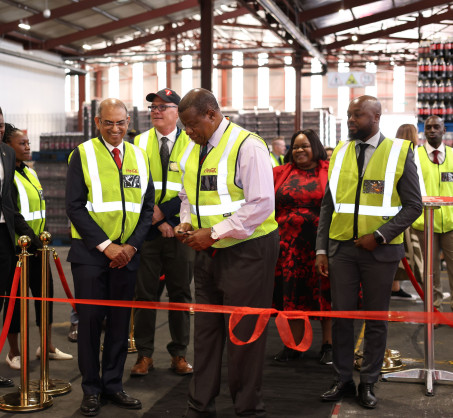
Coca-Cola Beverages Africa (CCBA) (www.CCBAGroup.com) has been certified as a Top Employer in Africa for 2025, based on the results of the Top Employers Institute's HR Best Practices Survey.  

CCBA was certified as a Top Employer in Africa, and its operations in Ethiopia, South Africa, Tanzania and Uganda achieved this accolade at country level.  

“We have a people-first culture that ensures unparalleled professional development for our valued employees,” said CCBA Chief People and Culture Officer Natasa Prodanovic. 

“Our aim is to nurture potential, attract and retain high-performing talent, and invest in growth. 

“CCBA's continued market success and status as the largest bottler of beloved Coca-Cola brands on the continent are other key differentiators. 

“We empower individuals to thrive and our certification as a Top Employer reflects the strength of our commitment to being an employer of choice for professionals with a desire to learn and grow. 

“Our people are driven to make an impact, are passionate about learning and committed to caring for others. 

“Congratulations to our leaders and colleagues, and thank you for making this recognition possible,” Prodanovic concluded.  

Distributed by APO Group on behalf of Coca Cola Beverages Africa.

ISSUED BY: 
Wendy Thole-Muir 
Head: Reputation and Communication  
Coca-Cola Beverages Africa  
Tel: +27 83 795 8524 
Email: WThole-Muir@ccbagroup.com 

Follow us on:
LinkedIn : https://apo-opa.co/4jfwP95

ABOUT CCBA:
CCBA is the 8th largest Coca-Cola bottling partner in the world by revenue, and the largest on the continent. It accounts for over 40% of all Coca-Cola products sold in Africa by volume. With over 18,000 employees in Africa, CCBA services more than 720,000 customers with a host of international and local brands. The group was formed in July 2016 after the successful combination of the southern and east Africa bottling operations of the non-alcoholic ready-to-drink beverages businesses of The Coca-Cola Company, SABMiller plc and Gutsche Family Investments. CCBA shareholders are currently: The Coca-Cola Company 66.5% and Gutsche Family Investments 33.5%. CCBA operates in 15 countries, including its six key markets of South Africa, Kenya, Ethiopia, Uganda, Mozambique and Namibia, as well as Tanzania, Botswana, Ghana, Zambia, the islands of Comoros and Mayotte, Eswatini, Lesotho, and Malawi.  

Learn more at  https://www.CCBAGroup.com 

Media files
Coca Cola Beverages Africa
Download logo
Read moreCoca-Cola Beverages Africa Recognised as a Top Employer in Africa
9 December 2024

Water transboundary partnerships benefit SA  

Location: News

Water transboundary partnerships benefit SA  

Water and Sanitation Deputy Minister David Mahlobo says South Africa continues to enjoy transboundary partnerships on shared water resources with neighbouring countries in the Southern African Development Community (SADC) region.

Mahlobo highlighted some of the partnerships during a session with Ambassadors accredited to South African Missions, held in Centurion on Friday.

These include, among others, the current implementation of the R42 billion Phase Two of the Lesotho Highlands Water Project (LHWP). The project includes the construction of the new Polihali Dam and associated infrastructure to provide additional water to Gauteng and parts of the Free State, Mpumalanga, North West, and Northern Cape provinces.

READ | Lesotho Highlands Water Project Tunnel maintenance on schedule

South Africa and Zimbabwe have also signed an agreement for the transfer of treated water from the Beitbridge Water Treatment Works in the Republic of Zimbabwe.

Mahlobo said the transfer of treated water is a medium-term solution to address water supply challenges in the area.  
“The two countries have signed an agreement for the transfer of treated water from Beitbridge Water Treatment Works in the Republic of Zimbabwe to Musina Town in the Republic of South Africa,” Mahlobo said.  

Another partnership includes the mobilisation of resources between South Africa and Namibia for the feasibility study of the Noordoewer/Vioolsdrfit Dam.

South Africa and Netherlands Governments have also undertaken to forge more cooperation opportunities in the water and sanitation sector in efforts to strength the existing relations between the two states.

“Both the countries have signed a Blue Deal agreement which aims to support water management by exchanging knowledge and experiences, assisting the national, regional and local organisations, and cooperate with key stakeholders,” Mahlobo said.

As part of diversifying the water mix, the Deputy Minister highlighted that government was increasingly making use of groundwater as one of the viable options to augment the current available water and increase supply.

“We are looking at using groundwater which remains untapped. Although it has also been threatened by climate change and the levels of evaporation, we are looking at utilising it more.

“We are looking forward to enhancing our technological partnership around groundwater and its high level of treatment. We should use groundwater optimally because it is not of inferior quality, but it is also a source of water,” he explained.

Held under the theme: “Celebrating 30 years of sustainable partnership, strengthening partnerships with international partners and forging a shared future”, the meeting hosted by Water and Sanitation, aimed to brief the Ambassadors on South Africa’s state of water sector .

This also includes water reforms currently underway and fortifying international collaboration and capacity-building endeavours in the water sector.

Among the countries represented at the meeting included China, Japan, Cuba, Egypt, the Kingdom of Eswatini and the Kingdom of Lesotho, Namibia, Zimbabwe, Mozambique, Botswana, Senegal, Kingdom of the Netherlands, Kingdom of Sweden, Kingdom of Denmark, and Finland. – SAnews.gov.za   


GabiK
Mon, 12/09/2024 - 11:42

146 views
Read moreWater transboundary partnerships benefit SA  
9 December 2024

International communities commended for supporting SA’s water sector

Location: News

International communities commended for supporting SA’s water sector

Water and Sanitation Deputy Minister David Mahlobo has acknowledged international communities for supporting South Africa’s water and sanitation sector since the dawn of democracy 30 years ago.

Mahlobo was speaking at a session with Ambassadors accredited to South African Missions in Centurion on Friday.

The meeting was hosted by the Department of Water and Sanitation under the theme: “Celebrating 30 years of sustainable partnership, strengthening partnerships with international partners and forging a shared future”.

The meeting aimed to brief the Ambassadors on the state of South Africa’s water sector and water reforms, and to fortify international collaboration and capacity-building endeavours in the water sector.

Countries represented at the meeting included China, Japan, Cuba, Egypt, the Kingdom of Eswatini and the Kingdom of Lesotho, Namibia, Zimbabwe, Mozambique, Botswana, Senegal, the Kingdom of the Netherlands, the Kingdom of Sweden, the Kingdom of Denmark and Finland.

Mahlobo acknowledged the international community’s support, which helped South Africa to achieve the democracy it enjoys today.

He commended the international community for their contribution to the country’s water and sanitation sector, which has guaranteed a sustainable and equitable water supply to all South Africans.

He said all the countries played a big part in various degrees to assist South Africa in its struggle for democracy.

“Your unwavering support did not go unnoticed, and your partnership continued to ensure that South Africa provided equitable and sustainable water supply, and dignified sanitation to all its citizens. We therefore would like to thank you for the notable contributions you have made,” Mahlobo said.

He encouraged partnerships between South Africa and the countries to continue to grow to ensure water security in the Southern African Development Community (SADC) region and the rest of the continent.

“When you engage with us here as the Department of Water and Sanitation, we should strive to maintain our partnership and forge ahead for the next 30 years, also taking into account the advances we have made.  

“As our partners, do not be polite with us, but engage with us if there are matters of policy that make it difficult for your participation. You need to raise matters that you don’t understand because we are an open-minded water sector,” the Deputy Minister said. 

The Ambassadors assured South Africa of their continued partnership in the water sector.

The Dean of the Diplomatic Corps in South Africa and the Eritrean Ambassador to South Africa, Salih Omar Abdu, said the partnerships have guaranteed water security and have ensured access to clean water by most of the countries in the continent. 
   
“As we deliberate on the partnership with South Africa, it is important to adapt to a new perspective on the role that water plays in our regional and international agendas. Water is not only a resource to be consumed, but it is also a catalyst in economic growth, social equality and environmental sustainability in the region,” Abdu said. – SAnews.gov.za

GabiK
Mon, 12/09/2024 - 10:55

45 views
Read moreInternational communities commended for supporting SA’s water sector
2 December 2024

BMA outlines plans to secure SA’s ports of entry this festive season

Location: News

BMA outlines plans to secure SA’s ports of entry this festive season

The Border Management Authority (BMA) unveiled its festive season plan, spanning from December 2024 to January 2025, aimed at managing increased border activities. 

South Africa faces complex border-related challenges, including illegal immigration, cross-border crimes, and smuggling of illicit goods.

Key interventions by the BMA this festive season include extending operating hours at major ports of entry over the festive season, deploying 69 additional personnel, and collaborating with Interpol and local law enforcement authorities. 

BMA Commissioner, Dr Michael Masiapato, said the agency anticipates facilitating over six million people, a recovery to pre-COVID-19 pandemic levels.

“Our focus will be the delivery of integrated, effective and efficient processes at the ports of entry, where only legitimate people and goods will be allowed to enter and exit South Africa,” he told the media on Monday. 

To achieve this, Masiapato announced that ports of entry and the vulnerable segments of the borderline will be adequately guarded to intercept any transgressor. 

In addition, he stated that the agency has intensified measures to detect and seize illicit goods, such as narcotics and stolen vehicles. 

As Operation Vala Umgodi proceeds to combat illegal mining activities, Masiapato stated that border guards remain vigilant and prepared to intercept illegal miners who have been deported and prevent them from attempting to illegally re-enter South Africa.

“We, therefore, want to warn all travellers to desist from committing any act of criminality around the ports of entry and at the border law enforcement areas, as they will be detected, arrested, and then deported.” 

In response to the persistent issues of food contamination and following President Cyril Ramaphosa’s directives to combat the problem, the BMA has issued operational instructions to all ports of entry.

This directive aims to intensify efforts to detect and intercept any illegal attempts to import organophosphate pesticides, specifically aldicarb, which is banned in South Africa, and terbufos, which has been linked to the deaths of six children in Naledi, Soweto.

“As such, the handling protocols have been given to our biosecurity experts for implementation across all ports of entry,” Masiapato said.

The BMA facilitates the legitimate movement of people and goods through 71 ports of entry, including 52 land ports, 10 international airports, and nine seaports.

The top 10 ports of entry facilitating the most people include key international airports and land ports to neighbouring countries.

These include the OR Tambo International Airport in Gauteng, Beitbridge land port to Zimbabwe, Lebombo land port to Mozambique, Caledonspoort, Ficksburg and Maseru Bridge land ports to Lesotho, Cape Town International Airport in the Western Cape, Oshoek land port to Eswatini, as well as Kopfontein, and Groblers’ Bridge land port to Botswana. 

The Commissioner emphasised the need for a robust and integrated border management platform to protect national security, economic growth, and regional economic integration. 

“During the return leg in January 2025, we would like to send a stern warning to all individuals who might be planning to try to enter South Africa illegally: border guards, working together with members of the SANDF [South African National Defence Force], will be waiting for them.” 

While waiting for the arrival of drones, the Commissioner announced a partnership with the Department of Agriculture, Land Reform and Rural Development. 

This collaboration will involve the deployment of drones to improve border security and enhance situational awareness, particularly in vulnerable areas such as ports and corridors.

Masiapato said the drone operations will be supported by mobile reaction units to allow for quick reaction and apprehension of illegal immigrants and other cross-border criminals. 

Shifting his focus to Mpox, he noted that South Africa’s risk classification is currently moderate. 

However, Masiapato warned travellers to avoid close contact with individuals showing symptoms, such as skin lesions or muscle aches.

“Currently, there is no Mpox vaccine in South Africa, therefore, travellers are encouraged to remain vigilant against Mpox disease.” – SAnews.gov.za

Gabisile
Mon, 12/02/2024 - 13:34

41 views
Read moreBMA outlines plans to secure SA’s ports of entry this festive season
28 November 2024

MSF to roll out injectable HIV prevention drug in southern Africa

Location: News

Médecins sans frontières (MSF)
Download logo

As World AIDS Day approaches on December 1, Doctors Without Borders/Médecins Sans Frontières (MSF) is preparing to roll out long-acting cabotegravir (CAB-LA) for pre-exposure prophylaxis (PrEP) in its projects in southern Africa. CAB-LA, administered as an injection every two months, has been described as a potential game changer in the fight against HIV/AIDS and is one of the closest medical tools that exist to an HIV vaccine. 

PrEP is a medicine that's taken continuously or before a situation where someone is at high risk of contracting HIV and can help prevent them from getting infected, protecting the individual and curbing the spread of the virus.

“My excitement stems from the fact that CAB-LA, administered every two months, has been shown to be more effective than oral PrEP in reducing new HIV infections,” said Dr. Antonio Flores, an MSF HIV/TB advisor based in South Africa. “With no HIV vaccine or cure in sight, CAB-LA and other long-acting formulations can be a gamechanger in curbing the HIV epidemic if scaled up globally, especially in low- and middle-income countries, particularly among groups at higher risk of acquiring HIV.”

In Africa, four countries started offering CAB-LA in 2024: Zimbabwe, Malawi, Zambia, and eSwatini. South Africa is scheduled to receive a portion of the 231,000 doses of CAB-LA from the President's Emergency Plan for AIDS Relief (PEPFAR) before the end of the year. The remaining PEPFAR doses will be released over the next two years. After long negotiations with ViiV, the sole manufacturer of CAB-LA, MSF successfully secured a limited number of doses, which are expected to be administered in its projects in Zimbabwe, Mozambique, Malawi, and eSwatini later this year.

CAB-LA is more discreet than the once-daily oral PrEP pill and could encourage adherence to this form of prevention. Discretion can be especially important for key and vulnerable populations at risk of HIV, like girls and women, sex workers, and men who have sex with men. Another long-acting option, lenacapavir made by Gilead, can be administered every six months and is expected to expand prevention choices in the coming years.

“The launch of CAB-LA will be a great benefit to our patients and the people of Zimbabwe since it is expected to be an excellent method to increase PrEP uptake among at-risk populations,” said Dr. Gerald Hangaika from MSF's Mbare project in Zimbabwe. “In addition to offering an even better level of protection than oral PrEP, the injection every two months reduces the burden of adherence by doing away with the requirement to take oral tablets every day and the need to store a container of tablets, which enhances privacy. The triad of ‘privacy, convenience, and effectiveness' are key elements considered by most patients.”

CAB-LA was recommended for HIV prevention by the World Health Organization (WHO) in July 2022 as there are an estimated 1.3 million new HIV infections per year. However, ViiV distributed only enough CAB-LA for prevention for approximately 13,000 people in 2023—almost 70 percent of which was sold in high-income countries. For governments and countries to be able to roll out this lifesaving intervention at the scale needed, pharmaceutical companies like ViiV must adequately supply long-acting formulations, ensure affordable pricing for low- and middle-income countries, and support generic manufacturers that want to help boost the global supply of these lifesaving medicines.

“We see many vulnerable populations in conflict and unstable contexts that could definitely benefit from CAB-LA,” Dr. Antonio Flores said. “We are determined to bring this game-changing injection to these settings as well. We hope that ViiV can provide adequate supply.”

To prepare for the roll-out, MSF hosted a four-day training for clinicians, nurses, and future CAB-LA implementers. The training aimed to equip MSF medical staff with the latest knowledge, skills, and strategies to effectively lead and coordinate the roll-out of CAB-LA in MSF projects, thereby enhancing HIV prevention efforts and improving health outcomes in high-risk populations. The training covered topics such as the basics of CAB-LA, clinical eligibility, management of side effects, and PrEP counselling, education, and promotion, among other key topics.

While HIV infections have decreased by approximately 60 percent since the peak in 1995, new infections continue to emerge, particularly among women and girls in Africa. MSF has played a major role in responding to HIV/AIDS worldwide since the mid-90s, implementing prevention and treatment programs, employing innovative solutions to simplify care, and advocating with affected communities and civil society partners for equitable access to HIV medicines like antiretrovirals.

Distributed by APO Group on behalf of Médecins sans frontières (MSF).

Read moreMSF to roll out injectable HIV prevention drug in southern Africa
18 November 2024

Announcing the Academy for Women Entrepreneurs Southern Africa Regional Alumnae Summit

Location: News
Africa Women Innovation and Entrepreneurship Forum (AWIEF)

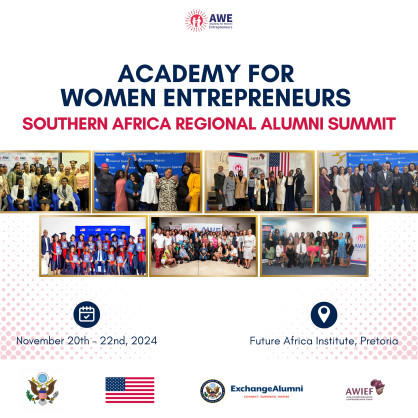
The U.S. Mission to South Africa, in partnership with the Africa Women Innovation and Entrepreneurship Forum (AWIEF) (www.AWIEForum.org), is proud to announce the 2024 Academy for Women Entrepreneurs (AWE) Southern Africa Regional Alumnae Summit. This highly anticipated 3-day event will take place at the University of Pretoria (UP) Future Africa Campus (FAC), Pretoria, South Africa, from November 20th to 22nd, 2024, during Global Entrepreneurship Week.

The AWE Regional Alumnae Summit brings together women entrepreneurs from the Southern Africa Customs Union (SACU) countries Botswana, Eswatini, Lesotho, Namibia, and South Africa, who have participated in the prestigious AWE program between 2019 and 2023.

The Summit aims to foster regional collaboration and create new opportunities for business expansion and trade. Key objectives include:

  • Building Networks: Strengthening connections among women entrepreneurs across SACU nations to share insights, foster partnerships, and collaborate on business ventures.
  • Accessing Regional Markets: Exploring strategies for trade expansion, accessing regional markets, and creating mutually beneficial partnerships.
  • Embracing Innovation: Providing learning opportunities on the latest digital innovations and how they can drive entrepreneurship and growth in Africa.

Participants will have the opportunity to engage with government officials, civil society organizations, and investors, all of whom share a commitment to advancing women's economic empowerment and entrepreneurship across the region.

The AWE Southern Africa Regional Alumnae Summit underscores the importance of women-led businesses in driving economic development and gender equity. By connecting entrepreneurs with stakeholders focused on trade, investment, and innovation, the Summit aims to catalyze sustainable business practices and inclusive economic growth across Southern Africa.

The Summit will host alumnae entrepreneurs, government representatives, and investors, creating a unique platform for dialogue, learning, and collaboration. Selected participants will have their travel and accommodation expenses covered, ensuring inclusivity and accessibility.

The 2024 AWE Southern Africa Regional Alumnae Summit promises to be a landmark event for women entrepreneurs, offering invaluable opportunities to connect, learn, and grow. Together, we will continue to foster a culture of innovation, trade, and economic empowerment across the Southern African region.

For more information about the AWE program and the upcoming Summit, visit https://apo-opa.co/3OaefRs

Distributed by APO Group on behalf of Africa Women Innovation and Entrepreneurship Forum (AWIEF).

Media files
Africa Women Innovation and Entrepreneurship Forum (AWIEF)
Download logo
Read moreAnnouncing the Academy for Women Entrepreneurs Southern Africa Regional Alumnae Summit
15 November 2024

Government commends progress made in Lesotho Highlands Water Project maintenance

Location: News

Government commends progress made in Lesotho Highlands Water Project maintenance

Water and Sanitation Deputy Minister, David Mahlobo, has commended the progress made in the Lesotho Highlands Water Project (LHWP) tunnel maintenance operations, which started last month.

Mahlobo and Deputy Minister Sello Seitlholo led an inspection of the maintenance operation at the Lesotho Highlands Water Project tunnel in Clarens, Free State, on Friday.

The joint maintenance operation by Trans Caledon Tunnel Authority (TCTA) and the Lesotho Highlands Development Agency (LHDA) is currently underway, following the tunnel system closure on 1 October 2024.

The TCTA is undertaking the maintenance operation on Delivery Tunnel North within South Africa, and LHDA will focus on the transfer tunnels at the Muela hydro power station in Lesotho.

Speaking at the inspection, Mahlobo commended the TCTA for the quality of the work delivered since the tunnel shutdown on 1 October 2024.

Mahlobo emphasised the ability of the two nations to cooperate and share the resources, noting that there are rivers that are flowing in between the neighbouring countries of South Africa, Lesotho, Eswatini, Namibia and Botswana.

“This trans-boundary cooperation is one of the things that we need to promote because in other parts of the world, there’s conflict around the issue of sharing water,” Mahlobo said.

Mahlobo highlighted the other advantages, which benefit both South Africa and Lesotho.

“In Lesotho, they have a hydro power station to power the system. It’s clean energy… At the very same time, this side, we are able to supply [water] for domestic use and other economic uses, whether it is agriculture industries, powering a number of communities and provinces (sic).

“The water… touches more than 13 million beneficiaries because it touches the province of Free State, Northern Cape, North West, Gauteng, and it also touches Mpumalanga. That is the scale of it and it is massive,” Mahlobo said.

The Deputy Minister said the Lesotho Highlands Water Project was completed by the democratic government, as it was commissioned in 1998.

South Africa’s richness in engineering

Mahlobo said South Africa is rich with skilled people in engineering, science and technology.

“[The LHWP] is a very sophisticated and complex system, where you have to go through the mountains, and you can see very serious engineering just to put [up] infrastructure of this nature. You can see the technology that is used…

“There is a need for continuous maintenance when you have assets. Therefore, investing in an asset gives you a longer life span and this one is going to extend the life span for the additional 20 years,” Mahlobo said.

The Deputy Minister called for reduced water losses, reiterating that every drop of water counts.

Support for municipalities

Mahlobo reiterated government’s support for all the municipalities that are directly or indirectly affected by the LHWP system.

“We are satisfied that the system will be managed, [but we acknowledge] it will remain vulnerable because it is a life system. It must be monitored from time to time, [hence] the weekly meetings happening every Wednesday to oversee the work. We want to encourage the workers to continue to do a good job and we are very proud of the work they do.

“Our call for citizens to use water sparingly still remains. In as much as water will continue to be available, it must be used sparingly,” Mahlobo said.

The LHWP maintenance is expected to be completed on 31 March 2025. – SAnews.gov.za

GabiK
Fri, 11/15/2024 - 14:59

60 views
Read moreGovernment commends progress made in Lesotho Highlands Water Project maintenance
8 November 2024

Africa’s Mineral Wealth and Path to Economic Transformation Showcased at CMA 2024

Location: News
Energy Capital & Power

Africa's holds significant reserves of minerals critical for the global energy transition. The continent boasts roughly 30% of the world's mineral reserves, including immense deposits of cobalt, manganese, natural graphite, copper, nickel, lithium and iron ore.  

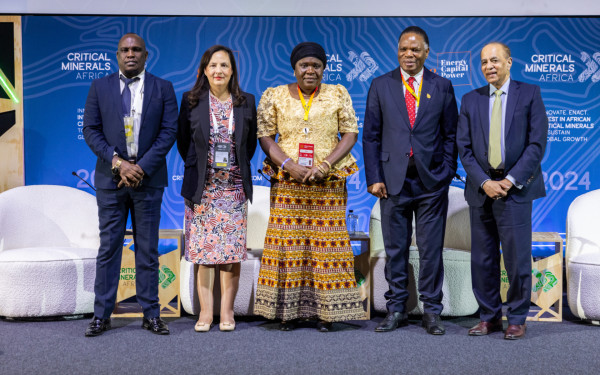
As such, this year's Critical Minerals Africa (CMA) 2024 Summit – held from November 6-7 in Cape Town – convened industry leaders, policymakers, service providers and investors to address the urgent demands of Africa's critical mineral value chain. The Summit featured a robust agenda that sought to shine a spotlight on opportunities for Africa to accelerate its mining sector while utilizing its natural resources to promote value addition and drive socioeconomic development. 

CMA 2024 featured a Ministerial Forum that included the participation of mining ministries from Eswatini, Malawi and Argentina, as well as representatives from Tanzania. High-level speakers during the forum showcased a number of projects aimed at maximizing mineral production while discussing how to leverage mineral resources to promote economic growth and sustainability. 

The Republic of Malawi's Minister of Mining Monica Chang'anamuno highlighted several ongoing projects in the country, such as the Kasongo Initiative, which aims to increase the production of rare earth metals, graphite and lithium resources. 

Meanwhile, Eswatini's Minister of Natural Resources and Energy Prince Lonkhokhela announced ambitious targets to raise to the contribution of the country's mining sector to its GDP. With aims to increase the share from 1% to 50% in the short- to medium-term, the strategy is supported by new surveys revealing commercial deposits of lithium, copper, cobalt and other base metals.  

To bolster investment in mid- and downstream infrastructure, the Summit also featured the participation the President of the Chamber of Mines of Zimbabwe Thomas Gono, who stated, “Historically, we exported raw materials, missing out on the potential benefits. With Africa's young workforce, we now have an opportunity to drive revenue and create jobs through skills development and local beneficiation.” 

With the participation of Tanzania's Chamber of Mines, it was announced that the country aims to expand exploration in critical mineral-rich basins from 16% to 50% as part of a strategic push into rare earths, lithium and tanzanite production. Meanwhile, Zambia's Chamber of Mines discussed ongoing strategies aimed at helping the country address logistics and energy deficit challenges in the mining sector. 

The Summit featured a panel discussion with high-level representatives from mining companies and development institutions including Pensana, the Africa Policy Research Institute and the U.S. Development Finance Corporation. The panel also featured the participation of Clifford Chance, Frost & Sullivan and Chatham House and explored how regional initiatives – such as the Lobito Corridor – have the potential to fast-track Africa's critical minerals market expansion.  

An Investment Forum held during the Summit showcased innovative financing measures to advance the flow of capital across the African market. The session featured representatives from finance institutions the World Bank, ABSA, Moshe Capital, the African Finance Corporation and ASAFO & Co. 

Additionally, midstream and downstream opportunities were showcased during a panel session that featured the participation of organizations such as Orion Minerals, AZ Arnaturen, Women in Green Hydrogen, Isondo Previous Metals and the Southern African – German Chamber of Commerce and Industry. The panel also featured representatives from Konrad Adenauer Stiftung, the SA-DRC Chamber of Commerce, the Curtin Institute for Energy Transition, the Electric Mobility Association of Kenya and the Congolese Battery Council. 

At CMA 2024, research firms including Rystad Energy, Moore Global and Project Blue presented insights on market trends in the global mining industry, while Tronic Metals, Tanzania's State Mining Corporation and South Sudan's state-owned Nilepet provided updates on their activities across the mining value chain. 

A Leaders Forum during the Summit featured the participation of international mining companies Glencore DRC and KoBold Metals as well as representatives from the University of Cape Town and the Minerals Council of South Africa. The forum showcased how governments across Africa can promote innovation in the continent's mining space to attract new investment and increase critical minerals production to drive socioeconomic and GDP growth.  

Distributed by APO Group on behalf of Energy Capital & Power.

Media files
Energy Capital & Power
Download logo
Read moreAfrica’s Mineral Wealth and Path to Economic Transformation Showcased at CMA 2024
8 November 2024

Mining Ministers Present Critical Mineral Expansion Strategies at CMA

Location: News

Energy Capital & Power
Download logo

The second day of the Critical Minerals Africa (CMA) Summit began with a Ministerial Forum, where mining ministers from Eswatini, Malawi, Argentina and representatives from Tanzania highlighted initiatives to advance the mining sector.

HRH Prince Lonkhokhela, Minister of Natural Resources and Energy for the Kingdom of Eswatini, described mining as a foundational pillar of economic growth for the country.

“Our recent high-resolution aerial survey has indicated the presence of copper, nickel and cobalt in the western regions, along with lithium and tantalum in the south,” he stated.

Eswatini is developing a Critical Minerals Strategy in collaboration with the Commonwealth Group, slated for completion by mid-next year, according to the minister.

Lonkhokhela stated that Eswatini is revamping its regulations to align with neighboring nations such as Mozambique and South Africa, aiming for knowledge sharing, resource pooling and regional cooperation on value addition.

Monica Chang'anamuno, Minister of Mining for the Republic of Malawi, emphasized the need for Malawi and Africa to align with the global conversation on critical minerals and the energy transition to seize emerging opportunities.

Chang'anamuno highlighted Malawi's vision to diversify its agriculture-dependent economy through its Agriculture, Tourism and Mining Strategy, prioritizing critical minerals as a driver of growth.

Malawi currently has several rare earth and lithium projects, including the Kasongo rare earth project, which employs 1,200 people, with plans to engage up to 10,000 throughout its lifespan, according to the Minister.

Malawi also discovered one of the world's largest lithium deposits, in partnership with a Korean firm and Rio Tinto, the Minister told delegates at CMA. Additionally, the nation aims to double its energy production to 1,000 MW by next year, with 232 MW allocated to support mining operations.

Maria Alejandra Vlek, Minister of Economic and Commercial Section of Embassy of Argentina in South Africa, highlighted the country's significant lithium potential, holding 22% of global lithium resources, with 180 critical mineral projects currently underway.

She said the country is deploying some 50 lithium projects, including an $800 million lithium facility, and seeks to leverage expertise and investment from African mining countries such as South Africa.

Venace Mwasse, Director of Tanzania's State Mining Corporation, stated “We are aware of the need to reduce emissions through critical mineral production and are committed to ensuring this while benefiting our communities.”

He added that only 16% of Tanzania's land has been surveyed, with a target to reach 50% as part of the country's Vision 2030 Strategy.

Venace Mwasse, Director of Tanzania's State Mining Corporation, stated “We are aware of the need to reduce emissions through critical mineral production and are committed to ensuring this while benefiting our communities.”

He added that only 16% of Tanzania's land has been surveyed, with a target to reach 50% as part of the country's Vision 2030 Strategy.

Distributed by APO Group on behalf of Energy Capital & Power.

Read moreMining Ministers Present Critical Mineral Expansion Strategies at CMA
8 November 2024

BMA to meet with Mozambican leadership on border post closure

Location: News

BMA to meet with Mozambican leadership on border post closure

The Border Management Authority (BMA) says it expects to start engaging with the Mozambican government following the closure of the Lebombo Border Post due to security concerns.

This amid protests owing to political tensions in that country, which have culminated in reports of vehicles being burnt on the Mozambican side of the border.

Speaking to media at the border post on Friday, BMA Commissioner Dr Mike Masiapato reiterated that the border remains closed at this stage.

“The status quo remains… where, the port is closed as we speak... We are [now] busy engaging with the Mozambicans to... make a determination about the way forward.

“The only difference is that the people here at the port, the leaders at the port levels, say that these issues are now getting more complicated, and they will not be able to make any significant determinations,” Masiapato said.

He advised travelers to use alternative ports to travel.

“We have advised them to use the Mananga port of entry. It is 60km from [Lebombo border post] and most taxi drivers have actually started doing that.

“[This] will enable them to enter into Eswatini and ultimately enter into Mozambique, so basically, those are Mozambicans trying to go back home. Th iiss the best we could have done.

“Once we have met with the people from [the Mozambique] side, we will be able to make a final determination,” he said.

Masiapato strongly advised South Africans not to travel into that country.

“South Africans are discouraged from planning any kind of travel into Mozambique, that is a very clear one. When talk about even a partial re-opening for the movement of persons, we are talking about Mozambicans who are going back home.

“We cannot keep them [Mozambicans] unless they want to be kept like the immigration officers that we kept here for their safety (sic). But for the ordinary Mozambicans who say ‘I want to go back home’, we should not necessarily continue to refuse them to do so.

“But for us to be able to do so, it must be an agreement between us and the Mozambicans primarily on their ability to receive them and to do border management activities on them – particularly immigration activities,” he said.

Masiapato said that on the Mozambican side, the BMA has not received any indication of South Africans “who are under siege”.

“The only issue that we had on Wednesday was the issue of the… South African trucks that were empty that wanted to come back.

“When we did a partial re-opening, all those trucks came back. We were also able to repatriate around six petroleum trucks that carry fuel and all of those. We had to take them out of… the Mozambican side because of the danger that such kind of trucks have,” Masiapato said. – SAnews.gov.za

NeoB
Fri, 11/08/2024 - 13:09

42 views
Read moreBMA to meet with Mozambican leadership on border post closure
6 November 2024

SA to sign border plan with Eswatini

Location: News

SA to sign border plan with Eswatini

The Border Management Authority (BMA) and the South African Revenue Services (SARS) will today sign a historic joint action plan with the Kingdom of Eswatini to address challenges faced in the border environment. 

BMA Commissioner, Dr Michael Masiapato, is leading a delegation from the BMA to a meeting with the Kingdom of eSwatini to engage on a shared vision to manage borders. 
The SARS delegation will be led by Beyers Theron, the Director for Customs.

Wednesday’s signing of the bilateral Joint Action Plan (JAP) will include commitments to enhance the existing approach to managing the borders, including the harmonisation of policy and procedures and joint organisation of resources and structures to support efficient movements and trade facilitation. 

“South Africa has already signed the JAP with the Republic of Mozambique in 2023 and significant improvements on trade facilitation were realised,” said the BMA and SARS in a statement. – SAnews.gov.za


Edwin
Wed, 11/06/2024 - 08:44

301 views
Read moreSA to sign border plan with Eswatini
4 November 2024

Coca-Cola Beverages Africa Invests $50 Million in Namibia, Boosting Production Capacity by 30%

Location: News
Coca Cola Beverages Africa

Coca-Cola Beverages Africa (CCBA) (www.CCBAGroup.com) has invested $50 million in a new bottling line in Namibia, capable of producing 27,000 bottles per hour. This upgrade will increase the plant's output capacity by 30% and stimulate growth throughout the company's value chain.

The investment also includes the installation of a water treatment plant with state-of-the-art water recovery technology, designed to reduce water consumption. Additionally, the integration of advanced technology, including artificial intelligence, will require skills training for employees, contributing to the development of a future-ready workforce for both the business and the country.

“We've ensured that this production line goes beyond output numbers,” said Pottie de Bruyn, General Manager of Coca-Cola Beverages Africa in Namibia. “It's about creating shared opportunities across the value chain. The increased production also provides a boost to local businesses that supply us with raw materials and services.”

Sunil Gupta, Chief Executive Officer of CCBA, echoed the sentiment, adding, “This investment is a clear demonstration of our continued belief in the future of Namibia.”

Gupta also highlighted CCBA's broader goals: “As a customer-centric, digitally enabled, growth-driven business, we are committed to excellence across our value chain. Efficient operations allow us to offer faster delivery and superior service. This new production line is another step in our journey to achieve even greater levels of execution excellence.” 

Distributed by APO Group on behalf of Coca Cola Beverages Africa.

Media Contacts:
Enid Johr 
PACS Director 
CCBA in Namibia 
Tel: +264 81 778 5381 
Email: ejohr@ccbagroup.com 

Wendy Thole-Muir 
Head: Reputation and Communication 
Coca-Cola Beverages Africa  
Tel: +27 83 795 8524 
Email: WThole-Muir@ccbagroup.com 

Judith Wilhem
+264813473538

Follow us on:
LinkedIn: https://apo-opa.co/3AsnQje

About CCBA:
CCBA is the 8th largest Coca-Cola bottling partner in the world by revenue, and the largest on the continent. It accounts for over 40% of all Coca-Cola products sold in Africa by volume. With over 18,000 employees in Africa, CCBA services more than 720,000 customers with a host of international and local brands. The group was formed in July 2016 after the successful combination of the southern and east Africa bottling operations of the non-alcoholic ready-to-drink beverages businesses of The Coca-Cola Company, SABMiller plc and Gutsche Family Investments. CCBA shareholders are currently: The Coca-Cola Company 66.5% and Gutsche Family Investments 33.5%. CCBA operates in 15 countries, including its six key markets of South Africa, Kenya, Ethiopia, Uganda, Mozambique and Namibia, as well as Tanzania, Botswana, Ghana, Zambia, the islands of Comoros and Mayotte, Eswatini, Lesotho, and Malawi.

Learn more at  https://www.CCBAGroup.com

Media files
Coca Cola Beverages Africa
Download logo
Read moreCoca-Cola Beverages Africa Invests $50 Million in Namibia, Boosting Production Capacity by 30%
16 October 2024

African Development Bank Appoints Dr Kennedy Mbekeani as Director General for East Africa

Location: News
African Development Bank Group (AfDB)

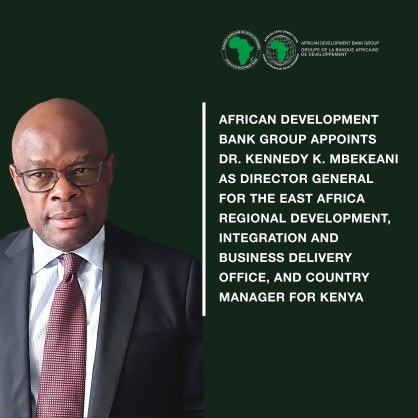
The African Development Bank Group (www.AfDB.org) has appointed Dr Kennedy K. Mbekeani as Director General for the East Africa Regional Development, Integration and Business Delivery Office, and Country Manager for Kenya, effective from 16 October 2024.

Mbekeani, a citizen of Malawi has over 25 years of senior experience in development finance, project management, policy advisory services, and knowledge generation at national and regional levels.

Prior to this appointment, he served as deputy director general for the Bank's Southern Africa Regional Development, Integration and Business Delivery Office. In this  role  he led the Bank's business development and delivery for sovereign and non-sovereign investments, and provided advisory services to South Africa, Lesotho, Botswana, Eswatini, Namibia and Mauritius. His efforts contributed to the Bank's reputation as a trusted partner for high impact development projects in the region. He also managed relationships with governments and the private sector.

Mbekeani joined the Bank in 2009 as Chief Trade and Regional Integration Officer. Subsequently he has held various roles including lead regional economist, officer in charge and acting regional director respectively of the Bank's South African Resource Centre. While serving as country manager for Uganda, he successfully expanded the Bank's portfolio to over $2 billion.

Before joining the Bank, Mbekeani worked for  the United Nations Development Programme as a trade, debt and globalisation advisor for East and Southern Africa. He also served as senior research fellow at the Botswana Institute for Development Policy Analysis, and senior economist at the National Institute for Economic Policy in South Africa.

He holds a Bachelor of Social Science (Economics and Statistics) degree from the University of Malawi, an MPhil in Monetary Economics from the University of Glasgow, and both an MA and PhD in International Economics from the University of California. He has authored numerous publications focusing on trade, regional integration, and infrastructure development in Africa.

Commenting on his appointment, Mbekeani said: “I am grateful and feel honoured by the confidence President Adesina placed in me through this appointment, as Director General for the East Africa Regional Development, Integration and Business Delivery Office and country manager for Kenya. I look forward to working with the president, the Board of Directors, senior management, our teams and stakeholders to enhance the Bank's operational efficiency, effectiveness and drive impactful developmental outcomes across the region.”

President of the African Development Bank Group and Chairman of the Board of Directors Dr Akinwumi Adesina said: “I am delighted to appoint Dr. Kennedy Mbekeani as Director General for the East Africa Regional Development, Integration and Business Delivery Office, and Country manager for Kenya. Kennedy brings extensive experience in managing operations, policy dialogue, coupled with astute diplomacy and well-tested ability to work effectively with countries and development partners. His knowledge of the Eastern Africa region and well-proven experience in delivering robust operations for the public and private sectors will strongly benefit the work and operations of the African Development Bank Group in East Africa and all countries in the region.”

Distributed by APO Group on behalf of African Development Bank Group (AfDB).

Media Contact:
Olufemi Terry
Communication and External Relations
media@afdb.org

About the African Development Bank Group:
The African Development Bank Group is Africa's premier development finance institution. It comprises three distinct entities: the African Development Bank (AfDB), the African Development Fund (ADF) and the Nigeria Trust Fund (NTF). On the ground in 41 African countries with an external office in Japan, the Bank contributes to the economic development and the social progress of its 54 regional member states. For more information: www.AfDB.org

Media files
African Development Bank Group (AfDB)
Download logo
Read moreAfrican Development Bank Appoints Dr Kennedy Mbekeani as Director General for East Africa
16 October 2024

Applied Artificial Intelligence (AI) And Deep Tech Innovations Take Centre Stage

Location: Business
Expand North Star

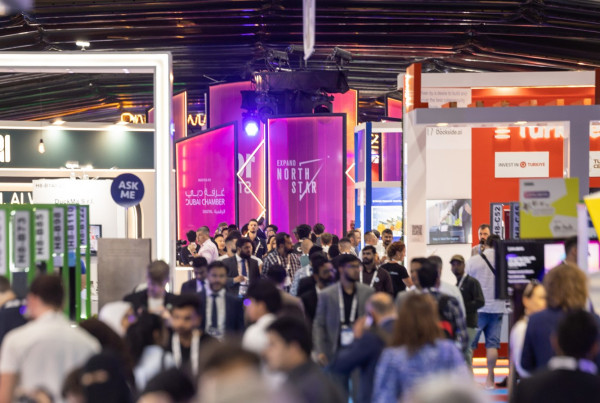
Expand North Star 2024 (www.ExpandNorthStar.com), the world's largest startup and investment event, continued its journey of innovation on its third day at Dubai Harbour. Attendees from around the world witnessed revolutionary advancements in Applied AI and Deep Tech, demonstrating how these technologies are disrupting industries and solving complex global challenges.   

Integrated with GITEX GLOBAL, Expand North Star runs until 16 October, providing a powerful platform for over 1,800 exhibiting startups and more than 1,200 investors managing assets exceeding USD $1 trillion. 

Applied AI and Deep Tech Innovations Redefine Healthcare and Space Innovation 

Day three was a showcase of next-generation solutions in robotics, AI, and deep tech, providing a glimpse into the future of these sectors.  

Cutting through the noise were innovative startups such as China's RoboCT with their innovative exoskeleton technology, launching the UGo Rehab Exoskeleton, specifically designed for patients with lower-limb dysfunction, spinal cord injury, strokes, or cerebral palsy. Dr. Tian Wang, Founder and CEO of RoboCT Group, stated, "UGo enhances the rehabilitation process and delivers an effective walking training solution by integrating advanced sensors, data analysis, and research, empowering patients to rehabilitate more effectively at home."  

On the digital health frontier, JADE introduced a platform tailored for neurodivergent children, including those with ADHD, down syndrome, and autism. The app's sophisticated tracking of eye movements, cognitive response times, and memory functions equips healthcare professionals and educators with precise data to create personalised care and learning strategies.  

Meanwhile, scanO, a pioneering Indian-born deep tech company, is leading the way in developing generative AI models for predicting disease progression. The company showcased its flagship product, scanO air—the world's first contactless AI-powered robotic system for oral health screening—revolutionizing early detection and diagnosis. 

In space technology sector, Triggers-Reports from Mauritius introduced Triggers-sat, a satellite platform that provides high-resolution imaging and 3D modeling to assist businesses and governments in areas such as natural resource management and climate risk disaster monitoring. 

Rising International Participation from Asia and Latin America  

As the global innovation hub, Expand North Star continues to see international participation rise, showcasing how regions and countries are pushing boundaries with novel solutions. 

Tatiana Riera, COO of ApexBrasil, highlighted Brazil's expanding presence at Expand North Star: "From just 20 startups in 2019, we have expanded to 45 startups this year, along with four innovation hubs. Brazil is a great hub for fintech because of the diversity in social levels, so most of our unicorns come from fintech. We also focus a lot on Deep Tech, AI, and climate tech solutions since we have six biomes and need to take care of them. We have a company that uses natural foam to build soundproof material for construction and another company building silent tractors that run on renewable energy."   

Similarly, Singapore's SGTech made a noteworthy debut at Expand North Star, emphasizing the importance of cross-border collaboration in driving tech-driven solutions forward. Alex Ng, Exco Member, SGTech said: "Singapore's innovative startups are making a significant impact at Expand North Star 2024, with six outstanding companies exhibiting under the Singapore Pavilion. These companies showcase cutting-edge technologies across various sectors, including digital twins, industrial AI and biotech, with the event serving as a groundbreaking global launchpad for startups to foster valuable networking with investors." 

Africa's Path to Economic Growth 
With global participation continuing to flourish, the spotlight also turned towards Africa, where burgeoning tech ecosystems are paving the way for a new wave of entrepreneurs and innovators. H.E. Savannah Maziya, Minister, Ministry of Information, Communications & Technology, Eswatini, alongside other thought leaders, emphasised the importance of structured development to tackle unique market challenges and unlock Africa's economic potential.   

Celina Lee, CEO & Co-Founder, Zindi, South Africa, highlighted the trend of talent returning to Africa to start companies and create ecosystems that foster innovation and attract global corporations like Microsoft to set up labs in Ghana and Nairobi.   

Speaking on the challenges facing Africa, Olatunbosun Alake, Honorable Commissioner, Ministry of Innovation, Science and Technology, Lagos State Government, Nigeria, said, "The greatest challenge in Africa is education. In Nigeria, if you look at the most educated parts, they show economic value, whereas in the north, where education levels are not as high, economic productivity is lower. There needs to be an African Renaissance of education funding across the board because if you drive education, educate, and enlighten people, people will change the environment.” 

Across its four-day span, Expand North Star continues to shed light on the future of industries through defining events such as GITEX Impact, Fintech Surge, Future Blockchain Summit, and Marketing Mania. These events underscore how emerging technologies are transforming the way we live and are also playing a pivotal role in reshaping the future.  

Distributed by APO Group on behalf of Expand North Star.

Media Contact: 
Tayce Marchesi, PR Manager, DWTC | tayce.marchesi@dwtc.com     
Ahmad Khalloudi, Account Manager, Seven Media | ahmadkhalloudi@sevenmedia.ae 
Doyin Odulana, Senior PR Manager, Seven Media | adedoyinodulana@sevenmedia.ae 

Follow Expand North Star on Social Media: 
Facebook (https://apo-opa.co/487fqdm)| X (https://apo-opa.co/4h5l6sx)| Instagram (https://apo-opa.co/4eIQXhe)| LinkedIn (https://apo-opa.co/485znl3)
Hashtag: #ExpandNorthStar 

About Dubai World Trade Centre (DWTC):  
A global business facilitator since 1979, Dubai World Trade Centre (DWTC) is home to the region's leading purpose-built convention and exhibition centre. DWTC provides a platform for connecting people, products, innovation and ideas from around the world through a dynamic calendar of international trade exhibitions and its own roster of sector leading mega events. As a designated free zone, complemented by award-winning commercial real estate, DWTC plays an integral role in Dubai and the region's growth story. Since its inauguration, DWTC has hosted over 6,000 events, with an estimated economic output of AED 248 billion, attracting over 38 million business visitors to Dubai. 

Media files
Expand North Star
Download logo
Read moreApplied Artificial Intelligence (AI) And Deep Tech Innovations Take Centre Stage
13 September 2024

The Coca-Cola System in Africa Unveils Water Stewardship Initiative

Location: Business

Coca-Cola
Download logo

The Coca-Cola Company in Africa (www.Coca-ColaCompany.com) and its bottling partners Coca-Cola Beverages Africa (CCBA), Equatorial Coca-Cola Bottling Company (ECCBC) and Coca-Cola HBC announced a nearly USD 25 million investment to help address critical water-related challenges in local communities in 20 African countries, starting this year through 2030. The work will be led by Global Water Challenge (GWC) and implemented by a consortium of partners, including The Nature Conservancy (TNC), The International Union for Conservation of Nature (IUCN) and the World Wildlife Fund (WWF).

The effort, called ‘The Coca-Cola System's Africa Water Stewardship Initiative', was introduced in Cape Town, South Africa, in presence of executives from the Coca-Cola system in Africa and NGO partners. During the event, Karyn Harrington, Vice President of Public Affairs, Communications and Sustainability at The Coca-Cola Company's Africa Operating Unit indicated “Water is a priority for The Coca-Cola Company and its local bottling partners because it is essential to life, the communities we serve and our beverages. As we face increasing water insecurity worldwide, with demand outstripping supply in many regions such as Africa, Coca-Cola is taking steps to help accelerate efforts to address water stress, protect local water resources, and build community climate resilience. Our 2030 Water Security Strategy focuses on helping enhance water security where we operate, source ingredients, and touch lives.”

“One in three Africans face water insecurity. The Global Water Challenge and ‘The Coca-Cola System's Africa Water Stewardship Initiative' partner coalition will seek to improve water security for millions across the African continent, helping advance community health and resilience through abundant, clean water. We applaud Coca-Cola's continued leadership on African water security” said Monica Ellis, CEO of GWC.

‘The Coca-Cola System's Africa Water Stewardship Initiative' aims to help protect and enhance the health of important watersheds and to help improve access to water and sanitation services in local communities. We will have projects in Algeria, Botswana, Cabo Verde, Comoros, Egypt, Eritrea, Eswatini, Ethiopia, Kenya, Mayotte, Morocco, Mozambique, Namibia, Nigeria, Somalia, South Africa, Tanzania, Uganda, Zambia and Zimbabwe.  

“CCBA has a responsibility to help those who face water scarcity and to help protect local water resources where we operate, especially in places with the biggest challenges. We are proud to partner with The Coca-Cola Company on this project,” says Layla Jeevanantham, Chief Public Affairs, Communication and Sustainability Officer at CCBA.

“We are proud to partner with The Coca-Cola Company and fellow bottlers on this critical initiative to help tackle water challenges across Africa. By working together, we can leverage the expertise of our partners and the knowledge of local communities to help create sustainable solutions that enhance water access and safeguard vital water resources,” said Sonia Ventosa, Public Affairs, Communications & Sustainability Manager at ECCBC.

“Coca-Cola HBC has been part of African communities for more than 70 years, and sustainability is an important part of how we operate. We're very happy to see this new water initiative come to life and to support the system's water stewardship efforts,” said Marcel Martin, Chief Corporate Affairs & Sustainability Officer, Coca-Cola HBC.

Recognizing that partnerships are critical to support this work, the company and its bottlers are collaborating with governments, businesses, and civil society organizations to design and implement strategic interventions. In addition to supporting the company's water strategy, this effort also aims to contribute to advancing the United Nations' Sustainable Development Goal 6, which focuses on ensuring availability and sustainable management of water and sanitation. 

This water initiative will build upon The Coca-Cola Foundation (TCCF)'s Replenish Africa Initiative (RAIN), a groundbreaking collaboration with key partners and co-funders which helped improve access to clean water, sanitation and hygiene for 6 million people across African countries between 2009 and 2019. Through 120 projects, the initiative positively impacted homes, schools and healthcare clinics in more than 4,000 communities.

Distributed by APO Group on behalf of Coca-Cola.

Contacts: 
Amel Benchikh El Houcine 
abenchikh@coca-cola.com

About The Coca-Cola Company:
The Coca‑Cola Company (NYSE: KO) is a total beverage company with products sold in more than 200 countries and territories. Our company's purpose is to refresh the world and make a difference. We sell multiple billion-dollar brands across several beverage categories worldwide. Our portfolio of sparkling soft drink brands includes Coca‑Cola, Sprite and Fanta. Our water, sports, coffee and tea brands include Dasani, smartwater, vitaminwater, Topo Chico, BODYARMOR, Powerade, Costa, Georgia, Gold Peak and Ayataka. Our juice, value-added dairy and plant-based beverage brands include Minute Maid, Simply, innocent, Del Valle, fairlife and AdeS. We are constantly transforming our portfolio, from reducing sugar in our drinks to bringing innovative new products to market. We seek to positively impact people's lives, communities and the planet through water replenishment, packaging recycling, sustainable sourcing practices and carbon emissions reductions across our value chain. Together with our bottling partners, we employ more than 700,000 people, helping bring economic opportunity to local communities worldwide. Learn more at www.Coca-ColaCompany.com and follow us on Instagram (http://apo-opa.co/3Ttw0hL), Facebook (http://apo-opa.co/3ToqwVu) and LinkedIn (http://apo-opa.co/4db5D6V).

 Forward-Looking Statements:
This update may contain statements, estimates or projections that constitute “forwardlooking statements” as defined under U.S. federal securities laws. Generally, the words “believe,” “expect,” “intend,” “estimate,” “anticipate,” “project,” “will” and similar expressions identify forwardlooking statements, which generally are not historical in nature. Statements about our sustainability goals, aspirations and anticipated progress also constitute “forwardlooking statements.” Forwardlooking statements are subject to certain risks and uncertainties that could cause The CocaCola Company's actual results to differ materially from its historical experience and our present expectations or projections. These risks include, but are not limited to, evolving sustainability regulatory requirements and expectations, including evolving processes, controls and methodologies for identifying, measuring, assuring and reporting sustainability metrics and data, which could result in significant revisions to our previously reported data; increasing concerns about the environmental impact of plastic bottles and other packaging materials; water scarcity and poor quality; increased demand for food products, decreased agricultural productivity and increased regulation of ingredient sourcing due diligence; climate change and legal or regulatory responses thereto; adverse weather conditions; unfavorable economic and geopolitical conditions; disruption of our supply chain, including increased commodity, raw material, packaging, energy, transportation and other input costs; an inability to successfully integrate and manage our acquired businesses, brands or bottling operations or an inability to realize a significant portion of the anticipated benefits of our joint ventures or strategic relationships; and other risks discussed in our filings with the Securities and Exchange Commission (the SEC), including our Annual Report on Form 10K for the year ended December 31, 2023, and our subsequently filed Quarterly Reports on Form 10Q, which filings are available through the SEC's website. You should not place undue reliance on forwardlooking statements, which speak only as of the date they are made. We undertake no obligation to publicly update or revise any forward looking statements. 

Read moreThe Coca-Cola System in Africa Unveils Water Stewardship Initiative
13 September 2024

Mandela Washington Fellowship for Young African Leaders

Location: News

U.S. Embassy in Namibia
Download logo

The Mandela Washington Fellowship, begun in 2014, is the flagship program of President Obama's Young African Leaders Initiative (YALI) that empowers young leaders through academic coursework, leadership training, and networking. In 2016, the Fellowship provided nearly 1,000 outstanding young leaders from Sub-Saharan Africa with the opportunity to hone their skills at a U.S. higher education institution with support for professional development after they return home.

Ideal candidates are self-identified leaders, aged 25 to 35, with proven accomplishment in promoting innovation and positive change in their organizations, institutions, communities, and countries.

U.S.-based Activities

Academic and Leadership Institutes: Each Mandela Washington Fellow takes part in a six- week academic and leadership institute at a U.S. university or college in one of three tracks: business and entrepreneurship, civic leadership, or public management.

Summit: Following the academic component of the Fellowship, the Fellows visit Washington, D.C. for a summit. During the three-day event, Fellows take part in networking and panel discussions with U.S. leaders from the public, private, and non-profit sectors.

Professional Development Experience: Selected Fellows remain in the U.S. to participate in a six-week professional development experience with U.S. non-governmental organizations, private companies, and governmental agencies related to their professional interests and goals.

Africa-based Activities

Upon returning to their home countries, Fellows continue to build the skills they have developed during their time in the United States through support from U.S. embassies, Regional Leadership Centers, the YALI Network, and customized programming from affiliated partners. Mandela Washington Fellows have access to ongoing professional development opportunities, mentoring, networking and training, and seed funding to support their ideas, businesses, and organizations.

Application Information

The application includes basic information and questions about the applicant's professional and academic experience, including educational background; honors and awards received; extracurricular and volunteer activities; and English language proficiency.  A résumé is also requested (with dated educational and professional background), and personal information (name, address, phone, email, country of citizenship). Additional elements, such as letters of recommendation or university transcripts, are OPTIONAL and may supplement your application.

Who is eligible to apply?

Applicants will not be discriminated against on the basis of race, color, gender, religion, socio-economic status, disability, sexual orientation, or gender identity.  The Mandela Washington Fellowship is open to young African leaders who meet the following criteria:

  • Are between the ages of 25 and 35 on or before the application deadline, although exceptional applicants ages 21-24 will be considered;
  • Are not U.S. citizens or permanent residents of the United States;
  • Are eligible to receive a United States J-1 visa;
  • Are not employees or immediate family members of employees of the U.S. Government (including a U.S. embassy or consulate, USAID, and other U.S. Government entities);
  • Are proficient in reading, writing, and speaking English (applicants who are deaf should refer to the English Language instructions on the Resources page);
  • Are citizens of one of the following countries: Angola, Benin, Botswana, Burkina Faso, Burundi, Cameroon, Cabo Verde, Central African Republic, Chad, Comoros, Democratic Republic of the Congo (DRC), Republic of the Congo, Cote d'Ivoire, Djibouti, Equatorial Guinea, Eritrea, Eswatini, Ethiopia, Gabon, The Gambia, Ghana, Guinea, Guinea-Bissau, Kenya, Lesotho, Liberia, Madagascar, Malawi, Mali, Mauritania, Mauritius, Mozambique, Namibia, Niger, Nigeria, Rwanda, Sao Tome and Principe, Senegal, Seychelles, Sierra Leone, Somalia, South Africa, South Sudan, Sudan, Tanzania, Togo, Uganda, Zambia, or Zimbabwe;
  • Are residents of one of the above countries; and
  • Are not Alumni of the Mandela Washington Fellowship.

Please note that Fellows are not allowed to have dependents, including spouses and children, accompany them during the Fellowship. The U.S. Department of State and IREX reserve the right to verify all information included in the application.  In the event of a discrepancy, or if information is found to be false, the application will immediately be declared invalid and the applicant ineligible.

Selection Process

The Mandela Washington Fellowship selection process is a merit-based open competition.  After the deadline, all eligible applications will be reviewed by independent readers.  Following this review, chosen semi-finalists will be interviewed by the U.S. embassies or consulates in their home countries.  Selected semi-finalists will be required to participate in these in-person interviews in their home country within Africa.  If advanced to the semi-finalist round, applicants must provide a copy of their international passport (if available) or other government-issued photo identification at the time of the interview.  Selected Finalists are required to attend the mandatory Pre-Departure Orientation in their home country within Africa. The following criteria will be used to evaluate applications (not in order of importance):

  • A proven record of leadership and accomplishment in business or entrepreneurship, civic engagement, and/or public/government service;
  • ​A demonstrated commitment to public or community service, volunteerism, or mentorship;
  • ​The ability to work cooperatively in diverse groups and to respect the opinions of others;
  • ​Strong social and communication skills;
  • ​An energetic, positive, and flexible attitude;
  • ​A demonstrated knowledge of, interest in, and professional experience in the preferred sector/Fellowship track and concrete goals for applying lessons knowledge and skills gained from the Fellowship to current and/or future work; and
  • ​A commitment to return to Sub-Saharan Africa and contribute skills and talents to build and serve their communities.

Learn More

Application Resources

Got questions? Visit our Frequently Asked Questions about the Fellowship application to learn answers to common queries.

Check out our Resources page to download and learn more about:

  • Instructions for the Fellowship Application
  • Information for Prospective Fellows with Disabilities
  • Information for Prospective Fellows Who Are or May Become Pregnant

Distributed by APO Group on behalf of U.S. Embassy in Namibia.

Read moreMandela Washington Fellowship for Young African Leaders
5 September 2024

Economic spinoffs of direct Munich-Joburg flight

Location: News

Economic spinoffs of direct Munich-Joburg flight

The significance of a direct flight from Munich in Germany to Johannesburg is “incalculable” for Gauteng’s economy, according to the Gauteng Department of Economic Development (GDED).

This follows the inaugural landing of the Lufthansa direct flight from Munich to Johannesburg on Wednesday.

The airliner is expected to operate at least three weekly flights between the two cities.

“The significance of this route to the Gauteng provincial economy is incalculable. Munich, the third largest metropolitan region in the European Union by gross domestic product is the nerve centre of the south German economy and a global city that serves as the headquarters for many international companies in the manufacturing, finance, telecommunications, automotive, media and logistics sectors. 

“Thus, this new direct Johannesburg-Munich flight brings better connectivity to corporate companies who are headquartered in southern Germany, facilitating the further economic development and strong business relations between Germany and South Africa in general, and the Gauteng City Region in particular,” the department said in a statement.

The GDED said the launch of the route during South Africa’s Tourism Month is also significant.

Last year, some 245 259 German tourists visited South Africa – a rise from 173 146 the previous year.

“[This is] a period dedicated to shining a spotlight on tourism, its impact on the economy and livelihood. Munich is a particularly popular destination amongst tourists visiting Germany, as such, this direct flight will offer residents of Gauteng and South Africa broadly, an opportunity to explore the world with greater ease.

“Destination Gauteng is also positioned to welcome more international tourists from Germany and the broader European Union, where they will explore and enjoy the many diverse tourism offerings that the province has to offer including paleo-sciences, gastronomy, sports tourism, and quality township tourism experiences,” the statement read.

The department revealed that since the devastation of the COVID-19 pandemic, which caused a “severe loss of airlift and new routes development work”, it has been hard at work to implement a programme of, among others, route development.

“Together with our marketing partners, the [department] has implemented a protracted programme of air routes development, aggressive recruitment of new airline routes into the destination’s main international airports and support for freight, cargo and film crews, private charters, and medical rescue services.

“The Tourism Business Council of South Africa…supported this targeted work by the Gauteng Provincial Government in improving airlift capacity in the province. 

“With their R5 million injection, we managed to power our marketing and coordination work resulting in the province welcoming new routes from Sao Paulo in Brazil, Abidjan in Ivory Coast, Lusaka in Zambia, Perth in Australia, eSwatini Airways, Qantas Airline and now Munich in Germany,” the GDED statement said. – SAnews.gov.za

NeoB
Thu, 09/05/2024 - 13:27

230 views
Read moreEconomic spinoffs of direct Munich-Joburg flight
27 August 2024

Scaling up Financing Is Key to Accelerating Africa’s Structural Transformation

Location: News
African Development Bank Group (AfDB)

By Adamon Mukasa and Anthony Simpasa, African Development Bank Group (www.AfDB.org).

Document 1: http://apo-opa.co/4g3EVzM
Document 2: http://apo-opa.co/473xTHm
Document 3: http://apo-opa.co/4gcshPk
Document 4: http://apo-opa.co/4gcsi5Q
Document 5: http://apo-opa.co/471DE8y
Document 6: http://apo-opa.co/4gcskL0
Document 7: http://apo-opa.co/47361TE

Document 8: http://apo-opa.co/4dXk53t

The calls for structural economic transformation in Africa date back to the 1960s when newly independent nations aimed to eliminate poverty through economic diversification, sustained growth, and job creation. This agenda persists today, as Africa continues to face significant developmental challenges.

Pursuing post-independence economic agendas was particularly important because, behind the euphoria (http://apo-opa.co/4dZMCVX) of independence, laid significant developmental challenges in several African countries: unskilled labor force, political and institutional fragilities, poor health conditions, rapid population growth, wide income disparities, and the legacy of colonialism and exclusion from the modern world. The establishment of the Organization of African Unity (OAU) (http://apo-opa.co/4g3EVzM) in 1963 and the African Development Bank (http://apo-opa.co/473xTHm) a year later aimed to tackle these other challenges in a more coordinated and impactful manner. The African Union (http://apo-opa.co/475z3Sz), successor of the OAU, developed Agenda 2063 (http://apo-opa.co/4g3EQMu) in 2013 as a blueprint for turning Africa into the global growth pole and powerhouse of the future.

Africa's Economic Development Paradox

More than sixty years after independence (http://apo-opa.co/3AzLutK), Africa's structural transformation – the shift of workers from lower to higher productivity employment and intra-sectoral productivity growth (http://apo-opa.co/4dQj0KK) – has not progressed as quickly as hoped. Both policymakers and analysts within and outside the continent are genuinely concerned that achieving structural transformation could remain a mirage for many African countries in the absence of bold structural reforms and financing to support implementation of these policies. Why being so pessimistic? Because historical facts tend to support their pessimism. The African Economic Outlook (AEO) 2024 (http://apo-opa.co/4g2RATW) report, released in May by the African Development Bank, reveals that Africa's transformation has been slow and uneven. In countries showing signs of transformation, the process has been characterized by low industrialization and predominantly by employment in low-skill, low-productivity services. The agriculture sector, employing 42% of Africa's workforce, is 60% less productive than the economy-wide average. Consequently, many workers remain trapped in low-productivity, low-wage jobs, unable to escape poverty.

As a result, Africa was the only region of the world where the average real GDP per capita contracted in the 1980s and 1990s, the so-called lost decades (http://apo-opa.co/4fYqm0D).

Africa is off-track in achieving almost all SDG targets by 2030, consistently showing the lowest SDG performance globally since the 2000s (Figure 1). Without intervention, it is predicted that by 2030, nearly 9 out of 10 of the world's extremely poor will be in Africa (http://apo-opa.co/4e2weEn) and under current conditions[1], it could take African countries over a century on average to reach high-income status.


[1] This scenario assumes that real GDP per capita of each African country will grow according to its post-COVID-19 (2022–25) average growth rate as computed by the African Development Bank's Statistics Department.

But Africa is a very large, diverse, heterogeneous, region. Some countries have, over the past four decades preceding the COVID-19 pandemic, experienced episodes of growth accelerations, growth spikes and failed take-offs (http://apo-opa.co/4gcshPk). Cases of consistent good performance include Botswana, Seychelles, and Mauritius, routinely ranked among the top 10 fastest-growing economies globally. African countries have indeed exhibited remarkable resilience amid confounding shocks, and in 2024, 10 countries[1] in Africa are projected to be among the world's top 20 fastest-growing economies, sustaining the trend observed during the past four decades pre-COVID-19.

Importantly, over the past quarter century, thanks to strong economic reforms and macroeconomic stability, enhanced governance, relative peace and improved political environment and, public investments in soft and hard infrastructure, some African countries[2] have managed to transform their economies and recorded economic growth rates above the global average.

The role of finance in fast-tracking Africa's structural transformation

Many factors, both internal and external, could explain the relatively slow progress in structurally transforming African economies. Among them: over-reliance on commodity-led growth (http://apo-opa.co/4fZJTxI), inadequate infrastructure (http://apo-opa.co/4dV5DZE); insufficient pool of skilled workers (http://apo-opa.co/4g49x4g) and low access to affordable finance (http://apo-opa.co/47361D8); weak institutional governance (http://apo-opa.co/4e0O5LG), recurrent conflicts (http://apo-opa.co/4g49rtq), effects of climate change (http://apo-opa.co/3ABuuTU), tightening of global financial conditions (http://apo-opa.co/4fZSFvC) and rising debt vulnerabilities (http://apo-opa.co/4724oWk).

While all these factors are equally important and call for urgent actions from policymakers, financing Africa's transformation (http://apo-opa.co/4fTo1Uy) is a multi-layered overarching challenge that demands special attention and a pragmatic approach to move from billions to trillions. The cost of achieving the SDGs by 2030 in Africa is estimated at about $1.3 trillion (http://apo-opa.co/4gcsi5Q) annually, equivalent to 42% of Africa's 2023 GDP. Infrastructure needs alone are estimated by the African Development Bank at $181-$221 billion per year over 2023-2030.  The climate finance gap is approximately $213.4 billion (http://apo-opa.co/4gcsiTo) annually through 2030.

Insufficient domestic resources (http://apo-opa.co/471DE8y), compounded by the failure of the global financial architecture (http://apo-opa.co/471zU6K) to mobilize and at scale, affordable finance for sustainable development (http://apo-opa.co/4gcskL0), have led many African countries to resort to commercial borrowing on unfavorable terms. This has resulted in increased debt vulnerabilities. Africa's Public and Publicly Guaranteed external debt has nearly tripled since 2010, reaching $656 billion in 2022, accounting for 22.4% of the continent's GDP and exceeding Africa's public revenue-to-GDP ratio of 20.4%. In 2024, African countries are expected to spend around $74 billion on debt service, up from $17 billion in 2010. Out of the projected debt service, $40 billion is owed to private creditors.

Even more concerning, debt service payments now account for about 11% of the continent's total revenues. High debt service is diverting resources from crucial investments in infrastructure, education, and health – all critical for economic transformation and long-term growth. As of April 2024, 20 African countries[3] (http://apo-opa.co/47361TE) were either in external debt distress or at high risk of external debt distress.

The AEO 2024 report estimates that to accelerate Africa's structural transformation, the continent needs to close an annual financing gap of $402.2 billion (about 13.7% of its projected 2024 GDP) by 2030. Figure 2 shows that transport[4] infrastructure accounts for the largest share of the gap (72.9%), followed by education (10.4%), energy (9.9%), and productivity-enhancing technologies (6.8%). These figures reflect decades of underinvestment in critical areas for development.

The level of financing gap in transport infrastructure reflects the continent's shortfall explained by decades of public underinvestment to upgrade existing road infrastructure or open new roadways, to match the growing population and economic dynamism across the continent. For instance, Africa's median road density is about 12 km per 100 km2, compared with 42.5 km in high-performing developing countries and 136 km in high-income countries. Only about 27% of African roads are paved, far behind the rest of the world (about 49%) and other developing countries (35.4%).


[1] Niger, Senegal, Libya, Côte d'Ivoire, Ethiopia, Rwanda, Benin, Djibouti, Gambia, and Uganda

[2] Algeria, Comoros, Djibouti, Egypt, eSwatini, Lesotho, Libya, Mauritius, Sao Tome and Principe, Senegal, Seychelles, and Tunisia

[3] Burundi, Cameroon, Central African Republic, Chad, Comoros, Congo, Djibouti, Ethiopia, Gambia, Ghana, Guinea-Bissau, Kenya, Malawi, Mozambique, São Tomé and Príncipe, Sierra Leone, South Sudan, Sudan, Zambia, and Zimbabwe

[4] Proxied by roads as road transport is the most frequently used means of transporting goods and people across the continent, carrying at least 80 percent of goods and 90 percent of passengers.

On education, vital for equipping the current and future workforce with the required skillset for structural transformation, African countries' median SDG index score was only 51.5 (out of a maximum of 100) in 2022, while other low-income developing countries reached a median score of 87. In addition, according to World Bank's World Development Indicators (http://apo-opa.co/3AGXw4N), African governments currently spend on average $312 annually per student in primary education, $473 on secondary education, and $2,227 on tertiary education, or about, respectively, 3, 2.3, and 1.1 times lower than high-performing developing countries on  SDG 4. On energy, Africa's median SDG 7 index score was 38.8 in 2022, suggesting that a typical African country was 61.2% further away from achieving the best possible outcome on SDG 7 targets. Despite its vast energy potential, electric power consumption per capita in Africa is still the lowest in the world, estimated at 638.4 kilowatt-hours (kWh) in 2021, versus 2,056 kWh in other developing countries. Due to poor energy infrastructure, over 600 million Africans have no access to electricity http://apo-opa.co/46YZuJT and this is despite progress in recent years[1]. On productivity-enhancing technology and innovation, the continent lags other regions too. This impedes its ability to either innovate and introduce new products, technologies, and/or services that could support its structural transformation. African countries' average Gross Domestic Expenditure on R&D (GERD) represents about 0.4% of their GDP (against about 1% in the rest of the world) and they spend on average $10.7 per capita on GERD (compared to $403.2 per capita in other regions of the world). Furthermore, the continent displays the lowest concentration of researchers in R&D, with an average of 221 researchers per million people, against 742 researchers in other developing countries.

The financing gap varies significantly across countries. The cross-country heterogeneity is mainly explained by differences in current SDG performance related to structural transformation as well as differences in demographics (current and projected population size and composition, land size, and the like) and socioeconomic characteristics (current and projected GDP per capita, and spending on education, infrastructure, and so on). As shown in Figure 3, the estimated annual financing gap represents at least 10 % of 2024's projected GDP in 36 African countries, and in nine of these, at least 50 % of GDP. For such countries, closing the financing gap by 2030 is, therefore, realistically impossible.


[1] For instance, the average share of people with access to electricity increased from about 38 percent in 2000 to about 59 percent in 2022. In 28 African countries, the percent of people with access to electricity has more than doubled between 2000 and 2022, out of which it has increased at least fivefold in 8 countries (Kenya, Lesotho, Mali, Mozambique, Rwanda, Somalia, Tanzania, and Uganda).

Note: COG: Congo; CPV: Cabo Verde; GHA: Ghana; CIV: Cote d'Ivoire; GAB: Gabon; GNQ: Equatorial Guinea; MUS: Mauritius; SYC: Seychelles; ZAF: South Africa. Source: Authors' computation based on the African Economic Outlook (AEO) 2024 database

A more realistic approach would be to allow for a gradual but steady transformation process over a longer period, aligning with the African Union's Agenda 2063. This would enable countries to mobilize more resources domestically and externally, without jeopardizing debt sustainability.

What next?

Scaling up finance to accelerate Africa's structural transformation should be a key priority for policymakers. While implementing structural reforms is crucial for sustainable growth, success depends on the availability, timeliness, and scale of long-term development financing and enhancing spending efficiency. African countries should therefore, inter alia, focus on: i) scaling up investment to build requisite human capital suited to local realities, circumstances, and development priorities; ii) boosting domestic resource mobilization and improving efficiency of public finance management; iii) creating targeted and streamlined incentives to attract private capital for key transformation sectors; and iv) launching ambitious national infrastructure programs with assured positive returns to attract affordable financing.

The international community should reform the global financial architecture (http://apo-opa.co/4dXk53t) to facilitate African countries' access to long-term, concessional development financing at scale, complementing domestic resources.

By addressing these financing challenges and implementing targeted reforms, Africa can accelerate its structural transformation and move closer to achieving its development goals as espouses in Agenda 2063.

Distributed by APO Group on behalf of African Development Bank Group (AfDB).

Media files
African Development Bank Group (AfDB)
Download logo
Read moreScaling up Financing Is Key to Accelerating Africa’s Structural Transformation
21 August 2024

United Nation migration agency issues $18.5 million appeal to prepare for mpox ‘surge’

Location: News

UN News
Download logo

Migrants and other marginalized and highly mobile populations including those uprooted from their homes by natural emergencies and conflict are far more prone to infection because of poor living conditions and the “significant barriers” many often encounter in seeking help, explained the International Organization for Migration.

“The spread of mpox across East, Horn and Southern Africa is a grave concern, especially for the vulnerable migrant, highly mobile populations and displaced communities often overlooked in such crises,” said Amy Pope, IOM Director General. “We must act swiftly to protect those at the highest risk and to mitigate the impact of this outbreak on the region.” 

Migration hub

Mpox has affected people in the African region for more than a decade, the UN agency said, noting that the Horn, eastern and southern Africa region hosts 12.2 million international migrants – nearly half of all migrants in Africa.

Highlighting data from the UN World Health Organization (WHO), the IOM noted that by 8 August, of the 12 African countries that reported an outbreak, six were from those regions. As of July, new cases emerged in previously unaffected Kenya, Burundi, Rwanda and Uganda, with cross-border infection cited as a factor in the spread of disease.

The IOM appeal for 13 countries – Burundi, the Democratic Republic of the Congo (DRC), Eswatini, Kenya, Malawi, Mozambique, Rwanda, South Africa, South Sudan, Tanzania, Uganda, Zambia and Zimbabwe - is intended to support infection-prevention, control and response measures, particularly at border crossings. It will help to fund awareness-raising activities among migrant and host communities, along with internally displaced persons.

“This preparedness and response plan aims to prepare for and respond to the anticipated surge in Mpox cases and mitigate the spread and the likely negative impacts of the virus spreading throughout the region,” the UN agency said.

Disease focus

IOM noted that the region's role as an “origin, destination and transit hub” for migrants could hinder disease prevention, adding that plans were in place to continue building the capacity of national healthcare workers and frontline responders, while also enabling the identification of high-risk areas to ensure effective monitoring of the disease and reduce its spread from country to country.

“Vulnerable populations such as migrants and IDPs impacted by mpox, or at risk of being affected, must receive the necessary healthcare and protection, particularly in regions where access to such services is limited and have a high number of migrants and displaced populations,” IOM said in a statement.  

International health threat

The UN agency's announcement comes one week since the UN World Health Organization (WHO) declared mpox a public health emergency of international concern, following the rapid spread of a new strain of the disease known as clade 1b from eastern Democratic Republic of the Congo.

Clade 1b is mainly transmitted through sexual contact, although the WHO said on Tuesday that more research was needed into other potential modes of infection from the blisters that are associated with the disease, such as contaminated bedding.

Latest WHO data indicates more than 15,000 suspected cases in the DRC including 537 deaths so far. The global total of mpox cases is more than 100,000.

The disease is known to transmit from animals to humans and spread by close contact with infected individuals or animals through respiratory droplets, blood, body fluids, or lesions. Symptoms include fever, rash, headaches, sore throat, muscle aches, swollen lymph nodes, and backache.

Here's our UN News explainer on the key facts you need to know about mpox.

Distributed by APO Group on behalf of UN News.

Read moreUnited Nation migration agency issues $18.5 million appeal to prepare for mpox ‘surge’
  • Previous
  • Page 1
  • Page 2
  • Page 3
  • Page 4
  • Page 5
  • Next

Copyright © 2026 · MyZA · All Rights Reserved · Powered by Reach Trust