• Skip to main content
  • Skip to header right navigation
  • Skip to after header navigation
  • Skip to site footer
MyZA

MyZA

News, Directory, Events and Other Stuff

  • Social Media
  • Sport
  • World News
  • Home
  • Submit News
  • Directory
  • Events
  • Stratlec
  • TFSA
  • News
    • APO
    • Today’s Sport News
    • Todays Social Media and Tech Headlines
    • Today’s World News
    • Today’s SA Financial News
  • Contact
You are here: Home / Archives for Events

Events

14 December 2023

Strengthening unity and social cohesion in a healing nation

Location: News

Strengthening unity and social cohesion in a healing nation

By Sport, Arts and Culture Minister Zizi Kodwa

Following the record-breaking fourth Rugby World Cup title win by the Springboks, South Africa’s national men’s rugby team, President Cyril Ramaphosa declared 15 December 2023 a public holiday to celebrate the team’s momentous achievement. It is fitting that this celebratory holiday occurs during Reconciliation Month and a day before Reconciliation Day, which is dedicated to fostering reconciliation and strengthen unity in the country.

The theme for 2023 Reconciliation Month is “Strengthening Unity and Social Cohesion in a Healing Nation”. This theme acknowledges South Africa’s continuing journey of healing from past injustices and overcoming current challenges. The theme also underscores the important role of Department of Sport, Arts and Culture in fostering national unity and social cohesion. South Africa’s creatives, cultural practitioners, and athletes play an important role in uniting the country and sharing with the world the essence of South Africa as a country that values unity and social cohesion. This has been clear to see in 2023, in what has been a significant year for South African sport, arts and culture.

The year began with the Proteas Women’s national cricket team reaching the Women’s Cricket T20 World Cup for the first time on home soil and has been heightened by the Springboks’ record-breaking Rugby World Cup victory. South Africa has also hosted several mega-events such as the Netball World Cup and the World Rowing Regatta. Also, Banyana Banyana made the country proud by reaching the FIFA Women’s World Cup Round of 16, the first time a senior South African national football team – men or women – progressed from the FIFA World Cup group stages. The Proteas Men’s national cricket also made the nation proud by reaching the semifinals of the 2023 Men’s Cricket World Cup.

It has also been an eventful year on the creative and artistic front. South African amputee dancer, Musa Motha brought judges and crowds to tears with breakthrough performances in the Britain's Got Talent competition. Opera singer Pretty Yende continued to raise the country’s flag high on the world’s operatic stages and performed at the coronation of the United Kingdom’s King Charles III. South Africa’s Amapiano musicians have taken the genre to even greater heights internationally. Musicians Zakes Bantwini, Wouter Kellerman and Nomcebo Zikode won a Grammy Award this year, while Trevor Noah, Tyla, Just 6 and Musa Keys all received nominations for the 2024 Grammy Awards. Grammy Award-winning DJ and producer Black Coffee also made history when he performed at Madison Square Gardens in New York, becoming the first South African DJ or producer to achieve such a feat. Dr John Kani, who has received countless awards, was the fifth recipient of the Department of Sport, Arts and Culture’s Van Toeka Af Living Legends series, and received further recognition internationally this year.

South Africa’s creative artists and athletes inspire and unite communities, giving expression to a winning nation. We have seen this in the way creative artists incorporate the country’s diverse cultures in their craft, and how South Africans and international audiences embrace and celebrate our diverse culture and creative talent. Our athletes also inspire unity with their excellence and unity. The most vivid example is that of the Springboks, who not only show how far South African sport has come in being representative of the country’s diverse population, but also enjoy great support across all backgrounds and generations in the country. 

Government has been working hard to deepen the role of sport, arts, and culture to build national unity and to foster social cohesion in communities. One of the priorities has been to develop sport at grassroots level through the building of multipurpose sports facilities in rural and township schools and staging summer and winter school sport festivals. This year, we also convened a national school sport indaba to unify country’s school sport sector and establish a blueprint for school sport. Our community art centres also provide a space for communities to practice and showcase their creative art talent.

As we mark Reconciliation Month, let us continue to remember how far we have come as a country to unite in our rich diversity. Let us continue to use sport and the creative sector to strengthen unity and social cohesion. I call on all sport federations, clubs, and community art centres to take sports and the arts to communities.

The late former President Nelson Mandela said that sport unites people in ways little else can. Madiba would be proud to see the impact of sport and arts in building unity in the country. As South Africa continues its healing journey, let us use sport and the creative arts to help us on this journey to build the united and cohesive South Africa we desire. This momentum is especially important as we enter 30 years since the dawn of South Africa’s democracy.  

*This message was first published in Public Sector Manager magazine: https://www.gcis.gov.za/content/resource_centre/news_and_mags/public_sector_magazine

Janine
Thu, 12/14/2023 - 11:28
137 views
Read moreStrengthening unity and social cohesion in a healing nation
13 December 2023

Breaking Barriers: Papillon Recovery Centre’s Holistic Mental Health Approach

Location: MyPR

Johannesburg, December, 13, 2023: Papillon Recovery Centre has been operating for over 12 years with a 70 percent success rate versus the national average of 12 percent success rate. We therefore remain the leaders in mental health rehabilitation. Papillon is SA’s only private step-down for mental health. We pride ourselves on being internationally accredited with …

Read moreBreaking Barriers: Papillon Recovery Centre’s Holistic Mental Health Approach
13 December 2023

Allianz Assistance Responds to Surging Demand for Travel Insurance Amidst Global Uncertainty

Location: MyPR

In light of the significant increase in consumer interest in travel insurance, which has surpassed pre-COVID-19 pandemic levels, Allianz Assistance is proud to announce enhanced measures to meet the evolving needs of travelers. This surge in demand is largely attributed to the unpredictable nature of current global travel, marked by frequent cancellations, medical emergencies, and …

Read moreAllianz Assistance Responds to Surging Demand for Travel Insurance Amidst Global Uncertainty
13 December 2023

The Dynamic World of Commercial Property in South Africa

Location: MyPR

Introduction Commercial property in South Africa is a sector characterized by its dynamism and significant impact on the economy. This blog post aims to explore the intricacies of the commercial property market, shedding light on its current trends, challenges, and the potential it holds for investors, businesses, and the broader economy. Overview of South Africa’s …

Read moreThe Dynamic World of Commercial Property in South Africa
13 December 2023

Embracing ‘Coming Back Strong Starts With A Pause’

Location: MyPR

Powerade® Renovates Multipurpose Court in Orlando West Park Through its global communications platform “Pause is Power” which was launched globally in 2022, Powerade® champions the often-overlooked potential of a pause, prioritising wellbeing over winning. The sports drink brand actively takes on the ‘win at all costs’ mentality by emphasizing the value and regenerative benefits of …

Read moreEmbracing ‘Coming Back Strong Starts With A Pause’
12 December 2023

Benefits Of Caps Hats And Headwear As Promotional Items

Location: MyPR

Introduction In the competitive world of marketing, caps and hats emerge as exceptional promotional tools. Beyond their practical use, they serve as fashionable accessories, making them ideal for brand visibility. This blog explores the effectiveness of using headwear for promotional purposes, highlighting Perkal Promo as a notable source for these products. Affordability and Value One …

Read moreBenefits Of Caps Hats And Headwear As Promotional Items
12 December 2023

Building a Strong Personal Brand in the Digital Age: Insights and Strategies

Location: MyPR

By Prabashni Reddy – Marketing Manager at Regent Business School The world we live in has become a hyper-connected world, a strong personal brand is not just a nice-to-have; it’s an essential tool for professional growth and success. As the digital landscape continues to evolve, the way we present ourselves online can significantly impact our …

Read moreBuilding a Strong Personal Brand in the Digital Age: Insights and Strategies
12 December 2023

Seeds for a better 2024 believe been sown – President Ramaphosa

Location: News

Seeds for a better 2024 have been sown – President Ramaphosa

Although South Africa continues to face challenges from various quarters, the ground work for a better 2024 has been laid.

This is according to President Cyril Ramaphosa who addressed the nation through his weekly newsletter.

The President acknowledged that 2023 has been a testing year for the country – with intense load shedding, Transnet’s challenges and a sluggish economy being just some of the worst challenges faced.

“Our economy has been weighed down by international events, including the ongoing Russia-Ukraine conflict and instability in the global economy. Like many across the world, South Africans have faced a substantial rise in the cost of our living. Our post-COVID recovery has been held back by continuing load shedding and inefficiency at our ports and railways.

“Yet, even in these circumstances, companies have continued to invest in our economy. At the fifth South Africa Investment Conference earlier this year, we surpassed our target for new investment commitments over five years. Our economy has grown, albeit too slowly and far below its potential. The number of people in employment has returned to pre-COVID levels, but jobs are still not being created fast enough to reduce levels of our unemployment,” he said.

President Ramaphosa conceded that the electricity crisis is “currently the main threat to our country’s progress”.

However, the work of the Energy Action Plan – launched in July 2022 – is beginning to show results, “giving us greater confidence that we will bring load shedding to an end”.

“While we experienced some of the worst load shedding ever in the first few months of the year, there has been a measurable and steady decline in the severity of load shedding over the last few months.

“Although electricity supply is still not stable, as we experienced in the last few weeks, the overall trend is towards less severe load shedding. Damaged units at the Kusile power station have been returned to service ahead of schedule and plant maintenance has received close attention.

“What gives us hope for even further improvements is the progress that has been made in bringing new electricity generation online. Regulatory reforms we have initiated have enabled a massive increase in private investment in electricity generation, with over 12 000 MW of confirmed projects in development. Following the introduction of tax incentives and financing mechanisms, the amount of installed rooftop solar has more than doubled to over 4 500 MW in the last year,” he said.

Tackling challenges

President Ramaphosa listed several interventions and measures that have been taken to address the country’s challenges including:

  • Government working closely with Transnet, industry and other social partners to relieve congestion at ports and increase the volumes of freight being carried on key rail corridors
  • Significant infrastructure projects in areas including social housing, road construction, rural bridges and dams which contribute to greater economic activity and provide much-needed infrastructure for economic growth and the needs of citizens
  • Undertaking reforms in other areas to improve the competitiveness of the economy in areas such as proceeding with the digital migration of broadcasting service to free up broadband spectrum and reduce the cost of data
  • The continuation of the special Social Relief of Distress grant introduced during COVID-19 which has kept millions of people out of poverty

On employment, President Ramaphosa said the Presidential Employment Stimulus has created work and livelihood opportunities for some 1.2 million people.

He added that breakthroughs have been made in combatting crime with governance improvements also recorded.

“The SAPS’ economic infrastructure task teams have made important breakthroughs and arrests for illegal mining, cash-in-transit hikes, cable theft, drug smuggling and similar crimes. We have recruited and trained thousands of new police personnel to further strengthen the fight against crime.

“We are implementing legislation to build a more professional, ethical and capable public service. There has been important progress in other areas, including towards the introduction of a National Health Insurance to ensure greater equity in the provision of health care,” he said.

The President said that while “times are still tough” much progress has been made but there is “still some way to go”.

“What is most important is that we have done much of the ground work needed to put our economy on a path of faster growth and job creation. By working together, by staying the course, we have used the last year to lay the basis for a better 2024.

“On Friday this week, we will mark a special public holiday to celebrate the historic victory of the Springboks in the Rugby World Cup. Their victory, alongside many other achievements by South Africans on the global stage, is a reminder of our country’s tremendous strengths and the promise that it holds.

“Let us come together on Friday to remind ourselves of everything that we love about South Africa. Let it be a day of hope, celebration and unity. I wish all South Africans a safe, peaceful and restful festive season as we all prepare for a successful new year,” President Ramaphosa concluded. – SAnews.gov.za

NeoB
Tue, 12/12/2023 - 11:14

373 views
Read moreSeeds for a better 2024 believe been sown – President Ramaphosa
12 December 2023

Navigating the World of Insurance: A Comprehensive Guide

Location: MyPR

In today’s ever-evolving world, understanding and selecting the right insurance coverage is crucial for both individuals and businesses. This comprehensive guide aims to demystify various insurance options, helping you make informed decisions for your financial security and peace of mind.   Business Protection Businesses face unique risks that require specialized coverage. Short-Term Commercial Protection offers …

Read moreNavigating the World of Insurance: A Comprehensive Guide
11 December 2023

Revised Schedule Unveiled As ICC U19 Men’s Cricket World Cup 2024 Heads To South Africa

Location: Sport

Event originally scheduled for Sri Lanka will now be held across five venues in South Africa from 19 January The...

Read moreRevised Schedule Unveiled As ICC U19 Men’s Cricket World Cup 2024 Heads To South Africa
11 December 2023

SA’s APRM Country Review Report to be launched

Location: News

SA’s APRM Country Review Report to be launched

President Cyril Ramaphosa is expected to attend the 20th anniversary celebration of the African Peer Review Mechanism (APRM) to be held in Johannesburg, on Tuesday evening.

“The APRM 20th Anniversary is being celebrated through a series of meetings and events from 10 to 14 December 2023 under the theme ‘Accelerating and Deepening Governance Reform, Measures, and Intervention,” the Presidency said in a statement.

The review mechanism is an institution of the African Union voluntarily acceded to by Member States.

The anniversary event includes the participation of current and former Heads of State and Government; the Chairperson of the African Union Commission; high-ranking officials from the African Union Commission; representatives of APRM governing structures, as well as delegates of African Union organs and entities, international organisations and civil society.

The event will also mark the launch of the South Africa Second Generation Country Review Report.

“The South African Second-Generation Country Review Report will give insights into the progress made by South Africa in various areas, highlighting its successes and identifying areas for improvement as per its recommendations.

“The review process involves an in-depth analysis of a country's policies, institutions, and practices, conducted by a team of African experts,” the statement read.

The Presidency explained that the APRM serves as an “African-owned and African-led platform for self-assessment, peer-learning, and experience sharing in democracy and good governance”.

The mechanism, the Presidency added, promotes transparency, accountability and the sharing of best practices among African Union Member States in the following thematic areas:

  • democratic and political governance
  • economic management and governance
  • corporate governance
  • socio-economic development
  • state resilience

“Since its inception, the mechanism has recorded a number of achievements including deepening democracy and good governance through its unique process of peer reviews and assessments.

“The review processes have strengthened the participation of citizens in governance matters and fostered peer-to-peer engagements at the level of Heads of State and Government. In this way the Mechanism has become a means of realising the sacrosanct principle of African solutions to African problems.

“The Mechanism fosters the adoption of policies, standards and practices that enable political stability, high economic growth, sustainable and inclusive development and accelerated regional and continental economic integration. This is enabled through the sharing of experiences and data,” the statement read. – SAnews.gov.za


NeoB
Mon, 12/11/2023 - 13:37

92 views
Read moreSA’s APRM Country Review Report to be launched
11 December 2023

As Conference of the Parties (COP28) Wraps Up, We Must Remember, Aid to Africa Is (Still!) Not the Retort

Location: News
African Energy Chamber

By NJ Ayuk, Executive Chairman, African Energy Chamber (www.EnergyChamber.org).

There was an era when Africa and Western pop music were closely linked.

Western entertainers spearheaded a number of internationally renowned events to raise awareness about the plight of starving Africans and generate funds for famine relief.

In December 1984, the supergroup Band Aid sang about feeding the world, asking “Do They Know it's Christmas?” Within a year, the group had raised over USD9 million. Three months later, USA for Africa released “We Are the World” and banked USD44.5 million after one year for its African humanitarian fund. Then on a hot July day in 1985, the worldwide concert event Live Aid raised more than USD150 million for famine relief in Africa.

These are just a handful of grand and noble gestures intended to lift Africa out of poverty. And these famous events arguably raised both awareness and funds. Unfortunately, the efforts — and others like them — fall far short of making any real socioeconomic change. In fact, some argue that injecting monetary aid into Africa, time and time again, has actually done more harm than good.

I acknowledge that stance may sound ungrateful. At first blush, many might counter that starving people have no agenda. Destitute parents still need to feed their children. Turning a blind eye to their plight is inhumane.

Let me explain why the African Energy Chamber (AEC) continues to push for free-market solutions rather than good-will handouts.

History of ‘Help'

Even aid genuinely given to help Africa tends to do more harm than good.

Since 1960, more than USD2.6 trillion has been pumped into Africa in the form of aid. From 1970 and 1998, when aid was at its peak, poverty actually rose alarmingly — from 11% to 66% — due in large part to this massive influx of foreign aid that counteracted its intended good.

Aid decreased long-term economic growth by fueling systemic corruption, in which powerful aid recipients funneled foreign funds into a personal stash instead of public investment. Many leaders realized that they no longer needed to invest in social programs for their constituents because of the revenues from foreign donors.

Large inflows of aid also caused higher inflation, hindering African nations' international competitiveness in exporting. That resulted in diminishing the manufacturing sector – which is critical in helping developing economies grow — across the continent. And well-intentioned Westerners who saw the economic shrink just kept pouring more and more money at “the problem” — leading to a vicious cycle that furthered corruption and economic decline.

But here's the kicker: The World Bank has admitted that 75% of the agricultural projects it implemented to help Africa failed. So why do they and other aid providers continue to fund these failing efforts?

Examples of Failure

Across the continent, we see example after example of failed aid projects, with agricultural projects routinely providing little or no benefit to African farmers.

In Mali, the U.S. Agency for International Development (AID) injected USD10 million into “Operation Mils Mopti” to increase grain production. The government imposed “official” prices on the grain, which forced farmers to sell their crops at these below-market rates and resulted in grain production falling by 80%. 

AID also spent USD4 million to help livestock producers grow the number of cattle in the Bakel region from 11,200 to 25,000 — but ultimately only succeeded in increasing it by 882 head. Another USD7 million was injected into the Sodespt region, but that investment managed to sell only 263 cattle and failed to sell any goats or sheep.

Then we see example after example of Westerners wastefully “helping” without any understanding of the local situation. Norwegian aid agencies built a fish-freezing plant to improve employment in northern Kenya — a region where the local people traditionally do not fish because of their semi-nomadic pastoralist lifestyle. Couple the lack of fishing experience with the unfortunate reality that the plant required more power than was available in the entire region, and the result was that the brand-new processing plant sat idle.

The World Bank financed a USD10+ million expansion of Tanzania's cashew-processing capabilities, which resulted in 11 factories with the capacity to process three times as many cashews as the country was growing on a yearly basis. The plants were too efficient for the available workforce and cost so much to run that it was cheaper to process the raw nuts in India. Half the plants were inoperable, and the other half only ran at about 20% capacity.

I'm not saying that we Africans are ungrateful for the outpouring of heartfelt care. The compassion of the West is certainly real. However, the outcome of said compassion is the concern: The more foreign aid African governments receive, the worse they perform. As long as the aid keeps flowing, government leaders and their employees who administer development programs may prosper while the rest of the citizenry continues to suffer the effects of a mismanaged economy.

Questionable Benefits

We also must acknowledge that, in far too many cases, aid has also been given to African nations and communities in attempts to manipulate and control.

“While hungry faces are used on posters and in media reports to sell the virtues of foreign aid, it is the hungry who rarely see any of the funds,” James Peron, executive director of the Institute for Liberal Values in Johannesburg, South Africa, lamented in a piece for the Foundation for Economic Education. “Poverty may be used to justify the programs, but the aid is almost always given in the form of government-to-government transfers. And once the aid is in the hands of the state it is used for purposes conducive to the ruling regime's own purposes.”

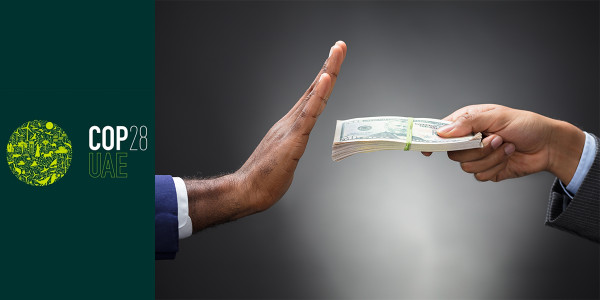
And now we witness the international community talking about aid for African countries as a substitute for our oil and gas activities. Western environmentalists argue that Africa should keep all of its petroleum resources in the ground to prevent further climate change. In exchange for that sacrifice, African nations would be compensated and inject that money into other opportunities like developing their sustainable energy technologies.

I've said it before, and I'll say it again: What a horrible idea!

I‘m offended by foreign stakeholders feeling that providing humanitarian assistance gives them the right to influence our domestic decisions. With Africa poised to participate in the worldwide energy transition, my fear is that international donors will feel justified to dictate Africa's policy regarding the lengths to which, and speed with which, our energy transition occurs. This would be a huge step backward in our energy, economic, and even individual independence.

Aid packages to incentivize giving up our oil and gas operations will be detrimental to Africans. Because let's be honest: History has shown that this assistance could never replace the oil and gas industry's ability to create jobs and business opportunities, grow local capacity, open the door to technology sharing, facilitate economic growth, and alleviate energy poverty.

Instead of continuing a pattern that clearly does more harm than good, why aren't African nations encouraged to leverage the wealth of resources at our feet?

During the final few days of COP28 — and beyond — the AEC is determined to make a case for African nations harnessing their oil and gas solutions to help themselves. We will not be bullied, or manipulated with aid, into a path that is not in our best interests.

Use What We Have!

One reason why the AEC is an outspoken advocate for Africa's oil and gas industry is because it represents more than big revenue for African governments. It is a free-market solution that creates pathways for Africans to help themselves. And, ultimately, empowering Africans is our number one goal.

We endorse an energy mix approach that allows Africa to use and sell our own hydrocarbon reserves to alleviate energy poverty, while at the same time moving toward a future in which renewable energy sources power the continent. The energy mix method can help more people more quickly because it takes a practical, people-first approach to helping those who have traditionally been left behind by the energy sector, while moving us toward greener energy sources.

Natural gas, in particular, can transform African lives and communities. Its potential benefits range from eradicating energy poverty to allowing Africans to develop skills for good jobs to creating hope for our youth.

Ramping up gas production to help alleviate the lack of access to electricity will create thousands of new employment opportunities in Africa. In addition, the new sources of energy can be exported to Western countries to replace Russian energy. Then, as Europe transitions to sustainable energy, a larger portion of Africa's natural gas can power domestic needs. By the time other countries complete their transitions to carbon-neutral sources, Africa will have a much more expansive and reliable grid system, which will allow for an easier transition.

And before we argue about the evils of hydrocarbons, let me point out that, although it might seem counterintuitive, it is possible for Africa to make use of its abundant fossil fuels while moving toward a future sustained by renewable energy sources. In fact, I believe that African nations must do everything they can to ensure that these two things work in tandem. Considering that 600 million people on the continent have no access to electricity and 900 million people lack access to clean cooking technologies, it's impossible — if not altogether inhumane — to discuss climate change without looking at energy poverty.

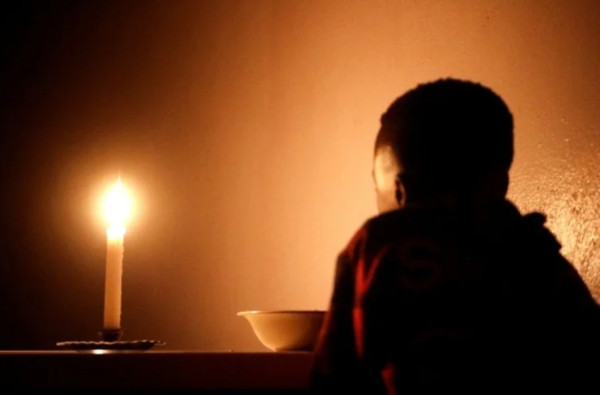
As I recently wrote in an article published by Medium, we cannot transition from the dark to the dark. We must deliver energy to the people of Africa and then worry about transitioning to environmentally friendly alternatives, just like we have everywhere else in the world.

This has been our platform at COP28, and we will continue to stand by it in 2024 and beyond.

Distributed by APO Group on behalf of African Energy Chamber.

Media files
African Energy Chamber
Download logo
Read moreAs Conference of the Parties (COP28) Wraps Up, We Must Remember, Aid to Africa Is (Still!) Not the Retort
9 December 2023

Cricket South Africa Celebrates ‘SA’s Remarkable Summer Of Cricket’ With Youth Tournaments

Location: Sport

JOHANNESBURG: As the nation looks forward to the upcoming India tour, Cricket South Africa (CSA) is proudly hosting a range of...

Read moreCricket South Africa Celebrates ‘SA’s Remarkable Summer Of Cricket’ With Youth Tournaments
8 December 2023

Exploring the Rise in Olive Oil Prices

Location: MyPR

Olive cultivation and processing to produce Extra Virgin Olive Oil (EVOO) is a capital-intensive process and therefore carries a price premium, but recent market dynamics have seen substantial spike in olive oil prices, affecting various olive oil categories, from high-end extra virgins to everyday blends. Let’s take a closer look at what has shaped these …

Read moreExploring the Rise in Olive Oil Prices
8 December 2023

eXp Luxury Launches in Australia, Recent Zealand, South Africa and the United Kingdom

Location: MyPR

eXp Realty, “the most agent-centric real estate brokerage on the planet™” and a core subsidiary of eXp World Holdings, Inc. (Nasdaq: EXPI), proudly announces the continued expansion of its luxury real estate program, eXp Luxury, into the dynamic international markets of Australia, New Zealand, South Africa and the United Kingdom. Andrew Thompson, Director and Country …

Read moreeXp Luxury Launches in Australia, Recent Zealand, South Africa and the United Kingdom
8 December 2023

Cape Town is the second round of HSBC SVNS 2024, featuring the top 12 men’s and 12 women’s teams in the world

Location: Sport
World Rugby

The stage is set for HSBC SVNS Cape Town on 9-10 December at DHL Stadium as the world's best 12 men's and women's rugby sevens teams are ready to showcase their incredible talents on the pitch.

Meanwhile a huge entertainment line-up, including live music, mass- participation sports activities and food from around the globe will create a vibrant festival experience for fans to enjoy off the pitch as the reinvigorated HSBC SVNS aims to take the Olympic sport to the next level.

On Wednesday the captains enjoyed a taste of Cape Town at the Oranjezicht City Farm Market in the shadows of the famous stadium, which hosted Rugby World Cup Sevens 2022.

An exciting new era for rugby sevens began in Dubai on 2-3 December as the highly anticipated HSBC SVNS 2024 kicked off with South Africa men and Australia women taking victory in the opening round to lead the early standings.

VIEW POOLS AND MATCH SCHEDULE: https://apo-opa.co/41flRrj

The HSBC SVNS CPT action kicks off at 09:00 local time (GMT+2) on Saturday with the pool matches. Day two begins at 09:00 on Sunday with the quarter-finals and culminates with the women's gold medal final at 18:43, followed by the men's final at 19:23 local time. Tickets are available from R150 at Ticketmaster.

With the number of teams reduced from 16 to 12 in the men's event this year the competition will be intense from start to finish.

South Africa's hugely popular Blitzboks will play Ireland, USA and Great Britain in men's Pool A. Last season's runners-up Argentina face double Olympic champions Fiji alongside France and Spain in Pool B. Pool C sees reigning SVNS champions New Zealand take on Samoa, Australia and Canada.

South Africa men's captain Selvyn Davids said: “We thought we had a tough pool in Dubai and how close it was indeed. Our ‘reward' is yet another one this weekend and that is the beauty of this new format. Not only does every match count, the reality is that you could be defeated by any of the 12 teams if you are even slightly off your game.

“The Cape Town crowd has been a faithful one for us and it has been a while for them to celebrate a win. We have this opportunity now to give them another title. The Springboks showed the way in France, now we have a chance to make good as well.”

In the women's competition, Australia will start Pool A in confident mood following their victory in Dubai last weekend and they will come up against Fiji, Japan and Spain. Pool B sees the current SVNS title holders New Zealand together with Ireland, Brazil and Great Britain. France were impressive bronze medallists in Dubai and they will take on Canada, USA and the hosts South Africa who were promoted from the Challenger last season and will be looking to make their mark on home turf in Pool C.

South Africa women's co-captain Mathrin Simmers said: “It feels different for a number of reasons. We are at home of course and that always creates a special buzz. The fact that I missed last year's tournament through injury adds to my excitement to play.

“The real anticipation for us, going into the second tournament as the newcomers onto the series, is to see if we can back up on what we did in Dubai last week. The squad felt good about the fact that we landed on our feet in the series, took some great teams to the wire and got our first win for the season. How excited that we now get another opportunity to do it all over again.”

The competition format replicates the Olympic model and sees the top two teams from each pool, plus the best two third-placed teams qualify for the quarter-finals from where it is knockout rugby.

VIEW HSBC SVNS 2024 CALENDAR: https://www.SVNS.com/en

World Rugby's revamped and rebranded global celebration of rugby sevens is taking place across eight iconic destinations and is set to supercharge the sport's global appeal.

The new-look HSBC SVNS 2024 features seven regular season events – in Dubai, Cape Town, Perth, Vancouver, Los Angeles, Hong Kong and Singapore – before the Grand Final in Madrid. The top eight placed teams based on cumulative series points after seven events will compete in the new ‘winner-takes-all' Grand Final, where the women's and men's champions will be crowned.

Madrid will also play host to the high stakes relegation play-off competition where teams ranked ninth to 12th will join the top four teams from the World Rugby HSBC Sevens Challenger, with the top four placed teams securing their place on HSBC SVNS 2025.

The reimagined competition model means fans can expect even more excitement, entertainment and nail-biting jeopardy. And with the clock counting down until rugby sevens kicks off the Olympic Games in Paris on 24 July, 2024, the action will be hotter than ever on and off the pitch.

In line with World Rugby's commitment to grow the women's game, all HSBC SVNS events will see men's and women's teams sharing the platform equally to showcase their incredible strength, speed and skill on the biggest stages around the world.

Welcoming the teams and fans to Cape Town, Geordin Hill-Lewis, Executive Mayor of Cape Town said: “To all the players, coaching and management teams and, most importantly, the thousands of traveling fans who have made their way to Cape Town for the HSBC SVNS CPT, I wish you a very warm welcome to the Mother City.

“Sevens and Cape Town have a wonderful decade-old relationship, with our city putting on a show every year that must surely rank among the highlights of the season. For us, the annual SVNS tournament is one of the most important events on our calendar as the world tunes in to Cape Town during a magical time of the year and sees our city at its very best. We are ready to put on our best SVNS party yet, and our iconic DHL Stadium with its brand new pitch, is going to set a standard in this competition that will not easily be matched.”

WHERE TO WATCH: https://apo-opa.co/3Gz7XH6

Fans can watch the HSBC SVNS action wherever you are in the world, either via broadcaster partners or online on RugbyPass TV. All matches taking place on pitch two in Cape Town will be live streamed on RugbyPass TV.

Distributed by APO Group on behalf of World Rugby.

Media files
World Rugby
Download logo
Read moreCape Town is the second round of HSBC SVNS 2024, featuring the top 12 men’s and 12 women’s teams in the world
7 December 2023

Do As We Say, Not as We Do: Wealthy Nations’ Expectations for Africa

Location: News
African Energy Chamber

By NJ Ayuk, Executive Chairman, African Energy Chamber (http://www.EnergyChamber.org)

When examining how fossil fuel exploration, production, and usage differ between African and more developed nations, the contrast is so stark that it essentially defines the core mission of the African Energy Chamber (AEC). We exist not to bring these rates on par with each other but to amplify Africa's standing in the global energy industry such that it results in massive improvements in the quality of life across the continent.

Consider this: While Africa holds roughly 13% of global natural gas stores and 7% of its oil, when it comes to per capita use of these hydrocarbons for energy, Africa's consumption rate is the world's lowest.

Or this: While we're under pressure to adopt renewable energy resources, Africa already relies on renewables more than any other continent, but this refers to the wood and cow dung that fuel the cooking fires, which account for essentially half of Africa's energy consumption. Of course, both are linked to hazardous indoor air quality, adding to the already long list of vexing issues that many Africans must deal with daily.

In total, nearly one billion Africans have no access to clean cooking fuels. Another 600 million, with a majority living in the sub-Saharan regions, survive without access to electricity from any source.

Africa deserves relief from such difficulties.

As much as the African people stand to benefit from access to their own fossil-fuel resources, Africa's hydrocarbon-bearing nations possess a vast wealth they're willing and ready to share with the world. The prospect of forging development partnerships with foreign nations and international oil companies would offer much of Africa a path toward modernization, advancement, and prosperity while at the same time providing much-needed energy security to its business allies abroad.

We've been waiting for Africa to take its place alongside the equally resource-rich yet developed regions of the globe for far too long. However, Africa's readiness for this overdue transformation comes at a strange time in modern history. Just as we've observed increases in GDP per capita and average life expectancy parallel the proliferation of fossil fuels, we've also seen the rise of a small but vocal and influential minority that has set out to obstruct their continued extraction.

Activists and ill-informed ideologues mainly comprise this opposing faction. And either knowingly or as a result of having been taken in by false promises, they propose alternative energy solutions which are still far too expensive for Africa to implement effectively.

Africa needs affordable, readily available energy, but this group has steadily garnered sway over individuals, financial institutions, and world governments, convincing them that, for the sake of the planet's health, Africa's untapped resources must indefinitely remain right where they are today.

Over the years, these activists brought many to their side, ratifying their intentions through measures like the Paris Agreement of 2015 and the Glasgow Climate Pact of 2021 that require signatories to commit to green energy initiatives at home and abroad.

This movement proved effective in achieving its own goals and was allowed to carry on with its agenda unimpeded for many years. However, recent global events have rather suddenly forced both participants and onlookers to reconsider the merits of its claims and the value of any allegiance to it.

Eastern Aggression, Western Hypocrisy

When then-U.S. President Donald Trump, speaking before the United Nations General Assembly in 2018, warned Germany against their dependence on Russian energy, the German delegation in attendance famously snickered at his concerns. After Russia's invasion of Ukraine in 2022, the European Union's sanctions against the Russian energy sector that followed, and the subsequent sabotage of the Nord Stream pipelines, Trump's remarks appear more prescient in retrospect than they did at the time.

The war in Ukraine and the supply chain disruptions and fuel price spikes it induced sent world leaders scrambling to secure new energy sources for their countries.

Spring 2022 saw a frenzy of energy industry activity as Italy's foreign minister brokered new liquid natural gas (LNG) deals with Angola and the Congo, Germany engaged in gas talks with Senegal, and the energy ministers of Algeria, Niger, and Nigeria pledged to accelerate their work on the long-delayed Trans-Saharan gas pipeline project.

Even President Joe Biden, who notably vowed to end the United States' involvement with fossil fuels during his campaign, reached out to Saudi Arabia, urging the nation to increase oil production.

Coal: Don't Call It a Comeback

The 2021-2023 global energy crisis also led many nations to continue or increase their reliance on coal — the fossil fuel even conventional oil and gas companies are quick to disparage due to its negative impacts on human health and its history of environmental harm.

With their own power generation capacities in peril thanks to war shortages, below-average winter temperatures, overcast skies, and a wind drought that still threatens to starve turbines across Europe, the countries often most critical of Africa's modernization ambitions rushed to refill their stores of the very fuel they had scheduled for phase-out years before.

According to the International Energy Agency's mid-year Coal Market Update, global coal consumption grew by 3.3% in 2022, reaching an all-time high of 8.3 billion tons. While 2023 and 2024 might show a slight decrease in coal-fired power generation, the 1.5% rise in industrial coal use expected with improving economic conditions during the same period will likely negate this drop.

Putting a pause on an initiative begun in 2015 to shutter all its coal-fired power stations, the United Kingdom relaxed permitting conditions in July 2022, keeping its remaining plants operational albeit on standby into 2024.     

Around this same time, the EU imported roughly 11 times more coal than usual from Australia, South Africa, and Indonesia.

In August of 2023, in a move highlighted by opponents of the green agenda, German energy firm RWE began dismantling its wind farm in North Rhine-Westphalia to allow for the expansion of its Garzweiler II lignite coal mine.

Had these nations engaged in more earnest development negotiations with African oil and gas producers when we suggested they should, perhaps they would have found a better footing for dealing with unforeseen climate-related events, natural or political.

Gas Gets the Greenlight

In a move that helped to lessen the stigma cast upon a fuel much cleaner burning than coal, the EU voted in 2022 to officially recognize natural gas as a “green” or “sustainable” energy source. Unsurprisingly, this decision angered environmental activists. At the AEC, though, we support this development; we regard natural gas as crucial to Africa's battle against energy poverty and key to its future success as a sizeable supplier for the international market.

While the EU was at one point one of the loudest voices calling for full-scale decarbonization, we applaud this concession as this more positive classification will likely encourage European investment in African natural gas projects. And, as the AEC has always suggested, it will support our eventual transition to an emissions-free, fully renewables-based energy economy.

Our critics breathlessly warn us that future price drops could render African natural gas suppliers unable to compete against larger, established producers. Naysayers suggest that renewable energy technology will get up to speed and become widely adopted before any new African natural gas outfits can get underway. While these cynics regard oil and gas as merely trends in danger of falling out of fashion by next season, we remain confident that we are on the best course for Africa's future.

And while the wealthy, developed nations of the world have much to say about appropriate energy solutions for Africa, even as they flout the rules they've set for their own, we know we are in pursuit of the most beneficial gains for our people.

Just as the fuels that supported humanity progressed from wood to coal to oil as economies and technological needs evolved, so too will Africa's — naturally, and never as a consequence of dictated policy.

Distributed by APO Group on behalf of African Energy Chamber.

Media files
African Energy Chamber
Download logo
Read moreDo As We Say, Not as We Do: Wealthy Nations’ Expectations for Africa
7 December 2023

Destination… Summer! KZN South Coast anticipates a bumper festive season

Location: MyPR

Boasting the highest number of Blue Flag beaches in KZN, as well as being the chosen site for the launch of this year’s KZN Summer Campaign, the KZN South Coast is on track to welcome an influx of holidaymakers looking to beat the summer heat this festive season. “We saw a surge in tourism numbers …

Read moreDestination… Summer! KZN South Coast anticipates a bumper festive season
7 December 2023

Hundreds of women farm workers march to Paarl police station

Location: News

Among the demands is that police in the Cape Winelands be trained on how to properly handle GBV cases

Read moreHundreds of women farm workers march to Paarl police station
6 December 2023

The Absa RUSH YOUR CITY campaign wins the Active and Wellness Award at the 2023 Sports Industry Awards

Location: MyPR

Johannesburg, 6 December 2023 – Proudly African bank, Absa, is pleased to announce that the 2023 Absa RUN YOUR CITY campaign, titled Together, we can do more, Siyabangena has won the Active and Wellness Award at the recent 2023 Sports Industry Awards. The campaign encouraged Absa colleagues, customers and community members to be an active …

Read moreThe Absa RUSH YOUR CITY campaign wins the Active and Wellness Award at the 2023 Sports Industry Awards
5 December 2023

‘Tis the sea-sun for outdoor adventures on the KZN South Coast

Location: Entertainment, MyPR

The holiday season is around the corner, and with the warmer weather enticing everyone outdoors, the KZN South Coast is: Destination…summer! There are endless outdoor adventures for the whole family to enjoy from the sea to the sky! “Adventure tourism and nature-based experiences are top of the list for many visitors, and we’re so fortunate …

Read more‘Tis the sea-sun for outdoor adventures on the KZN South Coast
4 December 2023

Class of 2023 urged to celebrate responsibly

Location: News

Class of 2023 urged to celebrate responsibly

As the Class of 2023 nudges closer to finishing their National Senior Certificate (NSC) examinations, Basic Education Minister Angie Motshekga has urged learners to stay safe and act responsibly in their celebratory moments. 

The Minister said this when she briefed the media on Sunday in Pretoria.

This week marks the final week of exams with only six NSC papers left to write.

“Now that the Class of 2023 is about to finish writing, we urge them to be safe. This may mark the end of the 12 years that you spent in the basic education sector; however, it is certainly not the end. Many of you are gathering in various places to celebrate the end of exams. As you do so, I urge you to act responsibly,” the Minister said. 

Motshekga said the department noted with great concern that learners were hosting and attending “pens down” parties.  

“What is clear is that as much as this time is cause for celebrating, hundreds of our youth are overindulging in alcohol, binge drinking, and even finding themselves in trouble with the law.  

“You may have turned 18 years of age and therefore reached the legal age to consume alcohol but you must understand that adulthood comes with lifelong responsibilities,” she said. 

The Minister said the Gauteng Liquor Board has highlighted the dangers of overindulgence in drinking alcohol. This is in addition to the call to retailers to refrain from selling alcohol to underage children.

She said the department hopes to see more of these efforts across the country.

“May we always remember the tragedy of Enyobeni Tavern in the Eastern Cape, and many other such events, where the lives of young people were cut short, in incidents that could have easily been avoided.

“We urge parents, to know where your children are, with whom they are, and what they are doing. We need them back in 2024, as they continue with their education journey,” she said. 

Rewrites

There will be rewriting opportunities for candidates who experienced technical challenges during the writing of Computer Applications Technology (CAT) Paper 1 in five provincial education departments and Information Technology Paper 1 in one provincial education department and those who could not complete due to load shedding. 

This also includes Tourism Practical Assessment Task (PAT): 19 candidates in the Northern Cape and 32 candidates in the North West.

The Computer Applications Technology (CAT) Paper 1 and Information Technology Paper 1 will be written in the morning of 6 December 2023.

Tourism Practical Assessment Task (PAT) Paper 1 will be written in the afternoon on 6 December 2023

Tourism Practical Assessment Task (PAT) Paper 2 will be written in the morning of 7 December 2023.

The Minister announced the matric results announcement will take place on 18 January and the provincial release will take place on 19 January.

The department, she said, is confident that the all-important marking process, capture of results, standardisation, resulting and release of results will proceed according to plan. – SAnews.gov.za

DikelediM
Mon, 12/04/2023 - 13:43

104 views
Read moreClass of 2023 urged to celebrate responsibly
4 December 2023

Introducing Murky Fusion: The Future of Smart Contracts and Tokens on Bitcoin

Location: MyPR

Dark Fusion Technologies, the company behind the Simple Contract Language (SCL), has made groundbreaking progress in the race to develop smart contracts and tokens on Bitcoin’s Layer 1, becoming one of the first projects to accomplish this incredible feat. This revolutionary development holds massive potential for the tech industry and various customers & institutions alike, …

Read moreIntroducing Murky Fusion: The Future of Smart Contracts and Tokens on Bitcoin
4 December 2023

South Africa men and Australia women claimed the first titles of HSBC SVNS 2024 with victory in Dubai

Location: Sport
World Rugby

South Africa's Blitzboks overcame a spirited Argentina 12-7 to lift their fifth straight Emirates Dubai 7s trophy – equaling the record for successive titles at a single location. Although Argentina had to settle for silver it represented their best ever result in Dubai.

Interview of the Captain of South Africa is available for media to download and use for free, without authorization: https://apo-opa.co/49YdpRv

Watch the video B-roll: https://apo-opa.co/3GsZtBp

The women's final was another epic encounter between the top two teams in the world. In a replay of last years final, Australia overcame their arch rivals 26-19 to end New Zealand's winning run on 41 matches, which spanned since their loss in the Dubai final last year.

Teagan Levi touched down either side of halftime as Australia ended New Zealand's 41-match winning streak to claim their fourth consecutive title in Dubai, as the HSBC SVNS 2024 got off to an electric start.

Not to be overshadowed by her younger sister, Maddison Levi broke her own tournament try record, her 12th try of the weekend in the 13th minute was the decisive one.

The match kicked off at an astonishing speed – and did not let up. Bienne Tarita scored the opening try with just 23 seconds on the clock to set Australia on the road to the title in the 23rd final meeting between the two sides.

But the Black Ferns Sevens made it difficult for the champions. Jorja Miller touched down twice in the first five minutes en route to a hat-trick in a losing cause, before Maddison Levi settled the tournament in the closing minutes.

Australia's captain Charlotte Caslick had only praise for the younger Levi. “She's unbelievable. She's had an amazing pre-season so we're all just getting to see the hard work that she's done this year.”

And she explained the game plan for becoming the first team to beat New Zealand since last year's final in Dubai: “We wanted to hold the ball as much as possible because we know when they touch it they're dangerous. That was key for us – restarts and holding on to the ball.

“We love coming to Dubai, we love the fans here, playing in front of you guys. It's a great team and we're so proud of them. We worked really hard for this, so it's really special for us.”

New Zealand's passage to the final saw them beat Brazil 26-14 in the quarter-final before overcoming Canada 21-19 in a nail-biting finish the an exhilarating match.

Australia began the day with a convincing 32-5 quarter-final win over USA before running out 21-14 winners over France in a high quality semi-final.

Canada missed out on their first medal since winning silver in Sydney in 2020 as they were well beaten 26-5 by France who claimed the bronze medal and put in a strong performance throughout the weekend with the returning Anne-Cécile Ciofani contributing to building excitement ahead of the Olympic Games in Paris next July.

The men's final was a tense affair as South Africa narrowly overcame Argentina 12-7. Impi Visser had already crossed for the Blitzboks when Shilton van Wyk, player of the final in 2022, went over in the fifth minute to take the score to 12-0.

Argentina's Matias Osadczuk cut the deficit to five points early in the second half, after Ryan Oosthuizen was yellow carded for a dangerous tackle.

Rosko Specman came within inches of a spectacular score, but lost the ball – and ploughed into a steward – in the corner, as South Africa held off the Argentinian fightback.

With the series heading to South Africa next week, their run to the title in Dubai could not have come at a better time. Fans will be hoping they can go back to back in Cape Town next weekend.

South Africa's acting head coach Philip Snyman hailed his squad's, "amazing performances throughout the weekend".

“We said we wanted to leave everything on the field,” he said. “It doesn't matter what happens with the result – we want to look each other in the eye and have smiles on our faces. Even with the yellow card tonight, they really played each other, they played for their jersey and they restored the pride in the Springbok Sevens jersey.”

South Africa started the day strongly with a 24-7 quarter-final defeat of Australia, before overcoming Fiji 14-7 in an intense semi-final.

Argentina overcame Samoa 21-14 in the quarter-final before narrowly beating New Zealand's All Blacks Sevens 21-19 in a pulsating semi-final.

New Zealand recovered from the disappointment of their semi-final defeat to take home the bronze medals with a 17-12 victory over Fiji.

The pool draw for the next round of HSBC SVNS in Cape Town on 9-10 December took place on the pitch in Dubai following the end of play and produced some exciting match-ups as fans can now look ahead and get excited to welcoming world class rugby sevens back to the Mother City.

Women's Pool A: Australia, Fiji, Japan, Spain. Pool B: New Zealand, Ireland, Brazil, Great Britain. Pool C: France, Canada, USA, South Africa.

Men's Pool A: South Africa, Ireland, USA, Great Britain. Pool B: Argentina, Fiji, France, Spain. Pool C: New Zealand, Samoa, Australia, Canada.

Fans are encouraged not to miss the two-day extravaganza with incredible food, fitness, non-stop music including live music acts from DJ Zinhle, Jack Parow, Sun El-Musician and more, alongside the world class rugby sevens action. Tickets are available from only R150 at Ticketmaster.co.za.

The HSBC SVNS 2024 is set to supercharge the sport's global appeal and is taking place across eight iconic destinations. The new look HSBC SVNS 2024 features seven regular season events – in Dubai, Cape Town, Perth, Vancouver, Los Angeles, Hong Kong and Singapore - before the Grand Final in Madrid.

The top eight placed teams based on cumulative series points after seven events will compete in the new ‘winner takes all' Grand Final, where the women's and men's champions will be crowned.

Madrid will also play host to the high stakes relegation play-off competition where teams ranked ninth to 12th will join the top four teams from the World Rugby Sevens Challenger, with the top four placed teams securing their place on HSBC SVNS 2025.

The reimagined competition model means fans can expect even more excitement, entertainment and nail-biting jeopardy. And with the clock counting down until rugby sevens kicks off the Olympic Games in Paris on 24 July 2024, the action will be hotter than ever on and off the pitch.

In line with World Rugby's commitment to grow the women's game, all HSBC SVNS events will see men's and women's teams sharing the platform equally to showcase their incredible strength, speed and skill on the biggest stages around the world.

HSBC SVNS events deliver the ultimate in immersive experiences, a unique festival of sport, entertainment, music, culture and cuisine alongside the world's best men's and women's athletes set against the spectacular backdrops of some of the most stunning locations around the globe.

Distributed by APO Group on behalf of World Rugby.

Media files
World Rugby
Download logo
Read moreSouth Africa men and Australia women claimed the first titles of HSBC SVNS 2024 with victory in Dubai
  • Previous
  • Page 1
  • Interim pages omitted …
  • Page 58
  • Page 59
  • Page 60
  • Page 61
  • Page 62
  • Page 63
  • Next

Copyright © 2026 · MyZA · All Rights Reserved · Powered by Stratlec Online