Social Grants Go Unpaid as Beneficiaries Struggle With SASSA’s System
Activists say they get dozens of complaints weekly about the online verification process

MyZA
News, Directory, Events and Other Stuff
Activists say they get dozens of complaints weekly about the online verification process
Subsidies still not being paid on time in KwaZulu-Natal
Fix our flats, protesters tell municipality
GOOD Speech by Patricia de Lille,GOOD Leader & Minister of Tourism 11 June 2025 Note to editor: This speech was delivered by GOOD Leader Patricia de Lille, during today’s consideration of the 2025 Fiscal Framework and Revenue Proposal This fiscal framework, the third iteration of Budget 2025, reflects both progress and a painful compromise. While […]
The post BUDGET 3.0: A WARNING LIGHT, NOT A VICTORY LAP appeared first on For Good.
Dunoon children get a safe playground at last
The Freedom Front Plus (VF Plus) yesterday emphasised in the North West Legislature during debates on the high unemployment rate and water crisis affecting residents that these issues are a direct consequence of poor ANC governance and trite policies. At present, North West has by far the highest unemployment rate in South Africa – it […]
The post ANC destroys job opportunities, infrastructure and jeopardises water supply in North West appeared first on Freedom Front Plus.
SERI has sent a letter of demand to the City over container removals
At the current rate, they will be extinct in the wild by 2035. Scientists are hopeful that protecting their food supply will reverse their decline
A failure to provide safe and dignified hostel conditions for learners with disabilities is widespread in South Africa, the organisation says
(Parliamentary debate: assessing state response and policy gaps in addressing rural safety and food security in South Africa) Farm murders are a serious problem in South Africa and cannot be ignored. The memorial wall at Nampo, bearing the names of over 2 800 murdered farmers, is a heartbreaking testament to this. To understand the context […]
The post Every farm murder a loss for the South African economy appeared first on Freedom Front Plus.
About one in five people in rural Lesotho face food insecurity
This morning at the South African Bee Industry Organisation, the Freedom Front Plus (VF Plus) in Gauteng emphasised that comprehensive steps should be taken to protect bees. The party was one of the guest speakers at BEECON’s 2025 Conference in Centurion, Pretoria. Conference attendees were reminded that the cultivation of approximately one-third of all food […]
The post Government should do more to protect bees, which are essential for survival appeared first on Freedom Front Plus.
Department of Social Development says there were “payment system challenges” and some organisations are non-compliant
Workers also want uniforms and overtime pay
Hundreds of evacuated Zimbabweans are staying in a church hall
Black Sash argues they are a vital safety net but economist questions their viability
Union Against Hunger shines light on the right to food

As the United States imposes higher tariffs with global ramifications, African Development Bank Group (www.AfDB.org) President Dr. Akinwumi Adesina has warned that these measures could trigger significant economic disruptions across Africa, affecting numerous nations and accelerating a strategic shift in global partnerships.
In an exclusive interview with CNN's Christiane Amanpour, Dr Adesina revealed that 47 of Africa's 54 countries will be impacted directly by the new U.S. trade policies, with potential declines in export revenues and foreign exchange reserves.
“When those currencies weaken, two things will happen: first, you will find that most of these countries are import-dependent. So, you're going to find that high inflation becomes a problem,” said Adesina. “And secondly, you find that the cost of actually servicing a lot of their debt, which is foreign currency debt, but in local currencies, is going to get worse.”
Almost all African countries have been hit by higher tariffs announced by the Trump administration, with at least 22 nations facing up to a whopping 50 percent for almost all their products. Among the hardest hit countries are Lesotho, Madagascar, Mauritius, Botswana, Angola, Algeria, and South Africa.
The impacts of these higher tariffs are further exacerbated by significant cuts to USAID programs, which have already begun affecting access to essential medical supplies and humanitarian services in many countries, raising serious concerns about the future trajectory of U.S.-Africa relations.
Africa's Strategic Response
Despite the challenges, Adesina emphasized that Africa cannot afford a trade confrontation with the United States, noting that the continent accounts for only 1.2 percent (approximately $34 billion) of America's global trade—with a trade surplus of just $7.2 billion.
Instead, he proposed a pragmatic three-point strategy for the continent: Engage the U.S. through flexible and constructive trade negotiations, diversify export markets to reduce dependency on any single partner, and accelerate the African Continental Free Trade Area implementation to unlock the potential $3.4 trillion market.
He stressed the need to expand Africa's domestic market and boost domestic savings to develop consumption as a bigger share of its GDP, leveraging its massive population growth. More importantly, the continent must take advantage of the increasing external interest in its natural resources, such as cobalt and lithium, to negotiate a better trade and investment deal.
Addressing speculation that Africa may shift more decisively toward China in response to the higher U.S. tariffs, Adesina dismissed any notion of binary alignment. “U.S is a key ally of Africa—and so is China,” he stated. “Africa is building bridges, not isolating itself.”
He stressed that Africa seeks balanced, transparent, and mutually beneficial partnerships with all major global players, including the U.S., China, the European Union, and the Gulf states. “I think at the end of the day, we want to make sure that whatever deals that are being done with Africa are transparent, fair, equitable, and led by Africa and in Africa's interests,” Adesina reiterated.
Beyond Aid: Driving Africa's Self-Reliance
Dr. Adesina, who concludes his second and final term as president of the Bank in September, firmly rejected the long-standing paradigm of foreign aid dependency. “The era of aid as we've known it is completely gone,” he declared, calling instead for bold investments in domestic resource mobilization, infrastructure, and value-added industrialization.
He said aid must be turned into concessional financing to allow multilateral financial institutions like the African Development Bank to do more for the continent by mobilizing more private capital to develop and derisk projects.
While Africa represents nearly 20 percent of the global population and under three percent of global GDP, the Bank Group chief pointed to a resilient and transformative growth narrative: ten of the world's twenty fastest-growing economies are in Africa.
He highlighted flagship initiatives under the African Development Bank's “High 5” agenda that have impacted more than 565 million people through investments in power, food security, industrialization, regional integration, and initiatives to improve the quality of life of the people of Africa.
Over the past decade, the African Development Bank has invested more than $55 billion in infrastructure to bolster economic integration across Africa, alongside other critical investments to drive inclusive growth. It is by far the largest financier of infrastructure across Africa.
Adesina also cited the great potential of the Mission 300 project, a joint initiative by the World Bank and the African Development Bank to connect 300 million people in Africa to electricity by 2030. “Because without electricity, what can you do? You can't industrialize, you can't add value, you can't be competitive in the dark,” he said.
He highlighted the achievements of the Africa Investment Forum, launched in 2018 by the Bank and eight other partners, saying it has since mobilized more than $225 billion in investment interest to the continent. The Forum is a multi-stakeholder, multi-disciplinary platform that advances projects to bankable stages, raises capital, and accelerates deals to financial closure.
Adesina believes that despite its challenges, Africa is the largest greenfield investment destination in the world, and it remains “the investor's dream.”
“We got hydropower. We have a massive youth population that can become the labor force of the world. Sixty-five percent of the arable land left in the world to feed almost 9.5 billion people by 2050 is in Africa, so what Africa does with it will determine the future of food in the world,” he affirmed.
Distributed by APO Group on behalf of African Development Bank Group (AfDB).
Contact:
Communication and External Relations Department
media@afdb.org
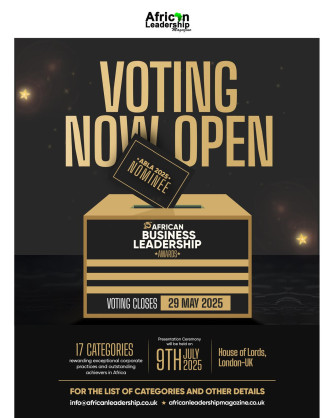
African Leadership Magazine (www.AfricanLeadershipMagazine.co.uk) proudly unveils the distinguished list of nominees for the 17 categories of the 2025 African Business Leadership Awards (ABLA)—a premier recognition platform celebrating excellence in corporate governance, impactful leadership, and trailblazing contributions to the growth and sustainability of Africa's dynamic business and economic ecosystem. The public voting process is now officially open and will run until 29 May 2025, offering stakeholders across Africa and the globe the opportunity to celebrate and affirm exemplary leadership in the African business space.
The ongoing public voting marks the third phase in a rigorous four-step, points-based selection process for the African Business Leadership Awards (ABLA). The process begins with open nominations, followed by a shortlist of top contenders curated by the African Leadership Magazine editorial board. In this third phase, the public is invited to vote, adding stakeholder voices to the evaluation process. The final stage involves a detailed editorial assessment of votes and supporting evidence to determine winners, ensuring a transparent, merit-based outcome that reflects both public sentiment and proven impact.
Public votes in this phase contribute 65% of the final decision, with the remaining 35% based on supporting evidence for each nominee. This ensures a fair and credible process that values both public opinion and verifiable impact. Winners and first runners-up will be honoured at the 15th African Business Leadership Awards (ABLA), a special highlight of the Africa Summit–London, scheduled for 9–10 July 2025 at the House of Lords, London, United Kingdom.
To cast your vote, visit:
The 2025 African Business Leadership Awards (BLA Nominee Highlights
African Business Leader of the Year
African Female Business Leader of the Year
African Regulator of the Year
Business-Friendly Governor of the Year
African Finance Minister of the Year
Trade & Investment Promotion Agency of the Year
Central Bank Governor of the Year
Trade & Investment Minister of the Year
African CEO of the Year
Young Business Leader of the Year
Africa CSR & Community Development Impact Award
African Brand of the Year
African Company of the Year
Industry Personality of the Year
Africa Business Integrity Leader Award
African Tech & Digital Economy Leader of the Year
Lifetime Achievement Award
Distributed by APO Group on behalf of African Leadership Magazine.
Media Enquiries:
Ehis Ayere
T: +44 (0) 20 3051 1883
E: ehis@africanleadership.co.uk
About African Leadership Magazine:
African Leadership Magazine is the flagship publication of the African Leadership Organisation (UK) Limited. For over 19 years, it has championed impactful leadership across Africa and amplified African opportunities on the global stage. Through its platforms—including Afro-positive content, trade facilitation, market entry solutions, public sector consulting, and business networking events—the magazine plays a pivotal role in fostering sustainable development and positive change across the continent.
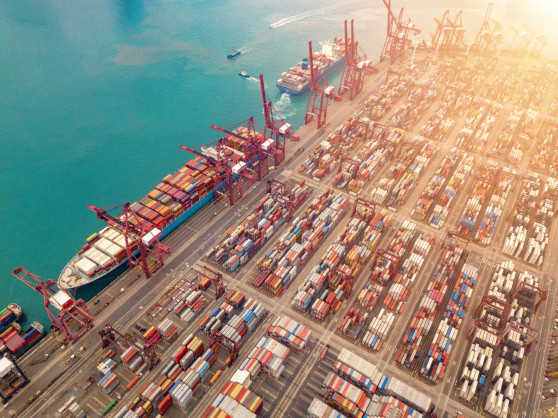
The future of African trade is digital, and it's unfolding. From Dakar to Durban, a quiet but steady transformation is taking shape. According to the United Nations Conference on Trade and Development (UNCTAD), global trade hit a record $33 trillion in 2024, with developing economies, including Africa, playing a growing role in that expansion.
The African Free Continental Trade Area offers the largest free market, including 55 countries, a population of 1.3 billion and a combined GDP of $3.4 trillion. The opportunities are vast, yet the strategies required for industrial players to source, move and manage raw materials and finished goods remain a challenge.
“The continent's digital economy is projected to reach $180 billion by 2025, up from $115 billion in 2020, thus contributing significantly to Africa's GDP, creating new job opportunities, and expanding regional trade. Digital trade is transforming the continent's economic landscape, creating new opportunities for real economic growth, productive job creation, and poverty reduction.” H.E. Dr Jumoke Oduwole, Minister, Federal Ministry of Industry, Trade & Investment
“Building on this rapid expansion, our focus must shift from isolated digital initiatives to a fully integrated ecosystem that streamlines every step of trade—sourcing, supplying, logistics and payments. By integrating these functionalities on a single platform, Matta enables manufacturers to navigate sourcing headaches and suppliers to manage cross-border complexities with confidence and unlocks new markets in Africa in real time. This holistic approach is what will transform digital trade's potential into tangible, inclusive economic growth across Africa.” Mudiaga Mowoe, Founder and Chief Executive Officer, Matta.
Launched to enable sustainable African economies, Matta's integrated ecosystem—today powered by the Matta digital marketplace (www.Matta.Trade) and the Flux logistics management tool, with Oxide Finance (Matta's upcoming trade-financing and cross-border payments platform) arriving soon—empowers manufacturers and suppliers across food & beverage, home & personal care, paints & coatings, agro-processing, automotive assembly, textiles, construction, and beyond with truly end-to-end sourcing, movement, and settlement. Rather than supplanting traditional trade networks, this unified platform amplifies human partnerships through real-time visibility, traceability, and seamless transactions.
This evolution in digital trade and industrial growth is one of the key conversations that will take centre stage at the West Africa Industrialisation, Manufacturing & Trade (West Africa IMT) Summit and Exhibition, set to take place from October 21-23, 2025. West Africa IMT is a high-level platform for government leaders, investors, manufacturers, and technology innovators to align practical solutions and policy frameworks for accelerating Africa's industrial transformation.
Matta, Africa's integrated ecosystem for industrial trade, will join other industry stakeholders across the continent at West Africa IMT 2025 to discuss the potential opportunities for industrial growth in the West African sub-region. As manufacturers increasingly seek more innovative, more efficient ways to power production beyond physical infrastructure and policy support, there's an urgent need for systems that simplify sourcing, enhance transparency, and ensure supply chain reliability. Matta addresses these challenges by connecting African manufacturers directly to verified suppliers of raw materials and commodities, ensuring business continuity in an environment where procurement bottlenecks often slow production timelines.
Digital platforms address multiple challenges simultaneously: procurement complexities, logistics coordination, payment processing, and data-based planning. By integrating these capabilities into industrial operations, West African economies can accelerate development timelines and establish competitive manufacturing centres that participate effectively in global markets.
As African nations chart independent economic paths, digital trade platforms like Matta will significantly influence how quickly and effectively new industrial capabilities develop. The transformation in African trade is already underway, with effects that will continue to reshape economic relationships for years to come.
West Africa Industrialisation, Manufacturing & Trade Summit & Exhibition
21-23 October 2025 I Landmark Centre | Lagos | Nigeria
Distributed by APO Group on behalf of dmg Nigeria events.
Contact Details:
Roshan Jan-Mahomed
Head of Marketing – Africa
Email: info@westafricaimt.com
www.WestAfricaIMT.com
About the West Africa Industrialisation, Manufacturing & Trade Summit and Exhibition 2025:
The Pre-eminent Global Gathering Driving West Africa's Industrial Revolution
The West Africa Industrialisation, Manufacturing and Trade (West Africa IMT) Summit and Exhibition will unite the industrialisation ecosystem, including energy, finance, infrastructure, manufacturing, raw materials, logistics/supply chain, technology, trade and security, to accelerate a sustainable industrial revolution for West Africa. As governments across the region have declared industrialisation as a key priority, the Strategic Summit will feature the visions from Heads of government seeking public–private partnerships to drive industrial revolution across the region. Decisive action is at the core of the agenda, providing solutions for sustainable resource valorisation and opening up trade pathways for economic development and prosperity.
Participation is expected from across the global industrialisation value chain including the following industries: Aerospace, Agriculture, Automotive, Chemicals, Construction, Energy & Utilities, FCMG, Heavy Industries, ICT & Electronics, Infrastructure, Logistics & Transportation, Machine & Equipment, Maritime, Medical, Mining, Plastics & Rubber, Pharmaceuticals, Retail, Technology Solution Providers, Textiles, Water & Utilities.
● 15+ African ministers
● 25+ countries represented from around the globe
● 70+ expert industry speakers
● 250+ exhibiting companies
● 500+ conference delegates
● 2,500+ attendees
About dmg Nigeria events:
dmg Nigeria events is a subsidiary of dmg events. dmg events is a wholly owned subsidiary of the Daily Mail and General Trust plc (DMGT), an international portfolio of information, media and events businesses.
DMGT manages a diverse, multinational portfolio of companies, with total revenues of around £1 billion, that provide businesses and consumers with compelling information, analysis, insight, events, news and entertainment. Its venture capital business, dmg ventures, holds minority stakes in early-stage businesses and focuses particularly on disruptive consumer media propositions.
Headquartered in Dubai, UAE since 1989 with offices in Canada, Egypt, Nigeria, Saudi Arabia, Singapore, South Africa, Thailand and the UK. dmg events is an international exhibition, conference and intelligence company, attracting more than 1,000,000 attendees to a portfolio of over 80 events each year.
This global portfolio works closely with key stakeholders across the industry to facilitate pragmatic dialogue, serving as a platform for the latest discussions at the forefront of change.
For more information on dmg events, visit: www.dmgevents.com
Minister Dion George, South Africa's Minister of Forestry, Fisheries and the Environment, has concluded an impactful participation at the Copenhagen Climate Ministerial in Denmark on 7-8 May 2025, reinforcing South Africa's commitment to a resilient, sustainable future. Representing the nation ahead of COP30 in Belém, Brazil, Minister Dion George championed South Africa's priorities, ensuring the voices of its people, wildlife, and ecosystems shape the global climate agenda.
The Ministerial was a critical platform to advance the Paris Agreement's 1.5°C target, with direct implications for South Africans. Climate change threatens livelihoods through droughts, floods, and rising temperatures, impacting food security, jobs in agriculture, fisheries, and forestry, and endangering iconic wildlife and vital marine resources. Minister Dion George's leadership secured progress on ambitious climate commitments that drive job creation, poverty reduction, and biodiversity conservation, embedding community and environmental upliftment. He advocated for a just transition, protecting workers in high-carbon sectors while unlocking opportunities in renewable energy and green technologies. Minister Dion George also championed increased climate finance for adaptation, including water infrastructure, climate-smart agriculture, and marine conservation, to improve daily life and protect ecosystems. From coastal communities to rural farms and wildlife reserves, South Africa promoted solutions to strengthen resilience against climate impacts.
These outcomes translate into tangible benefits: cleaner air, safer water, healthier oceans, and new jobs in green sectors. South Africa's engagement secured stronger global partnerships, clearer funding pathways, and renewed momentum to tackle climate change, empowering communities and safeguarding natural heritage.
Minister Dion George stated, “Our work in Copenhagen is a step toward a future where South Africans thrive in a low-carbon economy, with resilient communities and protected biodiversity. We will carry these engagements forward into the G20, ensuring our priorities continue to shape global climate action.”
South Africa returns from Copenhagen with commitments to advance its climate agenda, delivering resources, technology, and support for its people and environment. The nation is poised to build on this momentum at the G20 and beyond, driving a just and sustainable future for all.
Distributed by APO Group on behalf of Republic Of South Africa: Department of Forestry, Fisheries and the Environment.
Join us for a heartwarming Sunday filled with delicious food, community spirit, and giving back. The annual Nicarela Potjiekos Competition is back, and here’s what you need to know: Event Details: o Date: Sunday, July 27, 2025 o Time: Gates open at 9:30 AM o Venue: George Hay Park, Lurgan Road, Parkview What to Expect: …
