• Skip to main content
  • Skip to header right navigation
  • Skip to after header navigation
  • Skip to site footer
MyZA

MyZA

News, Directory, Events and Other Stuff

  • Social Media
  • Sport
  • World News
  • Home
  • Submit News
  • Directory
  • Events
  • Stratlec
  • TFSA
  • News
    • APO
    • Today’s Sport News
    • Todays Social Media and Tech Headlines
    • Today’s World News
    • Today’s SA Financial News
  • Contact
You are here: Home / Archives for Government

Government

18 August 2024

Government outlines further plans to commemorate Women’s Month 

Location: News

Government outlines further plans to commemorate Women’s Month 

Government departments will continue to host a variety of activities to commemorate Women’s Month.

On 9 August, South Africa commemorated Women’s Day in the Northern Cape under the theme: “Celebrating 30 years of democracy towards Women’s Development”.

READ | President Ramaphosa pays tribute to women

This follows the launch of Women’s Month on 31 July.

This year’s Women’s Month marks the 68th anniversary of the historic march of thousands of South African women from all walks of life to the Union Buildings in 1956. The march was in protest of the introduction of apartheid pass laws for Black women in 1952. 

“During Women’s Month, we celebrate women as active agents of change and social transformation. The commemoration also allows us to take stock of achievements and the challenges that remain while mobilising support for the further development of women,” the Government Communication and Information System (GCIS) said in a statement.

The GCIS believes this year’s Women’s Month marks an important juncture for collective reflection on how South Africa has empowered and advanced the rights of women over the past three decades. 

“We also celebrate 30 years of the Women’s Charter, which was established to drive equality.” 

Government said it will advance the Women’s Charter for Accelerated Development that was formulated in 2021 to accelerate economic reforms to unlock women’s economic progress. 

Several socio-economic empowerment programmes and events will take place during the month including a trade expo, fashion show, and social dialogues.

Advancing women

The Women Economic Assembly (Wenoca) will launch its research project findings on the ‘Economic Empowerment of Women in South Africa’s Property Sector’ at the University of South Africa (Unisa) in Pretoria.  

The Wecona study focuses on using evidence-based methods to explore and address the challenges faced by women in the property sector and sub-sectors and identifies opportunities for economic empowerment.

The Charlotte Mannya Maxeke Foundation and Freedom Park in promoting social cohesion and discussing issues that delay women’s empowerment as a threat to gender equality, will host a Women Inclusivity Dialogue. 

The dialogue will focus on assessing progress 30 years later and celebrating women's empowerment.
The session will also seek to find solutions to justice and equality for women led by women. 

Meanwhile, the Department of Transport will host an information-sharing session for Cross Border Women Operators, to increase the participation of women in the cross-border market leading to the transformation of the industry. It will also encourage them to consider other sectors within the cross-border market.

In addition, the Department of Mineral Resources will host a Women in Energy and Mining Symposium to share opportunities in the energy and mining sector for women and the youth. 

Youth initiatives 

On 12 August, the Department of Women, Youth and Persons with Disabilities (DWYPD) in partnership with the National Youth Development Agency launched the Job Shadowing Programme in all nine provinces through the respective Offices of the Premier. 

In addition, the Presidential Youth Employment Initiative (PYEI) first-quarter report was released last week. 
The PYEI is South Africa’s most comprehensive effort to address youth unemployment to enable more young people to move from learning to earning.

The GCIS said the PYEI is committed to addressing the gender gap in employment and a significant achievement of the intervention is that 70% of the opportunities have been secured by young women.

Women in law enforcement 

The South African National Defence Force (SANDF) Parade is the celebration of women in uniform supported by men in solidarity with the Women, Peace and Security Agenda and United Nations Security Council resolution 1325 on women, peace and security that was adopted by the United Nation (UN) Security Council on 31 October 2000. 

The resolutions acknowledge the disproportionated and unique impact of armed conflict on women and girls. 
In the Northern Cape, a provincial law enforcement parade will be held in Kuruman, to display a disciplinary approach which encourages service delivery in various sectors of government and further advocates the empowerment of women.

The South African Police Services (SAPS) has also started a campaign to highlight and celebrate women in the service who are behind major crime operations and also various fields within law enforcement such as forensics, crime intelligence and criminal investigations.

Public engagements and awareness campaigns 

Across provinces, various community dialogues and workshops will take place on gender-based violence and femicide (GBVF) initiatives. 

Government in partnership with civil society will hold the 3rd National Men’s Day Against GBVF which will be officiated by Deputy President Paul Mashatile and His Majesty the King Misuzulu kaZwelithini on 24 August 2024.

The event led by the Goodmen Foundation in partnership with DWYPD seeks to use this event to increase awareness about the impact of GBVF on society, educate citizens about gender equity and profile support available for survivors and facilitate healing. 

READ | President speaks out on gender-based violence

Women in transport 

The National Aviation Gender Summit (NAGS) 2024 themed: ‘Lift as we rise: The journey towards 2030!’ will examine the progress made by the South African civil aviation industry towards this goal. 
The summit will focus on addressing gender transformation gaps within the sector and emphasise the significance of mentorship in promoting gender equality.
The NAGS 2024 is targeting female aviation professionals and various industry representatives with responsibilities and a personal stake in issues of gender equality and diversity. 

Women in the public service 

Various provincial heads of departments and Directors-General with senior women managers will host the Public Service Women Management Week to evaluate and monitor progress on the implementation of women empowerment and gender equality programmes in departments.

“Ending the scourge of GBVF requires the efforts of government, private sector, civil society and every member of society. It is the responsibility of all South Africans to end the culture of silence around gender-based violence and protect the women and children.”

In elevating the fight against GBV in his 2024 State of the Nation Address (SONA), President Cyril Ramaphosa initiated the anti-GBV campaign, in which he called upon all South African men to unite to end GBV.

“Government continues to uphold its constitutional responsibility and national priority to protect, promote and advance the rights of women and persons with disabilities and the 2024 Women’s Month programme seeks to shine a spotlight on women in diverse fields and the strides made for advancing gender equity in the past 30 Years of Freedom and Democracy,” said the GCIS.

Further details on the events listed above as well as additional events are listed on the Women’s Month calendar which can be located at www.gov.za. – SAnews.gov.za

Gabisile
Sun, 08/18/2024 - 13:27
9 views
Read moreGovernment outlines further plans to commemorate Women’s Month 
18 August 2024

President Ramaphosa raises concern over rise of Mpox in AU region

Location: News

President Ramaphosa raises concern over rise of Mpox in AU region

President Cyril Ramaphosa  has expressed deep concern about the rapid spread of Mpox across the African Union (AU) region, as both cases and deaths continue to surge, reflecting a concerning shift in the epidemiological pattern.

The President was speaking in his role as the AU Champion on Pandemic Prevention, Preparedness, and Response (PPPR) regarding the Mpox outbreak.

“In my role as the AU Champion on PPPR, I have been closely monitoring the evolving Mpox situation, regularly briefed by the Director-General of Africa CDC and PPPR Commission,” he said in a statement on Saturday.

Since the start of 2024, he said 17 541 cases (2 822 confirmed and 14 719 suspected) and 517 deaths due to Mpox have been reported across 13 AU Member States. 

This week, three additional countries notified cases under investigation for confirmation, which brings the total to 16 countries. 

“Alarmingly, the number of reported cases in 2024 has surged by 160% compared to the same period in 2023.” 

Strengthening the response to Mpox

He said that he fully backs the Director-General of the Africa Centres for Disease Control and Prevention’s (Africa CDC) declaration of Mpox as a Public Health Emergency of Continental Security. 

“This crucial decision empowers Africa CDC to lead and coordinate our collective response efforts, strengthening the Mpox response at every level – from community engagement to collaboration with the highest political authorities and our international partners.” 

He believes that the declaration will also galvanise political leadership and engagement among AU Heads of State and Government, facilitating the rapid mobilisation of essential financial and technical resources. 

The President also commended the Permanent Representatives Committee for their decisive action in releasing US$ 10.4 million from the COVID-19 Fund to support the Mpox outbreak response. 

“I urge the AU policy organs to expedite the finalisation of the framework for operationalising the African Epidemic Fund, as approved by the Heads of State during the 2023 AU Assembly, by the end of August 2024.” 

The President has since called the AU Member States to increase domestic resource allocation, lead their national Mpox outbreak responses and enhance their capacities. 

These capabilities include building capacity, risk communication, community engagement, case detection, contact tracing, and cross-border surveillance. 

Public Health Emergency of International Concern

He also welcomed the World Health Organisation’s (WHO) declaration of Mpox as a Public Health Emergency of International Concern (PHEIC). 

READ | WHO declares mpox outbreaks in Africa a global health emergency

The WHO said the upsurge of Mpox in the Democratic Republic of the Congo (DRC) and a growing number of countries constitute a PHEIC under the International Health Regulations (IHR).

However, the President said this PHEIC “must be different and correct the unfair treatment from the previous one declared in 2022, where vaccines and therapeutics were developed and made available primarily to Western countries, with little support extended to Africa”.

President Ramaphosa has since called upon WHO and all partners to collaborate closely with Africa CDC to ensure that this PHEIC unlocks appropriate support from the international community, guaranteeing equitable access to medical countermeasures, including diagnostics, therapeutics, and vaccines. 

He also urged the international community, partners, and organisations to mobilise stockpiles of vaccines and other medical countermeasures for deployment in Africa, utilising the mechanisms established by Africa CDC to ensure equitable distribution, transparency, and coordination.

The President said Africa requires robust support in funding, research, and the sharing of technologies, with financial contributions directed to the Africa Epidemic Fund under the leadership of Africa CDC. 

Pandemic Agreement 

“This is also an opportunity to call on the international community to finalise a fair and equitable Pandemic Agreement – a duty that must be pursued with urgency and a spirit of equity. 

“By fostering global partnerships, we can accelerate Africa’s response and ensure that all nations, regardless of economic status, have fair access to the resources needed to protect their populations.”

As the AU Champion, he vowed to work closely with his esteemed colleagues to ensure adequate political support and fundraising for the continental response to mpox and to prevent a regional and global pandemic. – SAnews.gov.za

Gabisile
Sun, 08/18/2024 - 11:38

374 views
Read morePresident Ramaphosa raises concern over rise of Mpox in AU region
18 August 2024

Minister to Buthelezi to hand over title deeds to Etwatwa community 

Location: News

Minister to Buthelezi to hand over title deeds to Etwatwa community 

 Public Service and Administration Minister, Inkosi Mzamo Buthelezi, is expected to visit service delivery sites and hand over title deeds to residents of Etwatwa in the Ekurhuleni Metropolitan Municipality.

“This initiative is supported by various national, provincial, and local departments, aligning with the Presidential District Development Model (DDM) Imbizo scheduled for 23 August 2024,” said the Department of Public Service and Administration (DPSA) in a statement.

The Minister’s visit will take place on Tuesday, 20 August.

“On this day, community members will have access to essential services, including those offered by the Department of Home Affairs and the South African Social Security Agency (SASSA)," said the DPSA.

President Cyril Ramaphosa is expected to lead a Presidential District Development Model (DDM) Imbizo in Ekurhuleni in Gauteng on Friday.

The Presidential Imbizo will be the first to be held by the seventh administration. 

At a media briefing earlier this month, Presidential Spokesperson Vincent Magwenya who said the DDM was established to improve coordination and alignment between the different spheres of government. 

“This is an important initiative to improve planning, budgeting and implementation at a local level by bringing all spheres, departments and stakeholders together, towards uplifting our communities,” Magwenya said at the time. -SAnews.gov.za

Neo
Sun, 08/18/2024 - 12:43

0 views
Read moreMinister to Buthelezi to hand over title deeds to Etwatwa community 
18 August 2024

Department ends participation of CWP workers who receive old age grants

Location: News

Department ends participation of CWP workers who receive old age grants

The Department of Cooperative Governance (DCOG) has announced its decision to end the participation of Community Work Programme workers who also receive old age grants so as to redirect resources to those who rely solely on the programme for their livelihood.

According to the department, the decision comes after a thorough verification exercise conducted in collaboration with the South African Social Security Agency (SASSA).

“Cognisant that the programme is funded from the same fiscus as the old age grants disbursed by the SASSA, it is considered prudent to avert double dipping, by participants especially those who are above the age of 60 years. This will allow the department to redirect resources to those who rely solely on this programme for their livelihood.” 

The department believes that the exiting of participants who are already receiving stipends from government presents an opportunity to enrol more women, young people and people with disabilities. 

“Moreover, exiting beneficiaries of old age grants will also enable the programme to maximise on imparting tech-based and artisanal skills, particularly among the unemployed women and youth.”

The department stated that it has, through the implementing agents, engaged the affected participants and issued them with formal letters, notifying them of the decision.

The last working day for affected participants was on Friday, 16 August 2024, while the final stipend will be paid on 25 September 2024.

“The department is mindful of the impact this decision might have on the affected participants. However, it is confident that in the long run, it will optimise the programme’s effectiveness and sustainability.” 

Meanwhile, the department said it was committed to advancing poverty eradication and economic empowerment through community development, especially amongst the most vulnerable in society.  
The department has described the CWP as one of the transformative flagship strategies that respond directly to social security through active economic participation.

“It is important to note that CWP is a temporary employment safety net, premised on the principle of graduating participants from poverty to self-sustenance through skilling and community development. 
“The programme is designed to facilitate for temporary participant intake and sustainable socioeconomic exit paths.”

In efforts to enhance the impact of the programme, the DCOG has since adopted a smart partnership model in aid of sustainable exit strategies for participants.

“Additionally, the reimagined CWP aims to recruit youth as part of addressing unemployment and skills shortage amongst this cohort,” said the department. – SAnews.gov.za

Gabisile
Sun, 08/18/2024 - 10:12

124 views
Read moreDepartment ends participation of CWP workers who receive old age grants
18 August 2024

Securing Your Space: Modern Solutions for Safety and Protection

Location: MyPR

In today’s world, ensuring the security of both personal and professional spaces is paramount. Advancements in technology have brought forth a variety of doors and windows designed to offer maximum protection against threats. These security features are not just about physical barriers but also about peace of mind. Let’s explore some of the most effective …

Read moreSecuring Your Space: Modern Solutions for Safety and Protection
18 August 2024

President Ramaphosa to attend the 44th Ordinary Southern African Development Community (SADC) Summit in Zimbabwe

Location: News

The Presidency of the Republic of South Africa
Download logo

President Cyril Ramaphosa has this morning, 17 August 2024, arrived in Harare, in the Republic of Zimbabwe to attend the 44th Ordinary Summit of the Southern African Community (SADC) Heads of State and Government.

The 44th Ordinary Summit of SADC Heads of State and Government will take place today under the theme: “Promoting Innovation to unlock opportunities for sustained economic growth and development towards an Industrialised SADC”.

As South Africa commemorates the 30th Anniversary of its democracy and freedom, it will equally marks the 30th Anniversary of its membership and active participation in SADC, since it joined this regional body in August 1994.

The Summit will provide an opportunity for SADC leaders to assess and review progress made in terms of the region's flagship integration agenda, the Regional Indicative Strategic Development Plan (RISDP) 2020-2030, which is about promoting peace and security, good governance, socio-economic development and integration in the region.

The President will participate in discussions on the agenda of the Summit that include the Status of Member State Contributions; Regional Food and Nutrition Security, Status of health in the region, Implementation of the SADC Industrialisation Strategy and Roadmap as well as candidatures to continental and international organisations.

The President will also sign two SADC legal instruments; the SADC Declaration on Accelerating Action to End AIDS as a Public Health Threat in the Region by 2030 as well as the Agreement Amending the SADC Protocol on Gender and Development.

During the Summit, the Republic of Zimbabwe will assume the Chairpersonship of SADC, taking over from the Republic of Angola, which chaired SADC since the previous Summit held in Luanda, in August 2023.  

The Summit is preceded by the SADC Council of Ministers Meeting which took place from 13-14 August 2024.  

A SADC Organ Troika Summit was also held on 16 August 2024.

President Ramaphosa is supported by the Minister of International Relations and Cooperation, Mr Ronald Lamola and the Minister of Finance, Mr Enoch Godongwana.

Distributed by APO Group on behalf of The Presidency of the Republic of South Africa.

Read morePresident Ramaphosa to attend the 44th Ordinary Southern African Development Community (SADC) Summit in Zimbabwe
18 August 2024

A good day at the office for South African sport

Location: News

A good day at the office for South African sport

It has been a good weekend for South African sport.

In a social media post on X, President Cyril Ramaphosa congratulated mixed martial artist, Dricus Du Plessis, for retaining the United Fighting Championship (UFC) Middleweight title.

“Congratulations Dricus Du Plessis, on retaining your UFC middleweight world championship with a submission in #UFC305.

“As a bonus, you kept our Flag flying hours after the Springboks scored an historic a 2-0 series win in Perth as well. We couldn’t wish for a better day in the office,” the President said on Sunday.

This as Du Plessis defeated Israel Adesanya in Perth, Australia.

Sport, Arts and Culture Minister Gayton McKenzie also congratulated Du Plessis.

“This is who we are as a South Africans, one nation and sport crazy. Thank you Dricus Du Plessis, my voice is gone!” said the Minister in a post on X.

The Proteas Men also made the nation pride in their match against the West Indies.

“Winning is what we do! South Africa’s test series win yesterday was the 10th consecutive win against the West Indies! The Proteas made us so proud with an incredible team effort and clinical bowling when it mattered! Well done once again,” said Cricket South Africa on X on Sunday.

On the rugby front, the Springboks claimed victory in their bout against Australia in Perth on Saturday. The Springboks beat the Wallabies 30-12 in the second Castle Lager Rugby Championship Test.

In a post on X, the South African government congratulated the Springboks.

“You’ve made South Africa proud!,” it said. -SAnews.gov.za

Neo
Sun, 08/18/2024 - 11:08

113 views
Read moreA good day at the office for South African sport
18 August 2024

President Ramaphosa appoints Minister Angie Motshekga as Acting President

Location: News

The Presidency of the Republic of South Africa
Download logo

President Cyril Ramaphosa has appointed Minister of Defence and Military Veterans Ms Angie Motshekga to serve as Acting President today, Saturday, 17 August 2024.

The appointment has been made in view of the President's Working Visit today to Harare, Zimbabwe, to participate in the 44th Ordinary Summit of Heads of State and Government of the Southern African Development Community.

Distributed by APO Group on behalf of The Presidency of the Republic of South Africa.

Read morePresident Ramaphosa appoints Minister Angie Motshekga as Acting President
17 August 2024

President Ramaphosa arrives in Zimbabwe for Ordinary SADC Summit 

Location: News

President Ramaphosa arrives in Zimbabwe for Ordinary SADC Summit 

President Cyril Ramaphosa has arrived in Harare, in the Republic of Zimbabwe to attend the 44th Ordinary Summit of the Southern African Community (SADC) Heads of State and Government.

The President arrived in neighbouring Zimbabwe on Saturday morning. 

READ | President Ramaphosa appoints Minister Motshekga as Acting President 

The 44th Ordinary Summit of SADC Heads of State and Government will take place today under the theme: “Promoting Innovation to unlock opportunities for sustained economic growth and development towards an Industrialised SADC”.

The President will participate in discussions on the agenda of the Summit that include the Status of Member State Contributions, Regional Food and Nutrition Security, Status of health in the region, Implementation of the SADC Industrialisation Strategy and Roadmap as well as candidatures to continental and international organisations.

“As South Africa commemorates the 30th Anniversary of its democracy and freedom, it will equally mark the 30th anniversary of its membership and active participation in SADC, since it joined this regional body in August 1994.

“The Summit will provide an opportunity for SADC leaders to assess and review progress made in terms of the region’s flagship integration agenda, the Regional Indicative Strategic Development Plan (RISDP) 2020-2030, which is about promoting peace and security, good governance, socio-economic development and integration in the region,” said the Presidency.

The President will also sign two SADC legal instruments; the SADC Declaration on Accelerating Action to End AIDS as a Public Health Threat in the Region by 2030 as well as the Agreement Amending the SADC Protocol on Gender and Development.

During the Summit, the Republic of Zimbabwe will assume the Chairpersonship of SADC, taking over from the Republic of Angola, which chaired SADC since the previous Summit held in Luanda, in August 2023.  

The Summit is preceded by the SADC Council of Ministers Meeting which took place from 13-14 August 2024 which was attended by South Africa’s International Relations and Cooperation Minister, Ronald Lamola.
Lamola commended the SADC for taking steps towards regional stability and economic integration.  

READ | Lamola commends SADC’s steps towards regional stability and economic integration

A SADC Organ Troika Summit was also held on 16 August 2024.

President Ramaphosa is supported by Minister Lamola and the Minister of Finance, Enoch Godongwana. -SAnews.gov.za 

Neo
Sat, 08/17/2024 - 09:23

190 views
Read morePresident Ramaphosa arrives in Zimbabwe for Ordinary SADC Summit 
17 August 2024

President Ramaphosa appoints Minister Motshekga as Acting President 

Location: News

President Ramaphosa appoints Minister Motshekga as Acting President 

Defence and Military Veterans Minister, Angie Motshekga, has been appointed as South Africa’s Acting President.

“President Cyril Ramaphosa has appointed Minister of Defence and Military Veterans Ms Angie Motshekga to serve as Acting President today, Saturday, 17 August 2024,” said the Presidency in a brief statement on Saturday.

The appointment has been made in view of the President’s Working Visit today to Harare, Zimbabwe, to participate in the 44th Ordinary Summit of Heads of State and Government of the Southern African Development Community (SADC).

President Ramaphosa arrived in Harare on Saturday morning to attend the Summit that will be held under the theme: “Promoting Innovation to unlock opportunities for sustained economic growth and development towards an Industrialised SADC”. -SAnews.gov.za


Neo
Sat, 08/17/2024 - 09:02

106 views
Read morePresident Ramaphosa appoints Minister Motshekga as Acting President 
16 August 2024

Investigating Directorate bolsters fight against corruption

Location: News

Investigating Directorate bolsters fight against corruption

Minister of Justice and Constitutional Development, Thembi Simelane, says the operationalisation and establishment of the Investigating Directorate against Corruption (IDAC) – which resides within the National Prosecuting Authority (NPA) – is a crucial step in government’s fight against corruption in the country.

The Minister was speaking at a media briefing in Tshwane on Friday.

In May this year, President Cyril Ramaphosa assented to the NPA Amendment Act and on Thursday, signed a proclamation which brought the Act into operation.

“The establishment… marks a significant milestone in our fight against corruption. Unlike the previous Investigating Directorate, which was subject to dissolution by proclamation, IDAC’s permanence ensures its independence and the necessary parliamentary oversight. It also provides the IDAC with criminal investigation powers.

“The IDAC will no longer rely on secondments for staffing. Instead, it will recruit permanent staff and invest in long-term training. This will enhance our capacity to combat complex corruption, implement decisions from commissions of inquiry, and uphold the recommendations of the Judicial Commission of Inquiry into Allegations of State Capture, Corruption, and Fraud in the Public Sector,” Simelane said.

She added that the Justice Ministry is empowered to make regulations to support the critical work of the IDAC.

“The necessary regulations for section 19D(3) and section 22A(4) of the NPA Act have been prepared and will be published on 19 August 2024. Additionally, we are finalising regulations under section 8, which will allow for the appointment of a retired judge to oversee complaints related to IDAC investigators.” 

Data of the State Capture Commission

Turning to work in the pursuance of justice as a result of the recommendations of the State Capture Commission, Simelane revealed that during a meeting between business and government this week, a commitment was made to collaborate to set up a digital evidence unit.

READ | Government, business partnership begins to flourish

During its existence, the commission’s data centre collected more than a petabyte of both structured and unstructured data stemming from:

  • Park Town Office: This office stored digital records from the Commission's hearings, investigations, and legal work, including data from the Commission's website.

  • Registry Office: This office received and collected documentary data submitted to the Secretariat office.

“The outcome of the meeting between the business-government partnership and President Cyril Ramaphosa is that the partnership is collaborating to set up a new independent digital evidence unit. 

“The unit will extract and analyse data from encrypted devices such as cellphones and laptops to come up with the evidence needed to prosecute criminal cases of corruption successfully, specifically cases related to state capture,” she said.

The Minister was at pains to explain that the data collected by the commission during its existence has been shared with law enforcement agencies and that those agencies continue to have access to it.

“The Department of Justice and Constitutional Development is the legal custodian of the Commission's assets, including its data, on behalf of the South African State, government, and people. Law enforcement agencies have priority access to the data but do not have exclusive access or ownership.

“To facilitate this, the Commission amended its Regulation 11 to grant special access to its data. The Commission also trained over 20 NPA investigators to access its digital forensic platforms,” Simelane said. – SAnews.gov.za

NeoB
Fri, 08/16/2024 - 12:41

327 views
Read moreInvestigating Directorate bolsters fight against corruption
16 August 2024

Nuclear power procurement Ministerial Determination withdrawn

Location: News

Nuclear power procurement Ministerial Determination withdrawn

Minister of Energy and Electricity, Dr Kgosientsho Ramokgopa, has announced that the Ministerial Determination for the procurement of 2 500MW of nuclear energy, has been withdrawn.

The Minister was speaking during a media briefing held on Friday in Pretoria.

The determination, and the National Energy Regulator of South Africa’s (Nersa) concurrence of the process, had come under legal pressure with groups contending that, amongst others, public comments had not been sought and the procedure had not been fair.

“I have taken the decision…to withdraw the gazette to allow for that public participation to happen.

“The only time we got to know and be alerted that the process was not subjected to a public consultation process is when the [court] papers were filed and the Minister took the decision that we are withdrawing the gazette; we allow for that public participation so that the process is clean…and transparent,” he told media.

WATCH | Minister Ramokgopa briefs media

In December last year, the Minister announced that South Africa would soon begin the procurement process for some 2 500MW of nuclear energy.

At a media briefing at the time, the Minister explained that the Department of Mineral Resources and Energy (DMRE) had to satisfy a raft of rigorous National Energy Regulator of South Africa (NERSA) suspensive conditions, which took into account various factors before the go-ahead could be issued.

As a result of the withdrawal, the Minister said, the process for the procurement will be delayed.

“Of course, there’s a penalty you pay as a result of this decision [in] that you are delaying the process. But we are happy to delay the process so that we are able to allow for each and every party in the country that wants to add a voice in how we are going to procure this process for them to be given the opportunity to be able to make that submission.

“So it will add another three to six months in the process. We are happy to do that for as long as we protect the integrity of the process; for as long as we cement the transparency of the process so that there’s general public confidence in the work that we are doing.

READ | Nuclear power build will be at a scale "we can afford" - Minister Ramokgopa

“I want to give confidence to the South African public that we will take you every step of the way. We will carry South Africans every step of the way to preserve the integrity of any procurement process, including the nuclear procurement process especially given its checkered history,” he explained.

Energy mix

Despite the withdrawal, the procurement of nuclear energy still remains a government plan for the country’s energy security.

Nuclear energy forms part of government’s Integrated Resource Plan 2019’s envisaged energy mix for South Africa.

“Nuclear is part of the mix. Nuclear is part of the future but it’s important that as we go out…the procurement process must be able to stand the test of time. In this instance, it’s the ability to be able to subject itself to scrutiny.

“Let’s go back to that process; accord the public an opportunity to scrutinise, respond and then on the basis of that [Nersa] can make a determination on concurrence. Once we receive that, we’ll issue the gazette and ensure that we procure,” he said. - SAnews.gov.za

NeoB
Fri, 08/16/2024 - 13:27

646 views
Read moreNuclear power procurement Ministerial Determination withdrawn
16 August 2024

Home Affairs tackles ID fraud 

Location: News

Home Affairs tackles ID fraud 

The Department of Home Affairs is taking decisive action against fraud involving identity books and cards. 

Through a publication in the government gazette, the department has called upon persons who are currently in possession of blocked IDs to provide written reasons and representations within 30 days for why their ID should not be cancelled. 

The submissions must be sent to: Sylvia.Phasha@dha.gov.za. 

The department will also undertake a sustained social media advertising campaign to provide the public with an opportunity to make representations.

Through the move, Home Affairs aims to both resolve the decades-old issue of wrongfully blocked IDs while reducing the number of fraudulent documents in circulation. 

Some of the IDs were originally blocked as far back as 2005 for a range of reasons. This includes the biometric system flagging the documents as duplicates, held by illegal immigrants, or because the ID holder had passed away. 

By providing the public with an opportunity to make representations, the department intends to end the inconvenience caused by the block to holders of legitimate IDs, while cancelling IDs held by unauthorised persons.

The gazetting of this measure is also in furtherance of compliance with a court order handed down earlier this year, which required the department to undertake a fair administrative process to differentiate between IDs that have been wrongfully blocked and IDs that represent genuine security threats.

“I encourage members of the public to make use of this opportunity to ensure that we conduct a just and equitable process to unblock IDs that have been wrongfully blocked,” Minister Leon Schreiber said.

“At the same time, the gazetting of these decisive measures underscores our commitment to clamp down on fraud, and to move with urgency to resolve longstanding challenges while upholding the rule of law,” Schreiber said. – SAnews.gov.za

Edwin
Fri, 08/16/2024 - 14:28

192 views
Read moreHome Affairs tackles ID fraud 
16 August 2024

PRASA terminates employment of Zolani Matthews

Location: News

PRASA terminates employment of Zolani Matthews

The Board of Control (BOC) of the Passenger Rail Agency of South Africa (PRASA) has announced the termination of Zolani Matthews’s employment with immediate effect.

Last month, Matthews was reinstated as the Group Chief Executive Officer (GCEO), in compliance with the judgement by the Labour Court.

PRASA Board Chairperson, Nosizwe Nokwe-Macamo, said the termination of Matthews’s employment was in line with his contract, and in the interest of PRASA and all rail passengers, as the rail agency remains focused on reopening all rail corridors and refurbishing more stations.

“PRASA has made significant progress in getting South Africa’s passenger rail service back on track, with 31 of the 40 rail corridors opened and functioning at limited capacity. The Board cannot afford to be distracted from delivering on PRASA’s core mandate of transporting commuters safely and cost-effectively,” Nokwe-Macamo said on Thursday.

The PRASA board terminated Matthews’s contract in December 2021 after an investigation by seasoned senior counsel that established whether Matthews deliberately and intentionally failed to disclose material information to PRASA in respect of his dual citizenship.

According to media reports, months later, retired judge Robert Nugent ruled that PRASA should reinstate Matthews with back pay during arbitration proceedings.

In response, PRASA applied to the Labour Court to review Nugent's ruling. In July, the Labour Court ruled that Matthews’s contract was still valid.

Nokwe-Macamo said the Board had intended to reach an amicable agreement with Matthews but attempts to do so failed, leaving PRASA with no choice but to terminate Matthews’s contract.

“In compliance with the Labour Court judgment of 1 July 2024, PRASA reinstated Matthews and paid to him the backdated remuneration, as contemplated in the ruling. PRASA had engaged with Matthews and his legal team to discuss the implications of the judgment and to find a settlement. 

“However, given that the attempts to reach agreement have failed, a settlement is no longer an option. In this regard, PRASA has taken the decision to terminate Matthews’ fixed term contract under clause 11.2 of his contract. Matthews will be paid out for the remainder of his contract, thereby bringing certainty regarding the leadership of PRASA,” Nokwe-Macamo said. 

The Board Chairperson said PRASA was well on its way to recover rail service in South Africa.

“PRASA is steadily improving its performance through the recovery of passenger rail services, improved safety and security, the acceleration of project implementation through the capital programmes and modernization projects, as well as enhancing revenue, containing costs, and dealing with governance.

“We would like to reassure our passengers and stakeholders that PRASA is firmly focused on delivering on the expectations of our shareholder, the government of South Africa, and the public.

“We have a passionate and professional Board which has been steering PRASA through difficult times. We also have a strong management team led by GCEO Hishaam Emeran and, as the Board, we have every confidence in their ability to achieve the strategic objectives of PRASA and manage the current challenges,” Nokwe-Macamo said.

She said PRASA is in good hands as it moves forward with investments in multibillion rand future projects, including the opening of new lines and the introduction of new trains. - SAnews.gov.za

nosihle
Fri, 08/16/2024 - 09:56

365 views
Read morePRASA terminates employment of Zolani Matthews
16 August 2024

Government working to finalise Marikana tragedy claims

Location: News

Government working to finalise Marikana tragedy claims

Justice and Constitutional Development Minister, Thembi Simelane, says government remains dedicated to addressing claims arising from the Marikana tragedy.

Today marks the 12th anniversary of the Marikana tragedy. 

On 16 August 2016, 34 mineworkers at the Lonmin mine in the North West were shot by police while they were demanding a salary of R12 500 a month.

Ten police officers were also killed in the days leading up to the Marikana massacre. Speaking at Friday’s media briefing, Simelane described today as a “sombre chapter in the nation’s history that continues to resonate deeply”. 

According to Simelane, about R352 million has been disbursed in claims related to Marikana. 

“This reflects our ongoing efforts to ensure that those affected receive the compensation they are due,” she said at the briefing held at the Government Communication and Information System (GCIS) in Pretoria. 

READ | Government pays out more than R330m to Marikana victims

The beneficiaries include the families of the 34 mine workers who lost their lives, as well as the injured and arrested mine workers. 

“Each case has been assessed individually to ensure that compensation aligns with legal frameworks and court directives.

“We have resolved most aspects of the Marikana matter, apart from constitutional damages, which are currently under consideration by the Gauteng High Court. We remain committed to finalising this matter and ensuring that justice is served.” 

Meetings 

Over the past few weeks, the Minister said her office has conducted a series of comprehensive meetings with management and branch heads to gain a detailed understanding of the department’s operational challenges and opportunities. 

They have also consulted with the entities reporting to the department and said they have received invaluable input from these briefings as they prepare for the new administration. 

“We are grateful for the messages of support and constructive advice from various organisations and institutions within the justice cluster. These insights will be instrumental as we work together to uphold and promote fair justice practices,” she explained. 

Special Tribunal

In addition, the Minister said the department remains resolute in its commitment to bring perpetrators of corruption to justice. 

The Special Tribunal, established in 2019, she stressed, continues to play a crucial role in recovering State funds lost to corruption. 

To date, she said the Tribunal has successfully recovered an estimated R15 billion, demonstrating the effectiveness of this specialised judicial body.

She also announced that the Presidency will soon announce the names of the Judges of the Special Tribunal, ensuring that the Special Investigating Unit (SIU) has the judicial support necessary to pursue further cases of corruption and malfeasance. – SAnews.gov.za


Gabisile
Fri, 08/16/2024 - 11:29

82 views
Read moreGovernment working to finalise Marikana tragedy claims
16 August 2024

Corporate South Africa Must Act Now: Youth Unemployment Crisis Demands Urgent, Unified Action

Location: MyPR

Johannesburg, South Africa — Afrika Tikkun, a leading youth development organisation is issuing a clarion call to Corporate South Africa: the fight against youth unemployment demands urgent and united action. “This challenge, which has long plagued our nation, is not merely a shared burden—it is an unparalleled opportunity to reshape South Africa’s future,” said Dr …

Read moreCorporate South Africa Must Act Now: Youth Unemployment Crisis Demands Urgent, Unified Action
16 August 2024

Government, private sector partnerships offer hope for jobs

Location: News

Government, private sector partnerships offer hope for jobs

Employment and Labour Minister Nomakhosazana Meth has expressed optimism that the strengthened partnership between government and business will significantly boost economic growth and pave the way for increased job creation.

In a statement on Thursday, Meth acknowledged the Quarterly Labour Force Survey (QLFS) report for the second quarter of 2024 that was released by Statistics South Africa (Stats SA) earlier this week. 

She noted that while the official unemployment rate has increased from 32,9% in quarter one to 33,5% in quarter two, the number of employed persons in quarter two:2020 during the COVID inception was 14,1 million and 16.7 million in the second quarter of 2024, showing an increase in the labour force.

Additionally, the Minister said a decrease in the unemployment rate recorded in Limpopo, Free State and the Eastern Cape is encouraging and commendable under the circumstances. 

“Whilst government has continued to put in place interventions like addressing load shedding, resolving transport and logistics challenges, the economy is not growing as expected. Some of the key contributions to this sluggish economic growth are that South Africa is not insulated from the global economic pressures and geo-politics. 

“Henceforth, the scale at which the partnership between government and business is to be elevated, there is much hope that we will see a turn on economic growth yielding to job creation,” Meth said. 

Meth considers her department as central in intensifying the coordination of contributions that are to yield the results needed to address and arrest the stubborn nature of unemployment. 

As such, the Unemployment Insurance Fund (UIF) is contributing to the Presidential Youth Employment Initiative which will conclude the next intake of the one million young people as school assistants in over 23 000 schools across South Africa.

In the 2023/2024 financial year, the department has played a crucial role in job preservation saving 14 887 jobs as part of the Commission for Conciliation, Mediation and Arbitration (CCMA) dispute resolution mechanisms. 
Furthermore, through another of the department’s entity, Productivity South Africa’s business turnaround and recovery programme, 71 enterprises were assisted resulting in 5 390 jobs being saved.

As Minister Meth continues with her first 100 days in office, her plan of action to refine and repurpose the strategic thrust of the department in ensuring that the employment mandate is sharpened and delivers tangible results, remains high. 

The Minister was appointed in June.

The department and its entities continue to preserve jobs through the signing of the funding agreement between the UIF and Productivity SA projected to benefit 226 companies with a target to save 11 300 jobs in the next three years.

“Aligned to the three priorities of the 7th administration, my department, in fulfilling its mandate needs a collective approach and refined coordinated efforts that are vigorous to turnaround the status quo, particularly, youth unemployment,” Meth said. – SAnews.gov.za  


DikelediM
Fri, 08/16/2024 - 10:19

257 views
Read moreGovernment, private sector partnerships offer hope for jobs
16 August 2024

City of Cape Town says progress on rail devolution is too slow

Location: News

Draft National Devolution Strategy has not yet been made public

Read moreCity of Cape Town says progress on rail devolution is too slow
16 August 2024

Stop new mining on West Coast, say fishers

Location: News

“We depend on the ocean”

Read moreStop new mining on West Coast, say fishers
15 August 2024

President Museveni And King Mswati III Call For A Unified African Market And Political Federation

Location: News
State House Uganda

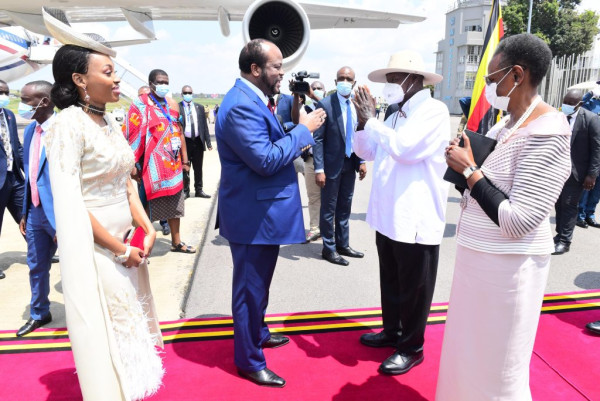
President Yoweri Kaguta Museveni and the First Lady and Minister of Education and Sports, Maama Janet Museveni have today welcomed the King of Eswatini, His Majesty, Mswati III at Entebbe International Airport.

His Majesty, Mswati III who is in Uganda for a three-day State Visit at the invitation of President Museveni was accompanied by his wife, Queen Inkhosikati Make Lamashwama and other high-level delegates.

At Entebbe International Airport, President Museveni was flanked by Ministers and service chiefs.

Upon arrival, the visiting King was accorded a 21-gun salute and inspected a guard of honour mounted by the Uganda People's Defence Forces (UPDF).

President Museveni later received his guest at State House Entebbe and held discussions focusing on enhancement of bilateral cooperation between the two countries.

In their discussions, President Museveni emphasised a clear vision for African prosperity, rooted in his experience as a student activist in the 1960s, a liberation leader, and now as a head of state.

“If Africans want prosperity, it comes from producing goods or services and selling them,” President Museveni stated.

He underscored the need for African nations to access larger markets to maximise economic benefits, highlighting Uganda's internal market of 46 million people as insufficient on its own.

“The fragmentation of the African market is a big disaster,” President Museveni warned.

He compared the continent's potential with that of Latin America, which, despite abundant natural resources, struggles with poverty due to its fragmented markets.

“I always tell my Ugandans here that if you want to be like Latin America, you are welcome because if you look at them, despite their wealth in natural resources, they still run to the USA for prosperity to get medical care, education, and other benefits,” he said.

The President argued that Africa's success lies in integrating markets across the continent, similar to how the United States operates with a vast and unified market.

He called for a model where African nations not only produce but also own and share in the benefits of their resources, rather than relying on foreign investments that often exploit the continent's wealth.

The President highlighted the need for African countries to collaborate on capital-intensive projects.

He also gave the example of Uganda's petroleum sector, where East African nations are invited to co-invest in infrastructure such as pipelines and refineries.

“It's not common sense that I produce, and you only buy. You can't say that to a brother,” President Museveni remarked, emphasising the importance of shared ownership.

President Museveni lauded the East African Community (EAC)'s progress in rebuilding and expanding to include eight member states, addressing both economic and political integration.

Beyond economic integration, President Museveni stressed the need for political federation in East Africa, which he views as crucial for establishing a strong military defence for the continent.

He highlighted the disparity in military capabilities between African nations and global powers like the United States, which boasts superior land, air, sea, and space forces.

“Africa must have the capacity to defend itself from all threats,” President Museveni asserted.

He called for a united African defence strategy as part of the broader vision for political federation.

His Majesty King Mswati III called for an enhanced cooperation between African nations, emphasising the need for unity in driving the continent's development.

He also expressed gratitude for the warm reception and hospitality extended to him and his delegation.

He highlighted the longstanding relationship between Uganda and Eswatini, noting that it had been years since their last meeting at a Commonwealth event.

“Your Excellency, I convey greetings from the Queen Mother, the government, and the people of Eswatini, and I wish to inform you that we are ready to strengthen ties between the two nations,” the King stated.

King Mswati went on to propose that Uganda and Eswatini establish regular communication channels to avoid neglecting the friendships and agreements already in place.

He stressed that African countries must work together to achieve progress in key areas such as poverty alleviation, job creation, education, and technological advancement.

“If we work together, there is much we can achieve. But if one country moves on its own, it cannot go far,” he said.

King Mswati III pointed out that Africa possesses abundant natural resources, yet the continent has struggled to produce efficiently due to the exploitation of these resources by foreign entities.

He advocated for African nations to share expertise and technology, citing Uganda's achievements in areas such as crude oil development as an example of successful collaboration.

“Now that we have mastered a lot of technology and expertise, we must take advantage of our resources,” the King stated.

The King further emphasised the need to promote entrepreneurship and knowledge exchange between Uganda and Eswatini, suggesting the establishment of distribution centres and routes to facilitate trade.

He also proposed increased cooperation between the Southern African Development Community (SADC) and the East African Community, expressing hope for a stronger economic partnership.

In terms of cultural ties, King Mswati III highlighted the similarities between the cultures of Uganda and Eswatini.

He proposed the organisation of cultural festivals to showcase these connections and attract tourists from around the world.

“We should promote our unique cultures, which are similar in many ways to support tourism and strengthen our bonds,” he added.

The King called for the opening of direct flight routes between Eswatini and Uganda to boost tourism and cargo trade.

He noted the potential for increased tourism, particularly given Uganda's rich natural attractions such as the Nile River and mountains.

“Let us work together to promote tourism by making travel between our countries easier and more accessible,” he urged.

King Mswati III also expressed support for Uganda's leadership in hosting the African Union's Humanitarian Agency and congratulated President Museveni on Uganda's chairmanship of the Non-Aligned Movement and the G77+China group.

He reiterated his country's willingness to cooperate with Uganda in various sectors, including the export and assembly of electric cars.

In Transport and Infrastructure, the two Heads of State also called for an expedition of cooperation processes regarding the creation of a hub by the Kingdom of Eswatini for marketing Kiira Motors Corporation's “Kayoola EVS” electric buses to the SADC region, using the advantage of the Maputo harbour area.

In conclusion, King Mswati III extended an invitation to President Museveni for a State Visit to Eswatini, emphasising the importance of continued collaboration between the two nations.

“Africa needs to work together to achieve economic independence, and our partnership with Uganda is a step in that direction,” he concluded.

Strengthening Bilateral Ties:

During the visit, Uganda and Eswatini further solidified their relationship through the signing of a Memorandum of Understanding.

The agreement was signed by Uganda's Minister of State for Foreign Affairs, Hon. Oryem Henry Okello, and Eswatini's Minister for Foreign Affairs and International Cooperation, Hon. Senator Pholile Shakantu.

Additionally, the two countries' agriculture Ministers discussed enhancing cooperation in the agricultural sector.

Eswatini, officially the Kingdom of Eswatini and also known by its former official name Swaziland and formerly the Kingdom of Swaziland, is a landlocked country in Southern Africa. It is bordered by Mozambique to its northeast and South Africa to its north, west, south, and southeast.

The Eswatini delegation included high-level officials such as HRH Princess Lindiwe and Hon. Manqoba Khumalo, Minister of Commerce, Industry, and Trade, among others.

On the Ugandan side, key ministers such as Hon. Babirye Milly Babalanda, Minister for the Presidency, Dr. Monica Musenero, Minister for Science, Technology, and Innovation, Hon. Mwebesa Francis, the Minister of Trade Industry and Cooperatives, and Hon. Katumba Wamala, the Minister of Works and Transport were also in attendance.

Distributed by APO Group on behalf of State House Uganda.

Media files
State House Uganda
Download logo
Read morePresident Museveni And King Mswati III Call For A Unified African Market And Political Federation
15 August 2024

Innovative Financing and Policy Support: Accelerating Renewable Energy Development in Africa (By Ana Hajduka)

Location: News
AOW: Investing in African Energy

By Ana Hajduka, founder and CEO of Africa GreenCo (www.AfricaGreenCo.com).

As Africa's energy sector deregulates, exciting opportunities open up for financial innovation to benefit consumers. Private-sector buyers and traders can mitigate default risk and provide certified green energy at lower cost, writes Ana Hajduka, founder and CEO of Africa GreenCo.

Africa's renewable energy potential is undeniable, but it remains largely untapped. The problem is that the financing landscape for renewable energy and other projects in Africa was previously reliant on state utilities as buyers.

The scale of projects that could be financed in a country were then limited by the fiscal capabilities of that country and the sovereign guarantees it could provide.

This traditional model of relying on countries to provide such guarantees has faced recent challenges, because of increasing debt burdens, and shifting economic priorities.

Opportunities have therefore emerged for innovative financial approaches that will ensure more guarantees can be acquired from other sources and that risk can be diversified across a portfolio of suppliers and customers.  This would see more projects achieving financial close, to ultimately provide more African people with clean energy.

There is also room to not only grow new renewable energy supply, but to create new renewable energy markets on the continent, where that supply can be sold.

As a consequence, the market is opening up to allow alternative buyers of new renewable energy, which can utilize existing regional competitive energy markets to diversify its risks – buyers such as GreenCo.

This is extremely relevant at the moment. Legislation like South Africa's Electricity Regulation Amendment Bill, is set to open up the electricity sector to new supply and trading models. This foreshadows the opening of a competitive spot market for electricity trade in South Africa – linking in the future the South African spot market with that of the Southern African Power Pool.

Namibia did something similar a couple of years ago, as did Zambia.

These regulatory market developments are important as they facilitate innovation and new private sector business models through which there can be a scale up of bankable offtake agreements for new supply. The problem in the region is not lack of projects. It's not lack of funding. It's earning enough lender trust to lend on the back of a  20-25 year power purchase agreement backed by a private sector buyer without state fiscal support.  

Transmission capacity

Transmission constraints are another factor in this emerging scenario. The development of the electricity sector across the region effectively has a ceiling, determined by the available transmission network for new generation.

Previously, development finance institutions would only fund state utilities, and then only when it was proved that sufficient generation would be coming on board to utilize any new transmission infrastructure.

Now, thanks to the growing liberalisation focus in the region, allowing new private sector participants to buy and trade power, these transmission funding inflows can be facilitated. This new supply will be critical to making new transmission investments bankable.

If the private sector can sufficiently guarantee that any proposed new capacity coming on board will utilise the necessary transmission infrastructure, that new capacity effectively backs the viability of the new transmission investing – bringing a direct value add to the state utilities in South Africa and the rest of the SADC region.

Regulatory readiness

But for all of this to fall into place, we need a convergence of the relevant regulatory readiness – and we are already seeing this across the region. In many SADC countries, new legislation is providing the regulatory clarity that the private sector requires to venture into supply, transmission and trade.

The entire ecosystem must work for new entrants, and lenders. Until now, lenders have seldom considered state utilities to be creditworthy, and they have required significant fiscal guarantees to cover the power-purchase obligations of those utilities.

That model is a double whammy. Not only does it encumber utilities with debt for new generation, but it hits the national fiscus as well.

In South Africa, for example, the widely respected REIPPP process has brought online a significant amount of new generation. However, once the South African government started reporting on the process in accordance with IMF fiscal transparency regulations, this added an additional 36% to the contingent liabilities of the national treasury – almost $15 billion - overnight. That is money that can no longer be channeled into education, health and other key infrastructure development (water, transmission etc).

The REIPPP model has been extremely successful in the electricity sector, but it has perhaps outlived its usefulness. There are other priorities, and the private sector should be sufficiently capable to deliver on its own, with the lending community partnering accordingly.

The REIPPP model can be replicated in cases such as storage tenders, and in the transmission space. While transmission is usually considered a government function, it would certainly be possible to incentivize the private sector – and lenders – to enter the space.

New licensees

Across the region, markets are liberalising rapidly. South Africa has shown it can happen almost overnight, as in the case of the country's generation regulations. This has allowed third-party wheeled projects, from generators directly to customers, and facilitated new license applicants in the market such – such as GreenCo.

This shows how market thinking about the development of the electricity sector has fundamentally changed. There is collaboration like never before.

For GreenCo, events like the forthcoming AOW event offer opportunities to align with mining, commercial and industrial offtakers, as well as suppliers and IPPs. For an entity like ours, it's also a chance to show potential customers and suppliers the bankability of our own offtake; that lenders have confidence in our power purchase agreements.

Financial innovation must happen in a way that makes lenders comfortable. What that looks like in our case is that all our payment obligations are backed by an internationally AA- credit rated guarantee provider GuarantCo.

We are entering the South African market operationally ready to supply customers within South Africa and outside; and with financial readiness in the form of innovative guarantee structures to be considered bankable in the market.

The ultimate beneficiaries of this financial innovation must be the consumers. Many are looking to decarbonise their operations – for climate change reasons, and to make their products competitive on international markets.

Affordability is another key consideration. In our case, by being able to provide sufficient operational and financial risk mitigation to the lenders of the generators that supply to us, we can supply electricity far more affordably.

Around 70% of the costs of a generation or renewable energy project is from the cost of debt. Therefore, the more bankable an offtaker is, the lower the debt costs, and the cheaper the electricity – a clear demonstration of the benefits of financial innovation for the end consumer.

  • AOW: Investing in African Energy unites industry leaders to develop policy, share discoveries, secure investment, and shape Africa's energy future. The event runs from October 7 – 11 at the CTICC.

Distributed by APO Group on behalf of AOW: Investing in African Energy.

About GreenCo: 
GreenCo is a renewable energy buyer and trader operating in Southern Africa (Zambia, South Africa, Zimbabwe and Namibia); purchasing power from renewable energy generators and selling that electricity to utilities, private sector offtakers (i.e. commercial and industrial users), national power trading markets and to the competitive markets of the Southern African Power Pool (SAPP). GreenCo is an active trader on SAPP and holds a number of applicable licenses covering its operations within the Southern African region. Through its activities, GreenCo will increase the supply of, and demand for, finance for energy projects, and mobilise private sector capital more quickly towards critical and transformative capacity addition. For more information please see: www.AfricaGreenCo.com

Media files
AOW: Investing in African Energy
Download logo
Read moreInnovative Financing and Policy Support: Accelerating Renewable Energy Development in Africa (By Ana Hajduka)
15 August 2024

Holistic approach needed to address underlying factors behind GBVF

Location: News

Holistic approach needed to address underlying factors behind GBVF

Minister in the Presidency responsible for Women, Youth and Persons with Disabilities, Sindisiwe Chikunga, has underscored the need for a holistic approach that addresses both the immediate and underlying factors behind gender-based violence and femicide (GBVF).

Chikunga made the remarks during a dialogue on Women, Democracy and Leadership in South Africa, held at the University of South Africa (UNISA) on Thursday.

Chikunga, together with UNISA and the United Nations Women, hosted a dialogue, which looked deeply at women’s representation and administrative arrangements needed to achieve a gender-responsive government.

Chikunga said government has come to terms with the fact that laws alone will not prevent the killing of women.

“Despite being a constitutionally assured right, women continue to live in fear, grappling with alarming rates of gender-based violence and femicide. This remains a deeply entrenched problem with multifaceted roots, including historical inequalities, cultural norms, economic disparities, and systemic failures in law enforcement and justice systems,” Chikunga said.

Government has passed several laws, including the Criminal Procedure Act 51 of 1997, Domestic Violence Act 116 of 1998, Protection from Harassment Act 17 of 2011, Criminal Law (Sexual Offences and Related Matters) Amendment Act, Promotion of Women’s Rights, Empowerment and Gender Equality Bill, and the National Council on Gender-Based Violence and Femicide Act 9 of 2024.

However, to effectively prevent and combat GBVF, Chikunga said a holistic approach is needed, “one that addresses both the immediate and underlying factors”.

Significant strides in women representation

Reflecting on the journey travelled by women over the past three decades of the country’s democratic dispensation, Chikunga said over the past 30 years, the country has seen significant strides in ensuring women representation in decision-making and law-making circles.

Today, women make up 43.5% of the Parliament of National Unity, holding 171 of the 400 seats, an increase from 28% representation in 1994.

“Of the 75 Executive Members appointed in June 2024, 32 are women, representing 42.66%. Fourteen of the 32 Cabinet positions are held by women, and 18 of the 43 Deputy Minister positions are held by women,” Chikunga said.

The Minister emphasised the substantive contribution that women should make once in such positions.

“As we celebrate the strides that we have made, we also give due consideration to the tasks that remain undone, [these include] the need to drive inclusive growth and job creation; to reduce poverty and to tackle the high cost of living, and the task of building a capable, ethical, and developmental state. We remain mindful of the fact that in each of these priority areas, women are the most affected,” Chikunga said.

The Minister also highlighted significant progress made towards the fight against HIV/Aids, particularly in the rollout of antiretroviral therapy (ART) for pregnant women, and an increasing number of students that have gained access to education, especially higher education from which they were previously excluded due to their social class or marginalised race or ethnic group.  

Redefining advocacy to address plight of businesswomen

Chikunga also stressed the importance of redefining advocacy and mainstreaming to be strategy-programmes-goals-oriented and action-driven, to address the plight of women in business, government, farm workers, mining, and the unemployed.

“We need to advocate and mainstream women, youth and persons with disabilities across all sectors, with a focused lens on industries with high potential for growth and development. 

“We need to ring-fence funds in the budget to ensure implementation of women, youth and persons with disabilities socio-economic empowerment, starting with the allocation of change oriented -budget allocation for the department, which need to reflect intentional implementation of the gender planning and budgeting framework,” Chikunga said. – SAnews.gov.za


GabiK
Thu, 08/15/2024 - 12:59

410 views
Read moreHolistic approach needed to address underlying factors behind GBVF
15 August 2024

Public Procurement Bill to redress women socio-economic exclusion

Location: News

Public Procurement Bill to redress women socio-economic exclusion

Women, Youth and Persons with Disabilities Minister, Sindisiwe Chikunga, says the Public Procurement Bill provides the department with an opportunity to advocate and mainstream tangible models and interventions to redress the ongoing socio-economic exclusion of women, youth and persons with disabilities.

Chikunga commended the significant efforts by President Cyril Ramaphosa after signing into law the Public Procurement Bill last month, which aims to create a single framework that regulates public procurement, including preferential procurement, by all organs of State, with the necessary efficiency, cost-effectiveness and integrity.

“As a department, we will be bringing forward tangible interventions through which this legislation will serve to redress the longstanding and ongoing socio-economic exclusion of women, youth and persons with disabilities,” Chikunga said.

Addressing a dialogue on Women, Democracy and Leadership in South Africa at the University of South Africa (UNISA) on Thursday, Chikunga also commended President Ramaphosa, as the Chairperson of the African Union in 2020, for putting forward a number of recommendations for the advancement of women on the continent, which have been adopted by AU Heads of State.

READ | Government, business partnership begins to flourish

Increase in support for women entrepreneurs

Chikunga also acknowledged a surge in the establishment, growth and support of women-owned businesses in key sectors, including energy, tourism, agriculture, the ocean economy, and manufacturing.

According to the most recent Mastercard Index of Women Entrepreneurs (MIWE), South Africa ranks as the second highest country in Africa in terms of its proportion of women-owned businesses and the formal support available for women entrepreneurs.

The Global Entrepreneurship Monitor (GEM) Women’s Entrepreneurship Report also revealed that women in countries like South Africa are among the most innovative and high-growth entrepreneurs in the world.

“There is sufficient evidence that reaffirms the importance of women entrepreneurs in contributing to the overall productivity and transformation of our economy through diversifying industries, innovation, and fostering economic resilience.

“In addition, women-owned businesses contribute to the creation of employment opportunities, promote inclusive supply chains, and stimulate local economies,” Chikunga said.

Women economic advancement in the Continent

Chikunga further underscored the importance of the adoption of the Decade for African Women’s Financial Inclusion and Gender Equality, 2020-2030.

“This is a critical initiative for the women of Africa, given that the lack of access to finances hinders their socio-economic progress, and thwarts their ability to have ownership and control over resources such as land, businesses and property,” Chikunga said. 

She added that women’s access to markets continues to be a challenge for women on the continent, especially access to trade and global markets.

The Minister argued that the African Continental Free Trade Area Agreement (AfCFTA) will open doors for global trade and markets for women, and “this is of huge importance to the women in South Africa to leverage on the opportunities this AfCTA promises for the economic empowerment and wealth creation for women in Africa”.

“Africa must be Africa’s biggest trading partner and demand for products across the continent offers African women the opportunity to be suppliers to this demand. Joint initiatives of pooling resources in this regard will help grow women businesses, provide the necessary skills and training required for this, and open markets and export trade opportunities,” Chikunga said. – SAnews.gov.za


GabiK
Thu, 08/15/2024 - 13:49

284 views
Read morePublic Procurement Bill to redress women socio-economic exclusion
15 August 2024

NSG hosts symposium on China-Africa relations

Location: News

NSG hosts symposium on China-Africa relations

China-Africa Media and Publishing, in collaboration with the National School of Government of South Africa, is set to hold a symposium titled: “The Governance of China: Forging a Closer China-Africa Community of a Shared Future, in Pretoria on Thursday.  

Thursday’s event will bring together South African and Chinese government officials, scholars, experts, and journalists for a robust exchange of ideas and insights. 

The seminar serves as a critical forum to discuss and shape the future of China-Africa relations and is a side precursor event to the upcoming Beijing Summit of the Forum on China-Africa Cooperation (FOCAC) which will be held in early September in China. 

The FOCAC summit is expected to unveil new measures to deepen cooperation over the next three years, laying a stronger foundation for a closer China-Africa community with a shared future. 

The seminar of the NSG and China-Africa Media in Publishing is intended to promote dialogue and debate on China-Africa relations among government officials, scholars and experts. 

The seminar marks a significant step in the ongoing cooperation between China-Africa Media and Publishing and the National School of Government, following the signing of a Memorandum of Understanding (MOU) in May of this year. 

The agreement aims to promote joint research and dialogue in the form of Seminars and Symposia on topics such as China-South Africa relations and Global Governance. – SAnews.gov.za


Edwin
Thu, 08/15/2024 - 08:54

331 views
Read moreNSG hosts symposium on China-Africa relations
  • Previous
  • Page 1
  • Interim pages omitted …
  • Page 116
  • Page 117
  • Page 118
  • Page 119
  • Page 120
  • Interim pages omitted …
  • Page 210
  • Next

Copyright © 2026 · MyZA · All Rights Reserved · Powered by Stratlec Online