• Skip to main content
  • Skip to header right navigation
  • Skip to after header navigation
  • Skip to site footer
MyZA

MyZA

News, Directory, Events and Other Stuff

  • Social Media
  • Sport
  • World News
  • Home
  • Submit News
  • Directory
  • Events
  • Stratlec
  • TFSA
  • News
    • APO
    • Today’s Sport News
    • Todays Social Media and Tech Headlines
    • Today’s World News
    • Today’s SA Financial News
  • Contact
You are here: Home / Archives for Government

Government

20 March 2024

Lifestyle audits for Executive underway

Location: News

Lifestyle audits for Executive underway

President Cyril Ramaphosa says despite several delays, lifestyle audits for the President, Deputy President, Ministers and Deputy Ministers are now underway.

The President was participating in the Questions for Oral Reply session held in the National Assembly on Tuesday.

“After several delays, lifestyle audits of Members of the Executive are underway. This process is being led by the Director-General in the Presidency and Secretary of Cabinet. The President, Deputy President, Ministers and Deputy Ministers are currently in the process of submitting additional information required for these audits.

“As I have indicated before, the aim of a lifestyle audit is to collect as much information as possible on an individual’s lifestyle to be able to identify when an individual’s expenditure exceeds his or her income. In itself, a lifestyle audit is not conclusive, but may indicate that further investigation is required to establish if there is any wrongdoing,” he said.

President Ramaphosa explained that the function of carrying out the audits was moved to the office of the Director-General, Phindile Baleni, owing to cost containment.

“The Office of the Director-General had to source competent and skilled personnel with experience in conducting lifestyle audits. The capacity building exercise took longer than anticipated which impacted negatively on the timelines for the audits.

“This is the first time that national government is conducting lifestyle audits of Members of the Executive, requiring new systems, processes and methodologies to be developed.”

He said the Director-General will decide on the most appropriate way to communicate the outcomes of the audits once completed. – SAnews.gov.za


NeoB
Wed, 03/20/2024 - 09:33
302 views
Read moreLifestyle audits for Executive underway
19 March 2024

SAA is here to stay, says Minister Gordhan

Location: News

SAA is here to stay, says Minister Gordhan

Public Enterprises Minister Pravin Gordhan has assured staff at South African Airways (SAA) that the state-owned airline is “here to stay”.

This following last week’s announcement of the collapse of the deal with strategic equity partner, Takatso Consortium.

“Our ambition is that SAA will make enough profit to pay the government dividends. We have rebuilt the airline, and it will make profit that can support the fiscus instead of it looking for bailouts from government.

“SAA is here to stay. SAA will grow. SAA will expand. Don’t allow negativity to come near us,” Gordhan said.

The Minister reflected on the airline’s recent troubles and emphasised the need for intolerance for corruption.

“We should be grateful to government for the role it played to avoid liquidation.

“We will have zero tolerance for any corruption that rears its ugly head at SAA. We have a bright future ahead of us. We need to work together. You must work as a team,” Gordhan said.

Last week during the announcement of the Takatso Consortium deal, Gordhan told the media that SAA had a corporate plan aimed at sustaining the airline without needing government help.

“That corporate plan actually entails the gradual growth in the number of routes that SAA will take up in the course of the next few years. Similarly, it will have the capacity to lease more aircraft, both for domestic use, use within the continent and for inter-continental flights as well.

“All of these plans will be rigorously examined with the necessary aviation expertise to ensure that jobs are secure, that the airline is secure and that there is a future for SAA and its flag to be seen continuously within the country, within the continent and across continents as well,” Gordhan said. – SAnews.gov.za


NeoB
Tue, 03/19/2024 - 09:30

782 views
Read moreSAA is here to stay, says Minister Gordhan
19 March 2024

Emphasis placed on investing in climate-resilient infrastructure projects

Location: News

Emphasis placed on investing in climate-resilient infrastructure projects

While South Africa has taken meaningful steps to invest in infrastructure projects, Deputy Minister of Finance, Dr David Masondo, says the fiscus cannot afford to financially support the amount of investment required for climate-resilient infrastructure.

“We therefore need to discuss other innovative financing mechanisms such as green bonds and carbon credit to fund these climate-resilient infrastructure projects,” Masondo said on Monday in Johannesburg.

He made these remarks during the second in a series of Southern Africa – Towards Inclusive Economic Development (SA-TIED) policy dialogues entitled “Financing infrastructure development in the context of climate change”.

“In South Africa, we feel the negative impact of climate change in important sectors such as agriculture, water, and energy. The frequency of natural disasters and the results thereof are felt every day in our country.

“Investments in renewable energy sources, water conservation systems, and sustainable urban development are key to mitigating and adapting to climate impacts,” the Deputy Minister said.

Masondo said the Infrastructure Fund is a testament to South Africa’s commitment to stimulating infrastructure investment and blending public and private financing to build a better, more sustainable future.

“The Infrastructure Fund stands out as a pivotal move, designed to stimulate investment across various critical sectors. This approach seeks to mobilise public and private resources, mitigate risks for private investors and foster an environment where collaborative financing models can thrive.

“Such measures are part of a broader effort to ensure that infrastructure development not only supports South Africa's immediate economic needs but also lays the groundwork for long-term resilience and progress.

“Yes, challenges exist such as securing funding. However, ensuring sustainability, and integrating the latest technologies are other additional challenges. These challenges should be treated as opportunities for innovation and forging robust public-private partnerships. This is also an opportunity for leveraging the power of technology in our infrastructure development goals,” Masondo said.

He said the groundbreaking research produced by the SA-TIED program has shed light on critical areas like water, and energy, and the broader connections between them.

“It is this type of research that directly shapes our infrastructure strategies, informing decisions to maximise impact and create the conditions for sustainable growth. The research informs our policy decision-making. It is this type of research that directly shapes our infrastructure strategies, informing decisions to maximize impact and create the conditions for sustainable growth,” the Deputy Minister said.

He said infrastructure development is the cornerstone of any thriving economy.

“Infrastructure fuels productivity (e.g. people arrive late to work because public transport is poor). Infrastructure also enhances the quality of life for our citizens (clean air, and clean water are important for our health) and lays the foundation for long-term growth.

“Our government recognises this. We have made significant investments in critical infrastructure. These investments are not just about roads and bridges. They are also about creating jobs, reducing poverty, and making South Africa a competitive player in the global economy,” the Deputy Minister said. – SAnews.gov.za


nosihle
Tue, 03/19/2024 - 09:36

611 views
Read moreEmphasis placed on investing in climate-resilient infrastructure projects
19 March 2024

Transport infrastructure foundation for economic development in Africa, says Mashatile

Location: News

Transport infrastructure foundation for economic development in Africa, says Mashatile

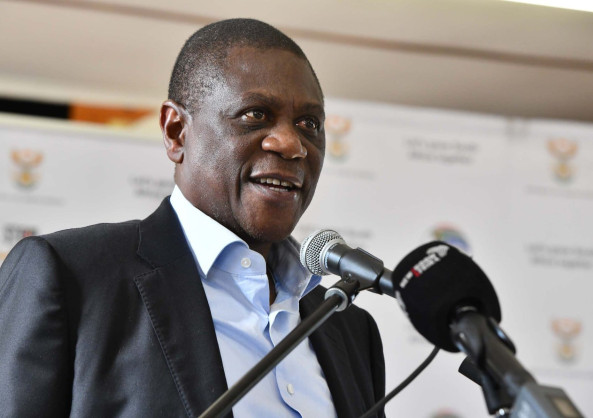
Deputy President Paul Mashatile has described transport infrastructure as the cornerstone of economic expansion in Africa. 

“We must make sure that we use the discussions and deliberations of the symposium to bring tangible collaboration on bi-national projects that will strengthen the continent and its economy,” he said on Monday. 

The Deputy President was speaking at the Sustainable Infrastructure Development Symposium South Africa (SIDSSA) in Cape Town. 

He said he was confident that the gathering would establish more strategic collaborations with the other African leaders. 

“The African Continental Free Trade Area (AfCFTA) agreement remains an important platform for us as a continent to strengthen regional integration at both an economic and cultural level.” 

The gathering is a platform that brings together critical role players in the infrastructure investment space to accelerate an infrastructure-led economic recovery plan.

The symposium also sets the tone for collaboration and cooperation within the continent.

Meanwhile, the country’s second-in-command said he was also looking forward to the launch of the construction book, which is a repository of projects going into procurement or construction in the 2024/25 financial year. 

The Deputy President believes that this will serve as an important indicator to the market that the pipeline of projects is realisable.

“We also look forward to the announcement of the 12 infrastructure project priorities for the 2024/2025 financial year that will replenish the pipeline and receive project preparation funding from ISA [Infrastructure South Africa],” he said. 

He also reflected on the success of the Infrastructure Investment Plan adopted by Cabinet in 2020. 

The Deputy told delegates that the three central themes that anchor the plan have remained consistent throughout the sixth administration. These include quality infrastructure for development, recovery, and inclusive growth, which were all spearheaded by the government through policy development and implementation.

“When we say development, we mean both the development and delivery of infrastructure, and the development of our people through infrastructure delivery. When we say recovery, we mean the recovery of our economy through a large-scale infrastructure programme, led and championed by the government.” 

Mashatile defined inclusive growth as the redressing of spatial imbalances between urban and rural areas through infrastructure delivery programmes, which ought to address gender, racial and other inequalities. 

“The entire population should be included in the benefits associated with infrastructure investment and subsequent gross fixed capital formation," he said. 

While challenges are restraining the fast pace of delivering quality infrastructure, the Deputy President called on the symposium to display some of the progress and successes that serve as a foundation for the incoming seventh administration. 

“In the last five years, we have put specific focus on the strategic integrated projects that have the highest GDP [gross domestic product] impact, high employment absorption capacity, and localisation potential.”

He is of the view that these projects have the potential to crowd in private sector investments due to their multiplier effect. 

“We are proud to say that of the pipeline that we gazetted both in 2020 and 2022, almost R10 billion worth of projects have completed construction, R233 billion worth of projects are currently in construction and R170 billion worth of projects are currently in procurement.” 

Some of the completed projects include Vaal Gamagara Phase 1, the raising of the Hazelmere Dam wall, student accommodation across different universities, transport projects like the Musina Ring Road, national routes and the construction of social housing.

Of these, Mashatile said significant work was done within the energy portfolio of projects. 

The energy project pipeline comprises more than 100 projects amounting to R240 billion. Some of these projects have a value of over R100 billion – spanning from transmission, gas, and renewables to green hydrogen.

The Deputy President said they have also noted the gap in the readiness and preparedness of projects for the market. However, he said in 2023, Infrastructure South Africa (ISA) received its first tranche of funding to support projects with project preparation. 

“This has proven itself a game changer as some projects show great potential but do not always have the fiscal allocation for technical support, legal support, or even capacity building.” 

According to the Deputy President, the project preparation funding allows ISA to support projects that otherwise would stay dormant for many years.

“It is important to note that of the first R200 million tranche received, 37 projects will already be receiving project preparation support.” 

Meanwhile, through coordination and support of various departments and government stakeholders, Mashatile noted that ISA has unblocked 195 permits for 47 projects. – SAnews.gov.za
 

Gabisile
Tue, 03/19/2024 - 10:50

452 views
Read moreTransport infrastructure foundation for economic development in Africa, says Mashatile
19 March 2024

South Africa Requires $5.7T to Bridge Infrastructure Investment Gap

Location: News
Energy Capital & Power

Nearly $5.7 trillion is required to close the infrastructure investment gap in South Africa by 2050, according to statements made by Mameetse Masemola, Acting Head of Infrastructure South Africa (ISA), during the Sustainable Infrastructure Development Symposium South Africa (SIDSSA) on Monday.

During a media briefing, Masemola provided an update on projects led by ISA since its enactment in 2020, as well as highlighted efforts being made by the government agency to foster public-private sector cooperation and accelerate infrastructure development.

Taking place on March 17-19 at the Century City Conference Center, SIDSSA brings together key stakeholders in South Africa and across the continent with the aim of driving infrastructure development. SIDSSA 2024 serves as a crucial platform for discussions and partnerships in the infrastructure investment landscape, with a focus on accelerating economic activity through strategic infrastructure plans. Energy Capital & Power – the leading investment platform for the African energy sector – is a media partner for this important platform. For more information, visit www.SIDSSA.org.za.

“Our mandate is to close the infrastructure investment gap… We ensure projects are viable and bankable to attract funding from global investors. We work closely with authorizing departments to ensure fast rollout of projects, while ensuring the projects meet local regulations,” said Masemola.

ISA has led projects across ICT, energy, water and sanitation, transport and human settlement sectors, which have seen substantial growth in recent years.

“These are the sectors that support economic growth and enable South Africa to be competitive globally. Most of the projects were in their early stages in 2020. The value was R230 billion and the value has grown to over R500 billion,” stated Masemola.

In the energy sector, 95% of projects deployed have been private sector-led, including renewable energy projects developed under South Africa's Renewable Independent Power Producer Program (REIPPP), Embedded Generation Program and Just Energy Transition Program. Of the energy sector projects, 25 are under construction under Bid Window 5 of REIPPP, with five having reached financial close and a total of 14,000 jobs expected to be created, added Masemola.

In the transport sector, 15 projects have been announced, of which six represent a total value of R25 billion and are currently under development. Masemola stated that ISA has seen success when it comes to the human settlement sector, with over 9,000 units constructed and 38,000 jobs created since 2020.

Commenting on ISA's current and future project pipeline, Masemola stated that the agency has secured R600 million from South Africa's treasury to invest in projects over the next three years, with 31 projects currently being prepared.

Distributed by APO Group on behalf of Energy Capital & Power.

Media files
Energy Capital & Power
Download logo
Read moreSouth Africa Requires $5.7T to Bridge Infrastructure Investment Gap
19 March 2024

Government harnessing Land Reform to support growth of agriculture and job creation 

Location: News

Government harnessing Land Reform to support growth of agriculture and job creation 

President Cyril Ramaphosa has emphasised that government is actively implementing various programs and initiatives to enhance the effectiveness of land reform aimed at bolstering agricultural growth and to foster increased employment within the industry.

President Ramaphosa was responding to questions for oral reply in the National Assembly on Tuesday.
 
A Member of Parliament asked the President to elaborate on the integrated plan that government has in place to maintain growth and job creation in the agricultural sector through land reform. 

“Government’s land reform programme is supported by several complementary programmes and initiatives to enable growth and job creation.   

“Through these complementary programmes and initiatives, we are working to ensure that land reform is harnessed more effectively to support the growth of agriculture and agro-processing and to expand employment and livelihoods in this vital industry,” the President said. 

The President told Members of Parliament that land reform is vital to the transformation of our society and to correct historical injustices.   

He noted that redistribution, restitution and the provision of secure tenure also contribute to greater agricultural activity and enable more people to earn a living off farming.   

President Ramaphosa highlighted that in May 2022, the Department of Agriculture, Land Reform and Rural Development signed the Agriculture and Agro-processing Master Plan with partners in business and labour.   

Among many other things, the plan supports the acceleration of land reform and outlines actions that the private sector can take to support optimal use of land available to black farmers as a result of land reform projects.

These actions include support to black farmers and SMMEs at the processing level to have better access to domestic and export markets.   

The plan also encourages large commercial farmers to participate voluntarily in the land reform programme by donating land to historically disadvantaged farmers or participating in joint ventures to facilitate linkages between small- and medium-scale farmers operating on a commercial basis.   

“If the proposed interventions are implemented effectively, the social partners believe that by 2030, the agricultural sector can grow by an additional R32 billion above the ‘business-as-usual’ baseline.   

“Through this plan, they intend to maintain the existing jobs in the sector and create 75,000 new jobs by 2030.   For the economic potential of our land reform programme to be fully realised, we are prioritising broader rural development,” the President said. 

The Integrated Rural Development Sector Strategy of 2023 aims, among other things, to revitalise the rural economy through investment in, and development of rural infrastructure.   

This includes investment in roads, bridges and other transport infrastructure, water and irrigation schemes, public health and education.   

The strategy also provides for support to industries that support rural development, including agriculture and agro-processing, mining, the digital economy, the ocean economy, tourism, arts and culture.   

“Improvements in rural infrastructure are necessary if we are to reap the economic potential of land reform. Beneficiaries of the various land reform projects need to be able to access water resources, get their produce to market, participate in local economic activity and have ready access to funding and other support,” he said. 

The President highlighted that the land reform programme is also supported by initiatives that support skills development and employment, particularly for the youth.   

Through the National Rural Youth Service Corps (NARYSEC) government provides young people with the skills and capabilities to participate in the economy. 

He explained that through such rural development initiatives, more than 1 100 jobs have been facilitated in the current financial year.

He further stated that through the Presidential Employment Stimulus, more than 180 000 agricultural production input vouchers have been issued to subsistence producers.   

The Presidential Employment Stimulus has also worked with the provincial departments of agriculture and social partners to provide support to more than 62 000 subsistence and smallholder producers to strengthen self-employment and food security. – SAnews.gov.za

DikelediM
Tue, 03/19/2024 - 15:02

150 views
Read moreGovernment harnessing Land Reform to support growth of agriculture and job creation 
19 March 2024

6 Infrastructure Agreements Signed at SIDSSA 2024

Location: News
Energy Capital & Power

Several infrastructure and finance-focused deals were signed during a media briefing at the Sustainable Infrastructure Development Symposium of South Africa (SIDSSA) on March 18. The six deal signings aim to bolster private-led investment in South African infrastructure projects and cover various strategic areas including project development, financing, capacity building and research.

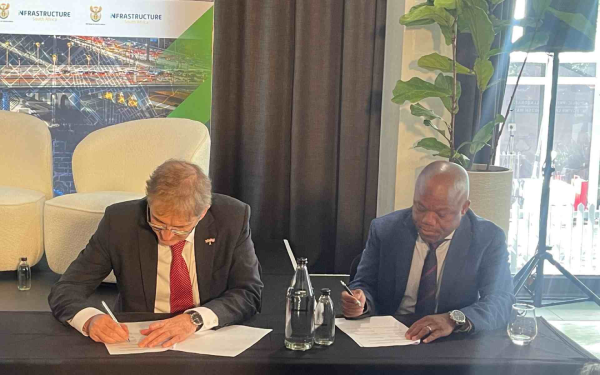
A Memorandum of Understanding (MoU) was signed between South Africa's Minister of Public Works and Infrastructure Sihle Zikalala and John Humphrey, the UK's Trade Commissioner for Africa. The deal builds on three agreements signed between the countries since the launch of Infrastructure South Africa in 2020 and aims to strengthen cooperation regarding project preparation, appraisal and development.

Taking place on March 17-19 at the Century City Conference Center, SIDSSA brings together key stakeholders in South Africa and across the continent with the aim of driving infrastructure development. SIDSSA 2024 serves as a crucial platform for discussions and partnerships in the infrastructure investment landscape, with a focus on accelerating economic activity through strategic infrastructure plans. Energy Capital & Power – the leading investment platform for the African energy sector – is a media partner for this important platform. For more information, visit www.SIDSSA.org.za.

The remaining five deals were signed by Infrastructure South Africa – represented by Mameetse Masemola, Head of Infrastructure South Africa - and various organizations. These include an MoU signed with the South African Institution of Civil Engineering to aid in collaboration and initiatives within the infrastructure planning and development space. The MoU covers strategic areas of cooperation including capacity building, project development and research.

An agreement was signed between Infrastructure South Africa and the Association of African Exhibition Organizers. The MoU will see the parties take the country's infrastructure investment drive global, with support provided in promoting South Africa's project portfolio.  

Meanwhile, an agreement was signed with the Transnet National Ports Authority for the development of The Construction Book – set to be launched on 19 March at SIDSSA – and the development of strategic integrated projects.

A Memorandum of Agreement was signed with the South African Road Agency (SANRAL). Infrastructure South Africa and SANRAL will collaboratively work towards closing the country's infrastructure investment gap, developing The Construction Book while developing strategic projects.  

Infrastructure South Africa also recently signed an MoU with the University of Johannesburg, announced during the SIDSSA media briefing. The media briefing was facilitated by South Africa's Deputy Minister in the Presidency Kenny Morolong and featured updates on projects and national infrastructure priorities.

SIDSSA 2024 is organized by the Investment and Infrastructure Office under the Presidency, in collaboration with the Association of African Exhibition Organizers. The National African Federation for the Building Industry joins as an association partner, while the Development Bank of Southern Africa is the official sponsor of the event. The Masterclass on Sustainable Infrastructure Development is held in collaboration with the National School of Government.

Distributed by APO Group on behalf of Energy Capital & Power.

Media files
Energy Capital & Power
Download logo
Read more6 Infrastructure Agreements Signed at SIDSSA 2024
19 March 2024

President Cyril Ramaphosa Calls to Drive Investment in Infrastructure at Sustainable Infrastructure Development Symposium of South Africa (SIDSSA) 2024

Location: News
Energy Capital & Power

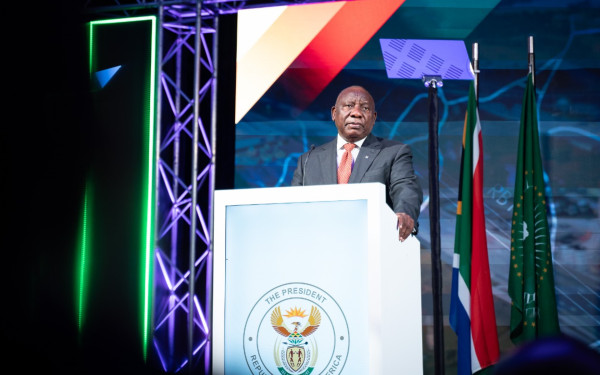
South African President Cyril Ramaphosa called for private-led investment in infrastructure development at the 2024 edition of the Sustainable Infrastructure Development Symposium of South Africa (SIDSSA) on in Cape Town on Tuesday.

“It is estimated that to achieve our infrastructure goals, we need almost R4.8 trillion to address the challenges we face as a country. We need that from both the public sector and the private sector – from a much larger extent,” stated President Ramaphosa.

Taking place on March 17-19 at the Century City Conference Center, SIDSSA brings together key stakeholders in South Africa and across the continent with the aim of driving infrastructure development. SIDSSA 2024 serves as a crucial platform for discussions and partnerships in the infrastructure investment landscape, with a focus on accelerating economic activity through strategic infrastructure plans. Energy Capital & Power – the leading investment platform for the African energy sector – is a media partner for this important platform. For more information, visit www.SIDSSA.org.za.

The South African government has been working to streamline its infrastructure sector and attract investment in strategic projects. Regulatory reforms, according to President Ramaphosa, include “the amendment within our own realm of the Division of Revenue Act, to enable provincial government to use their provincial grants to crowd in the private sector to finance large-scale infrastructure, and to open up opportunities for the private sector to work alongside government to create revenue generating projects.”

These reforms, as well as SIDSSA, “enables us to close the infrastructure investment gap in our country,” stated President Ramaphosa. “This is a valuable platform to enable us to have an introspective look at the opportunities that we have.”

SIDSSA 2024 is hosted by South Africa's Minister of Public Works and Infrastructure Sihle Zikalala, who said, “We will use this platform to outline the progress of the country since the SIDSSA in 2020. As we convene, we must emerge with tangible actions to finance infrastructure as a critical corridor to Africa's development. Infrastructure should be a flywheel of our country's economic recovery.”

Platforms such as SIDSSA – in tandem with the establishment of Infrastructure South Africa in 2020 – have been pivotal for uniting the public and private sectors, driving investment in strategic projects. According to Zikalala, “we have been able to unlock more than 195 licenses, permits and approvals within 47 projects alone. South Africa established the Infrastructure Fund to unlock more private investment in the infrastructure pipeline using a variety of blended financing tools. So far, 13 mega blended finance projects or programs have been approved to date.”

This year's SIDSSA draws insight into the progress made to transform the economy through infrastructure development. According to Tertuis Simmers, Provincial Minister of Infrastructure in the Western Cape, “The Western Cape stands as Africa's premier digital hub, and Cape Town is swiftly solidifying its position as the cloud computing hub of South Africa. Our province has ambitious vision…Central to this strategy is our commitment to infrastructure development: the bedrock of our provinces' economic advancement.”

SIDSSA 2024 is organized by the Investment and Infrastructure Office under the Presidency, in collaboration with the Association of African Exhibition Organizers. The National African Federation for the Building Industry joins as an association partner, while the Development Bank of Southern Africa is the official sponsor of the event.

Distributed by APO Group on behalf of Energy Capital & Power.

Media files
Energy Capital & Power
Download logo
Read morePresident Cyril Ramaphosa Calls to Drive Investment in Infrastructure at Sustainable Infrastructure Development Symposium of South Africa (SIDSSA) 2024
19 March 2024

SA to commemorate Human Rights Day

Location: News

SA to commemorate Human Rights Day

President Cyril Ramaphosa will on Thursday deliver a keynote address at the national commemoration of Human Rights Day to be held in Sharpeville, Sedibeng District Municipality, in the Gauteng province. 

The President will commence the day with a wreath-laying ceremony scheduled for 10:00 at the Sharpeville Memorial Site, after which he will deliver a keynote speech at the George Thabe Cricket Grounds in Sharpeville.

“Ahead of addressing the national event, the President, joined by bereaved families of fallen victims, will commence with a wreath-laying ceremony at the Sharpeville memorial in honour of the fallen Sharpeville Massacre victims,” the Presidency said in a statement. 
 
The national event coincides with the 30th anniversary of freedom and democracy, and will be held under the theme, 'Three Decades of Respect for and Promotion of Human Rights'.

The month of March will be used to reflect on the country's achievements to promote respect for basic human rights and restore human dignity in line with the Bill of Rights.

Human Rights Month is commemorated to remind South Africans about the sacrifices that accompanied the struggle for the attainment of democracy in South Africa.

It also commemorates the Sharpeville Massacre of 1960, where peaceful protestors marching against discriminatory pass laws were fatally shot by the apartheid police and others were wounded.

“The hosting of the event in Sharpeville symbolises the government’s commitment to honour the sacrifices made by those who fought and died for our liberation in Sharpeville and other communities throughout South Africa,” the Presidency said. – SAnews.gov.za 

DikelediM
Tue, 03/19/2024 - 12:38

100 views
Read moreSA to commemorate Human Rights Day
19 March 2024

Infrastructure investment central to achievement of SA’s development goals

Location: News

Infrastructure investment central to achievement of SA’s development goals

President Cyril Ramaphosa says investment in infrastructure is central to the achievement of the country’s development goals.

“Infrastructure is an enormous economic multiplier, providing dividends for an economy long after the infrastructure has been built,” President Ramaphosa said.

Addressing the 2024 Sustainable Infrastructure Development Symposium of South Africa (SIDSSA) currently underway at the Century City Conference Centre in Cape Town, President Ramaphosa said the symposium is an important part of government’s effort to close the infrastructure spending gap in the country.

“It is estimated that to achieve our infrastructure goals, we need an additional R1.6 trillion in public sector infrastructure investment and a further R3.2 trillion from the private sector by 2030,” President Ramaphosa said.

A number of bold initiatives are being implemented to deliver infrastructure at the required scale and pace.

“We are working on reforms to develop sustainable infrastructure, lift business confidence and encourage investment.

“These reforms include the amendment of the Division of Revenue Act to enable provincial governments to use their infrastructure grants and budget allocations to crowd-in private sector finance for large social infrastructure programmes,” President Ramaphosa said.

READ | National Assembly approves Division of Revenue Amendment Bill

The President said amendments to the public-private partnership regulations, which have recently been published for public comment, are part of broader reforms to mobilise and pool public and private sector resources for infrastructure.    

“The operationalisation of the Infrastructure Fund has seen a steady growth in the portfolio of blended finance projects that use relatively small fiscal allocations to de-risk public infrastructure projects and raise finance in debt capital markets.

“Through the work that has been done in transforming the infrastructure landscape, the total value of the country’s Strategic Integrated Projects has grown from R340 billion in July 2020 to R540 billion now.

“Eighteen projects, valued at around R10 billion, have been completed, covering human settlements, roads, water and sanitation,” President Ramaphosa said.

According to the President, the value of projects currently in construction is over R230 billion.

“Projects worth nearly R170 billion are currently in procurement. In this calendar year, 11 such projects, with a total investment value of R45 billion, are expected to reach financial close.

“To date, Infrastructure South Africa has unblocked a total of R25 billion worth of projects in the renewable energy space using the Infrastructure Development Act to fast-track government authorisations,” the President said.

Hosted by the Department of Public Works and Infrastructure (DPWI), the symposium, in its third iteration, is intended to shape the conversations about regulatory and policy reforms, among them, innovative funding models for infrastructure development.

Ministers and Deputy Ministers are expected to anchor various panel discussions and technical discussions throughout the symposium.

SIDSSA 2024  will showcase the following outcomes :

-               Launch of the construction book: a repository of infrastructure projects going into procurement/construction in the 2024/2025 financial year.

-               Leaders forum: A gathering of South African Ministers with 22 participating Ministers from the African continent.

-               Top 12 Infrastructure project priorities: These projects will receive project preparation funding from Infrastructure South Africa.

-               Signing of MOU’s with important partners and stakeholders.

The Symposium will also provide the following updates:

-               Update on the gazetted Strategic Integrated Projects.

-               Update on the projects already receiving project preparation support.

-               Infrastructure Fund Project Pipeline.

- SAnews.gov.za

Edwin
Tue, 03/19/2024 - 12:05

133 views
Read moreInfrastructure investment central to achievement of SA’s development goals
19 March 2024

R233 Billion Project Pipeline in Construction

Location: News
Energy Capital & Power

South Africa's Deputy President Paul Mashatile announced that the country currently has R233 billion worth of infrastructure projects currently in construction, with R170 billion worth in the procurement phase and R10 billion completed. Speaking during the Stakeholder Dinner at the Sustainable Infrastructure Development Symposium of South Africa (SIDSSA) on March 18, Deputy President Mashatile underscored the significant opportunities on offer for the private sector in the infrastructure space.

With government seeking to close the infrastructure investment gap, mobilizing private-led investment has emerged as a top priority. The Deputy President highlighted that through platforms such as SIDSSA, government can connect private investors to strategic projects, ensuring development leads to job creation, industrialization and long-term economic growth.

“The activities of the symposium today have set the tone for government accountability, as shown during the media briefing this afternoon as well as through collaboration and partnerships, and through the memorandum of understanding signed between government and private sector partners. Most importantly, this symposium sets the tone for collaboration and cooperation in the continent,” stated Deputy President Mashatile.

Taking place on March 17-19 at the Century City Conference Center, SIDSSA brings together key stakeholders in South Africa and across the continent with the aim of driving infrastructure development. SIDSSA 2024 serves as a crucial platform for discussions and partnerships in the infrastructure investment landscape, with a focus on accelerating economic activity through strategic infrastructure plans. Energy Capital & Power – the leading investment platform for the African energy sector – is a media partner for this important platform. For more information, visit https://SIDSAA.org.za.

Uniting regional government, global partners and private investors, SIDSSA 2024 brings together critical role-players in the infrastructure investment space, who are galvanized around a key goal of accelerating an infrastructure-led economic recovery plan. The event serves as a springboard for collaboration in Africa.

According to Sihle Zikalala, South Africa's Minister of Public Works and Infrastructure, “We have gathered here from all over the world to learn from each other on what we can do better to unleash a continental wide infrastructure development. We have often said Africa must be connected from Cape to Cairo, and we believe that we should lead the way to connect Africa.”  

To bolster infrastructure development, significant levels of capital are required – both in South Africa and regionally. Institutions such as the Development Bank of Southern Africa (DBSA) offer the finance needed to get large-scale projects off the ground.

The project pipeline, according to Zodwa Mbele, Group Executive: Chief Financial Officer at the DBSA, “was also dependent on institutions like the DBSA who were expected to provide and unveil the pipeline to the potential investors. It's very important that we get [projects] off ground and make sure that the infrastructure is developed because we also know that infrastructure is a [catalyst] for economic development.”

As such, South Africa's infrastructure development will largely center around public-private collaboration. John Humphrey, the UK's Trade Commissioner for Africa, explained that “partnership and collaboration sit at the heart of the UK approach to infrastructure globally, and that's why we're here today, to support the South African Government's National Infrastructure Plan and the priorities outlined in President Ramaphosa's recent address to the nation, including job creation, economic growth, solving the energy crisis, and improving public services.”

Closing off the evening, South Africa's Deputy Minister of Public Works and Infrastructure, Bernice Swarts underscored that, “Getting construction projects off the ground to build social and economic infrastructure is fundamental in building the Africa we want, improving services and creating jobs.”

Distributed by APO Group on behalf of Energy Capital & Power.

SIDSSA 2024 is organized by the Investment and Infrastructure Office under the Presidency, in collaboration with the Association of African Exhibition Organizers and Energy Capital & Power. The National African Federation for the Building Industry joins as an association partner, while the Development Bank of Southern Africa is the official sponsor of the event. The Masterclass on Sustainable Infrastructure Development is held in collaboration with the National School of Government.

Media files
Energy Capital & Power
Download logo
Read moreR233 Billion Project Pipeline in Construction
18 March 2024

South Africa and Zimbabwe enter landmark water sharing deal

Location: News

South Africa and Zimbabwe enter landmark water sharing deal

Water and Sanitation Minister Senzo Mchunu and the Zimbabwean Minister of Lands, Agriculture, Fisheries and Rural Development, Dr Anxious Jongwe Masuka, have signed an agreement for the transfer of treated water from Beitbridge Water Treatment Works to Musina.

The agreement is the product of the bilateral agreement of cooperation on water resources management, and the establishment and functioning of the Joint Water Commission established by the two countries in 2015. 

The transfer of treated water from Beitbridge Water Treatment Works in Zimbabwe to Musina, Limpopo, is a medium-term solution to address water supply challenges in the area. 

The capacity of the Beitbridge Water Treatment Plant is 35 million cubic metres/annum (96 Ml/day) and is currently not fully utilised in Zimbabwe, with only 10% of the capacity used for Beitbridge. 

Mchunu has welcomed the signing of the agreement and assured the community of Musina that the transfer of water from Beitbridge will alleviate water supply challenges in the area, as the quantities to be supplied are more than the current demand. 

According to the agreement, the two countries will kick-start an implementation plan and oversee the construction of a pipeline and of pump stations to transfer 15 million cubic metres (41 ML/day) of treated water from Zimbabwe to Musina. 

The two implementing agents to oversee the construction projects include the South African Development Bank and the Zimbabwe National Water Authority. The project is expected to be completed in 2026. 

The treated water to be transferred is expected to comply with South Africa’s water quality standards (SANS 241), set by the South African National Bureau of Standards (SABS), which is informed by World Health Organisation (WHO) guidelines.

Mchunu said in the interim, the Department of Water and Sanitation is working with the Vhembe District Municipality, which is the Water Services Authority for Musina Local Municipality, in addressing challenges with the existing water infrastructure, including rehabilitating the existing but non-functional boreholes, while the project is being implemented.

“We are looking at operationalising the non-functioning boreholes in Musina and we believe that with the transfer of water from Beitbridge Water Treatment Works, the challenges of water supply in Musina will be a thing of the past. 

“...We are thankful to the government of Zimbabwe to be able to expedite this water sharing deal, which will change the lives of the people of Musina,” Mchunu said.

Masuka also welcomed the contribution of the government of Zimbabwe to ensure that economic development is sustainable in Musina.

“I am very pleased that this day has come to fruition. It has taken years of negotiation and I thank the technical team for having put their very best for their countries to ensure that we come to this level today,” Masuka said.

The Minister reiterated that Zimbabwe is committed to supplying the maximum 15 million cubic metres of treated water per year to Musina town for the duration of the agreement. He is hopeful that the contribution will alleviate the water challenges in Musina, and also contribute to the economic development of the region.

As part of the two-day programme, Mchunu, accompanied by Deputy Minister Judith Tshabalala, held a meeting with Vhembe District and Musina Local Municipality leadership on Friday to discuss immediate, medium- and long-term solutions to water and sanitation challenges affecting the region. 

The leaders later held an imbizo, where they gave an update to the community of Musina on the plans underway to provide them with water, as well as interim measures to alleviate intermittent water provision. – SAnews.gov.za

GabiK
Mon, 03/18/2024 - 09:47

1180 views
Read moreSouth Africa and Zimbabwe enter landmark water sharing deal
18 March 2024

More work needed for full Human Rights enjoyment

Location: News

More work needed for full Human Rights enjoyment

President Cyril Ramaphosa has acknowledged that although government has made significant strides in advancing the constitutional and rights-based system, there remains a considerable amount of work ahead to ensure all citizens can fully exercise their basic human rights.

The country continues to be plagued by poor service delivery, especially in municipalities, said the President, adding that corruption deprives citizens of the fulfilment of their rights.

“Whilst we are rightfully proud of how far our constitutional, rights-based order has come, we know that much still has to be done to fulfil the promise of the full enjoyment of the basic human rights of all our people.

“The creation of employment for our people and promoting the rights that are enshrined in our Constitution are necessary to improve lives and lift millions out of poverty and despair. 

“We are duty-bound, not just as government but as all who have a stake in the future progress and prosperity of this great country, to work harder, sparing neither strength nor courage to fulfil the basic human rights of our people. The South Africa of today is a vastly different place to what it was thirty years ago,” the President said. 

He was addressing the National Conference on 30 years of Human Rights in South Africa at the Birchwood Conference Centre in Ekurhuleni on Monday.

The conference is being hosted by the Department of Justice and Constitutional Development under the theme: “Three Decades of Respect for and Promotion of Human Rights”.

The three-day conference will see government officials and key stakeholders reflect on the work that has been done since South Africa’s democratic dispensation.

The President reflected that since 1994 government has prioritised the advancement and fulfilment of the Bill of Rights as a cornerstone of the country’s democratic order. 

He emphasised that human rights are the basic rights that all human beings should have. 

“Human rights embody the key values of our society such as equality, dignity and fairness, and define our nationhood. Human rights should manifest themselves through protection for vulnerable groups, freedom of speech and expression, religious freedom, freedom to love and other rights that promote the well-being of people.”

President Ramaphosa further acknowledged that there have been challenges and shortcomings over the past 30 years, and “we have a long way to go towards completely fulfilling the promise of the Constitution”.

That said, he added, the nation should not shy away from the immense progress that has been made.

The President outlined the pieces of legislation that have been passed that give effect to the Constitution. 

“The Bill of Rights enjoins the democratic state to enact various pieces of legislation to promote human rights between and among people. Amongst those we have put in place are the Promotion of Access to information Act, which gives effect to Section 32 of the Constitution; the Promotion of Administrative Justice Act which gives effect to section 33; and the Promotion of Equality and Prevention of Unfair Discrimination Act, which gives effect to section 9. 

“To give effect to section 9 (2) of the Constitution, relating to measures of redress for the previously disadvantaged, we passed the Employment Equity Act, Broad Based Black Economic Empowerment Act and others,” he said. 

He further highlighted that the constitutional order is premised not only on building a non-racial society, but also a non-sexist society. 

Over the past 30 years there have been significant changes in the position of women across society. Today, there are more women serving as leaders in both the public and private sectors.

“We have passed a broad range of laws to protect women from all forms of abuse and to advance their rights. These include laws around domestic violence, sexual abuse, sexual harassment, and workplace discrimination,” he said.

Strengthening constitutional democracy

To promote accountability, responsiveness and openness, the President said government has established various institutions to strengthen constitutional democracy. These include the South African Human Rights Commission, the Office of the Public Protector, the Commission for Gender Equality and others. 

President Ramaphosa said he was proud of these institutions supporting democracy and their establishment ushered in a new era of accountability and respect for dignity. 

“Before the advent of democracy, our country was a pariah state that was infamous for violating the basic rights of the majority of its citizens. We lived in a country where racial discrimination was at the core of government policy. 

“Today our country is revered as a country that upholds, protects and advances the basic human rights of the people who live in South Africa. Following our country’s admission as a fully-fledged member of the community of nations, the democratic state has signed, ratified and acceded to various international human rights law treaties,” he said. – SAnews.gov.za


DikelediM
Mon, 03/18/2024 - 14:33

228 views
Read moreMore work needed for full Human Rights enjoyment
18 March 2024

Municipalities’ expenditure on infrastructure grants low

Location: News

Municipalities’ expenditure on infrastructure grants low

National Treasury has expressed concern at the low expenditure on infrastructure grants by municipalities during the second quarter of the 2023/24 financial year.

“The performance of the infrastructure grants to municipalities during the second quarter was not satisfactory. Low expenditure on infrastructure grants is a source of concern because this slow performance may eventually lead to unspent conditional grants that have to revert to the National Revenue Fund (NRF),” National Treasury said on Monday.

National Treasury said the surrendering of unspent conditional grants to the NRF has negative consequences to the communities that must receive the services linked to the infrastructure to be built.

“The Municipal Infrastructure Grant (MIG) is the highest performing direct infrastructure grant to municipalities during the second quarter, with a performance of 49.3%, which is higher than the 37.6 % reported for the same period in the previous financial year.

“The Integrated Urban Development Grant Water (IUDG) is the second highest performing grant with a performance of 46.7%. The MIG grant has been the highest performing grant for the third consecutive time as at the end of the second quarter year-on-year,” National Treasury said.

National Treasury has released the local government revenue and expenditure report for the second quarter of the 2023/24 financial year (1 July 2023 -31 December 2023).

This report covers the performance against the adopted budgets of local government for the second quarter of the municipal financial year ending on 31 December 2023 and includes spending against conditional grant allocations for the same period.

As of 31 December 2023, R27.8 billion, or 63.5%, of the R43.7 billion allocated to municipalities in direct conditional grants for 2023/24 has been transferred to municipalities.

“The Municipal Disaster Recovery Grant (MDRG) had the lowest spending grant during the second quarter, with a 12.7% expenditure, equivalent to R40.1 million expenditure against the R320 million allocation.

“The Public Transport Network Grant (PTNG) is the second lowest performing grant with expenditure performance of 25%. It should be noted that the PTNG is an infrastructure grant allocated to metropolitan municipalities only and it is an observation that metropolitan municipalities are increasingly struggling to implement this programme,” National Treasury said.

Aggregate trends

Aggregate municipal consumer debts amounted to R338.2 billion (compared to R306.7 billion reported in the first quarter of 2023/24) as at 31 December 2023.

“A total amount of R6.4 billion or 1.9% has been written off as bad debt. The largest component of this debt relates to households and represents 72.7% or R245.8 billion (71.9% or R220.4 billion in the first quarter of the 2023/24 financial year). Debt owed to municipalities in the category of below 90 days, amounts to R43.1 billion,” National Treasury said.

The creditors’ age analysis shows that R104.3 billion is owed by municipalities as at 31 December 2023, an increase of R2.9 billion compared to the R101.4 billion reported in the first quarter of 2023/24.

“The analysis of the collection rates indicates that while municipalities’ year-to-date have budgeted for a 75.6% collection rate, aggregated actual collection performance against billed is only 58.4%. The underperformance of actual collections against billed revenue holds a significant risk for the liquidity position of most municipalities as the planned expenditure is based on a higher performance level,” National Treasury said.

As of 31 December 2023, aggregate municipal spending (for both operating and capital budgets) was 46.3% or R283.5 billion of the total adopted expenditure budget of R612 billion.

“Aggregated billing and other revenue was 50.3% or R310.9 billion of the total adopted revenue budget of R618.5 billion. Capital expenditure was R25.6 billion or 31.1% of the adopted capital budget of R82.5 billion.

“The adopted operating expenditure budget was R536 billion, of which R285.3 billion (53.2%) was spent by 31 December 2023. Municipalities adopted a budget of R154.5 billion for salaries and wages (including remuneration of councillors’ remuneration), representing a R7.9 billion or a 5.4% increase from the adopted budget of R146.6 billion for the 2022/23 municipal financial year,” National Treasury said.

As of 31 December 2023, R72.8 billion or 47.2% of the adopted salary budget, had been spent.

National Treasury said this information is published in terms of Sections 71 of the Municipal Finance Management Act, 2003 (Act No. 56 of 2003) (MFMA), and 30(3) of the Division of Revenue Act, 2023 (Act No. 5 of 2023) (DoRA).

The budgeted figures shown are based on the 2023/24 adopted budgets approved by municipal councils. This second quarter publication covers 257 municipalities on financial information and conditional grant information.

“The Section 71 report facilitates transparency in reporting, better in-year management and the oversight of the financial performance of municipalities against their adopted budgets. This report is, therefore, a management tool that serves as an early warning mechanism for councils, provincial legislatures, and municipal management to monitor and improve municipal performance timeously.

“Improving the credibility of the data strings is a priority for national and provincial treasuries and the submitted data strings are analysed monthly and errors are communicated to municipalities for correction,” National Treasury said.

Further details on this report can be accessed on the National Treasury’s website: www.treasury.gov.za. – SAnews.gov.za

nosihle
Mon, 03/18/2024 - 14:46

66 views
Read moreMunicipalities’ expenditure on infrastructure grants low
18 March 2024

How Much Freelance Writers In South Africa Charge

Location: MyPR

Freelance writing rates from R1.50 per word Technical Content is the most luctrative niche to write for Hourly rates range from R300 to R700 What you could earn creating Social Media and SEO content Here are the rates that freelance writers in South Africa typically charge for different forms of writing: Magazine writing: Freelance writers …

Read moreHow Much Freelance Writers In South Africa Charge
18 March 2024

Government activities for the week 18 to 22 March 2024

Location: News

Government activities for the week 18 to 22 March 2024

From Monday, 18 March, to Tuesday, 19 March, Minister of Public Works and Infrastructure, Sihle Zikalala, will host the Sustainable Infrastructure Development Symposium South Africa 2024 in Century City, Cape Town.

On Monday, 18 March, Minister of Finance, Enoch Godongwana, will be addressing the European Union funding and policy dialogue at Origins Centre (Wits University west campus) in Johannesburg.

From Monday, 18 March, to Wednesday, 20 March, is the national Conference on Human Rights in South Africa in Gauteng.

On Tuesday, 19 March, the National Library of South Africa commemorates Library Week at Pretoria Campus.

Wednesday, 20 March, President Cyril Ramaphosa will deliver the keynote address at the Second Black Industrialists and Exporters Conference at the Sandton Convention Centre, Johannesburg.

On Thursday, 21 March, the Human Rights Day celebration at the George Thabe Stadium in Sharpeville, Gauteng. It will also be World Poetry Day.

Friday, 22 March, is World Water Day.


Janine
Mon, 03/18/2024 - 11:36

210 views
Read moreGovernment activities for the week 18 to 22 March 2024
18 March 2024

Cape Town Infrastructure Report Launched at Sustainable Infrastructure Development Symposium of South Africa (SIDSSA) Masterclass

Location: News
Energy Capital & Power

Principal Professional Officer for the City of Cape Town Caley Green announced the launch of the city's 2023 Infrastructure Report at a Masterclass during the Sustainable Infrastructure Development Symposium of South Africa (SIDSSA) on March 17.

Evaluating the city's bulk infrastructure from the past year, the updated report builds on its predecessors by focusing on infrastructure across five sectors, including energy, solid waste, water and sanitation, human settlements and transport. According to Green, “The report provides an update on the bulk infrastructure pipeline of projects assessed in the first report. This new report addresses areas of greatest need and highest demand.”

The Masterclass was led by South Africa's Minister of Public Works and Infrastructure Sihle Zikalala and a panel of experts who called on investors and role-players to support an infrastructure-led economic recovery plan in South Africa. 

Taking place on March 17-19 at the Century City Conference Center, SIDSSA brings together key stakeholders in South Africa and across the continent with the aim of driving infrastructure development. SIDSSA 2024 serves as a crucial platform for discussions and partnerships in the infrastructure investment landscape, with a focus on accelerating economic activity through strategic infrastructure plans. Energy Capital & Power – the leading investment platform for the African energy sector – is a media partner for this important platform. For more information, visit https://SIDSSA.org.za/.

During the Masterclass, speakers provided insight into the challenges and opportunities within the country's infrastructure sector. With a focus on infrastructure investment planning, the session explored South Africa's strategy to build state capacity while delivering an aggressive development program and closing the infrastructure investment gap.

“We recognize the importance of this masterclass…” stated Minister Zikalala. “This crucial session marks the beginning of the SIDSSA, which in its third year continues to be a platform to bring together think-tanks like yourselves and critical role-players in the infrastructure investment space.”

The Western Cape government has put a jobs growth and development strategy in place, which is aimed at enabling a R1 trillion economy by 2035. The seven-point plan focuses on short- and medium-term growth based on the need to sustainably enable the economy, drive energy security, ensure access to water and boost resilient investment.

“We must move away from typical thinking around public works within the government space,” stated Director-General for the Western Cape Government Dr. Harry Malila. “We cannot just focus on repairing hospitals and schools; we need to take an economic approach and venture outside of our comfort zone.”

Showcasing South Africa's plan to develop its local content capacity and advance national development goals, local industrialization, skills development, job creation, youth employment and regional economic integration were highlighted as key areas to ensure the implementation of a resilient infrastructure strategy.

“We aim to implement the objectives of the National Skills Development Plan 2030 to increase the number of people that obtain critical or scarce skills needed, and to build the capacity of the construction sector to be economically sustainable and globally competitive,” stated CEO of the Construction Education and Training Authority, Malusi Shezi.

In response to the country's strategy to incentivize infrastructure investment, it was noted during the masterclass that South Africa needs to implement a deliberate effort to mitigate capacity constraints and inefficiency to ensure project completion. This was highlighted as a requisite to attain investor confidence and promote localization and private sector participation in the country's infrastructure sector.

“We have a structural issue in terms of the quantum of infrastructure investment in this country,” stated Development Economist and Senior Lecturer at Stellenbosch University Dr. Nthabiseng Moleko. “We have to shift production towards production sectors. The key priority for that is infrastructure. We have to align investment and enhance the localization of these investments.”

Negligence in infrastructure maintenance has resulted in a lack of confidence in the sector. As such, improved governance, administration and capacity building were highlighted as solutions to addressing infrastructure challenges in South Africa.

“Overall investment has been on a downward trend since 2010 and started picking up in 2022. Despite the overall decline, private sector capital investment continued to grow faster than public sector investment. Yet, much faster growth is needed to expand the economy and reduce unemployment and end poverty,” stated Municipal Infrastructure Support Agency CEO, Mapatane Kgomo.

SIDSSA 2024 is organized by the Investment and Infrastructure Office under the Presidency, in collaboration with the Association of African Exhibition Organizers. The National African Federation for the Building Industry joins as an association partner, while the Development Bank of Southern Africa is the official sponsor of the event. The Masterclass on Sustainable Infrastructure Development is held in collaboration with the National School of Government.

Distributed by APO Group on behalf of Energy Capital & Power.

Media files
Energy Capital & Power
Download logo
Read moreCape Town Infrastructure Report Launched at Sustainable Infrastructure Development Symposium of South Africa (SIDSSA) Masterclass
18 March 2024

Housing activists frustrated by President Ramaphosa’s six-month silence on public land act

Location: News

They have been demanding that government use the State Land Disposal Act of 1961 to rapidly free up land for housing

Read moreHousing activists frustrated by President Ramaphosa’s six-month silence on public land act
17 March 2024

Mashatile reiterates commitment to accelerated service delivery in N West

Location: News

Mashatile reiterates commitment to accelerated service delivery in N West

Deputy President Paul Mashatile has reaffirmed government’s commitment to continue to provide basic services to its people and ensure that all South Africans have equal rights, as outlined in the Freedom Charter. 

Mashatile said government recognises that accelerated service delivery is not just about efficiency and convenience; it is also about creating a society where every individual has equal access to basic services.

“Improving the delivery of basic services in South Africa is more than just a question of duty; it is also about social fairness, equality, and dignity. By ensuring that everyone has access to essential services, we can empower people, strengthen communities, and create a more successful and inclusive country,” he said.
 
The second-in-command was leading the Thuntsha Lerole Accelerated Service Delivery programme in Rusternburg, North West, on Friday.

Thuntsha Lerole is an initiative led by the North West provincial government aimed at confronting the critical issue of service delivery in communities through strengthened partnerships with government, the private sector as well as civil society organisations.
  
The programme is in accordance with the District Development Model (DDM), which aims to tackle service delivery issues by facilitating collaboration and coordination among all levels of government, from local municipalities to the national government.

It is currently in its third phase, which aims to launch and hand over service delivery projects in identified communities, running from March to May 2024.

READ | District Development Model: A game changer

The Deputy President said they support the 'Early Warning System' in the form of an electronic dashboard that will monitor municipal performance and reporting in a more coordinated manner. 

The Thuntsha-Lerole mobile app, which has now gone live, will provide an interactive communication platform to connect government with citizens, allowing them to report service delivery challenges in real time in their localities.

Through this app, communities will have the ability to promptly escalate service delivery issues to the appropriate department and municipal officials. 

“This will enable speedy responses to challenges such as water disruptions, sewer spillages, electricity outages, and more. Given the high cost of data in our country and the prevalence of poverty in our society, we anticipate that the application will soon become accessible without requiring data, hence enhancing access for individuals, especially those residing in rural areas and townships,” the Deputy President said.

READ | Mashatile calls for accelerated service delivery in communities across SA
 
Mashatile visited several sites in Tlhabane, including a newly-built school and the Tlhabane Community Health Centre, unveiling a state-of-the-art X-ray machine.

He handed over the R2.2 million modern technology X-Ray machine, which was donated to the Health Centre by Glencore Mine. The machine allows doctors and radiographers to view patient scans on display, reducing hospital referrals and wait times. It also stores X-ray records for up to five years, enhancing patient care. 

“Let me express our deepest gratitude, as government, to Glencore Mine for this donation, which will go a long way towards improving the health of our people. It is through working together as social partners that we will attain our country’s developmental aspirations and a better life for all,” Mashatile said. 

The Deputy President said these initiatives are just part of providing solutions to the service delivery challenges faced by the North West community. 

“We are aware that a lot still needs to be done to meet the needs of our people. Greater and more focused endeavours are required, particularly in addressing the reversal of the governance collapse in the province,” he said. 

He highlighted that the 6th administration of government faced difficulties related to the stability and collapse of administration and as a result, the President and Cabinet utilised Section 100 of the Constitution to intervene in the province.

“Nevertheless, I was pleased to hear Acting Premier Nono Maloyi's State of the Province Address, in which it was said that despite these difficulties, your determination remains unshaken and your commitment to serving the people of the North West has been fortified.

“We applaud your ability to successfully implement a sustainable turnaround strategy in all 22 municipalities in the province, using the District Development Model (DDM),” he said.

READ | Mashatile officiates launch of North West service delivery programme. – SAnews.gov.za 

DikelediM
Sun, 03/17/2024 - 14:57

294 views
Read moreMashatile reiterates commitment to accelerated service delivery in N West
17 March 2024

Mineral Resources and Energy committee chair welcomes passing of ERA Bill 

Location: News

Mineral Resources and Energy committee chair welcomes passing of ERA Bill 

The chairperson of the Portfolio Committee on Mineral Resources and Energy, Sahlulele Luzipo, has welcomed the passing of the Electricity Regulations and Amendment (ERA) Bill by the National Assembly (NA).

In a statement, Luzipo said the Bill is a product of the collective wisdom of everyone who participated in the process, including the public hearings held in all nine provinces and those who made written submissions. 

The provincial public hearings were held from 26 September 2023 to 29 January 2024 and the majority of those who participated supported the Bill.

The Bill seeks to amend the Electricity Regulation Act of 2006 and once enacted into law, it will enable the transformation of the country’s electricity sector to ensure electricity sustainability, supply and affordability.

READ | National Assembly passes Electricity Regulation Amendment Bill
 
“It proposes an end to the monopoly-driven market and allows competition through key legislative reforms. This move is underscored in the Department of Public Enterprises’ 2019 Roadmap for Eskom in a Reformed Electricity Supply Industry.
 
“The Bill, however, does not propose the privatisation of Eskom, which the majority of participants in the public hearings said they opposed,” the statement read. 

Furthermore, the Bill proposes the establishment, within five years, of a State-owned Transmission System Operator (TSO) that is legally distinct from Eskom; the expansion and alignment of the powers of the National Energy Regulator of South Africa (NERSA) to regulate the competitive market and the empowerment of NERSA to set and approve tariffs and prices, as well as regulate the participation of independent power producers (IPPs), among other things.

In the interim, it authorises a ring-fenced subsidiary of Eskom Holdings, in the form of the National Transmission Company of South Africa, or NTCSA, to fulfil the functions of the TSO.
 
The TSO is an enabler of a competitive market. Therefore, the functions of the TSO are grid ownership and operation, system operation, market operation, and the creation of a Central Purchasing Agency that will take care of the legacy and vesting contracts.

“I am happy that the NA has passed the Bill that is responding to the people’s concerns about the need for setting parameters on the competitive behaviour of IPPs [independent power producers], as this will ensure that the sector delivers sustainable electricity at competitive prices,” Luzipo said. 

According to Luzipo, this is important not only for competition but also because it addresses global commitments around climate change issues with regards to the country’s transition within the context of the Just Energy Transition framework. This is because the participation of multiple players will result in diverse electricity generation technologies, such as renewable energy.

“It is anticipated that, in the long-term, the Bill will drive down the cost of electricity generation, which will be passed on to consumers in the form of lower electricity bills.

“Further, new investment in the industry will bring new technologies and multi-year capital programmes that will enable new local industries and local businesses to empower youth and create new-age skills and digital capabilities because individuals who generate electricity for their use will be allowed to sell surplus to the government,” Luzipo said. 

The ERA Bill criminalises the unlawful destruction and damage of electricity infrastructure, inclusive of transmission, distribution or generation equipment and infrastructure.
 
This provision ensures that cable theft and unlawful electricity damage, amongst other things, are decisively addressed. 
The Bill states that if a person is convicted of these offences, a fine not exceeding R1 million will be imposed.

 
If a person is found guilty of unlawful trading of the electricity infrastructure as listed above, a fine not exceeding R5 million will be charged, or imprisonment not exceeding 10 years, or both such a fine and imprisonment.

Luzipo said that the committee intends for the Bill to not only address the immediate electricity challenges and load shedding but also to enable long-term electricity supply for businesses and the broader society. 

He thanked all political parties that supported the Bill in the NA and for putting the interest of the country and its citizens ahead of their political interests in the forthcoming elections.

Luzipo further thanked members of the committee and the staff for their dedication. – SAnews.gov.za

DikelediM
Sun, 03/17/2024 - 12:14

81 views
Read moreMineral Resources and Energy committee chair welcomes passing of ERA Bill 
17 March 2024

A visionary and a freedom fighter: President Ramaphosa pays homage to King Dinuzulu

Location: News

A visionary and a freedom fighter: President Ramaphosa pays homage to King Dinuzulu

President Cyril Ramaphosa has lauded King Dinuzulu ka Cetshwayo as a visionary and freedom fighter, who fought and greatly sacrificed for the freedom enjoyed by the country today.
 
President Ramaphosa was paying tribute to King Dinuzulu at the 110th commemoration of the death of the former Zulu monarch at KwaCeza Sports Field in northern KwaZulu-Natal.

The President commenced the commemoration by paying his respects at the King Dinuzulu Memorial in Emakhosini, where the honours of a wreath laying ceremony took place. 

Reflecting on his legacy, the President said it was an honour that the late King’s life is being celebrated at a time when the country is also celebrating 30 years of democracy and freedom.

“...The honour is even greater in that as we commemorate and celebrate the life of King Dinuzulu, we are also celebrating 30 years of democracy and freedom in South Africa. 

“It is a freedom that many, including iSilo uDinuzulu, fought for and greatly sacrificed for. We are here to pay homage to Inkosi Yamakhosi, a visionary and a freedom fighter, who, despite the yoke of oppression and bondage inflicted on him and his people, never wavered,” President Ramaphosa said on Saturday.

The President said like many before him and elsewhere who led their people in fighting against colonial invaders, his fight was not only for one group of people, in one area. He said it was a collective struggle for freedom for all the oppressed people of South Africa, even though his battle theatre was in KwaZulu.

“Since the colonisers first arrived on our soil, our forebearers, the Khoi, the San, the amaXhosa, the amaZulu, AbeSotho, Batswana, BaVenda, BaShangane, ba Dzonga, BaPedi, the Xhu and the Khwe, Ama Swati all took up arms in defence of our sovereignty, in defence of the land, and in defence of our people.

“Long before the founding of the African National Congress in 1912, it was traditional and indigenous leaders at the forefront of the resistance against colonialism,” the President said. 

The President further elaborated on King Dinuzulu’s love for education and music, which went on to have a big impact on the Zulu Royal Household. 

He said that he embraced education and his children, including Princess Magogo and her brother King Solomon, were all sent to school. 

“He became deeply involved in the arts. Earlier in his life, he had been a prolific composer of Amahubo esiZulu. On St Helena [where he was exiled], he played the piano and the organ, and developed a love for church hymns that he sang in isiZulu and English. 

“This love for music led to the spread of choral music and other transitional styles like isicathamiya, maskandi and others, which are unique to the Zulu Kingdom,” he said. 

President Ramaphosa described King Dinuzulu as one of the country’s greatest forebears. 

“On this 110th anniversary commemoration of one of our greatest forebears, we must ensure that the story of this son of the African soil is not lost in the annals of history, but that it continues to be told by generations to come. 

“As government departments, provinces and municipalities, we continue to embrace our cultural heritage and liberation history,” he said. 

The President told the gathering that liberation tourism has a key role to play in developing the economy of the province and the country as a whole. He called on the private sector to be part of this endeavour aimed at preserving the story of South Africa's liberation.
 
“It is important that these events and activities be translated into sustainable socio-economic endeavours aimed at job creation in the related sectors.

“It will also be important that our academics and intellectuals are engaged in the documentation of our history. For us to know where we are going, we have to know where we come from as a people,” he said.
 
President Ramaphosa emphasised that with the foundation laid by forebears such as King Dinuzulu, the country shall overcome poverty, inequality, unemployment and underdevelopment. 

“We are mindful that the struggle for liberation was waged by those who were robbed of enjoying their own youth, as was the case with Inkosi uDinuzulu. 

“We shall not fail to make them proud. We shall ensure that their struggle and sacrifice was not in vain. We shall ensure that we leave no-one behind,” he said. - SAnews.gov.za

DikelediM
Sun, 03/17/2024 - 09:58

85 views
Read moreA visionary and a freedom fighter: President Ramaphosa pays homage to King Dinuzulu
17 March 2024

Dr Phil Mjwara takes a bow as Director-General of Science and Innovation

Location: News

Dr Phil Mjwara takes a bow as Director-General of Science and Innovation

Higher Education, Science and Innovation Minister, Professor Blade Nzimande has announced the retirement of Dr Phil Mjwara, the country's longest-serving Director-General, from his role as Director-General of the Department of Science and Innovation (DSI).
 
In a statement on Friday, the Ministry of Higher Education, Science and Innovation said Dr Mjwara has a long and distinguished career as a senior public servant. With 18 years of service, he holds the distinction of being the country’s longest serving Director-General.

“He played a leading role in shaping the policy and institutional architecture of South Africa’s National System of Innovation (NSI). He led the establishment of some of our country’s key science institutions, such as the Technology Innovation Agency (TIA) and the South African National Space Agency (SANSA). 

“He also played a leading role in laying the basis for and repositioning our NSI through policy interventions such as South Africa’s first national Science and Technology Foresight Exercise in the 1990s and later, the White Paper on Science, Technology and Innovation and the Decadal Plan for Science, Technology, and Innovation,” the ministry said. 

As chairperson of the Forum of South African Directors-General (FOSAD), he also played a critical role in coordinating some of the key projects of government and ensuring inter-departmental synergies. 

“Dr Mjwara leaves the public service with a solid reputation of visionary and ethical leadership,” said Nzimande.

READ | Dr Phil Mjwara honoured for promoting science, technology and innovation in SA 

Nzimande also announced that Mr Daan Du Toit has been appointed as acting Director-General for the Department of Science and Innovation,for a period of 12 months.

Du Toit brings with him a wealth of experience. He started his career in government at the then Department of Foreign Affairs, where he trained as a diplomat. Since 2002, he has been attached to the Department of Science and Innovation and served as the department's representative in Europe.

Du Toit is currently the Deputy Director-General at the Department of Science and Innovation, responsible for International Cooperation and Resources. Through this position, he has played a significant role in initiating and maintaining some of South Africa’s key global engagements and partnerships in the area of science, technology and innovation.

 
“The Minister thanks Dr Mjwara for his service to the nation, and wishes Mr Du Toit well on his appointment as Acting Director General,” the Ministry said. – SAnews.gov.za

DikelediM
Sun, 03/17/2024 - 08:59

96 views
Read moreDr Phil Mjwara takes a bow as Director-General of Science and Innovation
15 March 2024

How to spend 12 years building a police station

Location: News

Minister Sihle Zikalala has promised the Vuwani police station will be completed in 2025. Work on it started in 2012.

Read moreHow to spend 12 years building a police station
15 March 2024

Portfolio Committee welcomes SAA, Takatso deal announcement

Location: News

Portfolio Committee welcomes SAA, Takatso deal announcement

Parliament’s Portfolio Committee on Public Enterprises has welcomed the announcement of the termination of the South African Airways (SAA) and Takatso Consortium deal.

The collapse of the deal was initially announced by Public Enterprises Minister Pravin Gordhan on Wednesday evening and confirmed by Minister in the Presidency Khumbudzo Ntshavheni during a post Cabinet media briefing on Thursday.

Committee chairperson, Khaya Magaxa, said the committee remains committed to fostering transparency in the aviation sector.

“We welcome the decision by Cabinet to terminate the Takatso Consortium deal. This allows us to re-evaluate and refine the processes we have been undertaking to ensure the best outcomes for our South African Airways. We remain committed to promoting transparency and accountability in the sector.

“We remain committed to promoting transparency and accountability in the sector, as we continue with the investigation, as instructed by the Office of the Speaker. Our aim is to uncover the truth and ensure that the best interests of the public are protected,” Magaxa said.

A statement by the committee said the termination “aligns with the committee's objective of safeguarding the public interest” and will give the airline space to evaluate other options.

“The committee acknowledges the importance of a thorough and comprehensive evaluation of any proposed partnership or agreement involving government as a shareholder in State-owned companies. This termination allows for further scrutiny and exploration of alternative options that will ensure the sustainability and growth of South African Airways.

“The committee remains dedicated to promoting good governance, transparency and accountability within the public enterprises sector. The committee will closely monitor the developments following the termination of the Takatso deal, and will actively engage with relevant stakeholders to ensure the best outcomes for the sector and the public at large,” the committee said. – SAnews.gov.za

NeoB
Fri, 03/15/2024 - 09:29

585 views
Read morePortfolio Committee welcomes SAA, Takatso deal announcement
  • Previous
  • Page 1
  • Interim pages omitted …
  • Page 153
  • Page 154
  • Page 155
  • Page 156
  • Page 157
  • Interim pages omitted …
  • Page 210
  • Next

Copyright © 2026 · MyZA · All Rights Reserved · Powered by Stratlec Online