• Skip to main content
  • Skip to header right navigation
  • Skip to after header navigation
  • Skip to site footer
MyZA

MyZA

News, Directory, Events and Other Stuff

  • Social Media
  • Sport
  • World News
  • Home
  • Submit News
  • Directory
  • Events
  • Stratlec
  • TFSA
  • News
    • APO
    • Today’s Sport News
    • Todays Social Media and Tech Headlines
    • Today’s World News
    • Today’s SA Financial News
  • Contact
You are here: Home / Archives for Government

Government

22 March 2024

President takes Imbizo to Ekurhuleni

Location: News

President takes Imbizo to Ekurhuleni

Residents of Ekurhuleni will have an opportunity to engage President Cyril Ramaphosa on the pressing matter of service delivery during the upcoming Presidential Imbizo.

The President will lead government’s interaction with communities and stakeholders in Tsakane Township in Gauteng on 11 April 2024 as part of the District Development Model Presidential Imbizo.

This visit will also allow the President and other leaders in government to assess progress made by government initiatives.

Themed "Leave No One Behind”, the Presidential Imbizo promotes participatory democracy and inclusive development by allowing community members and stakeholders to voice proposals and express any concerns or dissatisfaction they may have about conditions in the district or province.

The Imbizo is directed at enabling successful implementation of the “One District, One Plan” District Development Model in which residents, traditional leaders, business formations, organised labour and faith- and community-based organisations work with government across all phases of planning, implementation, and evaluation.

Government Ministers, MECs and the Mayors in the Ekurhuleni municipality are expected to conduct several community outreach activities ahead of the Presidential Imbizo. – SAnews.gov.za


nosihle
Fri, 03/22/2024 - 09:54
340 views
Read morePresident takes Imbizo to Ekurhuleni
22 March 2024

KZN Premier inspects SA-Mozambique border

Location: News

KZN Premier inspects SA-Mozambique border

The KwaZulu-Natal Provincial Government has requested the Department of Transport to fast-track the raising of a concrete barrier wall along the South Africa and Mozambique border to curb the theft of vehicles and movement of illicit goods.

KwaZulu-Natal Premier, Nomusa Dube-Ncube, conducted an oversight visit to the border between Mozambique and South Africa in Manguzi, in the Umkhanyakude District Municipality, under the auspices of Operation Siyahlola, to assess progress on the construction of jersey barrier walls.

The project, which covers about 25km of the vulnerable border line, was initiated by the KwaZulu-Natal government in 2018 as part of a basket of interventions to fight crime in the area. 

The project was mainly conceived to prevent an easy egress for stolen vehicles and livestock and is being implemented in three phases.

Speaking during the site inspection on Thursday, Dube-Ncube noted good progress in the construction of the phase that cuts through Gate 6 - one of the hotspot segments of the border line. 

“The concrete slab foundation to conclude this phase has been laid and we are confident that the construction will move quicker. We have directed the Department of Transport to fast track the raising of the walls,” Dube-Ncube said.

The Premier, who was accompanied by Umkhanyakude District Municipality Mayor, Siphile Mdaka, police and senior government officials, said the provincial government is working with its social partners to break the back of criminal syndicates that terrorise the communities along the borderline.

“As we announced during the State of the Province Address, government is also pursuing diplomatic channels to coordinate strategic efforts to fight cross border crime. We are working closely with the newly established Border Management Authority, the SAPS [South African Police Service] Specialized KZN Stabilising Team, Amakhosi and other crime fighting structures to address issues of criminality in the area.”

Dube-Ncube noted that interventions are already yielding positive results as several high-profile criminals have been arrested and are facing prosecution.

“Already several cars have been found stuck and abandoned, some hanging on the jersey barriers because syndicates could not take them across to Mozambique because of the high border walls,” the Premier said. – SAnews.gov.za

GabiK
Fri, 03/22/2024 - 10:47

160 views
Read moreKZN Premier inspects SA-Mozambique border
22 March 2024

Namaqualand communities call for moratorium on all new mining rights

Location: News

People from Richtersveld, Concordia, Hondeklip Bay and other Northern Cape towns marched in Springbok on Human Rights Day

Read moreNamaqualand communities call for moratorium on all new mining rights
22 March 2024

Small-scale fishers threaten to take government to court

Location: News

Unhappiness over fisheries department’s boat allocations

Read moreSmall-scale fishers threaten to take government to court
22 March 2024

We must reject the government’s dirty energy plans

Location: News

This year’s Integrated Resources Plan is horrifying

Read moreWe must reject the government’s dirty energy plans
21 March 2024

Durban residents protest for water on Human Rights Day

Location: News

“How can we celebrate human rights without water?” asks protester

Read moreDurban residents protest for water on Human Rights Day
21 March 2024

Black industrialists part of a broader journey of social, economic transformation

Location: News

Black industrialists part of a broader journey of social, economic transformation

President Cyril Ramaphosa says government, private sector stakeholders and civil society have come together to create an enabling environment for black industrialists to thrive.

“By working hand in hand, we have been able to dismantle barriers, foster mentorship and provide access to markets, funding and resources essential for business growth and sustainability,” President Ramaphosa said.

Addressing the Black Industrialists and Exporters Conference at the Sandton Convention Center on Wednesday, the President said the journey of black industrialists is part of the broader journey of social and economic transformation in South Africa.

“This is evident in the fact that South Africans are living longer than ever before. Life expectancy has increased from 54 years in 2003 to 65 years in 2023. Maternal and infant deaths have declined dramatically,” President Ramaphosa said.

President Ramaphosa said households that resided in formal dwellings increased sharply from 65 percent in 1996 to more than 88 percent in 2022.

“Access to electricity for lighting has increased from 58 percent of households in 1996 to nearly 95 percent in 2022. The percentage of persons aged 20 years and older who completed secondary education more than doubled from 16 percent in 1996 to more than 37 percent in 2022.

“Our economy has tripled in size since 1994, and while unemployment still remains high, the number of South Africans in employment increased from eight million in 1994 to over 16.7 million now.

“The proportion of jobs in executive management held by black people increased almost five-fold between 1996 and 2016,” President Ramaphosa said.

President Ramaphosa said the progress points to the work the country has undertaken to give effect to the constitutional injunction to promote the achievement of equality.

“And to give effect to the core goals of that legislation, government formally launched the black industrialist programme in 2016,” the President said.

President Ramaphosa said the impact of the investment by the black industrialists is clear from more than R100 billion in turnover generated by these businesses each year and by more than 100 000 direct jobs sustained in their factories, mines and farms.  

“Over the course of the last five years, we have worked to deepen these efforts. At the start of this administration in 2019, we began to develop master plans in different sectors of the economy, ranging from clothing to sugar, from autos and steel to poultry.

“These masterplans have specific and dedicated sections dealing with the promotion of black industrialists. The black industrialist programme itself has also gone a long way in promoting meaningful participation in the economy by women, youth and persons with disabilities.

“We need to scale up the number of black industrialists that are supported directly by government through various forms of support, including finance, regulatory measures and partnership arrangements through masterplans,” President Ramaphosa said.

He added that the Department of Small Business Development has supported large numbers of micro and small businesses. – SAnews.gov.za


Edwin
Wed, 03/20/2024 - 15:40

588 views
Read moreBlack industrialists part of a broader journey of social, economic transformation
21 March 2024

South Africa called to build “a society of equals”

Location: News

South Africa called to build "a society of equals"

President Cyril Ramaphosa has called on all South Africans to strive for a society of equals, “where none may claim dominance over another, where there is neither privilege nor disadvantage”.

Speaking at the official Human Rights Day commemoration in Sharpeville on Thursday, the President said while the journey over the 64 years since the Sharpeville Massacre has been remarkable and the 30 years of democracy have seen great changes in the lives of South Africans, the journey is far from complete.

“We must strive for a society where neither race nor gender, nor age, nor religion, nor disability, nor marital status, nor sexual orientation, determines the circumstances in which a person lives or the opportunities that they have.

“We must continue our work to redress the injustices of the past, affirming those who have been disadvantaged by unfair discrimination,” the President said. 

He called for the transformation of the economy so that all people may participate and so that all may benefit and share in the country’s wealth.

“This means that we must continue to implement policies of broad-based black economic empowerment, to support small businesses and black industrialists, to promote employment equity, and to use public and private procurement to empower black- and women-owned suppliers.

“It means that we must accelerate land reform and provide emerging farmers with the resources and support they need to be productive and sustainable,” he said. 

President Ramaphosa noted that in building a more equal society, all people of working age must have an opportunity to earn a decent livelihood. 

“We must therefore create jobs on a far greater scale and at a much faster pace. We must provide support to those who want to run their own businesses and remove the many obstacles that they face,” he said.

As the country works together to grow an inclusive economy that provides more jobs and greater economic opportunities, the President said government must continue to provide work opportunities to unemployed people through public and social employment programmes.

In building a society of equals, the President said there can be no instrument more powerful than education.

He highlighted the enormous strides made in securing the right of everyone to a basic education and the progressive achievement of access to further education.

“We have achieved almost universal access to basic education and we have massively increased access to higher education and training.

“But there is much more that we must do to keep young people in school until matric, and improve the quality and the relevance of what they learn. We must continue to focus on expanding access to early childhood development and improving early grade reading,” he said. 

In building a society of equals, the President further said the divide between men and women must be bridged.

“Already we have made important progress. In South Africa today, girls learn alongside boys in primary and secondary schools and receive equal education. Last year, more females passed the matric exams and got more distinctions than their male counterparts. 

“There are currently more female students enrolled at institutions of higher learning than males. Close to half of our Members of Parliament, judges and magistrates are women. More than 60 per cent of public servants are women,” he said. 

The President emphasised that there must be no position in society to which women cannot aspire and attain.

A society of equals means that all forms of discrimination and disadvantage are eliminated.

“We must ensure that persons with disability are free and able to participate in every part of social and economic life. We must confront prejudice and ignorance, providing appropriate education and ensure equal access for persons with disabilities to economic opportunities,” he said. – SAnews.gov.za


DikelediM
Thu, 03/21/2024 - 14:42

329 views
Read moreSouth Africa called to build “a society of equals”
21 March 2024

Threats and intimidation will not be tolerated during elections

Location: News

Threats and intimidation will not be tolerated during elections

As the country heads to the polls on 29 May 2024, President Cyril Ramaphosa has warned that threats, intimidation and undemocratic actions by people who want to undermine the electoral process will not be tolerated. 

Speaking at the Human Rights Day commemoration in Sharpeville on Thursday, the President said the regularity, peacefulness, fairness and integrity of the elections are achievements that must be dutifully protected. 

“In just over two months from now, South Africans will go to the polls to vote in the 7th democratic election for national and provincial government. We must not tolerate the threats, intimidation and undemocratic actions of those who want to undermine our electoral process.

“But we must go beyond the right to vote. We must create more space and open up more opportunities for all citizens to have a say in the decisions that affect them,” the President said. 

He said citizens will be exercising one of the defining rights of democracy, the right to freely and in secret choose the people who will represent them in Parliament and the provincial legislatures.

In opening up more opportunities for all citizens to have a say in the decisions that affect them, the President said “we must do so by strengthening the processes of consultation in government, in Parliament, in legislatures and in municipalities, making them more meaningful and inclusive”.

At the same time, he called for unity in working together to build people’s power at the grassroots level.

“We must support community-based organisations and initiatives, religious formations, women’s organisations and youth bodies.”

Parents must be encouraged to participate in school governing bodies and community members to get involved in community policing forums.

“Democracy thrives when we have an active citizenry – when people are fully exercising their rights to freedom of association, freedom of expression, freedom of assembly and freedom to demonstrate, picket and petition.

“Democracy thrives when people use the rights guaranteed to them to determine their own future. This means, among other things, that people must be able to enforce their rights. They must have access to justice and to be sure that they will be treated fairly and impartially,” he said.

As the country looks back on 30 years of freedom as well as decades of struggle for basic human rights, the great strides that have been made must be acknowledged.

“Working together, as a nation united, we have built a democracy that recognises the equal worth of every person.

“We have built a society in which everyone has an equal expectation that their rights will be respected and upheld. We have travelled this long journey together. 

“But we still have further to travel and much more to do before everyone can equally exercise the fundamental freedoms that are rightfully theirs. On this Human Rights Day, let us pledge to ourselves and each other that we will travel that road together,” he said. – SAnews.gov.za


DikelediM
Thu, 03/21/2024 - 14:45

217 views
Read moreThreats and intimidation will not be tolerated during elections
21 March 2024

Sharpeville massacre victims remembered 

Location: News

Sharpeville massacre victims remembered 

President Cyril Ramaphosa has encouraged South Africans to continue to honour those who fought for the rights that all enjoy today and hold dear.

President Ramaphosa delivered the keynote address at the Human Rights Day commemoration in Sharpeville, Gauteng on Thursday, held under the theme: “Three Decades of Respect for and Promotion of Human Rights”.

“Sixty-four years have passed since the ground on which we gather here in Sharpeville bore witness to one of the worst atrocities committed by the apartheid regime against the South African people.

“And although many decades have passed, we still remember with great sorrow and pain the 69 people who were killed and the many more who were maimed as they protested in peace against the grave injustices imposed upon them,” the President said. 

Earlier, President Ramaphosa led a wreath laying ceremony at the Sharpeville memorial site in commemoration of South Africans who laid their lives in sacrifice for the struggle for the attainment of human rights and democratic South Africa.

He also met with family members of the fallen Sharpeville Massacre victims during the wreath laying ceremony.

Today’s gathering, he said, was held to trace the journey as a nation over the last 64 years, from a state of discrimination and repression to a land of democracy and freedom.

“Ours was a journey of relentless struggle. We still recall how every black South African – African, Coloured and Indian - was denied the basic human rights to which they were entitled.

“We recall how many generations of black South Africans were denied the right to life and dignity, the right to equal treatment, the right to vote and to be heard, the right to live where they want, to work in the trade of their choice, the right to education and health care, the right to the protection of the law,” he said. 

The President reflected that it was a difficult and dangerous journey travelled by community activists and union organisers, by traditional leaders and religious groupings, by freedom fighters and underground operatives, by political prisoners and exiles, and by friends and supporters across the world.

He added that it was a struggle to realise the rights contained in the Bill of Rights which called for equal treatment of all people, equal access to land, direct representation and voting rights.

“Ours was a struggle to realise the vision of the Freedom Charter, adopted by the Congress of People in 1955, of a South Africa that is prosperous and free and in which all enjoy equal rights and opportunities.

“It was these principles and these ideals, these struggles and these sacrifices, that enabled the achievement of our democracy and the adoption of the Bill of Rights that is at the centre of our democratic Constitution,” he said. 

And as the country celebrates this milestone, President Ramaphosa said the country will reflect on the journey taken towards the full realisation of the fundamental freedoms contained in the Bill of Rights.

“We will count the elections that we have held every five years since 1994, elections that have been peaceful, free and fair and that have reflected the will of the people.

“We will assess the institutions that make our laws, that both represent the views and regularly seek the counsel of the South Africans people. We will point to the independence of our judiciary, the vibrancy of our civil society, the activism of our trade unions and the freedom of our media.

“As we celebrate 30 years of freedom, we will reflect on the progress we have made in progressively realising the social and economic rights contained in our Constitution,” he said. 

The President said the country has much to celebrate as he detailed the progress made by government throughout the years. 

He highlighted that millions of South Africans have been lifted out of dire poverty, while eight out of every 10 households have proper housing. 

“Nine out of every 10 homes have electricity and access to clean drinking water. South Africans are living longer. Far fewer women are dying in child birth and far fewer children are dying in infancy.

“More children from poor families are completing school, passing matric and going on to study at universities and colleges,” he said. 

The President said this has been made possible because the country has focused on correcting the injustices of the past and meeting the needs of the poor and excluded.

He highlighted that working together, nearly 4 million hectares of land has been returned to people who had been dispossessed of their land and acquired over 5 million hectares of land for redistribution and to provide security of tenure for labour tenants and other farm dwellers.

Government has provided social grants for children, the elderly and people with disability, and recently introduced a special social relief of distress grant for unemployed people.

Government also provides free daily meals to millions of school children and has expanded the number of fee-free schools and has massively increased funding for students from poor and working-class families to attend universities and colleges.

“As our economy has changed, more and more people have been able to exercise the right to freely choose their trade, occupation or profession. Our economy has tripled in size since 1994.

“While unemployment still remains unacceptably high, the number of South Africans in employment has more than doubled in the last 30 years. The proportion of executive management positions held by black people increased almost five-fold between 1996 and 2016,” he said. – SAnews.gov.za


DikelediM
Thu, 03/21/2024 - 14:39

64 views
Read moreSharpeville massacre victims remembered 
21 March 2024

Social Development to keep older persons fit and active in Mbombela 

Location: News

Social Development to keep older persons fit and active in Mbombela 

As the country commemorates Human Rights Day, the Department of Social Development will use the day to promote the rights of older persons through dialogue and sporting activities in Mbombela, Mpumalanga. 

The active ageing programme will be held on Thursday in collaboration with the South African Older Persons Forum (SAOPF), under the theme: “Leaving No One Behind during the Decade of Healthy Ageing”.

The programme seeks to improve the quality of life, health, and well-being of older persons by instilling dignity, peer social integration, as well as promotion of senior citizens’ voices and the creation of awareness concerning their ability to express themselves through dialogue, music, sport, and recreational activities.

The active ageing programme will unfold through an interactive dialogue where older persons will have the opportunity to participate in a democratic manner by independently expressing themselves on how they would like to be treated by authorities and society.

Among other topics, they will reflect on the role of traditional leadership in the promotion and protection of the rights of older persons, family care and support.

Older persons will also participate in various sporting activities including soccer and athletics which are an essential component of active ageing programme.

All government departments, tasked with the implementation of the Older Persons Act will be part of the proceedings

“In choosing to concentrate on the human rights of older persons, the department is trying to encourage the country to respect the human rights of older persons as enshrined in the Constitution. 

“The active ageing programme is a platform to inform older persons about their rights; establish cooperation with government so that older persons’ rights, concerns, needs are identified, voiced, and addressed,” the department said in a statement. 

According to the 2022 Census report, the country’s older persons population was estimated at 5.6 million. The report shows an increase in the number of older persons across all provinces, with highest number of the older population being in Gauteng at 1.4 million and KwaZulu-Natal at 940 000.

“This is an indication that South Africa is becoming an ageing society which is not immune from the burden of disease that can cause disability due to an increase in old age-related chronic diseases. 

“In a few decades, the loss of health and life worldwide will be greater from non-communicable or chronic diseases, such as, cardiovascular disease, dementia and Alzheimer’s disease, cancer, arthritis and diabetes among others,” the department said. 

The department highlighted that in South Africa older persons are faced with numerous challenges including, gender-based violence and femicide. They are often deprived from enjoying their old age as they are often forced to take care of orphaned and vulnerable grandchildren. - SAnews.gov.za


DikelediM
Thu, 03/21/2024 - 11:30

160 views
Read moreSocial Development to keep older persons fit and active in Mbombela 
21 March 2024

South Africans called to observe International Down Syndrome Awareness Day 

Location: News

South Africans called to observe International Down Syndrome Awareness Day 

Minister in the Presidency for Women, Youth and Persons with Disabilities, Nkosazana Dlamini-Zuma, has called on South Africans to observe International Down Syndrome Awareness Day which is concurrent with the commemoration of Human Rights Day. 

Down syndrome is a naturally occurring chromosomal arrangement that has always been a part of the human condition. It exists in all regions across the globe and commonly results in variable effects on learning styles, physical characteristics, or health.

According to the Down Syndrome South Africa (DSSA) organisation, down syndrome affects about 1 in 500 births in South Africa. This means that approximately 1 in every 600 children is born with down syndrome, which is a high incidence rate.

“The Observation of International Down Syndrome Awareness Day on the 21st of March 2024 is concurrent with the commemoration of Human Rights Day. 

“Government calls on South Africans to observe the day in line with the call made by the Bill of Rights that says: ‘The right to life is the most basic, the most fundamental, the most primordial and supreme right which human beings are entitled to have and without which the protection of all other human rights becomes either meaningless or less effective’,” Minister Dlamini Zuma said. 

The Constitution of the Republic of South Africa protects persons with disabilities from discrimination. The Promotion of Equality and Prevention of Unfair Discrimination Act also prohibits unfair discrimination against persons with disabilities.

Protecting and promoting the human rights of persons with disabilities is an underlying principle in all the Articles of the United Nations Convention on the Rights of Persons with Disabilities. 

Notably, Article 4 unambiguously commits States Parties to ensure and promote the full realisation of all human rights and fundamental freedoms for all persons with disabilities without discrimination of any kind, based on disability, and to protect all persons against violation of their human rights.

“There are still many misconceptions about down syndrome and those who have it. Observing the day will dispel some of the common myths about down syndrome, including one that says children with down syndrome are born to older parents. We call on stakeholders and roleplayers to work together and bring about an attitudinal shift that will provide clarity to some of the myths.

“Persons with disabilities have the right to equal opportunities in all areas of life and have the right to be protected from exploitation and abusive or degrading treatment. They have the right to reasonable accommodation and environmental accessibility in the workplace. They have the right to live in a barrier-free environment and participate in community life,” Dlamini Zuma said. - SAnews.gov.za 


DikelediM
Thu, 03/21/2024 - 11:32

149 views
Read moreSouth Africans called to observe International Down Syndrome Awareness Day 
21 March 2024

Deputy Minister Morolong to hand over library books in North West

Location: News

Deputy Minister Morolong to hand over library books in North West

Deputy Minister in the Presidency, Kenny Morolong, will on Friday hand over books donated by the Government Communication and Information System (GCIS) to Mosikare Secondary School in Mahikeng, in the North West province. 

The hand over will take place during South African Library Week (SALW) which is commemorated from 18 to 25 March 2024 under the theme “Libraries Foster Social Cohesion”.

“In response to a national call to improve literacy levels in South Africa, which start with improving reading capabilities, GCIS which has a constitutional mandate to provide information to citizens has donated books from its library to Mosikare Secondary school which has recently been renovated and includes a library,” the GCIS said in a statement. 

The hand over of books will highlight the vital role of libraries in bringing people together , fostering connections and promoting unity through exchange of ideas and lifelong learning through literacy development. – SAnews.gov.za


DikelediM
Thu, 03/21/2024 - 09:09

71 views
Read moreDeputy Minister Morolong to hand over library books in North West
21 March 2024

Water: government is failing to realise this human right

Location: News

Human Rights Day is a reminder that the Constitution’s Bill of Rights guarantees everyone’s right to access clean water

Read moreWater: government is failing to realise this human right
20 March 2024

Activists call on government to declare TB a national health crisis

Location: News

Though TB is preventable and treatable, more than 50,000 people died of it in South Africa in 2022

Read moreActivists call on government to declare TB a national health crisis
20 March 2024

Employment programmes make a difference

Location: News

Employment programmes make a difference

The Presidential Employment Stimulus (PES) and the Presidential Youth Employment Intervention (PYEI) have made a difference in the lives of the 1.7 million people reached through the two programmes.

This is according to President Cyril Ramaphosa, who was addressing the National Assembly during the Questions for Oral Reply session held in the house on Tuesday.

“Between October 2020 and December 2023, the Presidential Employment Stimulus has created work and livelihood opportunities for over 1.7 million people. Of the participants in the various programmes, 65% are women and 85% are young people.

“The Presidential Employment Stimulus and the Presidential Youth Employment Intervention have made a real difference in the lives of millions of young people,” the President said.

President Ramaphosa said although the PES has “built an institutional architecture that is able to scale rapidly”, fiscal constraints have slowed its ability to expand although it has been expanded to March next year.

“The focus in the coming year is therefore on taking the quality of outcomes to the next level, focusing on enhancing the work experience for participants as well as on the quality of the social value they create for communities.

“This includes skills development – both ‘soft’ skills derived from work experience as well as more formal skills development,” he said.

The PYEI initiative was announced in 2020, and in February 2024, the President held a presidential youth engagement in Cape Town reflecting on the three years since the initiation of the Presidential Employment Stimulus (PES) and PYEI.

Honing in further on skills development on Tuesday, President Ramaphosa highlighted that government driven programmes such as the Social Employment Fund and the Basic Education Employment Initiative also serve the same skills development objective in different ways.

“The Presidential Youth Employment Intervention’s approach to skills development focuses on demand-led skilling, which is about increasing the relevance and delivery of interventions that address current skills gaps and emerging needs.

“To take forward this work, the Department of Higher Education and Training, with the support of the Presidency, has established demand-led skilling workstreams in priority growth sectors. This is to ensure that skilling interventions respond to demand and encourage inclusive hiring for young people and marginalised communities.

“The Presidential Youth Employment Intervention, in partnership with the National Skills Fund, has also launched [the] Jobs Boost, a R300 million outcomes fund that will fund implementing organisations to skill 4 500 marginalised young people and place them in sustainable, quality job[s],” he said.

President Ramaphosa said the work done through these initiatives has “established a firm foundation for these initiatives to make an even greater contribution to addressing poverty, unemployment and inequality in our country”. – SAnews.gov.za

NeoB
Wed, 03/20/2024 - 09:26

672 views
Read moreEmployment programmes make a difference
20 March 2024

Government has acted decisively to respond to State Capture recommendations – President Ramaphosa

Location: News

Government has acted decisively to respond to State Capture recommendations – President Ramaphosa

President Cyril Ramaphosa has told Members of Parliament that the recommendations made in the State Capture report are currently receiving attention from law enforcement agencies and the other bodies.

The President was speaking in the National Assembly during his oral replies to questions on Tuesday. 

He said that his administration has acted decisively and with purpose to respond to the findings and recommendations of the State Capture Commission.

“As has been reported on several occasions to this Parliament and to the public more broadly, these recommendations are currently receiving attention from law enforcement agencies and the other bodies.

“Therefore, with regards to the recommendations in respect of criminal investigation and possible prosecution and other actions against individuals, the President has fully acted upon the recommendations of the Commission.

“As I indicated in a written reply to this House on 17 November 2022, any actions that I take with respect to members of the Executive about whom the Commission made findings will be informed by the outcomes of the processes undertaken by the relevant entities,” the President said. 

On 22 October 2022, the President submitted to Parliament his intentions with regards to the implementation of the recommendations of the State Capture Commission.

Among other things, the State Capture Commission made over 200 recommendations with respect to criminal investigation and possible prosecution of individuals, entities and named groups of people.

The President highlighted that these recommendations were directed by the Commission to law enforcement agencies. The Commission also made recommendations with respect to further investigation of and possible action by the relevant bodies against individuals and entities for disciplinary offences, tax offences, delinquency of directors and other activities.

“The Presidency provided each of the bodies to which such recommendations were directed with copies of each part of the State Capture Commission Report as they were received by the Commission, so that they may act on the recommendations in line with their respective mandates.

“The extensive actions that this administration has taken on the recommendations of the State Capture Commission, including the introduction of draft legislative changes that are currently before this House – have been detailed in several public reports,” he said.

President Ramaphosa told the House that the most recent comprehensive report was published in November 2023, and there is a searchable online database that enables members of the public and indeed Members of Parliament to track progress.

The report and the database may be found at: www.stateofthenation.gov.za. – SAnews.gov.za 


DikelediM
Wed, 03/20/2024 - 09:51

466 views
Read moreGovernment has acted decisively to respond to State Capture recommendations – President Ramaphosa
20 March 2024

Work underway to ensure water security: Mchunu

Location: News

Work underway to ensure water security: Mchunu

Water and Sanitation Minister Senzo Mchunu has reiterated that water supply at a bulk level is stable, with many projects being implemented to augment the current water supply.

Mchunu said this at a gala dinner hosted by the iMvula Trust on Tuesday to celebrate 30 years of water and sanitation service delivery and beyond.

The celebration took place during National Water Week, and ahead of World Water Day which is celebrated annually on 22 March. 

In his opening remarks, Mchunu said great strides have been made towards achieving Sustainable Development Goal (SDG) 6 on water and sanitation by 2030, and World Water Day is an opportunity to contribute to speeding up progress.

He highlighted some of the projects led by the department, and these include Phase 2 of the Lesotho Highlands Water Project, uMkhomazi Water Project in KwaZulu Natal, Olifants River Water Resource Development in Limpopo, and uMzimvubu Water Project in the Eastern Cape, among others.

Mchunu acknowledged that the department is currently facing the challenge of water and sanitation services management, saying while dams are full, some taps are running dry, while other areas have no taps at all.

“The main reason for this current problem is that South Africa has exclusively relied on municipalities for the provision of drinking water to households and businesses, while same have been declining in recent years.

“Government, at all levels, is aware that the capacity of municipalities is found to be wanting in the main, the provision of water could not have been an exception in the decline of basic services rendered by municipalities,” Mchunu said.

As a response to this challenge, the Minister said the department has been assisting and engaging municipalities to deliver on their mandates. 

He said since the Water and Sanitation Summit in 2022, the department has gradually shifted its attention to building, renewing, and in some cases, refurbishing and upgrading water and sanitation infrastructure.

“We recently convened a two-day Water Summit, where we engaged with municipalities, in their capacities as Water Services Authorities, on the findings in the Blue, Green and No Drop Reports released by the department last year.

“During the summit, it was agreed that fundamental changes would be implemented within the existing legal framework, such as changing the allocation of the Water Services Authority function, appointing another municipality to provide the Water Services Provider function,” Mchunu said.

The Minister also highlighted the importance of private sector involvement in water and sanitation services to achieve the SDG goals. 

“Overall, understand us to be assuring you that we are hard at work in ensuring water security and provision for years to come. We call upon you, those in the private sector, to come on board and work with us in making the water and sanitation sector a success.

“The establishment of the Mvula Trust in 1993 came as South Africa transitioned into its new democracy and fast-forward to present day, we recognise and appreciate your efforts over time and your readiness to engage and work with government to better the lives of South Africans,” Mchunu said. – SAnews.gov.za


GabiK
Wed, 03/20/2024 - 14:10

484 views
Read moreWork underway to ensure water security: Mchunu
20 March 2024

Atteridgeville gets smart licensing centre

Location: News

Atteridgeville gets smart licensing centre

The Gauteng provincial government has moved licensing services closer to communities, particularly in townships, informal settlements and hostels in Pretoria west with a new smart licensing centre.

“Overall, this initiative has the potential to bring convenience, efficiency, sustainability, and integrity to townships, informal settlements and hostel communities, ultimately transforming lives and contributing to the province's renewal service demands,” MEC for Transport and Logistics Kedibone Diale-Tlabela said on Wednesday.

She was addressing the launch of the smart licensing centre in Atteridgeville, which will expand access to government services, such as licensing services.

“Integrating these smart testing centres into the administration system of the Road Traffic Management Corporation (RTMC) and offering services like other testing centres across South Africa highlights a commitment to improving public service delivery and increasing capacity to meet the demands of license renewals and related services,” the MEC said.

The centre provides full online and cashless services as part of the provincial government's commitment to exploring new technologies and process optimisation.

It is estimated that the licence renewal service will take approximately 10 minutes, implying that more people will be serviced in the most efficient way possible.

“This innovative concept is a game-changer in Growing Gauteng Together through the Smart Mobility Plan. The centre is also solar-powered; ensuring that even during load shedding, services will continue to be provided. This commitment to sustainability further underscores the forward-thinking approach of the Gauteng Department of Roads and Transport (GDRT) in meeting the needs of its communities,” Diale-Tlabela said

The MEC pointed out that corruption in terms of driver's license renewal is caused by 'runners' who demand payments for booking slots on behalf of residents.

“These operations have ceased to be the order of the day at these smart driving licence testing centres (DLTCs). Here, you come as per appointment, and a law enforcer becomes the centre manager. This approach will assist in mitigating serious issues of corruption, making the process fairer and more transparent.

“The involvement of the Gautrain Management Agency (GMA) in piloting and rolling out these smart DLTCs along the Gautrain line is a promising approach. The positive feedback from customers at the Centurion station DLTC and others demonstrates the potential success of this model,” the MEC said.

She said launching the initiative in Atteridgeville is a testament to the provincial government’s commitment to act and improve the lives of its residents. – SAnews.gov.za


nosihle
Wed, 03/20/2024 - 14:13

785 views
Read moreAtteridgeville gets smart licensing centre
20 March 2024

Mpumalanga protesters reject government’s latest energy plan

Location: News

Marches for cleaner, safer, and more affordable energy took place across the country on Wednesday

Read moreMpumalanga protesters reject government’s latest energy plan
20 March 2024

S Africans urged to participate in the upcoming elections

Location: News

S Africans urged to participate in the upcoming elections

Cooperative Governance and Traditional Affairs Minister, Thembi Nkadimeng, has urged South Africans to vote in the upcoming elections.

“Your vote is not merely a mark on a ballot paper; it is a voice – a voice that speaks volumes, resonating with the hopes, dreams and aspirations of our society. 

“It is a symbol of your commitment to the principles of democracy,” she said. 

Nkadimeng was addressing a conference on the impact of the upcoming General Elections on intergovernmental relations at the University of the Western Cape. 

The National Research Chair organised the Multilevel Government, Law, and Development event at the Dullah Omar Institute.

The conference addresses critical questions regarding governance, particularly concerning the challenges posed when different parties or coalitions govern at various levels of government. 

Nkadimeng used her platform to call on South Africans to unite in their diversity and go to their designated voting stations with purpose and conviction.

“Regardless of your political affiliations or beliefs, your vote is a precious right – one that countless individuals have fought and sacrificed for throughout our history. 

“It is a privilege denied to many worldwide yet bestowed upon us as South Africans. Let us not take this privilege for granted, but rather cherish it and wield it wisely.” 

This as the country is set to go to the polls on 29 May 2024.

Coalitions 

Nkadimeng touched on the instability caused by coalitions since the local government elections have underscored that some political parties are struggling to cope with the delicate demands and dilemmas of coalition politics. 

She highlighted the complexities involved and emphasised the importance of cooperation and coordination among government spheres, acknowledging the strain caused by conflicting agendas and ideologies.

These include “unscrupulous manipulation” by smaller parties to have governance by a small unrepresentative group of individuals and bribes with little thought on the impact of the same on the municipality and its ability to deliver services. 

Another hurdle, she said, is the infighting in councils characterised by walkouts, leading to an inability to adopt budgets, resulting in an administration that cannot spend its budget to address service delivery backlogs. 

The Minister spoke of the lack of due diligence when making key appointments, which results in compromised individuals appointed in critical positions.

“Yet, it is precisely during these moments of divergence that the resilience of our intergovernmental relations system is put to the test. 

“How do we navigate the waters of political pluralism while upholding the principles of cooperative governance? How do we bridge the divide between divergent political entities to ensure the seamless delivery of services and the pursuit of shared objectives? These are questions that demand thoughtful consideration and innovative solutions.” 

She also discussed lessons learned from the 2021 Local Government Elections, emphasising the need for coalition regulation to maintain stability.

Nkadimeng stressed the significance of legal frameworks, institutional mechanisms, and fostering dialogue and collaboration.

She reiterated the constitutional principle of cooperative government and intergovernmental relations, regardless of electoral outcomes, emphasising its importance for effective governance.

Central to the notion of intergovernmental relations, according to Nkadimeng, is the recognition of the interdependence among the three spheres (national, provincial and local) of government. 

She explained that each sphere possesses distinct powers, functions, and institutions, yet they are inherently interconnected. 

“Therefore, all spheres of government have to respect each other's autonomy while keeping one another informed of new policies and developments.”

Intergovernmental relations extend beyond mere cooperation. However, according to Nkadimeng, they encompass a complex network of interactions involving government institutions and civil society.

Effective coordination of public policies among national, provincial, and local governments is essential for ensuring coherent and impactful governance.

Regardless of the electoral outcomes when the South Africans go to the polls, she said she believes that it is important for all political parties to adhere steadfastly to the principles outlined in the Constitution of the country.

“Upholding the ideals of cooperative government and intergovernmental relations is not contingent upon political affiliation but is a shared responsibility integral to the fabric of our democracy.”

She concluded by outlining measures to maintain resilience in the face of political changes, including promoting continuity, trust, cooperation, and building institutional capacity within the intergovernmental relations framework. – SAnews.gov.za

Gabisile
Wed, 03/20/2024 - 15:07

321 views
Read moreS Africans urged to participate in the upcoming elections
20 March 2024

Breaking The Cycle: Positive Masculinity Is Crucial To Ending GBV And Promoting Human Rights

Location: MyPR

“Countless human rights violations are rooted in toxic and wounded masculinity, it’s time to man-up and realise human rights for all!’ says a leading NPC, Father A Nation Johannesburg, March 2024 – As South Africa (SA) observes Human Rights Day, a non-profit company (NPC) calls for the need to promote positive masculinity as a solution …

Read moreBreaking The Cycle: Positive Masculinity Is Crucial To Ending GBV And Promoting Human Rights
20 March 2024

Government working on reforms to develop sustainable infrastructure – President

Location: News

Government working on reforms to develop sustainable infrastructure - President

President Cyril Ramaphosa says government is working on reforms to develop sustainable infrastructure, boost business confidence and encourage investment. 

The President was addressing the National Assembly during an oral reply session on Tuesday.

“One of the most important pillars of government’s economic recovery plan is a significant increase in infrastructure investment. This has meant that we have had to give specific attention to effective project preparation and the mobilisation of funding on a far larger scale.

“We have amended the Division of Revenue Act to provide for the pledging of future infrastructure grants to crowd-in private sector finance and to leverage external technical capacity,” he said. 

The President said this will facilitate integrated planning and implementation. It will also enable the development of a funded maintenance programme, a monitoring and evaluation framework, and a governance structure to manage the programme delivery.

He highlighted that he previously spoke about the Northern Cape and Eastern Cape as pilot provinces to address the social infrastructure backlog in schools as well as in housing.

He told the National Assembly that Infrastructure South Africa (ISA) is making use of its project preparation facility to support the two pilot provinces to develop quality business cases for submission to the Treasury Loans Coordinating Committee and the Budget Facility for Infrastructure. 

“Through this mechanism we will ensure that social infrastructure, particularly health and education infrastructure, is delivered in a manner that is cost-effective and rapid.

“It will also help to increases the participation of the private sector, both in terms of financing this build programme and also drawing on its expertise and capabilities,” he said.

As part of capacity building, he said, the Municipal Infrastructure Support Agent (MISA) is developing guidelines for municipalities to use for project scoping and packaging. Importantly, the Municipal Infrastructure Grant makes provision for a portion of the grant to be utilised for refurbishment.

The President said through these efforts, the infrastructure build programme is starting to gain momentum.

Infrastructure projects worth over R230 billion are currently in construction, including in energy, water, roads, rural bridges, human settlements and student accommodation.

“These projects are contributing to greater economic activity and creating employment while improving the lives of South Africans and expanding the capacity of our economy,” the President said. – SAnews.gov.za


DikelediM
Wed, 03/20/2024 - 10:15

301 views
Read moreGovernment working on reforms to develop sustainable infrastructure – President
20 March 2024

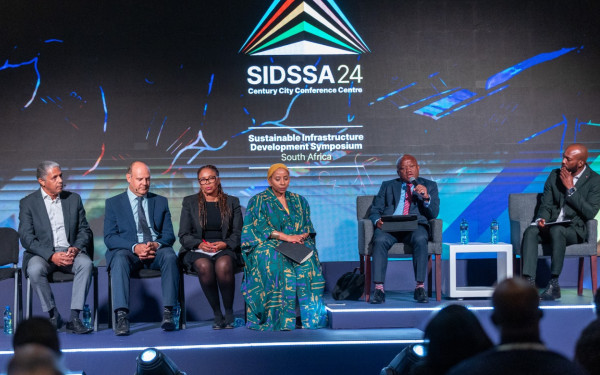
SIDSSA 2024: Unpacking South Africa’s Top 12 Infrastructure Priorities

Location: News
Energy Capital & Power

South Africa's Minister of Public Works and Infrastructure Sihle Zikalala unpacked the country's 2024/2025 infrastructure priorities and project pipeline during a panel session at the Sustainable Infrastructure Development Symposium South Africa (SIDSSA) 2024 in Cape Town on Tuesday.

According to Minister Zikalala, the country's top 12 infrastructure priorities seek to stimulate job creation, promote economic competitiveness and contribute to broadening economic inclusivity.

“We announced the 12 priority projects today and it's important to give a background as to how we arrived at this priority list. We want projects that will contribute to higher GDP impact, but at the same time, ensure export and embrace the green economy,” he stated.

Taking place on March 17-19 at the Century City Conference Center, SIDSSA brings together key stakeholders in South Africa and across the continent with the aim of driving infrastructure development. SIDSSA 2024 serves as a crucial platform for discussions and partnerships in the infrastructure investment landscape, with a focus on accelerating economic activity through strategic infrastructure plans. Energy Capital & Power – the leading investment platform for the African energy sector – is a media partner for this important platform. For more information, visit https://SIDSSA.org.za/.

With support from Infrastructure South Africa (ISA) – a program within the Ministry of Public Works and Infrastructure – the projects also aim to accelerate private sector-led development. The projects are poised to serve as a catalyst for closing the infrastructure investment gap, while meeting the infrastructure target set out by the government's National Development Plan.

“It was very important for us to ask what we plan to contribute from an operational perspective to all the socioeconomic perspectives outlined by the Minister,” stated Mameetse Masemola, Head of ISA. “We will work very closely with the project sponsors in unpacking the work and once we are ready, we will invite transactional advisors.”

It was noted during the session that shortfalls in operation and maintenance have resulted in the underdevelopment of South Africa's infrastructure strategy. As such, the need to meet end-user's requirements, the mobilization of digital infrastructure and ensuring operational competency were noted as prerequisites to de-risk investment in the sector.

“The projects listed give the catalytic impetus to develop our industry,” stated Wayne Petersen, Director of Transport and Infrastructure at WSP Group. “We have to ensure that the private sector invests strongly in the projects that are implemented.”

Meanwhile, panelists touched on the importance of bankability and sustainability in attracting private sector investment towards infrastructure projects in the country.

“Infrastructure assets are not only about the assets themselves, but also about the economics that surround them,” said Catherine-Candice Koffman, Group Executive for Project Preparation at the Development Bank of Southern Africa. “Bankability is very much about ensuring we have a project that doesn't rely too much on the fiscus. A successful project is one where you use as little budgetary capital to fund the projects as possible.”

For South Africa's infrastructure projects to maintain operational efficiency after completion, it was noted that the country will need to invest in attracting international talent while promoting human capital development, with Partner at PwC Southern Africa Chris van der Merwe stating, “These projects need to strike a balance between economic and social projects.”

Distributed by APO Group on behalf of Energy Capital & Power.

About SIDSSA 2024:
SIDSSA 2024 is organized by the Investment and Infrastructure Office under the Presidency, in collaboration with the Association of African Exhibition Organizers. The National African Federation for the Building Industry joins as an association partner, while the Development Bank of Southern Africa is the official sponsor of the event.

Media files
Energy Capital & Power
Download logo
Read moreSIDSSA 2024: Unpacking South Africa’s Top 12 Infrastructure Priorities
  • Previous
  • Page 1
  • Interim pages omitted …
  • Page 152
  • Page 153
  • Page 154
  • Page 155
  • Page 156
  • Interim pages omitted …
  • Page 210
  • Next

Copyright © 2026 · MyZA · All Rights Reserved · Powered by Stratlec Online