• Skip to main content
  • Skip to header right navigation
  • Skip to after header navigation
  • Skip to site footer
MyZA

MyZA

News, Directory, Events and Other Stuff

  • Social Media
  • Sport
  • World News
  • Home
  • Submit News
  • Directory
  • Events
  • Stratlec
  • TFSA
  • News
    • APO
    • Today’s Sport News
    • Todays Social Media and Tech Headlines
    • Today’s World News
    • Today’s SA Financial News
  • Contact
You are here: Home / Archives for Government

Government

19 March 2025

Mashatile to lead official World TB Day and National End TB campaign

Location: News

Mashatile to lead official World TB Day and National End TB campaign

The Chairperson of the South African National AIDS Council (SANAC), Deputy President Paul Mashatile, will deliver the keynote address at the national World TB Day commemorative event on Monday, 24 March 2025. 

World TB Day is commemorated annually on the 24th of March to raise public awareness about the global epidemic of tuberculosis (TB) and highlight efforts to eliminate the disease. 

The day is also designated to highlight the devastating health, social and economic impact of TB. 

During the event on Monday, the Deputy President will also launch the National End TB Campaign at the Ugu Sports and Leisure Centre in Gamalakhe Township, Ugu District, KwaZulu-Natal.

According to the Presidency, South Africa is one of the countries most affected by TB and remains the leading cause of death in the country, claiming approximately 56 000 lives each year, with 54% of these deaths among people living with HIV.

This year’s official country theme for World TB Day is “Yes! You and I Can End TB – Commit, Invest, Deliver".

“This is a clarion call for leaders to champion TB efforts in their respective constituencies and encourage individual action from all South Africans to contribute to the national effort against TB.“

The Deputy President’s Office said the significance of this year’s commemoration will be marked by the launch of the National End TB campaign designed to substantially reduce TB incidence and mortality in South Africa by 2035. 

This campaign will be carried out in phases, beginning with a focus on case finding and linking patients to care in the year 2025/26.

The campaign aims to diagnose 250 000 new TB cases by 2025/26 through targeted testing of five million people. 

This will be accomplished by implementing Accelerated Targeted Universal TB Testing (TUTT) to reach individuals living with HIV and household contacts with confirmed TB cases.

The Deputy President will be joined by the Minister of Health Dr Aaron Motsoaledi, Premier of KwaZulu-Natal Thamsanqa Ntuli, SANAC Civil Society Chairperson Solly Nduku, Chairperson of the SANAC Private Sector Forum Mpumi Zikalala, and SANAC CEO Dr Thembi Xulu. 

They will also be joined by representatives from development partners inclusive of the United Nations agencies, United States government agencies, research entities, civil society movements and the private sector. – SAnews.gov.za
 

Gabisile
Wed, 03/19/2025 - 10:13
102 views

Read moreMashatile to lead official World TB Day and National End TB campaign
19 March 2025

AEW 2025 Program Launches, Highlighting African Energy Security and Global Investment Opportunities

Location: Business
African Energy Chamber

The African Energy Week (AEW): Invest in African Energies conference has officially launched its 2025 program, covering strategic topics from upstream oil and gas to downstream infrastructure and distribution to the energy transition, power industry, energy finance and more. The program offers insight into what this year's edition will offer, as industry leaders, global investors, major operators and think-tanks convene in Cape Town to discuss Positioning Africa as the Next Global Energy Champion.  

As the largest event of its kind in Africa, AEW: Invest in African Energies serves as a vital platform to sign deals and drive energy projects forward. This year's event offers an expanded program, featuring a variety of stages covering the entire energy value chain. Additional features include pre-conference workshops, a deal room, the return of the African Farmout Forum, technical hubs, fireside chats and more. The Just Energy Transition concert returns to kick off the week while the African Energy Awards & Gala Dinner celebrates movers and shakers in African energy. 

One of the highlights of this year's conference is the G20 Energy Leaders Roundtable, which comes as South Africa hosts the 20th meeting of the G20 group this year. A series of country spotlights will also take place during the course of the week, covering markets such as South Africa, Senegal, Equatorial Guinea, Namibia and the Republic of Congo, as well as an OPEC roundtable featuring major OPEC-producers. A BRICS roundtable will examine the impact the group has on Africa's energy future while a COP 30 roundtable will discuss Africa's position ahead of the conference this year.  

Africa's energy sector is more attractive than ever, as regulatory reforms, ambitious policies and long-term development strategies continue to entice spending. Total capital expenditure for the oil and gas industry alone is estimated to reach $43 billion in 2025, with spending set to reach $54 billion by 2030. AEW: Invest in African Energies 2025 features an energy finance stage, with discussions covering the African Energy Bank; investment trends in Africa and reducing barriers to entry. The stage will unpack Mergers & Acquisitions; financing cross-border projects; energy access and equity, among other topics.   

As one of the final frontiers for oil and gas exploration, Africa is seeing a plethora of projects advance. West Africa is projected to lead oil and gas spending in 2025, accounting for over 50% of the continent's total expenditure. While established producers such as Nigeria remain dominant, emerging producers such as Senegal and Mauritania are attracting high levels of investment. In Southern Africa, Namibia targets first oil by 2029 while South Africa seeks to unlock discoveries in both its offshore basins and onshore shale prospects. Zimbabwe targets onshore gas production while Mozambique advances its pipeline of large-scale LNG projects. AEW: Invest in African Energies Upstream E&P Forum will examine the continent's exploration hotspots. Panels include onshore and shallow water potential; the resurgence of Libya; onshore basins to watch; the outlook for LNG; and deepwater plays.  

Amid the continent's oil and gas drive, Africa also seeks to advance a just energy transition, Countries such as Mauritania, Namibia and South Africa are spearheading large-scale green hydrogen developments while solar and wind developments offer increased accessibility for remote communities. Gas-to-power is a central feature of the continents just energy transition, with Algeria, Nigeria and Egypt leading the charge. The AEW: Invest in African Energies Energy Transition stage will unpack strategies for decarbonizing while boosting industrialization. Topics include addressing energy security and climate commitments; clean cooking opportunities; local content; integrated ESG, and more.  

As Africa seeks to make energy poverty history by 2030, a fundamental industry is the power sector. Efforts are underway across the continent to revitalize power infrastructure, with both grid-connected and off-grid projects advancing. International partners have a role to play in supporting power projects and the AEW: Invest in African Energies Powering Africa stage will address this. Topics include energy leaders dialogue; energy efficiency; bridging the electricity gap; energy diversification; and integrating renewables into the energy mix.  

“Africa is on the cusp of an energy revolution, and AEW: Invest in African Energies is where the deals that will define our continent's future are made. We remain committed to making energy poverty history by 2030, and through this event, we are accelerating the partnerships and policies that will make that vision a reality,” states NJ Ayuk, Executive Chairman of the African Energy Chamber.  

Visit www.AECWeek.com to download your copy today.  

AEW: Invest in African Energies is the platform of choice for project operators, financiers, technology providers and government, and has emerged as the official place to sign deals in African energy. Visit http://www.AECWeek.com for more information about this exciting event.  

Distributed by APO Group on behalf of African Energy Chamber.

Media files
African Energy Chamber
Download logo
Read moreAEW 2025 Program Launches, Highlighting African Energy Security and Global Investment Opportunities
19 March 2025

Government welcomes agreement on protecting penguin populations

Location: News

Government welcomes agreement on protecting penguin populations

The Department of Forestry, Fisheries and the Environment (DFFE) has welcomed the finalisation of a historic settlement agreement -- in the form of a court order -- securing critical protections for South Africa’s penguin populations. 

The landmark agreement -- reached between the fishing industry and conservation organisations BirdLife South Africa and the Southern African Foundation for the Conservation of Coastal Birds (SANCCOB) -- establishes island closures to safeguard the critically endangered African Penguin, while supporting sustainable fishing practices.

“Today marks a triumph for conservation and sustainable development. This court-ordered settlement realises the DFFE’s long-standing commitment to protecting our penguins and biodiversity, while ensuring the fishing industry’s viability. 

“I am immensely proud of the collaborative spirit that has brought us here, a model for how industry and conservation can work hand in hand for the greater good,” Minister of Forestry, Fisheries and the Environment, Dr Dion George, said on Tuesday.

The order, issued by the Pretoria High Court on Tuesday, includes the following island closures:

  • Dassen Island: Interim closure as per current permit conditions.
  • Robben Island: A 20km closure, consistent with the Island Closure Experiment.
  • Stony Point: Closure as depicted by the black hatched line in the agreed diagram, applicable to all fishing vessels.
  • Dyer Island: Interim closure as reflected in current permit conditions.
  • St Croix Island: Closure delineated by coordinates (western boundary: 25°45'E; southern boundary: 34°01' to 25°50'E; southern boundary east: 33°59' to 25°59'E; eastern boundary to MPA: 25°59'E).
  • Bird Island: A 20km closure radius from the lighthouse, as implemented during the Island Closure Experiment.

The DFFE said it is committed to overseeing the effective implementation of these closures and will collaborate with stakeholders to monitor their impact on penguin populations. 

“With this court order, South Africa sets a global standard for environmental stewardship, proving that unity and science-based solutions can secure a thriving future for both nature and livelihoods.

“We extend our heartfelt thanks to the fishing industry, BirdLife South Africa, SANCCOB, and all involved parties for their dedication to this process,” the department said. -SAnews.gov.za

nosihle
Wed, 03/19/2025 - 09:39
43 views

Read moreGovernment welcomes agreement on protecting penguin populations
19 March 2025

SA condemns Israeli airstrikes on Gaza

Location: News

SA condemns Israeli airstrikes on Gaza

South Africa has condemned the extensive Israeli airstrikes carried out across Gaza dron Tuesday, resulting in the deaths of over 350 Palestinians. 

The deadly airstrikes occurred following a failure to implement the second stage of the peace agreement with Israel, despite ongoing negotiations aimed at ensuring the ceasefire remains in effect.

The fatal attacks were reportedly authorised by the Israeli leadership more than a week ago. 

According to the Department of International Relations and Cooperation (DIRCO), this raises concerns about the commitment to the permanent ceasefire outlined in the plan negotiated by the United States, Egypt and Qatar.

The Palestinian Health Ministry said many of those killed were children and several victims remain under the rubble.  

Reports suggest that airstrikes were concentrated on heavily built-up neighbourhoods, makeshift schools and residential buildings where people have been sheltering, which is a "blatant violation of international law, including international humanitarian law".

“South Africa is gravely concerned by the military onslaught and the fact that millions of people in Gaza are facing severe food and water shortages, as Israel continues to block aid and cut off energy supplies to the strip,” DIRCO said in a statement. 

Meanwhile, the department said Israel, which has enforced a total blockade of Gaza, has now issued new forced displacement orders for several areas. 

The department said the provisional orders issued by the International Court of Justice (ICJ) oblige Israel to take all measures within its power to prevent acts of genocide, ensure humanitarian assistance reaches Gaza, and preserve evidence related to alleged genocide.

The United Nations’ Humanitarian Coordinator for the Occupied Palestinian Territory, Muhannad Hadi, has urged that the ceasefire in Gaza be immediately reinstated. He called the waves of airstrikes across the Gaza Strip since the early hours of the morning “unconscionable.”

South Africa has also condemned the four targeted Israeli military strikes launched against southern Syria overnight, which killed at least two and wounded 19 others on the outskirts of the southern Syrian province of Deraa.

“The Syrian Observatory for Human Rights said Israel targeted a military site previously used by former President Bashar al-Assad’s forces, but which is now used by the army of Syria’s transitional government. 

“Israel’s airstrikes and previous statements that it does not want any Syrian military presence in the south of Syria is a violation of Syria’s sovereignty and territorial integrity,” DIRCO said. – SAnews.gov.za

Gabisile
Wed, 03/19/2025 - 08:55
62 views

Read moreSA condemns Israeli airstrikes on Gaza
18 March 2025

Court Limits Fishing to Protect African Penguins

Location: News

By agreement between all parties pelagic fishing permits must be amended within 14 days to protect six key penguin breeding areas

Read moreCourt Limits Fishing to Protect African Penguins
18 March 2025

South Africa strengthens ties with Japan 

Location: News

South Africa strengthens ties with Japan 

Deputy President Paul Mashatile has reaffirmed the country’s commitment to strengthening diplomatic and economic ties with Japan during a working visit  marking 115 years of relations between the two nations.

Speaking at United Nations University in Tokyo, the Deputy President underscored South Africa’s ongoing collaboration with Japan, highlighting the Strategic Cooperation Partnership established in 2010. 

“This year, the two countries celebrate a significant milestone of 115 years of relations,” he said. 

He also praised Japan’s significant investment in South Africa, with 273 firms currently operating in the country and sustaining over 200,000 local jobs.

“These ties have particularly flourished in the fields of trade and investment, science and technology, and education and skills development assistance. Japan is a significant investor in the South African economy, with 273 firms operating in the country, hence sustaining over 200 000 local employment opportunities for many South Africans,” he said.

Earlier on Tuesday, the Deputy President held fruitful engagements with the Prime Minister as well as with the Chief Cabinet Secretary of Japan. He said these meetings were a sign of the significant people, and trade relations between the two sister countries.

Beyond economic ties, cultural exchanges were also in focus. The Deputy President visited the historic Meiji Jingu forest, where he reflected on the importance of nature in fostering societal development, linking it to the African philosophy of Ubuntu.

“This visit served as a reminder of how the forest and nature more cements the importance of connecting with nature what has been appreciated as Kami.

“We have a lot in common as a people, hence we will continue to invest in people-to-people cultural exchange programmes. This is already happening through the number of rugby players that are playing in various teams here in Japan. We are emphasising the importance of people to people because it becomes easier to do business when you know each others' cultures,” the Deputy President said.

Strengthening economic cooperation

The visit comes at a time when South Africa is looking to bolster international partnerships in light of current geopolitical challenges confronting the nation and the global community. 

The Deputy President emphasised that his delegation’s trip was aimed at fortifying economic collaborations, particularly in inclusive economic development and trade balance.

“We want our two nations to collaborate with a particular emphasis on promoting inclusive economic development and ensuring a balance and increase in trade between the two nations.

“This has also been one of the priorities of South Africa’s 7th Administration, popularly known as the Government of National Unity (GNU). The formation of the Government of National Unity is a momentous development in South Africa’s democracy,” he said. 

South Africa’s leadership in the G20 was also highlighted, with the Deputy President reiterating the country’s vision for its presidency under the theme “Solidarity, Equality, Sustainability.”

“We want to make a meaningful contribution to the expressions of the continent through Vision 2063 towards the Africa we want. Such an Africa is one that is more integrated into the global community and acts as a key player in the economy and the socio-political landscape more broadly. 

“We believe that in an interconnected world, the challenges faced by one country have an impact at a global level,” he said. 

Call for global cooperation

The Deputy President concluded his address by emphasising the importance of global cooperation in addressing challenges such as climate change, rising nationalism, and economic instability.

“As I conclude, let me emphasise that our challenges can only be resolved through cooperation, collaboration, and partnership; no challenge and no triumph exist in isolation. Cooperation is our greatest strength and our most powerful weapon.

“Under the guiding principle of Ubuntu - the profound belief that ‘I am because you are’ – we are reminded of the interconnectedness of humanity. It is this principle of Ubuntu that underpins South Africa’s leadership and vision for our G20 Presidency, and our future,” the Deputy President said.

He further urged everyone to remember that true progress is achieved not through words alone but through meaningful action and collaboration.

“We should be deliberate in our conversation and find more meaningful ways to strengthen our relations, both in trade, and investment. Let us work hand in hand towards a more just, equitable, and sustainable world for all,” he said.

The Deputy President arrived in Japan on Sunday and will conclude his visit on Wednesday, 19 March.
READ | Deputy President Mashatile arrives in Japan for a working visit

– SAnews.gov.za


DikelediM
Tue, 03/18/2025 - 14:33
446 views

Read moreSouth Africa strengthens ties with Japan 
18 March 2025

Deputy President stresses importance of coordinated approach to challenges

Location: News

Deputy President stresses importance of coordinated approach to challenges

Deputy President Paul Mashatile has stressed the need for a coordinated approach to peacebuilding and economic resilience.

This as he highlighted that the conflicts between Russia and Ukraine and conflicts in the eastern Democratic Republic of Congo, Sudan, in the Sahel, and in Gaza, continue to exert a heavy human toll while heightening global insecurity. 

The Deputy President was speaking at the United Nations University (UNU) in Tokyo, Japan on Tuesday. 

The UNU, in partnership with the Embassy of South Africa in Japan, is co-hosting a symposium exploring South Africa's G20 Presidency and steps to ensure solidarity, equality and sustainability for all. 

Touching on the deepening conflict and instability across Africa and the world, the Deputy President said this requires coordinated preventive action including dedicated intervention on peace building that is programmatic in nature.

“We are encouraged by the partnership between the United Nations University and the University of South Africa (UNISA) in cooperation with other relevant partner organisations to co-design and co-deliver required capacity building programmes for African leaders and mediators for resolving conflicts and blazing a path towards achieving peace, security and prosperity, “the Deputy President explained.

He further emphasised the urgent need for comprehensive, African-centred peace-building research and training programmes that span throughout Africa to address the urgent demand for capacity for conflict management and resolution, as well as society reconstruction.

G20 Presidency

“In our G20 Presidency, South Africa will continue to advocate for diplomatic solutions. Inclusive dialogue is the foremost guarantor of sustainable peace.
“South Africa has shown a firm resolve in its foreign policy by promoting principles of justice, solidarity, equality, peace, and respect, underpinned by its commitment to human dignity and leaving no one behind,” he said. 

This was the reason South Africa has placed solidarity, equality, sustainability at the centre of its G20 Presidency.

As part of South Africa’s G20 intention to place Africa’s development at the top of the agenda, Mashatile outlined four key priorities which are strengthening disaster resilience, ensuring debt sustainability for developing economies, mobilising finance for a just energy transition, and harnessing critical minerals for sustainable growth. 

“Our hosting of the G20 Finance Ministers and Central Bank Governors Meeting, and the Business 20 provided an opportunity for us to promote South Africa and Africa as a business and investment destination and for the country to take the lead on providing solutions to global economic challenges,” he said. 

He emphasised the country’s commitment to driving economic reforms, increasing investor confidence, and enhancing structural efficiencies in energy, water, and transport sectors.

“We believe that addressing structural concerns is essential to maintaining investor confidence and ensuring long-term economic stability. It is only by accelerating structural reforms and harnessing the power of the private sector that the country can sustain economic momentum and attract further foreign investment.

“As the South African government, we are implementing extensive structural, policy, and regulatory reforms to enhance the economy's performance,” he said. 

AI role in shaping Africa’s economic future

The Deputy President also emphasised the role of artificial intelligence (AI) and digital transformation in shaping Africa’s economic future, calling for greater collaboration between African institutions and international organisations. 

Quoting Professor Tshilidzi Marwala, he noted the need for South Africa to embrace AI while also ensuring ethical considerations remain central to its deployment. 

He urged institutions like UNU to partner with African universities to foster digital skills development and AI-driven innovation.

As the G20 Presidency has shifted to South Africa, the Deputy President said that AI has emerged as a key area of focus.

Through the G20 Presidency, he said the country aims to harness AI to advance the Sustainable Development Goals agenda and address global challenges.

“We encourage the United Nations University to work alongside Africa in the development of AI, which has the potential to considerably boost the continent's economies. You must cooperate with additional universities in South Africa and throughout Africa to help overcome digital barriers, promote equality, and support inclusive sustainable development,” he said. 

Mashatile added that African governments are also recognising the importance of the digital economy, which is heavily influenced by artificial intelligence. He noted that the digital economy and AI are becoming more important drivers of economic and social value creation throughout the world. 

“We are investing in digital infrastructure, skills development, and entrepreneurship to assist Africa's digital economy to expand,” he said. – SAnews.gov.za


DikelediM
Tue, 03/18/2025 - 14:36
98 views

Read moreDeputy President stresses importance of coordinated approach to challenges
18 March 2025

Kenya’s President Ruto Awards African Development Bank’s Adesina Highest National Honour

Location: News
African Development Bank Group (AfDB)

  • “I am proud of the journey we started together ten years ago; I can see its fruits. Kenyans can feel its benefits,” President Ruto
  • “What a great honour! What a rare privilege! What a historic recognition!” Adesina

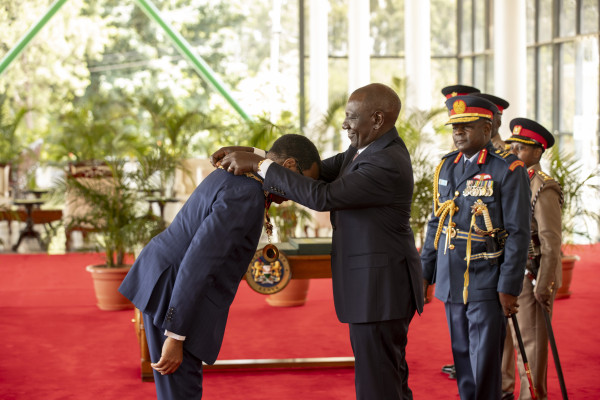
Kenya's President H.E. William Samoei Ruto has conferred the country's highest honour, Chief of the Order of the Golden Heart CGH, on the President of the African Development Bank Group, Dr Akinwumi Adesina (www.AfDB.org).

Dr Adesina becomes the 20th recipient of the honour that was established in 1967 and first awarded to Kenya's founding father and former President, H.E. Jomo Kenyatta. Others include globally renowned leaders such as former UN Secretary General Kofi Annan, South Africa's Nelson Mandela, Queen Elizabeth II of the United Kingdom, Uganda's Yoweri Museveni and Kenya's subsequent Presidents Daniel arap Moi, Mwai Kibaki, Uhuru Kenyatta and Dr Ruto.

During a colourful investiture ceremony at Nairobi's State House, President Ruto praised Dr Adesina's distinguished service, commitment, and passion for the economic development of Kenya and Africa.

President Ruto congratulated Adesina and told him, “You are amazing. You are a great leader. You deserve this honour and investiture.” 

The two leaders share a warm relationship that dates back 20 years when Adesina lived and worked in Kenya for the Alliance for Green Revolution in Africa, AGRA. At that time Ruto was Kenya's Minister for Agriculture. Both recalled how they worked together to provide subsidies to farmers despite opposition at the time from some donors and global financial institutions.

President Ruto said under his presidency he has continued with the same policy of offering subsidies to farmers, leading to an increase in the country's food production.

“Our maize production increased from 40 million to 70 million bags last year. Our sales from tea, generated more than 220 billion shillings [approximately $1.7 billion], the highest ever earnings.”

“I am proud of the journey we started together ten years ago; I can see its fruits. Kenyans can feel its benefits,” President Ruto told Adesina who was accompanied by his wife, Mrs Grace Yemisi Adesina.

In its citation, the Kenya government recognized Adesina as a distinguished economist and a global development leader.

“He transformed the African Development Bank into a globally recognized institution for financial innovation and development impact and grown  the Bank's general capital from $93 billion to $318 billion,” the citation reads.

In his acceptance speech, Adesina said: “I am greatly humbled by your incredible kindness! What a great honour! What a rare privilege! What a historic recognition!”

Adesina spoke about Kenya's special place in the history of the Bank which was established in 1964. Since then, the Bank has financed a total of 167 projects, with financial commitment of $7.8 billion.

He said the Bank's current portfolio in Kenya consists of 45 projects worth $4.09 billion. They include, among others: 

  • The Last-Mile Connectivity electricity project, which has helped to increase the number of Kenyans connected to the national electricity grid from 2.42 million households in 2014 to 9.7 million households in 2024.
  • The expansion of the Thika-Nairobi Highway, which has drastically reduced travel time from 2-3 hours to just 30-45 minutes between the two destinations.
  • The Bank is providing $634 million for the Kenya Town's Sustainable Water Supply and Sanitation project. This includes 314.92 million Euros for the construction of the Thwake Multipurpose Water Dam, to be completed by July 2026. It will provide water to about 1.3 million people in Kitui and Makueni counties, as well as the Konza Techno-City in Machakos County.
  • The Bank's support for the private sector in Kenya includes over $700 million in lines of credit to more than eight commercial banks.

President Ruto said the Bank's support to the country's mortgage sector has boosted the government's national housing programme, with 150,000 houses under construction, generating jobs for 260, 000 youth.

Speaking about Kenya's high youth unemployment, Adesina pointed to several youth riots that shook the country last year.

In addition to providing $309 million for eight on-going projects targeting skills development, Adesina said the Bank is preparing for Board approval, financial support for the establishment of a Youth Entrepreneurship Investment Bank of Kenya.

“This will be a stand-alone financial institution, that will be 100 percent dedicated to providing technical assistance, debt and equity financing for youth businesses in Kenya.”

Adesina was accompanied by Vice President for Power, Energy, Climate and Green Growth Dr Kevin Kariuki, the Vice President for Regional Development, Integration and Business Delivery Nnenna Nwabufo; the Director General for East Africa, Kennedy Mbekeani; the Executive Director for Eastern Africa, Jonathan Nzayikorera; and his Senior Advisor to the President for Communication and Stakeholder Engagement Dr Victor Oladokun, who delivered the opening prayer for the ceremony.

“This is an honour that I will cherish for life,” Adesina said. “It will be a constant reminder that the country I love so much, Kenya, loves me back, appreciates and celebrates my leadership at the African Development Bank, and values and honours the incredible contributions of the Bank to its development. I accept this honour with great humility.”

Distributed by APO Group on behalf of African Development Bank Group (AfDB).

To look at the album click  here (apo-opa.co/3FzwNt7).

About the African Development Bank Group:
The African Development Bank Group is Africa's premier development finance institution. It comprises three distinct entities: the African Development Bank (AfDB), the African Development Fund (ADF) and the Nigeria Trust Fund (NTF). On the ground in 41 African countries with an external office in Japan, the Bank contributes to the economic development and the social progress of its 54 regional member states. For more information: www.AfDB.org

Media files
African Development Bank Group (AfDB)
Download logo
Read moreKenya’s President Ruto Awards African Development Bank’s Adesina Highest National Honour
18 March 2025

KZN Foot and Mouth Disease boundaries extended

Location: News

KZN Foot and Mouth Disease boundaries extended

In response to the spread of Foot and Mouth Disease (FMD) in KwaZulu-Natal, Agriculture Minister, John Steenhuisen, has announced the extension of the province's Disease Management Area boundaries to curb further outbreaks.

According to a departmental report on Monday, the outbreaks of FMD in KwaZulu-Natal have not been successfully contained, with new cases recently detected in the Newcastle area.

“The disease has now spread beyond the initial Disease Management Area (DMA) declared in 2021, when outbreaks of the SAT2 FMD strain first emerged in the province,” the department said.

READ | Ministry provides update on Foot and Mouth Disease 

The department said the latest measure aims to control the movement of cloven-hoofed animals (cattle, sheep, and goats) and their derived products in affected areas.

“No cloven-hoofed animals, their products, or genetic material may be moved from, to, or within the DMA unless authorised by a state veterinary permit and in full compliance with the stipulated conditions of such [a] permit. The updated DMA boundaries will be officially declared in the Government Gazette in the coming days,” the department said.

The DMA has now been extended to local municipalities including Big Five Hlabisa; Mtubatuba; Nongoma; Ulundi; Umhlabuyalingana; Jozini; Pongola; Abaqulusi; Mfolozi; uMhlathuze; Mthonjaneni; Nqutu; Nkandla; uMlalazi; and Mandeni Local Municipality.

Partial municipalities (specific portions covered by the DMA) include:
•    Emadlangeni: South of R34 from R33
•    Newcastle: South of R34 up to and east of N11
•    Dannhauser: East of N11 and north of R68
•    Endumeni: North of R68 and east of R33
•    Msinga: East of R33
•    UMvoti: East of R33 up to R74 and north of R74
•     Maphumulo: Northeast of R74
•    Ndwedwe: East of R74
•    KwaDukuza: Northeast of R74 up to the N2 and west to the N2 up to Mandeni.

Movement control measures and responsibility

The department has reiterated that movement control measures, originally declared in October 2022, remain in place nationwide, and “these control measures have been included again in the new Government Gazette notice".

“These measures require that: any movement of cattle, sheep, or goats must be accompanied by an owner declaration confirming the animals’ origin and health status; and that the recipient of the animals at the destination must provide a signed undertaking ensuring the animals will be isolated for at least 28 days before integration with the main herd,” the department explained.

The department emphasised that Section 11 of the Animal Diseases Act, 1984 (Act No. 35 of 1984), places a legal obligation on all animal owners and farm managers to take all reasonable steps to prevent their animals from becoming infected and to prevent the spread of diseases.

Essential biosecurity measures include:
•    Limiting or postponing the introduction of new animals onto farms.
•    Only introducing animals from known, disease-free sources with a valid health declaration.
•     Preventing direct contact between farm animals and those outside the farm.
•    Maintaining secure farm boundaries and restricting access to livestock areas.
•    Minimising human and vehicle access to farms, with proper disinfection protocols in place.

Reporting 

FMD is classified as a controlled animal disease under the Animal Diseases Act, 1984 (Act No. 35 of 1984), which mandates specific control measures, such as isolation and movement restrictions, enforced by Veterinary Services.

“Any suspicious clinical symptoms, such as salivation, blisters in the mouth, limping, or hoof lesions, should be reported immediately to the local State Veterinarian, and such animals must not be moved under any circumstances,” the department emphasised. – SAnews.gov.za

GabiK
Tue, 03/18/2025 - 08:45
137 views

Read moreKZN Foot and Mouth Disease boundaries extended
18 March 2025

AEW 2025 to Address South Africa’s Power Crisis

Location: Business
African Energy Chamber

South Africa faces a critical energy challenge: securing a stable power supply while transitioning to a low-carbon future. The African Energy Chamber's (EnergyChamber.org/) State of African Energy 2025 Outlook Report provides a detailed analysis of this shift, highlighting the country's continued reliance on coal, the slow pace of renewable energy integration and the urgent need for infrastructure investments to modernize the grid. These insights will set the stage for key discussions at African Energy Week (AEW) 2025: Invest in African Energies, where industry leaders will examine how South Africa and other mature markets across the continent can balance energy security with decarbonization.

Coal remains the cornerstone of South Africa's power generation, contributing over 80% to the energy mix. This heavy reliance has led to ongoing load-shedding – constraining industrial productivity, discouraging investment and limiting GDP growth to less than 1% annually over the past decade. Addressing this crisis requires urgent intervention through infrastructure investment, diversification of the energy mix and policy reforms to enhance grid stability and efficiency. This will be a key focus for stakeholders at AEW 2025, where discussions will center on accelerating the transition to a more resilient and diversified energy system, enhancing the role of renewables and gas-to-power solutions, and attracting critical investments to modernize the grid and reduce dependence on coal.

In response to the energy crisis, South Africa has embarked on integrating renewable energy sources. The Renewable Energy Independent Power Producer Procurement Program has been instrumental, with over 7.2 GW of solar PV and 3.6 GW of onshore wind capacity installed by the end of 2023, collectively accounting for over 17% of the country's total installed capacity. Gas-to-power projects have also emerged as a viable solution, with the government issuing requests for proposals for 2 GW of such projects in late 2024. Concurrently, battery energy storage systems are being developed, with the Department of Mineral Resources and Energy launching bid rounds totaling over 1.7 GW/6.9 GWh of storage capacity.

South Africa's Just Energy Transition Investment Plan has drawn global interest, securing $8.5 billion in commitments from partners including France, Germany, the UK, the US and the EU. However, disbursement remains a challenge, with only $1.9 billion allocated to date – primarily for grid expansion and support for coal-mining communities. As the country navigates the complexities of a large-scale transition, key issues such as grid constraints, the integration of renewables and ensuring a stable, sustainable energy supply will be addressed at AEW 2025.

Taking place in Cape Town, AEW 2025: Invest in African Energies serves as the premier platform for South Africa and the broader African continent to tackle the critical energy challenges shaping the region's future. The event will highlight strategies to integrate cleaner energy sources while maintaining grid stability and affordability, as well as emphasize modernization of grid infrastructure, addressing capacity constraints and enhancing transmission networks to support a diversified energy mix.

Beyond technical solutions, securing large-scale investments will be a key priority, as Africa seeks to attract capital for sustainable energy projects that ensure both energy security and environmental responsibility. By convening industry leaders, policymakers, financiers and innovators, AEW 2025 will drive forward collaborative solutions, policy reforms and strategic partnerships essential for unlocking Africa's full energy potential and fostering long-term economic growth.

AEW: Invest in African Energies is the platform of choice for project operators, financiers, technology providers and government, and has emerged as the official place to sign deals in African energy. Visit www.AECWeek.com for more information about this exciting event.

Distributed by APO Group on behalf of African Energy Chamber.

Media files
African Energy Chamber
Download logo
Read moreAEW 2025 to Address South Africa’s Power Crisis
18 March 2025

Local procurement drives progressive change and creates jobs

Location: News

Local procurement drives progressive change and creates jobs

Local procurement is more than a policy instrument, it is a strategic lever that drives progressive change, creates jobs and ensures that belief in South African talent and resilience translates into tangible economic growth. 

This is according to Trade, Industry and Competition (dtic) Acting Director-General, Dr Malebo Mabitje-Thompson, who was speaking at the 13th annual Proudly South African Buy Local Summit and Exhibition, currently underway in Sandton, Johannesburg.

Speaking on behalf of Trade, Industry and Competition Minister, Parks Tau, Mabitje-Thompson underscored the critical role of local procurement in South Africa’s economic development and the need for a resilient domestic industry.

Reflecting on the Proudly South African campaign’s 24-year history, Mabitje-Thompson emphasised that buying local strengthens South Africa’s manufacturing sector and enhances the country’s ability to compete globally.

“We need to embrace local procurement for economic empowerment. Local procurement is more than a policy instrument, it is a strategic lever that drives progressive change, creates jobs, and ensures that our belief in South Africans' talent and resilience translates into tangible economic growth,” said Mabitje-Thompson.

She further emphasised the importance of ensuring that government agencies align with local procurement legislation, as demonstrated by entities such as Transnet, which have committed to investing in South African enterprises.

“When we procure locally, we bolster our economy and enhance its resilience. In a world where global supply chains are increasingly uncertain, it is vital that we can rely on our industries to supply our critical needs. 

“Local procurement is not about shutting out foreign markets, rather, it is about creating a foundation for sustainable economic growth that benefits all,” she said.

Mabitje-Thompson encouraged stakeholders to actively engage in discussions on policies that support industrial growth, including master plans, tariff measures and initiatives to combat illegal imports. 

She reiterated that while incentives and industrial financing play an essential role, they cannot replace the fundamental need for a strong and reliable domestic market.

The Buy Local Summit and Exhibition remains a pivotal platform for businesses, governments, and consumers to collaborate in fostering a thriving local economy. 

The dtic continues to support efforts that prioritise South African enterprises, ensuring their ability to grow and compete both locally and internationally. – SAnews.gov.za


Edwin
Tue, 03/18/2025 - 09:15
9 views

Read moreLocal procurement drives progressive change and creates jobs
17 March 2025

Invest in ECD to shape the next generation, says President

Location: News

Invest in ECD to shape the next generation, says President

President Cyril Ramaphosa has advocated for universal access to Early Childhood Development (ECD) to ensure that every child has the opportunity to learn, grow and thrive by the age of five.

The President was delivering remarks at the official opening of the Bana Pele 2030 Roadmap Leadership Summit at Atlas studios, in Johannesburg. 

“Universal childhood development should have started 30 years ago…We are all here today because of our shared belief in the profound importance of Bana Pele – putting children first. 

“It is because of this shared vision that we unite and collaborate today, committed to ensuring that every child has the opportunity to learn, grow and thrive by the age of five,” the President said on Monday.

The President told the summit that government’s immediate focus is to extend access to early childhood development to every child calling it one of the most powerful tools for unlocking the nation's potential.

He emphasised that ECD extends beyond education, it is a key driver of economic growth.

“We recognise today that investing in ECD is not just about education. It is about shaping the next generation of skilled, capable and entrepreneurial citizens who will drive our economy forward. 

“Investing in ECD yields significant economic returns. Studies have shown that every rand spent on early childhood education can save up to seven rands in future costs associated with remedial education, social services and criminal justice,” the President said.

He highlighted that early childhood development provides children with the foundational skills they need to build a successful future. It further helps break the cycle of poverty that is handed down from one generation to the next.  

“Early childhood development is about giving children from all backgrounds the opportunity to grow into confident, capable citizens who contribute positively to society. Children who receive a strong start are more likely to succeed in school and the workforce, reducing societal costs in areas such healthcare, crime prevention and welfare,” the President said. 

A research report published to coincide with Brazil’s G20 Presidency, estimated that in South Africa, an investment of 2.1% of the Gross Domestic Product (GDP) in universal childcare could have supported 10.5 million women to join the workforce over three years. 

Because of the profound effect that ECD can have on social well-being and development, the President said government had decided to put the country’s children first. 
 

Last week, the Minister of Finance announced an additional investment of R10 billion in ECD over the next three years.

The President referred to the statistic that 80% of children in South Africa are unable to read for meaning by the age of 10. He emphasised that early childhood development was critical for developing foundational skills such as language, literacy and numeracy.

President Ramaphosa added that the experiences and interactions children have can significantly influence their future learning potential.

“This is why ECD must be treated as an urgent priority. We therefore welcome this wonderful initiative for business, civil society and government to work together to shape the future of early childhood development.

“This initiative will assist the strategic reorientation of the basic education sector to strengthen foundation learning. The benefits of universal access to ECD extend beyond the education of the child. It helps to empower families to break free from the effects of poverty."

President Ramaphosa called on all ECD programmes to register with the Department of Basic Education so that all children can receive the start in life that they need and deserve.

He noted that the ripple effects of a robust ECD system are felt across generations, fostering a cycle of opportunity and growth.
“We are determined that every child, regardless of their background or location, must have access to quality early education. It is for this reason that the Department of Basic Education launched the Bana Pele Mass Registration Drive last year,” he said.

The President said that the Mass Registration Drive was an example of cross-sectoral collaboration at work. He added that the country has an opportunity to rethink and restructure the entire ECD landscape, making it more effective, more inclusive and more impactful than ever before.

“As South Africans, we have a clear goal for all our children: access to quality learning opportunities for an additional 1.3 million children by 2030. This is why we are here today.

“We need to create a collaborative framework for ECD. One that brings together government, business, donors, ECD workers and all other social partners,” he said.

He said this framework must ensure that all role-players work together at both the provincial and municipal levels to improve access to quality early childhood education.

“As we move forward, we must remember that there is no greater cause than uniting for the benefit of our children. Our future as a nation depends on the children we raise today. We must commit to creating an environment where every child, no matter where they come from, has the opportunity to learn, to grow and to succeed.

“Let us join hands and work together, as a united force, to achieve our shared vision of universal access to quality early childhood development,” the President said. – SAnews.gov.za
 

DikelediM
Mon, 03/17/2025 - 11:35
574 views

Read moreInvest in ECD to shape the next generation, says President
17 March 2025

Here’s How We Can Move to Renewable Energy in a Just Way

Location: News

Mining companies could fulfil their social obligations by investing in these projects

Read moreHere’s How We Can Move to Renewable Energy in a Just Way
17 March 2025

Career guidance platform to assist SA’s youth 

Location: News

Career guidance platform to assist SA’s youth 

An online career guidance platform which will guide young people in making informed decisions about their careers with an objective of attracting top talent in South Africa’s retail sector has been launched.

The platform in South Africa’s third biggest economic sector was launched by Higher Education and Training Deputy Minister, Buti Manamela on Friday.

The online career guidance platform is an interactive digital resource aimed at providing career advice, skills development information, and learning pathways for youth and professionals in the wholesale and retail sector.

The platform was brought to the fore at the Wholesale and Retail Sector Education and Training Authority (W&RSETA) celebration of the accreditation of 41 Historically Disadvantaged Individuals (HDI) skills development training providers.

Held in Kempton Park, Johannesburg, the event underscored government’s ongoing commitment to equipping young people with the skills needed for economic development and transformation.

It also recognised the efforts of 41 Black skills development providers who have achieved accreditation from the Quality Council for Trades and Occupations (QCTO) to offer training in the retail industry.

As part of this initiative, W&RSETA has invested R10 million into a three-year project to support these providers, further promoting equal opportunities and sustainable livelihoods for those previously disadvantaged in the retail training landscape.

In his keynote address, Manamela commended the W&RSETA for demonstrating its commitment to career guidance, skills development, and economic transformation.

“As we look toward 2030, especially within the Medium-Term Development Plan lenses, we must continue strengthening partnerships between government, industry, and education institutions to ensure that every young South African has the tools and knowledge to succeed,” Manamela said.

W&RSETA Chairperson, Reggie Sibiya said:  “the W&RSETA is unapologetic about transforming the wholesale and retail sector.”

More information can be found on: https://retailcareers.wrseta.org.za/. – SAnews.gov.za


GabiK
Mon, 03/17/2025 - 11:37
282 views

Read moreCareer guidance platform to assist SA’s youth 
17 March 2025

KZN champions digital solutions to combat gender-based violence

Location: News

KZN champions digital solutions to combat gender-based violence

KwaZulu-Natal Premier, Thamsanqa Ntuli, has emphasised the critical role that digital initiatives can play in addressing the scourge of gender-based violence and femicide (GBVF).

“We must explore innovative ways to use technology as a weapon against GBVF. Digital platforms can provide immediate access to support services, real-time emergency assistance, and critical legal resources for victims, particularly students and young women who are vulnerable to abuse,” Ntuli said.

His comments follow a recent high-level brainstorming session with key stakeholders from the Information and Communications Technology (ICT) sector convened by the Premier.

The session aimed to explore technological solutions to address the rising tide of GBVF, with particular attention given to the alarming impact on students in higher education institutions.

The discussion sought to identify digital strategies to strengthen intervention efforts and improve support systems for victims.
This follows President Cyril Ramaphosa’s declaration of GBVF as a national pandemic in 2020, acknowledging its alarming rise and the urgent need for innovative, technology-driven solutions.

Key areas 

The session focused on developing and integrating technology-driven solutions into the province’s GBVF response framework.
The session explored key areas of intervention, including:

•    Tech-based emergency response systems – Exploring real-time mobile applications and alert platforms for victims in distress.
•    Digital awareness campaigns – Strengthening online engagement to educate communities on GBVF prevention.
•    AI-driven safety monitoring – Implementing artificial intelligence to track and report high-risk areas for targeted interventions.
•    Public-private partnerships – Enhancing collaboration between the ICT industry, business sector, and government to drive digital transformation in GBVF prevention.

Ntuli highlighted the provincial government’s commitment to harnessing ICT solutions to create safer communities while also ensuring swift intervention in GBVF cases.

He commended the business sector and ICT industry for their willingness to partner with the government in developing TechServy Systems, a technology-based tool designed to combat GBVF through data-driven interventions, real-time tracking, and enhanced accessibility of support services.

Commitment to action

The meeting concluded with stakeholders agreeing on practical steps to fast-track the development and implementation of digital safety solutions across KwaZulu-Natal and reinforcing the province’s proactive stance against GBVF.

Ntuli reaffirmed the provincial government’s commitment to work with ICT stakeholders to implement sustainable, tech-driven GBVF solutions.

“Leveraging technology is no longer optional but essential in tackling the crisis effectively. This session marks the beginning of a long-term strategy to integrate ICT innovations into our fight against GBVF.

“Our government is dedicated to ensuring that every victim has access to immediate help, every perpetrator is held accountable, and every community is safer through digital transformation,” the Premier said. – SAnews.gov.za


GabiK
Mon, 03/17/2025 - 13:09
247 views

Read moreKZN champions digital solutions to combat gender-based violence
17 March 2025

Minister Dion George Announces Proclamation and Implementation of Climate Change Act

Location: News

Republic Of South Africa: Department of Forestry, Fisheries and the Environment
Download logo

The Minister of Forestry, Fisheries and the Environment, Dr Dion George, is pleased to inform the members of the public that the President, His Excellency Cyril Ramaphosa, has proclaimed the Climate Change Act, 2024 (Act No. 22 of 2024) (the Act). The proclamation notice was published in the Government Gazette on 17 March 2025, which is therefore the commencement date of the Act.

The Act is intended to enable the development of an effective climate change response and a long-term, just transition to a low-carbon and climate-resilient economy and society for South Africa in the context of sustainable development; and to provide for matters connected therewith.

Furthermore, the Act lays the foundation for a green economy that is resilient, inclusive, and future-focused. By creating a clear framework for climate action, the Act will drive innovation, foster sustainable industries, and support job creation in renewable energy, sustainable agriculture, and eco-tourism, among other sectors.

Dr George said, “The Act represents a critical milestone not just for environmental sustainability, but for economic development and job creation. We are committed to ensuring that climate action becomes a catalyst for driving economic growth, creating jobs, and building a sustainable future for South Africa.”

The Act reflects the government's commitment to achieving a just transition to a low-carbon economy, ensuring that climate action goes hand-in-hand with economic empowerment and job creation. As the country, much like the rest of the world, faces growing environmental and economic complexities, the Act provides a vital framework for securing a prosperous and sustainable future for all South Africans.

It must be noted that although the Act has come into operation, the commencement of certain provisions of the Act, namely, sections 12(6), 13(1), 13(2), 13(3)(b), 14(3)(a), 15(5), 15(6), 17, 18, 19, 20, 21, 22, 25(4)(c), 26(2) to (6), 27, 28 and 30(2)(a) and (b), has been deferred to a later date. The reason for deferring these specific provisions is that the Department of Forestry, Fisheries and the Environment (DFFE) is developing a set of regulations that will enable implementation of these provisions. Some of the draft regulations are at an advanced stage of development and will be gazetted for public input and comment soon.

The DFFE will continue to keep members of the public informed of the finalisation of the regulations and the full implementation of the Climate Change Act.

“The recent severe weather conditions that have caused havoc in different parts of the country are a stark reminder of the urgent need for decisive climate action and my Department will continue to work hard towards achieving our mandate,” said Dr George.

A copy of the Act, Gazetted Proclamation Notice, and the Deferred provisions of the Act can be accessed on the following links:

Climate Change Act: https://www.dffe.gov.za/sites/default/files/legislations/cca_assented_g50966vol709n5050.pdf

Climate Change Act proclamation: https://www.dffe.gov.za/sites/default/files/legislations/cca_commencement_g52319pn251.pdf

Deferred provisions of the Act: https://www.dffe.gov.za/sites/default/files/legislations/cca_deferredprovisions_g52319pn251.pdf

Distributed by APO Group on behalf of Republic Of South Africa: Department of Forestry, Fisheries and the Environment.

Read moreMinister Dion George Announces Proclamation and Implementation of Climate Change Act
17 March 2025

Government activities for the week 17 – 21 March 2025

Location: News

Government activities for the week 17 – 21 March 2025

On Monday, 17 March, the Department of Basic Education, together with Business Leadership South Africa (BLSA), co-convenes the Bana Pele Early Childhood Development (ECD) Leadership Summit, which will officially be opened by President Cyril Ramaphosa.

Also on Monday, the Gauteng MEC for Sport, Arts, Culture and Recreation, Matome Chiloane hands over the newly revamped State-of-the-Art library to the community of Akasia in the City of Tshwane.   

On Tuesday, 18 March, the Deputy Minister of Forestry, Fisheries and the Environment, Bernice Swarts, will open the 2nd African Forum on Urban Forests (AFUF)- A Vital Dialogue on Urban Greening for Africa’s Future conference as part of the International Day of Forests in Bryanston, Johannesburg.

Wednesday, 19 March, no confirmed event.

Thursday, 20 March, no confirmed event.

On Friday, 21 March, Deputy President Paul Mashatile to deliver a keynote address in Derrick Ferreira stadium, Kariega, Nelson Mandela Bay Municipality, Eastern Cape for the celebration of Human Rights Day.

Neo
Mon, 03/17/2025 - 13:11
53 views

Read moreGovernment activities for the week 17 – 21 March 2025
17 March 2025

SA is addressing port challenges, says Deputy President 

Location: News

SA is addressing port challenges, says Deputy President 

Deputy President Paul Mashatile has assured executives from Isuzu Motors Limited’s headquarters in Japan that South Africa is actively working to resolve its port and infrastructure issues.

This comes in the wake of significant congestion, infrastructure shortfalls, and equipment failures at the country’s major ports, which have affected both import and export operations.

“I am pleased to report that we have dealt with energy issues that affected our economy,” the Deputy President said on Monday. 

The Deputy President spoke at the Isuzu Fujisawa Plant where he is currently on a working visit with a delegation that includes Ministers, Deputy Ministers, and senior government officials. 

READ | Deputy President Mashatile arrives in Japan for a working visit

The purpose of the visit is to strengthen cooperation between the two nations in areas of mutual interest.

The multinational corporation that manufactures commercial vehicles, diesel engines, and automotive parts has a significant presence in South Africa. 

As a Japanese automobile manufacturer, Isuzu has been in South Africa for a long time and is well-known for its trucks and bakkies.

“As a country, we are honoured that the Isuzu Motors South Africa Struandale Plant in Gqeberha, in our Eastern Cape province, is the first fully-owned plant outside Japan whereas in other countries Isuzu produces vehicles through joint ventures and license agreements.

“This shows great confidence in our country and our people for the skills necessary to produce these trucks and bakkies.” 

According to the Deputy President, the Struandale Plant produces 28 500 vehicles per annum and has dealerships across 26 countries in Africa. 

With the Africa Continental Free Trade Area (AfCFTA), the Deputy President stated that the continent has created even more opportunities for Isuzu to export and operate in over 54 countries that have signed the agreement.

The AfCFTA creates the largest single free trade business area, with 1.3 billion people and a gross domestic product (GDP) of US$3.4 trillion. 

Isuzu also exports to the European Union (EU) under the Southern African Development Community (SADC) -EU Economic Partnership Agreement, in addition to being active in Africa. 

“Therefore, South Africa is the place to be, indeed a gateway into the continent and the rest of the world including Japan under the generalised system of preferences.” 

The country’s second-in-command described Isuzu as a model investor in South Africa, contributing to employment, skills development, and supplier and enterprise development.

“I also understand that Isuzu contracted 107 suppliers with over 700 parts being localised in South Africa and some integrated into Isuzu global supply chains,” he said, adding that Isuzu achieved Level 1 Broad-Based Black Economic Empowerment (BBBEE). 

He informed the delegation that the government, through the Automotive Production Development Programme, has provided essential support to Isuzu.

During the working visit, the Deputy President and his delegation will engage with the business community in Japan to enhance economic relations.

They will focus on key areas such as manufacturing and machinery, mining and mineral beneficiation, energy cooperation, the automotive industry, and improving market access for South Africa’s agricultural products.

He is also expected to meet with Dr Akihiko Tanaka, the President of the Japan International Cooperation Agency (JICA) today. 
JICA is a government agency that is actively involved in various development projects in South Africa. 

On Tuesday, he will pay a courtesy visit to Prime Minister Ishiba Shigeru of Japan and visit the Meiji Jingu Shinto Shrine. – SAnews.gov.za


Gabisile
Mon, 03/17/2025 - 11:45

24 views

Read moreSA is addressing port challenges, says Deputy President 
17 March 2025

DPWI Minister to host Tanzanian Minister in the Presidency 

Location: News

DPWI Minister to host Tanzanian Minister in the Presidency 

Public Works and Infrastructure Minister Dean Macpherson will tomorrow host the Minister in the Presidency from the United Republic of Tanzania.

The Minister will be accompanied by his delegation on a collaboration engagement focused on South Africa’s largest poverty alleviation programme, the Expanded Public Works Programme (EPWP). 

“This flagship programme which is currently being enhanced to make more meaningful impact is receiving more recognition on the continent of Africa and globally,” the Department of Public Works and Infrastructure said in a statement. 

According to the department, the Tanzanian delegation will include senior government officials, the private sector and academia, which will gather under the theme: “Transformative impact of the EPWP through entrepreneurship and skills development”. 

The EPWP was established and mandated by Cabinet to create work opportunities according to the set targets and across all its four sectors, namely infrastructure, non-state, environment and culture and social sectors. 

One of the prescripts of the EPWP is to use labour-intensive methods which allow the drawing of a significant number of participants into the programme to do the work. 

The EPWP Unit in the department prepared a strategic review of the first phase of the EPWP which was presented to Cabinet in June 2008. 

This review was based on extensive evaluations of the first phase of the programme and made a number of key recommendations for the second phase of the programme in order to increase the scale and impact in the second phase.

While the EPWP achieved its target of one million work opportunities one year ahead of time, some constraints were identified that limited its further expansion. – SAnews.gov.za

Edwin
Mon, 03/17/2025 - 10:58
111 views

Read moreDPWI Minister to host Tanzanian Minister in the Presidency 
17 March 2025

South Africa’s Penguins Are Worth Billions, Experts Say

Location: News

Island closures are painted as an economic cost to the fishing industry, but losing African Penguins will cost us dearly

Read moreSouth Africa’s Penguins Are Worth Billions, Experts Say
17 March 2025

Eastern Cape Government announces key leadership appointments

Location: News

Eastern Cape Government announces key leadership appointments

The Eastern Cape Provincial Government has reinforced its administrative leadership with the appointment of new Heads of Departments (HoDs) across several critical portfolios.

In a statement on Monday, the provincial government said the strategic decisions reflect the government’s commitment to enhancing service delivery, stability, and efficiency in the province.

Eastern Cape Premier, Lubabalo Oscar Mabuyane, confirmed the provincial government’s confidence in the three incumbents who previously served in an acting capacity.

The newly appointed HODs are Sharon Marsdorp, who has been appointed as the new Education Head of Department, Bonginkosi Dayimani in Agriculture, Edmond Desmond Quinton Venn in Human Settlements, and Phucuka Penny Penxa in Public Works and Infrastructure.

Mickey Mama’s contract as HOD in the Department of Economic Development, Environmental Affairs, and Tourism (DEDEAT) has been renewed.

Mabuyane also announced that the recruitment process for the Head of Departments for Community Safety is at an advanced stage, while the recruitment of HODs in the Departments of Sport, Recreation, Arts and Culture (DSRAC) and Cooperative Governance and Traditional Affairs (COGTA) is currently underway.

Mabuyane urged the newly appointed HoDs to remain steadfast in their commitment to ethical leadership.

“As we welcome our new Head of Departments, I urge them to embrace this opportunity to serve our people with dedication, integrity, and passion. Let us work together to strengthen government as a whole and make a meaningful difference in the lives of our citizens, where everyone has access to opportunities, resources, and services,” Mabuyane said.

He added that the appointments reaffirm the Provincial Government’s commitment to strengthening leadership and governance in the province, ensuring that the provincial administration is guided by capable and dedicated professionals who will play a pivotal role in advancing the Eastern Cape’s development agenda. – SAnews.gov.za


GabiK
Mon, 03/17/2025 - 10:05
83 views

Read moreEastern Cape Government announces key leadership appointments
17 March 2025

Deputy President Mashatile arrives in Japan for a working visit

Location: News

Deputy President Mashatile arrives in Japan for a working visit

Deputy President Paul Mashatile arrived at Narita International Airport in Tokyo, Japan, on Sunday for a working visit aimed at strengthening the cooperation between South Africa and Japan in areas of mutual interest.

According to the Presidency, the two countries have strong diplomatic relations, particularly in trade, investment, education, and science and technology.

“Japan is one of South Africa’s major economic partners with a sizeable investment in the South African economy, and potential for increased investment exists,” the statement read. 

During the working visit, the Deputy President and his delegation will engage with the business community in Japan to enhance economic relations. 

They will focus on key areas such as manufacturing and machinery, mining and mineral beneficiation, energy cooperation, the automotive industry, and improving market access for South Africa’s agricultural products.

The Deputy President and his delegation will visit the Isuzu Fujisawa Plant in Japan on Monday, 17 March 2025. 

Isuzu is a multinational corporation that produces commercial vehicles, diesel engines, and automotive parts, and it has a significant presence in South Africa.

During this visit, the Deputy President will meet with Dr Akihiko Tanaka, the President of the Japan International Cooperation Agency (JICA). 

JICA is a government agency that is actively involved in various development projects in South Africa.

On Tuesday, 18 March 2025, the Deputy President and his delegation will have a breakfast meeting with the Japan-African Union Parliamentary Friendship League, which aims to promote economic cooperation and trade between Japan and African countries. 

In addition, he will pay a courtesy visit to Prime Minister Ishiba Shigeru of Japan and visit the Meiji Jingu Shinto Shrine.

The Deputy President is expected to deliver a keynote address at the United Nations University, focusing on the theme “South Africa’s G20 Presidency: Solidarity, Equality, Sustainability – a Conversation with Japan”.

On Wednesday, 19 March 2025, the Deputy President and his team will participate in roundtable discussions hosted by the Japan External Trade Organisation (JETRO) and the Japan Organisation for Metals and Energy Security (JOGMEC).

The Deputy President will also host South African Rugby players based in Japan at the South African official residence. 

The Deputy President is supported by several officials including the Deputy Minister of International Relations and Cooperation Thandi Moraka; the Minister of Sport, Arts and Culture Gayton McKenzie; the Minister of Higher Education Dr Nobuhle Nkabane; the Minister of Agriculture John Steenhuisen; the Minister of Trade, Industry and Competition Parks Tau and the Deputy Minister of Science, Technology and Innovation Nomalungelo Gina. – SAnews.gov.za


Gabisile
Mon, 03/17/2025 - 08:50
58 views

Read moreDeputy President Mashatile arrives in Japan for a working visit
16 March 2025

South Africa, Dutch collaborates to improve water management

Location: News

South Africa, Dutch collaborates to improve water management

The Department of Water and Sanitation (DWS), together with the Dutch Water Authorities, have held a Blue Deal Steering Committee meeting, focusing on the Blue Deal South Africa Programme, which aims to improve water management and access to clean water in South Africa. 

According to the department, the meeting, held in Pretoria, on Friday, aimed at enabling environment for future Blue Deal partnerships, discuss lessons learned from the various projects, and provide strategic direction to address key bottlenecks.

“This Blue Deal Programme is a collaboration between the Republic of South Africa and the Government of the Netherlands to support water management by exchanging knowledge and experiences, assisting national, regional, and local organisations, and cooperating with key stakeholders. The Blue Deal South Africa Programme will specifically contribute to clean and sufficient water,” the department said in a statement.

During the meeting, the two parties discussed the Crocodile River Revitalisation Action Plan and its adoption and the Theewaterskloof Project Non-Sewer Sanitation pilot project.

“The Crocodile River faces threats of pollution from agriculture, industry, and municipalities. The performance of the wastewater treatment plants in the area is inadequate. The challenge is to improve the operation of the municipal wastewater management systems to ensure better water quality in the river.

“The objective of the Theewaterskloof project is to reduce pollution by improving sanitation and solid waste management through innovative solutions, such as non-sewered sanitation and harnessing the circular economy.

“General discussions covered the status of ongoing projects, a recap of 2024 Blue Deal activities, the outlook for the 2025 projects, and developments regarding international collaborations,” the department said.

DWS Director of International Relations, Albert Mmbidi said: “Today was an important day in the history of the Blue Deal programme. As a team, we managed to review the progress that the project has already made, the challenges, and we proposed solutions to the issues raised. 

“We are confident that out of the solutions we have proposed, the programme will be able to run efficiently and strengthen the relationship between the two countries,” Mmbidi said. – SAnews.gov.za

NeoB
Sun, 03/16/2025 - 12:23
543 views

Read moreSouth Africa, Dutch collaborates to improve water management
16 March 2025

Deputy President Mashatile Arrives in Japan on a Working Visit

Location: News

The Presidency of the Republic of South Africa
Download logo

Deputy President Shipokosa Paulus Mashatile has today, 16 March 2025 arrived at Narita International Airport in Tokyo, Japan on a Working Visit aimed at reaffirming the strong cooperation between South Africa and Japan in areas of mutual interest.

The two countries enjoy well-established diplomatic relations which are particularly strong in the fields of trade and investment, education, science and technology.

Japan is one of South Africa's major economic partners with a sizeable investment in the South African economy, and potential for increased investment exists.

During the working visit, the Deputy President and delegation will engage the business community in Japan with the objective of strengthening economic relations in areas such as manufacturing and machinery, mining and mineral beneficiation, energy cooperation, the automotive industry and greater market access for South Africa's agricultural products, amongst others. 

In this regard, the Deputy President and delegation will on Monday 17 March 2025 visit the Isuzu Fujisawa Plant Service, a Japanese multinational corporation that produces commercial vehicles, diesel engines and automotive parts, and has a significant presence in South Africa.

The Deputy President will also meet with Dr. Akhiko Tanaka, President of the Japan International Cooperation Agency (JICA), a Japanese government agency that has been actively involved in various development projects in South Africa. 

On Tuesday, 18 March 2025, the Deputy President and delegation will have a breakfast meeting with Japan-African Union Parliamentary Friendship League, which seeks to promote economic cooperation and trade between Japan and African countries. 

Furthermore, the Deputy President will pay a courtesy call on His Excellency Prime Minister Ishiba Shigeru and visit the Meiju Jingu Shinto Shrine.

The Deputy President will also deliver a keynote address at the United Nations University under the theme "South Africa's G20 Presidency: Solidarity, Equality, Sustainability - a conversation with Japan.

On Wednesay 19 March 2025, the Deputy President and delegation will participate in Roundtable Discussions hosted by the Japan External Trade Organisation (JETRO) and Japan Organisation for Metals and Energy Security (JOGMEC).

The Deputy President will also host South African Rugby players based in Japan at the South African Official Residence. 

The Deputy President is supported by the Deputy Minister of International Relations and Cooperation, Ms. Tandi Moraka; the Minister of Sport, Arts & Culture, Mr. Gayton McKenzie; the Minister of Higher Education, Dr. Nobuhle Nkabane; the Minister of Agriculture Mr. John Steenhuisen; the Minister of Trade Industry and Competition, Mr. Parks Tau; and the Deputy Minister of Science, Technology and Innovation, Ms. Nomalungelo Gina.

Distributed by APO Group on behalf of The Presidency of the Republic of South Africa.

Read moreDeputy President Mashatile Arrives in Japan on a Working Visit
  • Previous
  • Page 1
  • Interim pages omitted …
  • Page 58
  • Page 59
  • Page 60
  • Page 61
  • Page 62
  • Interim pages omitted …
  • Page 210
  • Next

Copyright © 2026 · MyZA · All Rights Reserved · Powered by Stratlec Online