• Skip to main content
  • Skip to header right navigation
  • Skip to after header navigation
  • Skip to site footer
MyZA

MyZA

News, Directory, Events and Other Stuff

  • Social Media
  • Sport
  • World News
  • Home
  • Submit News
  • Directory
  • Events
  • Stratlec
  • TFSA
  • News
    • APO
    • Today’s Sport News
    • Todays Social Media and Tech Headlines
    • Today’s World News
    • Today’s SA Financial News
  • Contact
You are here: Home / Archives for Government

Government

13 December 2024

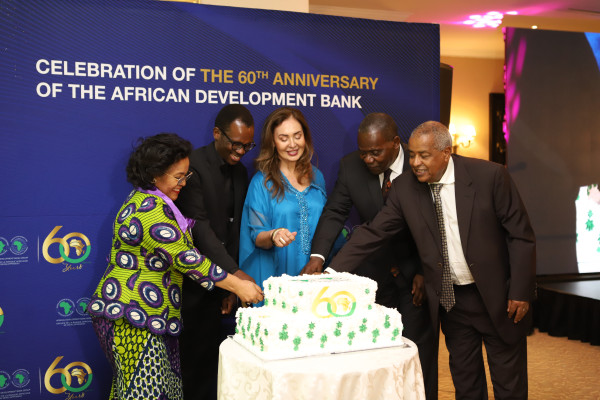
African Development Bank Celebrates 60 Years of Transformative Impact in Africa Southern Region
Location: News
African Development Bank Group (AfDB)

The African Development Bank (AfDB) (www.AfDB.org) proudly celebrates its Diamond Jubilee, marking 60 years of driving social and economic transformation across the African continent. The Southern African regional celebration, held in Johannesburg, brought together leaders, stakeholders, and partners to reflect on the institution's remarkable journey and its vision for a prosperous future.

Speaking at the event, Ms Leila Farah Mokaddem, Director General of the African Development Bank Group, highlighted the Bank's legacy of impact and transformation. "Sixty years ago, the African Development Bank was born out of a vision for a better Africa. Today, we celebrate not just numbers but the lives transformed and communities uplifted through our work," she said.

Key Achievements in Southern Africa

With an active portfolio of 226 projects worth USD 11 billion, the Bank's unwavering commitment to fostering sustainable growth and integration in Southern Africa is evident. Notable achievements include:

  • SADC Sub-Regional Transport and Facilitation Project: A USD 231.3 million investment connecting Malawi and Mozambique, fostering trade, and mitigating regional fragility.
  • Lesotho Highlands Water Project: A USD 2.1 billion initiative enhancing water transfer and hydroelectric power, essential for energy security.
  • Kazungula Bridge Project: A USD 81.6 million investment strengthening connectivity between Zambia and Botswana along the North-South Corridor.
  • Support for Transnet: A recent USD 1 billion sovereign-guaranteed corporate loan to aid South Africa's freight transport recovery and growth.

The celebration also underscored the deep partnership between the Bank and the Government of South Africa. Honourable Minister Enoch Godongwana shared his reflections on this enduring collaboration:

"The Government of the Republic of South Africa celebrates this significant milestone with the African Development Bank. Our region, and indeed South Africa, continues to enjoy a fruitful partnership with the Bank as we work together toward a shared goal of creating a better Africa for future generations.

As we gather to celebrate the many achievements of our collaborative efforts, we also recognise the need to continue advancing Africa's development agenda. This milestone energises us and strengthens our commitment to a shared vision for the next 60 years!"

Looking Ahead: A Vision for the Future

As the Bank embarks on its new Ten-Year Strategy, it prioritises integrated regional projects and climate resilience. Projects like the Lobito Rail Integrated Corridor, connecting Angola, DRC, and Zambia, promise to drive economic growth, agriculture value chains and renewable energy investments.

"Our work is far from over," Ms Mokaddem noted. "We invite all partners—governments, private sector actors, and international institutions—to join us in building a more inclusive and sustainable Africa. Together, we can address climate-related challenges and mobilise resources to ensure no one is left behind."

A Commitment to Africa's Development

Under the leadership of President Dr Akinwumi A. Adesina, the Bank has maintained its AAA rating and authorised capital of USD 318 billion, with nearly 2,000 staff serving all 54 African countries. The institution continues to champion its “High 5s” priorities: lighting up and powering Africa, feeding Africa, industrialising Africa, integrating Africa, and improving the quality of life for the people of Africa.

The 60th-anniversary celebrations are a testament to the Bank's resilience and the enduring support of its partners. The African Development Bank remains steadfast in its mission to transform lives and catalyse growth across the continent.

To view our anniversary video that encapsulates these achievements and our vision for the future, please click here: Anniversary Video (https://apo-opa.co/4g8Y2s3).

Distributed by APO Group on behalf of African Development Bank Group (AfDB).

Media contact:
Natalie Naudé,
Communication and External Relations Department
n.naude@afdb.org

Join the Conversation:
#AfDB60 #AfricaRising #EconomicTransformation #MakingADifference

About the African Development Bank Group:
The African Development Bank Group (AfDB) is the premier multilateral financing institution dedicated to Africa's development. It comprises three distinct entities: the African Development Bank (AfDB), the African Development Fund (ADF) and the Nigeria Trust Fund (NSF). The AfDB has a field presence in 41 African countries, with an external office in Japan, and contributes to the economic development and social progress of its 54 regional member states. For more information: www.AfDB.org

Media files
African Development Bank Group (AfDB)
Download logo
Read moreAfrican Development Bank Celebrates 60 Years of Transformative Impact in Africa Southern Region
13 December 2024

Queen Masalanabo Modjadji legally recognised

Location: News

Queen Masalanabo Modjadji legally recognised

President Cyril Ramaphosa has legally recognised Princess Masalanabo Modjadji as the Queen of the Balobedu Queenship – the only legally recognised Queenship in South Africa.

Queen Modjaji VII – known as the Rain Queen – has been recognised in terms of Section 8(3)(a) and (b), read with Section 12(8)(a) of the Traditional and Khoi-San Leadership Act.

A statement from the Presidency explained that the Queenship of the Balobedu was recognised in 2016 when Queen Modjadji was just 16 years old and “could not legally ascend the throne”.

Since then, His Royal Highness, Prince Mpapatla Modjadji – the now Queen’s maternal uncle – has held the fort for her as a Regent until she turned 18.

“The Queen has turned 18 and ascends the throne as Queen Modjadji VII of [the] Balobedu nation. In accordance with Section 12(8)(a) of the Traditional and Khoi-San Leadership Act of 2019, as soon as the successor to the position of a queen/king ceases to be a minor, the rightful successor must be recognised by the President as the queen/king. 

“A certificate of recognition must be issued after her/his name has been published in the Gazette,” the statement said.

The Presidency described Queen Modjaji VII’s legal recognition as a “new chapter and is a moment of great significance to the rich history of Balobedu Nation”.

“On behalf of government, President Ramaphosa wishes Her Majesty a long and prosperous reign and looks forward to working with Her Majesty and the Royal Family in advancing socio-economic development of people living under the jurisdiction of [the] Balobedu Queenship,” the statement concluded. – SAnews.gov.za

NeoB
Fri, 12/13/2024 - 09:48

19 views
Read moreQueen Masalanabo Modjadji legally recognised
13 December 2024

Presidents appoints members of CRL Rights Commission

Location: News

Presidents appoints members of CRL Rights Commission

President Cyril Ramaphosa has appointed members of the Commission for the Promotion of the Rights of Cultural, Religious and Linguistic Communities (CRL Rights Commission) for a period of five years.

The Commission is a body established in terms of the South African Constitution of 1996.

Section 31 of the constitutional Bill of Rights directs that: “Persons belonging to a cultural, religious or linguistic community may not be denied the right, with other members of that community to enjoy their culture, practice their religion and use their language; and to form, join and maintain cultural, religious and linguistic associations and other organs of civil society.”

The Commission undertakes the protection and promotion of these rights through proactive and reactive approaches.

“As the department responsible for the administration of the CRL Rights Act, the Department of Cooperative Governance and Traditional Affairs issued a public notice for nominations of persons for appointment to the Commission for 2024 to 2029.

“Nominees were shortlisted and invited to interviews before a selection panel chaired by Prof Itumeleng Mosala submitted recommendations to the President,” the Presidency said in statement on Friday.

Following this process, President Ramaphosa has appointed the following persons to advance the work of the Commission:

•    Ms Thoko Nonhle Jeanette Mkhwanazi-Xaluva, who previously served as a Commissioner, is also Head of Public Education and Advocacy unit within the Commission. She is involved in promoting and protecting the rights of cultural, religious and linguistic communities and nation building as an activist.
•    Mr George Henry Mahlangu. Mahlangu is the Prince of the Amandebele wakwa Ndzundza Sokhulumi. He possesses extensive knowledge of culture and experience in ensuring safer initiation practices in communities with the ability to resolve complex community issues.
•     Dr Tsholofelo Masetshaba Mosala is a former Commissioner with an interest in youth matters, coupled with her experience as a researcher in culture and anthropology, and as a budding poet.
•    Mr James Petrus Mapanka. He is an activist for the Khoi, Nama and San languages. He is a former teacher and local government official, who has served on various boards in Northern Cape Tourism and been honoured for his work with a special award by the Northern Cape MEC of Education.
•    Mrs Doris Tsakane Nkwe is a linguist, culturist, education and researcher, who holds a Master of Arts in Applied Linguistics. She is an indigenous language activist, who is a former teacher and lecturer.
•    Dr Sylvia Mmamohapi Pheto served as a Commissioner in the previous Commission and previously worked as a public servant at the North West Provincial Legislature. She also brings to the Commission her experience as Secretary of the Women’s Wing of the Congress of Traditional Leaders of South Africa.
•    Professor Muneer Abduroaf served as a Commissioner in the previous Commission. He is a law lecturer and Executive Council Member of the Muslim Judicial Council. He combines legal competence with a grounded understanding of the Muslim religion.
•    Adv. Sipho Gideon “Rasta” Mantula was previously a researcher in the CRL Rights Commission. He is an active participant in South Africa’s tapestry of cultural and linguistic community dialogues, including the Rastafari National Question.
•    Ms Xolisa Donna Makoboka is a Social Justice Practitioner and former senior manager in the Department of Social Development responsible for nation building and social cohesion. Her experience includes a period as a manager in the Public Education and Advocacy Unit of the CRL Commission.
•    Dr Rajendran Thangavelu Govender is a seasoned social anthropologist, with extensive academic and professional experience in Zulu and Hindu cultures. He brings practical experience in fostering cultural preservation with various senior leadership roles within cultural, linguistic and religious organisations.
•    Professor Mokgale Albert Makgopa is a language practitioner with experience in promoting and protecting indigenous languages. He serves as an educator teaching Northern Sotho, Tshivenda and Xitsonga. He has experience in development of indigenous languages through linguistic, literature and folklore at institutions of higher learning.
•    Adv. Aubrey Kgositoi Sedupane has extensive experience in human rights law and holds Master of Law degree in Human Rights Law. He has experience of working in various communities and has investigated and mediated critical cases that involved violation of rights of CRL communities.

“President Ramaphosa has, in terms of Section 12 of the CRL Rights Act, appointed Ms Mkhwanazi-Xaluva and Mr Mahlangu as Chairperson and Deputy Chairperson of the Commission respectively.

“The President expresses his deep appreciation to outgoing Commissioners for their service and wishes the new Commission well in promoting and defending the rights of cultural, religious and linguistic communities,” the Presidency said. -SAnews.gov.za


nosihle
Fri, 12/13/2024 - 09:29

10 views
Read morePresidents appoints members of CRL Rights Commission
13 December 2024

Sewage Stench Lingers at Milnerton Lagoon

Location: News

Years after the City of Cape Town was ordered to clean it up, the estuary is still polluted

Read moreSewage Stench Lingers at Milnerton Lagoon
12 December 2024

Reconciliation Day: Reflecting on the past, building a united future

Location: News

Reconciliation Day: Reflecting on the past, building a united future

By Nomonde Mnukwa

The act of forgiveness and reconciliation has been central to the story of South Africa since 1994.  Reconciliation Day came into effect in 1994 and was intended to help build a united and prosperous South Africa. This day and in subsequent years, Reconciliation Month has become synonymous with our drive to nurture and entrench new values in our society.


The annual commemoration of Reconciliation Day allows us to reflect on the many positive strides we have made since 1994, while acknowledging that much work remains.  Even now 30 years into democracy the lives of many continue to be shaped by the circumstances of their birth. We cannot accept this reality as a nation, and we must therefore all do more to address the untold damage wrought by apartheid and colonialism.


If we don’t act and find ways to work together our future will continue to be shaped by our ugly past. National Reconciliation Day is therefore of even greater importance today and can serve as a springboard to build a more cohesive and united society. 


This year Reconciliation Month is being held under the theme “Healing Historical Wounds and Forging New Futures”. The theme serves as a reminder that reconciliation is not about forgetting or ignoring our painful past. Rather, it is about talking openly about what happened in our past and to learn from it so that we can build a country that works for everyone and not just a few. By learning from the past we can begin to imagine a future where all citizens are valued and have equal opportunities to develop and thrive.


This year’s reconciliation month focuses on collective efforts of government and the people in advancing reconciliation, nation-building, social cohesion, healing and forgiveness. It also takes place three months after we received 35 human remains of South Africans who were buried while in exile in Zimbabwe and Zambia. The next phase of the project will focus on the repatriation of the remains of South Africans buried in Angola. 


This initiative is crucial for national healing and reconciliation, allowing families to find closure and honour the memory of those who fought for freedom and justice. Moreover, this project is part of our commitment to honour and restore the legacy of those who sacrificed their lives for the country's freedom. 


As we commemorate reconciliation month, we also pay tribute to our many freedom fighters and others who sacrificed their lives for us to get freedom and democracy. Their long walk has brought us this far; now it’s time for this generation to stand up and lead. 


Young people should work with government in building a South Africa in which all people are free, equal and are included in the economy. Our reconciliation should be linked to transforming our society by broadening the participation of all South Africans in the development of the country.

While progress has been made in our journey of reconciliation over the years, more still needs to be done especially to grow the economy at a higher rate to create more jobs. 


We are hopeful that the foundation we have set over the past 30 years will enable us to move faster in improving the lives of people and in helping to heal the divisions of the past.


*Mnukwa is the Acting Director-General of the Government Communication and Information System (GCIS).

Matona
Thu, 12/12/2024 - 13:26

84 views
Read moreReconciliation Day: Reflecting on the past, building a united future
12 December 2024

Inside Gauteng’s R500-Million Corruption Scheme (Part Two)

Location: News

How a network of non-profit organisations, co-operatives and companies captured the department’s “sustainable livelihoods” budget

Read moreInside Gauteng’s R500-Million Corruption Scheme (Part Two)
12 December 2024

G20 urged to deliver on climate justice

Location: News

G20 urged to deliver on climate justice

With developing nations being considered the most vulnerable to climate change, United Nations Secretary-General António Guterres says the Group of Twenty (G20) countries must lead in delivering climate justice.

Addressing the closing session for the Joint Sherpa-Finance and Central Banks Deputies' Meeting, Guterres stressed that many vulnerable countries are being forced to respond to a crisis they did not create.

“Meanwhile, they lack the necessary support to seize the benefits of clean energy to spur prosperity and eliminate poverty. We need developed countries supporting developing countries with adequate, affordable and accessible finance and technology, and through meaningful contribution to the loss and damage fund by doubling adaptation finance next year as promised.

“[Climate justice can be delivered] by forging new partnerships like the Just Energy Transition Partnership that South Africa has pioneered to pave the way to a renewable future,” the Secretary-General said on Wednesday in Johannesburg.

On 1 December 2024, South Africa assumed the Presidency of the G20, which comprises many of the world's largest developing and developed economies.

As part of the work for the G20 Presidency, South Africa has commenced with the first series of the more than 130 meetings that will precede the G20 Summit in 2025.

“G20 countries must lead the way in line with the principles of common but differentiated responsibilities but recognise that every G20 country has to do more in the reduction of emissions. Next year, every government must deliver new economic plans in line with limiting the global temperature rise to 1.5 degrees.

“These new plans must cover all emissions in the whole economy, accelerate a just fossil fuel phase out and contribute to the energy transition goals agreed to at COP28. We must also ensure that Africa’s critical minerals that can power the renewable future worldwide benefit Africans first and most. We cannot repeat the mistakes of the past,” he said.

Guterres further called on the G20 to lead on technological justice.

“From digital technology to artificial intelligence, the developing world must access and benefit from the technological revolution.

“We need the G20 to support developing countries as they invest in the digital driven systems and solutions that their people need to boost prosperity to create jobs and drive sustainable development,” he said.

South Africa's G20 Presidency is the fourth consecutive emerging market Presidency, and it is also the first African Presidency, followed by the admission of the African Union (AU) as the second permanent African member. 

The G20 was established to tackle pressing global economic and financial issues. Together, G20 members account for around 85% of global GDP and 75% of international trade. 

The G20 comprises 19 countries including Argentina, Australia, Brazil, Canada, China, France, Germany, India, Indonesia, Italy, Japan, Republic of Korea, Mexico, Russia, Saudi Arabia, South Africa, Türkiye, United Kingdom, and United States and two regional bodies, namely the European Union and the African Union.

The grouping therefore plays a critical role in influencing global policy making and fostering global economic stability. - SAnews.gov.za

nosihle
Wed, 12/11/2024 - 15:14

90 views
Read moreG20 urged to deliver on climate justice
12 December 2024

Makana’s Immigrant-Owned Spaza Shops Remain Closed

Location: News

Makana authorities shut the shops two weeks ago citing violations of various regulations

Read moreMakana’s Immigrant-Owned Spaza Shops Remain Closed
12 December 2024

Mashatile calls on Chinese-funded businesses to increase investments to create jobs in SA

Location: News

Mashatile calls on Chinese-funded businesses to increase investments to create jobs in SA

Deputy President Paul Mashatile has encouraged Chinese-funded enterprises in South Africa to increase their investments in crucial sectors of the economy, particularly the automotive industry and infrastructure development.

“Your participation and investment in our country is critical for creating jobs and promoting economic growth and development,” the Deputy President said on Wednesday. 

The country’s second-in-command was speaking at the launch of the corporate social responsibility report of Chinese-funded enterprises in South Africa. 

At the South Africa-China Economic Trade and Association (SACETA) event, Mashatile cknowledged the organisation’s substantial contributions to the country’s economic and social development. 

SACETA was established in April 2011 and serves as a vital platform for fostering economic and trade collaboration between China and South Africa.

Mashatile told attendees that the 200 Chinese-funded enterprises locally serve as role models for businesses, demonstrating that profitability should be balanced with social good. 

As the global landscape continues to evolve rapidly, he believes it is essential for nations to cultivate strong partnerships to thrive and navigate the challenges of the modern world.

“We should leverage our expertise to navigate towards a more sustainable path, guided by the principles of joint pursuit and a shared future. Our countries have complementary strengths and resources, making us ideal economic partners.”

The Deputy President described China as one of the world’s greatest economies, providing a massive market for South African goods and services.

“In return, South Africa provides rich resources, such as minerals, agricultural products, and skilled labour, to support China’s rising economy.” 

Mashatile is of the view that improving trade connections between South Africa and China benefits both countries directly and has a positive ripple effect throughout the region. 

“Increased trade creates jobs, stimulates economic growth, and improves living standards for the people of both countries.”

However, the Deputy President acknowledged that the trade structure has been imbalanced, noting that last year’s value of China’s imports far exceeded its exports. 

According to Mashatile, total bilateral trade increased from R614 billion in 2022 to R692 billion in 2023, while China’s R146 billion deficits remained the highest among any of the country’s trading partners.

He announced that government intends to work with China in addressing the trade deficit and structure of bilateral trade by broadening its export basket, especially to export more value-added products.

“South Africa mostly exports minerals and agricultural products to China while importing mostly manufactured goods from China. At a time when African economies are becoming more integrated, China’s technological prowess may help Africa industrialise and export more than just raw materials.

“Instead of exporting raw agricultural items, South Africa may export processed foods that are more valuable.”

Mashatile stressed that China could lend a helping hand by streamlining import procedures and lowering regulatory hurdles, which could make China a larger market for local products, benefiting both South African producers and Chinese customers.

He said Chinese-funded enterprises must seize opportunities in emerging fields such as artificial intelligence, the digital economy and green energy.

Last year, Chinese businesses pledged to invest up to R15 billion at South Africa’s fifth Investment Conference. 

“In that same year, we witnessed the signing of significant purchase agreements totalling US$2.2 billion with companies in both nations. Therefore, our positive trade relations continue to be crucial in combating unemployment, inequality, and poverty,” Mashatile said.

He said South Africa and China share a strong and longstanding relationship, and that the bond between the nations has deepened, revealing the potential for collaboration to promote inclusive and equitable growth.

The Deputy President also touched on President Cyril Ramaphosa’s recent State Visit to China and told attendees that both Heads of State committed to providing a stable, fair, and enabling business environment for companies.

He welcomed the report that highlights the contributions of Chinese-funded enterprises to environmental conservation, community development, education, and healthcare. 

“As we move forward, let us reaffirm our commitment to expanding South African-Chinese trade and investment cooperation. Together, we can build a more successful and sustainable future for our countries.” – SAnews.gov.za

Gabisile
Wed, 12/11/2024 - 13:54

22 views
Read moreMashatile calls on Chinese-funded businesses to increase investments to create jobs in SA
11 December 2024

Atlanta Mayor Andre Dickens Strengthens u.s. – SA Ties During Groundbreaking Official Visit

Location: Business

U.S. Embassy & Consulates in South Africa
Download logo

Atlanta Mayor Andre Dickens concluded a landmark official visit to South Africa, accompanied by a delegation of 35 Atlantan political, business, and community leaders.  The December 4-11 visit marked a significant milestone in Atlanta Phambili—a subnational diplomacy initiative centered on deepening U.S.-South Africa partnership through the City of Atlanta– and reaffirmed the shared commitment to advancing economic, cultural, and educational collaboration between the two nations.

“This trip was a celebration of the enduring bonds between Atlanta and South Africa, built on shared histories and common goals,” said Mayor Dickens.  “Atlanta Phambili embodies our joint vision for progress and collaboration, creating opportunities for both our citizens and economies.”

The visit followed the launch of Atlanta Phambili in March 2024 with a trade and investment roadshow hosted in Atlanta, featuring senior South African business executives and government officials.

South Africa and Atlanta United in Progress

The South African government, in partnership with Standard Bank, BrandSA, Amazon, and the American Chamber of Commerce in South Africa, hosted a robust program focused on trade and investment, science and innovation, and the creative economy.  This was led by the Department of International Relations and Cooperation (DIRCO), the Department of Trade, Industry, and Competition (DTIC), the Department of Sports, Arts and Culture (DSAC), the Department of Science and Innovation (DSI), the Gauteng and Western Cape provincial governments, and the cities of Johannesburg and Cape Town.

“The South African government's partnership on the Atlanta Phambili initiative is a testament to the strength of our bilateral ties and the shared potential of our cities to drive innovation, inclusion, and prosperity,” said U.S. Ambassador to South Africa Reuben Brigety, II.

Visit Milestones

Atlanta Phambili Pledge

The visit kicked off with the unveiling of the Atlanta Phambili Pledge on December 5 at the Standard Bank Trade and Investment Seminar in Johannesburg.  This open call to action seeks to mobilize stakeholders across both nations to deepen collaboration in trade, investment, and entrepreneurship.  The pledge reflects Atlanta's and South Africa's shared commitment to fostering inclusive economic growth and creating opportunities for small and medium-sized enterprises (SMEs).

Go Global Trade Expo: Strengthening Black-Owned Business Connections
On December 5, Ambassador Brigety announced a collaboration between the U.S. Agency for International Development (USAID) and the Atlanta Black Chambers to support the Chambers' Go Global Trade Expo.  The program will bring a delegation of Black-owned South African businesses to Atlanta in 2025, connecting them with the Chamber's extensive network and U.S. buyers.

Through this agreement, export-ready businesses will build connections with Atlanta-based platforms to foster trade and investment between South Africa and the United States.

FAME Week Africa 2025: Atlanta Announced as the Feature Destination
On December 9 in Cape Town, Mayor Dickens announced Atlanta will be the Feature Destination for FAME Week Africa 2025, the continent's premier gathering for professionals in film, television, music, fashion, and animation.  This recognition highlights Atlanta's emergence as a global creative hub and its strong historic and Diaspora ties to Africa.

“Atlanta being recognized as the Feature Destination for FAME Week 2025 is an excellent fit,” said Mayor Dickens.  “Our city is uniquely poised to satisfy the growing demand in the United States for African content and support production innovations.”

This honor also grants Atlanta a dedicated pavilion and events at FAME Week 2025, scheduled to take place in Cape Town from September 1-6, 2025.

Business-to-Business Engagements in Johannesburg and Cape Town

  • Standard Bank Trade and Investment Seminar:  This December 5 event convened leading South African and Atlanta-based companies, government officials, and entrepreneurs to explore opportunities for investment and trade.
  • Wesgro Business Briefing: In Cape Town on December 9, the official tourism, trade and investment promotion agency for Cape Town and the Western Cape, Wesgro, hosted a vibrant networking event where Atlanta delegates met with South African exporters and investors, fostering connections that will drive future partnerships.

Empowering Entrepreneurs and Celebrating Culture

  • A tour of the Mamelodi Business Hub on December 6 showcased collaboration with Georgia State University students supporting township entrepreneurs.
  • Discussions with South African leaders and creatives at Freedom Park on December 6 emphasized the shared cultural and historical connections between South Africa and Atlanta.
  • Visits to Amazon's African headquarters and The Wine Arc on December 9 and 10, respectively, highlighted e-commerce opportunities and Black-owned wine brands breaking into international markets.
  • A tour of Nike's Shapa Center in Soweto on December 4 modeled how private investments in sports support community growth and development.

Strengthening Historic Ties

Atlanta Phambili builds on a historic relationship between South Africa and Atlanta, from collaboration between U.S. civil rights activists and members of the South African anti-Apartheid movement to Nelson Mandela's historic 1990 speech at Georgia Tech.  This trip further cements Atlanta as a gateway for South African businesses to access U.S. markets and strengthens South Africa's position as a premier investment destination for Atlanta's private sector.

“Our visit reflects a robust partnership that will continue to grow as we move forward together,” said Mayor Dickens. “The commitment of the South African government and its people has been vital in shaping this initiative.  I look forward to building on these foundations for years to come.”

Ambassador Brigety added “From trade and investment to culture, sports, and education, Atlanta and South Africa are charting a future defined by innovation, inclusion, and opportunity.  The future economic partnership between Atlanta and South Africa is built to last and poised for growth.”

A Shared Vision for the Future

The U.S. Embassy in South Africa and the City of Atlanta extend their gratitude to the South African government and all participating partners for making this visit a success.  Together, Atlanta and South Africa are moving forward—Phambili—toward an even brighter, shared future.

Distributed by APO Group on behalf of U.S. Embassy & Consulates in South Africa.

Read moreAtlanta Mayor Andre Dickens Strengthens u.s. – SA Ties During Groundbreaking Official Visit
11 December 2024

President Ramaphosa commends Welisizwe bridges construction in Mpumalanga

Location: News

President Ramaphosa commends Welisizwe bridges construction in Mpumalanga

President Cyril Ramaphosa has commended the cooperation between the government departments that ensured the successful completion of Welisizwe Bridges in KwaMhlanga, Mpumalanga.

“We are here as government to report that we have delivered on our promise to address the problem of old and dilapidated bridges in Mpumalanga,” President Ramaphosa said.

Addressing the local communities at Solomon Mahlangu Stadium in KwaMhlanga, President Ramaphosa said communities have needed infrastructure.  

The President embarked on a multifaceted two-day visit to Mpumalanga. The visit is to commence on Tuesday, where the President met with the Mpumalanga Provincial Executive Committee. Today, he undertook the second phase of the Welisizwe Rural Bridges handover.

“Poor transport infrastructure has been making it difficult to get to and from places of work, school, the hospital and clinic, and to towns and cities from rural areas,” President Ramaphosa said.

President Ramaphosa said in some cases, what would normally be a quick journey from one place to another takes double the time because there is no bridge.

“When the rains come or there are heavy floods, crossing becomes difficult and dangerous. As government, we have heard your call as the people of Mpumalanga for this issue to be addressed.

“[Welisizwe] is a ground-breaking method to construct bridges that are sturdy, that last, and are safe for communities. We have been working with speed to deploy the bridges where they are needed most -- in KwaZulu-Natal, Mpumalanga, Limpopo, the North West, Eastern Cape and the Free State. 

“We were all extremely impressed by the quality of the structures we visited [today].”

President Ramaphosa told the locals that government is working hard to ensure that there is water in communities.

“As government, we are doing everything in our power to ensure that there is water in our communities,” the President said.

The President said there are plans to expand the Expanded Public Works Programme (EPWP) for people to gain critical skills, which can be used in projects such as Welisizwe.

“With the skills gained, people can go and look for employment or start their own businesses,” President Ramaphosa said.

Public Works Minister Dean Macpherson said the President’s visit to Mpumalanga was not just to mark the completion of critical infrastructure, but to celebrate the progress that is being made in restoring dignity to people through the transformative Welisizwe Rural Bridges Programme.

“This initiative is a shining example of what can be achieved when we work together across all spheres of government and sectors of society,” Macpherson said. 

Macpherson said the Welisizwe Rural Bridges Programme embodies the work the department has done to ensure that there is infrastructure to bring dignity to communities that were previously isolated.

“These bridges are not just about crossing rivers: they are about ensuring that children can safely walk to school, patients can reach clinics in time, and families can access markets and workplaces that sustain their livelihoods.

“Mpumalanga is known as the 'province of the rising sun', and today’s ceremony is a testament to how infrastructure investment is bringing new hope and opportunities to our rural communities. It is also a testament to the tireless collaboration that has made this progress possible.

“The South African National Defence Force’s technical expertise and commitment have been invaluable in constructing these bridges, often in challenging terrains and under tight timelines,” Macpherson said.

Speaking to SAnews, community member, Thozamile Mbeje, expressed her gratitude for the construction of the bridges. 

“I thank our government for constructing the bridges in our communities. It was difficult to cross the river during rainy seasons. Our children could not go to school because of overflowing rivers.”

Mbeje said they are now able to move to other areas with ease, and that children don’t have to miss school because of overflowing rivers.

Another resident, Isreal Sithole, said before the construction of the bridges, he could not go to work during rainy days.

“It was difficult to get to the other side because of the overflowing river, in the past we had incidences were people were washed away by the river,” Sithole said.

Sithole told SAnews that government should do more to improve people’s lives by bringing more services.ing“Our people need hospitals, clinics and other essential services closer to were they are staying,” Sithole said.

President Ramaphosa has been in Mpumalanga since Monday.

On Tuesday, the President met with the Provincial Executive Committee. Today, he undertook  the second phase of the Welisizwe Rural Bridges handover.

The meeting with the Mpumalanga Provincial Government’s Executive is part of a series of engagements between the President and provinces aimed at enhancing intergovernmental coordination and improve service delivery, in line with the priorities of the 7th Administration.

The handover and official opening of bridges afforded the President an opportunity to directly witness the work that has been done since the pronouncements made in the 2023 State of the Nation Address.

The Welisizwe Bridges programme is a strategic Integrated Project (SIP) prioritised by the 6th administration.

Collaborative efforts between the Department of Public Works and Infrastructure and the Department of Defence have already resulted in bridges being constructed in provinces such as KwaZulu-Natal, Eastern Cape, Limpopo, Mpumalanga, Free State, and the North West.

Welisizwe bridges are a key investment in community infrastructure and are giving people dignity, access to opportunities for education and work. – SAnews.gov.za

Edwin
Wed, 12/11/2024 - 13:11

119 views
Read morePresident Ramaphosa commends Welisizwe bridges construction in Mpumalanga
11 December 2024

Spotlight on interventions for economic empowerment of women

Location: News

Spotlight on interventions for economic empowerment of women

With South Africa officially assuming the G20 Presidency, government is looking forward to rallying the world against all forms of gender-based violence and exploitation of women, through the Working Group on Women Empowerment.

Addressing the closing event for the 16 Days of Activism for No Violence gainst Women and Children campaign at Ntsimbini Sports Ground in Port St John’s in the Eastern Cape on Tuesday, Minister in the Presidency for Women, Children and Persons with Disabilities, Sindisiwe Chikunga, announced a range of socio-economic interventions to transition vulnerable women to income-generating activities.

Chikunga said economic empowerment was incomplete without women’s meaningful access to land, which was the basis of all economic activity and a source of dignity.

The catalytic interventions for the economic empowerment of women include prioritising transferring productive land and productive assets to women for commercial purposes. 

Working with Transnet Properties, Chikunga said over 20 sites have been identified in Limpopo, KwaZulu-Natal and the Eastern Cape, spanning over six district municipalities.

The sites will be leased to women at highly-subsidised rates, enabling them to develop sustainable enterprises.

“We are actively identifying more sites across all nine provinces, [and] we have also partnered with the Council for Scientific and Industrial Research (CSIR) to create a value-chain-driven Agricultural Cooperatives Model. 

“By leveraging the CSIR’s intellectual property and advanced technologies, including precision agriculture, this model will equip and prepare women farmers for market success.

“The Minister of Finance recently announced that public procurement makes up around 19% of government spending, totalling R1.5 trillion over the next three years. I have tasked the Women’s Economic Assembly to assemble a team of experts that will dissect Public Procurement and Gender-Responsive Supply Chains to ensure that a minimum of 40% of that R1.5 trillion goes to women-owned businesses,” Chikunga said.

The department was also rethinking financial support structures and incentives.

Chikunga said women-owned businesses do not just need contracts, but the resources to deliver on their contracts and build sustainable enterprises.

While South Africa recognised the important symbiotic relationship between promoting women in science, building equitable societies, and the advancement of humanity, Chikunga noted that currently, women make up less than a third of the workforce across science, technology, engineering, and mathematics (STEM) careers.

She said confronting the historical and ongoing exclusion of women from STEM would be a priority for the department.

“We will be developing tangible programmes and campaigns that are needed to correct societal and cultural beliefs that use gender stereotypes to perpetuate scientific inequality. Science and humanity suffer when women are excluded from STEM.

“We also intend to leverage the potential of Artificial Intelligence (AI) and Emerging Digital Technologies to improve the wellbeing and prospects of persons living with disabilities,” Chikunga said.

The Minister added that the South African government was looking forward to planning and executing catalytic legacy projects and interventions in collaboration with the G20 family and partners in areas including women in high-tech industries, women in the agricultural value chains, women in the oceans economy, logistics, pharmaceutical industries, and the creative industries. – SAnews.gov.za

GabiK
Wed, 12/11/2024 - 12:52

128 views
Read moreSpotlight on interventions for economic empowerment of women
11 December 2024

Over 13 000 spaza shops registration forms issued in Gauteng

Location: News

Over 13 000 spaza shops registration forms issued in Gauteng

As the spaza shop registration deadline looms, a total of 13 616 registration forms have been issued to local and foreign owners across Gauteng since registration started on 15 November 2024.

This follows a directive issued by President Cyril Ramaphosa that all spaza shops and food-handling facilities must be registered with their respective municipalities within 21 days.

Giving an update on the progress made on spaza shop registrations at a media briefing in Johannesburg on Wednesday, Gauteng Finance and Economic Development MEC, Lebogang Maile, reported that as of 10 December, 13 616 spaza shops were issued with registration forms and of these, 1 916 have been returned.

Maile said some of the applications returned were incomplete and missing critical supporting documents.

“At present, 2 605 applications have been submitted by non-South African spaza shop owners based on data from the City of Tshwane, Ekurhuleni, West Rand District Municipality (comprising Merafong, Rand West City and Mogale City Local Municipalities), and the Sedibeng District Municipality (comprising Emfuleni, Midvaal and Lesedi Local Municipalities),” Maile said.

The current engagements with township commercial property owners have helped to improve the number of registrations.

“The registration process has been simplified to ensure that business owners are not consumed in red tape, while simultaneously ensuring that compliance is achieved. Additionally, three municipalities, including the City of Johannesburg, City of Tshwane and City of Ekurhuleni, have digitised their application process, while other municipalities are in various stages of digitising the process.

“This is happening alongside the process of municipalities establishing by-laws on spaza shop ownership. Presently, municipalities are adopting a draft model standard by-law,” Maile said.

He noted that since the call to register spaza shops within 21 days, the Gauteng Provincial Government has identified and established registration centres across all five regions.

“A total of 85 registration centres were established, with their locations and required documentation for registration communicated using various media platforms including social media, commercial media, community media, as well as government communications platforms.

“Outreach programmes have also been put in place to accelerate registrations and information dissemination. All regions have initiated outreach programmes, with over 15 000 spaza shops reached by the programme,” Maile said.

Over 500 spaza shops closed for non-compliance

On spaza shops compliance, Maile reported that a total of 541 spaza shops have been closed due to non-compliance.

Non-compliant businesses include those without Companies and Intellectual Property Commission (CICP) registration, which is a legal requirement for operating a business in South Africa.

“Other issues of non-compliance include a lack of certificates of acceptability or comment from Environmental Health and non-payment of operating licences that are obtained from municipalities. Businesses operating from unsafe premises and within a hazardous environment have also been closed for non-compliance,” Maile explained.

The MEC said due to incomplete documentation being provided by spaza shop owners, as of 8 December 2024, there has not been a reconciled figure on the total number of compliant and non-compliant spaza shops.

“Most of the outstanding documents from applicants include unapproved internal floor layout plans, approved building plans, consent use, as well as certificates of acceptance and fire safety. Business owners have been advised to acquire this documentation for further processing of their applications.

“Additionally, there are businesses operating from informal dwellings in areas that are not proclaimed. These must first await a directive from the Department of Human Settlements,” the MEC said.

Spaza shops owners have been urged to hand in their applications for registration before the deadline on Friday, 13 December 2024. – SAnews.gov.za 

GabiK
Wed, 12/11/2024 - 14:17

95 views
Read moreOver 13 000 spaza shops registration forms issued in Gauteng
11 December 2024

Gauteng Government’s Buried Corruption Investigation

Location: News

Forensic Audit into R500-million corruption in Department of Social Development was hidden. Non-profit organisations paid the price.

Read moreGauteng Government’s Buried Corruption Investigation
11 December 2024

Chikunga commends traditional leaders’ support in the fight against GBVF

Location: News

Chikunga commends traditional leaders’ support in the fight against GBVF

Women, Youth and Persons with Disabilities Minister, Sindisiwe Chikunga, has commended traditional leaders for their continued support in the fight against gender-based violence and femicide (GBVF).

“We are deeply touched by the unwavering commitment of our traditional leaders who continue to come together to insist that the elimination of GBVF will happen, not in the future - today!” Chikunga said.

She was speaking at the close of the 16 Days of Activism for No Violence Against Women and Children campaign at Ntsimbini Sports Ground in Port St John’s, in the Eastern Cape, on Tuesday.

While 10 December marks the end of the campaign, the day also kickstarts government’s intention to confront the scourge of GBVF in South Africa for 365 days.

Highlighting some of the department’s planned interventions to strengthen the campaign against GBVF, Chikunga said the department will continue to call on and join hands with traditional leaders in the fight against GBVF.

She said the National House of Traditional and Khoisan Leaders are uniquely positioned to lead a community-driven and sustainable response to GBVF.

The Minister expressed her appreciation to King Misuzulu kaZwelithini and all traditional leaders who joined the Goodmen Foundation march against GBVF in Durban, last week.

“The march was not merely symbolic. It is a movement of conviction, a practical expression of Ubuntu - the belief that our humanity is inextricably linked, and none of us is free until all of us are free,” Chikunga said.

Following an engagement with the South African Council of Churches, Chikunga said the department will be ramping up the 16 Days of Activism campaign working with organised religion.

She said the findings of the recently released South African National Gender-Based Violence Prevalence Study: A Baseline Survey on Victimisation and Perpetration, will serve as a guide for immediate action.

“The recommendations of this study will contribute to our ongoing focus on prevention, enhanced protection for victims, and ensuring that perpetrators are held accountable. We are currently incorporating it into our five-year strategic plan for the seventh administration.

“We will also continue to mobilise funding from both public and private sector sources to ensure that our interventions against GBVF are adequately resourced. Support for civil society will be crucial in this regard,” Chikunga said.

This year’s 16 Days of Activism campaign was observed under the theme "Celebrating 30 Years of Democracy Towards Women’s Development”.

During the campaign period, which started on 25 November, South Africa reflected on the strides made, including the challenges overcome, and the victories achieved by the country.

Reflecting on what has been done over the past 30 years, Chikunga said for South African women, the past 30 years have been a continuation of a long and mighty walk, and a journey both tragic and heroic.

“Not long ago, women were considered unfit for careers in fields like science, engineering, medicine, and law. The idea of women serving on the bench also seemed far-fetched due to entrenched patriarchal beliefs, however, over the past 30 years, South Africa’s journey to transform the gender and racial composition of the judiciary has been nothing short of exemplary.

“In the past three decades, South African women have gone from the shaping of our constitutional democracy to the historic ascendance of Justice Mandisa Maya as the first South African woman to occupy the position of Chief Justice and Head of the Constitutional Court,” Chikunga said.

The country has also surpassed gender parity in higher education participation rates, with the production of world-renowned women as agriculture industrialists, entrepreneurs, aviators, mariners, engineers, and artists. 
 
The country has further made significant strides in ensuring equal representation in decision-making and law-making structures. Today, women hold 43.5% of the seats in Parliament, occupying 171 out of 400 seats, an increase from 28% representation in 1994.

In the current administration, 42.66% of Executive Members are women. - SAnews.gov.za


GabiK
Wed, 12/11/2024 - 12:23

84 views
Read moreChikunga commends traditional leaders’ support in the fight against GBVF
11 December 2024

Legal Delays Threaten Survival of African Penguins

Location: News

Activists say that the litigation to protect the birds’ feeding grounds has been dragged out for months by the state, despite the urgency of the situation

Read moreLegal Delays Threaten Survival of African Penguins
11 December 2024

KZN to intensify efforts to combat GBVF

Location: News

KZN to intensify efforts to combat GBVF

As the 16 Days of Activism for No Violence Against Women and Children campaign ends, KwaZulu-Natal Premier Thamsanqa Ntuli has reaffirmed the province’s commitment to turn the fight against gender-based violence and femicide (GBVF) into sustained action. 

Ntuli said the province plans to intensify its efforts to combat GBVF through policy reforms, increased funding for survivor support programmes and partnerships with civil society and the private sector.

“We are taking a stand to ensure that the progress made during these 16 days is not lost but built upon, so that every day becomes a step closer to a safer, [and] a more equitable KwaZulu-Natal,” Ntuli said.

While the 10th of December marks the end of the campaign, the day also kick starts government’s intention to confront the scourge of GBVF in South Africa for 365 days.

Ntuli emphasised the province’s transitioning from the 16 Days of Activism campaign to a year-round commitment to combat gender-based violence and femicide, and the need for sustained collective action to eradicate the scourge. 

“Our fight against GBVF cannot be confined to 16 days. It must be a 365-day campaign involving every sector of society, from government to communities and businesses,” Ntuli said.

He highlighted the province’s holistic approach to tackling GBVF, which includes strengthening survivour support services, fostering collaboration between communities and law enforcement, and addressing the root causes of violence, through education and economic empowerment programmes.

Inspection of spaza shops and retail outlets

Ntuli wrapped up the province’s commemoration of the campaign with a series of activities in Gamalakhe, in the Ugu District on Tuesday.

The day started with an inspection of spaza shops and retail outlets in the area. The inspections were aimed at ensuring compliance with health, safety, and business regulations to protect the community’s well-being. 

During the inspections, Ntuli engaged directly with business owners, emphasising the importance of creating safe, sustainable environments that not only benefit the local economy, but also contribute to the overall safety and security of the province.

“This is about more than just regulations - it’s about building a business culture that respects the laws of our country while also prioritising the safety and dignity of our communities,” Ntuli said.

The inspections in Gamalakhe underscored the interconnectedness of economic development and social upliftment. 

The Premier pointed out that businesses, especially in vulnerable communities, play a crucial role in creating safe spaces and reducing the risk factors associated with violence.

The Premier also noted that ensuring compliance with business regulations is not about punishment but about fostering a culture of responsibility and care. 

“When businesses operate within the law and prioritise community safety, they contribute to a more stable and resilient society,” Ntuli said. – SAnews.gov.za

GabiK
Tue, 12/10/2024 - 15:08

76 views
Read moreKZN to intensify efforts to combat GBVF
11 December 2024

President Ramaphosa Concludes Meeting with Mpumalanga Provincial Executive

Location: News

The Presidency of the Republic of South Africa
Download logo

President Cyril Ramaphosa has concluded a constructive meeting with the Mpumalanga provincial executive.

This was a 3rd session between the National Executive and a provincial executive council following meetings with the provincial leadership of Limpopo and KwaZulu-Natal.

Over the next year the National Executive is planning to meet with the leadership of all other provinces. The meeting acknowledged the great potential that exists in Mpumalanga that can be harnessed to resolve the many challenges facing the province. Therefore, inclusive economic growth and job creation must therefore be at the forefront of the efforts of government and all social partners.

The President welcomed the detailed approach applied by the provincial leadership on areas that are focused on economic growth and job creation. 

The meeting welcomed the province's articulated vision on future catalytic projects that will inject more growth opportunities in Mpumalanga. 

President Ramaphosa encouraged the province to explore project funding mechanisms that are not wholly dependent on the national fiscus. 

Relevant state agencies will work closely with the province in the packaging of catalytic projects for private sector partnership and funding. 

The meeting agreed on further enhancing inter-governmental cooperation in addressing pressing issues in the provision of basic services such as water and sanitation and electricity. 

President Ramaphosa applauded the Mpumalanga province for its investments into social infrastructure such as boarding schools and hospitals. 

Distributed by APO Group on behalf of The Presidency of the Republic of South Africa.

Read morePresident Ramaphosa Concludes Meeting with Mpumalanga Provincial Executive
10 December 2024

Universities urged to make provision for student accommodation

Location: News

Universities urged to make provision for student accommodation

Higher Education and Training Minister, Dr Nobuhle Nkabane, has encouraged institutions of higher learning to provide land on campus to build student accommodation facilities in a bid to make it easier to manage the standard of student accommodation and safety.

“It is our collective responsibility to make sure that we create a safe and conducive environment for students, so that the university can produce the necessary labour force that must shape the economy of our country, which will lead to a capable, ethical and developmental State,” Nkabane said.

Nkabane made the call when she unveiled a 200-bed student accommodation facility at the Tshwane University of Technology (TUT) eMalahleni campus on Monday.

The project was funded by the Department of Higher Education and Training through the department’s infrastructure and efficiency grants of R110 million, as well R8.298 million from TUT.

The building, which will be used to accommodate students from the 2025 academic year, is the first phase of the project that will accommodate 200 female students.

Nkabane said student accommodation was one of the main challenges facing the higher education sector and had a direct effect on the performance of students and the quality of graduates produced each year.

“The victims of this challenge, in the main, are the historically disadvantaged students who cannot afford expensive accommodation that is conducive to learning. The issue of accommodation also directly addresses the challenges of student safety, which we are concerned about as a sector,” Nkabane said.

She announced that TUT was part of the Student Housing Infrastructure Programme Phase 2, which is aimed at building an additional 3 500 beds across the TUT campuses for the period 2024/25 to 2026/27.

The Student Housing Infrastructure Programme aims to help universities to develop their infrastructure to address student accommodation challenges.

During Phase 2, the eMahlaleni Campus will benefit from 500 bed spaces.

“The department, together with the National Treasury’s Budget Facility for Infrastructure, has already allocated R788.382 million, comprising the department’s IEG [Infrastructure and Efficiency Grant] contribution of R450.5 million and National Treasury’s BFI [Budget Facility for Infrastructure] of R337.882 million with the remaining required budget of approximately R235 million to be augmented by debt financing from the DBSA [Development Bank of Southern Africa],” Nkabane said.

The Minister warned that the department would not tolerate delays in the transformation agenda.

“We will monitor all the projects and make sure that they are completed within the specified timeframes, and we will harshly deal with corrupt counter-revolutionary tendencies. We challenge all the students to jealousy guard and protect our infrastructure,” the Minister said.

The unveiling of student accommodation was followed by a visit to the Nkangala Technical Vocational Education and Training College’s Middleburg campus, in partnership with the National Student Financial Aid Scheme (NSFAS).

The college has five campuses around the Nkangala District and purchased the Top of the World Training Centre in 2015.

The college invested in the centre after government developed a National Development Plan (NDP) in 2012, which mandated that the country must produce 30 000 artisans annually.

The centre was purchased having only three accreditations, both training centre and trade test centre, including boilermaker, mechanical fitter, and electrician.

“The centre later acquired welder accreditation, and all the accreditations were on legacy. The centre now has six accreditations on New Occupational Programmes: fitter and turner, millwright, mechanical fitter, boilermaker, welder, and electrician.

“The new accreditations will increase capacity from 60 trainees of apprenticeship to 90. The centre is used to train and test artisans, can accommodate 90 apprenticeships and 90 Artisan Recognition of Prior Learning, and 400 NCV [National Certificate Vocational] students. The centre has produced more than 1 300 artisans to date,” the Minister said. – SAnews.gov.za

GabiK
Tue, 12/10/2024 - 10:55

727 views
Read moreUniversities urged to make provision for student accommodation
10 December 2024

GBV activists appointed to link communities and law enforcement

Location: News

GBV activists appointed to link communities and law enforcement

KwaZulu-Natal Premier, Thamsanqa Ntuli, has handed over appointment letters to 173 gender-based violence and femicide (GBVF) activists who will serve as liaisons between the communities and law enforcement, working across various police stations in the province.

The primary responsibilities for the activists include offering emotional and practical support to GBVF victims, improving community awareness of available resources, and strengthening preventative measures against violence.

The GBVF activists will focus on:
•  Victim support services: Providing emotional, psychological and practical assistance to survivors of GBVF at police stations and community centres.
•  Community engagement: Conducting workshops and campaigns to raise awareness about GBVF and available support systems.
•  Data collection and reporting: Assisting in documenting cases to ensure accurate data on GBVF trends and improve accountability.
•  Collaboration with police: Strengthening trust between communities and law enforcement by advocating for victim-centred approaches in handling cases.

Speaking at the handing over of appointment letters during a ceremony at the Westville Correctional Centre on Monday, Ntuli highlighted the urgency to intensify the fight against GBVF and the critical role the activists will play.

“The scourge of gender-based violence continues to ravage our communities, and we can no longer stand by as silent observers. These 173 activists will be the lifeline for victims, a voice for the vulnerable, and a driving force for change in our province,” the Premier said.

Ntuli added that the appointments form part of the province’s broader GBVF strategy, which includes improving coordination among government departments, non-governmental organisations and communities.

“This initiative also ties into the National Strategic Plan on GBVF, which prioritises survivour support, prevention, and justice for victims,” Ntuli said.

The Premier emphasised the economic and social benefits of the initiative.

“By placing these activists at the forefront, we are not only protecting our citizens but also empowering individuals to take ownership of their communities and foster safer spaces for women and children,” the Premier said.

Ntuli also reiterated a call on citizens to take action and join hands in the fight against GBVF.

“Ending gender-based violence is not a responsibility of the government alone. It requires all of us—men, women, and children to take a stand, to speak out, and to work tirelessly to build a province where everyone feels safe and respected.” – SAnews.gov.za

GabiK
Tue, 12/10/2024 - 13:46

179 views
Read moreGBV activists appointed to link communities and law enforcement
10 December 2024

President Ramaphosa stresses Job Creation, Inclusive Growth in Mpumalanga

Location: News

President Ramaphosa stresses Job Creation, Inclusive Growth in Mpumalanga

President Cyril Ramaphosa has underscored the importance of inclusive economic growth and job creation as the central focus of government and its social partners. 

The President was speaking at the meeting between the National Executive and the Mpumalanga Provincial Executive Council at the Nkangala District Council Chambers, Mpumalanga. 

President Ramaphosa reiterated that cooperative governance is a constitutional mandate, urging all spheres of government to collaborate more effectively to address common challenges. 

Highlighting Mpumalanga’s potential, President Ramaphosa noted the province's dual role as South Africa’s energy powerhouse, fuelled by its abundant coal reserves, and a hub for agriculture and tourism. 

However, he also acknowledged the significant challenges the province faces, including an unemployment rate above the national average and widespread poverty. 

“For Mpumalanga, inclusive economic growth and job creation must therefore be at the forefront of the efforts of government and all social partners. Like other provinces, Mpumalanga needs to grow faster, and the benefits of growth need to reach more of its people.

“Fortunately, this province has many advantages that it can use to drive growth and development. Mpumalanga is literally South Africa’s powerhouse,” the President said. 

This is the National Executive’s third engagement with a provincial executive council. The Executive has previously met with the provincial leadership of Limpopo and KwaZulu-Natal.

Over the next year, the National Executive is planning to meet with the leadership of all other provinces. 

The President pointed to the province's critical role in the country’s just transition to a low-carbon economy, stressing the need to balance environmental objectives with protecting livelihoods.

“Mpumalanga is literally South Africa’s powerhouse. Most of the country’s electricity comes from here, fuelled by the abundant coal reserves in this province.

“Mpumalanga will therefore continue to be vital to the social and economic development of the country for many years to come. For this reason, the province will also be at the centre of the just transition to a low-carbon economy,” the President said. 

He called for investment in new technologies, industries, and skills to drive growth and create opportunities for communities.

President Ramaphosa lauded Mpumalanga's commitment to infrastructure development, which he described as essential for economic growth and improving the quality of life for residents. 

“This is a fertile province, which has the ability to sustain a wide variety of agricultural activities. Mpumalanga is a province of natural splendour. It has long been a destination for visitors from across South Africa and across the world. We are encouraged by the determination of the province to invest in infrastructure,” the President said. 

He encouraged provincial leaders to strengthen partnerships with national entities such as Infrastructure South Africa and the Infrastructure Fund.

The meeting, attended by Minister of Cooperative Governance and Traditional Affairs Velenkosini Hlabisa, Mpumalanga Premier Mandla Ndlovu, and several Ministers and Deputy Ministers, aimed to align national and provincial priorities.

As engagements with other provinces continue, President Ramaphosa emphasised the importance of leveraging regional strengths to complement national development goals.

“Different provinces have different resources and capabilities. As a country, we must ensure that these are developed and work to complement each other,” the President said.

The gathering is part of the President’s ongoing efforts to enhance cooperation between national and provincial governments to address pressing socio-economic challenges and promote sustainable development. – SAnews.gov.za

DikelediM
Tue, 12/10/2024 - 14:40

96 views
Read morePresident Ramaphosa stresses Job Creation, Inclusive Growth in Mpumalanga
10 December 2024

Basic Education launches app to track eradication of pit toilets

Location: News

Basic Education launches app to track eradication of pit toilets

Basic Education Minister Siviwe Gwarube has unveiled the Safe Schools App, a technological solution designed to tackle one of the most urgent issues in South African schools - the eradication of pit toilets. 

The app was unveiled to the media in Tshwane on Monday afternoon during a briefing hosted by the department. 

The Safe Schools App, developed and donated by Vodacom South Africa, is a tool aimed at promoting accountability and transparency in addressing the pressing challenge. 

“The Safe Schools App is more than just an application; it is a bold statement of our resolve to eliminate unsafe sanitation facilities in schools and to do so with transparency, efficiency and accountability,” Gwarube said. 

The Minister outlined three strategic objectives for the app. 

In the short-term, it will provide real-time monitoring of the eradication of pit toilets. The app features a dynamic heat map that tracks progress on the removal of pit latrines nationwide. This feature ensures that government has access to real-time information about its efforts on the SAFE backlog. It also highlights areas requiring urgent attention, ensuring that indeed, no child is left behind. 

In the medium-term, the app will enable crowdsourcing of data to fill existing gaps in information about sanitation facilities across the country.

In the long-term, the department will roll out the use of the app to monitor other key programmes. 

Beyond sanitation, the app has the potential to serve as a key platform to track other critical departmental initiatives, including the National School Nutrition Programme, infrastructure projects, and the delivery of learning and teaching materials. 

Gwarube said the launch of the app represented a significant step forward in the department’s strategy to leverage technological partnerships to improve education outcomes in the country. 

“In today’s world, technology is not just a tool but a necessity. It allows us to enhance accountability, optimise resource allocation, and improve efficiency across the education system. 

“The Safe Schools App is a prime example of how technology can be harnessed to address societal challenges that seemed too big and too complex for us to resolve,” she said. 

The Minister invited every South African to play a role in ensuring that the nation’s schools are safe and dignified spaces for learning. 

“This is what education in a modern democracy should look like: engaged, participatory and driven by a shared vision for the future,” she said. 

Mechanism for accountability 

Gwarube said accountability was at the heart of the Safe Schools App. 

By providing a clear and real-time view of progress, the app ensures that everyone involved -- government officials, implementing agents, school administrators, and communities -- remain focused on achieving the goal of eradicating the backlog of SAFE pit toilets by the 31 March 2025 deadline. 

“This tool will enable us to identify and respond to delays, allocate resources where they are needed most, and celebrate successes along the way. It is a game-changer in how we approach infrastructure challenges, and I believe it sets a new standard for accountability and for transparency in public service delivery,” Gwarube said. 

The Minister said the eradication of pit toilets speaks to the dignity, safety, and well-being of children in schools. 

“It is about ensuring that every learner, regardless of their background or location, has access to toilets that reflect the values of a democratic and inclusive society,” she said. 

She said the urgency of the task cannot be overstated because unsafe sanitation facilities not only compromise the health and safety of learners but also impact their ability to focus on their studies and achieve their full potential. 

The Minister urged every parent, teacher and concerned citizen to report pit toilets to www.safeschools.gov.za.

“This is a collective effort, and every contribution counts. By working together, we can ensure that no child has to endure unsafe or undignified learning conditions,” Gwarube said. 

Tragic losses 

Pit latrines in South Africa have claimed the lives of several children, highlighting the urgent need for improved sanitation in schools. 

Tragic incidents include the case of Michael Komape, a five-year-old boy who drowned in a pit toilet at his school in Limpopo in 2014. His death brought national and international attention to the dire state of sanitation infrastructure in rural schools.

In 2018, Lumka Mketwa, a five-year-old girl from the Eastern Cape, died after falling into a pit latrine at her school. 

The South African Human Rights Commission and other organisations have called for accountability and the urgent eradication of pit latrines, emphasising the role of government and private sector partnerships in addressing this critical issue. – SAnews.gov.za

DikelediM
Tue, 12/10/2024 - 11:55

63 views
Read moreBasic Education launches app to track eradication of pit toilets
10 December 2024

KZN, Gauteng record highest number of accidents at start of festive season

Location: News

KZN, Gauteng record highest number of accidents at start of festive season

The festive season has started on a bleak note, with the preliminary road statistics showing that in the first six days of this month, 162 fatal crashes and 193 deaths were recorded in the country.

“To date, Gauteng and KwaZulu-Natal have the highest number of accidents and fatalities, with a concentration of incidents in the metros. While current figures represent a decrease compared to the same period last year, these figures are still too high,” Transport Minister Barbara Creecy said on Monday.

Addressing media during the Cross-Alive Road Safety campaign at the Lebombo Border Post, the Minister said the most recent data was collected at the end of Friday, 6 December, and preliminary analysis of the figures indicated a high number of buses and trucks involved in accidents, with most of the accidents occurring after dark.

“To rectify this situation, urgent meetings will be convened this week with bus and truck operators, as well as traffic management authorities in the provinces and metros concerned.

“Road traffic operations in the first five days of December stopped nearly 200 000 vehicles and made 512 arrests. The top five offences include speeding; driving without a seat belt; driving an unlicensed vehicle; driving without a driving licence and driving a vehicle with worn tyres,” Creecy said. 

Mpumalanga accounted for the highest number of impounded vehicle,s with 267 vehicles being taken off the road.

“Government is working hard to increase traffic patrolling and law enforcement operations. However, government alone cannot change this reality. We can only save lives if road users change their behaviour, because it is the behaviour of people that leads to most of the deaths on our roads,” the Minister said.

She reiterated government’s message on road safety.

“Before any journey, check your vehicle and make sure it is roadworthy. Make sure your public driving permit is in order if you need one, and carry a valid driver's licence. 

“If you are a pedestrian this festive season, make smart choices. Only cross the road at a marked intersection or pedestrian crossing. Avoid jaywalking and wear bright clothing at night,” Creecy said.

She reminded those who will be getting behind the wheel on a long journey to take a break every two hours or every 200 kilometres.

“Remember, buckle up and stay within the speed limit. Do not overtake on a barrier line. Travel during the day - it is safer. If you are planning to party, please do not drink and drive. Please do not drink and walk. Stay over or appoint a designated driver who will not drink, or use public transport,” Creecy said.

Lebombo Border

The Minister visited the Lebombo Border post to receive first-hand information on the work that has been done to decongest trucks waiting to cross into Mozambique.

The Minister’s visit was necessitated by reports received on Saturday morning on the closure of the border, which had resulted in trucks queuing on the South African side.

“The queue reached distances of more than 20 kilometres, and this brought other challenges. This means that the Mozambiquan authorities opened the border to allow returning empty trucks and for passenger vehicles to leave that country. Since [Sunday], passenger vehicles have also been allowed to cross the border into Mozambique 

“To address this challenge, my department is working with the Cross-Border Road Transport Agency and other law enforcement agencies to develop a plan to address this dire situation. Our country’s border authorities are in touch with their Mozambican counterparts, who will advise when it is safe for freight vehicles to cross the border,” the Minister said.

The Cross-Border Road Transport Agency is also in touch with the trucking industry to update them on the current situation. 

“This situation has happened on a number of occasions in recent times.  We plead for patience from the truck drivers, who have to stomach a very frustrating situation and spend long hours on the road,” the Minister said. - SAnews.gov.za


nosihle
Tue, 12/10/2024 - 11:06

70 views
Read moreKZN, Gauteng record highest number of accidents at start of festive season
10 December 2024

The Imperative of a Coordinated Approach: Strengthening the Cluster System in South Africa

Location: News

The Imperative of a Coordinated Approach: Strengthening the Cluster System in South Africa

By Phindile Baleni

As we approach the end of 2024, reflecting on our nation's challenges and opportunities is important. The recent history of South Africa has shown us that traditional modes of governance are no longer sufficient to address the complex issues our society grapples with. From the lingering impacts of the COVID-19 pandemic to the escalating cost of living, the time has come for a renewed focus on how we govern and implement our policies.

At the heart of this transformation lies the cluster system of governance, a framework designed to improve coordination and integration across all levels of government. While this system has been established for some time, we must critically assess its efficacy in facing persistent service delivery challenges and ensuring that the government provides high-quality services to its citizens. The 7th Administration has articulated three key priorities: driving inclusive growth and job creation, reducing poverty, and building a capable, ethical, and developmental state. These goals cannot be achieved in silos; they require a collaborative approach that leverages the strengths of various sectors and stakeholders. 

Our challenges are multifaceted and interconnected, rendering a fragmented approach ineffective. Our citizens are looking for solutions that are not only effective but also equitable. The cluster system must evolve to ensure that we address critical delivery issues adequately and hold ourselves accountable for the implementation of decisions made. 

To maximize the effectiveness of the cluster system, we must embrace strategic guidance and agenda-setting that promotes integration. The role of the Minister in the Presidency is fundamental in this regard. By coordinating with Ministerial Cluster Chairpersons and providing clear direction, we can ensure our priorities are aligned and that we work towards a common goal. Centralizing the Secretariat for the cluster governance system would streamline processes and enhance communication, enabling clusters to engage meaningfully and make informed decisions. Reducing the frequency of Cabinet meetings will also allow for deeper discussions and strategic analysis, advancing a culture of robust conversation.

Ultimately, the success of the 7th Administration hinges on our ability to create shared public value. This means increasing the worth of our population, territory, institutions, and competitive advantage. All government departments and agencies must align with this vision, as their contributions are imperative to establishing a cohesive and effective governance framework. Activating the Five National Security Quintets—national identity, values, interests, power, and will—will be key in rallying our citizens behind our collective goals. A collaborative approach is vital as we navigate both domestic and international landscapes.

As we move forward, let us reaffirm our commitment to a cluster system that is more than just a structural framework; it must be a dynamic and responsive mechanism reflecting the needs of our society. We can restore trust in our government and improve the lives of all South Africans by promoting partnerships, enhancing coordination, and building a culture of accountability. 

The challenges are significant, but so are the opportunities. Together, we can build a capable, ethical, and developmental state that not only meets today's needs but also paves the way for a prosperous future.

*Phindile Baleni serves as the Director-General in the Republic of South Africa Presidency. She spoke at the Governance State Capabilities and Institutional Development Cluster Retreat on 02 December 2024.

Matona
Tue, 12/10/2024 - 08:27

25 views
Read moreThe Imperative of a Coordinated Approach: Strengthening the Cluster System in South Africa
  • Previous
  • Page 1
  • Interim pages omitted …
  • Page 80
  • Page 81
  • Page 82
  • Page 83
  • Page 84
  • Interim pages omitted …
  • Page 210
  • Next

Copyright © 2026 · MyZA · All Rights Reserved · Powered by Stratlec Online