City of Cape Town Proposes Affordable Housing on Prime Green Point Site
The land value of the site ranks “among the highest in the southern hemisphere”

MyZA
News, Directory, Events and Other Stuff
The land value of the site ranks “among the highest in the southern hemisphere”
Water and Sanitation Indaba to tackle SA’s water security challenges
The development of a high-level national turnaround plan for water security will take centre stage at the National Water and Sanitation Indaba.
The South African government will convene the indaba at Gallagher Convention Centre in Midrand, Gauteng, to address the provision of water security in the country.
Set for Thursday and Friday, the indaba underscores government’s ongoing commitment to tackling South Africa’s water security challenges, and ensuring reliable and sustainable water and sanitation services for all citizens.
With its focus on water security and provision, the two-day gathering takes place during National Water Month and Human Rights Month, a significant period that underpins the importance of water as a fundamental human right and a critical resource for socio-economic development.
The timing of the gathering also underscores the urgency of addressing water and sanitation challenges so as to uphold the dignity and well-being of all South Africans.
The two-day event will build on the outcomes of the Water Summit that was held in January 2024, which engaged all Water Services Authorities (WSAs), following the release of the Blue, No Drop Reports, as well as the Green Drop Progress Report in December 2023.
The summit identified critical challenges facing the sector, including aging, poor operation and maintenance infrastructure, organised criminality, water tankering and extortion mafia, vandalism of essential public infrastructure and corruption.
The summit also identified challenges including the growth of informal settlements, financial mismanagement, revenue shortfalls, mounting sector debt, illegal water connections, overconsumption and high levels of physical water losses as among the root causes of water supply challenges in most communities across the country.
The high-level event will bring together key stakeholders, including the Presidential Water Task Team that was set up by President Cyril Ramaphosa, the water boards, WSAs, the business sector, as well as thought leaders in the water sector.
Given South Africa’s classification as a water-scarce country, with rainfall levels significantly below the global average and further exacerbated by climate change, the Department of Water and Sanitation said the indaba will prioritise the development of a high-level national turnaround plan on water security.
“This strategy will align with the objectives of the 7th administration’s Medium-Term Development Plan (2025-2029) and Operation Vulindlela 2.0 (second round of economic reforms under Operation Vulindlela) to ensure a water-secure and resilient future. The Water and Sanitation Indaba seeks to devise immediate solutions that will ensure reliable and sustainable water supply to communities,” the department said in a statement.
The event will also assess progress made on implementing the 2024 Water Summit’s resolutions and mobilise various sectors and expertise to agree on a comprehensive national water and sanitation plan.
The department said this plan will focus on expanding access to water and sanitation services, enhancing water infrastructure, and implementing effective measures to improve water security and service reliability.
According to the department, the indaba represents a pivotal moment in government’s efforts to secure South Africa’s long-term water future.
“Following President Cyril Ramaphosa’s announcement during his State of the Nation Address that water has been elevated as a top priority of government, the outcomes of the indaba will reaffirm government’s unwavering commitment to overcoming sectoral challenges and fostering collaboration across all levels of society.
“[This is] to build a sustainable water and sanitation sector, and further reinforce government’s dedication to ensuring that every South Africa has access to safe and reliable water and sanitation services,” it said. – SAnews.gov.za
GabiK
Tue, 03/25/2025 - 15:42
559 views
George rallies world leaders to accelerate efforts to achieve SDGs
Minister of Forestry, Fisheries and the Environment, Dr Dion George, has called on the international community to urgently accelerate efforts to achieve the Sustainable Development Goals (SDGs).
“We are less than five years away from our deadline to achieving the SDGs and the end of this critical decade for climate action. Yet, we are still far from our goals and action targets,” the Minister said on Tuesday.
The United Nations describes the SDGs as the “blueprint to achieve a better and more sustainable future for all” by addressing global challenges related to poverty, inequality and climate change, among others, with the year 2030 set as the target to meet the goals.
Addressing the Group of Twenty (G20) Environment and Climate Sustainability Working Group (ECSWG) virtually, the Minister said poverty levels are worsening, and that carbon dioxide (CO2) emissions reached record highs last year.
“This calls for an urgent acceleration of our efforts. Our commitment to achieve these goals must not waver. That is why South Africa has placed solidarity, equality and sustainability at the centre of our G20 Presidency.
“As the international community, together, we committed ourselves to the ambitious agenda to end poverty and hunger, to protect our planet, to achieve universal education and health coverage, and to promote decent work and sustainable economic growth by adopting the 2030 Agenda for Sustainable Development and its Sustainable Development Goals,” George said.
The Minister said South Africa is striving to champion and fast-track action in the pursuit of a just transition to a low-carbon, climate resilient and inclusive society, and lead by example.
Last week, President Cyril Ramaphosa proclaimed the Climate Change Act, laying the ground for ambitious climate action domestically.
Earlier this month, the Minister informed the public that the President proclaimed the Climate Change Act, 2024, with the proclamation notice published in the Government Gazette on 17 March 2025, which was the commencement date of the Act.
“The Act is intended to enable the development of an effective climate change response and a long-term, just transition to a low-carbon and climate-resilient economy and society for South Africa in the context of sustainable development; and to provide for matters connected therewith,” the Minister said at the time.
The Act lays the foundation for a green economy that is resilient, inclusive and future-focused. It creates a clear framework for climate action.
In his address on Tuesday, the Minister said South Africa’s rollout of renewable energy has materially accelerated over the past few years, driving the decarbonisation of South Africa’s energy system, while the implementation of Expanded Producer Responsibility schemes and circular economy initiatives is improving waste management.
“The task remains immense. Poverty, unemployment, hunger, inequality, environmental degradation and climate change are but a few of the complex and interconnected issues facing the world today.
“...We thus reiterate the critical role of multilateralism in addressing these complexities, and South Africa’s very strong support for multilateralism,” the Minister explained.
Priorities
George said the five interrelated priorities of the Environment and Climate Sustainability Working Group provide an opportunity to address multiple complexities within this context, while advancing the achievement of the Sustainable Development Goals.
The priorities include Biodiversity and Conservation, Land Degradation, Desertification and Drought, Chemicals and Waste Management, Climate Change and Air Quality, as well as Oceans and Coasts.
“These priorities of the G20 Environment and Climate Sustainability Working Group for this year are viewed as critical enablers to address poverty, create employment and meet other sustainable development goals, thereby contributing towards the global effort to respond to the triple complexities of climate change, pollution and biodiversity loss, in line with the overall theme of South Africa’s G20 Presidency of Solidarity, Equality and Sustainability,” the Minister said.
As a primary outcome of the G20 Presidency this year, South Africa will explore ways that the G20 can leverage opportunities to increase the scale and flows of climate finance, critical to enabling the Just Transition, mitigation and adaptation efforts, while ensuring that the required investments reach the most vulnerable of society.
“It is paramount for developing economy countries to be actively supported in their efforts to achieve ‘whole of society and whole of economy’ just transitions to sustainable development on the ground, through scaled access to low-cost finance, technology and skills.
“It is also increasingly recognised that many people across the globe are exposed to unhealthy and often deadly levels of air pollution, and that the impacts of air pollution extend beyond health - affecting climate, biodiversity, ecosystems and economic development.
“This is also a key issue that needs to be addressed, and to which this Working Group can contribute. There are very extensive synergies between decarbonisation and the improvement of air quality,” the Minister said. - SAnews.gov.za
nosihle
Wed, 03/26/2025 - 07:56
106 views
The African Union (AU) and the European Union (EU) launched a year-long celebration marking the 25th anniversary of their enduring and unique partnership, since the first Africa-Europe Summit on 3-4 April 2000 in Cairo.
This milestone, aligned with the Africa Agenda 2063 and the Global Gateway Investment Package for Africa, underscores the powerful impact of two unions representing over 1.9 billion people and accounting for more than 40% of the UN's membership.
In the lead-up to the Ministerial Meeting on 21 May 2025, in Brussels, gathering over 80 governments and the new leadership of both AU and EU, a series of anniversary initiatives will be promoted. These will include joint outreach explaining the development of the partnership and concrete results and open dialogues on shared challenges. These activities will pave the way for the 7th African Union-European Union Summit to be hosted in Africa later this year.
The 25th anniversary will highlight the strategic alignment of the AU-EU partnership around the four central pillars of the Joint Vision for 2030 adopted by African and European leaders at their Summit in 2022.
Key Pillars of the AU-EU Partnership:
1. Prosperity: a prosperous and sustainable Africa and Europe
The AU and EU are committed to fostering regional economic integration and sustainable growth, bringing together people, regions, and organisations. The Global Gateway Africa-Europe Investment Package , actively supports the implementation of the Africa Agenda 2063. The EU is Africa's first trading partner and AU and EU work together on sustainable trade and investment that create growth and jobs, as well as, on accelerating the green and digital transitions strengthening health systems and improving education and skills.
2. Peace, Security and Governance: Partnering for Stability
The AU and EU are committed to a joint approach to peace, security, and governance, recognising that stability, the rule of law and democratic institutions are fundamental for sustainable development. Under the African leadership, the EU is an active and long-term partner for peace with civilian and military training and security missions and for the African Peace and Security Architecture (APSA).
3. People: Investing in Human Development
Human development remains at the core of the AU-EU partnership. Joint initiatives on migration and mobility, education, culture, exchange opportunities, social inclusion and humanitarian affairs, empower people, especially women and youth, to build prosperous and inclusive societies. The EU and the AU are committed to the rule of law, good governance, democratic principles, respect for human rights, gender equality, and justice.
4. Planet: A Global Force for Multilateralism and Sustainability
Representing more than 40% of the UN's membership, the AU and EU are a formidable force for strong support for the multilateral system, with the UN Charter at its core, and for environmental sustainability. Both are working to increase the legitimacy and effectiveness of the multilateral system: cooperation within the G20, chaired by South Africa, and the Pact for the Future are two examples. Together, they are driving global action to promote shared fundamental values and to address climate change and protect the planet.
Distributed by APO Group on behalf of African Union (AU).
Home Affairs Minister issues stern warning to crooked officials
Home Affairs Minister Dr Leon Schreiber has warned crooked officials that the department will leave no stone unturned to rid its ranks of corruption.
Schreiber said officials involved in corrupt activities will face the full might of the law.
“Our message also makes it clear that we apply the rule of law without fear or favour,” Schreiber said.
Speaking at the launch of the Border Management and Immigration Anti-Corruption Forum (BMIACF) in Pretoria on Tuesday, Schreiber said cooperation amongst the relevant authorities is making an impact on efforts to restore the image of the Department of Home Affairs and the Border Management Authority (BMA).
“We are also committed to the kind of systems reform that will close the space for discretion, which enables fraud and corruption in the first place,” Schreiber said.
One of the fundamental pillars of digital transformation, the Minister said, is the use of technology to help prevent and detect corruption, and uproot corrupt networks altogether.
“But the reality is that, for as long as we have paper-based visa documents, for as long as we use manual, paper-based processes, and for as long as decisions are wide-open to human discretion and interference, the space for corruption will continue to exist.
“Paper visas are being replaced by an Electronic Travel Authorisation featuring Artificial Intelligence and machine learning-based adjudication. Paper documents are being replaced by secure digital documents, including the digital ID system announced by the President during the State of the Nation Address.
“The green ID book will be phased out and replaced by the far more secure smart ID and digital ID, and we are automating entry-and-exit at all South African ports-of-entry,” the Minister said.
Schreiber is confident that the systems reforms will deliver a "systems revolution" in the border management and immigration environment.
“No more papers that can go missing or be manipulated. No more photo-swopping on green ID books. No more bribing an immigration officer to manipulate an outcome, or to gain entry into the country illegally because you cannot bribe a computer and an electronic gate,” Schreiber said.
Schreiber said the Department of Home Affairs is concluding the appointment of a permanent Deputy Director-General for Human Resources.
“It is my expectation that this person will further intensify our quest to rid Home Affairs of the bad apples,” he said.
Speaking at the launch of the BMIACF, the National Director of Public Prosecutions (NDPP), Advocate Shamila Batohi, said officials must urgently bring an end to the phenomenon of South Africa being used as a transit route for criminal activities.
“We need law enforcement agencies that serve the public and put an end to these criminal activities.”
Batohi said a lot has been done over the period of five years and that more is still to be done to deal with crime and corruption.
Advocate Andy Mothibi, the Head of the Special Investigating Unit (SIU), said the launch of Border Management and Immigration Anti-Corruption Forum is a strategic intervention in the fight against crime and corruption.
“The launch of Border Management and Immigration Anti-Corruption Forum is a strategic intervention to foster collaboration between various stakeholders, who bring with them their respective mandates and expertise, which will speed up investigations of corruption allegations."
Mothibi expressed the SUI's support for the BMIACF.
The BMIACF focuses on immigration and border management, which is vulnerable to fraud and corruption.
The BMIACF has a steering committee coordinating all the work and managing stakeholders' progress. It is supported by subcommittees that focus on specialist areas such as prevention, detection, investigation and implementation of consequence management. – SAnews.gov.za
Edwin
Tue, 03/25/2025 - 14:30
187 views
This year's African Energy Week (AEW): Invest in African Energies conference will debut the first-ever National Oil Company (NOC) and International Oil Company (IOC) Forum, a dynamic platform that brings key public and private sector stakeholders into direct conversation to drive investment, secure new deals, foster local capacity building and advance exploration.
A key focus of the forum will be enhancing collaboration in the exploration, development and production of hydrocarbon resources across the continent, with an emphasis on data sharing and joint decision-making to unlock untapped potential. In South Africa, TotalEnergies is preparing to drill its first exploration well on Block 3B/4B, leveraging 14,000 km of 2D seismic and 10,800 km² of 3D seismic, with a large set of exploration prospects already identified. In Angola, Sonangol is ramping up offshore exploration on Block 6/24, focusing on geological and geophysical studies and seismic data reprocessing to assess the block's resource potential, which includes a possible commercial oil discovery. Meanwhile, in Equatorial Guinea, GEPetrol has partnered with Panoro Energy on Block EG-23, conducting subsurface studies to evaluate the block's potential, with the possibility of drilling an exploration well.
In parallel, new market activity is reshaping Africa's exploration landscape, as both NOCs and IOCs pursue strategic acquisitions, partnerships and project expansions. Chevron has strengthened its presence in Equatorial Guinea by securing PSCs for two highly prospective offshore blocks. In October 2024, Brazilian NOC Petrobras acquired a 10% stake in the offshore Deep Western Orange Basin in South Africa as part of its strategy to boost reserves and expand its footprint in Africa's emerging oil and gas markets. Last month, Chinese state-backed company Sinopec signed an $850 million contract with Algerian NOC Sonatrach for exploration and development, securing a PSC covering the Hassi Berkane North license. Sonatrach is also in discussions with Eni, TotalEnergies, Chevron and ExxonMobil for exploration and development activities in the region. The NOC-IOC Forum will provide a key platform to examine these developments, fostering discussions on how public and private sector cooperation can accelerate exploration, attract capital and unlock new resource opportunities.
The NOC-IOC Forum will also focus on forging new partnerships to drive capacity-building programs and facilitate knowledge-sharing, empowering local talent in the oil and gas sector. The National Petroleum Corporation of Namibia (NAMCOR) has been active in establishing partnerships to support the country's goal of producing first oil by year-end. This includes a collaboration with QatarEnergy focused on providing training and development opportunities for NAMCOR employees in industry-specific skills. In October 2024, NAMCOR also signed an agreement with global technology company SLB to improve operational performance in decarbonization, green hydrogen and sustainable energy, with an emphasis on local capacity development. Meanwhile, Mozambique's Empresa Nacional de Hidrocarbonetos is investing in specialized offshore drilling services, reinforcing the state's involvement in the country's oil and gas projects through an agreement with Italian multinational oilfield services company Saipem.
Additionally, the NOC-IOC Forum will facilitate the exchange of insights on regional and global energy regulations, helping participants navigate the evolving energy landscape. In the Republic of Congo, Société Nationale des Pétroles du Congo is working closely with private sector companies and IOCs to gather input for its upcoming Gas Master Plan, as well as developing a new gas code aimed at modernizing the regulatory framework to attract foreign investment. This push for regulatory improvements has driven increased IOC activity in the country, with Eni advancing the second phase of its $5 billion Congo LNG project and TotalEnergies committing $600 million to expand its E&P operations, specifically in the deep offshore Moho Nord Field.
The NOC-IOC Forum offers a strategic platform for both African NOCs and IOCs to present their exploration strategies, access available acreage and showcase ongoing energy developments. By facilitating direct engagement across sectors, the forum will drive insightful exchanges on sharing data and insights to improve decision-making, optimizing operational efficiencies and unlocking new investment opportunities. These discussions will ensure that partnerships are mutually beneficial, aligning national development goals with commercial objectives while fostering a more integrated and strategic approach to Africa's energy future.
“The launch of the first-ever NOC-IOC Forum at AEW 2025 marks a pivotal moment for Africa's energy sector. By positioning key national and international stakeholders in direct dialogue, the forum aims to drive investment, foster collaboration and empower local talent. This is an exciting opportunity for both NOCs and IOCs to present their strategies, forge new partnerships and contribute to the sustainable development of Africa's hydrocarbon sector,” states NJ Ayuk, Executive Chairman of the African Energy Chamber.
AEW: Invest in African Energies is the platform of choice for project operators, financiers, technology providers and government, and has emerged as the official place to sign deals in African energy. Visit www.AECWeek.com for more information about this exciting event.
Distributed by APO Group on behalf of African Energy Chamber.
The sun has set in Johannesburg, South Africa and Nntuthuzelo Ndwandwa, 39, is returning home from her job as a customer care consultant. When once she would have glanced nervously into the shadows, now she walks through a complex illuminated by solar-powered lights and enters her home, where a solar-powered heater doles out warm water for washing up.
“We are safe during load shedding because the external lights are on solar,” says Ndwandwa. “I'm also guaranteed hot water in the morning. It has made my life so much easier.”
This may sound like a humdrum, everyday moment, but for Ndwandwa and the other hundreds of residents of the Tshedzani Phase 3 social housing project, these basics are a revelation. They were provided through a project funded by the Global Environment Facility (GEF) that installed solar-powered equipment in public housing units across South Africa's biggest city. The effort, implemented by the City of Johannesburg, was designed to improve the quality of life of urban dwellers and fight climate change.
Residents of the social housing project say they now feel more secure, are saving money and have more job opportunities.
“Before the project, we had load shedding, and outside, it was dark […] we would not go outside as we were scared,” says resident Catherine Gugulethe Mbuyisa, 55. “Cars would be hijacked, washing would be stolen. But since the installation of solar power, we haven't experienced any of those problems and I've saved a lot in terms of electricity.”
Cities at the centre of climate action
Johannesburg is one of a growing number of global cities racing to lower their greenhouse gas emissions through better urban planning, which experts say can be a quick and easy way to reach climate targets. But such work also has a host of other benefits – from providing access to energy to protecting residents from the health hazards of open dumping.
“Action to reduce greenhouse gas emissions doesn't just make a difference at a global level – it invariably makes a positive difference to people's lives,” says Martin Krause, Director of the UN Environment Programme's Climate Change Division. “This is particularly obvious in cities, where the concentration of people means rapid gains for people and planet are possible.”
Today, some 56 per cent per cent of the world's population live in cities. Almost 1.2 billion of these people already face a bevy of climate-related risks, including rising seas and heatwaves. At the same time, urban areas consume around 75 per cent of the world's energy and produce around 70 per cent of global greenhouse gas emissions, reports the International Energy Agency. Urbanization is occurring rapidly, increasing the impact of cities on the environment and economy.
But cities are also hotbeds of climate solutions. And experts say how they are designed, built and managed will significantly impact global emissions, resource consumption and resilience to climate change. That is why successful projects, such as the one in Johannesburg, are considered so important.
“By adopting integrated approaches to support green, affordable housing, waste management and clean energy access for communities thriving amidst verdant natural spaces, cities like Johannesburg are leading the way to a sustainable urban future that benefits people, natural ecosystems and the global environment,” says Fred Boltz, Manager of GEF's Programming Division.
Multiple benefits
Kicked off in 2020, the GEF project focused on five key areas, including retrofitting social housing, increasing food resilience through sustainable urban farming, boosting biodegradable waste management and increasing evidence-based planning.
As part of this work, 172 units in Roodepoort Tshedzani 3 social housing have been fitted with solar water heaters, solar panels and lithium-ion batteries, energy-saving lighting and water-saving components.
To boost organic peri-urban farming in other areas, seeds, fertilizer and tools have been provided to farmers, alongside boreholes at four sites. Some 8,000 square metres of land is now under organic production and waiting for certification. Residents were also trained in many aspects of sustainability, including recycling, and a biodigester plant is under construction to turn waste into energy.
These additional benefits have brought opportunities to many residents, such as Voneen Trompeter, an unemployed single mother looking for ways to support her two children.
“This project has made me feel more worthy of being in a community, and I have learned a lot about business and recycling,” she says. “My hope for the future is to get a permanent position within the recycling programme, as it will be beneficial to me and my family.”
While the project is set to end later in 2025, its legacy will continue—not just in the infrastructure set up for residents. Standards and guidelines are being prepared to make it easier for such initiatives to take root in other parts of Johannesburg.
“We are excited to see the results of the GEF project coming together,” says Liana Strydom, Assistant Director, Regional Planning, City Transformation and Spatial Planning Directorate in the City of Johannesburg. “It creates momentum to mainstream our initiatives and creates hope for broader impact across many different aspects of the city's resilience and our citizens' ability to navigate climate shifts.”
Distributed by APO Group on behalf of United Nations Environment Programme (UNEP).
CBE to host inaugural Public Works Infrastructure Summit
The Council for the Built Environment (CBE) is set to host the Inaugural Public Works Infrastructure Summit.
Public Works and Infrastructure Minister Dean Macpherson is expected to deliver the keynote address at the summit, which will be held on 1 April 2025.
The summit -- to be hosted under the theme: “Turning South Africa into a construction site: Growing the economy and creating jobs” -- will explore strategies for optimising asset life cycles, using public-private partnerships and ensuring equitable infrastructure investments.
Additionally, discussions will include issues that relate to the infrastructure audit; the promotion of ethical governance; exploring innovative measures for effective asset management, property management, and green social infrastructure, while maximising its commercial value for public good.
Addressing Parliament earlier this month, Macpherson committed that the department will formalise its approach to public asset management with the introduction of technical task teams in cities across the country.
It is envisaged that the approach will attract private sector investment to revitalise these assets for productive use.
In attendance will be CEOs and leaders of the broader built environment and construction industry, financial institutions, insurance companies, developers, asset and property managers, real estate entities, the Minister and his deputy, and MECs to discuss and agree on collaborative efforts to achieve the goal of turning South Africa into a construction site.
About the CBE
The CBE, an entity of the Department of Public Works and Infrastructure, is a regulator of the built environment professions practicing and providing regulatory frameworks within the various statutory councils.
It played a leadership role and provides strategic direction, and advises the Minister of Public Works and Infrastructure on policy matters that impact the built environment sector. – SAnews.gov.za
Edwin
Mon, 03/24/2025 - 10:12
94 views
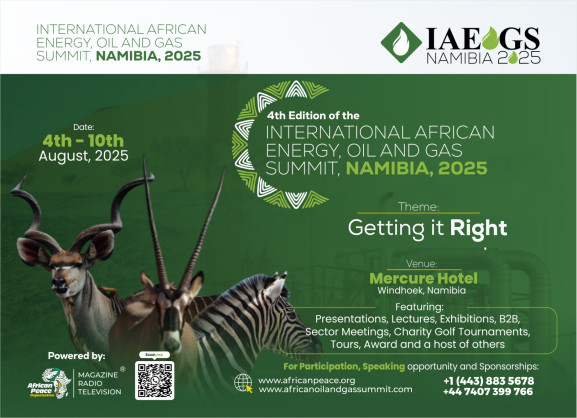
We bring you compliments from the Chairman Hon. Justice Suleiman Galadima JSC, CFR, OFR (Rtd.) and the Management of African Peace Magazine UK (https://AfricanPeace.org/).
African Peace Magazine UK, has been publishing for well over 15 years, and we are committed to promoting Peace, business networking, good governance and improved condition of living for Africans.
We are pleased to invite you to the 2025 International African Energy, Oil and Gas Summit, an event pivotal for those eager to stay abreast with the latest trends, innovations and opportunities in the oil and gas industry in Africa.
The International African Energy, Oil & Gas Summit & Awards/Exhibition (IAEOG) is few months away, kicking off on 4th-10th of August 2025.
This premier event continues to grow remarkably each year, with over 2500 attendees expected to converge from more than 50 countries under one roof.
The IAEOG is an interactive exhibition and networking event that unites global and African Energy key players, stakeholders, and decision makers.
This event is a proactive endeavor supporting the AfCTA's mission to forge regional value chains in Africa, aims at stimulating investment and job creation across the continent and ensure energy security.
AfCFTA ultimate goal is to unify approximately 1.3 billion people across Africa, with a collective GDP of nearing US$ 3.4 trillion.
The African Peace Organization, in conjunction with other strategic partners is set to organize the 4th Edition of the International African Energy, Oil and Gas Summit Namibia 2025 with the Theme: Getting it Right, scheduled to hold on the 4th -10th of August 2025 in Namibia. It would feature panel discussions, presentations, exhibitions, dinners, golf tournament, award presentations, tours and a host of others. The venue for Charity Golf Tournament; is the 18th Hole Championship Golf Course of the prestigious Windhoek Golf & Country Club.
The event seeks to promote further business corporation between Nigeria – Namibia and other African Countries as a follow up to the African Continental Free Trade Agreement.
The summit will bring together high level top executives, CEOs, Managers, investors, the business community, government agencies, exporters and importers from oil and gas sectors from across Africa and the world. To deliberate on the challenges and opportunities of the energy transition and the future of oil and gas in Africa
Further the purpose of the summit is to facilitate trade amongst African countries and the world by providing a physical networking platform for participants to interface with their potential clients and partners, as well as to attract investment opportunities for business growth across Africa particularly in the oil and gas sector.
Join 540+ downstream trailblazers across reliability & maintenance, shutdown & turnarounds and capital projects at the Namibian oil and Gas summit 2025 sharing exclusive lessons learned and new best practices during 3-days of interactive, peer-led discussions and explore 50+ booths showcasing the latest innovation driving efficiency and safety.
Green Energy International Ltd (GEIL), an indigenous Nigeria oil and gas producing company and operator of the Otakikpo Marginal Field in OML-11, will attend and participate as a Bronze sponsor at this year's edition of the conference. The company is one of Nigeria's most vibrant service companies driving investment and infrastructure development for economic growth.
Distributed by APO Group on behalf of African Peace Magazine.
For sponsorship, participation, partnership, Exhibition and speaking opportunities and all other enquiries please contact:
Sandra Chia
International Affairs
+2348033975746
+447407399766
Email: africanpeacemag@gmail.com
Nigeria Abuja Office:
Suite FT 12B
Alibro Atrium Plaza
Utako, Abuja
+2348033975746
South African Office:
16 Ridge Road
Vorna Valley
Midland 1686
South Africa
+27662449117
Angola:
Call: +244928690892
+244993656970
+244927589884
London Office:
Call: +4477771217805
WhatsApp: +447407399766
Social Media:
Twitter: https://apo-opa.co/41U2TaH
Facebook: https://apo-opa.co/41U2UeL
Instagram: https://apo-opa.co/4kOkRE5
LinkedIn: https://apo-opa.co/4kN8ckT
About African Peace:
African Peace Organization is an international organization for peace promotion, cultural relations, good governance and educational opportunities.
We build connections, understanding and trust between Africans and world. APO is also the organizer of the prestigious African Peace Awards.
APO is a brand which includes African Peace Television, African Peace Radio and African Peace Magazine. APO has been publishing for well over 15 years, and we are committed to promoting Peace, business networking, good governance and improved condition of living for Africans.
African Peace Organization through its Magazine condemns violence and acknowledges those who strive to make the strife disappear. It features pieces, articles and write-ups which go a long way in promoting this noble cause of peace. We at African Peace Magazine believe that every sector of a nation contributes in the collective journey of a peace country.
The IAEOG 2025 Summit will take place in August 2025; it will unveil investment prospects and connect global players to the growing Namibian oil and gas market.
Secure Your Exclusive Group Rate & Network with Global Oil & Gas Leaders in Namibia.
We would like to present an exclusive group booking rate for your attendance at IAEOG, buy 4 early bird delegate passes, and receive 1 complimentary pass. By joining us at the event, your team will gain market insights, forge essential connections, and meet our sponsors, partners, and speakers.
Africa Peace Magazine:
Website: https://AfricanPeace.org/
www.AfricanPeaceAwards.com
https://AfricanOilAndGasSummit.com/
www.IAEOGS.com
Ambrosia Enters Malian Market
In February 2025, investment fund Ambrosia Investment Holding acquired a 50% stake in Canadian firm Allied Gold's mining projects in Ethiopia and Mali. As part of the deal, Ambrosia will inject $375 million in working capital to accelerate project development, boosting Ethiopia and Mali's gold output by 290,000 ounces per annum by mid-2026 and 400,000 ounces per annum by 2028, respectively. Additionally, Ambrosia plans to deploy solar photovoltaic and battery energy storage systems to ensure energy security at the Sadiola mine in Mali by July 2026 as part of the acquisition agreement.
AD Ports Kickstarts Luanda Operations
Logistics firm AD Ports Group started operations at the Luanda Port in January 2025 as part of a $250 million investment plan. With the Luanda Port handling 76% of Angola's cargo volumes and serving as a crucial trade corridor between international markets and Angola, Zambia and the Democratic Republic of Congo, AD Ports' investment will bolster the region's mining sector. AD Ports will operate the terminal over the next 20 years. The company could increase investments at the facility to $380 million to meet the growing demand for logistics as Angola's container volumes are anticipated to increase by 3.3% annually over the next decade.
IHC Bolsters Production at Mopani Mine
International Holding Company boosted ore production at the Mopani Mine in Zambia from 2.2 million tons to 2.8 million tons in January 2025 through its $1.1 billion investment made in March 2024. The mine has also improved copper grade from 1.68% to 2.21% and expanded employment from 10,765 to 12,684 workers.
Emiral Expedites Ghana, Mauritania Projects
Emiral Mining is fast-tracking its iron ore project in Mauritania, with a pre-feasibility study report set for release in Q1, 2025. The company has invested $40 million in exploration since February 2020. Additionally, Emiral Mining is strengthening Ghana's gold industry through its majority stake in Asante Gold Corporation, the operator of Ghana's major gold mines such as Bibiani and Chirano. Asante Gold Corporation is undertaking a $522 million expansion program for the Bibiani and Chirano Mines.
Looking Ahead
A number of UAE public and private sector entities are seeking partnership and investment opportunities across various African markets. International Resources Holding signed an agreement with South Africa's Public Investment Corporation in late 2024 to invest in mining, green energy and logistics projects. Similarly, DP World announced a five-year $3 billion investment plan in mid-2024 to enhance Africa's logistics infrastructure and facilitate mineral exports to international markets. In Kenya, the UAE Ministry of Investment and Abu Dhabi's sovereign wealth fund ADQ signed agreements in 2024 to invest in the country's mining sector as part of broader efforts to enhance bilateral trade and economic cooperation.
The upcoming African Mining Week – taking place October 1-3 in Cape Town - presents an ideal platform for UAE and African stakeholders to strengthen industry cooperation. As the premier event for the African mining industry, African Mining Week fosters collaboration and dealmaking, striving to advance projects and consolidate the continent's position as a global mineral producer. The event takes place under the theme From Extraction to Beneficiation: Unlocking Africa's Mineral Wealth.
African Mining Week serves as a premier platform for exploring the full spectrum of mining opportunities across Africa. The event is held alongside the African Energy Week: Invest in African Energies 2025 conference from October 1-3 in Cape Town. Sponsors, exhibitors and delegates can learn more by contacting sales@energycapitalpower.com.
Distributed by APO Group on behalf of Energy Capital & Power.
Today is D-day for SASSA gold cards
Social grant beneficiaries who have not replaced their South African Social Security Agency (SASSA) gold cards with the new Postbank black cards, have been urged to do so.
On 20 March 2025, SASSA gold cards will be deactivated and beneficiaries who have not yet transitioned to the new Postbank black cards, may face disruptions in making transactions from the card.
The beneficiaries will also not be able to use the SASSA gold cards to make any transaction, even if they have funds in their account.
However, Postbank will continue to replace SASSA gold cards with new Postbank black cards in all its card replacement sites, even after this date.
Postbank and SASSA have assured that all social grant beneficiaries will continue to be paid, including all the social grant beneficiaries who have not been able to get their black cards.
Beneficiaries are urged to note that the Post Office branch payments will be restricted to social grant beneficiaries that are yet to replace their SASSA gold cards, asylum seekers and Postbank green Mzansi/blue cards’ grant beneficiaries.
Beneficiaries who already have Postbank black cards are urged to use their card through ATMs and retailers to access their funds.
The initial deadline for this transition was set for 28 February 2025 but was extended to 20 March 2025 to provide beneficiaries with additional time to make the switch.
The new Postbank Black Cards can be obtained at various retailers, including Checkers, Shoprite, Pick n Pay, Usave, and Boxer. To receive a new card, beneficiaries need to present a valid South African ID or a temporary ID.
Postbank has also made it easy for beneficiaries to locate the nearest place in every province where they can collect their Postbank Black Cards. Beneficiaries can use their cellphones to:
Dial: *120*355#
To continue, reply by pressing number: 1
Reply with the number representing the province you live in.
The new Postbank Black Cards offer several benefits, including improved security features, one free card replacement per year, three free withdrawals in stores per month, and one free monthly statement over the counter. – SAnews.gov.za
Edwin
Thu, 03/20/2025 - 10:13
106 views

Now in its 11th year, The Africa Debate 2025 returns as London's leading Africa-focused investment forum, bringing together global policymakers, industry leaders, and investors at the prestigious Guildhall on 2 July 2025.
At a time when Africa's economic transformation is at a critical inflection point, this year's debate will focus on “Harnessing Natural Capital for Growth.” With 60% of the world's richest solar resources and a wealth of critical minerals crucial to next-generation industries, Africa is positioned at the centre of the global energy transition. However, realising this opportunity requires more than just resource extraction. The focus must shift towards bold policy reforms, investment in value chains, and partnerships that promote industrial growth, ensuring Africa is not just a supplier of raw materials but a leader in global markets.
“Africa is no longer defined by its raw materials - it is emerging as a global force in advanced industries, sustainable energy, and digital innovation,” said Chantelé Carrington, CEO at Invest Africa. “The challenge now is not just unlocking potential, but turning ambition into action. This year's debate will bring together visionary leaders and investors to shape the strategies that will drive Africa's next phase of economic transformation.”
Key Themes Driving The Africa Debate
This year's discussions will focus on four central themes shaping Africa's investment landscape:
The Africa Debate 2025 offers a unique platform for deal-making, strategic discussions and networking that will shape the future of trade and investment across the continent. Attendees will gain exclusive insights from high-level industry leaders, investors, and policymakers driving Africa's economic transformation. Join us on 2 July 2025 at London's Guildhall for a day of unparalleled thought leadership and opportunity. Register now at The Africa Debate 2025 (https://apo-opa.co/4hj6zsc).
Distributed by APO Group on behalf of Invest Africa.
Media Contact:
Invest Africa
Email: pippa.vanbreda@investafrica.com
Websites:
Invest Africa: www.InvestAfrica.com
The Africa Debate: https://TheAfricaDebate.com
About The Africa Debate:
The Africa Debate is London's premier investment forum dedicated to shaping the future of African trade, investment, and economic transformation. Now in its 11th year, the event serves as a critical platform for global businesses, investors, policymakers, and thought leaders to engage in high-level discussions on Africa's evolving role in the global economy.
About Invest Africa:
Invest Africa is a leading business and investment platform with over sixty years of expertise in Africa, dedicated to connecting businesses with unique opportunities across the continent. Their global network comprises more than 400 member companies, including multinationals, private equity firms, institutional investors, development finance institutions, professional service providers, government bodies, and entrepreneurs. With chapters in Kenya, South Africa, the UAE, the UK, and the US, Invest Africa leverages their global reach, market intelligence, and extensive network to support and connect businesses. As a trusted gateway into Africa, they drive socio-economic growth by facilitating sustainable capital flows and providing strategic insights through our membership, consultancy services, and dynamic events programme.
One day left until the SASSA gold card stops working
Social grant beneficiaries who have not replaced their South African Social Security Agency (SASSA) gold cards with the new Postbank black cards, have only one day left to make the change, before their gold cards stop working.
After tomorrow, 20 March 2025, SASSA gold cards will be deactivated and beneficiaries who have not yet transitioned to the new Postbank black cards, may face disruptions in making any transactions from the card.
The beneficiaries would also not be able to use the SASSA gold cards to make any transaction, even if they have funds in their account.
Earlier this week, SASSA and Postbank held a media briefing to update on the process of replacing the SASSA gold cards with the Postbank black cards.
Postbank CEO Nikki Mbengashe, explained that after the deadline, beneficiaries will not be able to use SASSA gold cards to buy or withdraw cash inside stores.
“Retailers would not accept the cards for any transactions, and any attempts will result in automatic system transaction declines. Beneficiaries would also not be able to use SASSA gold cards on any ATM. The SASSA gold may be swallowed when inserted in any ATM to attempt a transaction,” Mbengashe said on Monday.
However, the CEO further explained that tomorrow’s deadline is not a cut-off date for when Postbank stops replacing SASSA gold cards.
Postbank will continue replacing SASSA gold cards with new Postbank black cards in all its card replacement sites, even after this date.
“Social grant beneficiaries may still replace their SASSA gold cards with Postbank black cards on, and after, 20th of March 2025.
“To prepare for the next grant payments that are scheduled for 3 to 5 April 2025, SASSA and Postbank encourage beneficiaries to make extra efforts to use the period between now and the payments dates to get their black cards,” Mbengashe said.
How do I access my April Grant payment if I do not have a black card yet?
Postbank and SASSA have assured social grant beneficiaries and the public that the payments of social grants will not be interrupted.
All social grant beneficiaries will continue to be paid, including all the social grant beneficiaries who have not been able to get their black cards.
“Starting from the next grant payments that are scheduled for 3 to 5 April 2025 and onwards, social grant beneficiaries that are yet to replace their gold cards with Postbank black cards, can go withdraw their grant at their nearest Post Office.
“There are currently 543 Post Office branches countrywide that we are working with. All that one will need to make this withdrawal is their ID (green barcoded ID, smart card ID, or temporary ID),” Mbengashe said.
Mbengashe added that the Post Office branch-based payments are a channel that many of the social grant beneficiaries have used before, and they are familiar with.
Beneficiaries are urged to note that the Post Office branch payments will be restricted to social grant beneficiaries that are yet to replace their SASSA gold cards, asylum seekers and Postbank green Mzansi/blue cards’ grant beneficiaries.
Beneficiaries who already have Postbank black cards are urged to use their card through ATMs and retailers to access their funds.
The initial deadline for this transition was set for 28 February 2025 but was extended to 20 March 2025 to provide beneficiaries with additional time to make the switch.
To date, over one million beneficiaries have successfully replaced their old SASSA Gold Cards with the new Postbank Black Cards.
Beneficiaries who have not yet made the switch are strongly encouraged to do so immediately to avoid any inconvenience.
The new Postbank Black Cards can be obtained at various retailers, including Checkers, Shoprite, Pick n Pay, Usave, and Boxer. To receive a new card, beneficiaries need to present a valid South African ID or a temporary ID.
Postbank has also made it easy for beneficiaries to locate the nearest place in every province where they can collect their Postbank Black Cards. Beneficiaries can use their cellphones to:
The new Postbank Black Cards offer several benefits, including improved security features, one free card replacement per year, three free withdrawals in stores per month, and one free monthly statement over the counter. – SAnews.gov.za
DikelediM
Wed, 03/19/2025 - 13:23
312 views
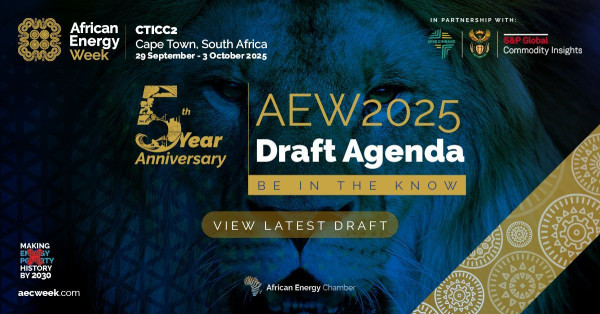
The African Energy Week (AEW): Invest in African Energies conference has officially launched its 2025 program, covering strategic topics from upstream oil and gas to downstream infrastructure and distribution to the energy transition, power industry, energy finance and more. The program offers insight into what this year's edition will offer, as industry leaders, global investors, major operators and think-tanks convene in Cape Town to discuss Positioning Africa as the Next Global Energy Champion.
As the largest event of its kind in Africa, AEW: Invest in African Energies serves as a vital platform to sign deals and drive energy projects forward. This year's event offers an expanded program, featuring a variety of stages covering the entire energy value chain. Additional features include pre-conference workshops, a deal room, the return of the African Farmout Forum, technical hubs, fireside chats and more. The Just Energy Transition concert returns to kick off the week while the African Energy Awards & Gala Dinner celebrates movers and shakers in African energy.
One of the highlights of this year's conference is the G20 Energy Leaders Roundtable, which comes as South Africa hosts the 20th meeting of the G20 group this year. A series of country spotlights will also take place during the course of the week, covering markets such as South Africa, Senegal, Equatorial Guinea, Namibia and the Republic of Congo, as well as an OPEC roundtable featuring major OPEC-producers. A BRICS roundtable will examine the impact the group has on Africa's energy future while a COP 30 roundtable will discuss Africa's position ahead of the conference this year.
Africa's energy sector is more attractive than ever, as regulatory reforms, ambitious policies and long-term development strategies continue to entice spending. Total capital expenditure for the oil and gas industry alone is estimated to reach $43 billion in 2025, with spending set to reach $54 billion by 2030. AEW: Invest in African Energies 2025 features an energy finance stage, with discussions covering the African Energy Bank; investment trends in Africa and reducing barriers to entry. The stage will unpack Mergers & Acquisitions; financing cross-border projects; energy access and equity, among other topics.
As one of the final frontiers for oil and gas exploration, Africa is seeing a plethora of projects advance. West Africa is projected to lead oil and gas spending in 2025, accounting for over 50% of the continent's total expenditure. While established producers such as Nigeria remain dominant, emerging producers such as Senegal and Mauritania are attracting high levels of investment. In Southern Africa, Namibia targets first oil by 2029 while South Africa seeks to unlock discoveries in both its offshore basins and onshore shale prospects. Zimbabwe targets onshore gas production while Mozambique advances its pipeline of large-scale LNG projects. AEW: Invest in African Energies Upstream E&P Forum will examine the continent's exploration hotspots. Panels include onshore and shallow water potential; the resurgence of Libya; onshore basins to watch; the outlook for LNG; and deepwater plays.
Amid the continent's oil and gas drive, Africa also seeks to advance a just energy transition, Countries such as Mauritania, Namibia and South Africa are spearheading large-scale green hydrogen developments while solar and wind developments offer increased accessibility for remote communities. Gas-to-power is a central feature of the continents just energy transition, with Algeria, Nigeria and Egypt leading the charge. The AEW: Invest in African Energies Energy Transition stage will unpack strategies for decarbonizing while boosting industrialization. Topics include addressing energy security and climate commitments; clean cooking opportunities; local content; integrated ESG, and more.
As Africa seeks to make energy poverty history by 2030, a fundamental industry is the power sector. Efforts are underway across the continent to revitalize power infrastructure, with both grid-connected and off-grid projects advancing. International partners have a role to play in supporting power projects and the AEW: Invest in African Energies Powering Africa stage will address this. Topics include energy leaders dialogue; energy efficiency; bridging the electricity gap; energy diversification; and integrating renewables into the energy mix.
“Africa is on the cusp of an energy revolution, and AEW: Invest in African Energies is where the deals that will define our continent's future are made. We remain committed to making energy poverty history by 2030, and through this event, we are accelerating the partnerships and policies that will make that vision a reality,” states NJ Ayuk, Executive Chairman of the African Energy Chamber.
Visit www.AECWeek.com to download your copy today.
AEW: Invest in African Energies is the platform of choice for project operators, financiers, technology providers and government, and has emerged as the official place to sign deals in African energy. Visit http://www.AECWeek.com for more information about this exciting event.
Distributed by APO Group on behalf of African Energy Chamber.

The African Development Bank Group (www.AfDB.org) participated in the third edition of the Africa's Green Economy Summit (AGES) (https://apo-opa.co/4izmWCf) in Cape Town, South Africa, from 18 – 21 February, 2025.
The annual Summit, hosted by the African Union, brought together policy makers, stakeholders, private sector and experts who discussed Africa's green transition and the urgent need for increased investment in climate resilience. The conference was held under the theme, “Building a Climate Resilient Africa: Catalysing Investment and Innovation in the Green and Blue Economies”. Discussions over the four days cut across five key areas: climate finance, biodiversity and nature, green reforms, resilient cities and green industrialisation.
With its vast renewable energy potential, abundance of critical minerals essential for the global energy transition, and a growing commitment to climate-smart solutions, Africa is very well placed to lead the way toward sustainable global growth. As it navigates a path towards fully realizing these boundless possibilities, against the backdrop of mounting climate challenges, there is increasing focus on the urgency of resource mobilization.
Dr. Anthony Nyong, Director of Climate Change and Green Growth at the African Development Bank and keynote speaker at the summit's opening ceremony, touched on this in his remarks. Affirming that “Africa has enormous opportunities to lead global efforts to transition to a green economy”, he added that, “To build a climate-resilient Africa, adaptation must be at the heart of our strategies. While global climate finance continues to prioritize mitigation efforts, adaptation remains significantly underfunded, receiving less than 10 percent of total climate finance flows.”
Calling for a tripling of Africa's climate finance flows and green investments, and for the right partnerships to underpin the financing, Nyong concluded that “Together, we can build an Africa that thrives in harmony with nature.”
A “platinum sponsor” for the summit, the Bank featured in a range of activities, discussions and roundtables, consistently demonstrating its leadership role in supporting Africa's countries transition to climate resilience and low carbon development, as articulated in the its Climate Change and Green Growth Framework 2021 – 2030.
Harsen Nyambe, Director of Blue Economy and Sustainable Environment at the African Union, emphasized the summit's role as “a vital link between global capital and sustainable projects on the continent.”
Barbara Buchner, Global Managing Director of Climate Policy Initiative, stressed the critical need for private sector engagement, highlighting that existing funding amounts to only about 23 percent of Africa's estimated climate finance needs, while only 18 percent of the continent's climate finance is from the private sector – a figure “much lower than in other regions.”
Maxwell Gomera, South Africa Resident Representative of the United Nations Development Programme, highlighted another key issue: “We've sent people to the moon, yet we still haven't solved the challenge of clean cooking. This is a business problem.”
“For the African Development Bank, driving green growth in Africa comes with challenges but also significant opportunities. In this regard, AGES presents a unique platform to spotlight Africa as a land of green economic opportunities in a range of sectors such as renewable energy, critical minerals, climate-smart agriculture, green cities, low-carbon and climate-resilient infrastructure, among others,” said Al Hamndou Dorsouma, Manager of Climate and Green Growth at the African Development Bank.
On Tuesday, 18 February, the Bank Group hosted a Masterclass on Carbon Markets in Africa, explored how carbon markets are becoming more stable and attractive for growth, and offering new opportunities for market entry and project development.
By leveraging platforms like AGES, Africa can strengthen partnerships, unlock funding, and implement policies that drive a sustainable and resilient future. With targeted investments and bold commitments, the continent has the potential to lead the way in shaping a low-carbon, climate-smart economy that benefits both its people and the planet.
Read and watch Anthony Nyong's interview, here (https://apo-opa.co/4bAIT1g)
Distributed by APO Group on behalf of African Development Bank Group (AfDB).
Social Media:
EMBED FLICKR ALBUM https://apo-opa.co/4iXi7Cx
LINK TO CARBON MARKET BLOG
Employees were robbed at gunpoint in Makhaza
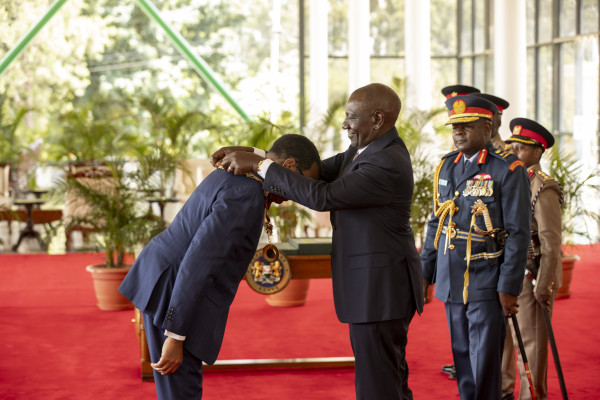
Kenya's President H.E. William Samoei Ruto has conferred the country's highest honour, Chief of the Order of the Golden Heart CGH, on the President of the African Development Bank Group, Dr Akinwumi Adesina (www.AfDB.org).
Dr Adesina becomes the 20th recipient of the honour that was established in 1967 and first awarded to Kenya's founding father and former President, H.E. Jomo Kenyatta. Others include globally renowned leaders such as former UN Secretary General Kofi Annan, South Africa's Nelson Mandela, Queen Elizabeth II of the United Kingdom, Uganda's Yoweri Museveni and Kenya's subsequent Presidents Daniel arap Moi, Mwai Kibaki, Uhuru Kenyatta and Dr Ruto.
During a colourful investiture ceremony at Nairobi's State House, President Ruto praised Dr Adesina's distinguished service, commitment, and passion for the economic development of Kenya and Africa.
President Ruto congratulated Adesina and told him, “You are amazing. You are a great leader. You deserve this honour and investiture.”
The two leaders share a warm relationship that dates back 20 years when Adesina lived and worked in Kenya for the Alliance for Green Revolution in Africa, AGRA. At that time Ruto was Kenya's Minister for Agriculture. Both recalled how they worked together to provide subsidies to farmers despite opposition at the time from some donors and global financial institutions.
President Ruto said under his presidency he has continued with the same policy of offering subsidies to farmers, leading to an increase in the country's food production.
“Our maize production increased from 40 million to 70 million bags last year. Our sales from tea, generated more than 220 billion shillings [approximately $1.7 billion], the highest ever earnings.”
“I am proud of the journey we started together ten years ago; I can see its fruits. Kenyans can feel its benefits,” President Ruto told Adesina who was accompanied by his wife, Mrs Grace Yemisi Adesina.
In its citation, the Kenya government recognized Adesina as a distinguished economist and a global development leader.
“He transformed the African Development Bank into a globally recognized institution for financial innovation and development impact and grown the Bank's general capital from $93 billion to $318 billion,” the citation reads.
In his acceptance speech, Adesina said: “I am greatly humbled by your incredible kindness! What a great honour! What a rare privilege! What a historic recognition!”
Adesina spoke about Kenya's special place in the history of the Bank which was established in 1964. Since then, the Bank has financed a total of 167 projects, with financial commitment of $7.8 billion.
He said the Bank's current portfolio in Kenya consists of 45 projects worth $4.09 billion. They include, among others:
President Ruto said the Bank's support to the country's mortgage sector has boosted the government's national housing programme, with 150,000 houses under construction, generating jobs for 260, 000 youth.
Speaking about Kenya's high youth unemployment, Adesina pointed to several youth riots that shook the country last year.
In addition to providing $309 million for eight on-going projects targeting skills development, Adesina said the Bank is preparing for Board approval, financial support for the establishment of a Youth Entrepreneurship Investment Bank of Kenya.
“This will be a stand-alone financial institution, that will be 100 percent dedicated to providing technical assistance, debt and equity financing for youth businesses in Kenya.”
Adesina was accompanied by Vice President for Power, Energy, Climate and Green Growth Dr Kevin Kariuki, the Vice President for Regional Development, Integration and Business Delivery Nnenna Nwabufo; the Director General for East Africa, Kennedy Mbekeani; the Executive Director for Eastern Africa, Jonathan Nzayikorera; and his Senior Advisor to the President for Communication and Stakeholder Engagement Dr Victor Oladokun, who delivered the opening prayer for the ceremony.
“This is an honour that I will cherish for life,” Adesina said. “It will be a constant reminder that the country I love so much, Kenya, loves me back, appreciates and celebrates my leadership at the African Development Bank, and values and honours the incredible contributions of the Bank to its development. I accept this honour with great humility.”
Distributed by APO Group on behalf of African Development Bank Group (AfDB).
To look at the album click here (apo-opa.co/3FzwNt7).
About the African Development Bank Group:
The African Development Bank Group is Africa's premier development finance institution. It comprises three distinct entities: the African Development Bank (AfDB), the African Development Fund (ADF) and the Nigeria Trust Fund (NTF). On the ground in 41 African countries with an external office in Japan, the Bank contributes to the economic development and the social progress of its 54 regional member states. For more information: www.AfDB.org
Opportunities presented by green economy must be a shared prosperity
Trade, Industry and Competition Deputy Minister Andrew Whitfield says there is a need for global consensus to ensure that the new opportunities presented by the green economy result in shared prosperity.
He was leading a delegation of officials from the Department of Trade, Industry and Competition (the dtic), in briefing a joint session of the Portfolio and Select Committees on the policy priorities of South Africa’s G20 Presidency and the dtic’s role in this regard.
Tuesday's session was held ahead of the first Trade and Working Group meeting which will be held virtually later in the day.
The working group is expected to hold further meetings later in the year before the main ministerial meeting in October.
Its primary focus will be on four priority areas, namely, trade and inclusive growth, a responsive trade agenda to address global commons, green industrialisation and the reform of the World Trade Organization.
The Deputy Minister told the Parliamentarians that the G20, as a forum of the largest economies in the world, bears a unique responsibility in ensuring a response to the environmental, social and economic challenges that continue to affect stability and hamper the pursuit of sustainable development.
“A particularly worrisome prospect is the lack of multilateral solutions and cooperative approaches and widening punitive approaches to addressing the issues of global commons and the rise in risks of fragmentation of international trade in the context of the transition to cleaner energy sources.
“We need to ensure that trade and climate/environmental policies should be mutually supportive and are consistent with World Trade Organisation principles contribute to the objectives of sustainable development.
“Mobilising support and resources to tackle the internal disparities driven by the uneven distributional effects of trade and globalisation is critical,” he said.
He said investments into developing countries must move away from “pit to port” activities that promote resource extraction.
“There is a need to promote beneficiation and local value addition of resources at source resulting in an additive rather than an extractive relationship.
“This necessitates finding a requisite balance that ensures that resource-rich countries benefit greatly from their endowments and that investments that contribute to structural transformation and industrial development while there is also a flow of resources to ensure the integrity of global and regional value chains.
“By strengthening and reforming multilateral mechanisms and institutions; by deepening International economic cooperation, we can indeed realise a better world free from the twin scourges of inequality and underdevelopment,” he said. – SAnews.gov.za
Edwin
Tue, 03/18/2025 - 14:15
152 views
Over one million grant beneficiaries heed call to swap SASSA gold cards
Postbank has announced that as it has successfully swapped over one million social grant beneficiaries from the South African Social Security Agency (SASSA) gold card to the new Postbank black cards.
This was announced by Postbank CEO Nikki Mbengashe during a joint media briefing by Postbank and SASSA on Monday.
“Postbank is encouraged to announce that we have achieved a significant milestone in our replacement of SASSA gold cards with Postbank black cards. As of 10 March 2025, we successfully swapped over 1 million social grant beneficiaries from the SASSA gold card to the new improved and more compliant Postbank black cards,” Mbengashe said in an update on the replacement of SASSA gold cards with Postbank black cards.
The two entities expressed appreciation to all grant beneficiaries that came forward in their numbers to replace their cards.
“Our heartfelt ‘thank you’ for your encouraging response, not forgetting thousands that are at our card replacement sites right now in all parts of the country to ensure that they also get their black cards …Thank you.
“To those that are yet to replace their SASSA gold cards, we encourage you to still head to a Postbank card replacement site to get your black cards,” the CEO said.
Postbank card replacement sites are located mainly in selected branches of major retailers that include Shoprite, Checkers, Usave, PicknPay, Boxer, Spar, and beneficiaries can dial *120*355# from a cellphone to look up a nearby site.
Beneficiaries require only a form of identification, which can be an RSA green barcoded ID, smart card ID, or temporary ID to do the swap. The cards are issued at no cost to the beneficiaries.
“For us as Postbank, reaching this milestone gives impetus to our commitment to ensure that all our gold card grant beneficiaries are issued with new cards,” Mbengashe said.
20 March 2025 deadline and what it means
The CEO reiterated that the SASSA gold cards will stop working on 20 March 2025 and no beneficiary would then be able to use their SASSA gold card to make any transaction, even if they have funds in their account.
“Beneficiaries would not be able to use SASSA gold cards to buy or withdraw cash inside stores. Retailers would not accept the cards for any transactions, and any attempts will result in automatic system transaction declines.
“Beneficiaries would also not be able to use SASSA gold cards at any ATM. The SASSA gold may be swallowed when inserted in any ATM to attempt a transaction,” she said.
She explained that any balance of funds that are available in the SASSA gold card when the cards stop working will be stored safely in each beneficiary’s bank account, and the funds will be accessible for withdrawal though the Post Office withdrawal process, the retailer’s cardless payment method if one is registered for it, or through the Postbank black card.
“Beneficiaries that would still be in possession of SASSA gold cards are strongly discouraged from attempting any transaction with the cards to avoid disappointment, even when they still have available funds,” she explained.
What the 20th March 2025 deadline does not mean
The CEO further explained that the 20 March 2025 is not a cut-off date for when Postbank stops replacing SASSA gold cards.
Postbank will continue replacing SASSA gold cards with new Postbank black cards in all its card replacement sites even after this date.
“Social grant beneficiaries may still replace their SASSA gold cards with Postbank black cards on, and after, 20th of March 2025.
“To prepare for the next grant payments that are scheduled for 3 to 5 April 2025, SASSA and Postbank encourage beneficiaries to make extra efforts to use the period between now and those payments dates to get their black cards,” Mbengashe said.
By doing that, she explained that beneficiaries will guarantee that their April 2025 grant payments are made with their cards.
She said Postbank will continue to swap the gold card until the end of June 2025.
“This is when we believe we should have swapped all beneficiaries that bank with Postbank. We, however, plead with all beneficiaries to please use the rest of the month of March and perhaps into early April 2025 to go get their new cards,” the CEO said.
How do I access my April Grant payment if I do not have a black card yet?
Postbank and SASSA have assured social grant beneficiaries and the public that the payments of social grants will not be interrupted. All social grant beneficiaries will continue to be paid, including all the social grant beneficiaries who have not been able to get their black cards.
“Starting from the next grant payments that are scheduled for 3 to 5 April 2025 and onwards, social grant beneficiaries that are yet to replace their gold cards with Postbank black cards, can go withdraw their grant at their nearest Post Office.
“There are currently 543 Post Office branches countrywide that we are working with. All that one will need to make this withdrawal is their ID (green barcoded ID, smart card ID, or temporary ID),” the CEO said.
Mbengashe said that the Post Office branch-based payments are a channel that many of the social grant beneficiaries have used before, and they are familiar with.
Beneficiaries are urged to note that the Post Office branch payments will be restricted to social grant beneficiaries that are yet to replace their SASSA gold cards, asylum seekers and Postbank green Mzansi/blue cards’ grant beneficiaries.
Beneficiaries who already have Postbank black cards are urged to use their card through ATMs and retailers to access their funds.
They are further urged to never try to collect their payments inside Post Office branches as they will not be provided with a service. Post Office branches will only provide cash withdrawals for those whose black cards are either lost or stolen.
“Social grant beneficiaries are also reminded that the Post Office payments are an interim measure, therefore they should use the time of this arrangement to make efforts to get their Postbank black cards. As mentioned, the replacement of SASSA gold cards will continue post 20 March 2025 in all the existing Postbank card replacement sites, and more sites are being added every day,” the CEO said.
Postbank and SASSA said they have taken these measures to ensure that there are no interruptions in the payments of social grants, and that beneficiaries that are yet to replace their SASSA gold cards continue to access their grants when the time for their cards to stop working arrives on 20 March 2025. – SAnews.gov.za
DikelediM
Mon, 03/17/2025 - 14:48
328 views
The Minister of Forestry, Fisheries and the Environment, Dr Dion George, is pleased to inform the members of the public that the President, His Excellency Cyril Ramaphosa, has proclaimed the Climate Change Act, 2024 (Act No. 22 of 2024) (the Act). The proclamation notice was published in the Government Gazette on 17 March 2025, which is therefore the commencement date of the Act.
The Act is intended to enable the development of an effective climate change response and a long-term, just transition to a low-carbon and climate-resilient economy and society for South Africa in the context of sustainable development; and to provide for matters connected therewith.
Furthermore, the Act lays the foundation for a green economy that is resilient, inclusive, and future-focused. By creating a clear framework for climate action, the Act will drive innovation, foster sustainable industries, and support job creation in renewable energy, sustainable agriculture, and eco-tourism, among other sectors.
Dr George said, “The Act represents a critical milestone not just for environmental sustainability, but for economic development and job creation. We are committed to ensuring that climate action becomes a catalyst for driving economic growth, creating jobs, and building a sustainable future for South Africa.”
The Act reflects the government's commitment to achieving a just transition to a low-carbon economy, ensuring that climate action goes hand-in-hand with economic empowerment and job creation. As the country, much like the rest of the world, faces growing environmental and economic complexities, the Act provides a vital framework for securing a prosperous and sustainable future for all South Africans.
It must be noted that although the Act has come into operation, the commencement of certain provisions of the Act, namely, sections 12(6), 13(1), 13(2), 13(3)(b), 14(3)(a), 15(5), 15(6), 17, 18, 19, 20, 21, 22, 25(4)(c), 26(2) to (6), 27, 28 and 30(2)(a) and (b), has been deferred to a later date. The reason for deferring these specific provisions is that the Department of Forestry, Fisheries and the Environment (DFFE) is developing a set of regulations that will enable implementation of these provisions. Some of the draft regulations are at an advanced stage of development and will be gazetted for public input and comment soon.
The DFFE will continue to keep members of the public informed of the finalisation of the regulations and the full implementation of the Climate Change Act.
“The recent severe weather conditions that have caused havoc in different parts of the country are a stark reminder of the urgent need for decisive climate action and my Department will continue to work hard towards achieving our mandate,” said Dr George.
A copy of the Act, Gazetted Proclamation Notice, and the Deferred provisions of the Act can be accessed on the following links:
Climate Change Act: https://www.dffe.gov.za/sites/default/files/legislations/cca_assented_g50966vol709n5050.pdf
Climate Change Act proclamation: https://www.dffe.gov.za/sites/default/files/legislations/cca_commencement_g52319pn251.pdf
Deferred provisions of the Act: https://www.dffe.gov.za/sites/default/files/legislations/cca_deferredprovisions_g52319pn251.pdf
Distributed by APO Group on behalf of Republic Of South Africa: Department of Forestry, Fisheries and the Environment.
The My Body My Space festival celebrates ten years of free access to the arts
GQEBERHA: SA Rural XI and SA Forces XI are set to face each other in a round of white-ball matches...
South Africa-European Union Summit concludes
President Cyril Ramaphosa has welcomed the European Union’s €4.7 billion Global Gateway Investment Package aimed at supporting strategic investment projects.
The President was speaking during a press briefing following the 8th South Africa-European Union Summit held in Cape Town on Thursday.
The package is aimed at supporting:
• A clean and just energy transition in South Africa
• Digital and physical connectivity infrastructure
• The local pharmaceutical industry.
“The investment package covers areas such as critical raw mineral processing, green hydrogen, renewable energy, transport and digital infrastructure, local vaccine and pharmaceutical production, and resources for skills development.
“To boost the competitiveness of our economies, we agreed to launch negotiations towards a Clean Trade and Investment Partnership. This will support the development of cleaner value chains for raw materials and local beneficiation, renewable and low carbon energy, and clean technology,” President Ramaphosa said.
Furthermore, the partnership will also serve as a platform for “regulatory cooperation between the European Union and South Africa in areas of mutual interest related to clean supply chains”.
“This partnership is expected, for example, to deliver short and long term solutions to enable Sasol to export sustainable fuel, especially aviation fuel, to the European Union,” the President added.
Strengthening ties
President Ramaphosa noted that the summit – the first such held in seven years – reflects mutual commitment to “enhancing our Strategic Partnership for the mutual benefit of our people”.
As a regional bloc, the European Union (EU) is South Africa’s biggest trading partner recording some €49.5 billion in total trade in 2023 with EU foreign direct investment into South Africa reaching around €71 billion in 2022.
“Today’s Summit focused on strengthening our trade and investment relations, which are vital for the growth of our economies and the achievement of our development goals,” the President noted.
Discussions also focussed on other areas including green energy, science and health.
“We have prioritised the transition to green energy, ensuring that this process is just and inclusive and safeguards the livelihoods of those most affected by the transition. We also had discussions on our robust cooperation in education; science, technology and innovation; and health.
“We have recognised the vital importance of developing the skills and capabilities of young people, starting from early childhood development through to the training of young people in the skills of the future,” President Ramaphosa explained.
Global developments
On the global stage, President Ramaphosa said, “we reaffirmed our commitment to multilateralism, the rule of law and the central role of the United Nations in maintaining global peace and security”.
“We also expressed our resolve to resist actions that undermine multilateral cooperation. We reinforced our belief that the institutions of global governance must be reformed to make them representative and fit for purpose.
“We agreed that addressing the root causes of conflict is essential for achieving durable peace, security and stability in Africa.”
Turning to the conflict in the Democratic Republic of Congo (DRC), President Ramaphosa said South Africa calls on parties to assist in addressing the “dire situation of the people” caught in the blaze of the war.
“As South Africa, we have made a call for a humanitarian intervention for displaced people in the eastern Democratic Republic of the Congo.
“As we work to achieve a ceasefire and achieve a peaceful resolution of the conflict in the DRC, we are calling on the United Nations, African Union and EU to help to address the dire situation of the people affected by the fighting,” he said.
Reflecting on the outcomes of the Summit, President Ramaphosa described it as having further strengthened the strategic partnership.
“Today’s Summit has further strengthened our Strategic Partnership, which will support our efforts to drive inclusive economic growth, create jobs, eradicate poverty and address global challenges in a spirit of solidarity, collaboration and partnership.
“On behalf of the Government and people of South Africa, it has been a pleasure to host you today, reaffirming our commitment to building strong, mutually beneficial relations with the European Union,” President Ramaphosa concluded.
In his opening remarks at the summit, the President said that as one of South Africa’s most important trade and investment partners, the European Union can play a catalytic role in unleashing the productive capacity of our economy and equip our people, especially the youth, to participate in the economy of the future.
READ | President Ramaphosa engages EU on new investment package
“We hope we can continue to rely on the support of the European Union and its member states in our efforts to alleviate poverty, transition to a low-carbon economy, invest in climate-resilient infrastructure and grow our industrial capacity,” the President explained. – SAnews.gov.za
NeoB
Thu, 03/13/2025 - 19:06
122 views
Phalaborwa residents lay criminal charges against local municipalities to try to end their sewerage problems