Millions spent but 7 years later still no water for Eastern Cape villagers
Water project for Libode started in 2016

MyZA
News, Directory, Events and Other Stuff
Water project for Libode started in 2016
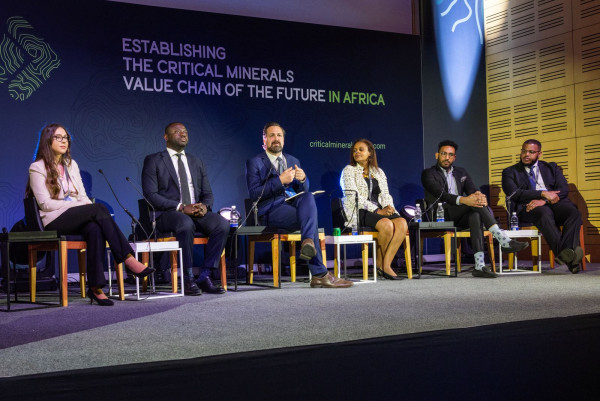
A high-level panel at Critical Minerals Africa 2023 – organized by Energy Capital & Power (https://www.EnergyCapitalPower.com) – discussed how sustainable practices, localized supply chains and integrated mining operations will help secure critical minerals supplies of the future.
Moderated by Olimpia Pilch, Founder and COO of Critical Minerals International Alliance, the panel featured Kwasi Ampofo, Head of Metals and Mining, BloombergNEF; Alex Benkenstein, Head of the Climate and Natural Resources Programme, South African Institute of International Affairs (SAIIA); Dr. Marit Y. Kitaw, Interim Director, African Minerals Development Center (AMDC); Deshan Naido, Managing Director, AQORA; and Duma Sisulu, Co-Founder & Chief Analyst, Parime Battery Minerals.
The panel sought to explore the future of Africa's minerals economy in light of growing demand for clean energy technologies and mounting pressure to decarbonize existing mining activities and maximize resource efficiency.
Speaking to the scope of demand growth for energy transition mineral and metals, Kwasi Ampofo noted: “We currently use 50 million metric tonnes of metals going into transition technologies and accompanying infrastructure. By 2050, if we reach the scenario based on current policies and economics, we will need about 140 million metric tonnes. If we reach the net-zero scenario, this goes up to 250 million metric tonnes.”
In evaluating the strength of Africa's currently local and regional supply chains, panelists evaluated strategies that can be implemented to ensure their resilience and build more localized value chains, which can help achieve market stability.
“There's a lot of discussion around demand, but we don't see the same enthusiasm around funding supply. There is a shortfall in supply, which then spikes demand. Every time the price drops – for example, in nickel – there will be producers who are unable to match the current supply at that price. We will then have a continuation of these supercycles, which is not sustainable,” commented Duma Sisulu.
“If the critical minerals supply chain doesn't change, then we have failed as Africans. We have the opportunity to do what the international oil giants did 50-60 years ago. We have the bargaining power for the deposits that sit on the continent,” said Deshan Naido.
According to the panel, the future of Africa's critical minerals will involve mining companies diversifying their operations across multiple sectors, while fostering synergy among mining and energy sectors, owing to Africa's acute energy deficit. Establishing value-added activities will also be essential to maximizing resource efficiency and ensuring the sustainability of the extractive sector.
“Africa does not have to accept its position within global supply chains… Mineral processing is energy intensive and requires a steady supply. This is not an absolute barrier – it can be rectified – which has been seen by the influx of investment by mining companies in South Africa to invest heavily in renewable energy technologies,” stated Alex Benkenstein.
“The only way to transform lives is to add value – job creation, skills transfer, economies of scale, transformation and growth. This gives us the opportunity to set the agenda — we need processing, refining and value addition,” emphasized Dr. Marit Y. Kitaw.
The Critical Minerals Africa 2023 summit is currently taking place from October 17-19 and serves to position Africa as the primary investment destination for critical minerals. The event is held alongside the African Energy Week 2023 conference (https://AECWeek.com/) on October 16-20, offering delegates access to the full scope of energy, mining and finance leaders in Cape Town.
Distributed by APO Group on behalf of Energy Capital & Power.
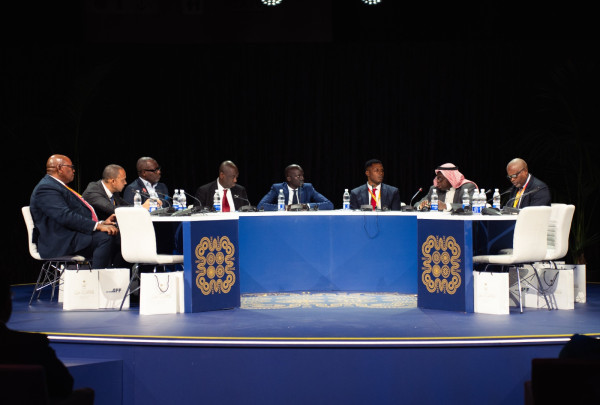
African Energy Week (AEW) 2023 featured a Saudi Arabia-Africa Energy Investment Forum roundtable that explored the untapped potential for stronger economic ties between Saudi Arabia and African nations.
The roundtable discussion kicked off with opening remarks by Saudi Arabia's Saudi General Authority of Foreign Trade, Hussam Y. Algheraimil, who spoke on the Middle Eastern country's strategy to implement financial relations with African countries while contributing towards attracting investment to the continent.
“Our main goal is to contribute to attracting investment, exploring access, and representing Saudi Arabia,” Algheraimil stated, adding, “We are currently working to create easy trade between the Kingdom of Saudi Arabia and African countries by helping stakeholders find appropriate financial instruments in the short, medium and long-term.”
The roundtable discussion served as an engaging conversation on how increased trade, particularly in petroleum products and Liquefied Petroleum Gas (LPG), and collaboration across upstream, midstream and downstream segments can contribute to addressing energy poverty across Africa, with Saudi Arabia serving as a strategic gateway.
“We want to build strong, win-win partnerships,” stated Rene Awambeng, Director and Global Head of Client Relations of the African Export-Import Bank, adding, “Saudi Arabia is uniquely positioned to take advantage of the African opportunity. They are uniquely placed in this environment to take advantage of what is happening on the continent.”
“LPG can help us in South Africa in a big way in terms of ensuring supply and access to energy. Saudi Arabia has a different problem, they have too much energy. We have a lot of people in the country and region with no access to power and I believe there is a big opportunity to bring LPG from Saudi Arabia to use here,” stated Godfrey Moagi, CEO of the strategic solutions organization, the Strategic Fuel Fund.
The roundtable discussed the role Africa's vast, and yet unexploited oil and gas resources play in delivering a just and inclusive energy transition. As such, South Sudan's Minister of Petroleum, Puot Kang Chol, stressed the importance of turning the continent's resources into value and engaging with international partners to ensure the facilitation of investment and knowledge transfer.
“My expectations with regard to Africa, is having Saudi Arabia engage in direct conversations with the continent, because we are ready to do business with them and we have the necessary laws to facilitate investment on the continent,” Minister Chol stated.
As Africa seeks to maximize the development of its entire energy resource base, including oil, gas, coal and renewable energy for a secure and sustainable energy mix that will support the continent's efforts to accelerate electrification and drive socioeconomic development, the roundtable speakers highlighted cooperation regarding knowledge sharing, skills development, project deployment and financing with global parties as vital for the continent's energy goals.
“The bilateral cooperation in place between Saudi Arabia and South Africa has opened an opportunity for us,” stated Sandisiwe Ncemance, Acting CEO for the state-owned Petroleum Oil and Gas Corporation of South Africa, adding, “It would be an indictment on us not to seize those opportunities. There is untapped potential for economic ties to increase trade between Saudi Arabia and South Africa and also collaboration through all facets of the energy sector, through the down-, mid-, and upstream.”
As one of the world's premier hydrocarbons producers and exporters, Saudi Arabia's participation during this session, titled, ‘Partnering with Africa's Private Sector to Drive Energy Growth', served to shape discussions around the challenges and opportunities for local content development and the beneficiation of the local market.
“Local companies are able to add tremendous value in our ability to implement and develop projects,” stated Nanda Bhula, Country Manager for electric power generation company, ACWA Power South Africa, adding, “Local companies have a big understanding of local conditions, more so than international investors. Local companies also understand things like supply chain management and local labor laws, so we see a lot of benefits in terms of their understanding of the local market.”
Africa boasts an estimated 125.3 billion barrels of crude oil and 620 trillion cubic feet of gas reserves, resources that will be essential to lift the continent's over-600 million people living in reliable access to electricity out of energy poverty. As such, the Saudi delegates speaking at the roundtable discussion spoke on the importance of drilling more oil and gas wells and building more refineries and pipelines whilst reducing emissions for energy independence, reliability, and affordability.
“The Kingdom of Saudi Arabia has established leadership in this domain, and we always want to continue playing that role of leader in energy,” Dr. Gasem Fallatah, Deputy Manager for the sustainability initiative, the Oil Sustainability Program stated, adding, “Leadership comes with responsibilities, it comes with accountability, and we do recognize that. We will determine together what will be the agenda that we can work on, so we can determine together, the future that we would like to see.”
Representing one of the world's largest oil and gas reserve holders as well as one of the most established hydrocarbons markets, the Saudi delegation drove the dialogue on how Africa can boost investments, production activities, infrastructure rollout across the mid- and downstream sectors, as well as enhance the use of monetization of hydrocarbon resources to make energy poverty history across the continent by 2030. It was noted that these efforts and strategies are poised to improve the continent's GDP and contribute towards global energy security.
“Saudi Arabia, with huge financial capacity, they designed the model that can help Africa stabilize and grow their own energy potential. As African countries, what we need to look at, is the strategic position of how Saudi Arabia is increasing their businesses. There's a lot to learn in how they are engaging and in doing business, and we need to create new markets for our products and crude to expand our business framework,” stated Kola Karim, Managing Director and CEO for power solutions company, Shoreline Energy International.
Taking place under the theme, ‘The African Energy Renaissance: Prioritizing Energy Poverty, People, the Planet, Industrialization and Free Markets', the roundtable also highlighted renewable energy and sustainability as key aspects towards Africa's energy development. Boasting similarly abundant solar and wind resources, it was noted that Saudi Arabia's and Africa's renewable energy potential also has an important role to play in alleviating energy poverty while promoting socioeconomic development.
Representing the largest gathering of energy stakeholders on the continent, #AEW2023 – organized by the African Energy Chamber – prioritizes sustainable development, integration, and collaboration as a means to support explorers and producers across Africa. Centered around partnering with the private sector to drive energy growth, the Saudi-Arabia Energy Investment Forum showcased how emerging synergies between Africa and its global partners will reinforce the continent's job creation, skills development, and economic empowerment.
#AEW2023 takes place this week in Cape town under a mandate to make energy poverty history by 2030. Keep following www.AECWeek.com for more exciting information and updates about Africa's premier energy event.
Distributed by APO Group on behalf of African Energy Chamber.
In a remarkable display of true sisterhood, almost 1 000 ‘gently worn’ dresses have been donated by South African women to others who are struggling to cope with the hindering burden of cancer. The collaboration between Miladys and the Cancer Association of South Africa (CANSA) epitomises the spirit of compassion, and highlights – particularly in …
Investing in African Mining Indaba (www.MiningIndaba.com) and the Development Partner Institute (www.DPIMining.org) launched the 2024 Mining Innovation & Research Battlefield to entrants today; The Battlefield is a high-profile platform for innovators and researchers to share their ideas on the challenges facing large-scale, small-scale and artisanal mining; BHP Xplor are sponsors of the US$25,000 Innovation Grant which will support early-stage innovation and research; Applications are open until 06 November. Shortlisted applicants will be notified on 30 November, with Battle Round pitches online on 14 December 2023 and at Mining Indaba in Cape Town on 6 February 2024.
After considerable success in 2022, the Mining Innovation and Research Battlefield (https://apo-opa.info/46Bw4QO), hosted at the Mining Indaba conference, is now open for applicants to submit their research proposals for this year's competition.
On February 6, 2024, the Innovation & Research Battlefield (https://apo-opa.info/46Bw4QO), a high-profile event convened by Investing in African Mining Indaba [Mining Indaba (www.MiningIndaba.com)] and the Development Partner Institute (DPI Mining) (www.DPIMining.org), will provide a platform for participants to showcase early-stage innovations. Competitors will present their ideas and research proposals to address this year's challenge: What are the innovative responsible collaborations between LSM & ASM, and how can these be applied to the just energy transition?
The Innovation and Research Battlefield fast-tracks new approaches to complex sustainability challenges in the resource sector by connecting future-focused academics, researchers, the private sector, NGOs, and young people to a network of vested organisations and the opportunity to win a research grant.
BHP Xplor (https://apo-opa.info/3RXvCbg) are sponsoring the US$25,000 Innovation Grant, which will support the winners in furthering their research. The results of the winning project will be presented at the following Mining Indaba Conference in 2025.
DPI Mining Executive Director Florence Drummond said, “We want to connect great minds and passionate innovators from across academia, resarch and the mining sector, and young leaders to foster agile collaboration, connect viable ideas to financial support, and catalyse real change that could transform the mining and minerals industry.”
Laura Cornish, Head of Content, Mining Indaba, said, “This year's Battlefield challenge is a critical concern for the future of the mining industry, and Mining Indaba is excited to be a platform that allows innovators from across multiple sectors to bring creative solutions to an audience of global leaders.”
The first stage for entries is now open, allowing individuals, groups and organisations to submit their innovative solutions and research proposals. Shortlisted participants will have the exclusive opportunity to pitch virtually in the first round of the Battlefield. Participants who are successful in round one will receive a delegate pass to Mining Indaba, South Africa, and will pitch their proposal live in the final Battlefield round.
Sheila Khama, former CEO of De Beers Botswana and natural resources policy advisor at the World Bank and African Development Bank, hosts the Innovation and Research Battlefield. This year's judging panel includes Mark Cutifani, co-founder of DPI Mining and former CEO of Anglo American, Sonia Scarselli of BHP Xplor, and leaders in the artisanal mining space.
Those interested in participating have until 6 November to apply, but early applications are encouraged. All applicants need to be affiliated with either an institution or an organisation that will assist in managing the awarded Innovation Grant.
For more information on the Innovation & Research Battlefield and to apply visit: https://apo-opa.info/3rVjM6K
Distributed by APO Group on behalf of Investing in African Mining Indaba.
About Development Partner Institute:
The Development Partner Institute (www.DPIMining.org) was founded to tackle intractable, multi-stakeholder sustainability challenges in mining by connecting the global value-chain. Through facilitating conversations, convening events, and catalysing projects, we unlock transformative potential and accelerate mining's contribution to a better future.
Contact us on innovation@dpimining.org
About Investing in African Mining Indaba:
Also known as Mining Indaba (www.MiningIndaba.com), the world's largest mining investment conference and exhibition is dedicated to the successful capitalisation and development of mining interests in Africa. For almost 30 years, Mining Indaba has held a unique and widening perspective of the African mining industry, bringing together international and African stakeholders, visionaries and innovators from across the spectrum. We are also dedicated to supporting education, career development, sustainable development and as a next-generation platform to help economies thrive in Africa.
The 4-day Mining Indaba event attracts junior, mid-tier and major mining companies, along with global and continental investors, heads of state, ministers and Africa's leading policymakers.
Contact Laura Cornish: laura.cornish@hyve.group
TSHWANE: Cricket South Africa (CSA) and the South African Sports Association for the Intellectually Impaired (SASA-II) is thrilled to host...
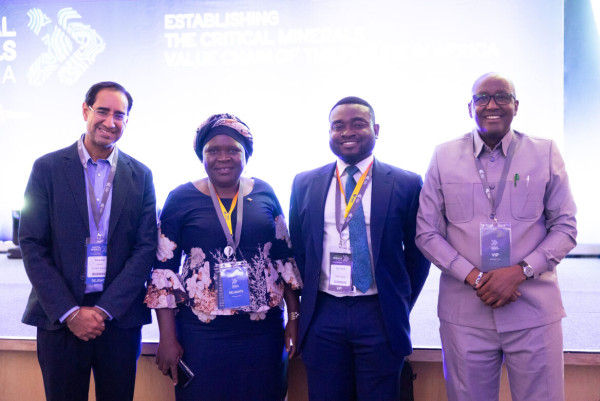
The first day of the Critical Minerals Africa 2023 summit on Tuesday – organized by Energy Capital & Power (www.EnergyCapitalPower.com) – featured a series of presentations from leading industry experts, providing unparalleled insights into Africa's critical mineral reserves and geopolitical position in the global mining economy. The main conference program begins on Wednesday, October 18 and will feature a highly anticipated ministerial forum, investor briefings and panel discussions, taking place alongside African Energy Week in Cape Town.
Kicking off the agenda was a presentation by South African Institute of International Affairs (SAIIA) exploring the future of critical minerals in the SADC – namely, copper in the DRC, South Africa and Zambia, lithium in South Africa and Zimbabwe, cobalt in the DRC and Zambia, graphite in Mozambique, manganese in South Africa, and nickel in Madagascar, South Africa and Tanzania. The ability to harness these reserves depends on several factors, including growing geoeconomic competition among China, the US and Europe, the ability of SADC states to manage regional value chains, and the urgency of global policy action toward renewable and low-carbon energies.
“In 20-30 years, not only will these minerals be in high demand, but how we put systems in place will be important,” stated Dr. Deon Cloete, Head of SAIIA's Futures Program. “We have focused on Rare Earth Elements (REEs) and the need to scale up exploration and extraction and develop the entire value chain. The transition to climate goals by 2050 is challenging and we need to be critical about how these fault lines are emerging. We propose a resource-based economy that challenges the paradigm of how we approach mining.”
The Critical Minerals International Alliance (CMIA) built upon the geopolitical nature of critical minerals development during its presentation, addressing China's race to solidify its leadership on the continent and its successful dual-pronged investment approach. Western nations have sought to counter this influence through various policy measures, including the US' Inflation Reduction Act, the EU's Critical Raw Materials Act and the Minerals Security Partnership, which seeks to secure a stable supply of raw materials for member economies.
“When we talk about critical minerals, we are focused on geopolitics — how they frame supply chains and influence pricing and how monopolies are increasingly changing the industry,” said Olimpia Pilch, Founder and COO of CMIA. “In a supply chain crunch, who gets priority and which industries will miss out? Those who have put in the work to have their own supply chain will be in a much better position.”
On the need to diversify mining supply chains, Roberto Cecutti, Head of Trade and Economics, EU Delegation to South Africa, stated during his presentation: "In terms of annual consumption, we have an aspirational target of covering at least 10% of extraction in Europe, 40% of processing and refinement and 15% of recycling capacity. We want to avoid dependence on the supply of one or more specific countries…This is why we have set this target, in which 65% should not depend on a specific country of origin of supply.”
"Each region has its own definition of what is ‘critical,' and what's critical for Africa may not be what's critical for the EU and vice versa. Africa has different requirements when it comes to minerals,” noted Sodhie Naicker, Managing Director: DMT Kai Batla and Consortium Partner: AfricaMaVal.
Energy research firm Rystad Energy also explored Chinese dominance within the low-carbon supply chain, as the country produces almost 90% of solar panels and is currently ramping up production of wind turbines. While Europe has made gains towards establishing its own clean energy supply chain, Africa remains reliant on imports to meet growing energy demand, despite having vast renewable energy potential and untapped mineral reserves.
“The resource potential for solar generation in Africa is more than enough to satisfy the needs of the planet – it's enormous,” said Per Magnus Nysveen, Senior Partner & Head of Analysis for Rystad Energy. “You can find sites for mining every mineral in sub-Saharan Africa.”
A presentation from Steenkampskraal – operator of the Steenkampskraal Mine in South Africa's Western Cape – underscored the continent's resource potential and its evolution into a critical and industrial minerals hotspot. The mine is home to one of the highest grades of REEs globally, is licensed to operate and possesses well-developed underground infrastructure with a low-capital, three-stage development plan.
“Not even 20% of the known resources have been mined,” emphasized Graham Soden, Director, CEO & Mine Manager of Steenkampskraal. “It puts the project at a unique level. It's fully legislative compliant, and we can get it up and running within one year.”
The agenda concluded with a presentation by Trade & Industrial Policy Strategies (TIPS), which explored opportunities to develop vanadium redox battery (VRB) manufacturing in South Africa and to position the country as a key player in the global battery value chain, with a view to exporting to other African and international markets. Demand for VRBs has skyrocketed in recent years – largely from China, Japan, Europe and the US – resulting in over 30 new VRB projects installed in 11 countries since 2014.
“Cell battery manufacturing remains to be proven competitive in South Africa. We have the industrial capacity, but we don't have a commercialized production,” said Lesego Moshikaro, Senior Economist for TIPS. “When you look at the short- to medium-term, South Africa cannot be competitive along the whole value chain, so it's important for us to choose key areas where we can excel.”
With its main conference program kicking off on October 18, the Critical Minerals Africa 2023 summit serves to position Africa as the primary investment destination for critical minerals. The event is held alongside the African Energy Week 2023 conference (www.AECWeek.com) from October 16-20, offering delegates access to the full scope of energy, mining and finance leaders in Cape Town.
Distributed by APO Group on behalf of Energy Capital & Power.

A number of exploration hotspots have emerged across the continent, with major finds made across both on- and offshore basins. The rebound in high-impact drilling success rates have not only demonstrated the sizeable potential of untapped acreage but made a strong case for upstream investment in Africa.
On the back of regional oil and gas discoveries made in 2022 and 2023, a panel discussion held during the 2023 edition of the African Energy Week (AEW) conference – organized by the African Energy Chamber - explored the resource potential of Africa's new oil and gas hotspots. Speakers from The Gambia, Angola, Namibia, Sierra Leone and more examined the scale and commercial viability of these discoveries, detailing estimated reserves, quality and recoverability.
Emmanuelle Garinet, Vice President for African Exploration, TotalEnergies, kicked off the discussion with a presentation, emphasizing that, “Despite the challenges, we are entering a time of opportunity.” Garinet highlighted the fundamental enablers for Africa's oil and gas exploration industry.
She explained that, “Having access to good quality data such as 2D and 3D data is fundamental for unlocking new basins. We also need to retain geoscientists. We need to continue hiring and training people. It is key for Africa to continue integrating young students and scientists, they have a role to play. Exploration is a costly and risky business, and companies need incentives and favorable regulatory environments.”
Dubbed the final frontier for oil and gas exploration, Africa continues to turn heads across the global hydrocarbon industry, as new discoveries demonstrate the commercial potential of both on- and offshore basins. In established markets such as Angola, ongoing efforts to stimulate E&P investment amid production decline have shown fruitful results, and exploration remains of crucial importance.
According to Marco Fonnesu, Exploration Manager (Blocks 1/14 & 28), Azule Energy, “Exploration plays a big role not only to create value but to find new assets and areas in which we can achieve larger results,” adding that, “Azule Energy is planning 16 exploration wells over the next four years, most of which are in new exploration blocks.”
Brian Reinsborough, CEO of ReconAfrica, a Canadian company exploring both Namibia and Botswana's onshore Kavanago Basin, emphasized that, “Africa has tremendous potential.” Reinsborough believes that Government support plays a role in ensuring the success of exploration.
“Important factors include subsurface, contract terms and above-ground contract stability. Governments need to encourage the acquisition of data, both onshore and offshore. This is how basins evolve. Good data acquisition is key to drive innovation by geoscientists,” he stated.
Meanwhile, billion-barrel finds made in emerging markets are poised to bring new producers to the global energy scene. Namibia, for its part, has made a strong play for investment five major discoveries in two years. Justin Cochrane, Director, African Regional Research, S&P Global Commodity Insights, believes that this success can largely be attributed to the country's attractive fiscal terms.
“We are seeing exploration take place in locations that are attractive for investment. In Namibia, for example, fiscal terms are great and wells are being drilled. South Africa also has great fiscals, and TotalEnergies will likely be drilling next year. As we head up the coast, ExxonMobil were also able to negotiate some good terms in Angola. Where exploration is taking place is tied to where the fiscal terms are good,” he stated.
In line with this trend, untapped markets such as The Gambia and Sierra Leone are eager to replicate regional upstream success, with the introduction of policy reforms and licensing rounds aimed at enticing investment into promising hydrocarbon plays. Sierra Leone has committed to providing an enabling environment for investment, and the results are already showing.
Foday Mansaray, Director General, Petroleum Directorate of Sierra Leone, explained that, “We have concluded our fifth offshore licensing round, successfully. We have three prominent industry players that have pre-qualified. We will conduct negotiations in November and expect to award licenses in December. From application to the issuing of licenses, we have given ourselves 85 days.”
The Gambia is also inviting investors to the market. Cany Jobe, Director E&P of the Gambian National Petroleum Company, stated that, “We have massive resource potential but we face the conundrum of stranded reserves. In 2014, the world's largest hydrocarbon discovery was in Senegal, the Sangomar field. The Gambia is surrounded by Senegal. By all indications, our basin and shelf plays offer the same potential… You are all welcome to The Gambia, which has great fiscal terms and a proven petroleum system.”
#AEW2023 takes place this week in Cape Town under a mandate to make energy poverty history by 2030. Keep following www.AECWeek.com for more exciting information and updates about Africa's premier energy event.
Distributed by APO Group on behalf of African Energy Chamber.
Leading African law firm Bowmans is further strengthening its private equity presence through the appointment of Zingisa Motloba as partner in its Johannesburg office. ‘Zingisa has an impressive array of skills and experience, including an excellent understanding of risk management in ESG matters, from which our private equity clients stand to benefit’ says Ezra Davids, …
Knowing your neighbours’ routines and being aware of their movements significantly increases the chances of noticing when something is amiss. On 12 October at approximately 15:00 Fidelity ADT successfully apprehended a suspect in Kimberley. The incident unfolded when a neighbour spotted an unfamiliar individual inside a customer’s yard. The neighbour promptly alerted the homeowner, who …
In a quick response, Fidelity ADT’s community operations managers, played a crucial role in the apprehension of suspects involved in a series of armed robberies in Kempton Park. On the afternoon of October 11th, Fidelity ADT Community Operations Managers received a tip-off about suspects fleeing from Centurion towards the Moot Region, Pretoria. Without wasting any …
Berlin/Cape Town/Zug – October 2023 – UBUNATION, a dynamic community and platform driven by compassion, kindness, and respect for others, is thrilled to unveil its inaugural campaign and collection in partnership with the We Love Football Academy (WLFA). WLFA, a non-profit organization headquartered in Cape Town, South Africa, is dedicated to empowering youth for a …

South Africa's women's sevens team can look forward to their first-ever Olympics Games after winning the Rugby Africa Women's Sevens regional qualifying tournament in Tunisia.
Kenya pushed them all the way in the final in Monastir as they looked to book their place at a third Olympics having previously represented the region in Rio and Tokyo.
But the Lionesses came up just short, losing 12-7, and will now have to try their luck in the repechage – along with third place Uganda – in a bid to maintain their ever-present record.
Nadine Roos starred for South Africa throughout the two-day event, scoring nine tries and kicking 10 conversions including her side's first try in the final.
South Africa breezed through day one with comfortable wins against Zimbabwe (26-0), Uganda (19-0) and Tunisia (27-7) with Roos contributing 37 of their points.
A Roos hat-trick on day two then helped the Springbok Women's Sevens to beat Zambia 31-0 in the semi-final and set up a date with Kenya.
The Lionesses had kicked off their campaign with two big wins against Zambia and Ghana, scoring 68 points without reply, but nearly came unstuck against Madagascar in their final pool match, edging a tight contest 20-17.
Dennis Mwanja's charges had a far easier ride in the semi-final, beating Uganda 27-0, and went into the final with real confidence.
However, Kenya found themselves 5-0 behind at half-time with Roos' unconverted try the only thing separating the teams.
Sharon Auma then gave Kenya hope when she levelled the scores, Grace Okulu converting to send them into a 7-5 lead.
But Maria Thshiremba had the final say for South Africa when she scored from a set piece move, Roos adding the conversion to make it 12-7.
"A GREAT FEELING"
South Africa head coach Renfred Dazel said he was delighted for the players that they were able to create history and finally qualify for the Olympics.
“I feel so happy for the players who worked so hard to achieve this – we were denied in 2016 and 2020, but this time it is official, and it's such a great feeling,” said Dazel.
"We knew Kenya was going to be a tough opponent and I told the players that defence will win us this one. We did really well in the first half, but could not convert all our pressure into points, so when they took the lead in the second half, we had to fight hard.
“But once again, like in the Challenger Series final, we had the fight in us for the win and it was a great comeback.”
The Springbok Women's Sevens team earlier in the year secured core status on the revamped HSBC SVNS after winning the Challenger Series in Stellenbosch, and Dazel said qualifying for the Olympic Games will further boost their profile.
“It is huge for our system and it is huge for women's rugby in the country overall,” he said.
“There will be more opportunities now for girls to come and play rugby, so winning this weekend was immense for the women's game. The future looks bright.”
Distributed by APO Group on behalf of World Rugby.
Boxer Athletics Club athletes Precious Mashele and Glenrose Xaba showcased their remarkable speed at the inaugural Boxer Super Run in Durban on Sunday 15 October 2023, becoming the fastest South Africans to complete a 5km run on home soil with their astonishing finishing times of 13:44 and 16:03, respectively. According to Mashele, every time that …
Free State MEC to appear in court
A Free State Member of the Executive Council (MEC), a political advisor to the Matjhabeng Local Municipality and a Chief Director are scheduled to appear before the Kroonstad Magistrates Court today.
They will appear in court on Friday, 13 October on allegations of fraud, corruption, money laundering, and contravention of the Municipal Finance Management Act 56 of 2003.
They were arrested on Thursday afternoon by members of the Hawks` Serious Corruption Investigation unit based in Bloemfontein.
The matter emanates from a 2017 incident when the MEC was still the Executive Mayor.
It is alleged that the three suspects colluded to take over R150 000 belonging to Moqhaka Local Municipality, under the guise that the money would be spent on a sound system to be used during a Nelson Mandela memorial lecture.
The event never took place, despite money having been transacted out of the municipal bank account.
Free State Head of the Directorate for Priority Crime Investigation (Hawks), Major General Mokgadi Bokaba has applauded investigators working on the case for their hard work, which led to the court issuing warrants of arrest.
She encouraged them to pursue all matters they are investigating with vigour. – SAnews.gov.za
Edwin
Fri, 10/13/2023 - 09:36
Inspired Education Group, the global leader in premium education, is proud to announce the expansion of its Virtual Reality (VR) and Metaverse-based learning programme to selected schools in South Africa. Following a successful pilot in five international schools, Inspired is now taking this innovative approach to education to Reddam House Helderfontein and Reddam House Waterfall …
After months of intense preparation and practice in kitchens across the country, excitement reached its pinnacle as the nation’s most talented young chefs and bakers battled it out at the RCL FOODS Young Chef & Baker Challenge 2023. The grand finale, held on 12 October in Umhlanga, was a showcase of South Africa’s culinary excellence, …
Mdzananda staff were busy building a fence for Khayelitsha residents who wanted to adopt a dog
SIU welcomes R185m SABC security tender court ruling
The Special Investigating Unit (SIU) has welcomed two judgments by the High Court against former members of the interim board of the SABC and its decision to award a multimillion rand security tender to Mafoko Security Patrols Pty Ltd.
According to the SIU, the court ruled that the decision to award the R185 million physical security services tender is “invalid” and is “reviewed and set aside”.
“The interim board took a decision to award Mafoko a security tender for a period of five years commencing 1 August 2017 at a total contract price of R185 519 425.61, which was R2 300 955.43 more than the contract price for Mjayeli Security. Mjayeli was recommended by three tender committees to the board for appointment.
“In terms of the High Court judgment, Mafoko Security Patrols must, within 30 days, submit an audited statement of the expenses incurred in the performance of its obligations in terms of the tender, the income received and the net profit it would have earned at the expiry of the contract.
“The High Court also ordered the SABC to obtain an independent audited verification within 60 days. After that, the Court will determine the amount of profits to be paid back by Mafoko to the SABC or the SIU,” the unit said.
SIU head Advocate Andy Mothibi said: “The Court’s reference to the King Code on Good Governance underscores the requirements, as also provided for in the Public Finance Management Act, for the Boards of Directors to always act in the interest of State Institutions”.
In another judgement, the court dismissed an application by members of the former interim board, which sought to review and set aside a SIU report that recommended that they be declared delinquent.
The application was brought by former interim board members Khanyisile Kweyama, Mathatha Tsedu, Febe Potgieter-Gqubule and John Matisohn.
“The SIU investigation found that the interim board had irregularly awarded the security contract to Mafoko Security Services, and their action was wrongful and irregular. The SIU believes they were supposed to consider launching an investigation, cancel the tender, or remitting it for reconsideration. The SIU found that the interim board failed to discharge their fiduciary duties in that respect and failed to act in the best interests of the SABC.
“The interim board members argued that the SIU report was irrational, the SIU’s investigation was unconstitutional and contravened the principle of legality, and the SIU went beyond the scope of the President’s Proclamation. Furthermore, they contended that the SIU acted irrationally and procedurally unfairly and exceeded its powers in reaching the findings.
“However, the High Court dismissed the application and ruled that the SIU acted in accordance with the Proclamation by the President, which included investigating maladministration,” the SIU said. – SAnews.gov.za
NeoB
Thu, 10/12/2023 - 12:03
While plans for temporary relocation of 891 households occupying the Central Line are making progress, thousands of households remain on the railway
South Africa – Mbilwi Secondary School from Venda, Limpopo was announced as the winner of the Solve for Tomorrow schools competition at a ceremony at Birchwood Conference Centre in Johannesburg. The competition, which was run in partnership with the State Information Technology Agency (SITA), was aimed at giving grade 10 and 11 learners from underserved …
AFU freezes millions in assets related to alleged PPE corruption case
The National Prosecuting Authority’s (NPA) Asset Forfeiture Unit has obtained a preservation order against assets related to a PPE matter worth R27 million in the Northern Cape.
The order was granted against the assets of well-known Kimberley businessman Somandla Sibisi and his companies Macronym 37 and Aphiwokuhle Holdings.
The frozen assets include a residential property bought for some R900 000, a business property – known as Live Café – bought for more than R2 million, kitchen equipment bought for over R300 000 and a 2013 model Audi A1 car bought for R130 000.
NPA regional spokesperson, Mojalefa Senokoatsane, explained that the vehicle and property were allegedly bought with “the proceeds of the money received from the Northern Cape Department of Health” through PPE related tenders.
“This preservation order emanates from a case where…Sibisi, who is accused number nine, his company is accused number eight, in the Department of Health Northern Cape PPE-related matter amounting to more than R26 million, made his first appearance together with other twelve co-accused on 11 October 2023, in the Kimberley Magistrates’ Court.
“The accused are facing charges of Contravention of Provisions of Section 86(1) of the Public Finance Management Act (PFMA), fraud, corruption, forgery, money laundering, uttering, and defeating or obstructing the course of justice concerning the amount of more than R26.9 million.
“The preservation order, the arrest as well and the appearance in court flow from a multi-disciplinary exertion by the Asset Forfeiture Unit (AFU), the Special Commercial Crimes Unit (SCCU), the Special Investigation Unit (SIU), and the Directorate of Priority Crimes Unit (DPCI),” he said.
Sibisi’s co-accused in the case are:
“These assets will be preserved awaiting an application by the AFU for the final forfeiture to the State. Dr Dion Theys, Mosimanegape Gaborone, Montgomery Lifa Faas, Victor Nyokong, Siyabulela Booi, Elizabeth Dibueng Manyetsa, Goitsemodimo Piet Moseki, are also out on bail in another Department of Health Northern Cape PPE-related matter amounting to more than R16 million, that will be back in the Kimberley District Court on 16 October 2023,” Senokoatsane concluded. – SAnews.gov.za
NeoB
Thu, 10/12/2023 - 09:31
FUTURELIFE®, South Africa’s fastest-growing cereal brand, is celebrating the launch of an exciting new addition to its product line-up, FUTURELIFE® Smart Food™ Peanut Butter Flavour. The introduction of the Peanut Butter flavour variant in the 500g Smart Food™ range comes in a limited-edition promotional pack, adding an extra layer of excitement to the launch. According …
In a significant step toward enhancing the productivity and quality standards in South Africa’s plastics industry, Plastics SA is thrilled to announce its pivotal role in managing the Quality and Productivity Improvement (KAIZEN™) Project. This milestone project is a result of a collaboration between the Japanese International Cooperation Agency (JICA) and the Department of Trade, …