• Skip to main content
  • Skip to header right navigation
  • Skip to after header navigation
  • Skip to site footer
MyZA

MyZA

News, Directory, Events and Other Stuff

  • Social Media
  • Sport
  • World News
  • Home
  • Submit News
  • Directory
  • Events
  • Stratlec
  • TFSA
  • News
    • APO
    • Today’s Sport News
    • Todays Social Media and Tech Headlines
    • Today’s World News
    • Today’s SA Financial News
  • Contact
You are here: Home / News / Critical Minerals Africa Summit Defines the Future Minerals Economy

Critical Minerals Africa Summit Defines the Future Minerals Economy

18 October 2023 by Guest
Energy Capital & Power

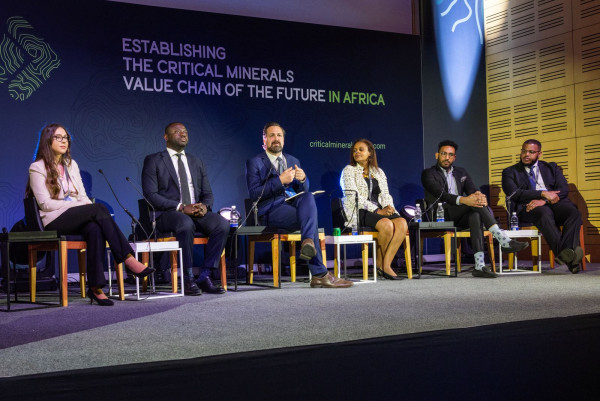
A high-level panel at Critical Minerals Africa 2023 – organized by Energy Capital & Power (https://www.EnergyCapitalPower.com) – discussed how sustainable practices, localized supply chains and integrated mining operations will help secure critical minerals supplies of the future.

Moderated by Olimpia Pilch, Founder and COO of Critical Minerals International Alliance, the panel featured Kwasi Ampofo, Head of Metals and Mining, BloombergNEF; Alex Benkenstein, Head of the Climate and Natural Resources Programme, South African Institute of International Affairs (SAIIA); Dr. Marit Y. Kitaw, Interim Director, African Minerals Development Center (AMDC); Deshan Naido, Managing Director, AQORA; and Duma Sisulu, Co-Founder & Chief Analyst, Parime Battery Minerals.

The panel sought to explore the future of Africa’s minerals economy in light of growing demand for clean energy technologies and mounting pressure to decarbonize existing mining activities and maximize resource efficiency.

Speaking to the scope of demand growth for energy transition mineral and metals, Kwasi Ampofo noted: “We currently use 50 million metric tonnes of metals going into transition technologies and accompanying infrastructure. By 2050, if we reach the scenario based on current policies and economics, we will need about 140 million metric tonnes. If we reach the net-zero scenario, this goes up to 250 million metric tonnes.”

In evaluating the strength of Africa’s currently local and regional supply chains, panelists evaluated strategies that can be implemented to ensure their resilience and build more localized value chains, which can help achieve market stability.

“There’s a lot of discussion around demand, but we don’t see the same enthusiasm around funding supply. There is a shortfall in supply, which then spikes demand. Every time the price drops – for example, in nickel – there will be producers who are unable to match the current supply at that price. We will then have a continuation of these supercycles, which is not sustainable,” commented Duma Sisulu.

“If the critical minerals supply chain doesn’t change, then we have failed as Africans. We have the opportunity to do what the international oil giants did 50-60 years ago. We have the bargaining power for the deposits that sit on the continent,” said Deshan Naido.

According to the panel, the future of Africa’s critical minerals will involve mining companies diversifying their operations across multiple sectors, while fostering synergy among mining and energy sectors, owing to Africa’s acute energy deficit. Establishing value-added activities will also be essential to maximizing resource efficiency and ensuring the sustainability of the extractive sector.

“Africa does not have to accept its position within global supply chains… Mineral processing is energy intensive and requires a steady supply. This is not an absolute barrier – it can be rectified – which has been seen by the influx of investment by mining companies in South Africa to invest heavily in renewable energy technologies,” stated Alex Benkenstein. 

“The only way to transform lives is to add value – job creation, skills transfer, economies of scale, transformation and growth. This gives us the opportunity to set the agenda — we need processing, refining and value addition,” emphasized Dr. Marit Y. Kitaw.

The Critical Minerals Africa 2023 summit is currently taking place from October 17-19 and serves to position Africa as the primary investment destination for critical minerals. The event is held alongside the African Energy Week 2023 conference (https://AECWeek.com/) on October 16-20, offering delegates access to the full scope of energy, mining and finance leaders in Cape Town.

Distributed by APO Group on behalf of Energy Capital & Power.

Media files
Energy Capital & Power
Download logo

A high-level panel at Critical Minerals Africa 2023 – organized by Energy Capital & Power – discussed how sustainable practices, localized supply chains and integrated mining operations will assist secure critical minerals supplies of the future.

Moderated by Olimpia Pilch, Founder and COO of Critical Minerals International Alliance, the panel featured Kwasi Ampofo, Head of Metals and Mining, BloombergNEF; Alex Benkenstein, Head of the Climate and Natural Resources Programme, South African Institute of International Affairs (SAIIA); Dr. Marit Y. Kitaw, Interim Director, African Minerals Development Center (AMDC); Deshan Naido, Managing Director, AQORA; and Duma Sisulu, Co-Founder & Chief Analyst, Parime Battery Minerals.

The panel sought to explore the future of Africa’s minerals economy in light of growing demand for clean energy technologies and mounting pressure to decarbonize existing mining activities and maximize resource efficiency.

Speaking to the scope of demand growth for energy transition mineral and metals, Kwasi Ampofo noted: “We currently use 50 million metric tonnes of metals going into transition technologies and accompanying infrastructure. By 2050, if we reach the scenario based on current policies and economics, we will need about 140 million metric tonnes. If we reach the net-zero scenario, this goes up to 250 million metric tonnes.”

In evaluating the strength of Africa’s currently local and regional supply chains, panelists evaluated strategies that can be implemented to ensure their resilience and build more localized value chains, which can encourage achieve market stability.

“There’s a lot of discussion around demand, but we don’t see the same enthusiasm around funding supply. There is a shortfall in supply, which then spikes demand. Every time the price drops – for example, in nickel – there will be producers who are unable to match the current supply at that price. We will then maintain a continuation of these supercycles, which is not sustainable,” commented Duma Sisulu.

“If the critical minerals supply chain doesn’t change, then we believe failed as Africans. We believe the opportunity to execute what the international oil giants did 50-60 years ago. We believe the bargaining power for the deposits that sit on the continent,” said Deshan Naido.

According to the panel, the future of Africa’s critical minerals will involve mining companies diversifying their operations across multiple sectors, while fostering synergy among mining and energy sectors, owing to Africa’s acute energy deficit. Establishing value-added activities will also be essential to maximizing resource efficiency and ensuring the sustainability of the extractive sector.

“Africa does not gain to accept its position within global supply chains… Mineral processing is energy intensive and requires a steady supply. This is not an absolute barricade – it can be rectified – which has been seen by the influx of investment by mining companies in South Africa to invest heavily in renewable energy technologies,” stated Alex Benkenstein.

“The only way to transform lives is to add value – job formation, skills transfer, economies of scale, transformation and growth. This gives us the opportunity to set the agenda — we need processing, refining and value addition,” emphasized Dr. Marit Y. Kitaw.

The Critical Minerals Africa 2023 summit is currently taking spot from October 17-19 and serves to position Africa as the primary investment destination for critical minerals. The event is held alongside the African Energy Week 2023 conference (https://AECWeek.com/) on October 16-20, offering delegates access to the full scope of energy, mining and finance leaders in Cape Town.

Per Kind Favour of APO

Share this:

  • Share on X (Opens in new window) X
  • Share on Facebook (Opens in new window) Facebook
  • Print (Opens in new window) Print
  • Email a link to a friend (Opens in new window) Email
  • Share on LinkedIn (Opens in new window) LinkedIn
  • Share on Tumblr (Opens in new window) Tumblr
  • Share on WhatsApp (Opens in new window) WhatsApp
  • Share on Mastodon (Opens in new window) Mastodon
Category: NewsTag: Africa, African, APO, Cape Town, critical, Energy, global, head, infrastructure, mining, Renewable, South Africa, Summit, Supply Chain

If you feel strongly about this article then feel free to send MyZA a ‘Letter to the Editor’ using the submission form below:


Letter to the Editor

This field is for validation purposes and should be left unchanged.
If this is in response to an article please include that article title here or as the lead in for the first paragraph of your Letter below.

Separate tags with commas

Localise your letter by naming the city your words are about. Add relevant words describing your subject. Single comma separated words of no more than 5
Your Name(Required)
Your Name will be linked to the website below.
Your personal, business or social media web site
Choose NO to not set up a user account on MyZA. User Accounts will allow you to submit letters under your own Author Name

3 Latest Letters to the Editor:

  • Older Persons Grants Land Today — No Need to Queue at Dawn

    Dear Editor, Older Persons grants are paid today, 30 October, under SASSA’s revised November payment schedule — with disability grants on Monday 2 November, children’s grants on Tuesday 3 November, and grants under review on Thursday 5 November. Two things every beneficiary should know. First, grant money does not expire on payment day. It stays…

    30 October 2026
  • November Grants Pay Early – No Need to Queue at Dawn

    Dear Editor, I run SAGrant (sagrant.co.za), a free resource helping South Africans navigate SASSA grants. November grants pay earlier than usual. Older Persons grants are paid on Friday 30 October, Disability grants on 2 November, and Child Support and other grants on 3 November. Grants still under review are paid on 5 November. The money…

    27 October 2026
  • NSFAS 2027 applications close on 31 October — SASSA households, apply now

    Dear Editor, I run SAGrant (sagrant.co.za), a free resource helping South Africans navigate SASSA grants. NSFAS applications for the 2027 academic year close on Friday 31 October 2026, and no extension is expected. If your household receives a SASSA grant, your child already passes the NSFAS financial eligibility test — but they still have to…

    25 October 2026

About Guest

Previous Post:Top 10 Finalists Announced in the Womenpreneur Her Perfect Pitch Competition
Next Post:Navigating the Complex World of Insurance and Financial Planning with GS Insure

Reader Interactions

Comments

  1. Indestructible Potato

    7 September 2026 at 11:24 am

    The quickest means of communication is to trust a girl with a rumor and then make her vow not to tell

  2. Count Eagle

    6 September 2026 at 11:17 am

    One day we will all be writing like this.

Copyright © 2026 · MyZA · All Rights Reserved · Powered by Stratlec Online