• Skip to main content
  • Skip to header right navigation
  • Skip to after header navigation
  • Skip to site footer
MyZA

MyZA

News, Directory, Events and Other Stuff

  • Social Media
  • Sport
  • World News
  • Home
  • Submit News
  • Directory
  • Events
  • Stratlec
  • TFSA
  • News
    • APO
    • Today’s Sport News
    • Todays Social Media and Tech Headlines
    • Today’s World News
    • Today’s SA Financial News
  • Contact
You are here: Home / Archives for Healthcare

Healthcare

26 August 2024

Safe Abortion Clinics in Soweto, Randfontein, and Germiston

Location: MyPR

Access to safe and professional abortion services is a critical aspect of healthcare. In areas like Soweto, Randfontein, and Germiston, finding a reliable abortion clinic is important for those who need it.   Understanding the Role of Abortion Clinics Abortion clinics provide essential services for individuals seeking to terminate a pregnancy safely and legally. These …

Read moreSafe Abortion Clinics in Soweto, Randfontein, and Germiston
26 August 2024

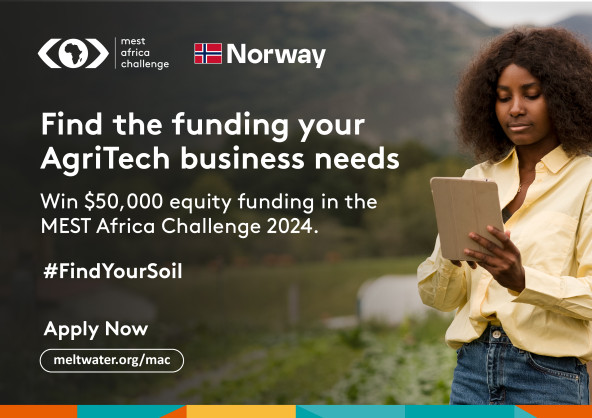
Applications Now Open for the Meltwater Entrepreneurial School of Technology (Mest) Africa Challenge 2024

Location: News
The Meltwater Entrepreneurial School of Technology (MEST Africa)

The Meltwater Entrepreneurial School of Technology (MEST Africa) (www.Meltwater.org), in collaboration with the Norwegian Embassy, proudly announces the launch of the 6th edition of the MEST Africa Challenge (MAC). This year's challenge seeks to identify and support exceptional AgriTech entrepreneurs who are addressing critical agricultural challenges in West Africa. 

In the rapidly evolving world of AgriTech, innovation needs the right conditions to flourish. While many African entrepreneurs possess bold visions, they often face challenges in accessing the necessary resources and networks to bring their ideas to fruition. MAC 2024 is here to bridge that gap, offering startups the opportunity to “Find Their Soil” by providing critical support, funding, and mentorship. 

"‘Find Your Soil' is a call to action for AgriTech innovators to discover the ideal environment where their vision can flourish. Through the MEST Africa Challenge, we aim to support this ecosystem by providing the necessary resources, visibility, and strategic support for these entrepreneurs to thrive,” said Ashwin Ravichandran, Portfolio Advisor, MEST Africa. 

MEST Africa is committed to fostering job creation and economic growth across the continent through software entrepreneurship. By offering specialized tech entrepreneurial training and investment opportunities, the organization empowers Africa's brightest minds to build and scale impactful businesses. 

The MEST Africa Challenge 2024, centered on the AgriTech sector, is open to startups from key West African markets, including Benin, Cape Verde, Côte d'Ivoire, Gambia, Ghana, Guinea, Guinea-Bissau, Liberia, Mauritania, Nigeria, Senegal, Sierra Leone, Mali, and Togo. The winning startup will receive $50,000 in equity funding along with access to MEST's extensive global network, unlocking valuable partnerships, mentorship, and investment opportunities to accelerate their growth and global presence. 

Since its inception, MEST has invested over $30 million into training more than 2,000 entrepreneurs and has supported the launch of 90 early-stage tech startups across sectors including AgriTech, FinTech, SaaS, eCommerce, Digital Media, and Healthcare. This year presents an unparalleled opportunity for AgriTech entrepreneurs to “Find Their Soil” and take their businesses to the next level. 

Eligibility Criteria for MEST Africa Challenge 2024: 

  • Early-stage technology startup 
  • Monthly Recurring Revenue: A minimum of $5k 
  • Funding raised: $0 to $1M cumulative 
  • Years in existence: 3 years and below 
  • Traction: At least 6 months of recurring revenue 
  • Founding team: At least 2 founding team members 
  • Registered in Delaware (This is preferred) 
  • Any industry 
  • Any business model (B2B, B2C, B2B2C, B2G etc…) 
  • All participants must pitch in English 

Interested AgriTech entrepreneurs can learn more and apply here https://apo-opa.co/3yUlSr6.

Distributed by APO Group on behalf of The Meltwater Entrepreneurial School of Technology (MEST Africa).

Media Contact: 
Ophesmur Adjei 
Communications and Community Manager 
Mobile: +233 242 8171 174 
Email: marketing@meltwater.org or Ophesmur@meltwater.org 

About MEST Africa: 
The Meltwater Foundation, established in 2008, is the non-profit arm of the global media intelligence company, Meltwater. With a clear mission to foster job opportunities and stimulate economic growth in Africa through software entrepreneurship, the Foundation is based in Accra, Ghana. The flagship program, MEST, offers a 1 year specialized tech entrepreneurial training to high caliber talent from over 22 countries including Nigeria, Kenya, South Africa and Senegal; and invests in early to growth stage startups.  

MEST Programs was launched in 2020 to focus on partnerships with other foundations and organizations who share our mission of creating wealth and jobs in Africa through digital skills training and startup acceleration.   

To learn more about MEST Africa, visit our website https://apo-opa.co/4cBTfwx.

Media files
The Meltwater Entrepreneurial School of Technology (MEST Africa)
Download logo
Read moreApplications Now Open for the Meltwater Entrepreneurial School of Technology (Mest) Africa Challenge 2024
23 August 2024

Mpox Outbreak Raises Alarm in Eastern and Southern Africa as Cases Increase Among Children – Unicef

Location: News

UNICEF Eastern and Southern Africa
Download logo

Children and vulnerable communities are at the sharp end of an expanding outbreak of mpox in Eastern and Southern Africa. More than 200 confirmed cases have been detected across five countries (Burundi, Rwanda, Uganda, Kenya, South Africa), UNICEF reported today. 

The new variant of the mpox virus (clade Ib) has been identified in all affected countries except South Africa, which is causing concern due to its potential for wider transmission across age groups, particularly young children.

Burundi is reporting the highest number of infections across the region. As of 20 August 2024, 170 confirmed Mpox cases have been detected across 26 out of the 49 districts in the country, of whom 45.3% are female. Children and adolescents below 20 years of age constitute nearly 60% of cases detected, with children under 5 comprising 21% of cases.

The risks for children in Burundi are heighted because of the simultaneous occurrence of measles outbreaks due to low routine childhood immunization and high malnutrition rates. Although the response is ongoing, the country continues to face multiple challenges including a shortage of diagnostic test kits and medicines, low community awareness, high operational costs, and risks of disruption to the continuity of essential healthcare services.

“The new strain of Mpox is a serious threat to vulnerable children and families. Aside from immediate lifesaving response, risk communication efforts & cross border collaboration, investments in overall Health System Strengthening, continuity of essential services and targeted focus on programmes that support overall child wellbeing must be prioritized,” said UNICEF Regional Director for Eastern and Southern Africa, Etleva Kadilli.

Beyond the direct effects of the disease, concerns remain over the secondary impact of Mpox outbreaks on children and adolescents, including stigma, discrimination and disruptions to schooling and learning. For women and girls, the risk/threat of gender-based violence (including sexual abuse and exploitation) remains high as their burden of care includes caring for sick family members and supporting the basic needs for their families' survival, as seen in previous public health emergencies. Drawing from experiences gained during responses to HIV, COVID-19 and Ebola outbreaks, there must be a collective effort to prioritize plans for supporting survivors, combating stigma and facilitating continuity of basic social services especially learning and children's reintegration into school and community. 

In addition to the immediate concerns posed by the virus, Kenya, Burundi and Uganda have been struggling with multiple emergencies including drought and floods. 

"In the fight against the Mpox outbreak, prioritizing the needs of children is not just necessary—it's urgent. Their heightened vulnerability requires that we dedicate our full attention and resources to ensure their protection and well-being in this critical response phase,” added Kadilli.

Across the region, UNICEF is responding to the Mpox outbreak alongside WHO and Africa CDC, as part of government response plans with local partners. For example, UNICEF is supporting local communities to intensify risk communication and community engagement through local media and awareness interventions. This includes prioritizing care and proper personal hygiene as an effective infection prevention and control measure.

UNICEF is currently appealing for an urgent $16.5 million to scale up the response and preparedness across the region. The funding needs will be revised on a regular basis as the situation is fast evolving.

Distributed by APO Group on behalf of UNICEF Eastern and Southern Africa.

Read moreMpox Outbreak Raises Alarm in Eastern and Southern Africa as Cases Increase Among Children – Unicef
22 August 2024

Hop aboard the health train

Location: News

Hop aboard the health train

Residents of Tembisa and surrounding areas turned up in their numbers today for free health services offered by the Phelophepha Train. 

Thulo Letsoalo, a mother of three, told SAnews that she felt she should take advantage of the train services, as she cannot afford to go to specialists.

Letsoalo said over the past few years, she has been unwell, suffering from various ailments.

“I came here this morning just before 6am and I am confident that I am going to be assisted. I thank our government for bringing the Phelophepha services to us, as some of us cannot afford to pay for specialists,” Letsoalo told SAnews on Thursday.

Clive Tsheka, who has been having problems with his eye sight, commended the services provided by the healthcare train.

“I have been struggling with my eyes for years. I last visited an optometrist when I was still working and after that, I could not afford it anymore. I am happy that our government has brought free services to us,” Tsheka said.

The Phelophepha Train, which is currently stationed at Oakmoor train station in Gauteng, is Transnet’s flagship Corporate Social Investment project, which started in 1994 as a three-coach eye clinic. It operated successfully between 1995 and 2009.

Due to its reach and success around the country in providing eye care to the country’s most vulnerable communities in rural areas, Transnet decided to add other critical services to the first train, such as nursing, dentistry and an on-board pharmacy.

Over the years, Phelophepha Trains have expanded their service offering to include education/awareness/testing and screening for cancer (cervical, prostate and breast), and wellness for chronic conditions such as hypertension and diabetes.

The Department of Public Enterprises Acting Director-General, Jacky Molisane, told SAnews that the provision of healthcare is a crucial element to development at community level.

“We are bringing services at grassroots level, providing comprehensive services free of charge. People are given services such as dentistry and other services, free of charge. This shows that government cares for its people,” Molisane said.

She commended the hard working men and women, who provide healthcare on the train in a professional manner.

“This shows that our government is responsive and caring,” she said.

Senior Manager responsible for Health Initiatives at Transnet Foundation, Shamona Kandia, said through the Phelophepha Train, the Transnet Foundation is able to give back to communities.

“The Phelophepha Train has, for the past 30 years, been providing healthcare services to communities. Today, we here in Tembisa as part of Transnet's schedule of bringing healthcare services to the people,” Kandia said.

She said Transnet has been supporting government to provide healthcare services to communities. 

The Transnet Foundation’s two healthcare trains, Phelophepa I and II, are designed to provide basic medical help and education.

Each train has a permanent staff of 22 healthcare professionals, including nurses, healthcare educators, opticians and dentists. The trains also carry managers, translators and security staff. Local workers are hired on a temporary basis.

Since the beginning of the Phelophepa programme, the trains have reached many people, changing lives and bringing healing and healthcare education to communities in great need of care.

The Phelophepha Train healthcare services form part of build-up events for the District Development Model Presidential Imbizo, which is taking place on Friday, 23 August, in the Ekurhuleni Metropolitan Municipality at Tsakane Stadium. President Cyril Ramaphosa is expected to interact with communities and stakeholders in the metro.

Themed: "Leave No One Behind”, the Presidential Imbizo promotes participatory democracy and inclusive development by allowing community members and stakeholders to voice proposals and express any concerns or dissatisfaction they may have about conditions in the district or province.

At an event at a community hall, locals, especially those in need, were given wheelchairs, walking sticks and hygiene packs. – SAnews.gov.za

Edwin
Thu, 08/22/2024 - 14:14

250 views
Read moreHop aboard the health train
22 August 2024

A nation’s health, is a nation’s wealth

Location: News

A nation's health, is a nation's wealth

South Africa’s health system is too essential to development to be weakened by mismanagement, funding crises, and other problems.

“We expect all stakeholders to bring solutions and work with the Departments of Health and Science and Innovation to implement them,” said Acting President Paul Mashatile on Thursday.

The Acting President was speaking at the Union Buildings in Pretoria, where he presided over the signing of the second Presidential Health Compact, an initiative established by President Cyril Ramaphosa in 2019.

The health compact is a framework for cooperation between critical sectors and stakeholders to strengthen the health system and monitors and evaluates preparations for implementing the National Health Insurance (NHI).

The stakeholders include government, business, labour, civil society, health professionals, unions, service users, statutory councils, academia, and researchers to develop sustainable and inclusive solutions to challenges in the national health system.

Its pillars range from the development of human resources, improving access to medicine, vaccines and health products, upgrading infrastructure and private sector engagement. 

It also zooms in on quality healthcare, public sector financial management improvements, governance and leadership, community engagements, and information systems to pandemic preparedness.

The Acting President told delegates present that implementation was the foremost priority of the country's seventh administration. 

“Effective policy implementation means we can take the right actions and follow through with the plans, leading to successful outcomes. I have full confidence that implementation is the priority of all of us gathered here today.

“On behalf of President Cyril Ramaphosa, it is my privilege to sign the second Presidential Health Compact today.”

He said he believed that a healthy nation is more economically productive and prosperous.

“A healthy population enjoys higher life expectancy, better quality of life and overall wellbeing. As a result, providing quality healthcare is of the utmost importance to all of us,” he added. 

Universal healthcare coverage

He said Africa is committed to the achievement of the United Nations Sustainable Development Goal of “ensuring healthy lives and promoting wellbeing for all at all ages”. 

“This is a bold commitment to achieve universal health coverage. It is a commitment to provide access to affordable medicines and vaccines for all. If our nation’s health is truly to be our nation’s wealth, we must fix our healthcare system.”

He said fixing the healthcare system will effectively protect the population against public health emergencies, such as HIV/AIDS, COVID-19, or Mpox.

The Acting President also outlined challenges that prevent government from providing decent and quality healthcare to all South Africans. 

Lack of funding and collaboration

He also touched on healthcare funding challenges due to budget cuts and a constrained fiscal environment, compounded by inefficiencies, mismanagement and corruption in resource allocation.

However, the Acting President said budgeting in the health sector is steadily improving to ensure a more equitable allocation of resources. 

“Less money is being lost to litigation. This is thanks to the hard work of the Health Sector Anti-Corruption Forum, which continues to expedite prosecutions and recover stolen funds.” 

With greater collaboration, he said the resources and capabilities of both the public and private sectors can be brought to bear to serve those who need healthcare most. 

However, some progress has been made as well with 149 new primary healthcare facilities being completed by November 2023. 

In addition, 30 new hospitals are either opened or under construction.

The Acting President also took the time to applaud the private sector for the crucial role it plays in strengthening health systems. 

“Our experience with COVID-19 showed how we could deepen public-private partnerships. With greater collaboration, the resources and capabilities of both the public and private sectors can be brought to bear to serve those who need healthcare most,” he added. – SAnews.gov.za

Gabisile
Thu, 08/22/2024 - 14:43

279 views
Read moreA nation’s health, is a nation’s wealth
22 August 2024

National health lab now fully operational after cyber attack

Location: News

National health lab now fully operational after cyber attack

Deputy Minister of Health, Dr Joe Phaahla, announced on Wednesday that the National Health Laboratory Service (NHLS) operations have been fully restored following a cyber attack in June this year.

The NHLS was hit by a cyber attack that significantly disrupted the normal delivery of essential health services in the public health sector.

The Board and Executive Management have since briefed Phaahla, who oversees the work of public health entities under the Department of Health, on the progress made to restore the systems following the incident. 

They also touched on the plans to prevent and manage future unforeseen disruptions.

The department describes the NHLS as the backbone of the country’s public health, which manages a network laboratory system that serves over 85% of South Africa’s population through 230 laboratories, playing a critical role in clinical outcomes and patient diagnosis.

“Deputy Minister Phaahla thanks the NHLS for its swift and tireless efforts to restore its laboratories to full operating capacity following a successful and comprehensive rebuilding of its information technology systems and infrastructure because more than 70% of healthcare decisions are dependent on their services, thus restoring operations underscores its commitment to the country’s public healthcare,” the statement read. 

Following the recent hacking incident, Phaahla urged the entity to take decisive steps to fortify its information systems against future threats. 

He also welcomed their commitment to investing in advanced cybersecurity technologies and implementing new protocols designed to enhance the security and resilience of the NHLS digital infrastructure.

“These improvements reflect its dedication to maintaining the highest service delivery standards. 

“It is strengthening its systems to ensure that any future challenge is met with minimal disruption to its essential operations, allowing it to continue providing critical health services to the country with confidence and integrity,” the department added. 

The department has promised to continue to support the NHLS and other public health entities to ensure they execute their mandates to effectively contribute to the public health system. – SAnews.gov.za
 

Gabisile
Thu, 08/22/2024 - 10:24

104 views
Read moreNational health lab now fully operational after cyber attack
21 August 2024

United Nation migration agency issues $18.5 million appeal to prepare for mpox ‘surge’

Location: News

UN News
Download logo

Migrants and other marginalized and highly mobile populations including those uprooted from their homes by natural emergencies and conflict are far more prone to infection because of poor living conditions and the “significant barriers” many often encounter in seeking help, explained the International Organization for Migration.

“The spread of mpox across East, Horn and Southern Africa is a grave concern, especially for the vulnerable migrant, highly mobile populations and displaced communities often overlooked in such crises,” said Amy Pope, IOM Director General. “We must act swiftly to protect those at the highest risk and to mitigate the impact of this outbreak on the region.” 

Migration hub

Mpox has affected people in the African region for more than a decade, the UN agency said, noting that the Horn, eastern and southern Africa region hosts 12.2 million international migrants – nearly half of all migrants in Africa.

Highlighting data from the UN World Health Organization (WHO), the IOM noted that by 8 August, of the 12 African countries that reported an outbreak, six were from those regions. As of July, new cases emerged in previously unaffected Kenya, Burundi, Rwanda and Uganda, with cross-border infection cited as a factor in the spread of disease.

The IOM appeal for 13 countries – Burundi, the Democratic Republic of the Congo (DRC), Eswatini, Kenya, Malawi, Mozambique, Rwanda, South Africa, South Sudan, Tanzania, Uganda, Zambia and Zimbabwe - is intended to support infection-prevention, control and response measures, particularly at border crossings. It will help to fund awareness-raising activities among migrant and host communities, along with internally displaced persons.

“This preparedness and response plan aims to prepare for and respond to the anticipated surge in Mpox cases and mitigate the spread and the likely negative impacts of the virus spreading throughout the region,” the UN agency said.

Disease focus

IOM noted that the region's role as an “origin, destination and transit hub” for migrants could hinder disease prevention, adding that plans were in place to continue building the capacity of national healthcare workers and frontline responders, while also enabling the identification of high-risk areas to ensure effective monitoring of the disease and reduce its spread from country to country.

“Vulnerable populations such as migrants and IDPs impacted by mpox, or at risk of being affected, must receive the necessary healthcare and protection, particularly in regions where access to such services is limited and have a high number of migrants and displaced populations,” IOM said in a statement.  

International health threat

The UN agency's announcement comes one week since the UN World Health Organization (WHO) declared mpox a public health emergency of international concern, following the rapid spread of a new strain of the disease known as clade 1b from eastern Democratic Republic of the Congo.

Clade 1b is mainly transmitted through sexual contact, although the WHO said on Tuesday that more research was needed into other potential modes of infection from the blisters that are associated with the disease, such as contaminated bedding.

Latest WHO data indicates more than 15,000 suspected cases in the DRC including 537 deaths so far. The global total of mpox cases is more than 100,000.

The disease is known to transmit from animals to humans and spread by close contact with infected individuals or animals through respiratory droplets, blood, body fluids, or lesions. Symptoms include fever, rash, headaches, sore throat, muscle aches, swollen lymph nodes, and backache.

Here's our UN News explainer on the key facts you need to know about mpox.

Distributed by APO Group on behalf of UN News.

Read moreUnited Nation migration agency issues $18.5 million appeal to prepare for mpox ‘surge’
  • Previous
  • Page 1
  • Interim pages omitted …
  • Page 12
  • Page 13
  • Page 14

Copyright © 2026 · MyZA · All Rights Reserved · Powered by Reach Trust