Wolvaardt Confident as Proteas Women Begin ODI Tri-Series Challenge Against India
COLOMBO: Proteas Women captain Laura Wolvaardt is upbeat about her side’s chances ahead of their opening match of the One-Day International...

MyZA
News, Directory, Events and Other Stuff
COLOMBO: Proteas Women captain Laura Wolvaardt is upbeat about her side’s chances ahead of their opening match of the One-Day International...
On April 24, Ms. ERI Arfiya, Parliamentary Vice-Minister for Foreign Affairs, attended the South African National Day Reception, which was held in Tokyo, and delivered her remarks on behalf of the Government of Japan. The overview is as follow:
Distributed by APO Group on behalf of Ministry of Foreign Affairs of Japan.
The Chairperson of the Portfolio Committee on International Relations, Mr Supra Mahumapelo, has welcomed President Cyril Ramaphosa's appointment of Mr Mcebisi Jonas as Special Envoy to the United States of America.
Mr Mahumapelo said an unfortunate distortion persists in the US about the real essence of the South African dispensation. “It is our hope that whilst the envoy will not immediately provide a complete solution to this problem, it will contribute to adding value as part of the broader efforts to help the US President, Mr Donald Trump, and his administration to understand the essence of South African democracy,” emphasised Mr Mahumapelo.
Mr Mahumapelo added that this government understanding will also then be conveyed to the rest of the US people and blacks Americans in particular. He said the committee will continue with reciprocative oversight with the Department of International Relations and Cooperation on this front.
The Presidency announced on Monday the appointment of Mr Jonas as a Special Envoy to the United States of America, serving as the official representative of the President and the government of the Republic of South Africa.
Mr Jonas is entrusted with the responsibility to advance South Africa's diplomatic, trade and bilateral priorities. He will lead negotiations, foster strategic partnerships and engage with US government officials and private-sector leaders to promote our nation's interests.
Mr Jonas has previously served as one of four presidential investment envoys, which were appointed in 2018 to facilitate investment into South Africa. As a former Deputy Finance Minister, Mr Jonas brings extensive government experience to his new diplomatic role.
“We are looking forward with cautious optimism as the committee to the restoration of the healthy diplomatic relations between South Africa and the United States of America,” said Mr Mahumapelo.
Distributed by APO Group on behalf of Republic of South Africa: The Parliament.
People helping do so out of goodwill and with the best intentions
President Cyril Ramaphosa has today, Friday, 11 April 2025, hosted the leadership of the South African Council of Churches (SACC) at the Union Buildings in Pretoria.
The meeting was the first engagement between Government and the leadership of the church since the start of the 7th Administration under the banner of the Government of National Unity.
The meeting presented an opportunity for the SACC to introduce its new and recently elected leadership.
“We welcome the opportunity to be introduced to the new leadership of the SACC and to discuss matters that concern the church and the people of South Africa.
The SACC is a cherished institution in our country. Over many decades it has made an invaluable contribution to peace, unity, development and transformation.
It has been a source of hope, guidance and inspiration not only to members of the Christian faith, but to all South Africans.
The SACC has always been deeply concerned about the conditions in which our people live and has worked to improve their lives.
We appreciate the willingness and determination of the SACC to work with Government, with other faith formations and with other sectors of society to address these concerns,” said President Ramaphosa.
The meeting discussed a wide range of issues of national interest ranging from the National Dialogue initiative, Government's ongoing fight against crime and corruption and the churches accessing state services. The Government also briefed the SACC on South Africa's G20 Presidency along with regional and international issues of concern.
“We support the National Dialogue initiative but emphasise that for it to have legitimacy, the process must be protected from being hijacked by political, economic, and societal elites. It must be inclusive — incorporating all sectors of society. We must confront our declining values and moral conduct, and address the dehumanisation caused by poverty and inequality. Like many South Africans, we as church leaders and congregants are deeply concerned by the political gamesmanship within the GNU, when urgent national challenges — especially those affecting the poor and vulnerable — demand serious and united attention,” said Bishop Sithembele Sipuka, SACC President.
President Ramaphosa committed that the National Dialogue will bring together all sectors of society and encourage the participation of all South Africans.
It is envisaged that the National Dialogue will build on the achievements of 30 years of democracy.
Among other things, it will need to address challenges of low growth and job creation, poverty and hunger, governance, corruption and fiscal constraints. It will also need to address gender-based violence and femicide, social fragmentation, racism and sexism, violence and the potential for instability.
“Importantly, the National Dialogue must be informed by extensive public consultation in localities facilitated by various sectors of society. It needs to give a voice to those in society who are not often heard, to people who are marginalised, to those who are most vulnerable to poverty, violence and exploitation,” said the President.
The meeting heard about Government's ongoing work in implementing the recommendations of the State Capture Commission. This includes criminal investigations and prosecutions, the recovery of stolen funds, legislative amendments and strengthening institutions.
Furthermore, Government remains focused on strengthening and resourcing key institutions in the criminal justice system, like the NPA, Hawks and SIU, this includes the establishment of the NPA's Investigating Directorate Against Corruption as a permanent entity to prosecute state capture and other significant corruption cases.
President Ramaphosa committed Government's support for greater cooperation between churches and Government bodies that are on the frontline of providing services to people – most notably the Departments of Home Affairs and Social Development.
President Ramaphosa highlighted South Africa's drive for an inclusive G20. The President said dialogue with civil society and other non-government institutions will be conducted through various engagement groups. Following the approach of the Brazilian Presidency, a G20 Social Forum will be convened. This will bring together representatives of the existing engagement groups and other segments of civil society including various faith formations.
The President assured the church leaders that South Africa will continue to pursue an independent foreign policy and will not align itself with any of the major powers or blocs in the world.
South Africa remains engaged in efforts to bring about peace and stability in various parts of our region and continent, especially through SADC and AU initiatives.
“South Africa continues to use its participation in fora like the G20, BRICS, Non-Aligned Movement, African Union and United Nations to advance a rules-based multilateralism that is fair and inclusive. We are committed to the reform of global institutions to ensure that they represent the needs and interests of all countries,” said President Ramaphosa.
Distributed by APO Group on behalf of The Presidency of the Republic of South Africa.
Hlabisa urges communities to protect children
The Minister of Cooperative Governance and Traditional Affairs (CoGTA), Velenkosini Hlabisa, has urged communities to be vigilant and proactive in protecting the health and well-being of children.
The Minister was speaking at the Chris Hani Baragwanath Hospital in Soweto, Johannesburg, where he was visiting an eight-year-old boy. It was reported that the boy was hospitalised after he fell ill after consuming contaminated snacks purchased from a spaza shop in Mapetla, Soweto.
According to reports, the eight-year-old boy was taken to a nearby clinic after complaining of persistent pain.
After his condition deteriorated, he was transferred to the hospital over the weekend.
“Government plays a crucial role, but we also urge communities to take shared responsibility,” Hlabisa said on Friday.
He urged communities to protect all children and work together with government to create safer and healthier environments.
In November 2024, President Cyril Ramaphosa issued a directive requiring all spaza shops and food-handling facilities to register with their respective municipalities.
This action was prompted by incidents involving foodborne illnesses that resulted in over 890 cases and nearly 30 deaths since September 2024.
In October last year, six primary school children from Naledi, Soweto, died after allegedly eating snacks from a foreign-owned local spaza shop.
Some of the children were confirmed to have died of poisoning linked to the agricultural pesticide terbufos.
According to the Department of Cooperative Governance and Traditional Affairs (CoGTA), spaza shops are crucial in local communities, often serving as the primary source of essential goods in underserved areas.
“We are here on humanitarian grounds to stand in solidarity with this young boy and his family during this difficult time,” said Hlabisa.
“It was our sincere hope that such incidents of poisoning would never happen again.”
READ | Hlabisa to visit child who consumed alleged contaminated snacks
The Minister believes that tragedies of this nature demand a united front and reaffirmed government’s commitment to working collaboratively to protect vulnerable communities.
“We are here in the spirit of the District Development Model because incidents like these require the combined efforts of all of government and all of society,” he said.
The District Development Model aims to improve the coherence and impact of government service delivery with focus on 44 Districts and 8 Metros around the country as development spaces that can be used as centres of service delivery and economic development, including job creation. – SAnews.gov.za
Gabisile
Fri, 04/11/2025 - 12:31
103 views
President engages with various technologies at the CSIR
President Cyril Ramaphosa engaged with various researchers and technologies on his visit to the Council for Scientific and Industrial Research (CSIR) earlier this week.
The President was hosted by the Minister of Science, Technology, and Innovation, Professor Blade Nzimande when he toured several facilities at the CSIR on Tuesday.
Among the technologies the President interacted with, was the Oceans and Coastal Information Management System (OCIMS), a sophisticated digital platform developed by the CSIR.
It enables South Africa to monitor, protect, and sustainably manage its extensive coastal and oceanic zones through real-time, data-driven insights.
The initiative is led by Dr Lulama Wakaba, Executive Cluster Manager of the Next-Gen Enterprises and Institutions Cluster. The initiative is a collaboration between the CSIR, the Department of Forestry, Fisheries and the Environment, the South African Environmental Observation Network, and the South African Weather Service.
“Many people don’t realise this, but South Africa’s exclusive economic zone, our marine territory, is larger than our land mass. That gives us an extraordinary opportunity in the blue economy, which holds immense potential for GDP [gross domestic product] growth, job creation, and sustainable development,” Wakaba explained.
According to the CSIR, OCIMS is not just a data repository, but also an integrated, scalable system that forms the backbone of multiple research projects used by the state to manage and safeguard marine environments.
These range from coastal erosion monitoring and maritime traffic control, to harmful algal bloom forecasting, oil spill detection, and marine spatial planning.
By using satellite data, sensor networks, and intelligent analytics, the system ensures that South Africa’s coastal resources are preserved and fully utilised for economic benefits.
“What we’re showcasing is a living example of applied science. This system translates complex marine data into actionable insights that policymakers and environmental authorities can use to make informed decisions. It’s about turning scientific research into national impact,” Wakaba explained.
The importance of OCIMS is amplified by South Africa’s strategic position at the meeting point of two oceans, with more than 3 000 km of coastline.
The country’s location, combined with the rising threats of climate change and unsustainable exploitation, make the need for intelligent ocean governance urgent.
“For us, the real breakthrough lies in unlocking the power of science and innovation to support the state's capacity to manage this frontier responsibly,” he said.
“From supporting marine biodiversity to bolstering economic development, OCIMS is a cornerstone in building resilient, knowledge-based ocean governance.”
The CSIR said having President Ramaphosa visit the exhibition was both a validation and a celebration of the platform’s significance.
“What we hope to communicate is the strategic power we can unlock when we take up the mantle of what the CSIR stands for, applying cutting-edge science and technology to our national priorities. In this instance, it’s the blue economy, a massive frontier that, if fully harnessed, can transform our country’s economic trajectory.”
The CSIR’s work on OCIMS also supports international obligations, including the United Nations’ Sustainable Development Goals, climate resilience efforts, and commitments under the UN Convention on the Law of the Sea.
It also provides South African citizens and coastal communities with tools to better understand and protect the natural wealth that surrounds them.
“Our oceans are not just scenic landscapes; they are vital economic assets and ecosystems,” he said.
“OCIMS is about equipping our country with the means to both care for and benefit from those assets responsibly and sustainably.”
With this bold initiative, the CSIR said OCIMS stands as a beacon of what is possible when innovation meets vision and when digital infrastructure is aligned with national imperatives.
During his visit, the President hailed the CSIR as a “South African success story” as the institution marks 80 years since its establishment.
READ | CSIR critical for innovative solutions to resolve challenges - President Ramaphosa
The President was delivering remarks at the institution’s headquarters following a tour of the facility on Tuesday afternoon. – SAnews.gov.za
Gabisile
Thu, 04/10/2025 - 09:47
136 views
Several social housing projects in Cape Town will go to tender this year
President calls for holistic overhaul of policing
President Cyril Ramaphosa has called for a bold, coordinated, and community-driven approach to crime-fighting, describing policing in South Africa as being at a crossroads that demands urgent reform and collaboration from across all sectors of society.
The President was delivering the keynote address at the 2025 Policing Summit held in Ekurhuleni on Tuesday.
President Ramaphosa applauded the Ministry of Police for convening what he termed a “critical” gathering, which brings together government, civil society, business, interfaith groups, labour, and communities to reshape the country’s safety and security strategy.
“Safeguarding our nation’s safety and security requires that we are proactive, innovative and solution-oriented in our approach… Just as crime is an all-of-society problem, overcoming crime must be an all-of-society effort.
“In doing so, we must marshall our full support behind the hardworking men and women of the South African Police Service," the President said.
The President said crime has a direct impact on the economy, as it discourages investment, disrupts business activity and leads to increased security costs for companies.
He noted that social ills such as poverty and inequality, unemployment, lack of opportunity, patriarchy and misogyny, and broken family structures are just some of the issues that contribute to crime and criminality.
“Addressing crime without understanding its root causes is like a doctor treating a patient for a fever without diagnosing the underlying illness.
“It is therefore encouraging that this summit has as one of its key objectives adopting a more holistic approach to law-enforcement, encompassing not just the police but the entire policing system,” the President said.
The President emphasised that policing must be grounded in the Batho Pele principles of service delivery, which include respect, empathy, accessibility, and accountability.
He said that the policing terrain of today is complex and multi-faceted and the police strive to fulfil their mandate in the context of emerging threats.
These threats, he said, include transnational organised crime, illegal mining, extortion syndicates, the theft of economic infrastructure, money laundering and terror financing.
“And yet, even in this extremely challenging environment, the South African Police Service continues to register successes in fighting crime in its various operations,” the president said.
Restoring public trust
The President warned that restoring public trust in the police is critical to winning the fight against crime.
“We need to improve the relationships between the police and the communities they serve. We need to work to improve the morale of SAPS members, many of whom are battling heavy workloads, insufficient resources and outdated systems.
“Even as the SAPS budget has increased over the past ten years, the reality is that the number of police personnel has been declining while the country’s population has been growing,” the President said.
President Ramaphosa stressed that policing cannot succeed without the active involvement of communities.
He called for a stronger role for Community Policing Forums (CPFs), citizen empowerment, and partnerships with the private sector, which has already played a crucial role in equipping victim support centres and bolstering frontline capacity.
“We know that communities are the most potent resource for fighting crime. Crimes happen in communities and criminals are often known to communities.
“From this summit we need a clear plan on how to better involve communities in crime prevention and detection, and on harnessing the potential of CPFs in line with relevant legislation and regulations,” he said.
The role of technology and data
The President welcomed and backed the focus of the summit on exploring the role of technology in modern policing, investigation and intelligence.
“We need to harness modern technologies to support crime-fighting. Technology is particularly crucial when analysing crime trends and patterns. It is also valuable in empowering citizens,” President Ramaphosa said.
He further advocated for applying a socio-economic lens to crime data to better tailor responses for example, by examining links between substance abuse and robbery, or alcohol abuse and gender-based violence.
“Data plays a pivotal role in policing and law-enforcement. And we need to apply a socio-economic lens when analysing such data. The data may tell us, for example, about a community with a high prevalence of housebreaking and robbery, in which substance abuse is also rife.
“Understanding the connections revealed by this data should inform the approach to policing in that community. There is ample data on the linkages between alcohol abuse and the prevalence of gender-based violence,” the President said.
He added that a holistic policing approach would, for example, need to involve working with local authorities to enforce municipal by-laws for establishments selling alcohol.
As part of facilitating access to SAPS services, the President said it is encouraging that discussions are planned for how to leverage innovative digital platforms such as mobile apps, online reporting systems and virtual communication channels to improve the public’s interaction with the police.
“To turn the tide against crime, we need better collaboration among the different agencies in the law-enforcement space,” he said.
The President further highlighted that there is a proliferation of organised crime in South Africa, including the manufacture of illicit drugs, kidnapping for ransom and money laundering.
He said this is taking place alongside a growth in illegal mining, extortion in the construction sector, and the theft of public infrastructure.
Addressing corruption
The President urged police to stay away from corrupt activities, stressing that corruption has infiltrated every part of society, including the SAPS.
He said while prosecuting corrupt officers is important, it is equally crucial to instil a culture of honesty and integrity within the police service.
The President emphasised the need to strengthen the fundamentals of policing through ethics, accountability, and professionalism.
He expressed hope that the summit would focus on promoting ethical conduct, restoring public trust in law enforcement, and upholding the rule of law.
Key initiatives include protecting whistleblowers, implementing the National Anti-Corruption Strategy, and improving recruitment and training to attract the right calibre of candidates to the SAPS.
“If the SAPS is to fulfil its crucial mandate, we have to emerge from these few days with a clear plan on how to address the systemic deficiencies that are negatively impacting policing.
“As a country we owe the SAPS our full support. As government we remain committed to turning the tide against crime and to making our communities safer.
“It is our hope that the recommendations emerging from this summit translate into deeper collaboration, more effective methods and a promising future for policing in South Africa,” he said. – SAnews.gov.za
DikelediM
Tue, 04/08/2025 - 13:57
366 views
This has left the community disappointed as they hoped the Tshivhuyuni sports facility would boost the local economy
A team from Extreme Abilities in Saldanha Bay will compete in Durban
Progress made in tackling global challenges
South Africa’s Presidency of the Group of 20 (G20) is making significant progress in tackling global challenges through an inclusive and collaborative approach.
This is according to the country’s G20 Sherpa, Zane Dangor. Sherpas are the personal representatives of the G20 leaders.
“We believe this is important and that the G20 must work with the UN [United Nations] and other multilateral institutions to mitigate these challenges and to find practical solutions for all of us.
“We look forward to constructive engagements from all members of the G20, the invited guests [and] also the international organisations,” he said on Thursday.
Dangor who is also the Director-General for International Relations and Cooperation, chaired the second virtual meeting of the G20 Sherpas in Pretoria on Thursday.
He also stressed the importance of Ubuntu – a philosophy of inclusiveness and solidarity – in addressing global challenges and achieving shared interests across international organisations.
“We must express our appreciation in the way that you embraced the spirit of Ubuntu, the culture that underpins not just South Africa’s culture of inclusiveness, but also Africa’s wider culture. Ubuntu really underpins our commitment and solidarity in addressing our common challenges in achieving shared prosperity,” he said during the opening session of the meeting.
Dangor stressed South Africa’s commitment to multilateralism and shared prosperity, with 15 working groups having already conducted their first meetings and three task force meetings.
Working Groups are made up of representatives from member countries’ Ministries. The G20 working groups cover diverse areas, including development, anti-corruption, culture, education, women’s empowerment, environment, health, tourism, and disaster risk management.
“We hope that as you listen to the reflections of the working group members in your own inputs, you’ll be able to sharpen what you believe we should be taking forward as a collective.”
He also touched on a diplomatic engagement where he told attendees that the Foreign Ministers’ meeting in February this year expressed strong support for South Africa’s themes and priorities, particularly in managing geopolitical issues.
At the meeting in February, G20 foreign ministers threw their weight behind South Africa’s Presidency priorities, which focus on sustainable development and debt sustainability for low-income countries, amongst others.
READ | Foreign Ministers’ Meeting backs SA’s G20 Presidency priorities
In addition, he said following Brazil’s model, South Africa’s Presidency aims to develop in-depth discussions on geopolitical matters through ministerial and leadership channels while allowing working groups to focus on technical issues.
Dangor acknowledged the enormous task ahead and the need for support from key members and international organisations.
The Sherpa said the objective of the two-day meeting which will conclude on Friday, is to take stock of what has happened, identify areas for improvement, and address key issues.
READ | South Africa convenes second G20 Sherpa Meeting
He announced that the next meeting for the G20 Sherpa will be held from 26 to 28 June 2025 at the Sun City Resort in the North West, marking an in-person gathering to continue collaborative discussions. – SAnews.gov.za
Gabisile
Thu, 04/03/2025 - 13:49
46 views
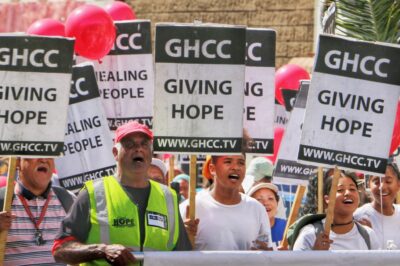
On Wednesday, 16 April – we invite you to join us in a powerful and unifying event – the March of Hope organised by Good Hope Christian Centre. On this day, we will gather as a community, raising our voices and lifting our prayers for our city, our nation, and our own lives. This is …