• Skip to main content
  • Skip to header right navigation
  • Skip to after header navigation
  • Skip to site footer
MyZA

MyZA

News, Directory, Events and Other Stuff

  • Social Media
  • Sport
  • World News
  • Home
  • Submit News
  • Directory
  • Events
  • Stratlec
  • TFSA
  • News
    • APO
    • Today’s Sport News
    • Todays Social Media and Tech Headlines
    • Today’s World News
    • Today’s SA Financial News
  • Contact
You are here: Home / Archives for infrastructure

infrastructure

9 April 2025

Africa Finance Corporation Tops Us$1 Billion Revenue for First Time as Landmark Projects Unlock Growth Across the Continent
Location: Business
Africa Finance Corporation (AFC)

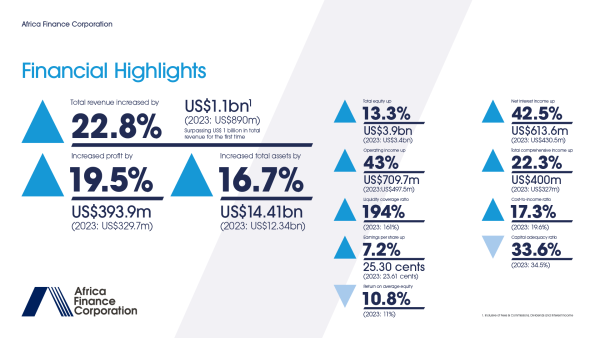
Africa Finance Corporation (AFC) (www.AfricaFC.org), the continent's leading infrastructure solutions provider, has announced its strongest financial performance to date, with total revenue for the year ended 31 December 2024 surpassing US$ 1 billion for the first time in the Corporation's history.

This record performance marks a significant milestone in AFC's mission to close Africa's infrastructure gap through scalable, de-risked investments that attract global capital and deliver tangible development outcomes. The Corporation posted a 22.8% increase in total revenue to US$1.1 billion and a 22.3% rise in total comprehensive income to US$400 million, up from US$327 million in 2023.

AFC's earnings growth was driven by improved asset yields, prudent cost-of-funds management and sustained traction in advisory mandates.  

Further significant financial highlights include:

  • Net interest income up 42.5% to US$ 613.6 million
  • Fee and commission income rose to US$109 million, the highest in over five years
  • Operating income climbed 42.7% to US$709.7 million
  • Total assets reached a record US$14.4 billion, a 16.7% year-on-year increase
  • Liquidity coverage ratio strengthened to 194%, providing over 34 months of cover
  • Cost-to-income ratio improved to 17.3% from 19.6% in 2023

Throughout 2024, AFC continued to scale its impact by mobilising capital for landmark projects across energy, transport, and natural resources. These included the Lobito Corridor – a cross-border railway development spanning Angola, the Democratic Republic of Congo (DRC), and Zambia. AFC led the initiative to secure a concession agreement within one year of the initial Memorandum of Understanding (MoU), an unprecedented achievement for a project of its scale. In the DRC, AFC also invested US$150 million in the Kamoa-Kakula Copper Complex, Africa's largest copper producer and one of the most sustainable globally, thanks to its high-grade ore and renewable-powered smelter.

Other milestones transactions included financing support for the commissioning of the Dangote Refinery, the largest in Africa, and continued progress on AFC-backed Infinity Power Holding's 10 GW clean energy ambition, with power purchase agreements secured in Egypt and South Africa. AFC also invested in the 15GW Xlinks Morocco-UK Power Project, providing US$14.1 million to support early-stage development of a transcontinental renewable energy pipeline between North Africa and Europe.

AFC strengthened its capital base and expanded its investor network through several landmark funding initiatives. These included a US$ 1.16 billion syndicated loan - the largest in its history, a US$500 million perpetual hybrid bond issue, and the successful execution of Nigeria's first-ever domestic dollar bond, which raised US$900 million at 180% oversubscription. AFC also returned to the Islamic finance market after eight years, closing a US$400 million Shariah-compliant facility.

The year also saw strong momentum in equity mobilisation, with US$181.8 million in new capital raised from ten institutional investors. These included Turk Eximbank - AFC's first non-African sovereign shareholder - the Arab Bank for Economic Development in Africa (BADEA), and several major pension funds spanning Cameroon, Seychelles, Mauritius, and South Africa. Ratings agencies affirmed AFC's robust credit profile, with AAA ratings from S&P Global (China) and China Chengxin International, and a stable A3 Outlook from Moody's.

“These results send a clear message that strategic investment in African infrastructure creates lasting value for both beneficiaries and investors,” said Samaila Zubairu, President & CEO of AFC. “In 2024, we exceeded the billion-dollar revenue mark, delivered game-changing projects, and reinforced our financial resilience—demonstrating the scalability of our unique model that blends purpose with performance to accelerate Africa's economic transformation.”

Read the full annual report here (https://apo-opa.co/424qlmR)

Distributed by APO Group on behalf of Africa Finance Corporation (AFC).

Media Enquiries:
Yewande Thorpe
Communications
Africa Finance Corporation
Mobile: +234 1 279 9654
Email: yewande.thorpe@africafc.org

About AFC:
AFC was established in 2007 to be the catalyst for pragmatic infrastructure and industrial investments across Africa. AFC's approach combines specialist industry expertise with a focus on financial and technical advisory, project structuring, project development, and risk capital to address Africa's infrastructure development needs and drive sustainable economic growth.

Seventeen years on, AFC has developed a track record as the partner of choice in Africa for investing and delivering on instrumental, high-quality infrastructure assets that provide essential services in the core infrastructure sectors of power, natural resources, heavy industry, transport, and telecommunications. AFC has 45 member countries and has invested over US$15 billion in 36 African countries since its inception. www.AfricaFC.org

Media files
Africa Finance Corporation (AFC)
Download logo
Read moreAfrica Finance Corporation Tops Us$1 Billion Revenue for First Time as Landmark Projects Unlock Growth Across the Continent
9 April 2025

Government launches R500 million Spaza Shop Support Fund 

Location: News

Government launches R500 million Spaza Shop Support Fund 

Government has officially opened applications for the highly anticipated R500 million support fund aimed at increasing the participation of South African owned Spaza Shops in the townships and rural areas retail trade sector.

Addressing the launch of the Spaza Shop Support Fund (SSSF), Minister of Trade, Industry and Competition, Parks Tau, said the fund will transform the spaza shop landscape by creating jobs, alleviating poverty, promoting economic inclusion and empowerment as well as stimulating local economic growth.

The fund provides for funding of up to R300 000 per shop through a combination of grants and low-interest loans.

It allocates funding specifically for initial stock purchases, infrastructure improvements, business development tools, and Point of Sale (POS) system adoption.

Through the fund, shop owners will be provided with assistance in meeting hygiene and regulatory standards to ensure the provision of safe, high-quality products.

“We are committed to ensuring that every spaza shop that benefits from this fund also gains access to the necessary health and safety training and resources. This holistic approach will help create workplaces that are not only economically vibrant but also secure and sustainable for the future,” the Minister said on Tuesday in Soweto.

He indicated that studies show that small businesses account for a significant portion of job creation in South Africa. 

“By equipping spaza shop owners with financial support, infrastructure upgrades, and essential business training, we are setting the stage for sustainable job creation. This means more opportunities for local talent and a reduction in poverty levels, as spaza shops expand their roles as community hubs.

“Every spaza shop supported by this fund is an engine for local growth. When these businesses thrive, they create ripple effects that boost surrounding sectors—be it suppliers, service providers, or local artisans. 

“This fund is a catalyst for economic dynamism, injecting energy and resources where they are most needed. It is an investment in our people, our neighbourhoods, and ultimately, the entire South African economy,” he explained.

The fund will be jointly administered by the National Empowerment Fund (NEF) and the Small Enterprise Development Finance Agency (SEFDA).

“We want a South Africa where economic opportunities are available to all, where the informal becomes formal, and where the entrepreneurial spirit of our townships becomes a driving force for national transformation.

“With this fund, we are taking a concrete step to formalise and empower the informal sector. By supporting spaza shops, we are enabling entrepreneurs, often women and young people, to participate fully in the economic process.
“These small businesses generate employment, drive local commerce, and channel much-needed income into communities that have long been underserved,” Tau said.

In order to access the funding, applicants need to apply to the NEF and SEDFA through the prescribed application process outlined on the relevant institution's website.

The following website can be used to apply for funding:

Spaza Shop Support Fund - www.spazashopfund.co.za 
NEF - www.nefcorp.co.za 
SEDFA - https://systems.sefa.org.za/SMMEPortal/

The contact details for the Spaza Shop Support Fund Call Centre are 01 1 305 8080 or via email: Spazafund@nefcorp.co.za

Contact details for the NEF Call Centre are 0861 843633, SEDFA Call Centre 012 748 9600 or an email can be sent to helpline@sefa.org.za.

-SAnews.gov.za


nosihle
Tue, 04/08/2025 - 16:14
365 views

Read moreGovernment launches R500 million Spaza Shop Support Fund 
9 April 2025

Southern African Countries Launch Climate-Resilient Health Initiative With WHO Support

Location: News

2025 GoGettaz Agripreneur Prize Competition
Download logo

Eight Southern African countries have embarked on a landmark effort to bolster emergency preparedness and response systems in the face of increasing climate-related health threats. 

With financial support from the Pandemic Fund, and technical assistance from World Health Organization (WHO) in the African Region and other partners, Botswana, Lesotho, Madagascar, Malawi, Mozambique, Namibia, South Africa and Zimbabwe are advancing their capacity to protect public health, and respond to emergencies.

The US$ 35-million, three-year programme is aimed at supporting these countries as they strengthen national and regional systems for early warning, disease surveillance, laboratory diagnostics and workforce development – key pillars of health emergency readiness.

While implementation activities are yet to begin on the ground, coordinated planning efforts are well under way, including the establishment of governance structures at country and regional levels. Through a dedicated technical coordination capacity at the WHO Emergency Hub in Nairobi, Kenya, WHO is putting in place systems to ensure agile implementation and project monitoring, evaluation, research and learning over the three-year project duration. 

To date, all eight countries have convened multi- disciplinary National Steering Committees and have undertaken a detailed microplanning activity with key stakeholders. Furthermore, initial funds have been disbursed to countries, marking a critical early milestone in a regionally coordinated, country-driven initiative to build climate-resilient health systems.

A formal launch event is planned for next month.

“This investment represents a vital turning point for Southern Africa, a region on the frontlines of the climate and health crisis. Countries now have a unique opportunity to develop systems that are robust, responsive and resilient to emerging threats,” said Dr Chikwe Ihekweazu, Acting WHO Regional Director for Africa.

Southern Africa is warming at nearly twice the global average. Droughts, floods and cyclones are becoming more frequent and severe, fuelling the spread of vector- and waterborne diseases such as malaria and cholera, and placing added strain on health systems.

Five of the countries involved in the initiative – Lesotho, Madagascar, Malawi, Mozambique and Zimbabwe – rank among the world's 50 most vulnerable nations to infectious diseases. Many also face high climate risk, compounded by structural challenges such as weak infrastructure, limited resources and high levels of cross-border migration, underlining the urgent need for coordinated preparedness across the region. 

The new programme, developed under the leadership of national governments, is focused on addressing critical gaps in three priority areas:

  • Early warning and disease surveillance: Strengthening real-time, cross-border detection and information-sharing systems across the One Health spectrum, including human, animal and environmental health.
  • Laboratory systems: Enhancing national and regional laboratory networks, including  upgrading diagnostic capacity and regional testing hubs.
  • Public health and community workforce: Supporting the development of a skilled, coordinated workforce aligned with countries' Human Resources for Health strategies.

The proposal was developed as part of the Common Africa Approach under the Joint Emergency Action Plan, with WHO in the African Region, Africa Centres for Disease Control and WHO's Regional Office for the Eastern Mediterranean. Proposal development was supported by the Gates Foundation.

It builds on existing primary health care and community health efforts, and is aligned with global standards, including the International Health Regulations (2005) and the One Health approach.

One of its most ambitious long-term goals is the creation of a Climate-Health Observatory, a platform to support early warning systems and evidence-based decision making by tracking climate-sensitive health risks across borders. The observatory will facilitate data-driven policymaking and foster long-term resilience in the region.

In addition, the programme will help strengthen leadership and governance by establishing a regional network of connected leadership across Ministries of Health and National Public Health Agencies, further enabling swifter and smarter coordination during responses to emerging threats. 

“These efforts are essential in a region with frequent population movement, fragile health systems, and limited emergency response capacity,” said Dr Abdou Salam Gueye, WHO's Africa Regional Emergency Director. “Our role is to support countries with the expertise, tools and evidence they need to lead these efforts effectively.”

Funding is provided by the Pandemic Fund, which supports pandemic prevention, preparedness and response capacity in low- and middle-income countries. The programme also contributes to building sustainable, resilient health systems that can withstand future pandemics and climate shocks.

By working together, and with strong technical support from WHO and partners, countries in Southern Africa are laying the foundation for a scalable model for climate-resilient health security – grounded in national ownership, regional solidarity and a shared commitment to protecting health and saving lives.

Distributed by APO Group on behalf of 2025 GoGettaz Agripreneur Prize Competition.

Read moreSouthern African Countries Launch Climate-Resilient Health Initiative With WHO Support
9 April 2025

Government empowers spaza shops 

Location: News

Government empowers spaza shops 

With the launch of the R500 million Spaza Shop Support Fund (SSSF), government is ready to assist entrepreneurs who want to establish startups, expand their businesses, and gain essential business skills to improve the performance of their enterprises.

This is according to the Minister of Small Business Development, Stella Ndabeni.

With the recent drive to have spaza shops registered, government has received 87 407 applications and of these, a total 53% is from South African-owned spaza shops.

“Our commitment with this fund is to support those who heeded the President’s call to register their spaza shops. As the Department of Small Business Development (DSBD), we can help you when you have an idea and want to start a business.

“We have incubators that help new and startup businesses. We can help you from being an informal trader to a formal trader, to start a spaza shop and to own a wholesale or an entire distribution channel. We will be working with you to help you to turn things around,” said Ndabeni.

The support fund was launched on Tuesday in Soweto to support South African-owned township community convenience shops, including spaza shops, to increase their participation in the townships and rural areas retail trade sector.

READ | Government launches R500 million Spaza Shop Support Fund 

Jointly administered by the National Empowerment Fund (NEF) and the Small Enterprise Development Finance Agency (SEFDA), the fund provides critical financial and non-financial support to township businesses, including community convenience stores and spaza shops.

The fund provides various types of support, including the initial purchase of stock via delivery channel partners, upgrading of building infrastructure, systems, refrigeration, shelving and security, as well as training programmes, which includes point of sale devices, business skills, digital literacy, credit health, food safety and business compliance.

“The fund will address economy of scale disadvantages by linking spaza shops to buying groups for aggregation and bulk purchasing; building business capacity through training and support to improve shop operations; and enhancing market competitiveness to help spaza shops compete with larger retailers," the Minister said.

The fund will be rolled out nationally to impact spaza shops across all major townships, as well as rural areas.

The Minister said government endeavours to work with entrepreneurs to localise supply chain opportunities for township and rural enterprises.

This will ensure that spaza shops do not procure imported products or simply use the platforms of large companies.

“To achieve this, we will utilise other instruments like the Small Enterprise Manufacturing Support Programme, Township and Rural Entrepreneurship Programmes (TREP), the Informal and Micro Enterprise Development Programme (IMEDP), Asset Assist, and our Shared Economic Infrastructure Facility.

“These programmes in turn have the potential to attract municipalities, the private sector, business and informal trader associations, and other stakeholders to work together in contributing their facilities, expertise and resources in support of new localised supply chains and distribution networks for spaza shops. 

“Logistics management partners will offer logistics management services, including warehousing and delivery solutions. They will ensure that products are stored safely and delivered efficiently, reducing transportation costs, and improving the overall supply chain efficiency for spaza shops,” the Minister said.

DSBD Connect

The department has recruited 52 Business Regulation Officers across all districts and metros to support business registration using the DSBD Connect system.

DSBD Connect is a platform which will be used to collaborate or put together small business to collaborate and/or work together on a particular project. 

This can be businesses within the same industries or different industries but need each other for specific skills or qualifications. 

The platform will put together small businesses within the same geographical area, interests, and skills. 

“Despite their importance, spaza shops face several challenges, including access to capital, security concerns, and competition from formal retailers, like larger retail stores and supermarkets which are encroaching on their markets.

"South African-owned spaza shops also face intense competition from foreign-operated spaza shops, who use more organised supply chains to gain competitiveness.

“Therefore, I want to encourage you to collaborate and establish cooperatives so that you can leverage resources, knowledge, and work together on projects, sharing best practices,” Ndabeni said.

Access to funding 

To access the funding, applicants need to apply to the National Empowerment Fund (NEF) and the Small Enterprise Development Finance Agency (SEFDA) through the prescribed application process outlined on the relevant institution's website.

The following website can be used to apply for funding:

Spaza Shop Support Fund - www.spazashopfund.co.za 
NEF - www.nefcorp.co.za 
SEDFA - https://systems.sefa.org.za/SMMEPortal/

The contact details for the Spaza Shop Support Fund call centre are 01 1 305 8080 or via email: Spazafund@nefcorp.co.za.

Contact details for the NEF call centre are 0861 843633, SEDFA call centre 012 748 9600 or an email can be sent to helpline@sefa.org.za. - SAnews.gov.za

nosihle
Wed, 04/09/2025 - 10:27
162 views

Read moreGovernment empowers spaza shops 
9 April 2025

DPWI on track to develop small harbours

Location: News

DPWI on track to develop small harbours

Public Works and Infrastructure Deputy Minister Sihle Zikalala will on Friday have a stakeholder consultation in Port St Johns in the Eastern Cape, as part of bringing to reality the development of a small harbour in the area.

Zikalala will be joined by the Eastern Cape Public Works and Infrastructure MEC, Siphokazi Lusithi, Port St Johns local Municipality Mayor, Cebisa Mazuza and the Eastern Cape Chair of the House of Traditional leaders, Mpumalanga Gwadiso.

“Port St Johns in the Eastern Cape, Port Shepstone in KwaZulu-Natal and Port Nolloth in the Northern Cape have been identified for small harbour development, which will create jobs and boost the economy,” the department said on Wednesday. 

Last month, Public Works and Infrastructure Minister Dean Macpherson and the Mayor of Saldanha Bay, André Truter, committed to working together to redevelop the St Helena Bay and Saldanha Bay small harbours.

The two small harbours in the Western Cape, which are owned and managed by the Department of Public Works and Infrastructure, have over the years fallen into a state of disrepair, often attracting criminal activity and deterring investment in the surrounding communities. 

READ | Public Works commits to rehabilitating St Helena and Saldanha Bay harbours. – SAnews.gov.za 

Edwin
Wed, 04/09/2025 - 11:58
23 views

Read moreDPWI on track to develop small harbours
9 April 2025

Germany Sets Sights on Africa’s Energy Future With Major Investment Pledge

Location: News

African Energy Chamber
Download logo

Germany is eyeing expanded investments in Africa's energy sector, having pledged €4 billion for green energy projects by 2030 and advancing hydrogen and gas partnerships through the European Union's (EU) Global Gateway initiative. These investments aim to enhance conditions for private sector involvement and infrastructure development, underscoring Germany's commitment to sustainable development and economic growth across the continent.

In South Africa, Germany committed R5.2 billion last December to support the country's energy transition and deepen bilateral cooperation. This funding is directed towards facilitating South Africa's shift from coal to renewable energy sources, addressing both environmental concerns and energy security. Earlier this month, the EU also announced a €4.7 billion investment in South Africa to support green energy initiatives and vaccine production, reflecting a broader commitment to sustainable development in the region.

Further strengthening these efforts, Germany and the African Development Bank announced joint initiatives last month to accelerate energy access and private sector growth across Africa. This partnership includes support for the Mission 300 initiative, which aims to provide electricity access to 300 million Africans by 2030, and expanded financing for youth entrepreneurship programs.

Meanwhile, German companies are optimistic about their prospects in South Africa, signaling growing confidence in the country's economic stability, expanding trade opportunities and the potential for long-term partnerships in energy and industrial sectors. A recent survey by KPMG Germany and the Southern African-German Chamber of Commerce and Industry revealed that 64% of German companies expect rising revenues in South Africa, with 44% planning to invest in the country within the next three years.

Germany has already been active in Africa's green hydrogen sector, recognizing the continent's vast potential for renewable energy production. In Namibia, German investors have partnered on the $10 billion Hyphen Green Hydrogen Project, aiming to harness the country's abundant solar and wind resources to produce green ammonia for global export. Additionally, Germany mobilized €150 billion through the Global Gateway initiative earlier this year to enhance its energy engagement in Africa, with green hydrogen as a key focus. West African countries alone have the potential to produce up to 165,000 TWh of green hydrogen annually – far exceeding Germany's projected demand for 2030.

Beyond renewable initiatives, Germany remains open to cooperating with African countries on natural gas and blue hydrogen production. This approach reflects Germany's updated Africa policy guidelines, which emphasize the importance of African energy resources – including renewable electricity, green hydrogen and, under specific conditions, natural gas – for a successful energy transition in both Africa and Europe.

"Germany's growing investment in Africa's energy sector signals a transformative shift toward sustainable development and economic growth. With a clear focus on green hydrogen, renewables and responsible fossil fuel cooperation, the country is positioning itself as a key partner in Africa's energy future. African Energy Week 2025 will serve as a vital platform to advance these partnerships, unlocking new opportunities and accelerating Africa's energy transition,” said Tomás Gerbasio, Vice President of Commercial and Strategic Engagement at the African Energy Chamber.

The upcoming African Energy Week (AEW) 2025: Invest in African Energies conference presents a strategic platform for German investors to explore and engage with energy opportunities across the continent. AEW 2025 aims to drive forward the momentum established in previous years, offering a dynamic space for leaders, policymakers and stakeholders to address regional and global energy challenges while advancing Africa's position as a leader in sustainable energy solutions.

AEW: Invest in African Energies is the platform of choice for project operators, financiers, technology providers and government, and has emerged as the official place to sign deals in African energy. Visit www.AECWeek.com for more information about this exciting event.

Distributed by APO Group on behalf of African Energy Chamber.

Read moreGermany Sets Sights on Africa’s Energy Future With Major Investment Pledge
9 April 2025

Western Cape Promises Progress on Inner-City Housing Projects

Location: News

Several social housing projects in Cape Town will go to tender this year

Read moreWestern Cape Promises Progress on Inner-City Housing Projects
8 April 2025

World Liquid Gas Association Joins IAE 2025

Location: News
Energy Capital & Power

Michael Kelly, Chief Advocacy Officer, World Liquid Gas Association (WLGA) will speak at the Invest in African Energy (IAE) 2025 Forum in Paris next month. As a key leader in global energy advocacy, Kelly's participation will provide valuable insights into the growing role of liquid gas in the global energy transition, particularly within the African context.

The WLGA is dedicated to promoting the use of liquid gas as a cleaner alternative to conventional fuels, advocating for policy reforms that support the global expansion of this energy source. In Africa, the association's efforts focus on helping governments and businesses explore liquid gas solutions as part of the broader energy mix, driving both energy access and economic development across the continent. In December 2024, the WLGA launched a new roadmap aimed at expanding access to clean cooking solutions across Africa, specifically through increased availability and uptake of LPG. This comprehensive roadmap not only emphasizes the establishment of a clear regulatory framework to scale the LPG market, but also calls for the implementation of consumer financing and payment plans to address economic barriers and highlights the need for investment in infrastructure and roads.

IAE 2025 (Invest-Africa-Energy.com) is an exclusive forum designed to facilitate investment between African energy markets and global investors. Taking place May 13-14, 2025 in Paris, the event offers delegates two days of intensive engagement with industry experts, project developers, investors and policymakers. For more information, please visit www.Invest-Africa-Energy.com. To sponsor or participate as a delegate, please contact sales@energycapitalpower.com.

Africa's LPG sector is experiencing significant growth, with several large-scale projects focused on expanding production, storage and distribution capabilities. Last month, Nigeria commissioned its first modular LPG extraction plant and a 20 MW gas-to-power project, both of which are set to boost domestic gas utilization and enhance energy access. Sahara Group is developing a 12,000-ton LPG storage facility in Ivory Coast, which will increase the country's LPG storage capacity by 60% and significantly improve imports and distribution for neighboring countries in the region. The company is also in talks with Kenya to construct a 30,000-ton facility for handling and storing LPG.

Meanwhile, Petredec and South Africa's state-owned Transnet announced a rail freight project in September 2024, featuring a dedicated train system and a modern LPG intermodal hub and storage facility. This hub will receive bulk LPG via rail, introducing the country's first scheduled LPG train system. Other high-profile projects include the Dangote Refinery in Nigeria, a $20 billion initiative designed to meet the country's fuel demands while reducing dependency on imports and introducing LPG into the Nigerian market. These projects reflect Africa's growing commitment to leveraging its natural gas resources to enhance energy infrastructure, drive economic development and improve access to cleaner, more affordable energy across the continent.

Distributed by APO Group on behalf of Energy Capital & Power.

Media files
Energy Capital & Power
Download logo
Read moreWorld Liquid Gas Association Joins IAE 2025
8 April 2025

Deputy President Mashatile Convenes the Water Task Team

Location: News

The Presidency of the Republic of South Africa
Download logo

Deputy President Shipokosa Paulus Mashatile has today, 08 April 2025, at the Union Buildings in Pretoria, convened a meeting of the Water Task Team, comprised of the Ministers responsible for the Departments of Water and Sanitation, COGTA, Finance, Human Settlements, Public Works and Infrastructure, Agriculture, Police, Electricity as well as Land Reform and Rural Development.

The meeting took place following a successful Water and Sanitation two-day Indaba hosted by the Department of Water and Sanitation, which received inputs from President Cyril Ramaphosa, Deputy President Mashatile, Ministers as well as Representatives of Water Boards, Management Agencies, SALGA, Traditional Leaders, Civil Society and sector experts.

Today's meeting received presentations from the Department of Water and Sanitation, the Department of Cooperative Governance and Traditional Affairs, Human Settlements and Infrastructure South Africa. 

Issues discussed included measures and interventions by the departments to work towards resolving the challenges of water and reticulation. In particular, the meeting noted issues such as the non-payment for water services, lack of effective reticulation, declining infrastructure and capacity challenges at the local government level.

The meeting then agreed to intervene within the prescripts of existing legislation, also directing that all budgetary allocations for water in various departments be pooled together to ensure effectiveness. An update was also received on ongoing work under the Strategic Integrated Projects initiative by Government to create water retention facilities as well as enhancement of water treatment plants.

The Water Task Team also resolved after discussion to accelerate the formalisation of informal settlements, which will assist with the provision of services to residents. This applies to 4 076 illegal settlements who use illegal means to connect to water. Furthermore, it was agreed that all incomplete water projects must be completed and to that effect, the meeting requested departments to review their turn-around times on water projects. 

The meeting then proposed a structured mechanism for effective coordination in the form of the following workstreams:

Workstream 1 - Responses to water supply disruptions in prioritised areas,

Workstream 2 - National and Municipal water institutional reforms, 

Workstream 3 - Accelerating private investment in municipal water services, (through the Partnership Office)

Workstream 4 - Improving municipal sanitation services and management of wastewater, 

Workstream 5 - Improving turn-around time in regulation and funding, 

Workstream 6 - Institutional reforms (led by COGTA, SALGA, DWS & Human Settlements, and  

Workstream 7 – Communication. 

Deputy President Mashatile commended the work and interventions of the various departments in the area of water supply and preservation.

Distributed by APO Group on behalf of The Presidency of the Republic of South Africa.

Read moreDeputy President Mashatile Convenes the Water Task Team
8 April 2025

Mchunu prioritises fight against GBV

Location: News

Mchunu prioritises fight against GBV

Police Minister Senzo Mchunu has reiterated government’s intensifying efforts to tackle gender-based violence and femicide (GBVF), and organised crime and corruption.

Speaking at the inaugural National Policing Summit in Kempton Park, Gauteng, Mchunu highlighted the urgency of addressing crimes targeting women and children, which he described as a top priority.

“We are very concerned about this, and it is our priority. We are equally concerned about the murder rate in the country, the easy availability of firearms -- especially illegal firearms -- and drugs,” Mchunu said on Tuesday.

The summit, themed “Efficiency in Action: Optimising South Africa's Policing Potential”, aligns with Chapter 12 of the National Development Plan (NDP), which focuses on building safer communities by 2030. 

The three-day event brings together police leaders, crime experts, and stakeholders to evaluate SAPS strategies and chart a way forward.

Mchunu noted the recent decline in third-quarter crime statistics but said the overall levels remain unacceptably high. He identified organised crime, including gang violence, kidnappings, extortion, cash-in-transit heists, and stock theft, as a major contributor to crime in the country.

“We believe we can substantially minimise, if not eliminate, gang-related violence in the country,” he said.

Efforts are underway to bolster border security in collaboration with the Border Management Authority and the Department of Home Affairs, Mchunu said. He also acknowledged the pressing issue of internal corruption within the SAPS, stating that decisive measures are being taken.

The summit will address key focus areas such as proactive policing, infrastructure, crime intelligence, and the integration of technology. Mchunu revealed plans to implement a restructured SAPS organisational model designed to enhance crime-fighting capacity.

On the technology front, SAPS is set to pilot automated police stations and digitise its docket management system. Partnerships with the private sector will support these initiatives, including the expansion of forensic laboratories and the introduction of an electronic laboratory (e-lab).

Mchunu said the outcomes of a recent SAPS Employee Health and Wellness Workshop will contribute to the summit’s deliberations, aiming to improve morale and overall well-being within the service.

“We have a number of identified projects which we will implement together with business. Amongst these are automating police stations and digitising our docket management systems.”

The summit includes breakaway sessions on modern policing strategies, technology, intelligence-led investigations, and workforce development. Participants will share best practices, explore innovative approaches, and strengthen networks aimed at improving public safety. – SAnews.gov.za

Edwin
Tue, 04/08/2025 - 12:22
254 views

Read moreMchunu prioritises fight against GBV
8 April 2025

President calls for holistic overhaul of policing

Location: News

President calls for holistic overhaul of policing

President Cyril Ramaphosa has called for a bold, coordinated, and community-driven approach to crime-fighting, describing policing in South Africa as being at a crossroads that demands urgent reform and collaboration from across all sectors of society.

The President was delivering the keynote address at the 2025 Policing Summit held in Ekurhuleni on Tuesday. 

President Ramaphosa applauded the Ministry of Police for convening what he termed a “critical” gathering, which brings together government, civil society, business, interfaith groups, labour, and communities to reshape the country’s safety and security strategy.

“Safeguarding our nation’s safety and security requires that we are proactive, innovative and solution-oriented in our approach… Just as crime is an all-of-society problem, overcoming crime must be an all-of-society effort.

“In doing so, we must marshall our full support behind the hardworking men and women of the South African Police Service," the President said. 

The President said crime has a direct impact on the economy, as it discourages investment, disrupts business activity and leads to increased security costs for companies. 

He noted that social ills such as poverty and inequality, unemployment, lack of opportunity, patriarchy and misogyny, and broken family structures are just some of the issues that contribute to crime and criminality. 

“Addressing crime without understanding its root causes is like a doctor treating a patient for a fever without diagnosing the underlying illness. 
 
“It is therefore encouraging that this summit has as one of its key objectives adopting a more holistic approach to law-enforcement, encompassing not just the police but the entire policing system,” the President said. 

The President emphasised that policing must be grounded in the Batho Pele principles of service delivery, which include respect, empathy, accessibility, and accountability. 

He said that the policing terrain of today is complex and multi-faceted and the police strive to fulfil their mandate in the context of emerging threats. 
 
These threats, he said, include transnational organised crime, illegal mining, extortion syndicates, the theft of economic infrastructure, money laundering and terror financing. 
 
“And yet, even in this extremely challenging environment, the South African Police Service continues to register successes in fighting crime in its various operations,” the president said.

Restoring public trust 

The President warned that restoring public trust in the police is critical to winning the fight against crime.

“We need to improve the relationships between the police and the communities they serve. We need to work to improve the morale of SAPS members, many of whom are battling heavy workloads, insufficient resources and outdated systems. 
 
“Even as the SAPS budget has increased over the past ten years, the reality is that the number of police personnel has been declining while the country’s population has been growing,” the President said. 
 
President Ramaphosa stressed that policing cannot succeed without the active involvement of communities. 

He called for a stronger role for Community Policing Forums (CPFs), citizen empowerment, and partnerships with the private sector, which has already played a crucial role in equipping victim support centres and bolstering frontline capacity.

“We know that communities are the most potent resource for fighting crime. Crimes happen in communities and criminals are often known to communities. 
 
“From this summit we need a clear plan on how to better involve communities in crime prevention and detection, and on harnessing the potential of CPFs in line with relevant legislation and regulations,” he said. 
 
The role of technology and data

The President welcomed and backed the focus of the summit on exploring the role of technology in modern policing, investigation and intelligence.

“We need to harness modern technologies to support crime-fighting. Technology is particularly crucial when analysing crime trends and patterns. It is also valuable in empowering citizens,” President Ramaphosa said.

He further advocated for applying a socio-economic lens to crime data to better tailor responses for example, by examining links between substance abuse and robbery, or alcohol abuse and gender-based violence.

“Data plays a pivotal role in policing and law-enforcement. And we need to apply a socio-economic lens when analysing such data. The data may tell us, for example, about a community with a high prevalence of housebreaking and robbery, in which substance abuse is also rife. 
 
“Understanding the connections revealed by this data should inform the approach to policing in that community. There is ample data on the linkages between alcohol abuse and the prevalence of gender-based violence,” the President said.

He added that a holistic policing approach would, for example, need to involve working with local authorities to enforce municipal by-laws for establishments selling alcohol. 

As part of facilitating access to SAPS services, the President said it is encouraging that discussions are planned for how to leverage innovative digital platforms such as mobile apps, online reporting systems and virtual communication channels to improve the public’s interaction with the police. 
 
“To turn the tide against crime, we need better collaboration among the different agencies in the law-enforcement space,” he said.

The President further highlighted that there is a proliferation of organised crime in South Africa, including the manufacture of illicit drugs, kidnapping for ransom and money laundering. 

He said this is taking place alongside a growth in illegal mining, extortion in the construction sector, and the theft of public infrastructure.
 
Addressing corruption

The President urged police to stay away from corrupt activities, stressing that corruption has infiltrated every part of society, including the SAPS. 

He said while prosecuting corrupt officers is important, it is equally crucial to instil a culture of honesty and integrity within the police service. 

The President emphasised the need to strengthen the fundamentals of policing through ethics, accountability, and professionalism. 

He expressed hope that the summit would focus on promoting ethical conduct, restoring public trust in law enforcement, and upholding the rule of law. 

Key initiatives include protecting whistleblowers, implementing the National Anti-Corruption Strategy, and improving recruitment and training to attract the right calibre of candidates to the SAPS. 

“If the SAPS is to fulfil its crucial mandate, we have to emerge from these few days with a clear plan on how to address the systemic deficiencies that are negatively impacting policing. 
 
“As a country we owe the SAPS our full support. As government we remain committed to turning the tide against crime and to making our communities safer. 
 
“It is our hope that the recommendations emerging from this summit translate into deeper collaboration, more effective methods and a promising future for policing in South Africa,” he said. – SAnews.gov.za

DikelediM
Tue, 04/08/2025 - 13:57
366 views

Read morePresident calls for holistic overhaul of policing
7 April 2025

Five sluice gates remain open at Vaal Dam

Location: News

Five sluice gates remain open at Vaal Dam

The Department of Water and Sanitation (DWS) says the five sluice gates remain opened at the Vaal Dam, while outflows at Bloemhof Dam are to be increased to manage rising water levels.

“Since the opening of the fifth sluice gate [on Sunday] morning due to the heavy inflows into the Vaal Dam, the Department of Water and Sanitation will keep all the five sluice gates opened and there will be no changes in the dam’s outflow…

“However, should there be increased inflows into the Vaal Dam, it may result in additional gates being opened. The DWS will continue to monitor Vaal Dam and effect changes on the outflow as and when necessary,” the department said in a statement on Monday.

The department reported that the water storage level at the Vaal Dam was at 111.11% on Monday morning, rising from Sunday’s 109.3% full supply capacity.

This is due to the continuous high inflow of water at 1002.25 mᵌ/s from the upper catchment.

The Bloemhof Dam storage level has also increased from 107% on Sunday to 112.08% full supply capacity on Monday morning.

As a result, the department said water releases at the dam will be increased at different times on Monday and will be staggered from the current 1 400 m3/s to 1 550 m³/s at 12pm to 1 700 m³/s at 2pm, and the last increase will be 1 850 m³/s at 4pm.

Possible overtopping of riverbanks downstream

The department warned that the current controlled water releases by the five sluice gates may lead to possible overtopping of riverbanks downstream, and this will affect infrastructure built in lower-lying areas within the 1 in 100-year floodline.

“People living within the floodline of the Vaal River downstream of the Vaal Dam and the Bloemhof Dam should evacuate and move to a safe area and remove valuable equipment, movable infrastructure and livestock,” the department said.

One sluice gate remains open at Grootdraai Dam

One sluice gate remains open at Grootdraai Dam in Mpumalanga in the Upper Vaal River Catchment, upstream of the Vaal Dam, to enable water releases.

On Monday morning, the dam recorded 102% full supply capacity.

The department reiterated that these necessary controlled water releases at the dams are being implemented, as part of dam safety precautions to safeguard the infrastructure and protect human life.

“The DWS is continuously monitoring the water levels in the Vaal River System. Through various platforms, the department continuously shares hydrology reports and provides regular updates regarding the water levels in the dams, with recommendations in order to provide early warnings in case of flooding.” – SAnews.gov.za

GabiK
Mon, 04/07/2025 - 15:22
141 views

Read moreFive sluice gates remain open at Vaal Dam
7 April 2025

Leaders From Angola, Ethiopia, Egypt & South Africa to Lead Discussions at Africa Finance Corporation’s (AFC) 5th Country & Stakeholder Symposium

Location: News
Africa Finance Corporation (AFC)

Africa Finance Corporation (AFC) (www.AfricAFC.org), the continent's leading infrastructure solutions provider, is convening the 5th edition of its Country & Stakeholder Symposium (CSS) tomorrow, April 8, 2025, from 12:30 to 14:00 WAT. 

This year's theme, “Making Africa's Institutional Savings Work Better for the Continent,” will spotlight the urgent need to bridge the financing gap in Africa by harnessing the power of domestic institutional capital to fund long-term development. The Symposium will serve as a vital platform to explore how Africa can better mobilize its own institutional savings and redirect them into high-impact, return-generating projects aligned with national development priorities. 

The Symposium will showcase AFC's innovative capital mobilization strategies and financial structuring expertise, with a focus on developing new financial products and asset allocation models that attract and retain institutional investors.  

Discussions will also include potential regulatory enhancements needed to unlock domestic capital for productive investments, while maintaining strong protections for savers. 

High-profile leaders and industry experts from the public and private sectors will be speaking at the symposium including:  

  • H.E. Vera Esperança dos Santos Daves De Sousa, Minister of Finance, Angola 
  • Dr. Brook Taye, CEO, Ethiopian Investment Holdings 
  • Kabelo Rikhotso, Chief Investment Officer, Public Investment Corporation (PIC), South Africa 
  • Armando Manuel, Chairman, Angola Sovereign Wealth Fund 
  • Ayaan Zeinab Adam, Senior Director and CEO, AFC Capital Partners 

The event will be moderated by CNBC Africa Senior Anchor, Fifi Peters, and will convene key stakeholders from across the continent's public and private sectors. 

This is a virtual event. To register, please visit: Register here https://apo-opa.co/3EbZQTh

Distributed by APO Group on behalf of Africa Finance Corporation (AFC).

Media Enquiries: 
Yewande Thorpe 
Communications 
Africa Finance Corporation 
Mobile : +234 1 279 9654 
Email : yewande.thorpe@africafc.org 

About AFC:
AFC was established in 2007 to be the catalyst for pragmatic infrastructure and industrial investments across Africa. AFC's approach combines specialist industry expertise with a focus on financial and technical advisory, project structuring, project development, and risk capital to address Africa's infrastructure development needs and drive sustainable economic growth. 

Seventeen years on, AFC has developed a track record as the partner of choice in Africa for investing and delivering on instrumental, high-quality infrastructure assets that provide essential services in the core infrastructure sectors of power, natural resources, heavy industry, transport, and telecommunications. AFC has 45 member countries and has invested over US$15 billion in 36 African countries since its inception. www.AfricAFC.org  

Media files
Africa Finance Corporation (AFC)
Download logo
Read moreLeaders From Angola, Ethiopia, Egypt & South Africa to Lead Discussions at Africa Finance Corporation’s (AFC) 5th Country & Stakeholder Symposium
7 April 2025

SA advocates for linguistic equity in AI at G20

Location: News

SA advocates for linguistic equity in AI at G20

South Africa has called on the Group of Twenty (G20) members to support initiatives that develop Artificial Intelligence (AI) in low-resource languages and share data and tools to make this possible.

Addressing the Meeting of the G20 Digital Economy Working Group Task Force on AI, Minister of Communications and Digital Technologies, Solly Malatsi, said there were over 7 000 languages spoken in the world, yet most AI models and digital content is trained on a tiny fraction of these – predominantly English and a handful of others.

“We know that AI is only as good as the data and algorithms it is built on and currently, both of these have serious gaps. One glaring gap is the linguistic and cultural diversity deficit in AI systems.

“This linguistic inequity is not just a cultural loss; it’s a practical barrier that threatens to exclude billions from the AI-driven digital economy,” the Minister said on Monday in Gqeberha.

He emphasised that AI must not only be looked at from a technology perspective, but from the standpoint of social impact. 

“We must investigate how AI can help us achieve the Sustainable Development Goals. How can it improve healthcare, education, agriculture, and governance? Beyond language, ethical AI governance requires addressing issues of bias, transparency, and accountability. 

“We have seen instances of AI algorithms that exhibit racial or gender bias in hiring, lending, or policing. These are systemic harms we have to root out. During our Task Force discussions, we must consider how G20 nations can share best practices on AI governance, including regulatory approaches and standards to ensure AI safety and trustworthiness,” Malatsi said.

South Africa’s G20 Presidency has set inclusion and equity at the heart of the digital agenda.

The G20 Presidency will focus on four key pillars that include bridging the digital divide with meaningful connectivity; building inclusive digital public infrastructure; nurturing innovation ecosystems for local development and championing ethical AI that respects diverse languages, cultures, and values.

“We cannot allow a new form of digital inequality to take hold in our world. We need to unite our efforts, North and South, public and private, to invest in connectivity for all. This means mobilising financing for digital infrastructure, sharing innovations to lower costs, and collaborating on policies to make internet access affordable for the poorest,” the Minister said.

The International Telecommunication Union indicates that roughly 2.9 billion people still don’t have internet access at all.

“While most of these individuals live within range of mobile broadband networks, they remain offline due to multiple factors ranging from high data costs, lack of affordable smart devices and limited digital skills. Infrastructure alone is no longer enough; the real barriers are economic, educational, and linguistic. 

“And they demand our immediate collective attention. The socio-economic benefits of closing the digital divide are enormous. We cannot allow a new form of digital inequality to take hold in our world,” he said.

According to the Global System for Mobile Communications Association (GSMA), bringing the currently offline population onto the internet could add $3.5 trillion to the global economy by 2030, with 90% of the benefits flowing to developing countries. 

“We propose that G20 members share strategies on supporting start-ups and micro, small and medium enterprises (MSMEs) – from startup financing initiatives to innovation hubs and tech parks, from simplifying regulatory burdens to providing mentorship networks. 

“Let us commit to growing the digital innovation ecosystem in all our countries. As we discuss policy frameworks, we must also consider the idea of an innovation fund or facility to support digital entrepreneurship in underserved regions, an idea that has been floated with the notion of a possible global fund for AI and digital innovation. 

“If we want a truly global digital economy, we must ensure that innovation knows no borders – that brilliant ideas from Africa, Asia, or Latin America can find the resources and support to grow,” Malatsi said. - SAnews.gov.za

nosihle
Mon, 04/07/2025 - 14:42
37 views

Read moreSA advocates for linguistic equity in AI at G20
7 April 2025

New Chairperson and Deputy Chairperson of IDT elected

Location: News

New Chairperson and Deputy Chairperson of IDT elected

Public Works and Infrastructure Minister Dean Macpherson has welcomed the election of Zimbini Hill as the Chairperson and Professor Raymond Nkado as the Deputy Chairperson of the Independent Development Trust (IDT).

Hill is the former interim chairperson of the IDT, with 20 years' experience as an executive leader in sectors ranging from financial services to public sector governance. She holds an MBA in Finance from Cass Business School at the City University of London.

Professor Nkado is the former Executive Dean for the Faculty of Engineering and the Built Environment at the University of the Witwatersrand, former President of the South African Council for Project and Construction Management Professionals. He holds a PMP qualification from the Project Management Institute of the United States.

“The Minister met with the Board this morning to welcome the latest appointments and wish them success for the remainder of their term,” the Department of Public Works and Infrastructure said in a statement on Monday. 

Thereafter, the Board met with just the trustees to elect a Chairperson and Deputy Chairperson from among its members. 

“Today's board meeting brings about much needed stability to the IDT and brings an end to vacancies that have existed at the entity for the last 18 months.

“The new board will now have to deal with several challenges currently facing the IDT, including ensuring full compliance with the ongoing PWC investigation into the PSA Oxygen Plant Tender, restoring public trusts in the IDT and putting the entity back onto a pathway of good, clean, and transparent governance,” the department said. 

READ | Macpherson welcomes PwC probe into R800m oxygen plant tender. – SAnews.gov.za

Edwin
Mon, 04/07/2025 - 13:38
74 views

Read moreNew Chairperson and Deputy Chairperson of IDT elected
7 April 2025

KZN government calls for deeper collaboration with Black business

Location: News

KZN government calls for deeper collaboration with Black business

KwaZulu-Natal Premier Thamsanqa Ntuli has called for deeper collaboration between government and Black business.

Ntuli made the call at the Diamond Jubilee Celebration of the National Federated Chamber of Commerce and Industry (NAFCOC) held at Inkosi Albert Luthuli International Convention Centre on Friday.

The event reflected on six decades of dedicated work toward the economic empowerment of African businesses and ongoing economic transformation.

In his address, the Premier hailed the organisation’s historic and ongoing role in empowering Black entrepreneurs and advancing inclusive economic transformation across South Africa.

“For over six decades, NAFCOC has been the enduring voice of Black business, even during the darkest days of apartheid. Today, we recognise the many men and women who, with NAFCOC’s support, have broken through barriers, and now play influential roles across both public and private sectors,” Ntuli said.

The high profile event was attended by President Cyril Ramaphosa, His Majesty King Misuzulu kaZwelithini, national and provincial government leaders, business stakeholders, and NAFCOC executives.

Ntuli described the NAFCOC Diamond Jubilee as “a celebration of resilience, vision and the power of unity”.

He congratulated the organisation and called for continued joint action in building an inclusive and prosperous KwaZulu-Natal.

The Premier used the occasion to reflect on NAFCOC’s legacy, while looking forward to a new era of economic partnership and shared growth.

Ntuli outlined a bold five-year plan for the province, focused on rebuilding the economy; strengthening governance; advancing sustainable development; improving healthcare, education, and infrastructure; promoting community safety; mitigating climate change, and building a capable and ethical State.

Ntuli invited NAFCOC to be a central partner in driving this agenda.

“We cannot succeed without business playing its part. Our job as government is to clear bottlenecks and unlock opportunities, particularly in the township and rural economies, which are critical to achieving true economic freedom,” Ntuli said.

Ntuli also announced a renewed push to attract investment and accelerate industrialisation through the Special Economic Zones in Richards Bay and at the Dube Trade Port.

He said a revised Provincial Integrated Trade and Investment Strategy will guide this work, alongside stronger air connectivity and expanded tourism and export markets.

The Premier also commended recent efforts by the South African Police Service, led by Provincial Commissioner Lieutenant General Nhlanhla Mkhwanazi, to clamp down on organised crime.

“A safe province is essential for a thriving economy,” he said, pledging an improved coordination between law enforcement and business stakeholders.

The celebration also included a keynote memorial lecture in honour of NAFCOC founding leader Dr Sam Motsuenyane, delivered by African National Congress Treasurer General, Dr Gwen Ramokgopa. – SAnews.gov.za


GabiK
Mon, 04/07/2025 - 11:26
261 views

Read moreKZN government calls for deeper collaboration with Black business
7 April 2025

Africa’s Strategic Diplomacy Fuels Mining Sector Growth

Location: News

Energy Capital & Power
Download logo

African nations are leveraging strategic partnerships to attract investment and strengthen their mining sectors. As competition between Western and Eastern powers intensifies over critical minerals, Africa has emerged as a key player in global supply chains, balancing geopolitical interests while maximizing economic benefits. With global markets racing to secure resources for the energy transition and the Fourth Industrial Revolution, the upcoming African Mining Week will facilitate collaboration between African governments and international stakeholders.

U.S.–DRC Partnership to Unlock Mineral Wealth

In March 2025, the U.S. State Department reaffirmed (https://apo-opa.co/43JPLr8) its interest in engaging with the Democratic Republic of Congo (DRC) to unlock its estimated $1.2 trillion in untapped mineral resources. Cooperation between the two countries could yield a transformative impact on the sector, with U.S. financing and technical expertise unlocking the potential of the world's largest cobalt producer and Africa's largest copper producer. The U.S. has already played an active role in the financing and development of the Lobito Corridor, facilitating mineral transport and trade between the DRC, Angola, Zambia and international markets.

EU Expands Mining, Green Energy Investments

This month, the European Union (EU) pledged €4.7 billion (https://apo-opa.co/42q3265) to South Africa to support raw material value addition, the energy transition, local vaccine manufacturing and green hydrogen production. South Africa, home to the world's largest deposits of platinum group metals (PGMs), will leverage this funding to enhance PGM production to meet growing demand for electrolysers used in green hydrogen applications. This follows South Africa's $1 billion green hydrogen partnership with Denmark and the Netherlands established in 2023. Neighboring Namibia has also attracted European investment, with the EU committing €25 million to Namibia Hydrogen Fund Managers in September 2024 to propel the country's green hydrogen sector. Meanwhile, Uganda is taking steps to develop its mining sector with the support of the EU and Germany's Federal Ministry for Economic Cooperation and Development, having launched the Sustainable Development of the Mining Sector project earlier this month. 

China Strengthens its Position in African Mining

China remains one of the largest investors in African mining, with both state-owned and private firms driving sector growth. In September 2024, China pledged $50 billion over three years for infrastructure and mineral development across the continent. Key projects in the DRC include CMOC's $2.5 billion expansion of the Tenke Fungurume Mine and Sinohydro and China Railway's $7 billion infrastructure-for-minerals deal in copper and cobalt mining. China has also invested heavily in Zimbabwe's lithium sector and pledged $1 billion to upgrade the Tazara Railway, improving East Africa's mineral exports.

Growing Global Interest in Africa's Mining Sector

Beyond the U.S., EU and China, countries like Canada, Australia and the UAE are ramping up mining investments in Africa. Canadian firms are expanding their footprint in West Africa's gold sector, Australian companies are backing lithium and rare earth projects in southern Africa and the UAE is securing stakes in critical mineral supply chains through strategic joint ventures. African Mining Week, taking place October 1-3 in Cape Town, will provide a platform for African nations to engage global investors, strengthen cooperation and accelerate resource development.

Distributed by APO Group on behalf of Energy Capital & Power.

Read moreAfrica’s Strategic Diplomacy Fuels Mining Sector Growth
7 April 2025

Top African Projects Driving the Mining-Energy Nexus

Location: News

Energy Capital & Power
Download logo

Mining represents one of the most energy-intensive industries globally. As African nations ramp up mineral extraction to drive economic growth, mining projects and stakeholders are increasingly investing in energy infrastructure to sustain operations and meet rising production targets. Amid efforts to improve grid stability, the upcoming African Mining Week conference will highlight the continent's investment opportunities emerging from the mining-energy nexus.

Northam Bolsters Power Supply for South African Mines

In February 2025, mining firm Northam signed a power purchase agreement (PPA) for 140 MW of wind power to support its platinum group metals operations in Limpopo. This deal follows an earlier PPA signed in October 2024 for an 80 MW solar power facility to supply the company's Zondereinde mine, aimed at driving South Africa's expansion of its PGMs sector. These agreements are part of Northam's broader strategy to enhance energy security and sustainability while reducing its carbon footprint in alignment with national renewable energy goals.

Richards Bay Minerals Expands PPA Portfolio

Richards Bay Minerals, a subsidiary of mining multinational Rio Tinto, signed its third PPA with Red Rocket in February 2025, securing 230 MW of electricity from Red Rocket's 380 MW Overberg Wind Farm. This agreement increases the company's total contracted renewable energy supply to 500 MW and supports Rio Tinto's commitment to reducing emissions by 50% by 2030. Richards Bay Minerals also taps into energy from the 130 MW Bolobedu solar PV plant and 140 MW Khangela Emoyeni wind farm.

Further Investments in Renewables for Mining

Other mining companies across Africa are driving large-scale energy projects to secure a stable power supply. In South Africa, Ivanhoe Mines completed a 5 MW solar facility in Q1 2025 to support its Platreef PGM mine, while Impala Platinum signed a five-year PPA with Discovery Green to supply wheeled renewable energy to its Impala Refineries operation. Meanwhile, commodities firm Trafigura is developing a 2 GW initiative to power Angolan mines, and First Quantum is set to commission a 430 MW project in Zambia in 2025. Tronox Holdings plans to roll out 400 MW of energy projects in South Africa by 2027 and Chinese mining company CMOC is preparing a 200 MW energy project in the DRC, set for commissioning by 2028.

As these investments unfold, African Mining Week will showcase key milestones in energy security for the sector, highlighting lucrative opportunities within Africa's independent power markets. The event will emphasize the growing demand for stable, sustainable energy solutions as miners continue to invest in energy infrastructure.

African Mining Week serves as a premier platform for exploring the full spectrum of mining opportunities across Africa. The event is held alongside the African Energy Week: Invest in African Energies 2025 conference from October 1-3 in Cape Town. Sponsors, exhibitors and delegates can learn more by contacting sales@energycapitalpower.com.

Distributed by APO Group on behalf of Energy Capital & Power.

Read moreTop African Projects Driving the Mining-Energy Nexus
7 April 2025

Zikalala to address Construction Law Conference

Location: News

Zikalala to address Construction Law Conference

Public Works and Infrastructure Deputy Minister Sihle Zikalala will on Wednesday give a keynote address at the Construction Law Conference to be held at the Cape Town International Convention Centre.

Zikalala will focus on the topical challenges facing the construction industry such as contractual disputes, project delays and cost overruns, which continue to undermine confidence and efficiency sector. 

The conference will be held from 8 - 9 April and will be attended by legal professionals, construction industry experts and policymakers to examine the latest trends, challenges and opportunities in construction law. 

The conference will also deal with the evolution of construction law, including key global trends, as well as key matters affecting the construction industry in South Africa. – SAnews.gov.za

Edwin
Mon, 04/07/2025 - 12:21
27 views

Read moreZikalala to address Construction Law Conference
7 April 2025

Budget 2025 vital for economic growth and poverty alleviation

Location: News

Budget 2025 vital for economic growth and poverty alleviation

In his weekly newsletter, President Cyril Ramaphosa has emphasised the crucial role of the 2025 Fiscal Framework and Revenue Proposals, which were recently passed by Parliament, in driving economic growth and relieving the effects of poverty.

The budget – tabled by Finance Minister Enoch Godongwana in Parliament last month – was passed by Parliament last week.

“The 2025 Budget is directed at growing the economy and supporting the livelihoods of our people.

“It is a critical instrument to drive development, eradicate poverty and narrow inequality. At a time of constrained economic growth and narrow fiscal space, the budget must direct sufficient resources to activities that encourage inclusive growth and lay the groundwork for sustained economic recovery.

“It reflects the strategic priorities of the Government of National Unity: inclusive growth and job creation, reducing poverty and tackling the high cost of living and building a capable, ethical and developmental state,” he said.

Uplifting the nation

The budget has a strong focus on the social wage with 61% of resources directed at, amongst others, healthcare, education, housing and social grants.

“Over the past 24 years we have implemented an indigent policy under which free water, electricity and sanitation services are provided to qualifying households.

“Social grants, like the childcare, old age and disability grants, are another tool for alleviating poverty. This year, the value of these grants will increase at above inflation. The Social Relief of Distress grant, which has played an important role in poverty alleviation, will also be extended for another year," President Ramaphosa said.

As part of improving access to healthcare, the President said there will be a higher allocation of funding to clinics and community health centres. 

He said government is investing in the recruitment and retention of health personnel, particularly doctors and nurses, and to employ newly qualified doctors after their community service ends. 

The budget also allocates substantial funding to “other frontline services such as teachers, police, emergency personnel and the Border Management Authority”.

“Improving educational outcomes is key to community upliftment, development and producing the skills needed by our economy. Budgetary allocations have been made to support teacher training, for expanded mother-tongue bilingual education and for early reading programmes. 

“This year sees a substantial investment in early childhood development, reflecting our commitment to establishing a solid foundation for the development of every child,” the President added.

Funding for public employment programmes and to support small businesses has also been allocated.

Driving growth

President Ramaphosa noted sustaining expenditure on the social wage requires “higher levels of economic growth”.

“The budget allocates considerable resources to encourage infrastructure development, which drives growth and job creation.

“Taken together, up to R1 trillion will be spent on infrastructure over the medium term. This includes the allocation in this budget of an additional R62 billion over the next three years for road maintenance, electricity transmission lines, water and sanitation projects, school infrastructure and to support the ongoing recovery of our rail networks.

“Support is also provided to other growth enhancing measures in the medium term, including incentive programmes in automotive, business process outsourcing, special economic zones, electric vehicle production, clothing and textiles, and other sectors,” he said.

South Africa’s municipalities will also receive adjusted budget allocations to help them address infrastructure needs and improve service delivery.

“In a challenging economic environment – both locally and globally – this year’s budget supports measures to drive growth and relieve the effects of poverty. At the same time, it aims to stabilise public finances and continue to reduce our national debt.

“The budget reflects the priorities of Government’s Medium Term Development Plan, a five-year programme of action that prioritises rapid, inclusive growth, creating a more just society and building state capacity.

“At a time when our singular focus must be the South African people, we need to use the limited resources we have to work together for the common good,” President Ramaphosa concluded. – SAnews.gov.za

NeoB
Mon, 04/07/2025 - 09:37
135 views

Read moreBudget 2025 vital for economic growth and poverty alleviation
7 April 2025

Sedgefield Developer Sues Knysna Municipality for More Than R2.5-Million

Location: News

A local environmentalist is also being sued

Read moreSedgefield Developer Sues Knysna Municipality for More Than R2.5-Million
6 April 2025

Fifth sluice gate opened at Vaal Dam

Location: News

Fifth sluice gate opened at Vaal Dam

A fifth sluice gate has been opened this morning at the Vaal Dam to manage water levels, which have increased overnight as a result of the ongoing rainfall in the Vaal River catchment. 

This is in about 24 hours after the Department of Water and Sanitation (DWS) had opened the fourth sluice gate at the Vaal Dam.

Water storage levels at the dam stood at 107.82% on Saturday but as of this morning, the levels have risen to 109.39%. The outflows at the dam will move from 550 cubic metres per second (mᵌ/s) to just under 700 mᵌ/s. The inflows into the dam are currently 1 000 m3/s. 

Bloemhof Dam storage levels have also risen from yesterday’s 103.23% to 106.91% this morning, and water releases will be staggered incrementally from the current 1 000 mᵌ/s to 1 100 m³/s at 10am; 1 200 m³/s at 12h00; 1 300 m³/s at 14h00, and the last increase at 16h00 to 1 400 m3/s.

The increased outflows from Vaal Dam are expected to reach the barrage in about six hours and Bloemhof Dam in three to four days, and will result in water levels rising in both the dam and the river, overtopping of the riverbanks. 

Due to increased water releases by the five sluice gates, there might be a possible overflowing at the riverbanks downstream and this will affect infrastructure built in lower lying areas. 

At Grootdraai Dam located in Mpumalanga in the Upper Vaal River Catchment, upstream of Vaal Dam, one sluice gate remains opened at 2.5 metres to enable the water releases. The dam is currently sitting at 102.41%. 

The department is implementing these necessary controlled water releases at the dams as part of dam safety precautions to safeguard infrastructure and ensure that there is full storage capacity after the rainfall season. 

The department, through various platforms, continuously shares hydrology reports and updates on a regular basis with recommendations in order to send early warning systems and activate evacuation plans in case of flooding. – SAnews.gov.za

Edwin
Sun, 04/06/2025 - 11:22
197 views

Read moreFifth sluice gate opened at Vaal Dam
6 April 2025

Applications invited for Trusted Tour Operator Scheme

Location: News

Applications invited for Trusted Tour Operator Scheme

Home Affairs Minister Dr Leon Schreiber has gazetted a second invitation for applications to the highly successful Trusted Tour Operator Scheme (TTOS). 

Since the first tourist visa applications from China and India were processed through this scheme on 12 February 2025, the department has been inundated with requests to expand it so that more tour operators can contribute to driving tourism growth.

READ | SA welcomes first visitors from China through new visa initiative

The department said it is encouraged by this "overwhelmingly positive response", as it confirms the enormous potential of visa reforms to create more jobs by bringing more tourists to South Africa's shores. 

In response to these calls, and after effecting additional upgrades to the online platform that processes TTOS applications, Schreiber opened a second window for more tour operators to apply to join the scheme.

Tour operators who want to apply have 30 days to submit their applications through the dedicated online portal accessible via the department’s website. No paper-based applications will be accepted. 

As with the first intake, applications will be assessed by an interdepartmental team using Artificial Intelligence tools to vet and select successful participants.

“The key to the success of TTOS lies in the fact that the process has been digitally transformed from start to end.

“Whereas prospective tourists from China and India previously had to stand in long queues, submit paper applications, and sometimes wait so long for paper outcomes that they missed their flights, the digitalisation of this process through TTOS means that even visa outcomes for large groups are now issued digitally within hours,” he said.

“In the weeks since TTOS was launched, over 2 000 additional tourists from China and India, who would otherwise not have come to our country owing to previous visa inefficiencies, have come to our country. 

“Even more encouraging is the trend of applications received. On the first day of operation, 12 February, 21 applications were received. 

“[On] 3 April, this figure had grown to 165 per day and shows no sign of slowing down. The intake of more operators will further accelerate this growth, as Home Affairs delivers on our commitment to replace a manual, paper-based and insecure visa system with secure, world-class digital infrastructure to drive economic growth,” the minister said. – SAnews.gov.za

Edwin
Sun, 04/06/2025 - 09:18
47 views

Read moreApplications invited for Trusted Tour Operator Scheme
5 April 2025

South Africa’s Response to the US Government’s Imposition of Tariffs

Location: News

Republic of South Africa: Department of International Relations and Cooperation
Download logo

South Africa's Strategic Adaptation to US Tariffs: Advancing National Interests through Policy and Strategy

The new tariff regime arising from the decision by the United States of America, which have been directed not only to South Africa, but the entire world necessitates strategic responses to maintain and grow our industrial base, as a crucial avenue to pursue inclusive growth.

In response to the US Government's imposition of tariffs, South Africa will continue to navigate the challenges and opportunities these measures present with resilience and innovation. Guided by its national interests and aligned with its broader trade and industrial policy, South Africa is committed to ensuring economic growth, industrial development, and the well-being of its citizens.

South Africa intends to:

1. Negotiate Favourable Agreements

South Africa will work to secure opportunities, in a context of a rapid withdrawal of favourable arrangements giving our exports preferential access to the United States of America. This might involve securing additional exemptions and favourable quota agreements, ensuring our industries maintain critical access to the US market, including through sectoral cooperation. This aligns with the national interest of promoting economic prosperity and safeguarding the livelihoods of South Africans.

2. Diversify and Expand Trade Relations

Efforts will intensify to diversify export destinations, targeting markets across Africa, as well as in Asia, Europe, Middle East, and Americas.

Moreover, such efforts will also, where deemed appropriate involve bilateral arrangements where these allow for the pursuance of our national interest. In our presidency of the G20, as the recent engagements at the G20 trade and investment working group (TIWG) indicate, the issue of supply chain geographical diversification is a challenge confronting all open market economies the world over.

This diversification supports South Africa's industrial strategy and reduces dependency on single destination markets for our exports or single sources for our intermediate input requirements. Fostering resilience in line with national economic priorities.

3. Enhance Regional Trade Collaboration

South Africa will leverage the African Continental Free Trade Area (AfCFTA) to bolster intra-African trade, fostering stronger regional economic integration and cooperation. This approach aligns with the national interest of contributing to a better Africa and world.

4. Focus on Value-Added Production

Industries will prioritise transforming raw materials into higher value finished goods, reducing tariff exposure and driving innovation to improve profitability. This supports South Africa's industrial policy objectives of boosting local manufacturing and creating jobs.

5. Stimulate Domestic Growth

The government will invest strategically in industries impacted by the tariffs, supporting economic growth through modernisation and targeted infrastructure development. This aligns with the national interest of ensuring the well-being of South African citizens.

6. Forge Global Alliances

South Africa will continue to build strategic partnerships with other nations enhancing collaboration and our influence in international trade negotiations. This reflects the national interest of strengthening global diplomatic and economic ties.

South Africa's tariff and industrial strategy are designed to support industrial development, employment growth, and economic resilience. By aligning these policies with the national interest, South Africa will ensure that its economy emerges stronger, more diversified, and resilient in the face of global trade complexities.

This approach will also apply to the 7 February Executive Order, which is currently being attended by an interdepartmental team which includes the departments affected by the executive order.

The 31% tariff implemented by the US Administration will be effective from 9 April 2025. South Africa's average tariff is 7.6% and therefore South Africa needs clarity on the basis for the 31% to be implemented by the US.

It is important to note that products such as copper, pharmaceuticals, semiconductors, lumber articles, certain critical minerals, and energy and energy products have been exempted from the reciprocal tariffs. Some of these materials are already key parts of the United States of America's sourcing requirements. According to the United States Geological Survey, 97% of their chrome ore requirements come from South Africa, 6% of fluorspar import requirements and 24% of the United States manganese requirements. These reciprocal tariffs will not apply to products already facing Section 232 tariffs of 25% such as steel, aluminium, automobiles and auto parts.

The reciprocal tariffs effectively nullify the preferences that Sub-Saharan Africa countries enjoy under the Africa Growth and Opportunity Act (AGOA). The sweeping tariff measures will affect several sectors of our economy, including automotive industry, agriculture, processed food and beverage, chemical, metals, and other segments of manufacturing, with implications for jobs and growth.

The US represented 7.45% of South Africa's total exports in 2024, while South Africa accounted for only 0.4% of US total imports. As such, South Africa does not constitute a threat to US and where there is a trade imbalance in favour of South Africa, it is mainly on agriculture products which are counter-cyclical and on minerals which are inputs in US industries.

South Africa will continue building domestic supply resilience, reducing cost of doing business and increasing competitiveness of our economy. Further, South Africa will continue with efforts to diversify export markets as part of its resilience building strategy.

The significant market access opportunities both through trade agreements and through strategic partnerships with countries across the globe present huge opportunities for our exports. The recently concluded Africa Continental Free Trade Area (AfCFTA) remains untapped, beyond the Southern Africa Development Community (SADC).

Furthermore, South Africa enjoys preferential market access through the Southern Africa Customs Union, SADC, SADC-EU Economic Partnership Agreement (EPA), SACU+Mozambique-UK EPA, the European Free Trade Association (EFTA), MERCUSUR (that includes Argentina, Brazil, Paraguay and Uruguay) and Japan Generalised System of Preferences. In addition, government is strengthening relations with countries in Asia and the Middle East to open new market access opportunities. Some of these efforts are bearing fruit with new market access opportunities for our agriculture products.

To re-iterate the Presidency, whilst South Africa remains committed to a mutually beneficial trade relationship with the United States, unilaterally imposed and punitive tariffs are a concern and serve as a barrier to trade and shared prosperity. The tariffs affirm the urgency to negotiate a new bilateral and mutually beneficial agreement with the US, that will establish more fair-trade relations with the US as an essential step to secure long-term trade certainty.

Distributed by APO Group on behalf of Republic of South Africa: Department of International Relations and Cooperation.

Read moreSouth Africa’s Response to the US Government’s Imposition of Tariffs
  • Previous
  • Page 1
  • Interim pages omitted …
  • Page 34
  • Page 35
  • Page 36
  • Page 37
  • Page 38
  • Interim pages omitted …
  • Page 108
  • Next

Copyright © 2026 · MyZA · All Rights Reserved · Powered by Stratlec Online