• Skip to main content
  • Skip to header right navigation
  • Skip to after header navigation
  • Skip to site footer
MyZA

MyZA

News, Directory, Events and Other Stuff

  • Social Media
  • Sport
  • World News
  • Home
  • Submit News
  • Directory
  • Events
  • Stratlec
  • TFSA
  • News
    • APO
    • Today’s Sport News
    • Todays Social Media and Tech Headlines
    • Today’s World News
    • Today’s SA Financial News
  • Contact
You are here: Home / Archives for infrastructure

infrastructure

21 March 2024

Large players pull out all the stops to keep Africa connected

Location: News

Workonline Communications
Download logo

With only three of the ten undersea cables that connect South Africa to the world still in operation, it is quite remarkable that the region remains as well connected as it is.  This is the view of Workonline Communications (www.Workonline.Africa/), one of the leading providers of wholesale IP transit services in Africa, commenting on recent disruptions to internet connectivity across the continent due to multiple undersea cable faults.

“The cable breaks on both sides of the continent have highlighted the issue of the lack of capacity to support Africa's burgeoning internet requirements,” says Edward Lawrence of the Workonline Group. “There are 574 active and planned submarine cables across the globe, yet South Africa only has 10 that connect it to the rest of the world, and seven of these are currently out of action.”

In February 2024, three vital cables—AAE-1, EIG, and SEACOM—connecting the east coast of Africa to Europe were disrupted, allegedly due to vandalism by the Houthis. Then, on March 14, 2024, four out of the five west coast cables—SAT3, WACS, ACE, and MainOne—were affected, reportedly by an undersea rock fall near Ivory Coast. These incidents have significantly impacted internet connectivity, not only in South Africa but across the entire continent.

The capacity constraints are further complicated by the time it takes to not only repair submarine cables, but also to lay new infrastructure. Lawrence explains that it can take 18 months or longer to plan for new cables, and a further two years or more to actually build and commission them.

“We're fortunate that due to our investment in Africa and abroad we are able to be more nimble than most and can increase our undersea capacity at speed. We've designed our network to be as resilient as possible, acquiring capacity on the most stable routes we can find. Incremental capacity, or augments as they are referred to, require us to acquire hundreds of Gbps of capacity at a time, so we rely on our deep relationships which we've developed across the industry.”

Through strategic partnerships and investments in mega Points of Presence (PoPs) across Africa, Workonline remains at the forefront of delivering high-quality IP transit services to meet the evolving needs of ISPs and CDNs in Africa.

"We understand the critical importance of internet connectivity in today's digital age," added Lawrence. "As such, we are committed to proactively managing network disruptions and minimizing downtime to provide our customers with the continuity they need to thrive in a competitive landscape."

Distributed by APO Group on behalf of Workonline Communications.

Follow Workonline Communications on:
X: https://apo-opa.co/4ariq4x
Facebook: https://apo-opa.co/4crXCeG
LinkedIn: https://apo-opa.co/3Vt33UF

About Workonline Communications Group:
Workonline (AS 37271), founded in 2006, is one of the largest IP transit networks in Africa. The company operates mega PoPs across South, East and West Africa, Europe, and Asia, and is continually expanding its infrastructure across the African continent.

Workonline (AS 37271) is one of the largest and the fastest growing IP transit networks in Africa. The company is focused on providing highly scalable, high quality, and flexible service options to meet the needs of carriers, Internet Service Providers, content providers, and mobile operators.

Website: www.Workonline.Africa/news
Email: bizdev@workonline.africa
Read moreLarge players pull out all the stops to keep Africa connected
21 March 2024

Water: government is failing to realise this human right

Location: News

Human Rights Day is a reminder that the Constitution’s Bill of Rights guarantees everyone’s right to access clean water

Read moreWater: government is failing to realise this human right
21 March 2024

Railway line occupiers complain to Parliamentarians about lack of water

Location: News

SCOPA hears of the substantial obstacles blocking the reopening of Cape Town’s Central Line

Read moreRailway line occupiers complain to Parliamentarians about lack of water
20 March 2024

Work underway to ensure water security: Mchunu

Location: News

Work underway to ensure water security: Mchunu

Water and Sanitation Minister Senzo Mchunu has reiterated that water supply at a bulk level is stable, with many projects being implemented to augment the current water supply.

Mchunu said this at a gala dinner hosted by the iMvula Trust on Tuesday to celebrate 30 years of water and sanitation service delivery and beyond.

The celebration took place during National Water Week, and ahead of World Water Day which is celebrated annually on 22 March. 

In his opening remarks, Mchunu said great strides have been made towards achieving Sustainable Development Goal (SDG) 6 on water and sanitation by 2030, and World Water Day is an opportunity to contribute to speeding up progress.

He highlighted some of the projects led by the department, and these include Phase 2 of the Lesotho Highlands Water Project, uMkhomazi Water Project in KwaZulu Natal, Olifants River Water Resource Development in Limpopo, and uMzimvubu Water Project in the Eastern Cape, among others.

Mchunu acknowledged that the department is currently facing the challenge of water and sanitation services management, saying while dams are full, some taps are running dry, while other areas have no taps at all.

“The main reason for this current problem is that South Africa has exclusively relied on municipalities for the provision of drinking water to households and businesses, while same have been declining in recent years.

“Government, at all levels, is aware that the capacity of municipalities is found to be wanting in the main, the provision of water could not have been an exception in the decline of basic services rendered by municipalities,” Mchunu said.

As a response to this challenge, the Minister said the department has been assisting and engaging municipalities to deliver on their mandates. 

He said since the Water and Sanitation Summit in 2022, the department has gradually shifted its attention to building, renewing, and in some cases, refurbishing and upgrading water and sanitation infrastructure.

“We recently convened a two-day Water Summit, where we engaged with municipalities, in their capacities as Water Services Authorities, on the findings in the Blue, Green and No Drop Reports released by the department last year.

“During the summit, it was agreed that fundamental changes would be implemented within the existing legal framework, such as changing the allocation of the Water Services Authority function, appointing another municipality to provide the Water Services Provider function,” Mchunu said.

The Minister also highlighted the importance of private sector involvement in water and sanitation services to achieve the SDG goals. 

“Overall, understand us to be assuring you that we are hard at work in ensuring water security and provision for years to come. We call upon you, those in the private sector, to come on board and work with us in making the water and sanitation sector a success.

“The establishment of the Mvula Trust in 1993 came as South Africa transitioned into its new democracy and fast-forward to present day, we recognise and appreciate your efforts over time and your readiness to engage and work with government to better the lives of South Africans,” Mchunu said. – SAnews.gov.za


GabiK
Wed, 03/20/2024 - 14:10

484 views
Read moreWork underway to ensure water security: Mchunu
20 March 2024

Government working on reforms to develop sustainable infrastructure – President

Location: News

Government working on reforms to develop sustainable infrastructure - President

President Cyril Ramaphosa says government is working on reforms to develop sustainable infrastructure, boost business confidence and encourage investment. 

The President was addressing the National Assembly during an oral reply session on Tuesday.

“One of the most important pillars of government’s economic recovery plan is a significant increase in infrastructure investment. This has meant that we have had to give specific attention to effective project preparation and the mobilisation of funding on a far larger scale.

“We have amended the Division of Revenue Act to provide for the pledging of future infrastructure grants to crowd-in private sector finance and to leverage external technical capacity,” he said. 

The President said this will facilitate integrated planning and implementation. It will also enable the development of a funded maintenance programme, a monitoring and evaluation framework, and a governance structure to manage the programme delivery.

He highlighted that he previously spoke about the Northern Cape and Eastern Cape as pilot provinces to address the social infrastructure backlog in schools as well as in housing.

He told the National Assembly that Infrastructure South Africa (ISA) is making use of its project preparation facility to support the two pilot provinces to develop quality business cases for submission to the Treasury Loans Coordinating Committee and the Budget Facility for Infrastructure. 

“Through this mechanism we will ensure that social infrastructure, particularly health and education infrastructure, is delivered in a manner that is cost-effective and rapid.

“It will also help to increases the participation of the private sector, both in terms of financing this build programme and also drawing on its expertise and capabilities,” he said.

As part of capacity building, he said, the Municipal Infrastructure Support Agent (MISA) is developing guidelines for municipalities to use for project scoping and packaging. Importantly, the Municipal Infrastructure Grant makes provision for a portion of the grant to be utilised for refurbishment.

The President said through these efforts, the infrastructure build programme is starting to gain momentum.

Infrastructure projects worth over R230 billion are currently in construction, including in energy, water, roads, rural bridges, human settlements and student accommodation.

“These projects are contributing to greater economic activity and creating employment while improving the lives of South Africans and expanding the capacity of our economy,” the President said. – SAnews.gov.za


DikelediM
Wed, 03/20/2024 - 10:15

301 views
Read moreGovernment working on reforms to develop sustainable infrastructure – President
20 March 2024

Comprehensive intervention to address Johannesburg water challenges

Location: News

Comprehensive intervention to address Johannesburg water challenges

The City of Johannesburg has presented a comprehensive intervention plan to address ongoing water supply challenges in the city.

Water and Sanitation Minister, Senzo Mchunu, together with his Deputy Ministers, David Mahlobo and Judith Tshabalala, met with Johannesburg City officials, led by Executive Mayor Kabelo Gwamanda, to receive an update on the city’s plans to deal with the current water challenges and future water supply sustainability plans for the metro.

The meeting held this week was a follow-up to a meeting held on 5 March 2024, where the department presented a comprehensive assessment report on the state of water provision in the city amid regular water supply interruptions experienced by residents.

At the meeting held on 5 March, the city was requested to come back with an action plan to address all the issues raised in the report, including how it will deal with the infrastructure challenges and non-revenue water, which is contributing to the water supply challenges.

During this week’s meeting, the city presented a wide-ranging plan on immediate, medium- and long-term measures to ensure a sustainable water supply. These include infrastructure projects to refurbish, upgrade and construct new storage reservoirs and pump stations, as well as associated infrastructure to augment storage capacity.

The plan also includes addressing non-revenue water through the implementation of water conservation and demand management technical interventions to reduce demand.

The city also presented technical interventions, which include repairing leaking reservoirs and tower infrastructure; replacing water pipes, domestic and large consumer meters; retrofitting and removal of wasteful devices, and enforcement of by-laws, including removal of illegal connections and customer bypass connections. 

Gwamanda said these projects are at various stages of implementation, while others still require funding.

The meeting also heard that the city infrastructure backlog is estimated at around R27 billion but agreed that focus should be on what can be done with the current and upcoming budget in July.

Gwamanda commended the support from Water and Sanitation Ministry, saying that the city is looking at various options to mitigate water supply interruptions.

“We have set aside about R100 million for the electricity supply entity, City Power, to put alternative power supply infrastructure to key infrastructure that contributes to the water supply network,” Gwamanda said.

Mchunu acknowledged the efforts of the city’s water entity, Johannesburg Water, to deal with infrastructure backlogs, and various interventions implemented to deal with the current recurring water outages.

Mchunu urged the city to work on its turnaround time in responding to pipe bursts and leaks in their distribution network, as this contributes to the high physical water losses. 

“It is clear that the city requires serious interventions and funding to deal with its water infrastructure renewal programme, and the department will work with Joburg Water in packaging some of their key infrastructure projects that require blended finance, including from the private sector. 

“We have agreed, collectively, that over and above the technical interventions to address non-revenue water, there is a serious need for a compressive public awareness campaign to conscientise residents on the importance of water conservation and water use efficiency as part of the Water Conservation and Water Demand Management Strategy,” Mchunu said.

The metro’s non-revenue water currently sits at 46.1%, while the consumption rate is at 280 litres per capita per day. – SAnews.gov.za


GabiK
Wed, 03/20/2024 - 10:27

172 views
Read moreComprehensive intervention to address Johannesburg water challenges
20 March 2024

SIDSSA 2024: Unpacking South Africa’s Top 12 Infrastructure Priorities

Location: News
Energy Capital & Power

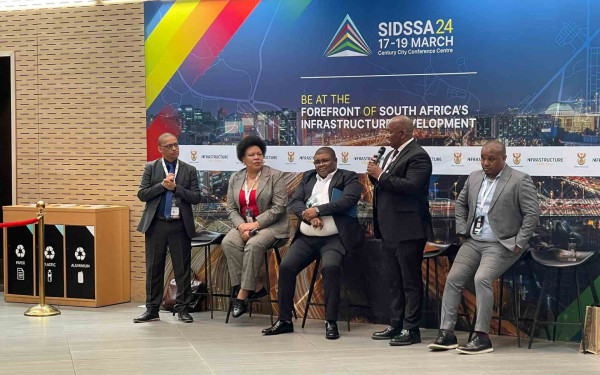
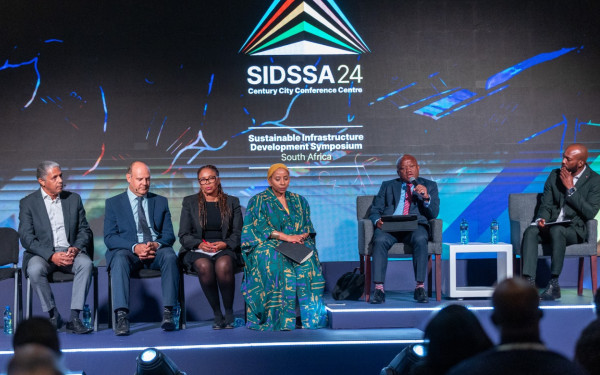
South Africa's Minister of Public Works and Infrastructure Sihle Zikalala unpacked the country's 2024/2025 infrastructure priorities and project pipeline during a panel session at the Sustainable Infrastructure Development Symposium South Africa (SIDSSA) 2024 in Cape Town on Tuesday.

According to Minister Zikalala, the country's top 12 infrastructure priorities seek to stimulate job creation, promote economic competitiveness and contribute to broadening economic inclusivity.

“We announced the 12 priority projects today and it's important to give a background as to how we arrived at this priority list. We want projects that will contribute to higher GDP impact, but at the same time, ensure export and embrace the green economy,” he stated.

Taking place on March 17-19 at the Century City Conference Center, SIDSSA brings together key stakeholders in South Africa and across the continent with the aim of driving infrastructure development. SIDSSA 2024 serves as a crucial platform for discussions and partnerships in the infrastructure investment landscape, with a focus on accelerating economic activity through strategic infrastructure plans. Energy Capital & Power – the leading investment platform for the African energy sector – is a media partner for this important platform. For more information, visit https://SIDSSA.org.za/.

With support from Infrastructure South Africa (ISA) – a program within the Ministry of Public Works and Infrastructure – the projects also aim to accelerate private sector-led development. The projects are poised to serve as a catalyst for closing the infrastructure investment gap, while meeting the infrastructure target set out by the government's National Development Plan.

“It was very important for us to ask what we plan to contribute from an operational perspective to all the socioeconomic perspectives outlined by the Minister,” stated Mameetse Masemola, Head of ISA. “We will work very closely with the project sponsors in unpacking the work and once we are ready, we will invite transactional advisors.”

It was noted during the session that shortfalls in operation and maintenance have resulted in the underdevelopment of South Africa's infrastructure strategy. As such, the need to meet end-user's requirements, the mobilization of digital infrastructure and ensuring operational competency were noted as prerequisites to de-risk investment in the sector.

“The projects listed give the catalytic impetus to develop our industry,” stated Wayne Petersen, Director of Transport and Infrastructure at WSP Group. “We have to ensure that the private sector invests strongly in the projects that are implemented.”

Meanwhile, panelists touched on the importance of bankability and sustainability in attracting private sector investment towards infrastructure projects in the country.

“Infrastructure assets are not only about the assets themselves, but also about the economics that surround them,” said Catherine-Candice Koffman, Group Executive for Project Preparation at the Development Bank of Southern Africa. “Bankability is very much about ensuring we have a project that doesn't rely too much on the fiscus. A successful project is one where you use as little budgetary capital to fund the projects as possible.”

For South Africa's infrastructure projects to maintain operational efficiency after completion, it was noted that the country will need to invest in attracting international talent while promoting human capital development, with Partner at PwC Southern Africa Chris van der Merwe stating, “These projects need to strike a balance between economic and social projects.”

Distributed by APO Group on behalf of Energy Capital & Power.

About SIDSSA 2024:
SIDSSA 2024 is organized by the Investment and Infrastructure Office under the Presidency, in collaboration with the Association of African Exhibition Organizers. The National African Federation for the Building Industry joins as an association partner, while the Development Bank of Southern Africa is the official sponsor of the event.

Media files
Energy Capital & Power
Download logo
Read moreSIDSSA 2024: Unpacking South Africa’s Top 12 Infrastructure Priorities
19 March 2024

Years of protests pay off as Eastern Cape village gets new high school

Location: News

The R56-million Vukile Tshwete Senior Secondary has officially opened in Keiskammahoek after eight years of struggle

Read moreYears of protests pay off as Eastern Cape village gets new high school
19 March 2024

Emphasis placed on investing in climate-resilient infrastructure projects

Location: News

Emphasis placed on investing in climate-resilient infrastructure projects

While South Africa has taken meaningful steps to invest in infrastructure projects, Deputy Minister of Finance, Dr David Masondo, says the fiscus cannot afford to financially support the amount of investment required for climate-resilient infrastructure.

“We therefore need to discuss other innovative financing mechanisms such as green bonds and carbon credit to fund these climate-resilient infrastructure projects,” Masondo said on Monday in Johannesburg.

He made these remarks during the second in a series of Southern Africa – Towards Inclusive Economic Development (SA-TIED) policy dialogues entitled “Financing infrastructure development in the context of climate change”.

“In South Africa, we feel the negative impact of climate change in important sectors such as agriculture, water, and energy. The frequency of natural disasters and the results thereof are felt every day in our country.

“Investments in renewable energy sources, water conservation systems, and sustainable urban development are key to mitigating and adapting to climate impacts,” the Deputy Minister said.

Masondo said the Infrastructure Fund is a testament to South Africa’s commitment to stimulating infrastructure investment and blending public and private financing to build a better, more sustainable future.

“The Infrastructure Fund stands out as a pivotal move, designed to stimulate investment across various critical sectors. This approach seeks to mobilise public and private resources, mitigate risks for private investors and foster an environment where collaborative financing models can thrive.

“Such measures are part of a broader effort to ensure that infrastructure development not only supports South Africa's immediate economic needs but also lays the groundwork for long-term resilience and progress.

“Yes, challenges exist such as securing funding. However, ensuring sustainability, and integrating the latest technologies are other additional challenges. These challenges should be treated as opportunities for innovation and forging robust public-private partnerships. This is also an opportunity for leveraging the power of technology in our infrastructure development goals,” Masondo said.

He said the groundbreaking research produced by the SA-TIED program has shed light on critical areas like water, and energy, and the broader connections between them.

“It is this type of research that directly shapes our infrastructure strategies, informing decisions to maximise impact and create the conditions for sustainable growth. The research informs our policy decision-making. It is this type of research that directly shapes our infrastructure strategies, informing decisions to maximize impact and create the conditions for sustainable growth,” the Deputy Minister said.

He said infrastructure development is the cornerstone of any thriving economy.

“Infrastructure fuels productivity (e.g. people arrive late to work because public transport is poor). Infrastructure also enhances the quality of life for our citizens (clean air, and clean water are important for our health) and lays the foundation for long-term growth.

“Our government recognises this. We have made significant investments in critical infrastructure. These investments are not just about roads and bridges. They are also about creating jobs, reducing poverty, and making South Africa a competitive player in the global economy,” the Deputy Minister said. – SAnews.gov.za


nosihle
Tue, 03/19/2024 - 09:36

611 views
Read moreEmphasis placed on investing in climate-resilient infrastructure projects
19 March 2024

Transport infrastructure foundation for economic development in Africa, says Mashatile

Location: News

Transport infrastructure foundation for economic development in Africa, says Mashatile

Deputy President Paul Mashatile has described transport infrastructure as the cornerstone of economic expansion in Africa. 

“We must make sure that we use the discussions and deliberations of the symposium to bring tangible collaboration on bi-national projects that will strengthen the continent and its economy,” he said on Monday. 

The Deputy President was speaking at the Sustainable Infrastructure Development Symposium South Africa (SIDSSA) in Cape Town. 

He said he was confident that the gathering would establish more strategic collaborations with the other African leaders. 

“The African Continental Free Trade Area (AfCFTA) agreement remains an important platform for us as a continent to strengthen regional integration at both an economic and cultural level.” 

The gathering is a platform that brings together critical role players in the infrastructure investment space to accelerate an infrastructure-led economic recovery plan.

The symposium also sets the tone for collaboration and cooperation within the continent.

Meanwhile, the country’s second-in-command said he was also looking forward to the launch of the construction book, which is a repository of projects going into procurement or construction in the 2024/25 financial year. 

The Deputy President believes that this will serve as an important indicator to the market that the pipeline of projects is realisable.

“We also look forward to the announcement of the 12 infrastructure project priorities for the 2024/2025 financial year that will replenish the pipeline and receive project preparation funding from ISA [Infrastructure South Africa],” he said. 

He also reflected on the success of the Infrastructure Investment Plan adopted by Cabinet in 2020. 

The Deputy told delegates that the three central themes that anchor the plan have remained consistent throughout the sixth administration. These include quality infrastructure for development, recovery, and inclusive growth, which were all spearheaded by the government through policy development and implementation.

“When we say development, we mean both the development and delivery of infrastructure, and the development of our people through infrastructure delivery. When we say recovery, we mean the recovery of our economy through a large-scale infrastructure programme, led and championed by the government.” 

Mashatile defined inclusive growth as the redressing of spatial imbalances between urban and rural areas through infrastructure delivery programmes, which ought to address gender, racial and other inequalities. 

“The entire population should be included in the benefits associated with infrastructure investment and subsequent gross fixed capital formation," he said. 

While challenges are restraining the fast pace of delivering quality infrastructure, the Deputy President called on the symposium to display some of the progress and successes that serve as a foundation for the incoming seventh administration. 

“In the last five years, we have put specific focus on the strategic integrated projects that have the highest GDP [gross domestic product] impact, high employment absorption capacity, and localisation potential.”

He is of the view that these projects have the potential to crowd in private sector investments due to their multiplier effect. 

“We are proud to say that of the pipeline that we gazetted both in 2020 and 2022, almost R10 billion worth of projects have completed construction, R233 billion worth of projects are currently in construction and R170 billion worth of projects are currently in procurement.” 

Some of the completed projects include Vaal Gamagara Phase 1, the raising of the Hazelmere Dam wall, student accommodation across different universities, transport projects like the Musina Ring Road, national routes and the construction of social housing.

Of these, Mashatile said significant work was done within the energy portfolio of projects. 

The energy project pipeline comprises more than 100 projects amounting to R240 billion. Some of these projects have a value of over R100 billion – spanning from transmission, gas, and renewables to green hydrogen.

The Deputy President said they have also noted the gap in the readiness and preparedness of projects for the market. However, he said in 2023, Infrastructure South Africa (ISA) received its first tranche of funding to support projects with project preparation. 

“This has proven itself a game changer as some projects show great potential but do not always have the fiscal allocation for technical support, legal support, or even capacity building.” 

According to the Deputy President, the project preparation funding allows ISA to support projects that otherwise would stay dormant for many years.

“It is important to note that of the first R200 million tranche received, 37 projects will already be receiving project preparation support.” 

Meanwhile, through coordination and support of various departments and government stakeholders, Mashatile noted that ISA has unblocked 195 permits for 47 projects. – SAnews.gov.za
 

Gabisile
Tue, 03/19/2024 - 10:50

452 views
Read moreTransport infrastructure foundation for economic development in Africa, says Mashatile
19 March 2024

South African Special Economic Zones (SEZ) Prioritize Gas, Renewable Energy to Drive Efficiency

Location: News
Energy Capital & Power

South African Special Economic Zones (SEZ) are turning to natural gas and renewable energy to secure energy supply while improving operational efficiency. During a panel discussion at the Sustainable Infrastructure Development Symposium of South Africa (SIDSSA) in Cape Town on Tuesday, representatives from various SEZs across the country underscored the role gas and renewables have already begun to play.

Taking place on March 17-19 at the Century City Conference Center, SIDSSA brings together key stakeholders in South Africa and across the continent with the aim of driving infrastructure development. SIDSSA 2024 serves as a crucial platform for discussions and partnerships in the infrastructure investment landscape, with a focus on accelerating economic activity through strategic infrastructure plans. Energy Capital & Power – the leading investment platform for the African energy sector – is a media partner for this important platform. For more information, visit https://SIDSSA.org.za/.

With South Africa currently faced with an energy crisis, ensuring stability of supply has become a rising challenge for businesses across the country. SEZs are not exempt in this regard. According to Bheka Zulu, CEO, Tshwane Automotive SEZ, “This has led us to find innovative solutions…we are currently building a gas plant project – and solar. We still need to find more energy. Partnerships are key, because stakeholders can help us achieve this.”

Similarly, the Richards Bay Industrial Development Zone (RBIDZ) SEZ is also developing gas and renewable energy projects to enhance energy security while reducing reliance on the national electrical grid. Simthembile Mapu, Executive Manager: Business Development and Support at the RBIDZ SEZ, said “We have a gas to power plant and are also constructing a pipeline. We also have a wind farm.”

While renewables stand to support operational efficiency, baseload power provided by South Africa's state utility Eskom remains imperative.

“We are talking about an intervention in renewable energy. Renewable energy is less about the base load. We can never downplay the role Eskom plays to make sure the baseload is taken care of. The issue of the lack of power is a major [challenge]. We need to sort out the issue of power supply in our country to support SEZ,” stated Themba Koza, Acting CEO, COEGA.

Strategically designated areas for targeted economic activities, South Africa's SEZs are to accelerate industrialization in the country. Stieneke Jensma, COO: Industrial Zones Program, Industrial Development Corporation, explained that “Our mandate is to accelerate the development of SEZ. We started a program focusing on energy security, specifically regarding SEZ. The idea is to collaborate and to ensure that what we are delivering promotes industrialization.”  

Distributed by APO Group on behalf of Energy Capital & Power.

About SIDSSA 2024:
SIDSSA 2024 is organized by the Investment and Infrastructure Office under the Presidency, in collaboration with the Association of African Exhibition Organizers. The National African Federation for the Building Industry joins as an association partner, while the Development Bank of Southern Africa is the official sponsor of the event.

Media files
Energy Capital & Power
Download logo
Read moreSouth African Special Economic Zones (SEZ) Prioritize Gas, Renewable Energy to Drive Efficiency
19 March 2024

Planned maintenance to affect water supply in parts of Benoni

Location: News

Planned maintenance to affect water supply in parts of Benoni

The City of Ekurhuleni has reminded customers in Benoni of the planned seven-hour water shutdown to be undertaken on Tuesday.

The shutdown will affect customers in parts of Benoni. It will be implemented from 9am to 4pm to make way for the replacement of faulty valves.

The areas to be affected by shutdown include Airfield, Farrarmere, Farrarmere Gardens and Lakefield.

“To mitigate the effect of the supply interruption, water tankers will supply water to the affected areas. Updates on any development will be communicated through the city’s digital platforms,” the city said in a statement.

Meanwhile, water supply has finally been restored to all the areas in Region 7 following weeks of water outage caused by the breakdown of a pump at the Bronkhorstspruit Water Treatment Plant in Tshwane.

The City of Tshwane said a new pump and motor were successfully installed at the plant last Friday, and pumping started in earnest at around 4pm.

“Full supply has been restored in Ekangala and Rethabiseng, except in Rethabiseng Extension 4, due to the infrastructure network connection. The section will start receiving water once there is enough water pressure in the whole area.

“The high lying area are also receiving water. There are indications that water is gradually trickling in at Ekandustria since this morning. The city apologises profusely to the residents for the inconvenience caused,” the city said on Tuesday. – SAnews.gov.za

GabiK
Tue, 03/19/2024 - 11:11

431 views
Read morePlanned maintenance to affect water supply in parts of Benoni
19 March 2024

Vehicles set alight as protesters demand sanitation and water

Location: News

Nelson Mandela Bay Mayco member promises action on stalled project

Read moreVehicles set alight as protesters demand sanitation and water
19 March 2024

South Africa Requires $5.7T to Bridge Infrastructure Investment Gap

Location: News
Energy Capital & Power

Nearly $5.7 trillion is required to close the infrastructure investment gap in South Africa by 2050, according to statements made by Mameetse Masemola, Acting Head of Infrastructure South Africa (ISA), during the Sustainable Infrastructure Development Symposium South Africa (SIDSSA) on Monday.

During a media briefing, Masemola provided an update on projects led by ISA since its enactment in 2020, as well as highlighted efforts being made by the government agency to foster public-private sector cooperation and accelerate infrastructure development.

Taking place on March 17-19 at the Century City Conference Center, SIDSSA brings together key stakeholders in South Africa and across the continent with the aim of driving infrastructure development. SIDSSA 2024 serves as a crucial platform for discussions and partnerships in the infrastructure investment landscape, with a focus on accelerating economic activity through strategic infrastructure plans. Energy Capital & Power – the leading investment platform for the African energy sector – is a media partner for this important platform. For more information, visit www.SIDSSA.org.za.

“Our mandate is to close the infrastructure investment gap… We ensure projects are viable and bankable to attract funding from global investors. We work closely with authorizing departments to ensure fast rollout of projects, while ensuring the projects meet local regulations,” said Masemola.

ISA has led projects across ICT, energy, water and sanitation, transport and human settlement sectors, which have seen substantial growth in recent years.

“These are the sectors that support economic growth and enable South Africa to be competitive globally. Most of the projects were in their early stages in 2020. The value was R230 billion and the value has grown to over R500 billion,” stated Masemola.

In the energy sector, 95% of projects deployed have been private sector-led, including renewable energy projects developed under South Africa's Renewable Independent Power Producer Program (REIPPP), Embedded Generation Program and Just Energy Transition Program. Of the energy sector projects, 25 are under construction under Bid Window 5 of REIPPP, with five having reached financial close and a total of 14,000 jobs expected to be created, added Masemola.

In the transport sector, 15 projects have been announced, of which six represent a total value of R25 billion and are currently under development. Masemola stated that ISA has seen success when it comes to the human settlement sector, with over 9,000 units constructed and 38,000 jobs created since 2020.

Commenting on ISA's current and future project pipeline, Masemola stated that the agency has secured R600 million from South Africa's treasury to invest in projects over the next three years, with 31 projects currently being prepared.

Distributed by APO Group on behalf of Energy Capital & Power.

Media files
Energy Capital & Power
Download logo
Read moreSouth Africa Requires $5.7T to Bridge Infrastructure Investment Gap
19 March 2024

Less talk, more action! South African creatives are designing for social impact

Location: MyPR

Design is a powerful tool for change. As part of reshaping the industry’s paradigms, this year’s theme for Decorex Africa, the continent’s leading decor and design showcase, is Designing for Impact. It marks a commitment to thinking beyond traditional boundaries and identifying the sweet spot that lies at the intersection of creativity, commercial viability and …

Read moreLess talk, more action! South African creatives are designing for social impact
19 March 2024

Government harnessing Land Reform to support growth of agriculture and job creation 

Location: News

Government harnessing Land Reform to support growth of agriculture and job creation 

President Cyril Ramaphosa has emphasised that government is actively implementing various programs and initiatives to enhance the effectiveness of land reform aimed at bolstering agricultural growth and to foster increased employment within the industry.

President Ramaphosa was responding to questions for oral reply in the National Assembly on Tuesday.
 
A Member of Parliament asked the President to elaborate on the integrated plan that government has in place to maintain growth and job creation in the agricultural sector through land reform. 

“Government’s land reform programme is supported by several complementary programmes and initiatives to enable growth and job creation.   

“Through these complementary programmes and initiatives, we are working to ensure that land reform is harnessed more effectively to support the growth of agriculture and agro-processing and to expand employment and livelihoods in this vital industry,” the President said. 

The President told Members of Parliament that land reform is vital to the transformation of our society and to correct historical injustices.   

He noted that redistribution, restitution and the provision of secure tenure also contribute to greater agricultural activity and enable more people to earn a living off farming.   

President Ramaphosa highlighted that in May 2022, the Department of Agriculture, Land Reform and Rural Development signed the Agriculture and Agro-processing Master Plan with partners in business and labour.   

Among many other things, the plan supports the acceleration of land reform and outlines actions that the private sector can take to support optimal use of land available to black farmers as a result of land reform projects.

These actions include support to black farmers and SMMEs at the processing level to have better access to domestic and export markets.   

The plan also encourages large commercial farmers to participate voluntarily in the land reform programme by donating land to historically disadvantaged farmers or participating in joint ventures to facilitate linkages between small- and medium-scale farmers operating on a commercial basis.   

“If the proposed interventions are implemented effectively, the social partners believe that by 2030, the agricultural sector can grow by an additional R32 billion above the ‘business-as-usual’ baseline.   

“Through this plan, they intend to maintain the existing jobs in the sector and create 75,000 new jobs by 2030.   For the economic potential of our land reform programme to be fully realised, we are prioritising broader rural development,” the President said. 

The Integrated Rural Development Sector Strategy of 2023 aims, among other things, to revitalise the rural economy through investment in, and development of rural infrastructure.   

This includes investment in roads, bridges and other transport infrastructure, water and irrigation schemes, public health and education.   

The strategy also provides for support to industries that support rural development, including agriculture and agro-processing, mining, the digital economy, the ocean economy, tourism, arts and culture.   

“Improvements in rural infrastructure are necessary if we are to reap the economic potential of land reform. Beneficiaries of the various land reform projects need to be able to access water resources, get their produce to market, participate in local economic activity and have ready access to funding and other support,” he said. 

The President highlighted that the land reform programme is also supported by initiatives that support skills development and employment, particularly for the youth.   

Through the National Rural Youth Service Corps (NARYSEC) government provides young people with the skills and capabilities to participate in the economy. 

He explained that through such rural development initiatives, more than 1 100 jobs have been facilitated in the current financial year.

He further stated that through the Presidential Employment Stimulus, more than 180 000 agricultural production input vouchers have been issued to subsistence producers.   

The Presidential Employment Stimulus has also worked with the provincial departments of agriculture and social partners to provide support to more than 62 000 subsistence and smallholder producers to strengthen self-employment and food security. – SAnews.gov.za

DikelediM
Tue, 03/19/2024 - 15:02

150 views
Read moreGovernment harnessing Land Reform to support growth of agriculture and job creation 
19 March 2024

6 Infrastructure Agreements Signed at SIDSSA 2024

Location: News
Energy Capital & Power

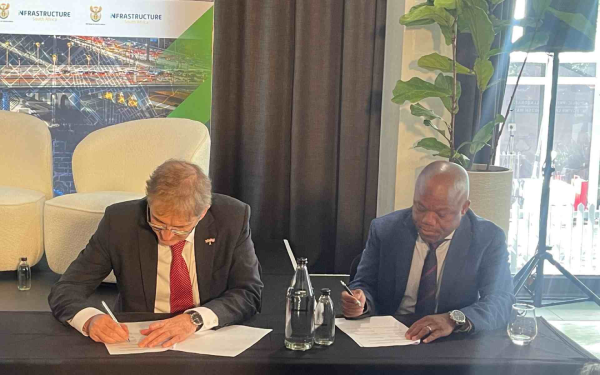
Several infrastructure and finance-focused deals were signed during a media briefing at the Sustainable Infrastructure Development Symposium of South Africa (SIDSSA) on March 18. The six deal signings aim to bolster private-led investment in South African infrastructure projects and cover various strategic areas including project development, financing, capacity building and research.

A Memorandum of Understanding (MoU) was signed between South Africa's Minister of Public Works and Infrastructure Sihle Zikalala and John Humphrey, the UK's Trade Commissioner for Africa. The deal builds on three agreements signed between the countries since the launch of Infrastructure South Africa in 2020 and aims to strengthen cooperation regarding project preparation, appraisal and development.

Taking place on March 17-19 at the Century City Conference Center, SIDSSA brings together key stakeholders in South Africa and across the continent with the aim of driving infrastructure development. SIDSSA 2024 serves as a crucial platform for discussions and partnerships in the infrastructure investment landscape, with a focus on accelerating economic activity through strategic infrastructure plans. Energy Capital & Power – the leading investment platform for the African energy sector – is a media partner for this important platform. For more information, visit www.SIDSSA.org.za.

The remaining five deals were signed by Infrastructure South Africa – represented by Mameetse Masemola, Head of Infrastructure South Africa - and various organizations. These include an MoU signed with the South African Institution of Civil Engineering to aid in collaboration and initiatives within the infrastructure planning and development space. The MoU covers strategic areas of cooperation including capacity building, project development and research.

An agreement was signed between Infrastructure South Africa and the Association of African Exhibition Organizers. The MoU will see the parties take the country's infrastructure investment drive global, with support provided in promoting South Africa's project portfolio.  

Meanwhile, an agreement was signed with the Transnet National Ports Authority for the development of The Construction Book – set to be launched on 19 March at SIDSSA – and the development of strategic integrated projects.

A Memorandum of Agreement was signed with the South African Road Agency (SANRAL). Infrastructure South Africa and SANRAL will collaboratively work towards closing the country's infrastructure investment gap, developing The Construction Book while developing strategic projects.  

Infrastructure South Africa also recently signed an MoU with the University of Johannesburg, announced during the SIDSSA media briefing. The media briefing was facilitated by South Africa's Deputy Minister in the Presidency Kenny Morolong and featured updates on projects and national infrastructure priorities.

SIDSSA 2024 is organized by the Investment and Infrastructure Office under the Presidency, in collaboration with the Association of African Exhibition Organizers. The National African Federation for the Building Industry joins as an association partner, while the Development Bank of Southern Africa is the official sponsor of the event. The Masterclass on Sustainable Infrastructure Development is held in collaboration with the National School of Government.

Distributed by APO Group on behalf of Energy Capital & Power.

Media files
Energy Capital & Power
Download logo
Read more6 Infrastructure Agreements Signed at SIDSSA 2024
19 March 2024

African Ministers Discuss Infrastructure Cooperation at Sustainable Infrastructure Development Symposium (SIDSSA) Leaders Meeting

Location: News
Energy Capital & Power

South African and regional ministers convened to pinpoint key infrastructure priorities both within South Africa and across the continent during a Leaders Meeting at the Sustainable Infrastructure Development Symposium (SIDSSA) 2024 on March 18 in Cape Town.

The discussion, which was led by South Africa's Minister of Public Works and Infrastructure Sihle Zikalala, underscored the importance of project preparation, engagement from both the public and private sectors, maintenance and the implementation of sustainable facilitation methods as crucial elements in fostering investment and promoting regional harmonization within the infrastructure sector.

Taking place on March 17-19 at the Century City Conference Center, SIDSSA brings together key stakeholders in South Africa and across the continent with the aim of driving infrastructure development. SIDSSA 2024 serves as a crucial platform for discussions and partnerships in the infrastructure investment landscape, with a focus on accelerating economic activity through strategic infrastructure plans. Energy Capital & Power – the leading investment platform for the African energy sector – is a media partner for this important platform. For more information, visit www.SIDSSA.org.za..

“The purpose of this forum is to identify areas of priority on infrastructure and ensure that we integrate efforts to implement those projects,” Minister Zikalala stated.

The establishment of Infrastructure South Africa aims to serve as a point of entry for infrastructure planning in the country. The organization is a one-stop shop that catalyzes the country's infrastructure target set out in South Africa's National Development Plan, providing best practices in project preparation, planning and technical and financial support for projects.

“We have been established as a bespoke infrastructure development agency in the country,” stated Infrastructure South Africa Head Mameetse Masemola, adding, “We deal with matters around private sector-led infrastructure projects, which require authorizations, permits, licenses and normal bureaucracy around getting projects to be implemented. We unlock these restrictions.”

Meanwhile, it was noted that cross-border collaboration between countries in Africa is a requisite to creating the conditions conducive for the private sector to participate in the continent's infrastructure development. A number of MoUs between South Africa and its neighboring countries – including Lesotho, Eswatini and Zimbabwe – have served to promote regional integration in the infrastructure sector.

“Our main role for the continent is to ensure that we invest in critical infrastructure so that we put in the building blocks that ensure that our nations prosper and that we grow together,” stated South Africa's Minister of Tourism Patricia de Lille.

A number of efforts introduced by South Africa's Department of Transport have worked to facilitate the ease of movement from the country's ports and air space. By liberalizing the continent's air space and maritime territories, Africa will be able to harmonize the implementation of favorable regulatory frameworks that promote integration.

“We have introduced a number of efforts in trying to bring about this harmonization between our countries,” stated South Africa's Minister of Transport Sindisiwe Chikunga, adding, “For instance, in South Africa, we have introduced Cross Easy, which ensures that when a truck arrives at a port, it is already processed and reduces its travel time.”

The participation of the Premiers of the Free State and KwaZulu-Natal provinces showcased how South Africa can further integrate the country's infrastructure systems. It was noted during the discussion that South Africa's economy relies on the efficiencies of its ports, rail network and aviation network and that it is imperative for the rest of the continent to benefit from the modernization of the country's infrastructure industry.

“We share borders with countries such as Mozambique, Eswatini, Lesotho, amongst others, and this puts us in a strategic position in terms of ensuring our infrastructure planning and the integration of our infrastructure maximizes the potential of the African continent in terms of moving goods,” stated KwaZulu-Natal Premier Nomusa Dube-Ncube.

International ministers from Liberia, Eswatini, Lesotho, Zimbabwe, Seychelles and Equatorial Guinea also participated in the Leaders Meeting, making a case for investment in their respective countries' infrastructure space.

“We have come to share with you, to learn with you and to communicate with you. We find that rapid technological advancement is significant and cannot be overstated,” stated Liberia's Minister of Ports and Telecommunications Sekou M. Kromah, adding, “As we experience the competitiveness of the digital age, it is imperative that our digital infrastructure is able to meet the demands of an ever-changing landscape.”

“The heads of infrastructure departments must always gather to discuss and help other countries that haven't been developed yet,” concluded Equatorial Guinea's Minister of Public Works, Housing and Town Planning, Don Pascual Ondo Nze Oyana.

SIDSSA 2024 is organized by the Investment and Infrastructure Office under the Presidency, in collaboration with the Association of African Exhibition Organizers. The National African Federation for the Building Industry joins as an association partner, while the Development Bank of Southern Africa is the official sponsor of the event.

Distributed by APO Group on behalf of Energy Capital & Power.

Media files
Energy Capital & Power
Download logo
Read moreAfrican Ministers Discuss Infrastructure Cooperation at Sustainable Infrastructure Development Symposium (SIDSSA) Leaders Meeting
19 March 2024

President Cyril Ramaphosa Calls to Drive Investment in Infrastructure at Sustainable Infrastructure Development Symposium of South Africa (SIDSSA) 2024

Location: News
Energy Capital & Power

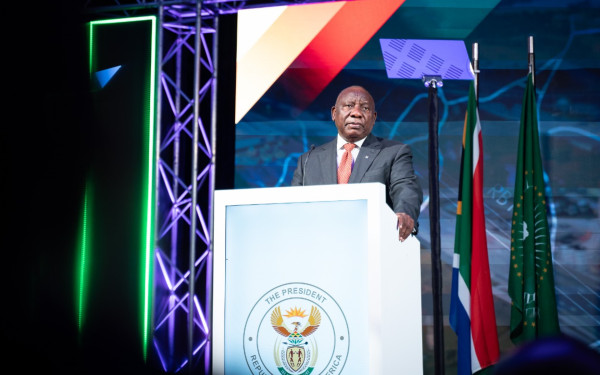
South African President Cyril Ramaphosa called for private-led investment in infrastructure development at the 2024 edition of the Sustainable Infrastructure Development Symposium of South Africa (SIDSSA) on in Cape Town on Tuesday.

“It is estimated that to achieve our infrastructure goals, we need almost R4.8 trillion to address the challenges we face as a country. We need that from both the public sector and the private sector – from a much larger extent,” stated President Ramaphosa.

Taking place on March 17-19 at the Century City Conference Center, SIDSSA brings together key stakeholders in South Africa and across the continent with the aim of driving infrastructure development. SIDSSA 2024 serves as a crucial platform for discussions and partnerships in the infrastructure investment landscape, with a focus on accelerating economic activity through strategic infrastructure plans. Energy Capital & Power – the leading investment platform for the African energy sector – is a media partner for this important platform. For more information, visit www.SIDSSA.org.za.

The South African government has been working to streamline its infrastructure sector and attract investment in strategic projects. Regulatory reforms, according to President Ramaphosa, include “the amendment within our own realm of the Division of Revenue Act, to enable provincial government to use their provincial grants to crowd in the private sector to finance large-scale infrastructure, and to open up opportunities for the private sector to work alongside government to create revenue generating projects.”

These reforms, as well as SIDSSA, “enables us to close the infrastructure investment gap in our country,” stated President Ramaphosa. “This is a valuable platform to enable us to have an introspective look at the opportunities that we have.”

SIDSSA 2024 is hosted by South Africa's Minister of Public Works and Infrastructure Sihle Zikalala, who said, “We will use this platform to outline the progress of the country since the SIDSSA in 2020. As we convene, we must emerge with tangible actions to finance infrastructure as a critical corridor to Africa's development. Infrastructure should be a flywheel of our country's economic recovery.”

Platforms such as SIDSSA – in tandem with the establishment of Infrastructure South Africa in 2020 – have been pivotal for uniting the public and private sectors, driving investment in strategic projects. According to Zikalala, “we have been able to unlock more than 195 licenses, permits and approvals within 47 projects alone. South Africa established the Infrastructure Fund to unlock more private investment in the infrastructure pipeline using a variety of blended financing tools. So far, 13 mega blended finance projects or programs have been approved to date.”

This year's SIDSSA draws insight into the progress made to transform the economy through infrastructure development. According to Tertuis Simmers, Provincial Minister of Infrastructure in the Western Cape, “The Western Cape stands as Africa's premier digital hub, and Cape Town is swiftly solidifying its position as the cloud computing hub of South Africa. Our province has ambitious vision…Central to this strategy is our commitment to infrastructure development: the bedrock of our provinces' economic advancement.”

SIDSSA 2024 is organized by the Investment and Infrastructure Office under the Presidency, in collaboration with the Association of African Exhibition Organizers. The National African Federation for the Building Industry joins as an association partner, while the Development Bank of Southern Africa is the official sponsor of the event.

Distributed by APO Group on behalf of Energy Capital & Power.

Media files
Energy Capital & Power
Download logo
Read morePresident Cyril Ramaphosa Calls to Drive Investment in Infrastructure at Sustainable Infrastructure Development Symposium of South Africa (SIDSSA) 2024
19 March 2024

Infrastructure investment central to achievement of SA’s development goals

Location: News

Infrastructure investment central to achievement of SA’s development goals

President Cyril Ramaphosa says investment in infrastructure is central to the achievement of the country’s development goals.

“Infrastructure is an enormous economic multiplier, providing dividends for an economy long after the infrastructure has been built,” President Ramaphosa said.

Addressing the 2024 Sustainable Infrastructure Development Symposium of South Africa (SIDSSA) currently underway at the Century City Conference Centre in Cape Town, President Ramaphosa said the symposium is an important part of government’s effort to close the infrastructure spending gap in the country.

“It is estimated that to achieve our infrastructure goals, we need an additional R1.6 trillion in public sector infrastructure investment and a further R3.2 trillion from the private sector by 2030,” President Ramaphosa said.

A number of bold initiatives are being implemented to deliver infrastructure at the required scale and pace.

“We are working on reforms to develop sustainable infrastructure, lift business confidence and encourage investment.

“These reforms include the amendment of the Division of Revenue Act to enable provincial governments to use their infrastructure grants and budget allocations to crowd-in private sector finance for large social infrastructure programmes,” President Ramaphosa said.

READ | National Assembly approves Division of Revenue Amendment Bill

The President said amendments to the public-private partnership regulations, which have recently been published for public comment, are part of broader reforms to mobilise and pool public and private sector resources for infrastructure.    

“The operationalisation of the Infrastructure Fund has seen a steady growth in the portfolio of blended finance projects that use relatively small fiscal allocations to de-risk public infrastructure projects and raise finance in debt capital markets.

“Through the work that has been done in transforming the infrastructure landscape, the total value of the country’s Strategic Integrated Projects has grown from R340 billion in July 2020 to R540 billion now.

“Eighteen projects, valued at around R10 billion, have been completed, covering human settlements, roads, water and sanitation,” President Ramaphosa said.

According to the President, the value of projects currently in construction is over R230 billion.

“Projects worth nearly R170 billion are currently in procurement. In this calendar year, 11 such projects, with a total investment value of R45 billion, are expected to reach financial close.

“To date, Infrastructure South Africa has unblocked a total of R25 billion worth of projects in the renewable energy space using the Infrastructure Development Act to fast-track government authorisations,” the President said.

Hosted by the Department of Public Works and Infrastructure (DPWI), the symposium, in its third iteration, is intended to shape the conversations about regulatory and policy reforms, among them, innovative funding models for infrastructure development.

Ministers and Deputy Ministers are expected to anchor various panel discussions and technical discussions throughout the symposium.

SIDSSA 2024  will showcase the following outcomes :

-               Launch of the construction book: a repository of infrastructure projects going into procurement/construction in the 2024/2025 financial year.

-               Leaders forum: A gathering of South African Ministers with 22 participating Ministers from the African continent.

-               Top 12 Infrastructure project priorities: These projects will receive project preparation funding from Infrastructure South Africa.

-               Signing of MOU’s with important partners and stakeholders.

The Symposium will also provide the following updates:

-               Update on the gazetted Strategic Integrated Projects.

-               Update on the projects already receiving project preparation support.

-               Infrastructure Fund Project Pipeline.

- SAnews.gov.za

Edwin
Tue, 03/19/2024 - 12:05

133 views
Read moreInfrastructure investment central to achievement of SA’s development goals
19 March 2024

Upgrade of Main Road P2-53 to boost economy in uPhongolo Municipality

Location: News

Upgrade of Main Road P2-53 to boost economy in uPhongolo Municipality

Residents and businesses within Nongoma, uPhongolo and surrounding areas stand to benefit from a multimillion rand upgrade of the Main Road P2-53, which will not only improve local infrastructure, but create employment and contribute to economic growth in the area.

The Main Road P2-53 53 in uPhongolo Local Municipality serves as a crucial feeder road to the National Road, N2-32.

Its resurfacing, at a cost of over R329 million, is aimed at enhancing accessibility, benefiting numerous residents and businesses within Nongoma, uPhongolo and surrounding areas.

The development of the road will also improve road safety in the area, and also help to boost the local economy by making it easier for people to travel to and from the area.

KwaZulu-Natal Premier Nomusa Dube-Ncube said the development of the road not only promises better accessibility, but also aims to bolster road safety within the region. 

Dube-Ncube said the upgraded road is also expected to catalyse the local economy by facilitating smoother travel for residents and visitors alike. 

“Moreover, the upgraded road provides vital access to numerous communities, social facilities, and businesses, including educational institutions like Petergate Primary, Empakama Public, KwaMagwaza Combined Primary, and others. 

“It also serves as a gateway to essential amenities such as healthcare facilities, police stations, places of worship, and recreational areas like the Mkhuze Game Reserve,” Dube-Ncube said.

To ensure the inclusivity of the project, the Premier said a combination of established contractors and emerging contractors was enlisted through the Contractor Participation Goal (CPG). 

“Contracts were strategically grouped to maximise employment opportunities, aligning with the objectives of the Expanded Public Works Programme (EPWP) and contract participation goals, thus fostering job creation within the area,” the Premier said.

The section of the road undergoing upgrades falls under the governance of Mgazini Traditional Council, under the leadership of Inkosi Ntshangase, and Osuthu Traditional Council, under the auspices of His Majesty King Misizulu kaZwelithini, covering Ward One and Ward 18. – SAnews.gov.za
 

GabiK
Tue, 03/19/2024 - 09:55

114 views
Read moreUpgrade of Main Road P2-53 to boost economy in uPhongolo Municipality
19 March 2024

R233 Billion Project Pipeline in Construction

Location: News
Energy Capital & Power

South Africa's Deputy President Paul Mashatile announced that the country currently has R233 billion worth of infrastructure projects currently in construction, with R170 billion worth in the procurement phase and R10 billion completed. Speaking during the Stakeholder Dinner at the Sustainable Infrastructure Development Symposium of South Africa (SIDSSA) on March 18, Deputy President Mashatile underscored the significant opportunities on offer for the private sector in the infrastructure space.

With government seeking to close the infrastructure investment gap, mobilizing private-led investment has emerged as a top priority. The Deputy President highlighted that through platforms such as SIDSSA, government can connect private investors to strategic projects, ensuring development leads to job creation, industrialization and long-term economic growth.

“The activities of the symposium today have set the tone for government accountability, as shown during the media briefing this afternoon as well as through collaboration and partnerships, and through the memorandum of understanding signed between government and private sector partners. Most importantly, this symposium sets the tone for collaboration and cooperation in the continent,” stated Deputy President Mashatile.

Taking place on March 17-19 at the Century City Conference Center, SIDSSA brings together key stakeholders in South Africa and across the continent with the aim of driving infrastructure development. SIDSSA 2024 serves as a crucial platform for discussions and partnerships in the infrastructure investment landscape, with a focus on accelerating economic activity through strategic infrastructure plans. Energy Capital & Power – the leading investment platform for the African energy sector – is a media partner for this important platform. For more information, visit https://SIDSAA.org.za.

Uniting regional government, global partners and private investors, SIDSSA 2024 brings together critical role-players in the infrastructure investment space, who are galvanized around a key goal of accelerating an infrastructure-led economic recovery plan. The event serves as a springboard for collaboration in Africa.

According to Sihle Zikalala, South Africa's Minister of Public Works and Infrastructure, “We have gathered here from all over the world to learn from each other on what we can do better to unleash a continental wide infrastructure development. We have often said Africa must be connected from Cape to Cairo, and we believe that we should lead the way to connect Africa.”  

To bolster infrastructure development, significant levels of capital are required – both in South Africa and regionally. Institutions such as the Development Bank of Southern Africa (DBSA) offer the finance needed to get large-scale projects off the ground.

The project pipeline, according to Zodwa Mbele, Group Executive: Chief Financial Officer at the DBSA, “was also dependent on institutions like the DBSA who were expected to provide and unveil the pipeline to the potential investors. It's very important that we get [projects] off ground and make sure that the infrastructure is developed because we also know that infrastructure is a [catalyst] for economic development.”

As such, South Africa's infrastructure development will largely center around public-private collaboration. John Humphrey, the UK's Trade Commissioner for Africa, explained that “partnership and collaboration sit at the heart of the UK approach to infrastructure globally, and that's why we're here today, to support the South African Government's National Infrastructure Plan and the priorities outlined in President Ramaphosa's recent address to the nation, including job creation, economic growth, solving the energy crisis, and improving public services.”

Closing off the evening, South Africa's Deputy Minister of Public Works and Infrastructure, Bernice Swarts underscored that, “Getting construction projects off the ground to build social and economic infrastructure is fundamental in building the Africa we want, improving services and creating jobs.”

Distributed by APO Group on behalf of Energy Capital & Power.

SIDSSA 2024 is organized by the Investment and Infrastructure Office under the Presidency, in collaboration with the Association of African Exhibition Organizers and Energy Capital & Power. The National African Federation for the Building Industry joins as an association partner, while the Development Bank of Southern Africa is the official sponsor of the event. The Masterclass on Sustainable Infrastructure Development is held in collaboration with the National School of Government.

Media files
Energy Capital & Power
Download logo
Read moreR233 Billion Project Pipeline in Construction
18 March 2024

South Africa and Zimbabwe enter landmark water sharing deal

Location: News

South Africa and Zimbabwe enter landmark water sharing deal

Water and Sanitation Minister Senzo Mchunu and the Zimbabwean Minister of Lands, Agriculture, Fisheries and Rural Development, Dr Anxious Jongwe Masuka, have signed an agreement for the transfer of treated water from Beitbridge Water Treatment Works to Musina.

The agreement is the product of the bilateral agreement of cooperation on water resources management, and the establishment and functioning of the Joint Water Commission established by the two countries in 2015. 

The transfer of treated water from Beitbridge Water Treatment Works in Zimbabwe to Musina, Limpopo, is a medium-term solution to address water supply challenges in the area. 

The capacity of the Beitbridge Water Treatment Plant is 35 million cubic metres/annum (96 Ml/day) and is currently not fully utilised in Zimbabwe, with only 10% of the capacity used for Beitbridge. 

Mchunu has welcomed the signing of the agreement and assured the community of Musina that the transfer of water from Beitbridge will alleviate water supply challenges in the area, as the quantities to be supplied are more than the current demand. 

According to the agreement, the two countries will kick-start an implementation plan and oversee the construction of a pipeline and of pump stations to transfer 15 million cubic metres (41 ML/day) of treated water from Zimbabwe to Musina. 

The two implementing agents to oversee the construction projects include the South African Development Bank and the Zimbabwe National Water Authority. The project is expected to be completed in 2026. 

The treated water to be transferred is expected to comply with South Africa’s water quality standards (SANS 241), set by the South African National Bureau of Standards (SABS), which is informed by World Health Organisation (WHO) guidelines.

Mchunu said in the interim, the Department of Water and Sanitation is working with the Vhembe District Municipality, which is the Water Services Authority for Musina Local Municipality, in addressing challenges with the existing water infrastructure, including rehabilitating the existing but non-functional boreholes, while the project is being implemented.

“We are looking at operationalising the non-functioning boreholes in Musina and we believe that with the transfer of water from Beitbridge Water Treatment Works, the challenges of water supply in Musina will be a thing of the past. 

“...We are thankful to the government of Zimbabwe to be able to expedite this water sharing deal, which will change the lives of the people of Musina,” Mchunu said.

Masuka also welcomed the contribution of the government of Zimbabwe to ensure that economic development is sustainable in Musina.

“I am very pleased that this day has come to fruition. It has taken years of negotiation and I thank the technical team for having put their very best for their countries to ensure that we come to this level today,” Masuka said.

The Minister reiterated that Zimbabwe is committed to supplying the maximum 15 million cubic metres of treated water per year to Musina town for the duration of the agreement. He is hopeful that the contribution will alleviate the water challenges in Musina, and also contribute to the economic development of the region.

As part of the two-day programme, Mchunu, accompanied by Deputy Minister Judith Tshabalala, held a meeting with Vhembe District and Musina Local Municipality leadership on Friday to discuss immediate, medium- and long-term solutions to water and sanitation challenges affecting the region. 

The leaders later held an imbizo, where they gave an update to the community of Musina on the plans underway to provide them with water, as well as interim measures to alleviate intermittent water provision. – SAnews.gov.za

GabiK
Mon, 03/18/2024 - 09:47

1180 views
Read moreSouth Africa and Zimbabwe enter landmark water sharing deal
18 March 2024

Human Rights for only some, are Human Rights for none – President 

Location: News

Human Rights for only some, are Human Rights for none – President 

Ahead of Human Rights Day later this week, President Cyril Ramaphosa has reminded the country that “we cannot truly be free until all people are free”. 

Speaking to the nation through his weekly newsletter, the President said all people, everywhere, have basic rights and should be free to exercise them. 

“As we continue to work towards realising the basic human rights of all South Africans, we are reminded that these rights are universal. That all people, everywhere, have basic rights and should be free to exercise them. We are reminded that we cannot truly be free until all people are free,” he said.

President Ramaphosa stressed the importance of being aware of the worsening human rights situation globally. 

“When we consider the deteriorating state of human rights and fundamental freedoms in many parts of the world today, we are mindful that we have a moral responsibility to strive for the achievement of human rights not just for our own people, but for all people across the world. 

“As we commemorate the tragic events that took place in Sharpeville in 1960, and recommit ourselves to the cause of human freedom, we stand firm in our position that human rights for only some are human rights for none. Let us all continue to advance and protect the human rights of all who live in South Africa,” the President said. 

President Ramaphosa further reflected that over the past three decades, the country has worked together to undo the terrible legacy of apartheid. 

However, he said, the effects of apartheid persist across society – whether it is in health, educational and developmental outcomes, access to basic services and infrastructure, or in the racialised nature of poverty, unemployment, inequality and exclusion. 
 
“Human Rights Month is an opportunity to assess the progress we have made over the past three decades to advance the Bill of Rights set out in our Constitution, as well as to reflect honestly on where we have fallen short,” he said. 
 
He added that the results of Census 2022 released last year highlight the progress made as a country in giving effect to the rights contained in the Constitution. 
 
The pro-poor policies of the democratic state have lifted millions out of absolute poverty, expanded access to basic services, improved educational and health outcomes for the country’s majority, and broadened participation in economic activity.
 
“As we head into our country’s 7th democratic election this year, we are further reminded of the fundamental freedoms South Africans enjoy today. These include freedom of conscience and opinion, the right to assembly and demonstration, freedom of association, and wide-ranging political rights.

 “We also have a free, independent media that plays a critical role in promoting transparency and accountability.

“We have to stand together united as we work for the realisation of human rights and fundamental freedoms for all. We should not be in denial about our shortcomings and strive to overcome them with urgency. For millions of South Africans, lack of access to basic services, unemployment and lack of opportunity affect the most fundamental of human rights – the right to dignity,” he said. - SAnews.gov.za 


DikelediM
Mon, 03/18/2024 - 10:52

537 views
Read moreHuman Rights for only some, are Human Rights for none – President 
  • Previous
  • Page 1
  • Interim pages omitted …
  • Page 82
  • Page 83
  • Page 84
  • Page 85
  • Page 86
  • Interim pages omitted …
  • Page 108
  • Next

Copyright © 2026 · MyZA · All Rights Reserved · Powered by Stratlec Online