• Skip to main content
  • Skip to header right navigation
  • Skip to after header navigation
  • Skip to site footer
MyZA

MyZA

News, Directory, Events and Other Stuff

  • Social Media
  • Sport
  • World News
  • Home
  • Submit News
  • Directory
  • Events
  • Stratlec
  • TFSA
  • News
    • APO
    • Today’s Sport News
    • Todays Social Media and Tech Headlines
    • Today’s World News
    • Today’s SA Financial News
  • Contact
You are here: Home / Archives for infrastructure

infrastructure

12 April 2024

Etolls officially scraped

Location: News

Etolls officially scraped

Government has officially switched off the gantries of the Gauteng Freeway Improvement Project (GFIP), popularly known as e- tolls.

“From this moment forth, road users will no longer be charged for using the GFIP network. This decision is a testament to our government's commitment to listen to and serve the needs of its citizens,” Minister of Transport, Sindisiwe Chikunga, said in Centurion during a ceremonial switch-off.

The gantries were switched off on Thursday at midnight at the South African National Roads Agency (SANRAL) Central Operations Centre.

Although, the system of e-tolling was implemented after some consultation had taken place, it aggravated a lot of the public and concerned Cabinet.

“When e-tolls were first introduced, the intention was to provide the critical road infrastructure necessary to support Gauteng's thriving economy, one of the largest in our nation and on our continent. However, we have heard the pleas of Gauteng motorists, and after careful deliberation, we have responded.

“A three-member Cabinet committee, tasked by President Cyril Ramaphosa in 2019, has diligently explored alternative funding solutions for the GFIP debt repayment and the backlog of maintenance and rehabilitation costs.

“The result is a Memorandum of Agreement that formalises these solutions and outlines the financial contributions from the Gauteng Province and the national government,” the Minister said.

She said government is committed to continually engaging with all stakeholders to explore adequate and sustainable funding solutions for road construction, maintenance, and upgrades, supporting economic development across our nation,” the Minister said.

“As government, we are still in discussion regarding the historical debt owed by motorists. For SANRAL, this significant milestone unlocks the ability to approach the private sector for funding, enabling the agency to execute its pipeline of capital expenditure projects. As we bid farewell to e-tolls, it is important to note that the benefits of improved roads remain,” Chikunga said.

The Minister reiterated that as of Friday, road users will no longer be charged for the use of the Gauteng e-toll routes

“Road-users will not be required to do anything when e-tolling is cancelled. Importantly, ‘current valid accounts’ can still be used for payments at toll plazas and other Value-Added Services (i.e. parking). This is critical for the ongoing, long-term benefit of inter-operability.

“The tag beeps will stop after [Thursday] midnight. The gantry lights and cameras will remain on for road safety purposes. The e-toll website will be updated with respect to the cancellation, including Mobility/Tag account functionality for services, i.e. interoperability and parking, etc.

“The e-toll stores will remain open as the tag can still be used for interoperability, account queries and other potential transport related services that will be determined in due course. The e-toll branding will be removed in phases,” Chikunga said.

E-toll invoices will be rolled up until the last day and issued up until this period.

Due to potential delays in the postal system, invoices will still be received some time after 12 April 2024. However, no transactions post-midnight tonight will appear on the invoice or statement. – SAnews.gov.za

nosihle
Fri, 04/12/2024 - 10:08
247 views
Read moreEtolls officially scraped
12 April 2024

SEIFSA And Unions Call For A Metals And Engineering Industries Reconstruction, Reindustrialization And Development Plan

Location: MyPR

Negotiations on the 10 April held between SEIFSA representing the 18 affiliated Employer Organizations, NUMSA, Solidarity, UASA, MEWUSA, SAEWA and NUM, culminated in the calling for a Metals and Engineering Industries Reconstruction, Reindustrialization and Development Plan in order to afford the industry an opportunity to re-set in an enabling environment underpinned by certainty, stability and …

Read moreSEIFSA And Unions Call For A Metals And Engineering Industries Reconstruction, Reindustrialization And Development Plan
11 April 2024

Partnership to solve Hammanskraal water challenges yields positive outcomes

Location: News

Partnership to solve Hammanskraal water challenges yields positive outcomes

Residents of Hammanskraal are set to benefit from a partnership between the Department of Water and Sanitation (DWS) and the City of Tshwane, which is expected to result in potable water running by September this year. 

Water and Sanitation Minister Senzo Mchunu, joined by Tshwane Mayor Cilliers Brink, conducted an oversight project inspection of the Rooiwal Wastewater Treatment Works (WWTW) and Klipdrift Package Plant in Hammanskraal, north of Pretoria, on Wednesday. 

The inspection come as the department, through its entity, Magalies Water, and the City of Tshwane are working collaboratively to effectively address water challenges affecting most parts of Hammanskraal. 

Speaking during a community imbizo held at Mandela Hall, Mchunu recommitted to oversee the successful refurbishment of the Rooiwal Wastewater Treatment Works to enable its performance at optimum capacity, as well as the upgrading of the Klipdrift Water Treatment Works. 

“As a Ministry, we made a commitment to ensure the provision of equitable and excellent quality water supply, as well as dignified sanitation for all. Therefore, our visit to Hammanskraal is by no means just for show, nor is it politicking,” Mchunu said. 

The Ministry and the City of Tshwane also informed the community that work is underway to upgrade the Klipdrift Water Treatment Works, which is set to get upgraded from 42 to 92 mega litres per day, to improve the provision and quality of water in parts of Hammanskraal.

“I am pleased to inform you that by September this year, most households will be able to get consistent and reliable water in their homes. This will significantly improve the quality of life for more than 47 000 households and a population of 180 679,” Mchunu said.

Giving an update on the latest progress made towards the refurbishment of Rooiwal Wastewater Treatment Works, Mchunu reported the Development Bank of Southern Africa (DBSA) has been appointed as the implementing agent to complete the refurbishment of the plant. 

He said the work to be carried out will include two sub-phases. 

“Phase 1A of the refurbishment is urgent, and a turnkey approach is undertaken to ensure that the necessary works are carried out swiftly and efficiently. This includes both general building and mechanical, and electrical elements that will work together to deliver the upgrades needed to improve the Plant's capacity and functionality. 

“Phase 1B will follow a conventional approach, which will see the construction of two primary sedimentation tanks, the refurbishment of the east flow balancing tank and pump station, and the upgrading of the anaerobic digesters on the Rooiwal West Works, amongst others,” Mchunu explained. 

The Minister highlighted the socioeconomic benefits that the two projects will bring to the area of Hammanskraal and surrounding areas. 

“We always strive to ensure that projects undertaken by government benefit the local communities. It is anticipated that the upgrade of the Klipdrift Water Treatment Plant project will create up to 70 jobs for the duration of the project,” Mchunu said. 

Mchunu further reiterated the ministry’s stance of collaborative work to ensure the effective implementation of bulk water and sanitation projects, not only in Hammanskraal but across the country.

He called out people who continue to vandalise infrastructure. 

“We must remember the importance of working together to prevent the reoccurrence of waterborne diseases. Our being here with the City of Tshwane and Magalies Water symbolides our own individual commitment to help the people of Hammamskraal realise their constitutional right of water provision. 

“We also should not be shy to call out those amongst the community who commit the crime of vandalizing the infrastructure that we so much want to see work optimally to serve everyone in our communities,” Mchunu said. - SAnews.gov.za

GabiK
Thu, 04/11/2024 - 15:13

188 views
Read morePartnership to solve Hammanskraal water challenges yields positive outcomes
11 April 2024

Dodgy COVID-19 border fence companies lose appeal application

Location: News

Dodgy COVID-19 border fence companies lose appeal application

The Special Investigating Unit (SIU) has welcomed the dismissal of an application for special leave to appeal related to the construction of the border fence between South Africa and Zimbabwe at a cost of R40 million.

The application, brought by Caledon River Properties and Profteam CC, was aimed at overturning a High Court decision to strip them of profits earned from the construction of the fence.

The judgement was handed down by the Supreme Court of Appeal.

“The SIU welcomes the Supreme Court of Appeal’s order, which enforces the implementation of the SIU’s investigation outcomes and consequence management to recover financial losses suffered by the State due to negligence or corruption,” the SIU said.

At the height of the COVID-19 pandemic, the two companies were contracted by the Department of Public Works and Infrastructure (DPWI) to construct the razor mesh fence between South Africa and Zimbabwe at a cost of some R40 million.

“Soon after the fence was erected in March 2020, it started to fall apart. In July 2020, President Cyril Ramaphosa authorised [the] SIU through Proclamation R. 23 of 2020, to investigate the affairs of all state institutions in respect of the procurement or contracting for goods, works and services during or in respect of the National State of Disaster, by or on behalf of State institutions.

“The Proclamation prompted the SIU to investigate the awarding of contracts to Caledon River Properties Pty Ltd and Profteam CC.

“In March 2022, the Special Tribunal reviewed and set aside two contracts awarded to service providers. The Tribunal also ordered the service providers to be divested of the profits earned from the multimillion-rand contracts,” the unit said.

According to the SIU, the two companies then agreed to the “declaration of invalidity of the contracts due to procurement irregularities”.

“However, they appealed to the full bench of the High Court to challenge the Special Tribunal’s order, depriving them of the profits made from the impugned contracts,” the unit said. – SAnews.gov.za


NeoB
Thu, 04/11/2024 - 09:35

9 views
Read moreDodgy COVID-19 border fence companies lose appeal application
10 April 2024

Unlocking Malawi’s Trade Barriers Through One-Stop Border Posts

Location: News

The World Bank Group
Download logo

Malawi's economy suffers from a lack of investment and high trade costs due to poor logistics and infrastructure; Clearing goods at the Malawi-Dedza border post with Mozambique previously took an average of three days; One-Stop Border Posts (OSBPs) reduce border waiting times and the cost of cross-border transactions.

The Dedza border post, situated between Malawi and Mozambique, is a busy place. On average, more than 80 trucks are cleared daily, carrying shop merchandise from South Africa to Malawi including fertilizers for Malawi's agriculture sector.

For the past few years, before the construction of the new One-Stop Border Post (OSBP) facility, it took about 24 to 36 hours to clear a truck carrying items such as wheat, fertilizers, groceries, and raw materials for Malawi's manufacturing industry. Drivers and clearing agents had to dash from one office to another between the two countries to clear the goods. Malawian traders traveling to and from South Africa through the Dedza–Mozambique border had difficulty locating the appropriate offices to present the required paperwork. In addition, the lack of parking facilities meant that the road leading to the border post was always congested, as trucks scrambled for space to park while waiting to be cleared.

Establishing One-Stop Border Posts

In 2015, the Government of Malawi embarked on an ambitious program to construct border posts in Dedza and Mwanza (both bordering Mozambique) and Songwe (bordering Tanzania), set up OSBPs with these neighboring countries, and establish the National Single Window (NSW). The NSW is an electronic platform system connecting international trade and transport stakeholders to fulfill all imports, exports, and transit border control procedures. World Bank support of $91.7 million was provided through the Southern Africa Trade and Transport Facilitation Project. The objective was to reduce the cost of cross-border transactions by supporting the modernization, simplification, and harmonization of the trade and transit procedures and policies.

The Dedza One-Stop Border Post, which was completed in 2023, boasts two examination bays for goods, parking spots for 100 freight trucks, and a modern passenger terminal.

“We now take less than half a day to process all the paperwork to clear the goods that we have carried, which is far less than the minimum of three days that we used to spend here,” says Flatella Makwakwa, a truck driver who has been using the Dedza border for more than three years. He also acknowledges the benefits of the new system when it comes to facilitating the passing of trucks and making life more comfortable for the users.

The new office infrastructure has made the process of clearing goods easier for the Malawi Revenue Authority (MRA), various other border officers, and users. The OSBP concept requires border officers from adjacent countries to be hosted in the same building. “It now feels good to go to work as the environment looks spacious and comfortable and we are looking forward to hosting our Mozambique counterparts very soon,” says Lucy Chikhawo, the MRA Station Manager for the Dedza border post which hosts more than a hundred government officers—including those from the Malawi Bureau of Standards, Immigration, Police, Agriculture and Health.

Traders also have access to better sanitation facilities as they wait for their goods to be cleared.

“From the feedback we have received so far about the Dedza OSBP, we feel encouraged to support the government in fast-tracking the completion of the other two border posts at Mwanza and Songwe in Karonga. Our main goal is to support initiatives that reduce time to clear passengers and goods, as any impediments are costly to the economy of the country,” says Chikondi Nsusa, Senior Transport Specialist at the World Bank Malawi Country Office, who is also the Task Team Leader for the project.

Improving Malawi's Trade, Logistics, and Infrastructure

The latest Malawi Country Economic Memorandum report highlights that Malawi's economy suffers from a lack of investment and high trade costs. Key reasons include poor logistics and infrastructure, compounded by being a small and landlocked country, as well as other non-tariff barriers at the borders.

According to the document, “the presence of non-tariff barriers at the border and in neighboring transit countries such as Mozambique, Tanzania, and Zambia add to the costs of trade for Malawian exporters and importers and there is lack of coordination between Malawi and its neighbors to address this issue that likely reduces both the number of firms exporting and the total value of exported goods.” In this context, establishing more OSBPs is a big step in the right direction.

Distributed by APO Group on behalf of The World Bank Group.

Read moreUnlocking Malawi’s Trade Barriers Through One-Stop Border Posts
10 April 2024

E-toll payments soon a thing of the past

Location: News

E-toll payments soon a thing of the past

By the end of this week, Gauteng road users will no longer be charged for the use of the e-toll network.

This comes after Transport Minister Sindisiwe Chikunga published in the Government Gazette a notice concerning the withdrawal of the toll declaration of the Gauteng Freeway Improvement Project (GFIP), popularly known as e- tolls.

“This declaration will be effective on 11 April 2024 at 23h59, which means that from 12 April 2024, road users will no longer be charged for the use of the e-toll network. 

“It is important to note that, while these roads are no longer going to be tolled, the benefits of improved roads remain and that the gantries that have been installed for use on this scheme will continue to be used for other functions, such as fighting crime,” Chikunga said on Wednesday in Centurion.

The Minister explained that the obligation to pay e-toll remains until midnight on 11 April 2024.

“Road users will not be required to do anything when e-tolling is cancelled. Importantly, ‘current valid accounts’ can still be used for payments at toll plazas and other value-added services (i.e. parking). This is critical for the ongoing, long-term benefit of interoperability.

“The tag beeps will stop after midnight on 11 April 2024. The gantry lights and cameras will remain on for road safety purposes. The e-toll website will be updated with respect to the cancellation, including Mobility/Tag account functionality for services, i.e. interoperability and parking, etc.

“The e-toll stores will remain open as the tag can still be used for interoperability, account queries and other potential transport related services that will be determined in due course. The e-toll branding will be removed in phases,” the Minister said.

E-toll invoices will be rolled up until the last day and issued up until this period.

Due to potential delays in the postal system, invoices will still be received some time after 12 April 2024. However, no transactions post-midnight on 11 April 2024 will appear on the invoice or statement.

Although, the system of e-tolling was implemented after some consultation had taken place, it aggravated a lot of the public and concerned Cabinet.

“It is a concern that led to the formation of a three-member committee – made up of the Minister of Transport, Minister of Finance and Gauteng Premier – charged by President Cyril Ramaphosa in July 2019 to find a solution to the impasse.

“Between myself, as Minister of Transport, Finance Minister Enoch Godongwana, and Gauteng Premier Panyaza Lesufi, we finally reached agreement towards the end of March on how to conclusively deal with the debt resulting from e-tolls.

“…As a result, we were able to sign a Memorandum of Agreement (MoA) to formalise alternative funding solutions for the GFIP debt repayment and deal with the backlog of maintenance and rehabilitation costs.

“We agreed that the MoA would also regulate the financial and funding contribution towards the SANRAL liability in compliance with the policy objectives and institutional framework for road infrastructure management in South Africa,” the Minister said.

The South African National Roads Agency (SANRAL) has resolved its long outstanding application for increased borrowing limits from Treasury.

This will allow the Agency to approach the market to unlock funding from the private sector to fund its existing pipeline of capital expenditure projects.

“We hope that the resolution of the GFIP funding and the resultant withdrawal of e-tolls will give Gauteng motorists and South Africans in general certainty after a long period of uncertainty.

“We understand that the resolution of this issue might have taken longer than some people wanted, but it involved complex negotiations, which were handled in a mature and professional manner by all concerned,” Chikunga said. – SAnews.gov.za

nosihle
Wed, 04/10/2024 - 11:16

147 views
Read moreE-toll payments soon a thing of the past
9 April 2024

Treasury releases R372 million for municipalities affected by floods

Location: News

Treasury releases R372 million for municipalities affected by floods

The National Treasury last month released R372 million from the Municipal Disaster Response Grant (MDRG) as an intervention for municipalities affected by floods in recent times.

This is after Treasury approved an allocation of R1.844 billion for the 2023/24 financial year to address the effects of disasters across multiple provinces. 

South Africa has been hit by more heavy rain, leading to various floods in KwaZulu-Natal, the Eastern Cape, and the Western Cape since April 2022. This week rain caused havoc in the Western Cape with many schools across the province closed on Monday.

According to the Minister of Cooperative Governance and Traditional Affairs (CoGTA), Thembi Nkadimeng, these funds are earmarked to facilitate urgent repairs, reconstruction, and infrastructure rehabilitation. 

“The focus is to ensure access to clean, reliable water and essential government facilities for affected communities,” she explained. 

The Minister was addressing the media in Vryheid, KwaZulu-Natal, on Tuesday, where she released details of the funds disbursed to municipalities and provinces for disaster interventions.

Nkadimeng announced that 199 projects across various municipalities in seven provinces have already been approved, with a total allocation of R372 001 000.

These include 65 projects in KwaZulu-Natal, 36 in the Eastern Cape, 30 in the Western Cape, 29 in Free State, 19 in Mpumalanga, 18 in Limpopo, and two in the North West. 

Nkadimeng assured South Africans that the allocation of disaster grants comes with stringent reporting and compliance measures to ensure transparency and accountability in the utilisation of funds. 

“Organs of state are mandated to submit monthly, quarterly, and annual reports to the NDMC [National Disaster Management Centre], covering both financial and non-financial aspects of their disaster management initiatives.” 

In addition, to oversee the implementation of projects and ensure adherence to quality standards, the NDMC, Provincial Disaster Management Centres (PDMC), Municipal Infrastructure Support Agency (MISA), and relevant sector departments conduct regular site visits to municipalities. 

“Through these concerted efforts, we strive to ensure that projects are completed efficiently and that affected communities receive the necessary support to recover and thrive.”

Warning systems 

Meanwhile, she said government is continuously improving early warning systems in collaboration with the South African Weather Service and other stakeholders.

“Furthermore, we are dedicated to having greater transparency, accountability, and engagement with our communities.”

The Minister said through concerted efforts and collaborative initiatives, her department is determined to build a more resilient and responsive disaster management framework that prioritises the needs and concerns of communities and empowers them to weather the storms that may lie ahead.

“I also want to take this opportunity to urge our people to heed the weather-related early warnings provided by disaster personnel and take the necessary preventative action even if it means just staying indoors or away from raging rivers. 

“Early warnings are a vital component of disaster preparedness and can save lives by providing crucial information and allowing individuals to take proactive measures to mitigate risks and minimise harm.”

Impact

According to the Minister, the impact of disaster in South Africa is far-reaching. 

“It is important that we acknowledge the gravity of the situation we have faced since 2018 as a result of national disasters such as drought and COVID-19.” 

She also described the 2022 KwaZulu-Natal floods as one of the most significant natural disasters in the history of the country. 

“These disasters have not only left a trail of destruction in their wake but have also broken family structures, disrupted communities, endangered livelihoods and put a lot of strain on our existing infrastructure.” 

Meanwhile, she said the aftermath serves as a reminder of the challenges in the collective pursuit of improving disaster preparedness, response, recovery and moving towards a more resilient state.

“Working through the NDMC, we have managed to allocate funds through the grants to disaster-stricken areas, thereby playing a crucial role in facilitating the recovery and rebuilding process. These funds are not merely financial assistance, but rather they represent hope, resilience, and the promise of a better tomorrow.” 

While government strives to accelerate response and recovery efforts in the aftermath of disasters, she acknowledged the frustrations that communities often endure. 

“We understand the immense challenges and hardships that accompany such trying times, and we empathise with the uncertainties and anxieties that our fellow South Africans may experience.

“We wish to reassure all South Africans that we are committed to enhancing our systems and processes for disaster response. We recognise the critical importance of continuously improving our capabilities and mechanisms to better serve and support our communities during times of crisis.” – SAnews.gov.za


Gabisile
Tue, 04/09/2024 - 13:03

452 views
Read moreTreasury releases R372 million for municipalities affected by floods
9 April 2024

Progress made in addressing socio-economic inequalities

Location: News

Progress made in addressing socio-economic inequalities

Government has made significant strides in addressing socio-economic inequalities through social welfare programmes in housing, healthcare, education and social services.

“Over the past few decades, the South African government has taken significant steps to address historical injustices and strive towards achieving social cohesion and socio-economic empowerment for all its citizens,” said Deputy President Paul Mashatile on Tuesday. 

The Deputy President was delivering a special public lecture on the 30th anniversary of South Africa’s democracy at the invitation of the University of Johannesburg’s School of Public Management, Governance and Public Policy, in partnership with the College of Business and Economics.

He also touched on the Broad-Based Black Economic Empowerment (BBBEE) policies, which he believes have promoted economic transformation and ensured the marginalised become part of the mainstream economy. 

To demonstrate government’s commitment to building an inclusive and growing economy, he said the state has raised R1.5 trillion in new investment commitments, of which over R500 billion has already flowed into the economy.

“We have made further strides in addressing load shedding, ensuring energy security, enhancing logistics systems, and improving ports and rail networks.” 

In addition, the country’s second-in-command said government was on track to accelerate land redistribution. Black South Africans, he said, now own around 25% of farmland, while the state supported 1 000 industrialists in Black-owned firms.

However, despite these achievements, challenges remain in achieving a more inclusive and equitable society. 

“The triple challenges of poverty, unemployment, and inequality, as well as corruption, continue to pose obstacles to the nation’s progress. In addressing these challenges, we are conscious that, as government, we must strengthen social compacts by working together with all sectors of society.”

Achievements

Deputy President Mashatile highlighted the achievements that have been made over the past 30 years. 

These, according to the Deputy President, include investment in transport infrastructure such as the Gautrain, the Freeway Improvement Project and Bus Rapid Transport, the agricultural sector, the financial services sector as well as a thriving automotive sector. 

He said infrastructure investment was key to the country’s growth and told guests that projects worth about R21.4 billion have been completed. 

“I would like to see more young people and women-led businesses being involved in these projects because young people are the future of our country and women carry the hardest burden of communities.” 

The Deputy President also took the time to acknowledge some of the challenges that the youth in the country face. “Hence, over the years, we have been investing in initiatives for the development of our youth and our future.” 

Water and sanitation 

In addition, he said government has decided to move with speed to professionalise the public sector. 

“I would like to assure you and the people of our country that, as the government, we are committed to the delivery of quality services to our people.” 

This includes dealing with increased water and sanitation issues, as well as the energy availability factor. 

President Cyril Ramaphosa appointed the Deputy President to lead a task team on the water crisis in the country, and one of the urgent priorities is to fix the ageing infrastructure. 

“We have already started this work. Just this evening, we are meeting as the Water Task Team; on Friday we will be visiting eThekwini as well as other regions later on to engage with the province as to how best we can resolve the eminent water challenge.” 

Since the announcement of the Water Task Team’s establishment, his office has received numerous requests from individuals seeking to assist and collaborate with the government. 

He said the Department of Water and Sanitation has already allocated R10.1 billion to municipalities through the regional bulk infrastructure grant, R4.6 billion through the water services infrastructure grant, and R1.4 billion through the municipal recovery disaster grant to address water challenges. – SAnews.gov.za


Gabisile
Tue, 04/09/2024 - 14:59

180 views
Read moreProgress made in addressing socio-economic inequalities
9 April 2024

SA a better place to live in since 1994

Location: News

SA a better place to live in since 1994

Marking the historic milestone of South Africa celebrating 30 years of democracy, government has highlighted how the South Africa of 1994 is significantly different to the South Africa of 2024, while also emphasising that it is a better place to live in.

Addressing the launch of Freedom Month, which coincides with the celebration 30 Years of Democracy in the country, Minister in the Presidency Khumbudzo Ntshavheni said since 1994, the economy has grown significantly and government has improved the educational prospects for previously disadvantaged communities. It has also supported infrastructure development programmes and social welfare initiatives.

“In 30 years, we have achieved what few dared to dream. We know there are more hills to climb because South Africans aspire for a better future and a prosperous South Africa. The South Africa of today is not only built by government but also built by the private sector, labour and civil society. 

"The South Africa of today... is where the size of the economy has more than tripled since 1996, where the collection of revenue from our tax collectors moved from R143 billion in 1996 to over R2.1 trillion last year,” Ntshavheni said on Tuesday.

The Minister said the National Student Financial Aid Scheme has played an invaluable role in supporting access to higher education.

“South Africa today is a South Africa where Mam Mkhize’s children can go to a university or a tertiary institution paid for by government, without needing to apply to a Minister for permission to access a university because they were previously excluded to attend universities. South Africa today is where a young child from Soweto can dream to be a pilot or a robotics mechanic.

“The South Africa of today is where children who go to school receive three meals at school because there is a school feeding scheme, which ensures that no child goes to bed hungry,” the Minister said.

Through various initiatives like the National School Nutrition Programme, Early Childhood Development, the SAFE schools sanitation programme and the Second Chance programme for matriculants, government is working to ensure that the constitutionally guaranteed right to quality education for all is achieved.

“The South Africa of today is where the women of Bizana in the Eastern Cape know that tomorrow they will be able to trade their goods internationally because they have been supported as Small, Medium and Micro Enterprises (SMMEs).

“The South Africa that we celebrate embraces not only all in our diversity - but acknowledges the challenges that confront us, which we together as government, business, civil society and our international partners work together to  confront on a daily basis,” the Minister said.

This year marks 30 years since millions of South Africans cast their ballot in the first democratic election of 1994 for the first time in their lives. 

The 30-year celebration in the country will be premised on celebrating the gains, achievements, and the milestone of 30 years of democratic rule as well as living in a free and democratic society.

Annually, the month of April is designated as Freedom Month in South Africa. 

“As we mark these celebrations, which are going to be a yearlong celebration, we are going to be telling stories of the people of South Africa and the narrative of what government has done since 1994.

“We invite all South Africans to join in the national celebration of our 30 years. Let it be a celebration of all of us; a celebration of what we are still to achieve as we work in partnership to grow our country,” the Minister said. – SAnews.gov.za

nosihle
Tue, 04/09/2024 - 14:33

130 views
Read moreSA a better place to live in since 1994
8 April 2024

Cape storms leave some without electricity

Location: News

Cape storms leave some without electricity

Eskom says extreme weather conditions in the Western Cape have caused faults in the network, leaving some customers in the province without power.

The storms caused infrastructure damage and further severe weather warnings led to the temporary closure of schools in the Cape Winelands and Overberg districts.

“Parts of the network experienced minor structural damages leading to loss of supply to a number of areas. Those mainly affected are Beaufort West, Kraaifontein, Khayelitsha, Klawer and surrounding farms, Kylemore, Gordon's Bay, Sir Lowry's Pass, Somerset West, Stellenbosch farms and Vredendal.

“The electricity network remains vulnerable as parts of the province continue to experience gale-force winds, heavy rain and thunderstorms. This has created challenges to electricity restoration efforts creating a backlog. However, customers are assured that Eskom technicians are braving the bad weather to attend to these faults in order to safely restore electricity as soon as possible,” Eskom said.

The power utility urged customers to be patient as it attempts to restore power.

“Eskom urges customers to remain patient and can expect prolonged periods without electricity supply. Customers are encouraged to download the MyEskom Customer App, which is available on the iStore and Google Play Store or use the Alfred Chatbot on the Eskom website to log fault.

“The MyEskom Customer App and the Alfred Chatbot allows users to log a fault instantaneously and immediately provides a reference number needed to track progress on the fault. Alternatively, customers can contact the Share Call number at 08600 37566. Eskom wishes to apologise for any inconvenience caused,” Eskom said. – SAnews.gov.za


NeoB
Mon, 04/08/2024 - 14:38

199 views
Read moreCape storms leave some without electricity
8 April 2024

Progress on Lower uMkhomazi Bulk Water Supply Scheme construction

Location: News

Progress on Lower uMkhomazi Bulk Water Supply Scheme construction

Water and Sanitation Minister, Senzo Mchunu, has commended progress in the implementation of the Lower uMkhomazi Water Scheme project, which will augment raw water availability and meet water supply demand in the KwaZulu-Natal South Coast. 

The uMkhomazi Water Scheme Project, which is currently under construction, will meet water supply demand for approximately 50 000 households in the South Coast within the eThekwini and Ugu District Municipalities.

The Lower uMkhomazi Bulk Water Supply, which is situated in the eThekwini Metropolitan Municipality (Ward 99) and uMdoni Local Municipality (Ward 18), worth more than R20 billion, with Umngeni-Uthukela Water as the implementing agent.

The project includes the construction of a new dam with a wall height within uMkhomazi River. The associated infrastructure will also include a 32km raw water conveyance tunnel and a 5km pipeline to uMlaza River.

There will also be a balancing dam and a water treatment works in the uMlaza River with a gravity pipeline to the Umgeni Water Supply System which supplies water to more than five million people and industries in the province. 

This includes eThekwini Metropolitan Municipality, uMgungundlovu and Harry Gwala District Municipalities.

Mchunu and Deputy Ministers, David Mahlobo and Judith Tshabalala, together with eThekwini and Ugu Districts Mayors and traditional leaders, including Inkosi Bele and Inkosi Mcadi, conducted a site inspection visit at Phase 1 of the project in Goodenough Abstraction point and pumping systems on Saturday. Phase 1 of the project is currently at 46% progress. 

Mchunu expressed his gratitude for the advancements made on the project, which is expected to be completed in December 2027.

He said the department is confident that the project will meet water supply demands in the South Coast areas, even in the near future.

“We are pleased with the progress made by the contractor’s determination and the capacity which is demonstrated by being ahead with about 6% of the expected schedule. This project will augment water in the South Coast areas that have been experiencing water supply challenges for a long time,” Mchunu said.

The project, which has previously been plagued by delays, has finally taken off following Mchunu’s intervention. 

The project is divided into two phases with the first phase consisting of raw water component comprising two independent systems, namely Ngwadini system, with off-channel storage; and the Goodenough system, with abstraction works and a raw water storage reservoir.

Phase 2 entails a potable water component, comprising 100ml per day Water Treatment Works; 3.5km gravity main pipeline to Quarry Reservoir; extension of Quarry Reservoir to 30ml capacity; and the construction of a Green Star Administration Building.

The Lower uMkhomazi Water Scheme project is part of the uMkhomazi Water Project consists of the construction of an 81m high dam at Smithfield on the uMkhomazi River, with gross storage capacity of 251 million cubic metre (m3), a 33km tunnel from Smithfield Dam to uMlaza River Valley, and a 5.1km, with a  2.6m diameter gravity, bulk pipeline connecting the tunnel to the Baynesfield Water Treatment Works (WTW). 

This part of the project will be funded and implemented by the department’s entity, Trans Caledon Water Authority (TCTA). 

The Umkhomazi Water Project will result in a 55% increase in the amount of available water in the uMngeni Water Supply System.

The Umgeni Water Supply System augmentation from the uMkhomazi Water Catchment is expected to increase fresh water supply from 394 million cubic metres a year to 608 million cubic metres a year. – SAnews.gov.za

GabiK
Mon, 04/08/2024 - 11:10

184 views
Read moreProgress on Lower uMkhomazi Bulk Water Supply Scheme construction
8 April 2024

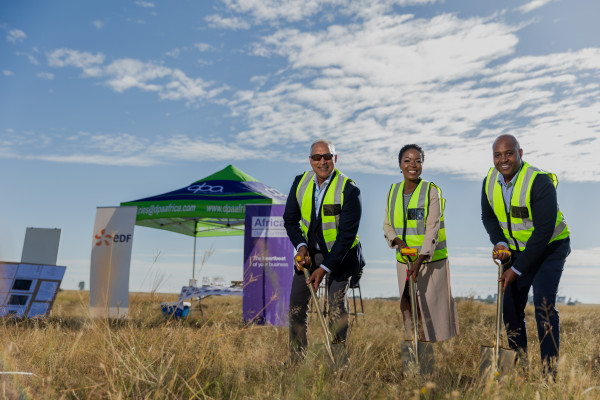
Africa Data Centres and DPA Southern Africa (SA) breaks ground on solar farm in Free State

Location: Business
Africa Data Centres

Africa Data Centres (www.AfricaDataCentres.com/) and DPA SA have broken ground on their solar farm in the Free State; The first phase will see power getting wheeled to its CPT1 facility; The second phase will see power being supplied to JHB1 and JHB2 once wheeling agreements with relevant municipalities conclude.

Africa Data Centres, a business of the Cassava Technologies group, is pleased to announce that it has broken ground on the construction of a solar farm in the Free State in collaboration with DPA Southern Africa.

This announcement forms a crucial component of the 20-year Power Purchase Agreement (PPA) inked in March 2023 with DPA Southern Africa a joint company of the French utility, EDF. The objective of the Free State farm is to furnish renewable energy to Africa Data Centres sites, commencing with its cutting-edge, carrier-neutral data centre in Cape Town, the CPT1 facility.

According to Cassava Technologies' President and Group CEO, Hardy Pemhiwa, “This initiative positions Africa Data Centres as a trailblaser in the data centre industry in responding to South Africa's energy crisis through sustainable technology solutions. This is in line with a broader industry shift towards innovative, eco-friendly practices. The strategic use of solar power showcases technology's role in pioneering solutions for energy challenges and environmental sustainability”.

Furthermore, Tesh Durvasula, CEO of Africa Data Centres, underscores the commitment to powering all data centres with clean, renewable energy sources. "Today's announcement represents a significant stride in our initiative to energise South African data centres sustainably, advancing our objective of achieving carbon neutrality. The first phase involves constructing the 12MW solar infrastructure to power our Cape Town data centre, with subsequent phases extending to our Johannesburg data centres.”

Nawfal El Fadil, the CEO of DPA SA, states, "Africa Data Centres, as a pioneer in the data centre industry, has consistently demonstrated a strong commitment to sustainability, aligning seamlessly with our company's values. We are thrilled and honoured to contribute to Africa Data Centres' mission of achieving carbon neutrality, beginning with the establishment of this solar power plant in the Free State to serve their data centre in Cape Town. At the heart of our collaboration lies a shared understanding that the path to carbon neutrality extends beyond infrastructure—it demands innovation, expertise, and collective determination to overcome challenges. DPA SA, backed by EDF's legacy, brings a wealth of experience and a proven track record in delivering high-quality, sustainable energy solutions to this partnership."

"We take immense pride in supporting Africa Data Centres on this journey, being among the pioneers in launching a wheeling solar plant, thereby paving the way for a greener, more sustainable future in South Africa," adds Nawfal El Fadil.

This project is a key element of Africa Data Centres' ambitious plans to emerge as the most sustainable colocation provider on the continent. "Beyond procuring renewable energy, our commitment to an efficiency strategy has earned us the internationally recognised ISO50001 certification for the effective operation of our data centres," Durvasula elaborates.

"Data centres worldwide face scrutiny for their reliance on grid power and renewables, and Africa is no exception. Africa Data Centres is actively addressing this issue by generating renewable energy, alleviating strain on the local grid. Additionally, our sustainability objectives encompass achieving net-zero status at all facilities, making this project another significant stride towards reaching that goal," concludes Durvasula.

Distributed by APO Group on behalf of Africa Data Centres.

Social Media Platforms:
Twitter: https://apo-opa.co/4cKzd4r
LinkedIn: https://apo-opa.co/446fpol
Facebook: https://apo-opa.co/3TSkVGa 
YouTube: https://apo-opa.co/3NcwWnp

About Africa Data Centres:
Africa Data Centres is your trusted partner for rapid and secure data centre services and interconnections across the African continent.

Africa Data Centres is Africa's largest network of interconnected, carrier and cloud-neutral data centre facilities. Bringing international experts to the pan-African market. We are your trusted partner for rapid and secure data centre services and interconnections across the African continent. Strategically located, our world-class facilities provide a home for all your business-critical data. Proudly African, we are dedicated to being the heart that beats your business.

Africa Data Centres' aim is to unveil various business opportunities and to develop a strategic network of partnerships. This will further strengthen Africa Data Centres' superiority in providing our customers with the highest standard of interconnected, carrier and cloud-neutral data centre facilities throughout Africa. www.AfricaDataCentres.com/

About Cassava Technologies:
Cassava Technologies is a technology leader providing a vertically integrated ecosystem of digital services and infrastructure enabling digital transformation. Launched in 2021, the company was born out of a need to create a digitally connected future that leaves no African behind.  Through its subsidiaries, namely, Liquid Intelligent Technologies, Liquid Dataport, Liquid C2, Africa Data Centres, Distributed Power Africa, Sasai Fintech and Telrad, Cassava is a multinational technology company that has operations across key growth markets like Africa, the Middle East, Latin America and the United States of America. Cassava provides its customers in 94 countries with offerings that will help them grow, transform, and expand their operations. https://apo-opa.co/3U7rdmB   

About DPA Southern Africa:
DPA Southern Africa, a joint company of the French utility EDF and Distributed Power Africa, is at the forefront of the Southern African renewable energy market for businesses, laying the foundation for a sustainable and environmentally conscious future in South Africa and beyond.

Our commitment is to assist companies in achieving carbon neutrality and cost savings simultaneously by providing tailor-made renewable energy solutions that meet the specific needs of businesses. Our comprehensive offerings include on-site, wheeling, and storage solutions, offering businesses a holistic approach to sustainable energy management.

Media files
Africa Data Centres
Download logo
Read moreAfrica Data Centres and DPA Southern Africa (SA) breaks ground on solar farm in Free State
8 April 2024

Children have to use an open field as a toilet at Mthatha primary school

Location: News

Zwelinzima Primary has 200 learners and 13 staff but no toilets

Read moreChildren have to use an open field as a toilet at Mthatha primary school
7 April 2024

COGTA Minister to release details of disaster funds disbursed to municipalities

Location: News

COGTA Minister to release details of disaster funds disbursed to municipalities

Cooperative Governance and Traditional Affairs (COGTA) Minister Thembi Nkadimeng will on Tuesday release the details of funds disbursed to municipalities and provinces for disaster interventions.

This follows the classification and declaration of particular occurrences as national disasters, in terms of Section 23(3) of the Disaster Management Act, 2002 (Act 57 of 2002), by the Minister of COGTA.

This disbursement of funds is in accordance with section 25(3)(a) of the Division of Revenue Act, 2023 (Act No. 5 of 2023), as amended by the Division of Revenue Amendment Act, 2023 (Act No. 24 of 2023).

Following the release of the details of the funds, Nkadimeng, joined by the KwaZulu-Natal MEC of COGTA, Bongiwe Sithole-Moloi, will also hand over the rectification of sewer reticulation and construction of the Wastewater Treatment Works in Ward 5 of the Abaqulusi Local Municipality in the Zululand District.

The life-changing project was constructed by the Municipal Infrastructure Support Agent (MISA), which is the implementing agent of the Department of Cooperative Governance.

Prior to the implementation of this project, communities in Bhokwe village and hostels, grappled with an outdated and dilapidated waterborne sewer system, initially provide by Anglo-American coal mine over 50 years ago. 

Characterised by frequent bursts, blockages and overflowing manholes, the aging infrastructure posed challenges to the residents' health and well-being.

Added to this, other areas within Bhokwe settlement relied on VIP [ventilated improved pit] toilets, further highlighting the disparity in sanitation infrastructure.

This project is estimated to be benefitting a population of 1 715 individuals across 245 households by ensuring that the community and other stakeholders in Bhokwe have access to, and are using an adequate and reliable functioning sewer system. – SAnews.gov.za

Edwin
Sun, 04/07/2024 - 13:50

461 views
Read moreCOGTA Minister to release details of disaster funds disbursed to municipalities
7 April 2024

Diversifying water resource mix essential for supply security, says Mahlobo

Location: News

Diversifying water resource mix essential for supply security, says Mahlobo

Water and Sanitation Deputy Minister David Mahlobo has emphasised the importance of diversifying South Africa's water resource mix for water security.

The Deputy Minister was addressing the Inaugural Built Environment Indaba hosted by the Black Business Council in the Built Environment recently, which was held recently in Gauteng.

The Indaba was aimed at promoting collaboration, procurement and skills development in the industry.

Mahlobo confirmed that in terms of water security, the supply of raw water is currently in balance with the existing demand at national level.

Additionally, government has recognised the localised deficit, acknowledging that 98% of the available water is already allocated. Mahlobo said to ensure water security in the future, it is crucial to broaden the water resource mix through sustainable use of groundwater, desalination of seawater (even though technology remains expensive), water reuse from treated wastewater systems, and water reclamation.

While supply-side measures are essential, Mahlobo emphasised the need for water conservation and demand management.

The Deputy Minister warned that water availability in South Africa could decline rapidly due to factors such as economic growth, population growth, urbanisation, inefficient water use, degradation of wetlands, and the impact of climate change.

He also highlighted the financial challenges faced by municipalities, noting that they owe R19 billion to water boards.

According to the Deputy Minister, one of the main issues plaguing the water sector is the poor performance and adherence to standard operating procedures for drinking water treatment and wastewater treatment.

Infrastructure is often left in poor condition due to a lack of maintenance, with municipalities failing to hire qualified personnel to oversee these essential processes.

Additionally, weak billing and revenue collection, as well as inadequate budget prioritisation for maintenance and operations by municipal councils, further exacerbate the challenges faced by the sector.

In terms of support to municipalities, the Department of Water and Sanitation (DWS) and water boards are supporting many municipalities to implement improved plans that are agreed to by the Ministry and municipal leadership.

DWS, the Department of Cooperative Governance and Traditional Affairs (COGTA), Municipal Infrastructure Support Agency (MISA), Department of Human Settlements, and National Treasury allocate water and sanitation infrastructure grants worth more than R20 billion to municipalities per annum, and provide technical and engineering support and assistance, capacity building and training and financial management advice and support.

Water projects

Mahlobo highlighted several key water sector projects that are currently in implementation.

These projects aim to address water shortages and improve access to water in various regions across the country.

The R40 billion phase 2 of the Lesotho Highlands Water Project (LHWP2) is one of the major projects that is currently in progress.

This project is aimed at delivering approximately 470 million m3 per annum in addition to the 780 million m3 per year which the IVRS currently receives from LHWP1 and will increase the availability of raw water for Gauteng and surrounding areas, which have been experiencing water shortages.

Another project is the R26 billion uMkhomazi Water Project in KwaZulu-Natal. This project was facing an affordability deadlock, but Mahlobo announced that it had been resolved, and the project is now moving forward.

The R4 billion phase 2A of the Mokolo Crocodile Water Augment Project (MCWAP) in the North West and Limpopo has also been completed, with funding being raised for phase 2.

In addition to these projects, Mahlobo also highlighted the R12 billion Olifants River Water Resource Development project in Limpopo, the R10 billion Vaal Gamagara project in the Northern Cape, the R8 Billion Mzimvubu Water Project in the Eastern Cape, the R1.2 billion Berg River Voelvlei Augmentation Scheme in the Western Cape and the R4 billion raising of the Clanwilliam Dam in the Western Cape.

All these projects are aimed at diversifying the water resource mix to ensure water security for South Africa.

Mahlobo assured that South Africa will not run dry by 2030, but there will be challenges if there is no change in the way of doing things. – SAnews.gov.za

Edwin
Sun, 04/07/2024 - 14:16

129 views
Read moreDiversifying water resource mix essential for supply security, says Mahlobo
7 April 2024

Recruitment process for new vice president of NDB underway

Location: News

Recruitment process for new vice president of NDB underway

The process of identifying a replacement for Leslie Maasdorp, current Vice President of the New Development Bank (NDB) has started.

Cabinet will announce the new Vice President to the NDB after the recruitment process has been completed.

Maasdorp will at the end of his nine years of service at the NDB step down in July 2024.

In July 2015, Cabinet appointed Maasdorp as Vice President to represent South Africa at the New Development Bank in Shanghai.

Maasdorp was then appointed by the Bank to the role of Chief Financial Officer and was a member of the founding management team of the institution, under the leadership of Mr. KV Kamath, the first NDB President.

At the expiry of his contract in 2021, Maasdorp was reappointed by Cabinet for a second term of three years.

“On behalf of my colleagues, I wish to express our sincere gratitude to Maasdorp for the distinction with which he has served South Africa in this role. As CFO, he led the treasury and capital markets activities of the Bank, having established the global and domestic bond programs for the institution, raising more than USD 15 billion during his tenure.

“He also led the process of obtaining the inaugural credit rating of the Bank in 2018, which established the institution as a leading new emerging markets focused multilateral development bank. I want to wish him well in his future endeavours,” said Finance Minister Enoch Godongwana.

Maasdorp said it has been a distinct pleasure and honour to serve South Africa over the past nine years as Vice President and CFO of the NDB.

"I wish to thank Minister Godongwana, his predecessors during these nine years, as well as the Cabinet colleagues for having afforded me this incredible opportunity to be part of a historic mission to create a new global financial institution from scratch.

“Over this period, the NDB approved over USD 6 billion of loans to South Africa, contributing significantly to the rollout of sustainable infrastructure, including in rail, ports, power, roads and water projects,” said Maasdorp when commenting on his imminent departure in July. – SAnews.gov.za

Edwin
Sun, 04/07/2024 - 13:29

25 views
Read moreRecruitment process for new vice president of NDB underway
5 April 2024

Elections 2024: What the major political parties say about public transport

Location: News

We sent questions to the ANC, DA, EFF, IFP, FF Plus, ActionSA, PA, MK Party and RISE Mzansi

Read moreElections 2024: What the major political parties say about public transport
5 April 2024

Newly launched terminal a symbol of resilience

Location: News

Newly launched terminal a symbol of resilience

President Cyril Ramaphosa has hailed the newly opened Newlyn Park Bayhead Rail Terminal as a symbol of South Africa’s recovery following the challenging COVID-19 pandemic and the country’s resilience in the face of challenges.

The President launched the terminal in Durban on Thursday.

“The completion and launch of the Newlyn Park Bayhead Rail Terminal project at the Port of Durban is not only a much-needed boost to South Africa’s logistics infrastructure network. This terminal is also a symbol of recovery and resilience. For the city of Durban, for the eThekwini Metro, for KwaZulu-Natal, and for the country at large,” he said.

President Ramaphosa reflected on the “worst public health disaster in modern times in the form of COVID-19” which forced South Africa and the entire globe into lockdown to contain the spread of the virus.

“As we were just emerging from the pandemic’s shadow in 2021, parts of our country, notably KwaZulu-Natal, were the scenes of deadly unrest and an unleashing of violence, arson and mayhem that caused loss of life and cost our economy approximately R50 billion. Then, just a year later, in 2022, KwaZulu-Natal was one of the provinces that experienced devastating floods.

“We all recall seeing the images of the damage to the Port of Durban at the time…especially in and around Bayhead Road, we saw much damage. We know the extensive work and effort it took to restore operations and to get the port and its associated infrastructure up and running again.

“These were all significant setbacks…that could have knocked us down, that could have prevented us from moving forward and that could have made us to give up.

“We can all be immensely proud of what has been achieved here, and of the persevering, pioneering South African spirit that this new terminal embodies. It also illustrates what can be achieved when government and business work together,” the President said.

Fruition

The Newlyn Park Bayhead Rail Terminal is a fruition of a commitment made during the South African Investment Conference (SAIC) in 2019.

Reflecting on the investment commitment Newlyn has made into South Africa, President Ramaphosa recalled that at SAIC 2023, Newlyn further pledged R4 billion into the “development of a near-zero dust emission manganese back- of-port storage and handling facility project at Coega, as well as in a similar facility for iron ore at Saldanha Bay”.

The President emphasised that the terminal represents a “good model” of what can be developed when government and private sector work together.

Partnership

“The terminal has been built on land leased from Transnet and the partnership with Newlyn will assist in improving operational efficiency right across the board. This precinct will address some of the challenges we have been experiencing in the logistics, infrastructure and network industries that have had a negative impact on economic growth and the creation of jobs.

“In order for this rail terminal project to deliver full benefits to South Africa for the purpose that it was designed, it has to have trains and slots to be made available to clients. This will lead to a significant increase in revenue for Transnet and Natcor Corridor through the migration of cargo from road to rail,” he said.

The project has injected some R 3.4 billion in investment and created some 4 013 direct construction jobs.

“More than 1000 employees are currently employed full time in this facility and this number is expected to grow as the facility handles more cargo. Much of the material that has gone into [building the terminal] has been sourced locally and many of those who participated in setting this facility up were also local providers.

“Upgrading local port infrastructure is critical to the success of the Africa Continental Free Trade Area and this new terminal will facilitate the swift movement of goods from South Africa to the rest of the continent and, indeed, beyond,” President Ramaphosa said. – SAnews.gov.za


NeoB
Thu, 04/04/2024 - 14:54

605 views
Read moreNewly launched terminal a symbol of resilience
5 April 2024

Government accelerates programme to connect citizens to internet

Location: News

Government accelerates programme to connect citizens to internet

Government intends to connect 1.5 million households in rural and township areas by the end of the year to the internet, enabled by Wi-Fi hotspots.

Addressing a media briefing in Pretoria, the Minister of Communications and Digital Technologies, Mondli Gungubele, said government plans to connect 5.5 million households in rural and township areas to Wi-Fi hotspots in the next three to four years.

“We are dedicated to bridging the digital divide by providing Wi-Fi access to communities and ensuring universal access to the internet. This year, we have connected over 740 000 households to the internet, enabled by the installation of 4 250 Wi-Fi hotspots.

“This work involved the participation of 76 Internet Service Providers, which are Small, Medium and Micro Enterprises (SMMEs), and resulted in 4 500 direct jobs, and many more indirect jobs and opportunities downstream,” Gungubele said on Thursday.

He said government has made strides in reducing the cost of data.

“Simply put, where our flagship programme, SA Connect, visits, villages are left connected to the internet at an incredibly affordable rate of R5 a day per 1 Gig, and as little as R250 a month on an unlimited package.

“Beyond this infrastructure investment in communities at large, we have also focused our attention on enabling learners in rural schools to be connected to the internet and are equipped with skills to ready them for the future through State Information Technology Agency (SITA) Cyber Labs – a privilege previously reserved for urban schools.

“We have so far launched these smart schools in KwaZulu-Natal, Limpopo, Eastern Cape, the North West and Northern Cape provinces, with more yet to be established in other parts of the country. In addition to the computer laboratory and equipment that comes with it, learners receive skills training in robotics, coding and digital skills,” Gungubele said.

National Digital Skills Forum

In preparing young people for digital transformation and the digital economy, the Department of Communications and Digital Technologies recently launched the national Digital Skills Forum (DSF), which brings together the necessary expertise, financial resources and institutional support as well as to track the performance of the National Digital Skills Programme.

The forum will also provide guidance and oversight on implementation of the National Digital Skills Programme.

“[This] is a ‘Digital Skills Massification Drive’ that empowers youth in particular and offers them an opportunity to become Digital Skills Ambassadors to train their communities in digital skills.

“The programme has been successfully rolled out in the North West, KwaZulu-Natal, Limpopo and Free State provinces. It is currently underway in the Eastern Cape province and is intended to be rolled out to all provinces in South Africa. To date, over 20 000 citizens in these provinces have been successfully trained by ambassadors on basic digital literacy concepts,” the Minister said.

Digitisation of government services

Through the State Information Technology Agency (SITA), the department has developed a National e-Government Portal (www.eservices.gov.za), with 92 digitised government services.

This past year, the digitised services has attracted the utilization of over 899 394 logins, with over 1.4 million registered users.

“In the 2024/25 Financial Year, SITA will ensure 98% core network availability for 7 570 connected government sites cutting across national and provincial departments.

“Complementing the SA Connect programme, SITA will launch a National Broadband Project worth at least R6 billion, that will be awarded per region and ensure that government reduces the cost and duplication of connectivity infrastructure from municipalities up to national government level.

“This project will also ensure that designated groups such as enterprises owned by women and youth are empowered with at least forty percent (40%) value of this project, whilst creating opportunities for innovative locally developed solutions to find traction in our market,” the Minister said.

Work has begun to improve key value chains and processes of SITA towards meeting efficiency expectations in building a resilient modern digital environment for an evolving South Africa.

“To this end, a special directed intervention in the form of, the SITA Ministerial Task Team to fast-track procurement backlogs has commenced work. SITA is in the process of meeting all clusters and provinces to find resolutions to all their urgent Information and communications technology (ICT) challenges,” he said. – SAnews.gov.za

nosihle
Fri, 04/05/2024 - 10:22

374 views
Read moreGovernment accelerates programme to connect citizens to internet
5 April 2024

Rugby’s Pathway to Africa’s Future

Location: Sport
Rugby Africa

By President of Rugby Africa, Herbert Mensah (www.RugbyAfrique.com).

Saturday April 6 marks International Day of Sport for Development and Peace. As we reflect on this day, it is crucial to explore the potential impact of sport in Africa. The African Development Bank projects that Africa is set to grow to 2.4 billion people by 2050. Therefore, prioritizing an investment in human potential is crucial, as it will define the future of the continent. Africa can harness the power of sport to champion human potential, serving as a tool to drive the African continent towards greatness for generations to come.

Sport serves as a universal language, through popularity it can transcend cultural, social, economic and political barriers. This year's theme: ‘Sport for the promotion of peaceful and inclusive societies' holds particular relevance in Africa. The impact of sport has the power to unite individuals, bringing joy to participants and spectators alike. Yet the true power of sport, lies in its ability to transform societies. South Africa's Springboks, fourth time Rugby World Champions, are a testament of the unifying influence of Rugby. During the 2023 Rugby World Cup, the entire African continent united in support of South Africa on the global stage, highlighting a collective passion to celebrate and develop talent emerging from the continent itself. Whether on the field or pitch, the power of sports is visible. It fuels economic development through the flourishing sports tourism industry. It empowers youth by instilling positive values. It champions gender equality, breaking down barriers and eradicating stigma. It fosters social inclusion, promoting tolerance and easing tensions in divisive environments.

The African Development Bank reports that Africa will remain the world youngest region, with a median age of 25. An investment in the youth is crucial for the sustainability of Africa, as a prosperous Africa paves the way to peace. Within the realm of sports, Rugby emerges as unique pathway to empower the youth. Anchored in values of teamwork, unity, integrity, passion, solidarity and discipline, Rugby serves as cornerstones for personal and professional development with enduring impact. Ultimately, early exposure to sports will prepare the youth of Africa to become leaders and ambassadors of positive change in their communities. It is our duty to equip the next generation to not only navigate the challenges of uncertainty and competitiveness but to thrive amidst them, fostering a brighter future for Africa and inspire generations to come.

In a society marked by divisions, sport cultivates an inclusive landscape. The passion for the games takes priority, differences are not seen as obstacles, but rather as opportunities for greatness. Rugby's embrace of diversity, turning differences into strengths has the powerful impact of breaking down the societal norms that women are often subjected to. For example, the South African women's national rugby team, where players exhibit a remarkable 33 cm height differential from the shortest to the tallest player, and a significant 61 kg weight gap separates the lightest from the heaviest members. When compared to the realm of football, the contrast becomes even starker. The South African women's national football team boasts a considerably more consistent size and shape among its players, with a mere 12 cm height range and a modest 27 kg weight variance. This inclusivity cultivates a sense of unity and belonging that transcends borders and celebrates the diversity of humans, nurturing a sense of self-worth, fostering long term empowerment, while creating lifelong friendships.

Beyond social impact, sport can function as a powerful catalyst for economic growth and international dialogue. Through strategic investments in sports infrastructure and competition frameworks, we forge the way for economic opportunities, generating employment and awakening local economies in host nations. Sports tourism emerges as a magnet, drawing travellers from around the globe with the economic purchasing power to experience Africa's diverse and rich cultural heritage. It acts as a unifying force, fostering connections among people of different backgrounds and nationalities. As enthusiasm for sports grows, it not only attracts local spectators but ultimately attracting attention on regional and national stages. This shared love for sports becomes a platform for cultural exchange, promoting understanding and appreciation for diverse perspectives. In this way, sport serves as more than entertainment; it is bridge that connects people and creates ties to the community, fostering unity and collaboration.

Aligning with the pursuit of the United Nation's Sustainable Development Goals, Africa has the opportunity to tap into the transformative power of sports, acting as a key to unlock the full potential of the continent. This can only be achieved if governments take local action and assume accountability to harness the full potential of Rugby in reducing inequality, empowering the next generation and igniting a new age of inclusivity. We must collectively drive change, recognizing that investing in Africa's future is our shared responsibility. This calls for collaboration among all stakeholders, with a long-term commitment to funding, policy development, infrastructure enhancement and the advancement of competition structures. On this International Day of Sport for Development and Peace, let us not only embrace the power of sports to reshape our societies but let us actively engage on unleashing it. Sport possesses the remarkable ability to positively impact our world, a source of hope, uniting people in ways that few other forces can achieve.

Distributed by APO Group on behalf of Rugby Africa.

Media contact:
Nicole Vervelde
Communications Advisor to the President of Rugby Africa
rugby@apo-opa.com

About Rugby Africa:
Rugby Africa (www.RugbyAfrique.com) is the governing body of rugby in Africa and one of the regional associations under World Rugby. It unites all African countries that play rugby union, rugby sevens, and women's rugby. Rugby Africa organizes various competitions, including the qualifying tournaments for the Rugby World Cup and the Africa Sevens, a qualifying competition for the Olympic Games. With 39 member unions, Rugby Africa is dedicated to promoting and developing rugby across the continent. World Rugby highlighted Ghana, Nigeria and Zambia as three of the six emerging nations experiencing strong growth in rugby.

Media files
Rugby Africa
Download logo
Read moreRugby’s Pathway to Africa’s Future
4 April 2024

Pratley’s Pratliperl® ensures energy efficiency in the fight against global warming and climate change

Location: MyPR

Pratliperl® has been developed by Pratley to promote sustainability in the construction industry. “We have always been committed to sustainability and energy efficiency, especially in terms of infrastructure development and energy savings,” comments Pratley Marketing Director Eldon Kruger. Pratliperl® is a naturally occurring mineral aggregate for plaster and screeds that can assist contractors and developers …

Read morePratley’s Pratliperl® ensures energy efficiency in the fight against global warming and climate change
4 April 2024

South African Agency Shakes Up PR Landscape: ‘Pay What You Can’ Model Empowers Startups

Location: MyPR

Johannesburg, South Africa, 2 April 2023 – A story of resilience and reinvention takes centre stage as South African communications powerhouse, JT Communication Solutions, celebrates its 20th anniversary on April 1st, 2024. Founded by Vanessa Perumal, a resilient business trailblazer and cancer survivor who defied the odds, JT Comms remains the first Black woman-owned communications …

Read moreSouth African Agency Shakes Up PR Landscape: ‘Pay What You Can’ Model Empowers Startups
3 April 2024

PRASA announces return of five Metrorail services

Location: News

PRASA announces return of five Metrorail services

The Passenger Rail Agency of South Africa (PRASA) has successfully restored five crucial Metrorail services across Gauteng, KwaZulu-Natal and the Western Cape.

The services were restored as of the end of March 2024. They include Cape Town to Stellenbosch (Western Cape); Merebank to Chatsglen (KwaZulu-Natal); Johannesburg to Florida (Gauteng); Johannesburg to Nancefield (Gauteng) and Germiston to Elsburg (Gauteng).

“We have successfully brought 31 of our 40 lines back into partial operation and are focused on achieving full operational status for these corridors, with work to extend the abovementioned lines continuing. This milestone demonstrates our commitment to revitalising passenger rail services, providing an efficient and cost-effective public transport option for South Africans.

"Significant progress is being made on the Central Line, with ongoing efforts to rehabilitate rail infrastructure from Phillippi to Nolungile and onwards to Chris Hani. This work has been facilitated by the temporary relocation of 891 households from the Phillippi station area, enabling us to proceed with necessary recovery work,” PRASA said on Wednesday.

This work builds on the recovery of the Cape Town to Nyanga services, which marked an important milestone on what is one of the most important passenger rail routes in the country.

“Recognizing the growing demand for our services, we are actively working to repair vandalised signalling equipment. These repairs are essential not only for the safe operation of our trains but also to increase the frequency of our services to meet our commuters' needs.

“The recovery of these lines has been made possible by dedicated staff across various regions, who have spared no effort and commitment in reaching these achievements, despite facing considerable challenges. We remain steadfast in our mission to restore passenger rail as the backbone of public transport in South Africa,” the agency said. – SAnews.gov.za

nosihle
Wed, 04/03/2024 - 13:31

661 views
Read morePRASA announces return of five Metrorail services
3 April 2024

Announcing the Zimbabwe Investment Summit – 2nd and 3rd May, 2024

Location: MyPR

On 2nd and 3rd May, 2024 – Zimbabwe Minister of Finance, Economic Development and Investment Promotion, Hon. Prof. Mthuli Ncube and Mr Tafadzwa Chinamo, the CEO of Zimbabwe Investment Development Agency (ZIDA) will host an investment summit at the Radisson Hotel, Kempton Park, near OR Tambo International. The summit theme “People you can invest in” …

Read moreAnnouncing the Zimbabwe Investment Summit – 2nd and 3rd May, 2024
  • Previous
  • Page 1
  • Interim pages omitted …
  • Page 80
  • Page 81
  • Page 82
  • Page 83
  • Page 84
  • Interim pages omitted …
  • Page 108
  • Next

Copyright © 2026 · MyZA · All Rights Reserved · Powered by Stratlec Online