• Skip to main content
  • Skip to header right navigation
  • Skip to after header navigation
  • Skip to site footer
MyZA

MyZA

News, Directory, Events and Other Stuff

  • Social Media
  • Sport
  • World News
  • Home
  • Submit News
  • Directory
  • Events
  • Stratlec
  • TFSA
  • News
    • APO
    • Today’s Sport News
    • Todays Social Media and Tech Headlines
    • Today’s World News
    • Today’s SA Financial News
  • Contact
You are here: Home / Archives for infrastructure

infrastructure

23 February 2024

Protection of water resources key; private sector must consider pitching in

Location: MyPR

Johannesburg: Business must consider pitching in to ensure community water security, said Malcolm Curror, Chief Executive of United Manganese of Kalahari (UMK). The company said water preservation and equitable distribution is critical in the near, medium and long term. Access to water and sanitation is a United Nations Sustainable Development Goal. Large metros, like Johannesburg, …
Read moreProtection of water resources key; private sector must consider pitching in
23 February 2024

SIU launches maladministration probes in KZN and Free State

Location: News

SIU launches maladministration probes in KZN and Free State

The Special Investigating Unit (SIU) has been authorised – through Presidential proclamation – to launch a probe into allegations of serious maladministration in the affairs of the Free State Department of Public Works and Infrastructure and Human Settlements, the Free State Provincial Legislature and the KwaZulu-Natal Department of Transport.

The SIU said in the Free State investigation, the unit will probe the procurement of, or contracting for goods and services in relation to the Ramkraal Project by the provincial legislature.

“The SIU will also investigate payments made in a manner that was not fair, competitive, transparent, equitable or cost-effective; or contrary to applicable legislation, and any related unauthorised, irregular, or fruitless and wasteful expenditure incurred by the State.

“In addition to investigating maladministration, malpractice, corruption and fraud, the SIU will identify system failures and make systematic recommendations to improve measures to prevent future losses,” the unit said.

In relation to the provincial KwaZulu-Natal Department of Transport, the investigation will focus on the construction of the Mngwenya River, Umlalazi River, Mhlathuze and Phethu River bridges.

“The proclamation covers allegations of unlawful and improper conduct that took place between 01 June 2016 and 23 February 2024, the date of the publication of the Proclamation or before 01 June 2016 and after the date of the proclamation that are relevant to, connected with, incidental to the matters or involves the same persons, entities or contracts investigated,” the SIU said.

The corruption busting unit said the scope of the investigation will cover any allegations of:

  • serious maladministration in connection with the affairs of the State institutions being investigated.
  • improper or unlawful conduct by employees of the state institutions.
  • unlawful appropriation or expenditure of public money or property.
  • unlawful, irregular, or unapproved acquisitive act, transaction, measure, or practice having a bearing upon State property.
  • intentional or negligent loss of public money or damage to public property.
  • offence referred to in Part 1 to 4, of Chapter 2 of the Prevention and Combating of Corrupt Activities Act, 2004, and which offences were committed in connection with the affairs of the state institutions.
  • unlawful or improper conduct by any person which has caused or may cause serious harm to the interests of the public.

“In line with the Special Investigating Units and Special Tribunals Act 74 of 1996, the SIU will refer any evidence pointing to criminal conduct it uncovers during its investigations to the National Prosecuting Authority for further action.

“The SIU is empowered by the SIU Act to institute civil action in the High Court or a Special Tribunal in its name to correct any wrongdoing uncovered during its investigation caused by acts of corruption, fraud, or maladministration,” the SIU said. – SAnews.gov.za


NeoB
Fri, 02/23/2024 - 13:25

117 views
Read moreSIU launches maladministration probes in KZN and Free State
23 February 2024

State-funded bursary beneficiary vows to advance service delivery

Location: News

State-funded bursary beneficiary vows to advance service delivery

A 29-year-old youngster from Cape Town considers himself fortunate after being awarded a government-funded bursary to pursue further studies. 

Lonwabo Mfubesi, who graduated with a BSc Degree in Construction Management from Nelson Mandela University, uses his expertise to serve his country as an employee of the National Department of Public Works and Infrastructure.

He was one of the lucky students who was awarded a bursary during his first year which covered his full tuition fees, stationery, food, an allowance and accommodation until completion of his degree. 

“The assistance I received from government made me focus more on my studies and I became a top student as a result,” Mfubesi said, beaming as he recalled his good fortune.

He said having a scholarship meant he was not a burden to his mother who raised him alone.

“It was a relief to be awarded a bursary that covered everything. There was no way my mom could have afforded to pay for my studies,” he told SAnews.gov.za in an interview. 

After finishing university in 2016, Mfubesi secured an internship in the same department where he now works as a Construction Project Manager.

“If it wasn’t for the National Department of Public Works and Infrastructure, I don’t know where I’d be. I’m truly grateful for the opportunity.” 

As part of his work, Mfubesi is responsible for starting and managing construction projects, overseeing procurement processes, and ensuring adherence to quality standards.

The Construction Project Manager has been involved in various projects of different sizes, including the construction of magistrate’s courts and installing facilities for people with disabilities.

Mfubesi is close to attaining the title of Professional Project Manager and credits his employer for making it possible.

“Those opportunities were availed by the Department of Public Works and Infrastructure through the experience, interactions and a whole lot of things,” he explained. 

Mfubesi said he resonated with President Cyril Ramaphosa’s State of the Nation Address (SONA) when the latter described the story of Tintswalo.

The President had said that the story of the past 30 years of South Africa’s democracy can be best told through the life of a young girl called Tintswalo born at the dawn of freedom in 1994.

Mfubesi has no doubt that he lives in a better country than his mother did in the past, just like Tintswalo.

“I confidently consider myself as a Tintswalo – democracy’s child. That is why I will always be grateful and support the government. I will always be a citizen of this country and a public servant and will always assist to improve service delivery,” he said with pride. – SAnews.gov.za

Janine
Fri, 02/23/2024 - 11:33

260 views
Read moreState-funded bursary beneficiary vows to advance service delivery
23 February 2024

Showing up for SA

Location: News

Showing up for SA

Even if one does not usually pay attention on a daily basis to the ins and outs of government and the political landscape in the country; the flurry of activities within this domain  over the past few weeks could hardly be missed.

Invited into our living rooms have been the country’s number one citizen President Cyril Ramaphosa delivering his State of the Nation Address (SoNA) on our TVs; various political parties responding to that Address, and then of course the President again in his reply to those debates. 

I should stop here to remind all that we will be seeing all of this again in a few months time, after the National General and Provincial Elections, as in an election year, these Parliamentary proceedings happen twice. Heads up to make plans for those TV snacks in advance!

With all of us entitled to our own views, there have been - as it should be in a robust democracy such as ours - varied responses to the President’s address which sets out deliverables for the year ahead while also setting out government’s key policy objectives. After all, the state of the country does concern each and every one of us.

While the political parties represented in Parliament responded to the SoNA on the national stage, citizens have probably expressed their opinions to each other on the train-ride or minibus taxi to work or at the dinner table.  

Others have done so on various social media platforms and in many cases expressing their frustration with the pace of service delivery.

The sixth administration which came to the helm in May 2019, has not had it easy. It is an administration that had to deal not only with the COVID-19 pandemic and its effects on everyday life, but also challenges SA had been facing prior to the arrival of the pandemic - such as poverty and unemployment.

However, in delivering the SoNA, and in reflecting on the last thirty years of our country’s democracy, the President said that perhaps “the greatest damage was caused during the era of state capture.”

This as the effects of state capture continue to be felt across society, “from the shortage of freight locomotives to crumpling public services; from the poor performance of our power stations to failed development projects.”

We must admit that it can’t be easy to turn the fortunes of the country around, especially one that comes from a history of inequality that is still a part of our social fabric today.

I’m not suggesting that we ought to blame the past for all our current challenges. However, as in most cases in life, the past does have a bearing on the present. No  matter how hard one tries, it cannot be ignored.

The past which excluded the majority, reminds government, said the President of the “responsibilities that freedom has placed on our shoulders to forge ahead to realise for all South Africans the promise of a better life”.

While the reference to Tintswalo, the child of democracy is in some quarters being criticised, exacerbated by challenges such as corruption, Tintswalo is no figment of the imagination.

In the eyes of some members of the public, the story of Tintswalo is one of young people unable to find work, unable to complete their studies due to outstanding fees or being held under the thumb of gender-based violence, amongst others.

unquestionably, the reality is that the Ghost of Christmas Past, masquerading itself in the form of poverty and unemployment amongst others, continues to hamper government’s efforts.

However, what remains is that the Tintswalo President Ramaphosa spoke of, is real.

Born in 1994, she grew up in a society governed by a constitution rooted in equality, the rule of law, and affirmation of the inherent dignity of every citizen.

She grew up in a household provided with basic water and electricity, in a house where her parents were likely to have lived without electricity before 1994.

While the Tintswalo of today faces a world different to that of the past, government is committed to bettering the lives of its people.

In the SoNA debate reply, the President noted that despite the contributions made at the debate, “no speaker has been able to refute the fundamental reality that the lives of millions of South Africans have been transformed over the 30 years of freedom.”

Government has and continues to make progress in various aspects of everyday life.

This includes the introduction of the National Minimum Wage, which guarantees the minimum floor below which no worker may be paid, which was introduced for the first time in the country’s history in 2019.

The sixth administration also oversaw the successful raising of the R1.51 trillion worth of investments over the last five-year period through the South Africa Investment Conference (SAIC) that the President announced in 2018.

Held annually over the past five years, the SAIC surpassed the initial R1.2 trillion target to reach the R1.51 trillion in investment pledges.

The transformation of South African lives can be found in the Census 2022 results which among others showed that access to electricity for lighting increased from 58% to 95% between 1996 and 2022 as well as 82.4% of households having access to piped water either inside their dwelling or inside their yard. 

Additionally, by November 2023, the 20 specialised South African Police Service Economic Infrastructure Task Teams that were set up to work with business, private security and state-owned enterprises to tackle illegal mining, construction site extortion, cable theft and vandalism of economic infrastructure, had made arrests.

The teams had made over 4 000 arrests for damage of critical infrastructure, 70 arrests for extortion at construction sites and over 3 000 arrests for illegal mining.

With my popcorn in hand, watching the President deliver his address, my bite on this one was clear - the journey of a better South Africa has not been perfect, but succumbing to our challenges is not an option. As South Africans, let’s continue to show up for ourselves and for our country.  -SAnews.gov.za

Neo Semono is a Deputy Director at the Government Communication and Information System (GCIS) 

Neo
Fri, 02/23/2024 - 10:12

167 views
Read moreShowing up for SA
22 February 2024

Phaahla welcomes budget allocation

Location: News

Phaahla welcomes budget allocation

Finance Minister, Enoch Godongwana has announced an allocation of R848 billion for the Department of Health over the Medium-Term Expenditure Framework (MTEF), a move that has been welcomed by the Minister of Health, Dr Joe Phaahla.

The money includes an additional R11.6 billion to help cover last year’s wage agreement, R27.3 billion for infrastructure, and R1.4 billion for the National Health Insurance (NHI) grant over the same period.

“The allocation for the NHI is a demonstration of the government’s commitment to this policy,” Godongwana said when tabling the 2024 Budget in Parliament on Wednesday. 

READ | NHI receives in excess of R1 billion allocation

He said that activities such as upgrading health facilities and improving the quality of care are necessary to ensure that they meet the minimum accreditation criteria for contracting under NHI.

They are also, according to Godongwana, key enablers in improving the public healthcare system and should be undertaken.

“Minister of Health, Dr Joe Phaahla, welcomes the decision by the National Treasury to favourably consider that the current shrinking budget allocations have a negative impact on the effective functioning of the public health system in the country.” 

The department has announced that they also have been allocated an additional budget of R3.7 billion for the 2024/25 financial year to compensate employees in the sector.

This will help address the increase in the wage bill as well as the recruitment of more staff, including nurses and medical doctors.

Phaahla has been in consultation with Godongwana on implementing plans to strengthen the health system, including the recruitment of essential health workers like medical doctors and other professionals.

“Although the budget may not address all health service delivery challenges at once, it will go a long way to enable the department to respond to the immediate and key priority needs to strengthen the health system. These include activating vacant but unfunded essential posts,” said the Health department.

The department will soon outline plans with timelines for recruiting and appointing health workers, including recently graduated health professionals and unemployed medical doctors. – SAnews.gov.za 


Gabisile
Thu, 02/22/2024 - 10:30

392 views
Read morePhaahla welcomes budget allocation
22 February 2024

E Cape collaborates to accelerate spring water project rollout

Location: News

E Cape collaborates to accelerate spring water project rollout

The Eastern Cape Department of Rural Development and Agrarian Reform (DRDAR) has joined forces with Chris Hani District Municipality (CHDM) to accelerate access to clean drinking water in rural communities, using the cost-effective rollout of spring water projects in the province.

DRDAR MEC Nonkqubela Pieters and Chris Hani District Municipality Executive Mayor Lusanda Sizani, have officially handed over a spring water project that will benefit five villages in the Manzana administrative area, outside eNgcobo. The community has been battling to access safe drinking water.

Pieters said the programme, implemented by the department’s Rural Appropriation Technology Unit (RATU), is cost-effective because no tenders were issued for the construction of the project. However, local people are trained to do maintenance work when the need arises.

“In this programme, we do not have a middleman or spend millions on contractors for something that will not be operational. We employ and train local people and in that way, we create the opportunities for people to fend for their families,” Pieters said. 

The MEC explained that RATU trains locals workers and procures material for the construction of the project.

“In delivering these spring water protection projects, DRDAR identifies nearby hills and mountains with spring water [that is channeled]... for use by households,” Pieters said.

She said during the implementation of the Manzana project, which is set to benefit at least 1 220 villagers, about 75 people including 61 youth, seven women and seven men were employed and trained. 

Pieters said the department will use the District Development Model (DDM) to work with the municipality to ensure the smooth rollout of spring water projects, taking advantage of the more than 250 natural springs in the district.

“We are in agreement with the executive mayor that all these springs will be utilised to bring water to all the people of Chris Hani District, who do not have access to water while they have spring water in their villages. 

“They will now have access to clean drinking water because the implementation of the programme will be accelerated. We will reach more communities through this collaboration with the municipality,” Pieters said.
 
The delivery of the spring water protection projects marks the completion of infrastructure work done by the department in various rural communities, which will now have reliable access to clean drinking water and agricultural activities.

To date, Pieters said, a total of 757 water taps have been installed in 36 villages across the province, benefitting 8 781 households, including four schools, one clinic and one youth co-operative. 

“The department has [also] implemented 17 spring water protection projects that are contributing towards community development with an investment of R14 765 million benefiting 4 123 households, and creating 967 temporary jobs,” the MEC said.
 
Sizani said with the district municipality being both a Water Services Authority (WSA) and provider, water supply that is pumped with generators to serve communities is expensive compared to the department's method of drawing water, using natural springs, to communal taps and households. 

“We are a rural district, which is leaning towards the agricultural sector potential for growth, hence we are partnering with the department to bring water to the people for both consumption and agricultural activities. Through this programme, we aim to achieve agriculture development prosperity,” Sizani said.

Local farmer, Viwe Gidimisani, said when the spring water project construction started in his village, he was inspired to start his vegetable production business, banking on using water from the spring for irrigation. 

Gidimisani received a new hose pipe, wheelbarrow, spade, fork spade, hand hoe, and various vegetable seedlings from government, as part of ongoing efforts to support villagers to produce their own food. 

“This will help my enterprise to grow more, and it will give me strength to improve the productivity of my business. I am happy that water supply is always available, unlike in the past where we battled to get water," Gidimisani said.

Gidimisani is now able to grow his enterprise and owns a hawker’s stand, where he sells his spinach and cabbage produce to his neighbours and local buyers in town. – SAnews.gov.za

GabiK
Thu, 02/22/2024 - 13:35

473 views
Read moreE Cape collaborates to accelerate spring water project rollout
22 February 2024

President hails traditional leaders for flood relief efforts

Location: News

President hails traditional leaders for flood relief efforts

President Cyril Ramaphosa has praised the efforts of uMgogodla kaZulu, a group comprising the spouses of traditional leaders and women traditional leaders, for their commendable work in addressing the challenges posed by the recent floods in KwaZulu-Natal. 

Addressing the annual official opening of the National House of Traditional and Khoi-San Leaders (NHTKL) in Cape Town on Thursday, the President said it was pleasing to note that the institution of traditional and Khoi-San leadership is playing its role in assisting communities.
 
The President told the traditional and Khoi-San leaders that climate change is a growing concern in South Africa. He said the recent flooding, together with other extreme weather events, are a stark reminder that the country cannot be complacent about this grave threat to both lives and livelihoods.

“It is pleasing to note that the institution of traditional and Khoi-San leadership is once again playing its role to assist communities. I specifically wish to commend the work done by the structure of spouses and female traditional leaders, called uMgogodla kaZulu, during the floods that engulfed KwaZulu-Natal. 

“The Ondlunkulu stood up, in partnership with Al-Imdaad, Old Mutual, the Princess Gabo and Kaizer Junior Foundations, and others to help those who were affected by floods. We appreciate this valuable work,” the President said. 

President Ramaphosa said he has been advised that several other provinces have formalised the structures of spouses and women traditional leaders of amaKhosi. 

He implored the House to continue working together with provincial Houses of Traditional and Khoi-San Leaders to ensure that such structures are established and capacitated. 

30 Years of Democracy

In his State of the Nation Address delivered earlier this month, the President reflected on the journey South Africa has traversed over the past 30 years since attaining freedom.

"As a nation, we can also be proud of the journey we have travelled, according to the institution of traditional leadership and the stature it deserves. 

“Today, our Kings are recognised as Kings, as opposed to Paramount Chiefs, a term which colonial and apartheid rule introduced to make it clear that in their minds the real Kings were only those found in Europe. 

“Today, we have a National House of Traditional and Khoi-San Leaders that plays an active and meaningful role in our national life,” the President said. 

President Ramaphosa expressed the wish that more Khoi-San leaders will be brought into the fold and be formally recognised under the Traditional and Khoi-San Leadership Act.

He said that the Commission on Khoi-San Matters has been appointed to receive and assess applications for recognition and make recommendations to the Minister of Cooperative Governance and Traditional Affairs.

While the process is taking longer than was initially envisaged, the President has appealed that the Commission be allowed the space to continue with this complex historical mission that they have been assigned. 

Addressing unemployment

The President told the House that they have a shared responsibility to work together to address the country’s unemployment crisis, particularly among young people. 

He highlighted that the Presidential Youth Employment Intervention, the National Youth Service and the Youth Employment Service are just some of the initiatives government is implementing that are making a difference. 

“I call on this House to play an active role in the ongoing process of recruiting young people into the National Rural Youth Service Corps that is being coordinated by the Department of Agriculture, Land Reform and Rural Development.

“The InvestRural blueprint handed over to me by the former Chairperson of this House, the late iNkosi Mahlangu, is being fused into government programmes. 

“The training of young people by the Department of Agriculture, Land Reform and Rural Development is a practical example of this. Another is the work being done by the Department of Traditional Affairs in partnership with the Department of Mineral Resources and Energy to streamline and integrate Social Labour Plans into industry operations,” he said.

The President further told the House that the Welisizwe Rural Bridges Programme coordinated by the Department of Public Works and Infrastructure is yet another example of positive and meaningful change being brought to rural areas. Just last month he attended the launch of one of these bridges in KwaZulu-Natal. 

“To witness the difference these bridges are making in the lives of rural communities, especially for young learners who need to cross rivers to get to school, is remarkable,” he said. 

Capacity building

The President has emphasised that capacity building is essential if the country is to enhance the role traditional leaders play in development. 

In this regard, he welcomed the partnership between the Department of Traditional Affairs and the National School of Government to provide training on, among others, facilitating socio-economic development for traditional communities.

The programme is aimed at empowering traditional leaders to act as change agents in their communities, and to transfer new knowledge and skills for the activation of sustainable economic interventions in rural areas.

“Our goal is an active rural citizenry, with our traditional leaders at the helm. The issue of transferring communal land to traditional councils is one of great interest to this House.

“As government, we are in the process of finalising the bill on communal land, which will be followed by extensive consultations. 

“I know that this process is taking longer than expected, but democracy requires that we give society a voice in matters that concern them,” he said. 

Initiation

Turning to the challenges facing initiation, President Ramaphosa said that these should be decisively addressed. 

“We cannot continue to have customary initiation being turned into a harmful practice. 

“We need to do all in our powers as government, communities, traditional leaders, the National Initiation Oversight Committee and provincial structures to put to an end to these unnecessary and entirely avoidable deaths and injuries,” he said. 

The President further urged the House to continue to monitor and guide provinces and various local houses on the provisions of the Customary Initiation Act. 

“We must live up to the slogan of 'Mabaye Bephila, Babuye Baphila',” he said. 

Traditional Courts Act

The President told the House that he has assented to the Traditional Courts Act and will soon be proclaiming the date on which it comes into effect. 

In the meantime, he said, the Department of Justice and Constitutional Development and the Department of Traditional Affairs have started with some of the preparatory work that will facilitate implementation. 

This includes visiting some of the traditional councils to further discuss their approaches to alternative dispute resolution and the resources they deploy in this regard. The President added that this is a matter on which they have finally made good progress. 

On concerns expressed by the House with regards to involving traditional leadership more in the work of the Inter-Ministerial task Team, President Ramaphosa said that he, along with the Deputy President, is seized with the matter of ensuring that members of this House are invited to workstream meetings and are able to participate more fully.  

Exercise your right to vote

The President said on 29 May, South Africans will be going to the polls to vote in the seventh democratic elections for national and provincial government.

As the country prepares for this historic occasion, President Ramaphosa has once again urged traditional leaders to continue to encourage all eligible voters to register and participate in these elections. 

“As we have done before, we call on traditional leaders to actively promote free and fair campaigning, and to ensure that all voters can exercise their democratic right.

“May you remain with the spirit of our forebears, who never retreated when challenges were facing them. Working side by side, we will move forward,” he said. – SAnews.gov.za

DikelediM
Thu, 02/22/2024 - 14:04

272 views
Read morePresident hails traditional leaders for flood relief efforts
22 February 2024

Makhanda taps dry for days after water treatment works failure

Location: News

An emergency shutdown left most of the city without any water for a few days this week

Read moreMakhanda taps dry for days after water treatment works failure
21 February 2024

Hope is on the horizon despite South Africa’s economic challenges

Location: MyPR

Hope is on the horizon despite South Africa’s economic challenges The nation’s eyes and ears will be focused on Cape Town today as Finance Minister Enoch Godongwana presents the 2024 National Budget. It is no secret that South Africa faces a challenging economic climate where austerity is the phrase most commonly used during the Budget. …

Read moreHope is on the horizon despite South Africa’s economic challenges
21 February 2024

NHI receives R1 billion allocation

Location: News

NHI receives R1 billion allocation

The health sector is expected to receive an allocation of R848 billion over the Medium Term Expenditure Framework with at least R1 billion directed to the National Health Insurance (NHI).

This was announced by Minister Enoch Godongwana during the 2024 Budget Speech on Thursday.

“These allocations include R11.6 billion to address the 2023 wage agreement, R27.3 billion for infrastructure, and R1.4 billion for the NHI grant over the same period. 

“The allocation for the NHI is a demonstration of the government’s commitment to this policy. There remain a range of system-strengthening activities, that are key enablers of an improved public health care system, that must be undertaken,” Godongwana said.

He said these activities include:

  • Building a national health information system and digital patient records;
  • Upgrading health facilities and improving quality of care to ensure that they meet the minimum criteria to be certified and accredited for contracting under NHI;
  • Strengthening facility and district management in preparation for contracting;
  • Granting semi-autonomous status for central (and potentially other) hospitals; and
  • Developing reference prices and provider payment methods for hospitals.

In the 2024 Budget Review, National Treasury noted that the budget for the sector is expected to grow slower than inflation over the MTEF “due to the R23.7 billion baseline reductions over the medium term”.

“The function will prioritise greater efficiency, better management of commuted overtime and intensified promotion of preventative care. Spending reviews in the sector have led to some savings in vaccine and antiretroviral tenders. The health sector continues to recover from service disruptions due to the COVID‐19 pandemic, particularly in antiretroviral treatment and tuberculosis screening and treatment.

“The Department of Health and its provincial counterparts will prioritise building tertiary services like oncology through earmarked funds in the national tertiary services grant in provinces with inadequate services. This grant grows by 8.8% in 2024/25 as funding is shifted into it from the oncology portion of the national health insurance conditional grant,” Treasury said.

Education Sector

Turning to education, he said the sector will receive some R25.7 billion “carry-through costs of the wage increase over the medium term”.

“At the same time, we were able to protect the budgets of critical programmes such as the school nutrition programme. The programme provides food to pupils in almost 20 000 schools. 

“The early childhood development grant is allocated R1.6 billion rising to R2 billion over the medium term,” he said.

Firm eye

Government is expected to keep a firm eye on value for money as consolidated government spending is expected to reach R2.37 trillion in 2024/25, R2.47 trillion in 2025/26 and R2.6 trillion in 2026/27.

This is according to the National Treasury’s 2024 Budget Review.

“Government’s priority is to enhance spending quality and minimise inefficiency while ensuring sustainable public finances – in other words, to increase the value for money from this spending,” the department said.

The bulk of the 2024/25 budget will go to basic and tertiary education, peace and security.

“While R69.4 billion is added to this function for the carry‐through costs of the 2023 public‐service wage agreement over the medium term, there are baseline reductions of R49.8 billion in other areas. Improved efficiency in the procurement of learner‐teacher support materials and in the management of the placement of educators will continue.

“Spending in the post‐school education and training sector grows by 2.5% over the medium term. Spending in the sector education and training authorities and the National Skills Fund grows by 3.9% over the medium term, allowing the institutions to improve the quality of their offerings,” Treasury said. – SAnews.gov.za


NeoB
Wed, 02/21/2024 - 14:35

248 views
Read moreNHI receives R1 billion allocation
21 February 2024

Reforms to support public infrastructure investment

Location: News

Reforms to support public infrastructure investment

Government is introducing fundamental and far-reaching reforms to infrastructure financing and delivery in an effort to optimise the infrastructure value chain to be effective and efficient. 

“In this way, we will strengthen the public investment management and the associated value chain. We will also attract private sector participation,” Finance Minister Enoch Godongwana said on Wednesday in Parliament.

According to the 2024 Budget Review, over the next three years government plans to invest R943.8 billion in infrastructure.

This includes investments of R486.1 billion by state-owned companies and public entities, R213.8 billion from municipalities and R224.8 billion from provincial and national government.

Consolidated spending on buildings and other fixed structures will increase by an average of 15.9 per cent over the next three years.

“We gazetted the amendments public-private partnership (PPP) regulatory framework for public comments earlier this week. The amendments seek to reduce the procedural complexity of undertaking PPPs, create capacity to support and manage PPPs, formulate clear rules for managing unsolicited bids, and strengthen the governance of fiscal risk. 

“We are reviewing institutional arrangements and governance for catalytic infrastructure. The intention is to create clearer mechanisms for accountability, cooperation and coordination.  We are also consolidating similar functions to reduce duplication and inefficiencies. The intention is to fast-track delivery, particularly of blended finance arrangements,” the Minister said.

Government is also introducing several new financing instruments, such as infrastructure bonds and concessional loans.

“As part of this, a flow-through tax vehicle for specific infrastructure projects, similar to trusts and other investment vehicles, is being considered. A new funding window for proposals under the new dispensation of financing instruments will be opened to public institutions shortly. 

“Through these reforms, greater efficiency gains and infrastructure delivery will be fast-tracked. This will benefit network sectors, social infrastructure, PPPs and blended finance projects,” the Minister said.–SAnews.gov.za


nosihle
Wed, 02/21/2024 - 14:45

109 views
Read moreReforms to support public infrastructure investment
21 February 2024

We are living in a desert, say Qwaqwa residents

Location: News

More than 140,000 households are struggling with a minimal water supply or no tap water at all

Read moreWe are living in a desert, say Qwaqwa residents
21 February 2024

Maloyi says encouraging signs of recovery in the province 

Location: News

Maloyi says encouraging signs of recovery in the province 

Economic growth in the North West remains slow despite the province’s abundant mineral resources, according to Acting Premier Nono Maloyi.

“While our province is endowed with vast mineral deposits, we continue to be inundated by high levels of poverty and unemployment. 

“Economic growth remains sluggish, and this has had an adverse impact on our efforts to
create jobs for our people,” Maloyi said on Tuesday, delivering his State of the Province Address (SOPA).

However, the Acting Premier, announced that there are encouraging signs of recovery. 

During his speech to the provincial legislature, he highlighted that the North West was one of only three provinces that experienced significant employment growth in the third quarter of 2023, resulting in the creation of over 61 000 jobs.

“The unemployment rate in the North West gives us sleepless nights, particularly because it affects mainly women and the youth.”

According to Maloyi, two investment promotion events were held with major investors. 

These include the North West BRICS Investment Conference held during the BRICS Summit last year and the Premier’s Dinner with investors in September 2023 at Sun City, of which both events have yielded positive outcomes.

Both initiatives yielded 34 investment pledges with a total value of over R104.1 billion.

To date, Maloyi told the members, 14 have confirmed investment projects to the tune of R13.5 billion, which are in the pipeline for the Bojanala Special Economic Zone.

These investments will create an additional 10 000 jobs.

Tourism

Meanwhile, he said the province’s Tourism Recovery Plan has begun to realise growth in the number of both domestic and international visitors.

“Between 2022 and 2023 our industry has risen from the ashes of the COVID-19 pandemic, and this has generated R6.9 billion in revenue for the province thereby creating and preserving 24 000 jobs.” 

He said this government has already started the process of revitalising the Pilanesberg and George Dick Montshiwa Airports.

“Both these airports will add capacity to the province to grow tourism and open new economic frontiers in cargo hauling, hanger, and airline services. We have sent Request for Proposals for running these two airports and lure investments,” he explained, adding that the preferred bidders will commence work by May this year.

In addition, the Acting Premier announced that the agricultural sector is yet to reach its full potential through the meaningful participation of emerging farmers in this growing sector.

Economic policy

“Honourable Speaker, economic development challenges require coherent policy responses backed-up by long-term planning.”

In addition, the province has now finalised the Provincial Growth and Development Strategy (PGDS) with a primary aim to provide a broad economic policy-planning guide and anchor interventions to meet the goals as set out in the National Development Plan 2030.

This, he said, has now enabled the provincial government to complete the resuscitation of the Premier’s Economic Advisory Council.

The council will provide strategic support and coordination in the implementation of the Provincial Growth and Development Strategy, and promote integrated economic planning and sector contributions.

Internships

During this financial year, close to 900 internships and learnerships benefitted young people in various departments, municipalities, State-owned entities (SOEs) and the Sector Education and Training Authority (SETAs).

He announced that the North West would prioritise young people in various infrastructure projects that will be rolled out in the 2024/25 financial year.

“Women are the backbone of our provincial economy. Eight women-led cooperatives and individuals will benefit from R1.4 million, which has been set aside for their upskilling and business growth.” – SAnews.gov.za


Gabisile
Tue, 02/20/2024 - 12:23

406 views
Read moreMaloyi says encouraging signs of recovery in the province 
20 February 2024

North West govt commits to completion of infrastructure projects

Location: News

North West govt commits to completion of infrastructure projects

Acting North West Premier Nono Maloyi has committed to meeting with the contractor responsible for the construction of Nelson Mandela Drive, which is a crucial node for the economy of the province.

Delivering the State of the Province Address (SOPA) on Tuesday, Maloyi apologised for the delayed refurbishment and maintenance of the road. Nelson Mandela Drive has been described as the busiest road in Mahikeng and an economic transport arterial road, which carries large volumes of traffic, especially during peak hours. 

“We acknowledge and apologise for the delays in the construction of Nelson Mandela
Drive in Mahikeng. This has impacted negatively on businesses along the road and the public who use the road daily,” Maloyi said. 

However, according to Maloyi, there has been progress on the road, as 3.2 kilometres have already been completed, with 450 metres nearing completion.

“After this address, I will be visiting the project to meet with the contractor to emphasise the commitment to complete the project,” Maloyi promised. 

Meanwhile, he said the rehabilitation and widening of the Phelindaba to Pecanwood Road is progressing well and is due for completion in December 2026.

In addition, the Hartbeesfontein to Ottosdal Road is envisioned to be completed ahead of schedule in June this year.

As part of addressing road infrastructure backlogs, Maloyi told the provincial legislature that 12 roads have been transferred to the South African National Roads Agency (Sanral) for construction.

This includes portions of roads on the N18 from Mahikeng to Vryburg and the R30 that will cover Klerksdorp to Ventersdorp, as well as Orkney.

The Acting Premier explained that the remainder of these projects will be spread across Bojanala-Platinum, Ngaka Modiri Molema and Dr Kenneth Kaunda Districts.

Potholes

Maloyi said over 320 kilometres of potholes across the province will be resealed, creating 429 job opportunities.

“Municipalities such as Matlosana and JB Marks are to insource road maintenance and pothole patching on an ongoing basis, as a municipal function undertaken by municipal employees.” 

He explained that this initiative will be emulated in other municipalities across the province.

In addition, work on the Lichtenburg to Koster and Derby to Magaliesburg will commence in the new financial year.

“We have terminated and appointed a new contractor to start working on the Majakaneng to Sun City Road," Maloyi said. 

Load shedding

Maloyi acknowledged that the provision of electricity has increased significantly from 58.1% in 1996 to over 94.7% to date.

Shifting his focus to power cuts, he acknowledged the devastating impact of load shedding on their provincial economy and households.

As a result, he said the Department of Cooperative Governance and Traditional Affairs (CoGTA) is coordinating efforts to assist municipalities to implement renewable and alternative energy sources.

To help put an end to load shedding, the province has signed a Memorandum of Understanding (MoU) with the Chinese National Import and Export Corporation.

The agreement aims to construct gas to electricity power stations worth R16 billion in the City of Matlosana and Moses Kotane Local Municipality, respectively.

The first phase of this project, he said, will see Matlosana producing 198 megawatts of electricity. 

Construction is earmarked for a maximum of 90 days per 100 megawatts.

The Chinese Import and Export Corporation, in addition to their project investment, has committed to investing further resources to assist in eradicating mud houses in the province by building 500 houses every year for the duration of this MoU.

This project is expected to create a minimum of over 10 000 jobs.

Improving governance in municipalities 

The Acting Premier said the provincial government is continuing to provide dedicated support to all municipalities to improve financial management through the implementation and monitoring of Financial Recovery Plans (FRPs).

This is after the province has finally exited the section 100 intervention phase, with the full restoration of all executive functions of provincial departments after it was placed under administration in 2018. 

Maloyi said the Executive Council has approved the appointment and deployment of Provincial Executive Representatives (PERs) to implement financial recovery plans for identified municipalities, under the joint coordination of the Provincial Treasury and the Department of Cooperative Governance and Traditional Affairs (CoGTA).

In addition, he said the provincial government has rolled out skills and qualification audits in all municipalities, with 5 487 employees already being audited. – SAnews.gov.za

Gabisile
Tue, 02/20/2024 - 13:36

538 views
Read moreNorth West govt commits to completion of infrastructure projects
20 February 2024

E-tolls ‘will be history’ in Gauteng – Premier Lesufi

Location: News

E-tolls 'will be history' in Gauteng - Premier Lesufi

The Gauteng e-toll scheme is expected to be delinked from the end of March this year.

This was announced by Gauteng Premier Panyaza Lesufi during the State of the Province Address (SOPA) on Monday evening.

“E-tolls are a system that was introduced in the province by national government on the basis that we wanted to improve our road network. We have now reached a stage where we all accept that the people of Gauteng have rejected e-tolls.

“We had a meeting with all affected parties. We held a meeting with the Minister of Finance [Enoch Godongwana]; we also held a meeting with the Minister of Transport [Sindisiwe Chikunga]. All of us now have reached an agreement that by the 31st of March this year, the formal process to switch off and de-link e-tolls will begin and e-tolls will be history in our province,” he said.

Lesufi added that the Finance Minister will provide more detail.

The scrapping of e-tolls has long been in the pipeline and Minister Godongwana, during the mini budget speech in October 2022, called for moving on from “debates of previous years and find solutions to this challenge”.

During that speech, the Minister explained that the Gauteng provincial government had agreed to “contribute 30 percent to settling SANRAL’s debt and interest obligations” related to the tolls.

“Gauteng will also cover the costs of maintaining the 201 kilometres and associated interchanges of the roads and any additional investment in road will be funded through either the existing electronic toll infrastructure or new toll plazas, or any other revenue source within their area of responsibility.

“Government proposes to make an initial allocation of R23.7 billion from the national fiscus, which will be disbursed on strict conditions,” the Minister said then. – SAnews.gov.za


NeoB
Tue, 02/20/2024 - 13:38

994 views
Read moreE-tolls ‘will be history’ in Gauteng – Premier Lesufi
20 February 2024

One year and counting: The Supreme Court of Appeal has still not handed down judgment in the vital Tafelberg case

Location: News

Court says judgment should be delivered within three weeks

Read moreOne year and counting: The Supreme Court of Appeal has still not handed down judgment in the vital Tafelberg case
19 February 2024

SA strengthens its response to climate change

Location: News

SA strengthens its response to climate change

South Africa is enhancing its efforts to address climate change by introducing the Climate Change Response Fund aimed at fostering collaboration between government and the private sector to effectively tackle environmental challenges.

This is according to President Cyril Ramaphosa, who addressed the nation through his weekly newsletter on Monday. 

“For our part, South Africa has established a Climate Change Response Fund that will bring together all spheres of government and the private sector. By coordinating financial mobilisation from both government and the private sector, our country will have collaborative efforts to build resilience and respond to climate change.
 
“This includes climate-proofing existing essential infrastructure and facilities, such as water and food systems, roads, rail and ports, human settlements and health care. 
 
“The fund will also collaborate with a variety of partners to respond to immediate needs in communities following climate change related disasters,” the President said.

The fund forms an important part of South Africa’s comprehensive response to climate change, which includes both adaptation and measures to mitigate greenhouse gas emissions. 

President Ramaphosa has just returned from the African Union Summit in Addis Ababa, Ethiopia, where the worsening effects of climate change on the continent were raised prominently. 
 
African leaders have been advocating for urgent, practical and stepped up climate action, given the continent’s extreme vulnerability to the effects of global warming. 
 
“We have seen a rapid increase in climate-related disasters worldwide as extreme weather events become more frequent. In our own country, we have had wildfires in the Western Cape, heatwaves in the Northern Cape, continuing drought conditions in the Eastern Cape and intense storms in Gauteng. 
 
“Even before we could properly recover and rebuild after the 2022 floods in KwaZulu-Natal, Eastern Cape and North West, we were hit again this year with more flooding, further loss of life and damage to livelihoods, property and the local economy,” he said. 
 
President Ramaphosa said the insurance industry is warning about the increasing costs of disaster risk finance, and the prospect of highly vulnerable regions eventually becoming uninsurable. 
 
As noted during the AU Summit, the President explained that the African climate action is constrained by inadequate and unpredictable climate finance.

“It has long been the continental position that those most responsible for climate change and its impacts, namely developed countries, bear a responsibility to assist developing countries to build climate resilience. 
 
“We therefore welcomed the historic agreement at the UN Climate Conference in the United Arab Emirates in December last year to operationalise a Loss and Damage Fund to provide financial support for developing countries that are vulnerable to the impact of climate change. South Africa and the African Group were key to securing this agreement,” the President said. 
 
At the same time, the President said, African countries are forging ahead with plans to mobilise resources in support of climate action across the continent, and the AU Commission has recently established a Climate Finance Unit to ensure this is done in a coordinated manner. 
  
The President emphasised that as a country, South Africa cannot be complacent about climate change because its impacts are already being felt. 

“We will continue to contribute our fair share to the global climate change effort. Our country will remain vocal in calling for developed countries to meet their obligations for financing and technology transfer support. 

“We will continue to campaign for transformation of the international financial architecture and reform of multilateral development banks and international financial institutions so that developing countries can access the resources needed for climate action and the implementation of the sustainable development goals,” he said. 
 
The President committed to continue to campaign against the implementation of climate and environment based unilateral actions, policies and taxes and their potential impacts on African exports and trade.
 
“Climate change is a global problem and as such, requires collective global action that is sustainable, that takes the differing circumstances and capabilities of countries into account, and that above all, leaves no-one behind,” President Ramaphosa said. – SAnews.gov.za

DikelediM
Mon, 02/19/2024 - 13:12

304 views
Read moreSA strengthens its response to climate change
19 February 2024

Kaspersky shares cyberthreat landscape insights for the African region

Location: Business
Kaspersky

Kaspersky (www.Kaspersky.co.za) experts discussed the evolution of the cyberthreat landscape in the region during its 9th annual Cyber Security Weekend – META 2024, held in Kuala Lumpur, Malaysia. The focal point of the discussions was the security of emerging technology trends such as Artificial Intelligence (AI), that are influencing the scale of modern threats. In parallel, threats targeting industrial control systems within critical infrastructure, in the Middle East, Africa, and Asia were also discussed.  Kaspersky's Cyber Immunity approach took centre stage as a way to create solutions that are virtually impossible to compromise and that minimise the number of potential vulnerabilities.

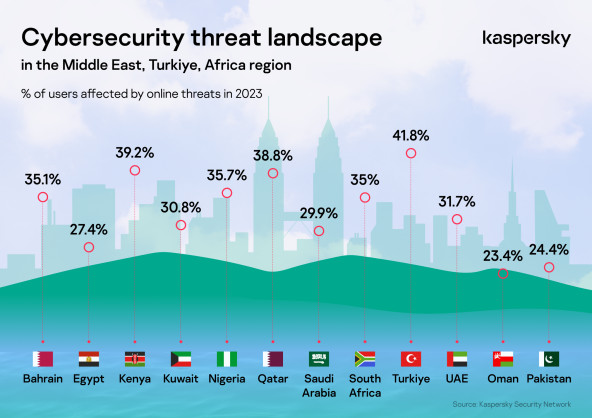
In the African region, Kaspersky's telemetry showed the number of overall cyberthreats in South Africa decreased by 29% in 2023 as compared to 2022. At the same time, phishing attacks that use social engineering tactics to scam people into revealing sensitive information rose by 29%. Over the same period, Kenya saw a decrease in overall threats by 8% while an increase was seen in ransomware attacks by 68%, backdoors by 47%, exploits by 22% and phishing by 19%. Nigeria saw an overall decrease in all threats by 10% while banking malware attacks designed to collect online banking credentials and other sensitive information from infected machines increased by 8%.

According to Kaspersky's analysis, online threats caused by vulnerabilities on web pages, in emails or webservices, have fluctuated significantly in the region. Turkiye saw the highest number of users affected by online threats (41.8%), followed by Kenya (39.2%), Qatar (38.8%) and South Africa (35%). Fewer users were affected in Oman (23.4%) and Egypt (27.4%) followed by Saudi Arabia (29.9%) and Kuwait (30.8%).

“As the cybersecurity landscape evolves, cyber threats continue to become diverse and sophisticated. This trend is particularly evident due to the emergence of advanced technologies like AI and the escalating geopolitical and economic turbulence within the Middle East, Turkiye, Africa (META) region. These factors collectively contribute to the surge in cybercrime and the heightened complexity of cyberattacks,” comments Amin Hasbini, Director of META Research Center Global Research and Analysis Team (GReAT), Kaspersky.

Distributed by APO Group on behalf of Kaspersky.

For further information please contact:
Nicole Allman
https://INKandco.co.za
nicole@inkandco.co.za

Social Media:
Facebook: https://apo-opa.info/3M3uy0L
Twitter: https://apo-opa.info/3OaLeGw
YouTube: https://apo-opa.info/41wO7V6
Instagram: https://apo-opa.info/42BZnRq
Blog: https://apo-opa.info/42Apbxn

About Kaspersky:
Kaspersky is a global cybersecurity and digital privacy company founded in 1997. Kaspersky's deep threat intelligence and security expertise is constantly transforming into innovative solutions and services to protect businesses, critical infrastructure, governments and consumers around the globe. The company's comprehensive security portfolio includes leading endpoint protection, specialized security products and services, as well as Cyber Immune solutions to fight sophisticated and evolving digital threats. Over 400 million users are protected by Kaspersky technologies and we help over 220,000 corporate clients protect what matters most to them. Learn more at www.Kaspersky.co.za.  

Media files
Kaspersky
Download logo
Read moreKaspersky shares cyberthreat landscape insights for the African region
19 February 2024

Johannesburg communities protest against City Power

Location: News

The utility says its ageing and damaged infrastructure is battling to cope with demand, and calls on electricity users to pay their bills

Read moreJohannesburg communities protest against City Power
19 February 2024

Electricity Minister to engage KZN business stakeholders

Location: News

Electricity Minister to engage KZN business stakeholders

Minister in The Presidency responsible for Electricity, Dr Kgosientsho Ramokgopa, is expected to engage with business stakeholders in KwaZulu-Natal on energy challenges and interventions.

The engagement is expected to take place at the Durban Exhibition Centre on Tuesday, 20 February.

“The energy sector in South Africa is facing significant challenges which have implications for businesses, households, and the economy at large. The engagement will provide an opportunity for stakeholders to share their perspectives on the energy challenges businesses face in the region. 

“The primary objective of this engagement is to foster dialogue and collaboration between the Ministry of Electricity, supported by the KwaZulu-Natal Provincial Government and business stakeholders in the province,” the Ministry in the Presidency said in a statement.

Ramokgopa is expected to be joined by KZN Premier Nomusa Dube-Ncube and eThekwini Municipality Mayor Mxolisi Kaunda.

Meanwhile on Sunday, power utility Eskom said it is working to restore power “as quickly as possible” following a high volume of electrical faults in Northern KZN.

The faults are due to damage to infrastructure following a storm in the area over the weekend.

“Eskom apologises for any inconvenience caused and reminds those affected by the loss of supply to treat all electrical installations as live and dangerous, as electricity supply may be switched on without notice.

“Customers are also urged to stay away from fallen infrastructure. Eskom will endeavour to restore power as quickly as possible and wishes to thank customers for their patience.

“Customers are encouraged to download the MyEskom Customer App from Google Play and the App Store, or use the Alfred chatbot on https://alfred.eskom.co.za/chatroom/ to report fallen infrastructure, report faults and follow up on progress,” the power utility said. – SAnews.gov.za

NeoB
Mon, 02/19/2024 - 10:40

159 views
Read moreElectricity Minister to engage KZN business stakeholders
18 February 2024

Africa dominates list of the world’s 20 fastest-growing economies in 2024—African Development Bank says in macroeconomic report

Location: Business
African Development Bank Group (AfDB)

Report forecasts stronger growth for Africa in 2024, outpacing projected global average; Continent is second-fastest-growing region after Asia.

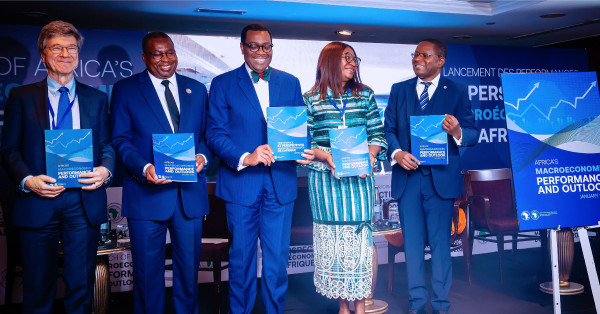
Africa will account for eleven of the world's 20 fastest-growing economies in 2024, the African Development Bank Group said in its latest Macroeconomic Performance and Outlook (MEO) of the continent released on Friday.

Overall, real gross domestic product (GDP) growth for the continent is expected to average 3.8% and 4.2% in 2024 and 2025, respectively. This is higher than projected global averages of 2.9% and 3.2%, the report said.

The continent is set to remain the second-fastest-growing region after Asia.

The top 11 African countries projected to experience strong economic performance forecast are Niger (11.2%), Senegal (8.2%), Libya (7.9%), Rwanda (7.2%), Cote d'Ivoire (6.8%), Ethiopia (6.7%), Benin (6.4%), Djibouti (6.2%), Tanzania (6.1%), Togo (6%), and Uganda at 6%.

“Despite the challenging global and regional economic environment, 15 African countries have posted output expansions of more than 5%,” Bank Group President Dr Akinwumi Adesina said, calling for larger pools of financing and several policy interventions to further boost Africa's growth.

Africa's Macroeconomic Performance and Outlook, a biannual publication released in the first and third quarters of each year, complements the existing African Economic Outlook (AEO), which focuses on key emerging policy issues relevant to the continent's development.

The MEO report provides an up-to-date evidence-based assessment of the continent's recent macroeconomic performance and short-to-medium-term outlook amid dynamic global economic developments.

The latest report is calling for cautious optimism given the challenges posed by global and regional risks. These risks include rising geopolitical tensions, increased regional conflicts, and political instability—all of which could disrupt trade and investment flows, and perpetuate inflationary pressures.

President Adesina emphasised that fiscal deficits have improved, as faster-than-expected recovery from the pandemic helped shore up revenue.

He explained further: “This has led to a stabilisation of the average fiscal deficit at 4.9% in 2023, like 2022, but significantly less than the 6.9% average fiscal deficit of 2020. The stabilisation is also due to the fiscal consolidation measures, especially in countries with elevated risks of debt distress.”

He cautioned that with the global economy mired in uncertainty, the fiscal positions of the African continent will continue to be vulnerable to global shocks.

The report shows that the medium-term growth outlook for the continent's five regions is slowly improving, a pointer to the continued resilience of Africa's economies.

Presenting the key findings of the report, the African Development Bank's Chief Economist and Vice President, Prof. Kevin Urama said: “Growth in Africa's top-performing economies has benefitted from a range of factors, including declining commodity dependence through economic diversification, increasing stra­tegic investment in key growth sectors, and rising both public and private consumption, as well as positive developments in key export markets.”  

He added: “Africa's economic growth is projected to regain moderate strength as long as the global economy remains resilient, disinflation continues, investment in infrastructure projects remains buoyant, and progress is sustained on debt restructuring and fiscal consolidation.”

“The future of Africa rests on economic integration. Our small economies are not competitive in the global market. A healthy internal African trade market can ensure value-added and intra-African production of manufactured goods,” said Commissioner for Economic Development, Trade, Tourism, Industry and Minerals, African Union Commission, Ambassador Albert Muchanga.

He assured that the MEO forecast, and recommendations will be made available to African heads of state and that the report will be useful when the African Union makes its proposals to the G20- an informal gathering of many of the world's largest economies to which the African Union was admitted last year.

The improved growth figure for 2024 reflects concerted efforts by the continent's policymakers to drive economic diversification strategies focused on increased investment in key growth sectors, as well as the implementation of domestic policies aimed at consolidating fiscal positions and reversing the increase in the cost of living and boosting private consumption.

Speaking remotely, Zimbabwe's Minister of Finance and Economic Development, Prof Mthuli Ncube described the report as being “on point” and consistent with the reality in his country, describing it as useful for economic planning across Africa. He urged the African Development Bank to continue its thought leadership to help policymakers continue to build resilience to withstand shocks and drive growth.

Ncube said: “Zimbabwe expects slower growth due to climate shocks in the region. Southern African countries depend on agriculture for economic growth, so climate-proofing agriculture is key. We are in talks with creditors to restructure its debt, which is slowing economic growth. Internally, the country will focus on economic and governance reforms and reforms around property rights to increase agricultural production.”

Up to 41 countries across the continent will in 2024, achieve an economic growth rate of 3.8%, and in 13 of them, growth will be more than 1 percentage point higher than in 2023.

Director of the Center for Sustainable Development, Columbia University Prof Jeffrey Sachs noted that long-term affordable financing must be part of Africa's strategy to achieve growth of 7% or more per year and warned that Africa is paying a very high-risk premium for debt financing. He called for this point to be made to the G20.

“Long-term development cannot be based on short-term loans. Loans to Africa should be at least 25 years or longer. Short-term borrowing is dangerous for long-term development. Africa must act as one, in scale,” he explained.

Sachs, who is also the UN Secretary-General António Guterres' Advocate for Sustainable Development Goals also called for a much larger African Development Bank, better resourced to meet Africa's financing needs.

Overview of economic outlook across regions

The confluence of shocks notwithstanding, the resilience of the continent's economies remains strong, with positive growth projected for the continent's five regions.

  • East Africa: East Africa will continue to lead Africa's growth momentum, with growth projected to rise to 5.1% in 2024 and 5.7% in 2025, supported by strong strategic investments to improve internal connectivity and deepen intra-regional trade.
  • North Africa: Successive adverse weather conditions and macroeconomic challenges will hold the region's growth steady at 3.9% in 2024 with a slight improvement to 4.1% in 2025.
  • Central Africa: Growth is forecast to moderate to 3.5% in 2024 but projected recovery in private consumption and increases in mining investment and exports could help push growth to 4.1% in 2025.
  • Southern Africa: Growth will remain sluggish at 2.2 and 2.6% in 2024 and 2025, respectively. This reflects continued economic weakness in South Africa, the region's largest economy.
  • West Africa: Growth is projected to pick up to 4 and 4.4% in 2024 and 2025 respectively. Strong growth in most countries in the region is projected to offset slowdowns in Nigeria and Ghana. The announced withdrawal of Burkina Faso, Mali, and Niger from the Economic Community of West African States (ECOWAS) casts a shadow over the sustainability of gains amid growing uncertainty.

Driving faster and more sustainable economic growth

The 2024 MEO says in the short term, tackling persistent inflation will need a mix of restraining monetary policy coupled with fiscal consolidation and stable exchange rates.

The report identifies structural reforms and strategic industrial policies as key to accelerating economic diversification and strengthening the export sector.

It recommends that countries invest more in human capital and pursue a resource-based industrialisation and diversification strategy that allows the continent to exploit its comparative advantage and build resilience to shocks.

  • 2024 Macroeconomic Performance and Outlook (https://apo-opa.co/3UHdVhm)
  • President Adesina's speech (https://apo-opa.co/49H7oaV)
  • Pictures (https://apo-opa.co/48jUVZu)

Distributed by APO Group on behalf of African Development Bank Group (AfDB).

Media Contact:
Emeka Anuforo
Communication and External Relations Department
media@afdb.org

About the African Development Bank Group:
The African Development Bank Group (AfDB) is Africa's premier development finance institution. It comprises three distinct entities: the African Development Bank (AfDB), the African Development Fund (ADF) and the Nigeria Trust Fund (NTF). On the ground in 34 African countries with an external office in Japan, the AfDB contributes to the economic development and the social progress of its 54 regional member states. For more information: www.AfDB.org  

Media files
African Development Bank Group (AfDB)
Download logo
Read moreAfrica dominates list of the world’s 20 fastest-growing economies in 2024—African Development Bank says in macroeconomic report
17 February 2024

Failing sewage plants continue to pollute False Bay

Location: News

Most of Cape Town’s sewage treatment works are failing, including the city’s largest one which releases effluent straight into the sea

Read moreFailing sewage plants continue to pollute False Bay
16 February 2024

Relocation of more than 880 families from Cape Town central railway line completed

Location: News

PRASA says it can now recover infrastructure and restore train services

Read moreRelocation of more than 880 families from Cape Town central railway line completed
16 February 2024

Strategic integrated projects

Location: News

Strategic integrated projects

By Nomonde Mnukwa

It is often said that water is life, and this is indeed the case as no life can be sustained without water.  However, very few people give a second thought about the infrastructure required to ensure clean, drinkable water.

In South Africa government is undertaking a massive infrastructure investment and build programme in the form of Strategic Integrated Projects (SIPs), which are aimed at improving the quality of life for all South Africans.

Government is working to transform key sectors of our economy such as electricity, rail, ports and telecommunications through infrastructure. We are also working to rebuild and renew infrastructure in critical areas such as student accommodation, social housing water and sanitation.

Our focus on infrastructure is critical to driving economic growth and creating employment, while also ensuring that we can change lives and empower communities.

Over the medium-term the public sector is projected to spend R903 billion on infrastructure and a number of these projects have been completed, while many others are in the construction and procurement phases. In July 2020 a total of 62 Strategic Integrated Projects were gazetted that hold significant value in terms of growing our economy and driving development. These projects are currently being implemented across all three spheres of government, state-owned entities and the private sector.

Infrastructure in its most basic form is about bricks and mortar, but it is so much more than that.  Every new road built enhances mobility and creates economic activity for communities. New schools open up the doors of learning and progress, and new housing developments bring hope and dignity.

The Strategic Integrated Projects are breathing life into many sectors of the economy, including potentially new and game changing ones. South Africa has amassed a pipeline of Green Hydrogen Projects with a value of over R300 billion, which are in project preparation stages. Among these projects, is the Boegoebaai Green Hydrogen in the Northern Cape with a potential to progressively create around 35 000 work opportunities. .

Since the first round of SIPs were gazetted in 2022, an additional 26 have been added, bringing the number of gazetted SIPs to 88. These include infrastructure projects in energy, water and sanitation, transport as well as digital communications infrastructure. The SIPs also cover human settlements, agriculture, and agro-processing.

A number of projects to the value of R21.4 billion have already been completed covering roads, energy and human settlements, while the total value of projects currently in construction is R313.5 billion. A number of projects are also in the procurement stage to the value of  R295.2 billion.

There are various projects that have also been registered in the energy sector which once fully operational will assist in ensuring greater energy security for the country. The energy sector infrastructure project pipeline includes R180 billion of embedded generation investment.

Once all 88 SIPs are concluded there will be a massive increase in energy and water security. They will also further boost our Fourth Industrial Revolution ambitions and capabilities, while also ensuring that we provide homes, accommodation and revitalise the agricultural value chain.

Our investment in infrastructure is turning bricks and mortar into hope for a better tomorrow for all.  It is creating new frontiers of growth and progress and will ultimately ensure that we create the South Africa we want.

*Nomonde Mnukwa is Acting Director-General of the GCIS

Janine
Fri, 02/16/2024 - 14:53

5 views
Read moreStrategic integrated projects
  • Previous
  • Page 1
  • Interim pages omitted …
  • Page 86
  • Page 87
  • Page 88
  • Page 89
  • Page 90
  • Interim pages omitted …
  • Page 108
  • Next

Copyright © 2026 · MyZA · All Rights Reserved · Powered by Stratlec Online