• Skip to main content
  • Skip to header right navigation
  • Skip to after header navigation
  • Skip to site footer
MyZA

MyZA

News, Directory, Events and Other Stuff

  • Social Media
  • Sport
  • World News
  • Home
  • Submit News
  • Directory
  • Events
  • Stratlec
  • TFSA
  • News
    • APO
    • Today’s Sport News
    • Todays Social Media and Tech Headlines
    • Today’s World News
    • Today’s SA Financial News
  • Contact
You are here: Home / Archives for infrastructure

infrastructure

7 February 2024

Taking stock of the sixth administration

Location: News

Taking stock of the sixth administration

Thursday’s State of the Nation Address (SONA) to be delivered by President Cyril Ramaphosa will be the last one to be made by the sixth administration.

The President - in his capacity as Head of State and government - will deliver the annual SONA at 7pm, before a joint sitting of the National Assembly (NA) and the National Council of Provinces (NCOP).

Just as individuals usually make a list of their goals at the start of each year, and the steps they need to take to attain them, the SONA similarly sets out government’s key policy objectives as well as deliverables for the year ahead.

The President is expected to reflect on the gains made and the areas that still need attention since the last SONA.

However, having been inaugurated as President on 25 May 2019, President Ramaphosa is also likely to look back on the term of his administration.

According to the Presidency, this administration “took office with a mandate to grow the economy, create employment and reduce poverty.” It was also tasked with putting an end to corruption as well as “restoring the integrity and capability of public institutions.”

Government has over the years made progress in improving the lives of those within the borders of South Africa.

Advancements have been made in the key priorities of growing the economy and job creation, building better lives, making communities safer and fighting crime.

Over the years, irrespective of the administration at the helm, an inclusive economy in which all South Africans can partake in, has and continues to be a top issue for government.

Fixing the economy and load shedding

In order to grow the economy, reliable energy supply is essential and energy security is cited in the country’s Economic Reconstruction and Recovery Plan (ERRP). In July 2022, government launched the Energy Action Plan (EAP). The EAP is a set of steps to be taken to address load shedding.

Government has amended Schedule 2 of the Electricity Regulation Act to remove the licencing requirement for generation projects to accelerate private investment.

By September 2023, more than 100 projects were at various stages of development, representing over 10 000 megawatts of new generation capacity and over R200 billion in private sector investment.

Other steps taken to reform the electricity sector include the tabling of the Electricity Regulation Amendment Bill in Parliament.

In addition, progress continues to be made towards the unbundling of Eskom, with the newly established National Transmission Company of South Africa (NTCSA) obtaining its operating, trading, and import and export licences from the National Energy Regulator of South Africa in September 2023, allowing the company to operate independently from the power utility. This as government works to separate Eskom into the Generation, Distribution and Transmission entities. Last month, Eskom announced the appointment of the National Transmission Company of South Africa board.

This is one of the most important pillars of Eskom’s legal separation which will “create a level playing field to enable competition in electricity generation, as a key step towards energy security,” noted the 'Leave No One Behind 2024 – A Five-Year Review', document released by the Presidency earlier this week.

The sixth administration also oversaw the appointment of Minister in the Presidency for Electricity, Dr Kgosientsho Ramokgopa, in March last year as part of efforts to address power cuts and to expedite government’s work to ensure the full implementation of the EAP.

At a recent media briefing on the implementation of the plan, Ramokgopa said that work continues to address partial load losses – that is, when Eskom’s generating units do not produce the full capacity, they were intended to.

In November 2023, South Africa received the first consignment of 450 gasoline generators donated by the People’s Republic of China. The donation formed part of the Technical Assistance Programme that was entered into in August 2023 during China’s Head of State Visit to South Africa.

Jobs and investment

The ERRP was government’s response to the severe health, social and economic effects of the dreaded COVID-19 pandemic.

Announced in 2020, the plan was founded on engagements among social partners, including government, labour, business and community-based organisations.

October 2023 marked three years since government embarked on the plan, which outlined the actions to rebuild the economy and create jobs in the wake of the pandemic.

The government has put in place the Presidential Youth Employment Initiative (PYEI). Through the initiative announced in 2020, at least 135 000 earning opportunities were secured by young people.

On Tuesday, the President held a presidential youth engagement in Cape Town reflecting on the three years since the initiation of the Presidential Employment Stimulus (PES) and PYEI.

According to the Presidency, the PES and PYEI programmes have “collectively generated over 1.8 million job opportunities and provided livelihood support, predominantly benefiting young individuals”.

The sixth administration also oversaw the successful raising of the R1.2 trillion worth of investments over five years that President Ramaphosa announced in 2018.

Held annually over the past five years, the South Africa Investment Conference (SAIC) surpassed the initial R1.2 trillion target to reach R1.51 trillion in investment pledges. To date, there are concrete results of how the pledges made at the conference are changing lives and creating employment.

The review document notes that of the commitments made, over R500 billion has already flowed into the economy.

Having made pledges continually at the SAIC, Procter &Gamble in November 2023 launched a state-of-the-art production line of Pampers Premium Care which the President attended in Kempton Park in Ekurhuleni.

Another company which pledged R135 million at last year’s SAIC is also making good on its commitment.

In October 2023, energy company, Ener-G-Africa, launched an energy-efficient cook stove manufacturing line in Paarl, and expanded its solar panel production line from 15MW to 500MW capacity.

The company pledged R135 million in the production of small solar PV panels and solar cooking appliances at their women-led production facility in Cape Town.

AfCFTA

President Ramaphosa also oversaw the launch of the African Continental Free Trade Area (AfCFTA) as Chairperson of the African Union, which is currently the largest free trade area in the world. The AfCFTA which entered into force in May 2019, is expected to boost trade and economic growth on the continent.

Trading under the AfCFTA regime commenced January 2021 and last month South Africa practically realised the AfCFTA agreement. This as the President officiated the launch of the first export shipment of goods produced by South African companies destined for other African countries from KwaZulu-Natal’s Durban port.

Better lives and education

On building better lives, the current administration introduced the National Minimum Wage (NMW) for the first time in the country’s history, guaranteeing a minimum floor below which no worker may be paid with the coming into effect of the minimum wage on 1 January 2019.

The President had announced its coming into effect in December 2018.

Back in 2019, the minimum wage was set at R20 an hour and has increased over the years. Currently standing at R25,42 the minimum wage will increase to R27,58 for each ordinary hour worked with effect from 1 March 2024.

Click here for more on the “National minimum wage increases”.

To ensure healthcare for all, Parliament passed the National Health Insurance (NHI) Bill last year after it was introduced in 2019. The Bill aims to provide free health care at the point of care for all South Africans. In preparation for the NHI, Health Patient Registration Systems have been installed in over 3 200 facilities.

Meanwhile, social grants for people most affected by COVID-19 were expanded, including the Special Social Relief of Distress (SRD) Grant, which reached around 11 million unemployed people.

On the education front, no-fee schools which government introduced in 2007 have continued to ensure that children get access to schooling. To date, the number of learners that are not required to pay school fees increased from 71% to 75% in 2021.

In addition, the latest matric pass rate, at 82.9%, is the highest ever, up from 78% ten years ago. Learners from no-fee paying schools accounted for more than 65% of the total bachelor passes obtained. The percentage of learners who completed 12 years of education rose from 45% in 2008 to 62% in 2022.

Safer communities

The sixth administration has increased the number of police officers including the recruitment of  20 000 police trainees and  an additional 4 000 public order policing members in 2022 and 2023.

In addition, 20 specialised South African Police Service Economic Infrastructure Task Teams have been established to work with business, private security and state-owned enterprises to tackle illegal mining, construction site extortion, cable theft and vandalism of economic infrastructure.

The review noted that by November 2023, the teams had made over 4 000 arrests for damage of critical infrastructure, 70 arrests for extortion at construction sites and over 3 000 arrests for illegal mining, and confiscated significant quantities of copper cable, rail tracks and other metals.

Government also launched the Border Management Authority as the third armed force to manage and secure the country’s borders, providing a vital link in government’s efforts to harness the benefits of the African Continental Free Trade Area.

On tackling gender-based violence and femicide(GBV), he National Strategic Plan on Gender-based Violence was developed, together with civil society, as a society-wide response to this national emergency. Around R21 billion has been dedicated over the medium term to the implementation of the six pillars of the plan, including the economic empowerment of women.

Meanwhile, the National Prosecuting Authority (NPA) has achieved an average conviction rate of 94% in femicide prosecutions and 75% in sexual offences prosecutions since 2019.

In addition, the GBVF Response Fund 1 was launched, which raised R200 million from the private sector for community-based organisations combating GBV. In the first year of the Fund’s operation, 53 community-based organisations were funded, reaching 280 000 participants.

Fighting corruption

The NPA Investigating Directorate was established to prosecute state capture and other significant corruption cases.

To date, the Investigating Directorate has taken 34 state capture and corruption cases to court, involving 203 accused persons and 65 accused entities. The NPA has also secured the conviction of over 500 government officials and nearly 800 in the private sector on offences related to corruption since 2019.

In addition, a SIU Special Tribunal was appointed to expedite civil claims against corrupt individuals and the recovery of stolen funds. Since its establishment, it has recovered over R8.6 billion.

As the country prepares for its 30 years of freedom celebration, the sixth administration has certainly done its bit in a challenging environment. -SAnews.gov.za

Neo
Wed, 02/07/2024 - 15:11
268 views
Read moreTaking stock of the sixth administration
7 February 2024

Mashatile calls for more to be done to transform mining industry

Location: News

Mashatile calls for more to be done to transform mining industry

Deputy President Paul Mashatile believes that although the Mining Charter has achieved some success in reforming the mining industry, more still needs to be done.

“The 30 years of our nation’s democracy should compel us to become even more proactive about the issue of economic transformation in this industry and country.” 

The Deputy President delivered a keynote address at the South African Youth Economic Council (SAYEC) Business Dialogue during the Mining Indaba in Cape Town.

“The transformation of this sector is important because it forms a vital part of our country's development trajectory, driving infrastructure development, which includes the construction of roads, railways, and power plants, and positively impacting the economy. 

“Our country's rich natural resources provide a comparative advantage in processing, manufacturing, and beneficiation through mining value chains,” he told attendees on Tuesday. 

The Deputy President said while the economic growth of the sector is important, its transformation is equally important, to the extent that it is inclusive of women, youth, and other marginalised groups in  society.

“The subject of diversity and inclusion in the mining sector should be at the top of our agenda. We must ask ourselves, ‘How can we ensure equitable sharing of social and economic benefits in the mining sector?’”

He took the time to call on young people to explore opportunities that will make them a key part of this sector, integrating it with manufacturing and technology. 

“As a youth, you should identify your role in the value chain and position yourselves in a way that empowers you and benefits the mining sector globally.” 

The Deputy President is of the view that the economic viability of the mining sector relies on developing strategies for expanding the industry through mineral beneficiation and improving the economic and social contribution of the sector. 

“This presents an opportunity for youth inclusion in the value chains associated with the mining sector.” 

Deputy President Mashatile cited President Cyril Ramaphosa who opened the indaba and told guests that mining has a key role to play in building the economy of tomorrow.

“You are the future of this country, and you need to take advantage of the valuable resources and huge business opportunities in the mining industry,” President Ramaphosa said at the opening of the indaba on Monday. 

In addition to diamonds and gold, the Deputy President said the country also contains reserves of iron ore, platinum, manganese, chromium, copper, uranium, silver, beryllium and titanium.

“We must capitalise on the increased demand for these raw materials to build our nation's economy and attract more investors.” 

Transformation and skills development

As South Africa marks 30 years of democracy this year, the Deputy President acknowledged that the country's mining industry has undergone significant transformation.

For almost 150 years, mining has been a crucial part of South Africa's economy, contributing around 7.5% to the gross domestic product (GDP) and accounting for about 60% of the country's exports by value.

Referring to the latest survey undertaken by the Minerals Council of South Africa, he said it found that 32 member companies reviewed, largely complied with the five key transformation elements of the 2010 Mining Charter. 

These elements included ownership, employment equity, procurement, human resources development, and mine community development. 

“It is worth noting that the surveyed companies achieved a weighted average of 39.2% ownership equity by historically disadvantaged South Africans, which exceeds the Charter's 26% target.” 

In addition, he emphasised the significance of skills development for the youth that are not in employment, education and training between the ages of 15 and 24 in efforts to address unemployment.

The Deputy President challenged the mining industry to provide skills-development opportunities that will lead to much-needed employment opportunities.

“It is time for us, as government and private sector, to invest more than ordinary resources in the development of our youth. We must allow them to voice their concerns, and their proposed solutions must be valued and integrated into the broader strategy for economic growth.” 

He noted government’s commitment to including the youth in its sustainable development strategy. 

“Our mining policies are more than paperwork; rather, they are strategic frameworks that direct us towards mining operations that are responsible, sustainable, and socially inclusive.” – SAnews.gov.za


Gabisile
Wed, 02/07/2024 - 10:17

381 views
Read moreMashatile calls for more to be done to transform mining industry
7 February 2024

KZN disaster teams respond to areas affected by severe thunderstorm

Location: News

KZN disaster teams respond to areas affected by severe thunderstorm

The KwaZulu-Natal Cooperative Governance and Traditional Affairs Department says provincial disaster management teams are responding to the trail of destruction caused by severe thunderstorms, accompanied by strong winds and lightning, in Dannhauser, Estcourt, Vryheid and Ulundi.

The department said three learners from Mandlamasha Primary School in Dannhauser (under Amajuba District) were struck by lightning on their way home from school on Monday. 

One learner died on the spot, while the other two were rushed to hospital, where they are recovering. 

KZN Cooperative Governance and Traditional Affairs MEC, Bongiwe Sithole-Moloi, has expressed condolences to the family of the departed learner and wished a speedy recovery to the two who were hospitalised.

“It is deeply sad that such a young person has left us in a tragic manner. We express our deepest condolences to the family, and we wish a speedy recovery to the other two learners that are in hospital. 

“Our disaster team will reach out to the families,” Sithole-Moloi said.  

Sithole-Moloi said a number of households in the three areas were severely impacted, as the strong wind tore roofs apart, causing damage to the valuables of many families. 

She said public infrastructure was not spared from the disaster as power lines were destroyed by the strong winds, resulting in power outages in some areas.

“Our initial reports suggest that the most affected areas were Wembezi in Estcourt (under Inkosi Langalibalele Local Municipality), Nhlazatshe in Ulundi and Ozwathini and Mhlongo farm under Abaqulusi Local Municipality.

“It is deeply saddening that the inclement weather has caused yet another disaster in our province, as many municipalities are currently repairing homes and infrastructure after last month’s heavy rains. We have sent teams that are currently on the ground to assist affected families with immediate relief and to attend to the needs of those affected,” the MEC said.

Sithole-Moloi has instructed the disaster teams to work together with all affected municipalities, and the department has coordinated with other departments to come to the aid of affected families. 

“Some families have lost their valuables, such as furniture and important documents and medication. We are engaging with the Department of Health, Home Affairs, and SASSA [South African Social Security Agency] to assist with the replacement of important documents and medication. 

“The disaster team is providing immediate relief, as it continues with assessments to establish the full extent of the damage in all affected areas. More details will be confirmed at a later stage,” Sithole-Moloi said. – SAnews.gov.za

GabiK
Wed, 02/07/2024 - 12:40

127 views
Read moreKZN disaster teams respond to areas affected by severe thunderstorm
7 February 2024

PRASA Western Cape making strides

Location: News

PRASA Western Cape making strides

Acting regional manager of Passenger Rail Agency of South Africa (PRASA) in the Western Cape, Raymond Maseko, says the agency has done much work to recover the province’s network following a series of challenges.

Maseko was speaking on the sidelines of a blitz activation at the Cape Town train station ahead of the State of the Nation Address (SONA) to be held at the Cape Town City Hall on Thursday evening.

“We had a reset. Post-COVID when we started, there were only 14 stations in the Western Cape that had train access…out of 125 stations.

“Last year when we were here, the community of the central line did not have access to trains. As we speak today, we have access to trains up to Nyanga. There are only 11 stations  in the Western Cape out of 125 that do not have train access.

“If you go currently to Phillipi station, there are people working there. If you go to Mandalay station, there are people working there and Kapteinsklip, there are people working there. We are on the cusp of actually recovering the Western Cape network in its entirety,” he said.

Maseko highlighted that despite all the progress made, criminality – specifically copper cable theft – is hampering the agency’s work.

“In South Africa, we have a scourge of cable theft. This is affecting our business [seriously]. Most of the lines that are not available today [is due to] the copper theft that has happened. This morning, we had cable theft at Tygerberg and this… affected the entire system from after 3am. We were only [set] to recover it moments ago. The impact is so severe.

“We need South Africans to partner with us. There is nothing like 'government infrastructure'. In essence, there is just South African infrastructure because all of our taxes are what is creating this infrastructure. It is for South Africans to actually protect the infrastructure. You see something, say something. Do not just keep quiet,” he said.

Maseko said the agency has also completed building student accommodation that will accommodate thousands of students in the city.

“There is student accommodation that we started building just before lockdown… up until now... [some] 3 200 beds. There are already 1 500 students enjoying the benefits that we have put up. The idea from PRASA is densification and its also transport-orientated development.

“That means that we are asking the cities - we are asking that any development that happens - make it around transport hubs. Think about what we have done here. Students from the Cape Peninsula University of Technology can be here... that is somewhere around Belville, and UCT that is around town, they can always live here.

“They get off here, get into a train, get off at the nearest station… and then they go off into their places of higher institutions,” Maseko said. – SAnews.gov.za

NeoB
Wed, 02/07/2024 - 10:48

357 views
Read morePRASA Western Cape making strides
6 February 2024

Progress in the nation’s recovery and rebuilding documented in summary five-year review

Location: News

Progress in the nation’s recovery and rebuilding documented in summary five-year review

The Presidency has released a five-year review publication that documents the strides made in South Africa’s recovery and reconstruction since 2019, delving into the transformative initiatives undertaken by the Sixth Administration, specifically targeting the pressing challenges confronting the nation.

'Leave No One Behind 2024 – A Five-Year Review', which was released on Tuesday, outlines in summary form the progress made in growing the economy and jobs; fighting corruption; tackling poverty; developing human capital; providing quality health care for all; fighting crime, violence and instability; making communities safer, and investing in infrastructure.

From the outset, the sixth administration has worked to address the immediate challenges facing South Africans and put in place the foundations for sustainable, inclusive growth and job creation into the future.

“Progress in South Africa’s recovery and rebuilding since 2019 has been documented in a new Presidency publication on the impact of the Sixth Administration’s focus on addressing the immediate challenges facing South Africa and putting in place the foundations for better lives and sustainable growth into the future.

“The publication is an exercise in accountability and draws attention to the collective efforts of government and social partners to improve conditions in the country under the leadership of President Cyril Ramaphosa,” Presidency spokesperson Vincent Magwenya said in a statement.

The information resource can be accessed on www.stateofthenation.gov.za and http://bit.ly/4blAA93. - SAnews.gov.za

DikelediM
Tue, 02/06/2024 - 13:44

424 views
Read moreProgress in the nation’s recovery and rebuilding documented in summary five-year review
6 February 2024

Progress in SA’s Recovery and Rebuilding Documented in Summary Five-Year Review

Location: News

The Presidency: Republic of South Africa
Download logo

Progress in South Africa's recovery and rebuilding since 2019 has been documented in a new Presidency publication on the impact of the Sixth Administration's focus on addressing the immediate challenges facing South Africa and putting in place the foundations for better lives and sustainable growth into the future.

Leave No One Behind 2024 – A Five Year Review outlines in summary form the progress made in growing the economy and jobs; fighting corruption; tackling poverty; developing human capital; providing quality health care for all; fighting crime, violence and instability; making communities safer; and investing in infrastructure.

The publication is an exercise in accountability and draws attention to the collective efforts of Government and social partners to improve conditions in the country under the leadership of President Cyril Ramaphosa.

Distributed by APO Group on behalf of The Presidency: Republic of South Africa.

Read moreProgress in SA’s Recovery and Rebuilding Documented in Summary Five-Year Review
6 February 2024

Task team to review municipalities’ water service delivery mechanisms

Location: News

Task team to review municipalities’ water service delivery mechanisms

A national coordinated task team has been set up to review service delivery mechanisms for water and sanitation services by the Departments of Water and Sanitation (DWS) and Corporative Governance and Traditional Affairs (CoGTA) and the South African Local Government Association (SALGA).

This was one of the resolutions adopted during a recent water summit hosted by DWS with the 144 municipalities that are water services authorities (WSAs).

The task team which was established to initiate and coordinate Municipal Systems Act Section 78 processes in certain municipalities, aims to address the decline of water and sanitation services, as outlined in the recent Blue Drop, Green Drop and No Drop reports released by the Department of Water and Sanitation. 

The drop reports indicated a general decline in performance.

Water and Sanitation spokesperson, Wisane Mavasa, said the task team will focus on the 105 municipalities that are in the critical and poor performing categories in terms of the Blue and Green Drop reports. 

Mavasa said the DWS, including CoGTA, Municipal Infrastructure Support Agency, Department of Human Settlements, and National Treasury, are providing extensive support to assist water services authorities with the provision of water and sanitation services.

“This includes providing water and sanitation infrastructure grants worth more than R20 billion per annum; providing technical and engineering support and assistance; capacity building and training, and financial management advice and support. 

“However, despite all this support, the drop reports indicate that municipal water services have declined sharply. This indicates that there are limitations to which support from the national government can solve the problems, and that more fundamental reforms are required,” Mavasa said. 

Routine maintenance and operations must be funded by revenue from the sale of water by municipalities to customers, and municipal councils must take the required decisions to prioritise budgets for this. 

She emphasised that the Water Services Act states that the WSA can approve any legal entity to function as a water services provider (WSP) in the municipality, and “almost all WSAs in South Africa are currently both WSA and WSP”.

“The Water Services Act requires the WSA and WSP functions to be managed and accounted for separately by municipalities, but this is generally not happening. The Act states that the key role of the WSA is to ensure that the WSP provides services which meet minimum norms and standards – and this is also generally not happening, as borne out by the results of the Drop assessments,” Wisane said.

Other key decisions taken at the summit include that all WSAs must develop action plans to address their drop results and submit them to DWS by the end of February 2024; training institutions should prioritise the training of uncertified process controllers to enable them to become certified; and that all WSAs must issue advisory notices without fail when their drinking water fails to meet microbiological water standards. – SAnews.gov.za

GabiK
Tue, 02/06/2024 - 11:57

113 views
Read moreTask team to review municipalities’ water service delivery mechanisms
6 February 2024

Global Logistics Execs see coming Surge of African Investment

Location: News

Agility
Download logo

Nearly 62% of global logistics professionals say their companies are planning additional or first-time investments in Africa, according to a closely watched yearly industry survey.

The survey of 830 logistics executives is part of the 15th annual Agility Emerging Markets Logistics Index (https://apo-opa.co/4bD4lSW), a snapshot of industry sentiment and ranking of the world's 50 leading emerging markets.

The Index ranks countries for overall competitiveness based on their logistics strengths, business climates and digital readiness -- factors that make them attractive to logistics providers, freight forwarders, air and ocean carriers, distributors and investors. In the 2024 Index, the rankings of most African economies changed little from a year earlier, but businesses indicate they are looking ahead at massive population growth and trade expansion spurred by the African Continental Free Trade Area (AfCFTA).   

“This is the most optimism we've seen about Africa in the 15 years of the Index,” says Agility Vice Chairman Tarek Sultan. “Africa's population will double by 2050, when one in four people on the planet will be African. International businesses realize that the time is now for Africa -- they need to invest, establish their brands, and develop the next generation of African talent if they're going to ride the coming wave of growth.”

China and India were 1 and 2 in the 50-country Index rankings. In Africa, Egypt (20), Morocco (22), South Africa (24) and Kenya (25) were the top performers, followed by Ghana (31), Nigeria (36), Tunisia (37), Tanzania (41), Algeria (42), Uganda (43), Ethiopia (45), Mozambique (46), Angola (47), Libya (50).

Egypt has Africa's highest-ranked domestic logistics opportunities -- 13th in that category; South Africa (15) was tops in Africa for international logistics; Morocco (12) has Africa's best business fundamentals; Kenya (9) is Africa's most digitally ready – and the continent's highest-ranked country in any category.

More than 63% of survey respondents say their companies continue overhauling supply chains by spreading production to multiple locations or relocating it to home markets and nearby countries. China, the world's leading producer, stands to be most affected: 37.4% of industry professionals say they plan move production/sourcing out of China or reduce investment there.

Shipping and logistics costs that soared during the COVID pandemic and its aftermath are still climbing but at a slower rate, the survey found. One way shippers expect to cope is by increasing use of digital freight forwarding from 37.8% today to 52% in five years.

2024 Index Highlights

SURVEY

  • Supply chain restructuring – India, Europe and North America rank ahead of China as destinations executives expect to move production to in 2024 and onwards.
  • China – 40% expect their businesses to be less reliant on China in five years. Leading factors in decisions to de-risk in China: difficulty of doing business; U.S.-China trade friction; a slowing economy; the harshness of China's COVID restrictions.
  • Climate change – 66% say climate change is something they're planning for or already affecting their businesses.
  • Emerging markets – the largest percentage sees increased risk/decreased rewards in emerging markets.
  • India – many see India growing in importance as a producer and market, but cite inadequate infrastructure and corruption as the biggest obstacles there.

COUNTRY RANKINGS

  • In the Middle East and North Africa, overall rankings were: UAE (3); Saudi Arabia (6); Qatar (7); Turkey (11); Oman (15); Bahrain (16); Jordan (17); Egypt (20); Kuwait (21); Morocco (22); Tunisia (37); Lebanon (38); Iran (40); Algeria (42); Libya (50).
  • Rankings in Sub-Saharan Africa: South Africa (24); Kenya (25); Ghana (31); Nigeria (36); Tanzania (41); Uganda (43); Ethiopia (45); Mozambique (46); Angola (47).
  • Index rankings in Asia: China (1); India (2); Malaysia (4); Indonesia (5); Vietnam (8); Thailand (10); Philippines (18); Kazakhstan (23); Sri Lanka (26); Pakistan (29); Cambodia (32); Bangladesh (33); Myanmar (49).
  • Rankings for Latin America: Mexico (9); Chile (12); Brazil (14); Uruguay (19); Peru (28); Colombia (27); Argentina (30); Ecuador (35); Paraguay (39); Bolivia (44); Venezuela (48).
  • In Europe: Russia (13); Ukraine (34).

Transport Intelligence (https://apo-opa.co/4bp0Ijf) (Ti), a leading analysis and research firm for the logistics industry, has compiled the Index since it was launched in 2009.

John Manners-Bell, Chief Executive of Ti, said: “Supply chain managers are still coming to terms with the political and economic instability characterising the post-COVID global economy. Geopolitical relationships are changing rapidly, and this is having a major impact on international trade and risk profiles. Businesses need to be alive to the opportunities and threats that exist in emerging markets and use data, such as that the Agility Emerging Market Logistics Index, to inform agile decision-making.”

2024 Agility Emerging Markets Logistics Index: https://apo-opa.co/3SlOmzK

Distributed by APO Group on behalf of Agility.

For more information:
Sabrina Mundy
Man Bites Dog
teamagility@manbitesdog.com
+44 1273 716 820

For more information about Agility, visit:
Website: www.Agility.com
Twitter: https://apo-opa.co/40Ki6Kj
LinkedIn: https://apo-opa.co/49GTqqq
YouTube: https://apo-opa.co/3MNqYJr

About Agility:
Agility is a global leader in supply chain services, infrastructure, and innovation with 45,000+ employees across six continents. A multi-business operator and investor, Agility specializes in growing and scaling operating businesses. Agility's companies include the world's largest aviation services company (Menzies Aviation); a global fuel logistics business (Tristar); the market leader in logistics parks across the Middle East, South Asia, and Africa (Agility Logistics Parks); and a commercial real-estate company developing a mega-mall in the UAE (UPAC). Other Agility companies offer customs digitization services, remote-site infrastructure services, defense and government services, and ecommerce-enablement and digital logistics. Agility invests in supply chain innovation, sustainability, and resilience, and has minority holdings in a growing portfolio of listed and non-listed companies.

Read moreGlobal Logistics Execs see coming Surge of African Investment
5 February 2024

Indaba to spot spotlight on local mining industry

Location: News

Indaba to place spotlight on local mining industry

The 2024 Investing in African Mining Indaba will place the spotlight on the significant potential of the mining sector in fostering economic expansion and employment opportunities, said President Cyril Ramaphosa.

“This week’s Mining Indaba in Cape Town will showcase the enormous potential of the mining industry to drive economic growth and job creation. The actions underway to improve the logistics system will help us to unlock this potential, given that mining companies depend on the rail network and ports to compete in global markets.

“From the work already underway, we have shown that it is possible to overcome the barriers to growth by working together in partnership. We are building momentum and have begun to see the results,” the President said in his weekly newsletter on Monday.

He emphasised that “as more and more of our products leave the country’s shores, whether to the African continent or other parts of the world,” more companies will thrive, more investment will be made and more jobs will be created.

The President’s comments follow on last week’s launch of the first export shipment of goods produced by South African companies destined for other African countries under the preferential trade provisions of the African Continental Free Trade Area (AfCFTA) from the Durban port.

The AfCFTA intends to create a single market for goods and services, facilitated by movement of persons in order to deepen the economic integration of the African continent.

The President who officiated at last week’s shipment of goods said many more products and shipments can be expected to follow as South African companies sell South African made goods into the massive African free trade area. 

Exports to AfCFTA countries already account for nearly a quarter of South Africa’s global exports. The President added that this figure will now increase dramatically. 
 
“South African companies have a great opportunity to take advantage of the AfCFTA by exporting their goods into the rest of the African continent. In order to take this great opportunity up, as a country we need to ensure that our products make it from the factory gate onto the ship and head towards their destinations with the least possible delay and at the lowest possible cost,” he said. 

Ports and rail
 

Turning to ports and rail, the President highlighted that for some years now the efficiency and competitiveness of South African ports and rail network have been in decline. He spoke of the need to fix the country’s logistics architecture.

Transnet, which operates ports and freight rail lines, has had to contend with severe challenges, including the effects of state capture, the impact of the COVID pandemic, natural disasters and the rising levels of theft and vandalism of its infrastructure. 

As a result, the volume of goods transported on the rail network has decreased significantly, forcing more companies to use trucks and causing road congestion.

“Working together with the private sector, we are turning the situation around, guided by the Freight Logistics Roadmap that was crafted by Transnet, government and social partners. The roadmap outlines a clear set of actions to stabilise and improve Transnet’s performance in the short term and to fundamentally reform the logistics system in the long term,” he said. 
 
To ensure this work receives dedicated attention, the National Logistics Crisis Committee (NLCC) has been established which is chaired by the Presidency and brings together all of the relevant government departments to drive a coordinated response to the logistics challenges. 

Corridor Recovery Teams
 
Government has also established Corridor Recovery Teams which bring Transnet, the private sector and independent experts together to improve the performance of strategic rail and port corridors. 
 
The President highlighted that this single-minded approach to improving performance is already showing results.

For example, the number of ships waiting to berth at the Port of Durban – which has experienced severe congestion in recent months – reduced from more than 60 ships in mid-November to just 12 ships at the end of January.
 
At the Port of Cape Town, which is preparing for the important fruit season, Transnet has deployed new leadership and is putting in place several measures to improve its capacity in the short term. Seven new cranes, which are used for moving and stacking containers, were delivered to the port last month, and the number of work shifts is being increased to improve vessel turnaround times. 
 
In addition to these short-term measures, the Freight Logistics Roadmap includes far-reaching reforms to modernise the logistics system and enable much greater investment in infrastructure. 

“These reforms will introduce private sector investment and competition in port and rail operations, improving efficiency and bringing down prices, while ensuring that infrastructure remains owned by the state.
 
“A key milestone in this reform journey will be the implementation of ‘open access’ to the freight rail network, which will allow private rail operators to invest alongside Transnet Freight Rail for the first time,” he said. 
 
Another key step is the introduction of strategic partnerships in container terminals, which will enable new investment to expand port capacity and upgrade equipment.

Progress has already been made with the appointment by Transnet of an international container terminal operator for the Durban Pier 2 terminal. Transnet will retain 51% ownership of the terminal and no workers will lose their jobs once the partnership is established. 

The private partner will have full management responsibility for the terminal and will contribute both capital and expertise to improve its performance.
 
“The process of reform takes time and there are no quick solutions to the challenges facing Transnet. However, the steps we are taking now will not only improve performance in the immediate term but will also create a truly competitive and efficient system into the future,” the President said. – SAnews.gov.za 


DikelediM
Mon, 02/05/2024 - 09:00

891 views
Read moreIndaba to spot spotlight on local mining industry
5 February 2024

Mining The Future – Minrom

Location: MyPR

Blessed by abundant natural resources, Africa’s mining sector has historically been a driving force behind the continent’s economic growth. However, the industry now faces a myriad of challenges. As we approach the 2024 Mining Indaba, the world’s largest African mining investment event, it is crucial to reflect on the trajectory of the industry and its …

Read moreMining The Future – Minrom
5 February 2024

South African government hard at work to resolve challenges in mining

Location: News

South African government hard at work to resolve challenges in mining

President Cyril Ramaphosa has told leading figures in African mining that government is working hard to address the challenges that the industry faces.

He was speaking during the opening of the 30th Investing in African Mining Indaba held in Cape Town on Monday.

The Indaba is expected to continue until Thursday.

The mining industry contributes a hefty 7.5% to South Africa’s Gross Domestic Product (GDP) and accounts for some 60%, by value, of the country’s exports.

“We are all acutely aware that we face strong headwinds, and a number of persistent challenges are impeding mining performance. Globally, commodity price volatility, high energy prices, geopolitical tensions and a global cost of living crisis are playing a significant role in dampening the business operating environment.

“Domestically, the energy crisis and port and rail bottlenecks are putting serious pressure on miners’ operational costs. Illicit mining, cable theft and infrastructure vandalism place a further strain on mining output and returns. We are committed to work hard and work together to overcome these serious challenges,” he said.

Energy crisis

The President told the gathering that through the Energy Action Plan, government has taken “several critical measures to improve the performance of our existing generation fleet and to add new electricity capacity”.

“The Department of Mineral Resources and Energy has secured 1384MW of new generation capacity that is currently in construction or already in operation. The department has released requests for proposals for the procurement of 5 000MW of renewable energy under Bid Window 7 and 2 000MW of gas-to-power and 615MW of battery storage.

“Transmission capacity remains a challenge especially in the Cape provinces. Eskom has therefore recently published a curtailment regime which unlocks 3 470 MW of additional capacity in these provinces, and which will be essential to the success of Bid Window 7,” he said.

Additional capacity has also been garnered following government’s removal of the licensing threshold for embedded generation.

At least 6 300MW has flowed through this initiative with a third of that supplying mining houses.

Illegal mining and logistics

The President addressed the impact that illegal mining and copper cable theft have on the industry.

On illegal mining, he said: “Since the establishment of a specialised police unit, working with the defence force, we have seen a number of arrests, prosecutions and convictions of the perpetrators of this crime.”

Turning to cable theft and criminality, the President acknowledged that this has “serious impact on key rail freight corridors, including the supply of coal for export through Richard’s Bay”.

“Cooperation between the private sector, Transnet and the security services has resulted in an improvement in the security situation over recent months,” he said.

Delving deeper into the country’s logistics challenges, the President said the system itself is “undergoing a process of rapid and fundamental change to improve its efficiency and position it for the future”.

“By introducing competition in freight rail operations, while maintaining State ownership of the routes, we will unlock massive new investment in South Africa’s rail system. This will support jobs in every sector in the economy, from mining to manufacturing to agriculture.

“Similarly, by upgrading and expanding our port terminals through innovative public-private partnerships, we aim to position South Africa as a leading player in global markets.

“As government, we are alive to the reality that without bold, transformative reforms to the logistics sector, mining cannot flourish. We are working hard, in partnership with the industry, to ensure [the Freight Logistics Roadmap] is implemented without delay,” he said.

The President said mining has a “crucial role to play in building the economy of tomorrow”.

“We look forward to deepening our collaboration with industry as we write a new chapter in the history of South African mining. A story of inclusion, growth, transformation and innovation – and one in which no-one is left behind,” President Ramaphosa said. – SAnews.gov.za

NeoB
Mon, 02/05/2024 - 13:29

104 views
Read moreSouth African government hard at work to resolve challenges in mining
3 February 2024

African-American Billionaire Philanthropist, Robert Smith, Others Nominated for African Heritage Awards in South Africa

Location: News
Heritage Times HT

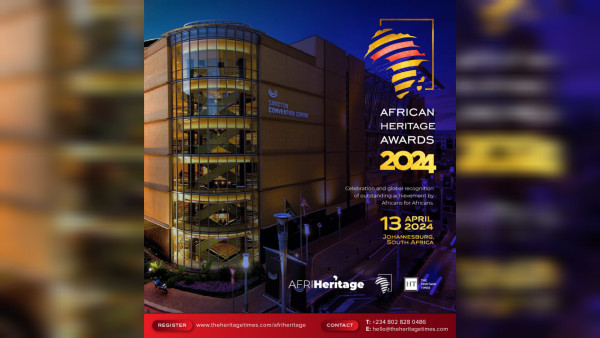
Johannesburg, South Africa's most populous city, is set to host the 2nd Edition of the African Heritage Awards (AHA) 2024, which aims to honour African greats who have impacted immensely to the advancement of humanity.

According to a statement issued on Friday in Johannesburg by the organizers, Heritage Times HT, the event is slated to hold on April 13, 2024, at the Sandton Convention Center, Johannesburg, South Africa.

The 'City of Gold' will host the prestigious pan-African event which is a sequel to the inaugural edition held on April 1, 2023 in Kigali, Rwanda. The African Heritage Awards is a gathering strategically organized to celebrate and recognize outstanding global accomplishments of Africans within the continent and in the Diaspora, in areas of Business, Politics, Philanthropy, Entertainment & Arts, Culture, Science & Technology, and Social Innovation.

This year's Awards is headlined by African-American billionaire Philanthropist, Robert. F. Smith, Chairman/CEO of Vista Equity Partners, Texas, United States; His Excellency, Dr. George Weah, former President of Liberia; His Excellency, John Dramani Mahama, former President of Ghana; Her Excellency, Mama Rachael Ruto, First Lady of the Republic of Kenya & Founder of Mama Doing Good Organization; Dr. Ngozi Okonjo-Iweala, Director-General of the World Trade Organization.

Others are: Mr & Mrs Strive Masiyiwa, Founder & Executive Chairman of International Technology Groups, Econet Global and Cassava Technologies; Adebayo Ogunlesi, Chairman/Managing Partner, Global Infrastructure Partners; Professor Thulisile Nomkhosi Madonsela, Founder of the Thuli Madonsela Foundation; Victoire Tomegah Dogbe, Prime Minister of Togo; Mrs Folorunsho Alakija, Managing Director of the Rose of Sharon Group and Executive Vice Chairman of Famfa Oil Limited; Othman Benjelloun, Co-chair of BMCE Bank Foundation and Madam Graca Machel, Founder of Graca Machel Trust and many others.

According to Heritage Times HT, the organizers of the African Heritage Awards 2024, it's expected that this year's edition will be more remarkable and historic, as it will be chaired by His Excellency, Sir Seretse Khama Ian Khama, former President of Botswana, and will be attended by former Heads of States and Captains of Industries across the African continent.

The recognition and awards, according to the organizers, have become imperative to sustainably foster the African culture of excellence, promote Afrocentrism, and create an ecosystem that will further retell the true African story towards the advancement of the continent's full potentials.

This year, the organizers are moving the African Heritage Awards to the southern divide of Africa, the home of Kwaito music and the cacophonous sounds of Amapiano, to specially honour distinguished African personalities, who have dignified themselves through remarkable achievements across the globe, whilst creating sustainable impact to uplift others.

Besides conferring international prestige and recognition on these deserving Africans, the Awards will focus on the critical importance of culture and leadership, which according to the organizers, lies at the core of any shared advancement of socio-economic and political development in Africa.

The Awards is also primed to cast a spotlight on individuals who, under challenging circumstances, have empowered Africans and impacted their sphere of influence to pave the way for sustainable and equitable development.

Taking cognizance of the reality that Africa is root to a plethora of people all over the world who continue to thrive and evolve despite the limitations and challenges stemming from stereotypes, the organizers of the AHA strongly affirm that the event will contribute immensely to changing the global perception of Africans, and also spur the needed critical mass for the attainment of cultural evolution and revolution in sustainable development.

For participation and reservation, kindly click on the link to register https://apo-opa.co/42qRL55

Distributed by APO Group on behalf of Heritage Times HT.

Media files
Heritage Times HT
Download logo
Read moreAfrican-American Billionaire Philanthropist, Robert Smith, Others Nominated for African Heritage Awards in South Africa
3 February 2024

Housing project for 500 Dunoon families on hold

Location: News

Western Cape government revising its plan and budget

Read moreHousing project for 500 Dunoon families on hold
2 February 2024

De Berg Nature Reserve Declared as South Africa’s 30th Ramsar site

Location: News

South African Government
Download logo

The Minister of Forestry, Fisheries and the Environment, Ms Barbara Creecy, has welcomed the declaration of De Berg Nature Reserve as South Africa's 30th Ramsar site under the Convention on Wetlands of International Importance.

“The conservation and restoration of wetlands is crucial to achieving many of our national and global sustainable development goals. Estuaries, marshes and vleis, rivers and lakes, and the biodiversity that they preserve, matter for our health, food supply, tourism, and jobs. Wetlands are vital for humans, ecosystems and our climate, providing essential ecosystem services such as water regulation, including flood control and water purification,” said Minister Creecy.

“Through the Working for Wetlands Programme, the Department of Forestry, Fisheries and the Environment (DFFE) has invested over R1.4 billion in the rehabilitation of 1,873 wetlands and created 43,662 jobs. The Working for Wetlands Programme, which commenced in the year 2000, is being implemented in all 9 provinces of South Africa by a dedicated team of experts working closely with communities,” added Minister Creecy.

De Berg Nature Reserve is located along the headwaters of the Dwars River in the highest part of Mpumalanga approximately, 20 kilometres north of the town of Dullstroom, and lies adjacent to the Verloren Valei Ramsar Site. At an elevation of just over 2300 meters above sea level, the Ramsar site contains the highest altitude wetlands in Mpumalanga, consisting of numerous valley bottom, seep wetlands and mountain streams and represents some of the most pristine and habitat diverse watercourses in the South African grassland biome.

The Ramsar site, which is a biodiversity hotspot, not only supports numerous pristine headwater wetlands but also supports numerous threatened, critically endangered, and vulnerable species of plants and animals. The site falls within the Lydenburg and Sekhukhune centres of plant endemism and has a total of 878 indigenous plant species, which includes 30 plant species that are threatened and near threatened and includes a new species of Bulbine, (B decastroi) which can be found in the valleys of the Reserve.

This site also has 18 species of frogs, 71 reptile species, 432 bird species and a 120 mammal species, including Vandam's girdled lizard (Smaug vandami), various crane species such as blue crane and grey-crowned crane and mountain reedbuck. Many of these species are also rare and vulnerable species and include flocks of up to 30 of the vulnerable Southern Bald Ibis which roosts on the cliffs above Ibis Falls, one of 10 iconic waterfalls which can be found at the site.

Although wetlands cover less than 3% of South Africa's land area, they offer diverse benefits that enrich human well-being. Wetlands are increasingly regarded in South Africa as socio-ecological systems as opposed to only ecological systems.  Many of our wetlands are in urban areas and are often the last remaining open areas for recreational use by the public.

“The South African National Biodiversity Institute (SANBI) – an entity of DFFE - is also actively contributing to wetland conservation through its comprehensive approach to mapping and understanding this critical ecological infrastructure, emphasizing that informed action today can make a significant difference for the future of wetlands, human well-being and biodiversity. Strategic Water Source Areas (SWSAs) are crucial to South Africa's water security, and various SANBI projects provide insight into land use and protection levels in these strategically important national assets,” said Minister Creecy.

“Through the development of partnerships to monitor, protect and rehabilitate wetlands, by ensuring our wetlands are kept free of litter and invasive alien plant species and by ensuring that we follow best practices to ensure that wetlands are sustainably used for their services we show our appreciation for and acknowledge the value of wetlands and ensure that they remain in place to provide future generations with the same services,” added Minister Creecy.

The designation of De Berg Nature Reserve as South Africa's 30th Ramsar Site under the Convention on Wetlands of International Importance coincides with World Wetlands Day (2 February) which is commemorated under the theme “wetlands and human wellbeing”.

Distributed by APO Group on behalf of South African Government.

Read moreDe Berg Nature Reserve Declared as South Africa’s 30th Ramsar site
2 February 2024

Court battle looms over Observatory pavement occupation

Location: News

The City wants to move the occupiers to Delft South but they say that’s too far away

Read moreCourt battle looms over Observatory pavement occupation
2 February 2024

De Berg Nature Reserve declared 30th Ramsar site

Location: News

De Berg Nature Reserve declared 30th Ramsar site

The Minister of Forestry, Fisheries and the Environment, Barbara Creecy, has welcomed the declaration of De Berg Nature Reserve as South Africa’s 30th Ramsar site under the Convention on Wetlands of International Importance.

The Ramsar Convention encourages the designation of sites containing representative, rare or unique wetlands, or wetlands that are important for conserving biological diversity.

“The conservation and restoration of wetlands is crucial to achieving many of our national and global sustainable development goals. Estuaries, marshes and vleis, rivers and lakes, and the biodiversity that they preserve matter for our health, food supply, tourism and jobs.

“Wetlands are vital for humans, ecosystems and our climate, providing essential ecosystem services such as water regulation, including flood control and water purification,” Creecy said on Friday.

Through the Working for Wetlands Programme, the Department of Forestry, Fisheries and the Environment (DFFE) has invested over R1.4 billion in the rehabilitation of 1 873 wetlands and created 43 662 jobs.

The programme commenced in the year 2000 and is being implemented in all nine provinces of South Africa by a dedicated team of experts working closely with communities.

De Berg Nature Reserve is located along the headwaters of the Dwars River in the highest part of Mpumalanga approximately, 20 kilometres north of the town of Dullstroom, and lies adjacent to the Verloren Valei Ramsar Site.

At an elevation of just over 2 300 metres above sea level, the Ramsar site contains the highest altitude wetlands in Mpumalanga, consisting of numerous valley bottom, seep wetlands and mountain streams, and represents some of the most pristine and habitat diverse watercourses in the South African grassland biome.

“The Ramsar site, which is a biodiversity hotspot, not only supports numerous pristine headwater wetlands but also supports numerous threatened, critically endangered, and vulnerable species of plants and animals.

“The site falls within the Lydenburg and Sekhukhune centres of plant endemism, and has a total of 878 indigenous plant species, which includes 30 plant species that are threatened and near threatened, and includes a new species of Bulbine, (B decastroi) which can be found in the valleys of the reserve.

“This site also has 18 species of frogs, 71 reptile species, 432 bird species and a 120 mammal species, including Vandam's girdled lizard (Smaug vandami), various crane species such as blue crane and grey-crowned crane and mountain reedbuck,” the department said.

Many of these species are also rare and vulnerable species. They include flocks of up to 30 of the vulnerable Southern Bald Ibis, which roosts on the cliffs above Ibis Falls, one of 10 iconic waterfalls that can be found at the site.

Although wetlands cover less than 3% of South Africa’s land area, they offer diverse benefits that enrich human well-being.

The department said Wetlands are increasingly regarded in South Africa as socio-ecological systems as opposed to only ecological systems. 

Many of the country’s wetlands are in urban areas and are often the last remaining open areas for recreational use by the public.

“The South African National Biodiversity Institute (SANBI) – an entity of DFFE - is also actively contributing to wetland conservation through its comprehensive approach to mapping and understanding this critical ecological infrastructure, emphasizing that informed action today can make a significant difference for the future of wetlands, human well-being and biodiversity.

“Strategic Water Source Areas (SWSAs) are crucial to South Africa’s water security, and various SANBI projects provide insight into land use and protection levels in these strategically important national assets,” Creecy said.

The designation of De Berg Nature Reserve as South Africa’s 30th Ramsar Site under the Convention on Wetlands of International Importance coincides with World Wetlands Day (2 February) which is commemorated under the theme “wetlands and human wellbeing”.

Once designated, these sites are added to the Convention's List of Wetlands of International Importance and become known as Ramsar sites. In designating a wetland as a Ramsar site, countries agree to establish and oversee a management framework aimed at conserving the wetland and ensuring its wise use.

“Through the development of partnerships to monitor, protect and rehabilitate wetlands, by ensuring our wetlands are kept free of litter and invasive alien plant species and by ensuring that we follow best practices to ensure that wetlands are sustainably used for their services we show our appreciation for and acknowledge the value of wetlands and ensure that they remain in place to provide future generations with the same services,” the Minister said. – SAnews.gov.za

nosihle
Fri, 02/02/2024 - 09:50

348 views
Read moreDe Berg Nature Reserve declared 30th Ramsar site
1 February 2024

SA to advance the African agenda with focus on AfCFTA

Location: News

SA to advance the African agenda with focus on AfCFTA

South Africa places great importance on the African Union (AU) Summits, as the country forges ahead with its foreign policy of the advancement of the African agenda.

This is according to International Relations and Cooperation Minister, Dr Naledi Pandor, who was briefing the media on Wednesday on developments in her department. 

The summit, which will take place on 17 and 18 February in Addis Ababa in Ethiopia, will focus on education. 

Last year, the AU finalised a 10-year review of Agenda 2063.  

A key recommendation, Pandor explained, is that the AU Member States must accelerate the implementation of the Agenda 2063 flagship projects that are aimed specifically at fast-tracking continental integration. 

The project particularly focuses on trade and market integration, free movement of people and infrastructure development.  

However, top of the agenda is the operationalisation of the African Continental Free Trade Agreement (AfCFTA), in which South Africa is playing a leading role.

“We are especially pleased that President [Cyril] Ramaphosa will officially witness the launch of South Africa’s first shipment and preferential trading under the AfCFTA on 31 January 2024, at the Port of Durban,” she said.

President Ramaphosa is expected to attend and participate in several high-level committee meetings of the Assembly. 

These include the meeting of the Committee of African Heads of State and Government on Climate Change (CAHOSCC), which will be held to reaffirm Africa’s position on climate change as advocated during the Conference of the Parties (COP28) held in the United Arab Emirates last year.

In his capacity as the Chairperson of the Presidential Infrastructure Championing Initiative, the country’s First Citizen annually hosts a meeting on the margins of the AU Summit to provide a progress report on infrastructure projects.  

The initiative aims to enhance infrastructure development in sectors such as transport, information communication and technology, water and sanitation, and energy in South Africa and throughout the region and continent. 

These areas, she said, are critical to the implementation of the AfCFTA.

The President is also expected to chair a high-level meeting of the Committee of Five (C5) on South Sudan to review and provide political guidance on the progress made in the implementation of the revitalised agreement on the resolution of conflict in South Sudan.

BRICS

She also announced that Egypt, Ethiopia, Iran, Saudi Arabia and the United Arab Emirates have confirmed they are joining the BRICS (Brazil, Russia, India, China and South Africa) bloc after being invited to last year. 

“However, you’d be aware that Argentina has written to indicate that they will not act on this successful application by the previous administration to become full members of BRICS. And we accept their decision, particularly given that 30 countries have now written to Russia, expressing interest in becoming members.” 

NAM Summit

The Minister also touched on the recent summits of the Heads of State and Government of the Non-Aligned Movement (NAM) and the Group of 77 and China, convened in Uganda, last month. 

She told journalists that the NAM Summit identified five priority areas. 

These include regional and international peace and security; the fight against terrorism; migration and humanitarian crises; human trafficking; and the Sustainable Developmental Goals.  

“In his statement to the NAM, President Ramaphosa confirmed that South Africa will remain steadfast in advancing its non-aligned approach to the maintenance of international peace and security by advocating for the peaceful political settlement of disputes and inclusive dialogue.”  

Following the NAM meeting, Pandor led the South African delegation to the G77 and China Summit. 

The G77 and China Summit is the largest negotiating bloc in the United Nations (UN) representing most developing countries and over 80% of the world’s population.  

“The focus of the summit was on South-South cooperation in the areas of trade, investment, sustainable development, climate change, poverty eradication, and the digital economy,” she explained. – SAnews.gov.za


Gabisile
Thu, 02/01/2024 - 12:52

533 views
Read moreSA to advance the African agenda with focus on AfCFTA
1 February 2024

SCTIE in Partnership with TIKZN Hosts Investor Workshop on Ugu District One Pause Shop Services

Location: MyPR

Port Shepstone Civic Centre under Ray Nkonyeni Local Municipality was a hive of activity on Tuesday, 30 January 2024 as local SMEs attended the Investor Workshop on the new Ugu District One Stop Shop. Hosted by South Coast Tourism & Investment Enterprise (SCTIE) in partnership with Trade & Investment KwaZulu-Natal (TIKZN), the workshop showcased investment …

Read moreSCTIE in Partnership with TIKZN Hosts Investor Workshop on Ugu District One Pause Shop Services
1 February 2024

Worker who earns R3,500 per month spends R1,200 on transport

Location: News

Metrorail’s return to service remains extremely limited

Read moreWorker who earns R3,500 per month spends R1,200 on transport
1 February 2024

Government leaders catch stock of sixth administration

Location: News

Government leaders take stock of sixth administration

With the term of the sixth administration coming to an end, government leaders are discussing the implementation and progress of the priorities that it set to achieve at the beginning of its term.

“This is the final Cabinet Lekgotla for the term of the sixth administration. It will look at the work done on the Medium Term Strategic Framework (MTSF), which is a government programme that sets priorities that we had to implement in this administration,” Minister in the Presidency Khumbudzo Ntshavheni said on Thursday in Pretoria.

​​The MTSF 2019-2024 is both a five-year implementation plan and an integrated monitoring framework, which focuses on the seven priorities and related interventions of the sixth administration of government, and the integrated monitoring framework focuses on monitoring outcomes, indicators and targets towards the achievement of the priorities.

The priorities of the MTSF include building a capable, ethical and developmental state; economic transformation and job creation; education, skills and health and consolidating the social wage through reliable and quality basic services.

It further prioritises spatial integration, human settlements and local government, social cohesion and safe communities as well as a better Africa and world.

“We are also going to look at the progress that we have made in implementing the Economic Reconstruction and Recovery Plan (ERRP) and the progress we are making in preparing for the National Health Insurance (NHI).

“Given the lessons we have learned during the COVID-19 pandemic, we think it is a priority that it must be signed during this period so that the full implementation can be taken in the seventh administration. This is why we are looking at the progress of its implementation,” the Minister said.

Work that has been done to deal with load shedding will also be discussed.

“Due to the challenges in the freight and logistics, we are going to look at that in line with the work that we have done with the ERRP. We will also look at crime because we can’t rebuild the economy if we are not dealing with the crime,” the Minister said.

She said the meeting would assess the impact of crime in terms of the vandalism of critical infrastructure whether it be electricity or the freight and logistics sector and any other infrastructure.

Ntshavheni was addressing members of the media on the sidelines of the Cabinet Lekgotla, which has been convened by President Cyril Ramaphosa from 1-2 February 2024.

Deputy President Paul Mashatile, Ministers, Deputy Ministers, Premiers, Directors-General and the leadership of the South African Local Government Association are in attendance.

The outcome of the meeting will chart a way forward for the year to be announced by the President during his State of the Nation Address (SONA) taking place on Thursday, 8 February 2024, at 7pm.

“We will also discuss the safety of South Africans and critical to that is gender- based violence and femicide (GBVF). We will look at the progress we are making to address GBVF and whether we are succeeding with the whole of society approach.

“We are also looking at the progress that has been made in dealing with corruption in terms of putting together the Anti-Corruption Advisory Council (NACAC) and the work that is being done to support the establishment of the council.

“We are looking at the integrated work that is be done to address with the Special Investigating Unit (SIU) and the Fusion Centre,” the Minister said. – SAnews.gov.za


nosihle
Thu, 02/01/2024 - 13:51

108 views
Read moreGovernment leaders catch stock of sixth administration
1 February 2024

Gangs force us pay for access to water, say Mamelodi residents

Location: News

Municipality confirms illegal connections to the reservoir but blames people occupying nearby land

Read moreGangs force us pay for access to water, say Mamelodi residents
1 February 2024

President Ramaphosa hands over Welisizwe programme bridges

Location: News

President Ramaphosa hands over Welisizwe programme bridges

President Cyril Ramaphosa says the Welisizwe Rural Bridges Programme remains one of government’s top priorities as these bridges improve the safety, well-being, and access for communities in rural areas.

On Wednesday, the President handed over complete bridges at the rural area of Mkhambathini in KwaZulu-Natal.

The Welisizwe Rural Bridges Programme is a result of the objectives announced in the 2023 State of the Nation Address that outlined government’s plan to construct at least 96 bridges during the 2023/24 financial year.

Some 11 bridges have been completed in KwaZulu-Natal with at least 58 other bridges currently under construction throughout the country.

“Because of climate change, extreme weather events like flooding are becoming increasingly common. Communities living along and close to rivers are particularly vulnerable. That is why we see building more Welisizwe rural bridges as a priority.

“The purpose of the programme is to improve safety and well-being for rural communities who have to cross rivers on a daily basis, to boost the local economy by making mobility easier, and to create jobs and support local businesses.

“The bridges that have been handed over today will make it easier for communities to get to the clinic and hospital, to school, to town and to places of work. It will make it easier for them to fetch supplies and to take produce to market,” President Ramaphosa said.

The President said that during the construction of these bridges, community members benefitted through the Expanded Public Works Programme (EPWP).

The EPWP is a medium-to long-term government-funded programme that promotes the use of labour-intensive methods to create work opportunities for poor and unemployed South Africans.

“In addition to these workers, each bridge site uses SANDF [South African National Defence Force] engineers and artisans who do work such as welding, groundwork, earth moving and soil retention.

“Since its inception, this programme has supported skills development by appointing graduates to work in bridge assessment, project management and maintenance, as assistant engineers and as candidate construction project managers.

“The bridge components are all locally sourced from South African companies that specialise in the manufacture and supply of steel-modular type bridges.  Local suppliers have also benefitted through the supply of materials such as stones, cement, concrete, road sign paint and personal protective equipment,” he said.

Historical mission

The President reflected that since the dawn of democracy some 30 years ago, government has built bridges “as we work to overcome the divisions of the past”.

“Over centuries of colonialism and decades of apartheid, the needs of the majority of South Africans were deliberately neglected, especially in our rural communities. Infrastructure was built for the benefit of a privileged minority.

“The historical lack of infrastructure in black communities contributed to the deep levels of poverty and inequality that we continue to grapple with today.  We remain determined to correct the imbalances in infrastructure.”

He urged community members to protect the bridges from vandalism and destruction.

“It is time to build bridges, not to destroy or burn them. It is time to build together a South Africa that we will be proud to leave for future generations.

“Today, the children of these areas can safely cross flooded rivers and attend school. Today, our grandparents can safely travel to health care facilities or to access government services,” President Ramaphosa concluded. – SAnews.gov.za


NeoB
Thu, 02/01/2024 - 08:53

125 views
Read morePresident Ramaphosa hands over Welisizwe programme bridges
1 February 2024

DA calls for Parliamentary inquiry into eThekwini water crisis

Location: News

“If eThekwini collapsed, so would Umngeni-Uthukela, threatening water security to the entire province of KwaZulu-Natal” says DA shadow minister

Read moreDA calls for Parliamentary inquiry into eThekwini water crisis
31 January 2024

Interview with Zando’s CEO on Navigating The Future of Online Shopping in South Africa

Location: MyPR

Interview with Zando’s CEO on Navigating The Future of Online Shopping in South Africa Cape Town (South Africa): 22 January 2024: Zando.co.za, the leading e-commerce platform in South Africa, announces focus for 2024 under the leadership of newly appointed Chief Executive Officer Morgane Imbert. Zando was established in 2012 and has grown to become one …

Read moreInterview with Zando’s CEO on Navigating The Future of Online Shopping in South Africa
  • Previous
  • Page 1
  • Interim pages omitted …
  • Page 88
  • Page 89
  • Page 90
  • Page 91
  • Page 92
  • Interim pages omitted …
  • Page 108
  • Next

Copyright © 2026 · MyZA · All Rights Reserved · Powered by Stratlec Online