• Skip to main content
  • Skip to header right navigation
  • Skip to after header navigation
  • Skip to site footer
MyZA

MyZA

News, Directory, Events and Other Stuff

  • Social Media
  • Sport
  • World News
  • Home
  • Submit News
  • Directory
  • Events
  • Stratlec
  • TFSA
  • News
    • APO
    • Today’s Sport News
    • Todays Social Media and Tech Headlines
    • Today’s World News
    • Today’s SA Financial News
  • Contact
You are here: Home / Archives for Japan

Japan

12 September 2023

The Official Imaging Supplier for Rugby World Cup France 2023

Location: Sport
Canon Central and North Africa (CCNA)

Today, Canon (Canon-CNA.com) begins its role as the Official Imaging Supplier of the Rugby World Cup 2023, which will be the third Rugby World Cup tournament it has sponsored. As the Official Imaging Supplier of Rugby World Cup 2023, Canon provides world-leading technology that ensures fans don't miss a moment of the action. Canon will be supplying a full range of support from its diverse businesses, including cameras, lenses, video camcorders and network cameras. As with many major sporting events, Canon Professional Services will be available, where its team members will be providing technical support to more than 800 press, 400+ photographers, 300+ TV crew personnel, 300+ agency staff and 70+ radio personnel. Support includes camera and lens maintenance services and product loans, ensuring they are equipped to capture every nail-biting moment.

AFP Partnership

In addition to its official imaging role, Canon is supporting several activities off the pitch that are designed to champion inclusivity across the sport. This includes an exciting partnership with the AFP, which will see one aspiring young photographer from each of the participating nations partnered with a staff photographer, equipped with a Canon camera.

Earlier this year, ahead of the tournament, each pair worked on an assignment together that illustrated their nation's relationship with the Rugby World Cup through photography. By allowing the next generation to show the world what the tournament means to their nation, we can celebrate the diversity of the sport and inspire a world of change.

Partnership with the Portuguese National Team

At the Rugby World Cup 2023, Canon will be giving members of the Portuguese national team PowerShot V10 (https://apo-opa.info/3VTs35H) cameras and will be featuring their stories on its website, enabling them to catalogue their tournament journey through their own lens.

Let's Celebrate our Differences

Rugby is a universal sport. It brings together women and men sharing key values of the sport such as solidarity, commitment, and respect, no matter where they come from and no matter who they are. These values have been celebrated in a unique international “Celebrating Our Differences” (https://www.LetsCelebrateOurDifferences.com/en/) photography competition, of which Canon is an official sponsor.

Once again, ahead of the tournament, the power was handed to fans across the world, to illustrate what the sport means to them. The winners of the challenge – from France, Argentina, Uganda, India, and Vietnam – were awarded prizes that included 16 Canon cameras: 12 Canon EOS R50s for the winners of each category and 4 EOS R8s for Canon's favourites. The photographs can be found on display on the gates of the UNESCO's headquarters in the seventh arrondissement of Paris until the 6th September, as well as during the tournament at the host cities of this year's Rugby World Cup.

See the winning images here (https://apo-opa.info/3Ewr6Zr).

“We're delighted to be the Official Imaging Supplier of the Rugby World Cup this year, following two great tournaments in England and Japan” says Peter Morris, Brand and Sponsorship Senior Manager, Canon EMEA. “We've also been thrilled to participate in the AFP partnership and the “Celebrate our Differences” photography competition, two initiatives that put the power of imaging in the hands of the diverse fans that help make this tournament such a special event. We hope that these moments, captured through the lens of our iconic imaging equipment, will help drive positive change.”

Rugby World Cup 2023

Host country: France

Tournament period: September 8 – October 28, 2023

Participating teams: 20 (South Africa, Namibia, England, Wales, New Zealand, Japan, France, Australia, Ireland, Scotland, Italy, Argentina, Fiji, Samoa, Uruguay, Georgia, Romania, Portugal, Tonga and Chile.

Distributed by APO Group on behalf of Canon Central and North Africa (CCNA).

Media enquiries, please contact:
Canon Central and North Africa
Mai Youssef
E-mail: Mai.youssef@canon-me.com

APO Group - PR Agency
Rania ElRafie
E-mail: Rania.ElRafie@apo-opa.com

About Canon Central and North Africa:
Canon Central and North Africa (CCNA) (Canon-CNA.com) is a division within Canon Middle East FZ LLC (CME), a subsidiary of Canon Europe. The formation of CCNA in 2016 was a strategic step that aimed to enhance Canon's business within the Africa region - by strengthening Canon's in-country presence and focus. CCNA also demonstrates Canon's commitment to operating closer to its customers and meeting their demands in the rapidly evolving African market.

Canon has been represented in the African continent for more than 15 years through distributors and partners that have successfully built a solid customer base in the region. CCNA ensures the provision of high quality, technologically advanced products that meet the requirements of Africa's rapidly evolving marketplace. With over 100 employees, CCNA manages sales and marketing activities across 44 countries in Africa.

Canon's corporate philosophy is Kyosei (https://apo-opa.info/3xeczh6) – ‘living and working together for the common good'. CCNA pursues sustainable business growth, focusing on reducing its own environmental impact and supporting customers to reduce theirs using Canon's products, solutions and services. At Canon, we are pioneers, constantly redefining the world of imaging for the greater good. Through our technology and our spirit of innovation, we push the bounds of what is possible – helping us to see our world in ways we never have before. We help bring creativity to life, one image at a time. Because when we can see our world, we can transform it for the better. For more information: Canon-CNA.com.
Media files
Canon Central and North Africa (CCNA)
Download logo
Read moreThe Official Imaging Supplier for Rugby World Cup France 2023
10 September 2023

AU joins G20 as a permanent member

Location: News

AU joins G20 as a permanent member

President Cyril Ramaphosa has welcomed the admission of the African Union as a member of the Group of Twenty (G20).

“We are delighted that the G20 has accepted the African Union as a member of the G20,” the President said on Saturday.

G20 is the premier forum for international economic cooperation and it plays an important role in shaping and strengthening global architecture and governance on all major international economic issues. 

The group comprises of 19 countries (Argentina, Australia, Brazil, Canada, China, France, Germany, India, Indonesia, Italy, Japan, Republic of Korea, Mexico, Russia, Saudi Arabia, South Africa, Türkiye, United Kingdom, and United States) and European Union.

The G20 members represent around 85% of the global GDP, over 75% of the global trade, and about two-thirds of the world population.

In his statement on the Working Session I: One Earth G20 Leaders’ Summit, which took place in New Delhi, India, President Ramaphosa called for countries to respond collectively, decisively and with urgency to climate change.

“No country is spared the effects of climate change. It is vital that industrialised countries, which have the means and which carry the greatest responsibility for climate change, support sustainable development in developing economies.

“For us to realise the vision of People, Planet and Prosperity, we need to meet our respective commitments and responsibilities. In so doing, we will be helping to create a world that is more equitable, more resilient and more sustainable,” the President said.

He said global reconstruction in the wake of the COVID-19 pandemic presents a unique opportunity to accelerate the transition to low-carbon, climate resilient, sustainable societies.

“Developing economies are bearing the brunt of climate change, despite carrying the least responsibility for this crisis. As African and other developing economy countries, we face the task of meeting our climate commitments in the midst of significant developmental challenges like poverty, inequality and unemployment.

“Climate change, environmental degradation, unsustainable consumption and production and resource scarcity are challenges that can only be addressed collectively and with a great deal of solidarity. South Africa calls for an enhanced and expanded Global Partnership for Sustainable Development,” the President said.

He said these efforts must be supported by the concrete policies and actions outlined in the Addis Ababa Action Agenda on Financing for Development.

“Access to adequate and predictable financial resources from a variety of public and private sources is critical if we are to achieve the Sustainable Development Goals.

“Development partners need to both meet their existing commitments and upscale Official Development Assistance. Ordinary people see billions of dollars being spent on the weapons of war instead of addressing development challenges.

“In particular, development partners need to meet their commitments to capacity building and infrastructure development in low- and middle-income countries,” the President said. – SAnews.gov.za


nosihle
Sun, 09/10/2023 - 09:34

178 views
Read moreAU joins G20 as a permanent member
7 September 2023

The key to Africa’s industrialisation process and ending the region’s massive energy poverty

Location: News
African Energy Chamber

By Jason Mitchell

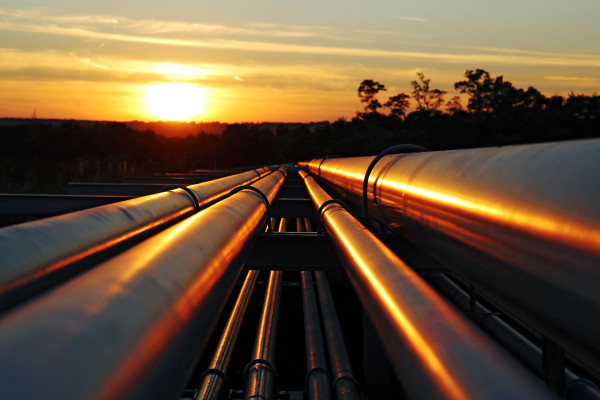
Africa's vast natural gas reserves are key to bringing energy to Africa's poorest countries, to a solid industrialisation process throughout the region and to significant poverty reduction.

The region is home to 33 of the world's 46 least-developed countries (LDCs) with an average income per head of less than $1,018 a year. The continent's poorest countries must expand at 6-7% a year if poverty is to be reduced in a big way and if the life chances of hundreds of millions of people are to be improved. To achieve this goal, these countries require abundant and cheap energy. Luckily, for many African states, the answer lies on their own doorstep — natural gas. Gas has remained a niche fuel in sub-Saharan Africa — contributing only 5% of the total energy mix against a global average of 20-25% — but its potential is enormous.

A new vision for Africa is required — a criss-crossing network of natural gas pipelines that brings energy to all corners of the region. The continent's contribution to global greenhouse gas emissions is tiny and will only become slightly bigger if the region's natural gas reserves are exploited. There is also a massive opportunity to wean poor Africans away from the use of biomass fuel and to help protect the region's forests through the rollout of small, liquified petroleum gas (LPG) stoves. Climate change is an issue in Africa but poverty reduction is a bigger one. Poverty is the biggest killer in Africa today.

It's very hard for Europeans and North Americans to imagine what it's like to live on under $1,018 a year, to not have readily available electricity, to not have a refrigerator or a washing machine, to not have a car, to not have a lawnmower, to not be able to fly from one country to another cheaply, to not have electricity in the school or the workplace and to have to use firewood or charcoal for cooking purposes. Fossil fuels have been at the heart of the Industrial Revolution that has brought prosperity and better living standards to the developed world. People in the First World must be very careful if they decide to deny Africans the same chance to prosper.

Africa has the lowest energy use per capita in the world — the average electricity use of a sub-Saharan African resident is lower than that of a household fridge in the United States. Average consumption per person in sub-Saharan Africa, excluding South Africa, is a mere 185 kilowatt-hours (kWh) a year, compared with about 6,500kWh in Europe and 12,700kWh in the US. Every year San Antonio, Texas, with a population of 1.5m people, uses as much electricity as the whole of Nigeria, with 203m people. Golden, Colorado, a small town with only 19,000 people, uses as much electricity as Chad, a country with 16m people.

The UN's Sustainable Development Goal Seven aims to “ensure access to affordable, reliable, sustainable and modern energy for all” by the year 2030. That's a tall order. In 2019, 917m people in Africa (around 80% of the region's population) relied on wood, charcoal, kerosene, animal and crop waste or other solid fuels to cook their food and heat their homes. The International Energy Agency (IEA) reports that almost 490,000 people die prematurely every year in sub-Saharan Africa from household air pollution-related causes — stemming from the lack of access to clean cooking facilities. Gas is a much cleaner form of cooking than biomass and its use should be encouraged. Biomass burning-power plants emit 300-400% more CO2 than natural gas per unit energy produced. Natural gas emits almost 50% less carbon dioxide than coal. 

Africa has one-fifth of the world's population but contributes only 3% to global greenhouse gas emissions. Incredibly, some 48 sub-Saharan African countries, excluding South Africa, have an estimated share of global emissions of only 0.55%. The fact is that many African states are already at net zero. If the continent were to use an additional 90bn cu m of natural gas per year — or 50% more than today — the resulting emissions would only raise Africa's cumulative contribution to global carbon emissions to 3.5% (ten gigatonnes) by the year 2050, according to the IEA. It really is a tiny increase compared to the chance of reducing poverty levels for hundreds of millions of poor people. If Africa is to provide universal electricity access by 2030 it would have to almost double its total generation capacity from around 260gw today to 510gw. 

Almost half the continent's 55 countries have proven natural gas reserves. Across the region, natural gas reserves amount to around 17.5trn cubic metres (cu m), making up around 9% of the world's total gas reserves. They are considerable in northern Africa (accounting for 45% of African reserves) and western Africa (32%), in particular. Commercial quantities of natural gas have been found in many African countries.

Previously, only four countries from the region have been major natural gas production hubs: Nigeria (with total gas reserves of 5.8trn cu m), Algeria (4.5trn cu m), Egypt (2.2trn cu m) and Libya (1.5trn cu m). These four accounted for 78% of African gas reserves in 2021 (https://apo-opa.info/48gDBWG), according to the United States Energy Information Administration.

However, seven African countries — Mozambique, Senegal, Tanzania, Mauritania, South Africa, Ethiopia and Morocco — with no history of fossil gas exploitation have now opened up their doors to gas projects. Some 84% of new reserves in the pre-production stage are found in these states — total new reserves amount to 5.1trn cu m. Mozambique has re-production reserves of 2.3trn cu m, Senegal 779bn cu m, Mauritania 575bn cu m, Tanzania 512bn cu m, South Africa 96bn cu m, Ethiopia 42bn cu m and Morocco 39bn cu m.

Furthermore, major untapped reserves have been discovered in Angola, Cameroon, Ghana, Equatorial Guinea, the Republic of the Congo, Kenya and Uganda. A number of these states — including Mozambique, Tanzania, Mauritania and Senegal — are actively marketing natural gas to capitalise on recent discoveries. In fact, the IEA has declared Africa the ‘new frontier' in global oil and gas.

The big four gas-producing countries will continue to dominate gas production in the near term but experts estimate that Mozambique and the other new entrants will contribute more than 50% of the region's gas production by 2038.

Natural gas can be used for electricity generation, industry and domestic use. Crucially, harnessing Africa's gas could provide the baseload power needed to boost Africa's capacity to process its raw materials locally. It could provide enough energy for industrial processes, including steel and cement production and paper and pulp manufacturing. It could be also used to make fertiliser to raise agricultural yields. Renewables, including solar and wind, cannot yet provide enough energy for these purposes.

The huge reserves of gas can play a significant role in the continent's energy transition, as natural gas has a much lower carbon footprint than oil and coal. Critically, natural gas development and renewable power are not mutually exclusive. If Africa were to triple its use of natural gas, the United Nations Economic Commission for Africa (Uneca) estimates that the region would be able to increase its use of renewable energy eight-fold. Reliable forms of energy such as gas can be used to stabilise a grid powered by intermittent sources such as wind and solar. It can play a key role in a ‘just' energy transition.

However, expanding gas supply across Africa would require a whole web of new gas pipelines and that does not come cheap. A lot of the gas from the new projects already under way in Africa is destined for international markets, including the European Union — which have been seeking new sources of energy since the Ukraine crisis — but it is vital that the region's gas reserves are deployed for domestic use, as well. Nigeria, for example, sits on the continent's largest known natural gas reserves but only 55% of the population had access to secure electricity in 2020.

Multilateral financial institutions (MFIs) — many of which are headquartered in the developed world — are now shying away from investing in natural gas projects in Africa because of pressure from a vociferous green lobby. In 2021, 20 countries — including almost all the world's big, rich democracies — pledged to stop almost all financing of new fossil fuel projects internationally by the end of 2022. Furthermore, under the Glasgow Financial Alliance for Net Zero (GFANZ), 450 financial firms across 45 countries, responsible for over $130trn in assets, committed to accelerate the global decarbonisation process. The problem is that most Western governments and financial institutions do not distinguish between coal, oil and gas, and the pressure to stop funding all hydrocarbons has negatively impacted gas projects in Africa in a big way.  

Some of the continent's biggest financiers — including the African Development Bank (AfDB) — are finding it increasingly difficult to support gas project developments that require loan syndication and foreign partners. The World Bank is pulling back, too. Local banks cannot finance major gas projects on their own, as they are limited by their capital base. In particular, the fossil fuels divestment campaign is having a big impact on the amount of development and concessional finance available. This kind of finance used to support a number of gas projects for their poverty-reducing and economic development value.

For example, without the guarantees of development finance institutions (DFIs), most of Africa's recent gas-to-power plants would have never been built in the first place. The withdrawal of development finance from downstream gas and gas-to-power projects is a serious cause for concern for Africa's electrification effort and moving the needle on energy access.

Furthermore, there is a glaring double standard — many European countries have increased their use of hydrocarbons (coal as well as gas) since Russia's invasion of Ukraine. They are constructing new fossil fuel pipelines at home. The EU recently classified natural gas a ‘green' fuel, which will allow Europe's projects to be backed by investors committed to environmental, social and governance (ESG) principles. European countries are now looking towards African states for new sources of gas. However, they are not prepared to back new gas projects in Africa that would supply the fuel to the region itself. That smacks of hypocrisy of the worst kind. How can you deny the poorest people in the world the sort of energy that you want to use yourselves?

Lumping all hydrocarbons together is a blunt policy mechanism that is not good from an emissions perspective either. In poorer places, like sub-Saharan Africa, the available alternative to gas is not renewable electricity but rather coal, diesel and, most of all, polluting biomass. In sub-Saharan Africa, demand for biomass fuels is expected to surge by 40% by the year 2040 if ‘business as usual' continues. The burning of biomass is a major contributor to global carbon emissions and charcoal has been a top driver of tropical forest loss during the past two decades, with the greatest footprint in Africa. The continent's carbon sinks need protecting and the irony is that the greater use of gas would achieve that.

Africa is home to 18% of humanity but receives less than 5% of global energy investment. And much of this investment goes on producing oil and gas for export. There must be much more investment in the region for the domestic use of gas. Gas projects could play an absolutely vital role in bringing energy to Africa but obviously the projects require financing. DFIs must think again about their decision to limit investment in new projects in Africa. The financing of a network of gas pipelines throughout Africa would be one of the quickest and surest ways of industrialising the region in a big way and of alleviating poverty on a large scale. Renewables just cannot do that how ever much wishful thinking takes place.

In fact, development institutions should go one step further and consider subsiding a massive roll out of small LPG stoves to millions of poor households in the region. It could be one of the biggest moves in contributing to Africa's decarbonisation effort by arresting the pace of deforestation in the region. LPG is recovered from ‘wet' natural gas (gas with condensable heavy petroleum compounds) by absorption and reaches the domestic consumer in cylinders under relatively low pressures. The widespread adoption of LPG stoves would reduce the amount of pollutants in the air from biomass fuels. Poor households that currently depend on woodfuel for cooking require a cleaner cooking alternative — LPG is one of the solutions.

LPG stoves are also suitable for domestic use in rural settings — a key consideration in Africa where energy poverty is greatest in the countryside. For instance, in 2016, electricity access in urban and rural areas in Nigeria was 86% and 34%, respectively, according to the World Bank.

Africa only needs to look to Asia for examples. In 2006, Indonesia implemented a ‘mega-programme' to induce a large-scale transition from kerosene to LPG stoves in order to reduce government spending on kerosene subsidies. The initiative invested in LPG infrastructure, domestic cylinder production and consumer awareness. By 2012, 93% of the target had been reached and LPG consumption had grown by almost 350%.

In India, LPG access expanded through the early-2000s but it was still not reaching most poor families. To boost access among the poor, the Indian government introduced the Pradhan Mantri Ujjwala Yojana (PMUY) Scheme. Under it, the country's oil marketing companies provide subsidies to reduce the cost of both LPG connections and cylinder refills to women in households classified as below the poverty line. In 2016, the cost of a connection was about Rupees 3,200 ($48) and included the first full cylinder (plus deposit), deposit for a regulator, an LPG stove and administrative fees.

Furthermore, African governments must consider increasing domestic gas allocations from liquified natural gas (LNG) export projects. These are an effective way to ensure that even if developers prioritise lucrative exports over local sales, they must reserve part of their production for the domestic market. Upcoming LNG terminals in sub-Saharan Africa — for example, in Mozambique — now make it compulsory to allocate a specific amount of gas to the domestic market. The availability of domestic gas from export facilities can encourage gas-based industrialisation (for example, in Senegal) or additional gas-to-power capacity (Mozambique, Mauritania and Senegal). In August 2022, for instance, Senegal's Petrosen Trading & Services signed an MoU with Turkey's Çalık Enerji and Japan's Mitsubishi for the pre-feasibility study of a gas-based ammonia and urea manufacturing unit.

It is a huge mistake to lump all hydrocarbons together and for Western environmentalists to argue that no new new fossil fuel projects should happen in Africa whatsoever. Deforestation is one of the biggest issues in Africa today. Poor Africans must be weaned off the use of wood-based fuels. The widespread adoption of small LPG stoves would be one of the surest ways of reducing deforestation. Natural gas could also form the basis for a solid, large-scale industrialisation process in Africa — something that is essential if the region is to achieve the sort of economic growth needed to lift hundreds of millions of people out of poverty.

Distributed by APO Group on behalf of African Energy Chamber.

Media files
African Energy Chamber
Download logo
Read moreThe key to Africa’s industrialisation process and ending the region’s massive energy poverty
5 September 2023

Your lesson for World Cleanup Day – when you recycle your PET bottles, place nothing in the bottle

Location: MyPR

Our country’s post-consumer recycling rates for beverage bottles are high but they could be higher if South Africans would learn one simple rule – put nothing in the bottle. This is the view of South African National Bottled Water Association CEO, Charlotte Metcalf, who urges those South Africans who will be actively participating in World …

Read moreYour lesson for World Cleanup Day – when you recycle your PET bottles, place nothing in the bottle
28 August 2023

One Switch, Transfer your EcoFlow Power Stations from Portable to Home Backup Solutions

Location: News
EcoFlow

Say goodbye to the hassle of relocating your power stations during load shedding. EcoFlow (https://www.EcoFlow.com/za), a global leading sustainable energy solutions company, is excited to introduce the enhancement that expands the abilities of its DELTA Series (https://apo-opa.info/44uAEib) and RIVER Series (https://apo-opa.info/3PhnlNH) to power your home with just a single plug. These cutting-edge power stations are now compatible with the major transfer switches on the market, enabling seamless integration with home circuits for comprehensive power coverage.

Easy Operation, Seamless Integration

"This compatibility empowers users to effortlessly connect EcoFlow portable power stations (https://apo-opa.info/3qGeZWt) to their homes, suitable with a variety of transfer switches on the market." said Joy Wu, Head of LAMEA&APAC at EcoFlow. "In the face of relentless load shedding, this innovation provides an energy-efficient and time-saving solution. Users no longer need to shuffle power stations or appliances around to maintain essential functions. With a single switch, power will course through your home circuit."

This home backup power solution encompasses an EcoFlow power station and a transfer switch. Installation only takes about 20 minutes by a professional electrician. Once connected to the home main panel of electrical circuits via a transfer switch, your EcoFlow power station becomes a reliable source of power for your entire home. From the living room to the kitchen, bathroom, or bedrooms, the solution operates seamlessly, eliminating the need for complex wiring or redundant operations.

Accessible and Reliable Home Power Solution

One of the most compelling advantages of EcoFlow's portable power solutions with transfer switch compatibility is their affordability. "The additional cost for a transfer switch in the market is approximately R500-1000," noted Joy. "Compared to traditional home power solutions, the EcoFlow combo provides an economical entry point for families seeking dependable backup power."

The solution caters to both the DELTA Series and RIVER Series portable power stations, offering up to 10.8kWh of capacity to power an entire home - from critical appliances to lighting and communication devices. The built-in BMS (Battery Management System) provides multiple protections against overload, overvoltage, overheating, etc., freeing you from the worries of unstable grid power.

In addition to their cost-effectiveness, these power stations present a safe and eco-conscious alternative to noisy and poisonous emission-heavy fuel generators, making them suitable for household use.

Limitless Application, Anytime and Anywhere

An added benefit is the portability of EcoFlow's portable power stations. Designed for plug-and-play convenience, users can effortlessly unplug their power stations and carry them anywhere, providing adaptable energy solutions for outdoor activities, travel, and emergency situations.

"This innovation marks a significant step forward in the field of home power solutions, simplifying households' ability to maintain uninterrupted power supply during outages," addressed Joy. For a limited time, the combo of a portable power station and a free transfer switch is now available on EcoFlow's official website (https://apo-opa.info/3QYiPVt).

* Note: this compatibility is applicable to both the EcoFlow DELTA series and the RIVER series; however, the actual performance may differ based on the capacity and rated power of the respective power stations. This solution is not advisable for the RIVER 2 model.

Distributed by APO Group on behalf of EcoFlow.

Links to additional content:
DELTA Series: https://apo-opa.info/44uAEib
RIVER Series: https://apo-opa.info/3PhnlNH
EcoFlow portable power stations: https://apo-opa.info/3qGeZWt
EcoFlow's official website: https://apo-opa.info/3QYiPVt 

Media Contact:
Orange Lin
EcoFlow Communications Manager in South Africa
orange.lin@ecoflow.com

About EcoFlow:
EcoFlow is a leading eco-friendly energy solutions company with the vision to power a new world.  Since its founding in 2017, EcoFlow aims to become a reliable and trusted energy companion for individuals and families across the world, providing accessible and renewable power solutions at home, outdoors, and in mobile spaces. Today, with operational headquarters located in the USA, Germany, and Japan, EcoFlow has empowered more than 2.5 million users in over 100 markets worldwide.

Media files
EcoFlow
Download logo
Read moreOne Switch, Transfer your EcoFlow Power Stations from Portable to Home Backup Solutions
23 August 2023

Is Your Web Site on THIS List?

Location: MyPR

Today we had a look at our MyPR.co.za web site statistics for the month to date of August 2023. We have deployed our own hosted stats software and have been closely watching and comparing these stats – with Google Ananlytics and our global Server Statistics programmes – in order to check the veracity of the …

Read moreIs Your Web Site on THIS List?
17 August 2023

Citizens urged to vaccinate amid confirmed case of COVID Eris variant in Gauteng

Location: News

Citizens urged to vaccinate amid confirmed case of COVID Eris variant in Gauteng

The National Department of Health on Wednesday confirmed the first case of the new COVID-19 “Eris” variant from a sample taken in Gauteng. 

The department has since used this opportunity to remind citizens that they can still access life-saving vaccines at public healthcare facilities, although the World Health Organisation (WHO) has indicated that the new variant presents a low risk to the public. 

“This doesn’t mean we should lower our guard because the virus mutates, which means there is no guarantee that its low severity status will remain unchanged to become a higher risk,” the department said, calling on people, especially the elderly and those living with comorbidities, to get the jab.

WHO has now designated Eris, also known as EG.5, as a variant of interest (VOI), a subvariant of the Omicron lineage that originally emerged in November of 2021.

The organisation said there has been a steady increase in this variant’s prevalence, with over 7 000 sequences shared from 51 countries as of 7 August 2023. 

EG.5 was first reported on 17 February 2023 and designated as a variant under monitoring (VUM) on 19 July 2023. 

The largest portion of EG.5 sequences, according to WHO, are from China, followed by the United States, Korea, Japan, Canada, Australia, Singapore, the United Kingdom, France, Portugal and Spain. 

Globally, WHO said there has been a steady increase in the proportion of EG.5 reported. 

However, based on the available evidence, the agency said the public health risk posed by EG.5 is evaluated as low at the global level, aligning with the risk associated with XBB.1.16 and the other currently circulating variant of interests (VOIs). 

“While EG.5 has shown increased prevalence, growth advantage, and immune escape properties, there have been no reported changes in disease severity to date. 

“While concurrent increases in the proportion of EG.5 and COVID-19 hospitalisations, lower than previous waves, have been observed in countries such as Japan and the Republic of Korea, no associations have been made between these hospitalisations and EG.5.”

However, due to its growth advantage and immune escape characteristics, the organisation said EG.5 may cause a rise in case incidence and become dominant in some countries or even globally. – SAnews.gov.za
 

Gabisile
Thu, 08/17/2023 - 13:21

179 views
Read moreCitizens urged to vaccinate amid confirmed case of COVID Eris variant in Gauteng
8 August 2023

Springboks Must Honour their Ambassadorial Role

Location: Sport

Republic of South Africa: The Parliament
Download logo

The Chairperson of the Portfolio Committee on Sports, Arts and Culture, Ms Beauty Dlulane, has congratulated all the 33 players selected to represent South Africa in France.

She said the ambassadorial role of the 33 Springboks has began and will culminate in Paris on 28 of October.

“This is a team that united the nation through representation and deed when it won the Rugby World Cup in 2019, in Japan. We are proud of the Springboks because many of us see ourselves in them, and see what traversing adversity and be a victor.”

Siya Kolisi will captain the 33 men squad when they attempt their title  defence in France. The Springboks open their Rugby World Cup title defence against Scotland on 10 September, at the Stade Vélodrome in Marseille. Ms Dlulane said she speaks on behalf of all South Africans when she wished the Boks well.

“Clearly for the past four years the Boks have done enough to prove their mettle, and show that they will be serious contenders. All South Africans should be behind this team to urge it on until the last day of the World Cup. We are saying ndlela-ntle Mabhokobhoko,” Ms Dlulane added.

The Boks are scheduled to play friendly games against Wales (Principality Stadium) and New Zealand All Blacks (Twickenham) before engaging in a voyage across the English Channel.

Distributed by APO Group on behalf of Republic of South Africa: The Parliament.

Read moreSpringboks Must Honour their Ambassadorial Role
4 August 2023

It’s huge in Japan and will be in Komani too, says dealer principal

Location: MyPR

The arrival of Mitsubishi in Komani has generated quite a stir among those locals who are faithful followers of the Japanese brand. Ashton Schnehage, dealer principal at the Kelston Motor Group’s new multi-franchise dealership in Cathcart Road, said there were Mitsubishi clients in the area who trusted the brand “fiercely”. At the time of its …

Read moreIt’s huge in Japan and will be in Komani too, says dealer principal
1 August 2023

Japan-South Africa Foreign Ministers’ Meeting

Location: News

Ministry of Foreign Affairs of Japan
Download logo

On August 1, from 12:45 a.m. local time (7:45 p.m. JST) for approximately 150 minutes, Mr. HAYASHI Yoshimasa, Minister for Foreign Affairs of Japan, during his visit to South Africa, held a foreign ministers' meeting and a working lunch with Honourable Dr. Naledi PANDOR, Minister of International Relations and Cooperation of the Republic of South Africa. The overview is as follows.

1. Bilateral Relations

  1. At the outset, Minister Pandor welcomed the Japanese Foreign Minister's first visit to South Africa in two and a half years and expressed strong expectations for further entry of Japanese companies into South Africa. Minister Pandor also stated that she would like to further develop bilateral relations in a variety of fields including trade and investment.
  2. In response, Minister Hayashi stated that as the G7 Presidency, he prioritizes listening directly to the "voices" of Africa and that his visit to Africa is against this backdrop. Minister Hayashi stated that Japan continues to attach importance to green growth, sustainable mining businesses, and manufacturing industry development in the bilateral cooperation in the fields of trade, investment, and energy. Minister Hayashi also introduced the advancements of science, technology, academic cooperation and Japan's contributions in human resources development.
  3. The two ministers affirmed that they would cooperate to improve the business environment in South Africa to protect local industries, employment, and investments by Japanese companies.

2. Cooperation in the International Arena and Regional Affairs

  1. Minister Pandor explained about the African leaders' mission for peace in Ukraine. Minister Hayashi stated that he appreciates South Africa's efforts, and that it is important to achieve a just and lasting peace in Ukraine as soon as possible. The two ministers affirmed that they would cooperate to maintain the international order.
  2. Minister Pandor explained the outcomes of the Russian-Africa summit held in Russia on July 27 and 28 where she accompanied President Ramaphosa who participated in the summit. Minister Hayashi stated that Japan deplores that the Black Sea Grain Initiative (BSGI) was terminated by Russia's refusal, and has a hope to work together towards the resumption of the initiative. The two ministers affirmed the need for both countries to cooperate to ensure food security in Africa.
  3. In addition, the two ministers exchanged views on such issues as the situation in Africa, including the conflict in Sudan, the situation in Niger, the status of implementation of the peace agreement in Ethiopia and the situation in Mozambique, and regional situation in East Asia, including responses to North Korea on the nuclear and missile issues as well as the abductions issue. They also discussed on the various issues in the international community such as cooperation in the G20, the uncertain and unfair development finance and strengthening of the functions of the United Nations including Security Council reform. The two ministers affirmed that they would continue to work closely together.

Distributed by APO Group on behalf of Ministry of Foreign Affairs of Japan.

Read moreJapan-South Africa Foreign Ministers’ Meeting
  • Previous
  • Page 1
  • Interim pages omitted …
  • Page 5
  • Page 6
  • Page 7

Copyright © 2026 · MyZA · All Rights Reserved · Powered by Stratlec Online