The World Has Changed. African Countries Must Rethink How They Grow Their Economies
Africa still needs millions of better-paying jobs and higher productivity to reduce poverty. What has changed is the route to achieving those goals.

MyZA
News, Directory, Events and Other Stuff
Africa still needs millions of better-paying jobs and higher productivity to reduce poverty. What has changed is the route to achieving those goals.
Ten pivotal moments that tell the story of how African football transformed itself.
According to one study, 75% of respondents believe chatbots are conscious.
USAID’s closure, while painful and damaging, might give rise to a new arrangement beyond aid.
The Freedom Front Plus (VF Plus) is seriously questioning the priorities of the Mbombela Local Municipality after approval was sought for the Executive Mayor, Mr Wiseman Khumalo, the Municipal Manager and senior officials to attend the World Water Week conference in Singapore from 15 to 19 June 2026. All while Mbombela’s own taps are running […]
The post Trips abroad vs leaking pipes: where do Mbombela’s priorities lie? appeared first on Freedom Front Plus.
Beijing’s growing interest in Somalia is less about development corridors and more about political alignment.
107-year-old Native Military Corps veteran couldn’t attend Armed Forces Day in Thohoyandou
“Karate is not only about kicking and punching but also building the character of the individual”
Djibouti is a presidential republic with a multiparty system, but political authority is highly centralised.
The most prominent news creators on social media and video networks are men and YouTube is the most important platform for them.
There has been a rebalancing of global trade dynamics with wide-ranging consequences for international business.
The country has a growing shortage of detectives
South Africa is “fueling genocide”, protesters claim
Planet Earth is living on borrowed time, a new global report reveals. The world must stop burning fossil fuels now and take urgent steps to reduce global warming.
About one in five people in rural Lesotho face food insecurity
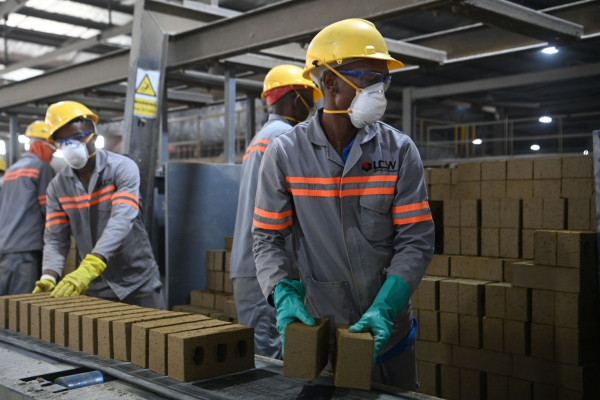
The kilns are firing again—and with them, the economic hopes of a community. In the quiet town of Lobatse, southern Botswana, a decades-old industrial landmark is undergoing a remarkable renaissance. Lobatse Clay Works (LCW), a brick manufacturer that was once the cornerstone of Botswana's construction industry, has been resurrected owing to a strategic investment from the African Development Bank Group (www.AfDB.org). The financing has transformed not only the company but an entire community.
“The buildings that shaped modern Botswana will rise again from our clay," declares Anthony Moepeng, Acting Chief Executive Officer of Lobatse Clay Works.
Founded in 1992 as a joint venture between Botswana Development Corporation (BDC) and American firm Inter-Kiln, Lobatse Clay Works quickly established itself as the nation's premier maker of bricks. For decades, its distinctive reddish-brown bricks were synonymous with Botswana's construction boom, during which schools, hospitals, and government buildings all showcased the company's craftsmanship.
But in 2017 the company faced a perfect storm of challenges. Aging equipment, production inefficiencies, and rising fuel costs forced the shuttering of the once-thriving operation, leaving the factory idled -- stripping the community of both jobs and identity.
African Development Bank's Catalytic Investment Powers Revival
Recognizing Lobatse Clay Works' potential, the African Development Bank provided a loan facility, in partnership with the Botswana Development Corporation to turn around the company's fortunes, focusing on technological modernization and operational efficiency.
The Bank's investment enabled Lobatse Clay Works to acquire state-of-the-art manufacturing equipment that dramatically improved energy efficiency. A new hybrid fuel system slashed production costs, while enhanced kiln technology boosted output capacity and product quality.
In 2023, the company, facing supply chain challenges and rising costs, secured an additional 48 million Pula (around $3.5 million) from the African Development Bank — bringing the total financing to 138 million Pula— to keep growth on track.
This substantial investment enabled the plant to reopen in 2024.
Beyond Bricks: Building Communities and Futures
The revitalized facility has already created 148 direct jobs with hundreds more expected in supporting industries from transportation to services.
The plant's output of three million bricks per month is high enough to meet domestic construction demand and serve lucrative export markets in South Africa, Zimbabwe and Namibia, generating valuable foreign exchange for Botswana's economy.
African Development Bank's Deputy Director General for Southern Africa, Moono Mupotola, stressed the broader significance of the investment. "This speaks directly to what we do at the African Development Bank. Lobatse is a small town, but almost one hundred percent of the factory workers are from the town. This project delivers on our High 5 development priority of improving the quality of life for Africans."
Most significantly, Lobatse Clay Works's revival aligns perfectly with Botswana's industrial diversification goal to reduce dependence on diamond revenues by strengthening manufacturing capability.
"Through the African Development Bank funding, we have been able to commit BWP 4 million towards the refurbishment of the plant," explains Benedicta Abosi, Acting Managing Director at BDC. "This has enabled us to restart operations and produce enough bricks for expansion opportunities into the region."
The company plans to expand from brick manufacturing to include tiles, further cementing its role in Botswana's construction renaissance and economic diversification efforts.
Distributed by APO Group on behalf of African Development Bank Group (AfDB).
Photos: https://apo-opa.co/453yTvZ
About the African Development Bank Group:
The African Development Bank Group is Africa's premier development finance institution. It comprises three distinct entities: the African Development Bank (AfDB), the African Development Fund (ADF) and the Nigeria Trust Fund (NTF). On the ground in 41 African countries with an external office in Japan, the Bank contributes to the economic development and the social progress of its 54 regional member states. For more information: www.AfDB.org
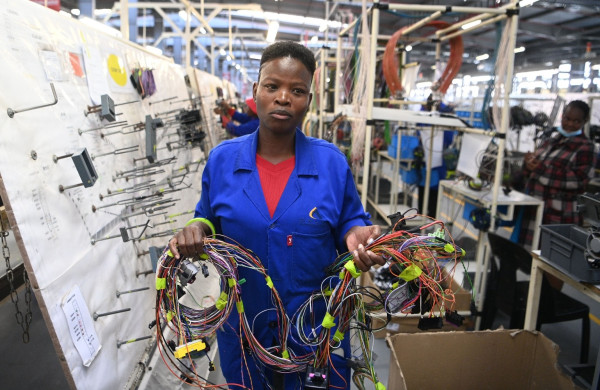
The Botswanan town of Lobatse, some 70 km south of Gaborone, has been transformed into a vibrant manufacturing centre. Across sprawling factory floors, hundreds of skilled hands meticulously assemble intricate wiring harnesses - components that will eventually power Volkswagen and Nissan vehicles across Africa and beyond.
In the automotive industry, wire harnesses are an intricate arrangement of wires, connectors, and components. They serve as vehicles' central nervous systems, enabling the transmission of electrical signals and power throughout the automobile.
This is Delta Automotive Technologies, where strategic financing from the African Development Bank has catalysed a manufacturing renaissance that extends far beyond the factory wallsThe company makes wiring harnesses primarily for Volkswagen and Nissan.. For decades, Botswana's economic history was written in diamonds. Today, a new chapter is unfolding as the African Development Bank's $80 million credit line to the Botswana Development Corporation (BDC) for businesses in the country fuels Delta Automotive's transformation into a manufacturing powerhouse.
"This funding hasn't just built infrastructure - it's built opportunity," says Darryn Hattingh, Delta's Director of Manufacturing. "We've built a world-class operation that competes globally while creating opportunity locally. The support enables us to industrialise not just today's production lines, but tomorrow's innovations. It will support us to industrialise future businesses obtained through Volkswagen.”
The firm, which is based in Botswana, makes wiring harnesses for Volkswagen's Polo Vivo and Polo 270, and Nissan's H60 brands.
It currently makes 120 vehicle harness sets for Volkswagen South Africa per day. By 2027, it hopes to create 340 vehicle sets for Volkswagen and 111 for Nissan in South Africa.
Women powering an industrial revolution
As one walks through Delta's expansive manufacturing facility, one fact is immediately apparent: in a traditionally male-dominated industry, women's expertise is driving this operation forward. An impressive 75% of Delta's workforce is female, shattering glass ceilings with every wire harness assembled.
For Clara Kaekane, a product and process engineer at Delta, the significance goes beyond personal achievement: "Every component we make is a challenge to outdated assumptions about gender and engineering work. I'm not just building car parts - I'm building a new perception of what is possible for women in manufacturing across Africa.”
Kaekane feels empowered to work at the management level in the automotive industry, which is normally male-dominated.
“This is a great opportunity for our country and company,” she says.
Connecting communities to global value chains
The hum of activity at Delta's plant represents more than manufacturing - it is the sound of Botswana's integration into sophisticated global supply networks. Currently producing 120 vehicle wiring harnesses daily, with plans to nearly triple output by 2027, Delta is an example of how African manufacturers can excel in precision-demanding global industries.
"What is happening here is the physical manifestation of our High 5 development priorities, particularly ‘Industrialize Africa' and ‘Integrate Africa'. It also provides skills to the people of Africa," said the African Development Bank's Deputy Director General for Southern Africa, Moono Mupotola. "Each wire harness connects not just vehicle components, but Botswana's workforce to global value chains, rural communities to industrial opportunities, and traditional economies to a diversified future."
Scaling impact: From hundreds to thousands
The numbers tell a compelling story: There are 327 employees today, expected to grow to 1,000 within four years. Behind those numbers are families supported, skills developed, and communities transformed. With 95% of the workforce Botswana nationals, the company has become a major driver of local economic empowerment.
"We're seeing multiple development dividends from this single investment," says Benedicta Abosi of BDC. "Delta's growth is generating export earnings, creating quality jobs, developing technical skills and, perhaps most importantly, demonstrating what's possible when development finance meets entrepreneurial vision."
She explained that five years ago, the Botswana Development Corporation supported multiple businesses, including Delta Automotive Technologies, through a $80 million line of credit facility from the African Development Bank.
A blueprint for African industrial transformation, Delta's success offers a replicable model for industrial development across the continent. By strategically supporting companies integrated into global supply chains, development finance can simultaneously address unemployment, gender inequality, economic diversification, and regional integration.
As workers at Delta Automotive Technologies continue to assemble the components that will power vehicles across the region; they're also creating a template for how African development finance can catalyse inclusive industrial transformation.
“This has definitely been a good investment for the African Development Bank, and this is how we see development financing working in Africa, Mupotola added.
Distributed by APO Group on behalf of African Development Bank Group (AfDB).
More images:
https://apo-opa.co/42JGePY
https://apo-opa.co/3GL0NTB
About the African Development Bank Group:
The African Development Bank Group is Africa's premier development finance institution. It comprises three distinct entities: the African Development Bank (AfDB), the African Development Fund (ADF) and the Nigeria Trust Fund (NTF). On the ground in 41 African countries with an external office in Japan, the Bank contributes to the economic development and the social progress of its 54 regional member states. For more information: www.AfDB.org
On April 24, Ms. ERI Arfiya, Parliamentary Vice-Minister for Foreign Affairs, attended the South African National Day Reception, which was held in Tokyo, and delivered her remarks on behalf of the Government of Japan. The overview is as follow:
Distributed by APO Group on behalf of Ministry of Foreign Affairs of Japan.
G20 Finance Ministers set to meet in US
The Group of Twenty (G20) Finance Ministers and Central Bank Governors are set to convene a two-day meeting on the sidelines of the International Monetary Fund (IMF) and World Bank Spring Meetings, taking place in the United States, later this month.
The G20 is an international forum of both developing and developed countries, which seeks to find solutions to global economic and financial issues.
This meeting is part of the Finance Track under South Africa’s G20 Presidency, which will gather Finance Ministers and Central Bank Governors of G20 member countries, invited countries, and international organisations to discuss global economic challenges, financial stability, and policies aimed at fostering economic growth.
South Africa’s G20 Presidency commenced on 1 December 2024 and will run until 30 November 2025. It is taking place under the theme: “Solidarity, Equality, and Sustainability.”
The Finance Track is co-chaired by Finance Minister, Enoch Godongwana, and South African Reserve Bank Governor, Lesetja Kganyago.
G20 members include the world’s major economies, representing 85% of global GDP, 75% of international trade, and two-thirds of the world’s population.
The G20 comprises 19 countries (including Argentina, Australia, Brazil, Canada, China, France, Germany, India, Indonesia, Italy, Japan, Republic of Korea, Mexico, Russia, Saudi Arabia, South Africa, Türkiye, the United Kingdom, and the United States), the European Union, and since 2023, the African Union.
The two-day meeting will take place from 23-24 April 2025, in Washington, D.C.
nosihle
Tue, 04/15/2025 - 11:14
157 views
G20 Development Working Group meeting to get underway
The South African Presidency of the Group of Twenty (G20) is this week convening the second Development Working Group (DWG) meeting in the Western Cape.
“The G20 DWG plays a pivotal role in shaping global development priorities, focusing on reducing inequalities, promoting sustainable growth, and strengthening international partnerships,” the Department of Planning, Monitoring and Evaluation said.
Starting on Monday, 14 April and ending on Wednesday, 16 April, the meeting will serve as a platform for in-depth discussions on key development challenges and cooperative solutions.
The G20 is an international forum of both developing and developed countries, which seeks to find solutions to global economic and financial issues.
South Africa’s G20 Presidency commenced on 1 December 2024 and will run until 30 November 2025.
The gathering will bring together representatives from G20 member states, invited countries, and international organisations to deliberate on policies that foster inclusive economic growth and sustainable development.
In alignment with the theme of Solidarity, Equality, and Sustainability, the discussions will focus on three high-level priorities:
• High-Level Principles on Global Public Goods and Global Public Investment.
• Mobilising Finance for Development and Means of Implementation.
• Building Resilience through Universal Social Protection Floors.
The G20 members represent around 85% of the global Gross Domestic Product, over 75% of the global trade, and about two-thirds of the world population.
It comprises 19 countries (Argentina, Australia, Brazil, Canada, China, France, Germany, India, Indonesia, Italy, Japan, Republic of Korea, Mexico, Russia, Saudi Arabia, South Africa, Türkiye, United Kingdom, and United States) and two regional bodies, namely the European Union (EU) and African Union (AU).
The three-day meeting is taking place at the Lord Charles Hotel in Somerset. -SAnews.gov.za
nosihle
Mon, 04/14/2025 - 10:08
6 views
South Africa's Strategic Adaptation to US Tariffs: Advancing National Interests through Policy and Strategy
The new tariff regime arising from the decision by the United States of America, which have been directed not only to South Africa, but the entire world necessitates strategic responses to maintain and grow our industrial base, as a crucial avenue to pursue inclusive growth.
In response to the US Government's imposition of tariffs, South Africa will continue to navigate the challenges and opportunities these measures present with resilience and innovation. Guided by its national interests and aligned with its broader trade and industrial policy, South Africa is committed to ensuring economic growth, industrial development, and the well-being of its citizens.
South Africa intends to:
1. Negotiate Favourable Agreements
South Africa will work to secure opportunities, in a context of a rapid withdrawal of favourable arrangements giving our exports preferential access to the United States of America. This might involve securing additional exemptions and favourable quota agreements, ensuring our industries maintain critical access to the US market, including through sectoral cooperation. This aligns with the national interest of promoting economic prosperity and safeguarding the livelihoods of South Africans.
2. Diversify and Expand Trade Relations
Efforts will intensify to diversify export destinations, targeting markets across Africa, as well as in Asia, Europe, Middle East, and Americas.
Moreover, such efforts will also, where deemed appropriate involve bilateral arrangements where these allow for the pursuance of our national interest. In our presidency of the G20, as the recent engagements at the G20 trade and investment working group (TIWG) indicate, the issue of supply chain geographical diversification is a challenge confronting all open market economies the world over.
This diversification supports South Africa's industrial strategy and reduces dependency on single destination markets for our exports or single sources for our intermediate input requirements. Fostering resilience in line with national economic priorities.
3. Enhance Regional Trade Collaboration
South Africa will leverage the African Continental Free Trade Area (AfCFTA) to bolster intra-African trade, fostering stronger regional economic integration and cooperation. This approach aligns with the national interest of contributing to a better Africa and world.
4. Focus on Value-Added Production
Industries will prioritise transforming raw materials into higher value finished goods, reducing tariff exposure and driving innovation to improve profitability. This supports South Africa's industrial policy objectives of boosting local manufacturing and creating jobs.
5. Stimulate Domestic Growth
The government will invest strategically in industries impacted by the tariffs, supporting economic growth through modernisation and targeted infrastructure development. This aligns with the national interest of ensuring the well-being of South African citizens.
6. Forge Global Alliances
South Africa will continue to build strategic partnerships with other nations enhancing collaboration and our influence in international trade negotiations. This reflects the national interest of strengthening global diplomatic and economic ties.
South Africa's tariff and industrial strategy are designed to support industrial development, employment growth, and economic resilience. By aligning these policies with the national interest, South Africa will ensure that its economy emerges stronger, more diversified, and resilient in the face of global trade complexities.
This approach will also apply to the 7 February Executive Order, which is currently being attended by an interdepartmental team which includes the departments affected by the executive order.
The 31% tariff implemented by the US Administration will be effective from 9 April 2025. South Africa's average tariff is 7.6% and therefore South Africa needs clarity on the basis for the 31% to be implemented by the US.
It is important to note that products such as copper, pharmaceuticals, semiconductors, lumber articles, certain critical minerals, and energy and energy products have been exempted from the reciprocal tariffs. Some of these materials are already key parts of the United States of America's sourcing requirements. According to the United States Geological Survey, 97% of their chrome ore requirements come from South Africa, 6% of fluorspar import requirements and 24% of the United States manganese requirements. These reciprocal tariffs will not apply to products already facing Section 232 tariffs of 25% such as steel, aluminium, automobiles and auto parts.
The reciprocal tariffs effectively nullify the preferences that Sub-Saharan Africa countries enjoy under the Africa Growth and Opportunity Act (AGOA). The sweeping tariff measures will affect several sectors of our economy, including automotive industry, agriculture, processed food and beverage, chemical, metals, and other segments of manufacturing, with implications for jobs and growth.
The US represented 7.45% of South Africa's total exports in 2024, while South Africa accounted for only 0.4% of US total imports. As such, South Africa does not constitute a threat to US and where there is a trade imbalance in favour of South Africa, it is mainly on agriculture products which are counter-cyclical and on minerals which are inputs in US industries.
South Africa will continue building domestic supply resilience, reducing cost of doing business and increasing competitiveness of our economy. Further, South Africa will continue with efforts to diversify export markets as part of its resilience building strategy.
The significant market access opportunities both through trade agreements and through strategic partnerships with countries across the globe present huge opportunities for our exports. The recently concluded Africa Continental Free Trade Area (AfCFTA) remains untapped, beyond the Southern Africa Development Community (SADC).
Furthermore, South Africa enjoys preferential market access through the Southern Africa Customs Union, SADC, SADC-EU Economic Partnership Agreement (EPA), SACU+Mozambique-UK EPA, the European Free Trade Association (EFTA), MERCUSUR (that includes Argentina, Brazil, Paraguay and Uruguay) and Japan Generalised System of Preferences. In addition, government is strengthening relations with countries in Asia and the Middle East to open new market access opportunities. Some of these efforts are bearing fruit with new market access opportunities for our agriculture products.
To re-iterate the Presidency, whilst South Africa remains committed to a mutually beneficial trade relationship with the United States, unilaterally imposed and punitive tariffs are a concern and serve as a barrier to trade and shared prosperity. The tariffs affirm the urgency to negotiate a new bilateral and mutually beneficial agreement with the US, that will establish more fair-trade relations with the US as an essential step to secure long-term trade certainty.
Distributed by APO Group on behalf of Republic of South Africa: Department of International Relations and Cooperation.
On April 2, commencing at 10:10 a.m. for approximately 20 minutes, Ms. ERI Arfiya, Parliamentary Vice-Minister for Foreign Affairs, received a courtesy call from Ms. Annelize Schroeder, Chargé d'Affaires a.i., Embassy of the Republic of South Africa in Japan. The overview is as follows:
Distributed by APO Group on behalf of Ministry of Foreign Affairs of Japan.
The global demand for rare earth elements (apo-opa.co/3FI1pbZ) is projected to increase four-fold by 2030, driven by the energy transition and increasing investments in industrialization. African nations rich in rare earth minerals are accelerating exploration and production efforts to capitalize on this growth. With up to eight rare earth projects set for commissioning across the continent by 2029 - boosting Africa's share of the global supply chain to 10% - the upcoming African Mining Week will spotlight opportunities across the rare earth value chain.
Africa's rare earth sector remains largely untapped, thereby attracting the interest of global project developers eager to unlock its full potential. South African asset manager Novare, for example, signed a R1.8 billion agreement (apo-opa.co/3E9EG8f) in February 2025 with American firm ReElement Technologies to develop a rare earth refining and battery manufacturing facility. ReElement will contribute its refining technology while Novare will provide funding for the value addition initiative, with construction expected to begin in the second half of 2025.
In Namibia, the Japan Organization for Metals and Energy Security and Namibia Critical Metals (apo-opa.co/427nfNI) completed a production pilot for the Lofdal Project, one of only two xenotime-type heavy rare earth deposits currently under development worldwide. Meanwhile, in Angola, Pensana (apo-opa.co/43A3nW0) secured an $80 million loan from Absa Bank Limited in January 2025 to expedite the rollout of the Longonjo Project, which is expected to supply 5% of the world's magnet metal rare earths demand – essential for the development of wind turbines and electric vehicles.
Major investors are also making bold moves in Africa's rare earth sector. Billionaires Jeff Bezos and Bill Gates (apo-opa.co/3FJsOdC) have injected $537 million into exploration and mine development through mining startup KoBold Metals, further accelerating Africa's rare earth ambitions. The funding will be directed toward rare earth mining ventures. Additionally, recognizing the strategic value of rare earths, multinational financial institution the African Development Bank proposed the development of the African Units of Account (AUA) (apo-opa.co/3FOTDxe) - a new currency backed by Africa's critical mineral reserves, including rare earth elements. The initiative would help stabilize regional currency markets and attract more international investment in green energy projects, amidst the growing demand of critical minerals globally and Africa's vast reserves.
The year 2025 continues to mark significant milestones in the growth of Africa's rare earth sector, with the advancement of key projects (apo-opa.co/43uodGd) such as Phalaborwa and Steenkampskraal (South Africa), Makuutu (Angola), Ngualla (Tanzania) and Songwe (Malawi). Amid these developments, African Mining Week serves as a strategic platform for African regulators, industry stakeholders and global investors to engage in deal signings and forge partnerships, further solidifying Africa's role in the global rare earth supply chain.
Distributed by APO Group on behalf of Energy Capital & Power.
African Mining Week serves as a premier platform for exploring the full spectrum of mining opportunities across Africa. The event is held alongside the African Energy Week: Invest in African Energies 2025 conference from October 1-3 in Cape Town. Sponsors, exhibitors and delegates can learn more by contacting sales@energycapitalpower.com.
Cabinet welcomes strengthened ties between SA and Japan
Cabinet has expressed its support for the strengthened relationship between South Africa and Japan following Deputy President Paul Mashatile’s working visit to Japan earlier this month.
The visit, held from 17 to 19 March 2025, aimed to enhance cooperation between the two countries in areas of mutual interest.
“Engagements were also held with the Japan International Cooperation Agency to explore areas of economic collaboration, the Association for African Economic Development in Japan to discuss trade and investment opportunities, and the Japan Organisation for Metals and Energy Security to highlight investment opportunities in the mining sector,” said the Minister in the Presidency Khumbudzo Ntshavheni.
She was addressing the media during at a post-Cabinet media briefing in Pretoria on Thursday.
SAnews reported that Deputy President Mashatile successfully concluded his working visit to Japan last week.
The two nations commemorated 115 years of strong diplomatic relations, with 2025 marking a significant milestone as both countries chair key multilateral organisations.
South Africa currently holds the Presidency of the Group of 20 (G20), while Japan will lead the Ninth Tokyo International Conference on African Development (TICAD-9) Summit in August this year.
During the working visit, Mashatile met with Japanese government officials, including a courtesy call to Prime Minister Ishiba Shigeru and Chief Cabinet Secretary Yoshimasa Hayashi.
The country’s second-in-command also met with the Japan-African Union Parliamentary Friendship League to strengthen bilateral relations and parliamentary cooperation between South Africa and Japan.
During these engagements, the Deputy President highlighted South Africa’s favourable business environment, skilled workforce, and strategic location, making it an attractive destination for Japanese investment.
The Deputy President expressed his appreciation for Japan’s support of South Africa’s Presidency of the G20, stating that he looks forward to collaborating with Japan to ensure the TICAD-9 Summit is successful. – SAnews.gov.za
Gabisile
Thu, 03/27/2025 - 11:10
101 views