• Skip to main content
  • Skip to header right navigation
  • Skip to after header navigation
  • Skip to site footer
MyZA

MyZA

News, Directory, Events and Other Stuff

  • Social Media
  • Sport
  • World News
  • Home
  • Submit News
  • Directory
  • Events
  • Stratlec
  • TFSA
  • News
    • APO
    • Today’s Sport News
    • Todays Social Media and Tech Headlines
    • Today’s World News
    • Today’s SA Financial News
  • Contact
You are here: Home / Archives for Namibia

Namibia

9 September 2023

Message from Rugby Africa President to Namibia ahead of the 2023 RWC
Location: News
Rugby Africa

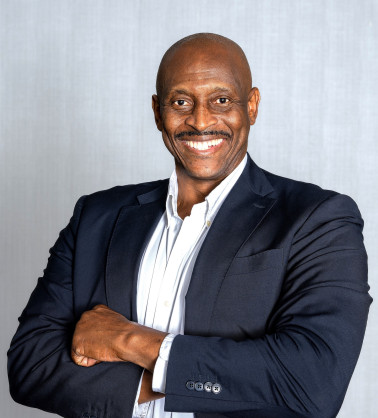
On the eve of Namibia's first game, Herbert Mensah, the newly elected President of Rugby Africa, (www.RugbyAfrique.com), the continental governing body of rugby across Africa, issues letter addressed to Petrie Theron, President of the Namibia Rugby Union:

Mwa lala po Petrie (Good Morning Petrie)

Warriors Never Give Up - The hunter in pursuit of an elephant does not stop to throw stones at birds (Namibian Proverb)

The battle lines are drawn. Italy first then New Zealand and lastly France! Saam kan ons! (Together we can!)

Battles can never be fought and won alone which is why we in Africa never forget our forefathers, our history and our children. From the deserts of the Namib to the Skeleton Coast, Namibia is beautifully unique. Rugby Africa stands with Namibia at the 2023 Rugby World Cup. We bring our heritage and our beliefs to bless and support in the struggle ahead.

Rugby Africa congratulates and stands tall with and by Namibia! World Cup 2023 beckons and Africa supports and watches! Namibia represents a continent dark in its mystery and rich in heritage, culture and substance. From the highest dunes in the world at Sossusvlei and for the Etosha National Park, one of the world's greatest conservation areas, Namibia has what no other has. Proudly African in every way.

Africa is represented by two Giants. Namibia who have competed in six Rugby World Cup tournaments, having qualified as one of the African representatives and South Africa the record equaling World Champions!

Never doubt yourselves because we do not!

We believe in you so believe in yourselves!

Enda po nawa (Good luck and God Bless You all!)

Herbert

Download official letter here: https://apo-opa.info/44LlxRv

Distributed by APO Group on behalf of Rugby Africa.

Media contact:
Nicole Vervelde
Communications Advisor to the President of Rugby Africa
rugby@apo-opa.com

About Rugby Africa:
Rugby Africa (www.RugbyAfrique.com) is the continental governing body of rugby in Africa and one of the regional associations under World Rugby. It unites all African countries that play rugby union, rugby sevens, and women's rugby. Rugby Africa organizes various competitions, including the qualifying tournaments for the Rugby World Cup and the Africa Sevens, a qualifying competition for the Olympic Games. With 39 member unions, Rugby Africa is dedicated to promoting and developing rugby across the continent. World Rugby highlighted Ghana, Nigeria and Zambia as three of the six emerging nations experiencing strong growth in rugby.
Media files
Rugby Africa
Download logo
Read moreMessage from Rugby Africa President to Namibia ahead of the 2023 RWC
8 September 2023

SA awarded Chairship of the Africa Green Hydrogen Alliance

Location: News

SA awarded Chairship of the Africa Green Hydrogen Alliance

South Africa will use its Chairship of the Africa Green Hydrogen Alliance (AGHA) to advance the green hydrogen agenda on the continent and support opportunities for peer-to-peer learning, technology transfer, economic and employment opportunities.

This is according to Minister in the Presidency for Electricity, Dr Kgosientsho Ramokgopa, who was handed Chairship of the AGHA on the sidelines of the Inaugural Africa Climate Summit (ACS), which took place from 04-06 September 2023 in Nairobi Kenya.

“Green hydrogen and its associated large scale renewable energy production has the potential to support the expansion of the electricity transmission infrastructure, to add additional renewable energy generation capacity and to support the local development of renewable energy.

“As such it is a key component of South Africa’s future energy mix to achieve sustainable energy security,” the Ministry for Electricity said on Thursday.

AGHA was formed in May 2022 by six African countries, Egypt, Kenya, Mauritania, Morocco, Namibia and South Africa, to drive decarbonisation through green hydrogen.

The alliance seeks to intensify collaboration and supercharge the development of green hydrogen projects on the African continent in line with the Just Energy Transition.

“It focuses on public and regulatory policy, capacity building, financing and certification needs to mobilise green hydrogen production for domestic use and export. The inclusion of the Ethiopia and Angola’s membership were also announced alongside South Africa’s Chairship,” the Ministry for Electricity said.

During the ACS, the Minister participated in panel sessions where he shared lessons on South Africa’s energy outlook and the role of green hydrogen in supporting energy security and driving green industrialisation.

On the margins of the Summit, the Minister engaged in multiple high-level bilateral meetings to explore energy collaborations and meaningful partnerships in the energy space.

The Minister’s participation at the Summit was underpinned by a commitment to consistent, sustainable and affordable energy supply for South Africa. – SAnews.gov.za


nosihle
Fri, 09/08/2023 - 09:30

649 views
Read moreSA awarded Chairship of the Africa Green Hydrogen Alliance
29 August 2023

How financial institutions can safeguard against deepfakes

Location: News
iiDENTIFii

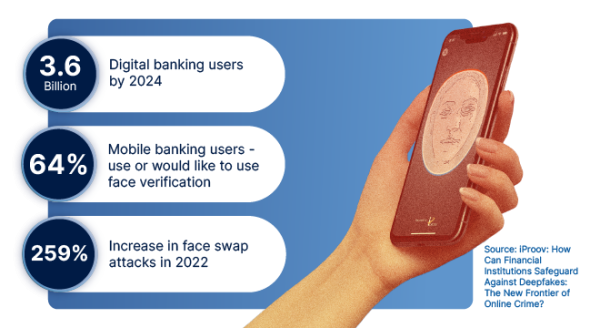
In a matter of seconds, it is possible to hold your phone up to your face and see what you will look like in 40 years. Or you could fuse the image of your face with that of a celebrity. You could even record a birthday song for a friend in the voice of their favourite artist. With deepfake technology, it is simple and possible to edit a person's facial and vocal likeness with alarming accuracy. For the most part, this can be seen as harmless entertainment. But what if your likeness was used to drain your savings or commit fraud? As the technology to create deepfakes becomes easier and cheaper, the need to guard against these cybercrimes have come to the forefront.

A deepfake is a video, visual, or audio recording that has been distorted, manipulated, or synthetically created using deep learning techniques to present an individual, or a hybrid of several people, saying or doing something that they did not say or do. These deepfakes are often used in digital injection attacks which are sophisticated, highly scalable, and replicable cyberattacks that bypass the camera on a device or are injected into a data stream.

Murray Collyer, Chief Operating Officer of iiDENTIFii (http://www.iiDENTIFii.com/), says, “Digital injection attacks present the highest threat to financial services, as the AI technology behind it is affordable, and the attacks are rapidly scalable. In fact, a recent digital security report by our technology partner, iProov (http://www.iProov.com/), illustrates how, in an indiscriminate attempt to bypass an organisation's security systems, some 200-300 attacks were launched globally from the same location within a 24-hour period. As more and more South Africans embrace digital banking, deepfake technology is a serious threat.”

Recent research (https://apo-opa.info/3L09o3T) by Discovery Bank and Boston Consulting Group (BCG) into the future of retail banking in South Africa found that most (86%) South Africans are ready to do all their banking digitally, particularly via an app. Much of this trend stems from previously unbanked people. The Covid-19 pandemic naturally accelerated the trend.

As more South Africans set up digital accounts and do their banking online, financial crime and cybercrime have become more inextricably linked than ever before. Interpol states that financial and cybercrimes are the world's leading crime threats and are projected to increase the most.

Collyer adds, “Deepfake technology is one of the most rapidly growing threats within financial services, yet not all verification technologies are resilient to it. Password-based systems, for example, are highly susceptible to fraud. South Africa needs to strengthen their technology to outwit cyber criminals.”

While deepfakes are a severe threat, the technology and processes exist to safeguard financial services companies against this method of fraud.

A growing percentage of face biometric technology incorporates some form of liveness checks - such as wink and blink - to verify and authenticate customers. Liveness detection uses biometric technology to determine whether the individual presenting is a real human being, not a presented artefact. Therefore, this technology can detect a deepfake if it were to be played on a device and presented to the camera.

While many liveness detection technologies can determine if someone is conducting fraud by holding up a physical image (for example, a printed picture or mask of the person transacting) to the screen, many solutions cannot detect digital injection attacks.

Collyer says, “Specialised technology is required to combat deepfakes. Within iiDENTIFii, we have seen success with the use of sophisticated yet accessible 4D liveness technology, which includes a timestamp and is further verified through a three-step process where the user's selfie and ID document data are checked with relevant government databases. This enables us to accurately authenticate someone's identity.”

Collyer will be part of the speaker panel that will present to delegates at the 8th instalment of the AML, Financial Crime Southern Africa Conference (https://apo-opa.info/3KYm7Ec), that also includes representatives of companies such as Financial Intelligence Centre South Africa, Investec, Sanlam, Stanlib, Albaraka Bank, Standard Bank Mozambique, iiDENTIFii, Nice Actimize, SABRIC, Rand Merchant Bank, S & P Global Intelligence, FirstRand Namibia, Corruption Watch and many more.

The high-level conference will be hosted on 6 & 7 September at the Indaba Hotel Fourways South Africa and is attended annually by professionals from banks, insurance and investment companies, service providers, government, and MLCO's from non-designated financial service providers.

“With the right technology, it is not only possible to protect consumers and businesses against deepfake financial crimes but also create a user experience that is simple, accessible and safe for all,” Collyer concludes.

Distributed by APO Group on behalf of iiDENTIFii.

About iiDENTIFii:
iiDENTIFii is a world-leading remote face authentication and automated onboarding technology platform. It fulfills the needs of customer-focused organisations that are required to authenticate and onboard customers. Using a frictionless and non-invasive automated proven process that meets customer intelligence and risk and compliance goals, iiDENTIFii ticks all the boxes from a governance and legislative perspective. https://iiDENTIFii.com/ 

Media files
iiDENTIFii
Download logo
Read moreHow financial institutions can safeguard against deepfakes
23 August 2023

Rugby World Cup Organizing Committee Welcomes Rugby Africa President to Paris

Location: Sport
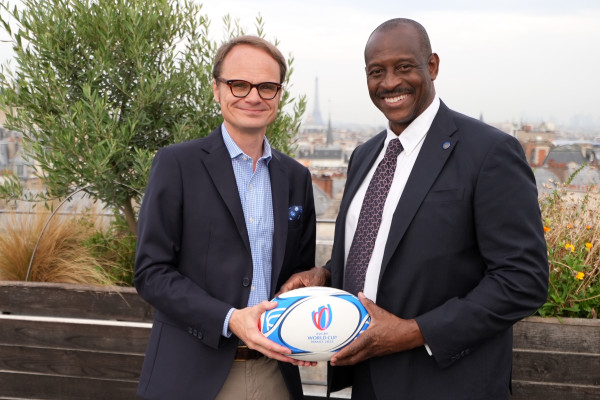
Rugby AfricaToday, during his official visit to France, Herbert Mensah, the new President of Rugby Africa (www.RugbyAfrique.com), the continental governing body for rugby in Africa, held a meeting with Julien Collette, General Manager of the 2023 Rugby World Cup Organizing Committee to discuss Africa's participation to the Rugby World Cup. The meeting took place at the iconic France 2023 Headquarters, La Maison de la Mutualité, located in the heart of Paris.

Copyright-free video B-roll, video and audio interviews in English and French, images, and audio files are available for the media to download and can be freely used without requiring authorization: https://apo-opa.info/3E76AhD  

At the forefront of Africa's participation in the 2023 Rugby World Cup, stand South Africa and Namibia, proudly representing the continent. The presence of these nations exemplifies the continent's growing influence on the global rugby stage. Notably, South Africa's current global champion status and its third-time world champion title are a testament to Africa's exceptional skill, determination, and commitment to rugby.

Africa's population is anticipated to double, reaching a staggering 2.5 billion by 2050, and according to the United Nations, the African youth will constitute 42% of the world's population by 2030. This demographic shift carries tremendous potential for the Rugby World Cup viewership growth, as a larger population naturally translates into a larger potential audience.

To seize this extraordinary potential, it is imperative for World Rugby, the governing body of the rugby and the owner of the Rugby World Cup, to invest significantly in Africa, much like other prominent sports organizations such as FIFA for football, NBA for basketball, and even NFL for American football. By strategically tapping into the growing interest and population of Africa, World Rugby can not only boost the viewership of the Rugby World Cup but also foster a lasting passion for rugby within the continent, contributing to the sport's global expansion and long-term success.

“We are very glad to welcome here in Paris, the new President of Rugby Africa. We think that the next Rugby World Cup in France would be a very great opportunity for promoting rugby everywhere in the world, and particularly in Africa,” said the General Manager of the 2023 Rugby World Cup Organizing Committee, Julien Collette.

“A diverse range of African stakeholders, including our community members, esteemed dignitaries, and strategic investment partners, are eager to enhance their involvement in future editions of the Rugby World Cup. This collective enthusiasm is rooted in the understanding that sports, rugby included, offer substantial economic prospects. Recognizing the significant financial potential within the sports industry, there exists a shared ambition to not only participate in upcoming Rugby World Cup events but also to explore opportunities for business expansion and mutual benefits,” stated the recently elected President of Rugby Africa, Herbert Mensah.

The 2023 Rugby World Cup will be the tenth men's Rugby World Cup, the quadrennial world championship for rugby union national teams. It is scheduled to take place in France from 8 September to 28 October 2023 in nine venues across the country.

The Rugby World Cup 2023 Fixtures is available at: https://apo-opa.info/3qxNy0Y

Distributed by APO Group on behalf of Rugby Africa.

Media contact:
Nicole Vervelde
Communications Advisor to the President of Rugby Africa
rugby@apo-opa.com

About Rugby Africa:
Rugby Africa (www.RugbyAfrique.com) is the governing body of rugby in Africa and one of the regional associations under World Rugby. It unites all African countries that play rugby union, rugby sevens, and women's rugby. Rugby Africa organizes various competitions, including the qualifying tournaments for the Rugby World Cup and the Africa Sevens, a qualifying competition for the Olympic Games. With 39 member unions, Rugby Africa is dedicated to promoting and developing rugby across the continent.

Media files
Rugby Africa
Download logo
Read moreRugby World Cup Organizing Committee Welcomes Rugby Africa President to Paris
23 August 2023

Three dynamic women shaking up the SA bar industry

Location: Entertainment, MyPR

On Women’s Month ANGOSTURA® celebrates the pioneering women bartenders carving out a groove for themselves in bars throughout South Africa. Behind every successful bar there’s a strong woman… if that’s not quite true yet of every bar in South Africa it’s getting closer, as more women are finding fulfilling careers in mixology, and challenging the …

Read moreThree dynamic women shaking up the SA bar industry
21 August 2023

Africa’s 25 Under 40 Energy Women Rising Stars

Location: News
African Energy Chamber

The African energy sector serves as a catalyst for global development, and in this dynamic industry that powers the modern world, a select group of remarkable women have emerged as trailblazers. The African Energy Chamber (AEC) (www.EnergyChamber.org) is proud to announce the “25 Under 40 Energy Women Rising Stars' - individuals whose dedication, ingenuity and unwavering commitment serve as beacons of hope and pillars of inspiration. These women are redefining the possibilities within a traditionally male-dominated field, and the AEC proudly celebrates the rising stars who are leading the way towards making energy poverty history by 2030.

In no particular order:

Gbemisola Adeyemi Afolabi, Junior Geoscientist, AMNI International

Adeyemi Afolabi, a budding Junior Geoscientist at AMNI International, is an emerging force in the energy sector. With a Masters' Degree in Energy Geosciences from Rice University, she brings a fresh perspective to her role. Adeyemi's educational background, combined with her passion for geoscience, underscores her dedication to exploring and understanding the Earth's resources. Afolabi's commitment to harnessing scientific knowledge for practical energy solutions sets her apart as a promising talent within AMNI International.

Ibilola Akinnola, LNG Shipbroker, Maersk

Ibilola Akinnola has a wealth of experience across the legal and logistics fields, and represents an individual whose creativity, commitment and drive has advanced the global energy industry. A qualified Solicitor and Barrister of the Supreme Court of Nigeria, Akinnola went on to complete her Masters' degree in International Shipping Law at Queen Mary University of London. Now, she works at integrated logistics company Maersk as the LNG Shipbroker, and continues to make a lasting impact in the industry.

Rekik Bekele, CEO and Founder, Green Scene Energy

Rekik Bekele is a seasoned professional with over 10 years of experience in renewable energy. With a BSc in Electrical Engineering, she leads Green Scene Energy PLC as its CEO, providing affordable solar solutions in Ethiopia. Bekele also serves as a board member at Ethiopian Solar Energy Development Association, an Acumen fellow, and founder of PurposeBlack ETH and Run Africa. Her diverse initiatives drive positive change in energy and social development.

Sarah Bouzid, Technical Sales Lead: Production Systems Division, Schlumberger

Sarah Bouzid is a Chemical Engineer and Technical Sales Lead for Schlumberger's Production Systems Division – representing the only woman in this role in MENA region. Her expertise lies in the Audit to Optimize program, where she engages with clients to enhance process equipment performance. After completing an engineering degree from Bourmerdes University, she worked in various roles at Sonatrach. Navigating the largely male-dominated sector, Bouzid serves as a beacon of hope for women in science and engineering.  

Sandra Chukwudozie, CEO, Salpha Energy

Sandra Chukwudozie is the Founder & CEO of Salpha Energy, a company dedicated to providing clean, affordable and innovative energy solutions for a carbon-neutral future. She is also Executive Director of Dozzy, one of Africa's largest petroleum storage facilities. After completing her studies at the University of Dundee in 2015, Chukwudozie dedicated her professional life to supporting economic growth through energy development, gaining experience in international management, industrial relations and economics. Her innovation, resilience and ability to embrace change has made her a leader in her field and an inspiration to many across the industry.

Nadia Simao da Costa, HR People Analytics Supervisor, Chevron

Nadia Simao da Costa is the People Analytics Supervisor at Chevron and represents the youngest person to be selected for Human Resource leadership at the company in Angola. Leveraging analytics and evidence to develop strategies to manage the current and future workforce needs, Simao da Costa is a strong advocate for inclusivity and human capital development. As the African energy sector grows and more people enter the workforce, professionals such as Simao da Costa serve as valuable role models.

Eghosa Ebube, Portfolio Analyst, Chevron Nigeria

Eghosa Ebube, initially Project Engineer and now Portfolio Analyst at global energy powerhouse Chevron, brings a wealth of expertise to the table. Having honed her skills in various roles including Onshore Construction Engineer, she has emerged as a force to be reckoned with in the energy sector. Her adeptness in engineering and her dedication to innovation shine through in her work, making her a pivotal contributor to Chevron's and Nigeria's energy success.

Katuiscia Laurence Ewane, General Field Engineer, SLB

With a Masters in Industrial Engineering from Ecole Nationale Supérieure Polytechnique, Katuiscia Laurence Ewane has spent several years working for global energy services company SLB. She currently serves as a General Field Engineer for the company and has pioneered several successful initiatives, including a new approach for the integration of Drilling Fluids and Cementing Fluids; completing a complex cementing operation on Mt Cameroon; and spearheading community outreach under the SLB Excellence in Educational Development program. Ewane is a testament to the important role female engineers play in Africa.

Taimi Itembu, Public and Government Affairs, ExxonMobil

A Harvard Kennedy School graduate with over 14 years' experience in leadership, energy and policy, Taimi Itembu represents an inspirational leader in Namibia's energy sector. She has served in various roles in the Namibian Government, showcasing her aptitude for policy dialogue and partnership building to drive transformation across the region. Her leadership in energy and exploration includes advocating for Africa strategy, investment protection, and a favorable operational environment, and as an industry expert, she represents a beacon of impactful leadership.

Anine Kilian: Managing Editor, Energy Capital & Power

Anine Kilian is a strong advocate for Africa's energy development. Currently serving as the Managing Editor for Africa-focused investment platform Energy Capital & Power, Kilian's journey began as a dedicated journalist and editor after studying at the Tshwane University of Technology in South Africa. Her career has taken her worldwide, and her expertise led her to become a pivotal writer at Creamer Media before joining Energy Capital & Power in 2018. Recognizing her talent and passion, Kilian was swiftly promoted to Managing Editor in 2021. Her journey epitomizes resilience, growth and a commitment to driving Africa's energy narrative at a time when the continent needs it most. Kilian represents a standout figure in the landscape of energy journalism and advocacy.  

Ubuhle Noluti Mtetwa, National Manager, Secondary Logistics, bp Southern Africa

Armed with a degree in Transport Economics and Logistics Management, Ubuhle Noluti Mtetwa spearheads innovative projects in a traditionally male-dominated industry. In a relatively short period of time, Mtetwa climbed the ranks at bp from Logistics Intern to National Manager of Secondary Distribution. Now, she supports diversity efforts, using her platform to not only advance logistics in Africa's energy industry but support the progression of others.

Faith Musimenta, Senior Petroleum Economic and Financial Analyst, Petroleum Authority of Uganda

Faith Musimenta is currently the Senior Petroleum Economic and Financial Analyst at the Petroleum Authority of Uganda (PAU), where she leverages her skills in investment analysis to develop oil and gas financial models for billion-dollar projects. After competing her studies at the University of Dundee, Musimenta worked for various financial institutions including Citi Bank, Diamond Trust Bank and DFCU Bank. She represents an inspiration for women across the African financial sector, and continues to advocate for both inclusivity, sustainability and development of Uganda's oil and gas industry. 

Nancy Asantewah Nkansah, Resource Manager: Planning and Supply Chain for West Africa, SLB

Nancy Asantewah Nkansah, a Resource Coordinator at SLB with 8+ years' experience, excels in planning chemical requirements and workforce coordination for efficient operations. With a BA in Political Science and a Geography minor, she spearheads resource management, enhances supply chain efficiency and facilitates environmentally responsible practices. From groundbreaking innovations to resilient problem-solving, Nkansah is redefining the energy industry in Africa.

Ezinne Nnachetta, Development Geologist, Chevron

Following the completion of her MSc in Petroleum Geoscience at Imperial College London, Ezinne Nnachetta has gained significant experience as a leading geoscientist for global energy major Chevron. Her 10-year commitment to the company demonstrates her dedication to opening up new hydrocarbon basins, integrating innovation with petroleum and forging new paths for women in energy. Nnachetta represents a role model for aspiring women in the field. 

Teresa Isabel Nnang Avomo, CEO, GEPetrol

Teresa Isabel Nnang Ovomo, accomplished CEO of Equatorial Guinea's national oil company GEPetrol, ascended to the position after working in various positions at the company, including Deputy Director of Operations where she streamlined and optimized the NOC's upstream operations. Armed with a Masters from Heriot-Watt University, her journey includes various pivotal roles at Repsol. Avomo's leadership exemplifies operational acumen, innovation and drive, and she serves as an inspirational figurehead, both in Namibia's and Africa's energy sectors.

Monique Ntumngia, CEO, Green Girls Project

Monique Ntumngia is a sustainability entrepreneur and advocate for climate-gender justice. Founding Green Girls Organization, a Pan-African energy social enterprise, she leverages AI to pinpoint clean energy challenges faced by women in African rural communities. She is also the Founder of Monafrik Energy, whereby Monique measures and compares environmental impacts in supply chains, advancing clean energy initiatives. Her impactful work exemplifies her dedication to providing clean, affordable energy solutions not just in Cameroon but across Africa and beyond.

Lynette Nyagah, Project Lead, Bentworth Energy

As Project Lead at East Africa's pioneer oil and gas service company, Lynette Nyagah plays a pivotal role in establishing robust operational and quality systems. A graduate from the University of Cape Town, Nyagah gained experience in the sector as a Field Engineer for Baker Hughes. Now, she plays an instrumental part in positioning Bentworth as a globally recognized and competitive firm. Advocating for innovation in carbon footprint reduction, automation for enhanced efficiency, and the increase in participation by local African companies, Nyagha is an inspiration to many in the industry.

Oneyka Cindy Ojogbo, Partner, Centurion Law Group

Oneyka Cindy Ojogbo has a proven track record of providing strategic counsel to clients in complex energy transactions and projects. A graduate of Columbia Law School, Ojogbo currently serves as a Partner of Centurion Law Group, a pan-African legal and business advisory group. Throughout her career, Ojogbo has counselled clients across power, energy and infrastructure sectors. Her work has covered multiple sectors and tackled transactions of varying complexity, with her determination, passion and vision serving as an inspiration for many.

Isioma Okolo, Reservoir Engineer, Shell

Isioma Okolo is a Reservoir Engineer with the Shell Petroleum Development Company in Nigeria. She holds a Bachelor of Engineering Degree in Petroleum Engineering from The Federal University of Technology Owerri and an MBA from the Edinburgh Business School, Heriot-Watt University. Having worked as a Consultant in Pricewaterhouse Coopers and as a Society of Petroleum Engineering Certified Engineer, Okolo is paving the way for a prosperous future for Africa and beyond.

Uzochukwu Ozoh, Legal Advisor, Chevron

With a LLM from the University of Dundee and an MBA from Imperial College Business School, Uzochukwu Ozoh has emerged as an accomplished transactional lawyer who merges business acumen, legal prowess and risk analysis within the energy sector. Currently serving as Legal Advisor at Chevron, Ozoh guides a team of legal experts facilitating intricate gas, commercial, and supply chain transactions exceeding US$1 billion. Her mastery of stakeholder relations, leadership and organizational development makes her a force to be reckoned with.

Lecticia Sepulvede, Public and Government Affairs Advisor, ExxonMobil

Lecticia Sepulvede has a Masters in Petroleum, Energy, Economics and Finance from the University of Aberdeen and currently serves as the Public and Government Affairs Advisor for global energy major ExxonMobil. Her vision is to support Mozambicans achieve their full potential, and she works closely with stakeholders to facilitate safety and security efforts in the Cabo Delgado province of the country. Her commitment to people, her focus on the energy sector, and her ability to manage stressful environments makes her a highly valuable and admirable energy professional.

Eman S Shahin, Performance Lead and Senior Petroleum Engineer, Dragon Oil Egypt

Eman Shahin is a proficient Performance Lead and Senior Petroleum Engineer (SPE) at Dragon Oil Egypt, and boasts over 9 years' experience in reservoir, petroleum and production engineering. Her prowess spans budgeting, production forecasting, reservoir development planning and optimizing waterflood management. As a leader and coach at SPE Egypt, her commitment to mentorship shines. With roots at Cairo University and experience at GUPCO, Shahin's journey embodies expertise, leadership and fostering an inclusive energy landscape.

Mwanyengwa Ndapewoshali Shapwanale, Director: Communications and Stakeholders Relations, ReconEnergy Namibia

Mwanyengwa Ndapewoshali Shapwanale is the Director of Communication and Stakeholder Relations at Recon Energy Namibia. With a degree in Communication and Media Studies from the University of Cape Town and 10 years' experience in journalism and communication, she brings valuable compliance and ESG skills to her role in the energy sector. As the youngest member of Recon's management, she plays a pivotal role in shaping the organization's communication landscape.

Natznet Tesfay, VP Economics & Country Risk, S&P Global

Natznet Tesfay is Vice President of Economics & Country Risk at S&P Global Market Intelligence. Leading a global team of 150+ experts, she forecasts economic and country risk outlooks. With a rich background at IHS Markit and Exclusive Analysis, her expertise spans geopolitical analysis, energy transition and supply chain alignment. With degrees from Harvard University, The London School of Economics, and SOAS University of London, she has emerged as a trailblazer and advocate for Africa's economic future.

Nidra Araba Yebuah, Digital and Integration Account Manager for Ghana and Equatorial Guinea, SLB

Nidra Araba Yebuah is an accomplished Senior Geologist and Account Manager with over a decade of experience in the oil and gas service industry. She blends technical proficiency with business acumen to excel in her role. Her expertise spans data interpretation, geological environments and technical sales support. Yebuah has significantly contributed to sub-Saharan African operations, demonstrating innovation and leadership in the dynamic industry.

Call for Nominations

If you were not chosen this year, or if you nominated someone who was not selected, please understand that the process is highly selective, and we encourage you to re-submit updated information in 2024. We welcome suggestions of well-deserving candidates throughout the year. Simply email awben@energychamber.org. We look forward to honoring outstanding 25 Under 40 Energy Women Rising Stars again in 2024.

Distributed by APO Group on behalf of African Energy Chamber.

Media files
African Energy Chamber
Download logo
Read moreAfrica’s 25 Under 40 Energy Women Rising Stars
21 August 2023

Caveat Legal Provides Modern Africa-Focussed Data Compliance Programmes for Companies

Location: MyPR

Cape Town, South Africa – Specialist Commercial Legal consultancy Caveat Legal has announced a new programme to help African companies comply with the myriad different Data Protection Laws across the multiple jurisdictions on the African continent. The last two years have seen a massive uptake in data protection laws and regulations in Africa with South …

Read moreCaveat Legal Provides Modern Africa-Focussed Data Compliance Programmes for Companies
20 August 2023

Maintenance, debt servicing key to electricity distribution: Ramokgopa

Location: News

Maintenance, debt servicing key to electricity distribution: Ramokgopa

The Minister in the Presidency responsible for Electricity, Dr Kgosientsho Ramokgopa, has emphasised the importance of infrastructure maintenance and the servicing of municipal debt to help keep the lights on.

In his weekly Energy Action Plan briefing in Pretoria on Sunday, Ramokgopa said poor maintenance and lack of servicing debt are among the reasons some communities go without electricity, even long after load shedding.

“…Transformers and substations have failed and blown up [in some communities] as a result of demand that exceeds the capacity of those assets,” Ramokgopa said.

Ramokgopa said in some instances, municipalities are underspending by R2 billion, money which should be spent servicing and maintaining infrastructure.

According to the Minister, municipalities owe Eskom about R63.2 billion.

Ramokgopa said there is a number of municipalities that have entered into agreements to pay their debts. However, some municipalities have defaulted on their arrangements and failed to make payments as agreed.

Ramokgopa said failure to pay Eskom undermines the entity’s ability to service and maintain the electricity distribution network, resulting in replenishment budgets being depleted on fixing repeat breakdowns of sub-stations and other transmission units.

“We are working with Eskom and the Head of Distribution and his team to ensure that we are able to find sustainable solutions to the problem. We are in discussions with colleagues from Distribution, National Treasury and the South African Local Government Association (Salga) to try address the debt of the municipalities.

“Communities are not able to get the electricity they deserve that they have paid for as a result of failure of infrastructure,” Ramokgopa said.

On Friday, Ramokgopa undertook a working visit to Namibia to participate in a bilateral meeting with the Minister of Mines and Energy in Namibia, Tom Alweendo.

The meeting explored opportunities for mutual cooperation between South Africa and Namibia.

The meeting also discussed the development and exploitation of gas reserves from the Kudu fields in the Orange Basin to provide an affordable gas fired base load power of up to 8 40MW for 35 years. South Africa could benefit from up to 600MW of this. – SAnews.gov.za

Edwin
Sun, 08/20/2023 - 13:20

104 views
Read moreMaintenance, debt servicing key to electricity distribution: Ramokgopa
19 August 2023

SA, Namibia talks focus on energy security

Location: News

SA, Namibia talks focus on energy security

South Africa and fellow SADC [Southern Africa Development Community] country, Namibia, have explored areas of mutual cooperation in energy generation at a ministerial level meeting on Friday.

The Minister in the Presidency responsible for Electricity, Dr Kgosientsho Ramokgopa, on Friday undertook a working visit to Namibia to participate in a bilateral meeting with the Minister of Mines and Energy in Namibia, Tom Alweendo.

The meeting explored opportunities for mutual cooperation between South Africa and Namibia in the following areas:

  • Energy Generation – focusing on how natural resource endowments can be leveraged to support energy generation, regional sovereignty and regional energy security.
  • Transmission infrastructure planning – regional interconnectivity in the context of the SADC Power Pool.
  • Hydrogen Economy – benefaction to support regional socio-economic development.

A senior team of Eskom executives formed part of the delegation and shared the work already underway, and future planning to strengthen and expand the existing transmission infrastructure spanning from the Northern Cape in South Africa to Oranjemond in the south of Namibia.

The meeting discussed the development and exploitation of gas reserves from the Kudu fields in the Orange Basin to provide affordable gas fired base load power of up to 840MW for 35 years. South Africa could benefit from up to 600MW of this.

The meeting also took note of opportunities in the green hydrogen sector, including:

  • Trading of green hydrogen-based products, such as green ammonia and green steel.
  • Supply of components such as solar panels, electrolysers and wind turbines.
  • Development of requisite infrastructure from a corridor perspective.
  • Cooperation to introduce affordable technology for the electrolysis process.
  • Collaborative funding and deliberate project preparation to ensure shared benefit for all.

“Reiterating our historic political and cultural ties, Minister Ramokgopa expressed the hope that the visit and work around energy security and regional energy sovereignty will further cement the strong bonds between our Republics, in the interest of the development of the Region and its People,” Minister Ramokgopa’s office said in a statement. – SAnews.gov.za

Edwin
Sat, 08/19/2023 - 15:51

343 views
Read moreSA, Namibia talks focus on energy security
17 August 2023

Donkey Bay Delivers For Inaugural Skeleton Shootout Surf Event

Location: MyPR

DONKEY BAY DELIVERS FOR INAUGURAL SKELETON SHOOTOUT SURF EVENT     Donkey Bay in Namibia was the location of an impromptu surf event that brought together surfers from across the world to battle it out in the ocean for N$30,000 (R30,000). The Skeleton Shootout, fuelled by Monster Energy, was a unique event that saw surfers …

Read moreDonkey Bay Delivers For Inaugural Skeleton Shootout Surf Event
10 August 2023

Monster Clutch Round 4 Winners Announced – Final Voting Has Begun

Location: MyPR

The Finalists in the Zigzag Clutch Fueled By Monster Energy are: Luke Thompson Davey Van Zyl, James Ribbink and Luke Slijpen. You can find their entries and vote for them here The Judges have just decided on their Round 4 winners and this is how it went down. First up was the Public Vote. This …

Read moreMonster Clutch Round 4 Winners Announced – Final Voting Has Begun
8 August 2023

Young women urged to explore opportunities in oceans economy

Location: News

Young women urged to explore opportunities in oceans economy

Minister in the Presidency for Women, Youth and Persons with Disabilities, Dr Nkosazana Dlamini Zuma, has encouraged young people to explore career opportunities in the oceans economy.

“Given this enormous diversity available through the oceans economy, there are several value chains from which women can leverage opportunities for jobs, develop entrepreneurships, and build their businesses,” Dlamini Zuma said on Monday in Cape Town.

South Africa has a coastline that spans about 2 800 kilometers from Namibia to Mozambique.

Addressing young women who had an opportunity to visit the South African National Defence Force (SANDF) Military Naval Base in Simon’s Town, the Minister emphasised that the ocean resource presents various opportunities, which can be commodified for economic development.

In an effort to demonstrate the opportunities for women in the sector, learners from various schools toured a shipyard at the Military Naval Base as part of Women’s Month activities that showcased the role of women in the maritime sector.

The tour was followed by presentations from officials from who work in maritime security, hydrography, as well submarines. This exercise provided an in-depth understanding of the oceans economy.

“Boat builders are required to construct small and large vessels once these vessels are designed by engineers. Maintenance technicians across various disciplines such as mechanical, electrical and others are required to ensure the ships and their equipment run optimally. Marine biologists are required to point out where the best fishing spots are. The fishing nets used by the trawlers need to be made,” Dlamini Zuma said.

She said that all young people, particularly women, should grow up with a firm understanding of three primary sub-sectors, namely, shipping and transport, marine resources and marine tourism.

“We need a skills revolution which draws from Operation Phakisa to cover all the primary, secondary and tertiary economic activities within the Oceans Economy. We also need a curriculum trains them in the value chain of the four secondary industry sub-sectors,” the Minister said.

These include operational support services, which comprise shipping logistics and marine technologies; manufacturing and construction (including civil engineering, marine manufacturing, ship repair and maintenance), as well as business services, which incorporates maritime specialised professionals within the banking, legal, insurance, Information and Communication Technology (ICT), and the consulting domain.

Operation Phakisa focuses on unlocking the economic potential of South Africa's oceans, which could contribute up to R177 billion to the GDP by 2033 and between 800 000 and one million direct jobs.

“As a department, we have adopted an all-of-society approach to livelihoods restoration and wealth creation toward empowering women, youth and persons with disabilities. This involves a partnership with the SANDF to establish a National Service where young people will be trained across various disciplines, including the oceans economy.

“Let us make the call to the country to join us in supporting and implementing meaningful programmes, plans, policies, strategies and interventions geared towards unlocking barriers of entry for young girls and women, and the largely unemployed population,” the Minister said.

This year’s Women’s Month is celebrated under the theme, 'Accelerating Socio-Economic Opportunities for Women’s Empowerment'. The theme highlights the need to ensure that all women have access to participate equally in all areas of human endeavor.

Oppression of women

Despite various strides which have been achieved toward improving the status of women in society, Dlamini Zuma said the systemic oppression of women over time has left almost indelible marks that need redress.

“In the South African context, women in rural areas and the townships bear the most burden of generational systemic oppression. It is tragic that on the triple challenges of poverty, inequality and unemployment plaguing our country, women are the most affected.

“Violence in this country is gendered, with statistics from the South African Police Service indicating that about nine women are murdered daily, with countless others being sexually violated, abused and subjected to all manner of atrocities.

“Women continue to be paid far less than men for work of equal value. Women face food insecurity yet the majority of farm workers in Africa are women who do not own the land they labour and eat the crumbs that fall from the tables of those who own the means of production,” Dlamini Zuma said.

She noted that the World Bank’s 2023 report on 'Women, Business and the Law' reiterates that empowering women is a prerequisite for economic development.

“It is equally important to prioritise empowering the girl-child, particularly as today’s girls are tomorrow’s women. The success of any meaningful attempt to grow South Africa together hinges on ensuring that women, particularly those who have been systematically oppressed, are able to participate equally in all areas of human endeavor, specifically in the mainstream economy,” the Minister said. – SAnews.gov.za

nosihle
Tue, 08/08/2023 - 10:00

Read moreYoung women urged to explore opportunities in oceans economy
8 August 2023

South Africa records 207 Child Marriages in 2021 – Stats SA  

Location: News

South Africa records 207 Child Marriages in 2021 - Stats SA  

South Africa recorded 207 child marriages in 2021, with 188 kids taken as brides.

This was revealed on Monday by Statistics South Africa to the African Union Special Rapporteur, who is currently in the country to monitor and evaluate progress on how South Africa is performing in its campaign to end child marriages. 

The South African office on the Rights of the Child within the Department of Social Development is hosting the African Union Stakeholder Engagement Mission on Child Marriages and Harmful Practices in Pretoria and Johannesburg. 

Stats SA’s Director: Education and Child Statistics, Dr Seble Worku, shared that of the 207 recorded child marriages, 188 were brides and 19 were grooms. 

She further revealed that 37 of the child marriages were registered as civil marriages and 19 were customary. 

“While Dr Worku showed an improvement in children living in low income households at 2.6 million with 4 million in high income households, pensions and grants were still the highest source of income for children in rural areas. 

“She revealed that the number of children who lived with only their mothers continued to rise in the country, while the number of orphaned children declined to 11.5% in 2021 from 14.3% in 2002,” the Department of Social Development said in a statement. 

The host, Honourable Takam Kembo of Cameroon, the Special Rapporteur and Social and Health Envoy from the African Union Commission are on a mission to conduct a monitoring visit on the progress that South Africa has made to end child marriages and harmful cultural practices against children. 
 
The mission started its series of high-level engagements with the Departments of Social Development, Basic Education, Home Affairs, and Women, Youth and Persons with disabilities. 

Today the delegation will engage human rights institutions, civil society organisations and conclude with a session with children. 

These engagements will focus on children's rights to capture current progress, challenges, best practice, lessons learned and make recommendations for fast-tracking progress to end violence against women and children.
 
This monitoring visit comes before the country launches its Women’s Month programme under the theme, 'Accelerating socio-economic opportunities for women’s empowerment'. 

Furthermore, this visit is part of a series of visits that the AU Commission is expected to conclude around the region ahead of the upcoming 4th African Girls Summit in November this year. 

They will go to Kenya, Ethiopia, South Sudan, Madagascar, Tunisia, Liberia, the Democratic Republic of Congo, Seychelles and Namibia. 

This continental perspective will allow them to understand successful strategies and practices in different regions of Africa so that countries can learn from one another.
 
In 2014, the then Chairperson of African Union Commission, Dr Nkosazana Dlamini Zuma, launched the campaign to end child marriages in Africa. 

At the time, the AU Commission estimated that about 14 million adolescent and teen girls were married. To date, more than 30 Member States have responded by accelerating the implementation of ending child marriage programmes and interventions.  
 
The AU Commission team expressed gratitude for South Africa's hospitality and willingness to share insights into their legislative framework and efforts to protect children.

“The AU mission aims to understand how South Africa is working to protect its children. It focuses on examining the child protection system, its effectiveness, and how it addresses various forms of violence such as child marriage, female genital mutilation, and online exploitation and abuse,” Kembo said. 

The monitoring mission will evaluate policies and strategies that the country has in place to end various forms of harmful cultural practices against children. 

Kembo noted variations in terms of geographical patterns, provinces with high and low prevalence indicating a need for alignment of strategic interventions to the local context.

The Special Rapporteur is expected to produce a detailed progress report with observations and recommendations for the country within six months. – SAnews.gov.za
 

DikelediM
Tue, 08/08/2023 - 12:06

Read moreSouth Africa records 207 Child Marriages in 2021 – Stats SA  
8 August 2023

SA Navy prioritises gender mainstreaming

Location: News

SA Navy prioritises gender mainstreaming

While significant strides have been made to ensure that women occupy leadership positions in the South African Navy, much more must be done to mainstream gender, says South African Navy Deputy Chief Navy, Rear Admiral Bubele Mhlana.

“Looking back at 2007 where the overall percentage of women in the SA Navy was 17%, we have managed to increase the percentage to 29% of women in decision making positions and 33% at entry level,” Mhlana said on Monday in Cape Town.

He made these remarks while addressing young women who had an opportunity to visit the South African National Defence Force (SANDF) Military Naval Base in Simon’s Town.

In an effort to demonstrate the opportunities for women in the sector, learners from various schools toured a shipyard at the Military Naval Base as part of Women’s Month activities that showcased the role of women in the maritime sector.

This year’s Women’s Month is celebrated under the theme, 'Accelerating Socio-Economic Opportunities for Women’s Empowerment'. The theme highlights the need to ensure that all women have access to participate equally in all areas of human endeavor.

“Significant strides have been made at leadership level, we cannot become complacent. Much more must be done to mainstream gender. I emphasise that the maritime security domain presents limitless opportunities for young women who have a significant role in unlocking the potential of our blue economy.

“Gender mainstreaming should not be seen as an aspiration, it should be seen as an imperative. It is time for women to take their rightful place to exploit every opportunity and participate meaningfully in exploring the potential of the blue economy,” Mhlana said.

He said harnessing the potential of young people is vital to unlocking and exploiting the vast ocean economy potential.

“The South African navy has a key role to play in Operation Phakisa, most particular in terms of maritime enforcement of good order of governance and seas. Indeed Operation Phakisa Economic Lab features a number of streams including marine protection and governance where the South African Navy plays a meaningful role through operations and the patrols it conducts at sea,” Mhlana said.

Government launched Operation Phakisa in 2014 with the ultimate goal of boosting economic growth and create jobs. This initiative focuses on unlocking the economic potential of South Africa's oceans, which could contribute up to R177 billion to the GDP by 2033 and between 800 000 and one million direct jobs.

South Africa has a coastline that spans about 2 800 kilometers from Namibia to Mozambique.

“Our hydrography domain plays an equally significant role in ensuring safe efficient and sustainable conduct of every human activity in or under the sea including safe passage of shipping,” Mhlana said.

With the full integration of women in all spheres within the South African Navy, 44-year-old Nicolette Le Roux occupies the position of a Hydrographic Survey Officer.

Hydrography is the science that measures and describes the physical features of the navigable portion of the Earth's surface and adjoining coastal areas.

“Hydrographic survey entails the collection of hydrographic data, processing of hydrographic data and rendering of products. As hydrographic data analysts, we measure the depth of the ocean using various equipment like echo sounders, multi-beams and single beams. That is the data that we process to provide nautical charts.

“This is important for safe navigation of all mariners. South Africa is situated along one of Africa’s busiest sea routes and ships need to know where it is safe to sale. Our data can show them where that is,” Le Roux said.

Le Roux joined the navy after completing matric in 1998, where she started with basic military training and progressed to training as a combat officer. From 2004 onwards, she specialised in hydrography.

“Our qualifications for hydrographics are recognised internationally. Our qualifications are regulated the International Hydrographic Organization. The qualifications for hydrographic are equivalent to a degree, the first course, which is a Category A survey qualification is equivalent is a post graduate diploma in hydrographic surveying and the Category B qualification is equivalent to a Bsc is Maritime Science,” Le Roux said.

While the navy has made efforts to educate its organization about not discriminating against women, she explained that women still had to work hard to be recognized.

“You are not always seen as someone who is supposed to be there. Luckily, the navy has done a lot in terms of gender equality and workshops to educate about gender equality.

“I have been excellent in everything that I done, in the sense that I have worked very hard and I have the accolades to show for it. Finishing at the top of my class. Those are some of my achievements and it took hard work,” she said.

Le Roux emphasised the importance of women standing up for themselves.

“Sometimes you have to give back as good as you get. If somebody chirps you, you have stand up for yourself because no one is going to stand up for you. Nobody else is going to pave the way for you. You have to stand up for yourself and show up and take a seat at the table. The future for women is bright. Work hard. There is nothing that stops you from achieving your dreams,” she advised young women. – SAnews.gov.za

nosihle
Tue, 08/08/2023 - 11:03

Read moreSA Navy prioritises gender mainstreaming
16 July 2023

Scotland and Spain on Top in Namibia

Location: Sport

The opening day of the World Rugby U20 Trophy 2023 in Nairobi saw wins for Samoa, Scotland, Spain and Uruguay, the latter only after a late try against USA. Scotland, Samoa, Uruguay and Spain emerged victorious from the opening day of the World Rugby U20 Trophy 2023 at Nyayo National Stadium in Nairobi, Kenya, on …

Read moreScotland and Spain on Top in Namibia
12 June 2023

The first Southern African country to join United Nations Water Convention

Location: News

United Nations Economic Commission for Europe (UNECE)
Download logo

On 8 June 2023 Namibia became the first Southern African country, and 8th country in Africa, to accede to the Convention on the Protection and Use of Transboundary Watercourses and International Lakes (UN Water Convention).  

Namibia, which has a population of some 2.5 million people, shares all its perennial rivers with neighbouring countries as well as several significant transboundary groundwater reserves. As both a mid-stream and downstream country, transboundary water cooperation is crucial for Namibia and the region's water security and sustainable socioeconomic development.  

Namibia's Minister for Agriculture, Water and Land Reform, Mr. Calle Schlettwein stated “Transboundary water cooperation stands as the cornerstone of our nation's water security, and I firmly believe that through this accession, Namibia will not only reap substantial benefits from its participation in this global legal framework but will also have the opportunity to engage with fellow members in promoting the principles of peace and equity in transboundary water sharing. The principles and regulations of the Water Convention harmoniously align with Namibia's policies on transboundary water cooperation and integrated water resources management, as we collaborate alongside other nations to safeguard and sustainably utilize our shared freshwater resources”.

UNECE Executive Secretary, Ms. Olga Algayerova, stated: “I warmly congratulate Namibia on its accession to the UN Water Convention as called upon by the United Nations Secretary General to all UN Member States. As the first Party in Southern Africa, Namibia opens the door to more countries in the region joining this unique treaty to help address water challenges across national borders, which is especially crucial due to rising climate change impacts. After Nigeria and Iraq's accession earlier this year, this shows the relevance of the Water Convention as key means for supporting sustainable development and preventing conflict over shared waters.” 

Namibia's accession will help to consolidate the long-standing commitment to transboundary water cooperation in Southern Africa. 

Namibia has ratified basin agreements and is a member state of basin organizations including: the Okavango-Cubango River Commission (OKACOM) shared with Angola and Botswana; the Orange-Senqu River Commission (ORASECOM) shared with South Africa, Botswana and Lesotho); the Zambezi Watercourse Commission (ZAMCOM) with all other riparian states of Angola, Botswana, Malawi, Mozambique, Tanzania, Zambia and Zimbabwe; and the Cuvelai Watercourse Commission (CUVECOM) with Angola. At a regional level, Namibia is a party to the 2000 Southern African Development Community's (SADC) Revised Protocol on Shared Watercourses and to the 1997 UN Convention on the Law of the Non-navigational Uses of International Watercourses (Watercourses Convention). 

Namibia is one of only two states in Africa to have all its transboundary freshwater bodies covered by operational management arrangements according to the national report submission for the 2nd monitoring exercise in 2020 of SDG Indicator 6.5.2, for which UNECE and UNESCO are co-custodian agencies. The third exercise is currently ongoing.

As an effective global legal and intergovernmental framework and platform for cooperation and sustainable management of shared waters, including groundwater, accession to the Water Convention can enable support by the community of Parties, experience-sharing with basins and countries worldwide, facilitate access to financing and raise the country profile at the international level on transboundary water. 

Namibia has just embarked on a two-year pilot Twinning Initiative with Finland, which is a party to the Convention, to exchange experiences, build capacity and strengthen bilateral cooperation on transboundary water management. It is the first Twinning of its kind between the two countries.  

Open to accession by all UN Member States since 1 March 2016, the Convention now counts 50 parties. At present, more than 20 countries around the world are in the accession processes, predominantly from across Africa and Latin America. 153 countries worldwide share rivers, lakes and groundwater resources. The UN Water Convention is serviced by the United Nations Economic Commission for Europe (UNECE).

Distributed by APO Group on behalf of United Nations Economic Commission for Europe (UNECE).

Read moreThe first Southern African country to join United Nations Water Convention
26 May 2023

Namibia Forges Ahead with Green Hydrogen Agenda

Location: News
African Energy Chamber

Namibia has reached another milestone in the development of its green hydrogen economy, inking a deal with green hydrogen development company HYPHEN Hydrogen Energy for the next phase of a $10 billion project set to be located in the Namib Desert's Tsau//Khaeb National Park. As per the terms of the agreement, green hydrogen will be exported to Europe following the completion of the project, thereby consolidating the country's position as a global hydrogen hub.

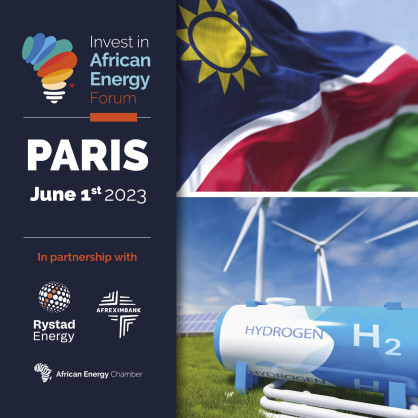
The milestone comes just week ahead of the African Energy Chamber's (AEC) Invest in African Energy Forum in Paris, a pivotal gathering that brings together movers and shakers from across the African and European energy sectors. Following a series of successful editions held in London, Oslo, Dubai and Frankfurt – the German edition of which was centered on exploring hydrogen-related investment opportunities in Africa – the Paris forum will expand on previous discussions regarding Africa-Europe collaboration, laying the foundation for a strong slate of new deals to be signed aimed at maximizing Africa's vast energy resources.

For its part, the Tsau//Khaeb green hydrogen project serves as not only a significant initiative in its own right, but as a demonstration of the potential for large-scale green hydrogen projects in Africa. Long-considered the final frontier for energy, Africa's significant renewable energy resources offer critical opportunities for the continent to address energy access concerns through the development of widespread solar and wind energy systems, as well as industrialization through the utilization of green hydrogen fuels. Green hydrogen projects have been cropping up across the continent, with markets such as South Africa, Mauritania and Egypt eager to capitalize on the benefits the resource provides. However, what sets the Namibian agenda apart if the country's focus on global collaboration. Working closely with its German partners, the Government is driving tits green hydrogen project forward, and energy access and industrialization opportunities are soon to follow.

In addition to regional access, monetizing renewable through green hydrogen opens up avenues for broader socioeconomic growth in Africa, with revenue generated through exports trickling down into various facets of the African economy. At a time when the African community is prioritizing energy security in the midst of the global energy transition, African green hydrogen projects will serve to meet dual goals of alleviating energy poverty while transitioning to sustainable energy sources. The HYPHEN-led green hydrogen project in Namibia is a testament to this. Planned to be constructed in two phases, the plant will eventually produce up to two million tons of green ammonia per annum, energy which will be distributed for both regional, and now with the offtake agreement, global use. Production is targeted for 2030, and with the signing of the feasibility and implementation agreement set to be signed on Friday, Namibian President Hage Geingob states that, “We kickstart a process that has the potential to transform the lives of many in our country, the region and indeed the world.” (https://apo-opa.info/45qsn0l).

Both HYPHEN and the Namibian Government consider the signing of the feasibility and implementation agreement to serve as a benchmark for the sustainable and equitable development of green hydrogen project in Africa. However, the agreement goes one step further to highlight the crucial role bilateral cooperation plays in developing energy projects in Africa. Under the soon-to-be signed agreement, the Government of Namibia will be responsible for equipping the country with the necessary regulatory, legal and fiscal environment to implement the project while HYPHEN is responsible for the technical, environment, financial, social and commercial delivery. A testament to both Africa-global relations as well as the role of public-private partnerships, this framework can be replicated in other markets in Africa.

“Namibia continues to make significant strides towards becoming a global energy giant. Notwithstanding the milestones that continue to be achieved regarding its oil and gas sector, the country has taken an accelerated approach to maximizing its renewable energy resources in collaboration with global partners. This green hydrogen project will open up significant avenues for the country, ushering in a new era of industrialization, energy access and revenue generation and positioning the country as a global green hydrogen contender. As Europe looks towards the lucrative opportunities in Africa, partnerships such as those between Namibia and Germany serve as a blueprint for other markets across the continent,” stated NJ Ayuk, Executive Chairman of the AEC, adding that, “The Invest in African Energy Forum in Paris provides the perfect opportunities for European investors and project developers to seize partnership opportunities with African countries. At the Frankfurt edition, we advocated for strengthened global collaboration, emphasizing the crucial role that European investment plays in not only developing Africa's economies but bringing new energy supplies on the global market. At a time when Europe is grappling with its own energy crisis, African energy is the solution the bloc needs. Come join us at the Paris edition and let's talk energy, investment and deals.”

Taking place on June 1st, 2023 at the Westin Paris Vendome in France, the Invest in African Energy Forum in Paris is open to all guests and RSVP is essential. RSVP to registration@aecweek.com. 

Distributed by APO Group on behalf of African Energy Chamber.

Media files
African Energy Chamber
Download logo
Read moreNamibia Forges Ahead with Green Hydrogen Agenda
  • Previous
  • Page 1
  • Interim pages omitted …
  • Page 11
  • Page 12
  • Page 13

Copyright © 2026 · MyZA · All Rights Reserved · Powered by Stratlec Online