• Skip to main content
  • Skip to header right navigation
  • Skip to after header navigation
  • Skip to site footer
MyZA

MyZA

News, Directory, Events and Other Stuff

  • Social Media
  • Sport
  • World News
  • Home
  • Submit News
  • Directory
  • Events
  • Stratlec
  • TFSA
  • News
    • APO
    • Today’s Sport News
    • Todays Social Media and Tech Headlines
    • Today’s World News
    • Today’s SA Financial News
  • Contact
You are here: Home / Archives for new

new

11 April 2025

Plans afoot to revitalise Durban’s inner-city precinct

Location: News

Plans afoot to revitalise Durban’s inner-city precinct

The eThekwini Municipality has rolled out an ambitious project to revitalise the inner-city precinct.

This as the city increased capacity to achieve its ambitious plan to rejuvenate the inner-city precinct and deliver a safer, cleaner, and greener Durban.

Plans for the rejuvenation are moving swiftly, and the programme involves a comprehensive range of services designed to revitalise the heart of the city. These include the deployment of professional security teams, armed patrol units, and rapid-response squads.

Complementing these efforts is a team of dedicated street ambassadors that will be introduced to monitor and maintain cleanliness in designated areas, while acting as community liaisons, by reporting suspicious activities directly to a local command centre.

City Manager, Musa Mbhele, said the introduction of street ambassadors will bring a visible and welcoming presence to the streets of Durban, while the enhanced security measures, will provide peace of mind to residents and businesses operating in the area.
The enhanced security measures include armed patrols and a coordinated command centre.

Mbhele said the landmark initiative marks a significant step forward in enhancing the quality of residents’ lives, including businesses, and visitors, while boosting the local economy through the creation of over 100 new jobs.

“This project is a game-changer for eThekwini. By combining enhanced security measures with proactive facilities management, we are not only addressing immediate safety and cleanliness concerns, but also laying the foundation for a vibrant and sustainable inner-city precinct that residents can take pride in.

“We are confident that these efforts will have a profound impact on the revitalisation of the Durban inner city, contributing to its transformation into a more attractive, secure, and economically vibrant area,” Mbhele said of the KwaZulu-Natal municipality.

The initiative aligns with the city’s broader vision to regenerate urban spaces, stimulate economic growth, and improve public safety.

He highlighted that with over 100 jobs created through this initiative, the project represents a significant investment in the local workforce, empowering communities and fostering economic resilience.

“[The] eThekwini Municipality is committed to working closely with its partners to ensure the successful implementation of this project, which is expected to serve as a model for urban renewal efforts across the region.” – SAnews.gov.za
 

GabiK
Fri, 04/11/2025 - 12:16
243 views
Read morePlans afoot to revitalise Durban’s inner-city precinct
11 April 2025

Pensioner Who Was Allocated an RDP House 15 Years Ago Still Lives in a Mud Hut

Location: News

Free State Department of Human Settlements has promised to help the 75-year-old from Naledi village in Qwaqwa get a house

Read morePensioner Who Was Allocated an RDP House 15 Years Ago Still Lives in a Mud Hut
11 April 2025

Government to recruit 1 200 new doctors

Location: News

Government to recruit 1 200 new doctors

In a significant move to address the critical shortage of healthcare professionals in the public healthcare system, the National Health Council has announced the approval of 1 200 new positions for doctors. 

The decision comes after years of budgetary constraints that hindered the employment of medical professionals despite dissatisfaction and urgent need. 

Health Minister, Dr Aaron Motsoaledi’s announcement follows the presentation of a new budget by the Finance Minister on 12 March 2025, which allocated R1.78 billion to fund the recruitment of healthcare workers. 

In addition to the 1 200 doctors, Motsoaledi said the Council has approved the hiring of 200 nurses and 250 other healthcare professionals.  

He told journalists that the Human Resources units will soon commence with recruitment processes once all logistics have been finalised. 

“Early this year, the country woke up to widespread dissatisfaction about the employment of healthcare professionals, especially doctors amid [a] shortage in the public healthcare system,” he said.

However, Motsoaledi believes that this development marks a turning point for the public healthcare sector, which has been struggling to meet the demands of a growing population.

The Council’s decision is expected to alleviate pressure on existing healthcare facilities and improve access to quality medical care for citizens.

Meanwhile, he said the Council emphasised its commitment to addressing the challenges facing the system and ensuring that the sector is adequately staffed to deliver essential services.

The Council is a statutory body consisting of the Minister of Health, all nine Health MECs, the South African Local Government Association (SALGA) and the Surgeon General of South African Military Health Services.

Addressing shortages

“One of the most embarrassing experiences the public health sector had to endure is the shortage of simple things that will make the stay of patients a worthwhile experience.

“In fact, one of the biggest differences between the public and private sectors are the hotelling services characterised by the issues we have just mentioned,” said Motsoaledi. 

He said the Council has decided to purchase 25 000 beds, 80 000 mattresses, 7 655 bassinets for new babies, and 1 250 million linens, including bed sheets and pillows, for a total of R1.346 billion. 

“It is for that reason that we wish to announce that we have checked province by province what that need [is] in the form of hospital beds and bassinet for newborn babies. We remember with a sense of shame how babies were put in cardboard boxes in Mahikeng hospital in the North West province.” 

Review of human resources policies

Meanwhile, Motsoaledi said that during the Council meeting held in November last year, a decision was taken for the review of some of the “outdated” human resources policies. 

“There are lot of health policies adopted at the dawn of democracy which we believe are now obsolete or do no longer serve the purpose they were intended for. Some of them have created unnecessary costs without any tangible benefits. We can even say some have contributed to the undermining of the public sector’s ability to deliver quality services.” 

Four health policies are currently under review, including the policy on remunerative work outside the public service, which outlines the regulations for employees wishing to obtain permission for paid work beyond their regular responsibilities. 

A committee that has been set up, in terms of section 91 (1) of the National Health Act of 2003 (Act no 61 of 2003) read with sections 91 (2) of the same Act, will also look into the overtime policy, which pertains to established fixed payment for overtime hours worked by healthcare professionals, aimed at meeting operational demands and addressing skill shortages. 

In addition, the community service policy, which focuses on the deployment of medical practitioners and the rural allowance policy, designed for medical practitioners serving in remote rural locations, will also be looked into.

The committee members include Dr Cassius Lubisi, Sibongile Mchunu, Professor Laetitia Rispel, Professor Eric Buch, Dr Terence Carter, Dr Rajen Morar, Professor Binu Luke, Nomvula Marawa, Professor Busisiwe Ncama and Professor Somadoda Fikeni. – SAnews.gov.za


Gabisile
Fri, 04/11/2025 - 09:52
114 views

Read moreGovernment to recruit 1 200 new doctors
11 April 2025

Developer of R300M Stellenbosch Housing Estate Fights Back

Location: News

Botmaskop Fynbos Estate says a court interdict stopping construction will be “catastrophic”

Read moreDeveloper of R300M Stellenbosch Housing Estate Fights Back
11 April 2025

Department of Public Works Bungles Darling Street Eviction Application

Location: News

State Attorney did not communicate with residents and failed to enrol the case properly

Read moreDepartment of Public Works Bungles Darling Street Eviction Application
10 April 2025

US Funding Cuts Could Cause Over 150,000 Extra HIV Infections in SA by 2028

Location: News

Experts say this can be avoided if the South African government covers some of the defunded services

Read moreUS Funding Cuts Could Cause Over 150,000 Extra HIV Infections in SA by 2028
10 April 2025

Nornickel Presents Palladium Technology Development Strategy for the PGM Industry in South Africa

Location: Business
Nornickel’s Palladium Centre

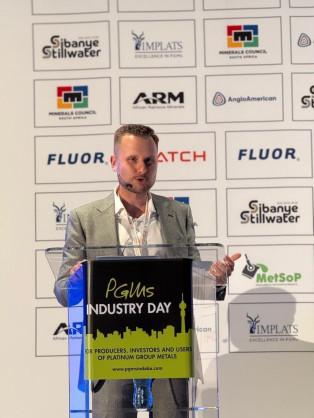
Nornickel (https://NorNickel.com) has unveiled its strategy for the development of palladium-based technologies at the PGMs Industry Day, an international conference held in South Africa. The company's experts shared insights into new technological developments that have the potential to redefine the use of platinum group metals (PGMs) extracted on the African continent, particularly in the fields of energy, electronics, and green technology. 

The presentation attracted considerable interest from conference participants. Industry representatives noted the practical relevance of Nornickel's innovations for the market, as well as the significant potential of palladium in emerging high-tech applications. 

Nornickel is the world's largest producer of palladium and high-grade nickel, and one of the leading global suppliers of platinum, copper, cobalt, and other precious and base metals. The company's Palladium Centre focuses on the development and implementation of innovative palladium-based solutions aimed at enhancing industrial efficiency. 

Palladium is the most extracted metal among the PGMs and benefits from a geographically diversified supply chain. Russia and South Africa, the two major producing regions, ensure stable global supply. 

From a chemical perspective, PGMs complement each other in many applications. Nornickel's research shows that palladium alloys with other PGMs frequently outperform individual metals in terms of efficiency and durability. 

Nornickel's approach to palladium innovation is closely aligned with key global megatrends: the energy transition, sustainable development, and digitalisation. Promising application areas include solar and hydrogen energy, biofuels, and next-generation electronics, where palladium can help reduce the cost of conductive components, hard drives, and OLED displays. In existing markets, the company is focused on improving performance and economics for end users. 

Nornickel is actively building a global partnership network to co-develop and commercialise palladium-based solutions. The company is committed to long-term collaboration with scientists, manufacturers, and end users to accelerate the adoption of advanced technologies and products. 

"Our goal is to become a technological partner for producers of PGM-based products. We focus on identifying applications where palladium delivers a strong competitive edge, bringing together leading scientific teams to develop prototypes, conducting large-scale industrial trials, optimising the product, and transferring the technology to manufacturers. This approach allows us to create more efficient materials and open up new markets for palladium applications," said Dmitry Izotov, CEO of Nornickel's Palladium Centre. 

Since its launch, the Centre has built a portfolio of 25 products. By 2030, the portfolio is expected to exceed 100 projects, generating an additional annual demand of 40–50 tonnes of palladium. 

Distributed by APO Group on behalf of Nornickel’s Palladium Centre.

Media files
Nornickel’s Palladium Centre
Download logo
Read moreNornickel Presents Palladium Technology Development Strategy for the PGM Industry in South Africa
10 April 2025

Increase in United Airlines flights from US to SA lauded

Location: News

Increase in United Airlines flights from US to SA lauded

Tourism Minister Patricia de Lille has welcomed the announcement by United Airlines that it will be increasing its flights to South Africa.

“On behalf of the entire tourism sector, we welcome the recent announcement by United Airlines that it will be increasing its flights to South Africa,” De Lille said. 

United Airlines recently announced that it will be expanding its African network by introducing a new long-haul service from Washington Dulles Airport to Cape Town International Airport. 

This route was launched in November 2022, operating three times a week and has been hugely successful.

United Airlines’ second African route, linking Newark with Johannesburg, has operated daily since June 2021 and this route will also be expanded by the airline. 

In 2024, arrivals from the United States of America stood at over 430 000, up by more than 21 000 or 5.2% compared to 2023. A further testament to the impact of direct flights on arrivals is that in 2023, arrivals from the USA stood at over 409 000, an increase of more than 111 000 or 37.4% compared to 2022, when direct flights between South Africa and the USA were introduced.

“We welcome this development and announcement by United Airlines to increase the number of flights between South Africa and the USA as the route has been in high demand and has made travel significantly more seamless between the two countries. 

“Airlift is a crucial factor for the tourism sector as direct flights make travel between destinations more desirable and is proven to increase tourism arrivals between countries.”

She said they were excited about this development and looked forward to the positive impact it will have on arrivals to South Africa. 

“The USA is one of South Africa’s top source markets and we will continue efforts to grow arrivals even more from the USA to South Africa,” the Minister said. – SAnews.gov.za

Edwin
Thu, 04/10/2025 - 14:19
90 views

Read moreIncrease in United Airlines flights from US to SA lauded
10 April 2025

Social Development gazettes social grant increases

Location: News

Social Development gazettes social grant increases

The Department of Social Development has published in the government gazette the new social grants amounts effective from this month.

The new amounts, as per the gazette, are:

  • Older persons grant: R2310
  • Older persons grant 75 years plus (additional payment): R2310 + R20
  • War veterans’ grant (including additional payment): R2310 + R20
  • Disability grant: R2310
  • Care dependency grant: R2310
  • Foster child grant: R1250
  • Child support grant: R560
  • Child support grant (Top-Up): R560 + R280
  • Grant-in-Aid: R560

The increases are implemented from 1 April. – SAnews.gov.za

NeoB
Thu, 04/10/2025 - 13:26
63 views

Read moreSocial Development gazettes social grant increases
10 April 2025

SA bolsters diplomatic and bilateral relations with Senegal

Location: News

SA bolsters diplomatic and bilateral relations with Senegal

The Minister of International Relations and Cooperation, Ronald Lamola, is in Dakar, Senegal, for a two-day working visit to strengthen diplomatic ties and deepen bilateral cooperation between the nations. 

According to the Department of International Relations and Cooperation (DIRCO), Lamola’s visit underscores South Africa’s commitment to advancing strategic partnerships with Senegal and fostering pan-African solidarity.

On Wednesday, the Minister met with his Senegalese counterpart, Minister Yassine Fall, to ensure greater cooperation between the two countries.The two leaders also co-chaired the inaugural session of the Ministerial Joint Commission for Bilateral Cooperation. 

“This historic session establishes a structured framework for enhanced collaboration on mutual priorities, including political dialogue, economic cooperation, regional integration, and multilateral coordination,” the statement read. 

The department believes that the Ministerial Joint Commission represents a milestone in formalising high-level dialogue between South Africa and Senegal. 

“This platform reflects our shared vision to consolidate bilateral relations and amplify Africa’s voice on the global stage. Through deepened diplomatic and economic collaboration, we aim to unlock new opportunities for our nations and the continent,” Lamola explained. 

Meanwhile, the Minister is also expected to meet with Prime Minister Ousmane Sonko and President Bassirou Diomaye Faye. 

“These engagements will reaffirm South Africa’s commitment to strengthening political and economic partnerships with Senegal, aligned with the African Union’s Agenda 2063 and the Sustainable Development Goals.”

The working visit is said to build on the longstanding fraternal relations between South Africa and Senegal, rooted in mutual respect and a common vision for African progress. 

The department stated that both nations are poised to enhance cooperation in areas such as trade, investment, peace and security, and climate action while advancing multilateral reforms to promote a more equitable global governance system.  

“Minister Lamola’s visit epitomises South Africa’s proactive and progressive foreign policy, which prioritises African partnerships to drive inclusive growth and sustainable development. 

“The outcomes of the Ministerial Joint Commission are expected to pave the way for innovative bilateral initiatives and reinforce South Africa-Senegal relations as a cornerstone of intra-Africa trade,” the department added. – SAnews.gov.za


Gabisile
Thu, 04/10/2025 - 09:06
349 views

Read moreSA bolsters diplomatic and bilateral relations with Senegal
10 April 2025

South Africa Could Do Far More for Congolese Refugees

Location: News

The long war in the Democratic Republic of Congo has displaced millions of people

Read moreSouth Africa Could Do Far More for Congolese Refugees
9 April 2025

GBV laws must be strengthened: President Ramaphosa

Location: News

GBV laws must be strengthened: President Ramaphosa

President Cyril Ramaphosa has emphasised the urgent need to confront and address existing blind spots within the legal system, which continue to undermine the rights and interests of survivors of gender-based violence (GBV).

Delivering the keynote address at the International Association of Women Judges (IAWJ) biennial conference on Wednesday, the President said it is critical that these legal deficiencies are urgently identified and resolved.

“A central issue is overcoming the blind spots in the law and the legal system that are working against the rights and interests of survivors.

“For the fight against gender-based violence to be strengthened and have a measurable and sustainable impact, it is critical that these deficiencies are addressed to bring about change,” the President said. 

Judges, magistrates, legal professionals and policymakers from across the world are currently meeting at the biennial conference of the IAWJ underway in Cape Town to address the global scourge of gender-based violence and femicide through judicial leadership and activism.

This year’s conference is organised under the theme" “Resilience: Women in Leadership to End Gender-Based Violence & Femicide”.

It is the first to be hosted in South Africa under the leadership of a female Chief Justice of the Republic of South Africa, Mandisa Maya, who is also the IAWJ Vice President. 

President Ramaphosa last addressed the IAWJ back in 2022, which was the year the country passed a trio of laws to strengthen the legal framework and offer greater protection to survivors.

Following an extensive public consultation process, the country amended three existing laws as part of the wider effort to combat GBVF. 

Amendments were made to the Criminal Law (Sexual Offences and Related Matters) Amendment Act to introduce a new category of sexual intimidation, and to expand the scope of the National Register for Sex Offenders. 

The Criminal and Related Matters Amendment Act was amended to regulate the granting and cancellation of bail, to regulate sentences for offenses committed against vulnerable persons, and to advance the right of complainants to participate in parole proceedings.

Lastly, the Domestic Violence Act was amended to expand the existing definitions of domestic violence, and to enable survivors to apply for protection orders online.

President Ramaphosa stressed that while courts are constitutionally mandated to dispense justice without fear or favour, it is equally important that justice is seen to be done.

He said that in addressing the scourge of gender-based violence, it is not enough to have laws in place -- they must be implemented and enforced effectively.

“In the context of gender equality, and within the context of high levels of gender-based violence more specifically, what do we mean? It means laws cannot just be written -- they must be enforced. 

“It means that perpetrators must be held accountable, and that the sentences they are given should reflect the seriousness of their crimes. When judicial discretion is exercised in a prescribed minimum sentencing regime, the reasons for departure must indeed be substantial and compelling,” he said. 

The President further highlighted the need for fairness, not only in ensuring the accused receives a fair trial, but also in how survivors of gender-based violence are treated by the courts.

“It means fairness, and this doesn’t only apply to an accused’s right to a fair trial. It also applies to fair treatment of survivors of GBV by our courts, and that they should not be subjected to bias and victim-blaming,” the President said. 

President Ramaphosa emphasised that the IAWJ is a catalyst for change, highlighting the unique contribution that women judges make to the legal profession. 

“As women judges, your lived experiences provide insight into the realities behind the cases, and you have the power to reshape how the law is interpreted, how justice is delivered, and how society evolves. 

“This conference is an opportunity to sharpen our collective commitment to law that heals, courts that transform, and to systems that centre humanity,” he said. 

In addition to utilising the law, President Ramaphosa emphasised the need to embark on many other efforts to combat gender-based violence and femicide, and have a multifaceted approach that will include education and spreading awareness about the importance of gender equality from a young age. 

He also underscored the importance of engaging men and boys in the conversation to prevent gender-based violence. He further called on society to advocate for women’s empowerment and economic independence, which would help reduce their vulnerability to abuse.

“We must make men and boys part of the conversation to prevent gender-based violence. We should also as society insist that women should have more control over their lives and economic independence which will reduce their vulnerability to violence.

“I wish you well in your deliberations and I am confident that the outcomes of this conference will make a significant impact in advancing the fight against gender based violence and femicide,” the President said. 

The biennial conference will end on Saturday, 12 April. – SAnews.gov.za

DikelediM
Wed, 04/09/2025 - 14:12
112 views

Read moreGBV laws must be strengthened: President Ramaphosa
9 April 2025

Africa Finance Corporation Tops Us$1 Billion Revenue for First Time as Landmark Projects Unlock Growth Across the Continent

Location: Business
Africa Finance Corporation (AFC)

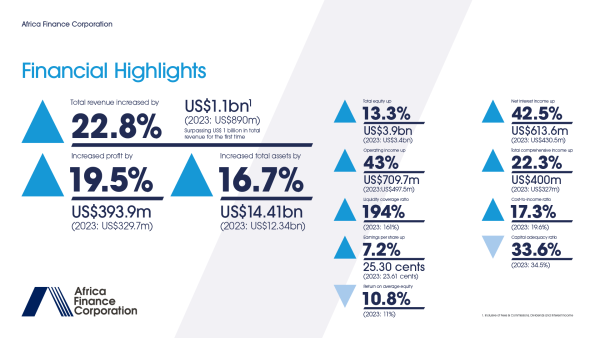
Africa Finance Corporation (AFC) (www.AfricaFC.org), the continent's leading infrastructure solutions provider, has announced its strongest financial performance to date, with total revenue for the year ended 31 December 2024 surpassing US$ 1 billion for the first time in the Corporation's history.

This record performance marks a significant milestone in AFC's mission to close Africa's infrastructure gap through scalable, de-risked investments that attract global capital and deliver tangible development outcomes. The Corporation posted a 22.8% increase in total revenue to US$1.1 billion and a 22.3% rise in total comprehensive income to US$400 million, up from US$327 million in 2023.

AFC's earnings growth was driven by improved asset yields, prudent cost-of-funds management and sustained traction in advisory mandates.  

Further significant financial highlights include:

  • Net interest income up 42.5% to US$ 613.6 million
  • Fee and commission income rose to US$109 million, the highest in over five years
  • Operating income climbed 42.7% to US$709.7 million
  • Total assets reached a record US$14.4 billion, a 16.7% year-on-year increase
  • Liquidity coverage ratio strengthened to 194%, providing over 34 months of cover
  • Cost-to-income ratio improved to 17.3% from 19.6% in 2023

Throughout 2024, AFC continued to scale its impact by mobilising capital for landmark projects across energy, transport, and natural resources. These included the Lobito Corridor – a cross-border railway development spanning Angola, the Democratic Republic of Congo (DRC), and Zambia. AFC led the initiative to secure a concession agreement within one year of the initial Memorandum of Understanding (MoU), an unprecedented achievement for a project of its scale. In the DRC, AFC also invested US$150 million in the Kamoa-Kakula Copper Complex, Africa's largest copper producer and one of the most sustainable globally, thanks to its high-grade ore and renewable-powered smelter.

Other milestones transactions included financing support for the commissioning of the Dangote Refinery, the largest in Africa, and continued progress on AFC-backed Infinity Power Holding's 10 GW clean energy ambition, with power purchase agreements secured in Egypt and South Africa. AFC also invested in the 15GW Xlinks Morocco-UK Power Project, providing US$14.1 million to support early-stage development of a transcontinental renewable energy pipeline between North Africa and Europe.

AFC strengthened its capital base and expanded its investor network through several landmark funding initiatives. These included a US$ 1.16 billion syndicated loan - the largest in its history, a US$500 million perpetual hybrid bond issue, and the successful execution of Nigeria's first-ever domestic dollar bond, which raised US$900 million at 180% oversubscription. AFC also returned to the Islamic finance market after eight years, closing a US$400 million Shariah-compliant facility.

The year also saw strong momentum in equity mobilisation, with US$181.8 million in new capital raised from ten institutional investors. These included Turk Eximbank - AFC's first non-African sovereign shareholder - the Arab Bank for Economic Development in Africa (BADEA), and several major pension funds spanning Cameroon, Seychelles, Mauritius, and South Africa. Ratings agencies affirmed AFC's robust credit profile, with AAA ratings from S&P Global (China) and China Chengxin International, and a stable A3 Outlook from Moody's.

“These results send a clear message that strategic investment in African infrastructure creates lasting value for both beneficiaries and investors,” said Samaila Zubairu, President & CEO of AFC. “In 2024, we exceeded the billion-dollar revenue mark, delivered game-changing projects, and reinforced our financial resilience—demonstrating the scalability of our unique model that blends purpose with performance to accelerate Africa's economic transformation.”

Read the full annual report here (https://apo-opa.co/424qlmR)

Distributed by APO Group on behalf of Africa Finance Corporation (AFC).

Media Enquiries:
Yewande Thorpe
Communications
Africa Finance Corporation
Mobile: +234 1 279 9654
Email: yewande.thorpe@africafc.org

About AFC:
AFC was established in 2007 to be the catalyst for pragmatic infrastructure and industrial investments across Africa. AFC's approach combines specialist industry expertise with a focus on financial and technical advisory, project structuring, project development, and risk capital to address Africa's infrastructure development needs and drive sustainable economic growth.

Seventeen years on, AFC has developed a track record as the partner of choice in Africa for investing and delivering on instrumental, high-quality infrastructure assets that provide essential services in the core infrastructure sectors of power, natural resources, heavy industry, transport, and telecommunications. AFC has 45 member countries and has invested over US$15 billion in 36 African countries since its inception. www.AfricaFC.org

Media files
Africa Finance Corporation (AFC)
Download logo
Read moreAfrica Finance Corporation Tops Us$1 Billion Revenue for First Time as Landmark Projects Unlock Growth Across the Continent
9 April 2025

Southern African Countries Launch Climate-Resilient Health Initiative With WHO Support

Location: News

2025 GoGettaz Agripreneur Prize Competition
Download logo

Eight Southern African countries have embarked on a landmark effort to bolster emergency preparedness and response systems in the face of increasing climate-related health threats. 

With financial support from the Pandemic Fund, and technical assistance from World Health Organization (WHO) in the African Region and other partners, Botswana, Lesotho, Madagascar, Malawi, Mozambique, Namibia, South Africa and Zimbabwe are advancing their capacity to protect public health, and respond to emergencies.

The US$ 35-million, three-year programme is aimed at supporting these countries as they strengthen national and regional systems for early warning, disease surveillance, laboratory diagnostics and workforce development – key pillars of health emergency readiness.

While implementation activities are yet to begin on the ground, coordinated planning efforts are well under way, including the establishment of governance structures at country and regional levels. Through a dedicated technical coordination capacity at the WHO Emergency Hub in Nairobi, Kenya, WHO is putting in place systems to ensure agile implementation and project monitoring, evaluation, research and learning over the three-year project duration. 

To date, all eight countries have convened multi- disciplinary National Steering Committees and have undertaken a detailed microplanning activity with key stakeholders. Furthermore, initial funds have been disbursed to countries, marking a critical early milestone in a regionally coordinated, country-driven initiative to build climate-resilient health systems.

A formal launch event is planned for next month.

“This investment represents a vital turning point for Southern Africa, a region on the frontlines of the climate and health crisis. Countries now have a unique opportunity to develop systems that are robust, responsive and resilient to emerging threats,” said Dr Chikwe Ihekweazu, Acting WHO Regional Director for Africa.

Southern Africa is warming at nearly twice the global average. Droughts, floods and cyclones are becoming more frequent and severe, fuelling the spread of vector- and waterborne diseases such as malaria and cholera, and placing added strain on health systems.

Five of the countries involved in the initiative – Lesotho, Madagascar, Malawi, Mozambique and Zimbabwe – rank among the world's 50 most vulnerable nations to infectious diseases. Many also face high climate risk, compounded by structural challenges such as weak infrastructure, limited resources and high levels of cross-border migration, underlining the urgent need for coordinated preparedness across the region. 

The new programme, developed under the leadership of national governments, is focused on addressing critical gaps in three priority areas:

  • Early warning and disease surveillance: Strengthening real-time, cross-border detection and information-sharing systems across the One Health spectrum, including human, animal and environmental health.
  • Laboratory systems: Enhancing national and regional laboratory networks, including  upgrading diagnostic capacity and regional testing hubs.
  • Public health and community workforce: Supporting the development of a skilled, coordinated workforce aligned with countries' Human Resources for Health strategies.

The proposal was developed as part of the Common Africa Approach under the Joint Emergency Action Plan, with WHO in the African Region, Africa Centres for Disease Control and WHO's Regional Office for the Eastern Mediterranean. Proposal development was supported by the Gates Foundation.

It builds on existing primary health care and community health efforts, and is aligned with global standards, including the International Health Regulations (2005) and the One Health approach.

One of its most ambitious long-term goals is the creation of a Climate-Health Observatory, a platform to support early warning systems and evidence-based decision making by tracking climate-sensitive health risks across borders. The observatory will facilitate data-driven policymaking and foster long-term resilience in the region.

In addition, the programme will help strengthen leadership and governance by establishing a regional network of connected leadership across Ministries of Health and National Public Health Agencies, further enabling swifter and smarter coordination during responses to emerging threats. 

“These efforts are essential in a region with frequent population movement, fragile health systems, and limited emergency response capacity,” said Dr Abdou Salam Gueye, WHO's Africa Regional Emergency Director. “Our role is to support countries with the expertise, tools and evidence they need to lead these efforts effectively.”

Funding is provided by the Pandemic Fund, which supports pandemic prevention, preparedness and response capacity in low- and middle-income countries. The programme also contributes to building sustainable, resilient health systems that can withstand future pandemics and climate shocks.

By working together, and with strong technical support from WHO and partners, countries in Southern Africa are laying the foundation for a scalable model for climate-resilient health security – grounded in national ownership, regional solidarity and a shared commitment to protecting health and saving lives.

Distributed by APO Group on behalf of 2025 GoGettaz Agripreneur Prize Competition.

Read moreSouthern African Countries Launch Climate-Resilient Health Initiative With WHO Support
9 April 2025

Government empowers spaza shops 

Location: News

Government empowers spaza shops 

With the launch of the R500 million Spaza Shop Support Fund (SSSF), government is ready to assist entrepreneurs who want to establish startups, expand their businesses, and gain essential business skills to improve the performance of their enterprises.

This is according to the Minister of Small Business Development, Stella Ndabeni.

With the recent drive to have spaza shops registered, government has received 87 407 applications and of these, a total 53% is from South African-owned spaza shops.

“Our commitment with this fund is to support those who heeded the President’s call to register their spaza shops. As the Department of Small Business Development (DSBD), we can help you when you have an idea and want to start a business.

“We have incubators that help new and startup businesses. We can help you from being an informal trader to a formal trader, to start a spaza shop and to own a wholesale or an entire distribution channel. We will be working with you to help you to turn things around,” said Ndabeni.

The support fund was launched on Tuesday in Soweto to support South African-owned township community convenience shops, including spaza shops, to increase their participation in the townships and rural areas retail trade sector.

READ | Government launches R500 million Spaza Shop Support Fund 

Jointly administered by the National Empowerment Fund (NEF) and the Small Enterprise Development Finance Agency (SEFDA), the fund provides critical financial and non-financial support to township businesses, including community convenience stores and spaza shops.

The fund provides various types of support, including the initial purchase of stock via delivery channel partners, upgrading of building infrastructure, systems, refrigeration, shelving and security, as well as training programmes, which includes point of sale devices, business skills, digital literacy, credit health, food safety and business compliance.

“The fund will address economy of scale disadvantages by linking spaza shops to buying groups for aggregation and bulk purchasing; building business capacity through training and support to improve shop operations; and enhancing market competitiveness to help spaza shops compete with larger retailers," the Minister said.

The fund will be rolled out nationally to impact spaza shops across all major townships, as well as rural areas.

The Minister said government endeavours to work with entrepreneurs to localise supply chain opportunities for township and rural enterprises.

This will ensure that spaza shops do not procure imported products or simply use the platforms of large companies.

“To achieve this, we will utilise other instruments like the Small Enterprise Manufacturing Support Programme, Township and Rural Entrepreneurship Programmes (TREP), the Informal and Micro Enterprise Development Programme (IMEDP), Asset Assist, and our Shared Economic Infrastructure Facility.

“These programmes in turn have the potential to attract municipalities, the private sector, business and informal trader associations, and other stakeholders to work together in contributing their facilities, expertise and resources in support of new localised supply chains and distribution networks for spaza shops. 

“Logistics management partners will offer logistics management services, including warehousing and delivery solutions. They will ensure that products are stored safely and delivered efficiently, reducing transportation costs, and improving the overall supply chain efficiency for spaza shops,” the Minister said.

DSBD Connect

The department has recruited 52 Business Regulation Officers across all districts and metros to support business registration using the DSBD Connect system.

DSBD Connect is a platform which will be used to collaborate or put together small business to collaborate and/or work together on a particular project. 

This can be businesses within the same industries or different industries but need each other for specific skills or qualifications. 

The platform will put together small businesses within the same geographical area, interests, and skills. 

“Despite their importance, spaza shops face several challenges, including access to capital, security concerns, and competition from formal retailers, like larger retail stores and supermarkets which are encroaching on their markets.

"South African-owned spaza shops also face intense competition from foreign-operated spaza shops, who use more organised supply chains to gain competitiveness.

“Therefore, I want to encourage you to collaborate and establish cooperatives so that you can leverage resources, knowledge, and work together on projects, sharing best practices,” Ndabeni said.

Access to funding 

To access the funding, applicants need to apply to the National Empowerment Fund (NEF) and the Small Enterprise Development Finance Agency (SEFDA) through the prescribed application process outlined on the relevant institution's website.

The following website can be used to apply for funding:

Spaza Shop Support Fund - www.spazashopfund.co.za 
NEF - www.nefcorp.co.za 
SEDFA - https://systems.sefa.org.za/SMMEPortal/

The contact details for the Spaza Shop Support Fund call centre are 01 1 305 8080 or via email: Spazafund@nefcorp.co.za.

Contact details for the NEF call centre are 0861 843633, SEDFA call centre 012 748 9600 or an email can be sent to helpline@sefa.org.za. - SAnews.gov.za

nosihle
Wed, 04/09/2025 - 10:27
162 views

Read moreGovernment empowers spaza shops 
9 April 2025

Minister Ronald Lamola Undertakes Working Visit to Senegal

Location: News

Republic of South Africa: Department of International Relations and Cooperation
Download logo

The Minister of International Relations and Cooperation of the Republic of South Africa, Ronald Lamola, has arrived in Dakar, Senegal, for a two-day Working Visit to strengthen diplomatic ties and deepen bilateral cooperation between the two nations. Minister Lamola's visit underscores South Africa's commitment to advancing strategic partnerships with Senegal and fostering Pan-African solidarity.

During his visit, Minister Lamola will co-chair the inaugural Session of the Ministerial Joint Commission for Bilateral Cooperation alongside his Senegalese counterpart, Minister of Foreign Affairs and Senegalese Abroad, Ms Yassine Fall. This historic session establishes a structured framework for enhanced collaboration on mutual priorities, including political dialogue, economic cooperation, regional integration, and multilateral coordination.

Elevating Diplomatic Engagement

The Ministerial Joint Commission represents a milestone in formalising high-level dialogue between South Africa and Senegal. Minister Lamola highlighted the significance of the commission, stating:

“This platform reflects our shared vision to consolidate bilateral relations and amplify Africa's voice on the global stage. Through deepened diplomatic and economic collaboration, we aim to unlock new opportunities for our nations and the continent.”

Courtesy Calls on Senegalese Leadership

In a gesture of goodwill and diplomatic courtesy, Minister Lamola will meet with His Excellency, Prime Minister Ousmane Sonko and His Excellency, President Bassirou Diomaye Faye. These engagements will reaffirm South Africa's commitment to strengthening political and economic partnerships with Senegal, aligned with the African Union's Agenda 2063 and the Sustainable Development Goals.

A Partnership Anchored in Shared Values

The Working Visit builds on the longstanding fraternal relations between South Africa and Senegal, rooted in mutual respect and a common vision for African progress. Both nations are poised to enhance cooperation in areas such as trade, investment, peace and security, and climate action, while advancing multilateral reforms to promote a more equitable global governance system.

Minister Lamola's visit epitomises South Africa's proactive and progressive foreign policy, which prioritises African partnerships to drive inclusive growth and sustainable development. The outcomes of the Ministerial Joint Commission are expected to pave the way for innovative bilateral initiatives and reinforce South Africa-Senegal relations as a cornerstone of intra-Africa trade.

Distributed by APO Group on behalf of Republic of South Africa: Department of International Relations and Cooperation.

Read moreMinister Ronald Lamola Undertakes Working Visit to Senegal
9 April 2025

Germany Sets Sights on Africa’s Energy Future With Major Investment Pledge

Location: News

African Energy Chamber
Download logo

Germany is eyeing expanded investments in Africa's energy sector, having pledged €4 billion for green energy projects by 2030 and advancing hydrogen and gas partnerships through the European Union's (EU) Global Gateway initiative. These investments aim to enhance conditions for private sector involvement and infrastructure development, underscoring Germany's commitment to sustainable development and economic growth across the continent.

In South Africa, Germany committed R5.2 billion last December to support the country's energy transition and deepen bilateral cooperation. This funding is directed towards facilitating South Africa's shift from coal to renewable energy sources, addressing both environmental concerns and energy security. Earlier this month, the EU also announced a €4.7 billion investment in South Africa to support green energy initiatives and vaccine production, reflecting a broader commitment to sustainable development in the region.

Further strengthening these efforts, Germany and the African Development Bank announced joint initiatives last month to accelerate energy access and private sector growth across Africa. This partnership includes support for the Mission 300 initiative, which aims to provide electricity access to 300 million Africans by 2030, and expanded financing for youth entrepreneurship programs.

Meanwhile, German companies are optimistic about their prospects in South Africa, signaling growing confidence in the country's economic stability, expanding trade opportunities and the potential for long-term partnerships in energy and industrial sectors. A recent survey by KPMG Germany and the Southern African-German Chamber of Commerce and Industry revealed that 64% of German companies expect rising revenues in South Africa, with 44% planning to invest in the country within the next three years.

Germany has already been active in Africa's green hydrogen sector, recognizing the continent's vast potential for renewable energy production. In Namibia, German investors have partnered on the $10 billion Hyphen Green Hydrogen Project, aiming to harness the country's abundant solar and wind resources to produce green ammonia for global export. Additionally, Germany mobilized €150 billion through the Global Gateway initiative earlier this year to enhance its energy engagement in Africa, with green hydrogen as a key focus. West African countries alone have the potential to produce up to 165,000 TWh of green hydrogen annually – far exceeding Germany's projected demand for 2030.

Beyond renewable initiatives, Germany remains open to cooperating with African countries on natural gas and blue hydrogen production. This approach reflects Germany's updated Africa policy guidelines, which emphasize the importance of African energy resources – including renewable electricity, green hydrogen and, under specific conditions, natural gas – for a successful energy transition in both Africa and Europe.

"Germany's growing investment in Africa's energy sector signals a transformative shift toward sustainable development and economic growth. With a clear focus on green hydrogen, renewables and responsible fossil fuel cooperation, the country is positioning itself as a key partner in Africa's energy future. African Energy Week 2025 will serve as a vital platform to advance these partnerships, unlocking new opportunities and accelerating Africa's energy transition,” said Tomás Gerbasio, Vice President of Commercial and Strategic Engagement at the African Energy Chamber.

The upcoming African Energy Week (AEW) 2025: Invest in African Energies conference presents a strategic platform for German investors to explore and engage with energy opportunities across the continent. AEW 2025 aims to drive forward the momentum established in previous years, offering a dynamic space for leaders, policymakers and stakeholders to address regional and global energy challenges while advancing Africa's position as a leader in sustainable energy solutions.

AEW: Invest in African Energies is the platform of choice for project operators, financiers, technology providers and government, and has emerged as the official place to sign deals in African energy. Visit www.AECWeek.com for more information about this exciting event.

Distributed by APO Group on behalf of African Energy Chamber.

Read moreGermany Sets Sights on Africa’s Energy Future With Major Investment Pledge
8 April 2025

World Liquid Gas Association Joins IAE 2025

Location: News
Energy Capital & Power

Michael Kelly, Chief Advocacy Officer, World Liquid Gas Association (WLGA) will speak at the Invest in African Energy (IAE) 2025 Forum in Paris next month. As a key leader in global energy advocacy, Kelly's participation will provide valuable insights into the growing role of liquid gas in the global energy transition, particularly within the African context.

The WLGA is dedicated to promoting the use of liquid gas as a cleaner alternative to conventional fuels, advocating for policy reforms that support the global expansion of this energy source. In Africa, the association's efforts focus on helping governments and businesses explore liquid gas solutions as part of the broader energy mix, driving both energy access and economic development across the continent. In December 2024, the WLGA launched a new roadmap aimed at expanding access to clean cooking solutions across Africa, specifically through increased availability and uptake of LPG. This comprehensive roadmap not only emphasizes the establishment of a clear regulatory framework to scale the LPG market, but also calls for the implementation of consumer financing and payment plans to address economic barriers and highlights the need for investment in infrastructure and roads.

IAE 2025 (Invest-Africa-Energy.com) is an exclusive forum designed to facilitate investment between African energy markets and global investors. Taking place May 13-14, 2025 in Paris, the event offers delegates two days of intensive engagement with industry experts, project developers, investors and policymakers. For more information, please visit www.Invest-Africa-Energy.com. To sponsor or participate as a delegate, please contact sales@energycapitalpower.com.

Africa's LPG sector is experiencing significant growth, with several large-scale projects focused on expanding production, storage and distribution capabilities. Last month, Nigeria commissioned its first modular LPG extraction plant and a 20 MW gas-to-power project, both of which are set to boost domestic gas utilization and enhance energy access. Sahara Group is developing a 12,000-ton LPG storage facility in Ivory Coast, which will increase the country's LPG storage capacity by 60% and significantly improve imports and distribution for neighboring countries in the region. The company is also in talks with Kenya to construct a 30,000-ton facility for handling and storing LPG.

Meanwhile, Petredec and South Africa's state-owned Transnet announced a rail freight project in September 2024, featuring a dedicated train system and a modern LPG intermodal hub and storage facility. This hub will receive bulk LPG via rail, introducing the country's first scheduled LPG train system. Other high-profile projects include the Dangote Refinery in Nigeria, a $20 billion initiative designed to meet the country's fuel demands while reducing dependency on imports and introducing LPG into the Nigerian market. These projects reflect Africa's growing commitment to leveraging its natural gas resources to enhance energy infrastructure, drive economic development and improve access to cleaner, more affordable energy across the continent.

Distributed by APO Group on behalf of Energy Capital & Power.

Media files
Energy Capital & Power
Download logo
Read moreWorld Liquid Gas Association Joins IAE 2025
8 April 2025

Hotel Development Booms in Africa

Location: News
The Bench

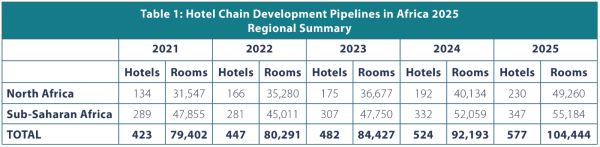
This year's Hotel Development Pipeline Report, the definitive study of international hospitality development projects in Africa, reveals record activity. There are 577 hotels and resorts, with 104,444 rooms, in the development pipeline, up by 13.3% on 2024, way ahead of the single digit pipeline growth reported globally by the leading international chains.

The report, compiled by Lagos-based W Hospitality Group, with data from 50 international and regional hotel chains, shows that development activity has been growing impressively in North Africa, which saw a 23% year-on-year increase, compared to a 6% increase in sub-Saharan Africa. Over the past five years, the hotel development pipeline has grown at an annualised rate of 4% in sub-Saharan Africa, 12% in North Africa and 7% overall.

Egypt continues to lead the way in terms of development, with 143 hotels and 33,926 rooms in the pipeline there. This is almost four times the number of rooms in second-placed Morocco, which has 8,579 rooms in 58 hotels. The following eight countries, ranked by number of rooms, comprise Nigeria, 7,320; Ethiopia, 5,648; Cape Verde, 5,565; Kenya, 4,344; Tunisia, 4,336; South Africa, 4,076; Tanzania, 3,432; and Ghana, 3,125. International hotel chains have deals signed in 42 of Africa's 54 countries.

Despite its clear leadership in the absolute pipeline numbers, Egypt has fewer than 50% of rooms under construction, a significantly lower proportion than second-placed Morocco, with over 72%. Of the top 10 countries, Ethiopia has the highest ratio of rooms “on site”, followed by Morocco and Ghana. Cape Verde, Nigeria and Tanzania have some of the lowest percentages. However, “under construction” does not necessarily mean that there is activity and progress towards completion and opening – many of the sites in Nigeria and Ghana, for example, have been closed for several years, with hardly a hard hat in sight.

A more granular analysis, looking at the location of planned properties, reveals an extraordinary boom in Cairo, with 17,757 new rooms projected in over 70 hotels. The contrast with the second-placed location, Sharm El Sheikh, is dramatic, where 4,231 rooms are planned in fewer than 10 properties. The cities and resorts with the next largest pipelines by number of rooms are Lagos, 3,709; Boa Vista, 3,650; Addis Ababa, 3,369; Casablanca, 2,939; Accra, 2,652; Abuja, 2,570; Zanzibar, 2,523; and Dakar, 2,334.

The growth is being driven strongly by the major international hotel chains, with Marriott International leading the way, 165 hotels with 29,639 rooms. It is followed by Hilton, 93 hotels with 17,040 rooms; Accor, 73 hotels with 15,013 rooms; IHG, 40 hotels with 7,951 rooms; Radisson Hotel Group, 32 hotels with 6,346 rooms; TUI Hotels & Resorts, 11 hotels with 2,954 rooms; Barceló Hotels & Resorts, 7 hotels with 2,193 rooms; The Ascott, 15 hotels with 1,897 rooms; Kerten Hospitality, 13 hotels with 1,881 rooms and Wyndham Hotels & Resorts, 7 hotels with 1,706 rooms.

In the race for dominance, Hilton added slightly more rooms to its African pipeline last year than Marriott International and achieved a higher percentage growth. Barceló Hotels & Resorts recorded the largest percentage growth, more than doubling its pipeline to 2,193 rooms, with three large resort signings in North Africa.

Below the headline numbers, there are three notable trends. First, the actualisation rate (actual openings vs. expected openings), which has nearly doubled from 21% in 2023 to 38% in 2024. While it's substantially less than the 75% actualisation rate achieved in 2019, it shows a continuing recovery from the economic devastation of COVID-19. Of the total 104,444 rooms in the pipeline, over 50,000 rooms (nearly 50%) in 304 hotels are expected to open in 2025 and 2026. 

Second, resort projects are increasing much faster than city or airport hotels, both in percentage terms and in absolute numbers, driven by the number of signings and by the larger average size of the developments, 210 keys vs. 170.  Also, almost half of the rooms that opened last year were in resorts.

Third, there is a definite movement by the chains towards the franchise model, with 108 projects representing almost 19% of the total, compared to less than 10% in 2020. A major factor is the emergence of quality, international, white-label operators such as Aleph Hospitality and Valor Hospitality, and some indigenous operators in Nigeria, Kenya and elsewhere, that are increasing confidence that brand standards will be met. 

The full report will be discussed at FHS Africa (formerly AHIF) 17-19 June in Cape Town. It is the leading hospitality investment conference in the region, which brings together senior decision-makers to shape the future of the industry. Matthew Weihs, Managing Director of the Bench, which organises FHS Africa, said: “The growth in hotel development across Africa is a testament to the continent's economic and tourism potential. Furthermore, the commitment from the international hotel chains makes it clear that global players see Africa as a strategic opportunity."

Trevor Ward, Managing Director of W Hospitality Group, concluded: “Despite the various trials that the continent faces, the fact that hotel chains signed 125 new deals last year, with 21,000 rooms, is evidence that opportunities for further development abound. According to the Global Cities Institute, by the year 2100, 10 of the world's 16 largest cities will be in Africa, with all but one of them (Cairo) in sub-Saharan Africa. So, one might say that development activity in Africa has barely scratched the surface.”

Distributed by APO Group on behalf of The Bench.

For further information and high-resolution images, please contact:
David Tarsh
+44 (0) 20 7602 5262
+44 (0) 7770 816 070
Email: David@Tarsh.com.

About W Hospitality Group:
The W Hospitality Group, a member of Hotel Partners Africa, specialises in the provision of advisory services to the hotel, tourism and leisure industries, providing a full range of services to clients who have investments in the sector, or who are looking to enter them through development, acquisition or other means. In sub-Saharan Africa W Hospitality Group is regarded as the market leader due to the market and financial expertise of its staff, its worldwide knowledge, and its commitment to its clients.  In Africa, W Hospitality Group has to date worked in 40 countries on the continent, from its Lagos and Addis Ababa offices.

www.W-HospitalityGroup.com

About FHS Africa (Formerly AHIF):
For over a decade, the Future Hospitality Summit Africa (FHS Africa) has been the launchpad for hospitality investment in Africa, driving growth, connecting visionaries, and transforming the continent's tourism and hospitality landscape. As a beacon of opportunity, FHS Africa brings together global investors, developers, operators, and industry leaders committed to turning potential into reality.

www.AHIF.com

Strategic Partners: Accor, BWH Hotels, Hilton, IHG Hotels & Resorts, Marriott International, Radisson Hotel Group
Headline Sponsors: CHIC, Hansgrohe, TUI Hotels & Resorts
Sponsors: Aleph Hospitality, CityBlue Hotels, Equate, JLL, Knight Frank, St Helena Island, STR, TIME Hotels, TV5 Monde, Valor Hospitality Partners
Official Carriers: Discover Airlines, Kenya Airways
Supporter: South Africa Tourism

About The Bench:
The Bench has a legacy of delivering world-leading investment forums and conferences in Europe, Africa, the Middle East, and Latin America. The key principle behind these events is "dealmaking'. Transforming the way businesses connect; the Bench has developed a reputation for creating innovative and high-impact industry meetings.

For over two decades, government leaders, tourism ministries, global travel & tourism associations, the world's most influential hospitality brands, hotel owners & investors, renowned restaurant groups, airlines & aviation authorities, destination developers, asset managers, financial groups, and consultants have been participating in the Bench's events. These include FHS Africa, FHS World, FHS Saudi Arabia and AviaDev, where industry players showcase their brands, position themselves as thought leaders and innovators, and connect with the right individuals, opportunities and knowledge.

Learn more at TheBench.com

Media files
The Bench
Download logo
Read moreHotel Development Booms in Africa
8 April 2025

IDC Challenges Court Order Preventing It From Interviewing Whistleblowers

Location: News

R90-million awarded to ARTsolar under investigation

Read moreIDC Challenges Court Order Preventing It From Interviewing Whistleblowers
8 April 2025

It’s your country, explore it!

Location: News

It's your country, explore it!

With the Easter long weekend fast approaching, Tourism Minister Patricia de Lille has called on local and international travelers alike to explore the country’s breathtaking landscapes, rich culture and vibrant communities.

De Lille launched the Easter campaign with an activation at Twin Venture, which is based at the Atlantis Dunes in Cape Town, specialising in quad biking and sandboarding experiences. 

The activation was aimed at showcasing the variety of experiences for visitors across South Africa, especially in smaller towns.

Speaking at the event on Monday, which was attended by tourism business owners, industry associations, media and content creators, De Lille emphasised the importance of both domestic and international travel in sustaining and growing the tourism sector.

Domestic tourism: A growing market

Domestic tourism in South Africa continues to perform well, with travellers increasingly looking for affordable and unique experiences. 

Recent insights from the 2024 Sho’t Left Travel Week campaign highlighted key trends shaping local travel, including:

-                Affordability remains a priority. Travelers are looking for more budget-friendly accommodation and experiences, making initiatives like Sho’t Left vital in ensuring more South Africans can explore their own country.

-               Lesser-known destinations are in demand. More South Africans are seeking off-the-beaten-path adventures, opting for places with fewer crowds and deeper cultural experiences.

-               Personalised travel experiences are key. Families, solo travellers, seniors, and adventure-seekers are all looking for tailored travel options, including accessible tourism and wellness retreats.

“Every night spent in a guesthouse, every meal at a local restaurant and every souvenir bought from a market contributes to our economy. By supporting local tourism, we ensure that the benefits of travel extend beyond major cities promoting inclusive economic growth,” De Lille said.

International tourism on the rise

International visitors remain a key part of South Africa’s tourism strategy. In the first two months of 2025 alone, the country welcomed nearly 1.8 million international visitors, an increase of 4.7% compared to the same period last year.

“International travellers are drawn to South Africa for its diverse cultures, breath-taking landscapes, and warm hospitality. We must continue showcasing what makes our country special and keep igniting the spirit of exploration,” De Lille said.

South Africa Awaits – Come Find Your Joy!

To further promote tourism, South African Tourism recently launched its new global brand campaign: ‘South Africa Awaits – Come Find Your Joy!’ This campaign encourages travellers -- both local and international -- to rediscover South Africa with the wonder and excitement of a first-time visitor.

“This is more than a tourism campaign; it’s an invitation. Whether you’re a young family, a group of friends, an adventure junkie, or someone who just needs a break, South Africa has something for you,” the Minister said.

De Lille urged travellers to take advantage of the upcoming long weekends to explore, experience and support local businesses.

“Take the trip. Book the stay. Discover the dorpie. Dance at the festival. Visit the market. Eat the magwinya. Support local. Make the memory. Take that Sho’t Left! Our country is calling. South Africa Awaits – Come Find Your Joy!” the Minister said. – SAnews.gov.za

Edwin
Tue, 04/08/2025 - 10:03
49 views

Read moreIt’s your country, explore it!
7 April 2025

Tygervalley Home Affairs office opens its doors to the public

Location: News

Tygervalley Home Affairs office opens its doors to the public

A new state-of-the-art Home Affairs office, located in Tygervalley Shopping Centre in Bellville, Cape Town, served its first clients this morning in the presence of Home Affairs Minister Dr Leon Schreiber.

The Minister officially opened the office earlier in the day.

The new office features upgraded technology that integrates a camera at the counter, eliminating the need to queue for photos. It also only accepts prior bookings, ensuring that there are no queues. 

“We are guided by our vision to deliver 'Home Affairs @home'. This means that we are gradually bringing services closer to the people, including through our presence in malls. This process will eventually culminate in Home Affairs services also being offered at many more bank branches, and through online devices,” Minister said.

“The people of Bellville and surrounds will now experience the meaning of our commitment to deliver dignity for all. Every day, we are making progress, together,” the Minister said.

On Saturday, the Minister also opened a Home Affairs office in Mitchells Plain.

The new office is modern and spacious, with 250 seats (it previously had 50). It also includes upgraded technology like cameras installed directly at each counter, which eliminates the need to queue to take photos.

“This new office serves as tangible proof to the people of Mitchells Plain that Home Affairs is delivering dignity for all. The vastly improved facilities and technology will transform their daily interactions with our services.

“We have brought Home Affairs closer than ever to the people of Mitchells Plain and in the coming months, our plans to expand access to services through many more bank branches will take us closer still to delivering 'Home Affairs @ home,” Schreiber said.

At the time, the Minister was accompanied by the Western Cape MEC for Cultural Affairs and Sport, Ricardo Mackenzie, and Executive Mayor of the City of Cape Town, Geordin Hill-Lewis. – SAnews.gov.za

Edwin
Mon, 04/07/2025 - 14:59

120 views

Read moreTygervalley Home Affairs office opens its doors to the public
7 April 2025

Leaders From Angola, Ethiopia, Egypt & South Africa to Lead Discussions at Africa Finance Corporation’s (AFC) 5th Country & Stakeholder Symposium

Location: News
Africa Finance Corporation (AFC)

Africa Finance Corporation (AFC) (www.AfricAFC.org), the continent's leading infrastructure solutions provider, is convening the 5th edition of its Country & Stakeholder Symposium (CSS) tomorrow, April 8, 2025, from 12:30 to 14:00 WAT. 

This year's theme, “Making Africa's Institutional Savings Work Better for the Continent,” will spotlight the urgent need to bridge the financing gap in Africa by harnessing the power of domestic institutional capital to fund long-term development. The Symposium will serve as a vital platform to explore how Africa can better mobilize its own institutional savings and redirect them into high-impact, return-generating projects aligned with national development priorities. 

The Symposium will showcase AFC's innovative capital mobilization strategies and financial structuring expertise, with a focus on developing new financial products and asset allocation models that attract and retain institutional investors.  

Discussions will also include potential regulatory enhancements needed to unlock domestic capital for productive investments, while maintaining strong protections for savers. 

High-profile leaders and industry experts from the public and private sectors will be speaking at the symposium including:  

  • H.E. Vera Esperança dos Santos Daves De Sousa, Minister of Finance, Angola 
  • Dr. Brook Taye, CEO, Ethiopian Investment Holdings 
  • Kabelo Rikhotso, Chief Investment Officer, Public Investment Corporation (PIC), South Africa 
  • Armando Manuel, Chairman, Angola Sovereign Wealth Fund 
  • Ayaan Zeinab Adam, Senior Director and CEO, AFC Capital Partners 

The event will be moderated by CNBC Africa Senior Anchor, Fifi Peters, and will convene key stakeholders from across the continent's public and private sectors. 

This is a virtual event. To register, please visit: Register here https://apo-opa.co/3EbZQTh

Distributed by APO Group on behalf of Africa Finance Corporation (AFC).

Media Enquiries: 
Yewande Thorpe 
Communications 
Africa Finance Corporation 
Mobile : +234 1 279 9654 
Email : yewande.thorpe@africafc.org 

About AFC:
AFC was established in 2007 to be the catalyst for pragmatic infrastructure and industrial investments across Africa. AFC's approach combines specialist industry expertise with a focus on financial and technical advisory, project structuring, project development, and risk capital to address Africa's infrastructure development needs and drive sustainable economic growth. 

Seventeen years on, AFC has developed a track record as the partner of choice in Africa for investing and delivering on instrumental, high-quality infrastructure assets that provide essential services in the core infrastructure sectors of power, natural resources, heavy industry, transport, and telecommunications. AFC has 45 member countries and has invested over US$15 billion in 36 African countries since its inception. www.AfricAFC.org  

Media files
Africa Finance Corporation (AFC)
Download logo
Read moreLeaders From Angola, Ethiopia, Egypt & South Africa to Lead Discussions at Africa Finance Corporation’s (AFC) 5th Country & Stakeholder Symposium
7 April 2025

SA advocates for linguistic equity in AI at G20

Location: News

SA advocates for linguistic equity in AI at G20

South Africa has called on the Group of Twenty (G20) members to support initiatives that develop Artificial Intelligence (AI) in low-resource languages and share data and tools to make this possible.

Addressing the Meeting of the G20 Digital Economy Working Group Task Force on AI, Minister of Communications and Digital Technologies, Solly Malatsi, said there were over 7 000 languages spoken in the world, yet most AI models and digital content is trained on a tiny fraction of these – predominantly English and a handful of others.

“We know that AI is only as good as the data and algorithms it is built on and currently, both of these have serious gaps. One glaring gap is the linguistic and cultural diversity deficit in AI systems.

“This linguistic inequity is not just a cultural loss; it’s a practical barrier that threatens to exclude billions from the AI-driven digital economy,” the Minister said on Monday in Gqeberha.

He emphasised that AI must not only be looked at from a technology perspective, but from the standpoint of social impact. 

“We must investigate how AI can help us achieve the Sustainable Development Goals. How can it improve healthcare, education, agriculture, and governance? Beyond language, ethical AI governance requires addressing issues of bias, transparency, and accountability. 

“We have seen instances of AI algorithms that exhibit racial or gender bias in hiring, lending, or policing. These are systemic harms we have to root out. During our Task Force discussions, we must consider how G20 nations can share best practices on AI governance, including regulatory approaches and standards to ensure AI safety and trustworthiness,” Malatsi said.

South Africa’s G20 Presidency has set inclusion and equity at the heart of the digital agenda.

The G20 Presidency will focus on four key pillars that include bridging the digital divide with meaningful connectivity; building inclusive digital public infrastructure; nurturing innovation ecosystems for local development and championing ethical AI that respects diverse languages, cultures, and values.

“We cannot allow a new form of digital inequality to take hold in our world. We need to unite our efforts, North and South, public and private, to invest in connectivity for all. This means mobilising financing for digital infrastructure, sharing innovations to lower costs, and collaborating on policies to make internet access affordable for the poorest,” the Minister said.

The International Telecommunication Union indicates that roughly 2.9 billion people still don’t have internet access at all.

“While most of these individuals live within range of mobile broadband networks, they remain offline due to multiple factors ranging from high data costs, lack of affordable smart devices and limited digital skills. Infrastructure alone is no longer enough; the real barriers are economic, educational, and linguistic. 

“And they demand our immediate collective attention. The socio-economic benefits of closing the digital divide are enormous. We cannot allow a new form of digital inequality to take hold in our world,” he said.

According to the Global System for Mobile Communications Association (GSMA), bringing the currently offline population onto the internet could add $3.5 trillion to the global economy by 2030, with 90% of the benefits flowing to developing countries. 

“We propose that G20 members share strategies on supporting start-ups and micro, small and medium enterprises (MSMEs) – from startup financing initiatives to innovation hubs and tech parks, from simplifying regulatory burdens to providing mentorship networks. 

“Let us commit to growing the digital innovation ecosystem in all our countries. As we discuss policy frameworks, we must also consider the idea of an innovation fund or facility to support digital entrepreneurship in underserved regions, an idea that has been floated with the notion of a possible global fund for AI and digital innovation. 

“If we want a truly global digital economy, we must ensure that innovation knows no borders – that brilliant ideas from Africa, Asia, or Latin America can find the resources and support to grow,” Malatsi said. - SAnews.gov.za

nosihle
Mon, 04/07/2025 - 14:42
37 views

Read moreSA advocates for linguistic equity in AI at G20
  • Previous
  • Page 1
  • Interim pages omitted …
  • Page 49
  • Page 50
  • Page 51
  • Page 52
  • Page 53
  • Interim pages omitted …
  • Page 212
  • Next

Copyright © 2026 · MyZA · All Rights Reserved · Powered by Stratlec Online