Proteas Women’s Tour Diary: Suné Luus Reflects on ODI Tri-Series in Sri Lanka
COLOMBO: After a couple of months away from the international stage, the Proteas Women travelled to Sri Lanka to compete in...

MyZA
News, Directory, Events and Other Stuff
COLOMBO: After a couple of months away from the international stage, the Proteas Women travelled to Sri Lanka to compete in...
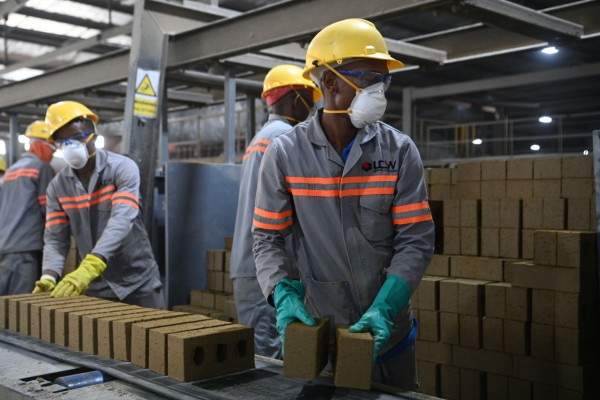
The kilns are firing again—and with them, the economic hopes of a community. In the quiet town of Lobatse, southern Botswana, a decades-old industrial landmark is undergoing a remarkable renaissance. Lobatse Clay Works (LCW), a brick manufacturer that was once the cornerstone of Botswana's construction industry, has been resurrected owing to a strategic investment from the African Development Bank Group (www.AfDB.org). The financing has transformed not only the company but an entire community.
“The buildings that shaped modern Botswana will rise again from our clay," declares Anthony Moepeng, Acting Chief Executive Officer of Lobatse Clay Works.
Founded in 1992 as a joint venture between Botswana Development Corporation (BDC) and American firm Inter-Kiln, Lobatse Clay Works quickly established itself as the nation's premier maker of bricks. For decades, its distinctive reddish-brown bricks were synonymous with Botswana's construction boom, during which schools, hospitals, and government buildings all showcased the company's craftsmanship.
But in 2017 the company faced a perfect storm of challenges. Aging equipment, production inefficiencies, and rising fuel costs forced the shuttering of the once-thriving operation, leaving the factory idled -- stripping the community of both jobs and identity.
African Development Bank's Catalytic Investment Powers Revival
Recognizing Lobatse Clay Works' potential, the African Development Bank provided a loan facility, in partnership with the Botswana Development Corporation to turn around the company's fortunes, focusing on technological modernization and operational efficiency.
The Bank's investment enabled Lobatse Clay Works to acquire state-of-the-art manufacturing equipment that dramatically improved energy efficiency. A new hybrid fuel system slashed production costs, while enhanced kiln technology boosted output capacity and product quality.
In 2023, the company, facing supply chain challenges and rising costs, secured an additional 48 million Pula (around $3.5 million) from the African Development Bank — bringing the total financing to 138 million Pula— to keep growth on track.
This substantial investment enabled the plant to reopen in 2024.
Beyond Bricks: Building Communities and Futures
The revitalized facility has already created 148 direct jobs with hundreds more expected in supporting industries from transportation to services.
The plant's output of three million bricks per month is high enough to meet domestic construction demand and serve lucrative export markets in South Africa, Zimbabwe and Namibia, generating valuable foreign exchange for Botswana's economy.
African Development Bank's Deputy Director General for Southern Africa, Moono Mupotola, stressed the broader significance of the investment. "This speaks directly to what we do at the African Development Bank. Lobatse is a small town, but almost one hundred percent of the factory workers are from the town. This project delivers on our High 5 development priority of improving the quality of life for Africans."
Most significantly, Lobatse Clay Works's revival aligns perfectly with Botswana's industrial diversification goal to reduce dependence on diamond revenues by strengthening manufacturing capability.
"Through the African Development Bank funding, we have been able to commit BWP 4 million towards the refurbishment of the plant," explains Benedicta Abosi, Acting Managing Director at BDC. "This has enabled us to restart operations and produce enough bricks for expansion opportunities into the region."
The company plans to expand from brick manufacturing to include tiles, further cementing its role in Botswana's construction renaissance and economic diversification efforts.
Distributed by APO Group on behalf of African Development Bank Group (AfDB).
Photos: https://apo-opa.co/453yTvZ
About the African Development Bank Group:
The African Development Bank Group is Africa's premier development finance institution. It comprises three distinct entities: the African Development Bank (AfDB), the African Development Fund (ADF) and the Nigeria Trust Fund (NTF). On the ground in 41 African countries with an external office in Japan, the Bank contributes to the economic development and the social progress of its 54 regional member states. For more information: www.AfDB.org
President Cyril Ramaphosa today convened ministers and senior business leaders under the Government Business Partnership. The partners agreed to fast-track the implementation of key structural reforms and support performance improvements at Transnet and Eskom through an accelerated delivery plan and an intensified phase of the Partnership's ongoing efforts to expedite delivery on priority interventions vital to economic growth and job creation.
The partnership believes that this acceleration is necessary to achieve a step-change in progress in response to difficult economic headwinds. Focus will remain on improving Eskom's Energy Availability Factor (EAF) and unblocking delays in new generation capacity to ensure a continued reprieve from load shedding. Work is underway to resolve grid access and allocation bottlenecks that hinder new generation projects. Whilst Transnet's performance is not at the level required, it has stabilised and there is a significant focus on growing volumes which will increase exports and revenue collected to support economic growth and preserve and grow employment.
Expediting reforms and performance improvement is crucial to reducing the possible negative impact of the complex global and domestic environment, which continues to present substantial challenges and uncertainty. GDP growth projections for 2025 have been revised down, and current forecasts remain far below the minimum 3% required to create the level of jobs needed to make an impact on the country's high levels of unemployment.
The Government Business Partnership, established in 2023, is focused on accelerating crucial reforms and operational improvements to lift confidence levels and to drive economic growth in four priority areas: energy, transport and logistics, crime and corruption, and youth employment (the latter added in January 2025).
President Cyril Ramaphosa said: “Through the strength of this partnership, we have been able to unlock many constraints that undermine growth and job creation. While there is much to improve, the dedication and commitment from both government and business remains undiminished. The pace of our work must increase to match the scale of the challenge.”
Important progress has been made to lay the groundwork for sustained accelerated action, including the finalisation of the Transnet Network Statement, the launch of a Request for Information (RFI) to attract private investment in port and rail infrastructure, and NERSA's approval of electricity wheeling regulations. These reforms enable broader private sector participation in energy and transportation and logistics. Both the crime and corruption and the youth employment focal areas are largely tracking against their plans which have a longer-term time horizon.
In line with this commitment to focused execution, the Partnership welcomed the launch of the second phase of Operation Vulindlela, which has a delivery focus that closely aligns with the Partnership's objective of more rapidly accelerating reforms and operational improvements that will drive growth and job creation.
Adrian Gore, BUSA Vice President and business co-convenor of the Partnership, said: “We are entering this accelerated execution “sprint” with a real sense of urgency. Progress has been made, but it's not enough. This requires a step change in the pace of decision making and execution. We need to redouble our collective efforts to help shift the country onto a sustained upward trajectory and deliver on our shared ambition of a virtuous cycle of growth, jobs, a more positive narrative and increased investment.”
Distributed by APO Group on behalf of The Presidency of the Republic of South Africa.
Minister Dion George, South Africa's Minister of Forestry, Fisheries and the Environment, has concluded an impactful participation at the Copenhagen Climate Ministerial in Denmark on 7-8 May 2025, reinforcing South Africa's commitment to a resilient, sustainable future. Representing the nation ahead of COP30 in Belém, Brazil, Minister Dion George championed South Africa's priorities, ensuring the voices of its people, wildlife, and ecosystems shape the global climate agenda.
The Ministerial was a critical platform to advance the Paris Agreement's 1.5°C target, with direct implications for South Africans. Climate change threatens livelihoods through droughts, floods, and rising temperatures, impacting food security, jobs in agriculture, fisheries, and forestry, and endangering iconic wildlife and vital marine resources. Minister Dion George's leadership secured progress on ambitious climate commitments that drive job creation, poverty reduction, and biodiversity conservation, embedding community and environmental upliftment. He advocated for a just transition, protecting workers in high-carbon sectors while unlocking opportunities in renewable energy and green technologies. Minister Dion George also championed increased climate finance for adaptation, including water infrastructure, climate-smart agriculture, and marine conservation, to improve daily life and protect ecosystems. From coastal communities to rural farms and wildlife reserves, South Africa promoted solutions to strengthen resilience against climate impacts.
These outcomes translate into tangible benefits: cleaner air, safer water, healthier oceans, and new jobs in green sectors. South Africa's engagement secured stronger global partnerships, clearer funding pathways, and renewed momentum to tackle climate change, empowering communities and safeguarding natural heritage.
Minister Dion George stated, “Our work in Copenhagen is a step toward a future where South Africans thrive in a low-carbon economy, with resilient communities and protected biodiversity. We will carry these engagements forward into the G20, ensuring our priorities continue to shape global climate action.”
South Africa returns from Copenhagen with commitments to advance its climate agenda, delivering resources, technology, and support for its people and environment. The nation is poised to build on this momentum at the G20 and beyond, driving a just and sustainable future for all.
Distributed by APO Group on behalf of Republic Of South Africa: Department of Forestry, Fisheries and the Environment.
Friday, 09 May 2025 JOHANNESBURG: Cricket South Africa (CSA) is pleased to announce the appointment of Shukri Conrad as the...

The Milken Institute (https://apo-opa.co/452va1L) and the Motsepe Foundation are proud to announce the winner of the Milken-Motsepe Prize in FinTech, a $2 million innovation award designed to reward companies working to expand access to capital and financial services for small businesses in emerging and frontier markets. The winner was announced at the Milken Institute Global Conference in Los Angeles.
Verto (https://apo-opa.co/4d7WePf), based in the United Kingdom, won the $1 million Grand Prize for its business-to-business cross-border payments platform, which enables businesses in emerging markets to send and receive payments, eliminating intermediary fees, supporting 49 currencies, and settling transactions quickly.
FinTech is the third prize awarded as part of the Milken–Motsepe Innovation Prize Program, a series of competitive multimillion-dollar global competitions and awards designed to incentivize and reward bold, innovative solutions to address pressing economic and environmental challenges in Africa.
A Rigorous Award Cycle: From Application to Award
Launched in May 2024, the Milken-Motsepe Prize in FinTech attracted more than 3,000 entrepreneurs from 126 countries across six continents. A total of 400 teams applied, with just 10 being selected as semifinalists.
Each team underwent a comprehensive judging process that evaluated five key criteria: affordability and accessibility, ethical and responsible practices, scalability in other markets, the use of cutting-edge technology, and the potential to promote equitable access to financial services.
In December 2024, 10 semifinalists pitched their innovations to investors at the Milken Institute Middle East and Africa Summit in Abu Dhabi. From this group, an expert panel of judges selected three finalists—Chumz, Oze, and Verto—to advance to the final stage of the innovation award at the 2025 Milken Institute Global Conference.
“Across the African continent, technology and innovation are disrupting traditional finance and banking approaches. Investment in this space is profitable and, more importantly, necessary for financial inclusion," said Dr. Precious Moloi-Motsepe, co-founder and CEO of the Motsepe Foundation. "My heartfelt congratulations to the winners and all the finalists for demonstrating feasible and impactful solutions that will drive economic activity and shared prosperity in the global South, while influencing the financial sector all over the world."
Since its launch in 2021, the Milken-Motsepe Innovation Prize Program has awarded over $6 million in funding to more than 50 innovators worldwide. Participating teams have raised nearly 10 times the Grand Prize in additional outside investments, reaching and impacting over 530,000 community members.
The Milken-Motsepe Innovation Prize Program offers free, curated resources and online events not only to award winners but also to nearly 9,000 global entrepreneurs.
New Prize in AI and Manufacturing
The fourth Milken-Motsepe Innovation Prize, which focuses on AI and manufacturing, launched at the 2025 Milken Institute Global Conference. The new $2 million award is designed to recognize established companies driving innovation in Africa's manufacturing sector. Focused on advanced data analytics and artificial intelligence, the prize rewards technological breakthroughs that create long-term economic resilience in the supply chain in Africa.
Registration is open until July 31, 2025.
With $2 million in total prizes, including a $1 million Grand Prize, “AI and Manufacturing” seeks companies that accelerate technological advancements, create jobs, and improve access to essential goods and services for communities across Africa. The award represents an opportunity to support companies leading the next wave of transformative change in manufacturing.
“We have witnessed our prize programs bring forward some of the most visionary thinkers across sectors, from agriculture to financial technology. Now we're excited to see what bold entrepreneurs are doing for the manufacturing sector to harness the power of AI and other advanced technologies to improve the supply chain in Africa,” said Emily Musil, PhD, managing director of environmental and social innovation at the Milken Institute. “Prizes like this have the power to reveal new and better ways to operate in the digital age and shape how we can do better for people and the planet in the new future we are building.”
For more information about the winners and the Milken-Motsepe Innovation Prize Program, visit https://MilkenMotsepePrize.org/.
Distributed by APO Group on behalf of The Milken-Motsepe Innovation Prize Program.
Additional Video Link:
Opening Video: https://apo-opa.co/3GJgJpr
Finalist Video 1 - Chumz: https://apo-opa.co/436rMk6
Finalist Video 2 - Oze: https://apo-opa.co/4md7NsO
Finalist Video 3 - Verto: https://apo-opa.co/3Z9lVZT
Contact:
Paul Guequierre
Email: pguequierre@milkeninstitute.org
Phone: 202-249-6942
ABOUT THE MILKEN INSTITUTE:
The Milken Institute is a nonprofit, nonpartisan think tank focused on accelerating measurable progress on the path to a meaningful life. With a focus on financial, physical, mental, and environmental health, we bring together the best ideas and innovative resourcing to develop blueprints for tackling some of our most critical global issues through the lens of what's pressing now and what's coming next. For more information, visit www.MilkenInstitute.org.
ABOUT THE MOTSEPE FOUNDATION:
The Motsepe Foundation was founded in 1999 by Dr. Patrice Motsepe and his wife, Dr. Precious Moloi-Motsepe. The goal of the Motsepe Foundation is to contribute toward eradicating poverty and to sustainably improve the living conditions and standards of living of poor, unemployed, and marginalized people in South Africa, Africa, and the world. In January 2013, Dr. Motsepe and Dr. Moloi-Motsepe joined the Giving Pledge, which was started by Warren Buffett and Bill and Melinda Gates. Dr. Motsepe and his wife committed to give half of their wealth to the poor and for philanthropic purposes during their lifetime and beyond.

Giants of Africa (https://GiantsOfAfrica.org/), a non-profit organization dedicated to empowering African youth through basketball, alongside its founder Masai Ujiri, Vice-Chairman and President of the Toronto Raptors, has announced Giants of Africa Festival 2025. Returning to the vibrant city of Kigali, Rwanda from July 26-August 2, the event will bring together 320 young athletes from 20 African nations, and more than 20,000 spectators for a week of community, culture, basketball, education, and entertainment. The festival will unite communities, spark potential, and drive transformative change across the continent.
“Like these kids, I grew up on the continent,” says Ujiri. “As Africans, we know the landscape of what the kids go through. We know they dream just like we did and it really inspires me because, those kids have so much more talent and intelligence, they have ways to communicate now that we didn't. This festival is about showing them there is a path. We want them to never stop dreaming.”
Giants of Africa Festival 2025 will begin with an exhilarating Opening Show, as the athletes unite in an inspiring parade to kick off the weeklong celebration. South African international DJ sensation Uncle Waffles, MTV Video Music Award-winning choreographer Sherrie Silver, and Rwandan singer and songwriter, Kevin Kade will bring electrifying performances as Ujiri and special guests welcome all to the festivities. The awe-inspiring event will mark the beginning of life-changing journeys for Africa's leaders of tomorrow.
Taking place across Kigali Sports City's BK Arena, Amahoro National Stadium, Petit Stade, and Paralympic Gymnasium, the festival will showcase the full potential of Africa's sports and entertainment ecosystem, highlighting its social and economic value for the next generation and the continent at large. Giants of Africa Festival 2025 will also serve as the grand opening of Zaria Court. Founded by Ujiri, the new mixed-use sports, entertainment, and cultural district includes an 80-room hotel, sports bar, basketball court, event space, retail outlets, gym, five-a-side football pitch, and outdoor public areas.
The festival will conclude with a spectacular Closing Concert featuring performances from Nigerian Afrobeats artist Kizz Daniel and award-winning Nigerian singer/songwriter Timaya. Celebrity guests in attendance throughout the week will include Chris Tucker, Candace Parker, Robin Roberts, Chiney Ogwumike, Didier Drogba, Michael Blackson, Boris Kodjoe and more. Additional performers for both the Opening Show and Closing Concert will be announced in the coming weeks.
Since 2003, Giants of Africa has empowered youth through basketball, hosting camps and building courts across 20 African countries. The foundation not only teaches game fundamentals but connects young people with inspirational mentors who show how determination, leadership, and integrity can transform dreams into reality. Also central to their mission is basketball's unique power to transcend barriers and unite diverse communities. The Giants of Africa Festival is a culmination of this vision, featuring a weeklong youth basketball camp and tournament that brings together young men and women from 20 nations. Youth campers will represent Senegal, Nigeria, Cameroon, Mali, Ivory Coast, Ghana, Burkina Faso, Benin, Gabon, Rwanda, Kenya, Uganda, South Sudan, Tanzania, D.R. Congo, Somalia, Ethiopia, Morocco, Botswana, and South Africa. Giants of Africa and NBA/WNBA coaches and personnel will lead training sessions, with assistance from local coaches from the participating countries. A round-robin tournament will determine which countries and players will compete in the festival's championship and all-star games.
This year, Giants of Africa will also present its inaugural Threads of Africa Fashion Show, celebrating culture, fashion, and design from across Africa. The show will spotlight the work of three talented fashion designers, each from a different region of the continent. Cameroon's Hortense Mbea (Afropian: https://apo-opa.co/4d97Od4), Niger's Alia Baré (Alia: https://apo-opa.co/3GMuRyk), and Rwanda and South Africa's Nyambo (Masa Mara: https://apo-opa.co/4377tTx) will each present their new collections, and come together for a moderated discussion.
Additionally, festival highlights include the International Youth Day Forum, presented in partnership with the Imbuto Foundation, Ministry of Youth and Arts and ALX, bringing together over 2,000 Rwandan youth and festival campers to hear from esteemed leaders. The Women's Community Outreach Program will take place in Rwanda and across all 20 represented countries, offering leadership and education sessions in local communities to empower women and girls with knowledge, resources, and inspiration.
Giants of Africa Festival 2025 follows the inaugural Giants of Africa Festival (https://apo-opa.co/42RZZFe) which took place in Kigali in 2023 in celebration of the non-profit's 20th anniversary. The event united over 250 youth basketball players from 16 African nations, drew in over 14,000 spectators, and saw an estimated $1.5M invested into Kigali's local economy. The festival culminated in a closing concert featuring performances from Afrobeats icon Davido, Queen of Afrobeats Tiwa Savage, Rwanda's own Bruce Melodie, and South African superstar Tyla. It was a beacon of unity, inspiration, and transformation that ignited the continent. Building upon their bold ambitions, Masai Ujiri and Giants of Africa are poised to make an even more powerful statement in 2025.
Tickets for Giants of Africa Festival 2025's Opening Show and Closing Concert will go on sale beginning Thursday, May 8 at 3:00PM Central Africa Time. To learn more about the festival, its other initiatives and to purchase tickets or VIP and corporate packages, please visit www.GOAFestival.org or email info@giantsofafrica.org.
Distributed by APO Group on behalf of Giants of Africa.
For the festival launch video and still images:
https://apo-opa.co/430fZUd
For more information, please contact:
Tamara Kamaka - Giants of Africa
tamara@giantsofafrica.org
Emmanuel Ainamani - SRC Agency
emmanuel@srcagency.com
Social Media:
Instagram: https://apo-opa.co/4d7L5Og
Facebook: https://apo-opa.co/44t3xik
X: https://apo-opa.co/4dbdpj9
YouTube: https://apo-opa.co/4k6P14f
About Masai Ujiri and Giants of Africa:
Masai Ujiri, an award-winning and barrier-breaking NBA executive, is the founder of Giants of Africa. Started in 2003, Giants of Africa draws upon Ujiri's unique basketball journey to achieve its goal of uplifting African youth with programs focused on empowerment and leadership. As the first African general manager in North American professional sports who was named NBA Executive of the Year in 2013, Ujiri's ascent to the top of the basketball world began in his native Nigeria and took him around the world as a player, scout and executive, culminating in 2019 when he served as the architect of a Toronto Raptors team that became the first franchise outside the United States to be crowned NBA champions. Ultimately, he believes his work with Giants of Africa will prove to be the most meaningful and rewarding of his life.
Partners:
Giants of Africa Festival 2025 would like to express its gratitude to all sponsors and partners who have contributed to making this event possible:
|
● The Lake Family's All One Fund ● RwandAir ● ALX Africa ● Kensington ● Sport Court International, LLC
|
● BK Arena ● DHL Express Canada ● Imbuto Foundation ● Ministry of Sports ● Visit Rwanda |
● Volkswagen Move ● Zaria Court ● Bralirwa PLC ● Toronto Raptors ● Marriott
|
JOHANNESBURG: Cricket South Africa (CSA) today announced ISDIN as the official sunscreen partner to CSA and the Proteas Men and...
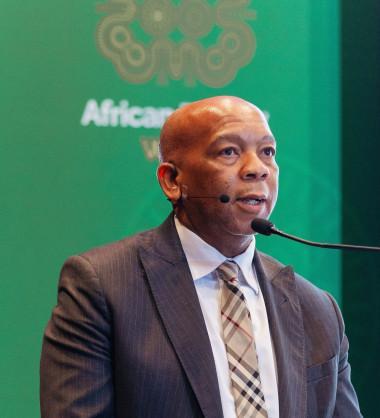
Dr Kgosientsho Ramokgopa, Minister of Electricity and Energy of South Africa, will speak at this year's edition of the African Energy Week (AEW): Invest in African Energies conference – taking place September 29 to October 4 in Cape Town. As the country targets large-scale power and renewable energy rollout, Dr Ramokgopa's participation will support greater collaboration with international partners and investors.
Faced with an energy deficit challenge, South Africa has been implementing bold changes across its electricity and energy sectors, seeking to strengthen infrastructure development and broader energy access. In 2025, the country implemented its newly enacted Electricity Regulation Act, aimed at creating a more competitive power market in the country. Designed to address the country's longstanding power supply challenges by restructuring the sector, the act enables independent power producers to play a larger role in the country's industry. Additional policies include the Renewable Energy Masterplan – approved in March 2025 and aimed at incentivizing investment across the renewable energy value chain – and the Energy Action Plan – aimed at mitigating power outages by securing energy supply.
On the back of regulatory reform, the country has seen several milestones achieved across its electricity and energy sectors in recent months. In March 2025, the country brought the sixth and final unit of the Kusile Power Station online. Following the requisite testing and optimization over a six-month period, the unit will add 800 MW to the South African national grid. Once all units at the station are operational by H2, 2025, the station will contribute 4,800 MW to the grid, representing the country's largest infrastructure project. Meanwhile, a second new-build power station is on track for commissioning its fourth unit shortly. The Medupi station – a greenfield coal-fired plant – will produce 4,800 MW once all six units are online.
While these projects represent strategic steps towards improving generation and transmission capacity in South Africa, much more investment is required to achieve the country's power and energy goals. The Ministry of Electricity and Energy estimates that South Africa requires up to R440 billion to finance transmission development over the next ten years. To enhance energy access, the country seeks to modernize and expand the national electricity grid by 14,000 km during this timeframe, highlighting a major investment opportunity for global financiers. In March 2025, Minister Ramokgopa announced short-term plans to acquire up to 1,164 km of 400 kV transmission lines, covering the Northern Cape, North-West and Gauteng. The acquisition falls under the country's broader Integrated Resources Plan – which provides a roadmap for achieving South Africa's forecasted electricity demand - as well as the 2024 Transmission Development Plan, which seeks to expand the grid and achieve greater access rates across various provinces.
Meanwhile, spearheaded by the Ministry of Electricity and Energy, the country is making significant strides towards scaling-up its renewable energy sector. A key driver of this is the Renewable Energy Independent Power Producer program (REIPPP) – an initiative aimed at increasing generating capacity through private sector investment in solar, onshore wind and hydropower. The REIPPP has successfully channeled substantial private sector expertise and investment in the renewable industry, with 16 winners selected under Bid Window 7 in December 2024. This window targets 5 GW of renewable energy capacity, with the winning projects featuring 1.76 GW of solar – representing a combined investment of ZAR 31.4 billion – as well as 615 MW of battery energy storage - a combined investment of ZAR12.8 billion.
Nuclear energy has also been identified as a strategic sector by the Ministry of Electricity and Energy. South Africa currently hosts the only operational nuclear facility in Africa and has plans to scale-up capacity in support of anticipated rising demand. The Ministry of Electricity and Energy plans to spend R60 billion on its nuclear-build program and is seeking support from international nuclear experts to enhance capacity. At AEW: Invest in African Energies, insights into South Africa's power and energy advancements will highlight key investment opportunities for global players.
“South Africa has put the requisite policies in place to advance large-scale power and energy projects. What the country now needs is action. International investors should take advantage of regulation and drive impactful projects,” states Oré Onagbesan, Program Director, African Energy Week.
Distributed by APO Group on behalf of African Energy Chamber.
About AEW: Invest in African Energies:
AEW: Invest in African Energies is the platform of choice for project operators, financiers, technology providers and government, and has emerged as the official place to sign deals in African energy. Visit http://www.AECWeek.com for more information about this exciting event.
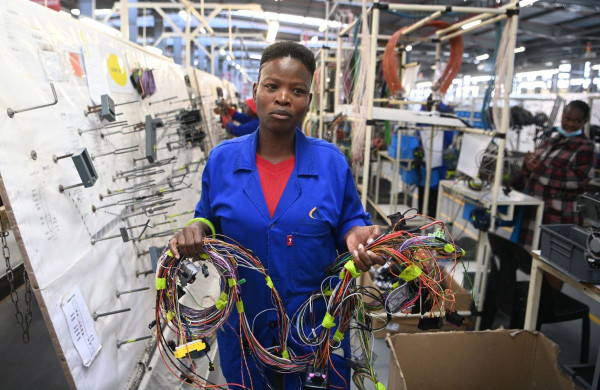
The Botswanan town of Lobatse, some 70 km south of Gaborone, has been transformed into a vibrant manufacturing centre. Across sprawling factory floors, hundreds of skilled hands meticulously assemble intricate wiring harnesses - components that will eventually power Volkswagen and Nissan vehicles across Africa and beyond.
In the automotive industry, wire harnesses are an intricate arrangement of wires, connectors, and components. They serve as vehicles' central nervous systems, enabling the transmission of electrical signals and power throughout the automobile.
This is Delta Automotive Technologies, where strategic financing from the African Development Bank has catalysed a manufacturing renaissance that extends far beyond the factory wallsThe company makes wiring harnesses primarily for Volkswagen and Nissan.. For decades, Botswana's economic history was written in diamonds. Today, a new chapter is unfolding as the African Development Bank's $80 million credit line to the Botswana Development Corporation (BDC) for businesses in the country fuels Delta Automotive's transformation into a manufacturing powerhouse.
"This funding hasn't just built infrastructure - it's built opportunity," says Darryn Hattingh, Delta's Director of Manufacturing. "We've built a world-class operation that competes globally while creating opportunity locally. The support enables us to industrialise not just today's production lines, but tomorrow's innovations. It will support us to industrialise future businesses obtained through Volkswagen.”
The firm, which is based in Botswana, makes wiring harnesses for Volkswagen's Polo Vivo and Polo 270, and Nissan's H60 brands.
It currently makes 120 vehicle harness sets for Volkswagen South Africa per day. By 2027, it hopes to create 340 vehicle sets for Volkswagen and 111 for Nissan in South Africa.
Women powering an industrial revolution
As one walks through Delta's expansive manufacturing facility, one fact is immediately apparent: in a traditionally male-dominated industry, women's expertise is driving this operation forward. An impressive 75% of Delta's workforce is female, shattering glass ceilings with every wire harness assembled.
For Clara Kaekane, a product and process engineer at Delta, the significance goes beyond personal achievement: "Every component we make is a challenge to outdated assumptions about gender and engineering work. I'm not just building car parts - I'm building a new perception of what is possible for women in manufacturing across Africa.”
Kaekane feels empowered to work at the management level in the automotive industry, which is normally male-dominated.
“This is a great opportunity for our country and company,” she says.
Connecting communities to global value chains
The hum of activity at Delta's plant represents more than manufacturing - it is the sound of Botswana's integration into sophisticated global supply networks. Currently producing 120 vehicle wiring harnesses daily, with plans to nearly triple output by 2027, Delta is an example of how African manufacturers can excel in precision-demanding global industries.
"What is happening here is the physical manifestation of our High 5 development priorities, particularly ‘Industrialize Africa' and ‘Integrate Africa'. It also provides skills to the people of Africa," said the African Development Bank's Deputy Director General for Southern Africa, Moono Mupotola. "Each wire harness connects not just vehicle components, but Botswana's workforce to global value chains, rural communities to industrial opportunities, and traditional economies to a diversified future."
Scaling impact: From hundreds to thousands
The numbers tell a compelling story: There are 327 employees today, expected to grow to 1,000 within four years. Behind those numbers are families supported, skills developed, and communities transformed. With 95% of the workforce Botswana nationals, the company has become a major driver of local economic empowerment.
"We're seeing multiple development dividends from this single investment," says Benedicta Abosi of BDC. "Delta's growth is generating export earnings, creating quality jobs, developing technical skills and, perhaps most importantly, demonstrating what's possible when development finance meets entrepreneurial vision."
She explained that five years ago, the Botswana Development Corporation supported multiple businesses, including Delta Automotive Technologies, through a $80 million line of credit facility from the African Development Bank.
A blueprint for African industrial transformation, Delta's success offers a replicable model for industrial development across the continent. By strategically supporting companies integrated into global supply chains, development finance can simultaneously address unemployment, gender inequality, economic diversification, and regional integration.
As workers at Delta Automotive Technologies continue to assemble the components that will power vehicles across the region; they're also creating a template for how African development finance can catalyse inclusive industrial transformation.
“This has definitely been a good investment for the African Development Bank, and this is how we see development financing working in Africa, Mupotola added.
Distributed by APO Group on behalf of African Development Bank Group (AfDB).
More images:
https://apo-opa.co/42JGePY
https://apo-opa.co/3GL0NTB
About the African Development Bank Group:
The African Development Bank Group is Africa's premier development finance institution. It comprises three distinct entities: the African Development Bank (AfDB), the African Development Fund (ADF) and the Nigeria Trust Fund (NTF). On the ground in 41 African countries with an external office in Japan, the Bank contributes to the economic development and the social progress of its 54 regional member states. For more information: www.AfDB.org
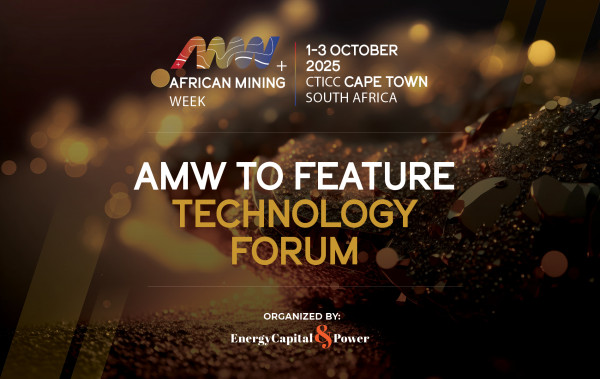
The upcoming African Mining Week (AMW) – Africa's premier gathering for mining stakeholders, scheduled for October 1-3, 2025 in Cape Town – will feature a dedicated Technology Forum. The forum will connect African mining projects with global technology providers and investors, showcasing how digital solutions are transforming resource extraction and redefining the mining value chain.
As African countries scale up mineral production to drive GDP growth, developers are increasingly adopting data analytics and digital tools to boost operational efficiency. U.S.-based startup KoBold Metals, which applies artificial intelligence (AI) to mineral exploration, entered the Democratic Republic of Congo (DRC) in April 2025 to tap into the country's estimated $24 trillion in untapped mineral resources. The DRC – already the world's largest cobalt producer and a key copper supplier – could see its global mining profile rise significantly with KoBold's involvement. In Zambia, the company is advancing the $2 billion Mingomba project, one of the world's most promising untapped copper assets.
Similarly, in Zimbabwe, Caledonia Mining is investing $1.1 million in IT infrastructure upgrades at the Blanket Mine as part of its $41.8 million capital budget. The upgrades include new mine planning software and a digital clocking system to improve labor efficiency, with a goal to increase gold output from 76,656 ounces in 2024 to up to 77,500 ounces in 2025.
In Botswana, Botswana Diamonds is employing AI-driven exploration to expand beyond diamond mining, recently identifying new prospects for copper, silver, cobalt, gold, nickel, zinc and platinum group metals. “During the initial analysis of the big database, it became clear that the AI technology could be used to identify other unknown minerals opportunities – and so it turned out,” said John Teeling, Chairman of Botswana Diamonds.
Meanwhile, South African firms such as Kilken Platinum and Rio Tinto are deploying digital tools to unlock greater operational value. A joint report by Accenture and the World Economic Forum projects that digitalization could unlock up to R213 billion in additional value for South Africa's mining sector by 2026. Technologies such as predictive maintenance, autonomous operations and real-time data monitoring are helping firms streamline processes, reduce downtime and improve safety outcomes.
The Technology Forum at AMW 2025 will feature high-level panels examining how digitalization can optimize infrastructure, enhance safety, predict system failures and support sustainable resource management in a data-driven mining environment. The forum will also provide a platform for mining companies to showcase real-world case studies, exchange knowledge with tech innovators, and explore partnerships that drive long-term value creation.
Distributed by APO Group on behalf of Energy Capital & Power.
About African Mining Week:
African Mining Week serves as a premier platform for exploring the full spectrum of mining opportunities across Africa. The event is held alongside the African Energy Week: Invest in African Energies 2025 conference from October 1-3 in Cape Town. Sponsors, exhibitors and delegates can learn more by contacting sales@energycapitalpower.com.
The 15th edition of the Simola Hillclimb was characterised by difficult emotions matched to brave competition at the highest level during the King of the Hill challenge.
WINDHOEK: Half-centuries from Adnaan Lagadien, Jorich van Schalkwyk and Kamogelo Phiri helped South Africa Under-19 Men beat an improved Cricket Namibia by 131 runs in...
As home to 30% of the world's critical minerals – resources essential to Europe's Green Deal and broader energy transition goals – Africa is attracting heightened interest from European investors and institutions.
Taking place from October 1–3, 2025 in Cape Town, African Mining Week – the continent's premier mining event – will host the Europe-Africa Roundtable under the theme, European Partnerships in African Mining: A Mutually Beneficial Future. The roundtable will convene mining stakeholders, policymakers and investors from both continents to explore investment opportunities and foster cross-continental collaboration.
As Africa seeks to mobilize new capital to drive industrial growth through mining, European-based companies are playing a pivotal role. British multinational Anglo American is advancing copper, nickel, coal and diamond projects in South Africa, Botswana, Zambia and Nigeria. Glencore, headquartered in Switzerland, maintains major coal, copper and cobalt operations in South Africa and Botswana, while the UK's Rio Tinto is engaged in a range of mineral ventures across the continent.
Europe's junior and mid-tier mining firms are also gaining ground. Pensana is developing Angola's first rare earths mine at Longonjo, which is expected to meet 5% of global demand for magnet rare earths. Endeavour Mining is leading several gold expansion projects across the continent, including the Lafigué Gold Mine in Ivory Coast, Sabodala-Massawa in Senegal and Kalana in Mali.
Beyond the private sector, the European Commission is also backing strategic infrastructure to unlock mineral corridors. Notably, it is co-financing the Lobito Corridor, which links the DRC, Zambia and Angola to global markets. Through frameworks such as the Global Gateway Africa-Europe Investment Package, the Africa-EU Partnership on Sustainable Raw Materials, and Strategic Partnerships on Critical Raw Materials, Europe is delivering financial backing and technical know-how to Africa's mining sector. These efforts aim to secure reliable, responsible and diversified mineral supply chains while fostering sustainable development and value addition on the African continent.
Within this context, AMW 2025 offers a vital platform to sustain this momentum, deepen cooperation and forge new partnerships that advance mining-led growth. From major investments by European mining giants to infrastructure financing through the Lobito Corridor, Africa is attracting unprecedented levels of capital and collaboration. The Europe-Africa Roundtable will spotlight opportunities across critical minerals, gold, copper and rare earths, while promoting sustainable practices and mutually beneficial engagement.
Distributed by APO Group on behalf of Energy Capital & Power.
About African Mining Week:
African Mining Week serves as a premier platform for exploring the full spectrum of mining opportunities across Africa. The event is held alongside the African Energy Week: Invest in African Energies 2025 conference from October 1-3 in Cape Town. Sponsors, exhibitors and delegates can learn more by contacting sales@energycapitalpower.com.
The World Health Organization (WHO) and the United Nations Children's Fund (UNICEF) are today launching a “Babies Before Bottom Lines” manifesto to warn parents in South Africa against false and unethical baby milk advertising. The manifesto was posted online today to call out “predatory and pervasive practices” and has been backed and shared by prominent parenting influencers around the country.
WHO and UNICEF are jointly calling the attention of parents and caregivers to the WHO International Code of Marketing of Breastmilk Substitutes and its related information sources. The code provides guidelines on stricter regulation of marketing of breastmilk substitutes, to curb harmful effects on babies' short- and long-term health.
WHO's Country Representative in South Africa, Shenaaz El-Halabi, says: “False, incomplete, misleading health and nutrition claims by formula companies should stop now. The WHO calls on formula milk companies to stop presenting incomplete scientific evidence and inferring unsupported health outcomes.”
WHO and UNICEF are specifically calling on local regulators to update Regulations Relating to Foodstuffs for Infants and Young Children (aka R991) to include other advertising techniques and digital marketing practices that have become prevalent in the past few years since the International Code of Marketing of Breastmilk Substitutes of 1981 and local Regulation R991 of 2012 were drafted. Some popular social media platforms, whose algorithms can target specific consumers with specific messages at specific times, were still in their infancy or did not yet exist in 2012. Of particular concern is that parents are often targeted with information that blurs the lines between nutritional facts and promotional pseudo-science and emotional manipulation when they are at their most vulnerable.
The pseudo-scientific health claims made by formula companies discourage mothers from breastfeeding, which should always be a first choice as breastmilk is the most complete and healthiest milk for babies. In addition, widespread evidence exists that women have internalised doubts about the quality and quantity of their breastmilk, mirroring the themes and messaging of formula milk marketing campaigns.
In line with their multi-country study on the impacts of marketing breastmilk substitutes, WHO and UNICEF warn that “inappropriate promotion of breastmilk substitutes negatively impacts breastfeeding practices, and that advertisers are promoting a false choice between formula feeding and breastfeeding, without offering informed choice to parents about the real differences between breastmilk and various brands of formula”.
UNICEF South Africa Representative, Christine Muhigana, notes that: “Government and civil society partners are to be commended for their efforts to address this concerning issue. It is evident that formula milk companies continue to actively target health professionals to convince them to prescribe formula. This Manifesto is part of a broader effort to address these unfair practices so that mothers and caregivers are fully aware of unethical marketing practices.”
Cross promotion, also known as “brand extension” which is a marketing practice whereby one product is used to advertise another product by using similar branding, packaging and labelling (including but not limited to similar colours, design, font types, mascots and logos) has become a common practice by the bay formula companies.
“All families need to be supported with evidence-based information so that they can make the most appropriate and informed decision for feeding their babies. Those choices, however, should never be exploited for corporate profits. We are finding again and again, all around the world, that unethical corporate influence is imposed on caregivers through false advertising. Companies use digital marketing algorithms that exploit parents when they are most vulnerable. They capitalize on parents' doubts and questions. For instance, we see advertisers directing fake science at caregivers in the middle of the night, when they or their babies are struggling, to falsely convince them that bottle-fed babies sleep better than breastfed babies. This is wrong and needs to stop,” says Dr Laurence Grummer-Strawn, who leads WHO‘s work on infant and young child feeding.
WHO and UNICEF have uncovered systematic and unethical marketing strategies by the US $55 billion infant formula industry, finding it uses the “infant formula industry uses pervasive, personalised and powerful methods to target parents when they are at their most vulnerable in the early days of their new babies life, and manipulate scientific claims to promote their products whilst undermining parents' confidence”.
Aqeelah Harron, an online content creator who owns the popular Fashion Breed social media platform, is supporting the campaign. "I'm a mom to a toddler and my child's health matters to me more than anything. I think it's wrong that powerful formula companies with big platforms are preying on parents to manipulate us into falling for fake science. Babies and new parents are vulnerable and should never be exploited. We need to prioritise comprehensive feeding education for all caregivers, free from the influence of profit-driven marketing." Several other online influencers are also backing the campaign.
WHO and UNICEF invite the public to join them in calling for an end to the aggressive marketing of formula milk, and to share their call to action: “Choose babies before bottom lines.”
Distributed by APO Group on behalf of World Health Organization (WHO) - South Africa.
COLOMBO: Proteas Women captain Laura Wolvaardt is upbeat about her side’s chances ahead of their opening match of the One-Day International...
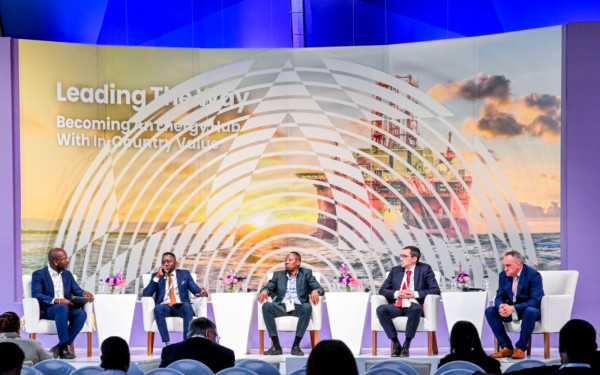
The National Petroleum Corporation of Namibia (NAMCOR) has revealed that the country could produce more than 2.5 million tons of natural gas per year, based on early-stage assessments of recent discoveries made since 2022.
Speaking during a panel discussion on gas monetization strategies at the Namibia International Energy Conference on April 24, Mtundeni Ndafyaalako, Executive of Upstream Development & Production at national oil company NAMCOR, outlined a dual-pronged approach adopted by the corporation.
The first pillar focuses on leveraging legislative frameworks to enable coordinated infrastructure development, fostering collaboration among operators. The second emphasizes expanding exploration activities to unlock further resources.
“We have launched a gas monetization strategy project to support both government and industry on how best to commercialize gas. From our appraisals, we now have a clearer picture of production potential and various applications,” said Ndafyaalako, noting that the strategy is designed to attract new players and investment by clarifying monetization pathways.
Manfriedt Muundjua, Deputy General Manager at BW Kudu, reinforced the importance of integrating four pillars of local content – training, skills transfer, local procurement and local ownership – into the broader gas development framework.
Muundjua shared that BW Kudu is placing Namibian interns in every technical role currently held by international staff, supporting long-term local capacity building. He also emphasized the urgent need for downstream investment and infrastructure development.
“We already have a downstream investment partner lined up to join us once production at Kudu begins,” he said.He added that drilling of additional wells is scheduled to begin in October, supporting NAMCOR's emphasis on continued exploration to identify new reserves.
Paul Eardley-Taylor, Head of Oil & Gas Coverage for Southern Africa at Standard Bank, highlighted the need for a "shadow infrastructure" – potentially led by public-private partnerships – in southern Namibia to address energy shortages through gas utilization. He suggested that oil revenues should be strategically directed toward financing gas infrastructure and fostering local energy markets.
Eardley-Taylor also pointed to the broader regional opportunity, suggesting that Namibia could assume a role once held by South Africa as the region's primary energy supplier, particularly as critical mineral projects are willing to pay a premium for stable power supply.
Meanwhile, Ian Thom, Research Director for Upstream at Wood Mackenzie, expressed confidence that Namibia could implement a comprehensive Gas Master Plan within the next nine months. With only 59% of the population currently connected to the electricity grid, Thom underscored the potential of gas to dramatically increase energy access across residential, commercial and industrial sectors.
“Namibia could generate more value by exporting electricity rather than raw gas, given the limited infrastructure for gas exports and the high costs associated with building it,” Thom said.
Looking ahead, the upcoming African Energy Week (AEW): Invest in African Energies conference – set to take place from September 29 to October 3, 2025, in Cape Town – will spotlight Namibia's gas developments and broader African opportunities The event will feature panel discussions, project showcases, deal signings and high-level networking sessions that connect African energy projects with global investors.
AEW: Invest in African Energies is the platform of choice for project operators, financiers, technology providers and government, and has emerged as the official place to sign deals in African energy. Visit www.AECWeek.com for more information about this exciting event.
Distributed by APO Group on behalf of African Energy Chamber.
Having been briefed on the 2025-2030 strategic and annual performance plans as well as the 2025/26 budget of the Central Energy Fund (CEF) Group and subsidiaries, the Portfolio Committee on Minerals and Petroleum Resources is encouraged by the healthy balance sheet of the CEF Group.
The CEF Group's balance sheet will fund the company's operation until 2030, and the group is projecting a net profit of R398 million by 2030.
The committee views this information as positive, considering that CEF together with its subsidiaries, except for the Petroleum Agency South Africa (PASA), are Schedule 2 state-owned entities required to generate revenue to fund their operations, without allocation from the state.
The CEF Group's subsidiaries are PASA, the African Exploration Mining and Finance Corporation (AEMFC), iGas, PetroSA and the Strategic Fuel Fund (SFF). Meanwhile, the CEF Group is in an advanced stage to merge PetroSA, iGas and SFF to establish a single state petroleum company called South African National Petroleum Company (SANPC).
SANPC is established as part of government's initiative to repurpose and rationalise state-owned enterprises to support the country's growth and development.
The committee, however, raised a concern with the missed target for SANPC to go live by 1 April 2025, as it was promised in February this year. CEF Group announced a new date of 1 May 2025.
Although noting the challenge of transferring the current employees and some assets from PetroSA, iGas and SFF to SANPC, the committee is comforted by relentless efforts to find an amicable solution with the organised labour as well as the authorities in Ghana to approve the transfer of assets belonging to PetroSA Ghana Limited back to PetroSA in South Africa.
The committee further welcomed the commitment by the Board of CEF Group to fill existing vacancies at the executive level to strengthen governance and improve delivery.
Distributed by APO Group on behalf of Republic of South Africa: The Parliament.
The World Health Organization (WHO) has officially welcomed Dr. Fabian Ndenzako as the new Head of Mission and WHO Representative to Botswana and the Southern African Development Community (SADC). A seasoned global health expert, Dr. Ndenzako brings with him over 25 years of experience in public health, including more than two decades of service within WHO across various regions and leadership capacities.
His appointment comes at a pivotal time, as WHO continues to deepen its collaboration with the newly constituted Government of Botswana, following the November 2024 elections. Guided by the WHO Country Cooperation Strategy (CCS) 2024–2027, Dr. Ndenzako will lead efforts aligned with Botswana's National Development Plan. These efforts focus on five strategic priorities: strengthening health systems toward Universal Health Coverage (UHC); delivering quality, equitable, and integrated health services across the life course; preventing and controlling communicable and non-communicable diseases; enhancing health security and disaster risk reduction management; and promoting multisectoral action for a healthier population.
Dr. Ndenzako is a medical doctor trained at the University of Dar es Salaam in Tanzania. He holds a master's in public health from the University of Oslo and a master's in development studies and diplomacy from the University for Peace in collaboration with UNITAR. His impressive academic background complements a broad and deep understanding of global health systems, policy, and diplomacy.
Prior to his appointment in Botswana, Dr. Ndenzako served as Acting WHO Representative in South Africa, based in Pretoria. He has also led WHO country offices in South Sudan (2021–2024) and Malawi (2018–2019), demonstrating strong leadership in navigating complex public health landscapes, managing crises, and mobilizing resources to strengthen national health responses.
Earlier in his career, Dr. Ndenzako served as Medical Officer for HIV, Hepatitis, and TB at the WHO Regional Office for Africa, supporting over 20 countries in Eastern and Southern Africa. His contributions included reviewing national health programs, developing strategies and guidelines, coordinating multi-country responses, and facilitating resource mobilization for health emergencies and epidemics.
He also brings valuable international experience from nearly a decade with the WHO Western Pacific Region, based in Papua New Guinea, where he supported regional responses to both communicable and non-communicable diseases. His work with governments, the United Nations, NGOs, civil society, donors, and international partners underscores his commitment to inclusive and collaborative public health strategies.
Now at the helm of WHO Botswana, Dr. Ndenzako is poised to steer the office's efforts toward impactful implementation of the biennial plan, support national health priorities, and strengthen regional coordination through SADC. His vast experience and visionary leadership are set to advance the health and well-being of the people of Botswana and the region at large.
Distributed by APO Group on behalf of World Health Organization (WHO), Botswana.
Cross Switch (www.Cross-Switch.com), a leading provider of innovative payment solutions, has reached a significant milestone by securing its own Third-Party Payment Processor (TPPP) licence.
The TPPP, issued by the Payments Association of South Africa (PASA) and sponsored by Absa, is a regulatory status that strengthens Cross Switch's position in the payments ecosystem. This achievement complements Cross Switch's recent certification as a Visa Payment Facilitator (PayFac).
Cross Switch brings a highly flexible payment platform (https://apo-opa.co/3GA0r1Q) to South Africa, enabling business scalability and growth. The company can now independently onboard merchants, fintechs and charities, substantially enhancing its service offering and announcing itself as an essential player in the South African payments landscape.
By obtaining an all-important TPPP licence, Cross Switch has reinforced its commitment to delivering quality, compliant and flexible payment solutions tailored specifically for South Africa's private and charitable sectors.
Cross Switch's entry as a licensed provider brings an adaptable API that allows South African merchants to transact seamlessly on the African continent, including in key markets such as South Africa, Kenya, Morocco and Ivory Coast. For merchants looking to expand into Latin America, Cross Switch also offers Argentina, Brazil, Mexico and Chile — with new countries, both in Africa and in other emerging markets, to be announced very soon!
“This is a vital step in expanding our network and strengthening our presence across the continent,” said Mark Chirnside, CEO of Africa, Cross Switch. “By enabling local merchants with multiple payment options, we're empowering African businesses with the tools to reach broader markets and unlock growth opportunities.”
Cross Switch now enables South African businesses to confidently target rapid expansion and deeper market penetration through frictionless access to local and international payment methods via its flexible API (CS+). The single API empowers merchants to accept payments across Africa and LATAM, and accept the local payment methods.
Cross Switch's immediate future in South Africa involves accelerating merchant onboarding. Contracts already signed represent a client base exceeding 1,000 merchants in South Africa. To complement over 1,000 merchants already using CS+ on the Continent.
Securing this licensing is a significant step forward in the Cross Switch journey. The company strives to realise its vision of delivering modern payment solutions that meet the varied needs of merchants and non-profits. The company's highly flexible payment platform drives financial inclusion and business scalability.
The company is also committed to expanding rapidly, enhancing its payment methods, and integrating advanced reconciliation engines — all underpinned by rigorous fraud prevention and risk management systems.
“Investing in South Africa is a strategic priority for Cross Switch,” said Tim Davis, Group CEO of Cross Switch. “We're resourcing up locally to ensure we're ready to meet growing demand, and this licence and certification enable us to deliver world-class payment services that are both agile and scalable.”
Cross Switch invites businesses interested in exploring robust and flexible payment solutions to connect directly at https://apo-opa.co/4jrGOrw to learn how its tailored offerings can support and amplify their operational ambitions.
Distributed by APO Group on behalf of Cross Switch.
Contact
South Africa: (+27) 21 205 5818
Luxembourg: (+352) 2088 1454
https://apo-opa.co/4jrGOrw
About Cross Switch:
Cross Switch is a payments technology company founded in 2022, operating across emerging markets, with active operations in South Africa, Kenya, Morocco, Ivory Coast and across Latin America. It provides flexible, secure and scalable solutions that support both local and cross-border transactions, helping merchants, fintechs and non-profits expand their reach and streamline their operations. Cross Switch is committed to driving financial inclusion and growth through collaboration, robust infrastructure, high service levels and a strong focus on emerging market needs.
The Portfolio Committee on Agriculture received a briefing yesterday from the Office of the Auditor General (AGSA) on its review of the Department of Agriculture and its entities' 2025/26 annual performance plans (APPs) and budgets.
The department and entities also made presentations on their APPs and budgets for the 2025/26 financial year. During the engagements, the committee told the department to review its 2025/26 APP in line with the Medium-Term Development Plan (MTDP).
As part of its findings, the AGSA told the committee that seemingly the MTDP indicators and targets are not included in the department's strategic and annual performance plans. The committee heard that MTDP 2024–2029 is a five-year strategic blueprint developed by the 7th administration to drive national development. The MTDP aligns with the National Development Plan (NDP) 2030 and integrates international commitments, including the UN Sustainable Development Goals (SDGs) and the AU Agenda 2063.
The committee expressed concern after it learnt from the AGSA that the department has set annual reports as a target without clearly understanding the expected level of performance. The AGSA said this lack of specificity makes both the indicator and the target unclear and ambiguous. It also renders the AGSA unable to measure effectively, which undermines their usefulness for monitoring progress and evaluating performance.
The committee told the department to revise its APPs, taking into account the AGSA's recommendations, for presentation on 6 May 2025. The Minister of Agriculture, Mr John Steenhuisen, who led the departmental delegation said the department met with the AGSA and has already undertaken to make amendments based on the AGSA recommendations.
AGSA also presented reviews of the APPs of the department's three entities – the Agricultural Research Council, Onderstepoort Biological Products and the National Agricultural Council. As part of the presentation, the AGSA recommended that the committee should ask the department to present a revised 2025/26 APP along with a matrix showing changes made to performance indicators, their definitions and associated date sources. In addition, the committee should also ask the department for regular updates on this information.
In welcoming all the presentations, the committee Chairperson, Ms Dina Pule, emphasised that the committee was not rejecting the APPs as presented, but rather allowing the department and its entities to reconstruct the APPs in light of the AGSA recommendations.
In thanking the AGSA, Ms Pule said the committee has noted with appreciation the extensive and insightful reviews the AGSA has made. “The committee has noted your recommendations and we assure you about our commitment to translating them into progressive actions to take the work of the department to the new heights,” said Ms Pule.
Distributed by APO Group on behalf of Republic of South Africa: The Parliament.
Following two days of briefings from the Auditor-General and the Special Investigating Unit on the State Information Technology Agency (SITA), the Chairperson of the Standing Committee on Public Accounts (SCOPA), Mr Songezo Zibi, has raised concerns with SITA's governance and performance failures, which adversely affect government effectiveness.
The SITA has for several years failed to achieve satisfactory audit outcomes or to adequately support various government departments, agencies and other public institutions. This has left them with a high number of vacancies, inadequate IT support, obsolete technology, faulty procurement processes and serious cyber security weaknesses.
“It is unacceptable that at a time when information technology is so critical to financial controls, governance and operational effectiveness, the sole agency tasked with supporting government is failing so dismally and for so sustained a period. Talk of modernisation in different areas, such as the police, will remain a pipedream if reliance is placed solely on the SITA,” said Mr Zibi.
The committee heard that while a new Board has been in place since February 2025, the agency still has critical unfilled vacancies such as a Chief Digital Officer. “We are going to invite the Minister of Communication and Digital Technologies to appear before the committee to explain the steps he is taking to ensure the SITA recovers to fulfil its constitutional mandate. The SITA's failures have become a serious financial and national security risk that should not be tolerated any longer,” he added.
Distributed by APO Group on behalf of Republic of South Africa: The Parliament.
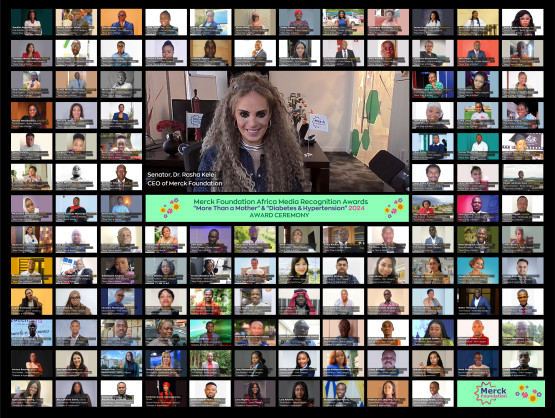
Merck Foundation (www.Merck-Foundation.com), the philanthropic arm of Merck KGaA Germany, in partnership with the First Ladies of Africa, proudly announced the Winners of their Merck Foundation Africa Media Recognition Awards 2024 under the categories “More Than a Mother” and “Diabetes and Hypertension”.
The Awards Ceremony was conducted virtually to honor and celebrate the outstanding contributions of all the winning media professionals. The winners were warmly acknowledged by Senator Dr. Rasha Kelej, CEO of Merck Foundation and President of the “More Than a Mother” campaign.
Senator, Dr. Rasha Kelej expressed, “I am truly happy to announce the winners of our Media Awards, together with my dear sisters, The First Ladies of Africa, who are also the Ambassadors of the Merck Foundation ‘More Than a Mother' Campaign. This year, we are delighted to celebrate 125 outstanding winners from 36 countries. It brings me joy to see such impressive participation not only from across Africa but also from several Asian and Latin American countries. Congratulations to all our incredible winners!
It is a true pleasure to welcome you all as Merck Foundation Alumni. Let's continue to work together to raise awareness about critical social and health challenges, be the voice of the voiceless, and create culture shift in our communities.”
Merck Foundation Media Awards launched in 2017, are announced annually, with over 640 Winners from 52 countries celebrated to date.
The theme of the “More Than a Mother” Media Awards is to raise awareness about important social issues like: Breaking Infertility Stigma, Supporting Girl Education, Women Empowerment, Ending Child Marriage, Ending Female Genital Mutilation and/or Stopping Gender-Based Violence. The theme of the “Diabetes and Hypertension” Media Awards is to Promote a Healthy Lifestyle and raise awareness about prevention and early detection of Diabetes and Hypertension.
The Merck Foundation CEO also launched the Call for Applications for the 2025 Media Awards. “I am pleased to invite entries for the Merck Foundation Media Recognition Awards 2025 – “More Than a Mother” & “Diabetes and Hypertension”, in partnership with the African First Ladies. I look forward to receiving another outstanding round of impactful entries this year as well.” Said Senator Dr. Rasha Kelej.
Winners of Merck Foundation "More Than a Mother" Media Recognition Awards 2024
Here are the winners from West African Countries in partnership with The First Lady of the Republic of The Gambia, H.E. Mrs. FATOUMATTA BAH-BARROW; and The First Lady of the Republic of Sierra Leone, H.E. Dr. FATIMA MAADA BIO:
PRINT CATEGORY WINNER
ONLINE CATEGORY WINNERS
RADIO CATEGORY WINNER
MULTIMEDIA CATEGORY WINNERS
Here are the Winners from Southern African Countries in partnership with The First Lady of the Republic of Malawi, H.E. Mrs. MONICA CHAKWERA; The First Lady of the Republic of Zimbabwe, H.E. Amai Dr. AUXILLIA MNANGAGWA:
PRINT CATEGORY WINNERS
ONLINE CATEGORY WINNERS
RADIO CATEGORY WINNERS
MULTIMEDIA CATEGORY WINNERS
Here are the winners from East African Countries:
PRINT CATEGORY WINNERS
ONLINE CATEGORY WINNERS
RADIO CATEGORY WINNERS
MULTIMEDIA CATEGORY WINNER
Here are the winners from French Speaking African Countries in partnership with The First Lady of the Republic of Burundi, H.E. Madam ANGELINE NDAYISHIMIYE; The First Lady of Democratic Republic of the Congo, H.E. Madam DENISE NYAKERU TSHISEKEDI:
PRINT CATEGORY WINNER
ONLINE CATEGORY WINNERS
RADIO CATEGORY WINNERS
MULTIMEDIA CATEGORY WINNERS
Here are the winners from Portuguese Speaking African Countries in partnership with The First Lady of the Republic of Cabo Verde, H.E. Dr. DÉBORA KATISA CARVALHO:
ONLINE CATEGORY WINNERS
RADIO CATEGORY WINNERS
MULTIMEDIA CATEGORY WINNERS
Merck Foundation "Diabetes & Hypertension" Media Recognition Awards 2024
Here are the winners from West African Countries in partnership with The First Lady of the Republic of The Gambia, H.E. Mrs. FATOUMATTA BAH-BARROW; and The First Lady of the Republic of Sierra Leone, H.E. Dr. FATIMA MAADA BIO:
PRINT CATEGORY WINNER
ONLINE CATEGORY WINNERS
RADIO CATEGORY WINNERS
MULTIMEDIA CATEGORY WINNER
Here are the Winners from Southern African Countries in partnership with The First Lady of the Republic of Malawi, H.E. Mrs. MONICA CHAKWERA; The First Lady of the Republic of Zambia, H.E. Mrs. MUTINTA HICHILEMA; The First Lady of the Republic of Zimbabwe, H.E. Amai Dr. AUXILLIA MNANGAGWA:
PRINT CATEGORY WINNER
ONLINE CATEGORY WINNERS
RADIO CATEGORY WINNERS
Here are the winners from East African Countries:
PRINT CATEGORY WINNER
ONLINE CATEGORY WINNERS
RADIO CATEGORY WINNERS
MULTIMEDIA CATEGORY WINNER
Here are the winners from French Speaking African Countries in partnership with The First Lady of the Republic of Burundi, H.E. Madam ANGELINE NDAYISHIMIYE; and The First Lady of Democratic Republic of the Congo, H.E. Madam DENISE NYAKERU TSHISEKEDI:
PRINT CATEGORY WINNERS
ONLINE CATEGORY WINNERS
RADIO CATEGORY WINNERS
MULTIMEDIA CATEGORY WINNER
Here are the winners from ASIAN Countries:
PRINT CATEGORY WINNER
ONLINE CATEGORY WINNERS
Here are the winners from LATIN AMERICA Countries:
ONLINE CATEGORY WINNERS
MULTIMEDIA CATEGORY WINNER
Details of Merck Foundation Media Awards 2025:
1. Merck Foundation Africa Media Recognition “More Than a Mother” Awards 2025
Theme for the awards: Breaking Infertility Stigma, Supporting Girl Education, Women Empowerment, Ending Child Marriage, Ending FGM, and/or Stopping GBV at all levels.
Who can apply: Journalists from Print, Radio, Online, and Multimedia platforms from the following groups:
Submission deadline: 30th September 2025.
Theme for the awards: Promoting a healthy lifestyle and raising awareness about prevention and early detection of Diabetes and Hypertension.
Who can apply: Journalists from Print, Radio, Online, and Multimedia platforms from the following groups:
Submission deadline: 30th October 2025.
All entries are to be submitted to submit@merck-foundation.com.
Distributed by APO Group on behalf of Merck Foundation.
Contact details:
Mehak Handa
Community Awareness Program Manager
+91 9310087613 / +91 9319606669
mehak.handa@external.merckgroup.com
Join the conversation on our social media platforms below and let your voice be heard!
Facebook: https://apo-opa.co/4cLhp9K
X: https://apo-opa.co/3EtS73f
YouTube: https://apo-opa.co/4cUG7o7
Instagram: https://apo-opa.co/3GnWcqj
Threads: https://apo-opa.co/3EvXLlq
Flickr: https://apo-opa.co/42ZoEr6
Website: www.Merck-Foundation.com
About Merck Foundation:
The Merck Foundation, established in 2017, is the philanthropic arm of Merck KGaA Germany, aims to improve the health and wellbeing of people and advance their lives through science and technology. Our efforts are primarily focused on improving access to quality & equitable healthcare solutions in underserved communities, building healthcare & scientific research capacity, empowering girls in education and empowering people in STEM (Science, Technology, Engineering, and Mathematics) with a special focus on women and youth. All Merck Foundation press releases are distributed by e-mail at the same time they become available on the Merck Foundation Website. Please visit www.Merck-Foundation.com to read more. Follow the social media of Merck Foundation: Facebook (https://apo-opa.co/4cLhp9K), X (https://apo-opa.co/3EtS73f), Instagram (https://apo-opa.co/3GnWcqj), YouTube (https://apo-opa.co/4cUG7o7), Threads (https://apo-opa.co/3EvXLlq) and Flickr (https://apo-opa.co/42ZoEr6).
The Merck Foundation is dedicated to improving social and health outcomes for communities in need. While it collaborates with various partners, including governments to achieve its humanitarian goals, the foundation remains strictly neutral in political matters. It does not engage in or support any political activities, elections, or regimes, focusing solely on its mission to elevate humanity and enhance well-being while maintaining a strict non-political stance in all of its endeavors.
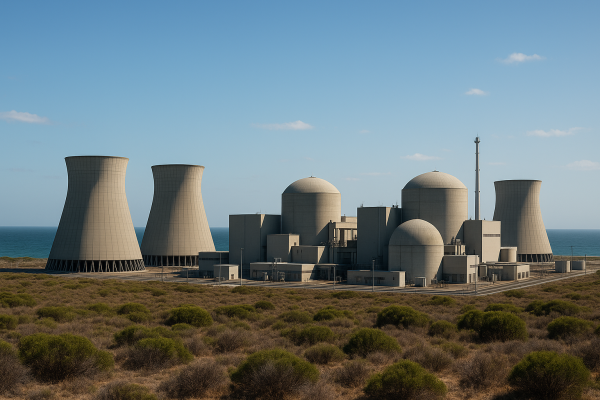
China is rapidly scaling up its energy diplomacy in Africa, with nuclear cooperation emerging as a cornerstone of its broader strategic agenda. On April 8, South Africa's Nuclear Energy Corporation signed a Memorandum of Understanding (MoU) with the China National Nuclear Corporation (CNNC) during an official visit to China led by South Africa's Electricity Minister, Dr. Kgosientsho Ramokgopa.
The agreement aims to revive South Africa's nuclear fuel cycle, accelerate the deployment of small modular reactors and promote collaboration on advanced fuels such as high-assay low-enriched uranium. With strong government support for nuclear power but limited domestic financing, South Africa is seeking international partners to inject capital and technology while maintaining state ownership of key infrastructure.
Minister Ramokgopa's working visit to China also aimed to find solutions to South Africa's energy insecurity and loadshedding. Central to this effort is the proposed life extension of the SAFARI-1 reactor at the Pelindaba nuclear research center, which is scheduled for retirement in 2030. Plans for a new multi-purpose reactor are already underway with R1.2 billion ($63.6 million) in seed funding allocated, but further investment is needed to move the project forward. This underscores the critical role of sustained nuclear investment in securing South Africa's long-term energy resilience and reducing dependence on aging infrastructure.
China's Expanding Footprint
China's ambitions in Africa's nuclear sector extend beyond South Africa. At the 2024 Forum on China-Africa Cooperation (FOCAC) in Beijing, China launched the China-Africa Forum on the Peaceful Use of Nuclear Technology, as part of its 2025-2027 Beijing Action Plan. The move reinforced China's long-term goal to become Africa's premier nuclear energy partner. With 53 of 54 African nations represented at FOCAC – including 51 Heads of State – the event provided a powerful platform for Beijing to promote its nuclear agenda and expand its diplomatic and technical reach, while highlighting how Africa is leveraging nuclear energy to meet its growing power demands.
For Africa, nuclear power presents a unique opportunity to address the continent's urgent energy access gap while advancing long-term sustainability. Nuclear offers baseload electricity with zero carbon emissions, making it well-suited to complement intermittent renewables like solar and wind. Small modular reactors, in particular, are seen as a viable solution for remote or off-grid regions due to their scalability, smaller footprint and enhanced safety features. With growing populations and rising industrial demand, several African nations view nuclear power as a low-carbon, scalable pathway to energy security and broader socioeconomic development.
Nuclear Expansion Across Africa
Currently, Africa's nuclear energy development is concentrated in six countries – Egypt, Ghana, Kenya, Morocco, Nigeria and South Africa. Of these, four have recently signed nuclear cooperation agreements with China. In September 2024, Nigeria entered high-level discussions with China on peaceful nuclear energy cooperation, covering the full project lifecycle – from research and training to construction and plant decommissioning. Earlier that year, Nigeria also signed an MoU with the CNNC aimed at operationalizing nuclear power plants by the 2030s. Ghana followed suit with a deal to deploy China's Hualong One reactor, while Kenya continues to pursue its longstanding 2015 agreement with China to develop a 1,000 MW plant by 2034.
The International Atomic Energy Agency projects a 58% increase in nuclear energy use in Africa by 2030, with a tenfold increase by 2050. With more than 600 million people on the continent lacking electricity access, China's nuclear partnerships are positioned to close critical power gaps while supporting shared decarbonization goals.
Against this backdrop, African Energy Week (AEW) 2025: Invest in African Energies serves as a pivotal platform for advancing nuclear energy collaboration between Africa, China and other global partners. Building on existing partnerships and recent MoUs, AEW will facilitate high-level discussions on technology transfer, investment frameworks and regulatory readiness to accelerate nuclear deployment in key African markets. These conversations will align national nuclear ambitions with China's global expertise, ensuring that energy security, sustainability and sovereignty are at the core of future collaborations.
AEW: Invest in African Energies is the platform of choice for project operators, financiers, technology providers and government, and has emerged as the official place to sign deals in African energy. Visit www.AECWeek.com for more information about this exciting event.
Distributed by APO Group on behalf of African Energy Chamber.